Search Results(13790)

2019-11-29
PIER C
Vol. 97, 83-94
Design of Compact UWB MIMO Antenna with Enhanced Bandwidth
Ekta Thakur , Naveen Jaglan and Samir Dev Gupta
A novel compact Ultra-Wideband Multiple Input Multiple Output (UWB-MIMO) antenna with enhanced bandwidth is proposed. The bandwidth of the designed antenna ranges from 1 to 30 GHz which covers L, S, C, X, Ku, K bands and some part of Ka-band. A square slot & inverse L-shaped strip is used to improve the isolation amid antenna elements. The suggested antenna achieves Mutual Coupling and Envelope Correlation Coefficient below -17 dB and 0.15 respectively. MIMO performance parameters like Mean Effective Gain is around 0 dB, and Total Active Reflection Coefficient is less than -10 dB. The Channel Capacity Loss and Effective Diversity Gain are less than 0.3 bits/s/Hz and 9.2 dB, respectively. The radiation efficiency of the designed antenna is around 80% over the complete frequency range. The overall dimensions of designed antenna are 27× 17 × 1.6 mm3.
DESIGN OF COMPACT UWB MIMO ANTENNA WITH ENHANCED BANDWIDTH
2019-11-29
PIER M
Vol. 87, 23-32
Semicircle CSRR with Circular Slot Array Structures for High Level Mutual Coupling Reduction in MIMO Antenna
Arunachalam Ambika and Chandrapragasam Tharini
A single semicircle shape Complementary Split Ring Resonator (CSRR) is designed to enhance isolation by suppressing mutual coupling between MIMO antennas. Furthermore high level of mutual coupling by introducing circular slot in-between patch antennas on the substrate which creates additional coupling path between the patch antennas also opposes the some leakage signals coming back from the opposite coupling path after CSRR is etched from ground plane. The proposed patch antenna dimensions are chosen as 37.26 x 28.13 mm for operating at 2.51 GHz frequency, and the low-cost dielectric material, FR-4 (εr = 4.4), is chosen as the dielectric substrate with 1.6 mm height. The S parameters of proposed antenna prototype are characterized by using VNA. The measured return loss (S11) and isolation (S21) are -23.13 dB & -56.8 dB respectively. The results show that by introducing semicircle CSRR and circular slot, the structure provides a 33.2 dB improvement in mutual coupling for MIMO antenna. Hence, the proposed structure provides a better isolation between two antennas without affecting antenna performance.
SEMICIRCLE CSRR WITH CIRCULAR SLOT ARRAY STRUCTURES FOR HIGH LEVEL MUTUAL COUPLING REDUCTION IN MIMO ANTENNA
2019-11-29
PIER M
Vol. 87, 11-21
A Novel Frequency Reconfigurable HF Broadband Whip Antenna Based on GOA Optimization
Hengfeng Wang , Chao Liu , Huaning Wu and Xu Xie
Aiming at the problems of low gain, low efficiency at lower frequency and warping in pattern at higher frequency of 10-meter high frequency (HF) whip antenna, the whip antenna is loaded and matched with the network in different bands using Grasshopper Optimization Algorithms (GOA) and antenna reconfiguration technology, so a new frequency reconfigurable broadband whip antenna is designed in this paper. According to the electrical characteristics of 10-meter HF whip antenna, this paper divides short wave frequency into three bands and designs its radiation structure, loading, and matching network for each band of antenna, respectively. GOA is introduced into the research and design of antenna to optimize the component parameters of loading network and matching network. The results show that the antenna in lower frequency band can be improved at most, the maximum gain growth up to 5.8 dB (from -10.3 dB to -4.5 dB) and the maximum efficiency growth up to 8.5% (from 3% to 11.5%); the gain and efficiency in high frequency band are greatly improved too, and the phenomenon of warping in the pattern is effectively avoided.
A NOVEL FREQUENCY RECONFIGURABLE HF BROADBAND WHIP ANTENNA BASED ON GOA OPTIMIZATION
2019-11-28
PIER C
Vol. 97, 69-82
Magnetic Field Distribution of an Elliptical Permanent Magnet
Van Tai Nguyen , Tien-Fu Lu , William Robertson and Paul Grimshaw
The magnetic field distribution of an axially magnetised cylinder with elliptical profile is analytically modelled and analysed in this paper. An accurate and fast-computed semi-analytical model is developed, based on the charge model and geometrical analysis, to compute the three components of the magnetic field generated by this elliptical cylinder in three dimensional space. The accuracy of the model is verified using Finite Element Analysis. The analytical expressions are efficient for calculating the implementation of the magnetic field, taking less than one millisecond to execute on a modern PC. Using the fast-computed analytical model, the distribution of the magnetic field of an axially magnetised cylinder with different elliptical profiles is studied and compared with that of a circular cylinder. The variations in magnetic field strength of axial, azimuthal and radial components can be used in novel sensing applications. The derived analytical model can be extended to calculate the magnetic field of arc-shaped elliptical and circular cylinders with axial magnetization, which can be used in Halbach arrangements.
MAGNETIC FIELD DISTRIBUTION OF AN ELLIPTICAL PERMANENT MAGNET
2019-11-27
PIER M
Vol. 87, 1-10
Conjoined, 2.4/5-GHz WLAN Two-Monopole System Decoupled Using Mode-Controlled Capacitor for Notebook Computers
Che-Chi Wan and Saou-Wen Su
A low-profile, decoupled two-monopole system with its two parasitic grounded strips conjoined, forming a very compact structure is demonstrated. Each of the two identical antennas comprises a driven coupling strip and a parasitic grounded strip, operating respectively in the 2.4 GHz (2400-2484 MHz) and 5 GHz (5150-5825 MHz) wireless local area network (WLAN) bands. The two parasitic strips are further joined together, becoming a central, grounded T monopole. By loading a capacitor between the T monopole and the antenna ground, the mutual coupling in the 2.4 GHz band can be reduced by about 12 dB. The capacitor in this design is used to control Ant2 monopole mode to cancel out opposite-phased currents of the dipole mode on the T monopole when Ant1 is excited, such that isolation enhancement can be attained. The proposed two-monopole system occupies a compact size of 5 mm × 40 mm (about 0.04λ × 0.32λ at 2.4 GHz) and is favorable for applications in the narrow-bezel notebook computers owing to its low profile of 5 mm.
CONJOINED, 2.4/5-GHZ WLAN TWO-MONOPOLE SYSTEM DECOUPLED USING MODE-CONTROLLED CAPACITOR FOR NOTEBOOK COMPUTERS
2019-11-27
PIER M
Vol. 86, 203.-211
Computer-Aided Design of Superconducting Equilateral Triangular Patch on Anisotropic Substrates
Abdelkarim Gadda , Sami Bedra , Chahinez Agaba , Siham Benkouda , Randa Bedra and Tarek Fortaki
The effects of both anisotropy in the substrates and the superconducting films on the resonant frequencies and radiation patterns of an equilateral triangular patch are investigated theoretically. Our proposed method is based on the modified cavity model in conjunction with the electromagnetic knowledge. The validity of the proposed method is tested by comparing the computed results of the resonant characteristics with the experimental data. Results show effects of the superconducting patch thickness as well as the anisotropy in the substrate on resonant frequency and the radiation pattern of the triangular patch. The effects of the antenna parameters on the resonant frequencies and radiation patterns are also presented and discussed. At higher substrate thicknesses, numerical results indicate that the radiation pattern is drastically changed. The resonant frequency, on the other hand, decreases with high equivalent permittivity of the anisotropic substrate. The proposed method is very fast, simple, and compatible well with CAD.
COMPUTER-AIDED DESIGN OF SUPERCONDUCTING EQUILATERAL TRIANGULAR PATCH ON ANISOTROPIC SUBSTRATES
2019-11-27
PIER M
Vol. 86, 193-202
Dual-Mode Dual-Band Bandpass Filter with Asymmetrical Transmission Zeros
Natchayathorn Wattikornsirikul and Montree Kumngern
This paper presents a high-selectivity dual-mode dual-band bandpass filter with good cutoff signal rejection. The high-selectivity dual-mode dual-band bandpass filter is designed by an asymmetrical transmission zero (TZ). The asymmetrical transmission zeros next to the upper sideband of the first resonant filter and the TZ at the lower sideband of the second passband filter are combined to form a dual-mode dual-band filter. The locations of the TZ are designed at the side passbands of the filters in order to filter out unwanted signals, obtain good cutoff rate in the stopband, and give much improved signal selectivity for the dual-band bandpass filter. One dual-mode filter is designed at the center frequency of 1.8 GHz and the other's desired performance at 2.4 GHz. The two filters can be combined using the coupled feed lines in which these coupled feed lines present a simple structure of dual-mode dual-band bandpass filter. The insertion loss of the dual-mode dual-band bandpass filter is less than 1.2 dB, and the rejection between two transmission bands is about 18 dB from 1.9 to 2.35 GHz. This high-performance dual-mode dual-band bandpass filter can be used in many wireless communication systems.
DUAL-MODE DUAL-BAND BANDPASS FILTER WITH ASYMMETRICAL TRANSMISSION ZEROS
2019-11-26
PIER C
Vol. 97, 57-67
A Planar Wideband Two-Level Sequentially Rotated Array Antenna for X-Band CubeSat
Son Xuat Ta , Khac Kiem Nguyen and Dao-Ngoc Chien
A planar wideband circularly-polarized (CP) antenna array is designed for an X-band CubeSat. The design is a two-level sequential phase architecture, consisting of a 4 × 4 element array composed of sequentially rotated of 2 × 2 subarrays. Each subarray consists of sequentially rotated 2 × 2 antennas using metasurface. These antenna elements are incorporated with a two-level sequentially rotated phase network in order to obtain wideband characteristic and high gain. The final prototype with a size of 100 mm × 100 mm × 2.032 mm yields a measured |S11| < -10 dB bandwidth of 50% (6-10 GHz) and measured axial ratio < 3-dB bandwidth of 40.7% (6.45-9.75 GHz). Additionally, the proposed design achieves a good broadside right-hand CP radiation with a peak gain of 17.0 dBic, 3-dB gain bandwidth of 20.4% (7.5-9.2 GHz), and radiation efficiency of > 82%. With these features, the proposed antenna can be compatible with any CubeSat standard structure, as well as other small satellites.
A PLANAR WIDEBAND TWO-LEVEL SEQUENTIALLY ROTATED ARRAY ANTENNA FOR X-BAND CUBESAT
2019-11-26
PIER M
Vol. 86, 183-192
Study of Transmitter Interference to Receiver at 2 GHz with High Antenna Port Isolation
Marko Sonkki , Janne Aikio , Marko E. Leinonen and Aarno Pärssinen
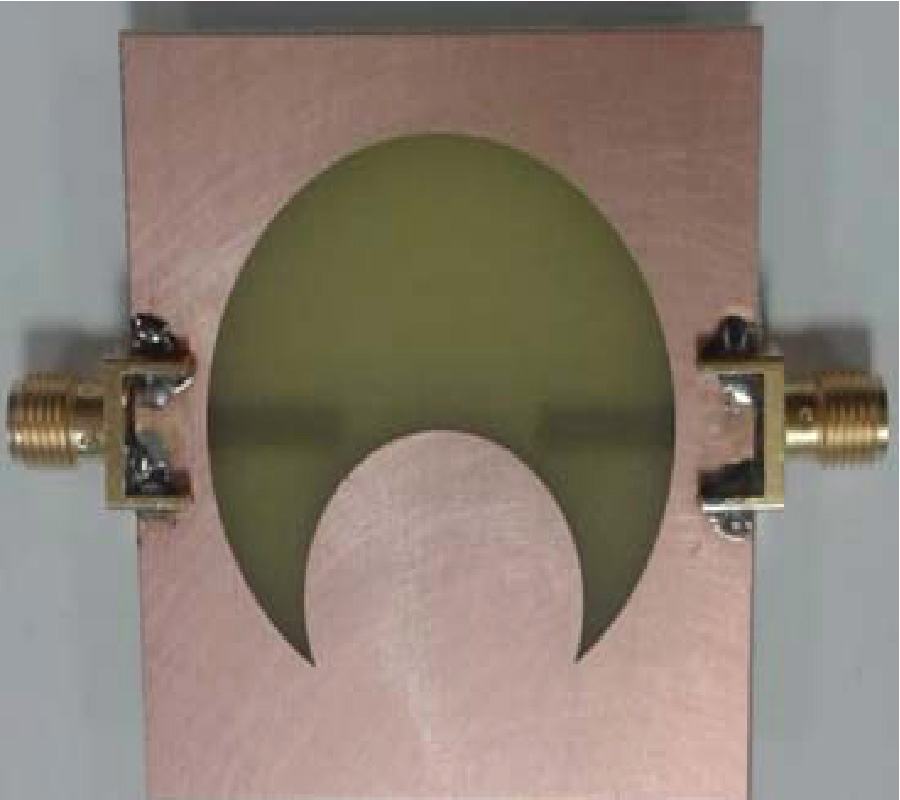
The paper presents simulated and measurement results of a planar antenna structure at 2 GHz center frequency. The antenna has two ports implemented into the same conductive body. The antenna shows measured -10 dB impedance bandwidth from 1.87 GHz to 2.18 GHz with average 41.3 dB isolation between the antenna ports over the studied frequency bandwidth. Antenna is used to measure transmitted WCDMA FDD signal leakage to the receiver with a presence of blocker signal, which is transmitted over the air. The system measurements show that the RF filtering requirements can be relaxed based on 3GPP standard by using highly isolated antenna structure. Application areas can be found at the both ends of the mobile communications system, mobile devices and small cell base stations.
STUDY OF TRANSMITTER INTERFERENCE TO RECEIVER AT 2 GHZ WITH HIGH ANTENNA PORT ISOLATION
2019-11-25
PIER M
Vol. 86, 173-182
Deminiaturized Mode Control Rectangular Dielectric Resonator Antenna
Richa Gupta and Arti Vaish
A modified feed line Wideband Circularly Polarized Dielectric Resonator Antenna (CPDRA) operating at 24 GHz is proposed in this paper. Deminiaturisation of design is achieved by operating antenna at higher order mode TE117. The antenna structure consists of a rectangular DRA with three rectangular slots. One at the centre and other two inclined orthogonally with respect to centre slot. The bottom surface of substrate contains the modified feed structure in which two stubs of the same dimensions are connected orthogonally to main microstrip line to provide a phase difference of an odd multiple of λ/2 for circular polarization. DRA with excitation through modified aperture coupled feed structure provides the simulated and measured impedance bandwidths of 16.28% (22-25.9 GHz) and 15.06% (22.1-25.7) GHz. The antenna provides the simulated and measured gains of 8.4 dB and 7.9 dB. The antenna is deminiaturised by 61% by operating antenna at higher order mode. The designed antenna has potential for millimeter wave and 5G applications.
DEMINIATURIZED MODE CONTROL RECTANGULAR DIELECTRIC RESONATOR ANTENNA
2019-11-25
PIER M
Vol. 86, 163-171
Compact, Broadband and Reliable Lateral MEMS Switching Networks for 5G Communications
Sukomal Dey , Shiban Kishen Koul , Ajay K. Poddar and Ulrich L. Rohde
The design, development and characterization of broadband (1-30 GHz) microelectromechanical systems (MEMS) based electrostatically driven lateral switching networks are presented in this paper. Initially, single switch performances are optimized, and later it is used to develop different switching networks like single-pole-double-throw (SPDT), single-pole-three-throw (SP3T), and single-pole-six-throw (SP6T). All switches are extensively characterized including reliability testing. Switching networks demonstrate measured return loss of better than 21 dB (11.4 dB) with worst case insertion loss of 0.67 dB (~5 dB) and isolation of better than 31 dB (17.7 dB) at 3.5 GHz (28 GHz) for 5G communications. Switching networks tested for > 1 billion cycles with 1 W of RF power are found to be operational. Maximum fabricated switch (SP6T) area is ~0.7 mm2 including bias lines and pads.
COMPACT, BROADBAND AND RELIABLE LATERAL MEMS SWITCHING NETWORKS FOR 5G COMMUNICATIONS
2019-11-24
PIER C
Vol. 97, 43-55
Integrated Antenna Technique for Cancelling the Self-Interference Signal in Full-Duplex Communication
Ahmed Abdulbary Jasim , Khalil Hassan Sayidmarie , Raed A. Abd-Alhameed and Ammar Ali
In this paper, a novel passive antenna cancellation technique for a full-duplex system is presented. This includes three patch antennas with a developed coupler that are constructed and integrated with the feed network to reduce the self-interference signal without the need for other components, thus achieving a complete antenna cancellation method. Computer Simulation Technology (CST) microwave studio is utilized to simulate the design model. A prototype was fabricated and tested practically to validate the proposed design. The computed results are compared with measurements. The proposed technique provides up to 68 dB cancellation at the operating frequency 2.45 GHz, and this decreases to 40 dB at 70 MHz bandwidth, and to 36 dB at 100 MHz bandwidth.
INTEGRATED ANTENNA TECHNIQUE FOR CANCELLING THE SELF-INTERFERENCE SIGNAL IN FULL-DUPLEX COMMUNICATION
2019-11-23
PIER Letters
Vol. 87, 145-151
A 2.4 GHz High-Efficiency Low Phase Noise Oscillator Using Combined Band Pass Filter for Harmonic Suppression
Santosh Kumar Bhagat , Ananjan Basu and Shiban Kishen Koul
This paper examines an efficient low phase noise oscillator using a high Q resonator and harmonic suppression filter. The oscillator is designed using a combined bandpass filter (BPF), which is used as a feedback element to an amplifier. The filter consists of an embedded spur line filter in the L-shaped input and output section which encloses a perturbed square ring. All of these sections are assembled to form a combined BPF which gives an excellent suppression of second and third harmonics. Low phase noise oscillator results are evaluated at 2 V power supply. The measured results show the fundamental frequency at 2.4 GHz, total output power of 14.92 dBm, phase noise -130.7 dBc/Hz at 1 MHz offset frequency, figure of merit (FOM) -175.64 dBc/Hz, reduction in 2nd and 3rd harmonics to below -45 dBm and DC-to-RF efficiency of 51.73%.
A 2.4 GHZ HIGH-EFFICIENCY LOW PHASE NOISE OSCILLATOR USING COMBINED BAND PASS FILTER FOR HARMONIC SUPPRESSION
2019-11-21
PIER Letters
Vol. 88, 9-14
Advanced EMC Assessment of Composites Material: Monte Carlo Statistical Description with Spherical Inclusions and Improvement with SROM
Sebastien Lallechere
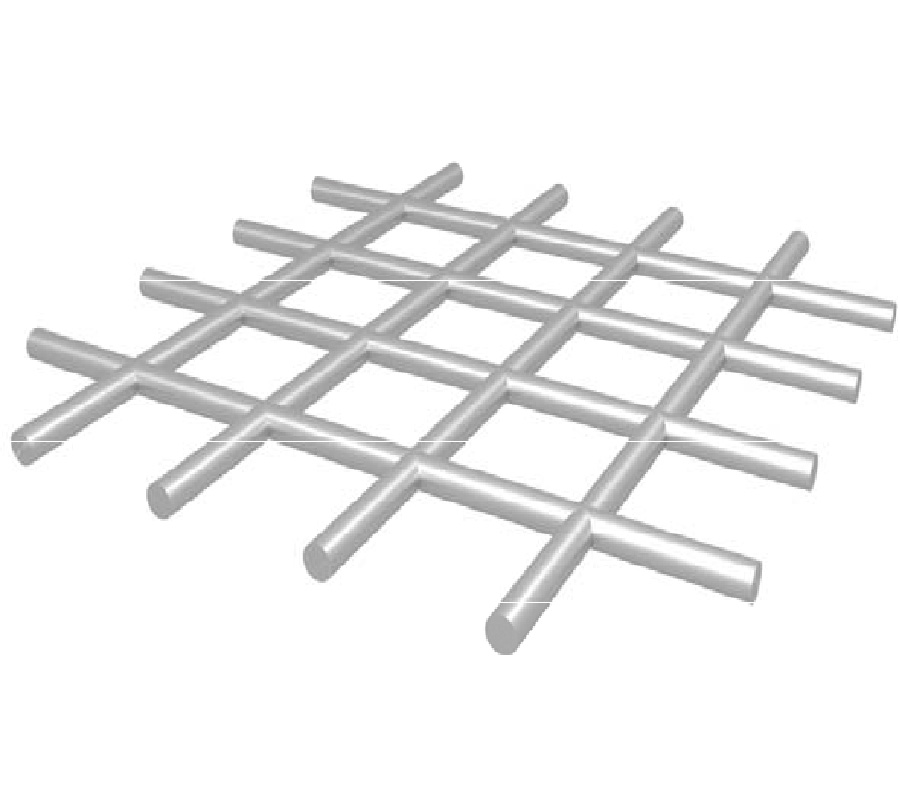
This article proposes an advanced methodology to deal with the complexity of composite materials modeling up to 60 GHz. For radiofrequency (RF) requirements, it has been demonstrated that the distribution of conductive inclusions plays a major role. Since their locations are intrinsically subject to uncertain assumptions, the Monte Carlo (MC) technique is considered as a golden standard. Unfortunately, the computational costs involved by coupling full-wave electromagnetic (EM) simulations and MC remains prohibitive. The aim of this proposal is to demonstrate the interest of stochastic reduced order method (SROM) to tackle computational constraints, jointly with the statistical precision needed for a realistic description of RF composites.
ADVANCED EMC ASSESSMENT OF COMPOSITES MATERIAL: MONTE CARLO STATISTICAL DESCRIPTION WITH SPHERICAL INCLUSIONS AND IMPROVEMENT WITH SROM
2019-11-21
PIER M
Vol. 86, 153-162
A Two-Step Method for the Low-Sidelobe Synthesis of Uniform Amplitude Planar Sparse Arrays
Lanmei Wang , Xin-Kuan Wang , Guibao Wang and Jian-Ke Jia
A two-step method combining the algorithms of iterative Fourier transform (IFT) and differential evolution (DE), called IFT-DE, is proposed in this paper for the low sidelobe synthesis of a uniform amplitude planar sparse array (PSA). Firstly, the entire aperture of the array is divided into a set of square lattices that a respaced at half wavelength. Then the elementsare forced to be located on the lattices through performing IFT, so that a planar thinned array (PTA) is formed across the aperture. Undoubtedly the interval between adjacent elementsof the PTA is an integer multiple of half wavelength. In the second step, for each column of PTA the elements spaced greater than or equal to a wavelength are selected as the candidates whose locations need to be optimized by DE procedure, as long as the renewed inter-element spacing is not less than half wavelength. Consequently, a PSA with reduced sidelobe level may be obtained. According to the aforementioned selection rule, only a small part of elements that account for the total number need to be relocated, which denotes thatthe number of individual parameters waiting for optimizing by DE is decreased considerably, and thereby greatly accelerates the convergence speed of the algorithm. A set of synthesis experiments for PSA ranging from small to moderate size are presented to validate the effectiveness of the proposed method.
A TWO-STEP METHOD FOR THE LOW-SIDELOBE SYNTHESIS OF UNIFORM AMPLITUDE PLANAR SPARSE ARRAYS
2019-11-20
PIER M
Vol. 86, 145-152
A Co-Polarized Microwave Absorber with Dual Mode Resonance Based on Dual Split Ring Geometry for Wi-MAX and WLAN Applications
Gobinda Sen , Anumoy Ghosh , Mukesh Kumar , Sk. Nurul Islam and Santanu Das
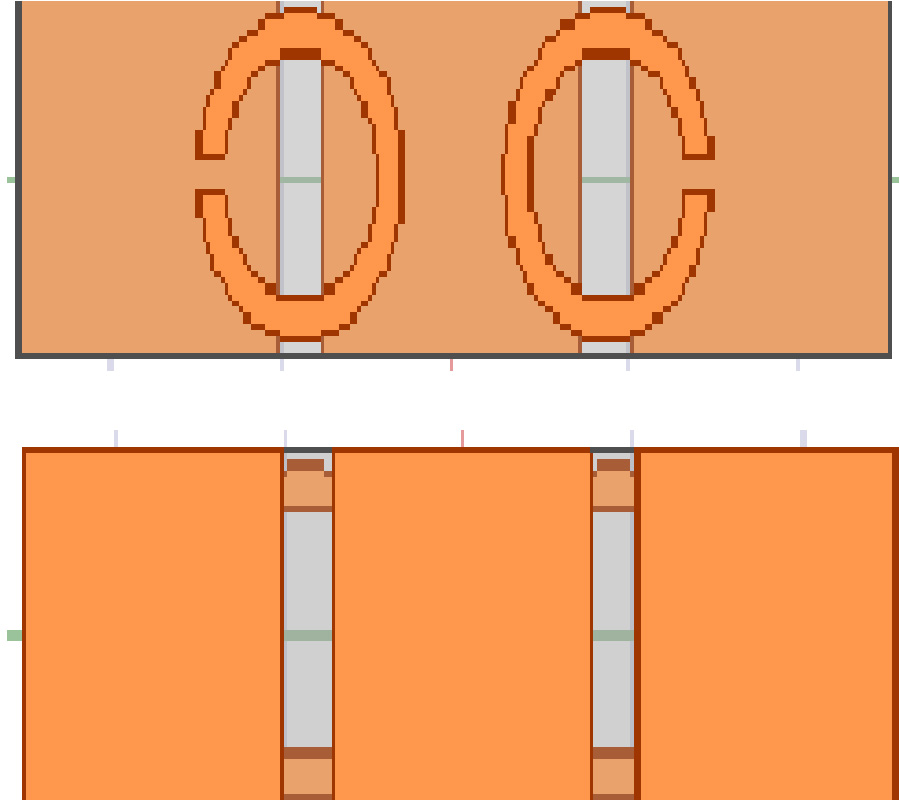
In this work, a dual-band microwave absorber is proposed with periodic array of unit cells which has of dual-split ring geometry on the top of a metal-backed dielectric substrate. The dual-split ring resonators on the top plane is electrically excited by co-polarized component of incident EM wave and gives two absorption peaks at Wi-MAX (3.5 GHz) and WLAN (5.8 GHz) band due to two resonance modes. These two-resonance modes are named as mode 1 and mode 2 for low and high frequency peaks, respectively. The surface current distributionson the top and bottom planes arestudied to gain insight of dual mode resonance for dual band absorption of the structure. Some parametric studies are also performed on key design parameters i.e., split gap, stub length and split angle for further analysis of the design. The measured results are verified with the simulated ones to test its performance and found to be similar.
A CO-POLARIZED MICROWAVE ABSORBER WITH DUAL MODE RESONANCE BASED ON DUAL SPLIT RING GEOMETRY FOR WI-MAX AND WLAN APPLICATIONS
2019-11-20
PIER
Vol. 166, 75-93
Impact of Permittivity Patterns on Fully Polarimetric Brightness Temperature Signatures at L-Band
Moritz Link , Carsten Montzka , Thomas Jagdhuber , Sten S. Sobjærg , Stephan Dill , Markus Peichl , Thomas Meyer and François Jonard
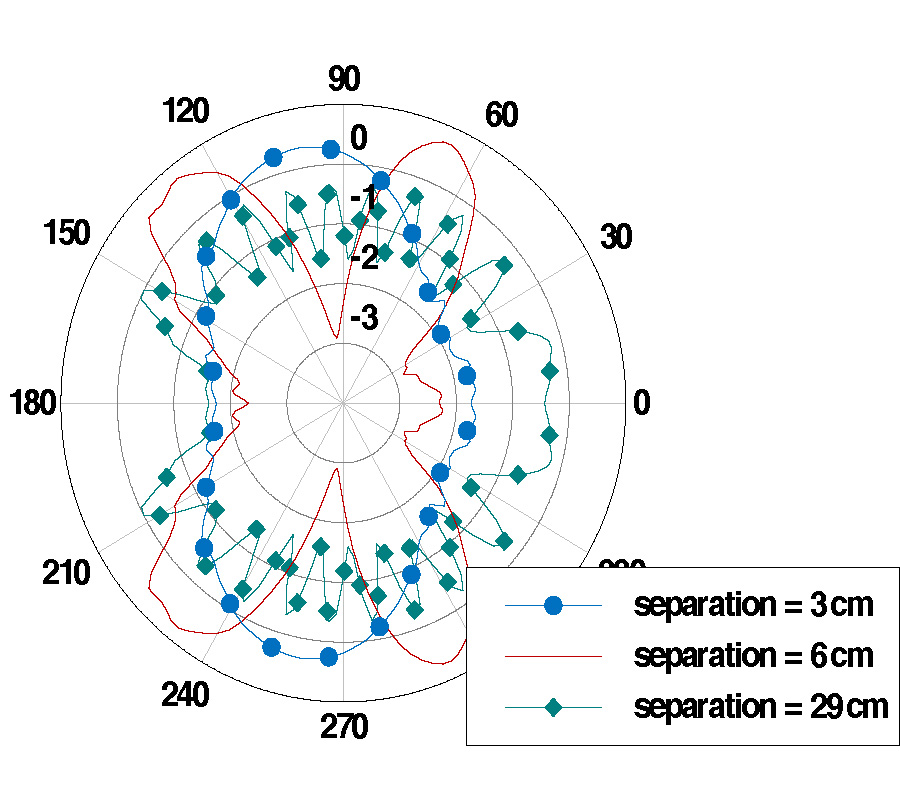
This study investigates the sensitivity of L-band (1.41 GHz) polarimetric brightness temperature signatures to oriented permittivity patterns, which can occur for example in the case of row and interrow soil moisture differences in agricultural fields. A field experiment and model simulations are conducted to verify the effects of such patterns on all four Stokes parameters. We find that for an artificial target resembling idealized model conditions, permittivity patterns lead to systematic brightness temperature modulations in dependency of the azimuthal look angle. For the specific field setup, modulations reach amplitudes of ~4 K and mostly affect h-polarized brightness temperatures as well as the first, second and third Stokes parameters. Simulations of soil moisture patterns under idealized model conditions indicate even higher amplitudes (up to 60 K for extreme cases). However, the effects occur only for permittivity layer widths of up to 8 cm (given the observing wavelength of 21 cm), which is lower than the row and interrow widths typically observed in agricultural settings. For this reason, and due to the idealized model geometry investigated here, future studies are needed to transfer the findings of this study to potential applications such as the sensing of oriented soil moisture patterns. Particular interest might lie in radiometry and reflectometry in lower frequency ranges such as P-band, where according to the threshold established here (8/21 wavelengths), permittivity layer widths of up to ~45 cm could be observed.
IMPACT OF PERMITTIVITY PATTERNS ON FULLY POLARIMETRIC BRIGHTNESS TEMPERATURE SIGNATURES AT L-BAND
2019-11-19
PIER M
Vol. 86, 135-144
Polycarbonate Based Overlapped Architecture for Landscape and Portrait Modes of mmWave 5G Smartphone
Gulur Sadananda Karthikeya , Mahesh Pandurang Abegaonkar and Shiban Kishen Koul
In this paper, a low-cost polycarbonate substrate is used for the design of antennas operating in the 28 GHz band. First, a corner bent inset fed patch antenna is proposed with a forward gain of 7 dBi and a front to back ratio of more than 18 dB indicating minimal radiation towards the user post-integration with a mobile terminal. In order to cater to the landscape mode, a corner bent tapered slot antenna is also proposed with a gain of 7 dBi. An overlapped architecture is investigated to demonstrate orthogonal pattern diversity with an effective radiating volume of 0.12λ03, a port to port distance of 0.13λ at 28 GHz, and mutual coupling of less than 27 dB without deterioration in the pattern integrity of the corresponding modes. Detailed simulated and measured results are presented with justification.
POLYCARBONATE BASED OVERLAPPED ARCHITECTURE FOR LANDSCAPE AND PORTRAIT MODES OF MMWAVE 5G SMARTPHONE
2019-11-19
PIER M
Vol. 86, 125-134
Efficient High-Speed Strip-Mode SAR Raw Signal Simulator of Extended Scene Included Static and Moving Targets
Liang Yang
In high-speed strip-mode Synthetic Aperture Radar (SAR), the motion between the radar and moving targets during the pulse duration must be considered; however, the existing SAR raw data simulator is unable to handle the case of the moving targets for high-speed SAR exactly. As for the issue, an accurate Point Target Reference Spectrum (PTRS) of the moving targets for high-speed SAR is first derived in the paper, which considers the motion. Further, an accurate and efficient extended scene generator for high-speed SAR included static and moving targets is proposed according to the spectrum. Finally, point targets and extended scene are performed to validate the proposed approach, and its computational complexity is analyzed.
EFFICIENT HIGH-SPEED STRIP-MODE SAR RAW SIGNAL SIMULATOR OF EXTENDED SCENE INCLUDED STATIC AND MOVING TARGETS
2019-11-15
PIER C
Vol. 97, 29-41
A New Prediction Method of Rain Attenuation Along Millimeter Wave Links Based on a Bivariate Model for the Effective Path Length and Weibull Distribution
Spiros N. Livieratos , Zisis Ioannidis , Stylianos Savaidis , Stelios Mitilineos and Nikolaos Stathopoulos
Cellular technology is moving towards its 5th generation (5G) that will employ millimeter wave (mmWave) frequencies in the attempt to offer more spectrum and multi-Gigabit-per-second (Gbps) data rates to mobile devices.Various unfavorable propagation phenomena affect mmWave communications, rain attenuation being the most severe one. Various rain attenuation prediction models can be taken into account in the design of terrestrial links based either on cumbersome statistical regression, when sufficient local experimental data are available, or on analytical models where only local rain rate measurements are provided. In this paper, a new prediction method for the rain attenuation is proposed based on a bivariate model for the numerical estimation of the effective path length of a millimeter wave terrestrial link and on Weibull distribution forthe representation of the point rainfall rate statistics. To validate the proposed prediction method, the actual data taken into account are extracted from experiments included in the databank of ITU-R SG3.The numerical results obtained show a significant improvement of the prediction accuracy compared to existing prediction models.
A NEW PREDICTION METHOD OF RAIN ATTENUATION ALONG MILLIMETER WAVE LINKS BASED ON A BIVARIATE MODEL FOR THE EFFECTIVE PATH LENGTH AND WEIBULL DISTRIBUTION