Search Results(13790)

2019-10-05
PIER B
Vol. 85, 163-180
Optimization and Additive Manufacture of a Miniature 3-D Pixel Antenna for Dual-Band Operation
Germán Augusto Ramírez Arroyave and Javier Leonardo Araque Quijano
This paper presents the design, manufacture, and experimental validation of a novel 3-D pixel antenna with volume-filling characteristics, and the design is based on our Method of Moments (MoM) solver that is efficiently coupled with a global/local optimizer for tailoring the antenna shape and concurrently selecting the location of the feeding port and shorting straps. The design, aimed at operating in the ISM bands of 2.45 GHz and 5.8 GHz, has dimensions under one-tenth of wavelength at the lowest frequency of operation. The optimization results are cross-validated using a commercial full-wave simulator, with a deviation of the reflection coefficient across the operating bands within 3%, showing also a high antenna efficiency of 99.6% and a gain of 1.06 and 4.53 dBi at the matching frequencies, with radiation patterns predominantly oriented towards the top hemisphere. Tolerance and parameter sensitivity studies were also performed. A scaled-up prototype of the antenna was built at a very low cost using standard additive manufacturing techniques, featuring a very good agreement between simulation and measurements, which proves the feasibility of this new kind of complex shape antennas in further applications where compact internal antennas are required.
OPTIMIZATION AND ADDITIVE MANUFACTURE OF A MINIATURE 3-D PIXEL ANTENNA FOR DUAL-BAND OPERATION
2019-10-03
PIER B
Vol. 85, 143-161
A Novel Gain-Enhanced Antenna with Metamaterial Planar Lens for Long-Range UHF RFID Applications
Edmilson Carneiro Moreira , Rodrigo O. Martins , Bruno M. S. Ribeiro and Antonio Sergio Bezerra Sombra
A novel gain-enhanced microstrip antenna (MSA) with metamaterial planar lens for long-range radio frequency identification (RFID) applications for the 902-928 MHz UHF frequency band is proposed in this paper. The antenna is a combination of a new general-purpose circularly polarized MSA and a novel effective negative refractive index metamaterial (NIM) slab of 25 unit cells, arranged in a 5 x 5 layout, working as a planar lens for gain enhancement. The general-purpose MSA has an impedance frequency band of 828-1015 MHz, a maximum gain of 8.43 dBi at 915 MHz, an axial ratio frequency band of 896-931 MHz and excellent performance for short and medium range RFID applications. The new infinite periodicity NIM slab has a negative refractive band of 886-1326 MHz, a negative electric permittivity band of 888-3406 MHz, and a negative magnetic permeability of band 885-1065 MHz. Together, the general-purpose MSA and the NIM planar lens results in the low-cost gain-enhanced antenna for long-range RFID applications, with an 843-993 MHz impedance frequency band and a maximum broadside gain enhancement of 48.27%, resulting in a 12.5 dBi gain at 902 MHz. Finally, the parametric studies conducted during the design process of the gain-enhanced antenna with metamaterial planar lens are presented.
A NOVEL GAIN-ENHANCED ANTENNA WITH METAMATERIAL PLANAR LENS FOR LONG-RANGE UHF RFID APPLICATIONS
2019-10-02
PIER M
Vol. 85, 175-184
Photovoltaic Driven Resonant Wireless Energy Transfer System for Implantable Electronic Sensor
Biswaranjan Swain , Dipti Patnaik , Jayshree Halder , Praveen Priyaranjan Nayak , Durga Prasanna Kar and Satyanarayan Bhuyan
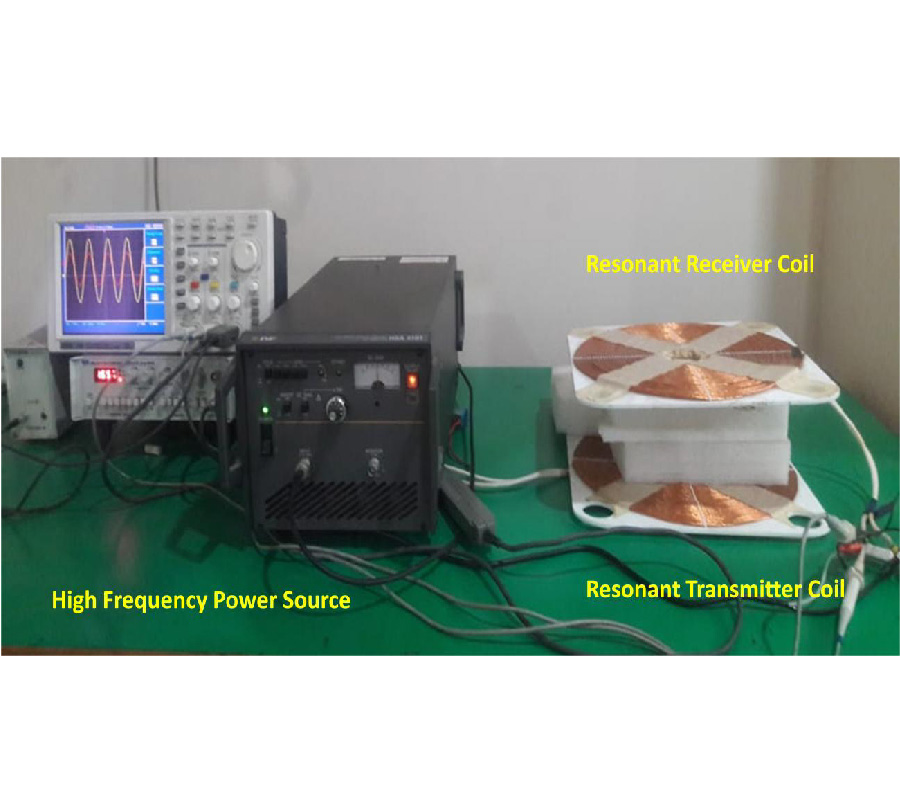
In order to energize the biomedical implantable electronic devices wirelessly for in vivo health monitoring of patients in an isolated, outdoor and inaccessible environment, an alternate driving energy source is highly desirable. In pertinent to this, a photovoltaic driven wireless energizing system has been explored. The system is designed to convert solar energy to a high frequency energy source so as to facilitate energy transfer through resonant inductive link to the automated bio-medical sensing system allied with the receiver unit. The received power is observed to be 286 mW for the coil separation gap of 3 cm and load value of 40 Ω at the resonant frequency of 772.3 kHz. The automated biomedical smart sensor is competent to acquire the body parameter and transmit the consequent telemetry data from the body to the data recording segment. The real-time body temperature parameter of different living beings has been experimented, and to ensure the accuracy of the developed system, the observed parameter has been matched with a calibrated system. The proposed scheme can be suitable for monitoring wirelessly other in vivo health parameters such as blood pressure, bladder pressure, and physiological signals of the patients.
PHOTOVOLTAIC DRIVEN RESONANT WIRELESS ENERGY TRANSFER SYSTEM FOR IMPLANTABLE ELECTRONIC SENSOR
2019-10-02
PIER M
Vol. 85, 165-173
Receiver Coil Position Selection through Magnetic Field Coupling of a WPT System Used for Powering Multiple Electronic Devices
Siddharth Sahany , Sushree Sangita Biswal , Durga Prasanna Kar , Asru Abhijit Pattnaik and Satyanarayan Bhuyan
A wireless power transfer system based on magnetic resonant coupling (MRC) is preferred in many applications as it provides good balance between power transfer efficiency and physical separation distance. However, wireless power transfer to multiple loads through magnetic resonance coupling demands time due to the noteworthy advancement in consumer portable electronic devices. However, operating multiple loads corresponding to their optimum power level is a major concern which mostly depends on the position of the receiving coils with respect to the transmitting coil. This article presents an experimental investigation to find the best suited position of the multiple receiving coils corresponding to a spirally configured transmitting coil for powering multiple loads at their optimal power level. Through this technique multiple electronic devices can be powered up not only in one direction but also in both directions with their optimal power level. The findings will greatly assist the design of a resonant wireless power transfer system for powering multiple loads.
RECEIVER COIL POSITION SELECTION THROUGH MAGNETIC FIELD COUPLING OF A WPT SYSTEM USED FOR POWERING MULTIPLE ELECTRONIC DEVICES
2019-10-01
PIER C
Vol. 96, 109-122
On the Covariant Representation of Integral Equations of the Electromagnetic Field
Sergey G. Fedosin
Gauss integral theorems for electric and magnetic fields, Faraday's law of electromagnetic induction, magnetic field circulation theorem, theorems on the flux and circulation of vector potential, which are valid in curved spacetime, are presented in a covariant form. Covariant formulas for magnetic and electric fluxes, for electromotive force and circulation of the vector potential are provided. In particular, the electromotive force is expressed by a line integral over a closed curve, while in the integral, in addition to the vortex electric field strength, a determinant of the metric tensor also appears. Similarly, the magnetic flux is expressed by a surface integral from the product of magnetic field induction by the determinant of the metric tensor. A new physical quantity is introduced - the integral scalar potential, the rate of change of which over time determines the flux of vector potential through a closed surface. It is shown that the commonly used four-dimensional Kelvin-Stokes theorem does not allow one to deduce fully the integral laws of the electromagnetic field and in the covariant notation requires the addition of determinant of the metric tensor, besides the fact that the validity of the Kelvin-Stokes theorem is limited to the cases when determinant of metric tensor and the contour area are independent from time. This disadvantage is not present in the approach that uses the divergence theorem and equation for the dual electromagnetic field tensor. The problem of interpreting the law of electromagnetic induction and magnetic field circulation theorem cannot be solved on the basis of the Lorentz force in the absence of charges, and therefore requires a more general approach, when transformation of the field components from the reference frame at rest into the moving reference frame is taken into account. A new effect is predicted, according to which the circulation of magnetic field can appear even in the absence of electric current and with a constant electric field through the contour, if the area of this contour would change. By analogy with electromagnetic induction, for the magnetic field circulation to appear it is important that electric field flux passing through the area of the contour would change over time.
ON THE COVARIANT REPRESENTATION OF INTEGRAL EQUATIONS OF THE ELECTROMAGNETIC FIELD
2019-09-29
PIER Letters
Vol. 87, 89-96
An Improved Taguchi's Method for Electromagnetic Applications
Xingning Jia and Guizhen Lu
An improved Taguchi's method (ITM) is proposed in this paper. The dynamic reduced rate function linked with the contributions of each parameter is used to increase the convergence speed. An extra procedure is added in the ITM to determine whether the experiment results in orthogonal array meet the termination criterion which is neglected in the traditional Taguchi's method (TM). Three experiments, including the syntheses of linear arrays and the designs of an E-shaped antenna and an ultra-wide band monopole, are conducted to investigate the performance of the proposed method, and the results are compared with those of traditional TM and other meta-heuristic methods. The results show that the same or even better results are obtained by the improved TM with fast convergence speed.
AN IMPROVED TAGUCHI'S METHOD FOR ELECTROMAGNETIC APPLICATIONS
2019-09-29
PIER M
Vol. 85, 155-164
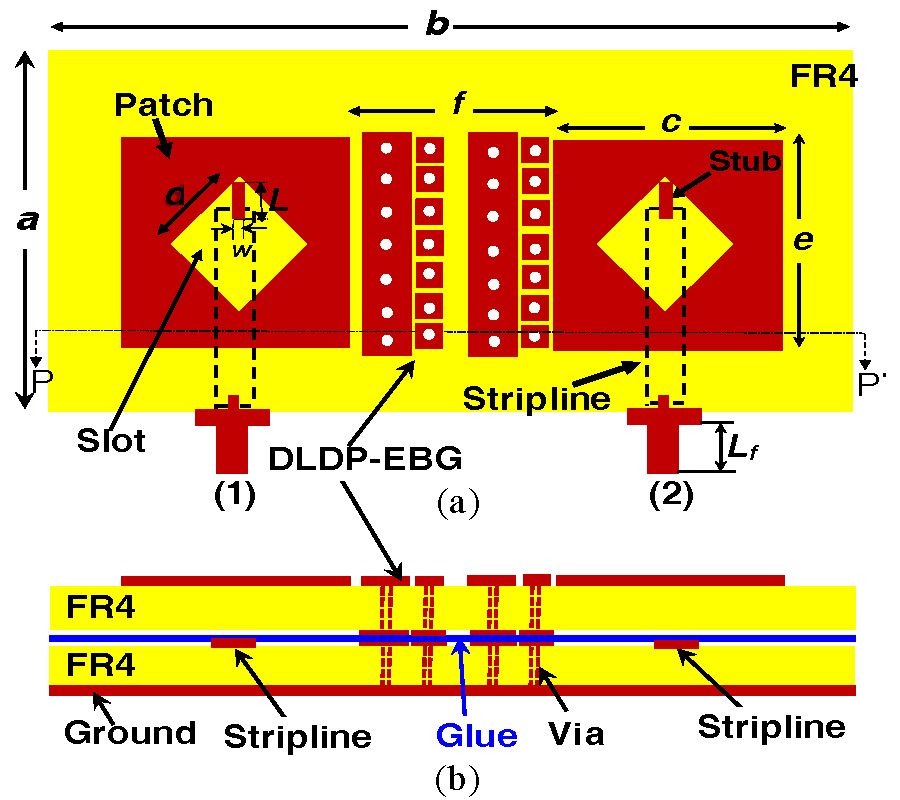
A Dual-Layer Microstrip Patch Antenna with Stub Designed by Simulated Annealing Algorithm for Circular Polarization
Li Guo and Zhiqiang Yao
In this paper, a design method that employs simulated annealing (SA) algorithm to create stub structure of a dual-layer microstrip patch antenna for circular polarization is presented. Firstly, based on established controls of SA algorithm, a series of stub structures have been created automatically on the stacked parasitic element - (Split Ring Resonator) SRR of antenna. The desired stub structure is chosen according to the generation of orthogonal modes that produce circular polarization through the electromagnetic coupling to the driven patch with an SRR-shaped slot. Then, a dual-layer microstrip patch antenna with a Z-shaped stub and left-hand circularly polarized (LHCP) characteristic is obtained by employing the assisted design. The designed antenna is simulated, optimized, fabricated, and measured. The results show that the microstrip patch antenna with Z-shaped stub has a simulated minimum axial ratio of 1.64 dB at 2.4 GHz, and the measured peak gain can be up to 5.87 dBi.
A DUAL-LAYER MICROSTRIP PATCH ANTENNA WITH STUB DESIGNED BY SIMULATED ANNEALING ALGORITHM FOR CIRCULAR POLARIZATION
2019-09-29
PIER M
Vol. 85, 145-154
Wind Turbine Clutter Suppression for Weather Radars by Improved Range-Doppler Domain Joint Interpolation in Low SNR Environments
Xu Yao , Mingwei Shen , Di Wu and Dai-Yin Zhu
Due to the exponential growth of the number and scale of wind farms, wind turbine clutter has become the main factor that limits the detection performance of weather radar systems. As a consequence of the rapid rotation of wind turbine blades, conventional ground clutter filters are ineffective at removing wind turbine clutter (WTC). An improved range-Doppler joint interpolation for WTC suppression is proposed in this paper. The proposed algorithm firstly exploits the frequency-domain transformation technique to improve the signal-to-noise ratio (SNR), so that the interpolation algorithm can recover the weather signal in the case of low SNR. Then, the weather signals recovered by one-dimensional interpolation in range domain and Doppler domain are calculated, respectively, and the two-dimensional joint interpolation is performed based on two-dimensional weighted coefficients calculated via a least mean squares criterion. Theoretical analysis and simulation results show that the proposed algorithm effectively suppresses the wind turbine clutter and significantly reduces the bias in radial velocity estimation caused by WTC contamination in low SNR environments.
WIND TURBINE CLUTTER SUPPRESSION FOR WEATHER RADARS BY IMPROVED RANGE-DOPPLER DOMAIN JOINT INTERPOLATION IN LOW SNR ENVIRONMENTS
2019-09-26
PIER Letters
Vol. 87, 81-87
Development of a Circularly Polarized HMSIW Antenna
Haozhan Tian and Tatsuo Itoh
A circularly polarized (CP) half-mode substrate integrated waveguide (HMSIW) cavity-backed antenna is developed by a novel design method in this paper. The single-fed antenna contains two coupled HMSIW cavities with orthogonal polarizations. Its design method evolves from filter synthesis procedure, which takes the advantage of equivalent circuit model to accelerate the optimization. The antenna radiates high-purity right handed CP waves with measured axial ratio (AR) of 0.33 dB at 3.55 GHz, while its gain and AR bandwidth are comparable to other CP SIW antennas. With the robust design method, the proposed antenna is competitive in practical applications.
DEVELOPMENT OF A CIRCULARLY POLARIZED HMSIW ANTENNA
2019-09-25
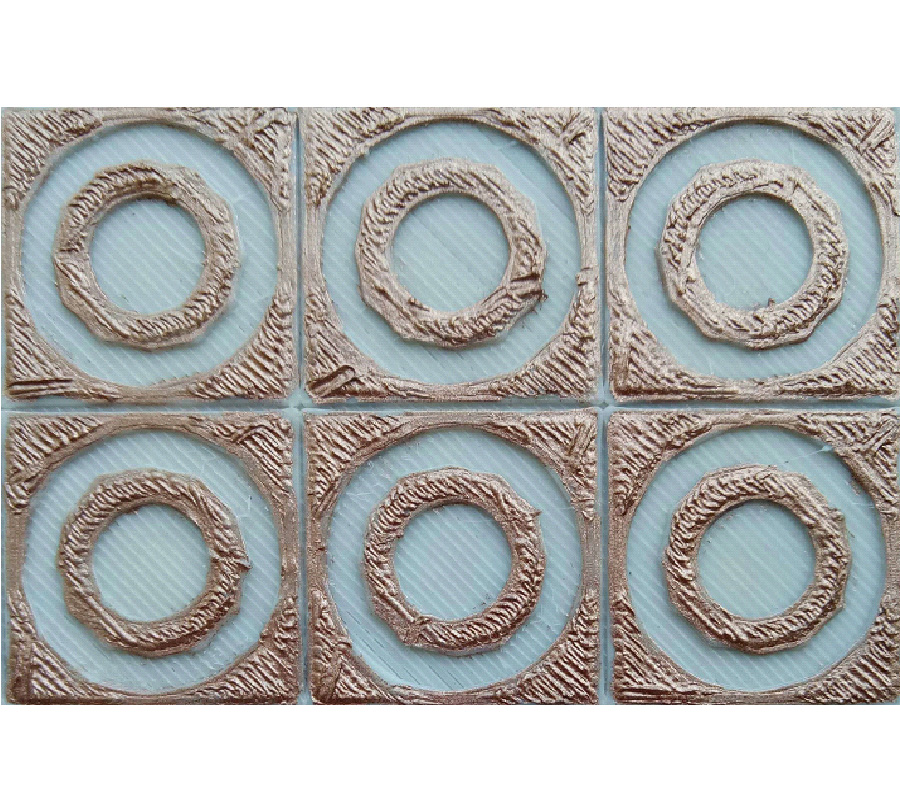
PIER
Vol. 165, 107-117
A Camouflage Device Without Metamaterials
Fei Sun , Yijie Zhang , Julian Evans and Sailing He
We propose a camouflage device that can greatly reduce scattering in the microwave frequency using only uniform copper plates with no internal structuring (no metamaterials). The camouflage device is designed by optical surface transformation (OST), which is derived from transformation optics but much simpler than transformation optics. The key of our design is to choose suitable arrangement and lengths of these copper plates that satisfy Fabry-Perot condition. The proposed camouflage device can work when the detecting wave comes from a wide-angle range (not only works for some discrete angles). The proposed method will give a new and simple way to design and realize camouflage device.
A CAMOUFLAGE DEVICE WITHOUT METAMATERIALS
2019-09-24
PIER M
Vol. 85, 135-144
Detection of Water Content in Emulsified Oil with the Metamaterial Sensor
Jie Huang , Zhihua Wei , Guoqing Xu , Jun-Shan Li and Jing Li
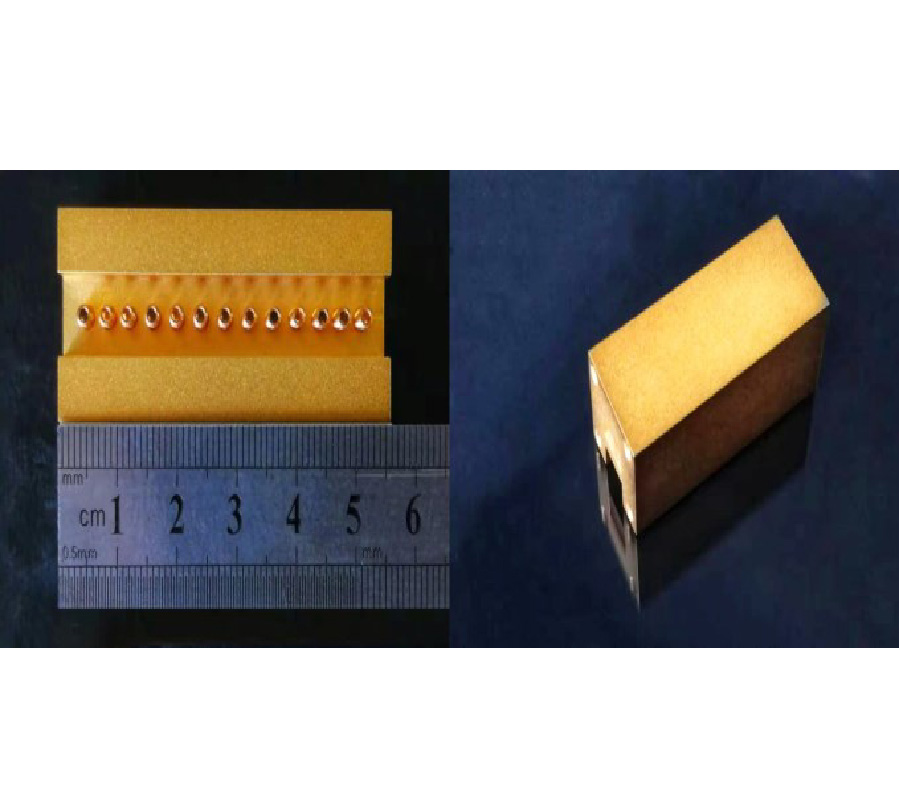
A metamaterial sensor that can be applied to detect water content in emulsified oil is proposed, which is reusable in experiment and nondestructive to the sample. Electric field of the original absorber is researched to guide the design of microfluidic. Also, its equivalent circuit model is proposed to validate its ability as a sensor. The calculated sensitivity of the sensor is 339 MHz/ε'r in the range of 11.26 GHz to 10.044 GHz, indicating its potential for detecting the emulsified oil. The experimental results reveal the reliable process of detection and the linear relationship between frequency shift and water content. This work provides a fast and convenient solution to check the quality of lubricant oil to some extent, which is relatively valuable to modern machinery.
DETECTION OF WATER CONTENT IN EMULSIFIED OIL WITH THE METAMATERIAL SENSOR
2019-09-20
PIER M
Vol. 85, 125-134
A High-Swing Class-C VCO with Amplitude Feedback Loop for Low Phase Noise and Robust Start-Up
Qi Liu , Ye-Bing Gan and Tian-Chun Ye
A novel high-swing Class-C VCO with an amplitude feedback loop is presented. The amplitude feedback loop is used to ensure the start-up of the VCO which also makes the proposed VCO always have an optimal phase noise against the PVT variations automatically. The proposed circuit is implemented in a 65 nm CMOS process. The VCO has exhibited a measured phase noise of -128.6 dBc/Hz at 1 MHz offset from the 1.52 GHz carrier frequency with a 1.4 mW power consumption. The variation of measured phase noise at 1 MHz offset is less than 2.3% while temperature changes from -40˚C to 100˚C.
A HIGH-SWING CLASS-C VCO WITH AMPLITUDE FEEDBACK LOOP FOR LOW PHASE NOISE AND ROBUST START-UP
2019-09-20
PIER M
Vol. 85, 115-123
Backward Cloud Model Based Feature Extraction of Aircraft Echoes and Target Classification
Qiusheng Li and Li Wang
As a kind of complicated targets, the nonrigid vibration of aircraft, their attitude change, and the rotation of their ro-tating parts will induce complicated nonlinear modulation on their echoes from low-resolution radars. These kinds of modulation play an important role in target classification. However, due to the influence of clutter and noise, these kinds of modulation have the characteristics of fuzziness and randomness. As a quantitative to qualitative conversion model based on traditional probability statis-tics theory and fuzzy theory, backward cloud model can be used to model and analyze the modulation characteristics of the conven-tional low-resolution radar echoes from aircraft targets. By considering the sample values of the echo data as individual cloud drop-lets, the paper extracts the cloud digital features such as the expectation, entropy and hyper-entropy of each group of echo data, and investigates the application of these features in aircraft target classification based on support vector machine. The research results show that the backward cloud model can describe the aircraft echoes well, and the echo cloud digital features can be effectively used for the classification and identification of aircraft targets.
BACKWARD CLOUD MODEL BASED FEATURE EXTRACTION OF AIRCRAFT ECHOES AND TARGET CLASSIFICATION
2019-09-20
PIER M
Vol. 85, 105-114
Temperature Field Analysis and Optimization of the Homopolar Magnetic Bearing
Yu Cao , Chuang Liu , Shushu Zhu and Junyue Yu
The hybrid magnetic bearings (HMB) stabilize suspension in equilibrium position by providing bias flux through permanent magnets. The loss generated during operation causes the temperature of the HMB to rise, which affects the stability of the magnetic bearing. In this paper, the loss and temperature of HMB are analyzed by finite element analysis software. The results show that the loss of HMB is mainly distributed in the rotor part, and the temperature of the rotor part is obviously higher than that of the stator part. The relationship between the structural parameters such as air gap length and pole width, and the loss of HMB is obtained by finite element analysis. According to the analysis results, the structural parameters are optimized by GAPSO. After optimization, the loss and temperature of HMB are significantly reduced.
TEMPERATURE FIELD ANALYSIS AND OPTIMIZATION OF THE HOMOPOLAR MAGNETIC BEARING
2019-09-20
PIER M
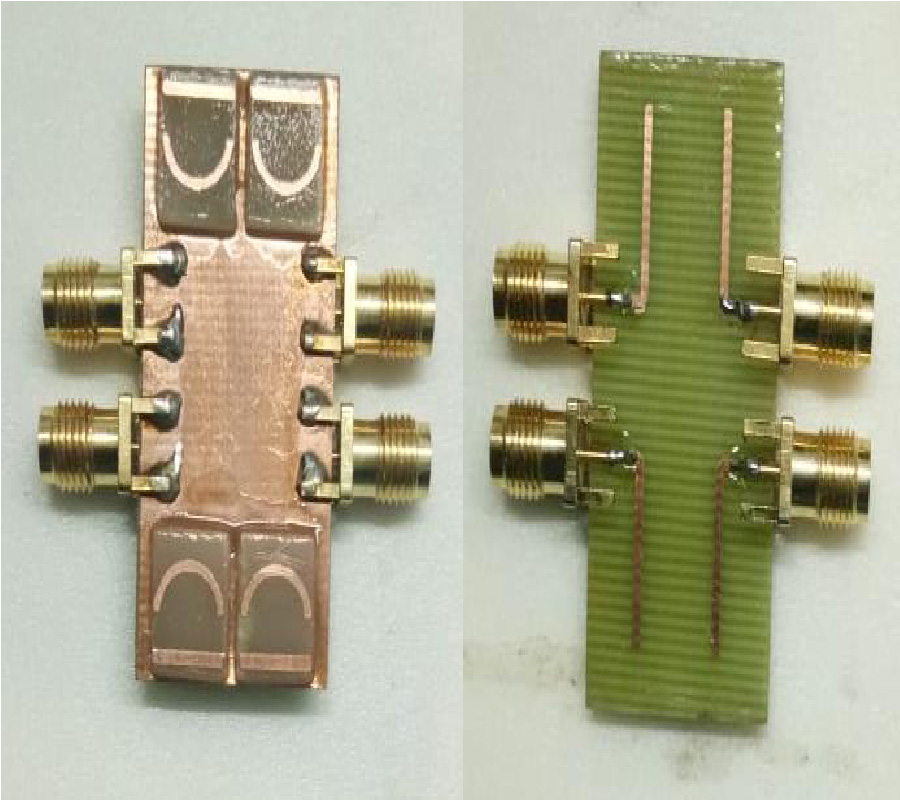
Vol. 85, 95-104
Design of a Four-Element MIMO Antenna with Low Mutual Coupling in a Small Size for Satelitte Applications
Aziz Dkiouak , Alia Zakriti , Mohssine El Ouahabi , Naima Amar Touhami and Aicha Mchbal
In this paper, a compact planar mono-band multiple input multiple output (MIMO) antenna with four monopole elements is presented for X-band satellite applications (7.2-7.8 GHz). The MIMO antenna resonates at 7.5 GHz, with high isolation (more than 26 dB) between its ports. It consists of a four closely arranged symmetric monopole antennas with edge-to-edge distance of 7.2 mm (0.18λ). In the top face, different forms are loaded at the rectangular patch. U slot defected ground structure (DGS) has embedded in the ground plane. The prototype of the proposed MIMO antenna is simulated, fabricated and measured to examine the performance of this antenna in terms of S parameters, radiation patterns, the envelope of correlation coefficient (ECC) and the diversity gain (DG). As a result, the presented antenna has a high isolation (S12 < -26 dB) at 7.5 GHz with impedance bandwidths is about 430 MHz (7.28 GHz-7.71 GHz), which covers the X-band applications. The diversity gain is about 10, and the envelope correlation coefficient of antenna is less than 0.02 which means that the antenna has high performance at the resonance frequency.
DESIGN OF A FOUR-ELEMENT MIMO ANTENNA WITH LOW MUTUAL COUPLING IN A SMALL SIZE FOR SATELITTE APPLICATIONS
2019-09-19
PIER C
Vol. 95, 265-279
Motion Compensation Algorithm for Single Track FMCW CSAR by Parametric Sparse Representation
Depeng Song , Binbing Li , Yi Qu and Yijun Chen
In recent years, FMCW CSAR (frequency modulation continue wave circular synthetic aperture radar) is more and more widely used in military reconnaissance and sea surface target recognition. However, due to the influence of external factors, it cannot move in an ideal uniform circular trajectory, resulting in low imaging resolution. In this paper, the problem of motion errors caused by nonuniform circular motion is analyzed, and the phenomenon of range unit broadening and sidelobe increase caused by nonuniform circular motion errors is simulated. The echo model is characterized by error parameters. Based on the compressed sensing imaging algorithm, motion error parameters are estimated by parametric sparse representation. The least squares method and gradient descent method are applied to estimate motion error parameters. Simulations are conducted to show that both of the methods can reach the goal that the motion compensation is realized. The result of simulations and measurement data demonstrate that the algorithm can correct nonuniform circular motion errors better and further improve the imaging resolution.
MOTION COMPENSATION ALGORITHM FOR SINGLE TRACK FMCW CSAR BY PARAMETRIC SPARSE REPRESENTATION
2019-09-18
PIER Letters
Vol. 87, 75-80
Simulation Study on Forward Problem of Magnetoacoustic Tomography with Magnetic Induction Based on Magnetic Nanoparticles
Xiaoheng Yan , Ye Pan , Ying Zhang and Sichen Guang
Magnetoacoustic tomography with magnetic induction (MAT-MI) is a multiphysics imaging technique that combines electrical impedance imaging with ultrasound imaging. In order to study the influence of parameters on the source of MAT-MI , such as radius and permeability of magnetic nanoparticle clusters, the paper is divided into the following stages. Firstly, this paper analyzes the electromagnetic and acoustic properties of MAT-MI after adding magnetic nanoparticles. Secondly, to determine the suitable simulation conditions, a two-dimensional model is constructed. Thirdly, use the finite element method to solve physical processes of electromagnetic field and acoustic field under conditions of different magnetic nanoparticle clusters' radii and permeabilities, then obtain the magnetic flux density image. Consequently, make the qualitative and quantitative analysis according to the theory and simulation results. The results show that magnetic nanoparticle clusters interact with each other and distort the magnetic field to different degrees; its radius increases with the degree of flux density distortion around it, so does its permeability and magnetoacoustic signal intensity. The research results can play a guiding role in the parameter selection of magnetic nanoparticle clusters in practical applications to a certain extent.
SIMULATION STUDY ON FORWARD PROBLEM OF MAGNETOACOUSTIC TOMOGRAPHY WITH MAGNETIC INDUCTION BASED ON MAGNETIC NANOPARTICLES
2019-09-17
PIER M
Vol. 85, 83-94
Analysis of Electromagnetic Vibration and Noise Characteristics of Bearingless Switched Reluctance Motor
Yonghong Huang , Chi Chen , Ye Yuan , Fengxiao Huang , Qianwen Xiang and Fan Yang
The vibration and noise problems caused by the radial electromagnetic force of the Bearingless Switched Reluctance Motor (BSRM) severely restrict its wide application. The purpose of this paper is to research the electromagnetic vibration and noise of Single-Winding Bearingless Switched Reluctance Machine (SWBSRM). Firstly, the radial electromagnetic force, which is the excitation source of electromagnetic vibration, is analyzed. Secondly, the three-dimensional (3D) model of stator structure is established by ANSYS finite element analysis (FEA) software, and its modal analysis is carried out to obtain its modal shape and corresponding modal frequency, which provides a reference and basis for researching the mechanical vibration of the SWBSRM. Finally, the harmonic response field analysis and sound field analysis model are established, and the vibration and noise of the motor under radial electromagnetic force are analyzed by using the magnetic-solid weak coupling analysis method.
ANALYSIS OF ELECTROMAGNETIC VIBRATION AND NOISE CHARACTERISTICS OF BEARINGLESS SWITCHED RELUCTANCE MOTOR
2019-09-16
PIER C
Vol. 95, 251-264
The Fractional Derivative Approach for the Diffraction Problems: Plane Wave Diffraction by Two Strips with the Fractional Boundary Conditions
Vasil Tabatadze , Kamil Karaçuha and Eldar I. Veliyev
In this article, a solution of the plane wave diffraction problem by two axisymmetric strips with different dimensions is considered. Fractional boundary conditions are required on the surface of eachstrip. Several cases of strip's dimension, configurations, and fractional orders are considered, and numerical results are obtained. The near electric field distribution, Total Radar Cross Section frequency characteristics, and the Poynting vector distribution in the vicinity of these strips are calculated and illustrated. For the fractional order 0.5, the solution is found analytically.
THE FRACTIONAL DERIVATIVE APPROACH FOR THE DIFFRACTION PROBLEMS: PLANE WAVE DIFFRACTION BY TWO STRIPS WITH THE FRACTIONAL BOUNDARY CONDITIONS
2019-09-16
PIER C
Vol. 95, 239-249
A Hepta-Band Metal-Rimmed Antenna Without Lumped Elements for Smartphone Application
Peng Wang and Quanyuan Feng
As seen from this article, a novel hepta-band metal-rimmed antenna is proposed. The volume of the proposed antenna is small, and no lumped elements are used. The proposed metal-rimmed antenna is competitive for modern mobile application. The illustrated antenna could be divided into several parts: main ground plane, metal rim, two L-shaped ground slots sharing one open end, an L-shaped branch extended from right edge of main ground, a microstrip feedline located at the top surface of the substrate, a meandered branch located at the back side of the substrate, and a 2mm slot located at the middle of the metal rim's top edge. For lower band, GSM850 and GSM 900 are provided by two bezel loop modes generated through capacitive coupling of feedline. For upper band, DCS, PCS, UMTS, LTE2300, and LTE2500 are covered by multiple modes of two L-shaped slots, a meandered strip and feedline. With the proposed structure, the volume of the proposed antenna could be further reduced. All the mentioned operating bands are achieved in a small area of 620 mm2 on a 115x70 mm2 system board. Note that the proposed antenna has achieved such a small volume on a relatively small system board without any lumped elements. The rest of this paper will describe the antenna configuration, the analysis of working principle, parametric analysis, and the experimental results are also given and discussed.
A HEPTA-BAND METAL-RIMMED ANTENNA WITHOUT LUMPED ELEMENTS FOR SMARTPHONE APPLICATION