Search Results(13790)

2019-09-03
PIER Letters
Vol. 87, 45-50
A Novel Three-Parameter Fully Tunable BP Filter
Kaiwei Zuo , Yong-Zhong Zhu , Le Li , Zheyu Li , Guohao Peng and Xiaoyu Liu
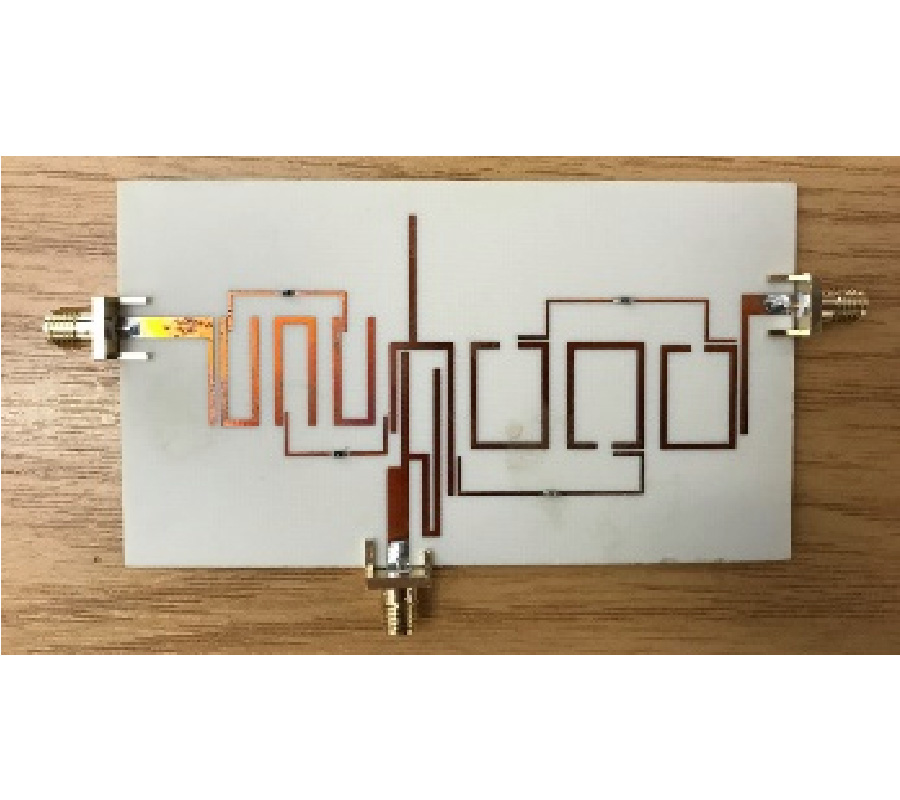
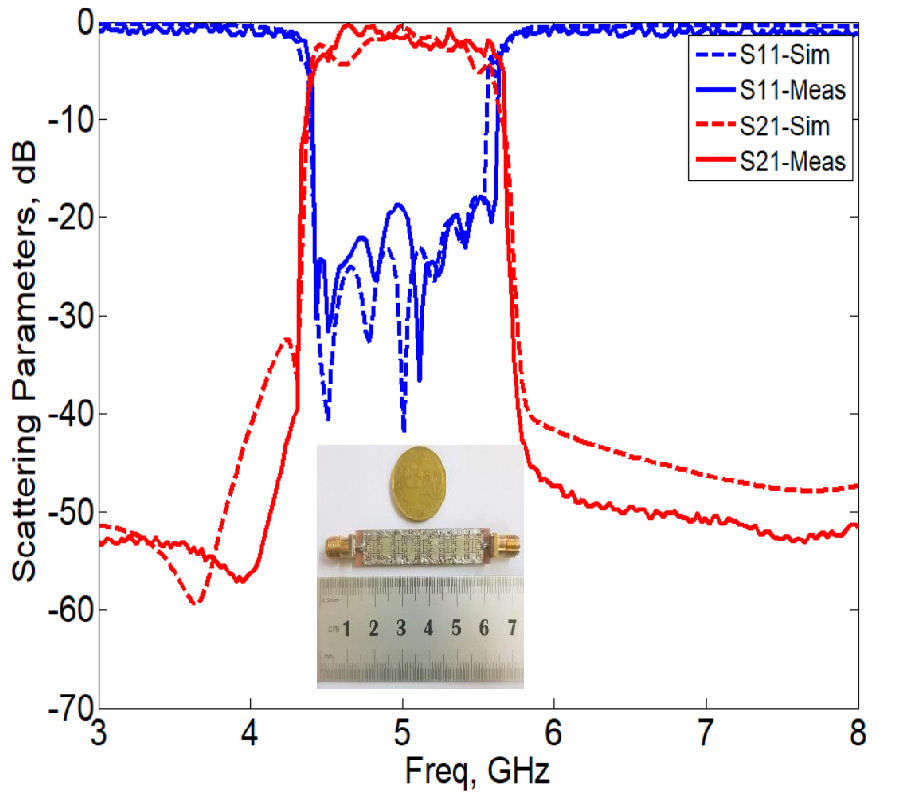
The research and development of microwave-tunable equipment has promoted the advancement of electronic countermeasures and electronic surveillance in the field of military communications. The research of fully tunable filters is a hotspot in the field of tunable filter research. Parameters such as center frequency (CF), absolute bandwidth (ABW), and transmission zero (TZ) are important indicators of fully tunable filters. In this paper, a high-performance fully tunable substrate integrated waveguide filter is designed and fabricated to achieve constant ABW (100 MHz) and TZ (1.59 GHz) with CF tunable, and the adjustable range is 1.1-1.3 GHz. Meanwhile, the constant CF (1.15 GHz) is achieved with the ABW tunable, and the adjustable range is 70-120 MHz. Also the constant ABW (100 MHz) and CF (1.14 GHz) are achieved with the TZ tunable, and the adjustable range is 1.59-1.89 GHz. The measured results show that the insertion loss of the tunable filter is lower than 2.04 dB, and the return loss is greater than 20 dB.
A NOVEL THREE-PARAMETER FULLY TUNABLE BP FILTER
2019-09-03
PIER M
Vol. 84, 187-195
Controlling Surface States of Planar Metamaterial Based on Moire Effect
Sergey Yu. Polevoy and Sergey I. Tarapov
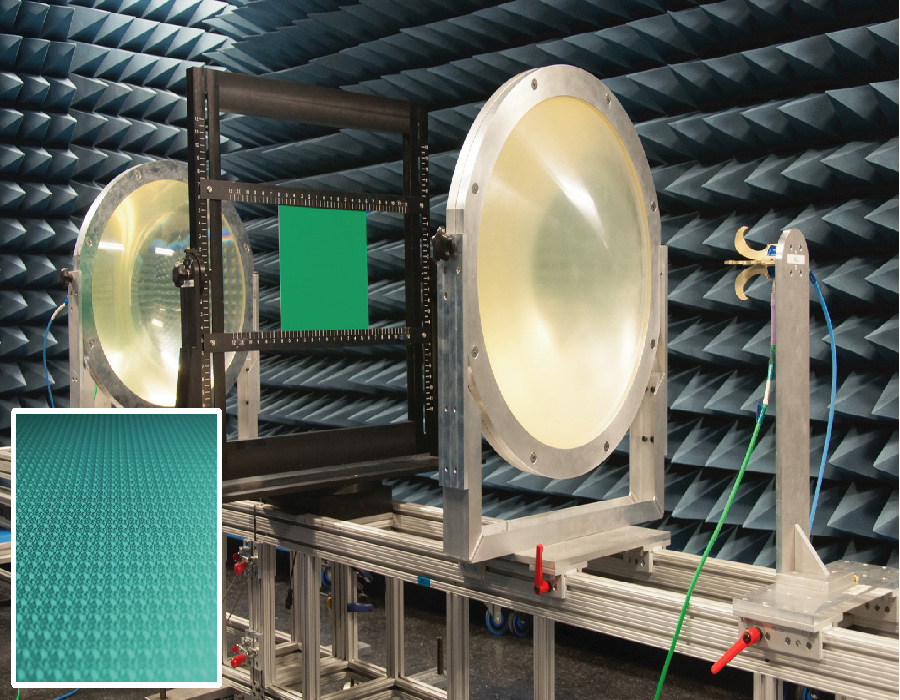
The possibility to achieve a continuous tuning of the spectral properties in the case of two types of planar metamaterials based on the moire effect is demonstrated both experimentally and numerically. Tuning spectral characteristics are provided by changing geometric parameters of above-mentioned metamaterials. It is shown that for a one-dimensional moire metamaterial obtained by superposition of two microstrip photonic crystals with close periods, the position of the stopband in the spectrum can be controlled by changing these periods. We also consider the two-dimensional moire metamaterial formed by two identical periodic crossed structures with hexagonal symmetry. The ability to control the frequency of surface state mode by changing the crossing angle of these structures relative to each other has been shown experimentally and numerically. It is numerically demonstrated that, if the moire metamaterial is irradiated by the horn antenna, a surface wave propagating in the metamaterial plane appears in all directions beginning from its intersection point with the axis of the incident wave beam. In practice, moire metamaterials of this type can be considered as a promising prototype of microwave filters, whose spectral properties can be continuously and smoothly mechanically rearranged.
CONTROLLING SURFACE STATES OF PLANAR METAMATERIAL BASED ON MOIRE EFFECT
2019-09-02
PIER C
Vol. 95, 131-140
A Miniature Rectangular Patch Antenna Using Defected Ground Structure for WLAN Applications
Kakani Suvarna , Nallagarla Ramamurthy and Dupakuntla Vishnu Vardhan
The purpose of this work is to miniaturize a rectangular patch antenna which resonates at 2.4 GHz. To achieve this, we present a new geometry of a pi-shaped slot with three annular rings as a Defected Ground Structure (DGS). DGS is a periodic etched structure or a periodic sequence of configurations, and it has been used to switch the resonance frequency from starting value 13 GHz to an ending value at 2.4 GHz without any changes in the areas of the actual rectangular microstrip patch antenna (RMPA). The proposed antenna is structured on an FR-4 substrate with thickness 1.6 mm and permittivity 4.4. The general size of the ground plane is 34 × 34 mm2. Using the optimal position and dimension of the pi-shaped slot on the ground, the resonant frequency is reduced to 2.4 GHz, which signifies an 81.53% decrease. Proposed antennas with and without DGS are simulated by using High-Frequency Structure Simulator (HFSS) and Advanced Digital System (ADS) Agilent technology, fabricated, and measured for Wireless Local Area Network (WLAN) application.
A MINIATURE RECTANGULAR PATCH ANTENNA USING DEFECTED GROUND STRUCTURE FOR WLAN APPLICATIONS
2019-09-02
PIER C
Vol. 95, 119-129
A Low SAR Value Wearable Antenna for Wireless Body Area Network Based on AMC Structure
Bo Yin , Jing Gu , Xingxing Feng , Bin Wang , Youhai Yu and Wei Ruan
This paper proposes a wearable antenna for Wireless Body Area Network (WBAN) that operates at the 2.45 GHz medical band. The antenna is enabled by coplanar waveguide, and the impedance bandwidth of the antenna is expanded by combining a circular slot with asymmetric slots. In order to reduce the radiation of the antenna back lobe and improve the antenna gain, a new 2×2 Artificial Magnetic Conductor (AMC) is designed and loaded under the monopole antenna. The radiation of antenna back lobe is effectively reduced due to the addition of AMC reflector. Also, the front-to-back ratio of the demonstrated antenna is higher than 20 dB, achieving a forward gain of 7.47 dBi and Specific Absorption Rate (SAR) lower than 0.15 W/kg, in the ISM band.For further research, the antenna is fabricated and tested, showing a strong agreement between simulation and measurement. Meanwhile, the antenna has stable performance under the bending condition, meeting the practical application requirements of wearable equipment.
A LOW SAR VALUE WEARABLE ANTENNA FOR WIRELESS BODY AREA NETWORK BASED ON AMC STRUCTURE
2019-09-02
PIER C
Vol. 95, 107-117
On the Outage Performance of Partial Relay Selection Aided NOMA System with Energy Harvesting and Outdated CSI Over Non-Identical Channels
Pius Adewale Owolawi and Kehinde O. Odeyemi
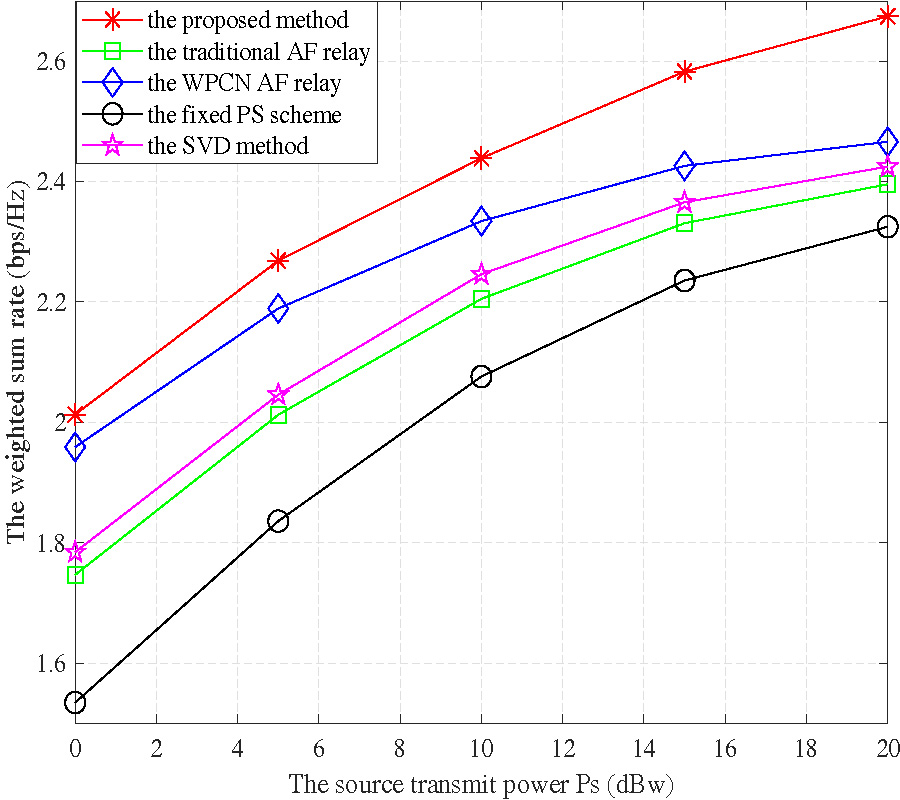
In this paper, the outage probability performance of energy harvesting based partial relay selection aided non-orthogonal multiple access (NOMA) system under outdated channel state information is studied. The source to relays link is assumed to follow Rayleigh fading distribution while the relay nodes to users are subjected to Nakagami-m distribution. The relay nodes employ an energy harvesting power splitting-based relaying protocol to transmit the source information to the users.At the destination, each user is equipped with multiple antennas, and maximum ratio combining is considered for signal reception. In order to evaluate the system performance, the outage probability closed-form expression for the concerned system is derived. The results demonstrate the significant impact of system and channel parameters on the system performance. In addition, the advantage of NOMA over the conventional orthogonal multiple access is also presented. Finally, the accuracy of the derived outage expression is validated through the Monte-Carlo simulation.
ON THE OUTAGE PERFORMANCE OF PARTIAL RELAY SELECTION AIDED NOMA SYSTEM WITH ENERGY HARVESTING AND OUTDATED CSI OVER NON-IDENTICAL CHANNELS
2019-09-02
PIER Letters
Vol. 87, 39-43
Miniaturized Microstrip Lowpass Filter with Ultra-Wide Stopband Performance Using Trapezoid Patch Resonators
Bing Xie and Hongbin Yu
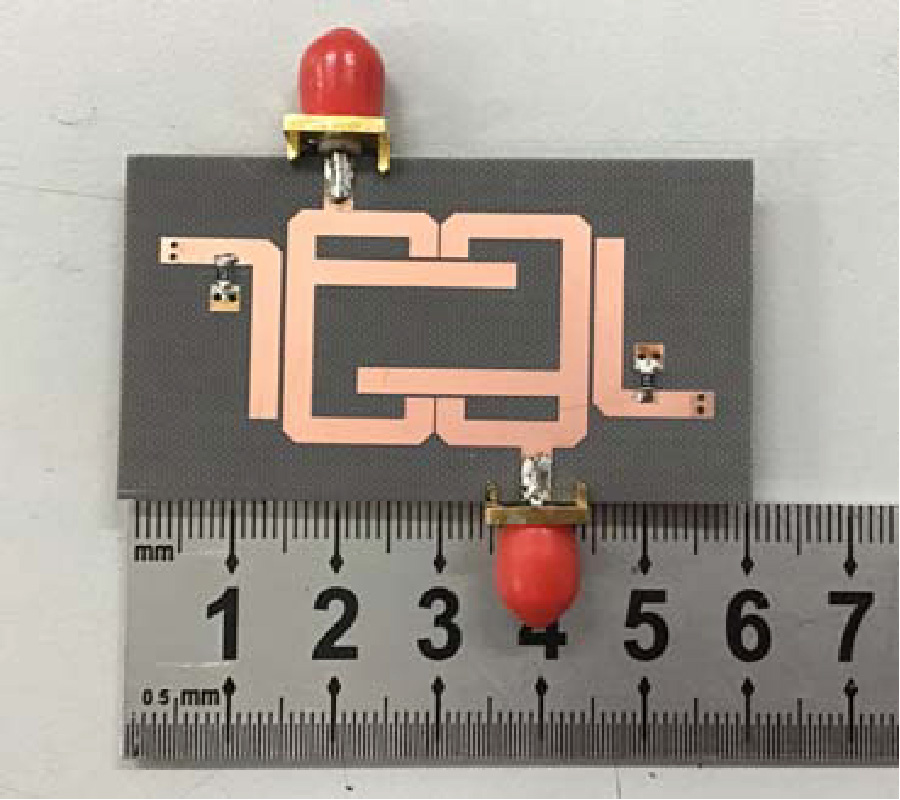
A new miniaturized microstrip lowpass filter with ultra-wide stopband performance using trapezoid patch resonators is investigated. To achieve compact design and ultra-wide band rejection, trapezoid patch resonators are employed in the filter. To further reduce the circuit size of the filter, a meander transmission line is also introduced in the design. A demonstration filter with 3 dB cutoff frequency at 0.50 GHz has been designed, fabricated, and measured. Results indicate that the proposed filter is able to suppress the 26th harmonic response referred to a suppression degree of 15 dB. Furthermore, the proposed filter exhibits a small size of 0.122λg×0.109λg, where λg is the guided wavelength at 0.50 GHz.
MINIATURIZED MICROSTRIP LOWPASS FILTER WITH ULTRA-WIDE STOPBAND PERFORMANCE USING TRAPEZOID PATCH RESONATORS
2019-09-01
PIER C
Vol. 95, 91-105
Experimental and Computational Analysis of the Effects of Tri-Band Antennas of Wearable Smart Glasses
Miraç Dilruba Geyikoğlu , Fatih Kaburcuk and Bülent Çavusoğlu
The goal of this study is to analyze the effect of tri-band antennas in 2.45, 3.6, 3.8, 4.56 and 6 GHz frequencies, which cover Wi-Fi and some of the future 5G frequencies for wearable smart glasses applications. The latter 4 frequencies are studied for the first time for smart glasses. In order to provide a thorough analysis, first a simulation study for the head model with the proposed antennas is performed, then a realistic experiment by using a semi-liquid gel phantom head model with the infrared thermography method is conducted, and also 4 male subjects are included to analyze temperature rise effects on the skin. The phantom prepared for this study is also validated for its robustness and matching parameters. The SAR values and temperature rise due to the usage of smart glasses calculated by simulation modeling, bio-heat analytical solution, and infrared thermography technique are in good agreement. The temperature rise of the skin regions gets monotonically increased in the duration of usage. The simulations for all indicated frequencies are performed. Also, to provide comparable and practical results, the phantom study is compared with simulations for 2.45 GHz. According to the quantitative data obtained on the liquid-gel head phantom and on the subjects, the temperature increase is below 1ºC, and its compliance with safety standards is determined. The results show that tri-band antennas for these frequencies can be safely used; however, a limiting behavior for the power is necessary for lower frequencies due to the increasing SAR values and temperature rise.
EXPERIMENTAL AND COMPUTATIONAL ANALYSIS OF THE EFFECTS OF TRI-BAND ANTENNAS OF WEARABLE SMART GLASSES
2019-08-30
PIER Letters
Vol. 87, 29-37
Directional Adaptive MUSIC-Like Algorithm Under Symmetric α-Stable Distributed Noise
Narong Borijindargoon and Boon Ng
An algorithm named MUSIC-like algorithm was previously proposed as an alternative method to the MUltiple SIgnal Classification (MUSIC) algorithm for direction-of-arrival (DOA) estimation. Without requiring explicit model order estimation, it was shown to have robust performance particularly in low signal-to-noise ratio (SNR) scenarios. In this letter, the working principle of a relaxation parameter β, a parameter which was introduced into the formulation of the MUSIC-like algorithm, is provided based on geometrical interpretation. To illustrate its robustness, the algorithm will be examined under symmetric α-stable distributed noise environment. An adaptive framework is then developed and proposed in this letter to further optimize the algorithm. The proposed adaptive framework is compared with the original MUSIC-like, MUSIC, FLOM-MUSIC, and SSCM-MUSIC algorithms. A notable improvement in terms of targets resolvability of the proposed method is observed under different impulse noise scenarios as well as different SNR levels.
DIRECTIONAL ADAPTIVE MUSIC-LIKE ALGORITHM UNDER SYMMETRIC α-STABLE DISTRIBUTED NOISE
2019-08-30
PIER Letters
Vol. 87, 21-28
Synthesis of MIMO System with Scattering Using Binary Whale Optimization Algorithm with Crossover Operator
Pengliang Yuan , Chen-Jiang Guo and Qi Zheng
In a MIMO system, scattering is always an important problem since it is closely related to the channel capacity of system. In most of previous works, scattering was usually neglected so as to simplify the process of analysis. Therefore, it is really necessary to investigate and understand the scattering effect on capacity. To this end, scattering is taken into consideration in terms of channel capacity in this paper. From the antenna point of view, antenna element layout can be viewed as an optimization problem. To resolve this problem, a binary whale optimization algorithm (BWOA) is proposed. We investigate the effect of scattering environment on the capacity of a MIMO system and make comparison with an existing method in performance. The simulated results demonstrate that the nonuniform sampling method is able to efficiently improve the capacity of system even for poor scattering environment.
SYNTHESIS OF MIMO SYSTEM WITH SCATTERING USING BINARY WHALE OPTIMIZATION ALGORITHM WITH CROSSOVER OPERATOR
2019-08-30
PIER Letters
Vol. 86, 145-151
Practical Beamforming Technologies for Wideband Digital Array Radar
Mingxin Liu , Lin Zou and Xuegang Wang
Wideband digital beamforming (WDBF) technology is a key for the rapidly developing wideband digital array radar (WDAR). In this paper,by comprehensively considering the characteristics of WDAR and the current hardware and software capabilities for radar in engineering, several practical WDBF technologies based on accurate digital true time delay (TTD) are studied. WDBF technology at radio frequency (RF) is applied and tested on a WDAR test-bed. Besides, WDBF technologies at baseband by implementing fractional delay filers at element level and subarray level are presented and simulated.
PRACTICAL BEAMFORMING TECHNOLOGIES FOR WIDEBAND DIGITAL ARRAY RADAR
2019-08-29
PIER Letters
Vol. 87, 15-20
Miniaturized Microstrip Branch-Line Coupler with Good Harmonic Suppression Based on Radial Stub Loaded Resonators
Hai Zhang and Zhijie Zhang
In this paper, a novel miniaturized microstrip branch-line coupler (BLC) with good harmonic suppression using radial stub loaded resonators is proposed. The novel structure has two significant advantages, which not only effectively reduces the occupied area to 10.3% of the conventional BLC at 0.5 GHz, but also has high 14th harmonic suppression performance. The measured results indicate that a bandwidth of more than 121 MHz has been achieved while the phase difference between S21 and S31 is within 90° ± 1.5°. The measured bandwidth of |S21| and |S31| within 3 ± 0.4 dB are 146 MHz and 151 MHz, respectively. Furthermore, the measured insertion loss is comparable to that of a conventional BLC. To validate the design concept, a new miniaturized planar BLC with good harmonic suppression using radial stub loaded resonators is designed and fabricated. Simulated and experimental results are achieved with good agreement.
MINIATURIZED MICROSTRIP BRANCH-LINE COUPLER WITH GOOD HARMONIC SUPPRESSION BASED ON RADIAL STUB LOADED RESONATORS
2019-08-29
PIER Letters
Vol. 87, 7-14
Dual Band Half Mode SIW Semi Circular Cavity Back Slot Antenna
Dokuparthi Jagadeesh and Alapati Sudhakar
In this paper, a half-mode substrate integrated waveguide (HMSIW) semi-circular cavity backed antenna, using two higher order modes (TM210 and TM020), has been proposed for dual-band operation. A semicircular slot is engraved on the top of the HMSIW structure forming a cavity that is fed by co-axial feeding to get impedance matching with the line. The theoretical operation of TM210 and TM020 modes is explained using the simulation tool. The antenna parameters such as reflection coefficient, gain, and radiation patterns have been measured for the fabricated antenna. The antenna radiates in two bands, in which the first band center frequency is 8.5 GHz, and the second band center frequency is 10.6 GHz. Peak gains at boresight direction are around 7.5 dBi and 6 dBi, respectively.
DUAL BAND HALF MODE SIW SEMI CIRCULAR CAVITY BACK SLOT ANTENNA
2019-08-29
PIER Letters
Vol. 86, 137-143
Dual-Band Circular Polarized Slot Array Antenna in Substrate Integrated Waveguide Using Two Propagation Modes for Communication Satellites Transceivers
Iván Herrero-Sebastián and César Benavente-Peces
A novel dual-band circularly-polarized slot array antenna aimed at LEO satellites communications where up-link and down-link operate at different frequencies is introduced. By using higher order modes, the slots can be placed at points where current distributions are null for the fundamental mode. According to this idea, at the receiver frequency band the slots are placed to be excited by mode TE10 currents distribution, and at the transmitting band slots are forced to radiate according to mode TE20 currents distribution. A matching load termination is used to generate the required travelling wave to obtain the circular polarization, introducing low dissipation losses. Additionally, in this investigation an antenna feeder is also designed. Both the feeder and the slot antenna array are designed using Substrate Integrated Waveguide (SIW). The use of SIW makes easier the design of the transitions from the array to the microstrip input lines and the grounded-coplanar termination as well, relaxing fabrication constraints and tolerance.
DUAL-BAND CIRCULAR POLARIZED SLOT ARRAY ANTENNA IN SUBSTRATE INTEGRATED WAVEGUIDE USING TWO PROPAGATION MODES FOR COMMUNICATION SATELLITES TRANSCEIVERS
2019-08-29
PIER M
Vol. 84, 177-186
Electrically Small Magnetic Probe with PCA for Near-Field Microwave Breast Tumors Detection
Maged A. Aldhaeebi , Thamer S. Almoneef , Hussein Attia and Omar M. Ramahi
In this paper, an electrically small magnetic probe combined with principal components analysis (PCA) technique for microwave breast cancer detection is presented. The proposed magnetic probe is designed as an electrically small square loop antenna integrated with a matching network operating at 528 MHz. The concept of the proposed microwave detection is based on the shift in the resonance frequency of the near-field magnetic probe due to the presence of a tumor. The proposed magnetic probe is highly sensitive in detecting any changes or abnormality in the dielectric properties of the female breast tissues. Detecting the existence of the breast tumors is expected by estimating the variations in the scattering parameters of the probe's response. The PCA is a feature extraction technique applied to accentuate the variance in the sensor responses for both healthy and tumorous cases. It is shown that when a numerical realistic breast phantom with and without tumor cells is placed close to the magnetic probe in the near-field region, the probe is capable of distinguishing between healthy and tumorous tissues. In addition, the probe can identify tumors with various sizes placed in a specific location within the breast. As a proof of concept, the magnetic probe was fabricated and used to detect a 9 mm metallic sphere buried at three different locations inside a lump of chicken meat, mimicking both normal and tumorous breast tissues, respectively. The CST numerical simulations and experimental results demonstrate that the presented technique is an emerging modality for detecting breast tumors through an inexpensive and portable way.
ELECTRICALLY SMALL MAGNETIC PROBE WITH PCA FOR NEAR-FIELD MICROWAVE BREAST TUMORS DETECTION
2019-08-29
PIER M
Vol. 84, 167-175
Corner Bent Integrated Design of 4G LTE and mmWave 5G Antennas for Mobile Terminals
Muhammad Idrees Magray , Gulur Sadananda Karthikeya , Khalid Muzaffar and Shiban Kishen Koul
Co-design of corner bent Multiple-Input Multiple-Output (MIMO) antennas catering to 4G LTE and mmWave 5G applications is proposed. The 4G LTE MIMO antenna module consists of two element microstrip-fed slot antennas operating from 1.7 to 3 GHz with fractional bandwidth of 55%, which covers LTE1900, LTE2300, and LTE2500 bands. For mmWave 5G MIMO antenna module, two element Vivaldi antennas with wideband operating from 25 to 38 GHz and fractional bandwidth of 41% are proposed. The mmWave 5G microstrip fed Vivaldi MIMO antennas exhibit orthogonal pattern diversity at 28 GHz with 1-dB gain bandwidth of 28%. The single element corner bent co-designed antenna is compact having dimensions of 14 × 51 × 0.254 mm3. The 4G LTE and mmWave 5G antennas are electrically close to each other by 0.01λ at 1.7 GHz for minimal physical footprint. Co-designed 4G LTE and mmWave MIMO antennas are integrated inside a typical mobile case. Simulated and measured results are presented.
CORNER BENT INTEGRATED DESIGN OF 4G LTE AND MMWAVE 5G ANTENNAS FOR MOBILE TERMINALS
2019-08-28
PIER Letters
Vol. 86, 129-136
Differentially-Fed, Multi-Band Dual-Polarized Filtering Patch Antenna Without Extra Circuits
Jianfang Deng and Lanping Feng
In this paper, a differentially-fed, multi-band patch antenna with bandpass filtering response is proposed. The antenna consists of two pairs of crossed dipoles, four Γ-shaped feedlines, and four steeped-impedance microstrip lines. With the introduction of Γ-shaped feedlines and U-shaped slots on the radiating patch, extra radiation nulls are induced, four operation bands with band-pass filtering response are obtained. More importantly, the filtering response of the antenna is generated without any filtering circuit, which is easy to design for antenna engineers. Measured results of the prototype show that the proposed antenna has stable radiation patterns with low cross-polarization of better than -26 dB. Besides, bandpass filtering response of the realized gain with deep roll-off can also be observed between different operation bands. Excellent radiating performance make it a promising candidate for 5G wireless communication systems.
DIFFERENTIALLY-FED, MULTI-BAND DUAL-POLARIZED FILTERING PATCH ANTENNA WITHOUT EXTRA CIRCUITS
2019-08-28
PIER M
Vol. 84, 157-166
Modelling the Dielectric Properties of Cow's Raw Milk Under Vat Pasteurization
Suhail Najm Abdullah , You Kok Yeow , Nor Hisham Khamis and Cheong Yew Chong
An efficient microwave milk pasteurization system requires a rigorous temperature dependent dielectric model of the milk, since the performance of milk pasteurization strongly depends on its dielectric properties. This paper describes the dielectric modelling of cows raw milk during batch (Vat) pasteurization which covers the frequencies from 0.2 GHz to 6 GHz. An open-ended coaxial sensor is used for the measurements of dielectric constant, loss factor, and ionic conductivity at temperature range of 25°C to 75°C with an interval of 5°C. Combinations of Cole-Davison and Debye equations are modified to fit the dielectric measurements. It was found that the measured dielectric constant decreased as the frequency increased, while the high temperature processed produce lower in a convergence manner toward 6 GHz. The loss factor exhibited high losses at higher temperature and lower frequencies, as well as converged at 1.9 GHz then diverged up to 6 GHz. Three relaxation processes are dominated at all temperature treatments within the frequency range. The relaxation time, τ, and the activation energy, Q, are modelled based on linear fitting of measured data according to Debye and Arrhenius approaches.
MODELLING THE DIELECTRIC PROPERTIES OF COW'S RAW MILK UNDER VAT PASTEURIZATION
2019-08-27
PIER B
Vol. 85, 125-142
A Volume-Surface Composite Scattering Model for Nonlinear Ocean Surface with Breaking Waves and Foam Layers Under High Wind Conditions
Xiaoxiao Zhang , Xiang Su and Zhen-Sen Wu
Electromagnetic scattering from the sea surface is of great significance in ocean remote sensing especially under high wind conditions. A novel volume-surface composite scattering model of nonlinear rough sea surfaces with breaking waves and foam layers under high wind conditions is presented in this study. Based on the semi-deterministic facet scattering model (SDFSM), using a ray tracing method combined with impedance equivalent edge currents (RT-IEEC) and vector radiative transfer theory (VRT), the backscattering characteristics of the sea surface with breaking waves and foam layers are investigated. The crest- and static-foam coverage was introduced to determine the breaking point and foam coverage distribution. The dependence of the backscattering coefficient of thesea surface with and without breaking waves and foam layers on the incident angle, wind speed, and the polarization are discussed in detail. The results of thenumerical simulations are analyzed and compared with the measured data from the relevant references which verifies the validity of our volume-surface composite scattering model. The synthetic aperture radar (SAR) image simulations of the surface with and without the breaking waves and foam layers are compared, and the combined effects of the breaking waves and whitecaps are analyzed.
A VOLUME-SURFACE COMPOSITE SCATTERING MODEL FOR NONLINEAR OCEAN SURFACE WITH BREAKING WAVES AND FOAM LAYERS UNDER HIGH WIND CONDITIONS
2019-08-27
PIER M
Vol. 84, 147-155
High-Frequency Filters Manufactured Using Hybrid 3D Printing Method
Ubaldo Robles , Edgar Bustamante , Prya Darshni and Raymond C. Rumpf
In this work, two different high-frequency filters were produced, and each was manufactured in two different ways, one using conventional PCB technology and the other using hybrid 3D printing. The hybrid 3D printing technique combined the use of microdispensing of conductive inks and fused filament fabrication (FFF) of thermoplastic substrates. Measurements, properties, and comparisons between these filters are discussed. The goal of the research was to benchmark 3D printing of high-frequency filters to more confidently manufacture sophisticated devices and high-frequency systems by hybrid 3D printing.
HIGH-FREQUENCY FILTERS MANUFACTURED USING HYBRID 3D PRINTING METHOD
2019-08-27
PIER M
Vol. 84, 137-145
A Sparse-Based Clutter Suppression Methodology for Single Channel SAR
Xin Wang and Teng Li
A sparse imaging-based clutter suppression method for one channel synthetic aperture radar (SAR) is proposed in this paper. The Doppler characteristic differences between the radar received signal of clutter and moving targets are utilized in this method. A joint projection operator is formulated, and the norm constraint is employed to realize and promote clutter suppression. The reconstructed MT results with suppressed clutter can be applied to moving target detection and imaging. Numerical simulation can verify the validity and robustness of the proposed methodology.
A SPARSE-BASED CLUTTER SUPPRESSION METHODOLOGY FOR SINGLE CHANNEL SAR