Search Results(13790)

2019-08-06
PIER Letters
Vol. 86, 53-58
Differential Far-End Crosstalk Mitigation with Polarity Reversal
Xiaofeng Song and Deheng Li
In order to reduce far-end crosstalk between two differential line pairs of microstrip, this paper proposes a method of reducing far end crosstalk by polarity inversion. In this way, the signal line is placed in the middle of PAD of one capacitor to achieve polarity reversal at the AC coupling capacitor of the differential line. The simulation results show that, in this way, the far end crosstalk can be reduced by 63.6%, and this method of far end crosstalk suppression has an effect on both pairs of differential lines.
DIFFERENTIAL FAR-END CROSSTALK MITIGATION WITH POLARITY REVERSAL
2019-08-05
PIER C
Vol. 94, 261-272
A Varactor-Tuned Aperture Coupled Dual Band Cylindrical Dielectric Resonator Antenna for C-Band Application
Arunodayam Anu , Parambil Abdulla , Puthenveetil Muhammed Jasmine and Thulaseedharan Rekha
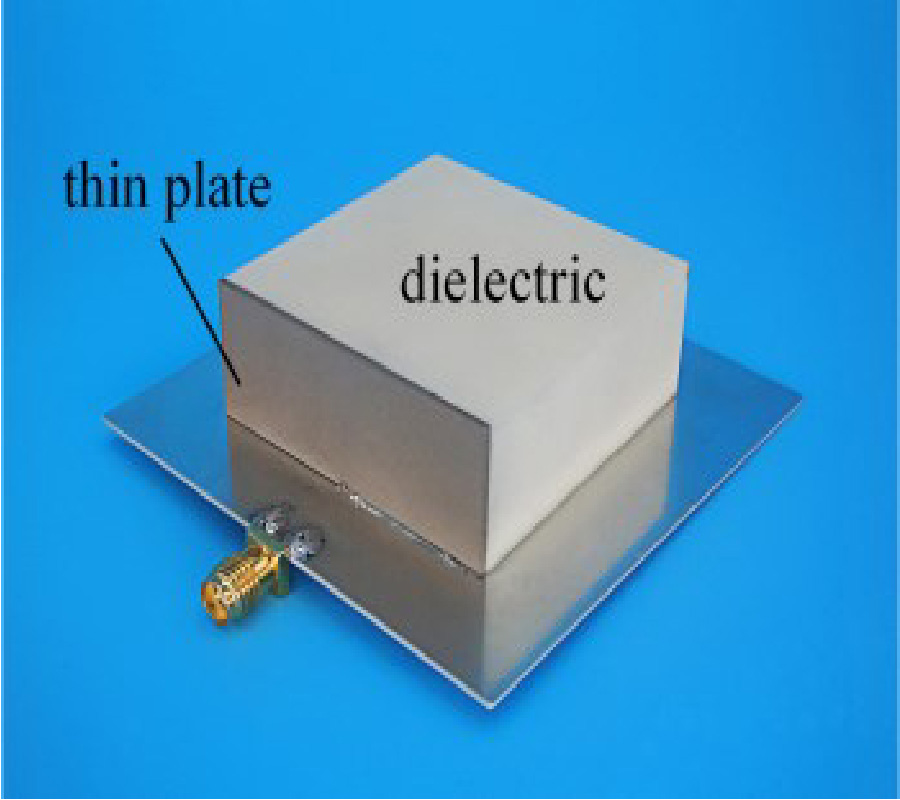
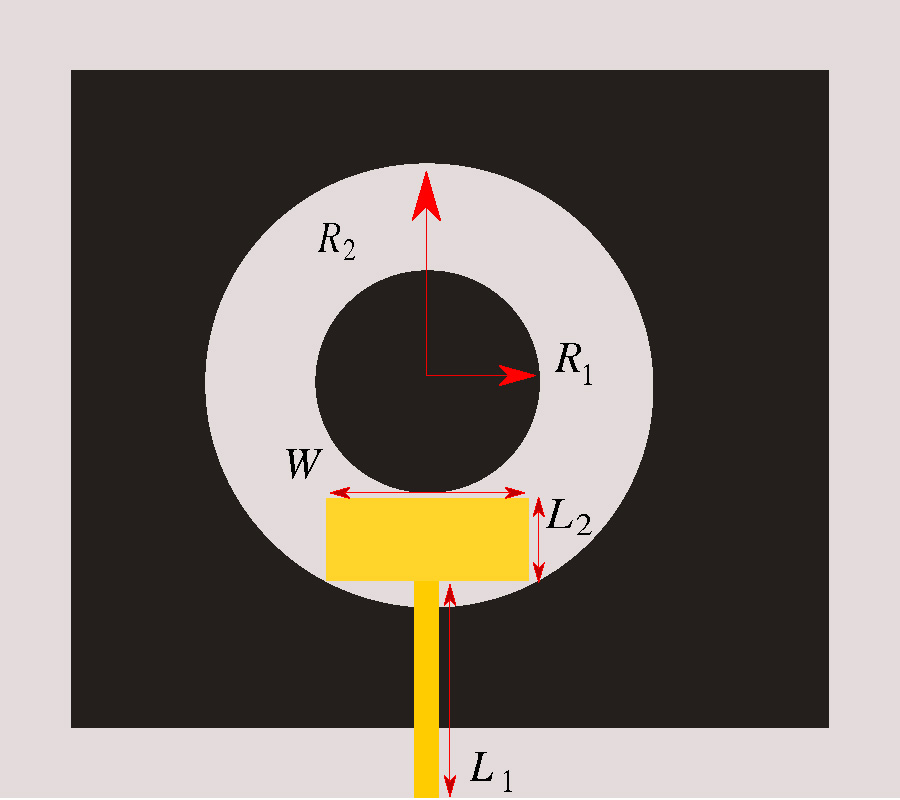
A novel technique for designing a dual-band reconfigurable aperture coupled cylindrical dielectric resonator antenna is introduced here. The design is based on loading an aperture coupled cylindrical dielectric resonator antenna with a varactor diode located along the lines of the feed network. Loading the antenna with the varactor shifts the first and second resonant frequencies of the antenna. The resonant frequency can be continuously shifted from 4.75 GHz to 4.96 GHz in the lower band, and the resonant frequency of the higher band is shifted from 6.31 GHz to 6.40 GHz as the varactor diode bias voltage is increased from 1 V to 5 V. The proposed antenna offers a stable broadside radiation pattern at both bands and across the entire tunable frequency range for different bias voltages. The parametric analysis on the slot position is done to control the first and second resonant frequencies of the dual-band antenna. The proposed antenna plays a vital role in C-band (4 GHz-8 GHz) applications.
A VARACTOR-TUNED APERTURE COUPLED DUAL BAND CYLINDRICAL DIELECTRIC RESONATOR ANTENNA FOR C-BAND APPLICATION
2019-08-05
PIER C
Vol. 94, 247-259
Detection and Localization of an Object Behind Wall Using an Inverse Scattering Technique with Wall Direct Subtraction Method
Mohamad Faizal Mahsen , Kismet Anak Hong Ping and Shafrida Sahrani
Through-wall imaging (TWI) is one of the useful applications nowadays in microwave tomography field. Reconstructing image of an object becomes more challenging when it is obscured by walls. In practice, the inclusions of noise worsen the reconstruction results. In this paper, Forward-Backward Time-Stepping (FBTS) in time inversion technique is utilized and integrated with Wall Direct Subtraction (WDS) method to reconstruct unknown object behind walls. The investigation includes two types of walls that are homogeneous and heterogeneous. The object is surrounded by closed walls. With noise added in the setup, Singular Value Decomposition (SVD) and Savitzky-Golay (SG) filtering method are used to eliminate the noise and enhance the reconstructed image of an object. The results show that WDS integrated with FBTS has successfully mitigating wall clutter from both homogeneous and heterogeneous walls, and also improves image reconstruction of a hidden object. Further, by using the proposed noise reduction method, lower MSE values can be achieved.
DETECTION AND LOCALIZATION OF AN OBJECT BEHIND WALL USING AN INVERSE SCATTERING TECHNIQUE WITH WALL DIRECT SUBTRACTION METHOD
2019-08-05
PIER M
Vol. 83, 131-140
Microstrip Open-Slot Antenna with Wideband Dual-Frequency and Dual-Sense Circular Polarization
Tingting Chen , Jingjing Zhang and Lu Hua
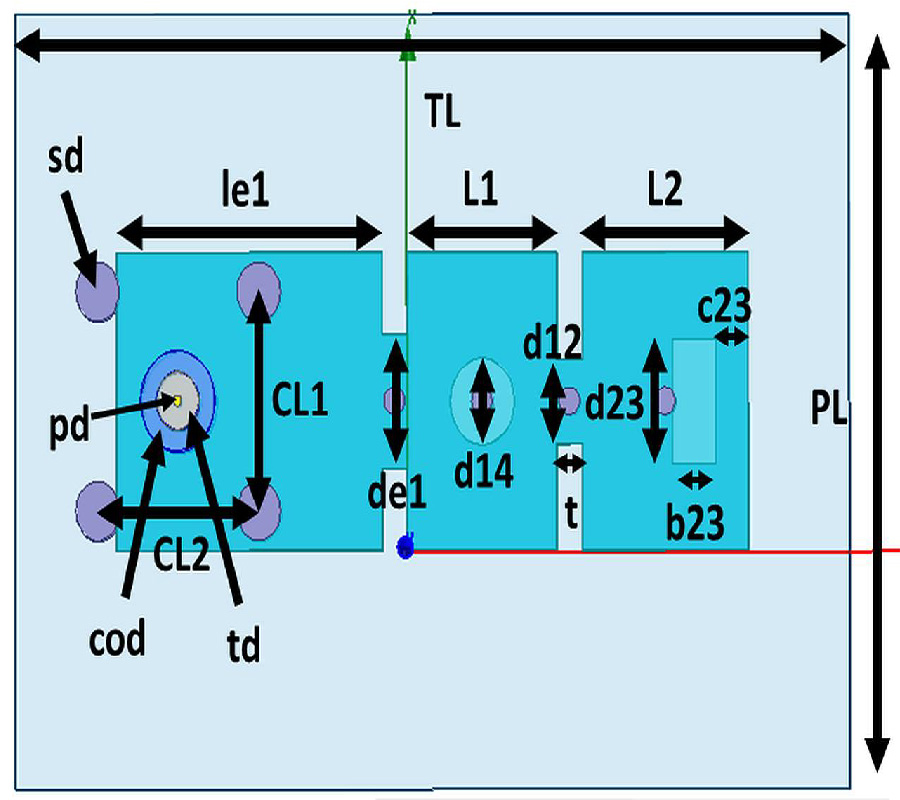
A wideband microstrip open-slot antenna with dual-frequency dual-sense circular polarization (CP) is presented in this paper. A bent feeding structure and three radiating slots, including a modified cross-shaped, an inverted F-shaped, and an inverted L-shaped slots, are designed to excite two orthogonal electric fields with a quadrature phase difference for a radiating right-hand circularly polarized (RHCP) wave at 2.5 GHz and left-hand circularly polarized (LHCP) wave at 3.3 GHz. To improve the axial-ratio (AR), a bent parasitic element is introduced near the microstrip line. Multiple resonances are merged to achieve a large bandwidth of 2620 MHz (104.8%) from 2.2 GHz to 4.82 GHz. The measured AR bandwidths are 460 MHz (18.4%) at the lower band (2.5 GHz) and 2150 MHz (65.1%) at the upper band (3.3 GHz).
MICROSTRIP OPEN-SLOT ANTENNA WITH WIDEBAND DUAL-FREQUENCY AND DUAL-SENSE CIRCULAR POLARIZATION
2019-08-05
PIER
Vol. 165, 67-82
Fast Transient Simulations for Multi-Segment Transmission Lines with a Graphical Model
Joel B. Harley , Mashad Uddin Saleh , Samuel Kingston , Michael A. Scarpulla and Cynthia Furse
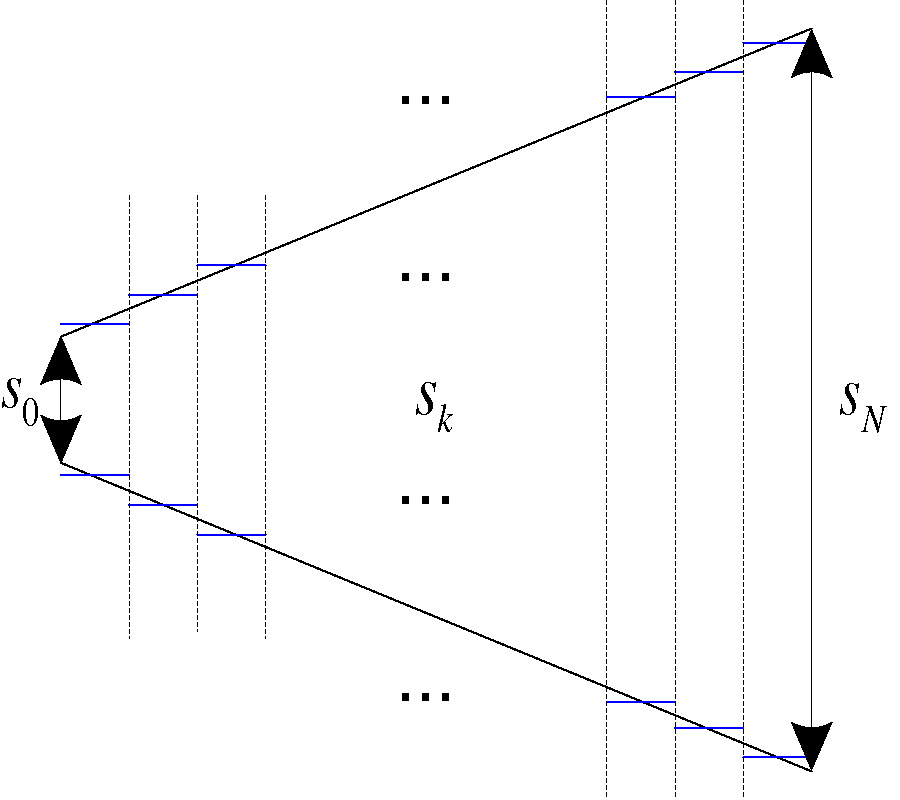
This paper studies a computationally efficient algebraic graph theory engine for simulating time-domain one-dimensional waves in a multi-segment transmission line, such as for reflectometry applications. Efficient simulation of time-domain signals in multi-segment transmission lines is challenging because the number of propagation paths (and therefore the number of operations) increases exponentially with each new interface. We address this challenge through the use of a frequency-domain, algebraic graphical model of wave propagation, which is then converted to the time domain via the Fourier transform. We use this model to achieve an exact, stable, and computationally efficient (O(NQ), where N is the number of segments and Q is the bandwidth) approach for studying one-dimensional wave propagation. Our approach requires the reflection and transmission coefficients for each interface and each segment's complex propagation constant. We compare our simulation results with known analytical solutions.
FAST TRANSIENT SIMULATIONS FOR MULTI-SEGMENT TRANSMISSION LINES WITH A GRAPHICAL MODEL
2019-08-02
PIER
Vol. 165, 47-65
On the Solution of Inverse Equivalent Surface-Source Problems
Jonas Kornprobst , Raimund A. M. Mauermayer , Ole Neitz , Josef Knapp and Thomas F. Eibert
Various formulations of the inverse equivalent surface-source problem and corresponding solution approaches are discussed and investigated. Starting from the radiation integrals of electric and magnetic surface current densities, the probe-corrected inverse equivalent source formulation is set up together with different forms of side constraints such as the zero-field or Love condition. The linear systems of equations resulting from the discretized forms of these equations are solved by the normal residual (NR) and normal error (NE) systems of equations. As expected and as demonstrated by the solution of a variety of inverse equivalent surface-source problems, related to synthetic as well as realistic antenna near-field measurement data, it is found that the iterative solution of the NE equations allows for a better control of the solution error and leads in general to a slightly faster convergence. Moreover, the results show that the incorporation of the zero-field condition into the solution process is in general not beneficial, which is also supported by the structure of the NE systems of equations. If desired, Love surface current densities, or just fields in general, can more easily be computed in a post-processing step. The accuracy of the obtained near-fields and far-fields depends more on the stopping criterion of the inverse source solver than on the particular choice of the equivalent surface-source representation, where the zero-field condition may influence the stopping criterion in a rather unpredictable way.
ON THE SOLUTION OF INVERSE EQUIVALENT SURFACE-SOURCE PROBLEMS
2019-08-01
PIER C
Vol. 94, 233-245
A CPW Fed Denim Based Wearable Antenna with Dual Band-Notched Characteristics for UWB Applications
Sulakshana Chilukuri and Shrinidhi Gogikar
This paper presents design analysis of a compact CPW fed Wearable Textile Antenna with Dual Band notched characteristics for UWB applications. The proposed wearable textile antenna is designed on two different dielectric substrates; leather and denim with copper foil as conducting element. The performances of the designed textile antenna are compared on two substrates. Band-notched filtering characteristics are achieved by inserting semicircular split ring resonators on the conducting element. The first notch band is obtained from 2.3 GHz-2.5 GHz for Bluetooth application band, and the second notch band is obtained from 3.3 GHz-3.6 GHz for WiMAX application band. The simulated and measured frequency results show that the antenna has an impedance bandwidth of 1.8-10 GHz and reflection coefficient less than -10 dB, except at the two eliminating bands. The proposed antenna is designed and simulated using Ansys HFSS Electromagnetic Simulator. The prototype of the antenna has been developed on the denim substrate, and its performance is measured and compared with the simulated ones.
A CPW FED DENIM BASED WEARABLE ANTENNA WITH DUAL BAND-NOTCHED CHARACTERISTICS FOR UWB APPLICATIONS
2019-08-01
PIER C
Vol. 94, 219-231
CPW-Fed Ultra-Wideband Dual-Sense Circularly Polarized Slot Antenna
Amit Birwal , Sanjeev Singh , Binod Kumar Kanaujia and Sachin Kumar
The paper presents a new coplanar waveguide (CPW)-fed ultra-wideband (UWB) dual circularly polarized (CP) slot antenna. For realizing UWB, a wide slot is introduced in the ground plane of the proposed antenna. The circular polarizationis achieved by introducing a semi-circular stub in the square ground plane. The antenna contains two symmetrical CPW-fed ports at left and right edges to generate dual circular polarization. The evolution steps of the proposed CP antenna are presented, and antenna parameters are optimized to obtainthe desired level of isolation, return loss, and axial ratio bandwidth (ARBW). The measured impedance bandwidth (S11 ≤ -10 dB) of the antenna is 13.5 GHz (2.5-16 GHz); 3-dB ARBW is 75.23% (2.67-5.89 GHz); and isolation greater than 17 dB is obtained in the CP band. The designed dual feed CP antenna has low profile, light weight, compact size, and could be suitable for polarization diversity applications for reducing the effect of multipath fading.
CPW-FED ULTRA-WIDEBAND DUAL-SENSE CIRCULARLY POLARIZED SLOT ANTENNA
2019-08-01
PIER M
Vol. 83, 121-129
Compact Capacitive Coupled Triple Band Planar Inverted F Antenna
Puthiyapurayil Viswanathan Vinesh , Rajan Vivek , Pezholil Mohanan and Kesavath Vasudevan
A simple, compact, and capacitively coupled triple band planar inverted F antenna for wireless applications is presented in this paper. By arranging two metal patches in a stacked manner and using capacitively coupled feeding method three resonant modes are generated. The three operating bands 1.8 to 1.9 GHz, 2.5 to 2.6 GHz, and 3.3 to 3.4 GHz for GSM 1800, LTE 2500, and WiMax applications, respectively with -10 dB return loss bandwidths of 5.4%, 3.9%, and 2.98% around the resonances. The antenna occupies a size of 40 mm × 5 mm × 6 mm and is printed on an FR4 epoxy substrate of dielectric constant 4.3.
COMPACT CAPACITIVE COUPLED TRIPLE BAND PLANAR INVERTED F ANTENNA
2019-07-31
PIER C
Vol. 94, 203-217
Circularly Polarized Array Antenna Using the Sequential Rotation Network Feeding for X-Band Communication
Farohaji Kurniawan , Josaphat Tetuko Sri Sumantyo , Koichi Ito , Steven Gao , Good Fried Panggabean and Gunawan Setyo Prabowo
This paper presents a novel Circularly Polarized (CP) microstrip array antenna with circular shape and slotted by an elliptical ring for X-band communication. This array antenna consists of 4 paths. Each patch is designed with a unique model, and the purposed antenna is mainly circular-shaped. An elliptical ring slot is set at the center of the circular-shaped patch. And a pair of triangle shapes employed as truncation factor is placed at the edge of the circular-shaped antenna. This microstrip array antenna is developed by 2 × 2 patches in a sequential rotation mode with relative phases 0˚, 90˚, 180˚ and 270˚. Total dimension of this array antenna is 60.92 mm × 60.92 mm. The simulated result shows a good agreement with minimum requirement. The center frequency of the antenna design is 8.2 GHz with low-frequency at 8 GHz and high frequency at 8.4 GHz. The proposed antenna produced under -10 dB S11 of 21.9%, maximum gain of 12.47 dBic at the center frequency, and axial ratio bandwidth obtained 12.2%. Simulated result has been validated by fabrication and measurement, then the structure of the antenna design is fabricated on NPC-H22A with a thickness of 1.6 mm and dielectric constant of 2.17. Complete investigation and experimentation are presented in the next sections.
CIRCULARLY POLARIZED ARRAY ANTENNA USING THE SEQUENTIAL ROTATION NETWORK FEEDING FOR X-BAND COMMUNICATION
2019-07-31
PIER Letters
Vol. 86, 43-51
A Mach-Zehnder Interferometry Method for the Measurement of Photonic State Squeezing in Quantum Cavities
Siamak Khademi , Ghasem Naeimi and Ozra Heibati
Recently, manipulation and measurement of quantum states, especially in quantum cavities, have attracted the attention of many researchers in different fields, such as: quantum optics, quantum information, quantum computation, and so on. In this paper a non-demolition method for the measurement of squeezing parameter via atomic Mach-Zehnder interferometer, is presented. An experimental setup was also proposed which included two quantum cavities, in different arms of an atomic Mach-Zehnder interferometer. Each quantum cavity was settled between two classical cavities. Quantum cavities were contained entangled states with arbitrary squeezed photons. It is shown that the outgoing atomic states of Mach-Zehnder interferometer carry on the properties and situation of quantum states of the cavities. The squeezing parameter of photonic state forone of cavities, is obtained by the detection of excited and non-excited probabilities of Mach-Zehnder interferometer's outgoing ports, for a train of incoming two-level Rydberg atoms.
A MACH-ZEHNDER INTERFEROMETRY METHOD FOR THE MEASUREMENT OF PHOTONIC STATE SQUEEZING IN QUANTUM CAVITIES
2019-07-30
PIER B
Vol. 85, 65-83
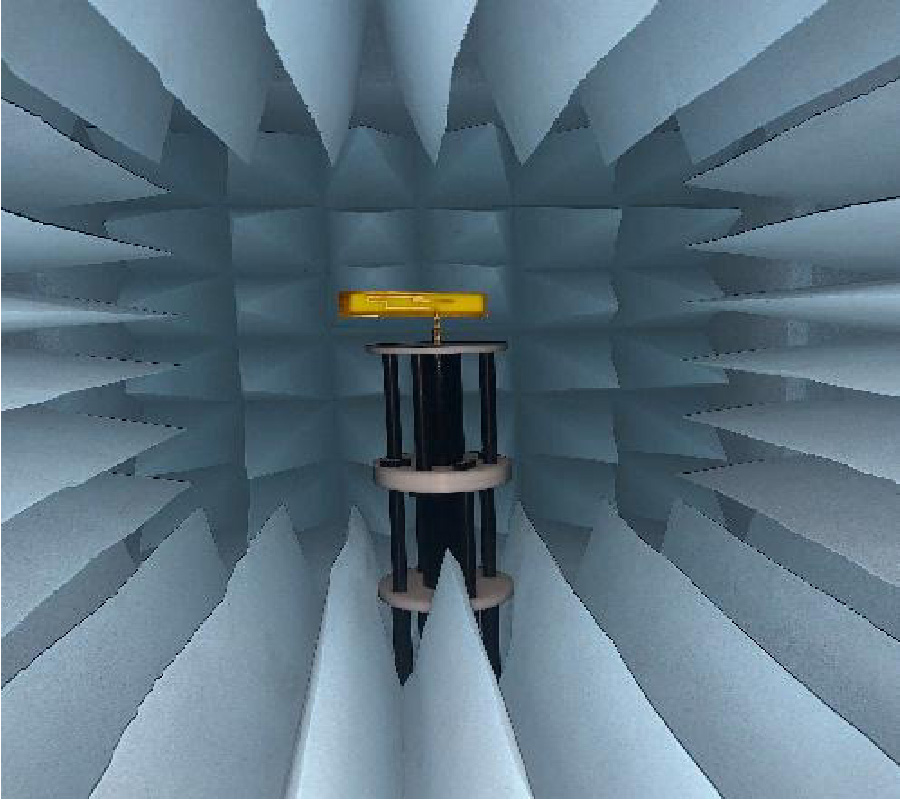
Design and Analysis of a Broadband High Isolation Dual-Polarized Omnidirectional Antenna
Yuwei Zhang , Shu Lin , Shang Yu , Shoulan Liu , Guanjun Liu and Alexander Denisov
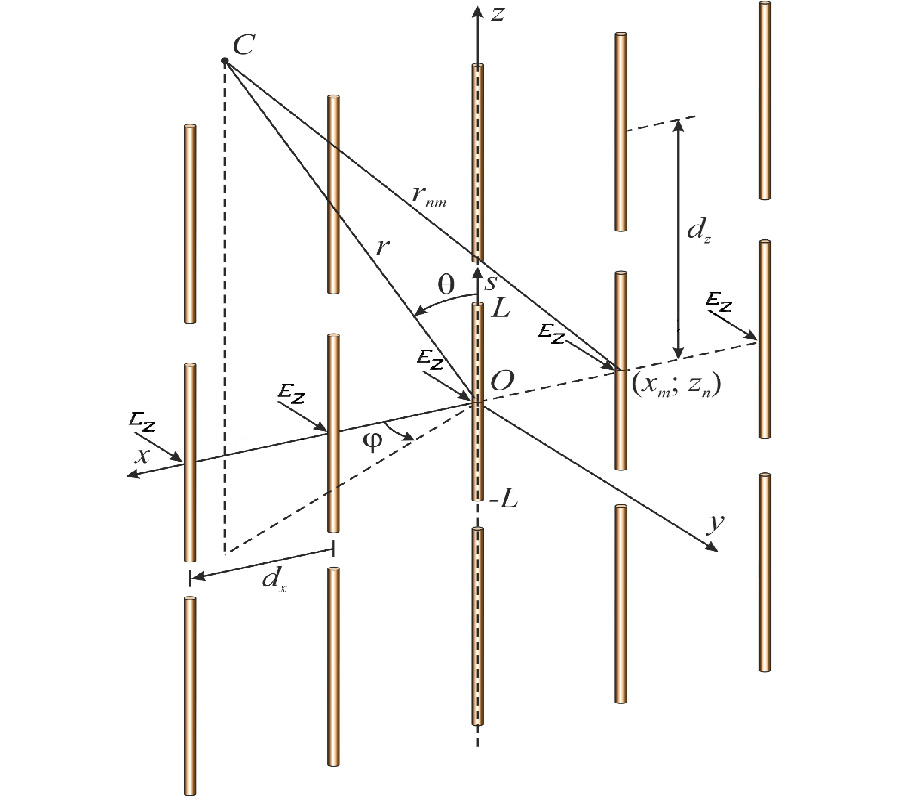
A high isolation broadband dual-polarized omnidirectional antenna comprising two low profile orthogonally polarized omnidirectional radiating elements is presented. A modified monopole using loadings to broaden impedance bandwidth is applied to vertical polarization (VP), while four printed concentrically arranged Yagi-Uda-like antennas are employed for horizontal polarization (HP). Both the simulated and measured results indicate that the operating bands of the proposed antenna with its reflection coefficient less than -10 dB are 1.48 to 3.16 GHz for VP and 1.69 to 2.7 GHz for HP. A good port isolation larger than 40 dB and omnidirectional patterns with the out-of-roundness less than 2 dB in horizontal plane are obtained. This paper explains the radiation mechanism by investigating the simulated surface current distributions for VP element and establishing a radiation model for HP element, and also analyzes the performance of the proposed antenna. This antenna design can be applied to 4G (LTE) communication system.
DESIGN AND ANALYSIS OF A BROADBAND HIGH ISOLATION DUAL-POLARIZED OMNIDIRECTIONAL ANTENNA
2019-07-29
PIER C
Vol. 94, 189-202
Omnidirectional Wireless Power Transfer System with Multiple Receivers and a Single Wire Wound Spiral Transmitter
Haiyue Wang , Lianwen Deng , Heng Luo , Shengxiang Huang and Congwei Liao
Last decade has witnessed dramatic advancements in wireless charging distance of magnetic resonant coupling wireless power transfer (MRCWPT) for various portable electronic devices. Driven by the demand of cost-effective and compact system working for multiple receivers, a novel omnidirectional MRCWPT system with a single wire wound spiral transmitter and a single power source is proposed in this work. Besides, an equivalent circuit model is established to derive the power transfer efficiency (PTE) of this novel MRCWPT system. Finite element simulation results have shown that the magnetic field distribution for the proposed model is uniform in all directions. And the PTE of the system depending on the distance between the transmitter and receivers is demonstrated to be independent of the receiving angles. Finally, the theoretical analysis of the simulation results is verified by practical experimental results, which shows that the PTE of the system reaches 60% at the distance of 160 mm and the resonant frequency of 15.5 MHz.
OMNIDIRECTIONAL WIRELESS POWER TRANSFER SYSTEM WITH MULTIPLE RECEIVERS AND A SINGLE WIRE WOUND SPIRAL TRANSMITTER
2019-07-29
PIER M
Vol. 83, 109-119
CS-Based HRRP Extraction Method for through-Wall Detection
Fang-Fang Wang and Tingting Qin
Feature extraction is of significant importance for final results of the through-wall detection procedure. High resolution range profile (HRRP) is related to target reflectivity coefficients which can be used as a new feature for object detection. Compressive sensing (CS) is an emerging technique which enables a sparse signal to be recovered using much fewer measurements. This method can provide a novel way for achieving the HRRP since the target reflectivity coefficients are often known to be sparsely distributed in range cells. In this paper, after a set of input-output patterns that consist of target position and HRRP are obtained, through-wall detection problem is reformulated into a nonlinear regression one, which can be solved by support vector machine (SVM). Numerical simulations demonstrate that the prediction accuracy of target position is related to the number of range cells, the number of observations, and signal-to-noise ratio (SNR). Furthermore, the proposed method performs better than the one using signal amplitude as a feature in terms of smaller estimation error and shows better robustness against noise.
CS-BASED HRRP EXTRACTION METHOD FOR THROUGH-WALL DETECTION
2019-07-29
PIER M
Vol. 83, 93-107
Rainfall Rate Field Space-Time Interpolation Technique for North West Europe
Guangguang Yang , David Ndzi , Kevin Paulson , Misha Filip and Abdul-Hadi Al-Hassani
The ability to predict rain characteristics at small space-time scales is important, particularly in the planning, design, and deployment of wireless networks operating at frequencies above 10 GHz. For wide area networks, high space and time resolution rainfall data are often not available, and the cost of such measurements is prohibitive. This paper thus presents a new approach to address this problem using rain radar measurements to obtain rain estimates at finer resolutions than that available from the original measured data. This paper proposes three innovative methodologies: 1) the approach is not directly applied to measured rainfall rate data but focuses on the parameters of fitted lognormal distribution parameters and/or computed rain characteristics for each location; 2) to facilitate the application in wireless communication networks operating above 10 GHz, a set of databases and contour maps of rain parameters spanning North West Europe have been created. These conveniently and efficiently provide rain parameters for any location within the area under study; and 3) the proposed 3D space-time interpolation approach can extrapolate rain parameters at space-time resolutions that are shorter than those found in NIMROD radar databases. The results show that the approach presented in this paper can be used to provide {1 km, 5 mins} space-time rain rate resolution from {5 km, 15 mins} data for the whole North West Europe with error percentages of less than 4%. This is far superior to estimates provided by the International Telecommunication Union recommended model.
RAINFALL RATE FIELD SPACE-TIME INTERPOLATION TECHNIQUE FOR NORTH WEST EUROPE
2019-07-29
PIER
Vol. 165, 35-45
Triple-Band Polarization Angle Independent 90° Polarization Rotator Based on Fermat's Spiral Structure Planar Chiral Metamaterial
Yongzhi Cheng , Wangyang Li and Xuesong Mao
We propose a planar chiral metamaterial (PCMM), which can function as a triple-band polarization angle independent 90° polarization rotator. The unit cell of the PCMM is composed of bi-layered mutual twisted Fermat's spiral structure (FSS) resonators with four-fold rotation symmetry. The simulated and measured results show that the PCMM can work in triple-band and convert a linearly polarized (y-/x-polarized) wave to its cross-polarization (x-/y-polarized) or experience a near 90° polarization rotation with a polarization conversion ratio of over 90%. The electric field and surface current distributions of the unit-cell structure are analyzed to study its physics mechanism. Compared with previous CMM-based rotator, our design has more operation frequencies in a single PCMM structure, a relative thinner thickness, and higher Q-factor. Good performances of the PCMM suggest promising applications in the polarization rotator or convertor that need to be integrated with other compact devices.
TRIPLE-BAND POLARIZATION ANGLE INDEPENDENT 90° POLARIZATION ROTATOR BASED ON FERMAT'S SPIRAL STRUCTURE PLANAR CHIRAL METAMATERIAL
2019-07-26
PIER C
Vol. 94, 177-187
Digital Beamforming in Elevation for Moving Surface Ships
Lin Zhang and Yicheng Jiang
Moving target ship imaging in large sea area has always been the focus of military and civilian attention. Due to the limitation of pulse repetition frequency (PRF), there is a contradiction between wide mapping band and azimuth accuracy. The nonlinearity of PRF can also cause discontinuity of mapping band. Therefore, this paper proposes a method of digital beamforming-scan on receiving (DBF-SCORE) beam scanning based on airborne phased array radar to achieve the requirement of scene mapping band with lower PRF. The adaptive Capon spectrum estimation is used to dynamically adjust the beam pointing so that it can always point to the moving target for accurate imaging. Considering the nonuniform sampling of the transmitting pulse period of the antenna, the azimuth nonuniform Fourier transform (NUDFT) algorithm is used to re-sample the nonuniform periodic signal of the multi-channel receiving antenna and obtain the uniform spectrum signal. Finally, fine focusing of moving target is achieved by local phase gradient algorithm (PGA) algorithm, and accurate imaging of moving target in large sea area is realized. The validity of the algorithm can be verified by simulation and real data imaging, which can be used for reference in phased array SAR imaging of moving targets.
DIGITAL BEAMFORMING IN ELEVATION FOR MOVING SURFACE SHIPS
2019-07-26
PIER Letters
Vol. 86, 35-42
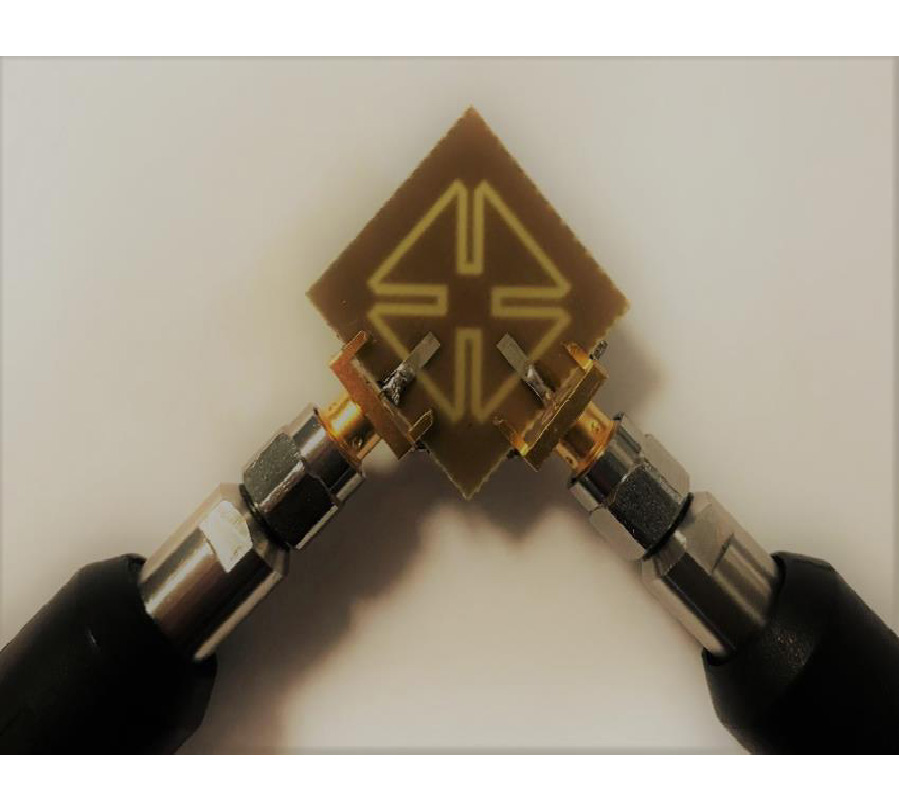
Design of Triband Bandstop Filter Using an Asymmetrical Cross-Shaped Microstrip Resonator
Shujun Yang , Zhigang Xiao and Satilmis Budak
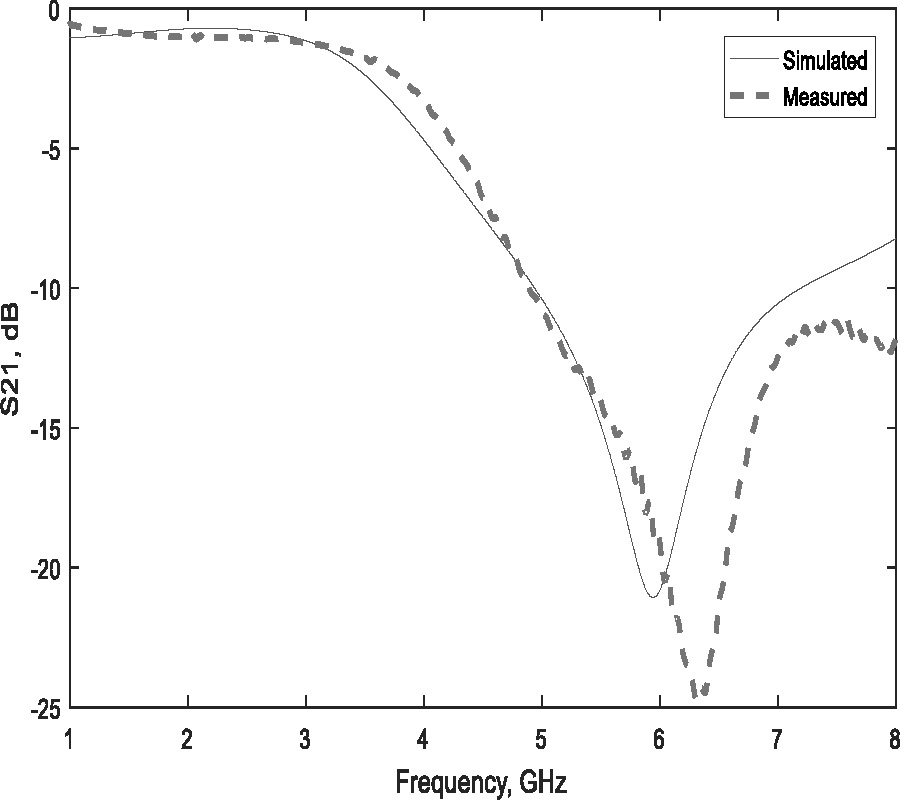
An asymmetrical cross-shaped microstrip resonator is proposed. It is analyzed on its characteristic impedance and resonant conditions. A first order triband bandstop filter (BSF) and a second order triband BSF are designed using this resonator. Both filters are simulated on Sonnet Suite software. Simulation results show that both filters generate three stopbands at 2.0, 3.0, and 4.5 GHz. The second order BSF is also fabricated and measured using a microwave network analyzer. Simulation and measurement results on the second order BSF agree well.
DESIGN OF TRIBAND BANDSTOP FILTER USING AN ASYMMETRICAL CROSS-SHAPED MICROSTRIP RESONATOR
2019-07-26
PIER Letters
Vol. 86, 27-33
Design of a Polarization Insensitive Wideband Absorber Using Graphene Based Metasurface
Gopinath Samanta , Jeet Ghosh , Tarakeswar Shaw and Debasis Mitra
In this paper, we demonstrate the design of a polarization-independent wideband absorber of light that consists of a perforated graphene sheet on top of a lossless dielectric spacer placed on a metallic reflector. The single layer absorber is duly designed based on impedance matching concept. The simulated results indicate that the structure produces 0.98 THz broad absorption from 1.80 THz to 2.72 THz with absorptivity larger than 90% at the normal incidence. The electromagnetic (EM) field distributions and the plots of surface power loss density have been illustrated to explain the absorption mechanism of the structure. The variation of chemical potential from 0.8 to 1.2 eV keeps 90% absorption bandwidth as much as 1 THz band. The polarization-insensitive feature and the properties under oblique incidence are also investigated. Finally, the interference theory is used to analyze and interpret the broadband absorption mechanism.
DESIGN OF A POLARIZATION INSENSITIVE WIDEBAND ABSORBER USING GRAPHENE BASED METASURFACE
2019-07-23
PIER C
Vol. 94, 161-176
Target Classification with Low-Resolution Radars Based on Multifractal Correlation Characteristics in Fractional Fourier Domain
Huaxia Zhang and Qiusheng Li
Due to the restrictions of low-resolution radar system and the influence of background clutter during the target detection, it is difficult to classify different kinds of low-resolution radar aircraft targets. In this paper, we propose a multifractal correlation method in the optimal fractional Fourier domain found by fractional Fourier transform (FrFT), in which we extract the multifractal correlation features of aircraft target echoes and do target identification combined with the support vector machine. The experimental results show that FrFT can enhance the multifractal correlation characteristics of aircraft target echoes; the multifractal correlation features extracted from the optimal fractional Fourier domain can effectively distinguish different types of aircraft; and the classification and recognition rates of the multifractal correlation method in the optimal fractional Fourier domain are higher than that of the multifractal correlation method in time domain and the multifractal method in the optimal fractional Fourier domain.
TARGET CLASSIFICATION WITH LOW-RESOLUTION RADARS BASED ON MULTIFRACTAL CORRELATION CHARACTERISTICS IN FRACTIONAL FOURIER DOMAIN