Search Results(13790)

2019-08-16
PIER C
Vol. 95, 15-27
Low Profile, High Gain and Wideband Circularly Polarized Antennas Using Hexagonal Shape Parasitic Patches
Shishir Jagtap , Rajashree Thakare and Rajiv Kumar Gupta
This paper proposes low profile, high gain and wideband circularly polarized (CP) microstrip antennas (MSA), using gap coupled parasitic patches (PPs) on superstrate layer. Printed and suspended probe fed, CP MSAs are designed on a 1.59 mm thick FR4 substrate, and an array of closely spaced hexagonal PPs are printed on the bottom side of the 1.59 mm thick FR4 superstrate and placed at a height about λ0/8, above the ground plane, where λ0 is the free space wavelength, corresponding to the central frequency of the operating frequency band. The gap coupled hexagonal PPs are not only used to enhance the axial ratio bandwidth (AR BW) and gain of the antenna, but also used to reduce impedance and gain variation of the antenna over the operating frequency band. `Ant9' is a suspended MSA with 7 hexagonal PPs. A prototype `Ant9' is fabricated and tested, which provides a peak gain of 9 dBi, S11 < -10 dB, gain variation < 1 dB, and AR < 3 dB over 4.9 to 6.45 GHz frequency band. ARBW of 27.3% is achieved. The proposed `Ant9' covers three frequency bands viz., 5.15 to 5.35 GHz, WLAN band, 5.725 to 5.875 GHz, ISM band, and 5.9 to 6.4 GHz, Satellite C band. The space fed antenna configuration reduces the cross polar radiation level (CPL) and increases the efficiency of the antenna. A prototype antenna is fabricated and tested. The measured results agree with the simulation ones. The overall size of `Ant9' is 0.96λ0×0.96λ0×0.136λ0.
LOW PROFILE, HIGH GAIN AND WIDEBAND CIRCULARLY POLARIZED ANTENNAS USING HEXAGONAL SHAPE PARASITIC PATCHES
2019-08-16
PIER Letters
Vol. 86, 91-95
Shared Aperture Microstrip Patch Antenna Array for L and S-Bands
Jonny Dhiman , Achyut Sharma and Sunil Kumar Khah
A dual mode shared aperture antenna consisting of two planer arrays of ring antennas is designed for L and S bands. The array of larger dimension surrounds the array of smaller dimension. The antennas are isolated from one another and fed separately. The antenna dimensions are optimized and prototyped. The antennas radiate separately in L and S bands with least coupling or no coupling. Measured results are in agreement with the simulations, depicting good performance in terms of impedance bandwidth, isolation, and gain.
SHARED APERTURE MICROSTRIP PATCH ANTENNA ARRAY FOR L AND S-BANDS
2019-08-16
PIER M
Vol. 84, 21-30
Estimating Electric Parameters of Nonhomogeneous Laminar Materials Using Differo-Integral Method
Adam Steckiewicz and Boguslaw Butrylo
The electrical network model and differo-integral method (D-IM) were applied to electrical parameters estimation of nonhomogeneous composite materials. The laminar composite is arranged of conductive unit cells with adjustable geometry. Modification of unit cell's internal geometry results in change of composite's effective properties. Stationary electric and magnetic fields of exemplary structures were numerically analyzed. Theoretical computations along with network model were verified by experimental measurements of 10 fabricated samples. Obtained results indicate that D-IM is a valuable tool for qualitative and quantitative estimation of electrical parameters.
ESTIMATING ELECTRIC PARAMETERS OF NONHOMOGENEOUS LAMINAR MATERIALS USING DIFFERO-INTEGRAL METHOD
2019-08-15
PIER Letters
Vol. 86, 83-89
On the Mutual Inductance Between Non-Coaxial Coplanar Circular Loops
Marcello Salis and Marco Muzi
A simple and efficient explicit solution is derived for the mutual inductance of two non-coaxial coplanar circular loops, which is valid in the quasi-static as well as non-quasi-static frequency ranges. The solution is obtained by rigorously evaluating the Sommerfeld Integral describing the inductance, starting from expanding the integrand into a power series of the loop radius. As a result, a sum of simpler integrals is obtained, and term-by-term analytical integration is straightforwardly performed. The inductance is finally expressed as a series of spherical Hankel functions, with algebraic coefficients depending on the electrical size of the loops. Conducted numerical tests lead to conclude that, accuracy being equal, the proposed expression offers advantages in terms of time cost over conventional numerical integration techniques.
ON THE MUTUAL INDUCTANCE BETWEEN NON-COAXIAL COPLANAR CIRCULAR LOOPS
2019-08-15
PIER M
Vol. 83, 203-211
A Low Bias Current Integral Type Optimal Control Scheme for a Hybrid Magnetic Bearing
Subhankar Pusti , Tapan Santra and Debabrata Roy
This paper presents an application of integral type optimal control scheme for rotor positioning of a hybrid magnetic bearing (HMB) in one degree of freedom (1-DOF) using low bias current. It is observed that higher biasing current enhances the linearity and disturbance rejection capability but at a cost of higher copper loss in the actuator. So, selection of biasing in an HMB system is very crucial. In the proposed scheme the dc biasing current can be varied by adjusting the axial offset to the rotor magnet. Analysis has been conducted to achieve the optimal biasing current for better performance of the HMB. A prototype of the HMB system has been fabricated and tested which represents quite satisfactory axial vibration characteristics under low biasing current.
A LOW BIAS CURRENT INTEGRAL TYPE OPTIMAL CONTROL SCHEME FOR A HYBRID MAGNETIC BEARING
2019-08-15
PIER
Vol. 165, 93-105
A Physical Patch Model for GNSS-R Land Applications
Jiyue Zhu , Leung Tsang and Haokui Xu
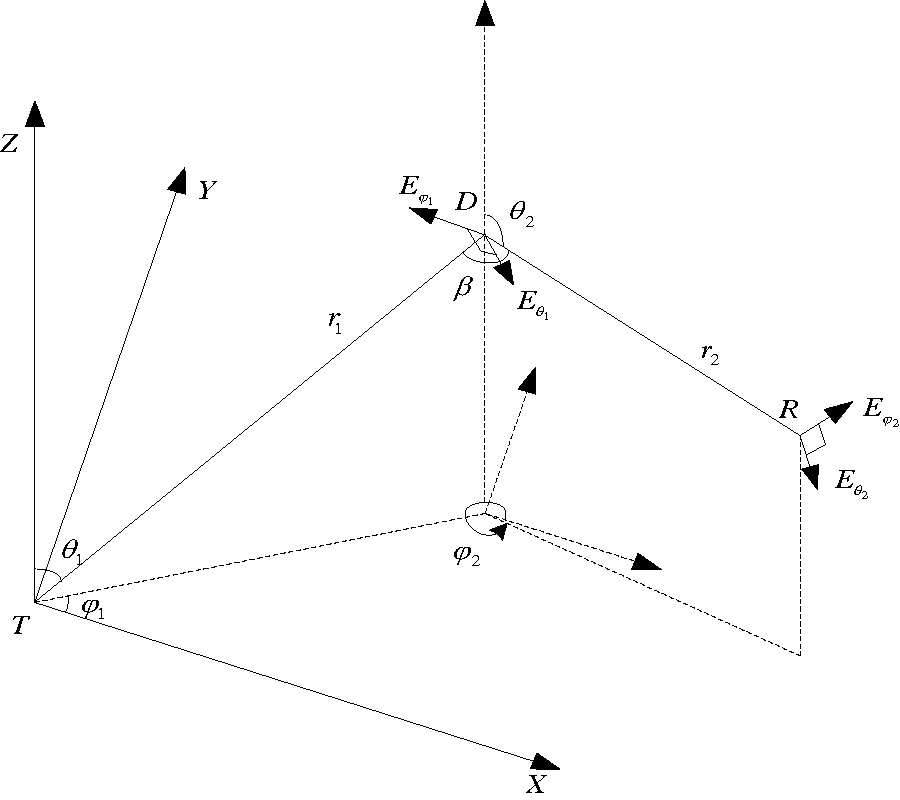
We consider the Global Navigation Satellite System Reflectometry (GNSS-R) for land applications. A distinct feature of land is that the topography has multiple elevations. The rms of elevations is in meters causing random phases between different elevations, which affect the coherent wave that has definite phase and the Fresnel zone effects as shown previously by a Kirchhoff numerical simulator (KA simulator). In this paper, we develop a physical patch model that is computationally efficient. The entire area within the footprint is divided intopatches. Each patch is small enough to satisfy the plane wave incidence and is large enough to ignore mutual wave interactions between patches. The bistatic scattering cross section of each patch for the coherent and incoherent field is computed. The bistatic cross section of plane wave incidence is obtained from lookup tables (LUTs) of the numerical 3D solution of Maxwell equations (NMM3D). The SWC represents the summation of weighted coherent fields over patches. The SWICI represents the summation of weighted incoherent intensities over patches. The formula of the received power is the sum of powers from the SWC and SWICI (the SWC/SWICI formula). The weighting factor of each patch is based on thegeometry, spherical waves, and the considerations of field amplitudes and phase variations. We also present an alternative formula, the ``correlation'' formula, using the summation of power from each physicalarea and correlations of SWCs from areas. The SWC/SWICI formula and the ``correlation'' formula are shown analytically to be the same. Results are compared with the KA simulator and two common models (the coherent model and the incoherent model). Results of the patch modelare consistent with the KA simulator. For the simulation cases, the results fall between the coherent model and the incoherent model. The patch model is much more computationally efficient than the KA simulator and the results are more accurate. In examples of this paper, the patch model results are independent of patch size as long as the patch size smaller than 50 m and much larger than the wavelength of GNSS-R frequency.
A PHYSICAL PATCH MODEL FOR GNSS-R LAND APPLICATIONS
2019-08-14
PIER Letters
Vol. 86, 73-81
A Compact Microstrip Triplexer with a Novel Structure Using Patch and Spiral Cells for Wireless Communication Applications
Abbas Rezaei , Salah Yahya , Saman Moradi and Mohd Haizal Jamaluddin
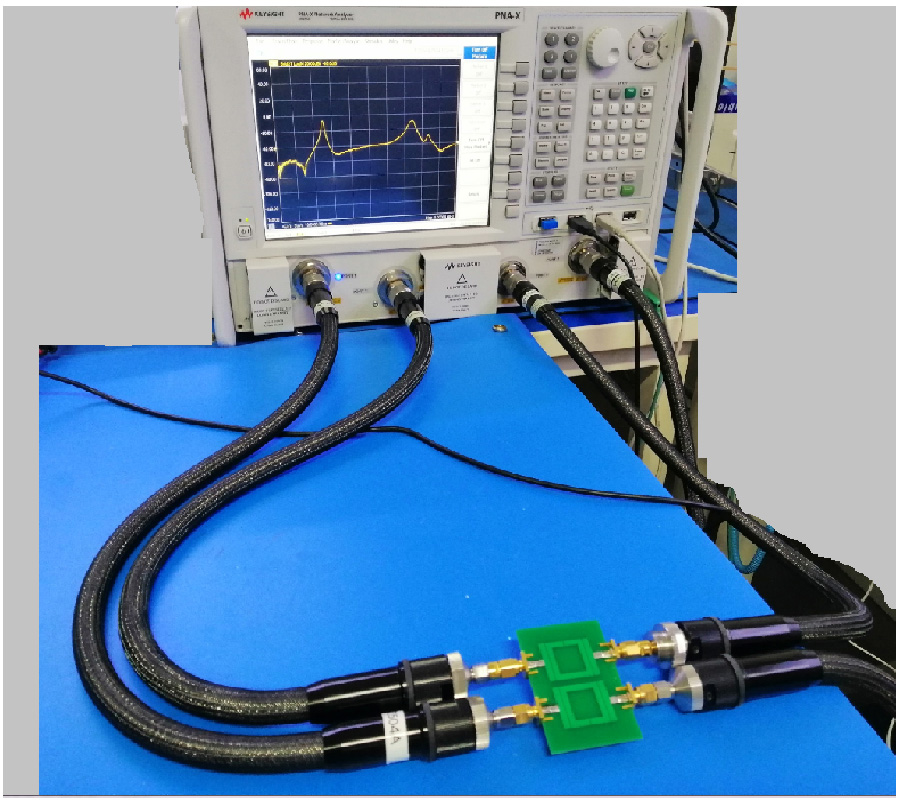
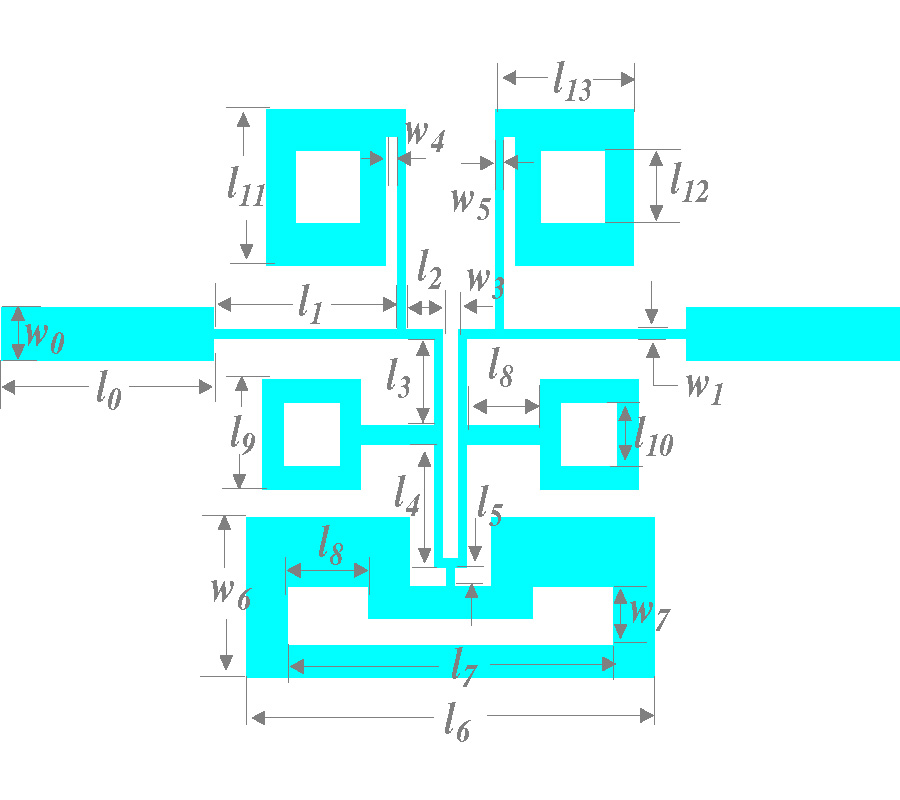
In this work, a novel planar four-port microstrip triplexer is designed and analyzed to operate at 1.9 GHz, 2.5 GHz, and 3.35 GHz for wireless communication applications. The proposed structure consists of a compact patch and spiral cells. The main advantage of this triplexer is its very compact size, with a cross size of only 15 mm×15 mm (0.017λg2). Sharp frequency response at the edges of all passbands, low insertion losses (0.25 dB, 0.4 dB and 0.11 dB), and high return losses (45 dB, 54 dB and 40 dB) in all channels are the other advantages of the designed triplexer. Additionally, the triplexer has reasonable isolations (S23, S24, S34), better than 20 dB. To verify the design method, both EM simulation and measurement results are obtained. The comparison shows that the measured and simulated results are in good agreement, which proves the feasibility of this work.
A COMPACT MICROSTRIP TRIPLEXER WITH A NOVEL STRUCTURE USING PATCH AND SPIRAL CELLS FOR WIRELESS COMMUNICATION APPLICATIONS
2019-08-14
PIER B
Vol. 85, 85-101
Design and Optimization of Structure of Tower-Type Coil in Wireless Charging System for Electric Vehicles
Zhongqi Li , Min Zhang , Shoudao Huang and Jiliang Yi
Magnetic resonant wireless power transfer (WPT) is an emerging technology that may create new applications for wireless power charging. However, the output voltage and efficiency fluctuations resulting from lateral misalignments are main obstructing factors for promoting this technology. In this paper, a structure of tower-type coils is proposed. The mathematical model of the proposed structure is built based on equivalent circuit method. The expressions of the output voltage and efficiency are then derived by solving the system equivalent equations. In addition, a method of optimizing the mutual inductance between the transmission coil and intermediate coil and the strong-coupling parameters between the intermediate coil and receiving coil is proposed. The mutual inductance between the transmission coil and intermediate coil can be kept nearly constant with lateral misalignments, and the optimum strong-coupling parameter between the intermediate coil and the receiving coil can be obtained by the proposed method. Therefore, the output voltage and efficiency can be kept nearly constant with different lateral misalignments. The WPT system based on tower-type coils via magnetic resonance coupling is designed. Simulated and experimental results validating the proposed method are given.
DESIGN AND OPTIMIZATION OF STRUCTURE OF TOWER-TYPE COIL IN WIRELESS CHARGING SYSTEM FOR ELECTRIC VEHICLES
2019-08-14
PIER M
Vol. 84, 11-20
A Novel CPW-Fed Planar Monopole Antenna with Broadband Circularly Polarization
Tingting Chen , Jingjing Zhang and Weijiang Wang
A novel CPW-fed planar printed monopole antenna with broadband circular polarization (CP) characteristic is presented. The proposed antenna consists of a copper coin-shaped patch (CCSP) and an asymmetrical ground plane. To achieve a broadband CP wave, a vertical stub is added to the CCSP to produce orthogonal surface currents for right-hand circular polarization (RHCP). The design of the CCSP greatly increases the impedance bandwidth (IBW) of 89.2% which can cover the whole CP bandwidth of 71% completely. The measured results show that the proposed antenna has not only a broad 3-dB AR bandwidth (ARBW) of 71% (3900 MHz, 3.1-7 GHz) with respect to the CP center frequency 5.8 GHz, but also a wide 10-dB return loss bandwidth of 89.2% (5040 MHz, 2.16-7.2 GHz) centered at 5.65 GHz.
A NOVEL CPW-FED PLANAR MONOPOLE ANTENNA WITH BROADBAND CIRCULARLY POLARIZATION
2019-08-14
PIER M
Vol. 83, 191-202
A Small Cost-Effective Super Ultra-Wideband Microstrip Antenna with Variable Band-Notch Filtering and Improved Radiation Pattern with 5G/IoT Applications
Hamid Reza Dalili Oskouei , Amir Reza Dastkhosh , Alireza Mirtaheri and Mehdi Naseh
In this work, a new design of small microstrip antenna with variable band-notched filtering characteristic for super ultra-wideband (UWB) applications including 5G/IoT networks is presented. In the proposed structure by creating steps with optimized appropriate sizes and angles in the lower edges of the quasi-square patch antenna and by a new technique of modifying the ground plane, more efficient radiation patterns and characteristic impedance are achieved. Moreover, the omnidirection allow cross-polarized H-plane radiation patterns are obtained infrequency band of 3-11 GHz. Also, its radiation patterns are improved between 11 and 14.5 GHz and have better performance especially with tuning capacitors between 14.5 and 20 GHz. In addition, its frequency bandwidth with VSWR<2 is from 3 GHz to 50 GHz which covers 5G networks and both ultra-wideband (UWB) and super wideband (SWB) communications. A rectangular slot on the patch is used to create an integrated band-notch filter in the structure to avoid interference with other wireless systems like wireless local area networks (WLANs), and this specification can be activated or deactivated by a PIN diode. In addition, the center frequency of the filter can be tuned by just a varactor diode or a variable capacitor and/or by changing the position of the capacitors in frequency range of about 3.5-6 GHz, which rejects interference of all WLANs and even lower and upper bands of them and nulls in the radiation patterns can be changed especially in upper bands as well. The final structure simulation results are in good agreement with measurement ones.
A SMALL COST-EFFECTIVE SUPER ULTRA-WIDEBAND MICROSTRIP ANTENNA WITH VARIABLE BAND-NOTCH FILTERING AND IMPROVED RADIATION PATTERN WITH 5G/IOT APPLICATIONS
2019-08-14
PIER M
Vol. 83, 181-190
Electromagnetic Torque Ripple Minimization of Slotted Doubly-Salient-Permanent-Magnet Generator for Wind Turbine Applications
Lemnouer Bekhouche , Rachid Saou , Cherif Guerroudj , Abdellah Kouzou and Mohamed El-Hadi Zaim
The aim of this work is to reduce the torque ripple of a low-speed/high-torque Doubly Salient Permanent Magnet (DSPM) generator for wind turbine applications. To do this, a combined design and control-based approaches are set up to improve the overall machine performance. The design-based approach helps to develop a form of small stator/rotor teeth combination, focusing on the shapes and dimensions of the teeth that will minimize torque ripple. On the other hand, in the second approach, a control technique is designed. It employs indirect torque control (Torque Sharing Function: TSF), including a PI-controller with gains adjusted continuously for regulating the reference current. The obtained results show that by combining these two approaches, the ripple rate of the electromagnetic torque for the studied DSPM is reduced to a minimum when the teeth shapes are trapezoidal in both the stator and rotor, and the command approach also allows an improvement in the total torque shape, such that the ripple rate decreases by about 96%.
ELECTROMAGNETIC TORQUE RIPPLE MINIMIZATION OF SLOTTED DOUBLY-SALIENT-PERMANENT-MAGNET GENERATOR FOR WIND TURBINE APPLICATIONS
2019-08-13
PIER M
Vol. 83, 171-179
A Compact Differential-Fed UWB Antenna with Band-Notched Characteristics
Jingjing Zhang , Tingting Chen , Lu Hua and Weijiang Wang
A compact differential-fed ultra-wideband (UWB) antenna with single band-notched characteristicis proposed in this paper. The antenna consists of a ground plane etched with an octagonal groove and two symmetrical hexagonal radiating patches. Return loss and isolation of the antenna can be effectively reduced by loading a rectangular stub on the ground plane and etching a semi-circular groove on the radiation patch. In order to achieve a controllable single band-notched characteristic, two pairs of quarter-wavelength stubsare introduced into the grounding plane. The antenna has lower cross polarization and stable gains than conventional single feed antennas. The measured impedance bandwidth with S11 ≤ -10 dB is 114% from 3 GHz to 11 GHz, and the notch characteristic is realized in the 7.2-8.4 GHz band.
A COMPACT DIFFERENTIAL-FED UWB ANTENNA WITH BAND-NOTCHED CHARACTERISTICS
2019-08-12
PIER Letters
Vol. 86, 67-72
SIW Cavity MIMO Antenna Using Hybrid Boundaries and Anti-Symmetric U-Shaped Slots
Bingjian Niu and Jie-Hong Tan
A substrate-integrated-waveguide (SIW) cavity multiple-input-multiple-output (MIMO) antenna using hybrid boundaries and anti-symmetric U-shaped slots is proposed. Unlike conventional SIW cavities completely shorted by metallic vias, the proposed two cavities possess opened edges. Since shorted and opened cavity edges can be regarded as electrically and magnetically conducting boundaries, respectively, hybrid resonating boundaries are achieved. Excited by coaxial ports, antenna elements can radiate cavity energy through the opened edges. Moreover, antenna isolation can be significantly enhanced by introducing a pair of anti-symmetric U-shaped slots on the top and bottom planes. This design has been validated by experiments. With the overall size of 0.44λ0 × 0.44λ0 × 0.04λ0, the fabricated MIMO antenna exhibits operating frequency of 3.51 GHz, high isolation of 20.18 dB, peak gain of 3.15 dBi, and low envelope correlation coefficient of 0.12, which has potential applications for wireless systems.
SIW CAVITY MIMO ANTENNA USING HYBRID BOUNDARIES AND ANTI-SYMMETRIC U-SHAPED SLOTS
2019-08-12
PIER M
Vol. 83, 161-169
Microwave Backscattering from Oil-Covered Sea Surface with Two-Scale Model
Chao Yang and Li-Xin Guo
The electromagnetic scattering from oil-covered sea surface is investigated by two scale model with the help of Lombardini's oil-covered sea spectrum and the semi-empirical reflection model that takes the oil film into consideration. Firstly, a comparison of the clean and oil-covered sea spectra is made to show the influence of the oil film on the sea surface. Then, the backscattering coefficient from the clean sea computed by the two scale model is compared with the measured data in the reference to validate the accuracy of the two scale model used in this paper. Finally, backscattering features from the oil-covered sea surface are discussed in detail and compared with those from the clean sea. In addition, the influence of the thickness of oil film and fractional filling factor on the backscattering coefficient of oil-covered sea are also studied. The simulated results show that the oil film floating on the sea has remarkable influence on the backscattering coefficient of the sea, compared with those of the backscattering coefficient from the clean sea.
MICROWAVE BACKSCATTERING FROM OIL-COVERED SEA SURFACE WITH TWO-SCALE MODEL
2019-08-12
PIER
Vol. 165, 83-92
High Performance UHF RFID Tag Antennas on Liquid-Filled Bottles
Sailing He , Yiming Zhang , Laijun Li , Yuefeng Lu , Yuan Zhang and Hui Liu
It is challenging to design a high-performance UHF RFID tag antenna on a liquid-filled bottle due to the high conductivity, high permittivity and the variety of liquids. A systematic way how to design a high-performance UHF RFID tag antenna on a liquid-filled bottle is presented. A simple design consisting of a folded dipole and a loop matching structure is first proposed for a tag antenna placed on a water bottle. A co-design approach is adopted to make the water and bottle surface become a part of the tag antenna to eliminate the significant influence of the environment. The measurement results at 915 MHz show that the reading range of the simple design can reach 8 m in the absence of the water bottle and reach 4.2 m when it is placed on a water bottle. The folded dipole on the water bottle is then optimized to improve the gain significantly, and a maximum gain of -5.54 dBi is achieved at 915 MHz. Furthermore, the impedance bandwidth for the tag antenna on the water bottle is greatly improved by increasing the number of loops in the impedance matching structure from one to three, and the -6 dB impedance bandwidth of over 100 MHz (simulation) or 84 MHz (experiment) is achieved. The reading range of 5.6 m is achieved when the tag antenna is placed on a water bottle at 915 MHz.
HIGH PERFORMANCE UHF RFID TAG ANTENNAS ON LIQUID-FILLED BOTTLES
2019-08-09
PIER C
Vol. 95, 1-13
Scattering from a Distribution of Rough Plates
Max Bright , Akira Ishimaru and Yasuo Kuga
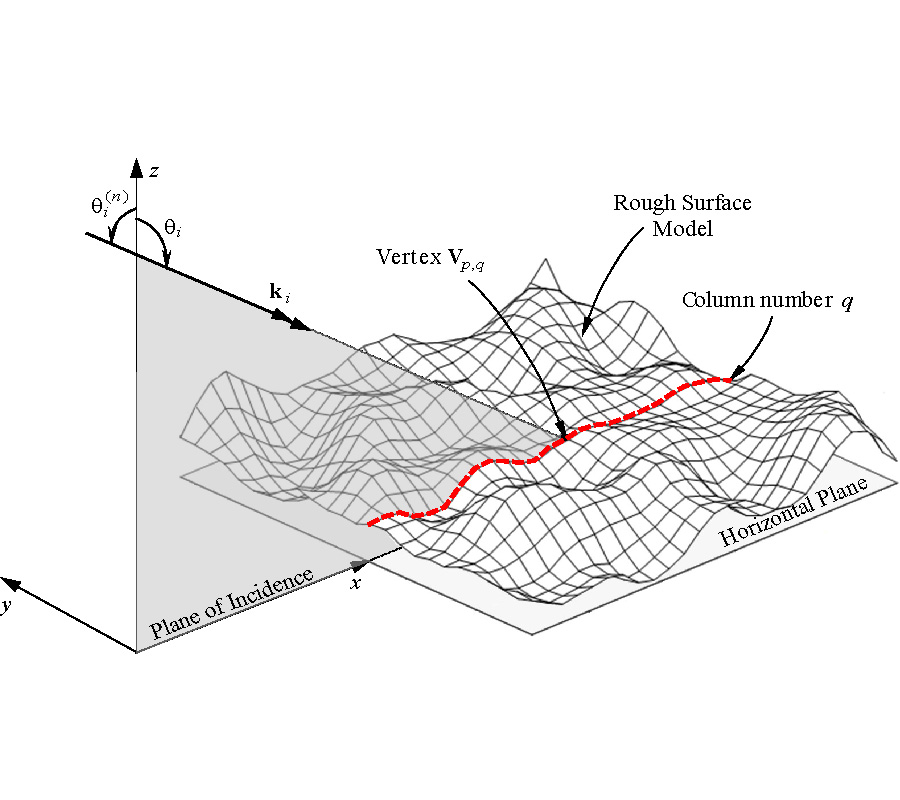
Modeling how electromagnetic waves scatter from a distribution of rough plates poses many applications. Certain systems may be easy to approximate with planar geometry, but use of numerical field solvers to determine the radiated fields could take a long time for nontrivial structures. We propose a new approach based on the Kirchhoff approximation. This method will consider the case of multiple rough, finite-sized rectangular plates. The solution was used for developing software to determine the scattering of waves off of a distribution of rough plates of arbitrary position and orientation between a transmitter and receiver. The method considers each plate individually, calculating the coherent and incoherent scattered fields. Provided that all plates and the transmitter and receiver are sufficiently spaced, we calculate the total fields by summing the result from each individual plate. For many practical situations, the distance from the plate to the receiver may not be much greater than the size of the plate. We will show that the common far-field approximation of the Green's function is not valid for these cases, and we will have to use a more accurate approximation of Green's function.
SCATTERING FROM A DISTRIBUTION OF ROUGH PLATES
2019-08-07
PIER Letters
Vol. 86, 59-65
Frequency Reconfigurable Pixel Antenna with PIN Diodes
Raji George , Suthikshn Kumar , Shashikala A. Gangal and Makarand Joshi
In this paper a frequency reconfigurable pixel antenna is implemented using PIN diodes. The overall dimension of the patch antenna is 26.9x24.5 mm, and it is fabricated on an FR4 substrate. The design is investigated by the simulation and measurement of S11 parameters and radiation patterns. With different combinations of PIN diode biasing conditions, the antenna can be set to 2.5 GHz, 3.9 GHz, and 10 GHz. The antenna shows a consistent radiation pattern at all the reconfigured frequency bands. In the accessible frequency range, an average gain of 6 dB and low level of cross polarization are also recorded. A good agreement between the measured and simulated results validates the presented concept of frequency reconfiguration.
FREQUENCY RECONFIGURABLE PIXEL ANTENNA WITH PIN DIODES
2019-08-07
PIER M
Vol. 83, 151-159
Single-Fed High-Gain Circularly Polarized Microstrip Antenna
Qing-Qing Chen , Jian-Ying Li , Guang-Wei Yang and Yu-Xin Ding
In this paper, a single-fed high-gain circularly polarized microstrip antenna is proposed. The circular polarization is obtained by two unequal-length arc-shaped radiation patches, which excites two orthogonal linearly polarized modes with a 90° phase difference. The antenna is excited by coaxial feed. The proposed circularly polarized antenna consists of two arc-shaped radiation patches and a ground plane, which has a simple structure and a higher gain than 10.0 dB. The antenna is fabricated and measured to verify the design. The measured results are in good agreements with the simulated ones. The measured results show that the impendenceb and width (IBW) for S11<-10 dB is 16.7% (3.78-4.47 GHz), and the axial-ratio bandwidth (ARBW) for AR<3 dB is 3.6% (4.09-4.24 GHz). Further, the gain from 4.09 to 4.24 GHz is higher than 10.0 dBi. The antenna radiation pattern performs well over the whole band, and the peak gain can reach 10.67 dBi at 4.11 GHz. It is a good candidate for advanced wireless communication systems.
SINGLE-FED HIGH-GAIN CIRCULARLY POLARIZED MICROSTRIP ANTENNA
2019-08-07
PIER M
Vol. 83, 141-150
An Inverse Electromagnetic Scattering Problem for an Ellipsoid
Evangelia S. Athanasiadou , Stefania Zoi and Ioannis Arkoudis
The scattering problem of time-harmonic electromagnetic plane waves by an impedance and a dielectric ellipsoid is considered. A low-frequency formulation of the direct scattering problem using the Rayleigh approximation is described. Considering far-field data, an inverse electromagnetic scattering problem is formulated and studied. A finite number of measurements of the leading-order term of the electric far-field pattern in the low-frequency approximation leads to specifying the semi-axes of the ellipsoid. The orientation of the ellipsoid is obtained by using the Euler angles. Corresponding results for the sphere, spheroid, needle and disc can be obtained considering them as geometrically degenerate forms of the ellipsoid for suitable values of its geometrical parameters.
AN INVERSE ELECTROMAGNETIC SCATTERING PROBLEM FOR AN ELLIPSOID
2019-08-06
PIER C
Vol. 94, 273-283
Design and Characterization of a Broadband Flexible Polyimide RFID Tag Sensor for NaCl and Sugar Detection
Mohammed Ali Ennasar , Otman El Mrabet , Kanjaa Mohamed and Mohammad Essaaidi
In this paper, we present a broadband flexible RFID sensor tag antenna to detect the concentration of aqueous solutions. The proposed RFID tag antenna sensor with a T matching network is based on a printed dipole whose arms are loaded with circular disk patches. The structure is printed on a Kapton polyimide flexible substrate. The sensing mechanism of the RFID tag antenna is based on the change of sensitivity of the RFID tag antenna that occurs with the variation of aqueous solution concentration. The proposed sensor is designed using CST Microwave studio, and its various parameters are optimized in order to have a broadband impedance matching that covers the entire RFID band (860-960 MHz). The experimental setup is small, rapid, contactless, and inexpensive. Results are presented for NaCl and sugar aqueous solutions with concentrations ranging from 0% to 80%.
DESIGN AND CHARACTERIZATION OF A BROADBAND FLEXIBLE POLYIMIDE RFID TAG SENSOR FOR NACL AND SUGAR DETECTION