Search Results(13790)

2019-07-15
PIER Letters
Vol. 85, 137-144
Design of a Dual-Band Bandpass Filter Using a Cross Ring Resonator
Fang-Li Zhao , Min-Hang Weng , Chin-Yi Tsai , Cheng-Xun Lin and Ru-Yuan Yang
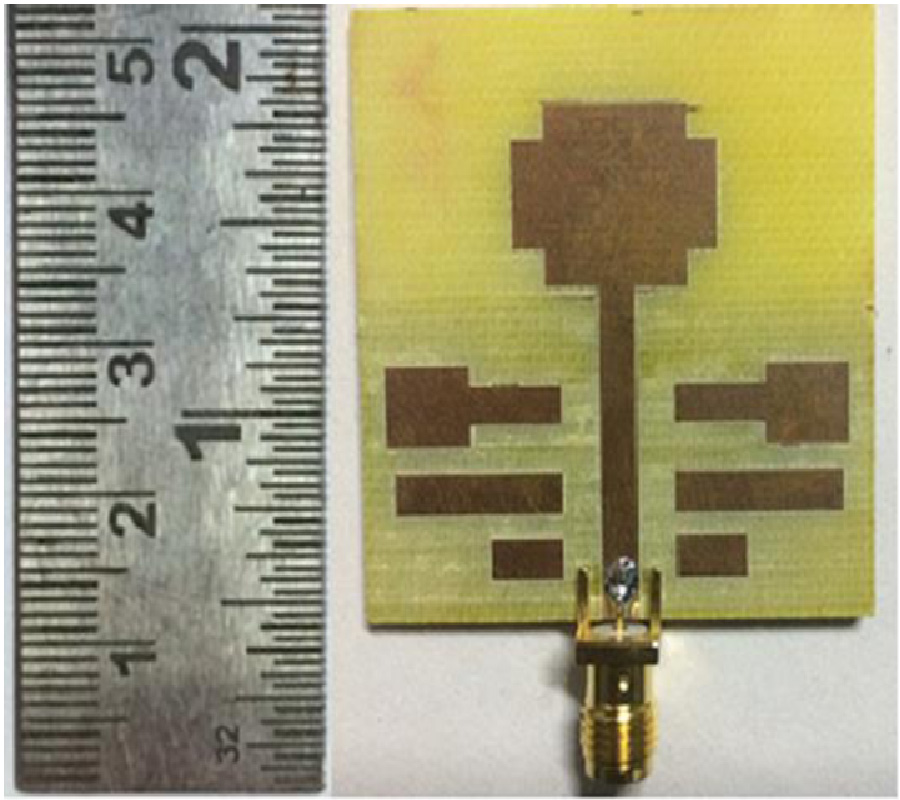
In this paper, a new dual-band bandpass filter (BPF) using a cross ring resonator is designed. The cross ring resonator is modified from a typical dual-mode ring resonator and has four parallel coupling gaps (g). The resonant modes of the proposed cross ring resonator is investigated first. It is found that the first mode and the second mode can be tuned individually. The filter performances are simulated by using full-wave simulator IE3D. A filter example having two passbands operated at 2.4/5.2 GHz of wireless local area network (WLAN) applications is described to verify the design concept. The fabricated filter has measured characteristics including average insertion losses of 2.0 dB and 1.8 dB and return losses larger than 22 dB and 10 dB for 2.4/5.2 GHz, respectively. Two transmission zeros with high frequency selectivity of 40 dB and 42 dB are obtained near the first passband at 2.2 GHz and 2.7 GHz, respectively. This design is very simple as compared to other design methods, and the measured results prove the design concept of the proposed structure.
DESIGN OF A DUAL-BAND BANDPASS FILTER USING A CROSS RING RESONATOR
2019-07-15
PIER M
Vol. 83, 19-28
Side-Lobe Jamming Based on Digital Channelization
Chengcheng Si , Bo Peng , Sixian Gong and Xiang Li
Deceptive jamming plays an irreplaceable role in electronic counter measures (ECM) due to its flexibility and high power efficiency. Based on digital channelized receiver, this paper proposes a novel deceptive jamming method for linear frequency modulation (LFM) radar, side lobe jamming, which builds decoy group utilizing filter side lobes. Via adjusting the filter structure properly, this method produces false targets at specific positions. Unlike intermittent sampling repeater jamming (ISRJ) which forms a train of symmetric decoys, side-lobe jamming can generate asymmetric false targets, which is more deceptive. On the other hand, it can produce much more false targets than ISRJ, which has a certain suppressive effect on the radar. The experimental results with simulated data verify the effectiveness of the proposed algorithm.
SIDE-LOBE JAMMING BASED ON DIGITAL CHANNELIZATION
2019-07-15
PIER M
Vol. 83, 9-18
Reduction of Mobile Phone Radiation Exposure Using Multi-Stopband Frequency Selective Surface
Gouri Shankar Paul , Kaushik Mandal , Juin Acharjee and Partha Pratim Sarkar
Here, a multi-stopband frequency selective surface (FSS), covering commercial frequency bands CDMA, GSM-900, GSM-1800, LTE-2200 MHz, Wi-Fi, and Bluetooth for mobile communication applications has been proposed employing a pair of concentric square ring patches as a unit cell. Possibilities of annular ring patch type FSS are explored first. Finally, the design comes up with a compact square ring patch type single layer FSS. It is also explored that by increasing the width of the inner ring, operating bandwidth can be enhanced to cover closely spaced commercial frequency bands in a single band. Thereby the mutual coupling between the closely spaced resonators for multiple bands can be minimized. The proposed design is flexible enough to tune the desired resonance frequency by changing the length of the individual ring resonators. The design concept has been formulated using linear polynomial regression (LPR) techniques and validated through proper measurement of the fabricated prototype. This FSS can be used as a mobile back cover to protect mobile users from harmful radiations.
REDUCTION OF MOBILE PHONE RADIATION EXPOSURE USING MULTI-STOPBAND FREQUENCY SELECTIVE SURFACE
2019-07-13
PIER C
Vol. 94, 75-87
Statistical Distribution of the Layered Rough Surface Index (LRSI)
Richard Dusséaux and Saddek Afifi
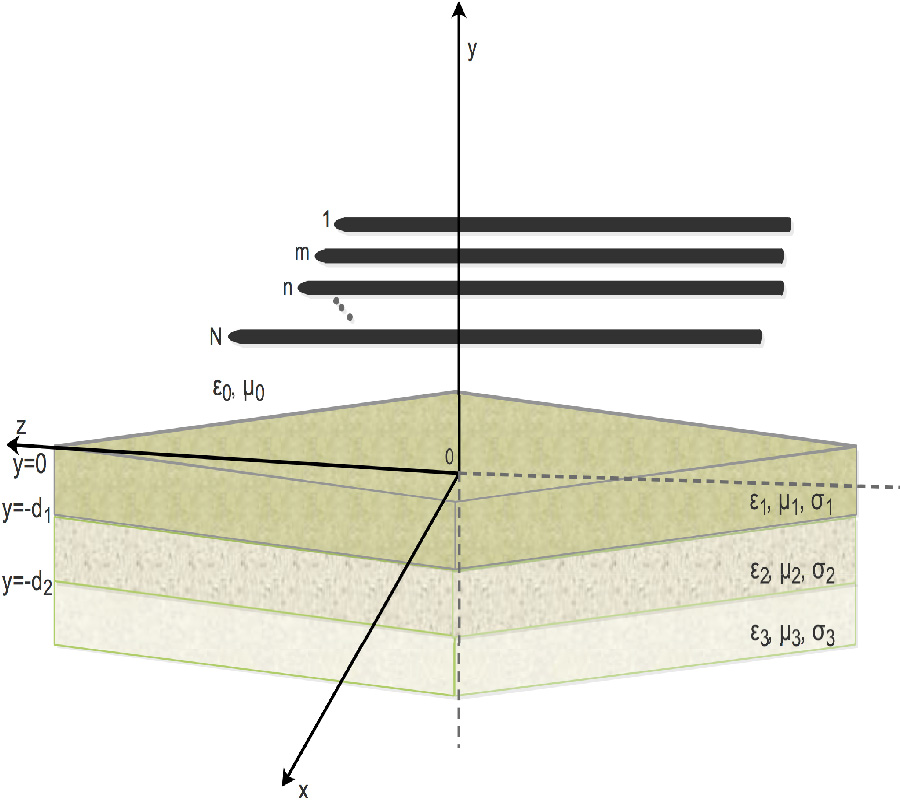
In this paper we determine the statistical distributions of the co- and cross-polarized Layered Rough Surface Index (LRSI) for three-dimensional layered structures with an arbitrary number of slightly rough interfaces illuminated by an electromagnetic plane wave. For infinite surface areas and Gaussian centered height distributions, we show within the framework of the first-order small perturbation method that the LRSI under a given observation direction is a random variable, whose statistical distribution is only function of two parameters. Contrary to the intensity ratio which follows a heavy-tailed distribution, the LRSI has finite mean and variance. For a structure air/clayey soil/rock, we analyze the influence of a snow layer upon the probability laws in the cases of Gaussian or exponential correlation functions.
STATISTICAL DISTRIBUTION OF THE LAYERED ROUGH SURFACE INDEX (LRSI)
2019-07-12
PIER C
Vol. 94, 59-74
Enhancement Bandwidth of Half Width-Microstrip Leaky Wave Antenna Using Circular Slots
Mowafak K. Mohsen , Mohd Sa'ari Mohamad Isa , Azmi Awang Md Isa , Muhannad Kaml Abdulhameed , Mothana Lafta Attiah and Ahmed Musa Dinar
This paper presents a new technique to enhance impedance bandwidth of single layer half width microstrip leaky wave antenna (HW-MLWA) with continuous main beam scanning. The enhancement is realized by etching four circular slots on the radiation element. Two of the circular slots are placed close to the feed port, and the others are close to the matching load. The wide main beam scanning is between +12˚ and +70˚ when operation frequency sweeps between 4.3 GHz and 6.5 GHz. A comparison between the Uniform HW-MLWA (reference) and the proposed HW-MLWA with circular slots is providedto study the effectiveness of the added circular slots. The proposed HW-MLWA is fabricated and tested. The measured impedance bandwidth is 49.9% (4.28 GHz to 7.13 GHz) with peak gain 10.31 dBi at 5 GHz, hence the proposed antenna can be considered as a suitable candidate for C-band applications.
ENHANCEMENT BANDWIDTH OF HALF WIDTH-MICROSTRIP LEAKY WAVE ANTENNA USING CIRCULAR SLOTS
2019-07-12
PIER C
Vol. 94, 45-57
Two-Way Pattern Synthesis of MIMO Radar with Sidelobe Reduction and Null Control via Improved Whale Optimization Algorithm
Pengliang Yuan , Chen-Jiang Guo , Guofeng Jiang and Qi Zheng
This paper proposes an improvement to the whale optimization algorithm (WOA), which is based on the Levy flight technique. The improvement allows improved whale optimization algorithm (IWOA) to have a good diversity of population, faster convergence and overcome premature. The test by using different benchmark functions is conducted to demonstrate the effectiveness of improvement on the algorithm performance. Finally, IWO algorithm is applied to optimize the problems of two-way pattern of MIMO radar system, involving the achievements of sidelobe reduction, deep null and wide null at the prescribed directions. The obtained numerical results demonstrate that IWOA can not only efficiently fulfill the expected deep nulls and wide nulls at the prescribed directions, but also enable the peak sidelobe level to retain in the smaller level at the same time than several state-of-the-art algorithms.
TWO-WAY PATTERN SYNTHESIS OF MIMO RADAR WITH SIDELOBE REDUCTION AND NULL CONTROL VIA IMPROVED WHALE OPTIMIZATION ALGORITHM
2019-07-12
PIER B
Vol. 85, 1-25
Non-Iterative Eigenfunction-Based Inversion (NIEI) Algorithm for 2D Helmholtz Equation
Nasim Abdollahi , Ian Jeffrey and Joe LoVetri
A non-iterative inverse-source solver is introduced for the 2D Helmholtz boundary value problem (BVP). Microwave imaging within a chamber having electrically conducting walls is formulated as a time-harmonic 2D electromagnetic field problem that can be modelled by such a BVP. The novel inverse-source solver, which solves for contrast sources, is the first step in a two-stage process that recovers the complex permittivity of an object of interest in the second step. The unknown contrast sources, as well as the (permittivity) contrast, are represented using the eigenfunction basis associated with the chamber's shape; canonical shapes allowing for analytically defined eigenfunctions. This whole-domain eigenfunction basis allows the imposition of constraints on the contrast-source expansion at virtual spatial points or contours outside the imaging domain. These constraints effectively regularize the inverse-source problem and the result is a well-conditioned matrix equation for the contrast-source coefficients that is solved in a least-squares sense. The contrast-source coefficients corresponding to different illuminating fields are then utilized to recover the contrast expansion coefficients using one more well-conditioned matrix inversion. The performance of this algorithm is studied using a series of synthetic test problems. The results of this study are promising as they compare very well with, and at times out-perform, state-of-the-art inversion algorithms (both in terms of reconstruction quality and computation time).
NON-ITERATIVE EIGENFUNCTION-BASED INVERSION (NIEI) ALGORITHM FOR 2D HELMHOLTZ EQUATION
2019-07-11
PIER C
Vol. 94, 29-41
Multi-Negative Index Band Metamaterial-Inspired Microfluidic Sensors
Nantakan Wongkasem and Mark Ruiz
Simple, compact and high sensitivity metamaterial-inspired microfluid sensors are developed to detect and classify dielectric fluids in the X-band regime using reflection coefficients. Multi-negative refractive index band metamaterial structure is specifically designed as a sensing enhancer, where the multi negative bands can effectively trigger the electromagnetic properties, as well as enhance the differentiation between the testing samples. The geometry of the metamaterial enhancer and its arrangement with the microfluidic channel and radiating patch antenna are optimized to reach the highest sensitivity of the samples' depiction. The proposed sensors were tested on methanol and ethanol traces, where sets of complex permittivity were varied. Distinguishable frequency responses generated from different samples at three resonances specify the capability of classifying the fluid concentration.
MULTI-NEGATIVE INDEX BAND METAMATERIAL-INSPIRED MICROFLUIDIC SENSORS
2019-07-11
PIER M
Vol. 83, 1-8
Compact, Self-Isolated 2.4/5-GHz WLAN Antenna for Notebook Computer Applications
Che-Chi Wan and Saou-Wen Su
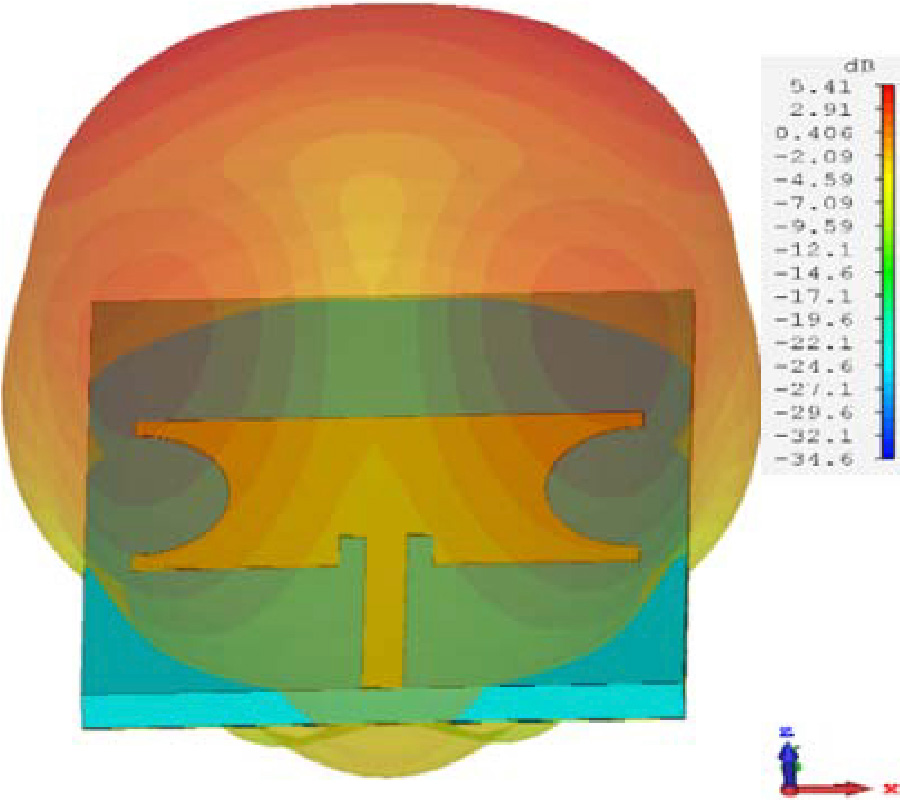
A simple and compact, self-isolated printed antenna able to operate in the 2.4 GHz (2400-2484 MHz) and the 5 GHz (5150-5825 MHz) wireless local area network (WLAN) bands in notebook computers is introduced. The design is built on a low-cost substrate with the dimensions 6 mm × 30 mm (about 0.05λ × 0.24λ at 2.4 GHz) and comprises a symmetrical coupled-fed loop and two parasitic shorted strips. For size reduction, the 2.4 GHz loop is loaded with a pair of L-shaped stubs above the feeding and coupling T strip. The parasitic strips shorted on both sides of the coupling T strip are further added to generate the 5 GHz band resonance. The results show that good radiation characteristics can be obtained in the bands of interest. In addition, when grouping three proposed designs with a gap of 4 mm between them, the results for each antenna impedance bandwidth, the isolation between any two of the three designs, and the envelope correlation coefficient (ECC) are also satisfactory.
COMPACT, SELF-ISOLATED 2.4/5-GHZ WLAN ANTENNA FOR NOTEBOOK COMPUTER APPLICATIONS
2019-07-09
PIER C
Vol. 94, 13-28
Design of MIMO Beamforming Antenna Array for Mobile Handsets
Ting Li and Wen Geyi
A new design idea of MIMO beamforming antenna array for compact and thin handheld devices is investigated, where the beamforming function is used for transmitting and the MIMO function for receiving. The new design idea is illustrated by an antenna array consisting of eight printed planar inverted-F elements operating at GSM1900 (1880-1920 MHz) and LTE2300 (2300-2400 MHz). The 8-element antenna array is printed on an FR4 substrate of dimensions 136 mm × 68.8 mm × 1 mm. By using the radiation pattern diversity, good isolations, envelope correlation coefficients and mean effective gains are achieved for MIMO receiving. To realize the beamforming function when the antenna is used for transmitting, an optimal feeding mechanism is introduced by the method of maximum power transmission efficiency, which is then implemented by a continuously adjustable feeding circuit board. With the optimized feeding mechanism, the gain of the antenna array in the desired direction can be significantly enhanced. The effects of the human body on the performance of antenna array are also examined, and the results indicate that the proposed design still exhibits good MIMO and beamforming performances in a practical scenario.
DESIGN OF MIMO BEAMFORMING ANTENNA ARRAY FOR MOBILE HANDSETS
2019-07-09
PIER M
Vol. 82, 195-203
Design of a Broadband Circularly Polarized Antenna Array
Zhengyan Lu , Le Yang and Lingsheng Yang
A broadband circularly polarized antenna array is proposed in this paper. The array consists of four sequentially rotated feed groove-backed strip antennas. Compact size (46 mm × 46 mm × 1.6 mm), wide impedance bandwidth (4.62-9.92 GHz), and wide 3 dB axial ratio bandwidth (4.48-8.52 GHz) can be observed. The measured peak gain is 7.5 dBi at 8.2 GHz, and good agreement between the simulated and measured results can be achieved.
2019-07-08
PIER Letters
Vol. 85, 131-135
Performance Evaluation of OADM for Super Dense Wavelength Division Multiplexing System
Chakresh Kumar and Ghanendra Kumar
Performance of optical add-drop multiplexer (OADM) for 400 channels with data rate of 20 Gbps for super dense wavelength division (SD-WDM) multiplexing system has been investigated in terms of varying transmission distance from 50 km to 250 km and 80 km to 240 km for enhancing optical communication. Long haul amplification is maintained by RAMAN-EDFA hybrid optical amplifier (HOA). Evaluation is carried out in terms of bit error rate (BER) and dispersion.
PERFORMANCE EVALUATION OF OADM FOR SUPER DENSE WAVELENGTH DIVISION MULTIPLEXING SYSTEM
2019-07-08
PIER M
Vol. 82, 183-194
A Novel Four-Step Weakly Conditionally Stable HIE-FDTD Algorithm and Numerical Analysis
Yong-Dan Kong , Chu-Bin Zhang , Min Lai and Qing-Xin Chu
A novel four-step weakly conditionally stable hybrid implicit-explicit finite-difference time-domain (HIE-FDTD) algorithm in three-dimensional (3-D) domains is presented in this paper, which is suitable for a finer discretization in one dimension. Based on the exponential evolution operator (EEO), the Maxwell's equations in a matrix form can be split into four sub-procedures. Accordingly, the time step is divided into four sub-steps. In addition, by taking second-order central finite-difference approximation for both the temporal and spatial derivatives, the formulation of the proposed four-step HIE-FDTD method is obtained. The proposed four-step HIE-FDTD algorithm is implemented, in which the implicit scheme was applied only in one direction with a fine grid, and the explicit scheme was applied in two other directions with coarser grids. Compared with the existing HIE-FDTD methods, the proposed method has a weaker Courant-Friedrichs-Lewy (CFL) stability condition (and), which means that the proposed method can improve computational efficiency by taking larger time step size. Since the CFLN stability condition of the proposed method is determined by the smaller grid size of the two coarse grid sizes, the proposed method is suitable for analyzing the electromagnetic objects with fine structures in one direction effectively. Besides, the numerical dispersion analysis is given, and the (Δt ≤ 2Δx/c and Δt ≤ 2Δz/c) comparisons of the numerical dispersion analysis among the proposed method, traditional FDTD method, ADI-FDTD method, and two existing HIE-FDTD methods are given. Finally, to testify the computational accuracy and efficiency, numerical experiments of the five FDTD methods are presented.
2019-07-07
PIER C
Vol. 94, 1-12
Measurement of the Influence of Antennas on Radio Signal Propagation in Underground Mines and Tunnels
Ronald Jacksha , Chenming Zhou and Carl S. Sunderman
This paper reports the influence of antennas on radio signal propagation in tunnels and underground mines. Radio signal propagation measurement results in a concrete tunnel and underground mines using antenna types with various radiation patterns, i.e., omnidirectional, Yagi, patch, and circular, are reported. Extensive measurements were taken in various scenarios which include vertical, horizontal, and circular polarization for line-of-sight (LoS) radio signal propagation at four frequencies (455, 915, 2450, and 5800 MHz) that are common to many voice and data transport radio systems used in underground mines. The results show that antenna pattern has a strong influence on the uniformity of radio signal propagation gain in the near zone and typically does not significantly influence behavior in the far zone, except for a constant gain offset.
MEASUREMENT OF THE INFLUENCE OF ANTENNAS ON RADIO SIGNAL PROPAGATION IN UNDERGROUND MINES AND TUNNELS
2019-07-07
PIER B
Vol. 84, 135-151
Triple Two-Level Nested Array with Improved Degrees of Freedom
Sheng Liu , Qiaoge Liu , Jing Zhao and Ziqing Yuan
A triple two-level nested array (TTNA) configuration is proposed for direction-of-arrival (DOA) estimation of multiple time-space signals. The proposed TTNA consists of multiple two-level nested arrays, and the distance between two adjacent nested arrays is also given according to a nested array. As traditional nested arrays, it can generate a hole-free different co-array. Compared with some preexisting nested arrays, the proposed nested array can offer more degrees of freedom (DOFs). The closed-form expression of DOFs and the array configuration are given. Moreover, the detailed process for the construction of extended covariance matrix also is obtained. The simulation results show that the proposed method offers improved performance in the precision of DOA estimation due to the increase of virtual sensors.
TRIPLE TWO-LEVEL NESTED ARRAY WITH IMPROVED DEGREES OF FREEDOM
2019-07-07
PIER B
Vol. 84, 115-134
An Empirical Model of the Effects of Ionospheric Electron Density Variations on HF Radar Processing
Marie Jose Abi Akl , Florent Jangal , Muriel Darces and Marc Hélier
The High Frequency hybrid radar mode combines sky and surface wave propagation. As all High Frequency radars, it can be impacted by ionospheric instabilities. A behavioral model able to include ionospheric spatial and temporal variations has been implemented to estimate the impact of ionospheric irregularities on radar signal processing and Doppler-distance images. In this work, probabilistic models of the ionospheric fluctuations in the ray tracing have been introduced using the phase path fluctuation only. Based on Shkarofsky's spectral power density, random variations on some parameters of Booker's electron density profile have been performed to generate disturbed electron density profiles. Afterwards, a propagation delay, integrated in the received radar signal, has been calculated in terms of phase path variation. Moreover, the temporal aspect of the ionospheric variations has been macroscopically implemented by a filtering step according to the Total Electron Content variation. Results of this simulation are presented with the corresponding statistics. Doppler and distance distributions have been computed for several filter cut-off frequency values and for different Shkarofsky's spectral power density parameters. At last, the process described above works properly: its results have been successfully compared with actual radar data for this purpose.
AN EMPIRICAL MODEL OF THE EFFECTS OF IONOSPHERIC ELECTRON DENSITY VARIATIONS ON HF RADAR PROCESSING
2019-07-06
PIER M
Vol. 82, 175-182
Design of a Wireless Power Transfer System to Power Wireless Sensors Remotely Using UHF
Sungkyun Lim , Deon Lucien , Joshua Haney , Jinxi Chen , Rakibul Islam and Cameron Cato
A wireless power transfer system is designed to power remotely placed wireless sensors using UHF band. For receiving purpose, a small and compact, bi-quad antenna isdesigned which has a fractional bandwidth of 6.89% (443.65 MHz-475.5 MHz). The receiver antenna is uni-directional and has the maximum gain of 9.7 dBi. The overall dimensions of the antenna including the reflective ground plane are 50 cm × 30 cm × 16 cm (0.767λ × 0.46λ × 0.172λ at 460 MHz). A General Mobile Radio Service (GMRS) radio license is obtained and a frequency of 462.55 MHz is used during the test measurement. The maximum achieved effective distance is 150 ft with 3.52 V, which is enough for powering most of the commercial sensors.
2019-07-05
PIER C
Vol. 93, 253-263
A New RF MEMS Capacitive Switch for k-Band Application
Hao Wei , Shiwang Jia , Fei Zhao , Lanyuan Dang , Guanghua Liang , Yaxin Xu and Zhongliang Deng
This paper proposes a novel RF MEMS capacitive shunt switch, which is applied in K-band (18~26.5 GHz). The characteristic impedance matching of the RF MEMS switch is achieved by discontinuous coplanar waveguide (DCPW) structure. Two actuation poles are located at the bottom of the fixed-fixed beam, and they are covered with a dielectric layer of SiN. The pole's thickness is less than that of CPW signal, to avoid the phenomenon of dielectric charging betweenthe beam and the pole. The proposed MEMS switch is fabricated on 400 μm-thickness high resistivity silicon, using the MEMS surface micromachining process. Measured results demonstrate that, at K-band, the return loss is better than 22 dB, and the insertion loss and isolation are better than 0.5 and 17 dB, respectively. The on/off switched timeis 168/54 μs when the DC bias voltage is 0/54 V. This proposed MEMS switch provides a solution for K-band communication system applications.
A NEW RF MEMS CAPACITIVE SWITCH FOR K-BAND APPLICATION
2019-07-05
PIER C
Vol. 93, 237-251
Fast Arrays Synthesis Algorithem by the Matrix Method with Embedded Patterns of Standard Cell
Le Xu , Yong Yang , Rui Li and Xiao-Wei Shi
In this paper, a standard cell radiation pattern is selected to accelerate the synthesis of a large-scale arrays pattern. The radiation patterns distortion of each cell in array is transformed to the additive perturbation in the array manifold matrix of the antenna array, and the weighted total least squares method is developed to solve this matrix problem. The examples of several antenna arrays are presented to verify the method. Benefiting from the direct solution of matrix with the standard cell's radiation pattern, the method is low in computation cost and fast in speed.
FAST ARRAYS SYNTHESIS ALGORITHEM BY THE MATRIX METHOD WITH EMBEDDED PATTERNS OF STANDARD CELL
2019-07-04
PIER M
Vol. 82, 167-173
Defect Mode Tuning in Two-Dimensional Band-Gap Wire Structure in the Millimeter Waveband
Liubov Ivzhenko , Eugene Odarenko , Daria I. Yudina and Sergey I. Tarapov
A two-dimensional (2D) band-gap wire structure with a spatial defect has been fabricated and studied in order to demonstrate which way the violation of periodicity affects its spectral properties. We experimentally demonstrate and numerically verify the occurrence of defect modes revealed as localized resonant peak inside the band gap transmission spectrum of 2D band-gap wire structure. We also demonstrate the efficient frequency tunability of these defect mode peaks by varying defect size in the frequency range 22-40 GHz. The visualization and analysis of spatial electromagnetic (EM) field distribution within the defect of 2D band-gap wire structure is performed both experimentally and numerically. A good agreement between the experiment and numerical simulation is demonstrated.