Search Results(13790)

2019-06-13
PIER M
Vol. 81, 193-202
A CMOS Power Amplifier Using an Asymmetrical Input Transformer to Enhance the Gain for IEEE 802.11N WLAN Applications
Yonghun Sim , Jinho Yoo , Changhyun Lee and Changkun Park
In this study, we propose an asymmetrical input transformer for the input baluns in a differential RF CMOS power amplifier to minimize the loss induced by the input transformer. To reduce the loss caused by the magnetic coupling between the primary and secondary parts of a typical transformer, we modify the interconnection between the input transformer and the differential input of the driver stage. Unlike a typical transformer, the primary and secondary parts of the proposed transformer are directly connected to the input of the driver stage. As a result, the input signal in the primary part can reach one of the inputs of the differential driver stage, thereby reducing the loss caused by magnetic coupling. To verify the functionality of the proposed asymmetrical input transformer, we designed a 4.5-GHz differential CMOS power amplifier for IEEE 802.11n WLAN applications with 64-QAM, 9.6 dB PAPR, and a bandwidth of 20 MHz. The designed power amplifier is fabricated using the 180-nm SOI RF CMOS process. The measured maximum linear output power is 17.59 dBm with a gain of 29.23 dB.
A CMOS POWER AMPLIFIER USING AN ASYMMETRICAL INPUT TRANSFORMER TO ENHANCE THE GAIN FOR IEEE 802.11N WLAN APPLICATIONS
2019-06-13
PIER M
Vol. 81, 181-192
Multi-Objective Optimization Design of Magnetic Bearing Based on Genetic Particle Swarm Optimization
Yukun Sun , Shengjing Yin , Ye Yuan , Yonghong Huang and Fan Yang
The performance of magnetic bearing is determined by its electromagnetic parameters and mechanical parameters. In order to improve the performance of hybrid magnetic bearing (HMB) to better meet the engineering requirements, which needs to be optimized, a multi-objective optimization method based on genetic particle swarm optimization algorithm (GAPSO) is proposed in this paper to solve the problem that the optimization objectives are not coordinated during the optimization design. By introducing the working principle of HMB, a mathematical model of suspension force is established, and its rationality is verified by the finite-element method. By optimization, the suspension force of the HMB is increased by 18.5%, and the volume is reduced by 22%. The optimization results show that the multi-objective optimization algorithm based on GAPSO can effectively improve the performance of HMB.
MULTI-OBJECTIVE OPTIMIZATION DESIGN OF MAGNETIC BEARING BASED ON GENETIC PARTICLE SWARM OPTIMIZATION
2019-06-12
PIER Letters
Vol. 85, 17-24
Solar Measurements for 21 cm Wavelength Using 3 m Radio Telescope
Uday E. Jallod and Kamal M. Abood
Solar hydrogen line emission has been observed at the frequency of 1.42 GHz (21 cm wavelength) with 3 m radio telescope installed inside the University of Baghdad campus. Several measurements related to the sun have been conducted and computed from the radio telescope spectrometer. These measurements cover the solar brightness temperature, antenna temperature, solar radio flux, and the antenna gain of the radio telescope. The results demonstrate that the maximum antenna temperature, solar brightness temperature, and solar flux density are found to be 970 K, 49600 K, and 70 SFU respectively. These results show perfect correlation with recent published studies.
SOLAR MEASUREMENTS FOR 21 CM WAVELENGTH USING 3 M RADIO TELESCOPE
2019-06-12
PIER M
Vol. 81, 167-179
Design of High Gain Microstrip Antenna for Vehicle to Vehicle Communication Using Genetic Algorithm
V. Renuga Kanni and R. Brinda
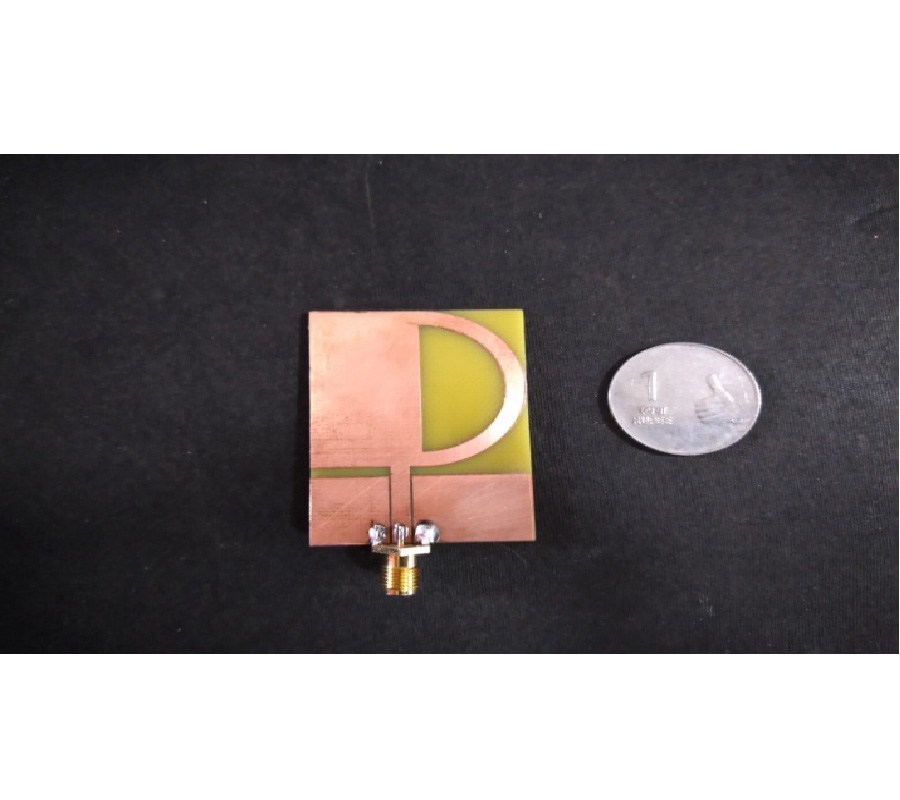
A novel, simple and inexpensive microstrip antenna is designed for vehicle communication and specifically for blind spot detection in this work. The proposed antenna is 20.2 mm x 24.1 mm x 1.6 mm in size. Since offset feeding technique is used, manufacturing is simple and cheap. ANSYS Electromagnetics Suite 17.2 simulates the antenna. To suppress mutual coupling, defected ground structure is employed. In addition, the Genetic Algorithm is used to optimize the ground plane width to obtain high gain and omnidirectional characteristics. The simulated results conceive that the `Dedicated Short Range Communication' (DSRC) band band is covered by using the antenna. Moreover, the antenna is fabricated, and the measured results are found to be consistent with the simulated ones.
DESIGN OF HIGH GAIN MICROSTRIP ANTENNA FOR VEHICLE TO VEHICLE COMMUNICATION USING GENETIC ALGORITHM
2019-06-11
PIER C
Vol. 93, 131-141
Low-Profile, Dual-Band, Unidirectional RFID Tag Antenna Using Metasurface
Thi Ngoc Hien Doan , Son Xuat Ta , Nguyen Van Khang , Khac Kiem Nguyen and Dao-Ngoc Chien
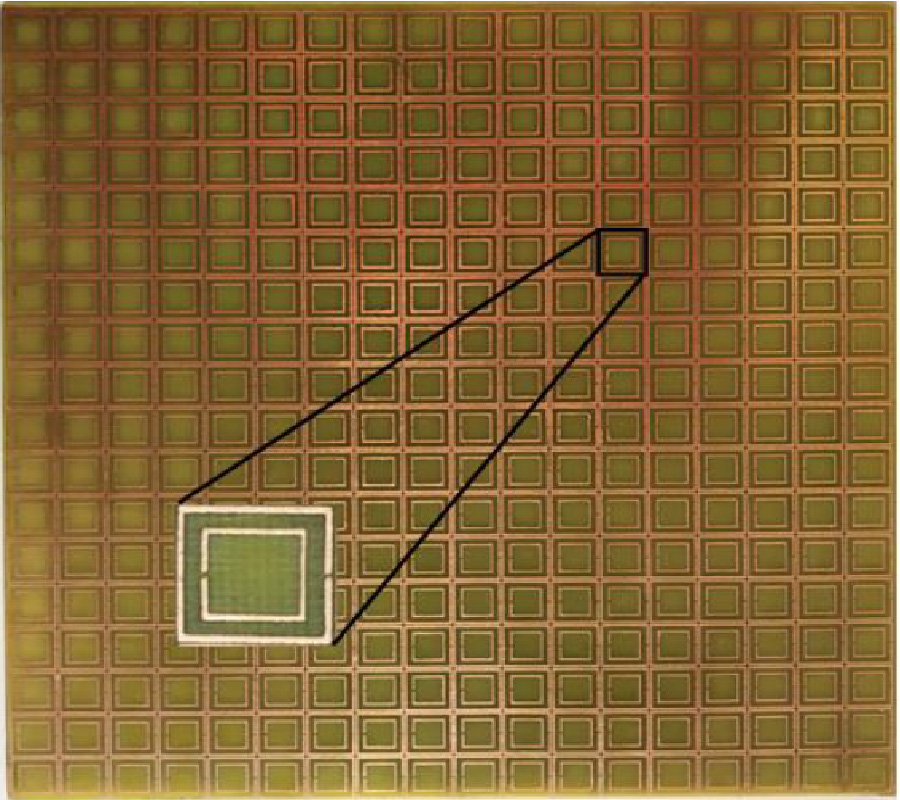
In this paper, a low-profile, dual-band, unidirectional, tag antennais proposed for ultra-high frequency band (UHF) radio frequency identification (RFID) applications. The antenna consists of a compact printed dipole, a metasurface of 4 × 4 periodic metallic plates, and a metallic reflector. The dipole antenna is fed by a modified T-matching network for a conjugate impedance matching with the UCODE G2XM chip. The metasurface is designed to work as an artificial magnetic conductor surface, which allows low-profile configuration and unidirectional radiation. More interestingly, the finite-sized metasurface generates extra resonance for the antenna system, which is combined with the dipole resonance for the dual-band operation. For an easy realization and low cost, the dipole and metasurface are built on the top and bottom sides of a thin FR-4 substrate, respectively. The final design with overall size of 190 mm × 190 mm × 15.8 mm (0.532λ × 0.532λ × 0.044λ at 840 MHz) yields a simulated |S11| < -10 dB bandwidth of 840-855 MHz and 916-932 MHz and a unidirectional radiation with a directivity of 7.0 dB and 5.8 dB at 925 MHz and 845 MHz, respectively. The antenna has been fabricated and tested. The measured readable range agrees rather closely with the predicted values. The measurements result in the maximum readable range of 6-m and 4.4-m at standard frequency bands of FCC (902-928 MHz) for North America and IN (840-845 MHz) for India, respectively.
LOW-PROFILE, DUAL-BAND, UNIDIRECTIONAL RFID TAG ANTENNA USING METASURFACE
2019-06-11
PIER C
Vol. 93, 119-129
Planar UWB MIMO-Diversity Antenna with Dual Notch Characteristics
Kamel Salah Sultan and Haythem Hussein Abdullah
This paper introduces a novel MIMO UWB antenna with dual notches. The proposed antenna is based on Quasi Self Complementary (QSC) method to give wide impedance bandwidth from 2.4 GHz to more than 12 GHz. The proposed antenna consists of a semi-elliptical patch that is fed by a tapered microstrip line. The antenna is designed on an FR-4 substrate with compact size 20 mm × 15 mm × 1.5 mm. The dual notched bands are achieved by using a square ring printed on the bottom of the substrate to reject WiMAX at 3.6 GHz. Also, a C-shaped slot is etched in the radiating patch to reject interference with the WLAN band at 5.8 GHz. In the proposed MIMO antenna, the isolation reduction is achieved utilizing diversity technique to minimize the mutual coupling between the antennas. The isolation between MIMO elements is more than 20 dB. The envelope correlation coefficient (ECC), diversity gain (DG), total active reflection coefficient (TARC), furthermore, channel capacity loss (CCL) are measured and calculated. The proposed antenna is designed, simulated, and measured. A good agreement is shown between the experimental and simulated results.
PLANAR UWB MIMO-DIVERSITY ANTENNA WITH DUAL NOTCH CHARACTERISTICS
2019-06-11
PIER M
Vol. 81, 159-165
Scintillation Effects in the Magnetized Plasma
George Jandieri , Akira Ishimaru , Jaromir Pistora and Michal Lesnak
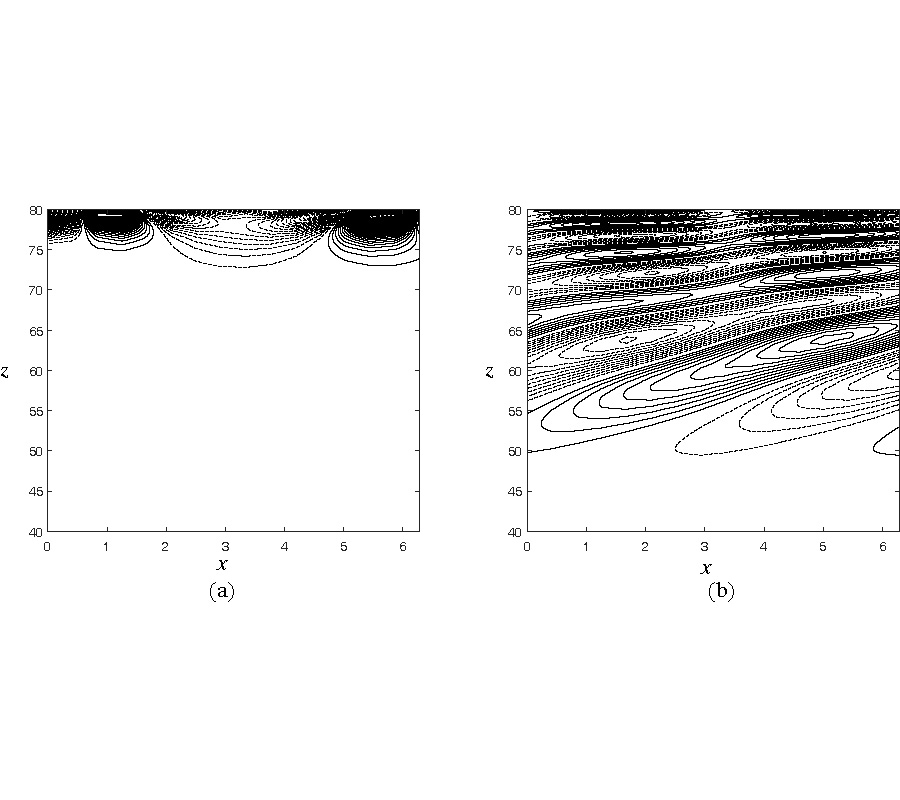
Statistical characteristics of scattered electromagnetic waves in the turbulent magnetized plasma caused by electron density fluctuations are calculated using complex geometrical optics approximation taking into account both diffraction effects and polarization coefficients. Scintillation level normalized on the variance of the phase fluctuations is analyzed analytically and numerically for small-scale plasma irregularities using the experimental data. New properties of the electromagnetic wave scintillations have been revealed. It is shown that splashes arise in the ionosphere leading to the turbulence and generation of new oscillations (waves and/or Pc pulsations) propagating in space and the terrestrial atmosphere. Turbulence extending in the lower atmospheric layers can influence on the meteorological parameters leading to climate change.
SCINTILLATION EFFECTS IN THE MAGNETIZED PLASMA
2019-06-10
PIER C
Vol. 93, 103-117
Novel Dual-Band 28/38 GHz MIMO Antennas for 5G Mobile Applications
Hala M. Marzouk , Mohamed Ismail Ahmed and Abdelhameed Abdelmoneim Shaalan
This paper introduces new compact microstrip line fed dual-band printed MIMO antennas resonating at 28 GHz and 38 GHz which are appropriate for 5G mobile communications. The first design in this work is a two-element conventional rectangular microstrip patch antenna with inset feed intended for 28 GHz and 38 GHz bands. The second design is symmetric dual-band two-element MIMO slotted-rectangular patches via microstrip inset fed lines. The dual-band response is attained from inverted I-shaped slots inserted in main patches. The third design is symmetric dual-band four-element MIMO antenna with inverted I-shaped slotted rectangular patches. A slot formed DGS is inserted in the partial rectangular ground plane. The substrate size is 55 x 110 mm2, while the introduced antennas have very modest planar configurations and inhabit an insignificant area which make them fit easier within handset devices for the forthcoming 5G mobile communications. Better return losses and larger bandwidths are realized. The MIMO antennas have low mutual coupling without using any added constructions. The antenna systems offer appropriate values of directivity, gain, and radiation efficiency with anticipated reflection and correlation coefficient characteristics which are seemly for 5G mobile applications. The antenna systems are fabricated by a photolithography process that uses optic-radiation to copy the mask on a silicon slab by the aid of photoresist layers and measured using Vector Network Analyzer ZVA 67 (measures up to 67 GHz frequency) with a port impedance of 50 Ω.
NOVEL DUAL-BAND 28/38 GHZ MIMO ANTENNAS FOR 5G MOBILE APPLICATIONS
2019-06-10
PIER C
Vol. 93, 93-101
A Miniaturized Dual-Band MIMO Antenna with Low Mutual Coupling for Wireless Applications
Mohssine El Ouahabi , Alia Zakriti , Mohammad Essaaidi , Aziz Dkiouak and Hanae Elftouh
In this article, a parasitic element structure is proposed to reduce the mutual coupling in a miniaturized microstrip dual-band Multiple-Input Multiple-Output (MIMO) antenna, which resonates at (7.8 GHz) for X-band and at (14.2 GHz) for Ku band applications. The design of the primary antenna consists of two identical radiators placed on a 24×20 mm2 Fr-4 substrate, which are excited by orthogonal microstrip feed lines. In addition, a single complementary split ring resonator (S-CSRR) is used to improve the performance of proposed antenna. Simulation and measurement were used to study the antenna performance, including reflection coefficients, coupling between the two input ports, radiation efficiency and the radiation pattern. The measured results show that the proposed antenna achieves two operating bands with impedance bandwidths (|S11| ≤ -10 dB) of 560 MHz (7.6 to 8.16 GHz) and 600 MHz (13.8 to 14.4 GHz) and mutual coupling (|S12| < -26 dB), which are suitable for X/Ku band applications.
A MINIATURIZED DUAL-BAND MIMO ANTENNA WITH LOW MUTUAL COUPLING FOR WIRELESS APPLICATIONS
2019-06-10
PIER M
Vol. 81, 149-158
Comparative Study on Sparse and Recovery Algorithms for Antenna Measurement by Compressed Sensing
Liang Zhang , Tianting Wang , Yang Liu , Meng Kong and Xian-Liang Wu
Compressed sensing (CS) is utilized in antenna measurements. The antenna data are compressed using the CS method, and the performances of different sparse and recovery algorithms of CS are used to solve antenna measurements. Experiments are conducted on various types of antennas. The results show that efficiency can be greatly improved by reducing the number of measurement points. The best reconstruction performance is exhibited by the Discrete Wavelet Transform (DWT) algorithm combined with the Compressive Sampling Matching Pursuit (COSAMP) algorithm.
COMPARATIVE STUDY ON SPARSE AND RECOVERY ALGORITHMS FOR ANTENNA MEASUREMENT BY COMPRESSED SENSING
2019-06-10
PIER
Vol. 165, 13-33
Performance Improvement and Antenna Design of Left-Handed Material Units Based on Topological Deformations
Baiqiang You , Mengyin Dong , Jianhua Zhou and Haike Xu
In this paper, by applying topological theory, we evaluate some left-handed unit structures. Based on the classification of topological deformation, the laws and characteristics of potential electromagnetic parameters are captured. The original left-handed material unit is realized by using a circular C-shaped coupling ring, the whose whole size is 10 × 10 × 0.5 mm3. Through three kinds of topological deformations, to explore the influence of topology on antenna performance, the electromagnetic parameters and left-handed characteristics of the original and modified units are compared and analyzed. For the designed handshake-shaped unit structure, simulation analysis predicts that dual-frequency, or even multi-band left-handed characteristics, can be achieved. To expand the structural performance of the handshake-shaped unit, an annular line for coupling enhancement is added inside the U-shaped structure to form an integrally coupled annular unit structure. Simulation results show that, with amplitudes of reflection coefficients of -27.1 dB and -14.5 dB, the resonance points of the improved unit structure are 3.57 GHz and 5.64 GHz, respectively. Loading the unit structure with a dual-band left-handed characteristic, a UWB antenna is designed and analyzed in detail. Through simulation, antenna performance is most affected by interference within the range of 2.5 ~ 5.0 GHz, which coincides with the double negative frequency band of the loaded left-handed structural unit. The notch frequency band of the designed UWB antenna, which is much wider than traditional notch antennas, is 3.62 ~ 4.54 GHz, with a notch bandwidth of 920 MHz.
PERFORMANCE IMPROVEMENT AND ANTENNA DESIGN OF LEFT-HANDED MATERIAL UNITS BASED ON TOPOLOGICAL DEFORMATIONS
2019-06-09
PIER Letters
Vol. 85, 9-16
An Ultra-Wideband Capped Bow-Tie Multilayer-Stacked Yagi Antenna
Zhengxiong Gong , Kang Wan , Guotang Shen , Xun Wan , Runqi Wu , Zhengting Liu , Yipeng Lu and Jungang Yin
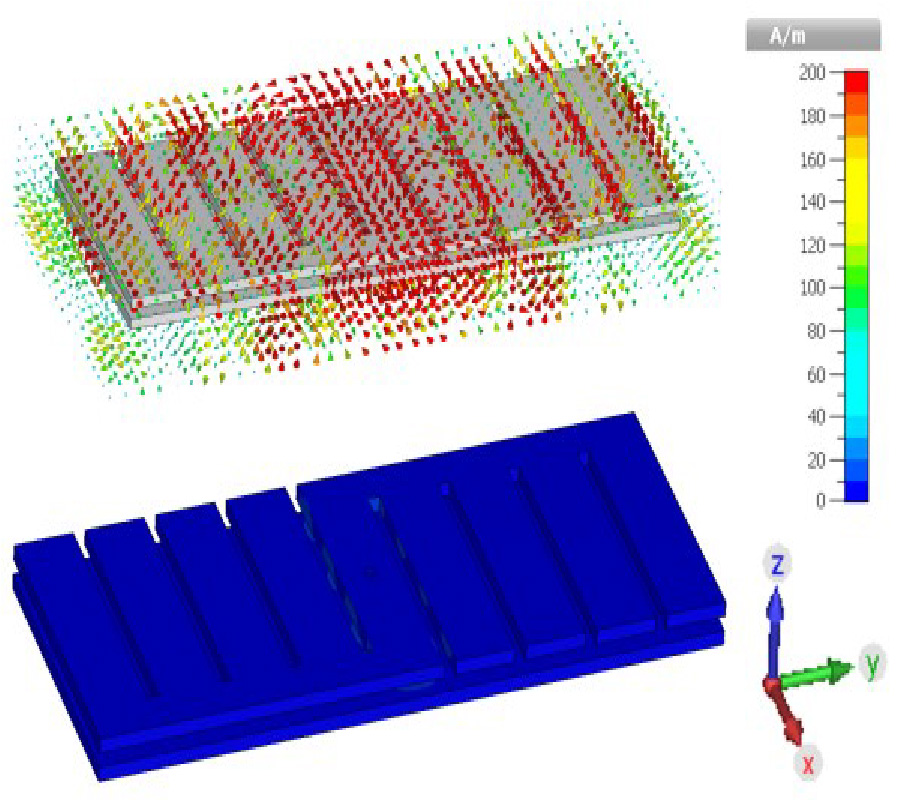
An ultra-wideband multilayer-stacked Yagi antenna is presented in this article. The proposed design is based on a capped bow-tie antenna, on which a Yagi antenna is formed simply by capping several pieces of parasitic patches with equal lengths but unequal widths. Thus, the multilayer-stacked antenna attains a small footprint, compact size, customizable gain and simple geometry, which make it promising for various applications. The prototype of this antenna is simulated, fabricated, and measured. Good agreement between simulation and measurement has been observed.
AN ULTRA-WIDEBAND CAPPED BOW-TIE MULTILAYER-STACKED YAGI ANTENNA
2019-06-09
PIER Letters
Vol. 85, 1-8
Simplified Analysis of Symmetrical RF Crossovers Extended with Arbitrary Complex Passive Two-Port Networks
Mohammad A. Maktoomi , Mohammad H. Maktoomi , Zeba N. Zafar , Mohamed Helaoui and Fadhel M. Ghannouchi
There are three mathematical conditions that must be solved simultaneously for the analysis of a fully-symmetric radio-frequency (RF) crossover. When additional reciprocal two-port networks - which might be of an arbitrarily high complexity - are appended at each port of a crossover, analysis of the modified crossover becomes very tedious. Therefore, this paper examines the requirement of the three conditions in such scenario. We show that two of the three conditions can be invoked without considering the additional two-port networks altogether. This is a remarkable simplification considering that the additional two-port networks, in general, would necessitate dealing with more involved algebraic calculations. To demonstrate the usefulness of the presented theory, for the first time, analysis and design of a dual-frequency port-extended crossover is included. A prototype of the dual-frequency crossover operating concurrently at 1 GHz and 2 GHz is manufactured on a Rogers RO4350B laminate having 30 mil substrate height and 3.66 dielectric constant. The close resemblance between the EM simulated and measured results validates the analytical equations.
SIMPLIFIED ANALYSIS OF SYMMETRICAL RF CROSSOVERS EXTENDED WITH ARBITRARY COMPLEX PASSIVE TWO-PORT NETWORKS
2019-06-09
PIER Letters
Vol. 84, 147-153
An Accurate Explicit Expression for the Self Inductance of Thin-Wire Round Pancake Coils
Luisa Di Paola and Marco Muzi
This paper presents an accurate analytical explicit expression for the self-inductance of a flat pancake round coil made up of concentric turns. The expression is obtained by converting the semi-infinite integral representation for the mutual inductance between two arbitrary turns of the coil into a finite integral, and then by expanding the integrand into a series of Legendre polynomials. As a result, a sum of simpler integrals is obtained, whose analytical evaluation is straightforward. The self inductance is finally expressed as the sum of logarithmic functions, describing the contributions from the self-inductances of the single turns, plus the mutual-inductance terms originating from all the possible pairs of turns of the coil, each one given by a power series of the ratio between the radii of the turns. Numerical simulations are performed to illustrate the advantages of the proposed solution.
AN ACCURATE EXPLICIT EXPRESSION FOR THE SELF INDUCTANCE OF THIN-WIRE ROUND PANCAKE COILS
2019-06-08
PIER C
Vol. 93, 79-92
An Artificial Neural Network Approach to DOA Estimation and Switched Beamforming in Rectangular Array Based Smart Antennas
Robert Macharia , Phillip Kibet Langat and Peter Kamita Kihato
Switched beamforming using electronic phase shifters is commonplace. Digital switched beamformers offer a premise of better performance than electronic phase shift switched beamformers. It is also worth noting that current unknown signal Direction of Arrival (DoA) estimation methods (commonly MUltiple SIgnal Classification (MUSIC) and Estimation of Signal Parameters via Rotational Invariance Techniques (ESPRIT)) are generally computationally intensive. In this paper, signal DoA estimation and digital switched beamforming using aptly designed Artificial Neural Network (ANN) classifiers are looked into. Initially, signals detected at a rectangular receiving array are mapped onto a DoA through an ANN classifier. A second ANN classifier maps the selected DoA onto an optimal set of beamforming weights leading to an optimal switched beamforming reception pattern. The ANN classifiers' performance in DoA estimation and beamforming is tested over a variety of trials, yielding good results. The designed ANN beamformer premises to yield high-speed and accurate switched beamforming performance, most notably in large array systems. The ANN DoA estimator/beamformer can be easily adapted to non-uniform arrays wherein closed form DoA estimation/beamforming solutions are impractical. MATLAB software environment has been used as the main analysis tool.
AN ARTIFICIAL NEURAL NETWORK APPROACH TO DOA ESTIMATION AND SWITCHED BEAMFORMING IN RECTANGULAR ARRAY BASED SMART ANTENNAS
2019-06-08
PIER Letters
Vol. 84, 139-146
A Novel Dual-Band Microstrip Bandstop Filter Based on Stepped Impedance Hairpin Resonators
Jangirkhan Dzhumamuhambetov , Bakytgul Abykanova and Adnan Gorur
In this paper, design of a novel dual-band microstrip bandstop filter is presented. The designed filter is constructed by loading two stepped impedance hairpin resonators to a simple straight transmission line, which also connects to the input and output ports. By virtue of the proposed resonator, the ratio of the first and second resonance frequencies can be obtained as approximately 4.4. Two stopbands centered at 2.34 GHz and 7.81 GHz with the fractional bandwidths of 33.2% and 7.9% can be obtained, respectively. Rejection levels inside the stopbands are obtained as better than 20 dB. Total electrical length of the proposed filter is 0.317λgx0.136λg, where λg is the guided wavelength at the lowest resonance frequency. The designed filter was also fabricated and tested for experimental verifications. The measured results are in an excellent agreement with the simulated ones.
A NOVEL DUAL-BAND MICROSTRIP BANDSTOP FILTER BASED ON STEPPED IMPEDANCE HAIRPIN RESONATORS
2019-06-07
PIER Letters
Vol. 84, 131-137
A Double Optimized Transmission Zeros Based on Pi-CRLH Dual-Band Bandpass Filter
Ashraf Y. Hassan and Mahmoud Abdalla
In this paper, design and measurements of a highly selective π-CRLH dual-band bandpass filter, with transmission zeros optimized to serve Wi-Max applications, is presented. The dual-bands are designed at 5.2 and 5.7 GHz with a sharp rejection level between them and transmission zeros before and after the passbands. The filter is designed using coupled gap zerothorder composite right/left-handed (CRLH) resonators, which results in significant filter size reduction. Furthermore, two different coupled π-CRLH filters are discussed through the work development of this paper. The filter design concepts are verified and confirmed using electromagnetic simulations and experimental measurements. Presented results reveal that the proposed filter exhibits a rejection level greater than -20 dB, while maintaining 2 dB insertion loss and better than -25 dB for the transmission zeros with compact size (12×16 mm2) which is 70% smaller than similar conventional filters.
A DOUBLE OPTIMIZED TRANSMISSION ZEROS BASED ON PI-CRLH DUAL-BAND BANDPASS FILTER
2019-06-06
PIER C
Vol. 93, 65-77
Compact Ultra-Wideband Antenna with Triple Band Notch Characteristics Using EBG Structures
Mahadu Trimukhe and Balaji G. Hogade
A compact ultra-wideband (UWB) antenna with triple band-notch characteristics is proposed. The proposed antenna employs fractal and two via edge located (TVEL) electromagnetic band gap (EBG) structures near the feed line to cause triple frequency band notch characteristics over WiMAX (3.3 to 4.0 GHz), WLAN (5.1 to 5.8 GHz) and satellite downlink communication (7.2 to 7.8 GHz) frequency bands. The proposed antenna is designed and fabricated on a 24 × 24 × 1.6 mm3 FR4 substrate. Itoffers impedance bandwidth (VSWR <2) from 2.9 to 11.2 GHz except over the notched bands. The antenna has nearly omnidirectional radiation patterns and steady gain over the desired UWB. The measured results agree with the simulated ones.
COMPACT ULTRA-WIDEBAND ANTENNA WITH TRIPLE BAND NOTCH CHARACTERISTICS USING EBG STRUCTURES
2019-06-04
PIER C
Vol. 93, 49-63
Sidelobe-Level Suppression for Circular Antenna Array via New Hybrid Optimization Algorithm Based on Antlion and Grasshopper Optimization Algorithms
Anas Atef Amaireh , Asem Sh. Al-Zoubi and Nihad I. Dib
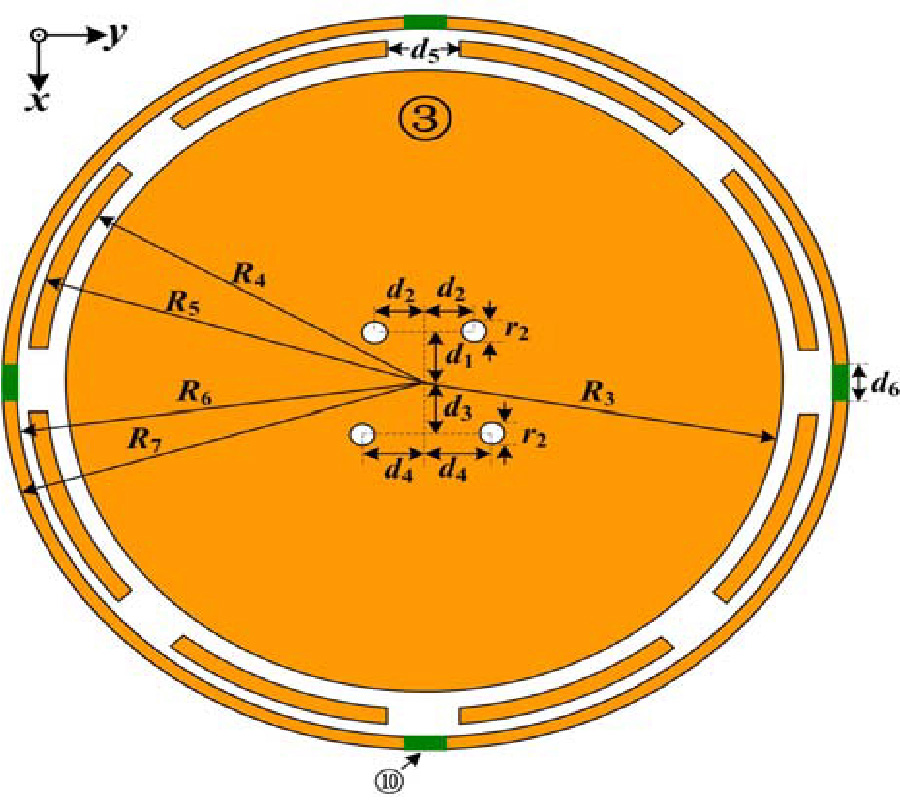
The suppression of the side-lobe level (SLL) of antenna arrays is a significant factor that can enhance the reliability and validity of a communication system. Recently, metaheuristic algorithms have been widely implemented in the design of antenna arrays, in order to find the optimal minimization for the side-lobe level of the array's radiation pattern. In this paper, we propose a new hybrid algorithm that combines the characteristics of two stochastic algorithms, Antlion Optimization (ALO) algorithm and Grasshopper Optimization Algorithm (GOA). ALO, which is an evolutionary algorithm, is robust in exploitation and has been effectively used in many articles in the literature. GOA has strong capability of exploration all over the search space due to the swarm nature of the algorithm, which has been proven in several articles in the literature. Therefore, combining these characteristics and overcoming the drawbacks of ALO and GOA are the main motivation behind hybridizing ALO and GOA in one hybrid algorithm. Simulation results show that the proposed hybrid algorithm has a good performance in the radiation pattern optimization of circular antenna array (CAA) and fast convergence rate compared with other strong optimization algorithms, which prove the efficiency, robustness, and stability of the hybrid algorithm.
SIDELOBE-LEVEL SUPPRESSION FOR CIRCULAR ANTENNA ARRAY VIA NEW HYBRID OPTIMIZATION ALGORITHM BASED ON ANTLION AND GRASSHOPPER OPTIMIZATION ALGORITHMS
2019-06-03
PIER Letters
Vol. 84, 123-130
Synthesis and Design of MMR-Based Ultra-Wideband (UWB) Band Pass Filter (BPF) in Suspended Stripline (SSL) Technology
Mohamad Assaf , Adnan Malki and Alaa Aldin Sarhan
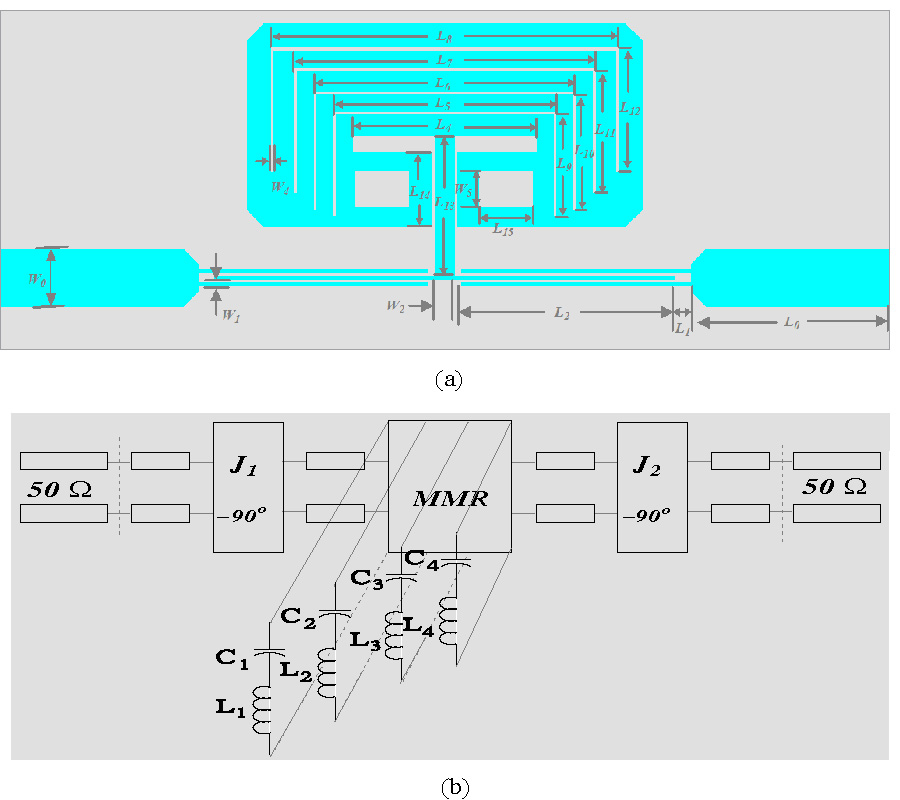
This paper presents a direct synthesis approach for UWB BPFs. The modified Chebyshev filtering function is used to characterize the frequency response over the whole frequency range of the BPF. As for the filter's circuit, open circuited MMR capacitively coupled with I\O ports is used, and two shunt short-circuited stubs are placed at the two ends of the connecting line to sharpen the rejecting skirt of the passband. The equivalent circuit's transfer function is derived. By equating the filtering function to the transfer function of the circuit, the design parameters are obtained. The uniform connecting line is then replaced by nonuniform line to suppress spurious harmonics and achieve very wide stopband. In order to avoid critical precision requirement in the fabrication of the filter, we design the filter using suspended stripline (SSL) technology to replace the parallel-coupled microstrip lines (PCML) with very small coupling gaps. Finally, a filter prototype is designed and fabricated to experimentally validate the presented method. Experimental results show good agreement with EM-simulated and theoretical ones.
SYNTHESIS AND DESIGN OF MMR-BASED ULTRA-WIDEBAND (UWB) BAND PASS FILTER (BPF) IN SUSPENDED STRIPLINE (SSL) TECHNOLOGY