Search Results(13790)

2019-05-01
PIER Letters
Vol. 84, 1-6
A Wideband Conformal Antenna with High Pattern Integrity for mmWave 5G Smartphones
Gulur Sadananda Karthikeya , Mahesh Pandurang Abegaonkar and Shiban Kishen Koul
In this paper, a co-planar waveguide fed circular slot antenna with an operational impedance bandwidth of 20-28 GHz is proposed. In order to reduce the effective occupied volume when the antenna is integrated onto a typical mmWave 5G smartphone, a conformal topology is investigated. Since the radiating aperture is not backed by an electrically large ground plane, it leads to a bidirectional beam resulting in an inherently low forward gain of 4 dBi with a front to back ratio of 1 dB. Hence, a compact exponentially tapered copper film reflector is integrated electrically close (0.046λ at 28 GHz) to the radiating aperture to achieve a forward gain of 8-9 dBi with an effective radiating volume of 0.24λ03. The impedance bandwidth is from 25 to 30 GHz (18.2%) with a 1-dB gain bandwidth of 34.7% indicating high pattern integrity across the band. Since the proposed antenna element offers wideband with high gain, it is a potential candidate for mmWave 5G smartphones.
A WIDEBAND CONFORMAL ANTENNA WITH HIGH PATTERN INTEGRITY FOR MMWAVE 5G SMARTPHONES
2019-05-01
PIER M
Vol. 81, 31-42
Embedded Resonances for Discrimination of Multiple Passive Nonlinear Targets Applicable to DORT
Sun K. Hong and Hong Soo Park
This paper presents a method to distinguish multiple passive nonlinear targets, which can be applied to detection and selective wave focusing based on the decomposition of the time-reversal operator (DORT). A recent demonstration of DORT applied to harmonic scattering has shown that passive nonlinear targets (scatterers) can be detected in the presence of linear scatterers and separated into discrete eigenvalues. While DORT is effective in detecting multiple nonlinear targets, it could be difficult to discriminate these nonlinear scatters as their harmonic responses would look similar to each other. Our proposed approach to overcoming this difficulty is based on simply embedding a unique resonant notch in the second harmonic band for each nonlinear scatter, so as to make the notch appear in the associated eigenvalue, permitting identification and discrimination of the scatterer. We numerically demonstrate the basic feasibility of the proposed idea by considering various configurations in a two-dimensional model. The results show that a uniquely embedded resonant notch in a nonlinear target consistently appears in the corresponding eigenvalue of the time reversal operator, allowing it to be a reliable identifying feature. Further investigation into this technique holds promise towards smart wireless power transfer, biomedical, and IoT applications.
EMBEDDED RESONANCES FOR DISCRIMINATION OF MULTIPLE PASSIVE NONLINEAR TARGETS APPLICABLE TO DORT
2019-04-30
PIER Letters
Vol. 84, 7-14
A Wideband Gate Mixer Using 0.15 μm GaAs Enhancement-Mode PHEMT Technology
Xi Wang , Jun Hu , Yongbo Su , Peng Ding , Wuchang Ding , Feng Yang , Asif Muhammad and Zhi Jin
This paper presents a wideband gate mixer using 0.15 μm GaAs enhancement-mode pseudomorphic high electron mobility transistor (E-mode PHEMT) process. The proposed mixer is based on a single-ended gate mixer topology. Proper input matching networks are used to ensure good conversion gain as well as a wide frequency band. A λ/4 open stub at local oscillator (LO) frequency and a low-pass filter at the drain terminal do great help to enhance LO-IF and RF-IF isolation performance. A Lange coupler is used to maintain LO-RF isolation in a wide frequency band. The measured results show that the mixer operates in wide RF frequency of 17-26 GHz and IF frequency of 0.8-1.7 GHz with a conversion gain of 5-8 dB. The 1 dB compression point (P1 dB) is -1~1 dBm, and the needed LO power is only 1 dBm. The LO-IF, RF-IF, and LO-RF isolations are about 45, 45, and 20 dB, respectively. This represents excellent performance for GaAs PHEMT mixer in terms of frequency bandwidth, conversion gain, isolation, and P1 dB performance.
A WIDEBAND GATE MIXER USING 0.15 μM GAAS ENHANCEMENT-MODE PHEMT TECHNOLOGY
2019-04-27
PIER C
Vol. 92, 151-164
Flexible Compact High-Order FD-FD Algorithm for Computing Mode Fields of Microwave Waveguides with Regular and Reentrant Corners
Sin-Yuan Mu and Hung-Wen Chang
We present a highly accurate frequency-domain finite-difference algorithm for computing mode field solutions of microwave waveguides with regular and reentrant corners. Based on FBS (Fourier-Bessel series)-derived 3-by-3 compact coefficients, our method allows for a flexible layout of the 2-D uniform grids so that distance from the waveguide boundaries to the adjacent unknowns can be arbitrary. Fourth to sixth-order convergent rates of the proposed coefficients are verified by resonance-frequency error analysis for rectangular microwave waveguides for both TE/TM polarizations. We also study the first four Neumann/Dirichlet eigenvalues of the L-shaped MW-WGs calculated by the flexible scheme, and the Neumann results are reported for the first time. Although our results achieve sixth-order accuracy for analytic modes, the order of accuracy is about one and a third for both fundamental TE and TM modes due to singularity around the reentrant corner.
FLEXIBLE COMPACT HIGH-ORDER FD-FD ALGORITHM FOR COMPUTING MODE FIELDS OF MICROWAVE WAVEGUIDES WITH REGULAR AND REENTRANT CORNERS
2019-04-27
PIER C
Vol. 92, 137-150
A Compact Single-Element Pattern Reconfigurable Antenna with Wide-Angle Scanning Tuned by a Single Varactor
Haozhan Tian , Li Jun Jiang and Tatsuo Itoh
In this paper, we propose a convenient fixed-frequency beam steering method, using a single patch antenna controlled by only one electronically tunable component. The antenna is based on coupled-mode patch antenna (CMPA) [1] that is capable to scan the beam as the function of frequency. A ground-etched slot loaded with one varactor diode is tuned to be capacitive, resonant, or inductive. In order to test broader tuning range, two kinds of varactors with the ranges of 9.24 pF-1.77 pF and 2.67 pF-0.63 pF are implemented respectively. By analyzing how the loaded slot affects the cavity modes and fields, we demonstrate how the voltage bias tunes the frequency responses and steers beam of the antenna. Perturbed by the loaded slot, the frequency response of the antenna shifts from center frequency of 2.35 GHz with the bandwidth of 4.26% down to the band centered at 2.3 GHz with the bandwidth of 4.35%. The maximum scanning range is realized at around 2.29 GHz where the measured main beam continuously scans from -34° to +32° when the varactor with lower tuning range is used and biased. Meanwhile, the main beam of 2.35 GHz scans from +32° to +54° when the higher-range varactor is biased. The proposed single-element antenna is able to maintain high gain and efficiency that are comparable to a regular patch antenna with same size and substrate.
A COMPACT SINGLE-ELEMENT PATTERN RECONFIGURABLE ANTENNA WITH WIDE-ANGLE SCANNING TUNED BY A SINGLE VARACTOR
2019-04-26
PIER C
Vol. 92, 123-136
Envelope Correlation Coefficient of a Two-Port MIMO Terminal Antenna Under Uniform and Gaussian Angular Power Spectrum with User's Hand Effect
Ahmed Mohamed Elshirkasi , Azremi Abdullah Al-Hadi , Mohd Fais Mansor , Rizwan Khan and Ping Jack Soh
This paper studies the effect of incident wave angular power spectrum (APS) distribution and user hand effect on the envelope correlation coefficient (ECC) of two port MIMO antenna operating in frequency band of LTE-U sub 6 GHz. APS of uniform and Gaussian distributions are used with different Gaussian angular spread (AS) values i.e. 10˚, 30˚, 50˚ and 70˚. A prototype was fabricated, and three-dimensional radiation patterns of antenna elements were measured in anechoic chamber from 4 to 6 GHz in both cases of free space and when the user hand phantom grips the prototype in data mode. An algorithm to calculate ECC from the complex data of far field radiation pattern with different APS distributions is explained in details. Results show that user hand presence increases ECC between ports compare with free space, whose increase is more obvious under Gaussian APS. ECC values under uniform APS is practically zero over the entire frequency range expect at frequency values close to 6 GHz where the highest ECC values are 0.13 and 0.16 in free space and with user hand respectively. However, Gaussian APS with different AS's shows a significant impact of the ECC. With narrow AS of 10˚, ECC at some incident directions can be as high as 0.84 and 0.92 in free space and with user hand respectively and the mean ECC values under this AS are 0.25 and 0.37 respectively. ECC values keep decreasing as AS gets wider, at AS = 70˚, maximum ECC values are 0.23 and 0.34 in free space and with user hand respectively with mean values close to uniform APS. Statistical distribution of ECC show good agreement with exponential distribution, more agreement between measured ECC and exponential distribution is observed in free space with wider AS.
ENVELOPE CORRELATION COEFFICIENT OF A TWO-PORT MIMO TERMINAL ANTENNA UNDER UNIFORM AND GAUSSIAN ANGULAR POWER SPECTRUM WITH USER'S HAND EFFECT
2019-04-26
PIER M
Vol. 81, 21-30
Fast Imaging and Scattering Center Model Extraction with Full-Wave Computational Electromagnetics Formulations
Rainer Bunger
The so-called ``fast imaging and scattering centers approach'' originally proposed by Bhalla & Ling has revolutionized the generation of inverse synthetic aperture radar (ISAR) images and scattering center models using computational electromagnetics. Until now this approach has been used exclusively with ray-based methods. The main contribution of this paper is an extension of the Bhalla & Ling formulation for the generation of ISAR images and scattering center models with full-wave methods. Moreover, we discuss an approach to reduce the sampling requirements of the original Bhalla & Ling formulation, rendering the formulation applicable to 3-D imaging of real targets.
FAST IMAGING AND SCATTERING CENTER MODEL EXTRACTION WITH FULL-WAVE COMPUTATIONAL ELECTROMAGNETICS FORMULATIONS
2019-04-26
PIER M
Vol. 81, 13-20
Unimodular Magnetoelectric Media
Ari Sihvola and Ismo Veikko Lindell
This article introduces a new class of electromagnetic materials: unimodular media. Unimodular media are magnetoelectric bi-isotropic media for which the determinant of the normalized four-parameter constitutive material matrix is unity. As special cases of such media are perfect electric conductor, perfect magnetic conductor, perfect electromagnetic conductor, simple skewon media, and simple isotropic media with unit refractive index. The essential parameters in the description of unimodular media (strength of impedance, degree of magnetoelectricity, angle of reciprocity) allow for illuminating visualizations of this class of materials.
UNIMODULAR MAGNETOELECTRIC MEDIA
2019-04-26
PIER M
Vol. 80, 203-214
Analysis of Implantable Ultrasonic Coupling Wireless Power Transmission System
Xiaoheng Yan , Zhengyin Zhu , Guo-Qiang Liu and Xiaohe Zhao
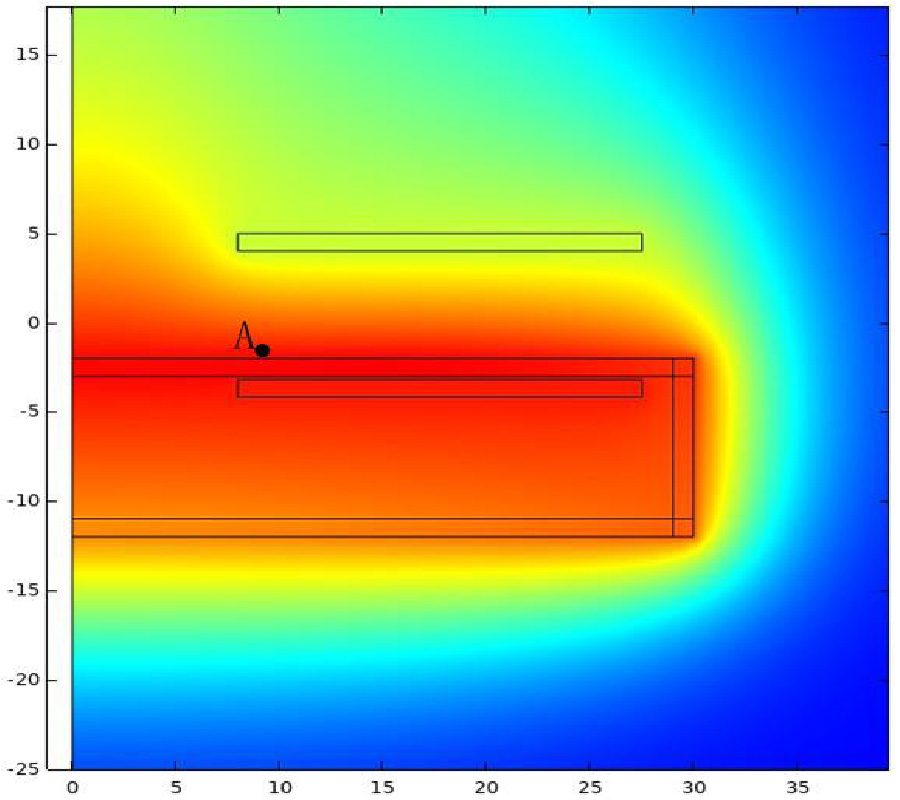
The research on implantable ultrasonic coupling wireless power transmission systems has not been systematically analyzed from the sound field theory, and the influencing factors of implanted ultrasonic coupling wireless power transmission systems based on the far-field model are proposed in this paper. Firstly, the far-field model is constructed. On this basis, the main factors affecting the ultrasonic energy transmission in the system are discussed. The COMSOL finite element simulation software was used to simulate the ultrasonic coupling wireless energy transmission system in human tissue environment, and the directivity of the energy transmission system was verified. The system experiment platform is built to analyze the energy transmission under different distances, different sound source frequencies and different sound source excitations, and compare with the numerical simulation data. Finally, the influence of different factors on the energy transmission system is verified. It provides an effective reference for further research on implantable ultrasonic coupling wireless power transmission systems.
ANALYSIS OF IMPLANTABLE ULTRASONIC COUPLING WIRELESS POWER TRANSMISSION SYSTEM
2019-04-25
PIER C
Vol. 92, 113-121
Common-Mode Suppression in Broadside Coupled Coplanar Waveguides
Yujie He , Joesph M. Faia , Michael Cracraft and Edward Wheeler
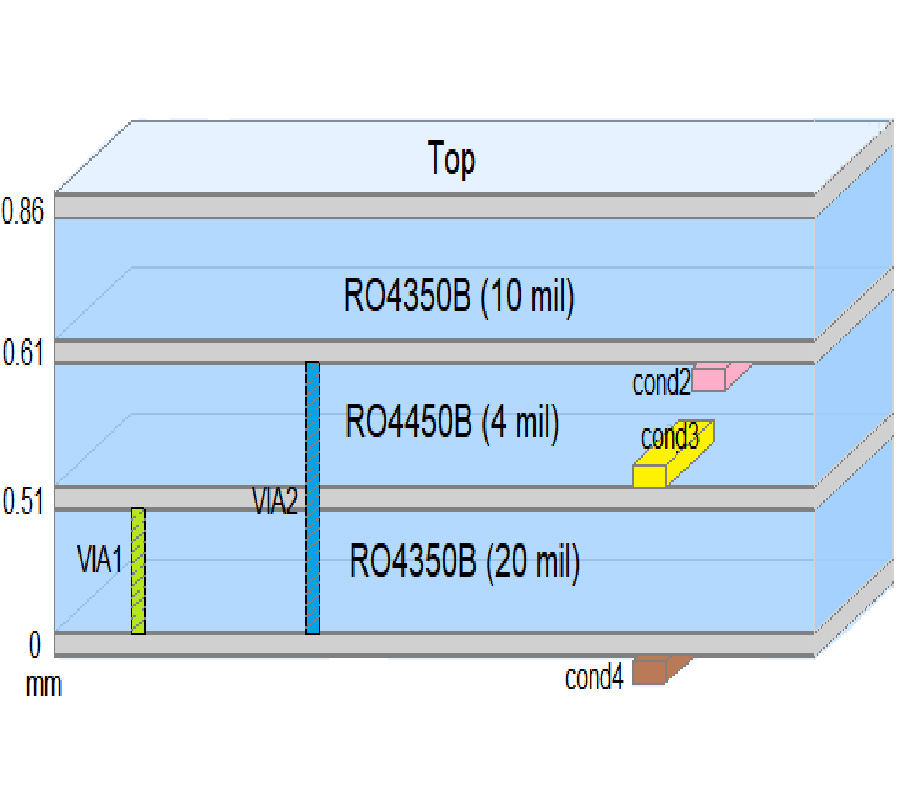
Differential signaling is used in digital circuitry and high speed communication links due to its lower level of radiation and lower susceptibility to interference. Signal skew, amplitude differences and unequal parasitic electric or magnetic coupling to nearby structures can lead to common-mode signals being present on differential communication links which can result in unwanted electromagnetic interference and crosstalk. Common-mode filtering is often employed to suppress common-mode signal propagation in order to mitigate against these negative effects. In this paper broadside coupled differential coplanar waveguides are used which provide effective differential transmission from dc through 40 GHz. Simulation and measurement show that dipole-like common-mode filtering elements placed between the broadside coupled traces offer common-mode suppression of more than 10 dB over bandwidths greater than 5 GHz. A design equation is developed which can be used to estimate filtering frequencies from filter dimensions through 30 GHz. Filters can be cascaded to broaden filtering around a single frequency to filter at multiple frequencies. Simulation based registration studies were conducted which show stable filtering performance in the presence of layer-to-layer misregistration up to 0.254 mm.
COMMON-MODE SUPPRESSION IN BROADSIDE COUPLED COPLANAR WAVEGUIDES
2019-04-25
PIER C
Vol. 92, 101-112
Design of Yagi-Uda Antenna with Multiple Driven Elements
Huadong Guo and Wen Geyi
In this paper, we present a novel design for an end-fire antenna, which generalizes the concept of conventional Yagi-Uda antenna by introducing multiple driven elements. Through using the method of maximum power transmission efficiency, the optimal distribution of excitations for the multiple driven elements can be obtained, and the end-fire gain of the array can be significantly improved in comparison with the conventional Yagi-Uda antenna with a single driven element. In order to demonstrate the new idea, two different types of antenna arrays are designed and fabricated. The first design uses a split-ring resonator (SRR) as radiating element. Compared to similar planar Yagi-Uda SRR antenna arrays previously reported, the number of antenna elements can be reduced from fifteen to eight, and the longitudinal dimension is significantly reduced by 46% while the same performances are maintained with the gain reaching 11.7 dBi at 5.5 GHz. In the second design, printed half-wavelength dipoles are used as the antenna elements. It is shown that an eight-element dipole array with four driven elements has a peak gain of 13.4 dBi at 2.45 GHz, which is 1.8 dB higher than the conventional printed Yagi-Uda dipole antenna array with the same number of elements.
DESIGN OF YAGI-UDA ANTENNA WITH MULTIPLE DRIVEN ELEMENTS
2019-04-25
PIER C
Vol. 92, 87-100
2D Disturbance Map of Low-Power Front-End Circuits in Low Frequency Band
Grzegorz Oleszek
This document presents an evaluation of a near-field contactless inductive link, examined from a radiated disturbance standpoint, whose sources are low-power Analog Front End (AFE) circuits. Two basic types of AFE rectifiers based on Shottky diodes and Mosfet transistors were tested. Due to selective interference measurement, a map of distortions regarding the position of the coil was created. The obtained results referred to the analytical model, providing sufficient convergence to quickly assess the optimum position of the receiving coil.
2D DISTURBANCE MAP OF LOW-POWER FRONT-END CIRCUITS IN LOW FREQUENCY BAND
2019-04-23
PIER C
Vol. 92, 57-69
A Parametric Analysis & Design of All Metal Vivaldi Antenna Covering 3.0-18 GHz for DF and Phased Array Applications
Chitturi Lakshmi Prasanna , Munagoti Bhagya Lakshmi and Neti Narasimha Sastry
Ultra-wideband antennas covering 1-18 GHz are required for Direction Finding (DF) and phased array applications in electronic warfare and communication systems. Several antennas such as Archimedean spirals, Log periodics, Ridged horns have been extensively used for ESM-DF applications. In this paper an all metal Vivaldi antenna covering 3-18 GHz is designed using HFSS software, and hardware has been realized. A measured VSWR of less than 2.5 over 3-18 GHz is obtained. Radiation patterns are satisfactory both in simulations and measurements. There is fairly good agreement between the two. Further parametric studies are carried out on the single antenna with side and back walls, and this design is optimized for VSWR of less than 2.5 over the band. This antenna is used in a linear array of 8 elements. For this array in simulations, scanned patterns devoid of grating lobes are obtained from 3.0 GHz to 9.0 GHz, and results are presented.
A PARAMETRIC ANALYSIS & DESIGN OF ALL METAL VIVALDI ANTENNA COVERING 3.0-18 GHZ FOR DF AND PHASED ARRAY APPLICATIONS
2019-04-23
PIER B
Vol. 84, 43-60
Dielectric Wedge Scattering: an Analytic Inroad
Jan Alexander Grzesik
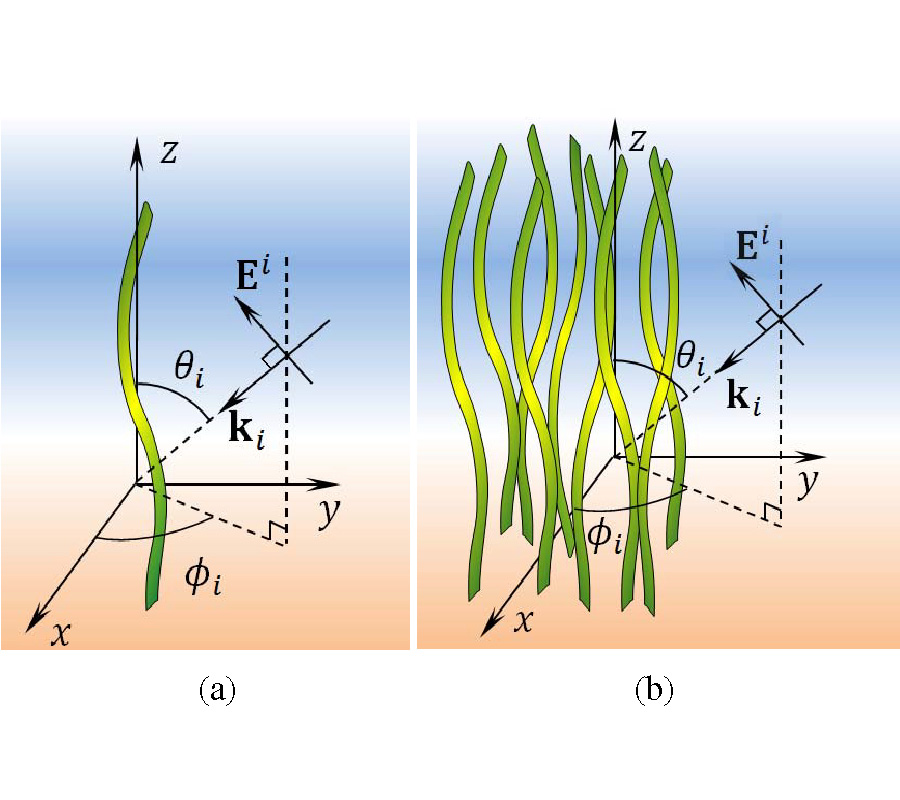
We provide herein open-form, double series formulae describing the diffraction of electromagnetic waves by a dielectric, dissipative wedge of finite radius a: Our procedure bypasses altogether any attempt to enforce boundary conditions at wedge faces, and relies instead on volume self-consistency for the total electric field, incident plus self-consistently radiated by polarization/ohmic currents distributed throughout the wedge interior. Self-consistency of this sort is formulated as an integral equation over the wedge cross-sectional area, an equation wherein are implicitly subsumed all necessary boundary conditions. The crux of the ensuing solution depends upon a decomposition within the wedge interior of both incoming (here taken as plane) wave field and the underlying Green's (Hankel) function into standard functional buildings blocks individually compliant with the Helmholtz equation as adapted to the reference, exterior medium. With such decomposition in hand, the remainder of the solution follows a more or less routine, Ewald-Oseen route, one eased by function orthogonality, by cancellation across the board of the total field when similarly so decomposed throughout the wedge interior, and an almost rote reading off of interior expansion coefficients against those found on the exterior. The incoming field series decomposition across the wedge interior, it should be noted, avoids the pitfall of a naive recourse to Fourier series, and invokes instead a root-mean-square minimization. That such a procedure enjoys a measure of validity is confirmed in Appendix C, wherein it is shown that the present analytic apparatus, when permitted to confront a degenerate wedge having its exterior angle γ tending to zero, γ→0+; which is to say, a bona fide dielectric cylinder, recovers the classical, boundary-value solution as to its every detail. All in all, while we do hope that the present work will serve to broaden the prevailing viewpoint as to permeable wedge scattering, we nevertheless admit to a measure of regret as to the complexity of the resulting formulae, whose numerical implementation bodes ominously to be a formidable task in its own right. It would seem that we reach here a frontier of diminishing returns as to the applications of classical analysis, a point at which its intellectual allure can honorably surrender to direct, computer-driven point matching methods.
DIELECTRIC WEDGE SCATTERING: AN ANALYTIC INROAD
2019-04-23
PIER M
Vol. 80, 193-201
Compact UWB Bandpass Filter with Two Notched Bands Using SISLR and DMS Structure
Omid Mousavi , Ahmad Reza Eskandari , Mohammad Mansour Riahi Kashani and Mohammad Ali Shameli
This paper is a design and fabrication of an UWB filter (band pass filter) with two notched (rejection) bands. Ultra-wideband (UWB) systems are systems with the electromagnetic spectrum from 3.1 GHz to 10.6 GHz. The designed filter removes WLAN and satellite signals which are 5.8 GHz and 8 GHz. For designing filter, we use a stepped-impedance stub-loaded resonator. To provide two notched bands, a radial stub loaded resonator with a defected microstrip structure (DMS) is used. The presented filter has more analytic relations and simpler structure than prior works. This filter is fabricated on an RO4003 substrate with dielectric constant of 3.55. The dimensions of the filter are 10*25 mm which are more compact than prior structures. The measurements have a good agreement with predicted results which verifies the feasibility of the UWB filter.
COMPACT UWB BANDPASS FILTER WITH TWO NOTCHED BANDS USING SISLR AND DMS STRUCTURE
2019-04-22
PIER Letters
Vol. 83, 139-143
A Novel Microstrip Branch-Line Coupler with Wide Suppression Band
Shirui Sha , Yingze Ye and Zhijie Zhang
A new miniaturized microstrip branch-line coupler with wide suppression band is proposed in this paper. The new structure has two significant advantages, which not only effectively reduces the occupied area to 12.3% of the conventional branch-line coupler at 0.6 GHz, but also has high 11th harmonic suppression performance. The measured results indicate that a bandwidth of more than 125 MHz has been achieved while the phase difference between S21 and S31 is within 90° ± 1.0°. The measured bandwidths of |S21| and |S31| within 3 ± 0.4 dB are 145 MHz and 150 MHz, respectively. Furthermore, the measured insertion loss is comparable to that of a conventional branch-line coupler. The new coupler can be easily implemented by using the standard printed-circuit-board etching processes and is very useful for wireless communication systems.
A NOVEL MICROSTRIP BRANCH-LINE COUPLER WITH WIDE SUPPRESSION BAND
2019-04-22
PIER Letters
Vol. 83, 133-138
Quad-Band Multilayer SIW Filter with High Selectivity and Controllable Bandwidths
Ding-Hong Jia , Jianqin Deng , Yangping Zhao and Ke Wu
This work presents an approach for the design of a quad-band substrate integrated waveguide (SIW) bandpass filter based on multilayer process. TE101/TE102/TE103/TE104 modes are used to characterize the four passbands, respectively. Firstly, the locations and band ratios of the passbands are chosen based on the effective width-length of the SIW resonator and its ratio. Then, vertical couplings of the modes and source-load are designed on the middle metal layers between the dielectric layers, which provides a relatively independent bandwidth tuning and high selectivity. To demonstrate the proposed design method, a quad-band SIW bandpass filter is fabricated and measured. Experimental results agree well with the simulated counterpart. The proposed quad-band SIW filter presents good selectivity and compact size.
QUAD-BAND MULTILAYER SIW FILTER WITH HIGH SELECTIVITY AND CONTROLLABLE BANDWIDTHS
2019-04-22
PIER M
Vol. 81, 1-11
Interference of Radar Detection of Drones by Birds
Jiangkun Gong , Jun Yan , Deren Li , Deyong Kong and Huiping Hu
Recently, consumer drones have encroached upon airports and pose a potential threat to aviation safety. Radar is an effective remote sensing tool to detect and track flying drones. Radar echoes from flying birds are assumed to be clutters when a radar is detecting drones. Yet, few studies have reported how radar echoes from flying birds interfere with the detection of drones,how similar radar cross section (RCS) and flight feature of birds and drones are,and why the flying birds cause trouble when radar identifies signals from the drone. In this study, we collected 3900×256 of Ku-band radar echoes of flying birds and consumer drones. The targets consist of a pigeon, a crane, waterfowl, and a DJI Phantom 3 Vision drone. We compared the maximum detectable range of birds and drones, the time series and the Doppler spectrum of radar echoes from the birds and the drone, considering oncoming and outgoing radar data with respect to radar location. The statistical results indicate that flying birds have similar RCS, same velocity range, similar signal fluctuation, and approximate signal amplitude. Our results of radar automatic target recognition (ATR) illuminate that the identification probability of airborne drones will be lower due to the interference of the radar signal by flying birds. Above all, these facts confirm that flying birds are the main cause of interference when a radar is detecting and identifying airborne drones.
INTERFERENCE OF RADAR DETECTION OF DRONES BY BIRDS
2019-04-19
PIER C
Vol. 92, 41-56
Electromagnetic Filters Based on a Single Negative Photonic Comb-Like Structure
Youssef Ben-Ali , Zakaria Tahri and Driss Bria
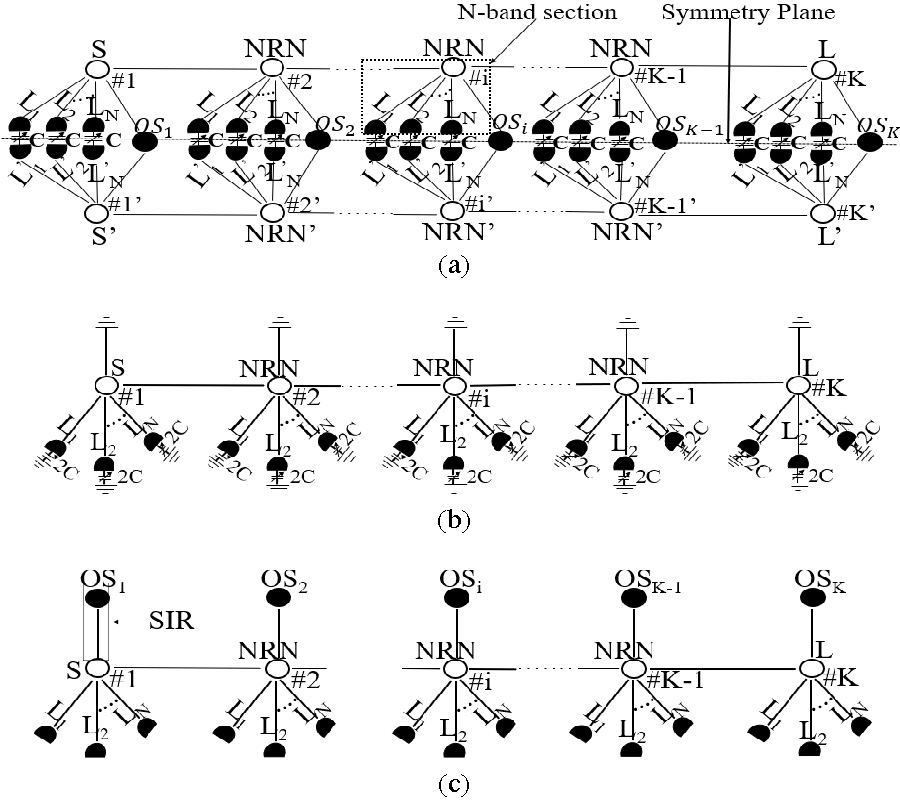
This work describes a theoretical study of filters using a defect in one-dimensional photonic comb-like structure. This photonic comb-like structure is constituted by finite or infinite segments which have negative permeability and grafted in each site by a finite number of lateral branches (play the role of the resonators), which consists of a negative permittivity. Numerical results exhibit the permissible bands which are separated by gaps (forbidden band). These gaps originate not only from the periodicity of the system but also from the resonance states of the grafted lateral branches. We study the effect of the presence of a resonator defect on the transmission behavior, phase, and phase time. The electromagnetic band structure shows that there is a defect mode in the gap. The transmission rate and the reduced frequency of this mode are related to the variation of defect length. Similarly, we calculate, for the first time, the quality factor evolution of this defect mode when the defect length varies. This structure can be used as a new optical filter in the microwave range with a high factor of quality and of transmission.
ELECTROMAGNETIC FILTERS BASED ON A SINGLE NEGATIVE PHOTONIC COMB-LIKE STRUCTURE
2019-04-19
PIER M
Vol. 80, 181-191
An h-Shaped Differential Fed Patch Antenna for a GaN Base Station Transmitter
Rida Gadhafi , Dan Cracan , Ademola Akeem Mustapha and Mihai Sanduleanu
In this paper, a differentially fed, structurally simple, patch antenna, operating at 5.2 GHz is presented. The proposed antenna is particularly designed for a base station, Gallium Nitride (GaN) transmitter. The antenna is composed of an H-shaped patch, backed by a ground plane, with two differential feeds placed at the longitudinal edges. The size of the antenna is 0.55λ0 x 0.49λ0 x 0.27λ0 (where λ0 is the free space wavelength at the center frequency). A prototype of the stand-alone antenna is designed, fabricated, and measured. The antenna offers a voltage standing wave ratio (VSWR) bandwidth of 4% and a differential impedance of 100, which matches most of the differential integrated circuits. The measured gain and directivity of the proposed differential antenna are 5.3 dBi and 7 dB, respectively. From simulation it is observed that the proposed antenna possesses a front to back ratio of 15.69 dB and a 3 dB beamwidth of 84˚. The measured peak efficiencies of the antenna in the lower and higher bands are 84% and 59%, respectively. Details of the design and lumped model, along with the experimental and simulated results, are presented and discussed. The effect of scaling different design parameters for operation at different frequency bands is considered as well.
AN H-SHAPED DIFFERENTIAL FED PATCH ANTENNA FOR A GAN BASE STATION TRANSMITTER