Search Results(13790)

2019-04-05
PIER C
Vol. 92, 17-30
Statistical Broadband Over Power Lines Channel Modeling - Part 2: the Numerical Results of the Statistical Hybrid Model
Athanasios G. Lazaropoulos
This second paper presents the numerical evaluation of the statistical hybrid model for a number of indicative overhead medium-voltage (OV MV) and underground medium-voltage (UN MV) broadband over power lines (BPL) topologies. In essence, this paper assesses the effect of a number of key of factors already reported in [1], such as the distribution power grid type, BPL topology class, coupling scheme, channel attenuation statistical distribution, and injected power spectral density (IPSD) limits, on the computed capacity ranges of the statistical hybrid model. For the assessment of the different channel attenuation statistical distributions, the graphical analysis and the proposed metrics of capacity percentage change and average absolute capacity percentage change are demonstrated while two rules of thumb estimating the fidelity results are also proposed.
STATISTICAL BROADBAND OVER POWER LINES CHANNEL MODELING - PART 2: THE NUMERICAL RESULTS OF THE STATISTICAL HYBRID MODEL
2019-04-05
PIER C
Vol. 92, 1-16
Statistical Broadband Over Power Lines Channel Modeling - Part 1: the Theory of the Statistical Hybrid Model
Athanasios G. Lazaropoulos
This pair of papers proposes a new approach towards the channel modeling of transmission and distribution broadband over power lines (BPL) networks either on the theoretical or on the practical basis. The proposed statistical hybrid model is the synthesis of the well-validated deterministic hybrid model and a set of well-known statistical distributions widely used in communications literature such as Gaussian, Lognormal, Wald, Weibull and Gumbel statistical distributions. In this paper, the theoretical framework of the statistical hybrid model, as well as the flowchart of the statistical hybrid model, is analytically presented.
STATISTICAL BROADBAND OVER POWER LINES CHANNEL MODELING - PART 1: THE THEORY OF THE STATISTICAL HYBRID MODEL
2019-04-04
PIER C
Vol. 91, 227-239
A Frequency Agility Synthesizer with Low Phase Noise for Fully Electronic Millimeter Wave Imaging
Chunhui Fang , Bing Huang , Liang Wu and Xiao-Wei Sun
A wide Ka-band frequency agility synthesizer with low phase noise and high frequency stability is presented in this paper, which serves as the emission source of transmitter and the local oscillator (LO) of receiver in fully electronic millimeter wave (MMW) imaging system. In order to improve operating frequency and shorten hopping time, a novel method is proposed in this synthesizer. By mixing direct digital synthesis (DDS) with multiple phase locked loops (PLLs) and multiplying the mixed signal, a high output frequency with low phase noise and rapid frequency hopping is realized. The experimental results show that the frequency synthesizer achieves frequency resolution of 1 MHz from 27 to 32 GHz and phase noise of -95 dBc/Hz at 10 kHz carrier offset. In addition, the frequency switching time is 2 μs, and broadband spurs do not exceed -60 dBc.
A FREQUENCY AGILITY SYNTHESIZER WITH LOW PHASE NOISE FOR FULLY ELECTRONIC MILLIMETER WAVE IMAGING
2019-04-04
PIER Letters
Vol. 83, 77-82
A Novel Method of Ship Detection in High-Resolution SAR Images Based on GaN and HMRF Models
Meng Yang and Chenchen Yi
This research proposes a novel method based on generative adversarial network (GAN) and hidden Markov random field (HMRF) models, for use in large-scale high-resolution synthetic aperture radar (SAR) images. The method consists of three stages. In the first stage, a virtual target and a SAR image are generated by using the GAN model, according to the statistical and gray-level features of the original SAR image used in detection. In the second stage, the virtual target is embedded in the generated image. In the third stage, real targets are detected in the generated image by using the HMRF model. The experiment results show that the proposed algorithm based on GAN and HMRF models can be applied to ship detection in high-resolution SAR images, with high accuracy and processing speed.
A NOVEL METHOD OF SHIP DETECTION IN HIGH-RESOLUTION SAR IMAGES BASED ON GAN AND HMRF MODELS
2019-04-04
PIER M
Vol. 80, 83-91
Through the Wall Respiration Rate Detection of Multiple Human Subjects Using Hilbert Vibrational Decomposition
Harikesh , Ananjan Basu , Mahesh Pandurang Abegaonkar and Shiban Kishen Koul
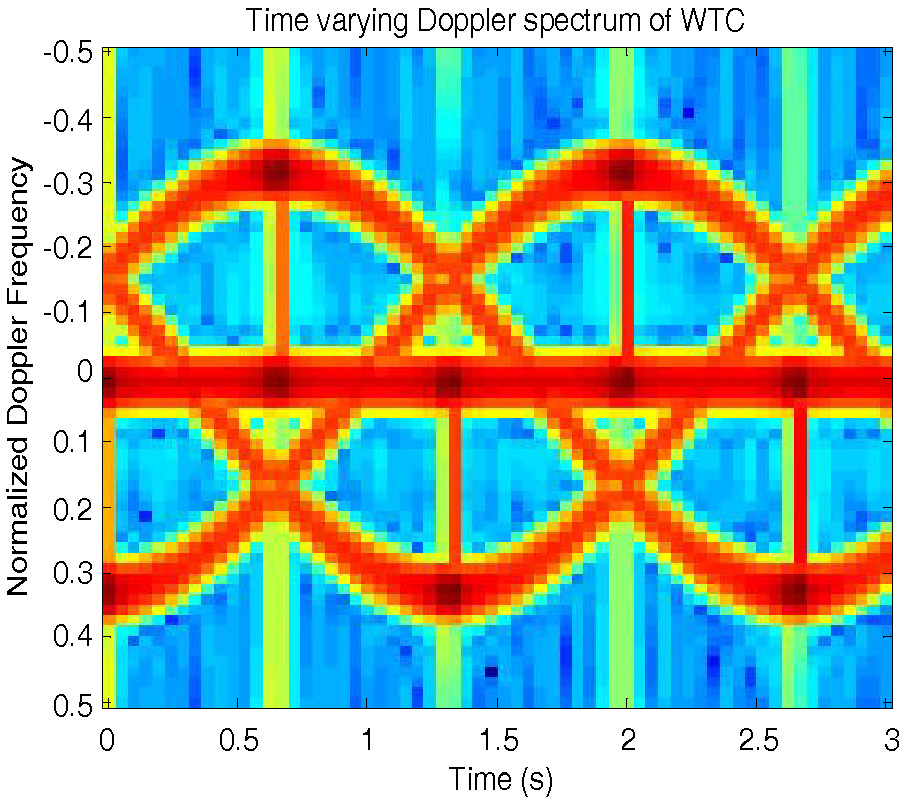
In this paper, the detection of through the wall multiple human subjects is proposed using the Doppler radar with the help of Hilbert vibrational decomposition (HVD). The proposed Doppler radar can detect the multiple human subjects behind the wall by respiration rate estimation of human subjects. With different breathing conditions resembling to the real life scenario, the respiration signals of human subjects are extracted. The algorithm works in every real life situation to detect the respiration rate of human subjects and finds application in the earthquakes, building collapses and security applications.
THROUGH THE WALL RESPIRATION RATE DETECTION OF MULTIPLE HUMAN SUBJECTS USING HILBERT VIBRATIONAL DECOMPOSITION
2019-04-04
PIER M
Vol. 80, 71-81
Flexible UWB AMC Antenna for Early Stage Skin Cancer Identification
Ameni Mersani , Lotfi Osman and Jean-Marc Ribero
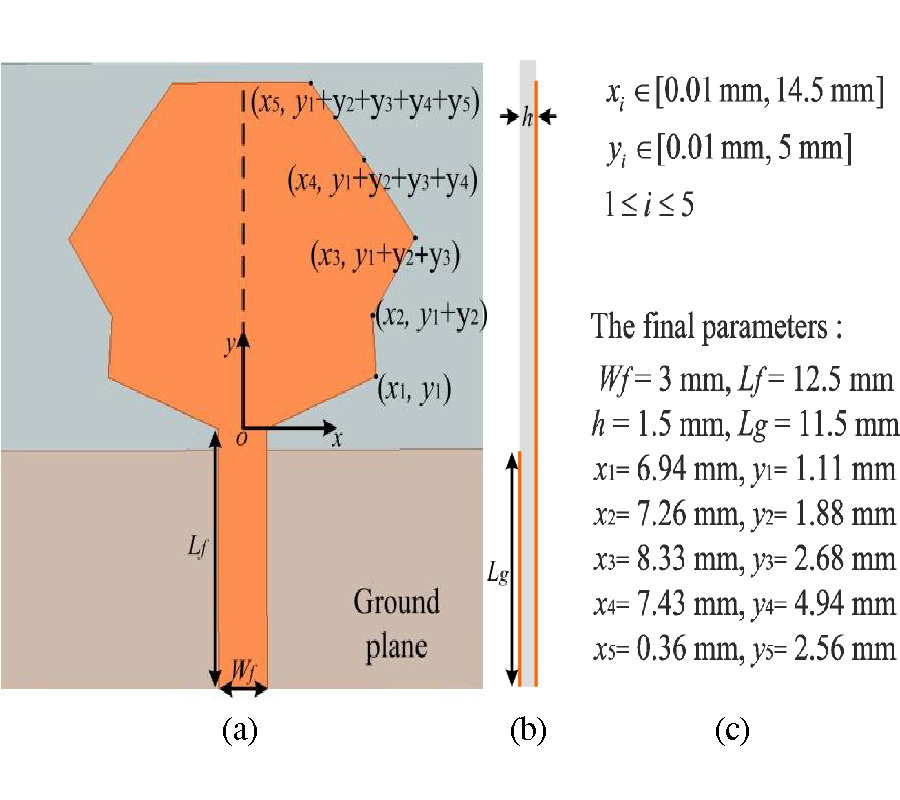
This work involves designing an antenna that meets the requirements of radar systems. The associated technology, which was for a long time reserved for the military field, is now available in the civil field, as well as in the biomedical sector for the development of ``monitoring'' systems allowing to monitor the state of health of a patient in a non-invasive way. The goal of this article is to design a wearable textile antenna to detect cancerous tumors of a patient without direct contact with the skin, taking into account the electromagnetic waves directed towards the human body due to the difference between the dielectric constants of healthy and unhealthy tissues. Here we present a miniature AMC antenna of rectangular shape that satisfies the UWB characteristics in terms of bandwidth and reflection coefficient. The proposed AMC antenna operates in X-frequency band, (8-12 GHz). Using a model of dielectric artificial skin, we have simulated the specific absorption rate on the human body in order to better respect the FCC standards allowed 1.6 W/kg averaged to 1g of human tissue.
FLEXIBLE UWB AMC ANTENNA FOR EARLY STAGE SKIN CANCER IDENTIFICATION
2019-04-03
PIER M
Vol. 80, 57-70
Optimization Method of Magnetic Coupling Resonant Wireless Power Transmission System with Single Relay Coil
Jianpo Li , Yang Lu , Fuxin Liu , Baochun Mu , Ziqi Dong , Songjun Pan and Cong Zheng
In view of the dynamic wireless energy charging of electric vehicles, because of the different types or dynamic changes of carrying capacity, the distance between receiving coil at the chassis of electric vehicles and transmitting coil under the road will change dynamically. The unsuitable distance may make the system keep an under-coupling state and reduce the output power of energy transmission system. To improve the system output power, and a relay coil can be added between transmitting coil and receiving coil. But the system charging state may change from under-coupling state to over-coupling state directly because of the introduction of relay coil, and at the same time, the system may show frequency splitting phenomenon. These problems can be solved by adjusting the position of relay coil, the rotating angle of relay coil, and the load value. The experiment shows that the system output power can be improved obviously by increasing relay coil and suppressing frequency splitting. In order to obtain the optimal parameters about the position, rotation angle of relay coil, and load resistance, a genetic algorithm is introduced to improve the output power. At last, using the optimal system parameters, a magnetic coupling resonant wireless power transmission (MCRWPT) system is designed and manufactured, by which the effectiveness and advantage of this approach are verified by experiments.
OPTIMIZATION METHOD OF MAGNETIC COUPLING RESONANT WIRELESS POWER TRANSMISSION SYSTEM WITH SINGLE RELAY COIL
2019-04-03
PIER M
Vol. 80, 45-56
Computing with Large Time Steps for Electromagnetic Wave Propagation in Multilayered Homogeneous Media
Nikitabahen Navinchandra Makwana and Avijit Chatterjee
We present an extension of Large Time Step (LTS) method to electromagnetic wave propagation involving multilayered homogeneous media. The LTS method proposed by LeVeque is an extension of Godunov's method for the numerical solution of hyperbolic conservation laws. In this method, very large time steps are allowed by an increase in the numerical domain of dependence compared to conventional explicit methods constrained by the Courant-Friedrichs-Lewy stability criteria. This can lead to additional complexities when being applied to multilayered homogeneous media due to presence of material interfaces. Appropriate treatment of material interface boundaries is proposed in the present work in the context of finite volume time-domain method with LTS. Numerical examples are presented involving solution of time-domain Maxwell's equations in a layered dielectric medium using LTS approach.
COMPUTING WITH LARGE TIME STEPS FOR ELECTROMAGNETIC WAVE PROPAGATION IN MULTILAYERED HOMOGENEOUS MEDIA
2019-04-03
PIER M
Vol. 80, 35-43
A Slotted UWB Antipodal Vivaldi Antenna for Microwave Imaging Applications
Nurul Syuhada Binti Hasim , Kismet Anak Hong Ping , Mohammad Tariqul Islam , Md. Zulfiker Mahmud , Shafrida Sahrani , Dayang Azra Awang Mat and Dyg Norkhairunnisa Abg Zaidel
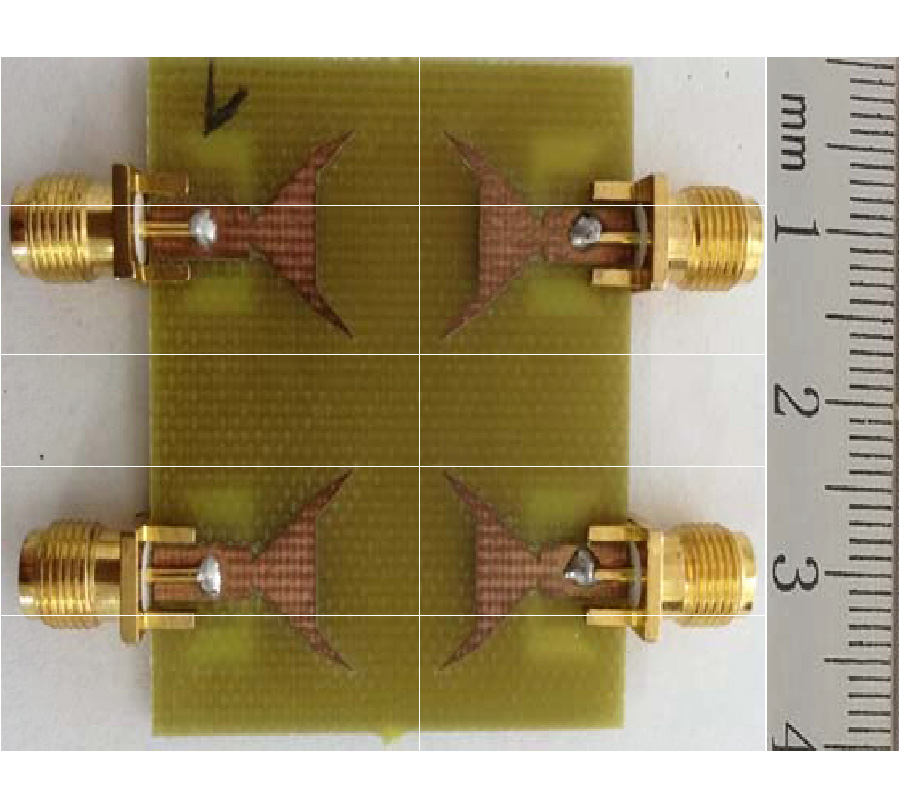
This paper presents the design of an ultra-wideband (UWB) antipodal Vivaldi antenna (APVA) for radar and microwave imaging applications. A slotted APVA design is introduced to improve the low-end bandwidth limitation frequencies as well as to enhance the gain and directivity of the antenna. The optimizations of the design offer good results by using a cost-effective substrate, fiberglass reinforced grade 4 (FR4) material. The regular APVA antenna design only presents average results of gain (4-6 dBi) and directivity (4-7 dB). However, the addition of slots on the edges of antenna is able to increase the peak value of gain and directivity up to 73.65% with 7.64 dBi and 8.92 dB, respectively. Besides, the radiation pattern of the antenna is also improved by using the slotted design where the main lobe level is larger than regular APVA design. Both antennas presented in this paper are designed in compact size of 42.8 mm x 57.3 mm. The antennas are also designed to operate within the frequency range of 3.6 GHz to 10 GHz frequency.
A SLOTTED UWB ANTIPODAL VIVALDI ANTENNA FOR MICROWAVE IMAGING APPLICATIONS
2019-04-02
PIER C
Vol. 91, 213-225
A New Approximation for Calculating the Attraction Force in Cylindrical Permanent Magnets Arrays and Cylindrical Linear Single-Axis-Actuator
Naamane Mohdeb , Hicham Allag and Tarik Hacib
New accurate approximation is proposed using integral expressions for evaluating the magnetic force between cylindrical permanent magnet arrays. The magnetic field distribution is calculated analytically by using Coulombian model. In this paper, every cylindrical magnet is divided into elementary cuboidal magnets.The accuracy can be controlled by regulating the value of elementary cuboidal permanent magnets ``N''. The approximation can also be used to calculate the force interaction in the cylindrical linear single-axis-actuator. We confirm the validity of magnetic force calculation by comparing it with other methods and measurements. The calculation results are in very good agreement with measured values, which indicates the feasibility of our approximation.
A NEW APPROXIMATION FOR CALCULATING THE ATTRACTION FORCE IN CYLINDRICAL PERMANENT MAGNETS ARRAYS AND CYLINDRICAL LINEAR SINGLE-AXIS-ACTUATOR
2019-04-02
PIER B
Vol. 84, 1-21
Comparison of Algorithms and Input Vectors for Sea-Ice Classification with L-Band PolSAR Data
Kai-Shiun Yang and Jean-Fu Kiang
Two unsupervised methods, fuzzy c-means (FCM) and $k$-means, as well as three supervised methods, support vector machine (SVM), neural network (NN), and convolutional neural network (CNN), are applied to classify sea-ice type of first-year ice (FYI), multi-year ice (MYI) and open water, by using L-band polarimetric synthetic aperture radar (PolSAR) images in winter and advanced-melt phases, respectively. Different input vectors, pending on different scenarios, are also proposed to increase the accuracy rate. The efficacy of different algorithms in conjunction with different input vectors are analyzed and related to the underlying physical mechanisms.
COMPARISON OF ALGORITHMS AND INPUT VECTORS FOR SEA-ICE CLASSIFICATION WITH L-BAND POLSAR DATA
2019-04-01
PIER C
Vol. 91, 197-211
MERR Inspired CPW Fed SSGF Antenna for Multiband Operations
Nirmala Jayarenjini and Cheruvathoor Unni
An Electric Ring Resonator (ERR) loaded Sierpinski Square Gasket Fractal (SSGF) antenna for multiple frequency band application is proposed, fabricated, and measured. The CPW-fed antenna consists of a Multi-mode Electric Ring Resonator (MERR) which is fixed on reverse side of the substrate and iterated Sierpinski gasket fractal derived from a square patch which is stamped on top of an FR4. Multi-bands can be obtained by placing a single multi-mode ERR beneath the CPW structure of the antenna. Each resonating frequency band can be easily tuned by properly changing the dimensions of the ERR structure. Instead of ERR's quasi-lumped capacitance, reconfigurability of the low, middle, and high frequency bands can be achieved by using a pair of Digital Variable Capacitors (DVCs)inserted into the middle of the ERR's rings corresponding to the chosen mode. The bandwidth is enhanced using four iterations of square radiating patch, modified feed line, and multi-mode electric ring resonator-loaded ground plane. More specifically, the impedance matching of the CPW fed antenna is improved by introducing transitions between the microstrip feed line and the Sierpinski square gasket. The numerical results show that the proposed antenna has good impedance bandwidth and radiation characteristics in the operating bands at 3.08/5.81/8.02/12.13/15.56\,GHz which cover the frequency spectrum of WiMAX, WiFi/WLAN(IEEE 802.11a), IEEE 802.16e, X-band uplink, S/C/X/Ku and K band with return loss of better than 10 dB.
MERR INSPIRED CPW FED SSGF ANTENNA FOR MULTIBAND OPERATIONS
2019-04-01
PIER M
Vol. 80, 23-34
Low Specific Absorption Rate Antenna Using Electromagnetic Band Gap Structure for Long Term Evolution Band 3 Application
Mahesh Munde , Anil Nandgaonkar and Shankar B. Deosarkar
With the progress of technologies though the years, the extent of electromagnetic radiations has increased in our environment, so there are increased concerns about health for wireless device users. It has become a necessity to use devices with low Specific Absorption Rate (SAR) to reduce human exposure to the effects of Electromagnetic Fields (EM fields). In this article, the design of a circular microstrip antenna (CMSA) with and without an electromagnetic band gap (EBG) structure is proposed. It is evident from simulated results that CMSA with EBG gives low SAR as compared to CMSA without EBG for the proposed prototype. M-shaped unit cell structure of EBG is designed for 1812 MHz resonance frequency, and a bandwidth of 244 MHz is achieved using CMSA with EBG for LTE Band 3. SAR is reduced by 76.25% when CMSA is used with EBG in comparison to CMSA without EBG.
LOW SPECIFIC ABSORPTION RATE ANTENNA USING ELECTROMAGNETIC BAND GAP STRUCTURE FOR LONG TERM EVOLUTION BAND 3 APPLICATION
2019-04-01
PIER M
Vol. 80, 13-22
Landslides Monitoring with a Squint Angle Based on GBSAR
Zelong Shao , Xiangkun Zhang and Yingsong Li
GBSAR has been widely used in landslides monitoring for its high precision in deformation monitoring and portable characteristic in natural environments. When monitor slides in mountainous areas, GBSAR cannot only work in positive mode, and its antennas may be directed to the target with a large squint angle. Unfortunately, normal range doppler imaging algorithm is not used well in such applications. Thus, a correction method of RD algorithm for SAR imaging with a squint angle has been proposed in the paper. Because the monitoring target may be far away from the view center of the GBSAR, echo of the target may be side lobe resided, when it is received by the radar's sensor. Simultaneously, distance between the sensor and imaging target changes with the azimuth time. Therefore, target in the SAR image would not be focused in one range bin if no range correction method was used. Thus, phase correction methods were used in the paper. The phase error was corrected in range domain and azimuth domain, respectively. It avoids 2D FFT processing. Thus, it may use few time and work. In this way, the GBSAR would have real time processing ability in the future. In the paper, a GBSAR was designed and used in slide monitoring applications in western mountains of Beijing. The experiment result shows that the system can measure target's micro deformation in mm levels with a high precision.
LANDSLIDES MONITORING WITH A SQUINT ANGLE BASED ON GBSAR
2019-04-01
PIER
Vol. 164, 135-153
Gains Maximization via Impedance Matching Networks for Wireless Power Transfer
Qinghua Wang , Wenquan Che , Marco Dionigi , Franco Mastri , Mauro Mongiardo and Giuseppina Monti
Wireless Power Transfer (WPT) based on resonant magnetic coupling is an attractive technology for enabling the wireless recharge of electric devices and systems. One of the main drawbacks of this technology is related to the dependence of the efficiency and the power delivered to the load on possible variations of the coupling coefficient and load impedance. In order to alleviate the effects of this dependence, the optimization of appropriate adaptive matching networks is proposed in this paper. The three power gains usually adopted in the context of two-port active networks are assumed as figures of merit in the optimization process. It is theoretically and experimentally demonstrated that the maximum realizable gain of the link is achieved when the conjugate image impedance matching is realized by appropriate matching networks at both the input and output ports of the WPT link.
GAINS MAXIMIZATION VIA IMPEDANCE MATCHING NETWORKS FOR WIRELESS POWER TRANSFER
2019-03-30
PIER Letters
Vol. 83, 71-76
A 3D Stokes Framework for Wireless Depolarized Channels
Marcia Golmohamadi and Jeff Frolik
In severe multipath channels, depolarization of wireless signals has been shown to be a three dimensional effect. This work herein presents and applies a 3D Stokes vector framework for such depolarization. Empirical data are used to illustrate the capabilities of this framework (specifically, polarization purity indices and direction of propagation) to describe depolarization behavior for three different wireless channels.
A 3D STOKES FRAMEWORK FOR WIRELESS DEPOLARIZED CHANNELS
2019-03-29
PIER Letters
Vol. 83, 65-70
Nonlinear Distortion Correction for Single Pixel Conical Scanning Radiometric Imaging System at W-Band
Xuan Lu , Zelong Xiao and Taiyang Hu
Conical scanning radiometric imaging system is good at large field view but suffers from visual nonlinear distortion. The distortion is caused by azimuth and elevation sampling in sphere coordinate, especially for short range and large views. An outdoor experiment is carried out on a building, and the raw image is obtained with obvious distortion. The key to correct distortion is solving the range in relationship between sphere coordinate and Cartesian coordinate. For the a specific building, it is approximately treated as a plane object, and its height is assumed known to solve the range and parameters for plane fitting. Once the coordinates of all pixels are determined, the object is represented in Cartesian coordinate, and the nonlinear distortion is corrected. If any size information for object is unknown, an arbitrary plane is also competent for distortion correction. The difference is that the correcting result is a projection onto this plane instead of real location. However, the projection is also compatible with human vision.
NONLINEAR DISTORTION CORRECTION FOR SINGLE PIXEL CONICAL SCANNING RADIOMETRIC IMAGING SYSTEM AT W-BAND
2019-03-29
PIER M
Vol. 79, 199-207
Planar Endfire Circularly Polarized Quasi-Yagi Antenna with Enhanced Bandwidth and Reduced Size for Wideband Wireless Applications
Tian Li
A planar endfire circularly polarized quasi-Yagi antenna with the feasibility of obtaining a wider bandwidth and relatively smaller size is proposed and demonstrated. With a planar double-sided printed complementary structure, the proposed endfire circularly polarized (CP) antenna, consisting of a vertically polarized planar quasi-Yagi array and a horizontally polarized planar quasi-Yagi array with a common driver, is designed, analyzed, and fabricated. Good agreement between simulated and measured results is observed. Simulation and measurement results reveal that the proposed antenna can provide an impedance bandwidth of 16.3% (5.02-5.91 GHz) and a 3 dB axial ratio (AR) bandwidth of 17.4% (5-5.95 GHz). Meanwhile, the proposed antenna has endfire gains from 5.4 dBic to 7.4 dBic with an average endfire gain of 6.3 dBic, and front-to-back (F/B) ratios ranging from 10.2 dB to 16 dB with an average F/B ratio of 11.9 dB. Additionally, the measured effective CP bandwidth of 16.3% (5.02-5.91 GHz) not only meets the need for certain Wi-Fi (5.2/5.8 GHz) or WiMAX (5.5 GHz) band communication application, but also provides the potential to implement multiservice transmission.
PLANAR ENDFIRE CIRCULARLY POLARIZED QUASI-YAGI ANTENNA WITH ENHANCED BANDWIDTH AND REDUCED SIZE FOR WIDEBAND WIRELESS APPLICATIONS
2019-03-28
PIER Letters
Vol. 83, 59-64
New TLM Formulation for Modeling Epstein Plasma
Yasser Ekdiha , Khalid Mounirh , Mohsine Khalladi and Soufiane El Adraoui
In plasma physics, the interaction with electromagnetic waves is related to the electrons contained in the plasma. So to analyze this interaction, the behaviour of electrons contained must be understood and modeled. In this paper, a new TLM formulation for dispersive media called the exponential time differencing (ETD) transmission line matrix (TLM) technique is introduced to model the interaction with dispersive media. To verify the high accuracy and efficiency of this method, the reflection and transmission coefficients of electromagnetic wave through a non-magnetized collisional plasma slab are computed and compared to the analytical solution. As the electron density in plasma can be distributed as Epstein formula, and its distribution is a function of the grads coefficient σ, and the effect of this parameter and the electron collision frequency νc on the reflection coefficient is calculated. The results show that with different values of σ and νc, the reflection coefficient is affected and can be reduced.
NEW TLM FORMULATION FOR MODELING EPSTEIN PLASMA
2019-03-28
PIER Letters
Vol. 83, 51-57
A Novel Compact Microstrip UWB BPF with Quad Notched Bands Using Quad-Mode Stepped Impedance Resonator
Lihua Wu , Pengli Hu , Changhao Li , Luetao Li and Chengpei Tang
A novel compact ultra-wideband (UWB) bandpass filter (BPF) with quad-notched bands and wide upper-stopband performance using quad-mode stepped impedance resonator (QMSIR) is proposed in this paper. Firstly, the resonance properties of the proposed QMSIR are studied. The proposed QMSIR is found to have the advantages of introducing quad notched bands and wide upper-stopband performance. Then, the proposed QMSIR is employed to achieve four desired notched bands. To validate the design concept, a novel super compact UWB BPF with quad notched bands respectively centered at frequencies of 5.2 GHz, 5.8 GHz, 7.0 GHz, and 8.0 GHz is designed and measured. The predicted results are compared with measured data, and good agreement is reported.
A NOVEL COMPACT MICROSTRIP UWB BPF WITH QUAD NOTCHED BANDS USING QUAD-MODE STEPPED IMPEDANCE RESONATOR