Search Results(13790)

2019-04-18
PIER C
Vol. 91, 265-277
Low-Power Microwave Induced Thermoacoustic Imaging: Experimental Study and Hybrid FEM Modeling
Ryan Jacobs , Mohand Alzuhiri , Mark Golkowski and Yiming Deng
Microwave induced thermoacoustic imaging (TAI) is a hybrid imaging technique combining microwaves and ultrasound waves to achieve both superior spatial resolution and high image contrast. Here, we present results from a hybrid finite element model and an experimental setup using a microwavem peak power of less than 5 kW (average power of only 4.5 W), significantly less than for comparable imaging performance in previous works. Microwave pulses with a duration less than 1 μs are used to excite ultrasound waves with a frequency higher than 1 MHz. Experimental measurements show agreement with simulation results using hybrid finite element modeling capturing microwave heating and acoustic wave propagation. Simulations suggest targets with a conductivity of approximately 0.9 S/m yield the strongest thermoacoustic signatures. Both B-mode images and time-reversal based reconstructed images are obtained and clearly demonstrate the enhanced contrast and high resolution by exploiting the dielectric absorption properties of microwaves and the sub-millimeter resolution of ultrasound. The use of a time reversal algorithm on recorded data demonstrates the effectiveness of TAI for biomedical applications. Standing wave patterns are identified in targets and their relation to the target characteristics and their effect on the resulted images are investigated. The novelty of this work is in lowering the microwave average power while still being able to detect induced acoustic signals, along with developing a numerical model to provide an insight into the imaging process and analyze anomalies in image reconstruction.
LOW-POWER MICROWAVE INDUCED THERMOACOUSTIC IMAGING: EXPERIMENTAL STUDY AND HYBRID FEM MODELING
2019-04-18
PIER M
Vol. 80, 169-179
Vertical Polarized 1 × 3 Series-Fed Linear Array with Gain and Front-to-Back Ratio Enhancement for Airborne SAR-X Applications
Venkata Kishore Kothapudi and Vijay Kumar
In this paper, a gain and front-to-back ratio (FTBR) enhanced vertically polarized 1 × 3 series-fed linear array for Airborne SAR-X application has been presented. The proposed antenna prototype is designed at 9.65 GHz X-band. The proposed antenna design consists of a square radiating patch, substrate, quarter wave transformer 50 Ω matched transformer, and series feed line (SFL). The simulated antenna prototype is fabricated and successfully measured. The final antenna prototype has a dimension of 80 × 50 × 1.587 mm3 or 2.574 × 1.6087 × 0.051λ03 (Free space wavelength) or 3.256 × 2.035 × 0.0645λg3 (Guided wavelength) at 9.65 GHz. The results indicate that the proposed antenna prototype yields an impedance bandwidth >140 MHz (from 9.591 to 9.712 GHz) defined by S11<-10 dB. The low profile/cost antenna prototype has a fully directional radiation pattern with measured gain up to 12.2 dBi and estimated radiation efficiency of 89%, respectively. A brass plate with 0.8 mm thickness has been fabricated to attach to the antenna ground plane for improving FTBR of more than 30 dB. All these features make the proposed antenna array have good potential applications in X-band system, especially in 9.65\,GHz Airborne SAR systems. The aperture of the antenna is 80 mm x 50 mm, which equals 31 wavelengths at 9.65 GHz.
VERTICAL POLARIZED 1 × 3 SERIES-FED LINEAR ARRAY WITH GAIN AND FRONT-TO-BACK RATIO ENHANCEMENT FOR AIRBORNE SAR-X APPLICATIONS
2019-04-17
PIER B
Vol. 84, 23-42
Decay Length Estimation of Single-, Two-, and Three-Wire Systems Above Ground Under HEMP Excitation
Salvatore Campione , Larry Kevin Warne , Matthew Halligan , Olga Lavrova and Luis San Martin
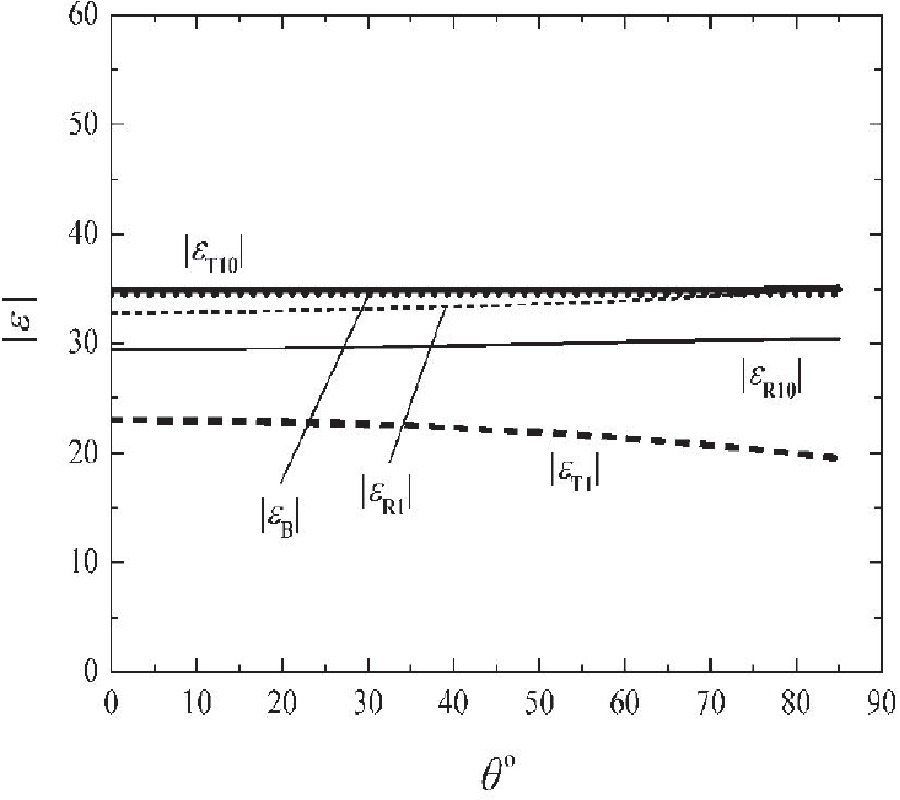
We analytically model single-, two-, and three-wires above ground to determine the decay lengths of common and differential modes induced by an E1 high-altitude electromagnetic pulse (HEMP) excitation. Decay length information is pivotal to determine whether any two nodes in the power grid may be treated as uncoupled. We employ a frequency-domain method based on transmission line theory named ATLOG - Analytic Transmission Line Over Ground to model infinitely long and finite single wires, as well as solve the eigenvalue problem of a single-, two-, and three-wire system. Our calculations show that a single, semi-infinite power line can be approximated by a 10 km section of line and that the second electrical reflection for all line lengths longer than the decay length are below half the rated operating voltage. Furthermore, our results show that the differential mode propagates longer distances than the common mode in two- and three-wire systems, and this should be taken into account when performing damage assessment from HEMP excitation. This analysis is a significant step toward simplifying the modeling of practical continental grid lengths, yet maintaining accuracy, a result of enormous impact.
DECAY LENGTH ESTIMATION OF SINGLE-, TWO-, AND THREE-WIRE SYSTEMS ABOVE GROUND UNDER HEMP EXCITATION
2019-04-17
PIER M
Vol. 80, 157-167
Direct Suspension Force Control of Hybrid Stator Bear-Ingless Switched Reluctance Motor Based on Quasi-Continuous Three-Order Sliding Mode
Yonghong Huang , Shanshan Shi , Ye Yuan , Yukun Sun and Jie Xu
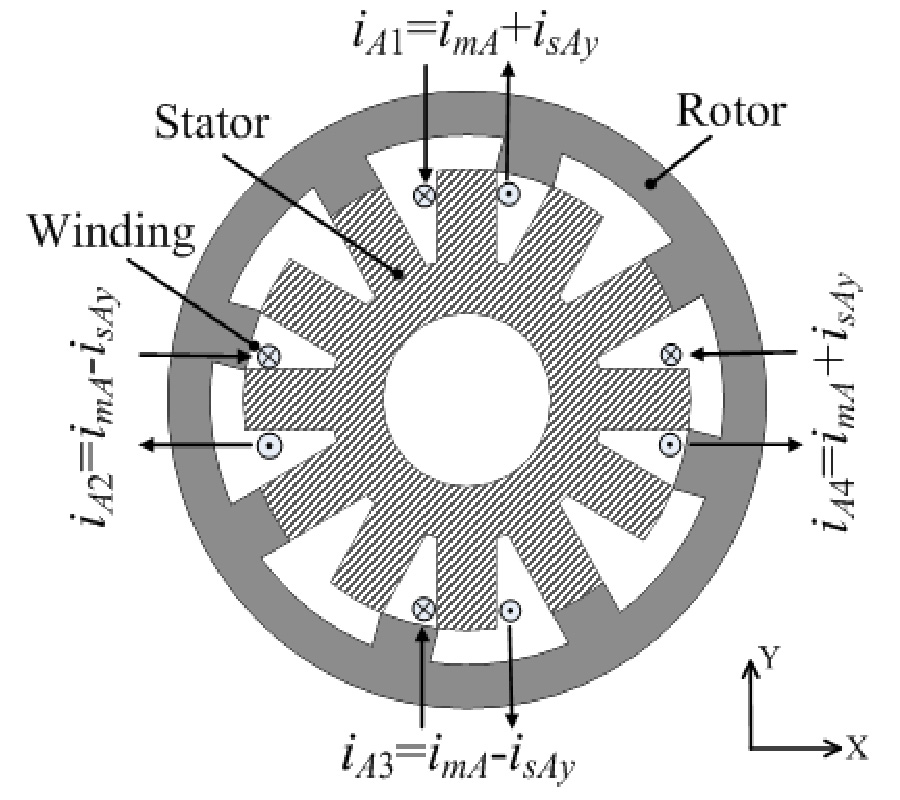
In order to solve the problem of strong coupling between torque and suspension force of bearingless switching motor and the strong chattering of sliding mode control, a direct suspension force control method for hybrid stator bearingless switched reluctance motor based on 1uasi-continuous third-order sliding mode is proposed. According to the special structure of hybrid stator bearingless switched reluctance motor, the direct decoupling of torque and suspension force is realized. The suspension force control system adopts the direct suspension force control of the third-order sliding mode. By comparing with the second-order sliding mode control system under the condition of interference source and non-interference source, the results show that the designed control strategy has high precision, strong robustness, fast convergence speed, and it can effectively decrease vibration.
DIRECT SUSPENSION FORCE CONTROL OF HYBRID STATOR BEAR-INGLESS SWITCHED RELUCTANCE MOTOR BASED ON QUASI-CONTINUOUS THREE-ORDER SLIDING MODE
2019-04-15
PIER C
Vol. 92, 31-40
High Isolation MIMO Antenna Using Semi-Circle Patch for UWB Applications
Velusamy Bhanumathi and Govindarajan Sivaranjani
A compact Multiple Input Multiple Output (MIMO) antenna of size 41×30×0.8 mm3 is proposed in this paper for Ultra-Wideband (UWB) application with high isolation. The proposed UWB-MIMO antenna consists of two Semi-Circle Antennas (SCA) which acts as a radiating patch for achieving UWB operation. The frequency range of UWB is from 3.04 to 10.87 GHz. The high isolation is achieved by inserting an E-shaped slot in the radiating patch, and further enhancement is achieved by inserting a narrow slot in the ground plane. It can be seen that there is good agreement between the simulated and measured results which indicates that the proposed antenna is suitable for UWB applications.
HIGH ISOLATION MIMO ANTENNA USING SEMI-CIRCLE PATCH FOR UWB APPLICATIONS
2019-04-15
PIER Letters
Vol. 83, 123-132
GPR Target Signal Enhancement Using Least Square Fitting Background and Multiple Clustering of Singular Values
Budiman Putra Asmaur Rohman and Masahiko Nishimoto
Ground penetrating radar is an effective nondestructive method for exploring subsurface object information by exploiting the differences in electromagnetic characteristics. However, this task is negatively affected by the existence of ground clutter and noise especially if the object is weak or/and shallowly buried. Therefore, this paper proposes a novel method for suppressing the clutter and background noise simultaneously in both flat and rough surfaces. First, the ground clutter is removed mainly by applying a simplified least square fitting background method, which remains the residual random noise signal. The remaining signal is then decomposed by singular value decomposition, which assumes that the decomposed signal contains four main components including strong target, weak target, very weak target, and accumulated noise signals. The powered singular values and their differences are clustered by K-means to extract the target signal components. The simulation results indicate that the proposed method is able to enhance the target signal with satisfactory results under both flat and rough surfaces as well as in a high-level background noise. Besides, this method also shows its superiority to the latest existing proposed methods.
GPR TARGET SIGNAL ENHANCEMENT USING LEAST SQUARE FITTING BACKGROUND AND MULTIPLE CLUSTERING OF SINGULAR VALUES
2019-04-15
PIER Letters
Vol. 83, 115-122
Calibration Uncertainty Evaluationof d-Dot Sensors
Fanghong Huang , Youjie Yan , Jin Chen , Zhen Liu and Binwen Wang
D-dot sensor is a type of differential sensor that is widely used in the measurement of ultra-wide band (UWB) pulse electric field. The output of the sensor needs to be integrated to rebuild the original electric field. According to the methods of integration, the measurement system based on D-dot sensor can be classified into software integral D-dot measurement (SIDM) system and hardware integral D-dot measurement (HIDM) system. For an SIDM system, the accuracy of calibration, which is influenced by the integral error of the recovery signal, unfortunately, remains an impediment to its practical application. In this paper, a calibration uncertainty evaluation method based on a standard field generating equipment of time-domain electromagnetic pulse is investigated. The level of the integral error is determined by constructing a noise model using the calibration method. In the process of modeling, the characteristics of the background noise are analyzed first. Additionally, a random signal model taking background noise into account is built, and the integral value of the background noise is derived. Moreover, the integral error model is verified by a statistical method using tested data. After modeling, the uncertainty of the equivalent area for a real D-dot sensor in a software integral system and the methods for reducing the uncertainty are illustrated according to the integral error model.
CALIBRATION UNCERTAINTY EVALUATIONOF D-DOT SENSORS
2019-04-15
PIER Letters
Vol. 83, 107-114
An Improved Calibration Algorithm for the L-Band 1-d Synthetic Aperture Radiometer
Aili Zhang , Hao Liu and Ji Wu
L-band one-dimensional (1-D) synthetic aperture radiometer is a passive microwave imager that aims to produce global sea surface salinity and soil moisture maps. Two instrument concepts for the L-band 1-D synthetic aperture radiometer have been proposed and selected as candidate payloads for future Chinese space missions, including MICAP (Microwave Imager Combined Active and Passive) for the Chinese Ocean Salinity Mission and IMI (Interferometric Microwave Imager) for the Water Cycle Observation Mission (WCOM). For a synthetic aperture radiometer, spatial imaging error is defined as the difference between the original brightness temperature (BT) and the retrieved BT images within the alias-free field of view (AF-FOV). The main causes of image spatial error in the L-band 1-D system are antenna elements spacing and antenna patterns error. Flat target transformation (FTT) algorithm is always useful for correcting radiometer imaging, but there is still a concave residual error in the retrieved image. An improved calibration algorithm is proposed, which replaces the cold sky view in the FTT with a stable reference scene BT image. A task simulator has been set up to evaluate the new method. The proposed calibration algorithm is shown to reduce the spatial bias and improve the quality of the retrieved BT image.
AN IMPROVED CALIBRATION ALGORITHM FOR THE L-BAND 1-D SYNTHETIC APERTURE RADIOMETER
2019-04-15
PIER M
Vol. 80, 145-156
Implementation of Two Methods for Designing the Profiles of Mirrors in Quasi-Optical Mode Converter for 170 GHz Transverse Output Gyrotron
Guohui Zhao , Qianzhong Xue , Yong Wang , Xuewei Wang , Shan Zhang , Gaofeng Liu and Lianzheng Zhang
In order to improve the efficiency of the quasi-optical mode converter, two methods to design mirror systems for a 170 GHz gyrotron operating in TE32,9 mode are presented in this paper. The first method is to use Katsenelenbaum-Semenov Algorithm (KSA) to design the structure of the mirror. The second method to design the mirror system depends on the phase difference on the mirrors, so we name it PD method. The mirror system consists of three mirrors, and the mirror center position and mirror size are the same for both methods. For the first method, the scalar and vector correlation coefficients obtained at the window are 99.45% and 98.12%, respectively, and the mirror system has been designed with a transmission efficiency of 97.25%. The scalar and vector correlation coefficients and mirror system transmission efficiency are 99.73%, 98.85%, and 97.67% respectively for the second method. Simulation results of the two methods are compared and analyzed, which provide a reference for the design of gyrotron quasi-optical mode converter mirror system.
IMPLEMENTATION OF TWO METHODS FOR DESIGNING THE PROFILES OF MIRRORS IN QUASI-OPTICAL MODE CONVERTER FOR 170 GHZ TRANSVERSE OUTPUT GYROTRON
2019-04-11
PIER C
Vol. 91, 253-264
Compact Complementary Folded Triangle Split Ring Resonator Triband Mobile Handset Planar Antenna for Voice and Wi-Fi Applications
Pitchai Rajalakshmi and Nagarajan Gunavathi
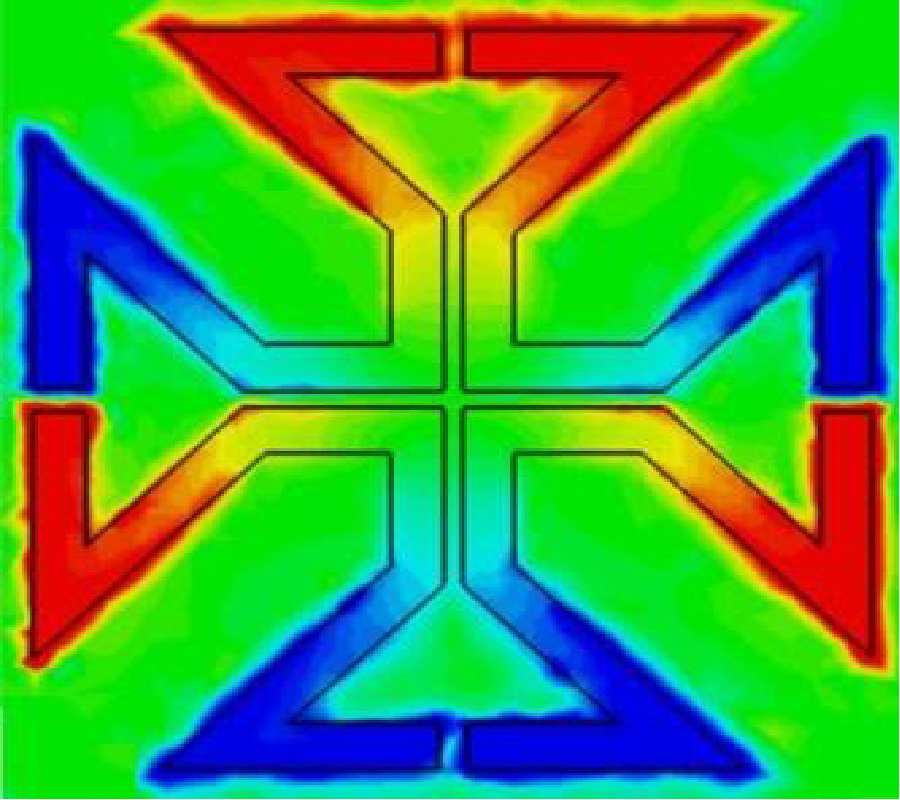
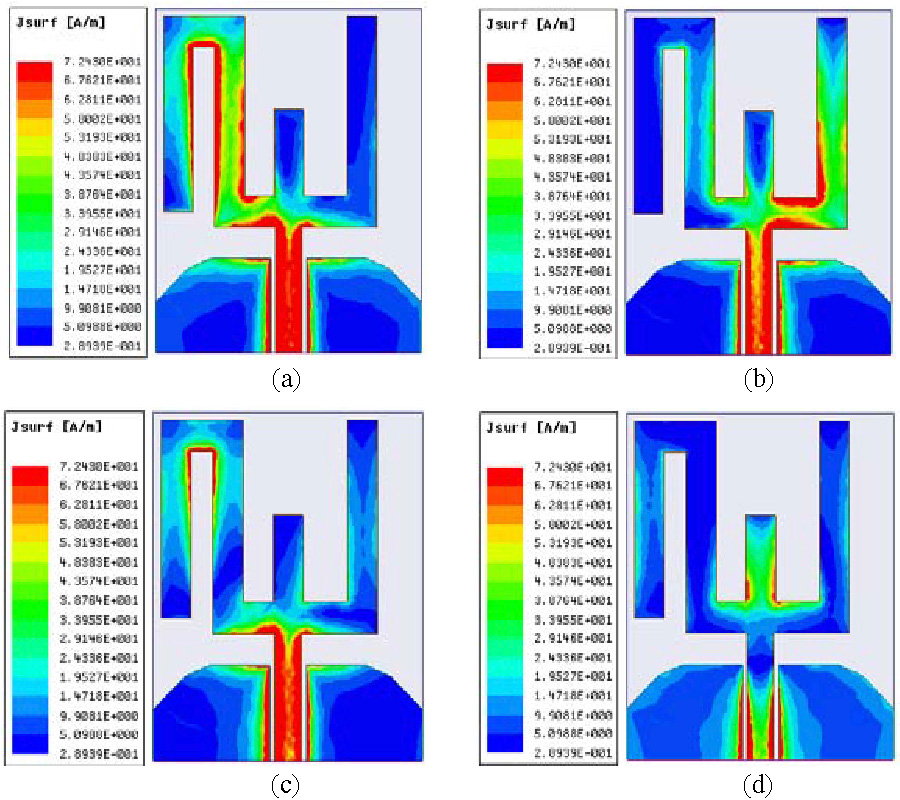
In this work, a Complementary Folded Triangle Split Ring Resonator (CFTSRR) loaded triband mobile handset planar antenna is presented. The proposed antenna consists of a dumbbell-shaped radiating element and two CFTSRR metamaterial unit cells. The dumbbell-shaped radiating element resonates at 5 GHz. The presence of CFTSRRs additionally offers two lower band resonance. The CFTSRR-1 and CFTSRR-2 exhibit negative permittivity at 1.8 GHz and 2.4 GHz, respectively. The proposed antenna is designed to resonate at 1.8 GHz (GSM1800 MHz), 2.4 GHz, and 5 GHz (IEEE802.11ax) for voice and Wi-Fi applications of the mobile handset, respectively. The proposed antenna demonstrates compactness up to 88.6% at 1.8 GHz. The parametric studies are investigated to optimize the antenna in desired frequency bands by using Ansys HFSS19 software. The simulated and measured results are discussed. The measured result shows -10 dB reflection coefficient with bandwidth about 250 MHz (1.6 GHz-1.85 GHz), 50 MHz (2.375 GHz-2.425 GHz), and 225 MHz (4.925 GHz-5.15 GHz) which are 14.5%, 2%, and 5% respectively around their center frequencies. The measured maximum gain is approximately 1.7 dBi, 8 dBi, and 11.5 dBi for 1.8 GHz, 2.4 GHz, and 5 GHz, respectively.
COMPACT COMPLEMENTARY FOLDED TRIANGLE SPLIT RING RESONATOR TRIBAND MOBILE HANDSET PLANAR ANTENNA FOR VOICE AND WI-FI APPLICATIONS
2019-04-11
PIER M
Vol. 80, 133-143
Energy-Efficient Coding Matrix FMD-RDA Secure Transmission Scheme Based on Quadrature Spatial Modulation for mmWave Systems
Shaddrack Yaw Nusenu and Abdul Basit
Artificial noise (AN) aided method in mmWave is hard to realize due to large transmit antennas and also requires additional power. This paper proposes coding matrix secure transmission based on quadrature spatial modulation (QSM) utilizing a frequency modulated diverse retrospective array (FMD-RDA). Specifically, we adopt coding matrix for frequency increment with QSM symbols to form part of FMD-RDA angular-range array factor. Consequently, low probability of detection (LPD) is created during the QSM transmission without additional power. The desired receiver should know the particular coding matrix a priori. Importantly, the system has automatic user tracking ability with no channel state information (CSI) needed at the desired receiver and can handle receivers with highly correlated channels. Further, secrecy outage probability (SOP), asymptotic lower bound on eavesdropper's (Eve's) detecting error probability and average data leakage rate are analyzed without Eve's CSI. Simulation results show that increasing the coding matrix, satisfactory secrecy is attained for the proposed scheme. Moreover, through the results certain essential secrecy information has been highlighted that is not captured by the classical SOP making the proposed scheme an attractive technique for QSM applications.
ENERGY-EFFICIENT CODING MATRIX FMD-RDA SECURE TRANSMISSION SCHEME BASED ON QUADRATURE SPATIAL MODULATION FOR MMWAVE SYSTEMS
2019-04-10
PIER Letters
Vol. 83, 99-105
New Ultra-Wideband Filter with Sharp Notched Band Using Defected Ground Structure
Jingbo Liu , Wenhao Ding , Jianzhong Chen and Anxue Zhang
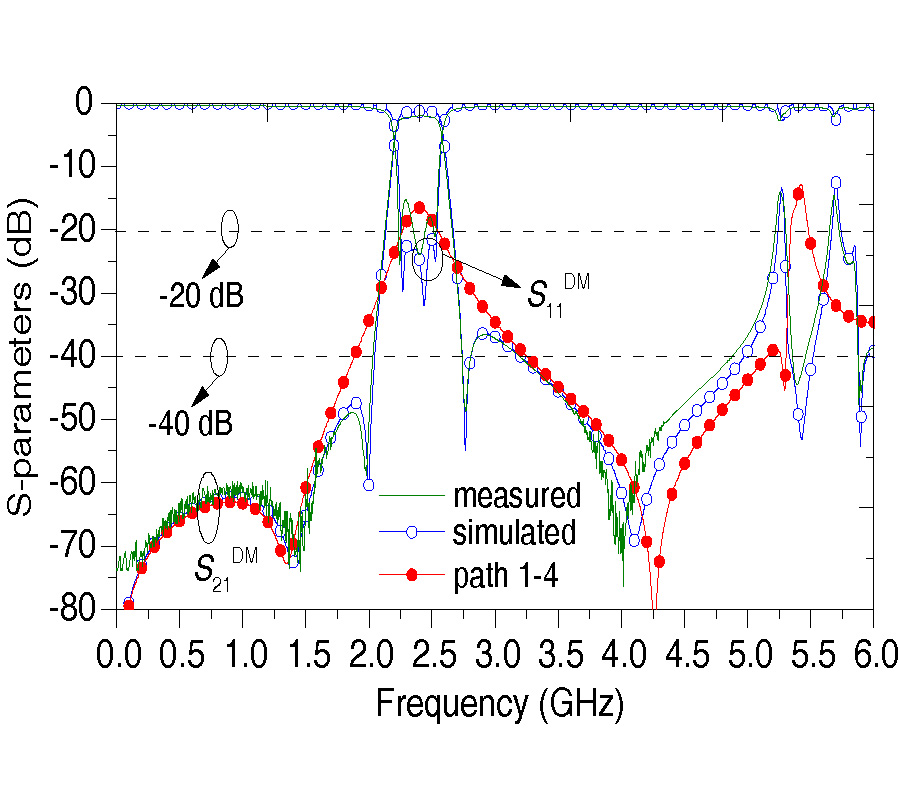
An ultra-wideband microstrip bandpass filter which operates from 3.1 GHz to 10.6 GHz, with high selectivity and sharp notched band is presented and experimentally verified. The filter is composed of a square loop shaped defected ground structure, metal faces, and microstrip lines. By adding two short stubs connected by a short circuit point on the microstrip lines, the filter achieves an attractive capacity in out-of-band rejection. By placing open stubs in microstrips, the filter realizes a notched band in passband. To illustrate the possibilities of the new approach, an ultra-wideband microstrip bandpass filter is designed and fabricated. Measured results agree well with the predicted counterparts.
NEW ULTRA-WIDEBAND FILTER WITH SHARP NOTCHED BAND USING DEFECTED GROUND STRUCTURE
2019-04-10
PIER Letters
Vol. 83, 91-97
Universal Compensation Method for Trans-Directional Coupled-Line Based Planar Balun with Connecting Segment
Xiao Jia , Shao-Jun Fang , Hongmei Liu and Zhongbao Wang
In the paper, a universal compensation method is presented to improve the imbalance of a trans-directional coupled-line (TRD-CL) based balun caused by the inevitable physical separation between the TRD-CLs. Using this method, the input mismatch and output imbalance can be effectively solved. Moreover, since the compensation is achieved by shortening the two TRD-CLs instead of adding additional stubs, size miniaturization is maintained. Design formulas are derived using the signal flowchart and even-odd mode analysis. A prototype operating at 1.6 GHz is also designed and measured to verify the proposed method.
UNIVERSAL COMPENSATION METHOD FOR TRANS-DIRECTIONAL COUPLED-LINE BASED PLANAR BALUN WITH CONNECTING SEGMENT
2019-04-09
PIER M
Vol. 80, 121-131
Spectral Domain Fast Multipole Method for Solving Integral Equations of Electromagnetic Wave Scattering
Mohammad H. Ahmad and Dayalan Prajith Kasilingam
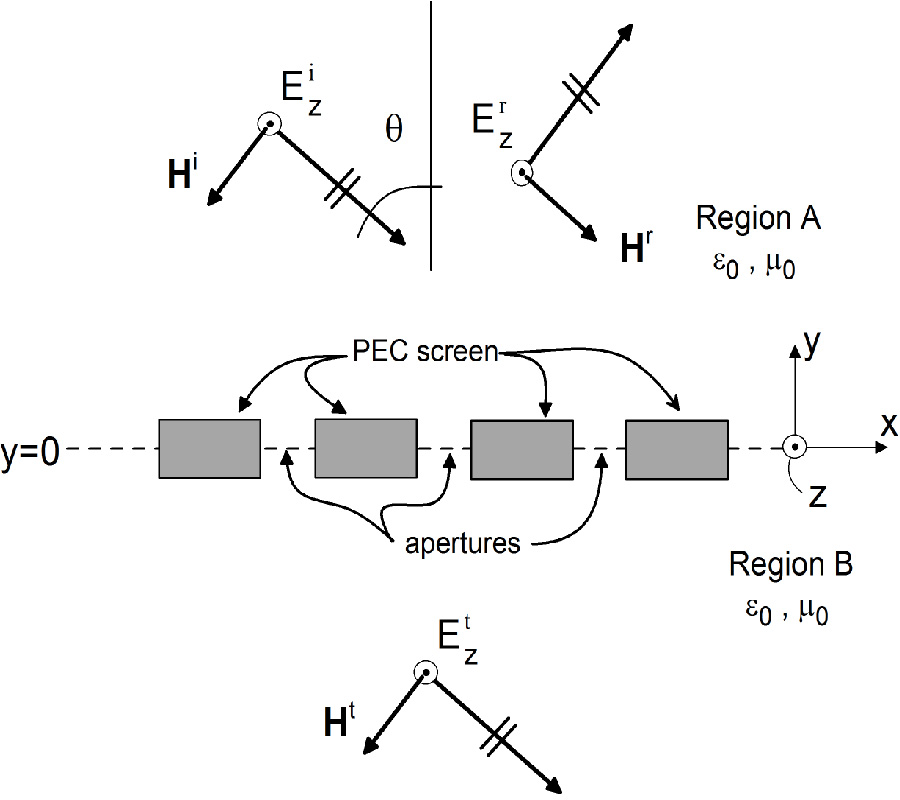
In this paper, a spectral domain implementation of the fast multipole method is presented. It is shown that the aggregation, translation, and disaggregation stages of the fast multipole method (FMM) can be performed using spectral domain (SD) analysis. The spectral domain fast multipole method (SD-FMM) has the advantage of eliminating the near field/far field classification used in conventional FMM formulation. The goal of this study is to investigate the similarities and differences between the spectral domain analysis and conventional FMM formulation. The benefit of the spectral domain analysis such as transforming the convolutional form of the Green's function to a multiplicative form is incorporated in the SD-FMM method. The study focuses on the application of SD-FMM to one-, two-, and three-dimensional electric field integral equation (EFIE). The cases of perfectly electric conducting (PEC) strips, circular perfectly conducting cylinders, and perfectly conductor spheres are analyzed. The results from the SD-FMM method are compared with the results from the conventional FMM and the direct application of Method of Moments (MoM). The SD-FMM results agree well with results from the direct application of MoM.
SPECTRAL DOMAIN FAST MULTIPOLE METHOD FOR SOLVING INTEGRAL EQUATIONS OF ELECTROMAGNETIC WAVE SCATTERING
2019-04-09
PIER M
Vol. 80, 111-120
Generation of Ultra-Wideband Multi-Mode Vortex Waves Based on Monolayer Reflective Metasurface
Xiaohang Dong , Hengyi Sun , Chang Qing Gu , Zhuo Li , Xinlei Chen and Baijie Xu
In this paper, a monolayer metasurface that can simultaneously generate multi-mode vortex waves in ultra-wideband is proposed. Smooth phase variation is obtained by properly assigning the arm lengths of arrow-shaped metal on the top of the reflective metasurface unit cell. Different reflective cells are arranged in different sectors to form a phase-shifted surface that can convert a linearly polarized plane wave into a vortex wave. The full-wave simulations show that the designed reflective metasurface can generate vortex wave with multi-mode in ultra-wideband from 18 GHz to 42 GHz, which is in good agreement with the theoretical analysis. The proposed reflective metasurface paves an effective approach to generate vortex wave with multi-mode in ultra-wideband for OAM-based systems. Compared to the traditional ways of generating vortex waves, our design has the advantage of wide bandwidth.
GENERATION OF ULTRA-WIDEBAND MULTI-MODE VORTEX WAVES BASED ON MONOLAYER REFLECTIVE METASURFACE
2019-04-09
PIER
Vol. 164, 155-166
Decoupling of Two Closely Located Dipoles by a Single Passive Scatterer for Ultra-High Field MRI
Masoud Sharifian Mazraeh Mollaei , Sergei Alexandrovich Kurdjumov , Anna Hurshkainen and Constantin Simovski
We report decoupling of two closely located resonant dipole antennas dedicated for ultra-high field magnetic resonance imaging (MRI). We show that a scatterer slightly raised over the plane of antennas grants a sufficient decoupling even for antennas separated by very small gap (below 1/30 of the wavelength). We compare the operations of two decoupling scatterers. One of them is a shortcut resonant dipole, and the other is a split-loop resonator (SLR). Previously, we have shown that the SLR offers a wider operational band than the dipole and the same level of decoupling. However, it was so for an array in free space. The presence of the body phantom drastically changes the decoupling conditions. Moreover, the requirement to minimize the parasitic scattering from the decoupling element into the body makes the decoupling dipole much more advantageous than the SLR.
DECOUPLING OF TWO CLOSELY LOCATED DIPOLES BY A SINGLE PASSIVE SCATTERER FOR ULTRA-HIGH FIELD MRI
2019-04-08
PIER C
Vol. 91, 241-252
Compact Tri-Band Microstrip Filter Using Three Types of Resonators for Bluetooth, WiMAX, and WLAN Applications
Iman Jadidi , Mohammad Amin Honarvar and Farzad Khajeh-Khalili
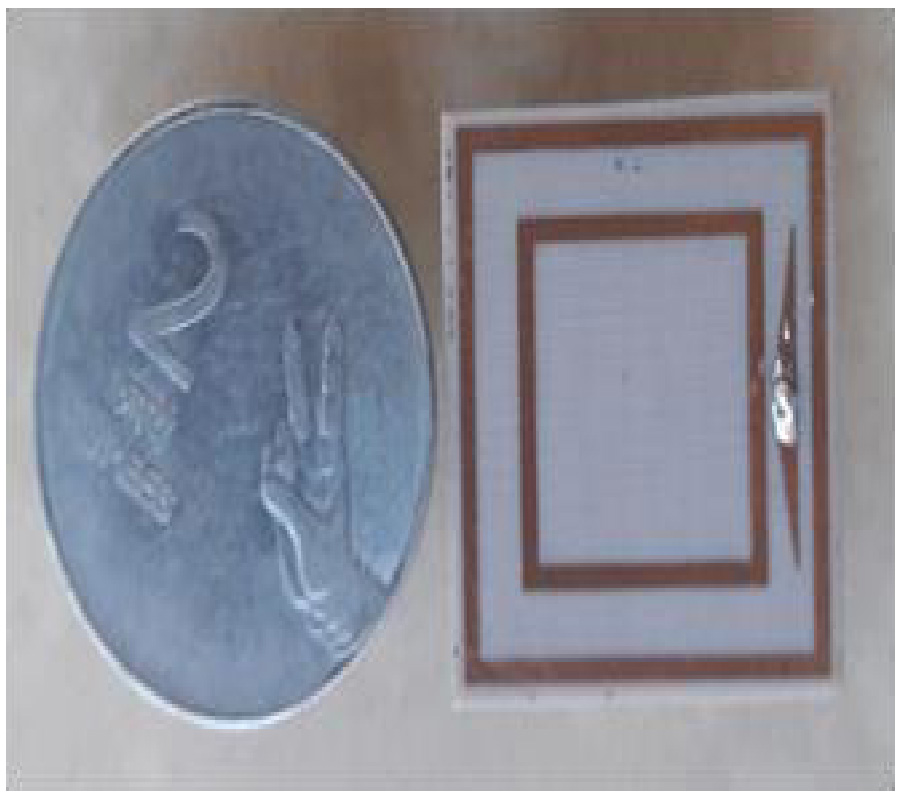
In this paper, a compact tri-band microstrip filter is designed and fabricated for application in wireless communication systems such as Bluetooth, WIMAX (World Wide Interoperability for Microwave Access), and WLAN (Wireless Local Area Network). In the proposed filter, three resonators, i.e., Stub-Loaded Resonator (SLR), Stepped-Impedance Resonator (SIR), and Square Split Ring Resonator (SSRR), are used. The dimensions of the proposed filter are equal to 16.2×12.3 mm2 or 0.219λg×0.166λg. These dimensions indicate that the proposed structure has reduced the size by about 40% compared to the conventional samples. This is the main advantage of the proposed filter. Finally, in order to investigate analysis and simulations, the proposed filter is fabricated. The results prove correctness of the design, analysis, and simulations.
COMPACT TRI-BAND MICROSTRIP FILTER USING THREE TYPES OF RESONATORS FOR BLUETOOTH, WIMAX, AND WLAN APPLICATIONS
2019-04-08
PIER Letters
Vol. 83, 83-89
Design of Resistive-Loaded Transverse Electromagnetic Horn Antenna for Air-Coupled Ground Penetrating Radar
Youcheng Wang and Xiaojuan Zhang
Design of a resistive-loaded Transverse Electromagnetic (TEM) horn antenna for air-coupled ground penetrating radar (GPR) is proposed in this paper. As the focus is on the application in sensing pavement subsurface, some issues should be considered, such as ultra-bandwidth (UWB) performance, air-coupled detection, high fidelity, compact structure, and simple fabrication. The resistive-loaded horn antenna with a microstrip-type balun was constructed and measured to facilitate the issues. With the radiation towards concrete ground at a height of 0.5 meters, the measured results suggested that the impedance bandwidth of the antenna was 0.5~14 GHz with a return loss less than -10 dB. The radiation waveform of the horn antenna also showed a late-time ring. A radar experiment result showed that the antenna performed excellently for pavement layer detection.
DESIGN OF RESISTIVE-LOADED TRANSVERSE ELECTROMAGNETIC HORN ANTENNA FOR AIR-COUPLED GROUND PENETRATING RADAR
2019-04-08
PIER M
Vol. 80, 103-109
Creation of a Magnetic Driven Gate for THz Rays
Denis Olegovich Zyatkov , Vladimir Borisovich Balashov , Vasily Ivanovich Yurchenko , Elena Fakhrutdinova , Valery Svetlichnyi , Zahar Kochnev , Anastasia Knyazkova , Yury Kistenev and Alexey Vladimirovich Borisov
In this paper, magnetic fluids based on iron oxide Fe3O4 and 5BDSR alloy were obtained. Magnetic particles were obtained by nanosecond pulsed laser ablation. The preparation of the magnetic fluid was carried out by mechanical and ultrasonic stirring in a solution of polymethylphenylsiloxane. It is shown that under the influence of an external magnetic field, the spectral properties of the magnetic fluid of the 5BDSR alloy correspond to characteristics that can be used to create a magnetic gate.
CREATION OF A MAGNETIC DRIVEN GATE FOR THZ RAYS
2019-04-08
PIER M
Vol. 80, 93-102
Design and Development of Compact Reconfigurable Tri-Stopband Bandstop Filter Using Hexagonal Metamaterial Cells for Wireless Applications
Khelil Fertas , Farid Ghanem , Mouloud Challal and Rabia Aksas
In this paper, a compact reconfigurable tri-band bandstop filter (BSF) with sharp-rejection and high selectivity is presented. The proposed filter is based on a 50\,Ohms microstrip feed line, six hexagonal metamaterial cells (HMCs) with different sizes and switches. The structure of the filter has seven different modes of operation characterized. A good agreement between the simulated and measured results is obtained. The results indicate that the proposed filter design, with overall size of 0.28λgx0.17λg, is a good candidate for multiservice radios applications.
DESIGN AND DEVELOPMENT OF COMPACT RECONFIGURABLE TRI-STOPBAND BANDSTOP FILTER USING HEXAGONAL METAMATERIAL CELLS FOR WIRELESS APPLICATIONS