Search Results(13790)

2019-12-18
PIER M
Vol. 87, 159-169
Research on Efficiency Optimization of Rail Transit Wireless Power Transmission System Based on Electromagnetic Detection
Yunzhi Lin and Yixiong Lai
In the installation of a dynamic wireless power transmission system of rail transit, the distance change among coils causes large power loss under high power conditions. Due to the limitation of detection surface and Doppler effect as well as other deficiencies, the traditional ranging methods cannot be adapted to fast, continuous, and large-area dynamic ranging in the wireless power transmission of rail transit. Therefore, the paper proposes a single coil dynamic wireless power efficiency optimization method based on electromagnetic induction for the first time. The distance between the transmitter and receiver is taken as the intermediate quantity, and the relationship between the detection coil amplitude and the wireless power transmission efficiency is constructed. Firstly, based on electromagnetic field theory, a quantitative relationship among the detection coil amplitude, wireless power transmission efficiency, and coil distance is established. Then detection experimental platform is designed. Finally, relevant experiments are accomplished through the established experimental platform. The experimental results show that for the area with low power transmission efficiency on the whole dynamic wireless power transmission line, relevant ranging data can be obtained by detecting the amplitude.
RESEARCH ON EFFICIENCY OPTIMIZATION OF RAIL TRANSIT WIRELESS POWER TRANSMISSION SYSTEM BASED ON ELECTROMAGNETIC DETECTION
2019-12-17
PIER C
Vol. 97, 241-253
The Design of a Compact Quintuple Band-Notched UWB Antenna
Xia Cao , Yingqing Xia , Ling Wu , Lei Lang and Li Cui
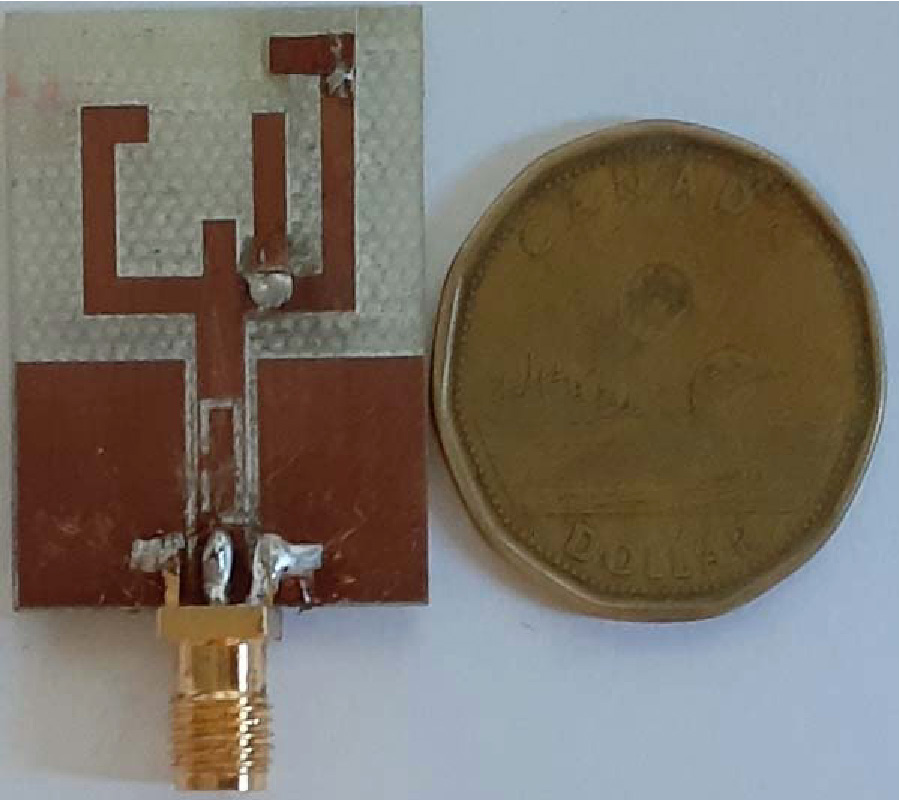
Due to suppressing the interference from WLAN (2.4-2.484 GHz), WiMAX (3.3-3.7 GHz), INST (4.5-4.8 GHz), X-band (7.25-7.75 GHz) and ITU band (8.01-8.5 GHz) signals in ultra-wideband (UWB) communication systems, a novel UWB antenna with five notch bands is proposed. Based on the methodologies of loading parasitic stubs and etching slots, the antenna is designed with five band rejection elements: a curved stub, a split square ring-shaped slot and a pair of vertical slots introduced in the patch, two C shaped stubs symmetrically set near the feed line, and a pair of L-shaped slots etched on the ground plane. The test results show that the antenna operating from 1.95 to 10.73 GHz is capable of rejecting the frequency bands around 2.4 GHz, 3.5 GHz, 4.6 GHz, 7.5 GHz, and 8.4 GHz. Meanwhile, in passbands the antenna has approximate omnidirectional radiation patterns and a peak gain higher than 1.7 dBi. The proposed antenna with dimensions of 31 × 35 × 1.5 mm3 is simple in structure and meets the requirements of UWB systems applications.
THE DESIGN OF A COMPACT QUINTUPLE BAND-NOTCHED UWB ANTENNA
2019-12-17
PIER Letters
Vol. 88, 105-112
Characterization of PVDF-Gr Composite Films for Electromagnetic Interference Shielding Application
Vikas Rathi , Varij Panwar and Brijesh Prasad
Graphite receives tremendous attentions as filler for conducting composite due to its low cost and high electrical conductivities. In this work we use polyvinylidene fluoride (PVDF) as insulating matrix and graphite (Gr) as a filler to develop conducting composite films using solvent casting technique. The dielectric properties of the developed PVDF-Gr films were analysed for the frequency range of 100 kHz to 10 MHz. The morphology of the obtained films was investigated by scanning electron microscopy. The EMI shielding properties of the PVDF-Gr composite films were evaluated theoretically using ɛ′, tan δ, and σ in the desired radio frequency region. Mechanical strength of the films was tested by universal testing machine. Due to advantages such as light weight, flexibility, and low cost the developed film with the thickness of ~0.15 mm had very good potential to be used for fabricating electromagnetic compatible electronic devices.
CHARACTERIZATION OF PVDF-GR COMPOSITE FILMS FOR ELECTROMAGNETIC INTERFERENCE SHIELDING APPLICATION
2019-12-17
PIER Letters
Vol. 88, 97-104
A Novel Center-Fed SIW Inclined Slot Antenna for Active Phased Array
Yao Zong , Jun Ding , Chen-Jiang Guo and Chao Li
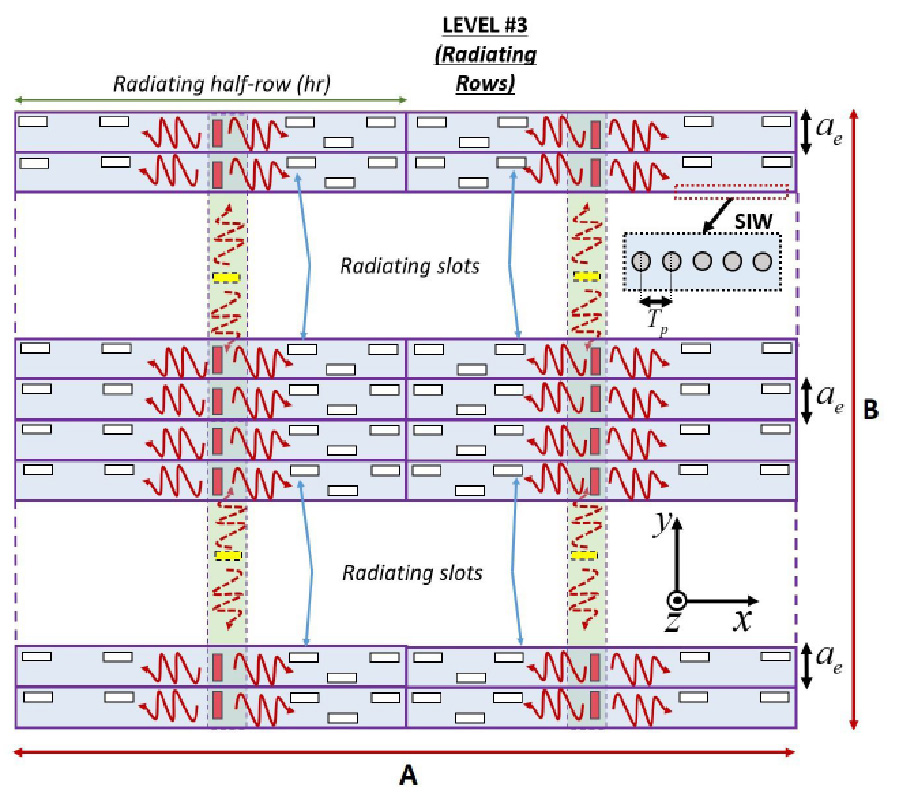
In this paper, a center-fed substrate integrated waveguide (SIW) inclined slot array antenna is designed for a one-dimensional active phased array. A novel coaxial-to-SIW transition is employed to realize the central feed for enhancing bandwidth. The antenna prototype printed onto a single-layer Rogers 5870 is composed of 32×16 inclined slots working at Ku-band. As shown in measured result, the bandwidth with return loss < -10 dB is from 16.6 to 17.1 GHz, and the sidelobe levels of arrays are below -24.8 dB at 16.8 GHz in H planes. The measured gain is 31.8 dB at 16.8 GHz with the aperture efficiency of 65%. The active phased array is assembled by an antenna and 32 Tx/Rx modules, and the measured results show that the main lobe can obtain a wide-angle scanning from -45 to 45 degrees in E planes. The antenna array is suitable for low profile small active phased array radars and communication systems that require spatial wide-angle scanning.
A NOVEL CENTER-FED SIW INCLINED SLOT ANTENNA FOR ACTIVE PHASED ARRAY
2019-12-17
PIER M
Vol. 87, 147-157
Design of a Triple Band Notched Compact FSS at UWB Frequency Range
Kanishka Katoch , Naveen Jaglan and Samir Dev Gupta
This article presents a bandstop Frequency Selective Surface (FSS) prototype based on square split ring resonators (SSRRs) and a square loop (SL) structure for Ultra Wide Band (UWB) frequency range. Triple band notches are obtained at WiMAX (3.3-3.6 GHz), WLAN (5-6 GHz) and Satellite communication X-band (7.2-8.4 GHz). To make this proposed design work as a band-stop filter, two SSRRs are positioned at the top layer of the substrate to resonate at WiMAX and WLAN frequency band respectively. A single SL is located at the bottom of the substrate that resonates at Satellite communication X-band. Attenuation more than 20 dB is observed at all notched frequencies. An angular stability from 0˚ to 40˚ is obtained. Compact size, simple structure, low cost material, single layer, easy fabrication, and wide coverage are some of the feathers of this proposed FSS. The dimension of proposed unit cell of FSS is 10x10 mm2.
DESIGN OF A TRIPLE BAND NOTCHED COMPACT FSS AT UWB FREQUENCY RANGE
2019-12-17
PIER
Vol. 166, 95-105
Phaseless Microwave Imaging of Dielectric Cylinders: an Artificial Neural Networks-Based Approach
Jesús E. Fajardo , Julián Galván , Fernando Vericat , Carlos Manuel Carlevaro and Ramiro Miguel Irastorza
An inverse method for parameters estimation of dielectric cylinders (dielectric properties, location, and radius) from amplitude-only microwave information is presented. To this end two different Artificial Neural Networks (ANN) topologies were compared; a Multilayer Perceptron (MLP) and a Convolutional Neural Network (CNN). Several two-dimensional (2D) simulations, with different sizes and locations of homogeneous dielectric cylinders employing the Finite Differences Time Domain (FDTD) method, were performed to generate training, validation, and test sets for both ANN models. The prediction errors were lower for the CNN in high Signal-to-Noise Ratio (SNR) scenarios, although the MLP was more robust in low SNR situations. The CNN model performance was also tested for 2D simulations of dielectrically homogeneous and heterogeneous cylinders placed in acrylic holders showing potential experimental applications. Moreover, the CNN was also tested for a three-dimensional model simulated as realistic as possible, showing good results in predicting all parameters directly from the S-parameters.
PHASELESS MICROWAVE IMAGING OF DIELECTRIC CYLINDERS: AN ARTIFICIAL NEURAL NETWORKS-BASED APPROACH
2019-12-16
PIER C
Vol. 97, 227-240
Design and Parametric Analysis of Hexagonal Shaped MIMO Patch Antenna for S-Band, WLAN, UWB and X-Band Applications
Tathababu Addepalli and Vaddinuri Rajareddy Anitha
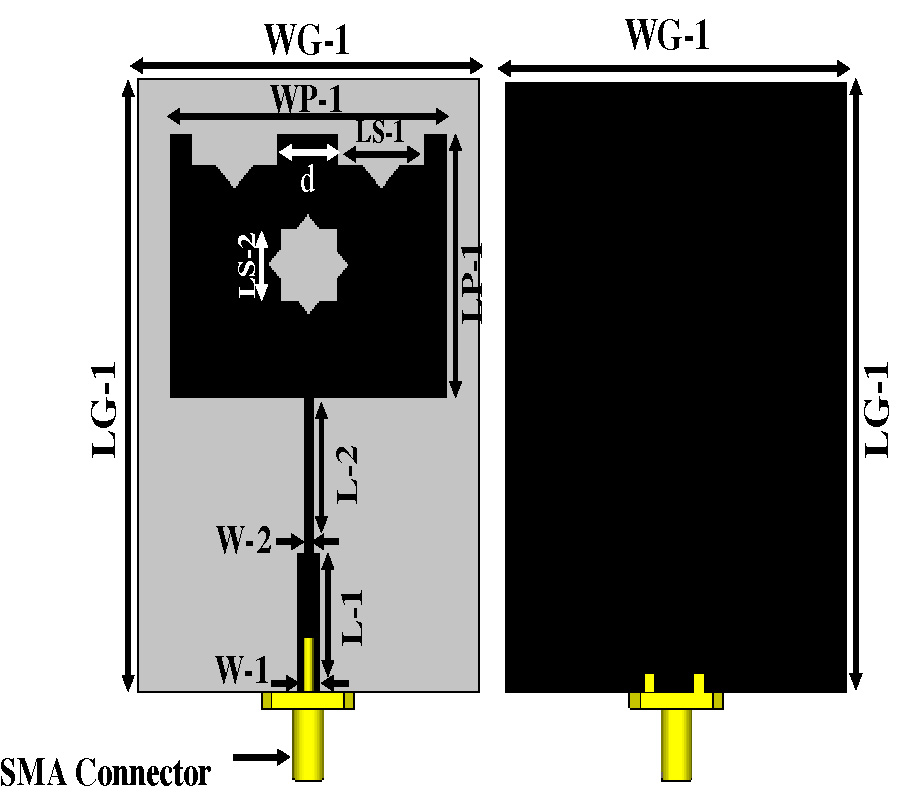
In this paper, a hexagonal-shaped multiple-input multiple-output (MIMO) patch antenna is presented. It covers the S band (2-4 GHz), WLAN (2400-2480 MHz & 5150-5350/5725-5875 MHz), UWB (3.1-10.6 GHz), and X band (8-12 GHz) applications. The proposed structure is simulated and fabricated on an FR4 substrate with overall dimensions of 0.186λ0 x 0.373λ0 and separation of two patches with a distance of 0.053λ0 (where λ0 is the wavelength at 2 GHz). The single UWB patch antenna is derived from the triangular-shaped edge cuttings in the bottom of the rectangular patch antenna with partial & defected ground. The proposed MIMO structure produces simulated results from 2 GHz to 13.3 GHz and measured results from 2.1 GHz to 12.9 GHz, with good agreement. The proposed structure resonates at 3.4 GHz, 5.8 GHz, 10.2 GHz and 11.8 GHz. Isolation improved to below -20 dB by placing an E-shaped tree structure and parasitic element. The radiation efficiency and peak gain values are 78-94% and 1.4-6.6 dB, respectively. Diversity performance of the proposed structure is verified with low envelope correlation coefficient (ECC < 0.04), high diversity gain (DG > 9.985), and acceptable total active reflection coefficient (TARC < -10 dB) values.
DESIGN AND PARAMETRIC ANALYSIS OF HEXAGONAL SHAPED MIMO PATCH ANTENNA FOR S-BAND, WLAN, UWB AND X-BAND APPLICATIONS
2019-12-16
PIER Letters
Vol. 88, 89-95
A Dual Band Notched UWB Antenna with Optimized DGS Using Genetic Algorithm
Mohammed Cherif Derbal , Abdelbaki Zeghdoud and Mourad Nedil
An optimized dual-bandnotched antenna for Ultra-Wide Bandapplications, using the Genetic Algorithm (GA), is presented. By optimizing a Defected Ground Structure (DGS) in the ground plane of the UWB antenna, two notches are created at the desired frequency bands of 3.5 GHz and 5.8 GHz, respectively. A good agreement between the measurement and simulation results is observed. The optimized DGS shows good performance and accuracy compared to conventional approaches.
A DUAL BAND NOTCHED UWB ANTENNA WITH OPTIMIZED DGS USING GENETIC ALGORITHM
2019-12-16
PIER M
Vol. 87, 137-145
Radar Target Recognition by Frequency-Diversity RCS Together with Kernel Scatter Difference Discrimination
Kun-Chou Lee
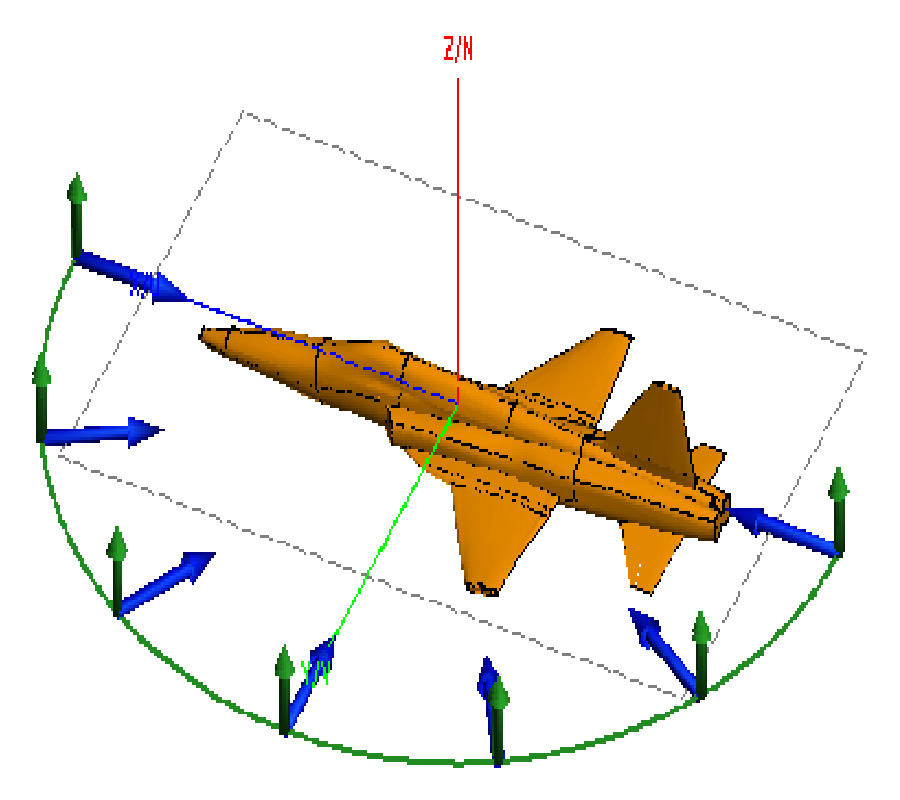
In this paper, the radar target recognition is given by frequency-diversity RCS (radar cross section) together with kernel scatter difference discrimination. The frequency-diversity technique means to collect electromagnetic signals by sweeping the operation frequencies. Such a technique is usually utilized in inverse scattering and radar target recognition because different frequencies each may contain important information of a target. By using the frequency diversity RCS technique, one can reduce the times of spatial measurement. This is an important contribution since it is always difficult to build a spatial radar measurement in practical battlefield environments. To enhance the pattern recognition, the collected RCS data are processed by the kernel scatter difference discrimination, which is improved from the Fisher discrimination. To investigate the capability of tolerating environmental fluctuation, each simulated RCS data is added by a random component prior to implementing pattern recognition. Numerical simulation shows that our recognition scheme is still very accurate even though the RCS contains a random component.
RADAR TARGET RECOGNITION BY FREQUENCY-DIVERSITY RCS TOGETHER WITH KERNEL SCATTER DIFFERENCE DISCRIMINATION
2019-12-16
PIER M
Vol. 87, 127-136
Gain Enhancement in MIMO Antennas Using Defected Ground Structure
Ngoc Lan Nguyen
This paper investigates a low-profile Multiple Input Multiple Output (MIMO) antenna with enhanced gain based on Defected Ground Structure (DGS). The proposed antenna consists of two sets of four elements (2 x 2), and it is yielded at the central frequency of 5.5 GHz for Wireless Local Area Network (WLAN) applications. Being on RT5880 with height of 1.575 mm, the overall dimensions of MIMO antenna and single array are 145 x 88 x 1.575 mm3 and 75 x 82 x 1.575 mm3, respectively. To get high gain and low mutual coupling for antenna, a Defected Ground Structure (DGS) is proposed and integrated on ground plane. At 5.3 GHz, the gain of antenna achieves approximately 9.5 dBi while mutual coupling level is under -20 dB. Besides, the MIMO antenna witnesses a radiation efficiency of 93%. The measurement results are compared to simulation ones to verify the performance of the proposed antenna.
GAIN ENHANCEMENT IN MIMO ANTENNAS USING DEFECTED GROUND STRUCTURE
2019-12-13
PIER C
Vol. 97, 213-225
Wide Axial Ratio Bandwidth, High Gain, and Low Profile Cavity Backed Circularly Polarized Elliptical Array for Satellite Applications
Alla M. Eid , Amgad A. Salama and Hassan M. Elkamchouchi
In this paper, a novel wide axial ratio bandwidth (ARBW), high gain, and low profile left-hand circularly polarized [4×4] elliptical microstrip array suitable for Ku-band satellite TV reception applications is introduced. A careful study has been done to get the optimum design to be suited for these application requirements. A circularly polarized microstrip patch with two stubs opposite to each other to produce two orthogonal modes is presented. The proposed element has 1.49 GHz 10-dB return loss bandwidth (RLBW), 0.44 GHz 3-dB Axial-ratio band (ARBW), and 6.9 dBi gain. A novel substrate integrated waveguide (SIW) feeding structure is investigated. Using the advantage of the output ports phase response of the SIW feeding network, two structures have been investigated. First, a [2×2] circular array has been designed, and although it has reached a good RLBW, this structure dose not achieve the required ARBW for the above-mentioned application. Further, a compact [2×2] sequential feeding network is designed to widen the ARBW. The measurement shows a very good result with about 12 dBi gain, 14.8% RLBW, and 12% ARBW. Finally, a [4×4] duple sequential feeding array is designed to increase the gain of the antenna to about 19 dBi, with 13% RLBW and 20.7% ARBW. In addition to that, the final antenna profile is 0.0184λ.
WIDE AXIAL RATIO BANDWIDTH, HIGH GAIN, AND LOW PROFILE CAVITY BACKED CIRCULARLY POLARIZED ELLIPTICAL ARRAY FOR SATELLITE APPLICATIONS
2019-12-13
PIER M
Vol. 87, 115-125
Body Shape and Complex Permittivity Determination Using the Method of Auxiliary Sources
Vasil Tabatadze , Kamil Karaçuha and Ertuğrul Karaçuha
In this article, the body shape and complex permittivity determination employing inverse electromagnetic scattering problem solution for two-dimensional cases is considered. The method of auxiliary sources (MAS) is used as a mathematical apparatus. Several body shape cases are considered, and the efficiency of the approach is shown. The program package is created based on this method, and the numerical experiment results are presented.
BODY SHAPE AND COMPLEX PERMITTIVITY DETERMINATION USING THE METHOD OF AUXILIARY SOURCES
2019-12-12
PIER C
Vol. 97, 201-212
Characteristic Mode Analysis of Wideband Microstrip Antenna
Bhaskara Rao Perli and Avula Maheswara Rao
In this paper, a wideband antenna is designed systematically based on characteristic mode analysis (CMA). The antenna consists of a rectangle, a semi-annular ring, and a microstrip line. The radiating behavior and resonant frequencies of the radiating element are analyzed by using first four characteristic modes. First two modes only have wideband behavior and are excited by CPW feeding technique. The proposed antenna is printed on a low cost FR4 substrate with a size of 35x50x1.6 mm3 and impedance bandwidth ranging from 1.6 to 3.8 GHz for the applications of GSM, DCS, LTE, and WIMAX. To validate the proposed approach, the wideband antenna is fabricated and tested. A wide impedance bandwidth of 81% with |S11| < -10 dB is achieved for both simulation and measurement results.
CHARACTERISTIC MODE ANALYSIS OF WIDEBAND MICROSTRIP ANTENNA
2019-12-12
PIER M
Vol. 87, 103-113
Compact Dual-Band Circularly Polarized Patch Antenna with Wide 3-DB Axial Ratio Beamwidth for BeiDou Applications
Hongmei Liu , Chenhui Xun , Shao-Jun Fang and Zhongbao Wang
A dual-band circularly polarized (CP) patch antenna with wide 3-dB axial ratio beamwidth (ARBW) is presented for BeiDou Navigation System (BDS). Simple stacked circular patches are used as the main radiations for achieving dual-band operation. To enhance the ARBW for the two operation bands, an annular metal strip loaded ground plane (AMSL-GP) is presented. Besides, edge resistors are inserted to the GP for further ARBW enhancement at the lower band. In realization, a compact single-input feed network based on a coupled-line trans-directional (CL-TRD) coupler is designed to provide two orthogonal modes at the two frequency bands simultaneously. Experimental results show that the bandwidth for 10-dB return loss is from 1.15 GHz to 1.65 GHz, which covers BDS B1 (1.561 GHz) and B2 (1.207 GHz). The 3-dB axial ratio (AR) bandwidths for the lower and upper bands are 9.6% and 7.1%, respectively. At 1.207 GHz, the antenna has 3-dB ARBWs of 185° and 187° in the xoz and yoz planes, respectively. And the values are 192° and 194° at 1.561 GHz.
COMPACT DUAL-BAND CIRCULARLY POLARIZED PATCH ANTENNA WITH WIDE 3-DB AXIAL RATIO BEAMWIDTH FOR BEIDOU APPLICATIONS
2019-12-12
PIER M
Vol. 87, 93-102
Multistatic Airborne Passive Synthetic Aperture Radar Imaging Based on Two-Level Block Sparsity
Lele Qu and Yu Liu
Available of multiple illuminators in a multistatic airborne passive synthetic aperture radar (SAR) system can enhance SAR imaging quality. In this paper, a new imaging algorithm based on two-level block sparsity for a multistatic airborne passive SAR system is proposed. The proposed imaging algorithm named by two-level block matching pursuit (BMP) algorithm utilizes both the spatially clustered property of observed targets and joint sparsity of the multistatic observation, i.e. two-level block sparsity to achieve imaging reconstruction of an observed scene. The simulation results show that the proposed two-level BMP imaging algorithm for the multistatic airborne passive SAR system can reduce imaging reconstruction time and provide enhanced imaging reconstruction quality compared to the state-of-the-art structured sparse imaging algorithm.
MULTISTATIC AIRBORNE PASSIVE SYNTHETIC APERTURE RADAR IMAGING BASED ON TWO-LEVEL BLOCK SPARSITY
2019-12-11
PIER Letters
Vol. 88, 83-88
A New Compact UWB Bandpass Filter with Quad Notched Characteristics
Fengjing Liu and Mao Qun
A new approach to design a microstrip ultra-wideband (UWB) bandpass filter (BPF) with quad sharply notched bands and good selectivity is proposed using quad parallel defected microstrip structures (PDMSs). The initial UWB BPF comprises interdigital coupled lines and an E-shaped multiple-mode resonator (EMMR) to achieve two transmission zeros on both sides of the passband thus to improve skirt selectivity. Then, four PDMSs are introduced, which have the properties of achieving four band-notched characteristics and provide high degree of adjusting freedom. To validate the design theory, a new microstrip UWB BPF with four notched bands respectively centered at 5.3, 5.9, 6.4, and 7.4 GHz is designed and fabricated. Both simulation and experimental results are provided with good agreement. The designed methodology is very efficient and useful for filter synthesis though the design principle is simple.
A NEW COMPACT UWB BANDPASS FILTER WITH QUAD NOTCHED CHARACTERISTICS
2019-12-10
PIER Letters
Vol. 88, 75-81
A Novel Lumped LC Resonator Antenna with Air-Substrate for 5G Mobile Terminals
Shahanawaz Kamal , Abdullahi S. B. Mohammed , Mohd Fazil Ain , Fathul Najmi , Roslina Hussin , Zainal Arifin Ahmad , Ubaid Ullah , Mohammadariff Othman and Mohd Fariz Ab Rahman
The extending applications for mobile computing have experienced immense progress over the previous decade. However, this has ultimately influenced the shortage of bandwidth. Therefore, to fulfill the consumers' demand, inexpensive antennas need to be uniquely designed for the next/fifth generation (5G) frequency spectrum. Consequently, this paper presents a novel antenna composed of inductors (L) or capacitors (C) on an air-substrate. Zinc (Zn) and copper (Cu) materials are utilized to fabricate the lumped LC resonator prototype. The effects of antenna's and substrate's thickness on resonant frequency or bandwidth have been studied. The finalized configuration engaged 1113 sq. mm area and operated at 28 GHz with approximately 3 GHz bandwidth. At resonant frequency, the system demonstrates peak gain and efficiency values of 10.6 dBi and 91%, respectively. The core objective of this paper is to report an antenna featuring simple and economical design along with premium results for 5G mobile terminals.
A NOVEL LUMPED LC RESONATOR ANTENNA WITH AIR-SUBSTRATE FOR 5G MOBILE TERMINALS
2019-12-09
PIER Letters
Vol. 88, 67-74
Polarization Difference Smoothing in Bistatic MIMO Radar
Karthick Subramaniam , Palanisamy Ponnusamy and Srinivasarao Chintagunta
This paper investigates the joint direction of departure (DOD) and the direction of arrival (DOA) estimation of coherent targets in bistatic multiple-input multiple-output (MIMO) radar under the presence of spatially correlated noise. Based on electromagnetic vector sensors at both transmitter and receiver of MIMO radar, a preprocessing method, namely polarization difference smoothing, is proposed to remove the coherence between targets and to suppress the spatially correlated noise. Then DOD and DOA are estimated using the ESPRIT method. Further, this paper develops a simple approach for pair-matching between the estimated DODs and DOAs. Simulation results are compared with the receive polarization smoothing and transmit-receive polarization smoothing methods available in literature. Results show that the proposed approach improves the performance significantly.
POLARIZATION DIFFERENCE SMOOTHING IN BISTATIC MIMO RADAR
2019-12-09
PIER M
Vol. 87, 83-92
A Novel Nested Array Design for Direction of Arrival Estimation of Noncircular Signals
Weijian Si , Zhanli Peng , Changbo Hou and Fuhong Zeng
In this paper, a novel nested array is proposed for direction of arrival (DOA) estimation of noncircular signals. By using the noncircular property, the resulting virtual array is composed of difference coarray (DCA) and sum coarray (SCA). Specifically, we first give the properties of DCA and SCA for generalized translational nested array. Then, based on the relationship between DCA and SCA, an optimal translational nested array with increased degrees of freedom (DOFs) is constructed. To extend the physical array aperture, we move part of sensors in the translational nested array to the mirrored locations. Accordingly, the novel nested array with increased DOFs and physical array aperture is obtained. Finally, superiority of the proposed array is demonstrated by simulation experiments.
A NOVEL NESTED ARRAY DESIGN FOR DIRECTION OF ARRIVAL ESTIMATION OF NONCIRCULAR SIGNALS
2019-12-09
PIER B
Vol. 86, 39-57
Numerical Modelling of Electro-Magnetohydrodynamic Disturbances (E-MHD) in a Two-Dimensional Configuration in the Vertical Plane in the Ionosphere: Small Scale and Medium Scale Ionospheric Disturbances
Victor Nijimbere and Lucy J. Campbell
We have simulated ionospheric disturbances generated by the buoyancy and electrodynamic effects in a two-dimensional configuration in the vertical plane in the ionospheric F region using a simple two-dimensional mathematical model for internal gravity waves propagating in the lower atmosphere, and we have investigated the characteristics (e.g. buyoancy frequency, wavenumber, wavelength, speed) of the ionospheric disturbances. We find that electrohydrodynamic effects are mainly responsible for small scale non-travelling ionospheric disturbances, while magnetohydrodynamic effects are responsible for travelling ionospheric disturbances, including small scale travelling ionospheric disturbances (SSTIDs), medium scale travelling ionospheric disturbances (MSTIDs) and large scale travelling ionospheric disturbances (LSTIDs). Our results are in agreement with the results obtained from observations.
NUMERICAL MODELLING OF ELECTRO-MAGNETOHYDRODYNAMIC DISTURBANCES (E-MHD) IN A TWO-DIMENSIONAL CONFIGURATION IN THE VERTICAL PLANE IN THE IONOSPHERE: SMALL SCALE AND MEDIUM SCALE  IONOSPHERIC DISTURBANCES