Search Results(13790)

2018-06-22
PIER C
Vol. 84, 241-254
A Penta-Band Printed Monopole Antenna for MIMO Applications
Sajad Mohammad-Ali-Nezhad and Hamid Reza Hassani
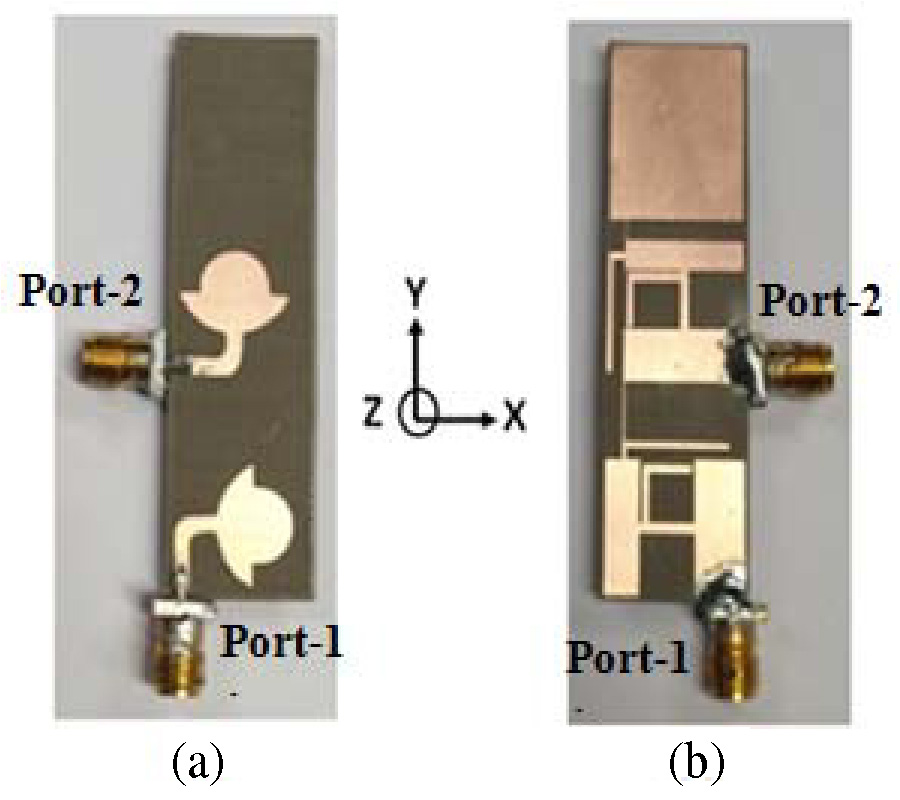
An E-shaped printed monopole antenna with loaded resonant elements suitable for penta-band multi-input multi-output (MIMO) application is proposed. The simple E-shaped monopole antenna results in a single resonance, and by loading the vertical arm of the antenna with narrow slots and stubs, a multi-band antenna can be obtained. The slots so placed on the antenna create L-shaped resonance paths which are multiples of λg/4, and stubs resonate at λg/4. The antenna is designed for operation over the UMTS, WiMAX and WLAN frequencies 2.1, 2.5, 3.5, 5.2, 5.8 GHz. A two element array of such antennas with close spacing of λg/15 is suitable for MIMO application. The array has low mutual coupling, low envelope correlation, high efficiency and good radiation patterns over all five frequency bands. Simulation and measurement results are compared and discussed.
A PENTA-BAND PRINTED MONOPOLE ANTENNA FOR MIMO APPLICATIONS
2018-06-22
PIER M
Vol. 70, 11-20
Triple-Band Printed Dipole Antenna for RFID/GPS/BLE Applications
Khodor Jebbawi , Matthieu Egels and Philippe Pannier
Progress in wireless communication requires antennas that work on multi-band simultaneously. This paper presents a design method for a multi-band antenna using printed dipole with L-slots fed by a single coaxial cable. Using this method, a triple-band antenna that operates at 868-915 MHz for RFID (radio frequency identification), 1575 MHz for GPS (global positioning system) and 2.45 GHz for BLE (bluetooth low energy) was designed and manufactured. The antenna's parameters for triple-band operation are investigated and discussed. In this antenna design, ANSYS HFSS software using highly accurate nite element method (FEM) simulation is employed to analyze the entire structure. The designed antenna is manufactured using an FR-4 substrate with a dielectric constant (εr) of 4.4 and thickness (h) of 1.6 mm. Many prototypes have been fabricated, and good agreement between simulations and measurements has been achieved. The performance of the prototypes has been measured in a standard far-field anechoic chamber. The proposed triple-band antenna is also tested by measuring the reading distance, and it is found that the proposed antenna can be used for RFID applications.
TRIPLE-BAND PRINTED DIPOLE ANTENNA FOR RFID/GPS/BLE APPLICATIONS
2018-06-21
PIER Letters
Vol. 77, 27-33
Design of Printed Monopole Antenna for Wireless Energy Meter and Smart Applications
Trushit K. Upadhyaya , Arpan Desai and Riki Patel
European smart energy meter applications operate over a smart grid network. These applications operate over ISM frequency bands. The proposed dual-band printed monopole antenna provides a solution to smart energy meter applications. The surface dimension of the planar monopole antenna is 45 x 17 mm2. The antenna has strips fabricated on a standard cost-effective FR-4 substrate of thickness 1.6 mm for achieving dual-mode resonance at 868 MHz and 2.4 GHz. The proposed monopole antenna has operating impedance bandwidth of 2.89% and 2.78% for the first and second resonances, respectively. The gain of the presented antenna is in order of 1.18 dBi for lower resonant mode and 2.1 dBi for the higher resonant mode. The antenna resonates in the frequency range which is also useful in smart RFID tags for device identification operating over smart grid. In addition, the antenna can be utilized for the devices functional in Low Rate Wireless Personal Area Networks (LR-WPAN) and WiFi-based smart applications.
DESIGN OF PRINTED MONOPOLE ANTENNA FOR WIRELESS ENERGY METER AND SMART APPLICATIONS
2018-06-21
PIER M
Vol. 70, 1-10
Miniaturization of a PIFA Antenna for Biomedical Applications Using Artificial Neural Networks
Asma Djellid , Lionel Pichon , Stavros Koulouridis and Farid Bouttout
This work deals with the optimization of an inverted F dual-band implantable antenna operating in Medical Device Radiocommunications Service (MedRadio, 401-406 MHz) and Industrial Scientific Medical (ISM, 902-928 MHz) applications bands. Artificial neural networks (ANNs) are implemented to minimize the size of the initial design. The ANN's output with the physical and dielectric parameters of antenna as inputs is tested using COMSOL Multiphysics®. The obtained results regarding the return loss S11, resonant frequency and bandwidth of the antenna are presented and discussed. Indeed, the size of the antenna is reduced by 21.48% with respect to the initial size while preserving its initial good performance in both frequency bands.
MINIATURIZATION OF A PIFA ANTENNA FOR BIOMEDICAL APPLICATIONS USING ARTIFICIAL NEURAL NETWORKS
2018-06-21
PIER M
Vol. 69, 197-206
A Polarization Reconfigurable Microstrip Antenna Employing Dual-Perturbation Technique
Muhammad Asad Rahman , Eisuke Nishiyama and Ichihiko Toyoda
This study presents a polarization reconfigurable antenna with frequency diversity function. The antenna incorporates a novel positive and negative perturbation technique to achieve different polarization sense. A square shape slot is loaded on the ground plane to excite circular polarization by creating a negative perturbation. An L-shape segment is integrated to the patch using a switching diode. This segment creates a positive perturbation to eliminate the negative perturbation created by the defected ground slot, and the antenna excites linear polarization. Frequency diversity is achieved by exciting different polarization senses at different frequencies. A 3-dB axial ratio bandwidth of 1.41% is obtained for circular polarization radiation while the 10-dB impedance bandwidth during linear polarization is 1.8%. The antenna shows good radiation performances with high gain at both polarization states, and the performances are confirmed experimentally.
A POLARIZATION RECONFIGURABLE MICROSTRIP ANTENNA EMPLOYING DUAL-PERTURBATION TECHNIQUE
2018-06-19
PIER M
Vol. 69, 207-217
Design and Optimization of Quasi-Constant Mutual Inductance for Asymmetric Two-Coil Wireless Power Transfer System with Lateral Misalignments
Zhongqi Li , Wangyang Cheng , Jiliang Yi and Junjun Li
Magnetic resonant wireless power transfer (WPT) is an emerging technology that may create new applications for wireless power charging. However, the output voltage fluctuations resulting from lateral misalignments are main obstructing factors for promoting this technology. In this paper, an asymmetric two-coil WPT system is presented. The mathematical model of the proposed topology with lateral misalignments is built based on equivalent circuit method. The expression of the output voltage is then derived by solving the system equivalent equations. In addition, a method of optimization parameters is proposed. The mutual inductance between the receiving coil and transmission coil is nearly constant by the proposed method with lateral misalignments. Therefore, the output voltage can be kept nearly constant. The asymmetric two-coil WPT system via magnetic resonance coupling is designed. Simulated and experimental results validating the proposed method are given.
DESIGN AND OPTIMIZATION OF QUASI-CONSTANT MUTUAL INDUCTANCE FOR ASYMMETRIC TWO-COIL WIRELESS POWER TRANSFER SYSTEM WITH LATERAL MISALIGNMENTS
2018-06-19
PIER M
Vol. 69, 185-195
Dual-Band Dual-Sense Circularly Polarized Asymmetric Slot Antenna with F-Shaped Feed Line and Parasitic Elements
Rohit Kumar Saini and Pritam Singh Bakariya
A novel dual-band and dual-sense circularly polarized coplanar waveguide (CPW) fed planar antenna with an asymmetric rectangular slot is presented. An F-shaped feed line is protruded from the signal line into the slot. Circular polarization is obtained due to the F-shaped feed line and asymmetry in the slot. Axial ratio bandwidth is significantly enhanced by placing parasitic elements adjacent to the feedline. The antenna has a size of 63.5×55 mm2. The measured results agree well with simulation. The measured impedance bandwidths are 26.04% (1.57 GHz-2.04 GHz) for the lower band and 18.93% (2.87 GHz-3.47 GHz) for the upper band. The measured 3 dB axial ratio bandwidths of lower band and upper bands are 22.22% (1.6 GHz-2 GHz) and 10.53% (3.15 GHz-3.5 GHz), with respect to 1.8 GHz (RHCP) and 3.325 GHz (LHCP), respectively.
DUAL-BAND DUAL-SENSE CIRCULARLY POLARIZED ASYMMETRIC SLOT ANTENNA WITH F-SHAPED FEED LINE AND PARASITIC ELEMENTS
2018-06-18
PIER C
Vol. 84, 227-240
GNSS Imaging: A Case Study of Tree Detection Based on BeiDou GEO Satellites
Songhua Yan , Hui Zhou and Jianya Gong
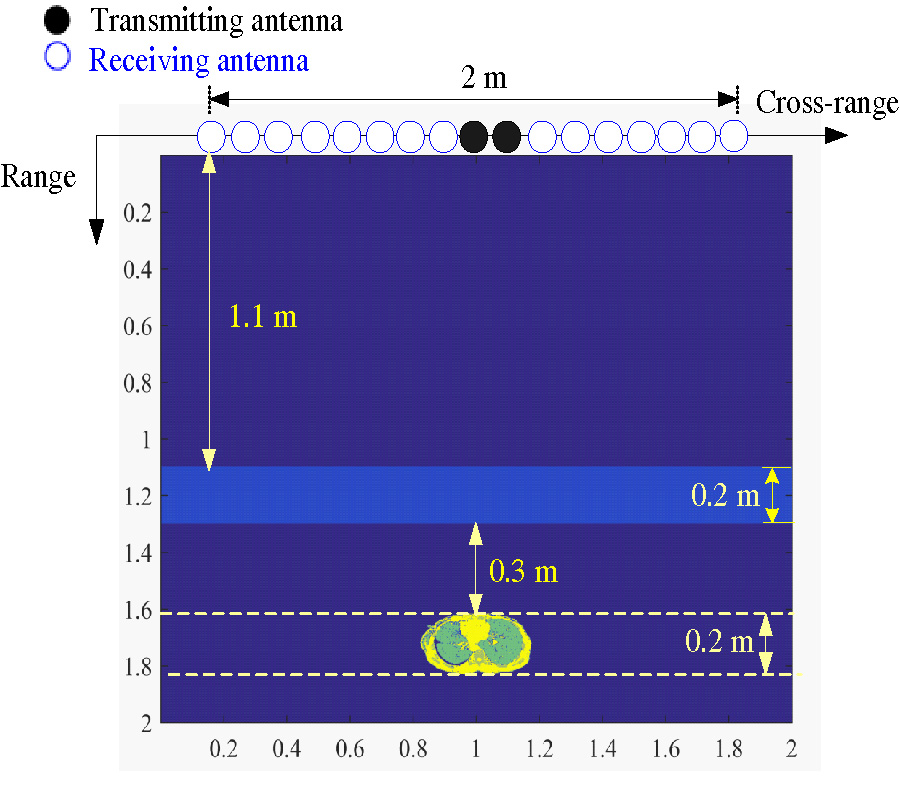
Curved trajectories of traditional navigation satellites limit their performance in bistatic radar imaging system. Instead of using common Inclined Geosynchronous Orbit (IGSO)/Medium Earth Orbit (MEO) satellites in motion, a new global navigation satellite system (GNSS) imaging system based on Beidou geosynchronous orbit (GEO) satellites is presented to deal with this problem. The most prominent feature of GEO satellites is that they are stillrelative to the earth. This work includes three parts. First, a reasonable parallel assumption is provided to simplify the geometric topology of the imaging system, and the relevant path delay formula is deduced. Second, the principle of imaging based on multiple GEO satellites is proposed, and the simulation result is presented. Third, the entire signal processing, which uses a multi-correlator, is designed to improve the range resolution. Two imaging experiments targeting at the trees are described and conducted in Wuhan University to verify the imaging system. The first experiment is targeted at isolated trees, and the second experiment is focused on groves along the road. Conclusion can be obtained: the imaging result is highly consistent with the imaging area, which validates the feasibility of the method and confirms the potential use of GNSS imaging system in forest monitoring.
GNSS IMAGING: A CASE STUDY OF TREE DETECTION BASED ON BEIDOU GEO SATELLITES
2018-06-18
PIER M
Vol. 69, 171-183
Wideband Radar Cross Section Reduction Using Artificial Magnetic Conductor Checkerboard Surface
Vadakkekalathil Libi Mol and Chandroth K. Aanandan
This paper presents a combinatorial triangle type artificial magnetic conductor checkerboard surface for wideband radar cross section reduction. The structure consists of a combination of a single band and dual band AMC unit cells with 180±370 phase difference from 4.06 GHZ to 11.2 GHz. 10 dB RCS reduction compared to PEC surface is realized from 4.4 GHz to 11.68 GHz (91%) for the proposed structure. The performance of the structure is compared with the conventional checkerboard surface. The distribution of scattered fields from both the structures are analyzed using array theory. The angular stability of the structures are also studied for TE and TM polarized wave incidences. A prototype of the proposed structure is fabricated, and the measured data are in good agreement with simulated results.
WIDEBAND RADAR CROSS SECTION REDUCTION USING ARTIFICIAL MAGNETIC CONDUCTOR CHECKERBOARD SURFACE
2018-06-15
PIER M
Vol. 69, 161-170
A Compact Coupling Structure for Diplexers and Filtering Power Dividers
Yun Wu , Ruiheng Wu and Yi Wang
This paper presents a compact and novel coupling structure for diplexers and power dividers based exclusively on coupled resonators. It consists of two cross-coupled structures joined together by two common resonators with a cluster of only four resonators. For a diplexer, it represents one of the most compact topologies that produces two 2nd-order channel filters with two fully controllable transmission zeros. This can be used to increase the rejection and isolations between channels without increasing the number of resonators. The same topology can also be used to realise a 3rd-order filtering power divider (FPD), with its embedded cascade trisection (CT) structure generating an asymmetric transmission zero. The coupling matrices of several diplexers and power dividers have been synthesized. Two microstrip diplexers with different positions of the transmission zeros have been demonstrated to verify the device concept. A 1.8 GHz FPD with a fractional bandwidth of 5% has also been prototyped, showing an improved out-of-band rejection from 15 dB to 25 dB below 1.71 GHz. The isolation performance of the divider has been investigated and improved from 7 dB to 18 dB across the band by adding only one resistor.
A COMPACT COUPLING STRUCTURE FOR DIPLEXERS AND FILTERING POWER DIVIDERS
2018-06-15
PIER M
Vol. 69, 151-160
Automated Monitoring of Livestock Behavior Using Frequency-Modulated Continuous-Wave Radars
Dominique Henry , Herve Aubert , Edmond Ricard , Dominique Hazard and Mathieu Lihoreau
In animal production, behavioral selection is becoming increasingly important to improve the docility of livestock. Several behavioral traits, including motion, are experimentally recorded in order to characterize the reactivity of animals and investigate its genetic determinism. Behavioral analyses are often time consuming because large numbers of animals have to be compared. For this reason, automatization is needed to develop high throughput data recording and efficient phenotyping. Here we introduce a new method to monitor the position and motion of an individual sheep using a 24 GHz frequency-modulated continuous-wave radar in a classical experimental paradigm called the arena test. The measurement method is non-invasive, does not require equipping animals with electronic tags, and offers a depth measurement resolution less than 10 cm. Parasitic echoes (or ``clutters'') that could alter the sheep backscattered signal are removed by using the singular value decomposition analysis. In order to enhance the clutters mitigation, the direction-of-arrivals of electromagnetic backscattered signals are derived from applying the MUltiple Signals Classification algorithm. We discuss how the proposed automatized monitoring of individual sheep could be applied to a wider range of species and experimental contexts for animal behavior research.
AUTOMATED MONITORING OF LIVESTOCK BEHAVIOR USING FREQUENCY-MODULATED CONTINUOUS-WAVE RADARS
2018-06-14
PIER C
Vol. 84, 215-226
Study on a New Remote Sensing Image Classification Method and Its Application
Wu Deng , Danqin Wang and Huimin Zhao
For slower computation speed and lower classification accuracy of the traditional image classification methods, wavelet transform, multi-strategy, particle swarm optimization (PSO) algorithm and support vector machine (SVM) are introduced into image classification in order to propose a new remote sensing image classification (RIWMPS) method. First of all, wavelet transform method with multi-resolution characteristics is used to extract the features of remote sensing image. Then the steepest descent strategy, corrective decline strategy, random movement, aggregation strategy and diffusion strategy are used to improve the PSO algorithm to obtain an improved PSO (MSPSO) algorithm, which is used to optimize the parameters of the SVM model in order to construct an optimized SVM classifier for realizing remote sensing classification. Finally, the remote sensing image of Chongming Island is select to test the effectiveness of the RIWMPS method. The experiment results show that the RIWMPS method has higher classification efficiency and accuracy, and takes on better superiority and effectiveness. This study provides a new classification method for processing the remote sensing image.
STUDY ON A NEW REMOTE SENSING IMAGE CLASSIFICATION METHOD AND ITS APPLICATION
2018-06-14
PIER C
Vol. 84, 201-213
CPW-Fed Body Worn Monopole Antenna on Magneto-Dielectric Substrate in C-Band
Pragyan Jyoti Gogoi , Satyajib Bhattacharyya and Nidhi S. Bhattacharya
Body worn antennas generally face the problem of isolation when operated in close proximity to human body. Use of magneto-dielectric material as substrate for antenna makes the system compact and reduces the influence of body on performance of antenna. In addition, miniaturization of antenna size also takes place. 7 wt.% of nano-sized Ni0.5Zn0.5 Fe2O4 is dispersed as magnetic filler in flexible linear low density polyethylene matrix. Beyond 7 wt.%, the sample stiffens and loses flexibility because of percolation limit of the polymer. Verification of the composite as a potential substrate for a body worn antenna is carried out by fabricating a coplanar waveguide fed simple rectangular monopole antenna, using transmission line model at 6 GHz. Antenna performance is studied by wearing the patch on human wrist. S11 of -21.78 dB at 5.32 GHz and -10 dB bandwidth of 49.62% is observed. For comparison, an antenna at the same resonant frequency is developed on linear low density polyethylene with magnetic inclusions. The antenna on magneto-dielectric substrate shows better performance than dielectric substrate. The magnetic and dielectric properties of the Nickel Zinc Ferrite-linear low density polyethylene composite magneto-dielectric substrate reduces the influence of the human body which makes the antenna system compact and robust as additional techniques are not required for shielding of human body influence on antenna performance.
CPW-FED BODY WORN MONOPOLE ANTENNA ON MAGNETO-DIELECTRIC SUBSTRATE IN C-BAND
2018-06-13
PIER B
Vol. 81, 45-61
Ac Induced Corrosion Assessment of Buried Pipelines Near HVTLs: a Case Study of South Africa
Kazeem Bolade Adedeji , Akinlolu A. Ponnle , Bolanle Tolulope Abe , Adisa A. Jimoh , Adnan M. Abu-Mahfouz and Yskandar Hamam
Metallic pipelines have attendant problems of alternating current (AC) assisted corrosion when installed in the utility corridor with high voltage transmission lines. Research studies in the past and recent years have shown that this corrosion is a primary function of the AC density through the pipe coating defect. While several other AC corrosion risk assessment indices have been proposed, the AC density is regarded as a valuable parameter in assessing pipeline corrosion risk due to AC interference. Also, there exists a threshold value which, if exceeded, guarantees the possibility of pipeline corrosion damage. However, for buried pipelines, monitoring these AC corrosion assessment indices is a major challenge. Therefore, to avoid severe corrosion damage to such pipelines, a corrosion assessment for evaluating the corrosion risk of the pipelines due to AC interference is presented in this paper. The assessment was demonstrated on a buried pipeline in one of the Rand Water sites, South Africa where AC interference is frequent. The overall simulation results yield useful information which may be essential for pipeline operators, most especially Rand Water, South Africa and corrosion engineers for AC corrosion assessment of metallic pipelines installed near transmission lines. The analysis presented in this paper may also be used for the evaluation of a safe position for installing new pipelines near existing power lines right-of-way.
AC INDUCED CORROSION ASSESSMENT OF BURIED PIPELINES NEAR HVTLS: A CASE STUDY OF SOUTH AFRICA
2018-06-13
PIER Letters
Vol. 77, 19-25
The Use of the Fractional Derivatives Approach to Solve the Problem of Diffraction of a Cylindrical Wave on an Impedance Strip
Eldar I. Veliyev , Kamil Karaçuha , Ertuğrul Karaçuha and Osman Dur
Earlier, we considered the use of the apparatus of fractional derivatives to solve the two-dimensional problem of diffraction of a plane wave on an impedance strip. We introduced the concept of a ``fractional strip''. A ``fractional strip'' is understood as a strip on the surface, which is subject to fractional boundary conditions (FBC). The problem under consideration on the basis of various methods has been studied quite well. As a rule, this problem is studied on the basis of numerical methods. The proposed approach, as will be shown below, makes it possible to obtain an analytical solution of the problem for values of fractional order v = 0.5 and for fractional values of the interval v∈[0,1], the general solution needs to be investigated numerically.
THE USE OF THE FRACTIONAL DERIVATIVES APPROACH TO SOLVE THE PROBLEM OF DIFFRACTION OF A CYLINDRICAL WAVE ON AN IMPEDANCE STRIP
2018-06-13
PIER M
Vol. 69, 137-149
Analysis of Attenuation Effect of Grid-Like Spatial Shields Used in Lightning Protection of Buildings
Dino Lovrić and Slavko Vujević
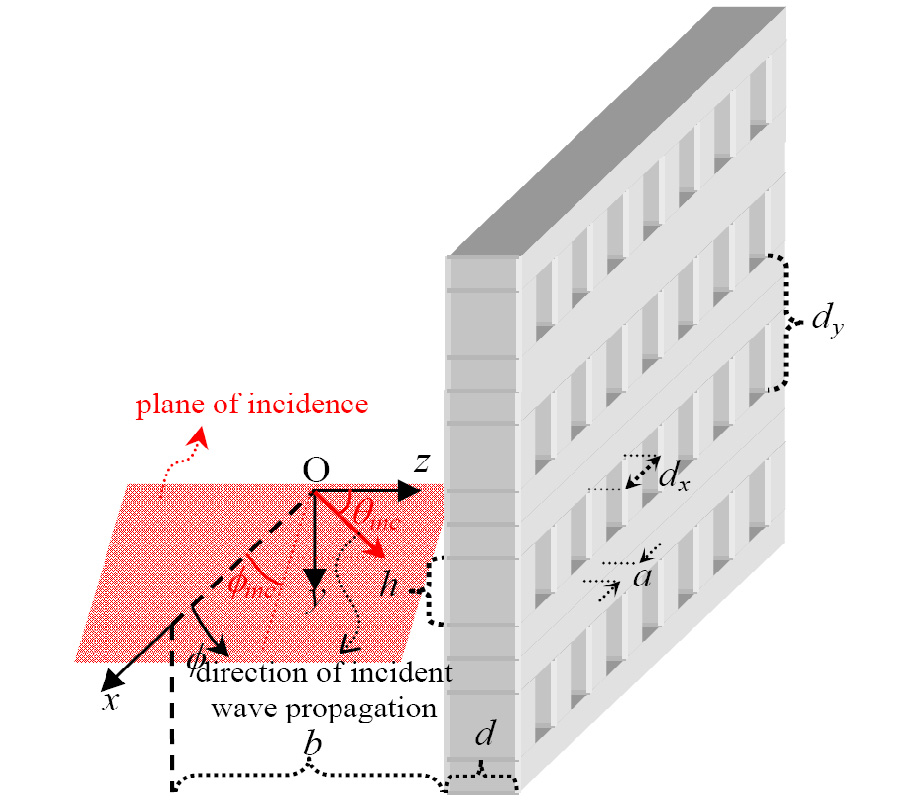
A frequency-domain-based electromagnetic model of the lightning protection system of buildings is presented in this paper. Numerical model can accurately take into account all conductors of the lightning protection system, i.e. air-termination system, down-conductor system and earth-termination system. Using the presented electromagnetic model, attenuation effects of a grid-like spatial shield - sometimes used in lightning protection of buildings - will be analyzed for both the electric field and the magnetic field caused by a lightning strike. Three-dimensional distributions of the fields inside the shield are provided in the paper.
ANALYSIS OF ATTENUATION EFFECT OF GRID-LIKE SPATIAL SHIELDS USED IN LIGHTNING PROTECTION OF BUILDINGS
2018-06-13
PIER M
Vol. 69, 127-138
Compact Branch-Line Coupler with Harmonic Suppression Based on a Planar Simplified Dual Composite Right/Left-Handed Transmission Line Structure
Cheng Wang and Wanchun Tang
In this paper, a planar simplified dual composite right/left-handed (SD-CRLH) transmission line (TL) structure is proposed and applied to the design of branch-line coupler. The SD-CRLH TL is obtained by a microstrip line with an open-ended stub in spiral form. Since this structure has unusual phase shift characteristics with a transmission zero out of the passband, the branch-line coupler with the planar SD-CRLH TL can achieve both size reduction and harmonic suppression. Such a branch-line coupler operating at 0.915 GHz is investigated and fabricated. The equivalent circuit simulation, full-wave simulation and measurement results agree well with each other. From the results, it is shown that the area of the proposed branch line coupler is reduced by 74% compared to the conventional one while maintaining similar performance, and the second harmonic suppression can be lower than -45 dB.
COMPACT BRANCH-LINE COUPLER WITH HARMONIC SUPPRESSION BASED ON A PLANAR SIMPLIFIED DUAL COMPOSITE RIGHT/LEFT-HANDED TRANSMISSION LINE STRUCTURE
2018-06-13
PIER M
Vol. 69, 115-125
Design of a Compact CP Antenna with Enhanced Bandwidth Using a Novel Hexagonal Ring Based Reactive Impedance Substrate
Gopinath Samanta and Sekhar Ranjan Bhadra Chaudhuri
A novel hexagonal ring-based reactive impedance surface (RIS) has been proposed and comprehensively employed as a ground plane of a circular polarized patch antenna (CPPA) for enhancing impedance bandwidth (IBW) and axial ratio bandwidth (ARBW), simultaneously. Furthermore, a simple analytical model analysis has been developed to estimate the resonance frequency and to predict the surface characteristics of the RIS structure. Two slits over the patch render the antenna to radiate circular polarized (CP) wave. The RIS has improved the CP antenna performance in terms of compactness, improved gain and increased efficiency. The proposed loaded structure has been numerically and experimentally studied with a layout of 40×40×3.2 mm3 at 3.7 GHz. The measured results indicate that the prototype antenna has produced a relatively wider IBW and ARBW of 9.32% and 2.1%, respectively with peak gain about 2.98 dBiC. Both gain and efficiency of the loaded structure have been improved owing to the low conductive loss of the ring-shaped RIS. The proposed CP antenna might be suitable for radar application used in S-band.
DESIGN OF A COMPACT CP ANTENNA WITH ENHANCED BANDWIDTH USING A NOVEL HEXAGONAL RING BASED REACTIVE IMPEDANCE SUBSTRATE
2018-06-13
PIER M
Vol. 69, 107-114
Nine Channels Wavelength Division Demultiplexer Based Upon Two Dimensional Photonic Crystal
Sanaa Ghezali , Fatima Tayeboun and Kada Abdelhafid Meradi
The article analyzes a nine-channel Wavelength Division Demultiplexer based on a two-dimensional photonic crystal lattice. In the design of the device, defects and air holes are shifted in the resonant cavities: by changing characteristics such as radii of defects, distance between them and position of defects, a compact optical filter circuit is designed with a 1 nm channel spacing. The properties of these devices are investigated using finite-difference time-domain method. The resonant wavelengths of nine channel demultiplexers are 1481.4, 1503.7, 1526.6, 1538.4 ,1550.3, 1562.3, 1574.7, 1587.2 and 1612.9 nm. The value of transmission efficiency for channels was obtained in 79-96% range. In addition, the maximum value of crosstalk and average quality factor for channels were calculated -11.3 dB and 2000, respectively. The overall size of the structure is small (11.3 μm × 15.3 μm) which is suitable for photonic integrated circuits and optical communication network applications.
NINE CHANNELS WAVELENGTH DIVISION DEMULTIPLEXER BASED UPON TWO DIMENSIONAL PHOTONIC CRYSTAL
2018-06-13
PIER
Vol. 162, 61-72
Identfication of Main Factors of Uncertainty in a Microstrip Line Network
Mourad Larbi , Igor Simone Stievano , Flavio Canavero and Philippe Besnier
This paper deals with uncertainty propagation applied to the analysis of crosstalk in printed circuit board microstrip traces. Complex interconnection networks generally are affected by many uncertain parameters and their point-to-point transfer functions are computationally expensive, thus making Monte-Carlo analyses rather inefficient. To overcome this situation, a metamodel is highly desirable. This paper presents a sparse and accelerated polynomial chaos approach, which proves to be well adapted for high-dimensional uncertainty quantification and well suited for the sensitivity analysis of crosstalk effects. We highlight the significant advantage of the advocated approach for the design of microstrip line networks of complex topology. In fact, we demonstrate how a small number of system simulations can help to quantify the statistics of the output variability and identify a reduced set of high-impact parameters.
IDENTFICATION OF MAIN FACTORS OF UNCERTAINTY IN A MICROSTRIP LINE NETWORK