Search Results(13790)

2018-07-16
PIER C
Vol. 85, 167-175
A Circularly Polarised Implantable Monopole Antenna for Biomedical Applications
Pujayita Saha , Debasis Mitra and Susanta Kumar Parui
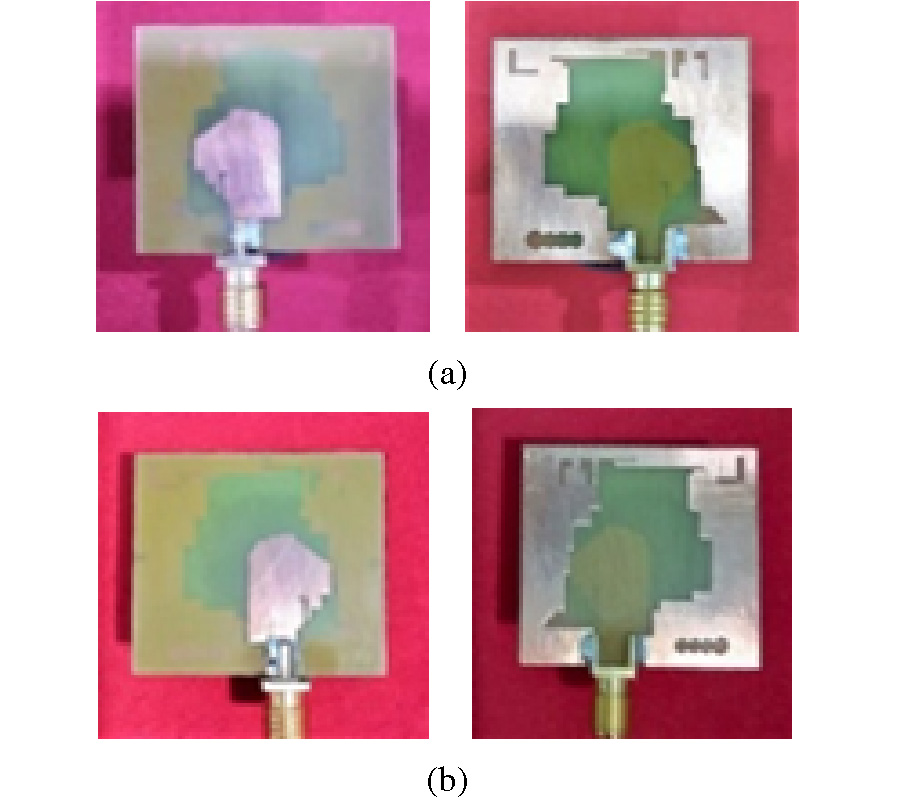
In this paper, a compact, circularly polarized printed monopole antenna is proposed at ISM band (2.4-2.48 GHz) for biotelemetry and implantable applications. The proposed antenna possesses a small dimension (10×10×0.3 mm3) and simple microstrip feeding structure. The circular polarization is easily achieved by introducing an ``L'' shape stub at the ground plane in ISM. The simulated 10 dB impedance bandwidth is around 13.87%, and 3 dB AR bandwidth is around 5.3%. The effect of different body phantoms is discussed to evaluate the sensitivity of the proposed antenna. The simulated peak gain of the proposed antenna is about -7.79 dBi across the operating band. The SAR analysis of the antenna configuration has also been studied.
A CIRCULARLY POLARISED IMPLANTABLE MONOPOLE ANTENNA FOR BIOMEDICAL APPLICATIONS
2018-07-16
PIER C
Vol. 85, 155-165
Influence of Rotor Magnet Shapes on Performance of Axial Flux Permanent Magnet Machines
Praveen Kumar and Rakesh Kumar Srivastava
Axial flux Permanent Magnet (AFPM) machines, due to its high torque capability, high power density and compact size, are the most suitable candidates for in-wheel Electric Vehicle application. However, the presence of cogging torque in AFPM machines, resulting from the interaction of PMs and stator slots, introduces torque ripples, noise and vibrations which deteriorates the performance of the machine. To overcome this, several techniques for cogging reduction are utilized. Out of various techniques, rotor magnet shape variation is most commonly utilized. This paper investigates the effect of some preferred magnet shaping techniques in AFPM machines on several performance parameters such as magnetic flux density distribution in air gap, cogging torque, flux linkage, no load-induced emf, emf harmonics, electromagnetic torque and torque ripple. These parameters were analyzed using 3-D Finite Element Method (FEM) based simulations. It was found that a maximum cogging reduction by 62.49% and output torque ripple by 63.25% were obtained by using short-pitched and skewed rotor magnets. This also resulted in a reduction of induced emf by 14.18% and electromagnetic torque by 15.17%.
INFLUENCE OF ROTOR MAGNET SHAPES ON PERFORMANCE OF AXIAL FLUX PERMANENT MAGNET MACHINES
2018-07-15
PIER C
Vol. 85, 141-153
Design and Optimization of a Dual-Band Sub-6 GHz Four Port Mobile Terminal Antenna Performance in the Vicinity of User's Hand
Rizwan Khan , Azremi Abdullah Al-Hadi , Ping Jack Soh , Mohd Tarmizi Ali , Samir Salem Al-Bawri and Owais
In this paper, the effects of the locations of four dual-band antennas on a mobile terminal chassis are investigated in the vicinity of user's hand. To perform this study, a dual band four-port mobile terminal antenna for 5G is designed for operation in between 3.34 and 3.84 GHz (lower band, LB) and 5.15 and 6.52 GHz (upper band, UB), respectively. Due to the symmetry of the antenna elements (AEs), a right hand standard phantom is placed at a fixed position. Meanwhile, the antenna elements are placed at seven different locations across the chassis, with the best possible locations chosen based on the maximum efficiency in data mode. The influence of the human hand on the antenna performance is assessed based on two aspects: 1) in terms of matching (impedance mismatch (IM) and impedance bandwidth (IB)); and 2) in terms of efficiency (radiation efficiency (RE) and total efficiency (TE)). To validate its performance, the proposed antenna has been fabricated and measured. Results showed good agreement between simulations and measurements. Based on the results, a general design guideline for future 5G antennas operating in the sub-6 GHz bands considering user's hand effects can be outlined. The observed maximum variation for the proposed antenna with user's hand in terms of IM is -8 dB and -5 dB, respectively, and 57% and 37% in TE, respectively.
DESIGN AND OPTIMIZATION OF A DUAL-BAND SUB-6 GHZ FOUR PORT MOBILE TERMINAL ANTENNA PERFORMANCE IN THE VICINITY OF USER'S HAND
2018-07-15
PIER M
Vol. 70, 145-155
Tracking Unknown Number of Stealth Targets in a Multi-Static Radar with Unknown Receiver Detection Profile Using RCS Model
Amin Razmi , Mohammad Ali Masnadi-Shirazi and Alireza Masnadi-Shirazi
The reliable detection of geometrically-based stealth targets using a conventional single sensor radar system may be extremely difficult. This is because low Radar Cross Section (RCS) from certain angles results in a low Signal to Noise Ratio (SNR). In the present work, multi-target tracking of stealth targets is investigated in a multi-static radar with passive receivers. The Directions of Arrival (DOA) of targets are estimated by the receivers without knowing the number of targets, and their positions are obtained based on the transmitter beam direction. The B2 bomber aircraft model has been used as a stealth target. The RCS of the model has been simulated for all collection of incident and reflected angles from an oblique impinging plane wave. Probability of Detection (Pd) is modeled using a Toeplitz-based method for different SNRs due to different RCS patterns and is fed to an Iterated Corrected Probability Hypothesis Density (IC-PHD) filter. In spite of considering the transmitter and receivers resolution in our input data generation, the proposed algorithm is able to track the targets individually when they are much close to or even cross each other. Simulation results show the improved performance of the proposed method compared to other existing approaches.
TRACKING UNKNOWN NUMBER OF STEALTH TARGETS IN A MULTI-STATIC RADAR WITH UNKNOWN RECEIVER DETECTION PROFILE USING RCS MODEL
2018-07-14
PIER Letters
Vol. 77, 89-96
First-Order Minkowski Fractal Circularly Polarized Slot Loop Antenna with Simple Feeding Network for UHF RFID Reader
Xiuhui Yang , Quanyuan Feng and Zongliang Zheng
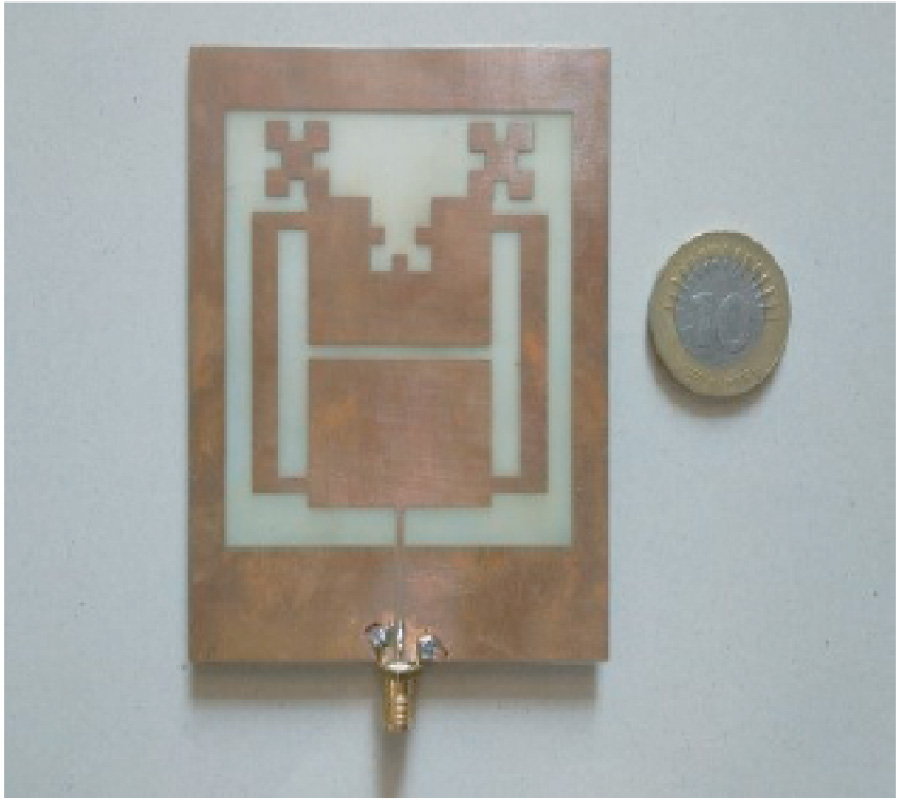
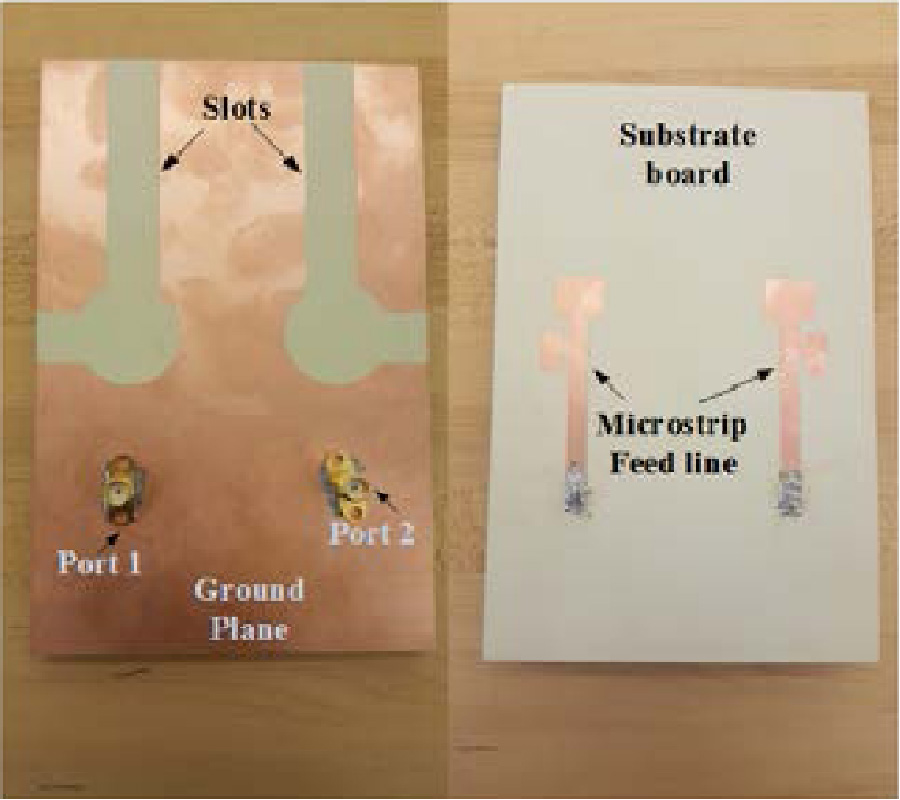
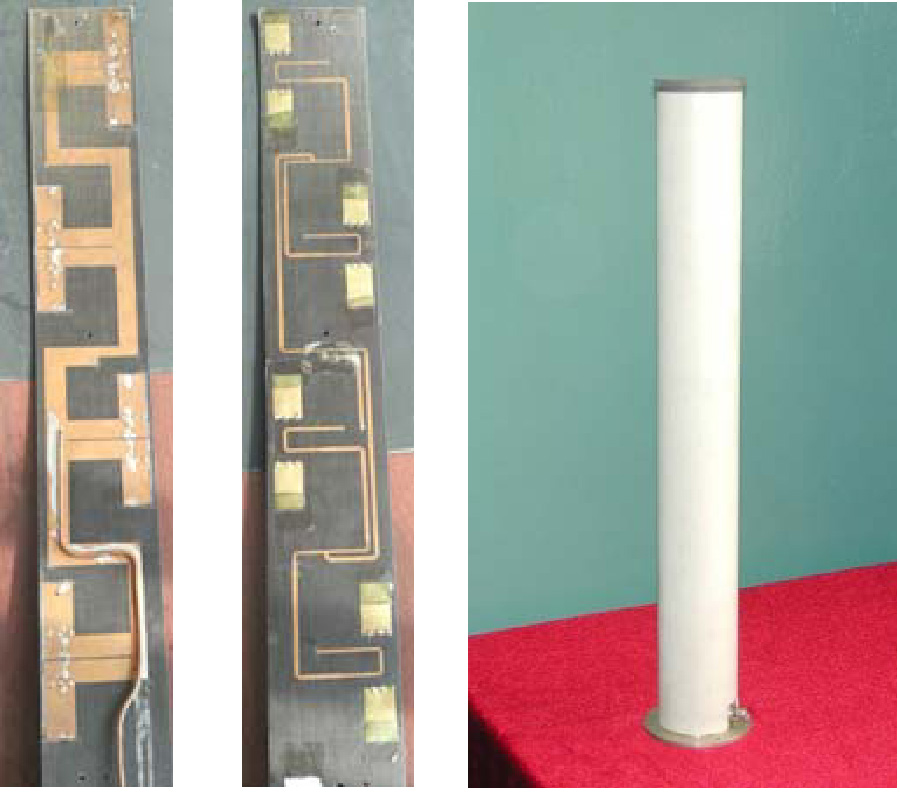
A circularly polarized (CP) antenna with simple feeding network for ultra-high-frequency (UHF) radio-frequency identification (RFID) reader application is presented in this letter. The proposed antenna consists of a slot loop etched on the ground and a simple feeding network using bended microstrip lines. And the two parts of the antenna are printed on either sides of a thin substrate, thus a low-profile antenna is obtained. The slot loop is meandered based on the first-order Minkowski fractal technique for antenna size reduction. To generate circularly polarized radiation, two branches of the feeding network are designed to be orthorhombic with 90° phase difference. The antenna is simulated and practically fabricated with a compact size of 80×80×1.6 mm3. The 10-dB impedance bandwidth and 3-dB axial-ratio (AR) bandwidth are measured to be 50 MHz (0.896-0.946 GHz) and 12 MHz (0.916-0.928 GHz), respectively. The measured peak gain exhibits stable value of 3 dBi over the impedance bandwidth. Furthermore, a wide 3-dB beamwidth of 120° is achieved for the proposed antenna. Based on the above, this antenna is well suited for applications in UHF RFID handheld readers.
FIRST-ORDER MINKOWSKI FRACTAL CIRCULARLY POLARIZED SLOT LOOP ANTENNA WITH SIMPLE FEEDING NETWORK FOR UHF RFID READER
2018-07-13
PIER M
Vol. 70, 135-143
An Alternation Diffusion LMS Estimation Strategy Over Wireless Sensor Network
Lin Li and Donghui Li
This paper presents a distributed estimation strategy called alternation diffusion LMS estimation (AD-LMS) to estimate an unknown parameter of interests from noisy measurement over wireless sensor network. It is useful in the wireless sensor networks where robustness and low consumption are desired features. Diffusion LMS is introduced in this estimation strategy to improve the performance and reduce the communication burden. With the proposed strategy, whether each node distributes its estimation depends on an alternative parameter. The node only exchanges its estimation when the instant time meets some conditions. Next, each node combines the estimations of neighbors with its own estimation using combination coefficients upon the topology of the network. At last, the nodes update their estimations with a normalized LMS algorithm. The proposed AD-LMS strategy is compared to standard diffusion strategy. The results show that they achieve exactly the same coverage rate and nearly the network performance (network MSD and steady-state MSD) of standard diffusion strategy while reducing the communication burden significantly.
AN ALTERNATION DIFFUSION LMS ESTIMATION STRATEGY OVER WIRELESS SENSOR NETWORK
2018-07-13
PIER M
Vol. 70, 127-134
Metamaterial Loaded Fractal Based Interdigital Capacitor Antenna for Communication Systems
Pushkar Mishra and Shyam Sundar Pattnaik
This paper presents a metamaterial loaded interdigital capacitor antenna having fractal geometry. The antenna consists of multiple split ring resonators (MSRR) with shorted ground. The metamaterial loading is achieved by MSRR that enhances the gain. Furthermore, multiband characteristics is obtained by two L-shaped rings providing the fractal geometry. The antenna has the physical dimension of 27 × 39.20 mm for the outer ring and in terms of wavelength has the dimension of 0.486 × 0.707λ. This antenna structure is designed and simulated on an FR-4 epoxy substrate of thickness h = 1.56 mm and dielectric constant εr = 4.4. The antenna resonates at multiple frequencies i.e. 1.5 GHz, 2.2 GHz, 2.70 GHz, 4.20 GHz, 4.9 GHz, 5.3 GHz, 7.2 GHz, 7.5 GHz and 8.8 GHz respectively at different matching values with gains of 9.5 dB, 14.5 dB, 11.9 dB, 3.6 dB, 4 dB, 1.5 dB, 3.8 dB and 6.5 dB. The comparison of the simulated and measured return losses shows a good agreement. The antenna finds its applications in GPS, space and satellite communication, radar, body area network (BAN) communication system.
METAMATERIAL LOADED FRACTAL BASED INTERDIGITAL CAPACITOR ANTENNA FOR COMMUNICATION SYSTEMS
2018-07-12
PIER C
Vol. 85, 129-140
Study of Unequally-Excited Random Antenna Arrays for Beam Shaping
Giovanni Buonanno and Raffaele Solimene
Random arrays have been typically studied by considering real uniform excitations. This is suited for single-beam radiation patterns but does not allow for more sophisticated patterns. Indeed, only even patterns, with respect to the steering angle, can be achieved. To overcome this limitation, we recently proposed a new model whereby the excitation coefficients are not uniform and are determined by means of two random variable transformations. In this paper, we deal more extensively with the properties of this model, highlighting things that have not been pointed out previously. In order to get analytical results, we just consider symmetric random arrays. For such a case, we determine the design error, that is the cumulative distribution function of the supremum of the the difference between the actual and desired array factors. It is shown that general shaped beams can be actually achieved but at the cost of an increase of the design error as compared to the single-beam case. Numerical analysis validates the presented theory.
STUDY OF UNEQUALLY-EXCITED RANDOM ANTENNA ARRAYS FOR BEAM SHAPING
2018-07-12
PIER M
Vol. 70, 117-126
Study on the Vibration Mechanism of the Relay Coil in a Three-Coil WPT System
Suqi Liu and Jianping Tan
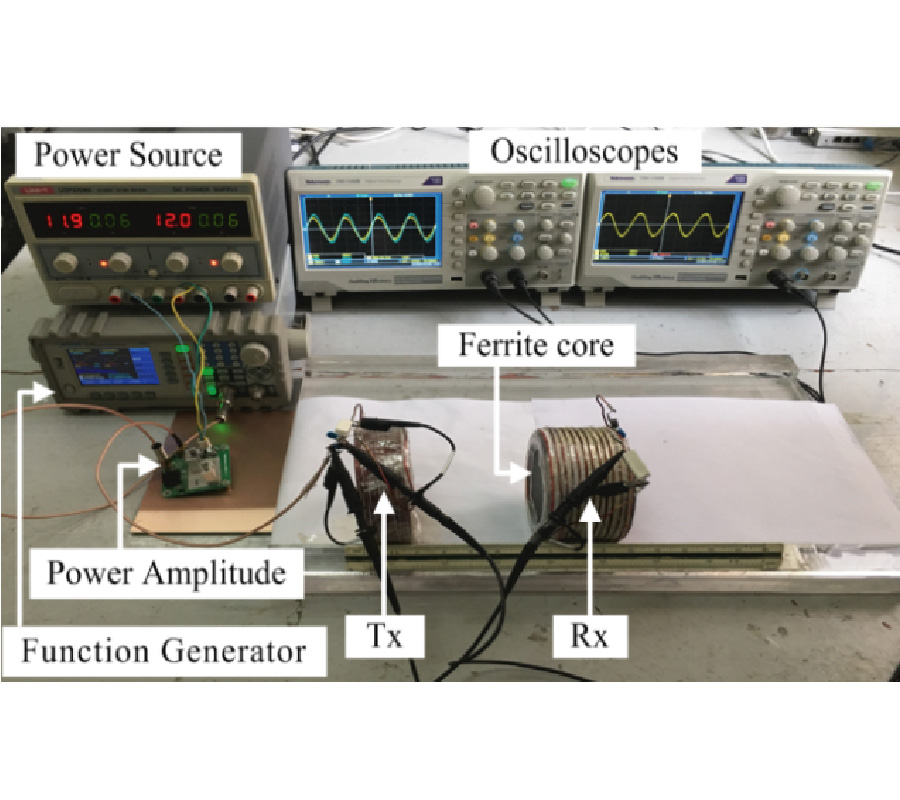
Wireless power transfer (WPT) via coupled magnetic resonances has been in development for over a decade. Frequency splitting occurs in the over-coupled region. In addition, the vibration of the receiver and relay coils is observed in the over-coupled region. The vibration mechanism of the relay coil is investigated in this study. First, the circuit model of a three-coil WPT system is established, and the transfer characteristics of the system are examined by applying circuit theories. Second, the transfer characteristics of the three-coil WPT system are analyzed using simulation software. Third, the energy equation of state of the three-coil WPT system is established with the introduction of entropy variable. Lastly, the experimental circuit of the three-coil WPT system is designed. The experimental results are consistent with the theoretical analysis. The vibration of the relay coil is clearly explained. The transfer characteristics of the three-coil WPT system, particularly the relay coil, may provide ideas to achieve the maximum output power and transmission efficiency under various operating conditions.
STUDY ON THE VIBRATION MECHANISM OF THE RELAY COIL IN A THREE-COIL WPT SYSTEM
2018-07-12
PIER M
Vol. 70, 109-116
Complex Permittivity Estimation for Each Layer in a BI-Layer Dielectric Material at Ku-Band Frequencies
Lahcen Ait Benali , Abdelwahed Tribak , Jaouad Terhzaz and Angel Mediavilla Sanchez
In this paper, a new measurement method is proposed to estimate the complex permittivity for each layer in a bi-layer dielectric material using a Ku-band rectangular waveguide WR62. The Sij-parameters at the reference planes in the rectangular waveguide loaded by a bi-layer material sample are measured as a function of frequency using the E8634A Network Analyzer. Also, by applying the transmission lines theory, the expressions for these parameters as a function of complex permittivity of each layer are calculated. The Nelder-Mead algorithm is then used to estimate the complex permittivity of each layer by matching the measured and calculated the Sij-parameters. This method has been validated by estimating, at the Ku-band, the complex permittivity of each layer of three bi-layer dielectric materials. A comparison of estimated values of the complex permittivity obtained from bi-layer measurements and mono-layer measurements is presented.
COMPLEX PERMITTIVITY ESTIMATION FOR EACH LAYER IN A BI-LAYER DIELECTRIC MATERIAL AT KU-BAND FREQUENCIES
2018-07-10
PIER C
Vol. 85, 117-128
Suitable Impedance Boundary Condition Applied to the Enhancement of the Electric Field Radiated by a High Frequency Surface Wave Radar
Nicolas Bourey , Florent Jangal , Muriel Darces , Marc Helier and Philippe Pouliguen
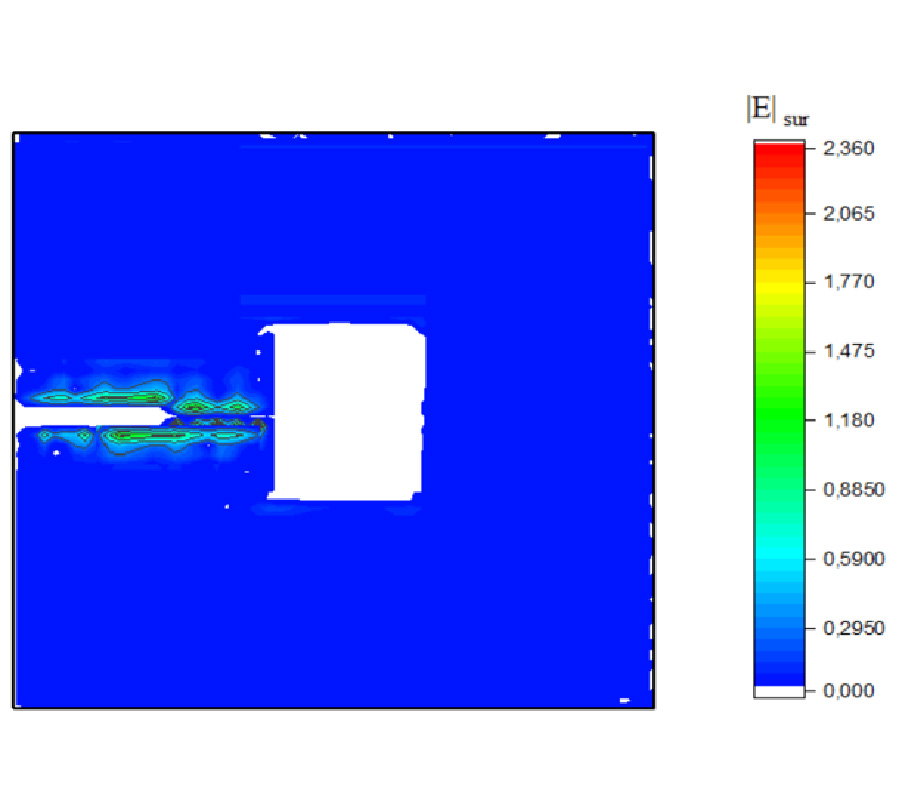
Efficiency of high frequency surface wave radars may be improved by inserting a metamaterial in the vicinity of transmitting antennas that will reinforce the propagation of surface waves. This paper deals with the first and second order derivations of the surface impedance boundary conditions (IBC) applied to model such a metamaterial, which is equivalent to a bounded ground with a low negative permittivity. The goal of this paper is to extend an approach previously based on the classical Leontovich IBC which is usually restrained to high permittivity grounds. As shown here, a simplification in the expression of the surface impedance is possible in the case of a planar and homogeneous surface. That allows to have a first order impedance boundary condition substituted for the required second order impedance boundary condition.
SUITABLE IMPEDANCE BOUNDARY CONDITION APPLIED TO THE ENHANCEMENT OF THE ELECTRIC FIELD RADIATED BY A HIGH FREQUENCY SURFACE WAVE RADAR
2018-07-10
PIER Letters
Vol. 77, 81-88
Design and Realization of Circular Polarized SIW Slot Array Antenna for CubeSat Intersatellite Links
Maha A. Maged , Fatma El-Hefnawi , Haitham M. Akah , Abdelrahman El-Akhdar and Hadia El-Hennawy
This paper presents the design and fabrication of an antenna based on Substrate Integrated Waveguide (SIW) for intersatellite crosslinks in C-band. The entire antenna consists of two elements of SIW slots array that is fed by a hybrid 3 dB directional coupler. The entire SIW slot array antenna is circularly polarized (CP), and each element has four longitudinal slots. The element's effective field matching is realized with a microstrip to SIW transition. The antenna design has been evaluated with its return loss, gain plot, and radiation pattern characteristics to validate the fabricated antenna. The fabricated prototype antenna radiates a left-handed circularly polarized (LHCP) electromagnetic wave with the peak gain of 5 dB and offers approximately 2% AR bandwidth around 5 GHz.
DESIGN AND REALIZATION OF CIRCULAR POLARIZED SIW SLOT ARRAY ANTENNA FOR CUBESAT INTERSATELLITE LINKS
2018-07-10
PIER M
Vol. 70, 99-108
Analytical Method for Calculation of Cogging Torque Reduction Due to Slot Shifting in a Dual Stator Dual Rotor Permanent Magnet Machine with Semi-Closed Slots
Praveen Kumar , Md Motiur Reza and Rakesh Kumar Srivastava
Radial flux Dual Stator Dual Rotor Permanent Magnet (DSDRPM) machine can be considered as an exterior rotor PM machine kept over an interior rotor PM machine. This facilitates with a scope for optimization of the relative placement of inner and outer stator slots of the machines to achieve cogging torque minimization. This paper deals with the analytical prediction of flux density distribution in an internal and external rotor PM machines with semi-closed slots and further utilizes it to calculate the cogging torque in DSDRPM machine. An optimal angle of shift between the stator slots of the two machines has been determined to obtain a reduction in the resultant cogging torque of DSDRPM machine. The analytical results are verified with the Finite Element Analysis (FEA) results and found to be in close agreement with each other.
ANALYTICAL METHOD FOR CALCULATION OF COGGING TORQUE REDUCTION DUE TO SLOT SHIFTING IN A DUAL STATOR DUAL ROTOR PERMANENT MAGNET MACHINE WITH SEMI-CLOSED SLOTS
2018-07-09
PIER C
Vol. 85, 105-116
Gain Enhancement of a Millimeter Wave Antipodal Vivaldi Antenna by Epsilon-Near-Zero Metamaterial
Shaza El-Nady , Hany Mahmoud Zamel , Moataza Hindy , Abdelhalim A. Zekry and Ahmed Attiya
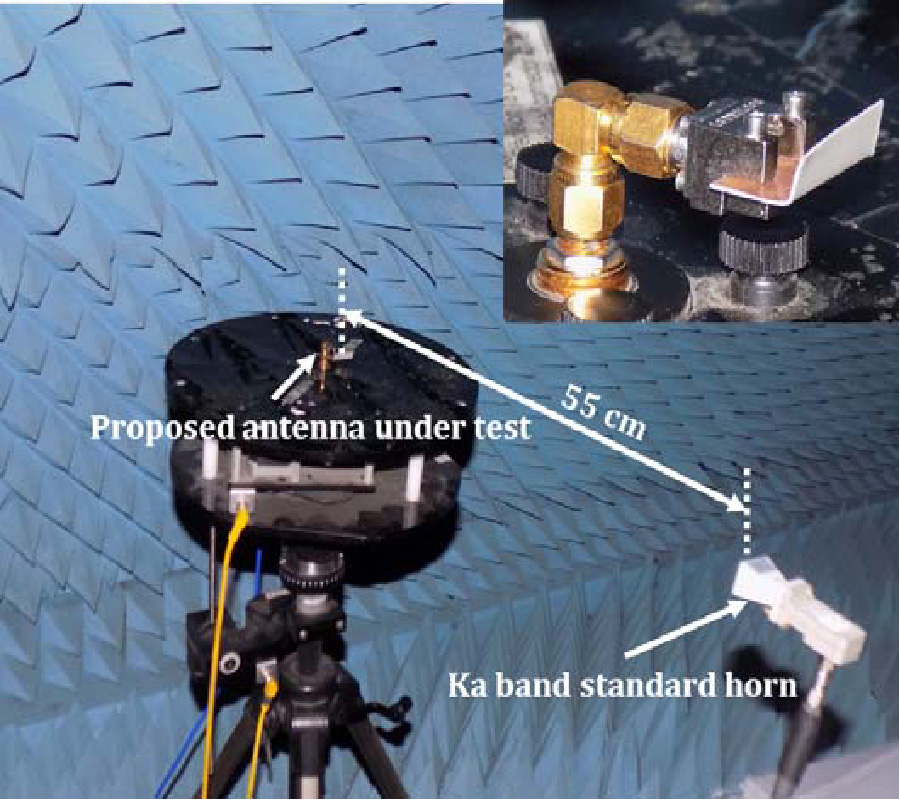
In this paper a compact antipodal Vivaldi antenna with dimensions of 40×85 mm2 for Ka band is presented. To enhance the antenna gain, epsilon near zero metamaterial (ENZ) unit cells are embedded at the same plane of the Vivaldi flare aperture. These ENZ unit cells have the advantage of confining the radiated fields with additional compact size. The obtained antenna exhibits an ultra-wide bandwidth from 23 GHz to 40 GHz with a reflection coefficient less than -10 dB. This is suitable for 5G applications at both 28 and 38 GHz. The antenna gain in this frequency band is found in the range from 14 to 17.2 dBi. The proposed antenna is designed by using CST-MW Studio, and the results are verified with experimental measurements.
GAIN ENHANCEMENT OF A MILLIMETER WAVE ANTIPODAL VIVALDI ANTENNA BY EPSILON-NEAR-ZERO METAMATERIAL
2018-07-09
PIER C
Vol. 85, 91-104
Ultra-Thin Tunable Plasma-Metasurface Composites for Extremely Broadband Electromagnetic Shielding Applications
Ali Abdolali , Maryam Rajabalipanah and Hamid Rajabalipanah
For the first time, the concept of combinational use of subwavelength metasurfaces and plasma media is introduced in this paper for being utilized in practical radio frequency (RF) shielding applications. Using an equivalent circuit model, it is demonstrated that the simultaneous use of the lossy characteristic and special dispersion of plasma in low-frequency regime and the transmission zeros provided by spatially homogeneous metasurfaces in the upper frequency band results in superior shielding performances. The designed coating layer has an ultra-thin profile while exhibiting a super wide reject band ranging from 1 to 20 GHz (|S21|<-10 dB). A fair comparison is also performed to elucidate that the proposed plasma-metasurface composite (PMC) shield outperforms the previously reported RF shielding FSSs in both bandwidth and thickness. The numerical results show that while maintaining a low profile, the shielding bandwidth of the designed PMC can be set to surprisingly include all the UHF, L, S, C, X, Ku, and K bands. Moreover, the designed coating layer provides a stable and polarization-insensitive reject band for different incident wave angles up to 45°. These superior performances, as well as the shielding tunability enabled by plasma, confirm the promising capabilities of PMC structures for various applications.
ULTRA-THIN TUNABLE PLASMA-METASURFACE COMPOSITES FOR EXTREMELY BROADBAND ELECTROMAGNETIC SHIELDING APPLICATIONS
2018-07-09
PIER B
Vol. 81, 141-162
Electromagnetic Scattering and Emission by Ocean Surfaces Based on Neighborhood Impedance Boundary Condition (NIBC) with Dense Grid: Accurate Emissivity and Sensitivity to Salinity
Tai Qiao , Yanlei Du and Leung Tsang
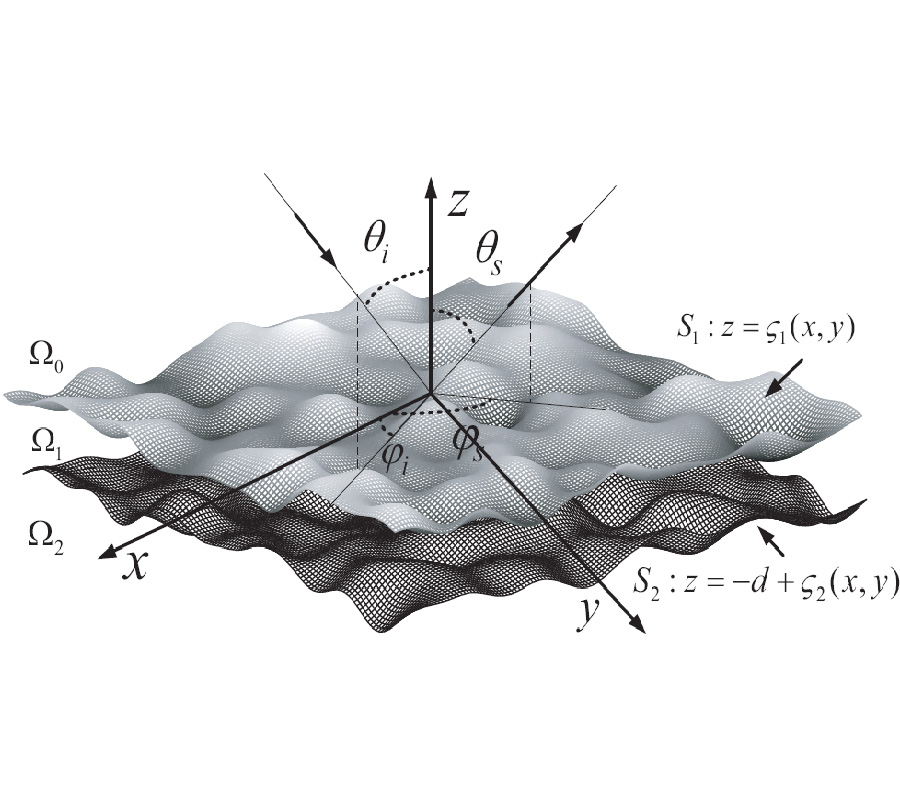
In order to have the required accuracies in method of moments (MoM) for numerical simulations of ocean scattering at microwave frequencies, we need to account for the much larger wavenumber of sea water relative to that of air. This paper presents simulation results of 2D ocean surface scattering with the required accuracies and that energy conservation is obeyed to 0.01%. A dense grid is required to discretize the MoM dual surface integral equation with up to 240 surface unknowns (120 surface electric field unknowns and 120 surface magnetic field unknowns) per free space wavelength. To solve the matrix equation efficiently, we develop a neighborhood impedance boundary condition (NIBC) technique to solve the matrix equation. We next calculate the emissivities of ocean surfaces using NIBC on surface integral equations using pulse basis/point matching and the Nystrom method. Results are illustrated for L-band and show that emissivities using NIBC combined with Nystrom are accurate to 2×10⁻⁴ for vertical polarization and 10-4 for the horizontal polarization. This means that our method can meet the accuracy goal of 0.2 psu salinity retrieval for the NASA Aquarius mission. Results of surface fields and emissivities are also compared to that of impedance boundary condition (IBC) which requires only 10 unknowns per free space wavelength.
ELECTROMAGNETIC SCATTERING AND EMISSION BY OCEAN SURFACES BASED ON NEIGHBORHOOD IMPEDANCE BOUNDARY CONDITION (NIBC) WITH DENSE GRID: ACCURATE EMISSIVITY AND SENSITIVITY TO SALINITY
2018-07-09
PIER B
Vol. 81, 123-139
3D Indoor Localization through a Wireless Acoustic Sensor Networks
Nejah Nasri , Mansour Rached , Samia Chenini and Abdennacer Kachouri
GPS is well recognized as the best procedure for outdoor localization. However, it presents limits in indoor localization due to particular geometric difficulties that necessitate specific solution to locate a target inside a building. Also, radio frequency technologies have many disadvantages in indoor localization. Bluetooth and Radio frequency Identification (RFID) are unsuitable for real-time localization because of latency. Ultra-wideband (UWB) localization needs an expensive hardware. Zigbee presents a high interference with wide range of signal frequency because it operates in unlicensed Industrial, Scientific and Medical ISM bands. Light waves also present some limitations due to interferencesfrom fluorescent light and sunlight. The IR based indoor system has expensive system hardware and maintenance cost. To overcome limits and non-availability of radio waves and light waves, an acoustic solution using an array of microphones is presented as a solution for indoor localization, and an optimized deployment is used to improve precision and restrain error. The aim of this work is to propose a 3D indoor audio localization approach inspired by the principle of functioning of the human ear. In order to achieve our goal, we will use a genetic algorithm to obtain the optimized deployment of the used hardware.
3D INDOOR LOCALIZATION THROUGH A WIRELESS ACOUSTIC SENSOR NETWORKS
2018-07-07
PIER B
Vol. 81, 101-122
FMCW Radar System for Transponder Identification
Nizar Bouhlel , Stéphane Méric , Claude Moullec and Christian Brousseau
In this paper, we deal with a frequency modulated continuous wave (FMCW) radar used for localizing and tracking targets by frequency evaluation of the received radar beat signal. The radar system achieved with a primary radar (reader) and a secondary radar (transponder) is addressed as super high frequency (SHF) radio frequency identification (RFID). Consequently, considering the transponder as an active target, we achieve an identification application thanks to the shift frequency induced by the transponder. Moreover, the impact of the non-linearity behavior of this transponder on the localization performance is investigated, and a solution is proposed for cancelling non-linear effects.
FMCW RADAR SYSTEM FOR TRANSPONDER IDENTIFICATION
2018-07-06
PIER C
Vol. 85, 77-89
Object Locating of Electromagnetic Inclusions in Anisotropic Permeable Background Using MUSIC Algorithm
Faezeh Shirmehenji , Abolghasem Zeidaabadi-Nezhad and Zaker Hossein Firouzeh
In this paper, a new formulation is proposed to solve an inverse scattering problem for locating isolated inclusions within a homogeneous noise-free and noisy biaxial anisotropic permeable background using MUltiple SIgnal Classi cation (MUSIC) algorithm. Locations of the dielectric, permeable, lossless and lossy electromagnetic or both dielectric and permeable inclusions with arbitrary ellipsoidal shapes in a noise-free or noisy background can be restored. The numerical study of different inclusions is illustrated, and accuracy of the method is investigated. The proposed formulation is also investigated for extended inclusions in both noise-free and noisy backgrounds.
OBJECT LOCATING OF ELECTROMAGNETIC INCLUSIONS IN ANISOTROPIC PERMEABLE BACKGROUND USING MUSIC ALGORITHM
2018-07-06
PIER C
Vol. 85, 63-75
A Novel PSO-Based Transfer Efficiency Optimization Algorithm for Wireless Power Transfer
Meng Wang , Jing Feng , Yanyan Shi , Minghui Shen and Jianwei Jing
To improve the power transfer efficiency in a magnetically-coupled resonant wireless power transfer (MCR-WPT) system, an efficient particle swarm optimization (PSO) algorithm based on the change of particle swarm scale is proposed. The transfer efficiency and frequency are used as the fitness function and particle position, respectively. Therefore, the optimal frequency can be obtained by adjusting the position of particle. Five types of optimizing process are presented and compared with the traditional PSO algorithm. It is found that the proposed method has faster convergence speed than the traditional PSO algorithm. Additionally, the proposed five types of optimizing process with different regulation parameters are investigated. The results indicate that Type 2 with n=3 is the best alternative in finding the optimal frequency with the fastest speed of convergence. Experimental prototypes have been set up for validation.
A NOVEL PSO-BASED TRANSFER EFFICIENCY OPTIMIZATION ALGORITHM FOR WIRELESS POWER TRANSFER