Search Results(13790)

2018-08-14
PIER C
Vol. 86, 111-122
An Ultra-Wideband Modified Vivaldi Antenna Applied to through the Ground and Wall Imaging
Ziani Tahar , Xavier Derobert and Malek Benslama
In this paper, we are interested in the design of a new Ultra-Wideband (UWB) directional Vivaldi antenna with narrow beam, in the frequency range of 1.17 to 4.75 GHz. The simulation of the designed antenna is carried out on Computer Simulation Technology Microwave Studio (CST-MWS). The mutual coupling effect reduction is considered. The designed antenna is tested for Ground Penetrating Radar (GPR) and Through the Wall applications. The emitted waveform is a Stepped Frequency Continuous Wave (SFCW) signal, generated by a Vector Network Analyser (VNA). The acquired raw data are focused by using back projection algorithm.
AN ULTRA-WIDEBAND MODIFIED VIVALDI ANTENNA APPLIED TO THROUGH THE GROUND AND WALL IMAGING
2018-08-14
PIER M
Vol. 72, 31-40
Analysis of Dual-Port Reader Antenna for UHF RFID Near-Field Applications
Kui Jin , Zhiyuan Geng , Jingming Zheng , Ye Liu , Enze Zhang , Yang Yang and Xiaoxiang He
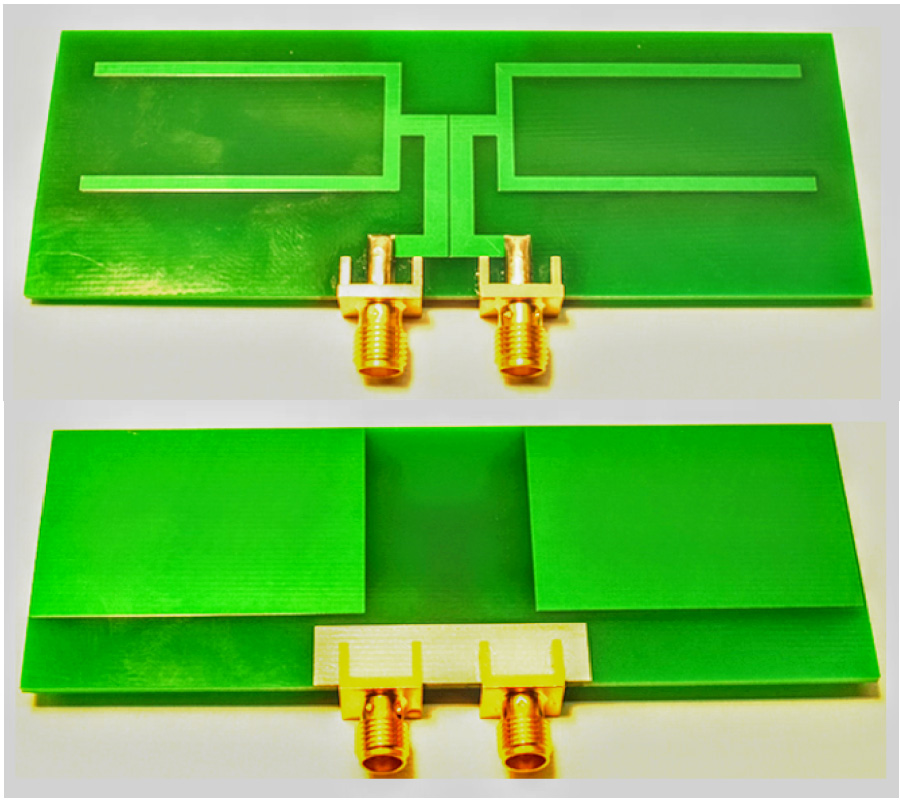
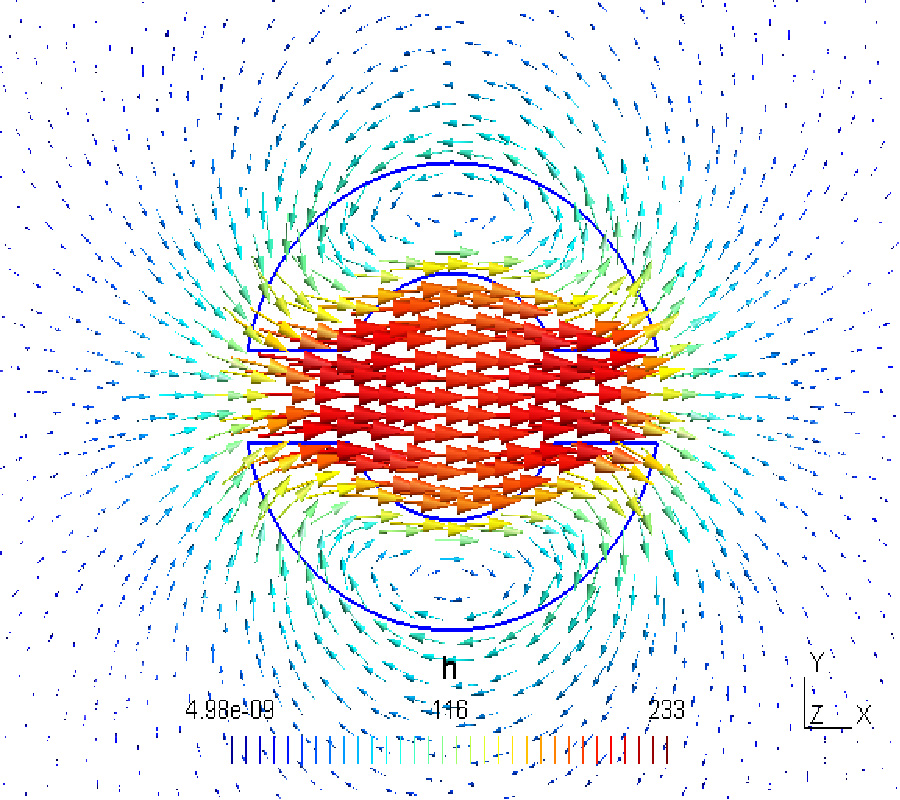
A dual-port reader antenna based on magnetic coupling in near-field (NF) and linear polarization in far-field (FF) is proposed for UHF RFID multiservice applications. The prototype consists of four straight dipoles fed by double-side parallel stripline structure with two feed ports. The proposed antenna can operate at different modes by feeding each corresponding port. In NF mode, a strong and uniform magnetic field can be generated over the interrogation zone. In FF mode, a linearly polarized performance can be obtained. The antenna prototype is printed onto a piece of FR4 substrate with an overall size of 180 × 180 × 1.6 mm3. The measured tests on reading range are carried out, and the results exhibit 100% reading rate for near-field tags within 100 mm and reading distance of far-field tags is 120 cm. Both simulated and measured results show good capability for near- and far-field applications.
ANALYSIS OF DUAL-PORT READER ANTENNA FOR UHF RFID NEAR-FIELD APPLICATIONS
2018-08-13
PIER C
Vol. 86, 97-110
New Stabilization Technique to Prevent Parametric Oscillations in a 35 W C-Band AlGaN/GaN MMIC High Power Amplifier
Mehrdad Gholami and Mustapha Yagoub
In this paper, a novel stabilization scheme to prevent parametric oscillations in power amplifiers is presented. Based on a new oscillation detection approach, the inductive degeneration technique was used, for the first time, to successfully stabilize a high-power amplifier and prevent parametric oscillations. A 0.15 um AlGaN/GaN Microwave Monolithic Integrated Circuit high power amplifier operating at 5.8 GHz with 10% fractional bandwidth was designed and successfully stabilized using this approach. The proposed (4.7 x 3.7) mm2 three-stage amplifier achieves a saturated output power of 35 W with 29% power added efficiency and a large-signal gain of 26 dB.
NEW STABILIZATION TECHNIQUE TO PREVENT PARAMETRIC OSCILLATIONS IN A 35 W C-BAND ALGAN/GAN MMIC HIGH POWER AMPLIFIER
2018-08-13
PIER Letters
Vol. 78, 9-16
Effectiveness of Modulation Formats to Nonlinear Effects in Optical Fiber Transmission Systems Under 160 GB/S Data Rate
Haider J. Abd , Alaaldin H. Jaber and Abdulrasul A. Al-Haider
Four wave mixing (FWM) in optical fiber is unwanted effect to an optical transmission system, which can severely limit the wavelength division multiplexing (WDM) and lower the transmission efficiency. In this work, the robustness of normal Non-Return-to-Zero (NRZ), Return-to-Zero (RZ) and Modified-Duobinary-Return-Zero modulation (MDRZ) to FWM have been evaluated. Furthermore, the system performance is evaluated with the effect of fiber length tuning and applying 160 Gb/s data rate. The findings show that the RZ modulation offers a lower FWM power of -44 dBm at 700 km fiber length than -30 and -38 dBm of NRZ and MDRZ respectively at the same fiber length. In terms of system performance at the first channel and 700 km distance, the minimum BER is observed in normal RZ modulation, equal to 1.2×10⁻²³. It is also noticeable that if NRZ and MDRZ modulations are applied, the system performance will be quickly changed and get worse, where the BEARs are increased to 1.3×10⁻⁶ and 1.3×10⁻⁸ consecutively at same channel and parameters.
EFFECTIVENESS OF MODULATION FORMATS TO NONLINEAR EFFECTS IN OPTICAL FIBER TRANSMISSION SYSTEMS UNDER 160 GB/S DATA RATE
2018-08-13
PIER M
Vol. 72, 23-30
Design of a Dual-Polarized Broadband Single-Layer Reflectarray Based on Square Spiral Element
Yang Liu , Hongjian Wang and Xingchao Dong
A dual-polarized broadband single-layer reflectarray antenna based on square spiral element is presented in this paper. Two designs with similar square spiral structures but different construction processes and transition patterns are investigated and compared. The comparison results show that the design utilizing the sweeping method of varying the length of the first stub of one-arm square spiral is more suitable for the building the reflectarray. Several 441-element reflectarray antennas fed by horn with different offset angles are also simulated and compared to show the broadband characteristic. A reflectarray with offset angle of 15 degrees is then fabricated and tested. The measured results show good radiation performances, and the 1-dB gain bandwidth of 34.7% is obtained. The measured gain is 27.1 dB at the center frequency of 15 GHz, which is equivalent to 45.6% aperture effifficiency.
DESIGN OF A DUAL-POLARIZED BROADBAND SINGLE-LAYER REFLECTARRAY BASED ON SQUARE SPIRAL ELEMENT
2018-08-13
PIER M
Vol. 72, 13-21
The Novel Y Shaped Fractal Defected Ground Structure for the Mutual Coupling Reduction
Yan-Yun Gong , Ling Wang and Zhaolin Zhang
This paper presents a novel Y shaped fractal defected ground structure (FDGS) for the mutual coupling (MC) reduction between coplanar closely spaced microstrip antennas. The proposed FDGS has band-gap characteristic, which induces the current distribution on the antenna patch. This will contribute to achieving 25 dB MC reduction. When realizing the MC reduction, the antenna efficiency is increased. Moreover, the envelope correlation of the MIMO system is decreased, which helps to increase the MIMO system capacity.
THE NOVEL Y SHAPED FRACTAL DEFECTED GROUND STRUCTURE FOR THE MUTUAL COUPLING REDUCTION
2018-08-12
PIER M
Vol. 71, 199-203
Compact Microstrip Lowpass Filter with Ultra-Wide Stopband Performance Using Radial Stub Loaded Resonators
Hai Zhang and Junding Zhao
A new microstrip lowpass filter using radial stub loaded resonators is presented. A microstrip high impedance main transmission line loaded with five radial stub loaded resonators by five high impendence transmission lines is introduced in the design of the filter. Owing to the introduction of the radial stub structure, the filter achieves compact size and ultra-wide stopband. A demonstration filter with 3 dB cutoff frequency at 0.8 GHz has been designed, fabricated and measured. Results indicate that the proposed filter is able to suppress the 17th harmonic response referred to a suppression degree of 15 dB, together with a small size of 0.060λg×0.080λg, where λg is the guided wavelength at 0.8 GHz.
COMPACT MICROSTRIP LOWPASS FILTER WITH ULTRA-WIDE STOPBAND PERFORMANCE USING RADIAL STUB LOADED RESONATORS
2018-08-11
PIER Letters
Vol. 78, 1-7
Broadband Low-Profile Circularly Polarized Antenna with Stepped Sequential Feeding Structure
Huidong Li , Xiaoyu Du , Zhaohui Wei , Zhao Zhou and Ying-Zeng Yin
A broadband low-profile circularly polarized (CP) antenna with a stepped sequential feeding structure is proposed in this letter. The CP antenna consists of four dipoles and parasitic structures. A novel feeding network using parallel transmission lines is introduced to realize phase difference required for circular polarization. Four dipoles are excited by the feeding structure to achieve CP radiation, and parasitic elements are loaded to broaden 3-dB axial ratio bandwidth (ARBW). To verify this design, the proposed antenna is fabricated and measured. Measured results show that a 10-dB impendence bandwidth of 42% (1.82 to 2.8 GHz) and 3-dB ARBW of 36.4% (1.89 to 2.73 GHz) are achieved, respectively. Moreover, the designed antenna has a low profile of 0.13λ (λ is the free-space wavelength at the center frequency) and a gain of average 9.5 dBi with less than 1.5-dB variation within the 3-dB ARBW.
BROADBAND LOW-PROFILE CIRCULARLY POLARIZED ANTENNA WITH STEPPED SEQUENTIAL FEEDING STRUCTURE
2018-08-11
PIER Letters
Vol. 77, 129-136
Improving the Performance of Profiled Conical Horn Using Polynomial Interpolation and Targeting the Region of Interest
Gupta Jay Vishnu and Dhaval A. Pujara
In this paper, design of a profiled conical horn using piecewise biarc hermite polynomial interpolation is proposed. In order to improve the performance of the horn, a novel concept of `targeting the Region of Interest (RoI)' is used. The target specifications are decided based on the applicability of the horn in a reflectometry system for plasma diagnostics (D-band). Apart from the design details, the simulated results of the proposed horn are covered.
IMPROVING THE PERFORMANCE OF PROFILED CONICAL HORN USING POLYNOMIAL INTERPOLATION AND TARGETING THE REGION OF INTEREST
2018-08-10
PIER C
Vol. 86, 83-96
PSO Optimized Wideband LPDA Antenna with Non-Cross Feed Structure
Shailendra Singh Pawar and Madhu Shandilya
An optimized design of Microstrip Log Periodic Dipole Array (MLPDA) antenna with non-cross feed structure is reported in this paper. Particle Swarm Optimization (PSO) is utilized to reduce the size and enhance the bandwidth of proposed antenna. Proposed design employs an improved feed structure of non-cross feed array antenna to avoid complexity of conventional feeding with long coaxial line and creating Co Planar Waveguide (CPW) feed. A simple FR-4 substrate with thickness of 1 mm is utilized for simulation using CST. A fitness function based on S11 parameter is used to achieve the optimization goal. A prototype of proposed PSO optimized antenna is developed to validate the simulation results. The proposed antenna offers higher bandwidth and significantly smaller size than cross feed LPDA antennas, with less complexity and low cost through parameter optimization, while maintaining the log periodic nature and gain.
PSO OPTIMIZED WIDEBAND LPDA ANTENNA WITH NON-CROSS FEED STRUCTURE
2018-08-10
PIER M
Vol. 71, 189-197
Broadband and Low-Profile Slot Antenna with AMC Surface for X/Ku Applications
Xueyan Song , Tian-Ling Zhang and Ze-Hong Yan
A low-profile and broadband slot antenna with artificial magnetic conductor (AMC) surface is designed for X and Ku communications. Loaded with evolved C-shaped branches, the proposed coplanar waveguide (CPW)-fed slot antenna, which consists of two radiating slots, exhibits wide impedance frequency band performance. The presented AMC, the unit cell of which is made up of two central hexagonal circles with six rectangle branches, operates in a wide in-phase reflection frequency band ranging from 6.0 to 13.94 GHz (79.64%) at the reference plane 4 mm above the AMC surface. An AMC surface composed of 8×10 AMC unit cells is located under the slot antenna with a distance of approximately 0.107λ (λ denotes the free-space wavelength at 8.0 GHz), which improves the radiation and impedance match properties of the broadband slot antenna while maintaining low profile. A prototype of the proposed slot antenna with AMC surface is fabricated and measured. Measured results show that the composite antenna achieves a wide impedance bandwidth from 7.64 to 14.58 GHz (62.47%). The measured peak gain is up to 10.26 dBi, and the maximum cross-polarization level is -17.5 dB for both E and H planes. Good agreements between the measured and simulated results validate good performance of the presented slot antenna within the desired frequency band.
BROADBAND AND LOW-PROFILE SLOT ANTENNA WITH AMC SURFACE FOR X/KU APPLICATIONS
2018-08-10
PIER M
Vol. 71, 179-188
Capacitor-Inductor-Loaded, Small-Sized Loop Antenna for WLAN Notebook Computers
Saou-Wen Su
A small-sized loop antenna loaded with the series-connected capacitor and inductor for wireless local area network (WLAN) operation is proposed. The main radiator of an L-shaped, loop structure and its small ground were constructed on a single-layered FR4 substrate of thickness 0.8 mm and occupied a miniature size of 5 mm × 20 mm only. It was found that by loading the series-connected capacitor and inductor between the antenna feed port and the loop radiator, the quarter-wavelength loop resonance can be easily excited together with the controllable half-wavelength resonance. The design prototype was able to operate in the 2.4-GHz (2400-2484 MHz) and 5.8-GHz (5725-5825 MHz) WLAN bands. The proposed antenna was simple in structure and yet provided dual-band operation and good radiation performance.
CAPACITOR-INDUCTOR-LOADED, SMALL-SIZED LOOP ANTENNA FOR WLAN NOTEBOOK COMPUTERS
2018-08-08
PIER M
Vol. 72, 1-11
Spectral Behaviour of Planar Optical Waveguides and Microchannels in Cascade: Theoretical Evaluation
Jose Rodriguez García and Adrian Fernandez Gavela
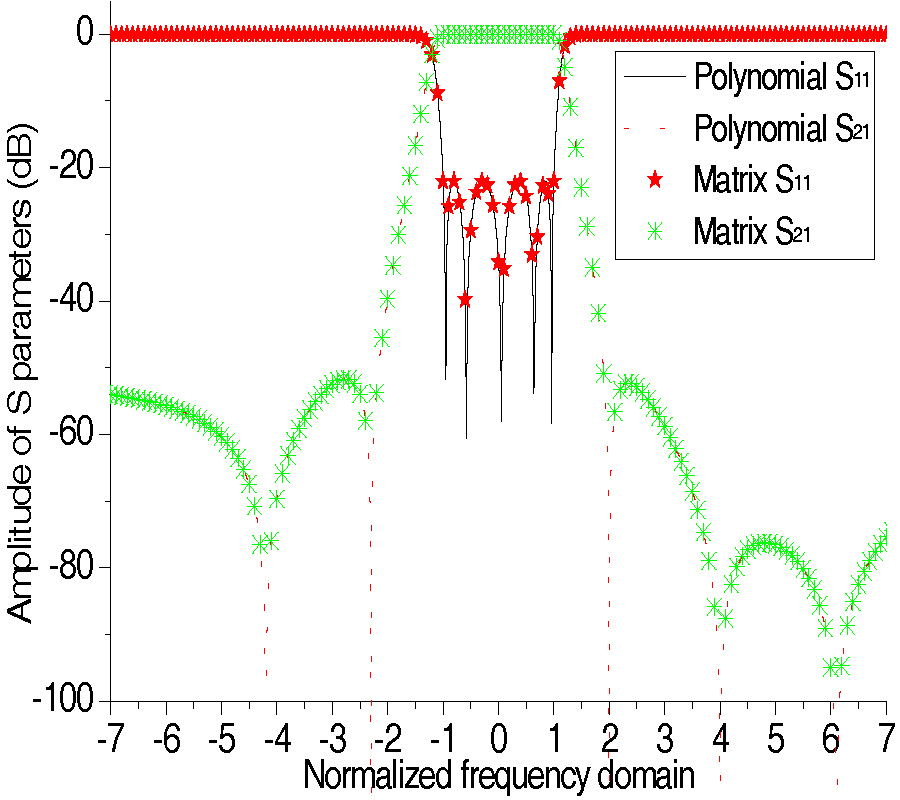
This paper presents an extension and update of a theoretical procedure developed by the authors for the determination of the electromagnetic waves scattering at interfaces between dielectric waveguides in cascade. The theoretical core of the problem is based on the generalized scattering matrix concept, together with the generalized telegraphist equations formulism and the modal matching technique. The new version includes the following updates: a) possibility of using any material as waveguide cover, b) inclusion of alternating microchannels with optical waveguides, and c) possibility of analyzing periodic structures of segmented optical waveguides for sensing applications. The spectral results obtained for modulus and phase of the reflection and transmission coefficients have shown the potentiality of the new proposal in the scientific topics of photonic crystals, refractive index sensors and optical biosensors.
SPECTRAL BEHAVIOUR OF PLANAR OPTICAL WAVEGUIDES AND MICROCHANNELS IN CASCADE: THEORETICAL EVALUATION
2018-08-08
PIER
Vol. 163, 25-38
Three-Dimensional Fully Interlaced Woven Microstrip-Fed Substrate Integrated Waveguide
Leticia Alonso-Gonzalez , Samuel Ver-Hoeye , Miguel Fernandez-Garcia and Fernando Las Heras Andres
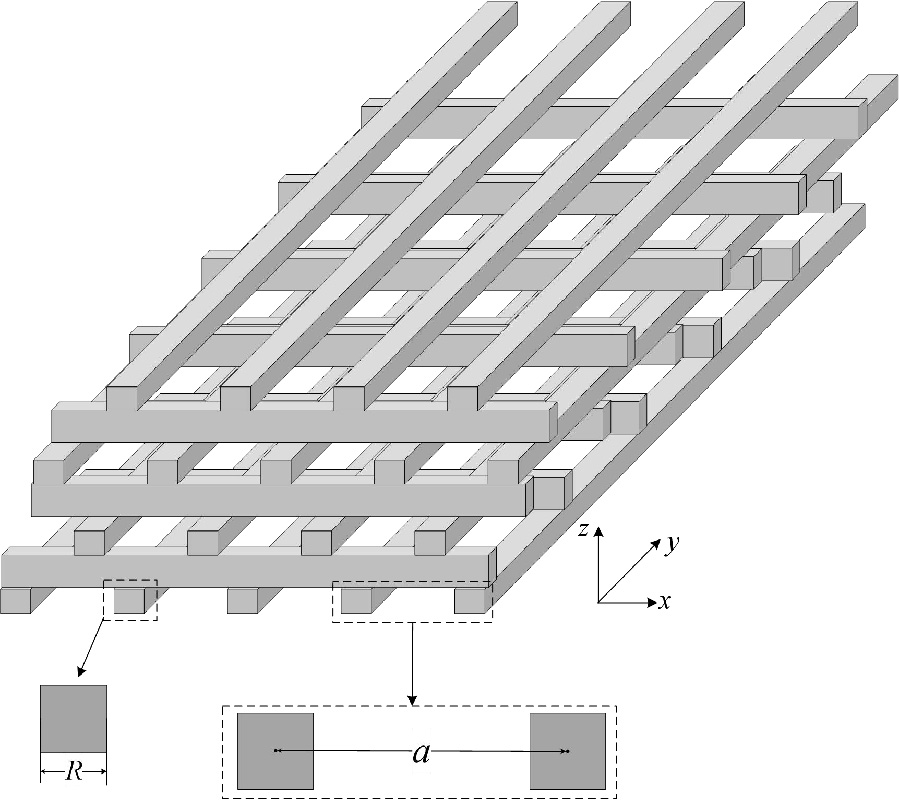
A three-dimensional fully interlaced woven microstrip-fed substrate integrated waveguide has been designed, manufactured and experimentally validated. The waveguide has been conceived based on the conventional substrate integrated waveguide (SIW) technology and works in a range of frequencies between 7.5 GHz and 12 GHz. The SIW structure is suitable to be translated into different equivalent woven structures depending on the characteristics of the employed threads, as it has been presented in previous works. In this work, a structure based on rigid weft threads has been employed with the aim of translating both the waveguide and the corresponding SIW to microstrip transitions, into woven patterns and, therefore, achieving the main purpose of a complete integration of the circuit into the textile, avoiding the use of external transitions for its validation. Consequently, three prototypes, using three different lengths, have been manufactured and experimentally characterised, and the theoretically predicted behaviour of the prototypes has been experimentally verified.
THREE-DIMENSIONAL FULLY INTERLACED WOVEN MICROSTRIP-FED SUBSTRATE INTEGRATED WAVEGUIDE
2018-08-07
PIER M
Vol. 71, 169-178
Broadband Class-j/F-1 Continuum Mode Design Utilizing Harmonic Efficiency Selectivity Circuit
Gideon Naah , Songbai He , Weimin Shi , Bin Song , Tian Qi and Shaddrack Yaw Nusenu
This paper proposes a harmonic efficiency selectivity circuit (HESC) for achieving a broadband Class-J/F-1 continuum mode power amplifier (PA) with enhanced efficiency. Design equations are derived through continuum mode condition analysis and are used in implementing the HESC. The implemented HESC topology is then used in attaining the broadband Class-J/F-1 continuum mode PA. A theoretical parameter termed harmonic-alpha (ρh) acting as a sub-unit structure in HESC is introduced. Considering harmonic losses, ρh possesses a lookup table containing information on the harmonics. ρh operates in unison with the HESC in selecting the suitable harmonics with the best efficiencies. With ρh, the relationship among the HESC, the optimal impedance at the device's drain, and the terminal load impedance is defined for a greater freedom of harmonic impedance solutions space, efficiency improvement, and bandwidth extension, thus, indicating an increased flexibility in the design of broadband continuum mode PAs. This method is validated with a realized PA prototype operating from 1.3 to 2.4 GHz corresponding to a fractional bandwidth of 59.5%. The experimental results under continuous wave signals indicate that 79% peak efficiency, 42.68 dBm peak output power, and 16.96 dB peak gain are recorded. Moreover, at 1.7 GHz, when being tested with modulated signals at an average output power of 34.83 dBm, the lower and higher adjacent channel power ratios (ACPRs) without digital predistortion (DPD) are -34.9 dBc and -33.9 dBc, respectively, and a drain effifficiency (DE) of 45% is recorded. With DPD, -50.8 dBc and -50.3 dBc are respectively obtained at lower and higher ACPRs at an average output power of 34.6 dBm, and a DE of 44% is achieved.
BROADBAND CLASS-J/F<sup>-1</sup> CONTINUUM MODE DESIGN UTILIZING HARMONIC EFFICIENCY SELECTIVITY CIRCUIT
2018-08-06
PIER M
Vol. 71, 157-167
UHF Wave Propagation in Mine Shaft Environment
Shaohua Xue , Jianping Tan and Lixiang Shi
Wireless communication is very valuable in underground mines, in which channel characterization plays an important role. In this paper, both narrowband and wideband measurements at three typical ultra-high frequencies of 433, 900 and 2400 MHz in a real mine shaft are performed. To our knowledge, this is the first work focusing on radio propagation in the mine shaft environment. Important channel characteristics, such as the path loss, delay spread and the number of multipath components were extracted from the measured data and compared with that in tunnel channels. The effects of frequency and antenna position on the path loss were investigated. The relationship between the root-mean-square (RMS) delay spread and the transmitter-receiver distance was also analyzed. The results will deepen our understanding of the mine shaft channel and help to design shaft wireless systems.
UHF WAVE PROPAGATION IN MINE SHAFT ENVIRONMENT
2018-08-02
PIER C
Vol. 86, 69-82
High-Speed Electrical Machine with Radial Magnetic Flux and Stator Core Made of Amorphous Magnetic Material. Technologies, Trends and Perspective of Development
Flur R. Ismagilov , Wenming Tong , Viacheslav Vavilov , Denis Gusakov and Valentina V. Ayguzina
This paper presents an analysis of the manufacturing technologies for the high-speed electrical machine with stator core made of amorphous magnetic material, their trends and perspective of development. The most efficient technology is determined. A design technology of sectional stator cores made of amorphous magnetic material is proposed. In addition, the paper shows the design methodology of the high-speed electrical machine with stator core made of amorphous magnetic material. A distinctive feature of the proposed technology is the implementation of the stator core made of amorphous magnetic material and laminated in the axial and radial directions. The fill factor for magnetic cores realized by this technology reaches 75%. The design methodology was tested on three prototypes of the high-speed electrical machine including the 120-kW prototype. The prototype experimental research is also presented in the paper. The main contribution is the loss minimization in the stator core made of amorphous magnetic material by 200%.
HIGH-SPEED ELECTRICAL MACHINE WITH RADIAL MAGNETIC FLUX AND STATOR CORE MADE OF AMORPHOUS MAGNETIC MATERIAL. TECHNOLOGIES, TRENDS AND PERSPECTIVE OF DEVELOPMENT
2018-08-02
PIER M
Vol. 71, 145-156
The Magnetic Interaction Energy Between an Infinite Solenoid and a Passing Point Charge
Hanno Essén and Johan C.-E. Sten
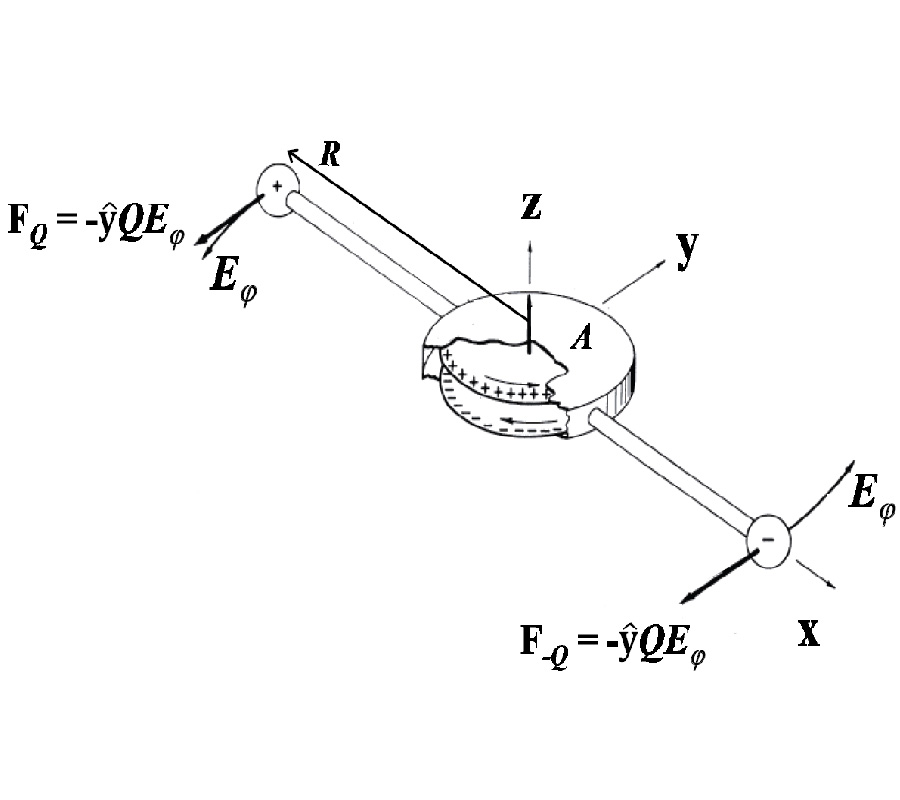
The standard expression for the magnetic interaction energy used in the study of the Aharonov-Bohm effect is investigated. We calculate the magnetic interaction energy between a point charge and an infinite solenoid from first principles. Two alternative expressions are used: the scalar products of the currents with the vector potentials and the scalar product of the magnetic fields. The alternatives are seen to agree. The latter approach also involves taking into account surface integrals at infinity, which are shown to be zero. Our model problem indicates no classical Aharonov-Bohm effect, but we also discuss the normally neglected fact of energy non-conservation. The problem is treated from the point of view of Lagrangian and Hamiltonian mechanics.
THE MAGNETIC INTERACTION ENERGY BETWEEN AN INFINITE SOLENOID AND A PASSING POINT CHARGE
2018-08-02
PIER M
Vol. 71, 137-144
Propagation Below Cutoff in Metallic Waveguide Loaded by Two Slabs with Modified Split Ring Resonator
Abd Elmoneim Mohamed Alaa Eldeen
This paper aims to study the synthesis of negative magnetic permeability and how this leads into some physical phenomena such as the appearance of backward waves and the propagation below cutoff. The extraction of the polarizability tensors of the edge coupled split ring resonator is derived, and the existence of bianisotropic effects of this case is investigated. It is shown how to avoid the bianisotropic effects through using a proposed design. inally, the backward wave of the proposed design with lower losses than the edge coupled split ring resonator is shown by simulation.
PROPAGATION BELOW CUTOFF IN METALLIC WAVEGUIDE LOADED BY TWO SLABS WITH MODIFIED SPLIT RING RESONATOR
2018-08-02
PIER
Vol. 163, 15-24
Development of Multilayer Rectangular Coils for Multiple-Receiver Multiple-Frequency Wireless Power Transfer
Chaoqiang Jiang , Kwok-Tong Chau , Wei Han and Wei Liu
In this paper, three viable multilayer rectangular coil structures, namely the spiral, concentrated and uneven compound types, are proposed and analyzed. In the multiple-receiver multiple-frequency wireless power transfer system, the compact coil topologies are particularly preferable and should fulfill the required performance of magnetic field with the compact size design. In order to minimize the variation of magnetic fields that can be picked up by multiple receivers, the uneven compound type is newly derived by combining the merits of both the spiral and concentrated types. Because of providing more uniform magnetic flux density distribution, the uneven compound type can achieve better tolerance of misalignment. Without any misalignment, its transmission efficiency can reach up to 92%. Moreover, their electric potential distributions are analyzed to provide guidance for the maximum input current at the desired operation frequency. Both finite element analysis and experimental results are given to verify the validity of the proposed coil structures.
DEVELOPMENT OF MULTILAYER RECTANGULAR COILS FOR MULTIPLE-RECEIVER MULTIPLE-FREQUENCY WIRELESS POWER TRANSFER