Search Results(13790)

2018-07-25
PIER C
Vol. 86, 1-16
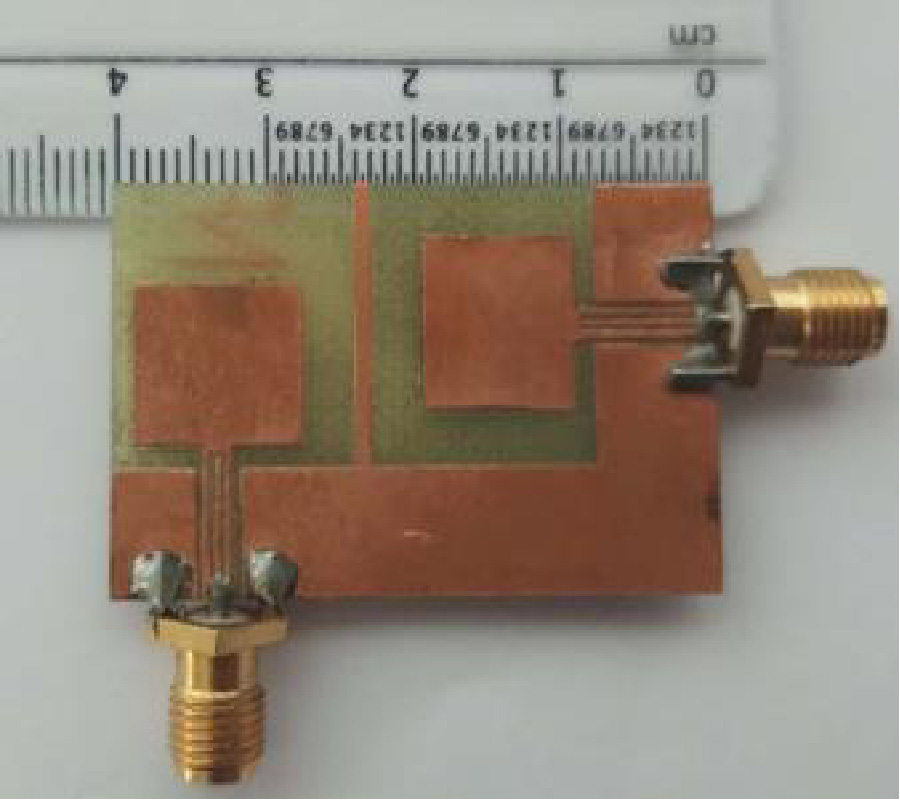
Design Technique for Varactor Analog Phase Shifters with Equalized Losses
Artem R. Vilenskiy , Mikhail N. Makurin , Ekaterina I. Poshisholina and Chongmin Lee
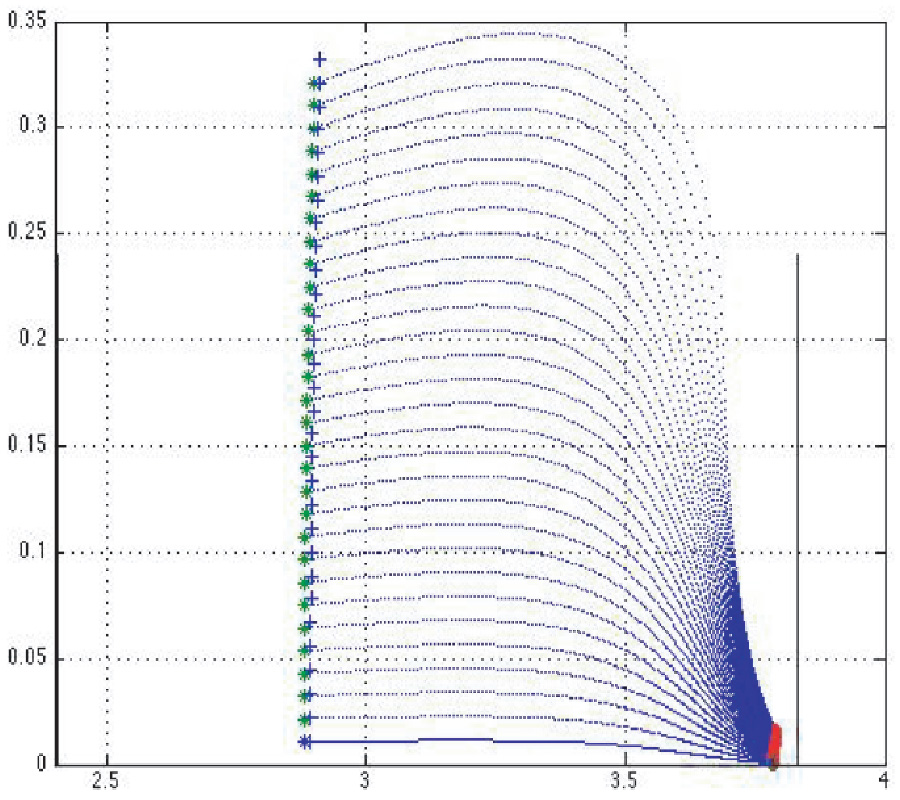
The paper presents a novel design technique for reflection-type varactor analog phase shifters based on tunable reflective loads. The reflective load comprises two similar tuning stubs with incorporated varactor diodes, where each varactor can be tuned independently. It is shown that by an appropriate losses equalization method applied together with a specific independent varactors control algorithm it is possible to achieve the desired 360° phase shift with stabilized losses, which are significantly lower compared to the well-known single-channel design. We derive and discuss in details main design relations arisen from the complex plane reflection coefficient consideration. The presented technique is first verified by circuit simulation in ADS, and comparison with the classical single-channel design is also considered. Next, we develop experimental prototypes of a reflective load and a full phase shifter based on a packaged silicon varactor diode for operation in C-band with 5.8 GHz central frequency. Experimental and theoretical results are in perfect agreement. Moreover, we have found that the bandwidth of the proposed phase shifter can be greatly enhanced if the reflective loads are tuned at each sub-band using a unique optimal tuning path. The suggested reflective load demonstrates the total bandwidth of 10.3% and the instantaneous bandwidth of 1.7% (sub-band), where inside each sub-band measured ripple at the central frequency is around 0.5 dB, and the maximum overall ripple is below 0.8 dB.
DESIGN TECHNIQUE FOR VARACTOR ANALOG PHASE SHIFTERS WITH EQUALIZED LOSSES
2018-07-24
PIER C
Vol. 85, 221-233
Design and Study of a Mechanical Flux-Varying PM Machine with Auto-Rotary PMs
Xiping Liu , Zhixuan Zhang , Yufeng Liu and Shaowen Cai
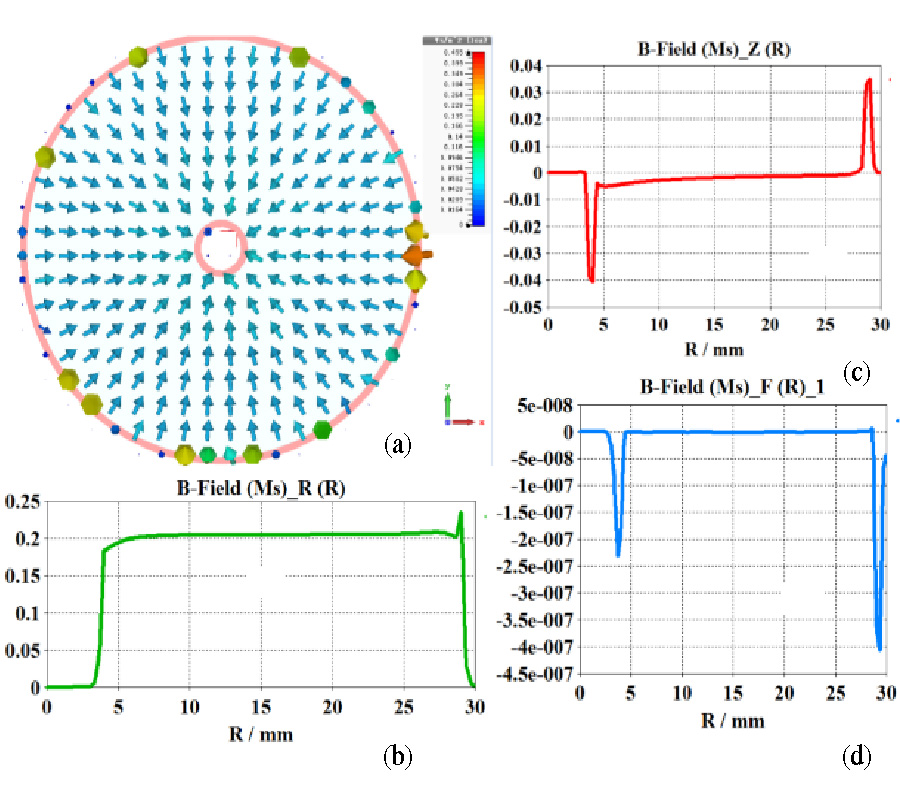
By combining the theory of mechanical flux-adjusting with the advantages of an interior permanent magnet synchronous machine (PMSM), a new type of auto-rotary PMs mechanical flux-varying PM machine (ARPMMFVPMM) is creatively proposed in this paper. The operation principle and mechanical flux-adjusting mechanism were deeply investigated. The relationship between deformation of spring and auto-rotary angle of gear against speed was obtained by Automatic Dynamic Analysis of Mechanical System (ADAMS). Meanwhile, the electromagnetic characteristics of the machine were numerically analyzed by Finite Element Analysis (FEA). The simulation results show that the auto-rotary of cylindrical PMs is realized by the centrifugal force of mechanical device, and the range of speed regulation is expanded by adjusting the magnetic field distribution.
DESIGN AND STUDY OF A MECHANICAL FLUX-VARYING PM MACHINE WITH AUTO-ROTARY PMS
2018-07-24
PIER C
Vol. 85, 209-219
Maximum Likelihood Method and Cramer-Rao Low Bound of Angle Estimation for Wide-Band Monopulse Radar
Haibo Wang , Wenhua Huang , Yue Jiang and Tao Ba
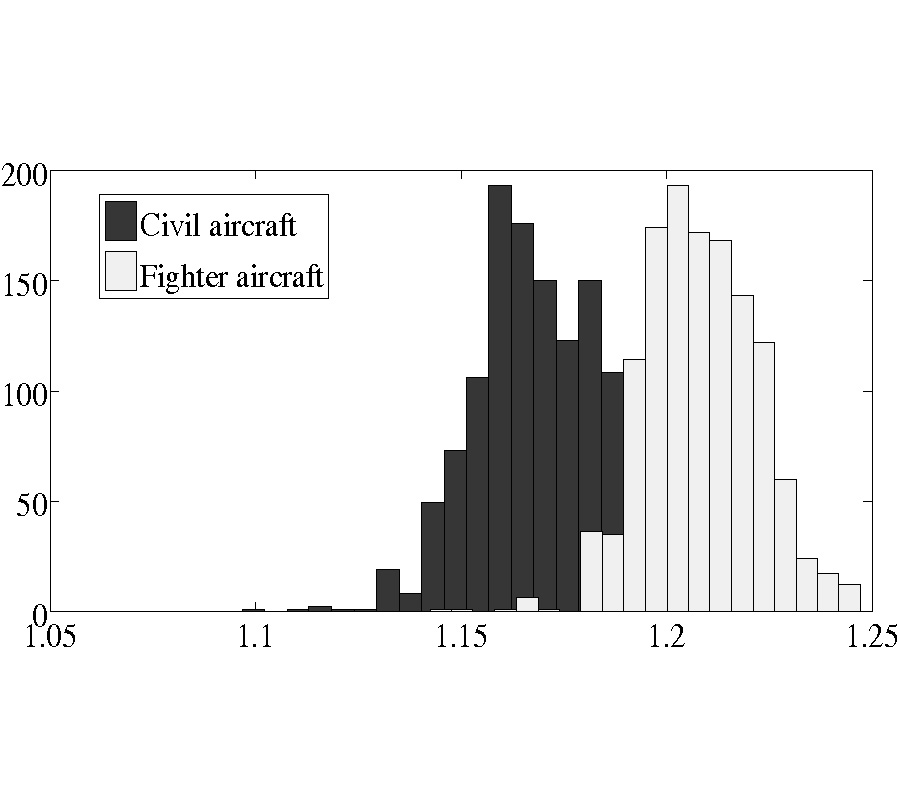
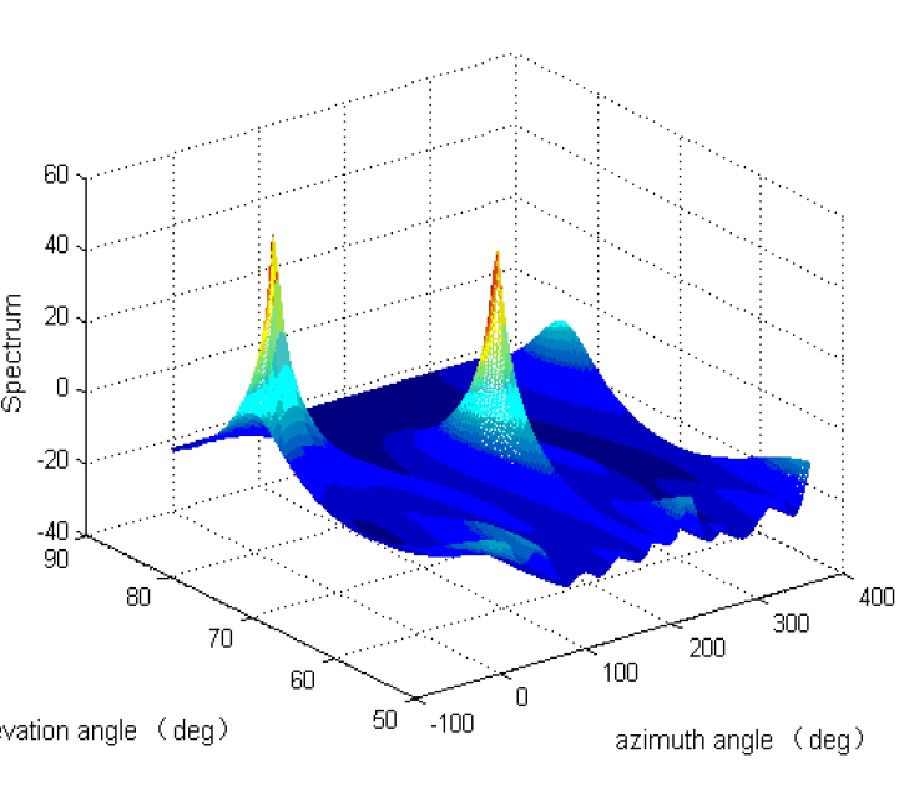
The echo signal of wide-band monopulse radar spreads in multiple range cells. Thus, effective utilization of echo signal is an important issue for this kind of radar. Based on parameter estimation model, maximum likelihood method is proposed in this paper, which collects all the energy spreading in multiple range cells. Cramer-Rao low bound of angle estimation is deduced in theory. Simulation results demonstrate maximum likelihood method which performs better than both dominant scatter estimate method and weighted estimate method.
MAXIMUM LIKELIHOOD METHOD AND CRAMER-RAO LOW BOUND OF ANGLE ESTIMATION FOR WIDE-BAND MONOPULSE RADAR
2018-07-24
PIER M
Vol. 71, 51-61
Waveguide Designing for Absorbing Modulator in GaN/AlN Structure for All Optical Networking
Ali Rahmani and Ali Rostami
In this paper a waveguide is introduced as an absorbing modulator using GaN/AlN structure based on spherical quantum dots. The role of waveguide (modulator) dimensions on optical profile of light in the channel and coupling efficiency is also investigated. These parameters can affect the main characteristics of modulator like absorption and depth of modulation. First we will give a brief explanation about the all optical modulator structure based on spherical quantum dots and its optical properties. Then the electrical fields in optical fiber and modulator will be introduced, and the effects of dimensions on these fields will be discussed. The results show that the electric field distribution determines the insertion loss and also effects on modulation. Finally we will determine the proper dimensions of modulator for coupling to optical fiber.
WAVEGUIDE DESIGNING FOR ABSORBING MODULATOR IN GAN/ALN STRUCTURE FOR ALL OPTICAL NETWORKING
2018-07-24
PIER M
Vol. 71, 41-50
Application of an Improved GSC in TTE Communication with Antenna Array
Ning Zhang , Yu-Zhong Jiang and Ming-Ming Li
By analyzing the characteristics of the super low frequency (SLF) electromagnetic wave in through the earth (TTE) communication, an orthogonal array of magnetic antenna is proposed for receiving SLF signal, and a new robust adaptive beamformer is used to process the received signals. The proposed beamformer is a multi-input generalized sidelobe canceller (GSC) with a coefficient constrained adaptive blocking matrix and a filter based on minimum mean-square error (MMSE) criterion. It can reduce the leakage of the desired signal and enhance the capability of interference cancellation. The received signals of the main antennas and the reference antennas of the antenna array are input to the beamformer as desired signal and reference signal, respectively. Both simulated and experimental results show that the proposed beamformer can suppress the single-tone and phase modulation interference, whose frequency is close to the desired signal's frequency. The proposed beamformer has better effect and robustness on interference cancellation than the traditional GSC.
APPLICATION OF AN IMPROVED GSC IN TTE COMMUNICATION WITH ANTENNA ARRAY
2018-07-24
PIER M
Vol. 71, 31-40
Interference Suppression Algorithm Based on Analog Circuits Combined with Transform Algorithm in ELF Communication
Chunteng Li , Yu-Zhong Jiang , Fang-Jun Liu and Ting-Ting Jiang
In order to effectively improve the communication quality in the extremely-low frequency (ELF) communication, a whole model of analog circuits and transform domain algorithm is constructed. Analog circuits include a pair of magnetic antennas, an amplifier and a group of filters. The distributed capacitance of the magnetic antenna is effectively reduced by the segmented winding method. Analog circuits used to amplify and filter received signal are designed. Besides, a magnetic sensor with high sensitivity is produced. The Karhunen Loève transform (KLT) algorithm applied to the field of interference suppression is deduced in detail. The transform successfully passes the received signal along the basis vector in sub-band, but the interference signal along the vector is attenuated. Therefore, the problem of the optimal filter converted into the solution of transform factor for each sub-band. Then the relationship between the KLT transform and the time domain algorithm in the interference suppression problem is given. Based on the KLT algorithm, Fourier transform (FT) that makes the correlation matrices of the received signal diagonalized approximately is applied to the interference suppression algorithm. Based on the deduction results, the final optimal filter expressions are basically the same as the KLT algorithm. Finally, the experiments are carried out by using the simulated signal and real collected data in the laboratory, respectively. The schematic diagram of the real collected device is presented. The experimental result shows that, no matter the analog signal or the real collected data, the proposed algorithm can effectively suppress the interference. For the simulation, the performance of KLT algorithm is basically same as that of FT algorithm, but KLT algorithm is obviously better than FT algorithm for real collected data.
INTERFERENCE SUPPRESSION ALGORITHM BASED ON ANALOG CIRCUITS COMBINED WITH TRANSFORM ALGORITHM IN ELF COMMUNICATION
2018-07-24
PIER M
Vol. 71, 19-29
Comparative Study of IPM Synchronous Machines with Different Saliency Ratios Considering EVs Operating Conditions
Wenye Wu , Xiaoyong Zhu , Li Quan , Yifeng Hua and Qing Lu
In this paper, based on different saliency ratios ρ, three interior permanent magnet (IPM) synchronous machines respectively owning a large ρ, a low ρ and an inverse ρ are proposed for the potential applications of electrical vehicles (EVs). To grasp the impacts of saliency ratio on machine performances, comparative studies are conducted at low speed operation (constant torque region) and high speed operation (constant power region), respectively. In particular, the overload capability referring to magnet demagnetization is emphasized in low-speed heavy-duty operation region. And in high speed, the constant power speed range (CPSR) and high efficiency range are investigated. The main results put in evidence the different behaviors of the three machines in terms of EVs operating conditions. Though all three machines reveal considerable behaviors in CPSR, the inverse saliency ratio machine shows a larger high efficiency region and extends the high efficiency region to a wider speed-and-torque range due to its unique characteristic of Lq<Ld.
COMPARATIVE STUDY OF IPM SYNCHRONOUS MACHINES WITH DIFFERENT SALIENCY RATIOS CONSIDERING EVS OPERATING CONDITIONS
2018-07-23
PIER C
Vol. 85, 191-208
A Compact Conformal Printed Dipole Antenna for 5G Based Vehicular Communication Applications
Usha Devi Yalavarthi , Mulpuri Santhi Sri Rukmini and Boddapati Taraka Phani Madhav
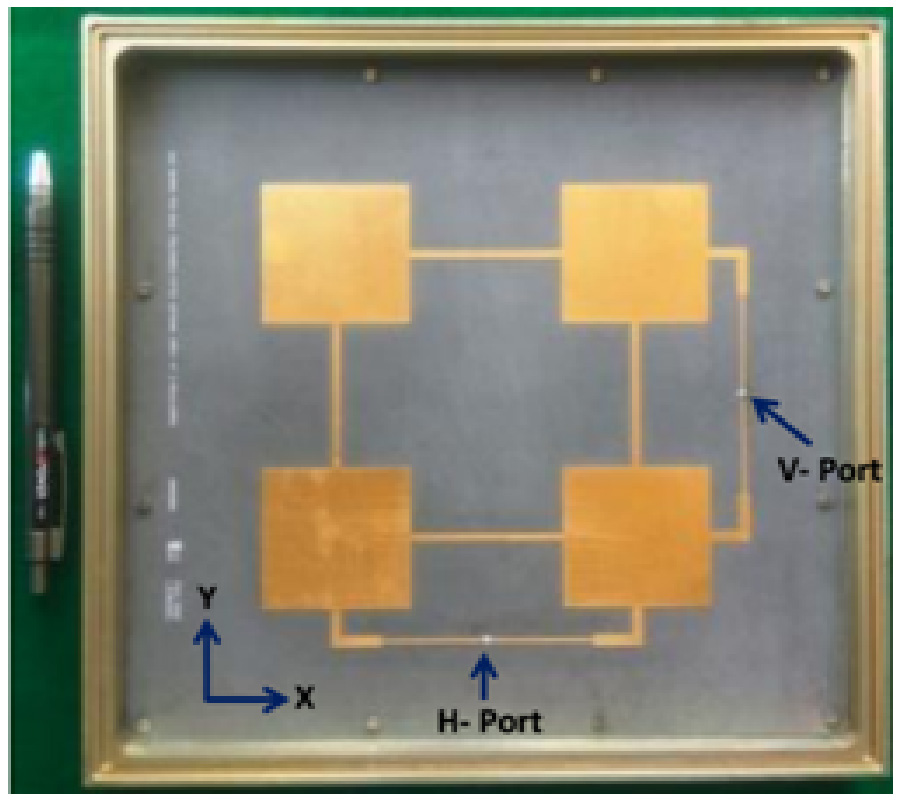
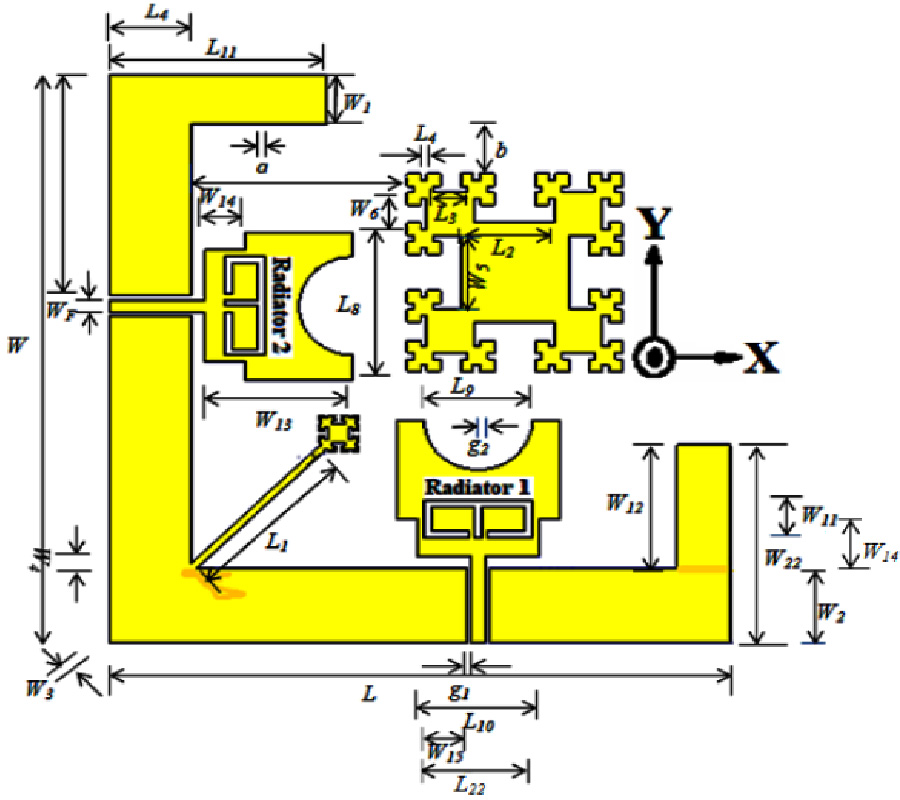
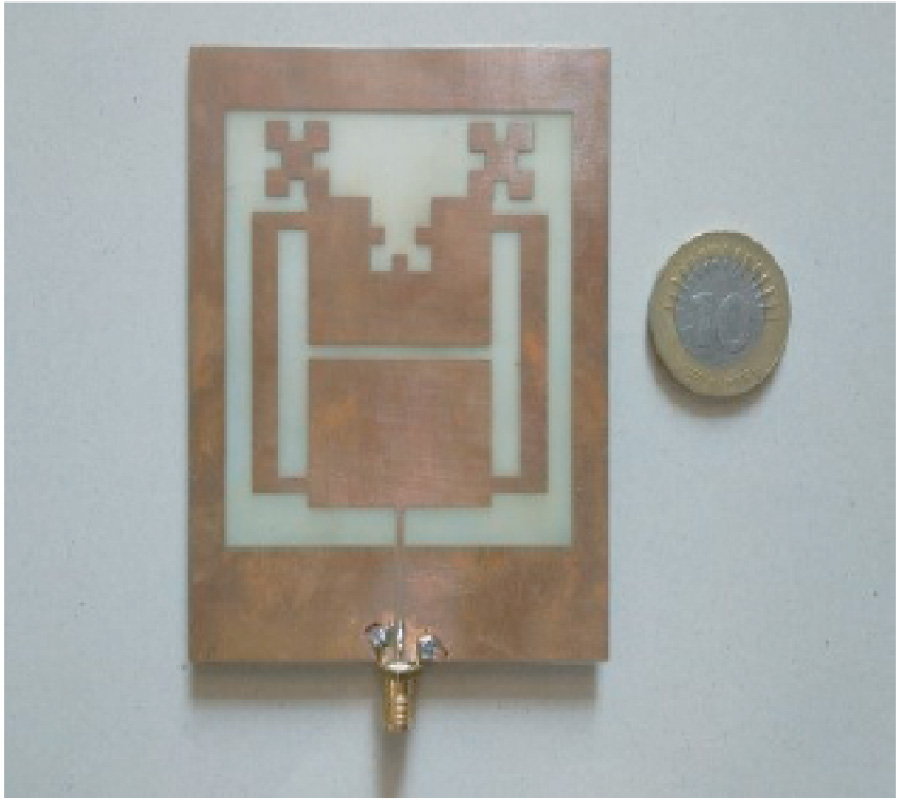
A novel and compact conformal printed dipole antenna with geometrical modifications in ground plane is proposed in this paper for 5G based vehicular communications and IoT applications. The proposed antenna consists of a printed dipole as defected ground structure and a staircase structured offset fed integrated balun to attain wideband operation. It yields a better -10 dB impedance bandwidth of 17.65 GHz and 2.24 GHz over the frequency ranges 24.3 to 41.95 GHz and 49.91 to 52.15 GHz. Antenna projects the peak gain of 6.81 dB with 98.82% of peak radiation efficiency. The measured results of the proposed model are in good agreement with the simulation obtained from HFSS. The conformal models of the proposed antenna are developed to embed the antenna in different curved surfaces on vehicular body. The analyzed conformal characteristics of the antenna support excellent constant reflection coefficient with respect to planar structure of the antenna over the operating band at different angles.
A COMPACT CONFORMAL PRINTED DIPOLE ANTENNA FOR 5G BASED VEHICULAR COMMUNICATION APPLICATIONS
2018-07-23
PIER M
Vol. 71, 9-18
Resonant Characteristics of Circular HTC Superconducting Printed Antenna Covered with a Dielectric Layer
Fadila Benmeddour , Christophe Dumond and Elhadi Kenane
Effects of a superstrate layer on the resonant frequency and bandwidth of a high Tc superconducting (HTS) circular printed patch are investigated in this paper. For that, a rigorous full-wave spectral analysis of superconducting patch in multilayer configuration is described. In such an approach, the spectral dyadic Green's function which relates the tangential electric field and currents at various conductor planes should be determined. Integral equations are solved by a Galerkin's moment method procedure, and the complex resonance frequencies are studied with basis functions involving Chebyshev polynomials in conjunction with the complex resistive boundary condition. To include the superconductivity of the disc, its complex surface impedance is determined by using London's equation and the model of Gorter and Casimir. Numerical results are compared with experimental results of literature as well as with the most recent published calculations using different methods. A very good agreement is obtained. Finally, superstrate loading effects are presented and discussed showing interesting enhancement on the resonant characteristics of the superconducting antenna using combinations of Chebyshev polynomials as set of basis functions.
RESONANT CHARACTERISTICS OF CIRCULAR HTC SUPERCONDUCTING PRINTED ANTENNA COVERED WITH A DIELECTRIC LAYER
2018-07-23
PIER M
Vol. 71, 1-8
Non-Contacting Sensor for Small Displacement and Vibration Monitoring Based on Reflection Coefficient Measurement
Aloysius Adya Pramudita , Dyonisius Dony Ariananda and Edwar
In some cases, such as at a boiler tank and other large-size mechanical systems, it is more realistic to employ a non-contacting sensor to detect small displacement or vibration. In this paper, a non-contacting sensor for monitoring small displacement or vibration based on measurement of antenna reflection coefficient is proposed. A theoretical and numerical study is performed to investigate the proposed method and to determine the post processing method associated with the antenna reflection coefficient data. To avoid the ambiguity in the measured data, the detection of both the magnitude and phase components of the antenna reflection coefficient is required to compute the small displacement of the target. The distance between antenna and target has to be determined in order to minimize the ambiguity range in the data. The frequency domain observation is more appropriate for determining the amplitude and frequency of the target vibration. Magnitude detection, phase detection and Fourier analysis are used as main tools in the post-processing part of the proposed method.
NON-CONTACTING SENSOR FOR SMALL DISPLACEMENT AND VIBRATION MONITORING BASED ON REFLECTION COEFFICIENT MEASUREMENT
2018-07-21
PIER C
Vol. 85, 177-190
Analysis of Phase Noise Influence on Micro-Doppler Feature Extraction of Vibrating Target
Zihao Liu , Bo Peng and Xiang Li
It is generally considered that increasing the carrier frequency of radar is an important way to improve the precision of micro-motion measurement. However, the increase of the center frequency may raise the phase noise intensity of the radar transmitting signals and make the extraction more difficult; therefore, it is particularly necessary to study the influence of phase noises on the extraction of micro-motion characteristics. In this paper, a specific study about the effect of phase noises on the extraction of m-D features is carried out. The effect of phase noises on the extraction performance of the m-D features is evaluated based on the parameter of MSCR. The results of simulation experiments indicate that increasing the carrier frequency will not improve the extraction performance of micro-motion features in the case of using both the classic time-frequency analysis method and the new developed sinusoidal frequency modulation Fourier transform (SFMFT) method. Increasing the frequency of the vibration will not help to improve the extraction performance of the m-D features when using the SFMFT method. However, increasing the vibration frequency can have an improvement effect through the time-frequency method with the increase of Doppler frequency. At last the empirical formula is put forward based on which the exact value of the estimation accuracy can be calculated.
ANALYSIS OF PHASE NOISE INFLUENCE ON MICRO-DOPPLER FEATURE EXTRACTION OF VIBRATING TARGET
2018-07-21
PIER M
Vol. 70, 187-195
Prediction of Dust Particle-Induced Cross Polarization at Microwave and Millimeter Wave Bands
Abdulwaheed Musa and Babu S. Paul
The use of dual orthogonal polarizations to optimally conserve frequency spectrum in microwave link, otherwise known as cross polarization, has received considerable interest in the recent time in the field of electromagnetic wave propagation in sand and dust storms. Cross polarization in dust storms occurs due to the non-sphericity of the falling dust particles and the tendency of the particles to align in a direction at a time i.e. canting angle. The realization of a dual-polarized system is however limited by degree of cross polarization discrimination (XPD) that can be achieved between the two orthogonal channels. Therefore, theoretical investigation has been carried out in this work to estimate the cross polarization at microwave and millimeter wave bands by non-spherical dust particles in dust storms. The XPD being the parameter for characterization of cross polarization, is predicted using propagation constants' differentials and canting angles, as inputs. Apart from both differential phase rotation and attenuation, it has been found that the cross polarization produced by ellipsoidal dust particles strongly depend on the particle canting. XPD decreases with an increase in canting angle. It has also been observed that the values of differential attenuation increase with increasing frequency for visibility and thus depends directly on frequency. Lastly, the obtained results show that cross polarization is significant during severe visibility and for dry dust storm; the XPD is good and acceptable for dual polarization systems.
PREDICTION OF DUST PARTICLE-INDUCED CROSS POLARIZATION AT MICROWAVE AND MILLIMETER WAVE BANDS
2018-07-20
PIER Letters
Vol. 77, 97-102
Miniaturized HMSIW Dual-Band Filter Based on CSRRs and Microstrip Open-Stubs
Dan-Dan Lv , Lingqin Meng and Zhe Zou
A method is proposed for a half-mode substrate integrated waveguide (HMSIW) bandpass filter (BPF) to obtain dual-band below the cutoff frequency. Complementary split-ring resonators (CSRRs) and microstrip open-stubs are integrated on the top of an HMSIW cavity. The structure produces two center frequencies both below the cutoff frequency of the originalHMSIW without increasing the cavity size. Results indicate that the center frequencies are 2.95 GHz and 3.99 GHz, and 3 dBfractional bandwidths (FBWs) are 9.1% and 4.6%, respectively. There is a transmission zero between the two frequencies, which enhances the out-of-band suppression performance. The measured results are in good agreement with the simulated ones. This new combination not only obtains two usable passbands below the cutoff frequency, but also makes the filter more compact. The filter has some practical and application significance.
MINIATURIZED HMSIW DUAL-BAND FILTER BASED ON CSRRS AND MICROSTRIP OPEN-STUBS
2018-07-20
PIER M
Vol. 70, 177-185
Investigating the Impacts of Meteorological Parameters on Electromagnetic Environment of Overhead Transmission Line
Yang Mo , Yanling Wang , Fan Song , Zheng Xu , Qiang Zhang and Zhiqiang Niu
The meteorological parameters along the overhead line change significantly, which have an effect on the surrounding electromagnetic environment. The analysis method of meteorological parameters impacting the electromagnetic environment is presented in this paper. Firstly, the conductor temperature is solved iteratively by the heat balance equation. Secondly, the power flow model involving the conductor temperature is established based on the relationship between line parameters and conductor temperature. Finally, the electromagnetic environment surrounding the line is analyzed based on the changes of line voltage and current. In the case study, the electromagnetic environment of the IEEE 5-bus system under the three cases is analyzed and compared. It is proved that the changes of meteorological parameters along the line have an important impact on the surrounding electromagnetic environment. The calculation of electromagnetic environment considering the changes of meteorological parameters is more accurate.
INVESTIGATING THE IMPACTS OF METEOROLOGICAL PARAMETERS ON ELECTROMAGNETIC ENVIRONMENT OF OVERHEAD TRANSMISSION LINE
2018-07-19
PIER B
Vol. 81, 163-182
Quad-Band Wearable Slot Antenna with Low SAR Values for 1.8 GHz DCS, 2.4 GHz WLAN and 3.6/5.5 GHz WiMAX Applications
Danvir Mandal and Shyam Sundar Pattnaik
In this paper, a quad-band wearable slot antenna with low specific absorption rate (SAR) is presented. By cutting an inverted V-shaped slot with its arms further extended towards the center of the circular patch, multiple resonant modes of the antenna can be excited to operate on 1.8 GHz DCS, 2.4 GHz WLAN and 3.6/5.5 GHz WiMAX bands. The measured peak gains and impedance bandwidths are about 4.91/7.84/2.58/4.12 dBi and 320/60/80/180 MHz for the 1.8/2.4/3.6/5.5 GHz bands respectively. The SAR of the proposed antenna has been measured using a three layer human tissue model. The estimated SAR values at all the resonant frequencies are well below the threshold limit of 2 W/Kg, which ensures its viability for wearable applications. In order to approximate different parts of the human body, the SAR values have been estimated for three surface sizes, 120 × 120 mm2, 220 × 220 mm2 and 320 × 320 mm2, of the human tissue model, and results are compared. Frequency detuning of the proposed antenna due to bending along x, y and x-y planes has also been carried out and discussed. Further, on arm effect on the antenna performance is investigated, and results are presented. The simulated and measured results are in good agreement, which validates the use of proposed wearable antenna in DCS/WLAN/WiMAX bands.
QUAD-BAND WEARABLE SLOT ANTENNA WITH LOW SAR VALUES FOR 1.8 GHZ DCS, 2.4 GHZ WLAN AND 3.6/5.5 GHZ WIMAX APPLICATIONS
2018-07-19
PIER M
Vol. 73, 131-139
Research on Spatial Characteristics of Wireless Channel in the Mine Tunnel
Min Gao , Yu Huo and Yaqiang Zheng
Mining and mineral exploration are very important in the global economy. In mining operations, communication systems play vital roles in ensuring personal safety, enhancing operational efficiency and process optimization. Multiple Input Multiple Output (MIMO) systems have been widely used in the mine environment to suppress the multi-path problem of the tunnel and enhance the capacity of the channel. In order to realize the optimal performance of MIMO system, spatial characteristics of wireless signal in an underground tunnel must be considered. In this paper, the wave propagation model combined with the modal theory and ray theory is used to simulate mine underground wireless channel. Meanwhile, the theoretical models of the signal Angular Power Spectrum (APS) and Angular Spread (AS) are constructed. After simulation and comparison, the following conclusions can be drawn: the APS distribution of the wireless signal is similar to the Gaussian distribution; the position of the antenna in the cross section of the mine tunnel has a small influence on the signal AS, which can be neglected; the roughness of the mine tunnel wall can change the characteristic of the signal AS to some extent.
RESEARCH ON SPATIAL CHARACTERISTICS OF WIRELESS CHANNEL IN THE MINE TUNNEL
2018-07-19
PIER M
Vol. 70, 167-176
Cogging Reduction in Permanent Magnet Machines via Skewed Slot Opening and Its Analytical Modeling
Md Motiur Reza and Rakesh Kumar Srivastava
Air-gap magnetic energy variation with angular position produces cogging torque, which may results in mechanical vibration, acoustic noise, and torque ripple. Various cogging reduction methods of design modifications viz. skewed magnets, skewed slot, asymmetrical displacement of magnets/slots etc. are reported in the literature. All such methods adversely affect machine performance in terms of air-gap magnetic field, back emf, and induced voltage. This paper introduces the cogging torque reduction by skewing of slot opening. In order to obtain machine performance, the no load magnetic field of the proposed machine is determined using combined methods of two-dimensional subdomain analytical analysis method and multislice method. The machine is considered as a stack of slices along axial direction. The adjacent slices differ in relative location of slot openings. The analytical field solution of each slice is obtained by use of subdomain method, and algebraic summation of slices is taken as field solution of actual machine. The analytical analysis developed is compared with finite element analysis (FEA). The close agreement of analytical results with FEA results confirms the validation of analytical solution. Furthermore, the machine parameters viz. cogging torque, back emf, and induced voltage are evaluated analytically, and results are compared with FEA solution. To demonstrate the effect of skewed slot opening on machine's performance, a machine of same rating without skewing of slot opening is investigated, and their performances are compared.
COGGING REDUCTION IN PERMANENT MAGNET MACHINES VIA SKEWED SLOT OPENING AND ITS ANALYTICAL MODELING
2018-07-17
PIER M
Vol. 70, 157-166
Flexible CPW-Fed Split-Triangular Shaped Patch Antenna for WiMAX Applications
Ketavath Kumar Naik and Dattatreya Gopi
In this paper the analysis and investigations are carried out on portable antennas for worldwide interoperability for microwave access (WiMAX) applications of flexible coplanar waveguide (CPW)-feed split-triangular shaped patch (STSP). The proposed STSP antenna is fabricated from polyimide substrate material having the dimension of 18×20×0.1 mm3 (volume is 36 mm3). It resonates at 3.55 GHz frequency of a reflection coefficient (S11) of -24.45 dB and offers impedance bandwidth of 580 MHz (3.3-3.88 GHz) with a gain of 2.06 dBi. The STSP antenna has small size, light weight, low volume, and is flexible for WiMAX applications. Simulation and measured results of the proposed STSP antenna are in close agreement.
FLEXIBLE CPW-FED SPLIT-TRIANGULAR SHAPED PATCH ANTENNA FOR WIMAX APPLICATIONS
2018-07-17
PIER
Vol. 162, 81-94
Layer-to-Layer Angle Interlock 3D Woven Bandstop Frequency Selective Surface
Leticia Alonso-Gonzalez , Samuel Ver-Hoeye , Miguel Fernandez-Garcia and Fernando Las Heras Andres
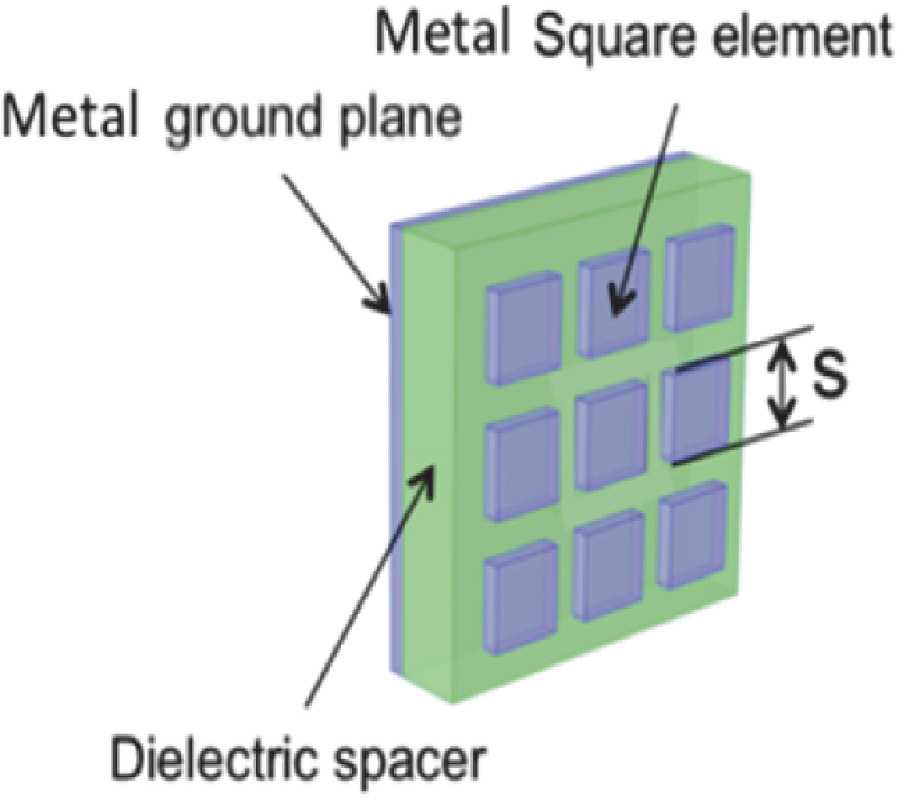
A flexible fully textile-integrated bandstop frequency selective surface working at a central frequency of 3.75 GHz and presenting a 0.6 GHz bandwidth has been designed, manufactured and experimentally characterised. The frequency selective surface consists of a multilayered woven fabric whose top layer presents periodic cross-shaped conductive resonators, and due to its symmetries, its performance is largely independent of polarisation and angle of incidence. These properties make the prototype very interesting for shielding applications. The designed frequency selective surface is based on a layer-to-layer angle interlock 3D woven fabric. This technology provides the prototype with flexibility, portability and the possibility of manufacturing it in a large scale production by the use of existing industrial weaving machinery, in contrast to conventional frequency selective surfaces manufactured using rigid substrates. The proposed textile frequency selective surface has been simulated and experimentally validated providing good agreement between the simulations and measurements. The measured maximum attenuation has been found to be higher than 25 dB under normal incidence conditions.
LAYER-TO-LAYER ANGLE INTERLOCK 3D WOVEN BANDSTOP FREQUENCY SELECTIVE SURFACE
2018-07-17
PIER
Vol. 162, 73-79
Arbitrary-Angle Single-Step Waveguide Twist for Quasi-Octave Bandwidth Performance
Juan Luis Cano and Angel Mediavilla Sanchez
nullA quasi-octave bandwidth arbitrary-angle compact waveguide twist using a single matching step is presented. The proposed twist, based on a single intermediate ridge waveguide section that broadens its mono-mode operation, exhibits a similar wave impedance to the rectangular waveguide connected to its ports thus facilitating the reflections minimization in an extended frequency range. An exemplary 45° twist has been manufactured in the 10 GHz to 19.3 GHz frequency range (~64%) for demonstration purposes. The measured data are in concordance with those predicted by the simulation. This result represents, to the authors' knowledge, today's state-of-the-art in terms of compactness and bandwidth performance.
ARBITRARY-ANGLE SINGLE-STEP WAVEGUIDE TWIST FOR QUASI-OCTAVE BANDWIDTH PERFORMANCE