Search Results(13797)

2018-09-07
PIER M
Vol. 73, 71-79
Electromagnetic Wave Reflectance, Transmittance, and Absorption in a Graphene-Covered Uniaxial Crystal Slab
Muhammad Azam , Irfan Toqeer , Abdul Ghaffar , Muhammad Yasin Naz , Majeed Alkanhal and Yasin Khan
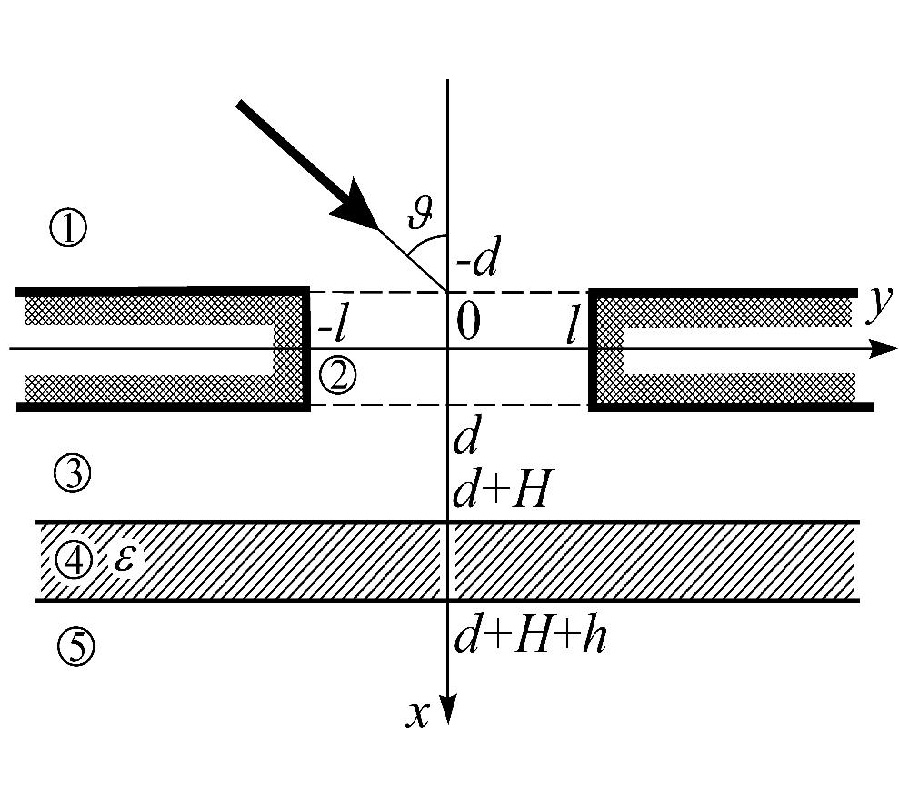
A theoretical investigation of the interaction of electromagnetic plane waves with a uniaxial crystal slab, bounded by two graphene layers from both sides, placed in free space is presented in this paper. An 8×8 matrix method is developed using boundary conditions at a graphene-uniaxial anisotropic crystal interface and a uniaxial anisotropic crystal-graphene interface. The developed matrix is used to find reflection and transmission coefficients by Crammer's rule. Numerical results are presented to demonstrate the effect of frequency of the incident wave, thickness of the uniaxial crystal slab, and Fermi energy of the graphene on the reflected and transmitted energies. The presented formulations and results are confirmed by published results of some limited cases.
ELECTROMAGNETIC WAVE REFLECTANCE, TRANSMITTANCE, AND ABSORPTION IN A GRAPHENE-COVERED UNIAXIAL CRYSTAL SLAB
2018-09-07
PIER
Vol. 163, 51-77
Broadband Point Source Green's Function in a One-Dimensional Infinite Periodic Lossless Medium Based on BBGFL with Modal Method
Leung Tsang , Kung-Hau Ding and Shurun Tan
In this paper we calculate Green's function of a single point source in a one-dimensional infinite periodic lossless medium. The method is based on Broadband Green's Functions with Low Wavenumber Extractions (BBGFL) that express the Green's functions in terms of band solutions that are wavenumber independent. The converegnce of the band expansions are accelerated by a low wavenumber extraction with the wavenumber chosen at the mid-bandgap. The choice of mid-bandgap means that the extracted low wavenumber Green's function can be calculated with very few number of layers. The broadband Green's functions are illustrated for stopband, passband and close to the bandedge. For the case of passband and close to band edge, a modal method is used with first order and second order pole extractions respectively. The modal terms are extracted and integrated analytically. The calculated solutions of single point source Green's functions are compared with the scattering solutions of multilayers using as many as 200,000 layers for the case of passband and near bandedge. The BBGFL computed solutions are in good agreement with those of scattering solutions for stopband, passband, and close to the bandedge.
BROADBAND POINT SOURCE GREEN'S FUNCTION IN A ONE-DIMENSIONAL INFINITE PERIODIC LOSSLESS MEDIUM BASED ON BBGFL WITH MODAL METHOD
2018-09-06
PIER C
Vol. 86, 247-256
Novel Broadband High Gain Antenna Designed by Suspended Cylinder and Shorting PIN
Subash Chandra Yadav and Siddhartha P. Duttagupta
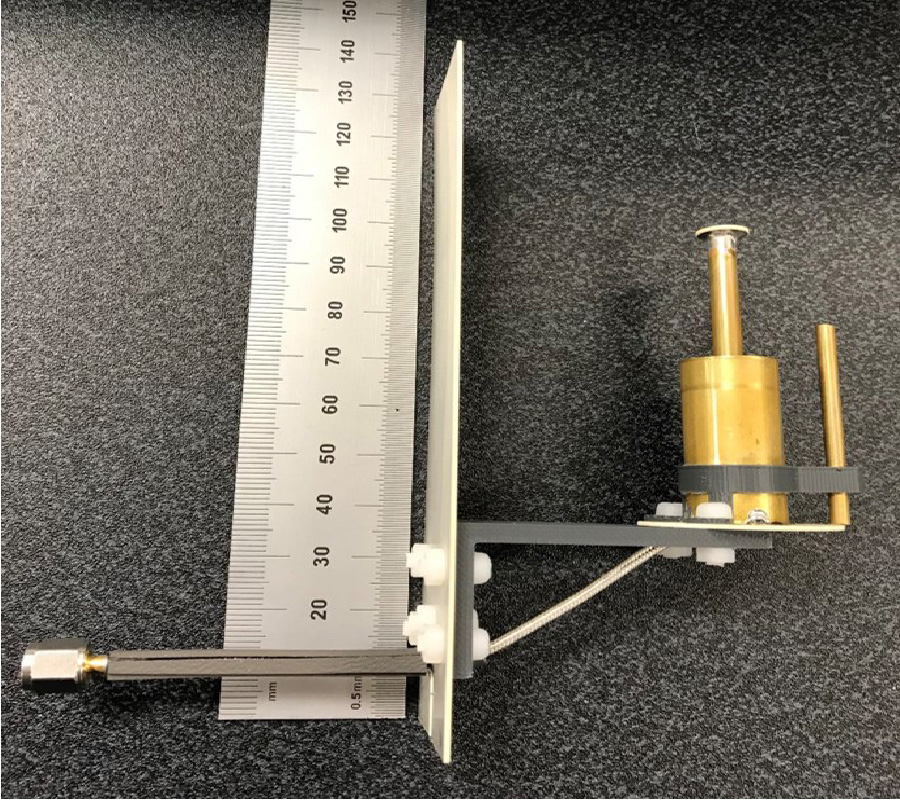
Desire for a broadband, high gain, unidirectional and low cost antenna in the field of communications is everlasting. In this paper, a novel broadband high gain antenna is presented using a suspended cylinder and a ground connected cylinder geometry. The bandwidth of the proposed antenna is enhanced by shorting these two cylinders with a pin in the direction orthogonal to the plane of coaxial probe. This low profile antenna structure is simple and easy to fabricate. The cylinders, shorting pin and ground plane are fabricated by a copper sheet of thickness 0.4 mm. Shorting pin and SMA connector provide mechanical support to the suspended cylinder. Simulations are done to analyze the radiation performance of the antenna. Prototype of the antenna is fabricated, and the measured results show good agreement with the simulated ones to confirm the enhanced bandwidth offered by the proposed antenna. We achieve impedance bandwidth of 63% (2.6-5 GHz) with the peak broadside gain of 9.87 dB. The bandwidth of the proposed antenna can be tuned by changing the radius of the shorting pin. The designed antenna possesses broadband high gain with stable broadside unidirectional radiation pattern which is suitable for Base station antenna such as WiMax (Worldwide Interoperability for Microwave Access) and LTE (Long Term Evolution). The metallic antenna has high power handling capacity as compared to microstrip and dielectric antennas.Therefore, this antenna can also be used for high power transfer application.
NOVEL BROADBAND HIGH GAIN ANTENNA DESIGNED BY SUSPENDED CYLINDER AND SHORTING PIN
2018-09-06
PIER C
Vol. 86, 233-245
Evaluation of a New Dual-Rotor Hybrid Excitation Brushless Motor
Libing Jing , Jia Cheng , Qixing Gao , Ting Zhang and Ying Lin
This paper presents a novel topology of a dual-rotor hybrid excitation motor (DRHEM), which combines outer permanent magnet synchronous motor (PMSM) and inner doubly salient electromagnetic motor (DSEM). The structure and combination criterion of the DRHEM are introduced and studied. A new type of intermediate stator structure has been adopted and fixed in the form of stator fasteners. The electromagnetic field of the motor is analyzed, and optimization methods are proposed for reducing the cogging torque and superimposing the back electromotive force. Furthermore, to verify the theoretical analysis, experimental tests are conducted, and the torque-speed and output power-speed characteristics are compared under various speeds conditions. The results verify the electromagnetic design well.
EVALUATION OF A NEW DUAL-ROTOR HYBRID EXCITATION BRUSHLESS MOTOR
2018-09-06
PIER M
Vol. 73, 61-70
Phased Array Calibration by Binary Compressed Sensing
Galina Babur , Diego Caratelli and Arman Barlykovich Mirmanov
This paper presents a calibration technique for phased array radars. The real embedded patterns of the array elements are measured independently in operating mode, while taking antenna coupling and other parasitic effects into account. The proposed technique does not affect the operation of the antenna array. The use of suitable switches integrated in the beamforming network of the array allows introducing sparsity into the measured summed signal. This enables the extraction of the angular dependent calibration coefficients by means of a dedicated compressed sensing approach.
PHASED ARRAY CALIBRATION BY BINARY COMPRESSED SENSING
2018-09-06
PIER M
Vol. 73, 47-59
SAR Calculation & Temperature Response of Human Body Exposure to Electromagnetic Radiations at 28, 40 and 60 GHz mmWave Frequencies
Tooba Hamed and Moazam Maqsood
The fast development of millimeter wave (mmWave) wireless communications and the associated concerns of potential negative impact on human health instigates the study on effects of mmWave frequency on the human body after exposure to electromagnetic field in terms of specific absorption rate (SAR) and temperature rise in computer simulation technology (CST). SAR distributions due to radiating source antenna were investigated using the finite difference time domain (FDTD) method in single and layered human tissues by examining the 1 g SAR (gram mass averaging) and point SAR (without mass averaging) at mmWave frequencies of 28, 40 and 60 GHz. The bioheat equation was used to find the temperature elevation in tissues. The FDTD grid size used in the computation was 1.00, 0.75, and 0.50 mm at 28, 40 and 60 GHz, respectively. The results concluded that at the radiated power of 20 and 24 dBm, SAR levels (without mass averaging) in the tissues at 28 GHz were less than 40 and 60 GHz. It was found that the temperature increase in the three layer model was 2-3 times higher than that in the single layer model. However, the temperature elevation never exceeded 1˚C in all the determined cases which was well below the threshold value for the generation of any adverse thermal effects in the tissues. Moreover, the effect of distance between the source and tissue model was investigated. It was found that the SAR decreased as the distance increased from the radiating source. The results presented here will assist researchers in examining and simulating the performance of upcoming mmWave wireless networks in terms of exposure to human tissues.
SAR CALCULATION & TEMPERATURE RESPONSE OF HUMAN BODY EXPOSURE TO ELECTROMAGNETIC RADIATIONS AT 28, 40 AND 60 GHZ MMWAVE FREQUENCIES
2018-09-05
PIER C
Vol. 86, 217-232
Influence of Geometric Simplifications on High-Intensity Radiated Field Simulations
Guadalupe Gutierrez Gutierrez , Sergio Fernandez Romero , Monica Gonzaga , Enrique Pascual-Gil , Luis Diaz Angulo , Miguel David Ruiz Cabello N. and Salvador Gonzalez Garcia
This paper analyzes the influence of simplifications in electromagnetic models used in the design of protections against High-Intensity Radiated Field (HIRF) threats. Both conductive and radiated effects are evaluated, covering the wide frequency range between 1 MHz and 6 GHz. A real and complex test case such as the power plant of an A400M aircraft was simulated using FDTD method so as to analyse the impact of different simplification approaches. The parameters studied are the inclusion/removal of installations, modification of electrical contacts, material properties, and changes in the cable features. In consequence, we can conclude that for the frequency range around tens or hundreds of megahertzs every detail is important (all the pieces of the model, accurate bundle routes and cable properties), while for higher frequencies only the details nearby the analyzed point are relevant for the results and it is not necessary to distinguish between different materials which are good conductors at this frequency range.
INFLUENCE OF GEOMETRIC SIMPLIFICATIONS ON HIGH-INTENSITY RADIATED FIELD SIMULATIONS
2018-09-05
PIER M
Vol. 73, 37-46
Free Space Radiation Pattern Reconstruction from Non-Anechoic Data Using the 3D Impulse Response of the Environment
Cesar Segura , Wonil Cho , Junghwan Jeon and Jinhwan Koh
Using impulse response with a 3D algorithm is a novel free-space radiation pattern reconstruction technique with accuracy greater than 1 dB in all antenna under test (AUT) azimuth and elevation angle orientations inside a non-anechoic environment. A quantitative comparison between impulse response with a 3D algorithm and impulse response with 2D, a previous technique, is performed using quantifiers. Benefits of the proposed 3D free-space radiation pattern reconstruction algorithm are single-frequency characterization and reuse of the 3D impulse response of the environment.
FREE SPACE RADIATION PATTERN RECONSTRUCTION FROM NON-ANECHOIC DATA USING THE 3D IMPULSE RESPONSE OF THE ENVIRONMENT
2018-09-04
PIER M
Vol. 73, 25-35
A Novel Hybrid Fractal Antenna for Wireless Applications
Narinder Sharma , Vipul Sharma and Sumeet Singh Bhatia
This paper presents a hybrid design of Sierpinski Carpet and Minkowski antenna for wireless applications. The hybrid antenna is designed, simulated and fabricated on an FR4 substrate with thickness 1.6 mm and dielectric constant 4.4. The dimensions of antenna are 45 x 38.92 x 1.6 mm3 which operates at various frequencies 3.43 GHz, 4.78 GHz, 6.32 GHz, 8.34 GHz and 9.64 GHz, and can be used for WiMax, C-band applications, Point-to-point Hi speed wireless communication and X-band (satellite Communication) applications. The measured results are also compared with the simulated ones which are in agreement with each other. Ansoft High Frequency Structure Simulator (HFSS) is used to design and simulate the antenna.
A NOVEL HYBRID FRACTAL ANTENNA FOR WIRELESS APPLICATIONS
2018-09-04
PIER M
Vol. 73, 17-24
Three-Dimensional Laser Radar Range Imagery of Complex Target with Rough Surfaces
Hanlu Zhang and Biao Wang
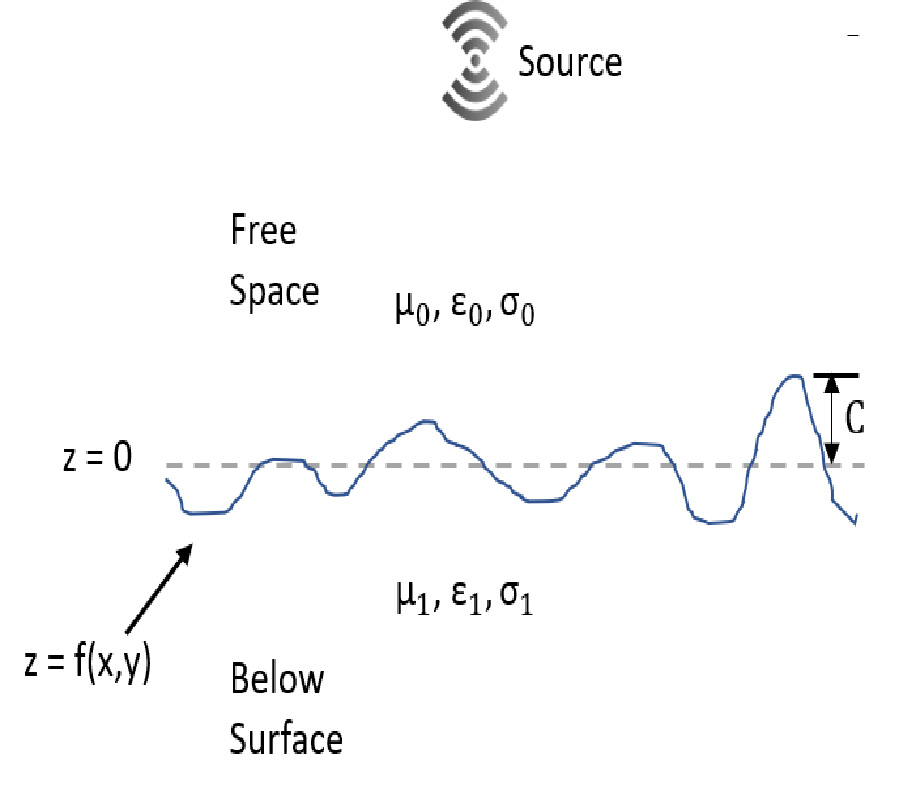
A backscattering model of the average signal power function (SPF) for laser radar 3D range imagery obtained using detector arrays for a complex target with rough surfaces is presented. The model relates the average power at the receiver to the laser pulse, target shape, optical scattering properties of the surface materials, angle of incidence, and other factors. The optical scattering properties of the material are characterized using the bidirectional reflectivity distribution function (BRDF). The effects of the pulse width on the resolution of the 3D range imagery are analyzed. The proposed model can be used to demonstrate 3D laser radar systems and can also be used to generate a library of model data sets for automatic target recognition (ATR) applications.
THREE-DIMENSIONAL LASER RADAR RANGE IMAGERY OF COMPLEX TARGET WITH ROUGH SURFACES
2018-09-04
PIER M
Vol. 73, 9-16
Electromagnetic Field Coupling to Large Antenna Structures
Rakesh Kichouliya , Pawan Kumar , Sandeep Satav , Chiranjeev Das , Pingili Himavanth Reddy and Biswajeet Ghosh
The study of electromagnetic field coupling to an electrically large structure is essential, in order to assess the degree of protection to be provided to harden the electronic or electrical system of interest, against electromagnetic fields. The electromagnetic field coupling study can be done by computational and experimental techniques. In this paper, we have studied the high altitude electromagnetic pulse (HEMP)electromagnetic field coupling to a large antenna structure using electromagnetic dimensional scale modeling approach, in the frequency range of 1 kHz to 100 MHz. This frequency range has been chosen because most of the energy of the HEMP lies in this frequency band [1].
ELECTROMAGNETIC FIELD COUPLING TO LARGE ANTENNA STRUCTURES
2018-09-04
PIER M
Vol. 72, 187-195
W-LS-IR Algorithm for Hybrid Precoding in Wideband Millimeter Wave MIMO Systems
Fulai Liu , Ruiyan Du , Xiaodong Kan and Xinwei Wang
Hybrid analog/digital precoding is a promising technology that reduces the hardware complexity and power consumption of large-scale millimeter wave (mmWave) multiple-input multipleoutput (MIMO) communication systems. Most prior work has focused on hybrid precoding for narrowband mmWave systems. MmWave systems, however, will likely act on wideband channels with frequency selectivity. Therefore, this paper presents an effective OFDM-based hybrid precoding algorithm (named as W-LS-IR algorithm) for wideband mmWave systems. Firstly, the initial phases of the analog precoding matrix are randomly generated, and the digital precoding matrix is initialized via the least squares (LS) method. Then, the column of the analog precoding matrix is derived from the dominant left singular vector of a residual matrix, and the corresponding row of the digital precoding matrix is updated using the LS method. Through the iterations of the aforementioned stage, the hybrid precoding matrix will approach a stable solution finally. Compared with related works, the proposed algorithm can improve the spectral efficiency of wideband mmWave MIMO communication systems. Simulation results are presented to confirm the efficiency of the proposed algorithm.
W-LS-IR ALGORITHM FOR HYBRID PRECODING IN WIDEBAND MILLIMETER WAVE MIMO SYSTEMS
2018-08-31
PIER C
Vol. 86, 203-215
An Efficient Numerical Technique to Calculate the High Frequency Diffracted Fields from the Convex Scatterers with the Fock-Type Integrals
Yang Yang , Yu Mao Wu , Ya-Qiu Jin , Haijing Zhou , Yang Liu and Jianli Wang
High frequency electromagnetic (EM) scattering analysis from the electrically large scatterers is important to the computational electromagnetics community. Meanwhile, the high frequency diffraction technique, like the uniform geometrical theory of diffraction (UTD), is very important when the observation point lies in the transition, shadow and deep shadow regions of the considered scatterer. Furthermore, the diffracted fields arising from the electrically large scatterers via the UTD technique are usually highly oscillatory in nature, which is named as the Fock type integrals with the Airy function and its derivative involved. In this work, we propose a Fourier quadrature method to calculate the Pekeris integrals. Moreover, we first adopt the Fourier quadrature technique to calculate the diffracted fields from the dielectric convex cylinder with impedance boundary conditions, like the creeping wave fields and NU-diffracted wave fields. On invoking the Fourier quadrature method, the results of total scattered fields at the fixed observation points could achieve 1 dB relative errors. Moreover, numerical results demonstrate that the computational efforts for the oscillatory Pekeris-integrals are independent of wave frequency with the fixed sampling density and integration limit.
AN EFFICIENT NUMERICAL TECHNIQUE TO CALCULATE THE HIGH FREQUENCY DIFFRACTED FIELDS FROM THE CONVEX SCATTERERS WITH THE FOCK-TYPE INTEGRALS
2018-08-31
PIER Letters
Vol. 78, 73-79
A 28-GHz Antenna for 5G MIMO Applications
Zamir Wani , Mahesh Pandurang Abegaonkar and Shiban Kishen Koul
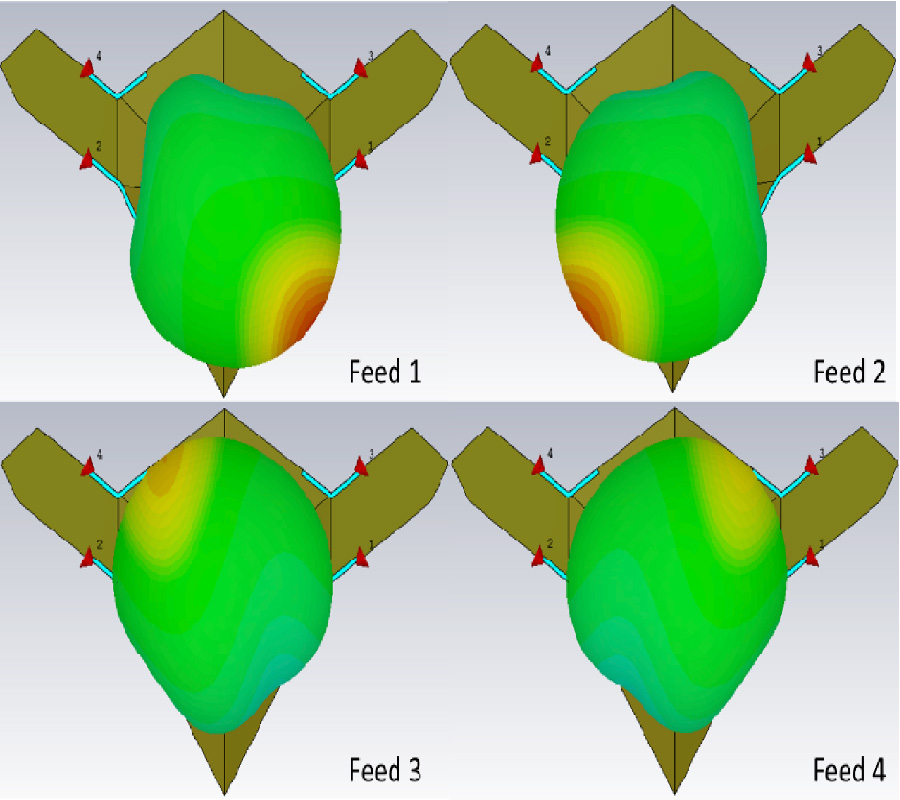
In this letter a four-port multi-input-multi-output (MIMO) antenna for 5G applications is proposed. This antenna is compact with a size of 11.3 mm×31 mm excluding feed lines. The radiation patterns of the antenna show pattern diversity in the azimuthal plane, and each antenna element has an end-fire gain about 10 dBi by employing an array of metamaterial unit cells. The isolation between the antenna elements with edge to edge separation <λ0/5.5 at 28 GHz is enhanced by trimming the corners of the rectangular high refractive index metamaterial region along with a ground stub between antennas. The proposed antenna is fabricated, and each antenna element has return loss, Snn<-10 dB with isolation, Snm>21 dB in the frequency range 26 GHz to 31 GHz, which makes this antenna potential candidate for MIMO application at 28 GHz band enabling 5G cellular communications.
A 28-GHZ ANTENNA FOR 5G MIMO APPLICATIONS
2018-08-29
PIER M
Vol. 73, 1-8
Compact High-Isolation Dual-Polarized Antenna with AMC Reflector
Kaining Zhu , Ming Su , Cuiping Yu and Yuan'an Liu
This paper presents a compact high-isolation dual-polarized dipole antenna with an artificial magnetic conductor (AMC) reflector. The proposed antenna is composed of a radiating element, two short pins and a 7×7 AMC array. By introducing two short pins, the port isolation is lower than -33 dB in the whole band on two ports. With the ring and AMC reflector, the dimension of the proposed antenna is only 0.36λ0×0.36λ0×0.16λ0 at 2.2 GHz. The antenna also achieves a 10-dB return loss bandwidth from 1.6 to 2.78 GHz (54%) for both ports. The gain of the proposed antenna is around 8 dBi, and the cross-polarization is about 30 dB. Due to these properties, the proposed antenna can be applied to 2G/3G/long term evolution (LTE) base station and WLAN/WiMAX applications.
COMPACT HIGH-ISOLATION DUAL-POLARIZED ANTENNA WITH AMC REFLECTOR
2018-08-29
PIER M
Vol. 72, 175-186
Optimal Synthesis of Thinned Arrays Utilizing Fast Fourier Transform Technique
Tumma Divya Vani and Konidala Ratna Subhashini
This piece of work replicates on the antenna array thinning exploring the benefi ts of known Fourier Analysis. In this communication Fourier transform is applied to the synthesis of periodic arrays for minimizing the Peak Side Lobe (PSL) level and thereby enhancing the directivity. Furthermore, the concept of Fill Factor(degree of thinning) i.e, reduction in the number of active elements is experimented for the above said objective. The proposed methodology is workedout on periodic linear and planar arrays. Numerical study and simulation results are composed with array thinning designs from literature. The analysis demonstrates the superiority of the illustrated Fourier technique.
OPTIMAL SYNTHESIS OF THINNED ARRAYS UTILIZING FAST FOURIER TRANSFORM TECHNIQUE
2018-08-29
PIER M
Vol. 72, 165-174
Fabrication and Pressure Sensing Characterization of an Ultrathin Egg-Shaped Microbubble
Guanjun Wang , Mengxing Huang , Jinrong Liu , Yuhang Li , Shubin Zhang , Xue-Fen Wan , Muhammad Sohail Sardar , Jianning Han , Qingche Song and Zhiguo Gui
In this paper, an ultrathin egg-shaped microbubble was proposed and analyzed for pressure sensing firstly, which was fabricated by utilizing an improved pressure-assisted arc discharge technique. By tailoring the arc parameters and the position of glass tube during the fabrication process, the thinnest wall of the fabricated microbubble could reach 873 nm. Such an ultrathin film structure is very suitable for pressure sensing. Especially, as only a commercial fusion splitter and pressure pump were utilized to achieve such functions, the fabrication cost was very cheap. The fiber Fabry-Perot (FP) interference technique was used to analyze its pressure sensitivity by filling the inner wall of the microbubble with different air pressures. The experiment results depicted that the end face of microbubble expands with the increase of the filling pressure. The pressure sensitivity of such an egg-shaped microbubble could reach up to 14.3 pm/kPa in terms of interference spectrum shift, while the maximum cavity deformation sensitivity of the microbubble vs. pressure could reach up to 0.334 nm/kPa in terms of cavity length change. Besides, the maximum sensitivity vs. temperature was only 27.83 pm/˚C. Results of this study could be good reference for developing new pressure sensors with low cost, high sensitivity and good anti-temperature interference abilities.
FABRICATION AND PRESSURE SENSING CHARACTERIZATION OF AN ULTRATHIN EGG-SHAPED MICROBUBBLE
2018-08-28
PIER Letters
Vol. 78, 65-71
A Compact Wideband Slot Antenna for Universal UHF RFID Reader
Marwa Zamali , Lotfi Osman , Hedi Raggad and Mohamed Latrach
In this letter, a new wideband circularly polarized antenna for Radio Frequency Identification (RFID) readers is proposed. A prototype operating in the Ultra-High Frequency (UHF) band is successfully realized and tested using a defected Ground Structure (DGS). This antenna consists of an L-shaped metal strip and a DGS with four tuning stubs. The overall size covers 90*90*1.6 mm3. The measured -10 dB reflection coefficient S11 bandwidth is 27% (800-1020 MHz) and a good radiation pattern and suitable gain coefficient about 3.7 dB have been achieved. Also, an excellent agreement was noticed between simulation and measurement results demonstrating the good performance of the proposed antenna.
A COMPACT WIDEBAND SLOT ANTENNA FOR UNIVERSAL UHF RFID READER
2018-08-27
PIER C
Vol. 86, 191-201
A Simple Tri-Band MIMO Antenna Using a Single Ground Stub
Anjali Ashish Chaudhari and Rajiv Kumar Gupta
In this paper, a simple and compact tri-band multiple-input-multiple-output (MIMO) antenna for wireless applications is proposed. The antenna is composed of two symmetric monopoles placed a distance of 0.106λ0 and occupies 0.26λ0×0.25λ0 board area. The tri-arm monopole offers operation over 2.1-2.7 GHz, 3.3-3.7 GHz and 4.9-5.35 GHz with percentage impedance bandwidth of 25%, 11.4% and 8.7%, respectively. An isolation greater than 20 dB is achieved by integrating a stub in the ground plane and adding a stub in the feed line. The structure exhibits stable gain and radiation patterns. Various performance metrics including envelope correlation coefficient (ECC), diversity gain (DG) and mean effective gain (MEG) are measured.
A SIMPLE TRI-BAND MIMO ANTENNA USING A SINGLE GROUND STUB
2018-08-27
PIER Letters
Vol. 78, 59-63
Miniaturized Microstrip Lowpass Filter with Compact Size for Harmonic Suppression
Guan-Nan Chen and Jing-Bo Hu
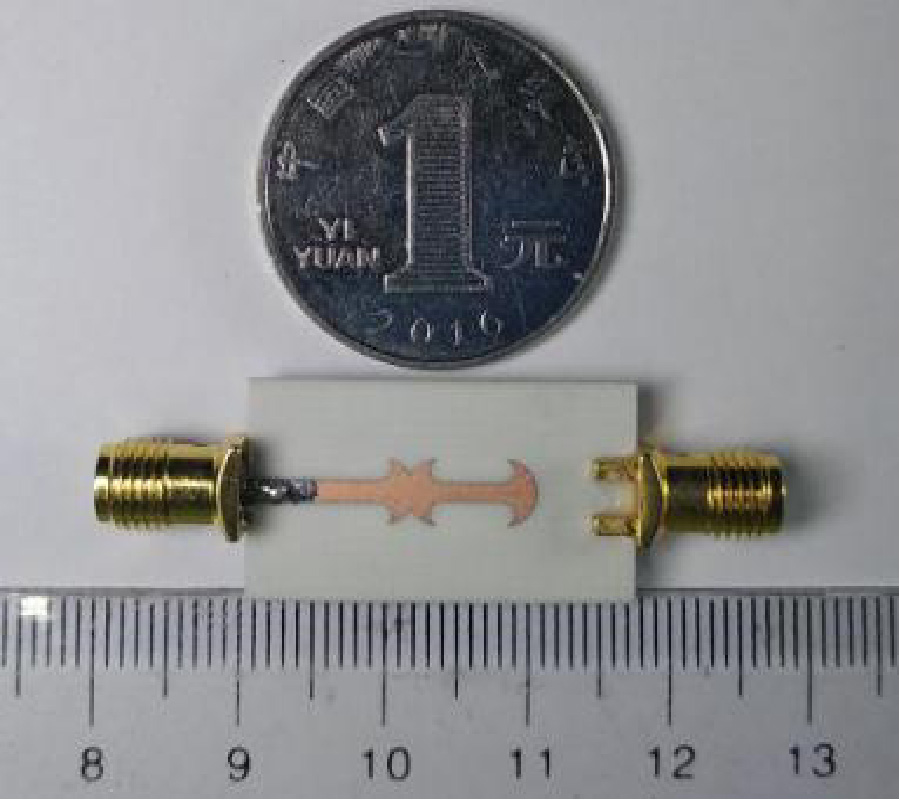
A new miniaturized microstrip lowpass filter with compact size and a wide spurious-free stopband is investigated. To achieve compact design and ultra-wide band rejection, both triangular patch resonators and trapezoid patch resonators are introduced in the filter. To further reduce the circuit size of the filter, the meander transmission line is also adopted in the design. A demonstration filter with 3 dB cutoff frequency at 0.76 GHz has been designed, fabricated and measured. Results indicate that the proposed filter is able to suppress the 16th harmonic response referred to a suppression degree of 15 dB. Furthermore, the proposed filter exhibits a small size of 0.080λg×0.072λg, where λg is the guided wavelength at 0.76 GHz.
MINIATURIZED MICROSTRIP LOWPASS FILTER WITH COMPACT SIZE FOR HARMONIC SUPPRESSION