Search Results(13790)

2018-05-25
PIER M
Vol. 68, 181-191
Average Intensity of Partially Coherent Lorentz Beams in Oceanic Turbulence
Dajun Liu and Yaochuan Wang
Partially coherent Lorentz beams have been introduced to describe the output of the diode laser, which have been investigated due to the special spreading properties. The analytical expressions of partially coherent Lorentz beam propagating in oceanic turbulence are derived. Using the derived equations, the average intensity distributions of partially coherent Lorentz beam are analyzed and discussed. It is shown that the partially coherent Lorentz beam with smaller coherence length will evolve into the Gaussian-like beam faster, and the beam propagation in oceanic turbulence will spread faster with increasing strength of oceanic turbulence. The results have potential application in underwater optical communications and sensing.
AVERAGE INTENSITY OF PARTIALLY COHERENT LORENTZ BEAMS IN OCEANIC TURBULENCE
2018-05-24
PIER C
Vol. 84, 103-117
Directive and Reconfigurable Loaded Antenna Array for Wireless Sensor Networks
Akimu Dihissou , Aliou Diallo , Philippe Le Thuc and Robert Staraj
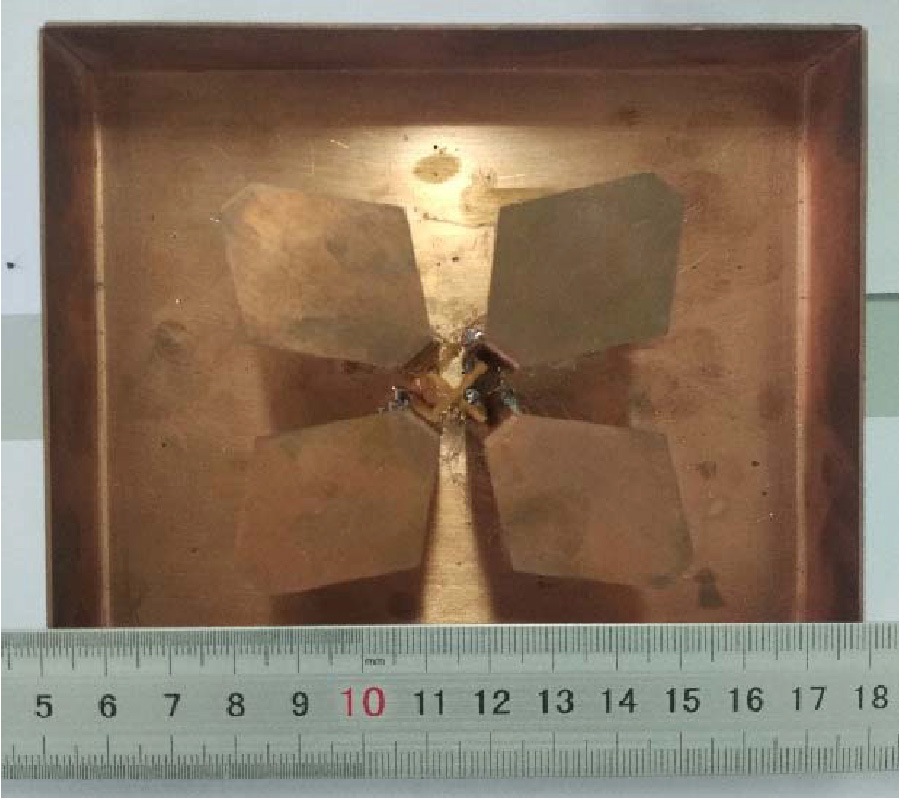
In this paper, a four switchable beam antenna dedicated to Wireless Sensor Network (WSN) nodes in the 2.4 ISM band (2.4-2.485 GHz) is presented. It consists of two fed monopoles and two loaded parasitic ones. The nature and value of the load are obtained using the Uzkov equations, allowing to determine current weighting coefficients in the case of two separately fed antennas, in order to maximize the gain and the directivity in a given direction. Reconfigurability is achieved using reflector and director elements activated by PIN diodes to reduce the back radiation and pointing in the desired direction. Thus, a first system is obtained which consists of two elements, one fed and the other loaded with an inductor, with a maximum gain of 5.2 dBi in simulation and 4.7 dBi measured at 2.4 GHz in azimuthal directions of 90˚ and 270˚. Then, the system is compared with another, composed of two antennas fed separately. Finally, the same methodology is applied to an array of four antennas, in which two antennas are fed, and two are loaded. This last structure is capable of steering its radiation pattern in the azimuth plane, covering a 360˚ angle with four beams (0˚, 90˚, 180˚ and 270˚). The total gain achieved is 4 dBi for each beam in the azimuth plane.
DIRECTIVE AND RECONFIGURABLE LOADED ANTENNA ARRAY FOR WIRELESS SENSOR NETWORKS
2018-05-23
PIER M
Vol. 69, 1-13
Frequency Reconfigurable Patch Antenna for 4G LTE Applications
Hassan Tariq Chattha , Maria Hanif , Xiaodong Yang , Qammer Hussain Abbasi and Inam Elahi Rana
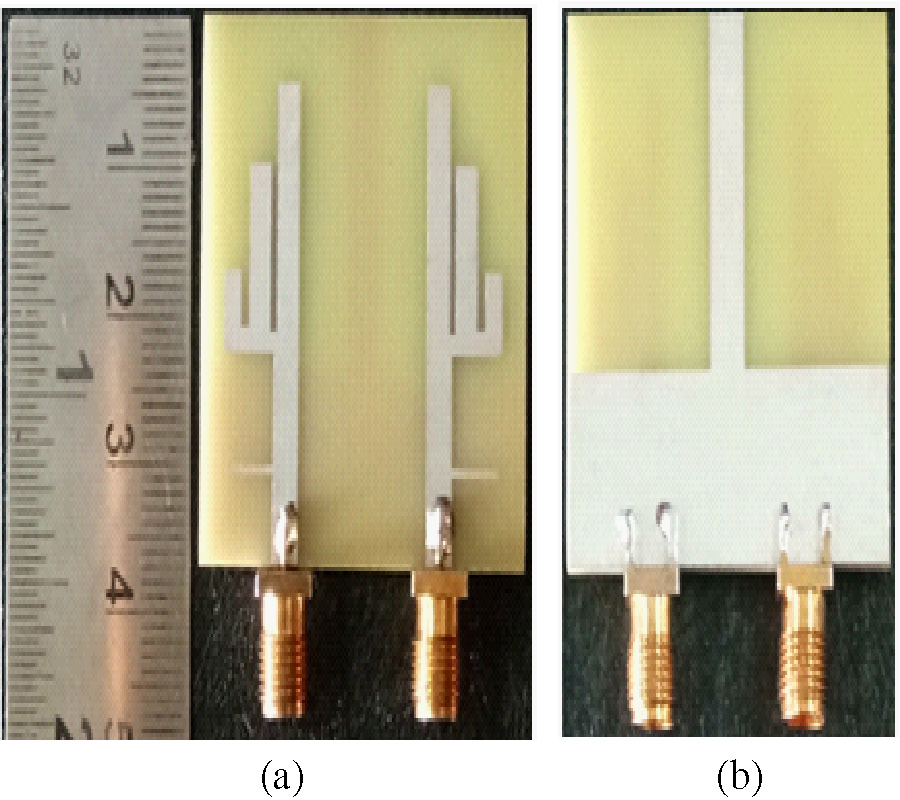
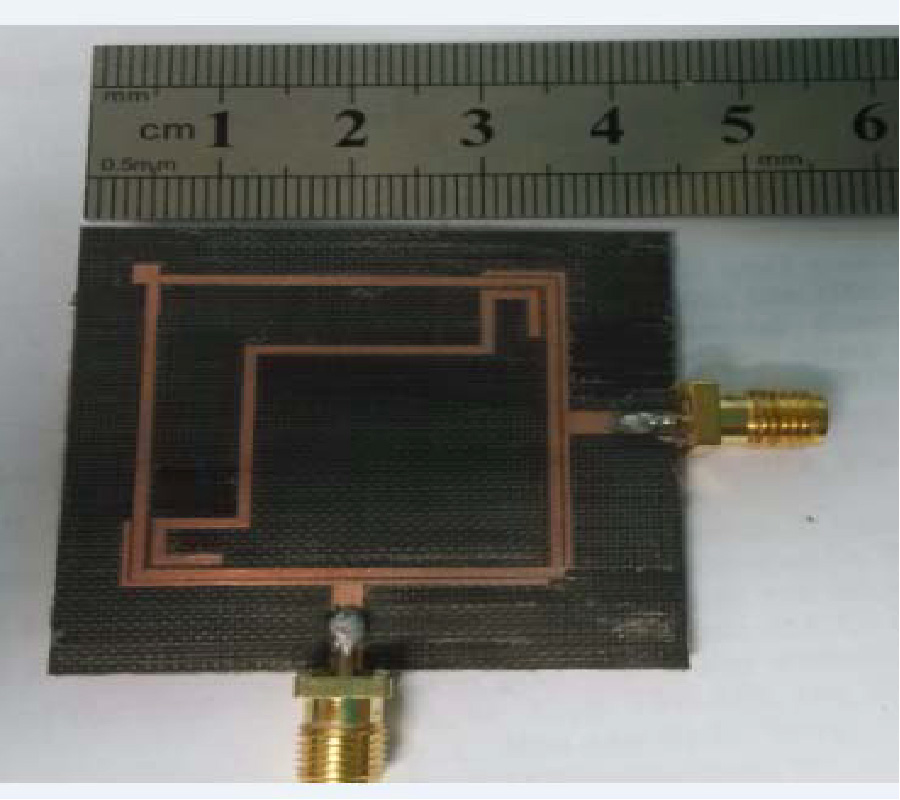
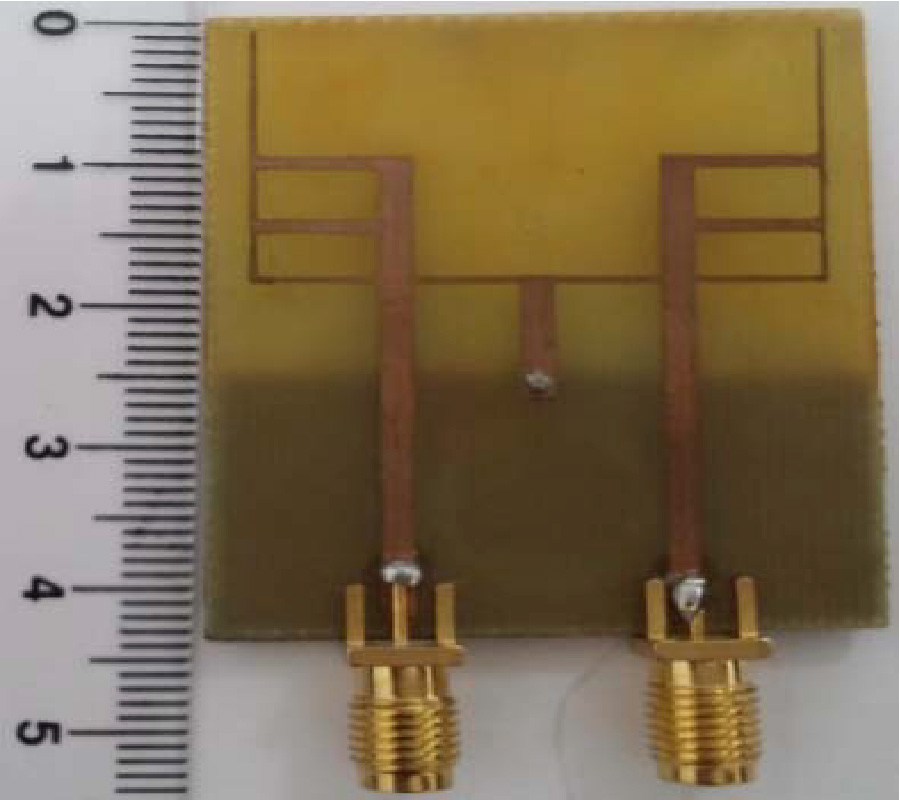
A compact printed multi-band frequency reconfigurable patch antenna for 4G LTE applications is presented in this paper (50 x 60 x 1.6 mm3). The antenna consists of W-shaped and Inverted-U shaped patch lines connected in a Tree-shape on the front side of the antenna. The back-side of the antenna contains a 90°-tilted T-shaped strip connected with an Inverted-L shaped strip which is shorted with a patch on the front side for increasing the electrical length to cover lower frequency bands. Frequency reconfigurability is achieved by inserting three switches i.e., PIN diodes. The most critical part of this work is the designing of RLC-based DC line circuits for providing the DC biasing to the PIN diodes used as switches and inserting them at optimum locations. This antenna is reconfigurable among eight different 4G LTE frequency bands including 0.9 GHz, 1.4 GHz, 1.5 GHz, 1.6 GHz, 1.7 GHz, 1.8 GHz, 2.6 GHz, 3.5 GHz and WLAN band 2.5 GHz. The antenna exhibits different radiation patterns having a different direction of peak gain at different frequencies and for different switching combinations. The antenna is simulated with CST, and a prototype is fabricated to compare the measured and simulated results with good accuracy.
FREQUENCY RECONFIGURABLE PATCH ANTENNA FOR 4G LTE APPLICATIONS
2018-05-21
PIER Letters
Vol. 76, 33-38
Equivalent Circuit Microwave Modeling of Graphene-Loaded Thick Films Using S-Parameters
Ololade Sanusi , Patrizia Savi , Simone Quaranta , Ahmad Bayat and Langis Roy
Graphene, a one-atom thick layer of carbon atoms arranged to form a honeycomb lattice exhibits intriguing mechanical, thermal and electrical properties, which make it attractive for bio- and chemical sensors as well as flexible electronics applications. In this paper, graphene films with different amounts of graphene loading (weight fraction 12.5% and 25%) deposited by screen printing technique are characterized in the microwave frequency range. By fitting the measured scattering parameters of graphene-loaded microstrip lines with Advanced Design System (ADS) circuit simulations, a simple equivalent lumped circuit model of the film is obtained. The proposed equivalent lumped circuit model presented in this paper proves suitable as an initial step towards the full-wave electromagnetic modeling and analysis of graphene loaded microwave structures intended for sensing and tuning applications.
EQUIVALENT CIRCUIT MICROWAVE MODELING OF GRAPHENE-LOADED THICK FILMS USING S-PARAMETERS
2018-05-21
PIER Letters
Vol. 76, 27-32
Design of Terahertz Short-Slot Coupler with Curved Waveguide
Wu Pan , Hao Cheng , Xia Yin and Xuan Li
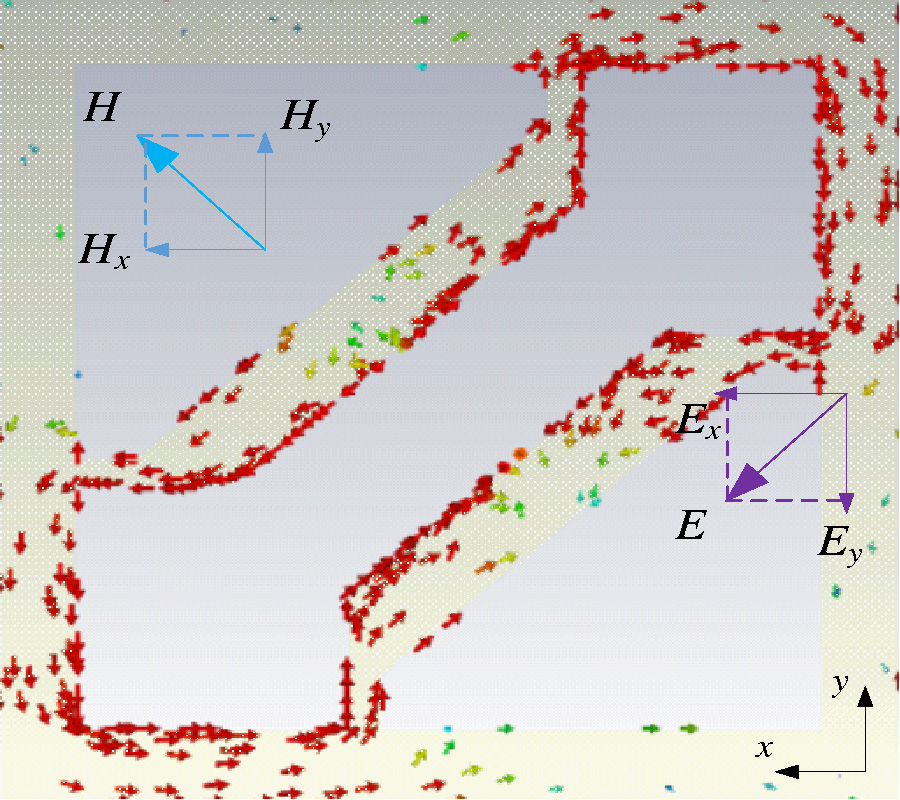
The design of a terahertz short-slot coupler with curved waveguide is proposed. A traditional short-slot coupler uses a step-like structure in order to suppress higher order modes and improve bandwidth. It becomes difficult to control the fabrication of tiny steps with the incensement of frequency especially in terahertz band. The designed coupler is composed of two curved waveguides overlapping in the middle to realize a specific coupling coefficient. Then the step-like structure can be replaced with a curved structure which is much easier to fabricate. The coupling coefficient of the coupler is 3 dB, and the variation is less than 1dB around the center frequency. The phase difference between two output ports is 90°. The isolation is greater than 10 dB in the whole working band. Measured results show high agreement with simulation predictions. The designed coupler can be widely used as feed networks of horn antenna array.
DESIGN OF TERAHERTZ SHORT-SLOT COUPLER WITH CURVED WAVEGUIDE
2018-05-21
PIER M
Vol. 68, 173-180
Enhanced Characteristic Basis Function Method for Solving the Monostatic Radar Cross Section of Conducting Targets
Jinyu Zhu , Yufa Sun and Hongyu Fang
In this paper, an enhanced characteristic basis function method (ECBFM) is proposed to calculate the monostatic radar cross section (RCS) of electrical large targets efficiently. The enhanced characteristic basis functions (ECBFs) are defined by combining improved primary-characteristic basis functions (IP-CBFs) with the first level improved secondary-characteristic basis functions (IS-CBFs) for each block. IS-CBFs are obtained by substituting IP-CBFs for PCBFs in Foldy-Lax multiple scattering equation in which mutual coupling effects among all blocks can be included systematically. As a result, a small number of incident plane waves (PWs) is sufficient when dealing withlarge scale targets. The numerical results demonstrate that the computational efficiency in this paper is much higher than that of the improved primary-characteristic basis function method (IP-CBFM) without losing any accuracy.
ENHANCED CHARACTERISTIC BASIS FUNCTION METHOD FOR SOLVING THE MONOSTATIC RADAR CROSS SECTION OF CONDUCTING TARGETS
2018-05-18
PIER C
Vol. 84, 87-101
Torque Ripple Suppression Control of Bearingless Brushless DC Motor in Wide Speed Regulation Range
Yukun Sun , Kuan Zhang , Ye Yuan and Fan Yang
Bearingless brushless DC (BBLDC) motor in the flywheel energy storage system has advantages of low energy consumption, high critical speed and better speed adjustment performance. However, torque ripple exists inevitably due to the current commutation of the BBLDC motor and the wide range of speed changes when the flywheel energy storage system charges and discharges. In this frame, an approach of combining the direct torque control (DTC) with the current prediction control (CPC) is proposed to suppress torque ripple in wide speed regulation range. In this paper, the mathematical model of the BBLDC motor is given, and the principle of DTC scheme is introduced. On the basis of analyzing the causes of commutation torque ripple when using DTC scheme, CPC scheme is employed to minimize the commutation torque ripple by controlling the changes of phase current during commutation. During the non-commutation, the DTC is selected, and the CPC is selected during the commutation. Results show that the proposed approach is feasible, and torque ripple is effectively suppressed both in high speed and low speed. Moreover, this method has no effect on the suspension performance.
TORQUE RIPPLE SUPPRESSION CONTROL OF BEARINGLESS BRUSHLESS DC MOTOR IN WIDE SPEED REGULATION RANGE
2018-05-18
PIER Letters
Vol. 76, 21-26
Experimental Verification of Quadrupole Model of the Electric Field of a Rotating Magnet
Vladimir Borisovich Timofeev and Tamara Egorovna Timofeeva
We performed an experiment to verify quadrupole model of the electric field of a rotating magnet. It is found that the rotating magnet insulated from the earth and enclosed in a conductive insulated screen induces the potential difference across an air capacitor arranged on the outside the screen. The field of an electric quadrupole cannot penetrate through the screen; therefore the electric field detected outside the screen has the source of another nature. The field observed in the experiment can be explained by arising of a fictitious electric charge upon rotating of the magnet in accordance with the transformations of the electromagnetic field in the theory of relativity.
EXPERIMENTAL VERIFICATION OF QUADRUPOLE MODEL OF THE ELECTRIC FIELD OF A ROTATING MAGNET
2018-05-16
PIER C
Vol. 84, 75-85
An 8-Element Frequency-Agile MIMO Communication Antenna System for CR Front-End Applications
Sharjeel Riaz and Xiongwen Zhao
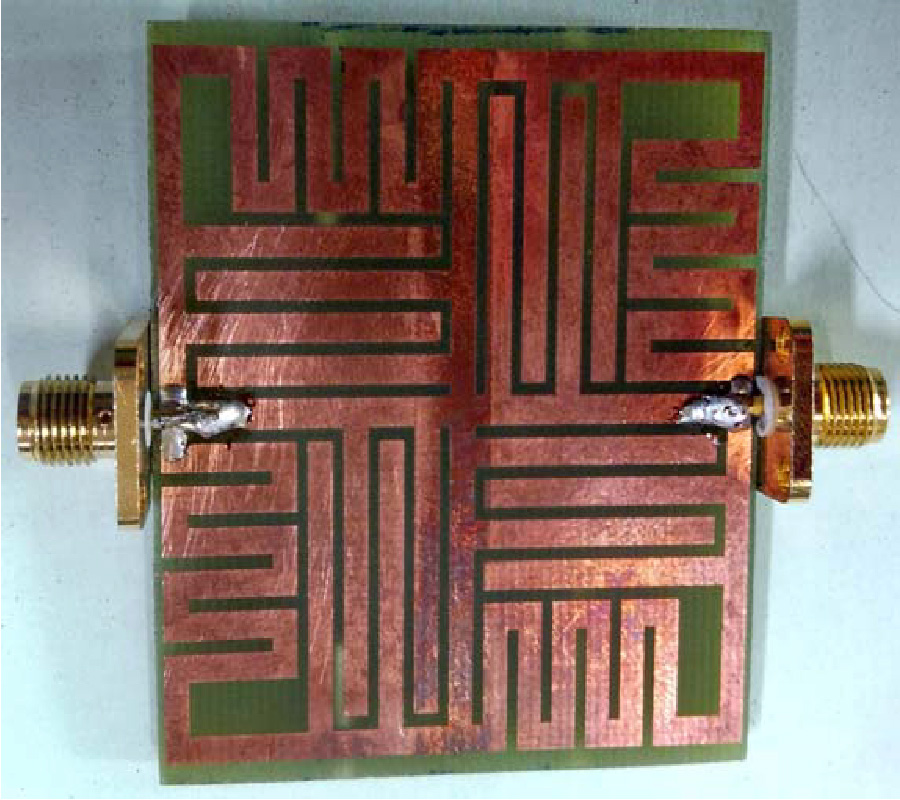
This paper presents a planar, compact 8-element frequency-reconfigurable multiple-input-multiple-output (MIMO) antenna system. The proposed design can be utilized as a communication antenna for cognitive radio (CR) front-end applications. The proposed antenna design contains 8 elements on a single substrate board. Frequency reconfigurablility is achieved using varactor diode in the middle of each antenna element by varying the capacitive reactance of the slot. The proposed antenna system provides very wide frequency tunable characteristics from 1.6 to 2.48 GHz. The proposed design covers several well-known frequency bands like LTE, GSM-1800, PCS-1900, WLAN along with several others. Moreover, rectangular defected ground slots are used between vertically placed antenna elements to enhance the isolation. The complete antenna system is realized on single FR-4 substrate of dimensions 120×60×1.56 mm3. The performance of proposed design is demonstrated by presenting both the simulated and measured results with close agreement achieved between the two which validates the proposed design.
AN 8-ELEMENT FREQUENCY-AGILE MIMO COMMUNICATION ANTENNA SYSTEM FOR CR FRONT-END APPLICATIONS
2018-05-16
PIER M
Vol. 68, 163-171
P-OMP-IR Algorithm for Hybrid Precoding in Millimeter Wave MIMO Systems
Ruiyan Du , Fulai Liu , Xinwei Wang , Qingping Zhou and Xiaoyu Bai
This paper presents a P-OMP-IR algorithm for the hybrid precoding problem in millimeter wave (mm-Wave) multiple-input multiple-output (MIMO) systems. In the proposed approach, the digital precoding matrix is updated via the orthogonal matching pursuit (OMP) method, and the analog precoding matrix is refined column by column using the dominant singular value and corresponding singular vectors of a residual matrix successively. During the refining phase of the analog precoding matrix, an extended power method is designed to calculate the dominant singular value and the corresponding left and right singular vectors, which is able to reduce the computational complexity significantly. Simulation results show that the proposed algorithm can not only reduce the residual of the hybrid precoder effectively, but also improve the spectral efficiency consistently.
P-OMP-IR ALGORITHM FOR HYBRID PRECODING IN MILLIMETER WAVE MIMO SYSTEMS
2018-05-15
PIER C
Vol. 84, 61-74
Compact UWB MIMO Antenna with Metamaterial-Inspired Isolator
Fei Wang , Zhaoyun Duan , Shifeng Li , Zhan-Liang Wang and Yu-Bin Gong
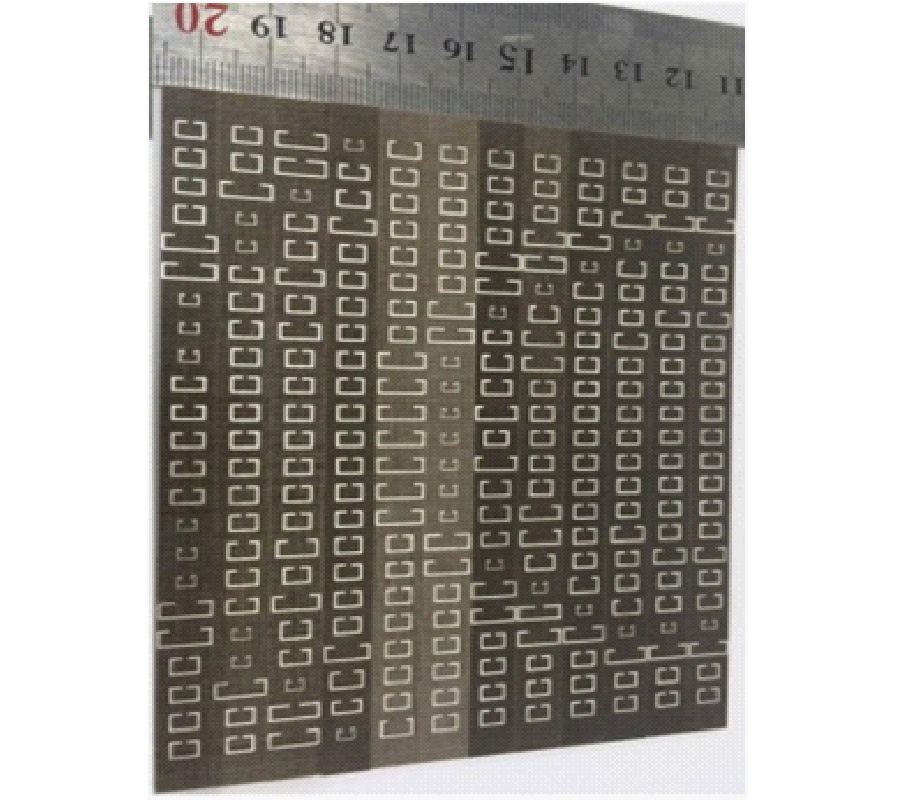
In this paper, a dual-band complementary split ring resonator (C-SRR) is used to improve the band-notch effect relative to the traditional SRR. Meanwhile, we employ a brand-new SRR unit cell as an isolator for decoupling among multiple bands without enlarging the dimensions of the multiple-input-multiple-output (MIMO) antenna. Therefore, a compact ultra-wideband MIMO antenna is developed. Compared with the previous work, the proposed MIMO antenna also has obvious advantages such as high isolation and miniaturization (the dimensions are only 13.5 mm × 34 mm). The metamaterial-inspired UWB MIMO antenna presented here is suitable for small scaled mobile devices.
COMPACT UWB MIMO ANTENNA WITH METAMATERIAL-INSPIRED ISOLATOR
2018-05-15
PIER M
Vol. 68, 153-161
UWB-SP Standard Transducer Based on Microstrip Line
Jinhong Wei , Youjie Yan , Shoulong Zhang , Jin Chen and Zhanjun Liu
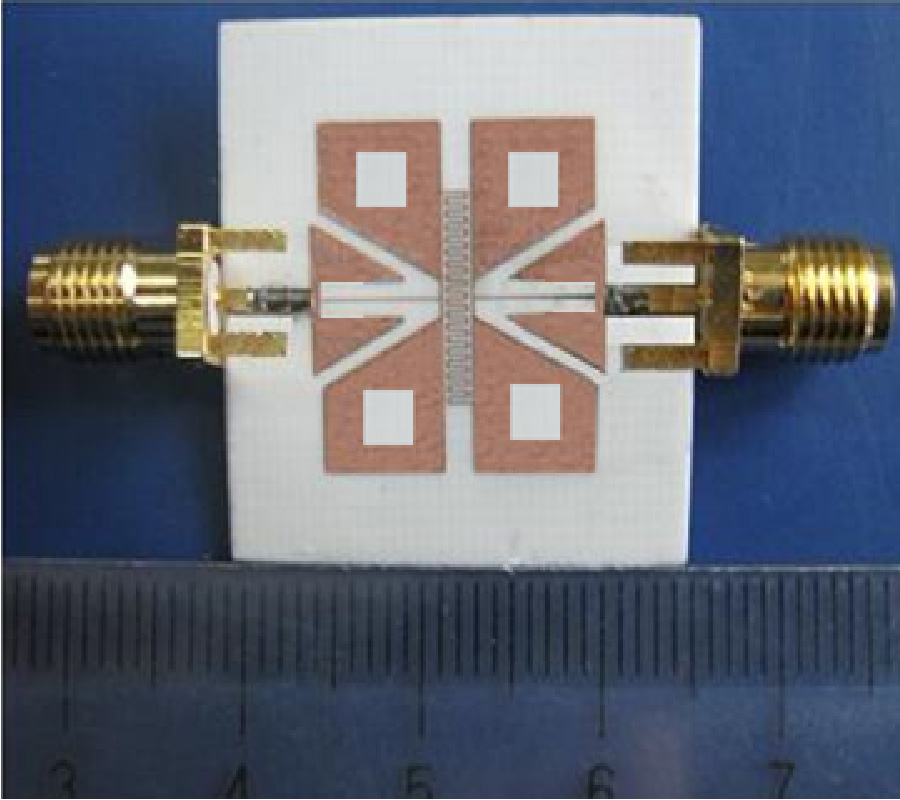
In this paper, an ultra-wideband standard transducer based on microstrip line is developed for the accurate measurement and metrology of UWB-SP. The transducer consists of a section of microstrip line and a section of coaxial line connected to microstrip line via an SMA connector. The beginning end of the transducer is chosen to receive the excitation signal, to expand the effective time window. Simulated results show that the waveform recovered by the transducer is almost coincident with the excited electric field waveform within the effective time window, and the upper frequency of the bandwidth is up to 3.5 GHz. The measured results show that the transducer can recover the waveform of the incident electric field very well, the sensitivity and time window can be calibrated readily and accurately by and the vector network analyzer as well as the UWB TEM cell. The experimental results are in agreement with the results from theoretical results and simulated results.
UWB-SP STANDARD TRANSDUCER BASED ON MICROSTRIP LINE
2018-05-14
PIER C
Vol. 84, 47-60
Characterization Method of an Automotive Random-LOS OTA Measurement Setup
Aidin Razavi , Andres Alayon Glazunov , Sadegh Mansouri Moghaddam , Rob Maaskant and Jian Yang
A novel characterization method of OTA test setups for wireless communication systems on vehicles in the random line-of-sight (Random-LOS) environment is proposed. The measurement setup assumes a compact range and a test zone where the antenna under test (AUT) on the vehicle would be located. An ideal receiver is assumed for the reference measurement, which allows to perform a system analysis through evaluating the Probability of Detection (PoD) as the system figure-of-merit. The proposed method is aimed as an aid for test equipment designers to design OTA compact ranges, compare their performances, and define an ideal numerical reference. The requirements for OTA measurement ranges are different from those for conventional anechoic compact ranges. A compact cylindrical reflector system with an antenna array line feed is characterized using the proposed method, from 1.6-2.7 GHz, for two orthogonal polarizations, various AUT heights and reflector tilting angles, with and without ground plane in a test zone which is 2 m wide in diameter.
CHARACTERIZATION METHOD OF AN AUTOMOTIVE RANDOM-LOS OTA MEASUREMENT SETUP
2018-05-14
PIER C
Vol. 84, 35-46
Research on the Key Issues in Power and Data Wireless Transmission of Implantable Medical Devices
Xueping Li , Yuan Yang and Ningmei Yu
In order to solve a key issue about power and data wireless transmission of implantable medical devices, M-ary differentially-encoded amplitude and phase-shift Keying (MDAPSK) is employed to balance the frequency selective contradiction in this paper. Subsequently, bio-capacitor model and biological path loss model are introduced to improve the accuracy of conventional wireless power transmission efficiency model. Based on 16DAPSK modulation, biological channel error rate analysis model is set up. Compared with experiment data, accuracy of the model is proved. Error codes suppression and error codes correction methods are optimized, and the optimization results have been verified by experiments. Lastly, it can be found that the power and data synchronized wireless transmission scheme is feasible. This work provides a new solution and model reference for power and data wireless transmission of implantable medical devices.
RESEARCH ON THE KEY ISSUES IN POWER AND DATA WIRELESS TRANSMISSION OF IMPLANTABLE MEDICAL DEVICES
2018-05-14
PIER Letters
Vol. 76, 13-19
A Novel Planar Wireless Power Transfer System with Distance-Insensitive Characteristics
Meng Wang , Jing Feng , Yue Fan , Minghui Shen , Jie Liang and Yanyan Shi
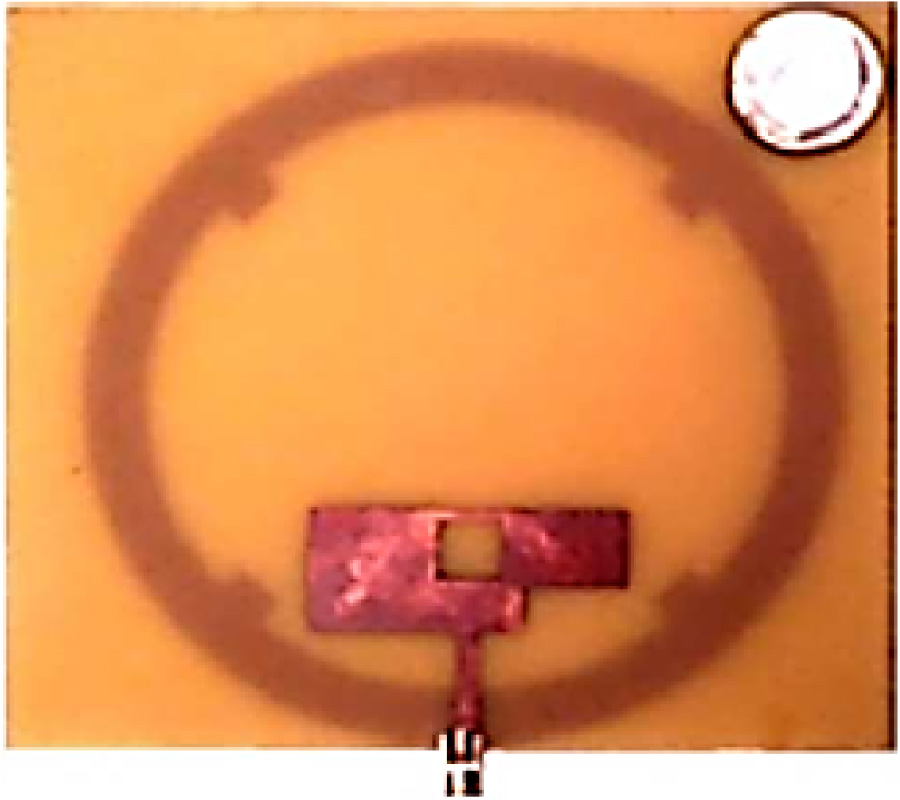
Unlike conventional systems in which two identical resonant loops are employed, a pair of novel planar loops is developed for wireless power transfer. The proposed transmitting and receiving coils have different distances between turns while the wire length is the same. The effect of mutual inductance on transfer efficiency is analyzed. The mutual inductance of the proposed loops is more uniform than the conventional one, which is helpful for suppressing frequency splitting at closer transfer distance. Moreover, the power transfer performance is enhanced at longer distance. Additionally, an experimental prototype is fabricated to verify the distance insensitive characteristic of the proposed system.
A NOVEL PLANAR WIRELESS POWER TRANSFER SYSTEM WITH DISTANCE-INSENSITIVE CHARACTERISTICS
2018-05-14
PIER Letters
Vol. 76, 1-6
Compact Microstrip Rotman Lens Using Chebyshev Impedance Transformers
Qiuyan Liang , Bao-Hua Sun , Gaonan Zhou and Jianfeng Li
A compact microstrip Rotman lens is proposed in this paper. The microstrip Rotman lens consists of a lens body and Chebyshev impedance transformers. The Chebyshev impedance transformers are used as beam ports, array ports and dummy ports. Compared to the traditional linear tapered transition, the Chebyshev impedance transformer is shorter, which leads to the size reduction and insertion loss improvement for the Rotman lens. An X-band 4×7 Rotman lens using Chebyshev impedance transformers is designed and fabricated. Compared to a traditional Rotman lens, the proposed Rotman lens shows a size reduction of about 56% and an insertion loss improvement at 10 GHz. The measured results demonstrate that better than 15 dB return loss throughout the bandwidth from 8 to 12 GHz is obtained.
COMPACT MICROSTRIP ROTMAN LENS USING CHEBYSHEV IMPEDANCE TRANSFORMERS
2018-05-14
PIER M
Vol. 68, 143-152
A Plasmonic Monopole Antenna Array on Flexible Photovoltaic Panels for Further Use of the Green Energy Harvesting
Yasir Al-Adhami and Ergun Erçelebi
Due to urgent needs for exploring new energy resources, a novel approach is developed in this paper to integrate the functions of a photovoltaic (PV) panel with an ultra-wide band (UWB) antenna array as a unit for collecting solar energy and RF radiation power. The UWB antenna is printed on the front panel of the PV surface. The antenna structure is customized with minimum shadowing effects on the PV surface, by using eight monopoles connected to one SMA port as a single antenna array. Then, to ensure the bandwidth enhancement, each monopole is coupled to three Split Ring Resonators (SRR) structured in a single column as a matching circuit. Next, an experimental study is performed to investigate the amount of the harvested energy from both the PV and the antenna array. The antenna experimental measurements are conducted to realize the I-V characteristics for the PV and produced output voltage and efficiency from the RF radiation power at 900 MHz only. Numerically, the proposed antenna array performance is simulated by CST MWS and HFSS software packages. Finally, the antenna performance in terms of S11 and the radiation pattern at 900 MHz are measured and compared to the simulated results to end up with excellent agreements.
A PLASMONIC MONOPOLE ANTENNA ARRAY ON FLEXIBLE PHOTOVOLTAIC PANELS FOR FURTHER USE OF THE GREEN ENERGY HARVESTING
2018-05-13
PIER
Vol. 162, 31-38
Unequal Polyomino Layers for Reduced SLL Arrays with Scanning Ability
Piero Angeletti , Giuseppe Pelosi , Stefano Selleri , Ruggero Taddei and Giovanni Toso
Polyomino-based arrays allow to efficiently exploit the available array area with a regular element lattice, yet exhibit a non-uniform distribution of their phase centers, leading to superior electronic scanning capabilities. Yet polyomino arrays are usually implemented via polyomino of equal order, leading to uniform amplitude distribution and poor side lobe levels. In this contribution, a tiling of polyominoes of different order is proposed to attain at the same time good scanning characteristics and side lobe level.
UNEQUAL POLYOMINO LAYERS FOR REDUCED SLL ARRAYS WITH SCANNING ABILITY
2018-05-11
PIER C
Vol. 84, 23-33
The Direction-of-Arrival and Polarization Estimation Using Coprime Array: A Reconstructed Covariance Matrix Approach
Wen Dong , Ming Diao and Lipeng Gao
In this paper, we propose a novel direction of arrival (DOA) and polarization estimation method to address the problem of a coprime polarization-sensitive array (PSA). For a PSA, there may be a zero element in the covariance matrix when the polarized signal comes from a specific direction. To overcome this problem, we utilize the reconstructed received data to obtain a new covariance matrix whose elements are all non-zero. Then, the coprime MUSIC and sparse signal reconstruction algorithms are used for DOA estimation. In addition, the power of noise can be estimated in this polarization model, which improves upon the sparse signal reconstruction algorithm. Compared with the normalized algorithm, the proposed method offers favorable performance in terms of accuracy. Furthermore, our method can identify the peaks of the true DOAs at a low signal-to-noise ratio (SNR). The simulation results demonstrate the effectiveness of the proposed method.
THE DIRECTION-OF-ARRIVAL AND POLARIZATION ESTIMATION USING COPRIME ARRAY: A RECONSTRUCTED COVARIANCE MATRIX APPROACH
2018-05-11
PIER
Vol. 162, 15-29
The Proportionality Between Charge Acceleration and Radiation from a Generic Wire Object
Edmund K. Miller
The Lienard-Wichert potentials show that radiation is caused by charge acceleration. The question arises about where charge acceleration occurs on the most basic of antennas, a center-fed, perfectly conducting dipole, for which there are two obvious causes. One is the feeedpoint exciting voltage that sets into motion an outward-propagating charge and current wave at light speed c in the medium. A second is at the dipole ends where the outgoing wave is totally reflected producing a change in charge speed of 2c. A third is the decreasing amplitude of the propagating wave with distance due to its partial reflection along the wire. That reflected charge also undergoes a speed change of 2c. This is the reason why the decay of current flowing along a straight wire antenna has been attributed as being due to radiation. Radiation caused by these and other kinds of charge acceleration due to resistive loads, right-angle bends, and radius steps are investigated. These phenomena are examined primarily in the time-domain where they are more observably separable in time and space than in the frequency domain. The current and charge induced on an impulsively excited wire antenna and its broadside radiated E-field are computed using a time-domain, integral-equation model. The computed results are used to derive a numerical relationship between the amount of accelerated charge and its radiated field. This relationship is denoted as an Acceleration Factor (AF) that is obtained for various charge-accelerating features of a generic wire object are normalized to that of the exciting source for comparison with their respect speed changes.
THE PROPORTIONALITY BETWEEN CHARGE ACCELERATION AND RADIATION FROM A GENERIC WIRE OBJECT