Search Results(13790)

2018-04-19
PIER C
Vol. 83, 161-178
Input Impedance of an Aperture Over a Lossy Half-Space: Application to on-Body Antenna Performance at 60 GHz
Solofo Razafimahatratra , Julien Sarrazin , Guido Valerio , Francois Sarrazin , Massimiliano Casaletti , Philippe De Doncker and Aziz Benlarbi-Delai
This paper presents a theoretical approach to compare the performance of a directive and a quasi-omnidirectional on-body antennas.Two canonical antennas, namely, a dipole and a rectangular aperture, are considered in the 60 GHz band. We first demonstrate that for this on-body configuration, the classically-defined far-field antenna gain depends on the observation distance. Consequently, we derive results in terms of radiation efficiency and link budget. To do so, the antenna input impedance computation is a preliminary step to normalize the input power to allow a fair comparison between the two antennas. The impedance over a lossy half-plane of an aperture illuminated by a TE10 mode normally polarized is therefore derived into a convenient easy-to-compute formulation, which to authors' best knowledge, is not available in the literature. In terms of link budget, it is obtained that the received power due to an aperture is generally higher than the one due to the dipole in the main lobe direction. A constant difference is observed along the distance, and this difference increases with the aperture width for antennas touching the body. Besides, it is shown that the standard aperture waveguide WR15 exhibits a slightly higher efficiency than a vertical dipole with the same vertical size when being placed at a distance less than 3 mm (i.e., 0.6λ) from the body phantom surface. Above this distance, the dipole and the aperture exhibit similar efficiency in the order of 60%.
INPUT IMPEDANCE OF AN APERTURE OVER A LOSSY HALF-SPACE: APPLICATION TO ON-BODY ANTENNA PERFORMANCE AT 60 GHZ
2018-04-18
PIER B
Vol. 80, 133-149
Design Approach of Multibeam Using Phased Array Antenna Aided with Butler Matrix for a Fixed Coverage Area
Tumma Divya Vani and Konidala Ratna Subhashini
This paper devises a framework of phased array antennas to radiate multiple beams for a fixed coverage. The phased antenna array is chosen so that the beamforming can be fixed in selected coverage area. The antenna arrays are employed with a Butler matrix (BM) to form required phases of excitation coefficients to the radiating elements. Optimally designed 4×4 or 8×8 Butler matrix is utilized at the I/O ports of the phased antenna array. The grating lobes are reduced by using the principle of orthogonality to the feeds of subarray (group of column arrays of phased array). This article also exploits the concept of skirt elements to reach the desired coverage area while reducing the beam overlapping in the restricted area. Simulation studies highlight the proposed claims with elaborated numerical analysis of different case studies.
DESIGN APPROACH OF MULTIBEAM USING PHASED ARRAY ANTENNA AIDED WITH BUTLER MATRIX FOR A FIXED COVERAGE AREA
2018-04-18
PIER Letters
Vol. 75, 61-66
Design of Compact Bandpass Filters Using Sixteenth Mode and Thirty-Second Mode SIW Cavities
Ya-Na Yang , Guo Hui Li , Li Sun , Wei Yang and Xuexia Yang
This paper presents two novel bandpass filters using sixteenth mode substrate integrated waveguide (SMSIW) and thirty-second mode SIW (TMSIW) cavities, respectively. The overall size of SMSIW and TMSIW cavities can be reduced by a factor of 15/16 and 31/32 in comparison to the filters designed in the conventional SIW resonator, while keeping almost the same resonant frequency. Based on SMSIW cavity, a first-order filter with the center frequency of 2.45GHz and a transmission zero (TZ) located at the upper-stopband is proposed. The second-order TMSIW cavity filter exhibits one TZ at the lower-stopband and two TZs at the upper-stopband, and it has a better performance of the passband than the former with the same size and center frequency. It also has a wider upper-stopband with suppression of an unwanted harmonic at 7.6GHz. Two intersecting rectangular slots are etched between the two cavities with a smaller angle between them of 30 degrees. The whole size of the filter is 24.2 mm×29.1 mm×0.508 mm. The filters are fabricated in SIW technology, and the frequency response shows good agreement between simulated and measured results.
DESIGN OF COMPACT BANDPASS FILTERS USING SIXTEENTH MODE AND THIRTY-SECOND MODE SIW CAVITIES
2018-04-18
PIER Letters
Vol. 75, 53-59
Application of Multiagent Systems to Three-Dimensional Positioning Problem in Indoor Environments Based on IEEE 802.11
Hitalo Joseferson Batista Nascimento , Francisco Rodrigo P. Cavalcanti , Emanuel B. Rodrigues and Antonio R. Paiva
In recent years, wireless indoor positioning systems have attracted significant research interest. However, maximizing system precision remains challenging, especially for three-dimensional (3D) estimates. In this paper, a novel hybrid approach to resolving this problem is proposed through the development of a multiagent system composed of a Bayesian network and a deep neural network for 3D indoor positioning. The proposed system is based on a combination of the multilateration and fingerprint methods in order to reduce the acquisition region of the received signal strength vectors. In addition, the relationship between the quality of the received signal and the noise level, which is influenced by the increase in the number of access points and the number of persons moving within the environment, is considered by the system. The proposed approach exhibits a better performance than other algorithms with an average positioning error of less than 0.9 m. This result represents a difference of more than 22 cm with respect to the most similar algorithm.
APPLICATION OF MULTIAGENT SYSTEMS TO THREE-DIMENSIONAL POSITIONING PROBLEM IN INDOOR ENVIRONMENTS BASED ON IEEE 802.11
2018-04-18
PIER
Vol. 161, 101-111
Photo-Induced Electromagnetic Band Gap Structures for Optically Tunable Microwave Filters
Jun Ren , Zhenguo Jiang , Md. Itrat Bin Shams , Patrick Fay and Lei Liu
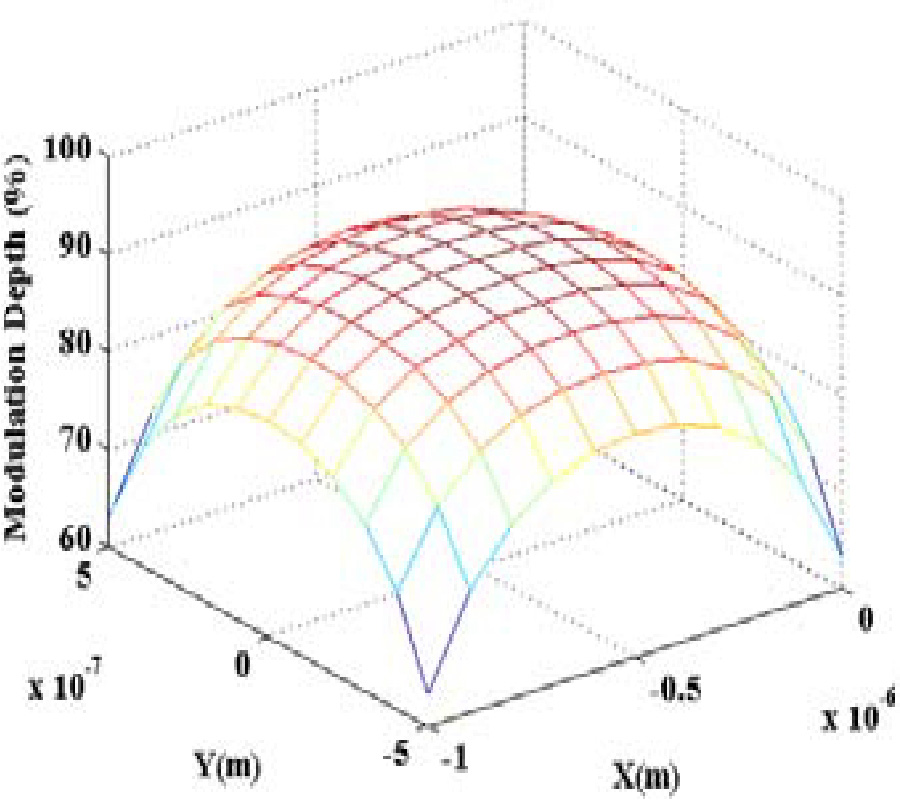
Electromagnetic band gap (EBG) structures offer unique solutions for effectively manipulating electromagnetic waves over a broad range of frequencies for a wide range of applications. However, most EBG designs reported so far either require sophisticated fabrication processes or have limited tunability and reconfigurability. In this paper, we investigate the potential to implement high performance tunable and reconfigurable EBG components using a novel optical control approach. This technology allows the generation of EBG structures through spatially-resolved photogeneration of free carriers in a semiconductor, without any complex fabrication processes. As a prototype demonstration, a reconfigurable microwave frequency tunable band-stop filter (BSF) based on photo-induced uniplanar EBG structures has been investigated through simulation. In this approach, the required EBG patterns are directly illuminated onto a Ge ground plane mounted to the bottom of a Duroid substrate for tunability using a digital light processing (DLP) projector. On the basis of HFSS simulations, the bandwidth of the BSF can be tuned by modifying the EBG pattern filling factor. The center frequency of the BSF could also be tuned from 8-12 GHz by adjusting the period of the EBG structure. In addition, two limiting factors, i.e., localized heating effects and finite lateral spatial resolution (due to carrier diffusion), that may affect the circuit performance in this technology have been investigated and discussed. By using a mesa-array structured ground plane, this approach is promising for developing tunable and reconfigurable circuits such as filters from the microwave to terahertz regimes.
PHOTO-INDUCED ELECTROMAGNETIC BAND GAP STRUCTURES FOR OPTICALLY TUNABLE MICROWAVE FILTERS
2018-04-17
PIER C
Vol. 83, 147-159
Design and Analysis of Hetero Triangle Linked Hybrid Web Fractal Antenna for Wide Band Applications
Bandhakavi Srikanth Deepak , Boddapati Taraka Phani Madhav , Vinnakota Seshu Vana Prabhakar , Pappula Lakshman , Tirunagari Anilkumar and Manikonda Venkateswara Rao
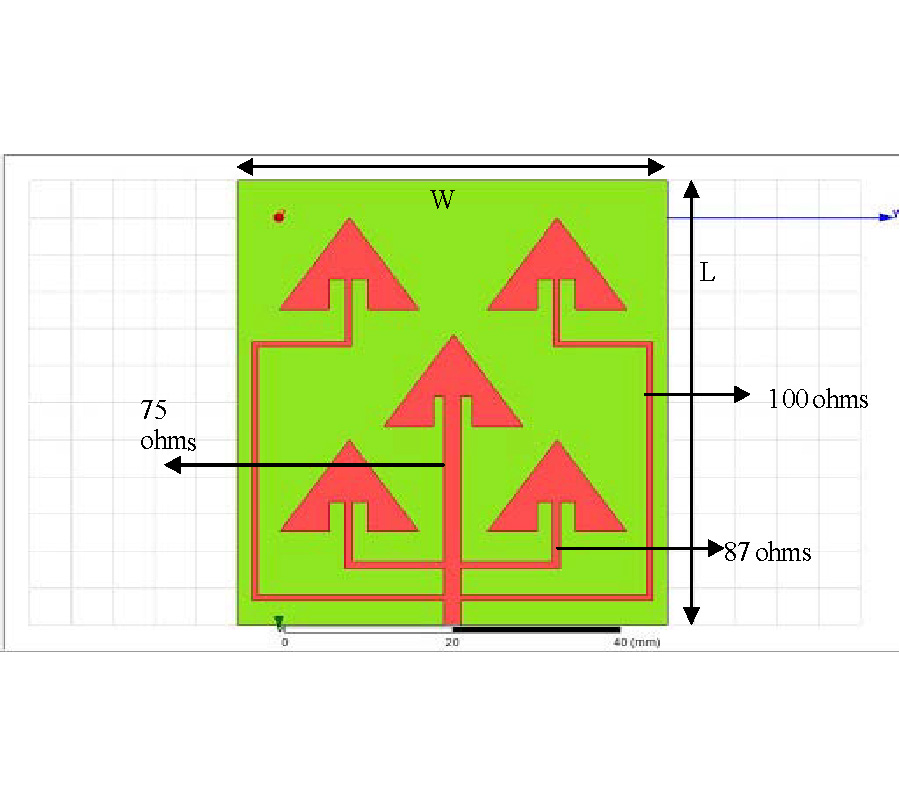
Design and analysis of a novel wide-band covering, hetero triangle linked hybrid web fractal antenna is presented in this paper. The hetero triangle linked hybrid web structure has been designed through multiple iterations in the CST MICROWAVE STUDIO electromagnetic simulation tool and has been fabricated on FR4 dielectric of εr = 4.4 with height of 1.6 mm. The proposed antenna offers a comprehensive bandwidth of 18.055 GHz, covering from 1.945 GHz to 20 GHz. It supports various applications starting from 3G, LTE, ISM, Bluetooth, Wi-Fi, WLAN (2.4-2.48 GHz) and 5.2/5.8 GHz (5.15-5.35 GHz/5.72-5.82 GHz), WiMAX operating in the 2.3/2.5 GHz (2.305-2.36 GHz/2.5-2.69 GHz), 5.5 GHz (5.25-5.85 GHz) and Satellite communication (Ku band: Uplink of 14 GHz and Downlink of 10.9-12.75 GHz). The proposed antenna provides peak realized gain of 7.17 dB with efficiency more than 78% in the operating band. The antenna parameters such as reflection coefficient, gain and radiation patterns are determined through numerical simulation, and good matching is obtained with measured results.
DESIGN AND ANALYSIS OF HETERO TRIANGLE LINKED HYBRID WEB FRACTAL ANTENNA FOR WIDE BAND APPLICATIONS
2018-04-17
PIER M
Vol. 67, 177-188
Automated Scaling Region of Interest with Iterative Edge Preserving in Forward-Backward Time-Stepping
Juliana Nawawi , Shafrida Sahrani and Kismet Anak Hong Ping
A one-shot rescaling process, namely Automated Scaling Region of Interest (AS-ROI), is combined with an inversion technique of Forward-Backward Time-Stepping (FBTS). The purpose is to alleviate the ill-posedness and nonlinearity of inverse problem by reducing the size of the unknown problem. The inversion solution is carried out to reconstruct tumour as an unknown object in coarse investigation domain of lung area which is then rescaled down corresponding to object location and size. In this paper, edge preserving methods consisting of edge preserving regularization and anisotropic diffusion are imposed alternately on the solution and reconstructed profiles to improve the current method of AS-ROI. Results on the reconstructed lungs and tumours give significant insight of the proposed work. Accuracy level for the reconstructed profiles are significantly improved in spite that spatial resolution is retained as the original setting of FBTS.
AUTOMATED SCALING REGION OF INTEREST WITH ITERATIVE EDGE PRESERVING IN FORWARD-BACKWARD TIME-STEPPING
2018-04-17
PIER M
Vol. 67, 169-176
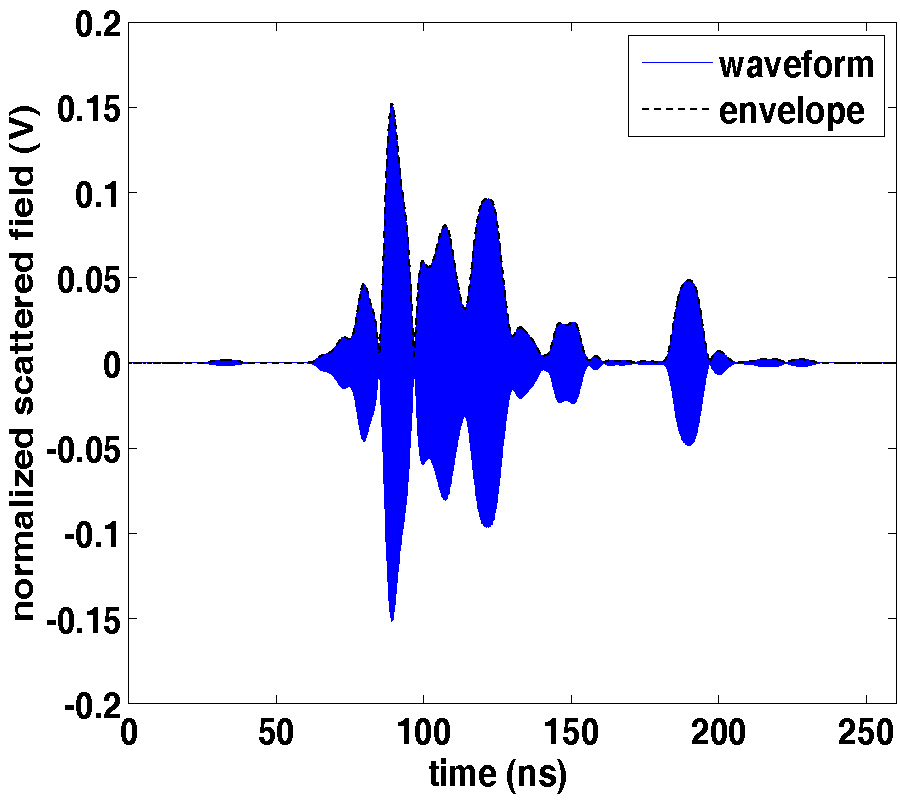
Docker-Enabled Scalable Parallel MLFMA System for RCS Evaluation
Jian Zhou , Shaowei Bie , Ling Miao , Yuhao Zhang and Jianjun Jiang
Research on RCS evaluation for electrically large objects has been a hot topic for decades. Although multilevel fast multipole algorithm (MLFMA) has been the most popular method in scattering computation, due to the limitation of both CPU speed and memory size in a single computer, realistic large targets require discretization with millions of unknowns still cannot be solved by sequential implementations of MLFMA. In this paper, we introduce a Docker-enabled parallel MLFMA computing system based on MPI, which is proved to be friendly for deployment and economical for scalability, to solve electrically large scattering problems. In addition, the capability of the proposed system has been demonstrated by several canonical examples.
DOCKER-ENABLED SCALABLE PARALLEL MLFMA SYSTEM FOR RCS EVALUATION
2018-04-16
PIER C
Vol. 83, 137-145
A Compact Switched-Beam Planar Antenna Array for Wireless Sensors Operating at Wi-Fi Band
Massimo Donelli , Toshifumi Moriyama and Mohammedhusen Manekiya
In this work, the design of a switched beam antenna array based on an optimized Butler matrix feeding network was done with a compact microstrip structure and a set of microchip antennas working at 2.45 GHz. The obtained antenna feeding network was tuned and optimized by using suitable unsupervised techniques to obtain a compact and efficient structure. A microstrip antenna array prototype composed by four elements was fabricated and experimentally tested. Good impedance matching and radiation properties have been experimentally verified with reference to the main beam steering capability.
A COMPACT SWITCHED-BEAM PLANAR ANTENNA ARRAY FOR WIRELESS SENSORS OPERATING AT WI-FI BAND
2018-04-16
PIER Letters
Vol. 75, 47-52
Design of a Multi-Mode Interference Crossing Structure for Three Periodic Dielectric Waveguides
Haibin Chen , Zhongjiao He and Wei Wang
Based on the multi-mode interference effect in the periodic dielectric waveguide, a novel waveguide crossing structure is proposed and analyzed. The structure can achieve crossing connection of three periodic dielectric waveguides at the same position with low crosstalk and relative high transmission coefficient. Based on electromagnetic numerical simulation methods, the proposed crossing structure of three periodic dielectric waveguides is calculated and analyzed in details, and at the optical communication wavelengths near 1.55 μm, crosstalks below 22 dB between the three crossing periodic dielectric waveguides are achieved.
DESIGN OF A MULTI-MODE INTERFERENCE CROSSING STRUCTURE FOR THREE PERIODIC DIELECTRIC WAVEGUIDES
2018-04-15
PIER M
Vol. 67, 157-167
Omnidirectional Compact Dual-Band Antenna Based on Dual-Frequency Unequal Split Ring Resonators for WLAN and WiMAX Applications
Patricia Castillo-Aranibar , Alejandro Garcia-Lamperez and Daniel Segovia-Vargas
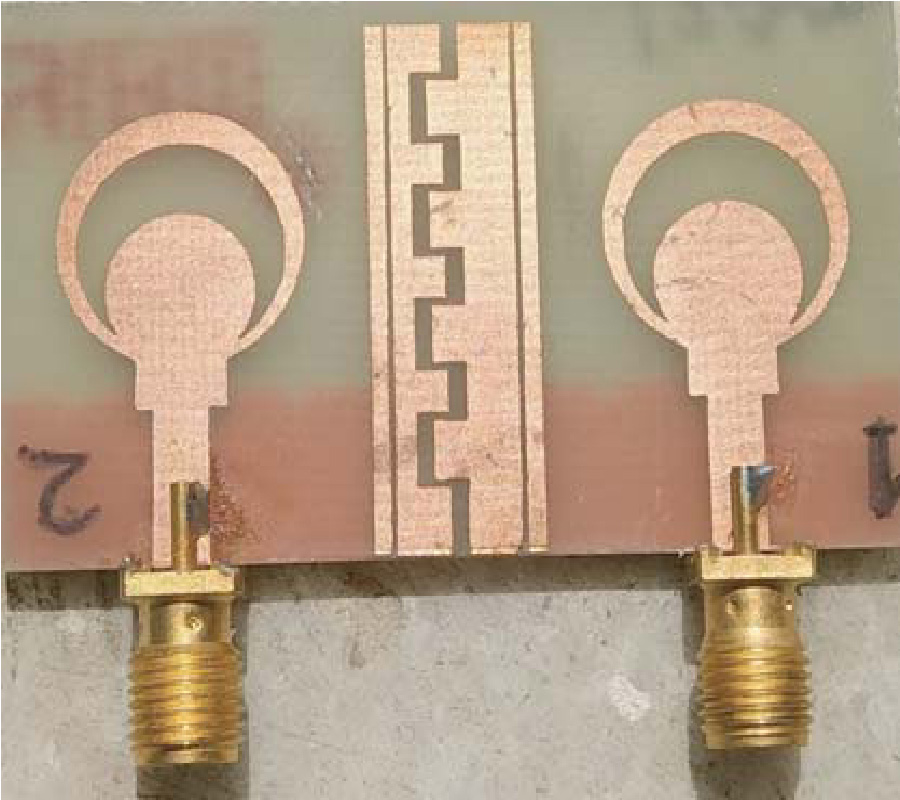
An omnidirectional compact antenna based on dual-band Split Ring Resonators (SRRs) for 2.45 GHz wireless local area network (WLAN) and 3.5 GHz worldwide interoperability for microwave access (WiMAX) applications is presented. Di erent and new properties of SRRs, such as dual-band or multi-band performance in the design of compact antennas, can be obtained by making the rings unequal and asymmetric. The dual-band SRR antenna is designed with a bandwidth control technique based on stored electromagnetic energy on the resonator rings. The obtained results show that the SRR antenna has good omnidirectional radiation pattern for both bands and good impedance bandwidth. In addition, compactness and flexibility are obtained with a simple structure of the SRRs.
OMNIDIRECTIONAL COMPACT DUAL-BAND ANTENNA BASED ON DUAL-FREQUENCY UNEQUAL SPLIT RING RESONATORS FOR WLAN AND WIMAX APPLICATIONS
2018-04-13
PIER M
Vol. 67, 147-155
Thinning a Subset of Selected Elements for Null Steering Using Binary Genetic Algorithm
Jafar Ramadhan Mohammed
Generally, the null steering is performed by controlling the amplitude and/or phase weightings of all element excitations or only a small number of them. In such cases, a need for extra RF components such as variable attenuators and variable phase shifters with each element in the array is inevitable. In this paper, an alternative method is introduced where the null steering is performed by thinning (or turning off) only a small subset of the elements in the uniform linear arrays. To find an optimum combination of active (on) and inactive (off) elements, a binary genetic algorithm is used. In large arrays, the number of required nulls is much smaller than the total number of array elements, thus only a small subset of the array elements could be sufficient for producing the required nulls rather than optimizing all the array elements. By this way, a faster convergence speed of the optimizer and lowest peak sidelobe level can be obtained. The effectiveness of the proposed method with various subset configurations will be demonstrated and compared with some standard null steering methods.
THINNING A SUBSET OF SELECTED ELEMENTS FOR NULL STEERING USING BINARY GENETIC ALGORITHM
2018-04-13
PIER
Vol. 161, 87-100
Towards Robust Human Millimeter Wave Imaging Inspection System in Real Time with Deep Learning
Chenyu Liu , Ming-Hui Yang and Xiao-Wei Sun
With the ever-growing requirements of human security check in public, near-field millimeter wave (MMW) imaging techniques have been developing rapidly in recent years. Due to the lack of MMW images, low resolution and indistinguishable texture in most MMW images, it is still a great challenge to do high performance object detection task on MMW images. In this paper, we propose a novel framework to automatically detect concealed weapons and potential dangerous objects based on a single human millimeter wave image, in which a deep convolutional neural network (CNN) is presented to simultaneously extract features, detect suspicious objects, and give the confidence score. Unlike traditional optical image level solutions, we comprehensively analyze the original MMW data for object representation, incorporate domain-specific knowledge to design and train our network. Moreover, combined with the modern focal loss theory, we devise an effective loss function elaborately to optimize our model. Experimental results on both our dataset and real world data show the effectiveness and improvement of our method compared with the state-of-the-arts.
TOWARDS ROBUST HUMAN MILLIMETER WAVE IMAGING INSPECTION SYSTEM IN REAL TIME WITH DEEP LEARNING
2018-04-12
PIER C
Vol. 83, 125-136
Algebraic Algorithm for Mixed Near-Field and Far-Field Sources Classification and Localization
Kai Wang , Ling Wang , Zhaolin Zhang and Jian Xie
Using uniform linear array (ULA), a passive localization algorithm is presented for mixed far-field (FF) and near-field (NF) signals scenarios. Based on the high-order cumulant (HOC) technique, a special Hermite matrix is constructed by three fourth-order cumulant matrices, which are calculated by dividing the ULA into two sub-arrays. Then, the special matrix of signals is decomposed to obtain the source subspace. According to ESPRIT algorithm, two transformation matrices of all sub-arrays can be obtained. Meanwhile, the two transformation matrixes could be used to calculate the range and angles of arrival (AOA) of NF sources, as well as AOAs of FF sources. Moreover, compared with twostage MUSIC (TSMUSIC) and four-order cumulant MUSIC method, the proposed algorithm has higher accuracy for localisation of both FF and NF sources without any spectral search.
ALGEBRAIC ALGORITHM FOR MIXED NEAR-FIELD AND FAR-FIELD SOURCES CLASSIFICATION AND LOCALIZATION
2018-04-12
PIER C
Vol. 83, 113-124
A Compact Ka-Band TDD Transceiver System Module with Attractive Temperature Characteristic
Yin Tian , Tao Dang , Guang-Ming Wang , Jie Yang , Wei Tong , Zhigang Wang , Yuehang Xu , Yu Cao , Yijun Chen , Lei Han , Dong Chen and Yexi Song
This paper presents a Ka-band TDD transceiver system module for the secondary surveillance radar application with attractive temperature characteristic. Four multifunction chips and a MEMS filter are designed and fabricated in GaAs pseudomorphic high electron mobility transistor (pHEMT) process and MEMS technology in this work, respectively. These multifunction chips and MEMS filter with some other commercial chips are assembled in a compact cavity to form the transceiver system. The temperature characteristics of the designed chips and the whole transceiver module are measured respectively in this work. Benefiting from the designed temperature compensation circuits on the chips, the transceiver is able to work from -55˚C to +75˚C with little performance fluctuation. The noise figure of the receiver is less than 3.7 dB in the 400 MHz working bandwidth. Its dynamic range is more than 59 dB with more than 23.9 dB power gain. The maximum output power of the transmitter is larger than 30.3 dBm. The system only has two input/output ports and one control bus, which is suitable for the large-scale system integration.
A COMPACT KA-BAND TDD TRANSCEIVER SYSTEM MODULE WITH ATTRACTIVE TEMPERATURE CHARACTERISTIC
2018-04-12
PIER B
Vol. 80, 113-131
Perturbations of Ambient Magnetic Field Resulted from a Ball Motion in a Conductive Liquid Half-Space
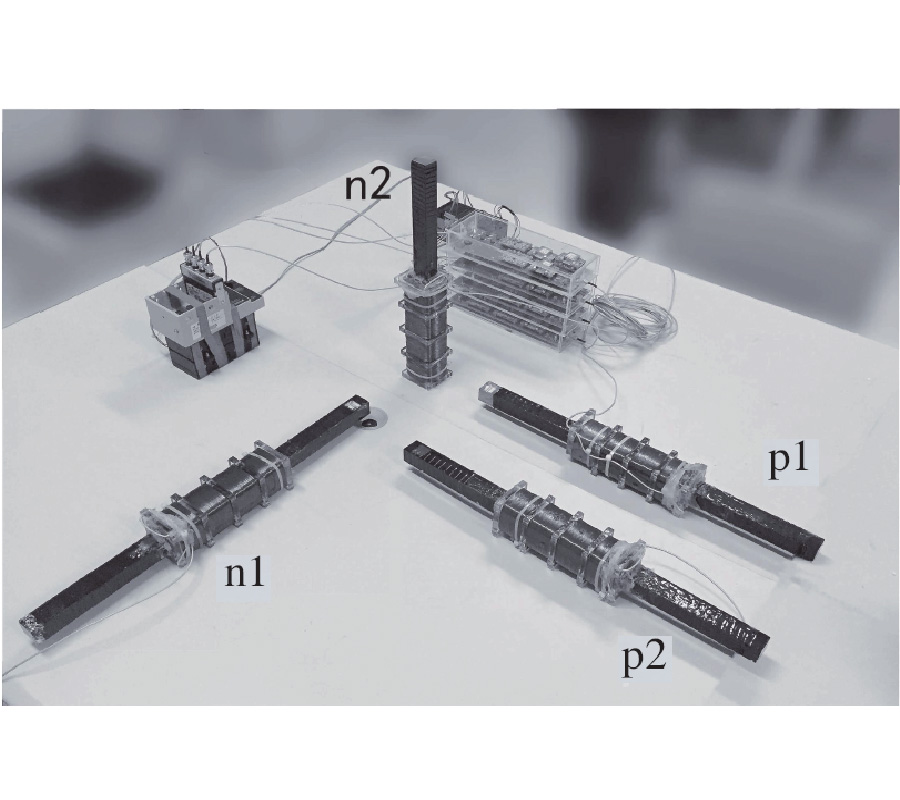
Vadim V. Surkov , Valery M. Sorokin and Alexey K. Yashchenko
We theoretically analyze perturbations of ambient magnetic field due to electric currents caused by motion of a dielectric ball in a conductive fluid half-space. The approximate analytical solution of the problem has been derived for the case of arbitrary orientation of the ambient magnetic field and under the requirement that the fluid flow around the ball is laminar and potential in character. We examine spatiotemporal distribution of these perturbations and their dependence on both the depth and distance from the moving ball. The amplitudes of electromagnetic perturbations generated by the fluid flow around the ball have been compared with that resulting from gravity waves in the fluid.
PERTURBATIONS OF AMBIENT MAGNETIC FIELD RESULTED FROM A BALL MOTION IN A CONDUCTIVE LIQUID HALF-SPACE
2018-04-12
PIER M
Vol. 67, 137-146
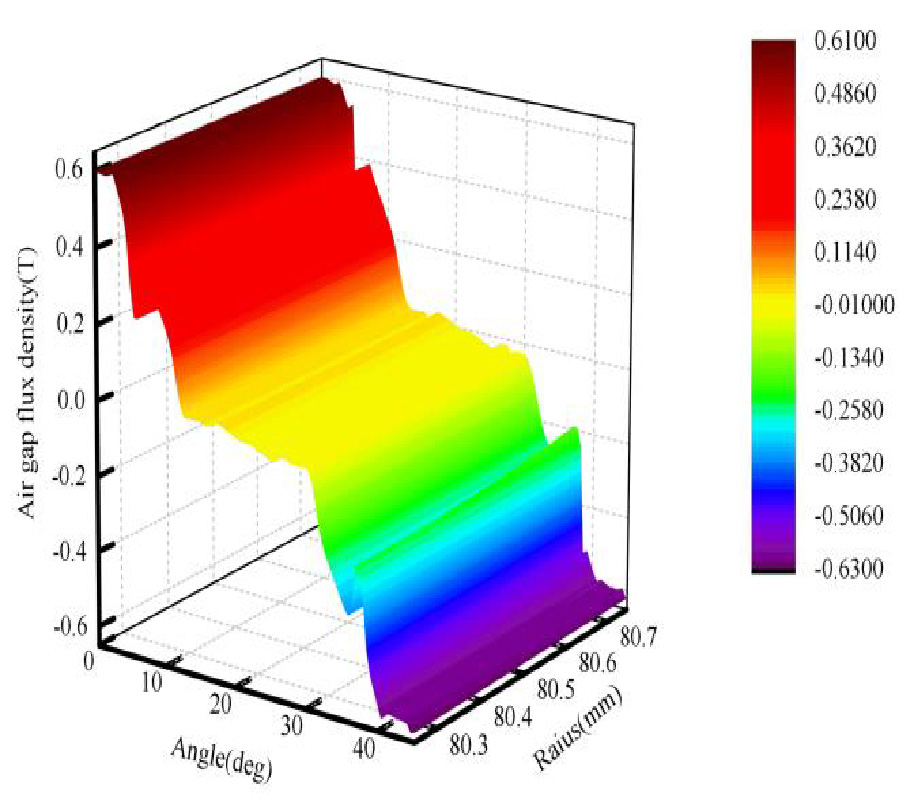
Design and Performance Comparison of Permanent Magnet Brushless Motors and Switched Reluctance Motors for Extended Temperature Applications
Sree Ranjini K S and Sankaravadivel Murugan
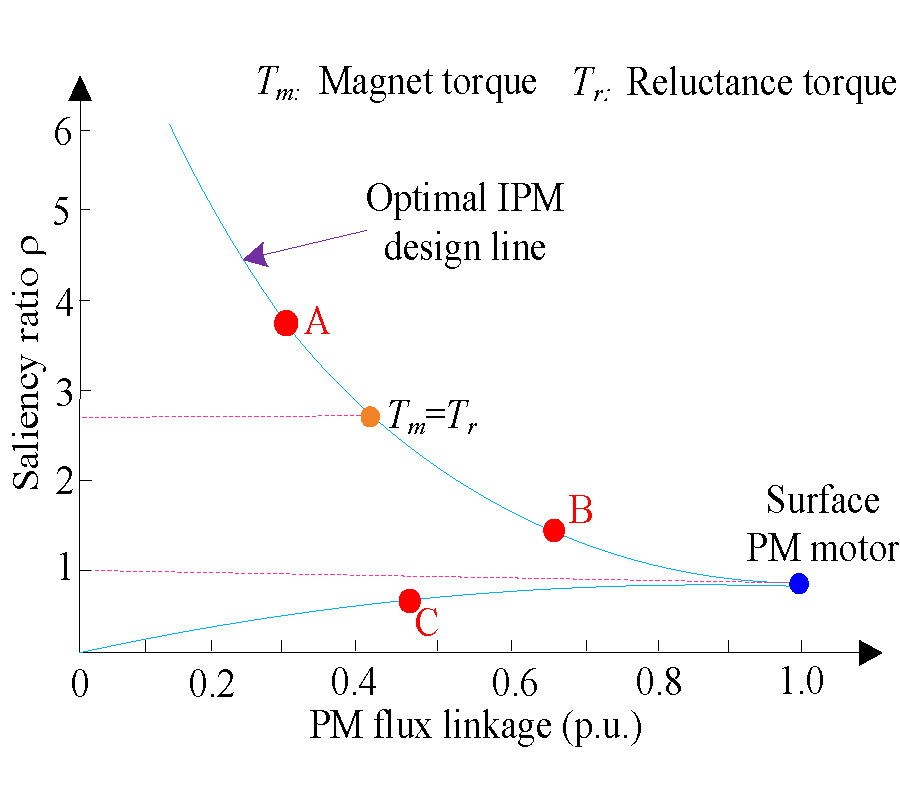
In-Service Inspection (ISI) plays a critical role in ensuring the safety and security of nuclear power plant and personnel. The limited access and high ambient temperature conditions impel the need for remote inspection techniques using semi automated vehicle. The electrical actuators driving the ISI robotic vehicle must satisfy the requirements of high operating temperature, high torque density,compact size and low weight.Currently, permanent magnet brushless motors are used due to its compact size and high eciency. However, due to risk of demagnetization at high temperature as well as due to depleting resources of rare earth material alternate topologies without using permanent magnets shall be considered. This paper investigates the performance of Permanent Magnet (PM) brushless motor and Switched Reluctance (SR) motors for high temperature applications. SR motor is designed as per fundamental design equations satisfying the application requirements. Electromagnetic performance isveri ed by Finite Element Analysis (FEA) and thermal performance is veri ed by lumped parameter thermal analysis. Finally the performance of SR motor is compared with PM motor in terms of torque, eciency, weight,cost and temperature rise.
DESIGN AND PERFORMANCE COMPARISON OF PERMANENT MAGNET BRUSHLESS MOTORS AND SWITCHED RELUCTANCE MOTORS FOR EXTENDED TEMPERATURE APPLICATIONS
2018-04-11
PIER C
Vol. 83, 97-111
Reconstruction of 3D Anisotropic Objects by VIE and Model-Based Inversion Methods
Lin E. Sun and Mei Song Tong
A model-based inversion algorithm combined with the curl-conforming volume integral equation method is presented for the reconstruction of 3D anisotropic objects. The forward algorithm utilizes the curl-conforming volume integral equation method. The inversion algorithm is based on the Gauss-Newton method. The approach is applied to the reconstruction of the permittivities of 3D anisotropic objects. Moreover, sensitivity analysis of the data from different polarizations of transmitters and receivers to the anisotropic properties is performed. Numerical examples show the effectiveness of the inversion algorithm and demonstrate the sensitivities of data from different transmitter and receiver pairs to the anisotropy.
RECONSTRUCTION OF 3D ANISOTROPIC OBJECTS BY VIE AND MODEL-BASED INVERSION METHODS
2018-04-11
PIER Letters
Vol. 75, 39-45
Compact Microstrip UWB Power Divider with Dual Notched Bands Using Dual-Mode Resonator
Lihua Wu , Shanqing Wang , Luetao Li and Chengpei Tang
In this paper, a novel ultra-wideband (UWB) power divider with dual notched bands using square ring multiple-mode resonators (SRMMRs) is presented. The characteristics of the proposed SRMMRs are investigated by using even- and odd-mode analysis. Then, the initial UWB performance is achieved by introducing SRMMRs to the basic Wilkinson power divider. Finally, two desired notched bands inside the UWB passband are achieved by embedding a pair of coupled dual-mode stepped impedance resonators (DMSIRs) into the SRMMRs. The central frequencies of the notched bands can be easily controlled by the electrical length of the DMSIRs. To validate the design concept, a novel compact UWB power divider with dual notched bands centered at frequencies of 5.8 GHz and 8.0 GHz is designed and measured. The simulated and measured results indicate that it has a low insertion loss and good return loss performance at all the three ports, and a high isolation between the two output ports across the UWB bandwidth from 3.1 to 10.6 GHz with a small size of 0.46λg×0.69λg, where λg is the guided wavelength at 6.85 GHz.
COMPACT MICROSTRIP UWB POWER DIVIDER WITH DUAL NOTCHED BANDS USING DUAL-MODE RESONATOR
2018-04-11
PIER Letters
Vol. 75, 33-38
An Omnidirectional Printed Collinear Microstrip Antenna Array
Davoud Zarifi and Ali Ahmadi
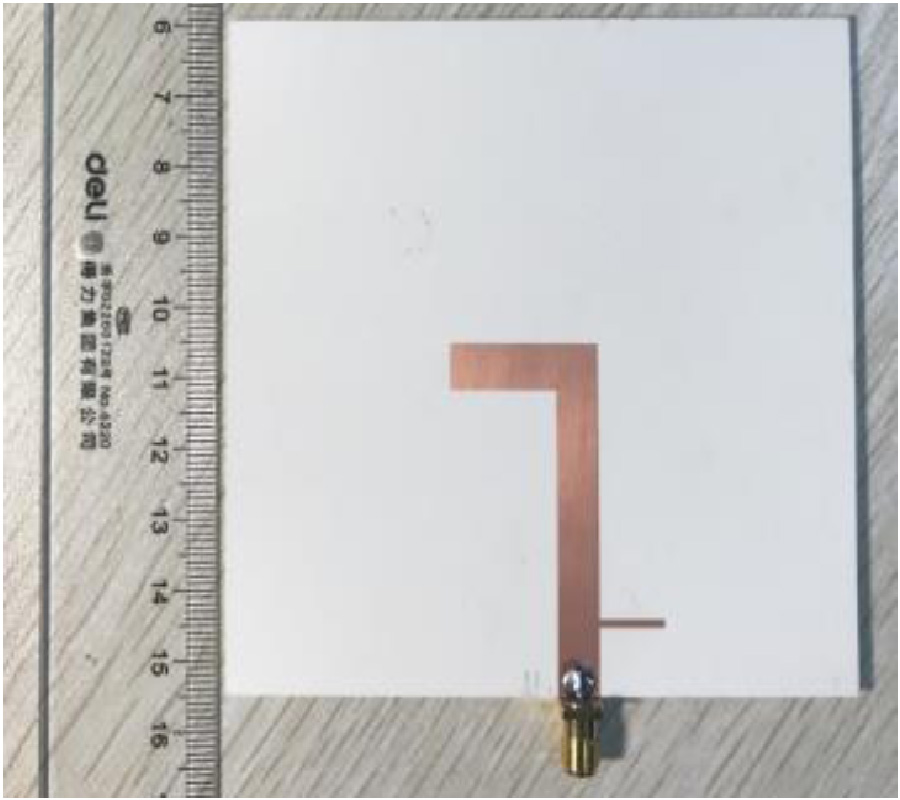
An omnidirectional antenna array is proposed in this paper. The antenna unit of the array is composed of ten radiation patches and the associated microstrip feeding network. Some gaps between top and back patches are introduced in the antenna to improve matching, ease of feeding and enhance the bandwidth. Microwave experiments and numerical simulations are performed to demonstrate antenna functionalities. The fabricated antenna exhibits a bandwidth of 14% (1-1.15 GHz) for VSWR ≤ 1.5, with a gain around 6 dBi. The results are valuable for the design and evaluation of omnidirectional planar antenna arrays with good impedance matching, which are important for airborne and navigation applications.
AN OMNIDIRECTIONAL PRINTED COLLINEAR MICROSTRIP ANTENNA ARRAY