Search Results(13792)

2018-04-02
PIER C
Vol. 82, 185-197
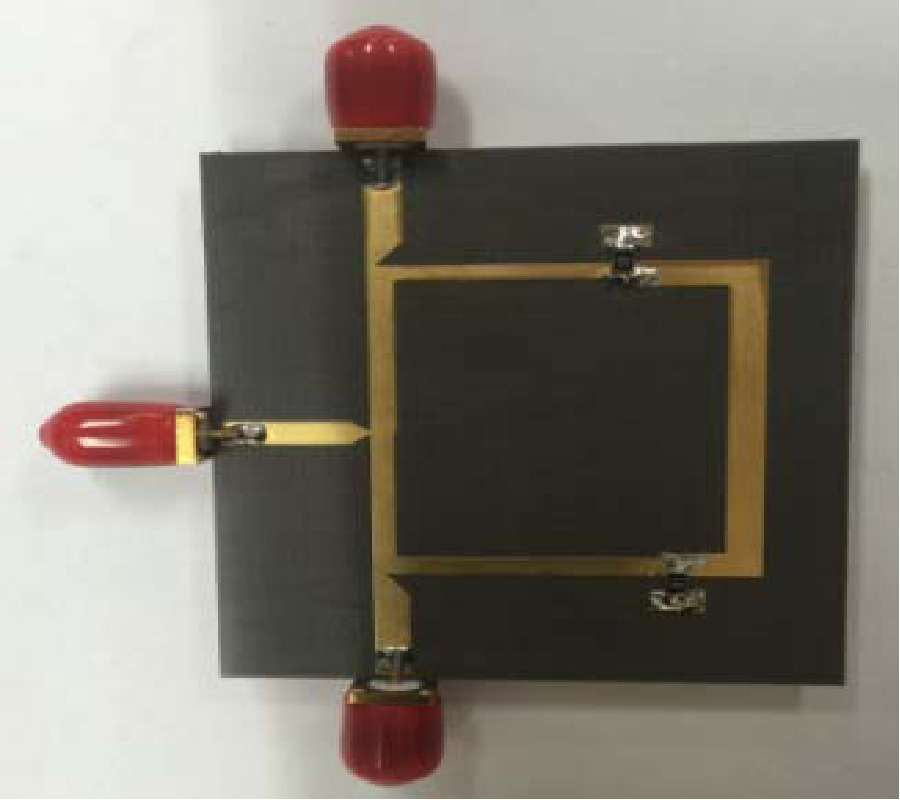
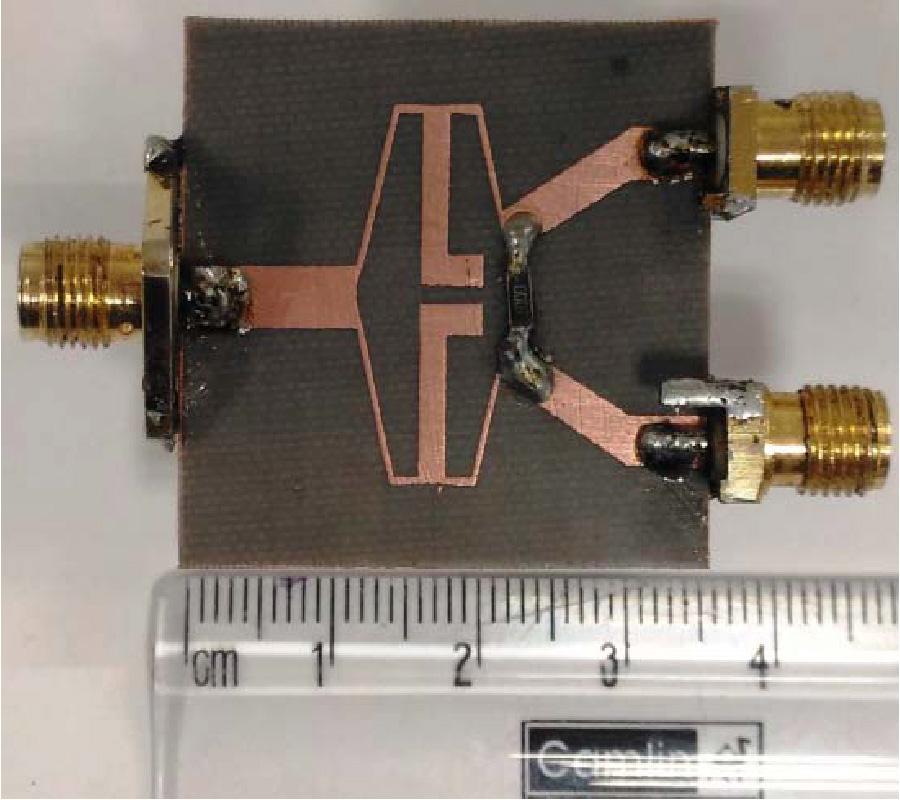
An 8 GHz Front-End Module with High-Performance T/R Switch and LNA
He Qi , Jun-Ping Geng , Weiren Zhu , Liang Liu , Ziheng Ding , Xianling Liang , Tingting Fan , Xiangzhong Fang and Rong-Hong Jin
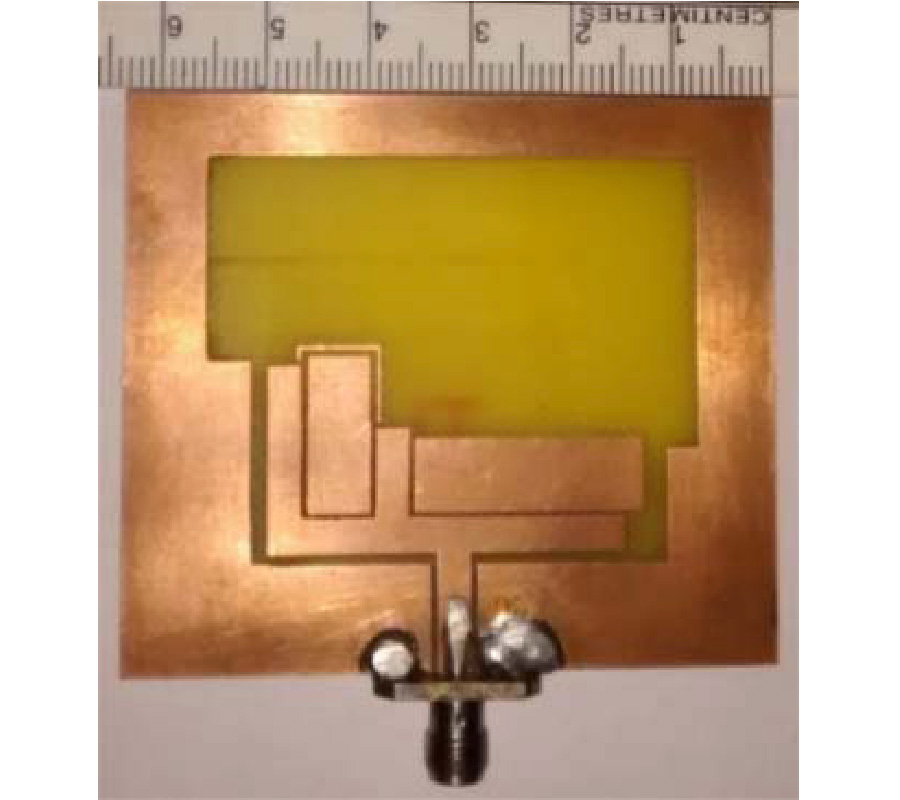
A front-end module (FEM) consisting of a single-pole-double-throw (SPDT) switch and a low noise amplifier (LNA) with good performance is proposed. The SPDT switch is based on PIN diodes, which are mounted on impedance transforming lines parallelled to the main transmission lines with an asymmetric topology. This asymmetric topology is utilized to achieve low insertion loss and high transmit-to-receive isolation. The interstage matching of switch and LNA is designed to achieve low noise figure. To validate the design, the FEM is simulated, fabricated and measured. The experiment results show that, within the range of 7.8-8.1 GHz, the FEM achieves a gain of 22 dB and noise figure of 1.9 dB in receiving mode, with an insertion loss of 0.9 dB and isolation of 40 dB in transmitting mode. In addition, the FEM can handle up to 4 W transmitting power at 8 GHz with good linearity.
AN 8 GHZ FRONT-END MODULE WITH HIGH-PERFORMANCE T/R SWITCH AND LNA
2018-04-02
PIER M
Vol. 66, 173-182
Direction Finding for Bistatic MIMO Radar with Non-Circular Sources
Hao Chen , Xinggan Zhang , Yechao Bai and Jinji Ma
A new direction finding method for multiple-input multiple-output (MIMO) radar with non-circular sources is proposed. The method takes advantage of the properties of non-circular sources to formulate a new virtual array. Then based on the ESPRIT like algorithm, the bearing of targets is estimated. In addition, the direction of departure (DOD) and direction of arrival (DOA) are paired automatically. Compared with the uniform circular array estimation of signal parameters by rotational invariance techniques (UCA-ESPRIT), the proposed method achieves better estimation performance and can deal with more sources. We also provide the Cramer-Rao Lower Bound (CRLB) for comparison. Simulation results demonstrate the effectiveness and feasibility of the proposed method.
DIRECTION FINDING FOR BISTATIC MIMO RADAR WITH NON-CIRCULAR SOURCES
2018-04-01
PIER C
Vol. 82, 171-183
Design and Development of a Unit Element Planar Folded Dipole End-Fired Antenna for Aircraft Collision Avoidance System
Debajit De and Prasanna Kumar Sahu
Aircraft collision avoidance system is an airborne system which is designed to provide the service as a last defense equipment for avoiding mid-air collisions between aircraft. End-fired antenna is suitable to be used in such airborne systems where low aerodynamic drag is urgently required. An effort to develop such an antenna using dipole elements is presented in this paper. Here a unit element planar folded dipole antenna is presented which radiates in the end-fire direction. Split ring resonators inspired artificial materials are incorporated in the design to improve the directivity performance of the proposed antenna, and those materials are loaded in the same plane of the primary dipole radiator. Here suppression of surface wave in the antenna takes place, which results in gain enhancement and also reduction of side lobes which make radiation pattern better. All these proposed antennas are designed and simulated in CST Microwave Studio (MWS) EM tool which is based on time domain solver. The performance and other antenna characteristics have been explored from the simulation results followed by the antenna fabrication and measurement. Quite good agreement is achieved between the simulated and measured results. Much better performance characteristics make this proposed antenna a good candidate for this application.
DESIGN AND DEVELOPMENT OF A UNIT ELEMENT PLANAR FOLDED DIPOLE END-FIRED ANTENNA FOR AIRCRAFT COLLISION AVOIDANCE SYSTEM
2018-03-31
PIER C
Vol. 82, 155-169
Improved Adaptive Signal Power Loss Prediction Using Combined Vector Statistics Based Smoothing and Neural Network Approach
Virginia Chika Ebhota , Joseph Isabona and Viranjay M. Srivastava
Predicting signal power loss between the transmitter and receiver with minimal error is an important issue in telecommunication network planning and optimization process. In recent years, median order statistic filters have been exploited as a preprocessing constituent for analyzing signals. This work presents a resourceful predictive model, built on multi-layer perceptron (MLP) network with vector order statistic filter based preprocessing technique for improved prediction of measured signal power loss in a microcellular LTE network environment. The predictive model is termed Vector statistic filters multilayer perceptron (VSF-MLP). In terms of some essential performance evaluation indices such as the correlation coefficient, root-mean-square error and coefficient of efficiency, results show that VSF-MLP model prediction performs considerably better than the standard MLP model prediction approach on signal power data collected from different study locations in typical urban terrain.
IMPROVED ADAPTIVE SIGNAL POWER LOSS PREDICTION USING COMBINED VECTOR STATISTICS BASED SMOOTHING AND NEURAL NETWORK APPROACH
2018-03-30
PIER B
Vol. 80, 79-99
Electromagnetic Signatures of Human Skin in the Millimeter Wave Band 80-100 GHz
Amani Yousef Owda , Neil Salmon and Nacer Ddine Rezgui
Due to changes in global security requirements attention is turning to new means by which anomalies on the human body might be identified. For security screening systems operating in the millimeter wave band anomalies can be identified by measuring the emissivities of subjects. As the interaction of millimeter waves with the human body is only a fraction of a millimeter into the skin and clothing has a small, but known effect, precise measurement of the emission and reflection of this radiation will allow comparisons with the norm for that region of the body and person category. A technique to measure the human skin emissivity in vivo over the frequency band 80 GHz to 100 GHz is developed and described. The mean emissivity values of the skin of a sample of 60 healthy participants (36 males and 24 females) measured using a 90 GHz calibrated radiometer was found to range from 0.17±0.005 to 0.68±0.005. The lower values of emissivity are a result of measuring particularly thin skin on the inner wrist, volar side of the forearm, and back of hand, whereas higher values of emissivity are results of measuring thick skin on the outer wrist, dorsal surface of the forearm, and palm of hand. The mean differences in the emissivity between Asian and European male participants were calculated to be in the range of 0.04 to 0.11 over all measurement locations. Experimental measurements of the emissivity for male and female participants having normal and high body mass index indicate that the mean differences in the emissivity are in the range of 0.05 to 0.15 for all measurement locations. These results show the quantitative variations in the skin emissivity between locations, gender, and individuals. The mean differences in the emissivity values between dry and wet skin on the palm of hand and back of hand regions were found to be 0.143 and 0.066 respectively. These results confirm that radiometry can, as a non-contact method, identify surfaces attached to the human skin in tens of seconds. These results indicate a route to machine anomaly detection that may increase the through-put speed, the detection probabilities and reduce the false alarm rates in security screening portals.
ELECTROMAGNETIC SIGNATURES OF HUMAN SKIN IN THE MILLIMETER WAVE BAND 80-100 GHZ
2018-03-30
PIER M
Vol. 66, 163-172
Four-Wave Mixing Suppression Method Based on Odd-Even Channels Arrangement Strategy
Noora Salim , Haider J. Abd , Ahmed N. Aljamal and Alaaldin H. Jaber
In this work, a new technique in suppressing the effect of four-wave mixing (FWM) by Odd-Even Channels Arrangement (OEC) is presented. The proposed technique is verified mathematically and by simulations with other recent techniques which are input power and channel spacing under the same input parameters. Simulation was done with the power variation effect, and the bit rate was 100 Gb\s. Based on theoretical and simulation analyses, FWM power was drastically reduced by more than 10 dB when OEC was conducted. In terms of system performance, OEC offered better performance than previous techniques in both theoretical and simulation analyses.
FOUR-WAVE MIXING SUPPRESSION METHOD BASED ON ODD-EVEN CHANNELS ARRANGEMENT STRATEGY
2018-03-29
PIER M
Vol. 66, 151-161
A `Divide and Conquer' Regularization Imaging Method for Forward-Looking Scanning Radar Azimuth Super-Resolution
Ke Tan , Wenchao Li , Yulin Huang , Qian Zhang and Jianyu Yang
Sparse regularization imaging method (SRIM) is an effective approach to implement azimuth super-resolution for forward-looking scanning radar. However, for the scene that contains adjacent strong targets in the continuous weak background, SRIM may destroy the structure of the scene when trying to separate the closely located targets. In this paper, a divide and conquer regularization imaging method (DC-RIM) is proposed to solve this problem. Firstly, the data are divided into two channels by the mean-variance segmentation method. Normally, we consider that the data of channel I contain strong scatterers and that the data of channel II contain weak background. Afterwards, SRIM is conducted on channel I to distinguish the targets. For the data of channel II, a region enhancement regularization method is particularly proposed to acquire a good structure of the scene by making use of two-order gradient information of the data. Finally, a good imaging result can be obtained by combining the results of two channels. Experiments based on both synthetic and real data are given to verify the effectiveness of the method.
A `DIVIDE AND CONQUER' REGULARIZATION IMAGING METHOD FOR FORWARD-LOOKING SCANNING RADAR AZIMUTH SUPER-RESOLUTION
2018-03-28
PIER C
Vol. 82, 145-153
Compact QMSIW Based Antennas for WLAN/WBAN Applications
Divya Chaturvedi and Singaravelu Raghavan
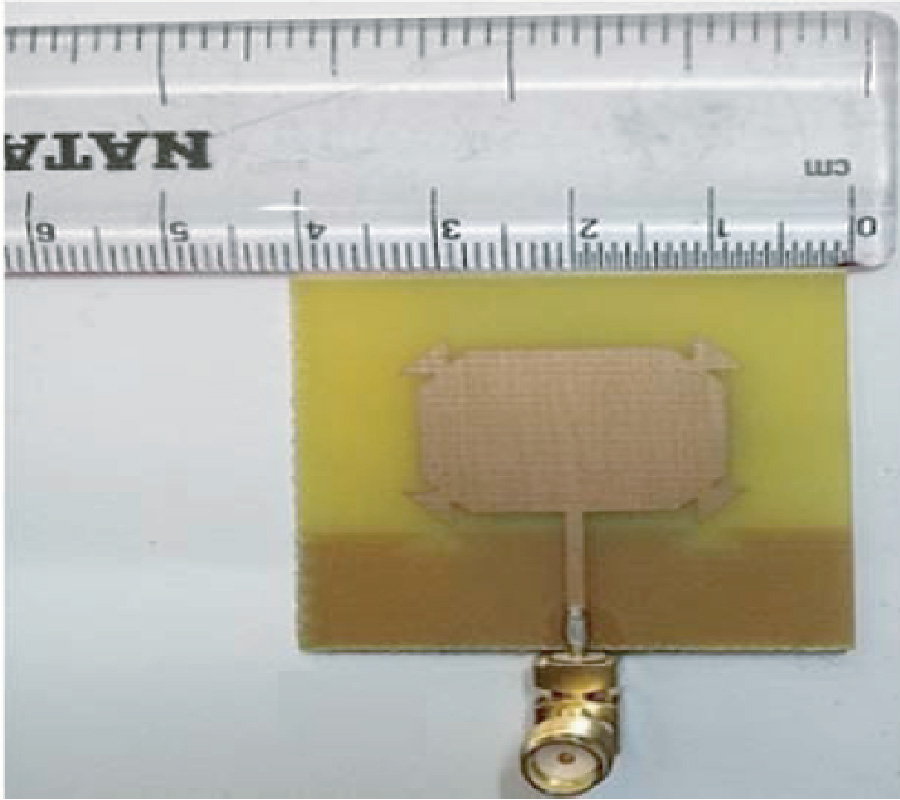
In this paper, two compact planar substrate integrated waveguide (SIW) cavity-backed antennas are proposed for wireless local area network (WLAN) at 5.5 GHz and wireless body area network (WBAN) at 5.8 GHz. The miniaturization is achieved with the concept of quarter-mode-topology, and the size of the cavity is reduced up to one-fourth of the circular SIW cavity. A L-shaped slot is etched on the top plane for miniaturization, and antenna-1 is realized which resonates at 5.5 GHz. A metal strip has been added in the middle section of the slot, and antenna-2 is realized, which resonates at 5.8 GHz. Both proposed antennas are tested in free space, while the performance of antenna-2 is investigated for on-body condition. In free space, the measured impedance bandwidths of the antenna are 160 MHz and 210 MHz at 5.5 GHz and 5.8 GHz, respectively. The radiation efficiency of the antenna is 89.4% in free space and 57% on phantom at 5.8 GHz. Both measured and simulated results are observed, and they are in a good agreement.
COMPACT QMSIW BASED ANTENNAS FOR WLAN/WBAN APPLICATIONS
2018-03-28
PIER M
Vol. 66, 143-150
Experimental Study of Metal-to-Metal Contact Shapes Effects on Passive Intermodulation
Gilles Duteil , Patrick Le Cam , Franck Colombel , Stephane Avrillon , Jerome Plet and Jean Pierre Harel
This paper describes an experimental study of passive intermodulation due to metal-tometal contacts with focus on shape influence. This study investigates PIM value of different contact geometric profiles and different contact areas versus normal forces. A complete description of profiles used is done to achieve a relationship between PIM level and contact shape.
EXPERIMENTAL STUDY OF METAL-TO-METAL CONTACT SHAPES EFFECTS ON PASSIVE INTERMODULATION
2018-03-28
PIER M
Vol. 66, 127-142
Torque Constant Density in Different Type of Double Stator Permanent Magnet Brushless DC Motor
Raja Nor Firdaus , Nor Aishah Md Zuki , Rizuan Che Ahmad Suhairi , Fairul Azhar bin Abdul Shukor , Siti Zulaika Mat Isa , Erwan Bin Sulaiman and Zulkufli Zakaria
This paper discusses the torque constant density in different types of Double Stator Permanent Magnet Brushless DC Motor (DSPM) which are designed for portable applications. It should have high torque constant density so that it will have higher torque as well as lightweight. Previously, there have been many DSPM motor designs that only focus on increasing the torque constant and torque density. However, it is unclear which DSPM motor is the best since the torque constant and torque density are different parameters. Torque constant density will include the torque, volume and current of the motor. The objective of this research is to analyze different types of DSPM motors including the proposed Slotted Rotor DSPM motor (DSPM-SR) which produces higher torque constant density. Besides that, this paper also describes in detail the torque constant density from an electromagnetic point of view. Finite Element Analysis (FEA) and analytical calculation are used to simulate the characteristic of various double stators. The result shows that DSPM-SR has 90.5% higher back electromotive force (emf) and 87.5% higher torque than DSPM-ST. Besides that, the DSPM-SR topology has higher torque constant density about 67.27% than other DSPM motors. As a conclusion, this paper provides the overview and comparison of torque constant densities of various DSPM motors.
TORQUE CONSTANT DENSITY IN DIFFERENT TYPE OF DOUBLE STATOR PERMANENT MAGNET BRUSHLESS DC MOTOR
2018-03-27
PIER Letters
Vol. 74, 111-115
Realization of Ku-Band Ortho Mode Transducer with High Port to Port Isolation
Pramendra Kumar Verma and Raj Kumar
Present paper describes the design, development and evaluation of a wideband, compact Ku-band orthomode transducer (OMT) for SATCOM application. It consists of a square waveguide output section, square waveguide to rectangular waveguide transition, straight waveguide port and an orthogonally coupled port. A tapered waveguide section has been used to couple the orthogonal RF (Radio Frequency) signal to the common port. The designed OMT has a transmit port with frequency band 13.75 GHz-14.5 GHz and a receive port with frequency band 10.95-12.5 GHz. Finite element method based ANSYS's High Frequency Structure Simulator (HFSS) EM software has been used for simulation and optimization of OMT. Measured reflection coefficients of OMT over transmission and reception frequency bands are better than -15 dB and -12 dB, respectively. Designed OMT has port to port isolation better than 45 dB against 30 dB isolation of conventional OMT available in market.
REALIZATION OF KU-BAND ORTHO MODE TRANSDUCER WITH HIGH PORT TO PORT ISOLATION
2018-03-27
PIER Letters
Vol. 74, 107-110
Radar Cross Section Reduction Using Polarization Cancellation Approach
Mohammad Khalaj-Amirhosseini and Mostafa Khanjarian
A new approach is presented to reduce the monostatic radar cross section (RCS) of a metal surface. In this approach, called Polarization Cancelation, the polarization of incident wave is rotated by several angles so that the reflected wave becomes zero in direction of incidence. The characteristics and mechanism of the polarization rotation and RCS reduction are investigated. The presented approach is verified by simulation and measurement results.
RADAR CROSS SECTION REDUCTION USING POLARIZATION CANCELLATION APPROACH
2018-03-27
PIER M
Vol. 66, 119-126
Two Dimensional Green's Function for a Half Space Geometry Due to Two Different Non-Integer Dimensional Spaces
Muhammad Fiaz and Qaisar Abbas Naqvi
A two-dimensional Green's function for a half space geometry, comprising planar interface only due to two different non-integer dimensional spaces, has been derived. Medium hosting the time harmonic electric line source and planar interface is homogeneous and isotropic. Radiated field is written in terms of unknown spectrum of plane waves. Unknown spectrum functions are determined using the related boundary conditions. It has been shown that although wavenumbers of both half spaces are same, due to difference of dimensions of the two half spaces, reflection and transmission occur. When dimensions of both half spaces are taken equal to two, derived expressions yield field radiated by a line source in an unbounded homogeneous medium with integer dimensional space.
TWO DIMENSIONAL GREEN'S FUNCTION FOR A HALF SPACE GEOMETRY DUE TO TWO DIFFERENT NON-INTEGER DIMENSIONAL SPACES
2018-03-27
PIER M
Vol. 66, 109-118
Symplectic Pseudospectral Time-Domain Scheme for Solving Time-Dependent Schrodinger Equation
Jing Shen , Wei E. I. Sha , Xiaojing Kuang , Jinhua Hu , Zhixiang Huang and Xian-Liang Wu
A symplectic pseudospectral time-domain (SPSTD) scheme is developed to solve Schrodinger equation. Instead of spatial finite differences in conventional finite-difference time-domain (FDTD) methods, fast Fourier transform is used to calculate spatial derivatives. In time domain, the scheme adopts high-order symplectic integrators to simulate time evolution of Schrodinger equation. A detailed numerical study on the eigenvalue problems of 1D quantum well and 3D harmonic oscillator is carried out. The simulation results strongly confirm the advantages of the SPSTD scheme over the traditional PSTD method and FDTD approach. Furthermore, by comparing to the traditional PSTD method and the non-symplectic Runge-Kutta (RK) method, the explicit SPSTD scheme, which is an infinite order of accuracy in space domain and energy-conserving in time domain, is well suited for a long-term simulation.
SYMPLECTIC PSEUDOSPECTRAL TIME-DOMAIN SCHEME FOR SOLVING TIME-DEPENDENT SCHRODINGER EQUATION
2018-03-27
PIER M
Vol. 66, 99-107
A Novel Method for Cogging Torque Reduction in Permanent Magnet Brushless DC Motor Using T-Shaped Bifurcation in Stator Teeth
M. Arun Noyal Doss , R. Brindha , K. Mohanraj , Shubranshu Sekhar Dash and K. M. Kavya
A variety of techniques are available to reduce cogging torque in Permanent Magnet Brushless DC (PMBLDC) motors. In general, all the techniques are meant for effectively reducing the cogging torque. This paper presents a new technique for cogging torque reduction in a radial flux surface mounted PMBLDC motor by applying the proposed T-shaped bifurcation method in the stator teeth of a PMBLDC motor. The Finite Element Analysis (FEA) is carried out for the T-shaped bifurcation method applied to a PMBLDC motor, and analysis is done using Virtual Work (VW) method. The CAD software package MagNet has been used to completely analyze the T-shaped bifurcation based PMBLDC motor. FEA and CAD simulated results are compared for the reduction of cogging torque values. It is found that the cogging torque reductions in the two methods are nearly the same. The cogging torque and the flux density values of the motor calculated using the proposed T-shaped bifurcation method are compared with the corresponding values of the recently introduced Reduced Stator Slot Width method. The proposed T-shaped bifurcation is very effective compared to the existing techniques in reducing the cogging torque.
A NOVEL METHOD FOR COGGING TORQUE REDUCTION IN PERMANENT MAGNET BRUSHLESS DC MOTOR USING T-SHAPED BIFURCATION IN STATOR TEETH
2018-03-26
PIER C
Vol. 82, 135-144
SAR Calculations of Novel Textile Dual-Layer UWB Lotus Antenna for Astronauts Spacesuit
Mohamed Ismail Ahmed , Mai F. Ahmed and Abdelhameed Abdelmoneim Shaalan
A novel dual-layer ultra-wideband lotus-wearable antenna is presented in this paper for integration on astronaut's flight jacket to monitor the vital signs of astronauts. The proposed antenna is designed and fabricated on a leather material as a substrate to operate over a frequency band (2-12 GHz). The dielectric constant εr = 1.79 and loss tangent tanδ = 0.042 of the leather material are measured by using two different methods. The proposed antenna has three-strip lines in the 2nd layer for performance enhancement. The stretching effect of the proposed antenna on its impedance characteristics is studied. Furthermore, SAR calculations are performed on-body environments to ensure that operated properly in the nearness of the human body. Finally, the proposed design is simulated by CST simulator version 2016, fabricated using folded copper and measured by Agilent8719ES VNA. The measured results agree well with the simulated ones.
SAR CALCULATIONS OF NOVEL TEXTILE DUAL-LAYER UWB LOTUS ANTENNA FOR ASTRONAUTS SPACESUIT
2018-03-26
PIER Letters
Vol. 74, 99-105
A Compact Printed Seven-Band Monopole Antenna for Vehicle-Mounted T-Box
Jing-Li Guo and Lun Cui
A seven-band antenna for vehicle-mounted T-BOX with a compact structure is proposed and studied. The proposed antenna is composed of a monopole branch and a ground branch. In addition, a slot is embedded in the monopole branch for bandwidth enhancement. By using 0.25- and 0.5-wavelength modes, the lower band (824-960 MHz) and higher band (1710-2690 MHz) are covered. The working mechanism is analyzed based on S-parameters and surface current distributions. The attractive merits of the proposed antenna are that the structure is compact with a small ground, and no lumped element is used. The measured results show that the antenna can cover the lower band of GSM850/900 and the desired upper band of DCS1800/PCS1900/UMTS2100/LTE2300/2500. The measured efficiencies are also presented.
A COMPACT PRINTED SEVEN-BAND MONOPOLE ANTENNA FOR VEHICLE-MOUNTED T-BOX
2018-03-26
PIER Letters
Vol. 74, 91-98
Shorted Circular Microstrip Antennas for 50 Ω Microstrip Line Feed with Very Low Cross Polarization
Shivraj Mahadusing Rathod , Raval N. Awale and Kamla Prasan Ray
A circular microstrip antenna (CMSA) cannot be fed directly with 50 Ω microstrip (MS) line, without an inset or an impedance transformer, as all around the periphery the impedance is equally high. The feeding technique such as inset fed or quarter wave transformer makes the antenna geometry asymmetrical. In this paper, a technique using single shorting post and a pair of shorting posts is proposed to match the peripheral impedance of the CMSA with that of the 50 Ω-MS-line feed for operation around 2.45 GHz. The shorting posts perturb the current distribution on the patch, altering the input impedance at the periphery. By selecting proper shorting posts positions a wide range of impedance has been adjusted without altering the patch geometry. Due to symmetric arrangement of the double shorting posts, the proposed antenna configuration has a very low cross-polarization ratio of better than -65 dB at the broadside direction for 2.45 GHz. The simulated results of the directly fed 50 Ω-MS-line CMSAs are experimentally validated with good agreement.
SHORTED CIRCULAR MICROSTRIP ANTENNAS FOR 50 Ω MICROSTRIP LINE FEED WITH VERY LOW CROSS POLARIZATION
2018-03-26
PIER M
Vol. 66, 87-98
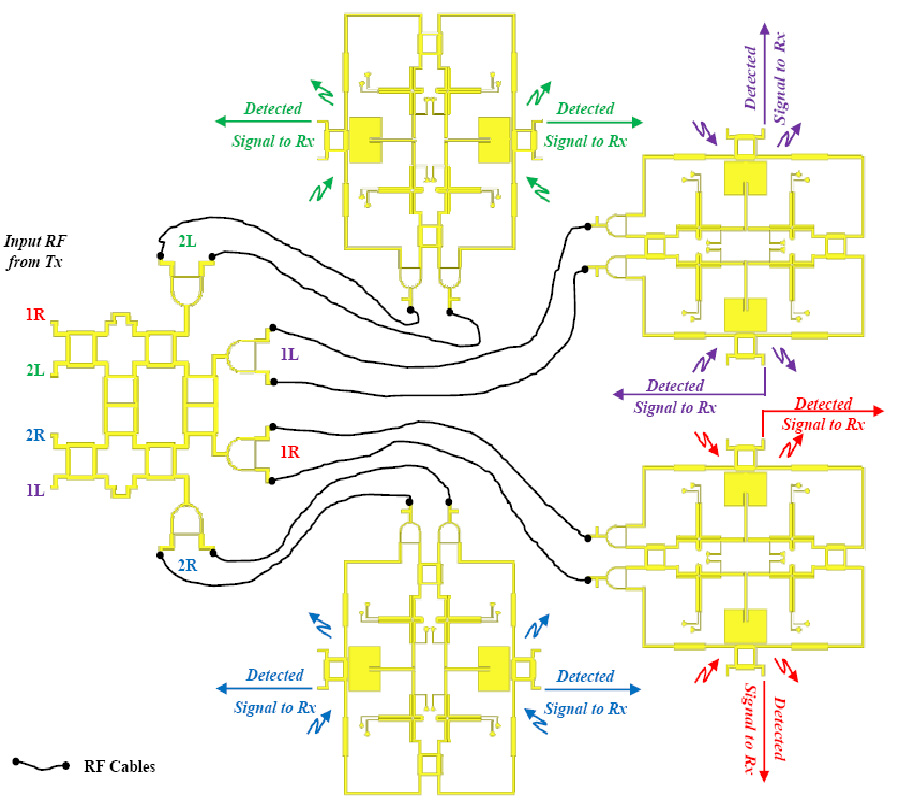
Pattern Synthesis for the Cylindrical Polarimetric Phased Array Radar (CPPAR)
Mohammad-Hossein Golbon-Haghighi , Hadi Saeidi-Manesh , Guifu Zhang and Yan Zhang
A new optimization algorithm for the Cylindrical Polarimetric Phased Array Radar (CPPAR) antenna pattern synthesis is presented to achieve multi-mission requirements. To allow accurate weather measurements, the CPPAR antenna needs to have matched co-polarization (H and V) patterns, low sidelobe levels and high cross-polarization purity. To achieve these goals, first, a high-performance dual-polarized hybrid-fed microstrip patch antenna is designed, and its embedded radiation pattern is extracted. Then, a pattern synthesis using a new optimization method is presented to find the optimal weights for each radiating element and each polarization. The modified particle swarm optimization (MPSO) with new features is used to optimize the current distribution of the CPPAR. The adaptive beamforming algorithm also has the capability to mitigate interference by steering nulls of the radiation pattern in the desired direction without a ecting the main beam. The performance improvement is demonstrated through the simulation results.
PATTERN SYNTHESIS FOR THE CYLINDRICAL POLARIMETRIC PHASED ARRAY RADAR (CPPAR)
2018-03-26
PIER M
Vol. 66, 73-85
Fast DOA Estimation in the Spectral Domain and Its Applications
Le Zuo , Jin Pan and Boyuan Ma
This paper presents a direction of arrival (DOA) estimation method. Spectral-domain interferometer equation is first established based on integral transforms of spatial interferometer equations. The direction finding problem in the spatial domain is thereby mapped to that in the spectral domain, relating angular parameters to spatial spectrums. This method is then applied to DOA estimation with circular arrays and spherical arrays. As a result, the elevation angle and azimuth angle are decoupled, giving closed-form and analytical formulae for DOA estimations by discrete phase samples on a sampling aperture. Algebraic relations between angular parameters and phase samples are established, and this method is hence computationally efficient. The Cramer-Rao lower bound (CRLB) of the proposed method is derived, and accuracy analysis demonstrates that the proposed method approaches the CRLB. In addition, mathematical insights into accuracy enhancement by large number of samples are observed via Parseval's theorem. Finally, numerical simulations and experimental measurements are provided to verify the effectiveness and appealing performance of the proposed method.
FAST DOA ESTIMATION IN THE SPECTRAL DOMAIN AND ITS APPLICATIONS