Search Results(13792)

2018-03-16
PIER M
Vol. 66, 1-10
Analysis of Polarization Interference-Type BPF Arrays for NIR Spectroscopic Imaging Utilizing All-Dielectric Planar Chiral Metamaterials
Yasuo Ohtera , Jiyao Yu and Hirohito Yamada
We investigated the potential application of planar chiral metamaterials (PCMs) to near infrared wavelength filters for multispectral measurement through electromagnetic simulation. PCM assumed here was a two-dimensional sub-wavelength surface grating on a high index film with chiral unit cells. The PCM exhibits optical activity (OA) for normally incident light at a finite wavelength range. Thus, by sandwiching the PCM with a pair of linear polarizers, a polarization interference-type BPF can be constructed. We focused on an all-dielectric PCM consisting of a silicon chiral layer and a dielectric underclad layer on a silica substrate. Wavelength filtering characteristics with different bandwidths have been verified for several underclad materials such as Si3N4, Al2O3, and Si.
ANALYSIS OF POLARIZATION INTERFERENCE-TYPE BPF ARRAYS FOR NIR SPECTROSCOPIC IMAGING UTILIZING ALL-DIELECTRIC PLANAR CHIRAL METAMATERIALS
2018-03-15
PIER M
Vol. 65, 175-186
Analysis of Diffraction Graphene Gratings Using the‎ C-Method and Design of a Terahertz Polarizer‎
Farzaneh Arab Juneghani , Abolghasem Zeidaabadi-Nezhad and Reza Safian
We analyze relief graphene gratings by the coordinate transformation method (the C-method). This method is also used for analysis of multilayer gratings with graphene sheets at the interfaces. By using this method, we are able to obtain the eciency of deep graphene gratings with fast convergence rate while previous methods are limited to very shallow graphene gratings. Moreover, a terahertz polarizer is designed by relief graphene grating. Polarization extinction ratio and transmittance of single-layer and double-layer polarizer are simulated by the C-method. Double-layer polarizer gives extinction ratio from 22 dB to 10 dB over a frequency range of 1 GHz to 4 THz.
ANALYSIS OF DIFFRACTION GRAPHENE GRATINGS USING THE‎ C-METHOD AND DESIGN OF A TERAHERTZ POLARIZER‎
2018-03-15
PIER
Vol. 161, 35-40
Efficient Metasurface Rectenna for Electromagnetic Wireless Power Transfer and Energy Harvesting
Mohamed El Badawe and Omar M. Ramahi
This work presents a design for a metasurface that provides near-unity electromagnetic energy harvesting and RF channeling to a single load. A metasurface and a feeding network were designed to operate at 2.72 GHz to deliver the maximum power to a single load. Numerical simulations show that the metasurface can be highly efficient delivering the maximum captured power to one load using a corporate feed network reaching Radiation-to-RF conversion efficiency as high as 99%. A prototype was fabricated incorporating a rectification circuit. Measurements demonstrated that the proposed metasurface harvester provides Radiation-to-DC conversion efficiency of more than 55%, which is significantly higher than earlier designs reported in the literature.
EFFICIENT METASURFACE RECTENNA FOR ELECTROMAGNETIC WIRELESS POWER TRANSFER AND ENERGY HARVESTING
2018-03-13
PIER C
Vol. 82, 77-88
Structural and Magnetic Studies of Fe100-X Cox Nanotubes Obtained by Template Method
Kayrat Kamalovich Kadyrzhanov , Vyacheslav Serafimovich Rusakov , Artem Leonidovich Kozlovskiy , Maxim Vladimirovich Zdorovets , Egor Yur'evich Kaniukov , Alena Euhenauna Shumskaya , Inesh Ergazievna Kenzhina and Maxim Sergeevich Fadeev
Hollow nanostructures based on the Fe100-xCox alloy were synthesized in the pores of polymer template matrices based on PET using the electrochemical deposition method. Morphology, elemental composition, and structural features were characterized by scanning electron microscopy, energy dispersive analysis, and X-ray diffractometry. The study of the internal magnetic texture was carried out using Mossbauer spectroscopy. The dependence of the change in structural and magnetic properties from the atomic content of components in nanotube structure is revealed. It is established that the synthesized nanostructures are hollow Fe100-xCox nanotubes with a body-centered cubic crystal structure. The decrease in the unit cell parameter with increasing cobalt concentration is due to the difference in the radii of Fe (1.227 Å) and Co (1.191 Å) atoms. It is established that a random distribution of magnetic moments directions of Fe atoms is observed for Fe100Co0 nanotubes. And magnetic texture along the nanotube axis is observed for Fe100-xCox nanotubes, with an increase in Co atoms concentration. The average angle between the direction of the magnetic moment of iron atoms and the nanotube axis decreases from ϑ = 54.6˚ to ϑ = 24.5˚.
STRUCTURAL AND MAGNETIC STUDIES OF FE100-x COx NANOTUBES OBTAINED BY TEMPLATE METHOD
2018-03-13
PIER C
Vol. 82, 67-76
A Novel Compact Size Wilkinson Power Divider with Two Transmission Zeros for Enhanced Harmonics Suppression
Eslam N. Mohamed , Ayman G. Sobih and Ayman Mohamed Elsayed El-Tager
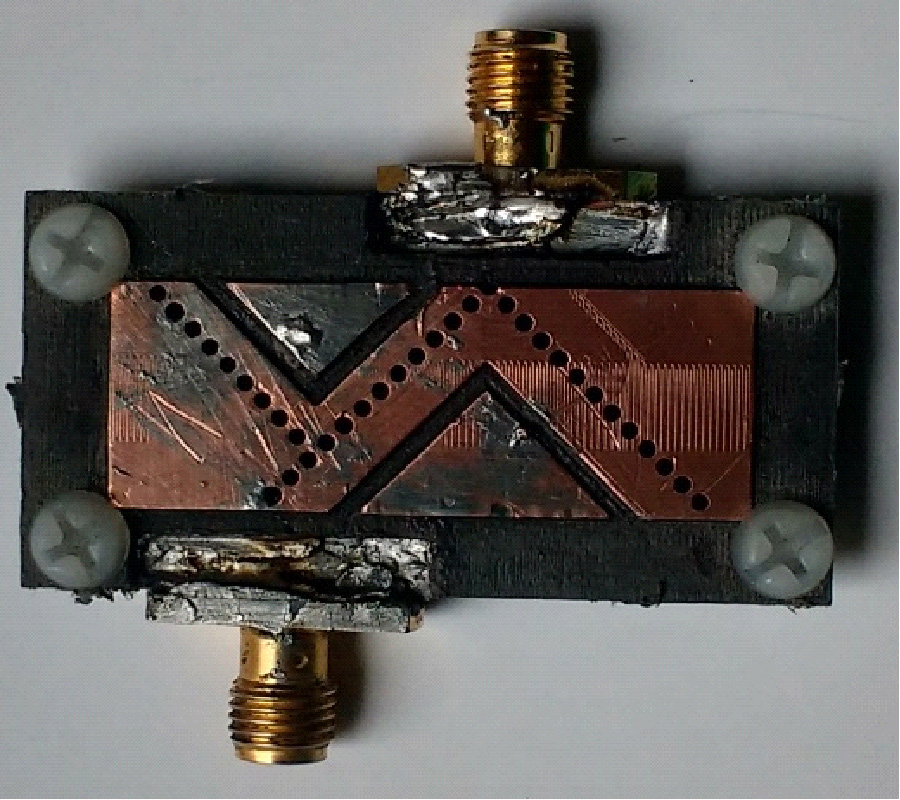
This paper presents a novel compact Wilkinson Power Divider (WPD) that improves harmonics suppression. The proposed WPD consists of a shunt open stub between two series similar inductors, and a microstrip line between an isolation resistor and each output port. This configuration acts as a low-pass filter with two transmission zeros. In addition, it facilitates manufacturability by using lower transmission line impedance values than conventional structures. Through Even and odd mode analysis, the general design equations have been derived in closed form. A 2 GHz microstrip WPD is designed, fabricated and measured based on the proposed technique. A great agreement has been obtained between the measured performance of fabricated WPD circuit and the simulation results. The measured results show that the second and third harmonic levels are about -47 dBc and -35 dBc, respectively. The proposed design has about 40% reduction in size better than conventional WPD. It achieves competing results compared to other published work.
A NOVEL COMPACT SIZE WILKINSON POWER DIVIDER WITH TWO TRANSMISSION ZEROS FOR ENHANCED HARMONICS SUPPRESSION
2018-03-13
PIER C
Vol. 82, 55-66
Drastic Improvement of Change Detection Results with Multilook Complex SAR Images Approach
Azzedine Bouaraba , Aichouche Belhadj-Aissa and Damien Closson
Coherent Change Detection (CCD) is a powerful technique that uses Synthetic Aperture Radar (SAR) coherence to measure subtle ground changes in the imaged area. Unfortunately, the coherence estimator is biased for low coherence values, resulting in a highly degraded change detection performance. The spatial multilooking technique is typically used to improve coherence estimation but at the expense of spatial resolution. Actually, there are few SAR satellites that are able to deliver Multiple Look Complex (MLC) SAR images, which provide noticeable coherence bias reduction. In the present work, we investigate detection performance improvement that can be obtained through the use of MLC SAR images. The detection probability and false alarm are evaluated using experimental very high-resolution SAR data. After SAR image focusing and coherence estimation, the results indicate that the use of MLC SAR images with four looks allows for nearly 60% higher detection probability in the case of a low false alarm rate.
DRASTIC IMPROVEMENT OF CHANGE DETECTION RESULTS WITH MULTILOOK COMPLEX SAR IMAGES APPROACH
2018-03-13
PIER M
Vol. 65, 165-174
Analysis of a Non-Integer Dimensional Tunnel and Perfect Electric Conductor Waveguide
Nayab Bhatti and Qaisar Abbas Naqvi
Solutions to the Maxwell equations for a planar non-integer dimensional perfect electric conductor (NID-PEC) waveguide are obtained. The space within the guide is NID in direction normal to walls of the waveguide. Field behaviour within the waveguide is noted for different values of the parameter, D, describing dimension of the NID space. For D = 2, classical results are recorded. The discussion is further extended by treating propagation in a tunnel within unbounded dielectric medium. The space within tunnel is also NID in direction perpendicular to walls of the tunnel. For different values of D field behaviors are also presented. It has been noted that for D = 2 and taking very high values of permittivity (ϵ → ∝) classical results for PEC waveguide are recorded. Whereas for ϵ → ∝, field behavior within tunnel matches with NID-PEC waveguide.
ANALYSIS OF A NON-INTEGER DIMENSIONAL TUNNEL AND PERFECT ELECTRIC CONDUCTOR WAVEGUIDE
2018-03-12
PIER B
Vol. 80, 37-57
A Hermite-Interpolation Discretization and a Uniform Path Deformation for the Spatial Spectral Domain Integral Equation Method in Multilayered Media for TE Polarization
Roeland Johannes Dilz and Martijn Constant van Beurden
Two alternative approaches to the spatial spectral integral equation method are proposed. The first enhancement comprises a Hermite interpolation as the set of basis functions instead of the Gabor frame. The continuity, differentiability, equidistant spacing, and small support of these basis functions allows for an efficient and accurate numerical implementation. The second approach encompasses a method to transform between the spatial domain and the deformed path in the complexplane spectral domain. This method allows for more general path shapes, thereby removing the need to decompose the complex-plane spectral-domain path into distinct straight sections. Both enhancements are implemented for the case of TE polarization, and the results are validated against the finite element method and the rigorous coupled-wave analysis.
A HERMITE-INTERPOLATION DISCRETIZATION AND A UNIFORM PATH DEFORMATION FOR THE SPATIAL SPECTRAL DOMAIN INTEGRAL EQUATION METHOD IN MULTILAYERED MEDIA FOR TE POLARIZATION
2018-03-12
PIER Letters
Vol. 74, 31-38
Robust Adaptive Sidelobe Canceller Using SV Mismatch Estimation
Zhen Tao , Mingwei Shen , Chao Liang , Di Wu and Dai-Yin Zhu
In this paper, to overcome signal-to-interference-and-noise ratio (SINR) performance degradation in the presence of steering vector (SV) mismatch between beam pointing and desired signal's SVs, we study the mismatch of SV with adaptive uncertainty level. This estimation is derived based on the geometrical interpretation of the mismatch and can be expressed as a simple closed-form expression as a function of the presumed SV and the signal-subspace projection. Then, the adaptive uncertainty algorithm self-adjusts the uncertainty sphere according to the estimated mismatch SV at each iteration. Finally, the robust adaptive sidelobe canceller (R-IASLC) algorithm can accurately evaluate the mismatches between the actual and presumed SVs and improve the target SINR. Simulation results verify the effectiveness of this method.
ROBUST ADAPTIVE SIDELOBE CANCELLER USING SV MISMATCH ESTIMATION
2018-03-11
PIER C
Vol. 82, 39-53
Modelling and Simulation of P-I-n Quantum Dot Semiconductor Saturable Absorber Mirrors
Ahmed E. Abouelez , Essam Eldiwany , Mohamed Bakry El Mashade and Hussien A. Konber
Semiconductor saturable absorber mirror (SESAM) based on InAs quantum dot (QD) material is important in designing fast mode-locked laser devices. A self-consistent time-domain travelling-wave (TDTW) model for the simulation of self-assembled QD-SESAM is developed. The 1-D TDTW model takes into consideration the time-varying QD optical susceptibility, refractive index variation resulting from the intersubband free-carrier absorption, homogeneous and inhomogeneous broadening. The carrier concentration rate equations are considered simultaneously with the travelling wave model. The model is used to analyze the characteristics of 1.3-μm p-i-n QD InAs-GaAs SESAM. The field distribution resulting from the TDTW equations, in both the SESAM absorbing region and the distributed Bragg reflectors, is obtained and used in finding the device characteristics including the modulation depth and recovery dynamics. These characteristics are studied considering the effects of QD surface density, inhomogeneous broadening, the number of QD absorbing layers, and the applied reverse voltage. The obtained results, based on the assumed device parameters, are in good agreement, qualitatively, with the experimental results.
MODELLING AND SIMULATION OF P-I-N QUANTUM DOT SEMICONDUCTOR SATURABLE ABSORBER MIRRORS
2018-03-10
PIER C
Vol. 82, 29-38
Wideband Omnidirectional and Sector Coverage Antenna Arrays for Base Stations
Lale Alatan
By using parallel strip line fed printed dipole antennas as array elements, an omnidirectional antenna array and a wide angle sector coverage array operating in octave band are designed. A maximum deviation of ±1.25 dB from the omnidirectional pattern is achieved for the omnidirectional array, and the average gain of the antenna was measured as being 5 dB in the 1.35-2.7 GHz band. For the sector coverage array, a special reflector design is utilized to maintain a half power beam width of around 115° with a standard deviation of 14° in the aforementioned frequency band. The average gain of the sector coverage array was measured as 10 dB, thereby being almost three fold larger than the average gain of the omnidirectional array.
WIDEBAND OMNIDIRECTIONAL AND SECTOR COVERAGE ANTENNA ARRAYS FOR BASE STATIONS
2018-03-10
PIER
Vol. 161, 19-33
Fast Low-Frequency Surface Integral Equation Solver Based on Hierarchical Matrix Algorithm
Ting Wan , Qi Dai and Weng Cho Chew
A fast low-frequency surface integral equation solver based on hierarchical matrix algorithm is proposed. First, the augmented electric field integral equation (A-EFIE) formulation is introduced to eliminate the low-frequency breakdown of traditional EFIE. To deal with large-scale problems, the low-frequency multilevel fast multipole algorithm (LF-MLFMA) is employed to construct a hierarchical (H-) matrix representation of the A-EFIE system matrix. Moreover, a recompression method is developed to further compress the H-matrix generated by LF-MLFMA. The H-matrix-based triangular factorization algorithm can be performed with almost linear computational complexity and memory requirement, which produces a fast direct solver for multiple right-hand-side (RHS) problems, and a good preconditioner to accelerate the convergence rate of an iterative solver. Numerical examples demonstrate the effectiveness of the proposed method for the analysis of various low-frequency problems.
FAST LOW-FREQUENCY SURFACE INTEGRAL EQUATION SOLVER BASED ON HIERARCHICAL MATRIX ALGORITHM
2018-03-09
PIER C
Vol. 82, 13-27
A Very Compact MIMO Antenna with Triple Band-Notch Function for Portable UWB Systems
Jetti Chandrasekhar Rao and Venkateswara Nandanavanam
A very compact triple band-notched multiple input multiple output antenna (MIMO) for ultra-wideband (UWB) communications is fabricated on a FR4 dielectric substrate having overall size of 18 x 21 x 0.8 mm3. The proposed antenna consists of two rectangular metal monopoles which are excited by 50-Ω microstrip lines on top of substrate, and a common protrude ground is at the bottom. To achieve low mutual coupling between radiating elements, a T-shaped stub is protruded from the ground plane. By etching two C-shaped slots on the radiating patches, band-notched functions at 5.15-6 GHz and 7.8-8.4 GHz are obtained. The third notch band from 3.3-3.7 GHz is realized by adding U-shaped metal strips to the ground. The measured and simulated results demonstrate that the proposed antenna offers good impedance bandwidth of |S11| ≤ -10 dB from 2.8-12.2 GHz covering whole UWB band except at the designed notch bands, while giving less mutual coupling (|S21|) of lower than -25 dB in the whole UWB band. The measured envelope correlation coefficient (ECC < 0.013), nearly constant gain and stable radiation patterns show that the proposed MIMO antenna is an appropriate candidate for portable UWB systems.
A VERY COMPACT MIMO ANTENNA WITH TRIPLE BAND-NOTCH FUNCTION FOR PORTABLE UWB SYSTEMS
2018-03-09
PIER Letters
Vol. 74, 23-30
Design of a Dual-Band MIMO Antenna with High Isolation for WLAN Applications
Peng Liu , Deming Sun , Peng Wang and Peng Gao
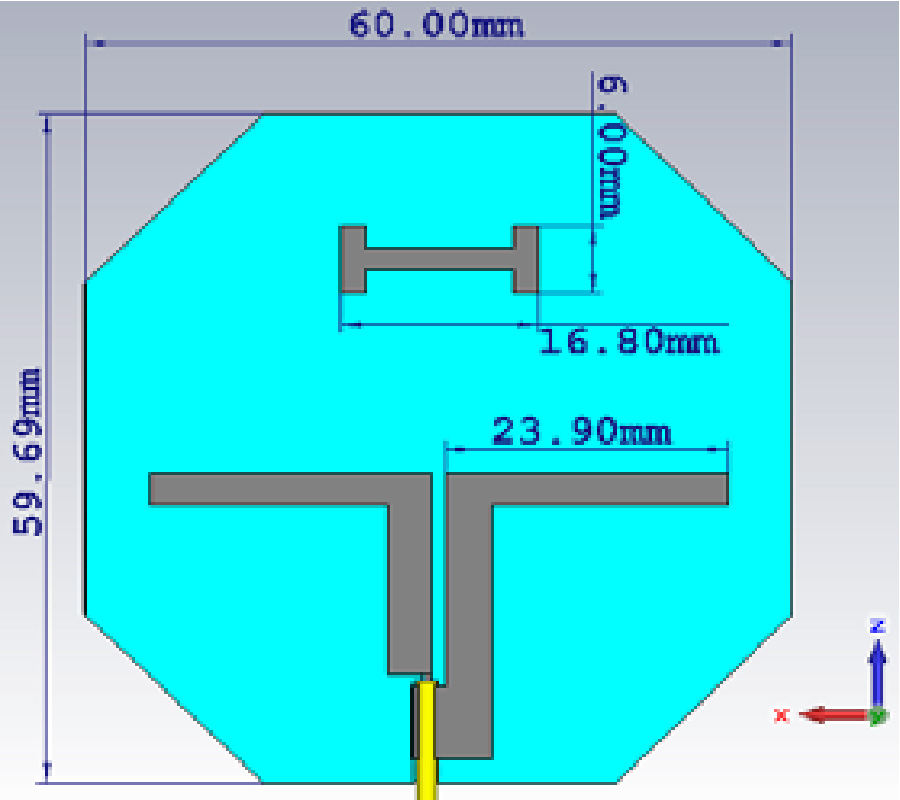
A dual-band two-element Multiple-Input-Multiple-Output (MIMO) antenna for Wireless Local Area Network (WLAN) applications is proposed in this paper. The MIMO antenna consists of two closely arranged symmetric monopole antennas with edge-to-edge distance of only 5.3 mm (0.044λ at 2.51 GHz). To enhance isolation, a decoupling network is inserted between the two antennas without increasing the footprint. The -10 dB impedance bandwidths in lower and higher frequency bands are 2.46-2.7 GHz and 5.04-5.5 GHz. Compared to previous works, the presented decoupling structure can obtain higher isolation over 30 dB in dual bands. Measured results agree well with the simulated ones.
DESIGN OF A DUAL-BAND MIMO ANTENNA WITH HIGH ISOLATION FOR WLAN APPLICATIONS
2018-03-09
PIER Letters
Vol. 73, 137-143
A Compact Wideband Slot Antenna for Universal UHF RFID Reader
Waleed Abdelrahim Ahmed and Quanyuan Feng
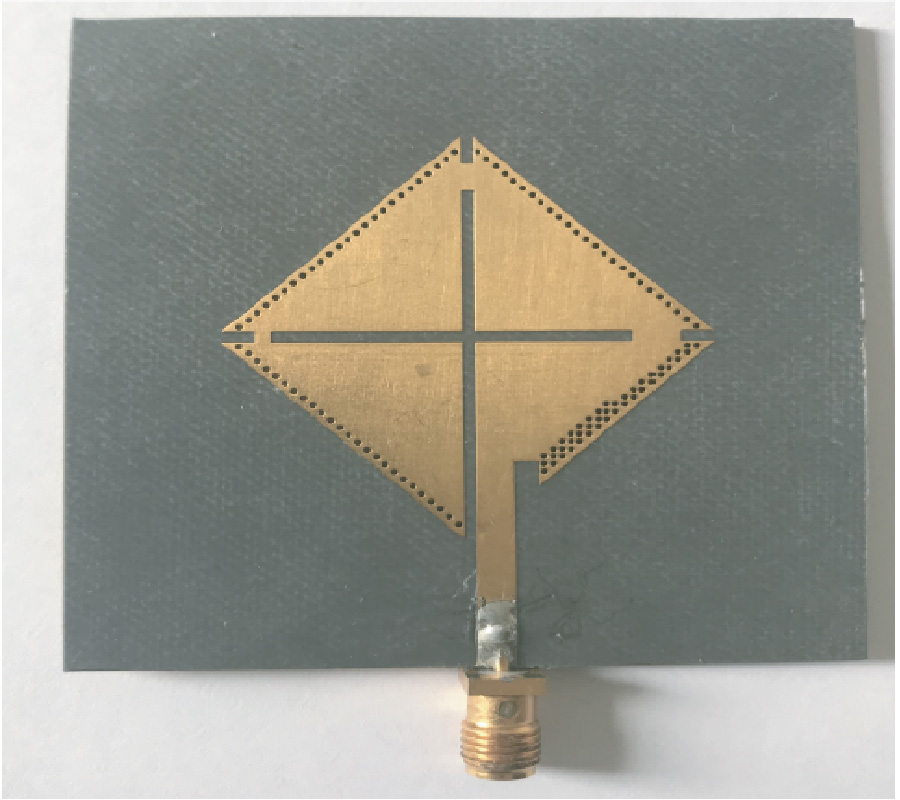
A compact wideband circularly polarized square slot antenna for universal UHF RFID reader applications is proposed and tested. An L-shaped radiator at lower surface of the substrate is used to feed the proposed antenna. To achieve a broadband circular polarization (CP) and good performance, two rectangular stubs with different sizes are inserted at opposite corners of the square slot at the upper surface of the substrate. A small rectangular slit is used to improve the impedance matching of the proposed antenna. The antenna's measured <10-dB impedance bandwidth and measured 3-dB axial ratio bandwidth are 70.2% (660-1374 MHz) and 45.8% (796-1269 MHz), respectively. The proposed antenna has a dual circular polarization characteristic, wide impedance bandwidth, wide axial ratio, compact size, and maximum measured gain about 3.9 dBi. The total size of the proposed antenna is 120×120×1.6 mm3. Furthermore, the impedance bandwidth and axial ratio bandwidth of the proposed antenna cover the entire UHF RFID band easily. The proposed antenna is suitable for UHF RFID reader applications.
A COMPACT WIDEBAND SLOT ANTENNA FOR UNIVERSAL UHF RFID READER
2018-03-09
PIER M
Vol. 65, 151-164
Digital Harmonic Canceling Algorithm for Power Amplifiers Based on Nonlinear Adaptive Filter
Xuan Peng , Xin Qiu and Fuqi Mu
High power amplifier not only causes in-band intermodulation but also causes out-of-band harmonic distortion. For a wideband transmitter, harmonic distortion out of communication frequency can be restrained by a radio-frequency filter, but harmonic distortion in the communication frequency is difficult to restrain. In this paper, we develop harmonic memory proper to model harmonic distortion and then propose a digital harmonic canceling algorithm based on direct learning structure - nonlinear filtered-x ane projection algorithm (NFX-APA). Simulation and measurement results demonstrate that this novel digital canceling method can cancel harmonic effectively.
DIGITAL HARMONIC CANCELING ALGORITHM FOR POWER AMPLIFIERS BASED ON NONLINEAR ADAPTIVE FILTER
2018-03-08
PIER Letters
Vol. 74, 17-22
A Low Elevation Angle Conical Beam Antenna for CAPS-Based Vehicle Monitoring System
Feng Pang , Jungang Yin , Shengming Li , Junxia Cui , Yan Zheng , Chao Hu , Lihua Ma , Xiaolan Wang and Qinghua Chi
A new C-band monopole antenna is proposed for use in a CAPS-based vehicle monitoring system. This monopole antenna has highly omnidirectional main beam with low elevation angle and sufficient half-power beamwidth by using a cone-shaped ground plane. The impedance bandwidth defined by 10 dB return loss is 650 MHz (5.50-6.15 GHz), and the main beam elevation angle and the half-power beamwidth are about 20° and 40° at the operating frequency 5.885 GHz, respectively. The manufactured prototype has survived a long-distance terrestrial test across China, and the design requirements for the satellite link budget, volume, cost, etc. have been reached.
A LOW ELEVATION ANGLE CONICAL BEAM ANTENNA FOR CAPS-BASED VEHICLE MONITORING SYSTEM
2018-03-08
PIER M
Vol. 65, 137-150
Skin Effect in Eddy Current Testing with Bobbin Coil and Encircling Coil
Jianwei Yang , Shaoni Jiao , Zhiwei Zeng , Junming Lin and Jincheng Zhao
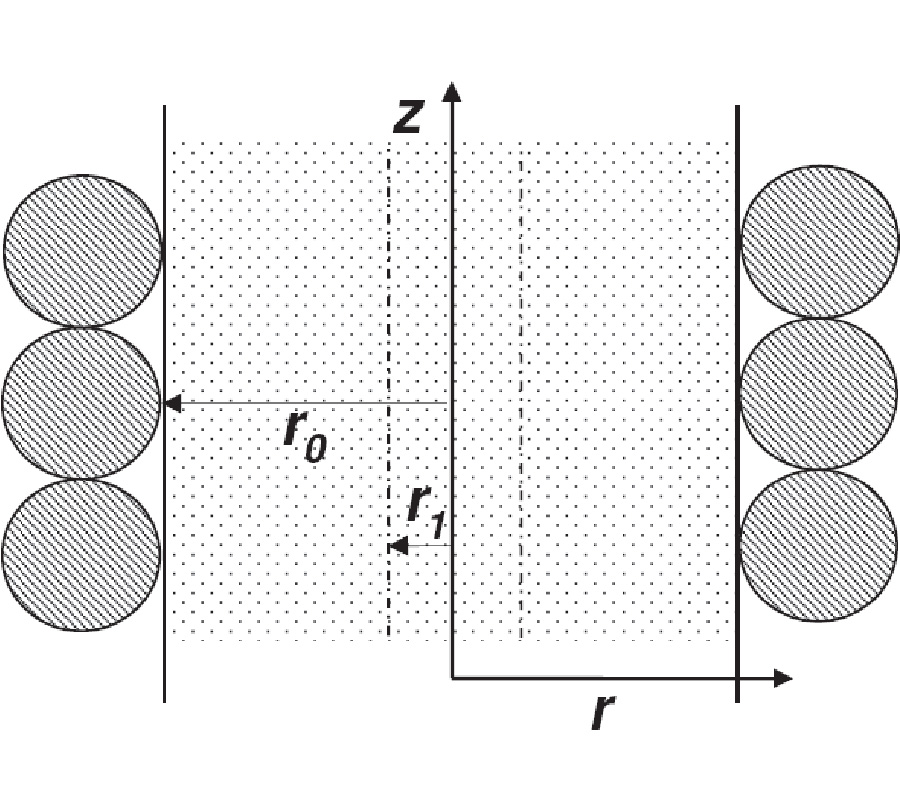
Eddy current testing (ECT) is known as an effective technology for inspecting surface and near surface defects in metallic components. It is well known that the amplitude of eddy current (EC) density decreases with increasing depth, which is referred to as skin effect. Skin depth is an important parameter that quantifies the speed of attenuation of EC in the depth direction and is closely related to the capability of ECT for detecting deeply hidden defects. It is found that the traditional formula for calculating skin depth derived under the assumption of uniform plane field excitation is not applicable to the cases of ECT with coils. The skin effect in component with flat surface excited by pancake coil has been investigated by the authors. The skin effect in conductive tube tested by bobbin coil and that in conductive bar tested by encircling coil are more complex. The paper studies the skin effect in these two cases. Finite element analysis shows that the attenuation of EC is not only due to the ohmic loss, but also influenced by the diffusion effects, the aggregation effect, and the combined cancellation/diffusion effect of EC. The skin depth of EC associated with bobbin coil is always smaller than that associated with uniform plane field excitation, whereas the skin depth of EC associated with encircling coil can be greater than that associated with uniform plane field excitation under certain conditions.
SKIN EFFECT IN EDDY CURRENT TESTING WITH BOBBIN COIL AND ENCIRCLING COIL
2018-03-08
PIER M
Vol. 65, 129-133
Comment on "a Wideband Wide-Angle Ultra-Thin Metamaterial Microwave Absorber"
Dushyant Marathe and Kishore Kulat
In the recently published article, Sood et al. (Progress in Electromagnetics Research M, Vol. 44, 3946, 2015) proposed a wide-angle ultra-thin metamaterial absorber structure for wideband applications. The reported unit cell was shown to have simulated wideband absorbivity FWHM bandwidth of 1.94 GHz i.e. from 5.05 GHz to 6.99 GHz. In this article, we prove that the reported structure is not an electromagnetic wave absorber. For the reported structure, we find that absorption is less than 22.3% over a operating bandwidth of 4 GHz to 8 GHz. It is demonstrated that the strong absorption was caused due to ignorance of cross-polarization effect rather than true absorption as they claimed.
COMMENT ON