Search Results(13792)

2018-03-07
PIER Letters
Vol. 74, 9-16
A Compact Broadband Printed Circular Slot Antenna with Stair Shaped Ground Plane
Sudeep Baudha and Kumar Vishwakarma Dinesh
This is the first communication reporting a compact broadband printed circular slot antenna with stair shaped ground plane in which bandwidth is enhanced mainly in the lower frequency band on adding 19 strips at regular space intervals in the partial ground plane. The impedance matching at specific band (7.1-8.4 GHz) takes place as a result of circular slot in the patch. The proposed structure is printed on an FR4 substrate with εr = 4.3 and 0.025 loss tangent over a compact volume of 20×25×1.5 mm3. The impedance bandwidth (S11 < -10 dB) of the proposed antenna is 133.7 % (3.0-15.1 GHz). The antenna exhibits 4.9 dB peak gain and 74 % peak radiation efficiency in the operating band. Satisfactory results and such a simple and easy to fabricate design with compact space make the proposed antenna a suitable choice for UWB applications, 5.2/5.8 GHz WLAN bands, 3.5/5.5 GHz Wi-MAX bands, X band (8-12 GHz) and other wireless communication systems. Measured and simulated results are in good agreement, affirming the simulation process. Omnidirectional radiation patterns are generally observed in the operating band of the designed antenna.
A COMPACT BROADBAND PRINTED CIRCULAR SLOT ANTENNA WITH STAIR SHAPED GROUND PLANE
2018-03-07
PIER M
Vol. 65, 121-128
Suppression of Backscattering from 2-d Aperiodically-Ordered Thinned Patch Array Using Rudin-Shapiro Sequences
Tarek Sallam and Ahmed Attiya
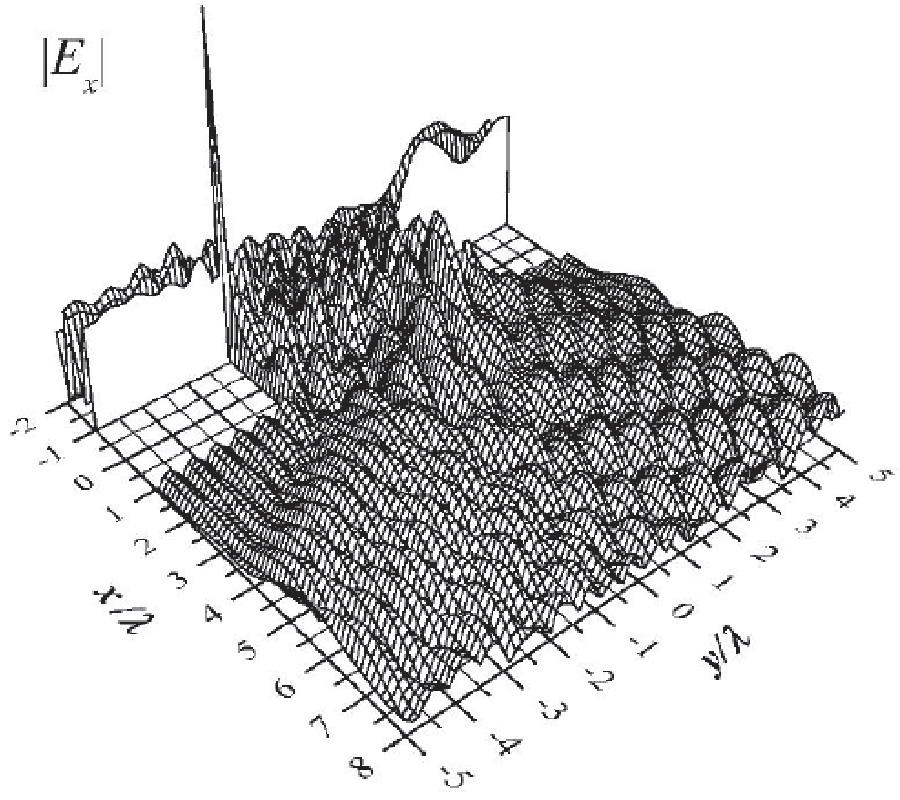
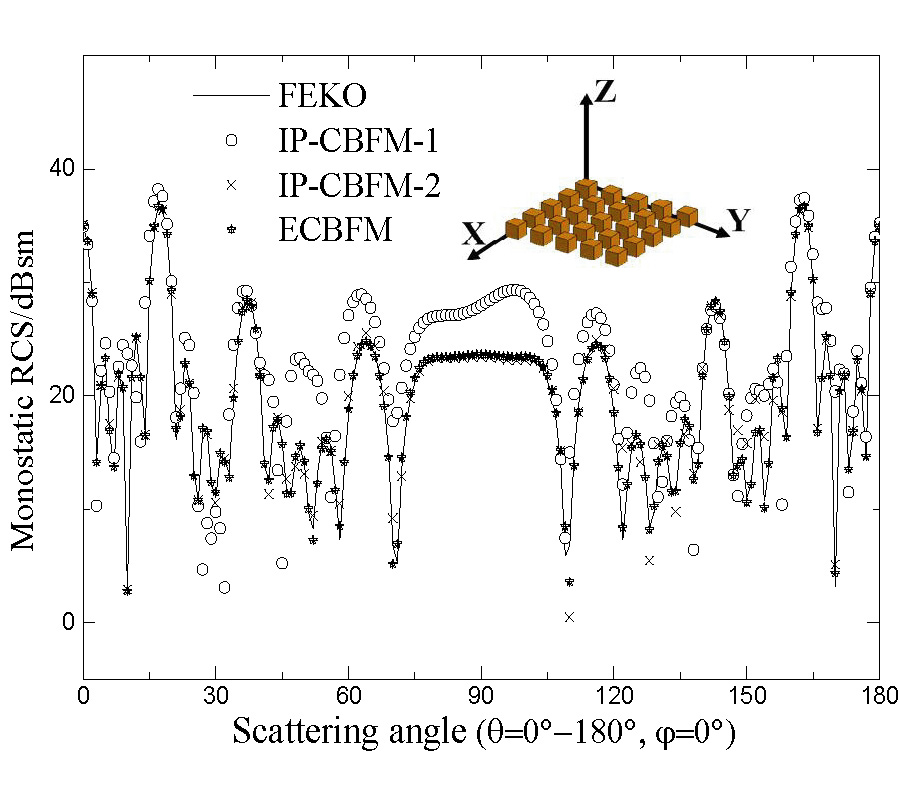
The discovery of ``quasi-crystals,'' whose X-ray diffraction patterns reveal certain unusual features which do not conform with spatial periodicity, has motivated studies of the wave-dynamical implications of ``aperiodic order.'' This paper discusses various aperiodic configurations generated by Rudin-Shapiro (RS) sequences. These RS sequences constitute ones of the simplest conceivable examples of deterministic aperiodic geometries featuring random-like (dis)order. The scattering properties of aperiodically-ordered thinned 2-D patch arrays based on RS sequences are analyzed by using physical optics approximation. Compared to a periodic case, RS-based antenna array is found to have a substantial reduction in the magnitude of the backscattering component of the scattered signal with half of the elements and the same magnitude of specular reflection. This property is verified by illustrative numerical parametric studies.
SUPPRESSION OF BACKSCATTERING FROM 2-D APERIODICALLY-ORDERED THINNED PATCH ARRAY USING RUDIN-SHAPIRO SEQUENCES
2018-03-07
PIER M
Vol. 65, 111-119
Design of a Bandwidth-Enhanced Planar Printed Antenna with Two Dipoles
Yu-Chun Guo , Lei Chang , Jian-Qiang Zhang and Xiao Long Yang
This paper presents a broadband planar printed antenna comprising two dipoles with different lengths and a transition structure of microstrip (MS) to coplanar stripline (CPS). These two dipoles are serially connected through CPS. By adding trapezoid and stepped patches, the dipole elements are modified for enhancing the impedance matching of the antenna. In addition, a tapered transition is adopted in the CPS to achieve improved impedance matching. The current work shows a good agreement between measured and simulated results. The measured bandwidth is from 2.43 to 8.04 GHz for VSWR≤2, corresponding to 107.2% fractional bandwidth. Measured peak gain≥4.0 dBi is obtained in the whole operating band.
DESIGN OF A BANDWIDTH-ENHANCED PLANAR PRINTED ANTENNA WITH TWO DIPOLES
2018-03-06
PIER C
Vol. 81, 211-223
Solving the Problem of Electromagnetic Wave Scattering on Small Impedance Particle by Integral Equation Method
Mykhaylo I. Andriychuk
The problem of electromagnetic (EM) wave scattering on small particles is reduced to solving the Fredholm integral equation of the second kind. Integral representation of solution to the scattering problem leads to necessity to determine some unknown function contained in integrand of this equation. The respective linear algebraic system (LAS) for the components of this unknown vector function is derived and solved by the successive approximation method. The region of convergence of the proposed method is substantiated. The numerical results show rapid convergence of the method in the wide region of the physical and geometrical parameters of problem. Comparison of the obtained results with Mie type and asymptotic solutions demonstrates high degree of accuracy of the proposed method. The numerical results of scattering on particles of several forms and sizes are presented.
SOLVING THE PROBLEM OF ELECTROMAGNETIC WAVE SCATTERING ON SMALL IMPEDANCE PARTICLE BY INTEGRAL EQUATION METHOD
2018-03-06
PIER Letters
Vol. 74, 1-8
A Compact Tri-Band Bandpass Filter with Independently Controllable Harmonic Bandwidth by Using Two Grounded Vias
Peng Wang , Xiang An and Zhi-Qing Lv
A new class of tri-band bandpass filter (BPF) is presented, and harmonic passband bandwidth can be independently controlled. In the implementation, three coupling paths are used to control the bandwidth of each passband. The first coupling path is two grounded vias which are utilized to realize coupling between two short-stub loaded resonators. And the first coupling path delivers signals at the first passband. Meanwhile, the second coupling path delivers signals at both the first and second passbands. And the third coupling path only delivers signals at the third passband. Using this method, both the frequency and bandwidth of each passband can be designed and tuned easily. In this filter design, the first harmonic passband can be adjusted separately and is independent of the fundamental passband. Two grounded vias improve flexibility and form a fundamental passband and harmonic passband independently controllable passband filter. For demonstration, a tri-band BPF with three passbands at 1.5 GHz, 2.5 GHz, and 3.5 GHz with insertion losses of 0.34, 0.76 and 1.08 dB is designed, fabricated and measured. So this proposed filter will be attractive in wireless communication systems.
A COMPACT TRI-BAND BANDPASS FILTER WITH INDEPENDENTLY CONTROLLABLE HARMONIC BANDWIDTH BY USING TWO GROUNDED VIAS
2018-03-05
PIER Letters
Vol. 73, 133-136
A New Microstrip-to-Microstrip Vertical Transition Structure for Ultra-Wideband (UWB) Applications
Lihua Wu and Chengpei Tang
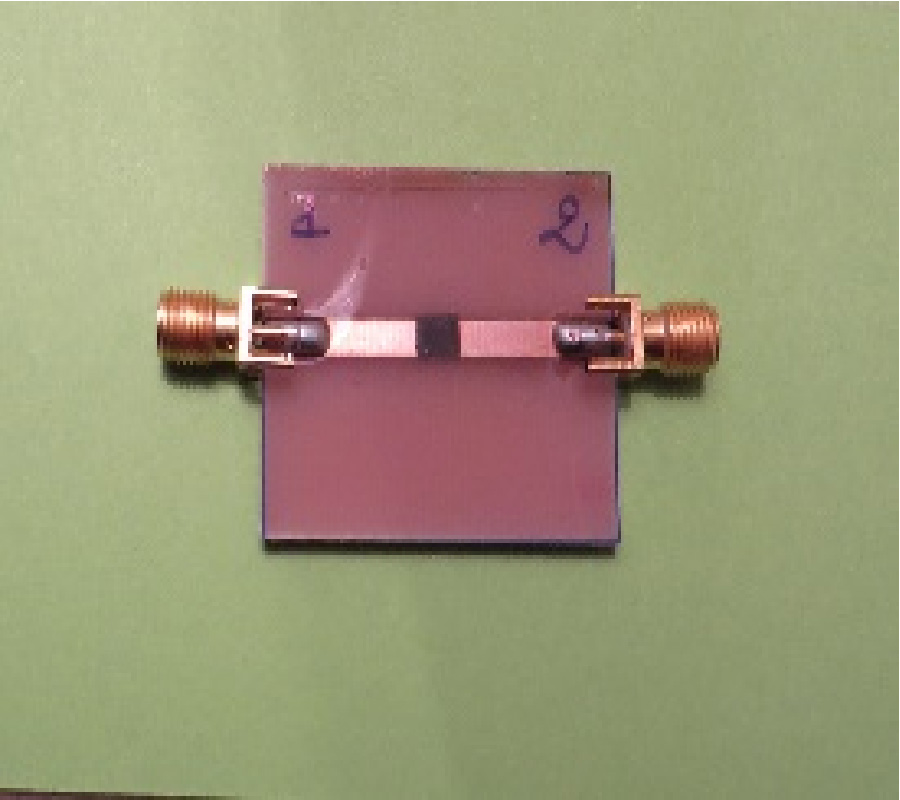
A new microstrip-to-microstrip vertical transition structure for ultra-wideband (UWB) applications is proposed in this paper. The transition consists of a low impedance microstrip ring stub and a couple of slotline square multiple-mode resonators (MMRs) on the common ground plane. The low impedance microstrip ring stubs are realized by the connection of three single stubs in parallel, and the high-impedance section of slotline SIR is realized by the connection of four single stubs in series. The simulated and measured results are in good agreement, showing good wideband filtering performance with ultra-wideband fractional bandwidth.
A NEW MICROSTRIP-TO-MICROSTRIP VERTICAL TRANSITION STRUCTURE FOR ULTRA-WIDEBAND (UWB) APPLICATIONS
2018-03-05
PIER M
Vol. 65, 101-109
Visual Image Sequential Motion Detection via Half Quadratic Minimization Method
Ran Zhu , Yunli Long and Wei An
In this paper, we present a straightforward numerical algorithm for visual image sequential motion detection based on half quadratic minimization method. To solve the optimization problem modeled for sequential motion detection, an auxiliary functional is introduced. The proposed algorithm is more efficient since the iterative computation is operate mainly on the current frame rather than the whole batch of images. As for the standard visual image sequences with RGB color representation, an intuitive way is to convert it to grayscale image to achieve an approximate motion detection with relatively low computational load. Instead, we propose an improved processing scheme for more accurate detection by utilizing the algorithm separately and then perform fusion on a higher level. Experiment results show that the proposed algorithm can successfully detect moving object in practical visual surveillance applications.
VISUAL IMAGE SEQUENTIAL MOTION DETECTION VIA HALF QUADRATIC MINIMIZATION METHOD
2018-03-05
PIER
Vol. 161, 11-18
Exploratory Study on Light-Sheet Based Three-Dimensional Surface Topography
Fuhong Cai , Jie Chen , Chunling Zhou , Xuan Zhu and Sailing He
Light-sheet microscopy has attracted considerable attention since it is a fluorescence imaging technique with rapid optical sectioning capabilities for transparent sample. In our study, we report a new application based on light-sheet microscopy for exploratory investigating three-dimensional surface topography of opaque sample. Instead of using inelastic scattering fluorescent signal, our method utilizes the elastic scattering light from the surface of opaque sample, which is illuminated by a light sheet generated by a cylindrical lens. Through a simple structural modification by removing the fluorescent filter, the orthogonally imaging module can capture the elastic scattering image. As the opaque sample is scanned by a motorized stage, the light-sheet microscope acquires a serial of sectional images, which can be stitched to be a three-dimensional surface topography image. This method also offers the opportunity to visualize 3D fingerprint on micron level. Therefore, this technique may be useful in industry and biomedical field for the measurement of surface microstructure.
EXPLORATORY STUDY ON LIGHT-SHEET BASED THREE-DIMENSIONAL SURFACE TOPOGRAPHY
2018-03-03
PIER Letters
Vol. 73, 127-131
Separation of the Metallic and Dielectric Losses of Tunable Ferroelectric Capacitors Under Control DC Voltage
Igor V. Kotelnikov , Vitaly N. Osadchy , Roman Andreevich Platonov , Andrey Altynnikov , Valentina V. Medvedeva , Anatoly K. Mikhailov , Aleksandr G. Gagarin , Andrey V. Tumarkin and Andrey B. Kozyrev
An approach to separate metallic and dielectric losses in ferroelectric capacitors in all range of tuning under control dc voltages (Udc) is considered. The procedure is based on measurements of the dc voltage dependencies of microwave losses (tanδt(Udc)) and capacitance (C(Udc)) for a set of capacitors with similar layout but with different nominals. Linear extrapolation of tanδt(C) dependencies at different control dc voltages to C = 0 allows to evaluate the dielectric losses tanδd as a function of the control dc voltage. The procedure of separation was performed for a set of sandwich metal/(Ba0:5Sr0:5)TiO3/metal capacitors. Capacitors parameters were measured at a frequency of 2 GHz in a range of electric field strength in ferroelectric of E = (0 - 30) V/μm. The intrinsic commutation quality factor of BSTO lm itself was estimated by the method proposed.
SEPARATION OF THE METALLIC AND DIELECTRIC LOSSES OF TUNABLE FERROELECTRIC CAPACITORS UNDER CONTROL DC VOLTAGE
2018-03-03
PIER M
Vol. 65, 91-100
Design of Frequency Selective Absorber Based on Parallel LC Resonators
Kunzhe Zhang , Wen Jiang , Junyi Ren and Shu-Xi Gong
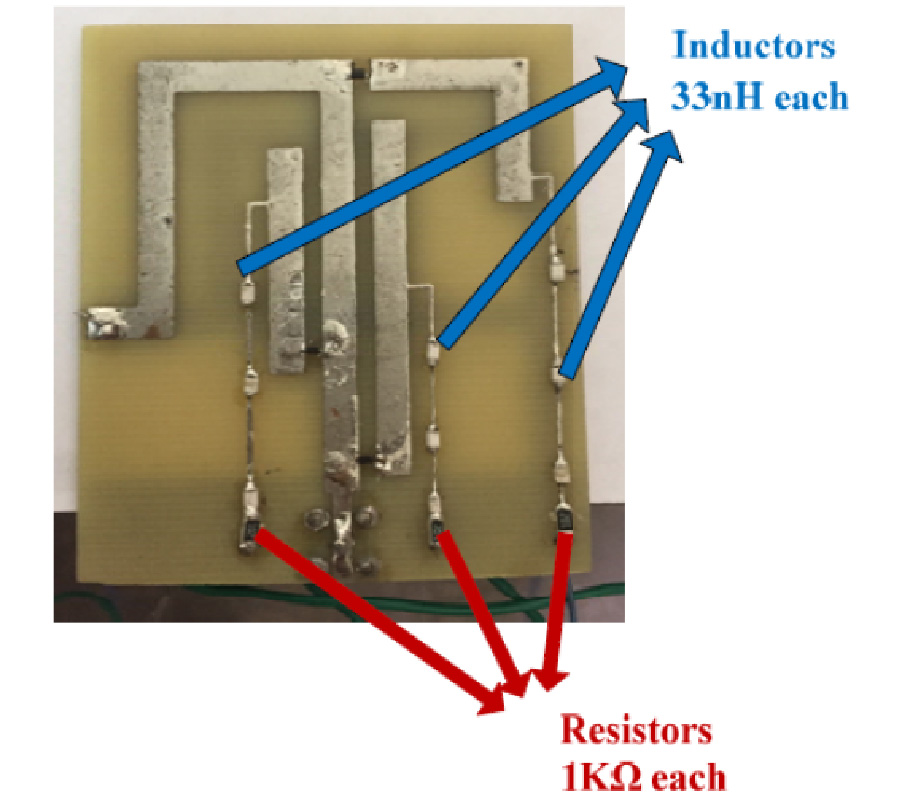
This paper describes a method of designing Frequency Selective Absorber (FSA) which has a transmission band between two neighboring absorption bands. The proposed FSA is composed of a lossy layer on the top and a lossless layer at the bottom. The transmission characteristic is produced by the parallel LC resonators embedded in the lossy layer while the absorption ability is realized by the lumped resistors constructed in the lossy layer. An equivalent circuit model (ECM) is developed and discussed for a better understanding of this method. An FSA prototype is fabricated and measured for demonstration. Experiments show that the proposed FSA has a transmission band at the center frequency of 8.14 GHz, which agrees well with simulation. Both transmission and refection coefficients from 4.5 GHz to 7.5 GHz and from 9.1 GHz to 11.3 GHz are under -10 dB, which indicate good absorption in these frequency bands. In addition, the performance of the proposed FSA demonstrates a low sensitivity with respect to the polarization of incident EM waves and is maintained well when the incident angles range from 0˚ to 45˚.
DESIGN OF FREQUENCY SELECTIVE ABSORBER BASED ON PARALLEL LC RESONATORS
2018-03-02
PIER Letters
Vol. 73, 121-125
Wide Band Frequency Measurements of Fungal Species Using Laser Patterned Finger Electrodes on LTCC
Maciej Sobocinski , Jacob Mensah-Attipoe , Sami Myllymäki , Niina Halonen , Marko Tuhkala , Jussi Putaala , Anita Lloyd-Spetz and Pertti Pasanen
High frequency measurements at 50 MHz-10 GHz were performed for the first time using interdigitated electrodes on a low temperature co-fired ceramic substrate to analyze fungal spores. Wet and dry spore generation methods were evaluated and tested with two different fungal species. The dry generation method was found feasible for RF measurements, since the component capacitance increased 14-21% in the 2-6 GHz range, but for the wet generation method the capacitance decreased only slightly (<1%). Based on these initial results the RF measurements have the capacity to evaluate the quantity of fungal spores but not to identify their species.
WIDE BAND FREQUENCY MEASUREMENTS OF FUNGAL SPECIES USING LASER PATTERNED FINGER ELECTRODES ON LTCC
2018-03-02
PIER Letters
Vol. 73, 113-120
A Compact Dual-Element Uniplanar Antenna for Portable Broadband MIMO Systems
Aliakbar Dastranj
A printed dual-port coplanar waveguide (CPW)-fed antenna is proposed for wideband communication systems. The antenna includes two identical hybrid trapezoidal-elliptical radiating elements that are printed perpendicular to each other. Also, two orthogonal CPW lines are used to feed the antenna. In order to achieve broadband dual-polarized operation with a compact size, the geometrical parameters of the antenna are optimized by using Ansoft HFSS. The antenna was fabricated and tested. Reasonable agreement between the simulation and experimental results is obtained. The fabricated prototype with a small size of 25×53 mm2 can cover the wide operating frequency band from 2.4 to 18 GHz (reflection coefficient less than -10 dB) for both ports. The measured isolation is better than 25 dB over the entire operating bandwidth. Moreover, the measured results show that the proposed antenna can provide omnidirectional radiation patterns with a good orthogonal polarization operation, reasonable gain, high radiation efficiency, and constant group delay.
A COMPACT DUAL-ELEMENT UNIPLANAR ANTENNA FOR PORTABLE BROADBAND MIMO SYSTEMS
2018-03-02
PIER M
Vol. 65, 79-90
Novel Adaptive Buried Nonmetallic Pipe Crack Detection Algorithm for Ground Penetrating Radar
Prabhat Sharma , Bambam Kumar and Dharmendra Singh
Ground penetrating radar (GPR) may be used to detect cracks in a buried pipe. Using GPR, there are only a few techniques, such as statistical approach robust principal component analysis (RPCA). to detect cracks in buried objects. Buried nonmetallic pipe crack detection is an important application for GPR to analyze the structural health of underground pipelines. The strength of a reflected signal may be feeble from a cracked location as compared to position with respect to that from other positions of the pipe. Currently, crack detection is a challenging task, especially when the buried pipe is nonmetallic, and soil moisture varies. In this paper, the problem of crack detection in a PVC pipe using GPR is attempted. It is a challenge to detect small sized cracks in an underground PVC pipe because the GPR image is flooded with correlated background signal or clutter, and the image patterns are typically irregularly distributed. In order to efficiently detect the crack in a buried PVC pipe, a novel adaptive crack detection algorithm has been developed with the help of covariance of real GPR data and covariance of normal distributed synthetic Gaussian data. Results are evaluated and validated to show the effectiveness of crack detection algorithm.
NOVEL ADAPTIVE BURIED NONMETALLIC PIPE CRACK DETECTION ALGORITHM FOR GROUND PENETRATING RADAR
2018-03-01
PIER M
Vol. 65, 69-78
A Comparative Study for Breast Cancer Detection by Neural Approach for Different Configurations of the Microwave Imaging System
Wassila Sekkal , Lotfi Merad and Sidi Mohammed Meriah
The study done in this paper focuses on the detection of breast cancer by neuronal approach, by rotating the transmitting antenna from 15°, 30°, 45°, 60°, 75° to 90° relative to its initial position which is of 0° (i.e. to the opposite of the reciving antenna). We have generated our database by using a CST electromagnetic simulator for each antenna location. Then the learning and test phases of our artificial neural network (ANN) are done for seven antennae locations using two learning algorithms which are: the Scaled Conjugate Gradient Back-propagation (Trainscg) and the Gradient Descent with Momentum (Traingdm). A comparative study was conducted for all the seven cases. The results obtained are very satisfying and show that the best location of the transmitter antenna is at 60° and that the learning algorithm Trainscg gives better results than Traingdm.
A COMPARATIVE STUDY FOR BREAST CANCER DETECTION BY NEURAL APPROACH FOR DIFFERENT CONFIGURATIONS OF THE MICROWAVE IMAGING SYSTEM
2018-02-28
PIER B
Vol. 80, 19-36
Power Density Evaluation of a Novel Double-Stator Magnetic Geared Permanent Magnet Generator
Shehu Salihu Mustafa , Norhisam Misron , Mohammad Lutfi Othman and Tsuyoshi Hanamoto
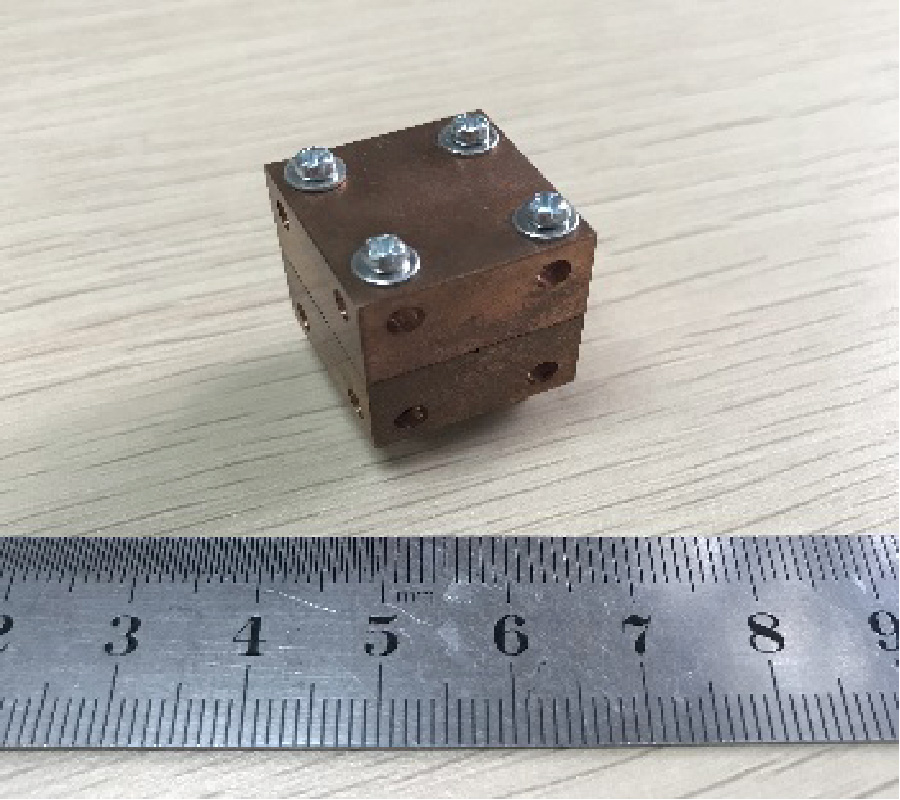
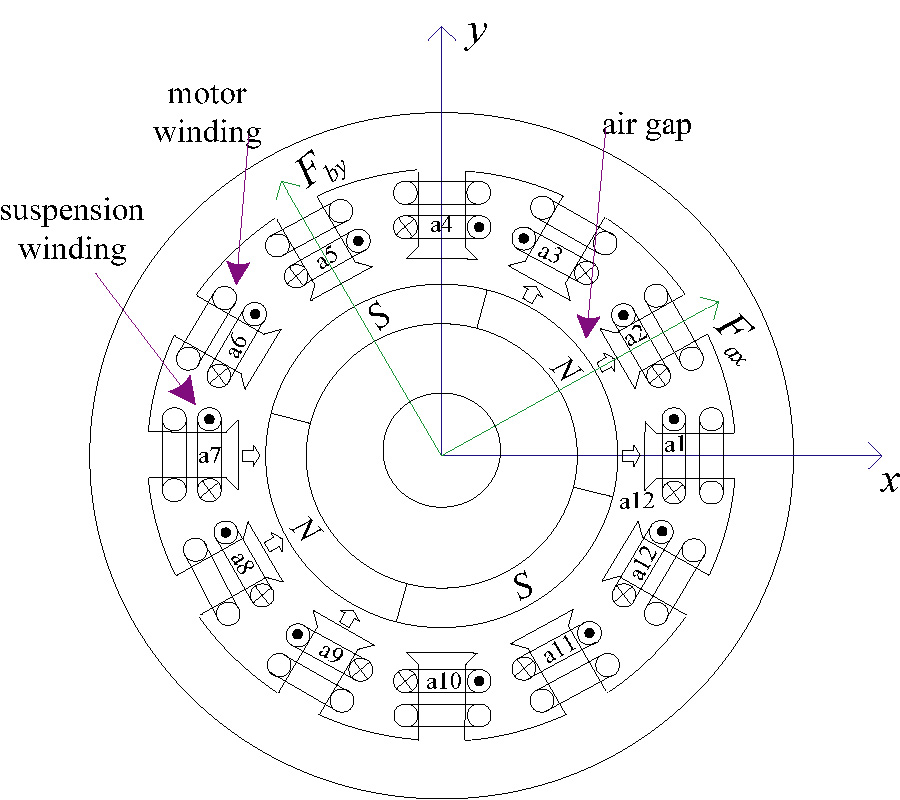
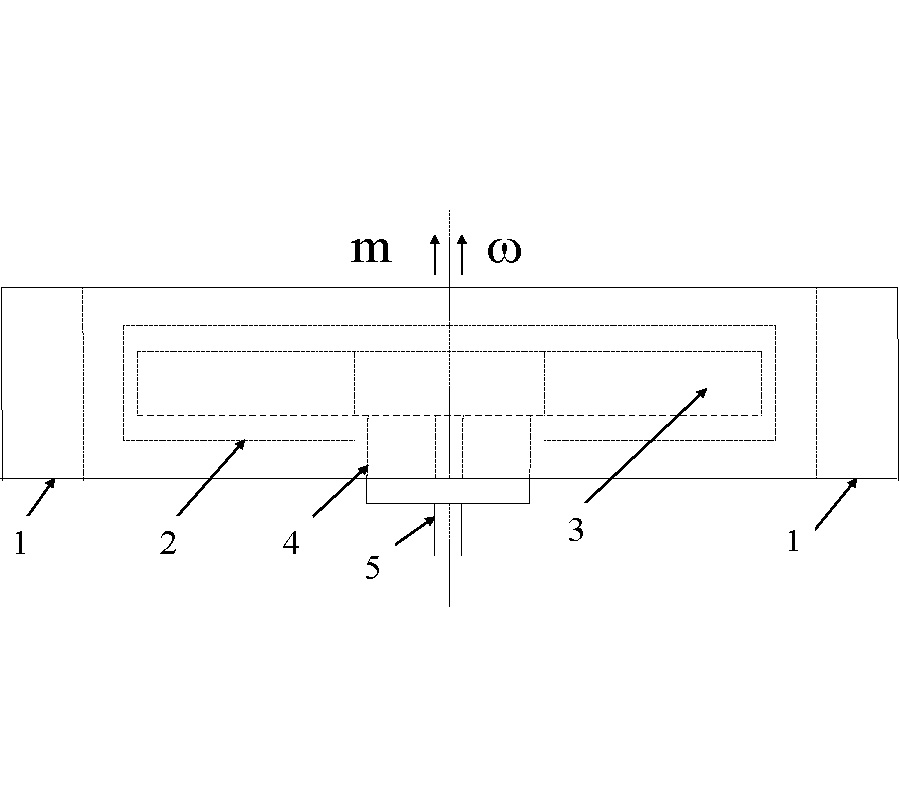
This paper presents the power density evaluation and power mapping performance of a novel magnetic geared double-stator permanent magnet generator (DSPMG) which is proposed to address problems of mechanical geared generators for low-speed power generation applications. The operating principle is based on three PM rotors consisting of prime permanent-magnet (PM) poles in the middle rotor and field PM poles in the inner and outer rotors respectively. To evaluate the power density performance, a 2-D finite-element method (FEM) is used to predict the performance of the generator, and a demonstrator prototype is fabricated and evaluated experimentally. The power density characteristics of the proposed generator are analyzed and reported. The measured results agree closely with the simulated ones to verify the validity of the magnetic geared generator design. Finally, a measurable comparison is conducted with other published prototype magnetic gear machines to demonstrate its benefits of higher power density and smaller volume size.
POWER DENSITY EVALUATION OF A NOVEL DOUBLE-STATOR MAGNETIC GEARED PERMANENT MAGNET GENERATOR
2018-02-28
PIER
Vol. 161, 1-10
Design and Implementation of High Efficiency and Broadband Transmission-Type Polarization Converter Based on Diagonal Split-Ring Resonator
Rui Zhao , Haiyan Chen , Linbo Zhang , Fengxia Li , Peiheng Zhou , Jianliang Xie and Long-Jiang Deng
In this paper, the design and implementation of a three-layer linear polarization converter having broadband and asymmetric transmission (AT) properties is demonstrated. A 3.2 mm thick transmission-type polarization converter with two separate operating frequency bands is obtained with a cut-wire sandwiched by two layers of diagonal split-ring resonator (DSRR). The asymmetric transmission property can be realized by rotating the upper and lower DSRR dislocation, and its physical mechanism can be explicated by the Fabry-Pérot-like interference effect. Experimental results are presented and compared to numerical simulations, and they demonstrate that the proposed polarization converter has a significantly polarization conversion ratio over 0.8 in frequency bandwidths 8-11 GHz and 17-21 GHz for the forward and backward incidences. The proposed polarization converter has a great potential to be used as an asymmetric transmission radome or diode-like device in microwave domain.
DESIGN AND IMPLEMENTATION OF HIGH EFFICIENCY AND BROADBAND TRANSMISSION-TYPE POLARIZATION CONVERTER BASED ON DIAGONAL SPLIT-RING RESONATOR
2018-02-27
PIER M
Vol. 65, 61-68
A Novel Quasi-TEM Mode Planar Waveguide for Periodic Structure Measurement Applications
Yuan Jiang , Peng Mei and Xianqi Lin
In this paper, a novel planar waveguide with quasi-TEM mode for periodic structure measurement applications is proposed. Unlike conventional parallel double conductor transmission lines (PDCTL) which suffer from mismatch to 50 ohms, high insertion loss in higher frequency band, the proposed planar waveguide consisting of an F4B substrate, s metal conductor line, and a metal base has easy access to match to 50 ohm through a special transition region and also has a satisfactory insertion loss in a wide band. The metal conductor line etched on one side of the F4B substrate, and the metal base is parallel to mimic a perfect electric wall, where a ``fake'' infinite plane is realized. The proposed planar waveguide has wide measurement bandwidth with the reflection coefficient below -15 dB, which cannot be realized by a standard rectangular waveguide. Good agreements between the simulated and measured results are obtained. In addition, a simple periodic structure is designed as an example. The transmission characteristics of the periodic structure are simulated and compared in two different methods, namely, standard periodic structure simulation method in free space and proposed planar waveguide method. All the measured results demonstrate the validation of our designed planar waveguide, which is convenient and economic for periodic structure measurement applications.
A NOVEL QUASI-TEM MODE PLANAR WAVEGUIDE FOR PERIODIC STRUCTURE MEASUREMENT APPLICATIONS
2018-02-26
PIER M
Vol. 65, 51-60
Multi-Band Fractaled Triangular Microstrip Antenna for Wireless Applications
Mohd Gulman Siddiqui , Abhishek Kumar Saroj , Devesh and Jamshed Ansari
The proposed microstrip antenna is based on fractal techniques and designed for wireless applications. The radiating element is an A-shaped triangle on which fractal concept is applied. Fractal concept is applied on the proposed A-Shaped Fractal Microstrip Antenna (ASFM-Antenna), similar to English alphabet letter A. Further the analysis and verification of result is achieved by testing the fabricated antenna and also comparison of simulated and experimental results. Von Koch's snowflake concept is used in which a single line is divided into four new lines, and it is done at each side of the triangle. This step is repeated. In this paper, a two-iteration Koch generator is used, thus the proposed antenna is designed. Simulations are carried out using commercially available HFSS (High Frequency Structure Simulator) based on finite element method. The antenna is simulated and fabricated, and results are recorded. It is found that simulated and experimental results are in close agreement with each other. The antenna resonates at 11.44 GHz, 13.178 GHz, 15.482 GHz, 19.902 GHz and 23.529 GHz. Hence, X-band [8.2-12.4 GHz], Ku-band [12.4-18 GHz] and K-band [18-26.5 GHz] are the frequencies of operating bands under consideration.
MULTI-BAND FRACTALED TRIANGULAR MICROSTRIP ANTENNA FOR WIRELESS APPLICATIONS
2018-02-25
PIER C
Vol. 82, 1-11
First Principles Model of Electric Cable Braid Penetration with Dielectrics
Salvatore Campione , Larry Kevin Warne , William L. Langston and Lorena I. Basilio
In this paper, we report the formulation to account for dielectrics in a first principles multipole-based cable braid electromagnetic penetration model. To validate our first principles model, we consider a one-dimensional array of wires, which can be modeled analytically with a multipole-conformal mapping expansion for the wire charges; however, the first principles model can be readily applied to realistic cable geometries. We compare the elastance (i.e. the inverse of the capacitance) results from the first principles cable braid electromagnetic penetration model to those obtained using the analytical model. The results are found in good agreement up to a radius to half spacing ratio of 0.5-0.6, depending on the permittivity of the dielectric used, within the characteristics of many commercial cables. We observe that for typical relative permittivities encountered in braided cables, the transfer elastance values are essentially the same as those of free space; the self-elastance values are also approximated by the free space solution as long as the dielectric discontinuity is taken into account for the planar mode.
FIRST PRINCIPLES MODEL OF ELECTRIC CABLE BRAID PENETRATION WITH DIELECTRICS
2018-02-25
PIER M
Vol. 65, 43-49
Analytical Solution of Impedance Synthesis Problem for a 2D Array of Thin Vibrators
Yuriy M. Penkin , Victor A. Katrich , Mikhail Nesterenko and Sergey L. Berdnik
A synthesis problem of a 2D array of thin linear vibrators, whose geometric centers are located at the nodes of a flat rectangular grid with double periodicity solved. The problem can be formulated as follows. A 2D antenna array radiates monochromatic electromagnetic waves into free space. Suppose that the array radiation pattern (RP) can be scanned in space by varying complex surface impedances of separate vibrators. Then, it is necessary to determine vibrator surface impedances to control the direction of the RP maximum. The analytical solution of the impedance synthesis problem, as an alternative to a numerical solution of a two-dimensional equation system, was obtained under two assumptions: the vibrators are excited by electric currents of equal amplitudes, and the RP of each radiator does not differ from that of an isolated radiator. Verification of theoretical formulas will be done by comparing them with relations known for one-dimensional equidistant arrays.
ANALYTICAL SOLUTION OF IMPEDANCE SYNTHESIS PROBLEM FOR A 2D ARRAY OF THIN VIBRATORS