Search Results(13792)

2018-02-24
PIER M
Vol. 65, 29-42
Time-Domain Travelling-Wave Model for Quantum Dot Based Vertical Cavity Laser Devices
Ahmed E. Abouelez , Essam Eldiwany , Mohamed Bakry El Mashade and Hussien A. Konber
A self-consistent time-domain travelling-wave model for the simulation of self-assembled quantum dot (QD) vertical cavity surface emitting lasers (VCSELs) is developed. The 1-D time-domain travelling-wave model takes into consideration of time-varying QD optical susceptibility, refractive index variation resulting from intersubband free-carrier absorption, homogeneous and inhomogeneous broadening, and QD spontaneous emission noise source. Carrier concentration rate equations are considered simultaneously with the travelling wave model. Effects of temperature on optical susceptibility and carrier density in the active region are taken into account. The model is used to analyze the characteristics of 1.3-μm oxide-confined QD InAs-GaAs VCSEL. The field distribution resulting from time-domain travelling-wave equations, in both the active region and distributed Bragg reflectors, is obtained and used in finding the device characteristics including light-current static characteristics considering the thermal effect. Furthermore, the dynamic characteristics and modulation frequency response are obtained in terms of inhomogeneous broadening.
TIME-DOMAIN TRAVELLING-WAVE MODEL FOR QUANTUM DOT BASED VERTICAL CAVITY LASER DEVICES
2018-02-24
PIER M
Vol. 65, 19-27
An Annular-Ring Miniaturized Stopband Frequency Selective Surface with Ultra-Large Angle of Incidence
Kunzhe Zhang , Wen Jiang , Junyi Ren and Shu-Xi Gong
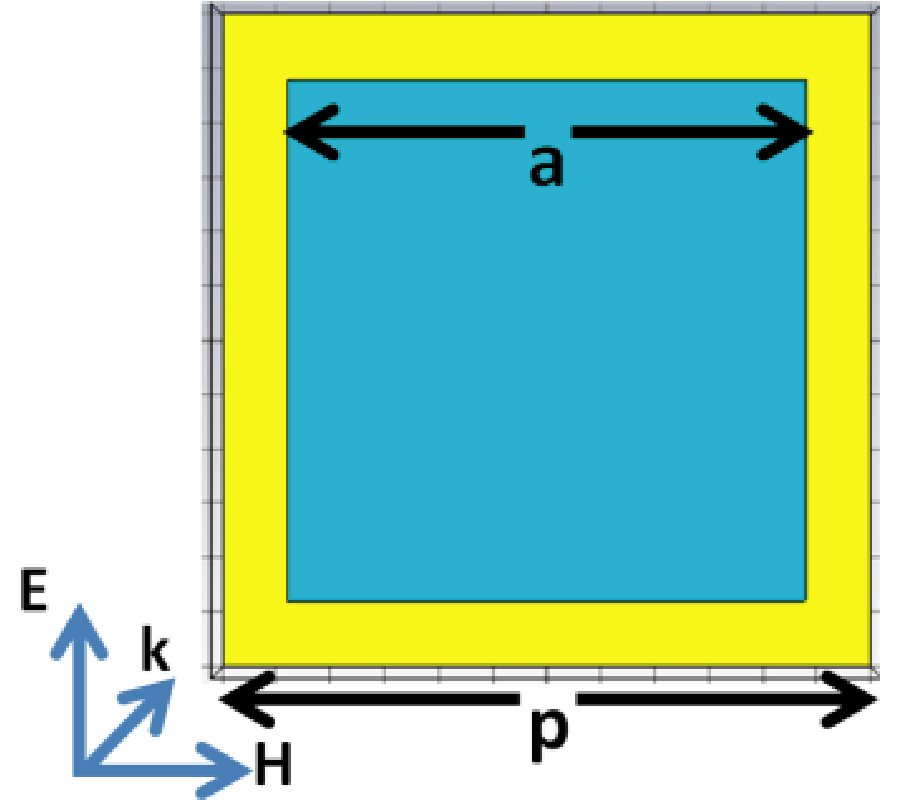
An annular-ring element for building a miniaturized bandstop frequency selective surface (FSS) structure which possesses a superior performance with respect to electromagnetic wave polarizations and incident angles is introduced in this paper. The proposed element has prominent miniaturization characteristics with a unit dimension of 0.061λ×0.061λ, where λ represents the free-space wavelength corresponding to resonant frequency. Miniaturization of the proposed FSS element is achieved by constructing special meandered strips in geometry and arranging lumped components between the elements. The advantage of this method lies in its great simplicity in tuning the resonant frequency of FSS by adjusting values of the printed capacitors rather than rebuilding the geometry. The obtained FSS also exhibits a stable performance in terms of angle stability and polarization insensitivity. Prototypes of the proposed FSS are fabricated and measured to verify design method. Measurements are well in line with simulation results.
AN ANNULAR-RING MINIATURIZED STOPBAND FREQUENCY SELECTIVE SURFACE WITH ULTRA-LARGE ANGLE OF INCIDENCE
2018-02-23
PIER Letters
Vol. 73, 105-112
Design of Broadband Transition Structure from Microstrip to Soltline with Band Notched Characteristic
Fa-Kun Sun , Wu-Sheng Ji , Xiao-Chun Ji , Pei-Pei Han , Ying-Yun Tong and Zhi-Yue Zhang
In this paper, a broadband transition structure from microstrip line to slotline with band-notched characteristic is proposed. To match the 50 Ω microstrip line, 4 Chebyshev impedance transformations are used in the transition structure, and its bandwidth is widened. There is a fan-shaped radial line at the microstrip terminal. A U-shaped slot is etched on the microstrip line with stepped impedance matching to achieve band-notch characteristic. By changing the length of the slot, the band notch is realized at different frequencies. Simulation and optimization of the transition structure are made by using the high frequency simulation software HFSS in this paper to achieve the band-notch function at 3.37-3.84 GHz and 10.67-11.14 GHz. In the rest of the band, return loss S11 is less than -15 dB, and voltage standing wave ratio (VSWR) is less than 1.5.
DESIGN OF BROADBAND TRANSITION STRUCTURE FROM MICROSTRIP TO SOLTLINE WITH BAND NOTCHED CHARACTERISTIC
2018-02-23
PIER M
Vol. 65, 9-17
An ISAR Imaging Method for Search Radar Involving Nonuniform Angle Samples
Hyung-Ju Kim , Kee Ung Bae , Won-Young Song , Eunjung Yang and Noh-Hoon Myung
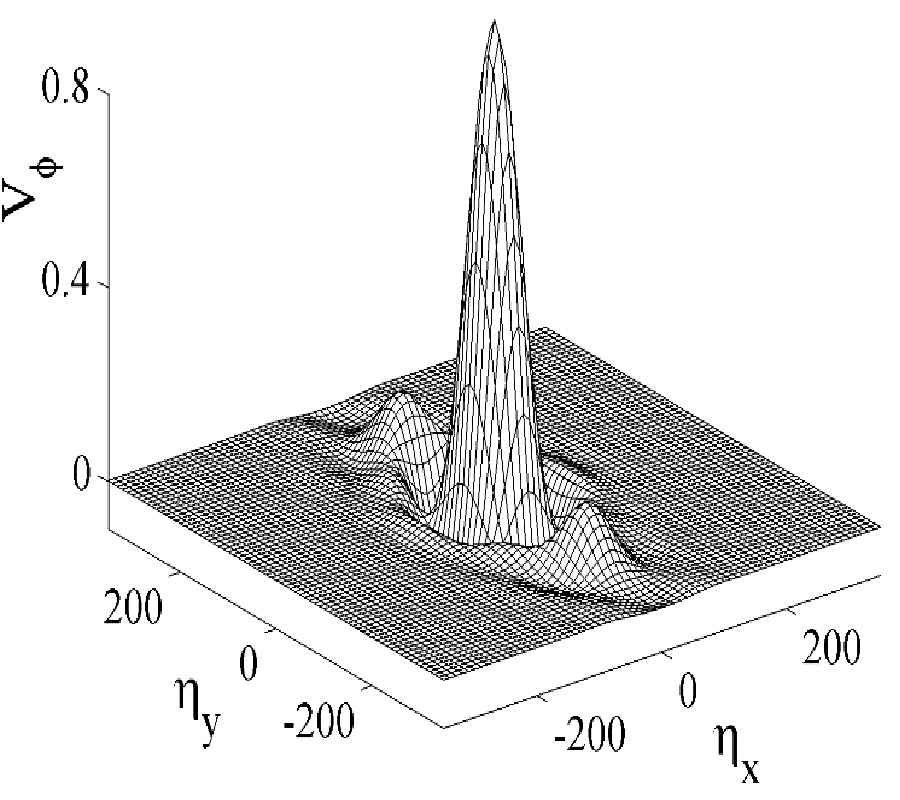
This paper proposes a two-dimensional (2-D) inverse synthetic aperture radar (ISAR) imaging method with nonuniformly obtained angle samples. A one-dimensional (1-D) radar image, a range profile, is obtained using frequency samples within a given bandwidth. 2-D ISAR images are then obtained by acquiring the Doppler spectrum using range profiles obtained from multiple observation angles having a constant interval. However, when ISAR images are obtained by applying the range-Doppler imaging method for a target scattered signal with nonuniform angle samples, a clear image cannot be obtained. In this paper, we propose a method to generate a covariance matrix from a nonuniform angle sample and obtain an ISAR image based on the multiple signal characterization (MUSIC) technique. The proposed method can be applied to the target scattering signal using a search radar, which observes target with nonuniform aspect angles. We present a scattering signal model of a target for the search radar and provide ISAR images obtained by applying the proposed method to simulated and measured data, respectively. Results reveal that the proposed method improves image quality and reduces computation time compared to the conventional method.
AN ISAR IMAGING METHOD FOR SEARCH RADAR INVOLVING NONUNIFORM ANGLE SAMPLES
2018-02-22
PIER C
Vol. 81, 199-209
Compact CPW Fed Switchable UWB Antenna as an Antenna Filter at Narrow-Frequency Bands
Mansour Nejatijahromi , Mahdi Naghshvarianjahromi and Muhibur Rahman
The aim of this paper is to present a compact coplanar waveguide (CPW) fed switchable UWB antenna as an antenna filter with adjustable notched frequency bands. Novel miniaturized tunable resonators are also presented to achieve notched bands. The antenna is made tunable in notched frequency bands without any modification in the basic structure. These stopbands are made tunable just by varying values of the capacitors according to our desired applications. The antenna structure is very compact having overall dimensions of 24×30.5 mm2 with partial ground plane.The proposed small size, variable, low cost and low weight antenna with good propagation characteristics will pave the way for UWB wireless communication applications.
COMPACT CPW FED SWITCHABLE UWB ANTENNA AS AN ANTENNA FILTER AT NARROW-FREQUENCY BANDS
2018-02-21
PIER C
Vol. 81, 191-197
Scalable Preparation of Broadband Ultrablack Graphite Nanoneedle Surfaces through Self-Masked Etching
Tingbiao Guo , Yaoran Sun , Sailing He , Jiang Yang , Mengzhu Hu , Wen Mu and Julian Evans
Ultrablack materials play an essential role in astronomical observation and many thermal applications. Many material systems such as vertically aligned carbon nanotubes have produced extraordinarily high absorption, but require complicated fabrication. Here we report a single step self-masked etching process performed on compressed-coal graphite plates on a silicon substrate, which produces an ultrablack material with 0.7% hemispherical reflectance in the visible region and specular reflectance below 0.7% between 850 nm and 10 μm. Nanoscopic pieces of silicon are ripped off the substrate and deposit on the graphite resulting in carbon nanoneedle structures, which grow linearly with etching time reaching a height of 5.7 μm after 60 minutes.
SCALABLE PREPARATION OF BROADBAND ULTRABLACK GRAPHITE NANONEEDLE SURFACES THROUGH SELF-MASKED ETCHING
2018-02-21
PIER M
Vol. 65, 1-8
A Single-Feed Circularly Polarized Magnetoelectric Dipole Antenna for Wideband Wireless Applications
Chao-Qiang Feng , Fu-Shun Zhang , Han-Jing Zhang and Jun-Xiu Su
A wideband circularly polarized magnetoelectric dipole antenna fed by a Γ-shaped structure is investigated. In the design, a pair of vertical plates connected to ground work as a magnetic dipole, while a pair of rotationally symmetric horizontal plates with strips bent downward work as an electric dipole. And four metallic plates are vertically added on edges of the ground, forming a cavity reflector with four gaps to improve the axial ratio (AR) bandwidth. Measurements show that the antenna has a wide impedance bandwidth of 102% from 1.35 GHz to 4.2 GHz for voltage standing wave ratio (VSWR) ≤ 2 and a 3-dB AR bandwidth of 79.7% from 1.6 GHz to 3.72 GHz, over which the antenna gain varies from 5.4 dBic to 10.6 dBic. Furthermore, the antenna exhibits right-hand circular polarization and has good unidirectional radiation characteristic. The proposed antenna can be applied to wideband wireless applications.
A SINGLE-FEED CIRCULARLY POLARIZED MAGNETOELECTRIC DIPOLE ANTENNA FOR WIDEBAND WIRELESS APPLICATIONS
2018-02-21
PIER M
Vol. 64, 211-217
Unidirectional UWB Magneto-Electric Antenna for Medical Telemetry
Johnbosco I. E. Anosike , Li-Ying Feng , Hong-Xing Zheng , Ying Liu and Yue-Xin Liu
An implantable magneto-electric antenna (IMEA) aiming for operation at ultra-wideband (UWB: 3.1-10.6 GHz) frequency spectrum is presented for biotelemetry usages for the first time. The IMEA is composed of a horizontal planar bowtie radiator, from whose middle the antenna is excited, and a vertically inclined rectangular radiator. The two radiators are complementary and correspond to electric and magnetic dipoles, respectively. The radiators are built over a square dielectric material (εr = 6, σ =0.0005) with a cavity for embedding suitable accompanying circuitry system. The IMEA with its biocompatible insulator (PEEK: εr = 3.2, tan δ = 0.01) measures 1456 mm3 in volume. HFSS software was used to carry out numerical optimization of the IMEA with a simple multilayered model of body tissue (Skin, Fat and Muscle) as the host environment. The simulated result of the proposed IMEA shows over 90% impedance bandwidth (S11<-10 dB) and records a remarkable high gain of 2 dBi within 70% bandwidth. The radiation efficiency is around 50%, and a unidirectional radiation pattern with little back lobe is observed.
UNIDIRECTIONAL UWB MAGNETO-ELECTRIC ANTENNA FOR MEDICAL TELEMETRY
2018-02-20
PIER C
Vol. 81, 181-189
Optimal Design of Red, Blue, and Far-Red LEDs Array
Yimin Zhou , Yiqing Xu , Zhiyue Ji and Guoquan Zhou
An LED array with 2N-1 lines and N rows is designed, which consists of red, blue, and far-red LEDs. The red and blue LEDs with N lines and N rows are uniformly and intervally arranged. The central distance between adjacent red and blue LEDs is d. The far-red LEDs are filled in-between every two lines of red and blue LEDs, which results in an array of far-red LEDs with N-1 lines and N rows. The central distance of adjacent far-red LEDs is also d. By using the imperfect Lambertian model, the irradiance distribution of the LED array with N being even and odd is derived in the reference plane, respectively. Also, solving equation of the optimal distance d is presented. Numerical results show that irradiance distributions of the three mixed-color, red, blue, and far-red lights of the LED array are uniform in the reference plane. Ratios of R/B and R/Fr are both relatively uniform in the reference plane. The ratio of R/B in the case of N being even is more uniform than that in the case of N being odd. However, the ratio of R/Fr is opposite.
OPTIMAL DESIGN OF RED, BLUE, AND FAR-RED LEDS ARRAY
2018-02-20
PIER C
Vol. 81, 171-179
A Compact Metamaterial Quad-Band Antenna Based on Asymmetric E-CRLH Unit Cells
Hien Ba Chu and Hiroshi Shirai
In this paper, a compact metamaterial quad-band antenna is presented. The antenna is designed from a unit cell of asymmetric extended-composite right/left handed transmission line (E-CRLH TL) as the main resonator part and a 50 Ω coplanar waveguide (CPW) as the feeding part. The design concept and resonant frequencies are analyzed and discussed. The results show that the proposed antenna exhibits four frequency bands covering GSM810, WLAN 2.45/5.5 GHz and WiMAX 3.5 GHz bands. The overall size of the fabricated antenna is only 57.2 mm×31.2 mm×1.6 mm and is very small compared with other proposed quad-band antennas. In addition, a good agreement can be seen among the estimated resonant frequencies, HFSS simulated and measured results.
A COMPACT METAMATERIAL QUAD-BAND ANTENNA BASED ON ASYMMETRIC E-CRLH UNIT CELLS
2018-02-19
PIER C
Vol. 81, 161-169
Estimation of Motion Parameters with Dual-Frequency InSAR Imaging Technique
Kai-Shiun Yang , Po-Chih Chen and Jean-Fu Kiang
A dual-frequency InSAR imaging technique is proposed to estimate the position and motion parameters of a moving target, including velocity and cross-track acceleration. By applying a dual-frequency technique, phase ambiguity is effectively removed to obtain accurate estimation of motion parameters.
ESTIMATION OF MOTION PARAMETERS WITH DUAL-FREQUENCY INSAR IMAGING TECHNIQUE
2018-02-19
PIER B
Vol. 80, 1-17
Electromagnetic Scattering from One Dimensional Random Rough Surfaces of Dielectric Layered Media with Waveguide Modes Using Second Order Small Perturbation Method
Mohammadreza Sanamzadeh , Leung Tsang , Joel Tidmore Johnson , Robert J. Burkholder and Shurun Tan
An alternative formulation of the Small Perturbation Method (SPM) in solving electromagnetic scattering from multi-layer random rough surfaces to resolve singularities in spectral integrals is presented. Non-monotonic permittivity changes will allow a multi-layer structure with flat interfaces to support guided modes. The presence of these guided modes translates to poles in the zeroth order Green's function of the media for the surface fields. The poles appear in the first and second order perturbation solutions based on a iterative procedure. Thus, evaluating the spectral integrals to obtain the spatial fields becomes problematic. The Sommerfeld integration path instead of real line integrals is introduced by analytic continuation of the integrand into complex spectral space. It is verified that this alternative spectral integration method is valid for both monotonic and non-monotonic cases.
ELECTROMAGNETIC SCATTERING FROM ONE DIMENSIONAL RANDOM ROUGH SURFACES OF DIELECTRIC LAYERED MEDIA WITH WAVEGUIDE MODES USING SECOND ORDER SMALL PERTURBATION METHOD
2018-02-19
PIER Letters
Vol. 73, 99-104
Stable Implicit Scheme for TM Transient Scattering from 2D Conducting Objects Using TD-EFIE
Qiang Wang , Li-Xin Guo , Peng-Ju Yang and Zhong-Yu Liu
To improve stability of time-domain integral equation, a stable implicit scheme is proposed to solve the transverse-magnetic (TM) electromagnetic scattering from 2D conducting objects. The time-domain electric-field integral equation (TD-EFIE) was adopted and expressed using second-order derivative of the magnetic vector potential. To reduce numerical error, the magnetic vector potential was approximated by second-order central finite difference. TM transient scattering from 2D conducting objects was calculated by an implicit marching-on-in-time (MOT) scheme. To obtain stable numerical results, the TD-EFIE MOT implicit scheme was firstly combined with the time-averaging technique. The accuracy and stability of the scheme were demonstrated by comparison with the results from inverse discrete Fourier transform technique.
STABLE IMPLICIT SCHEME FOR TM TRANSIENT SCATTERING FROM 2D CONDUCTING OBJECTS USING TD-EFIE
2018-02-17
PIER C
Vol. 81, 151-159
A Wideband Frequency Selective Surface Reflector for 4G/X-Band/Ku-Band
Sarika , Malay Ranjan Tripathy and Daniel Ronnow
A Frequency Selective Surface (FSS) reflector with wideband response for 4G/X-band/Ku-band is proposed. The wideband FSS reflector consists of cascaded dual-layer patch FSS which is etched on separate layers of FR4 substrate. The targeted frequency range is 5-16 GHz. A wide stopband of 10.4 GHz (100% percent bandwidth) is obtained with two layers in cascade. The Equivalent Circuit (EC) method is used to approximate the simulated results. An extensive parametric study is also carried out to understand the effect of various combinations of FSS layers and their disposition. A panel of final FSS is fabricated where measured and simulated results agree well.
A WIDEBAND FREQUENCY SELECTIVE SURFACE REFLECTOR FOR 4G/X-BAND/KU-BAND
2018-02-16
PIER Letters
Vol. 73, 91-97
An UWB Top-Loaded Monocone Antenna for Multiservice Wireless Applications
Xia Bai , Ming Su , Zhaodong Gao and Yuan'an Liu
A compact ultra-wideband (UWB) top-loaded antenna for multiservice wireless applications is presented. It consists of a metal cone radiator, a small ground plane, four shorting poles and a top-cross plate, among which the top-cross plate with two slots shorted to the ground planet is important to broaden the low frequency bandwidth. The measured result shows that an improved impedance bandwidth of 185% from 1.17 to 30 GHz is achieved. The omnidirectional stable radiation pattern in the horizontal plane is also obtained. The volume of proposed design is approximately 0.0173λ3 at 1.17 GHz. With the small volume and UWB characteristic, the design of the proposed antenna is very suitable for many wireless standards such as Softbank (1427-1500 MHz), DCS1800, PCS1900, UMTS, IMT2000, Wi-Fi (2.4 GHz), WiMAX (2.2-5.5 GHz), UWB (3.1-10.6 GHz), and satellite communication (X band, Ku band and Ka band).
AN UWB TOP-LOADED MONOCONE ANTENNA FOR MULTISERVICE WIRELESS APPLICATIONS
2018-02-14
PIER C
Vol. 81, 141-149
Linear and Nonlinear Properties of Graphene at Millimeter-Wave for Multiplier and Mixer Applications
Amr Samir , Hesham El-Sherif , Sherif Kishk , Maher M. Abdel-Razzak and Mohamed Basha
In this paper linear and nonlinear properties of graphene at millimeter wave frequency band are investigated. The nonlinear properties of the graphene are utilized to design frequency multiplier and mixer for millimeter wave applications. A patch of graphene is deposited on the dielectric image guide that will generate higher order harmonics. The amplitude of harmonics is optimized based on the dimensions of the graphene patch on top of the dielectric image guide. A frequency multiplier and mixer are designed, which utilize the second harmonics generated through graphene. The nonlinear behavior of the proposed designs has been simulated in the 50-75 GHz input signal frequency range. A conversion efficiency of -23 dB is obtained for the second harmonic for the frequency doubler. The frequency mixer is designed to mix two frequencies in V-band using dielectric image guide as the waveguide. A -28 dB conversion efficiency is simulated on a dielectric image-guide platform.
LINEAR AND NONLINEAR PROPERTIES OF GRAPHENE AT MILLIMETER-WAVE FOR MULTIPLIER AND MIXER APPLICATIONS
2018-02-14
PIER M
Vol. 64, 201-209
A Compact Tri-Band Bandpass Filter Using Two Stub-Loaded Dual Mode Resonators
Muhibur Rahman and Jung-Dong Park
In this paper, we present a compact tri-band bandpass filter (BPF) using two stub-loaded dual mode resonators (SLDMRs) combined with intra-coupled internal resonators. The designed filter operates at 1.575, 2.4, and 3.45 GHz, corresponding to the GNSS, WLAN, and WiMAX applications, respectively. The passbands of the filter are determined by odd- and even-mode frequencies created by the SLDMR and the internal open loop resonator inside of it. The corresponding even-mode frequency can be adequately tuned by adjusting the length of the stub while the odd-mode frequency is fixed. Two transmission zeros (TZs) are introduced on each side of the passband to improve the selectivity of the implemented filter. Five TZs around the edges of three passbands make the passbands highly isolated, and these transmission zeros can be placed according to the desired choice. The proposed tri-band BPF was designed, fabricated and measured, and the simulated and measured results corresponded very well.
A COMPACT TRI-BAND BANDPASS FILTER USING TWO STUB-LOADED DUAL MODE RESONATORS
2018-02-14
PIER M
Vol. 64, 193-200
Analysis of Aperture Field Uniformity for Biological Experiments
Honglong Cao , Xueguan Liu , Fenju Qin and Heming Zhao
The uniformity of the incident electromagnetic radiofrequency fields (RF) is an important factor that can influence the results in biological in vivo and/or in vitro exposure experiments using animals and humans or their cells. The International Electrotechnical Commission (IEC) has published IEC 61000-4-20 standard which defined field uniformity criteria for emission and immunity testing in a defined region in transverse electromagnetic (TEM) waveguides. In this paper, we present a numerical analysis method to determine aperture field uniformity in biological experiments according to IEC 61000-4-20:2010 standard. With the numerical analysis method, the uniformity of electromagnetic field can be analyzed in Cartesian coordinates system by aperture-field method (AFM). Then, with the simultaneous application of AFM and the field uniformity criteria defined by IEC 61000-4-20:2010, the two functions can be programmed to evaluate the field uniformity in region of interest (ROI) which can then be meshed into the given observation points where biological examples are exposed to RF. At the specified position of ROI along z far from the aperture of the WR-430 rectangular open-ended waveguide, the field and the minimum uniform distances vs. frequencies can be calculated by AFM. Thus, the results of the numerical analysis method can be applied to design the exposure setups for biological experiments with the field uniformity required in ROI.
ANALYSIS OF APERTURE FIELD UNIFORMITY FOR BIOLOGICAL EXPERIMENTS
2018-02-13
PIER C
Vol. 81, 125-140
Bootstrap Based Sequential Detection in Non-Gaussian Correlated Clutter
Toufik Boukaba , Mohammed Nabil El Korso , Abdelhak M. Zoubir and Daoud Berkani
In this paper, sequential parametric detection problem is addressed for non-Gaussian correlated clutter. It is well known that the assumption of normally distributed clutter leads, mostly, to analytical expressions of the threshold as well the distribution of detection statistic. Nevertheless, due to the resolution improvement of recent sensing instruments such as high resolution radar, the Gaussian assumption is unrealistic since the clutter is nonhomogeneous. As a consequence, using non-Gaussian assumption of the clutter prevents, mostly, of obtaining analytical expressions of the threshold and the distribution of detection statistics. In this work, we overcome this issue by use of the so called bootstrap techniques for dependent data. Numerical simulations reveal that our proposed method outperforms the classical and sequential non-bootstrap based detection schemes in terms of probability of detection and selects the optimum sample size needed to achieve the required detection performances.
BOOTSTRAP BASED SEQUENTIAL DETECTION IN NON-GAUSSIAN CORRELATED CLUTTER
2018-02-13
PIER C
Vol. 81, 115-124
A Compact Non-Bianisotropic Complementary Split Ring Resonator Inspired Microstrip Triple Band Antenna
Ramasamy Pandeeswari
A Compact Non-Bianisotropic Complementary Split Ring Resonator (NB-CSRR) based microstrip triple band antenna is presented in this paper. The antenna has a simple structure compared to other antennas for triple band operation. The antenna consists of a microstrip-fed NBCSRR loaded radiating element and partial ground plane. The designed antenna has a compact size of 29.4 mm x 26 mm x 1.6 mm. Two NBCSRR slots are etched on the radiating patch. Bottom NB-CSRR is used to generate new resonance, and top NB-CSRR is used to improve the return loss. The measured data show that the antenna covers the frequency ranges of 2.5 GHz-3.61 GHz, 4.06 GHz-4.69 GHz, 4.80 GHz-6.07 GHz with impedance bandwidth of (<-10 dB) of 1.11 GHz, 0.63 GHz and 1.27 GHz. The results show that the antenna can cover WLAN and C band applications.
A COMPACT NON-BIANISOTROPIC COMPLEMENTARY SPLIT RING RESONATOR INSPIRED MICROSTRIP TRIPLE BAND ANTENNA