Search Results(13792)

2018-03-26
PIER M
Vol. 66, 65-72
Reconfigurable Cylindrical Plasma Antenna
Oumar Alassane Barro , Mohamed Himdi and Olivier Lafond
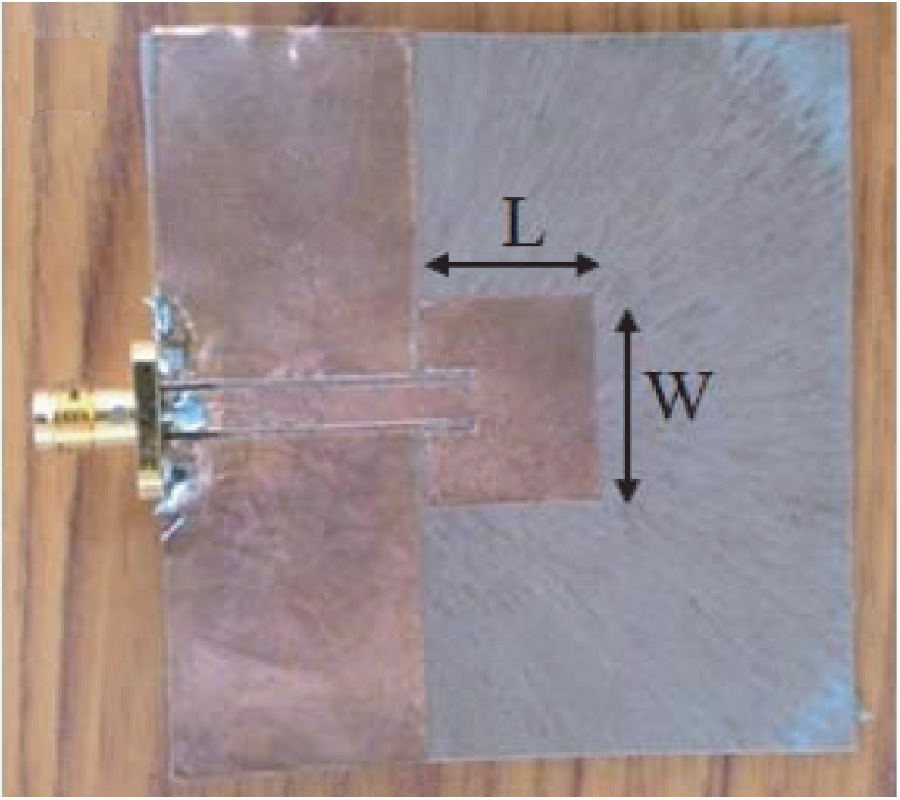
This paper presents the performance of cylindrical plasma antenna. A plasma tube is used as radiating element. The antenna is designed and works at different frequencies. To couple electromagnetic signal from the coaxial probe to the plasma column, a coupling system is realized. It permits to excite the tube in order to have a monopole or dipole antenna. The performances of the cylindrical plasma antenna are given in terms of S11, gain and radiations patterns.
RECONFIGURABLE CYLINDRICAL PLASMA ANTENNA
2018-03-26
PIER
Vol. 161, 41-55
A Low-Profile Pattern Reconfigurable Antenna System for Automotive MIMO Applications
Jerzy Kowalewski , Jude Atuegwu , Jonathan Mayer , Tobias Mahler and Thomas Zwick
This paper presents the design and evaluation of a compact antenna system with pattern reconfigurability at 2.6 GHz. The antenna is based on the concept of an electronically steerable parasitic array radiator (ESPAR), and its height is reduced by top loading. The antenna can generate 10 reconfigurable patterns with a maximal gain of 7.4 dBi. Furthermore, a multiple antenna system consisting of these antennas is proposed. The radiation patterns realized by this multiple-input-multiple-output (MIMO) system are optimized for automotive urban scenarios based on the results of previous research. The S-parameter measurement results of a fabricated prototype correlate with the simulation. Furthermore, 3D measurements of radiation patterns correspond very well with simulation and gain up to 8 dBi is obtained.
A LOW-PROFILE PATTERN RECONFIGURABLE ANTENNA SYSTEM FOR AUTOMOTIVE MIMO APPLICATIONS
2018-03-24
PIER Letters
Vol. 74, 83-89
Design of Miniaturized Rat-Race Couplers with Arbitrary Power Division Ratios
Xiao Yang , Zhenheng Liao and Xu-Chun Zhang
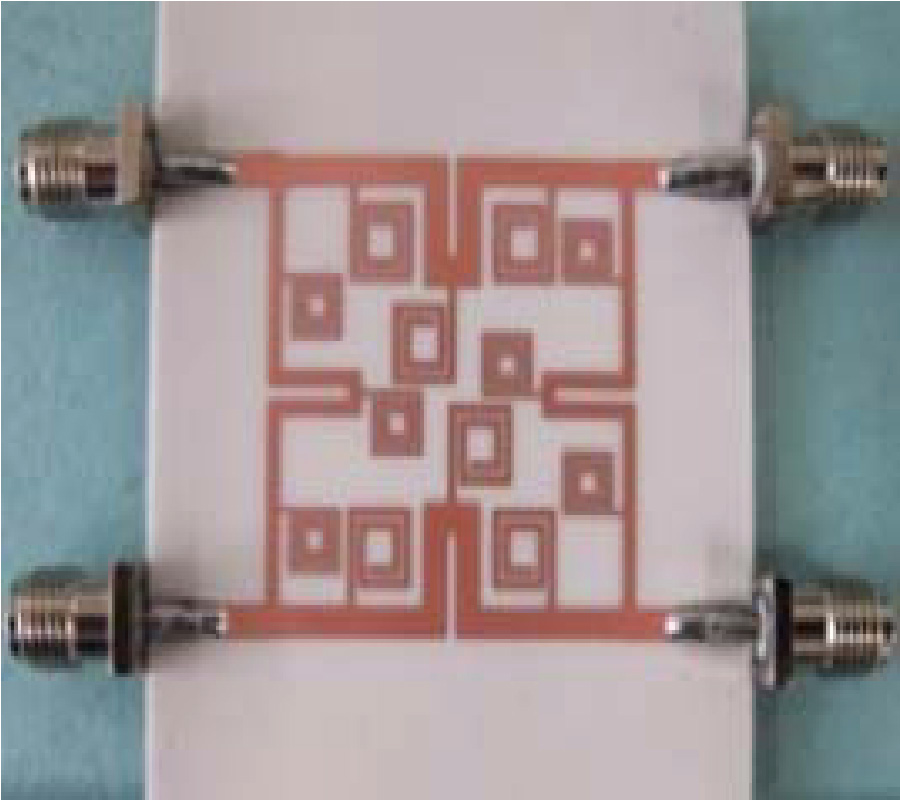
A miniaturized rat-race coupler with arbitrary power division ratio is proposed in this paper. The design formulas of the rat-race coupler with arbitrary power division ratio are derived using the even-odd decomposition analysis. The proposed structure demonstrates miniaturized size and perfect isolation due to adding phase inverter to the branch. For demonstration, a 20 dB rat-race coupler operating at 1 GHz with 81.34% size reduction is designed and fabricated. There is good agreement between measured and simulated results.
DESIGN OF MINIATURIZED RAT-RACE COUPLERS WITH ARBITRARY POWER DIVISION RATIOS
2018-03-23
PIER Letters
Vol. 74, 77-82
The Optimization at Studying of Electrical Conductivity in the Dielectric Nanocomposites with Disordered Nanotubes
Gennadiy Burlak and Gustavo Medina-Angel
We study the electrical conductivity of three-dimensional (3D) nanocomposite with incorporated random carbon nanotubes (CNT). Large length of the remote nanotubes generates a lot of intersections that induce rather small percolating threshold of the global conductivity in this medium. We simulate such a system by random cylinders placed in a percolating parallelepiped with the use of Monte Carlo method. Conductivity of such structure is associated with the critical phenomena, where the main transition parameter is de ned by the value of the percolation threshold. We calculate the minimal percolating threshold and determine the functional form of the conductivity by the global optimization technique. Such an approach allows studying the details of the electrical conductivity in nanocomposites even at signi cant level of the percolating fluctuations.
THE OPTIMIZATION AT STUDYING OF ELECTRICAL CONDUCTIVITY IN THE DIELECTRIC NANOCOMPOSITES  WITH DISORDERED NANOTUBES
2018-03-23
PIER Letters
Vol. 74, 69-75
An UWB to Narrow Band and BI-Bands Reconfigurable Octogonal Antenna
Mounira Bitchikh , Walid Rili and Mokhtari Mokhtar
The main objective of this article is to design, realize and measure the performance of a reconfigurable antenna for wireless applications. The designed antenna will be able to switch among several modes, from the ultra-wideband mode (UWB mode) to narrow band mode (NB mode) and then dual-band mode (Bi-bands mode) and vice versa in order to combine the maximum functionality. By incorporating two resonators into the octagonal antenna, the initial antenna can be covered by one wideband (UWB mode), one narrow sub-band (NB mode), or two narrow sub-bands (Bi-bands mode). The ultra-wideband mode is obtained by deactivating the two resonators (so the antenna operates as a classical octagonal antenna), while the one narrow band mode is obtained by activating just one resonator. In the bi-bands mode, the two resonators are activated at a time to be used as a coupling-bridge to very narrow frequency bands. To present the work, simulated and measured results are given and discussed.
AN UWB TO NARROW BAND AND BI-BANDS RECONFIGURABLE OCTOGONAL ANTENNA
2018-03-23
PIER Letters
Vol. 74, 61-67
A New Equal Power Quadrature Branch Line Coupler for Dual-Band Applications
Aijaz M. Zaidi , Syed A. Imam , Binod Kanaujia and Karumudi Rambabu
We present a new equal power quadrature branch line coupler (BLC) for dual-band applications in this paper. A new topology of the dual-band quarter wavelength transmission lines (TL) with the derivation of design equations is also introduced. The proposed BLC is designed using Advanced Design System (ADS) and fabricated on Rogers 5870 at 0.9 GHz and 2.4 GHz center frequencies. The design approach for the proposed dual-band BLC is endorsed by the simulated and measured results. A comparative analysis of this BLC with the previous BLCs is also carried out.
A NEW EQUAL POWER QUADRATURE BRANCH LINE COUPLER FOR DUAL-BAND APPLICATIONS
2018-03-22
PIER C
Vol. 82, 123-133
Multitarget Tracking Based on PHD Smoother with Unknown Clutter Spatial Density
Ran Zhu , Yunli Long and Wei An
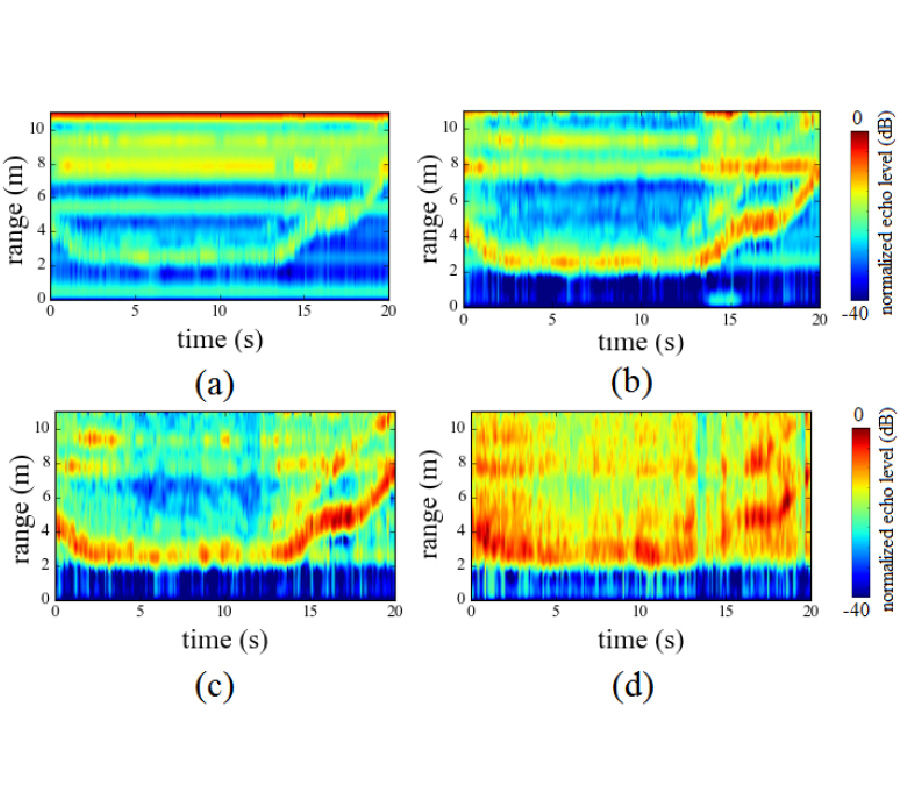
Conventional multitarget tracking techniques assume that clutter density is known a priori and use it directly in the recursive processing. However, in practical surveillance systems, the spatial distribution density of measurements generated by clutter is unknown and time-variant. Therefore, in order to achieve better tracking performance as well as the ability to evaluate the surveillance environment, we propose a fully forward-backward probability hypothesis density (PHD) smoother integrated with clutter spatial density estimator in this paper. Details on the sequential Monte Carlo (SMC) implementation method are presented as well. Simulation results of tracking performance evaluation verify the effectiveness of the proposed PHD smoother.
MULTITARGET TRACKING BASED ON PHD SMOOTHER WITH UNKNOWN CLUTTER SPATIAL DENSITY
2018-03-22
PIER M
Vol. 66, 53-63
Design of Compact Wideband Serpentine Patch Antenna for Ingestible Endoscopic Applications
Shikha Sukhija , Rakesh Kumar Sarin and Nitesh Kashyap
A miniaturized serpentine patch antenna is presented for Industrial, Scientific and Medical band (2.4-2.48GHz) applications. The proposed antenna is fabricated on a Rogers RT/duroid5880 substrate having permittivity of 2.2 and loss tangent of 0.0009. In comparison with other traditional structures, this antenna has an electrical length of 0.961λ with 29.2% impedance bandwidth which is advantageous for higher data rate transmission. In order to test the performance, the proposed antenna is tested in a silicone feeding tube. The simulated and measured results show good agreement with each other. Defected ground structure is also incorporated to enhance the performance of the proposed structure. All the simulations have been carried out on FDTD based Empire XCcel tool.
DESIGN OF COMPACT WIDEBAND SERPENTINE PATCH ANTENNA FOR INGESTIBLE ENDOSCOPIC APPLICATIONS
2018-03-22
PIER M
Vol. 66, 41-52
Characteristics of Scattering for Anisotropic Particles in Photoelectric Electromagnetic Beam
Jin Li and Xiaoyi Feng
The basic wave types of electromagnetic field propagation in anisotropic media are obtained. Based on the orthogonality relation between the vector wave functions and the orthogonality of trigonometric functions, etc., the expressions of zero order scattering fields and first-order scattered fields of arbitrary electromagnetic beam are presented. A stochastic system identification model for electromagnetic beam scattering by anisotropic particles is established. In the S wave band, the relationships respectively between the scattering field expansion coefficients, the basic wave types of the particle field and the tensor of dielectric constant are studied, and their validity of the model is verified. Taking the elliptical Gaussian beam as an example, the beam scattering characteristics of anisotropic media particles are investigated. The used method is simple, exploring a new approach of researching the electromagnetic beam scattering characteristics from anisotropic medium targets.
CHARACTERISTICS OF SCATTERING FOR ANISOTROPIC PARTICLES IN PHOTOELECTRIC ELECTROMAGNETIC BEAM
2018-03-21
PIER C
Vol. 82, 109-122
Antenna with Hexa-Band Capabilities for Multiple Wireless Applications
Praveen Chaurasia , Binod Kanaujia , Santanu Dwari and Mukesh Kumar Khandelwal
In this paper, a novel multiband microstrip patch antenna with small frequency ratio is designed and analysed. One can design a multiband antenna at any desired frequencies through these proposed methods. The proposed antenna shows six operating frequencies with very small frequency ratio between two consecutive resonant frequency 1.1248, 1.1123, 1.0792, 1.1469 and 1.3254 and can be used for various wireless applications i.e. 2.5 GHz for UMTS and Wi-Fi, 2.812 GHz for CCTV with wireless video links, 3.128 GHz and 3.376 GHz for WiMAX, 3.872 GHz for C-band applications and 5.132 GHz for Lower WLAN. Design procedure and formation of all six bands are presented and discussed. Analysis is done by Ansoft HFSS v.15 which is based on Finite Element Method (FEM), and simulated results are verified with experimental results of fabricated prototypes which are found in close agreement.
ANTENNA WITH HEXA-BAND CAPABILITIES FOR MULTIPLE WIRELESS APPLICATIONS
2018-03-21
PIER C
Vol. 82, 99-107
Research on Space-Time Adaptive Processing with Respect to the Signal Powers
Wei Wang , Lin Zou and Xuegang Wang
Diverse array processing methods with higher order statistics (HOS) have been developed in the last three decades. One of the main interests in using HOS relies on the increase of effective aperture and the number of sensors of the considered array. In this work, we further exploit space-time adaptive processing (STAP) using HOS based on the phased array radar with uniform linear array (ULA). We implement STAP with respect to signal powers instead of with respect to signal amplitudes as the convention. The purpose of this paper is to provide some important insights into the STAP with respect to signal powers (SP-STAP), such as the output response, output signal-to-interference-plus-noise ratio (SINR), minimum detectable velocity (MDV) performance and effect ofinternal clutter motion (ICM). Compared with the conventional STAP under the condition of the same number of array elements and transmitting pulses, the simulation results show that SP-STAP can gain narrower target main beam, lower side-lobe levels, better MDV performance and less deleterious effect of ICM.
RESEARCH ON SPACE-TIME ADAPTIVE PROCESSING WITH RESPECT TO THE SIGNAL POWERS
2018-03-21
PIER M
Vol. 66, 29-39
Bandwidth Improvement of Compact Planar Antenna for UWB Application with Dual Notch Band Performance Using Parasitic Resonant Structure
Swarnaprava Sahoo , Mihir Narayan Mohanty and Laxmi Prasad Mishra
This research article presents a compact planar antenna and a method for bandwidth improvement using parasitic resonant structure for UWB application with dual notch band performance, which are adjusted with an empirical formula. The radiating element of the microstrip square patch is slotted with two identical inverted J-shaped slots at the two non-radiating edges, a reversed F-shaped slot in the slotted radiating element, so that dual notch bands are excited. The bandwidth of the microstrip square patch radiator is improved with the help of a dumbbell-shaped parasitic resonant structure which is placed on the upper to partial ground plane for UWB application. The antenna, with size of (12×16 mm2), is fabricated on an epoxy FR-4 dielectric substrate of 1.6 mm thick and experimentally validated. The simulated and experimental results show that the invented radiator covers operating bandwidth from 2.8 to 13 GHz with VSWR < 2 and omnidirectional radiation characteristics. The two notch bands (3.3-4.2 and 5.1-5.4 GHz) are excited in the wide bandwidth by suppressing any interference from IEEE 802.16 WiMAX (3.3 GHz-3.6 GHz), C-band (3.7 GHz-4.2 GHz) and IEEE 802 11 a lower WLAN (5.15 GHz-5.482 GHz) with VSWR > 5.
BANDWIDTH IMPROVEMENT OF COMPACT PLANAR ANTENNA FOR UWB APPLICATION WITH DUAL NOTCH BAND PERFORMANCE USING PARASITIC RESONANT STRUCTURE
2018-03-20
PIER C
Vol. 82, 89-97
Folded-Slot Active Tag Antenna for 5.8 GHz RFID Applications
Sudhir Bhaskar , Sarthak Singhal and Amit Kumar Singh
In this paper, a folded slot active tag antenna for 5.8 GHz radio frequency identification (RFID) applications is presented. It consists of an inverted U-shaped monopole radiator fed by a coplanar waveguide (CPW) feed line and extended ground planes. A 10 dB return loss bandwidth of 5.65-6.55 GHz is achieved. The overall volume of the presented antenna is 10.7×11×1.6 mm3. A good agreement between the simulated and measured results is observed. The antenna has an omnidirectional radiation pattern at 5.8 GHz frequency which makes it suitable for RFID applications. It has advantages of compact dimensions and wider bandwidth than previously reported structures.
FOLDED-SLOT ACTIVE TAG ANTENNA FOR 5.8 GHZ RFID APPLICATIONS
2018-03-20
PIER Letters
Vol. 74, 53-60
An Equivalent Method of Position Error Caused by the Array Antenna Deformation
Xiutiao Ye , Wen-Tao Li and Wenhao Du
The deformation of antenna array due to external factors results in a significant degradation in the performance of the array direction of arrival (DOA) estimation. To solve this problem, an equivalent method based on the estimation of signal parameters by rotational invariance technique (ESPRIT) in single signal source for the array position errors is proposed in this paper. This method is mainly for the low-order deformation of the array and is based on the equivalent value of the position error. The DOA estimation of ESPRIT algorithm for single signal source was corrected. The simulation results show that the position error equivalent method can effectively equalize the position error caused by the vibration deformation of the array. When the equivalent position error is known, the orientation of the single signal source can be effectively corrected.
AN EQUIVALENT METHOD OF POSITION ERROR CAUSED BY THE ARRAY ANTENNA DEFORMATION
2018-03-20
PIER Letters
Vol. 74, 47-52
Frequency Tunable Low Cost Microwave Absorber for EMI/EMC Application
Gobinda Sen and Santanu Das
A frequency tunable multi-layer low cost microwave absorber is proposed for Ku and X bands of applications. The tunability is obtained with the cavity model design using two metallic layers; a frequency selective surface (FSS) layer and a metal backed substrate layer with the air gap between them. The change in air-gap results in variation of the effective substrate height, and as a consequences the resonant frequency is tuned. The coupling of LC resonance and cavity resonance at an air-gap of 7.5 mm results in a dual-band absorption of the design. The proposed absorber performance has been analyzed for both TE and TM polarizations of incident wave, and the results are found to be same. The studies on surface current distribution and incident angle variation are observed to get physical insight behind absorption. The waveguide measurement method is used to correlate the simulated results with the measured one. With this simple cost efficient design, the absorber appears well suited for EMI/ EMC application at X and Ku bands.
FREQUENCY TUNABLE LOW COST MICROWAVE ABSORBER FOR EMI/EMC APPLICATION
2018-03-20
PIER M
Vol. 65, 187-195
An Electronically Tunable Dual-Band Filtering Power Divider with Tuning Diodes Sharing Technique
Yuan Jiang , Xianqi Lin , Cong Tang and Jiawei Yu
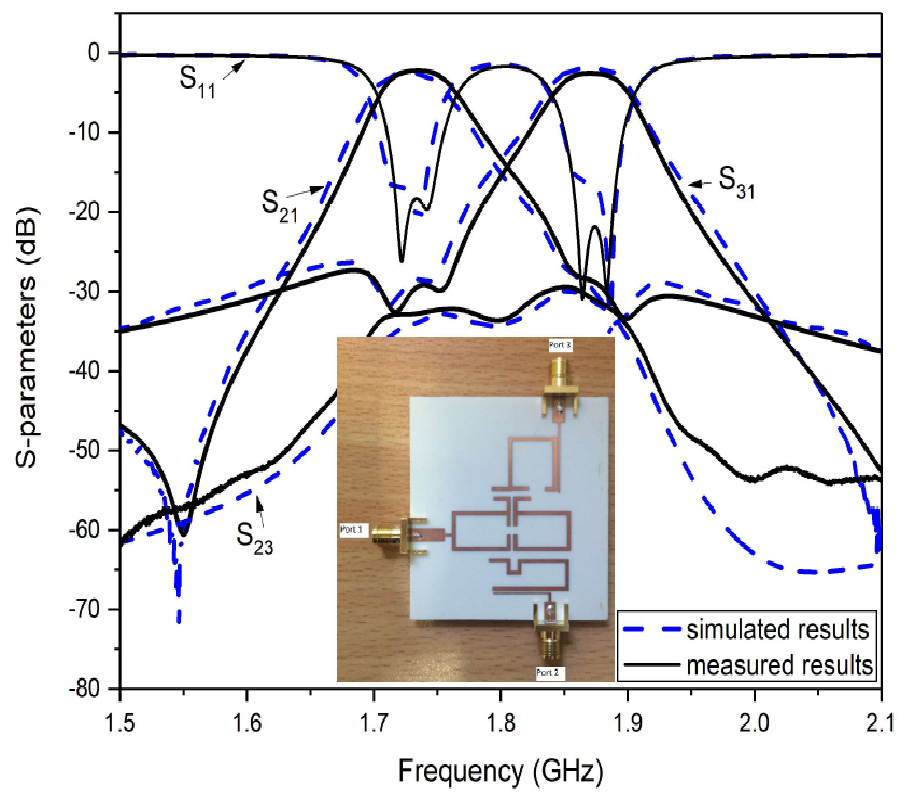
This paper presents an electronically tunable dual-band filtering power divider (TDFPD) with tuning diodes sharing technique. Two dual-mode tunable resonators (DMTRs) are embedded into a conventional power divider to achieve dual-band tunable bandpass filtering response. The two bands of the proposed TDFPD can be tuned independently. Tuning diodes sharing technique is utilized to reduce the number of tunable diodes. A prototype has been designed and fabricated to validate the proposed design as shown by the good agreement between the measured and simulated results. The measurement shows that the center frequencies of the lower and upper bands can be independently tuned from 1.31 to 1.62 GHz and 2.92 to 3.30 GHz, respectively. Within the passbands, isolation between the two output ports is higher than 16 dB with small phase and magnitude imbalance.
AN ELECTRONICALLY TUNABLE DUAL-BAND FILTERING POWER DIVIDER WITH TUNING DIODES SHARING TECHNIQUE
2018-03-18
PIER Letters
Vol. 74, 39-45
Multiple-Arm Dipoles Reader Antenna for UHF RFID Near-Field Applications
Kui Jin , Jingming Zheng , Xiaoxiang He and Yang Yang
A multiple-arm dipoles antenna array based on magnetic coupling is proposed for ultra-high frequency (UHF) radio frequency identification (RFID) near-field applications. The design utilizes four multiple-arm dipoles to form a square region fed by a quarter-wave impedance transformer double-side parallel stripline (QDSPSL) structure. Broadband performance can be obtained for two different resonant frequencies caused by different dipole arm lengths. Moreover, in induction area, stronger and more uniform magnetic field distribution is generated for phases of currents on three dipole arms being kept in the same compared to conventional single-arm dipole. A 170 × 170 × 1.6 mm3 antenna has been fabricated on an FR-4 substrate to fit RFID near-field application. The measured 10-dB impedance bandwidth is 190 MHz (810-1000 MHz), which covers the entire UHF RFID frequency band (860-960 MHz). Measured tests on the antenna read range are carried out, exhibiting a reading region of 100 × 100 mm2 and 100% reading rate within 200 mm for near-field tags.
MULTIPLE-ARM DIPOLES READER ANTENNA FOR UHF RFID NEAR-FIELD APPLICATIONS
2018-03-18
PIER M
Vol. 66, 19-28
Stability Assessment of Pipeline Cathodic Protection Potentials Under the Influence of ac Interference
Thabane Hendry Shabangu , Purva Shrivastava , Bolanle Tolulope Abe and Peter A. Olubambi
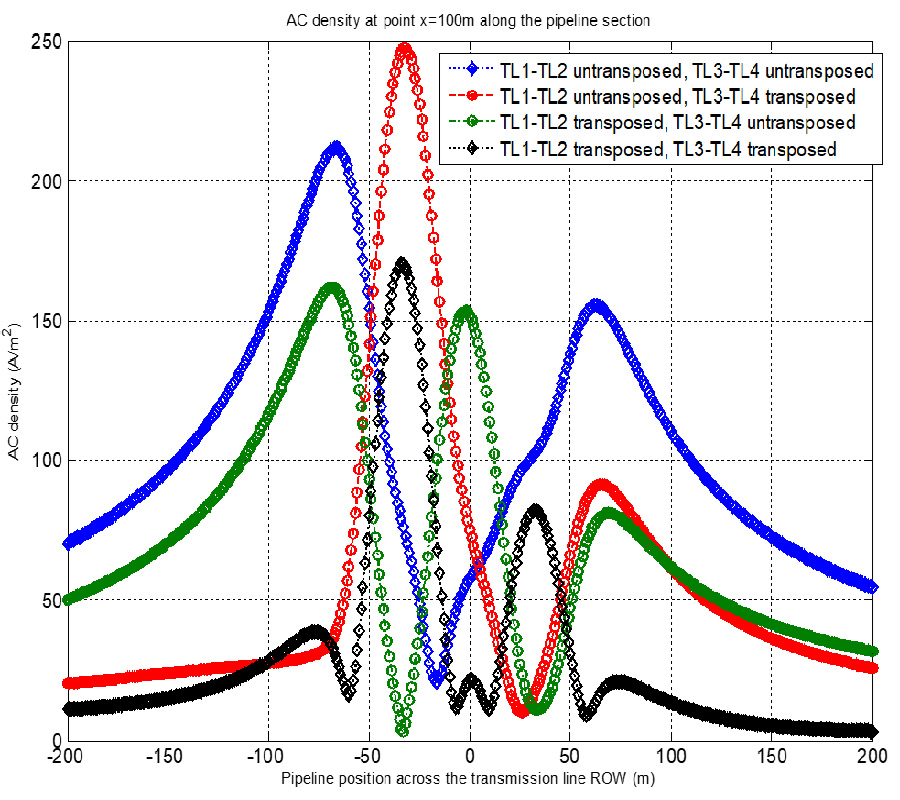
Metallic pipelines are protected from induced corrosion by the application of coating and Cathodic Protection (CP) systems. The latter is achieved by keeping the pipeline at a constant Direct Current (DC) voltage in relation to the surrounding soil. While this is conventionally meant to arrest corrosion, the Alternating Current (AC) interference from high voltage transmission lines has been a major problem to the CP potential systems of buried steel pipelines. Several research studies dealing with this problem have been published, and a lot of research work is still on going. This work focuses on assessing the stability of the CP potentials under the influence of AC interference. Seven different CP potentials varying from -800 mV to -1200 mV were applied on steel pipe specimen exposed to the AC interference with a varying AC voltage from 0-50 V. The results of the laboratory investigation revealed that CP potential of -1150 mV was more stable under the influence of AC interference, with just a minimal shift from the set value. The results from the corrosion morphology tests on the pipelines using Scanning Electron Microscope (SEM) and Energy Dispersive X-ray Spectroscopy (EDS) reveal the need for optimising the CP potential to provide adequate or optimum protection to the pipelines. Thus, more research studies involving simulation and field studies may lead to a major breakthrough in improving protection potentials.
STABILITY ASSESSMENT OF PIPELINE CATHODIC PROTECTION POTENTIALS UNDER THE INFLUENCE OF AC INTERFERENCE
2018-03-17
PIER B
Vol. 80, 59-77
Cognitive Radar Waveform Design Against Signal-Dependent Modulated Jamming
Shuping Lu , Guolong Cui , Xianxiang Yu , Lingjiang Kong and Xiaobo Yang
This paper focuses on the cognitive design of transmitting waveform to improve target detection capability in the presence of signal-dependent modulated jamming (e.g., chopping and interleaving (C&I) jamming). In particular, we reasonably assume that the modulation mode of signal-dependent jamming is available based on cognitive paradigm. The first design criterion is to minimize the integrated cross-correlation energy (ICE) between the transmitting waveform and jamming signal. In this way, the received jamming signal can be suppressed after matched filter processing is performed using the optimized waveform. The second design criterion is to minimize the integrated auto-correlation sidelobe level (IASL) for maintaining good range compression property. The practical constant modulus constraint is imposed on the transmitting waveform. Finally, to deal with the resulting non-convex problem, an iterative algorithm based on the majorization-minimization framework is developed. Numerical examples for specific signal-dependent modulated jammings are provided to demonstrate the effectiveness of the proposed methodology.
COGNITIVE RADAR WAVEFORM DESIGN AGAINST SIGNAL-DEPENDENT MODULATED JAMMING
2018-03-17
PIER M
Vol. 66, 11-18
Carbon Nanotubes Composite Materials for Dipole Antennas at Terahertz Range
Yaseen Naser Jurn , Mohamed Fareq Abdul Malek and Hasliza A. Rahim
This paper aims to present two types of carbon nanotubes composite materials (CNTs-composite) for antenna applications within terahertz (THz) frequency band. These composite materials consist of CNTs coated by copper and silver, separately, to construct CNTs-copper and CNTs-silver composite materials, respectively. The comparisons between the dipole antennas of these structure materials with CNTs dipole antenna and copper dipole antenna are presented to exhibit performance evaluation of the presented new dipole antennas. The mathematical modeling of CNTs-composite material is presented in this paper. The results obtained from the comparisons CNTs-copper and CNTs-silver dipole antennas are presented based on S11 parameters, gain and efficiency.
CARBON NANOTUBES COMPOSITE MATERIALS FOR DIPOLE ANTENNAS AT TERAHERTZ RANGE