Search Results(13792)

2018-04-06
PIER M
Vol. 67, 65-73
Compact CPW-Fed Circularly Polarized Antenna for WLAN Application
Manas Midya , Shankar Bhattacharjee and Monojit Mitra
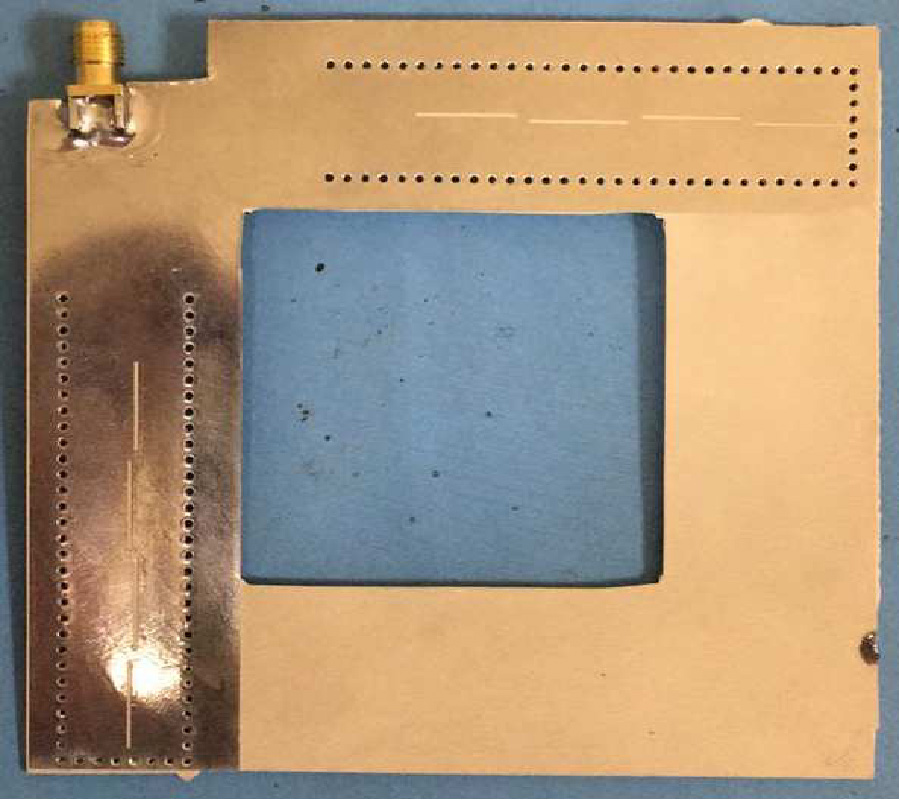
A novel compact CPW (coplanar waveguide-fed) CPSS (Circularly polarized square slot) antenna is presented. The proposed single-layer antenna is composed of a rectangular ground plane embedded with two equal-size patches along two orthogonal directions. Equal amplitudes with 90˚ phase difference values of two patches is capable are generating a resonant mode for exciting two orthogonal E vectors. Axial ratio (AR) bandwidth is significantly enhanced due to slot corner modification. The designed CPSS antenna is compact in nature with volume of 0.37λ0× 0.34λ0 × 0.012λ0 mm30= free space wavelength at centre frequency of the CP bandwidth). It has impedance bandwidth between 4.65-6.72 GHz (36.41%) and 3-dB axial-ratio bandwidth of 520 MHz (4.85-5.37 GHz), which covers 4.9 GHz (802.11j) WLAN for public safety ranging from 4.94 GHz to 4.99 GHz and WLAN (U-NII-1 and U-NII-2A) ranging from 5.150-5.350 GHz for indoor use. The gain variation for the frequencies within the CP bandwidth is also observed to be less than 0.6 dBic. The design is successfully implemented, and measured results are compared with the simulated ones, which are found in good agreement.
COMPACT CPW-FED CIRCULARLY POLARIZED ANTENNA FOR WLAN APPLICATION
2018-04-05
PIER C
Vol. 82, 237-249
Enhanced HF RFID Detection Area of Mobile Small Tag via Distributed Diameter Coil Resonator
Marjorie Grzeskowiak , Antoine Diet , Megdouda Benamara , Christophe Conessa , Stephane Protat , Marc Biancheri-Astier , Francisco de Oliviera Alves , Yann Le Bihan and Gaelle Lissorgues
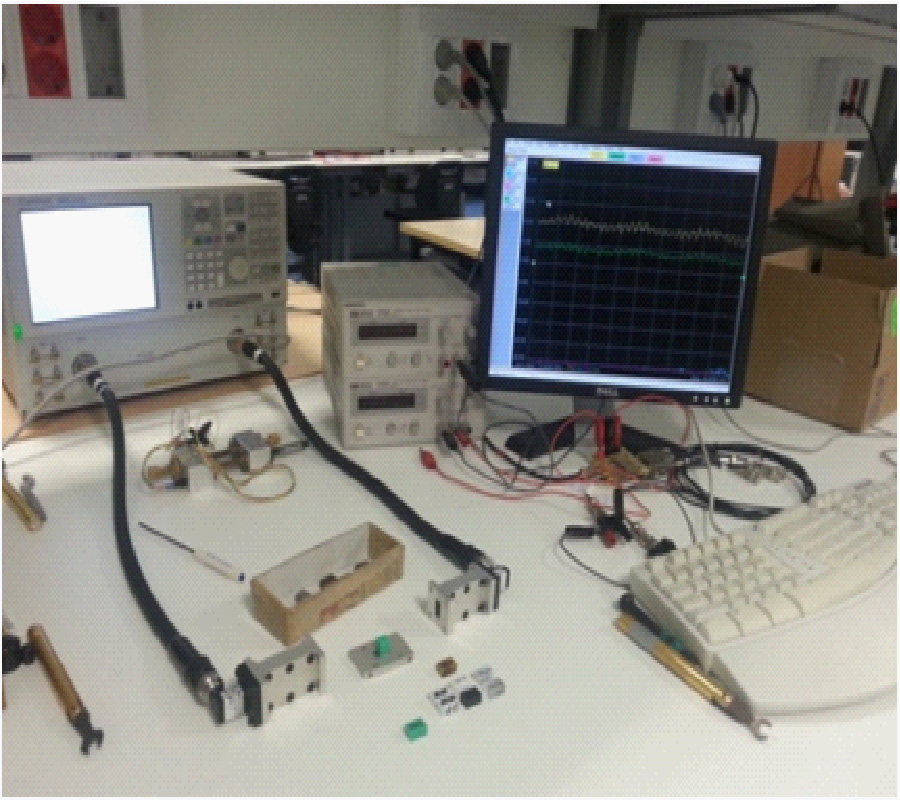
To improve HF detection of small RFID tags, a Distributed Diameter Coil (DDC) resonator is included in the reader coil. The key ideas of detection improvement are twofold: using a resonator with Magnetic Resonant Coupling (MRC) and modifying the distribution of diameter and current for each loop of the DDC resonator. These factors allow the magnetic coupling to increase between the reader and the smaller tag, especially in our case where the effective area of the tag is below 0,1% of the reader coil surface. Numerical simulations are carried out using HFSS to confirm the enhancement of the mutual coupling between the tag and the reader coil: the coupling coefficient is used in double-loop coupling (the case of the coupling of two loops), when a third loop (resonator) is inserted. The optimization of the magnetic coupling between a large reader and a small tag with resonator could be realized in changing first the sub-coil diameters, and then the sub-coil number of turns. One figure of merit to quantify the ability of surface detection is defined. A 15% improvement of detection surface in Horizontal Mode is measured at 1 cm of the reader plane in comparison with a conventional coil. Experimental detection measurements on real structures are described to validate statements.
ENHANCED HF RFID DETECTION AREA OF MOBILE SMALL TAG VIA DISTRIBUTED DIAMETER COIL RESONATOR
2018-04-05
PIER Letters
Vol. 74, 131-136
A Novel Multiband MIMO Antenna for TD-LTE and WLAN Applications
Jing Bai , Ruixing Zhi , Wenying Wu , Mengmeng Shangguan , Bingbing Wei and Gui Liu
A printed multiband multiple input multiple output (MIMO) antenna system is proposed in this paper. The MIMO antenna system is composed of two identical antenna elements which are perpendicular to each other. The defected ground plane with two microstrip lines is introduced to suppress the coupling between the antenna elements. The proposed MIMO system operates at two separated impedance bandwidths of 770 MHz (2.09-2.86 GHz) and 890 MHz (5.05-5.94 GHz) with an overall size of 50 × 50 × 1.59 mm3. The achieved isolation at the lower and higher frequency bands is higher than 20.9 dB and 17.8 dB, respectively. The proposed MIMO antenna system is feasible to be used for time-division long-term-evolution (TD-LTE, 2300-2655 MHz) and wireless local area network 802.11 a/b/g (WLAN, 2.4-2.4835 GHz, 5.15-5.875 GHz) applications.
A NOVEL MULTIBAND MIMO ANTENNA FOR TD-LTE AND WLAN APPLICATIONS
2018-04-05
PIER Letters
Vol. 74, 125-130
Wideband High Gain Fractal Antenna for Wireless Applications
Arpan Desai , Trushit K. Upadhyaya , Riki Patel , Sagar Bhatt and Parthesh Mankodi
The paper focuses on design and analysis of hexagon inspired fractal geometry and defected ground plane to evaluate the performance of patch antenna for wireless applications. It also emphasizes increasing the antenna bandwidth by incorporating novel rectangular Defected Ground Surface (DGS) structure with CPW feed. In the proposed work, antenna is simulated and fabricated for wireless applications using FR4 as the substrate, and it covers wide band with high gain. The antenna resonates at frequencies of 3.79 GHz and 5.5 GHz with measured return losses of -25.02 dB and -26.03 dB, respectively, making the proposed antenna suitable for Wi-Fi, cordless phone, wireless devices and wireless sensor networks applications.
WIDEBAND HIGH GAIN FRACTAL ANTENNA FOR WIRELESS APPLICATIONS
2018-04-05
PIER M
Vol. 67, 55-64
DOA Estimation Using Triply Primed Arrays Based on Fourth-Order Statistics
Kai-Chieh Hsu and Jean-Fu Kiang
A triply primed array (TPA) is configured on three mutually primed integers (N1, N2 and N3), which operates with O(N1N2N3) degree-of-freedoms to estimate the direction-of-arrivals (DOAs) of multiple incident quasi-stationary signals. The set of unique and contiguous lags of the proposed TPA is searched and verified. Simulation results verify that the proposed TPA can detect more incident signals with higher accuracy than its compatible counterparts.
DOA ESTIMATION USING TRIPLY PRIMED ARRAYS BASED ON FOURTH-ORDER STATISTICS
2018-04-05
PIER M
Vol. 67, 45-53
Time-Domain Coupling Analysis of Shielded Cable on the Ground Excited by Plane Wave
Zhihong Ye , Cheng Liao and Chuan Wen
This paper presents an efficient hybrid method consisting of finite-difference time-domain (FDTD) method, transmission line (TL) equations, and a fast calculation method for excitation fields, which can be applied to the coupling analysis of the shielded cable on the ground excited by plane wave rapidly. It can avoid modeling the infinite ground and the structure of the shielded cable directly. In this hybrid method, the shielded cable is decomposed into external and internal transmission line models, and the corresponding TL equations for the external and internal TL models are established necessarily. Then the FDTD method is utilized to solve the TL equations to obtain the transient responses on the shielding layer and core wires of the cable. A numerous examination of the coupling of coaxial cable exhibits that this hybrid method has very high accuracy and efficiency compared with the SPICE method. Finally, the methods of effective shielding protection of the cable have been proposed by analyzing the influences of the grounding states of the shielding layer, the electromagnetic parameters of the ground and the heights of the cable on the transient responses of the cable.
TIME-DOMAIN COUPLING ANALYSIS OF SHIELDED CABLE ON THE GROUND EXCITED BY PLANE WAVE
2018-04-05
PIER M
Vol. 67, 35-44
Gain and Noise Performance of Non-Foster Matching Circuit for VLF Receiver Loop Antenna
Ya-Long Yan , Chao Liu , Yin-Hui Dong and Huaning Wu
Non-Foster matching circuits are those that can function as negative capacitors or inductors, and can thus overcome the gain bandwidth limitation of passive matching circuits for antennas. This paper presents a non-Foster matching circuit (NFC) for a very low frequency (VLF) receiver loop antenna. The bandwidth of the antenna was improved by 383%, and the average gain was improved in most bands compared to a passive matching circuit (over 15-30 kHz). In contrast to circuits reported in other publications, the signal to noise ratio (SNR) of the passive matching network performed better than the non-Foster matching network. To analyze this phenomenon, a noise model was developed for the simplified balanced NFC, and noise analysis was conducted between the non-Foster and passive matching networks, which indicates that the non-Foster matching circuits cannot provide a better SNR performance than the passive matching circuits under low noise figure level receiver conditions.
GAIN AND NOISE PERFORMANCE OF NON-FOSTER MATCHING CIRCUIT FOR VLF RECEIVER LOOP ANTENNA
2018-04-05
PIER
Vol. 161, 57-85
CMOS Low Noise Amplifier Design for Microwave and mmWave Applications (Invited Review)
Xue Jun Li and Yue-Ping Zhang
This paper reviews recent advances in the design of low noise amplifier (LNA) in complementary metal oxide semiconductor (CMOS) technology for radio transceivers at microwave and millimeter wave (mmWave) frequencies. First, the evolution of wireless communication systems and CMOS technology are briefly revisited to highlight the requirements of an LNA design. Then, key performance parameters and device circuit models are described. Next, we discuss typical LNA topologies, followed by those important design techniques, algorithms and concepts developed specifically for CMOS LNAs. Moreover, reported CMOS LNA designs are summarized, and future design issues are identified. Finally, we conclude the paper and briefly outline our future work on CMOS LNA designs.
CMOS LOW NOISE AMPLIFIER DESIGN FOR MICROWAVE AND MMWAVE APPLICATIONS (INVITED REVIEW)
2018-04-04
PIER C
Vol. 83, 15-32
Influence of Geometric Simplifications on Lightning Strike Simulations
Guadalupe Gutierrez Gutierrez , Sergio Fernandez Romero , Monica Gonzaga , Enrique Pascual-Gil , Luis Diaz Angulo , Miguel David Ruiz Cabello N. and Salvador Gonzalez Garcia
This paper discusses the in fluence of simplifications in models used in the design of electromagnetic protection against indirect effects of lightning strikes. A real and complex test case such as the power plant of an A400M aircraft, simulated with the FDTD method, is chosen for this. The parameters studied are the inclusion/removal of installations, modification of electrical contacts, material properties, and changes in the cable characteristics. The simulations performed allow us to quantify the impact of different simplification approaches and, in consequence, to draw conclusions on the relative importance of different model features, being the most important ones to maintain the electrical contacts, to include installations and cables carrying high currents, to consider different materials, to respect the accurate cable routes or to take care of isolated equipment.
INFLUENCE OF GEOMETRIC SIMPLIFICATIONS ON LIGHTNING STRIKE SIMULATIONS
2018-04-04
PIER C
Vol. 83, 1-14
Design of Multilayer and Multiline Microstrip Directional Coupler with Closed Form Relations
Abdullah Eroglu and Daniel Ronnow
Design, simulation, implementation and measurement results of multiline and multilayer microstrip directional couplers are given with closed form relations. Step-by-step design procedure reflecting the design practice of directional couplers, which requires only information on coupling level, port impedances and operational frequency, is presented. The method based on the synthesis technique applied in the design of conventional two-line microstrip symmetrical directional couplers is adapted to design multilayer directional couplers with the aid of electromagnetic simulators using parametric analysis with curve fitting method. The proposed design method is compared with the measurement results and accuracy is verified. It has been also shown that the directivity of the couplers designed using the multilayer structure is improved significantly. A method such as the one presented in this paper can be used to design multilayer two-line and three-line directional couplers which can be integrated to the front end of an RFID systems to provide the required isolation between transmitter and receiver and prevent signal leakage due to use of conventional circulators.
DESIGN OF MULTILAYER AND MULTILINE MICROSTRIP DIRECTIONAL COUPLER WITH CLOSED FORM RELATIONS
2018-04-04
PIER C
Vol. 82, 225-235
A Penta-Band Reject Inside Cut Koch Fractal Hexagonal Monopole UWB MIMO Antenna for Portable Devices
Gnanaharan Irene and Anbazhagan Rajesh
In this paper, a novel compact hexagonal shaped ultra-wideband multiple-input multiple-output (UWB-MIMO) Koch fractal antenna is designed with penta-band rejection characteristics for portable devices. The antenna rejects the C-band downlink frequency from 3.7-4 GHz, the C-band uplink frequency from 5.75-6.05 GHz and the satellite bands from 7.45 to 8.4 GHz. The band 7.45-7.55 GHz is used by the meteorological satellite service for the geostationary satellite services. The band 7.75-7.9 GHz is used by the meteorological satellite service for non-geostationary satellite services. The band 8.025-8.4 GHz is used by the Earth exploration satellites for geostationary satellite services. The C-band and satellite bands interfere with the UWB and have been rejected using a band reject filter. A spiral shaped slot is introduced inside the fractal hexagonal monopole to introduce band reject characteristics. The band suppression and widening of the impedance bandwidth are achieved by using defected ground structures. The antenna has wideband impedance matching with S11 < -10 dB in the UWB frequency range from 3.1 to 13.6 GHz and has a low mutual coupling with S21 < -19 dB. The antenna has very low envelope correlation coefficient of less than 0.17 and low capacity loss of 0.254, which proves that the MIMO antenna shows good diversity performance.
A PENTA-BAND REJECT INSIDE CUT KOCH FRACTAL HEXAGONAL MONOPOLE UWB MIMO ANTENNA FOR PORTABLE DEVICES
2018-04-04
PIER Letters
Vol. 74, 117-123
A Miniaturized Multi-Channel TR Module Design Based on Silicon Substrate
Jun Zhou , Jiapeng Yang , Donglei Zhao and Dongsheng Yang
The block diagram of a TR (Transmit Receive) module that consists of four channels using a silicon substrate is presented in this paper. The silicon substrate fabricated by microelectronic process has been adopted to increase the interconnect density of module. Several broadband vertical transitions are simulated and optimized by EM simulator. The vertical transition works well from DC to 40 GHz. The insertion loss is less than 1 dB, and the return loss is better than -15 dB in back-to-back configuration. A novel TR module based on the silicon substrate is proposed for its miniaturization and high integration advantages. The module occupies a compact area of 30 mm×20 mm×1.8 mm, and the weight is 1.77 g.
A MINIATURIZED MULTI-CHANNEL TR MODULE DESIGN BASED ON SILICON SUBSTRATE
2018-04-04
PIER M
Vol. 67, 21-33
Electrostatic Trap for Localisation and Confinement of Likely Charged Particles
Ildar Tukaev
This paper reviews the motion of a charged particle in the electrostatic fi eld of two coaxial likely charged rings located at some distance from one another. The charges of rings and that of the particle are of the same sign. Initial conditions of motion of the particle relatively to the rings under which the particle overcomes the electrostatic repulsion of rings and localises along a particular circular trajectory laying in the internal space between the rings were determined.
ELECTROSTATIC TRAP FOR LOCALISATION AND CONFINEMENT OF LIKELY CHARGED PARTICLES
2018-04-04
PIER M
Vol. 67, 9-19
Channel Characterization of Circularly Polarized Antenna MIMO System in an Underground Mine
Moulay El Hassan El Azhari , Larbi Talbi , Lamia Arabi , Mourad Nedil , Mohamed Lamine Seddiki and Nahi Kandil
In this paper, a channel characterization of an RF link using circularly polarized antennas inside a mine is performed. The association of circular polarization with multiple-input-multiple-output (MIMO) radio technologies represents a powerful tool to improve the performance of an underground RF channel. The statistical parameters of the channel are derived from in-mine measurements at the 2.4 GHz band for both co-polarization (CP) and cross-polarization (XP) scenarios. Results show a remarkable improvement through the use of MIMO combined with circular polarization compared to the regular patch MIMO antenna system, in terms of channel capacity and path loss. This improvement increases significantly at the XP scenarios, reaching up to 18 bps/Hz for channel capacity and up to 21 dB for path loss. The RMS delay spread for a circularly polarized setup is generally higher than the linearly polarized MIMO patch setup due to surface roughness of the gallery. In the linear polarization case, a signal degradation of more than 15 dB at the XP case is observed compared to the CP scenario. This signal loss that is due to depolarization is somewhat mitigated by the surface roughness.Due to its superior and stable performance, MIMO combined with circular polarization is better suited than a regular MIMO patch system for in-mine uses, especially in the applications where the transmitter may change direction with respect to the receiver.
CHANNEL CHARACTERIZATION OF CIRCULARLY POLARIZED ANTENNA MIMO SYSTEM IN AN UNDERGROUND MINE
2018-04-04
PIER M
Vol. 67, 1-8
Carbon Fiber Reinforced Polymer with Isotropic 60 GHz Reflectivity
Erich Zochmann , Gerald Artner , Stefan Pratschner , Martin Lerch , Christoph F. Mecklenbraeuker and Markus Rupp
Carbon fiber reinforced polymer (CFRP) is measured as reflector material for millimeter waves at 60 GHz. Reflectivity is measured to characterize material anisotropy in a mono-static setup. Disc shaped material samples are rotated in steps of one degree. Four commonly employed CFRP are investigated: unidirectional fibers, plain-weave, twill-weave and fiber shreds. Results show that the unidirectional CFRP and twill-weave CFRP are anisotropic, while the remaining materials are isotropic within measurement accuracy.
CARBON FIBER REINFORCED POLYMER WITH ISOTROPIC 60 GHZ REFLECTIVITY
2018-04-04
PIER M
Vol. 66, 203-213
Beam Switchable Vehicular Antenna for Increased Communication Range
Bilal Khan , Markus Berg , Seppo Rousu and Aarno Pärssinen
In this paper, a beam switchable antenna solution for vehicular use is presented. Main objective is to improve the cellular connectivity of vehicles operating in poor coverage region. An adaptive antenna system operating in the frequency band 824-960 MHz having high gain, and full azimuth plane coverage, and main beam in elevation plane pointing towards 90˚, was developed. Beam switchable antenna provides beam-steering in azimuth plane, by switching one antenna element active at a time. The concept of stacked patch antenna with L probe feed was used for a single element. This arrangement gives gain of 7.4-8.2 dBi, and total radiation eciency of 0.11 dB, over the band, with broadside radiation pattern, and half power beam width of single element up to 80˚. The field measurements for the designed antenna system were performed in poor coverage regions using commercial cellular network. Results were compared to corresponding results of conventional vehicular antenna, having omnidirectional radiation pattern and the gain of 3 dBi. The developed antenna system results in 3.5...12.7 dB higher RX level than reference antenna and increase communication range from 71 km to 109 km in open area. Similarly, in suburban area the communication range is increased from 20 km to 30.8 km. Also, the narrower beam acts as spatial filter and results in reduced fading.
BEAM SWITCHABLE VEHICULAR ANTENNA FOR INCREASED COMMUNICATION RANGE
2018-04-03
PIER C
Vol. 82, 209-223
Analysis of Field Propagation through a Multiport Frequency Selective Network Using Cavity Modeling Technique
Ashmi Chakraborty Das and Santanu Dwari
This paper presents the applicability of cavity modeling technique to analyze field propagation inside a multiport waveguide network. For a better understanding of the subject, we have considered a five-port quadraplexer as our target network. Field propagations within the network at different passband and stopband frequencies have been presented. The analysis has been verified by comparing the overall frequency response of the network with the available data in literature. The analysis demonstrates the field division at different junctions as well as field attenuation/propagation at different points of the network, which will be helpful for designing more complex and/or advanced multiport waveguide networks. It also demonstrates the presence of higher order modes at different discontinuities of the network and their effectson the respective field distributions.
ANALYSIS OF FIELD PROPAGATION THROUGH A MULTIPORT FREQUENCY SELECTIVE NETWORK USING CAVITY MODELING TECHNIQUE
2018-04-03
PIER C
Vol. 82, 199-207
Miniaturization of Three-Section Branch-Line Coupler Using Diamond-Series Stubs Microstrip Line
Nadera Najib Al-Areqi , You Kok Yeow , Mohamad Ngasri Dimon , Nor Hisham Khamis and Chia Yew Lee
A three-section branch-line coupler is miniaturized using diamond-series stubs microstrip lines. The modified coupler is capable of operating from 1.6 GHz to 3 GHz with a return loss of less than -20 dB, phase imbalance of less than 2.5°, insertion loss and coupling of 4.5 dB and 3.02 dB, respectively. The bandwidth of the coupler has been extended up to 1.4 GHz. In addition, it achieves up to 84% size reduction as compared to a conventional three-section coupler. Furthermore, its performance and circuit size were compared with another modified coupler with normal open-stubs microstrip lines. Effects of the diamond structure and number of stubs were analyzed and discussed in detail, Furthermore, the results achieved by this study are superior to the previous studies.
MINIATURIZATION OF THREE-SECTION BRANCH-LINE COUPLER USING DIAMOND-SERIES STUBS MICROSTRIP LINE
2018-04-03
PIER M
Vol. 66, 193-202
Broadband and High Efficiency Single-Layer Reflectarray Using Circular Ring Attached Two Sets of Phase-Delay Lines
Fei Xue , Hongjian Wang , Yinghui Wang and Longjun Zhang
A new single-layer element structure for broadband operation is presented. The element is composed of a circular ring attached two sets of phase-delay lines with the opposite direction of rotation. The demission of circular ring is fixed, and about 460° reflection phase range is achieved by varying the length of the phase-delay lines. Using the proposed element, a 381-element single-layer linearly polarized reflectarray is designed, fabricated and measured. A gain of 27.5 dB is measured at 13.58 GHz with 3-dB beamwidth of about 6.8°, and the corresponding aperture efficiency is 57.3%. Good radiation performances are also achieved at other frequencies. Measured results show 1.5-dB and 3-dB gain bandwidth of 47.8% (13.58-20.08 GHz) and 64% (12.08-20.78 GHz) with the center frequency of 13.58 GHz respectively, which demonstrates excellent broadband performance. Besides, high aperture efficiencies (more than 50%) are achieved in a wide frequency range (12.08-17.08 GHz). Low cross polarization and sidelobe levels are also achieved in the frequency band.
BROADBAND AND HIGH EFFICIENCY SINGLE-LAYER REFLECTARRAY USING CIRCULAR RING ATTACHED TWO SETS OF PHASE-DELAY LINES
2018-04-03
PIER M
Vol. 66, 183-191
Insertable Waveguide Verification Standards for the Electromagnetic Characterization of Materials
Jonathan L. Frasch , Edward J. Rothwell , Premjeet Chahal and John Doroshewitz
A process is introduced to design and validate insertable rectangular-waveguide verification standards for the electromagnetic characterization of materials using the Nicolson-Ross-Weir method. Each insertable structure consists of a series of metal steps that acts as a surrogate material exhibiting smooth and predictable permittivity and permeability characteristics across the waveguide band. These known material properties can be used to assess the performance of material characterization systems. Since the verification standards are inserted into the waveguide in the same manner as samples under test, each step in the normal measurement procedure is duplicated. A specific example of an S-band verification standard is presented, with the standard fabricated using two different methods. The first standard is machined from a solid metal block while the second is constructed by metalizing a 3-D printed polymer structure. Comparison of the predicted material parameters to those extracted from experimental data demonstrates the utility of the proposed insertable standards.
INSERTABLE WAVEGUIDE VERIFICATION STANDARDS FOR THE ELECTROMAGNETIC CHARACTERIZATION OF MATERIALS