Search Results(13790)

2018-04-30
PIER C
Vol. 83, 255-265
Novel Electro-Textile Patch Antenna on Jeans Substrate for Wearable Applications
Mohamed Ismail Ahmed , Mai F. Ahmed and Abdelhameed Abdelmoneim Shaalan
This paper aimed to take closer steps towards real wearability by investigating the possibilities of designing and fabricating highly efficient and fully flexible wearable microstrip patch antenna for operating frequency of 5.8 GHz as a center frequency. Two types of conducting materials have been used for conducting parts: conventional metal plane and woven electro-textile material, while a non-conducting jeans fabric has been used as antenna substrate material. The dielectric constant εr = 1.78, and loss tangent tanδ = 0.085 of the jeans substrate measured by using two different methods. Also, the electromagnetic properties of the electro-textile are studied in details. The conductivity of e-textile cell is equal to 2.5×10⁶ S/m and the surface impedance of e-textile cell equal to 0.0395+J18.4 Ω. Furthermore, the proposed wearable antenna may be attached to human body, so the specific absorption ratio (SAR) must be calculated. Finally, the proposed design is simulated by CST simulator version 2016, fabricated using folded copper and measured by Agilent8719ES VNA.
NOVEL ELECTRO-TEXTILE PATCH ANTENNA ON JEANS SUBSTRATE FOR WEARABLE APPLICATIONS
2018-04-29
PIER Letters
Vol. 75, 83-89
Effect of Superstrate on a Cylindrical Microstrip Antenna
Prasanna Kumar Singh and Jasmine Saini
A microstrip patch antenna can be readily installed on any non-planar surface due to its conformal property, and this feature enhances its applicability in many areas. Moreover, in some specific applications, it is desirable and mandatory to provide protection of antenna from the unfriendly surroundings. Therefore, the present work focuses on the antenna with a dielectric cover and analyzes its effect on directivity, gain, and bandwidth at various superstrate air gaps. Two antenna models of single and dual elements are considered here separately, and both are conformal to the cylindrical surface. The antenna parameters are studied under varying superstrate gaps with equal intervals up to a quarter wavelength under fixed cylindrical curvature. It is noted that there is a significant improvement of 6% and 12% in bandwidth at quarter wavelength gap as compared to simple single and dual antenna models without dielectric loading, respectively. Also, both the calculated and measured results show the other important constructive effect of superstrate on the antenna performance.
EFFECT OF SUPERSTRATE ON A CYLINDRICAL MICROSTRIP ANTENNA
2018-04-28
PIER C
Vol. 84, 1-9
A Preliminary Research on Skull Healing Utilizing Short Pulsed Radar Technique on Layered Cranial Surgery Phantom Models
Doojin Lee , Jacob Velander , Daniel Nowinski and Robin Augustine
This paper presents a novel approach of sensing the defect response after craniotomy on cranial surgery phantom models utilizing a short pulsed radar technique. The proposed antenna has demonstrated that the short pulse can be radiated without antenna's own distortion, which is a desirable characteristic for sensing defect response. The layered microwave head phantom has been developed for the purpose of emulating the healing stages of cranial surgery after craniotomy. The fabricated phantom has been validated with reference values reported in literature. The longitudinal scan has been performed for various skull thicknesses as a preliminary study. The one-dimensional pulsed profile has been obtained to achieve the pulse compression so that the defect response can be highlighted. The results obtained in this paper have the potential that the microwave based technique can be utilized for monitoring the healing stages for the future work.
A PRELIMINARY RESEARCH ON SKULL HEALING UTILIZING SHORT PULSED RADAR TECHNIQUE ON LAYERED CRANIAL SURGERY PHANTOM MODELS
2018-04-28
PIER C
Vol. 83, 245-254
Ku-Band Suspended Meshed Patch Antenna Integrated with Solar Cells for Remote Area Applications
Farhat M. E. Nashad , Stephen Foti , David Smith , Michael Elsdon and Okan Yurduseven
A new structure design of a dual-band suspended microstrip meshed patch antenna integrated with a polycrystalline silicon solar cell for Ku-band satellite applications is proposed and presented. This antenna element is a basic building block for a Ku-band meshed array antenna used for two-way satellite internet and TV applications at rural and remote locations. The antenna covers the operating frequency range from 11.7 GHz to 12.22 GHz downlink band and from 14.0 GHz to 14.5 GHz uplink band allocated by the ITU to the Regions 1 and 2. While achieving 500 MHz bandwidth across each band, fully covering the Ku-band uplink and downlink frequency bands, the antenna offers a single element gain of 6.05 dBi in the downlink band and 7.61 dBi in the uplink band. The antenna has been fabricated and measured, and good agreement is achieved between the experimental and simulated results. In addition, a good compromise between RF performance and optical transparency is obtained. The overall visible light transmission is found to be approximately 87%. A compact low-profile antenna element is also achieved.
KU-BAND SUSPENDED MESHED PATCH ANTENNA INTEGRATED WITH SOLAR CELLS FOR REMOTE AREA APPLICATIONS
2018-04-28
PIER M
Vol. 68, 31-39
VLF Monitoring System for Characterizing the Lower Region Ionospheric Layer
Nur Ain Zakaria , Afifah Taat , Siti Amalina Enche Abdul Rahim , Wan Zul Adli Wan Mokhtar and Mohamad Huzaimy Bin Jusoh
The main objective of the current work is to develop a Very Low Frequency (VLF) monitoring system for characterizing low layer ionosphere. Low layer ionosphere is important for communication, and some researchers stressed that lower layer ionosphere can be a precursor to earthquake event. The VLF monitoring system composed of a 1-m antenna, a preamplifier to amplify the signal, an ADC converter and a data acquisition system. The optimization of 1-m antenna received dual frequencies 19.2 kHz and 19.8 kHz from South Vijayanarayanam, India and North West Cape, Australia, respectively. Subsequently, a low pass filter was designed in the preamplifier to pass VLF signals from 0-30 kHz. The results revealed that the system was able to characterize diurnal variation: sunrise and sunset and detect changes in the lower layer ionosphere region due to Solar activity.
VLF MONITORING SYSTEM FOR CHARACTERIZING THE LOWER REGION IONOSPHERIC LAYER
2018-04-27
PIER C
Vol. 83, 229-244
Experimental Studies and Analysis on IEMI Source, Field Propagation and IEMI Coupling to Power Utility System
Divya Shyamala , Rakesh Kichouliya , Pawan Kumar , Sandeep Satav and Dasari Rama Krishna
Intentional Electromagnetic Interference (IEMI) is one of the applications of High Power Electromagnetics (HPEM) for causing intentional interference in military targets such as C4I (Command, Control, Communication, Computer and Intelligence) targets and segments of civilian systems like critical VSAT's (Very Small Aperture Terminals), power grid and communication network, weather and air-traffic control radars etc. HPEM essentially consists of generation of intense electromagnetic waves either as High Power Microwave (HPM) or Ultra Wide Band (UWB) waves to cause electromagnetic interference. High power UWB waves are promising candidate for IEMI application. One such UWB source, developed for the purpose of radiating high intensity, fast rise time, short pulses, is the Half Impulse Radiating Antenna (HIRA) which covers a frequency range of 100 MHz to 6 GHz. In this paper, characteristics of UWB source i.e., HIRA, such as characteristics of electric field in both boresight and off-boresight, far field boundary and radiation pattern were computed. The UWB pulse dispersion through civil infrastructure and their coupling to power cables were studied experimentally.
EXPERIMENTAL STUDIES AND ANALYSIS ON IEMI SOURCE, FIELD PROPAGATION AND IEMI COUPLING TO POWER UTILITY SYSTEM
2018-04-27
PIER B
Vol. 80, 151-171
Diurnal and Monthly Variations of Rain Rate and Rain Attenuation on Ka-Band Satellite Communication in South Korea
Sujan Shrestha and Dong-You Choi
Statistics of monthly and diurnal variations in the occurrence of rain fades are needed to give a detailed insight for system design of these services. This paper analyses the performance on three years of rain rate and rain attenuation measurement to study the empirical determination of power law coefficients calculated for monthly distribution of rain attenuation from the knowledge of rain rate at 19.8 GHz link for COMS1 in South Korea. The received signal data for rain attenuation and rain rate were collected at 10 second intervals over a three year period from 2013 to 2015. The comparison of measured data for monthly variation illustrates the suitability for the estimation of signal in Ka-band whose appropriateness is verified through the comparison with prominent rain attenuation models namely ITU-R P. 618-13 and empirically generated regression coefficients values for ITU-R P. 838-3. A monthly variation of the coefficients has been indicated, and the empirical measured data were compared with the ITU-R P. 838-3 derived regression coefficients. Moreover, the statistics analyzed to 6 hour contiguous periods of the day are also shown. Furthermore, the paper presents an overview of the redicted monthly variation of rain attenuation estimation of 2013 year for Ka band in 19.8 and 20.73 GHz from 12.25 GHz link which are obtained from the ITU-R P. 618-13 frequency scaling method, and these predictions are compared with experimentally measured values. These statistics can be useful for communication systems whose service quality and design require seasonal and diurnal variation.
DIURNAL AND MONTHLY VARIATIONS OF RAIN RATE AND RAIN ATTENUATION ON KA-BAND SATELLITE COMMUNICATION IN SOUTH KOREA
2018-04-27
PIER M
Vol. 68, 41-52
Stacked-Patch Dual-Band & Dual-Polarized Antenna with Broadband Baluns for WiMAX & WLAN Applications
Junnan Yu , Yufa Sun , Haoran Zhu , Fan Li and Yade Fang
In this paper, a dual-band antenna in orthogonal polarization with stacked configuration is proposed. The proposed antenna introduces two layers of radiating patches to realize the dual frequency characteristic. A pair of novel 180˚ broadband microstrip baluns, printed on the backside of the bottom substrate, are utilized to feed the antenna. By employing wideband feeding mechanisms for the two input ports, high input port isolation and wide impedance bandwidth are successfully realized. The proposed antenna is fabricated and measured. It exhibits a characteristic of two resonant frequencies, from 2.75 to 4.01 GHz with a relative bandwidth of 37.3% and over 8.1 dBi gain at two ports, and the upper band f2 is from 4.4 to 5.21 GHz with a relative bandwidth of 16.9% and over 5.8 dBi gain at two ports. The port isolation is below -35 dB, and the cross-polarization level is below -20 dB at broadside across the whole band.
STACKED-PATCH DUAL-BAND & DUAL-POLARIZED ANTENNA WITH BROADBAND BALUNS FOR WIMAX & WLAN APPLICATIONS
2018-04-27
PIER M
Vol. 68, 1-10
Design and Development of Millimeter Wave Interferometer Circuit for Real-Time Measurement of Plasma Density
Praveen Kumar Atrey , Dhaval A. Pujara , Subroto Mukherjee , Umesh Nagora , Praveenlal Edappala , Praveena Kumari and Rachana Rajpal
A 3-mm wave interferometer is designed and developed to measure the electron density online at the central chord of Aditya tokamak, unambiguously. The scheme used for this has the advantages in operating the interferometer without a source frequency modulation and easy data processing. The central chord of a 3-mm wave homodyne interferometer system is modified to make a quadrature circuit by using phase shifters and magic tees. This is used to produce the sine/cosine fringe signals. These outputs are amplified and converted into pulses and passed to wired logic up/down fringe counter. Digital synchronous logic circuit is implemented in a Complex Programmable Logic Device (CPLD), followed by digital to analog converter (DAC) and scaler which produces a voltage proportional to increase or decrease in plasma density in real time. The paper presents about this technique and test results of the fringe counter with artificial signals. The chord averaged plasma density ne = 0.9 × 1013 cm-3 is measured online at Aditya tokamak using this interferometer.
DESIGN AND DEVELOPMENT OF MILLIMETER WAVE INTERFEROMETER CIRCUIT FOR REAL-TIME MEASUREMENT OF PLASMA DENSITY
2018-04-24
PIER C
Vol. 83, 217-228
Complementary Split Ring Resonator for Isolation Enhancement in 5G Communication Antenna Array
Raghuraman Selvaraju , Mohd Haizal Jamaluddin , Muhamad Ramlee Kamarudin , Jamal Nasir and Muhammad Hashim Dahri
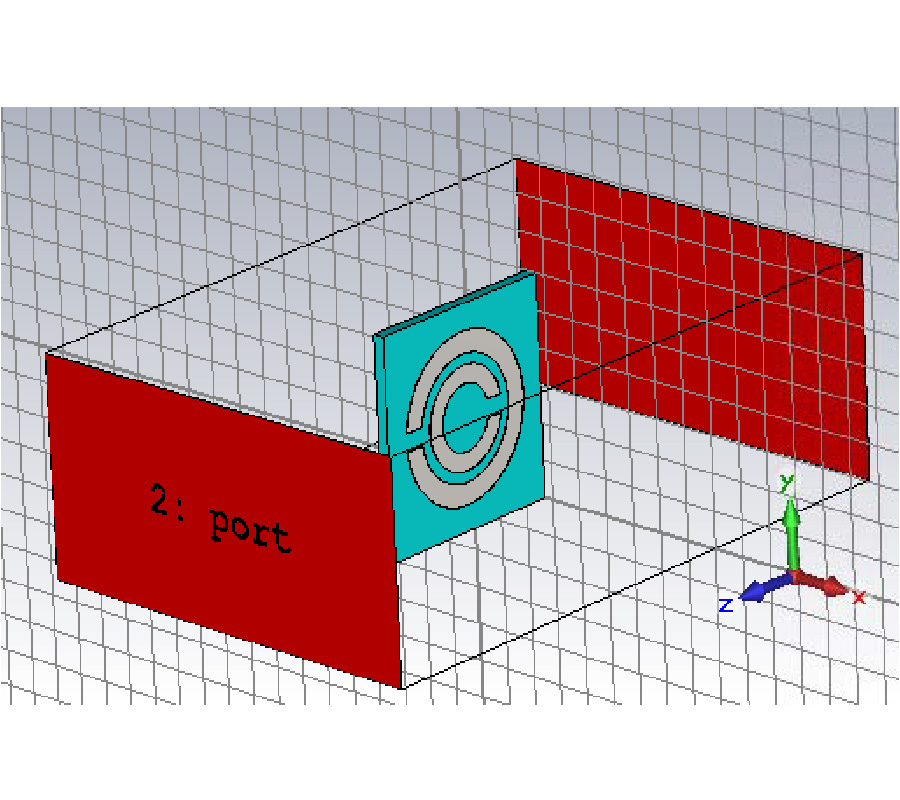
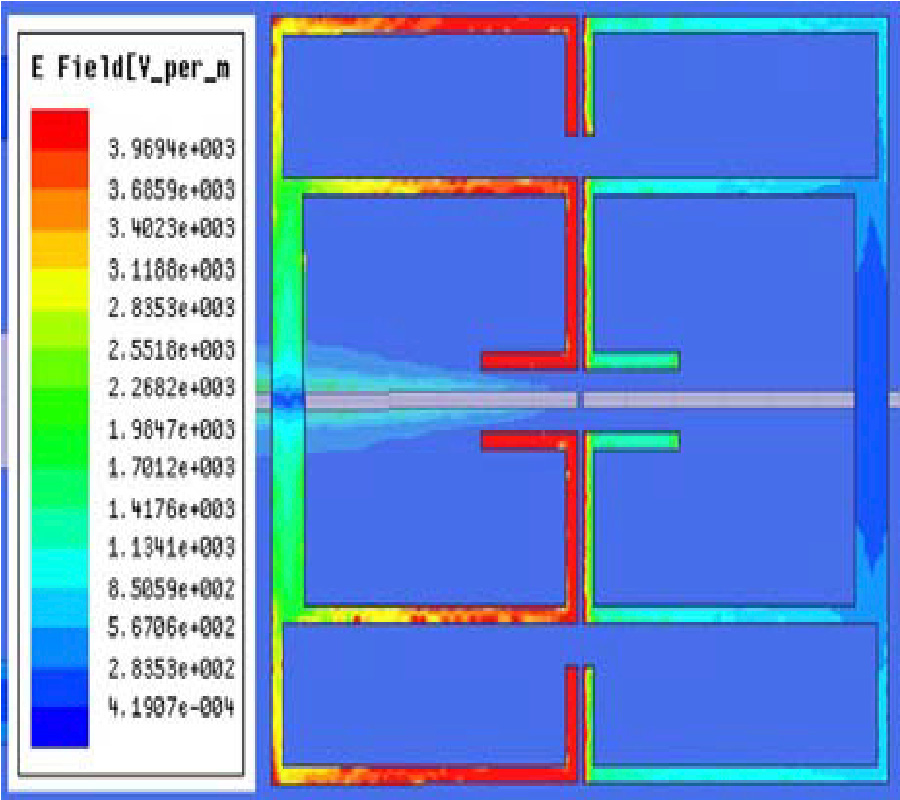
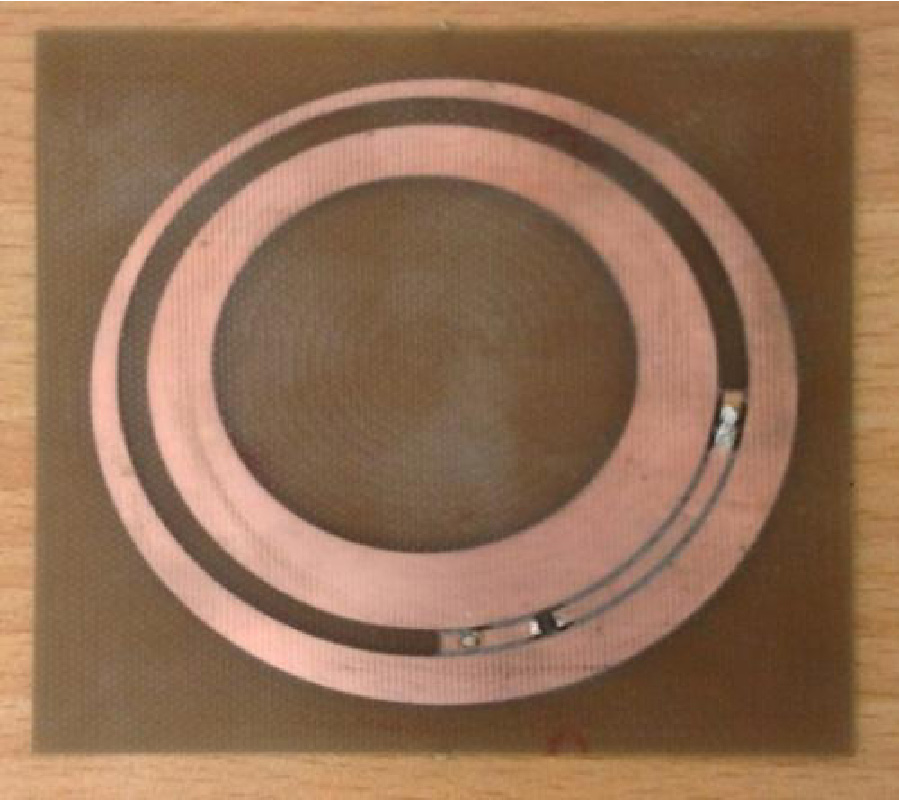
A square-shaped complementary split ring resonator (CSRR) filtering structure for isolation improvement is presented in this paper. The proposed research work investigates the design and development of a simple and compact CSRR structure. In order to verify the performance of the proposed filtering element and improve the isolation among the closely placed antenna elements, arrays of configured CSRR structures are implemented between two antenna elements. An array of configured CSRR elements has been integrated with the printed antenna on the top and bottom layers. The proposed filtering elements offer an enhancement in isolation by 25 dB as compared to the simple array. The entire configuration has been simulated using the Ansoft HFSS simulator. Finally, the proposed design is fabricated and experimentally validated. In the experiment, coupling suppression of -51 dB at the operating frequency is successfully achieved, resulting in a recovery of the array pattern. The proposed antenna is highly efficient, which is suitable to be utilized for 5G communication.
COMPLEMENTARY SPLIT RING RESONATOR FOR ISOLATION ENHANCEMENT IN 5G COMMUNICATION ANTENNA ARRAY
2018-04-24
PIER C
Vol. 83, 205-216
Experimental Investigation of Space and Polarization Characteristics of a Subway-Like Tunnel Channel
Xiaoyu Yin and Guoxin Zheng
This article studies the spatial domain and polarization domain characteristics of multipath channels in a subway-like tunnel environment. Experiments were performed by rotating a horn antenna with 30 half power beamwidth (HPBW) in the azimuthal direction for two different transmitter-receiver (Tx-Rx) distances. The time domain measurement is conducted when carrier frequency is set as 1.8 GHz. The cross-polarization discrimination (XPD) is studied, and it is found that the maximum depolarized signals are from sidewalls. The characteristics of power azimuth spectrum (PAS) of co-polarized and cross-polarized signals follow a multi-cluster Gaussian distribution. Ray-tracing method is employed to investigate the wave propagation in the tunnel environment. The results demonstrate that the main multipath components (MPCs) are around the line-of-sight (LOS) direction, and the reflected waves are from the other end of the tunnel (RWET). The correlation coefficient of co-polarized configuration pursues an increasing function with respect to the Tx-Rx distance and a decreasing function with respect to the cross-polarized configuration.
EXPERIMENTAL INVESTIGATION OF SPACE AND POLARIZATION CHARACTERISTICS OF A SUBWAY-LIKE TUNNEL CHANNEL
2018-04-24
PIER Letters
Vol. 75, 75-81
An Electrically Small Antenna Using Defected Ground Structure for RFID, GPS and IEEE 802.11 a/b/g/S Applications
Riki Patel , Arpan Desai and Trushit K. Upadhyaya
A compact size (20×21 mm2) planar tri-band electrically small antenna is presented for Wireless ISM, RFID application resonating at 1.57 GHz, 2.47 GHz and 926 MHz. The Proposed structure consists of a dual-slot radiating patch and two split ring structures made using combination of L and U shapes forming a defected ground structure (DGS). Length and width of the planar slot is optimized to get the required frequency bands whereas incorporation of DGS leads to increase in impedance bandwidth. The simulated and measured return losses (S11) of all three frequency bands are greater than 10 dB. Impedance bandwidths of 20 MHz (913-934 MHz), 90 MHz (1.5-1.59 GHz) and 70 MHz (2.43-2.50 GHz) are achieved for the proposed range. The electrically small antenna radiation pattern is omnidirectional, and gains of 0.32 dBi, 1.2 dBi and 1.5 dBi are achieved which makes the antenna suitable for RFID, GPS and WLAN applications.
AN ELECTRICALLY SMALL ANTENNA USING DEFECTED GROUND STRUCTURE FOR RFID, GPS AND IEEE 802.11 A/B/G/S APPLICATIONS
2018-04-24
PIER M
Vol. 68, 21-29
Implementation of Compact LPF Utilizing Defected Structures and Surface Mount Capacitor for Low Insertion Loss and Elliptic Characteristics
Alaa Mohammed Abada , Amr H. Hussein and Mohmoud Ahmed Attia Ali
Compact size microstrip low-pass filters with sharp cutoff characteristics, narrow passband, low insertion loss, high attenuation in stopband, and low cost are highly required in modern wireless communication systems. They are used to suppress the unwanted harmonics and noise caused by Radio Frequency (RF) front ends. In this paper, a new design for compact microstrip LPF is proposed. It is based on utilization of Stepped Impedance Resonators (SIR), Defected Microstrip Structure (DMS), Dumbbell-shaped Defected Ground Structure (DB-DGS), and surface mount capacitor. The filter is realized on an F4B-2 substrate with εr=2.65, thickness h=0.5 mm and loss tangent δ=0.0013. The design is carried out using CST-Microwave Studio software. The equivalent circuit of the filter is analyzed and presented using ADS2006A software. The filter exhibits sharp cutoff frequency fc=1.7654 GHz, wide stopband from 1.7654 GHz to 7 GHz with |S21| less than -10 dB, insertion loss less than 0.15 dB in passband, and reduced size compared to the traditional LPF.
IMPLEMENTATION OF COMPACT LPF UTILIZING DEFECTED STRUCTURES AND SURFACE MOUNT CAPACITOR FOR LOW INSERTION LOSS AND ELLIPTIC CHARACTERISTICS
2018-04-23
PIER C
Vol. 83, 195-203
Accurate Design of Deep Sub-Wavelength Metamaterials for Wireless Power Transfer Enhancement
Chunyu Zhao , Senlin Zhu , Hui Zhu , Zhenyu Huang and Xudong Luo
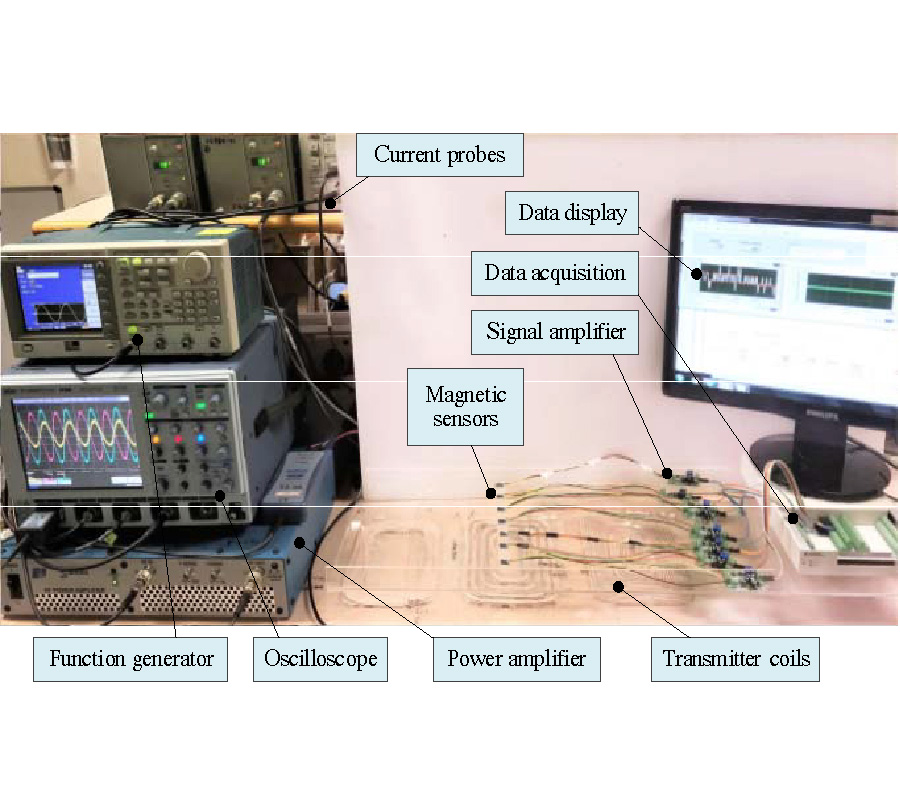
Deep sub-wavelength metamaterials for a wireless power transfer system (WPT) is still a challenge in design and optimization. We propose a large capacitor spiral metamaterial (LCSM) which involves inherent advantages of low operating frequencies and compact structures. The ratio of electromagnetic wavelength to the metamaterial scale can easily reach 1000 at the operation frequency of several megahertz. A hybrid search method, which combines a modified simulated annealing algorithm and a differential evolution algorithm, is applied to the accurate and automatic design of LCSM. The permeability of LCSM is evaluated by finite element analysis and then verified by experimental results. Finally, a small-size WPT system working at 6.78 MHz was constructed to evaluate LCSM. The results show that LCSM can enhance the transfer efficiency of the WPT system from 5.54% to 22.40% at a transmission distance of 15 cm.
ACCURATE DESIGN OF DEEP SUB-WAVELENGTH METAMATERIALS FOR WIRELESS POWER TRANSFER ENHANCEMENT
2018-04-23
PIER C
Vol. 83, 179-194
Design and Analysis of a Novel Low Loss Ultra-Wideband Coplanar Waveguide (CPW) to Coplanar Strips (CPS) Transition for Tapered Slot Antennas (TSA) in Ground Penetrating Radar (GPR) Application
Mohammed Mahmoud Mohanna , Esmat A. F. Abdallah , Hadia El-Hennawy and Magdy Ahmed Attia
A novel ultra-wideband CPW to CPS transition for TSA in landmine detection by GPR system is proposed. The structure is constructed on a 140x140 mm2 FR4 dielectric substrate. It is composed of 2 sections. The first is nonuniform tapered asymmetric coplanar waveguide (TACPW), and the second section is nonuniform Tapered Asymmetric Coplanar Strips (TACPS). Electromagnetic Band Gap (EBG) structure of coplanar circular patches exists near the transition open slot and aligned with the outer edge of the CPW ground to act as a capacitive loading. The design of the proposed transition is given in very simple four design steps. The CPW to CPS transition is analyzed theoretically and experimentally. To characterize this transition, back to back transition is constructed; besides, the equivalent-circuit model that consists of nonuniform transmission lines is established. The equivalent circuit is constructed by dividing both sections TACPW and TACPS into 35 sections and using ABCD parameters to characterize each section, and conversion to S-parameters is done using MATLAB Program. The selection criterion of the section length is to maintain a linear change in the characteristic impedance with the distance. The results based on equivalent-circuit model, CST simulation (CST studio ver.15), and measurements are compared. Several parameters are studied through simulations and experiments which are used to derive some design guidelines. The operational bandwidth for the CPW to CPS transition covers from 0 (DC) to almost 10 GHz with minimum return loss reaches -50 dB. For the GPR application (landmine detection) which extends from 0.4 to 3 GHz, the insertion loss of the proposed transition reaches almost -0.5 dB which satisfies the design requirements. The back to back transition performance was simulated and measured. Good agreement is found between numerical and experimental results especially for the GPR ranges of frequencies. The proposed transition has the advantages of compact size, ultra-wide bandwidth, and straightforward design procedure.
DESIGN AND ANALYSIS OF A NOVEL LOW LOSS ULTRA-WIDEBAND COPLANAR WAVEGUIDE (CPW) TO COPLANAR STRIPS (CPS) TRANSITION FOR TAPERED SLOT ANTENNAS (TSA) IN GROUND PENETRATING RADAR (GPR) APPLICATION
2018-04-23
PIER M
Vol. 68, 11-19
Inertial Properties of the TE Waveguide Fields
Fatih Erden , Oleg Tretyakov and Ahmet Arda Cosan
Inertial properties of the TE-waveguide modal fields are studied in time-domain making use of an analytical method, named as evolutionary approach to electrodynamics (EAE). To achieve inertial characteristics, electric field vector with dimension of volt per meter and magnetic field vector with dimension of ampere per meter in Maxwell's equations are factorized in SI units to obtain new electric and magnetic field vectors with their common dimensions of inverse meter. Having the fields with the common dimensions makes them summable. Using EAE, modal basis elements that depend on transverse coordinates and modal amplitudes that depend on time and longitudinal coordinate are obtained by solving the boundary eigenvalue problem. As a result of using the new electric and magnetic field vectors, the energetic properties are derived as real-valued functions of coordinates and time. Then, the inertial properties (that is, electromagnetic mass and momentum) of the TE-waveguide modes are obtained as the functions of time.
INERTIAL PROPERTIES OF THE TE WAVEGUIDE FIELDS
2018-04-23
PIER M
Vol. 67, 197-207
Beam Steering Antenna Array for 5G Telecommunication Systems Applications
Mohamed Hadi Habaebi , Mohanad Janat and Islam Md. Rafiqul
This work provides an in-depth study on a linear antenna array that consists of 32 elements of CRLH unit cells, and the main radiating beam can be controlled by changing the capacitance of the varicap diode that was designed and simulated with Advanced Design System (ADS 2014) software. ADS software was selected because of its flexibility in accommodating complex design equations. Results show that the main beam can be steered up to 50 degrees from the direction of maximum radiation by changing the capacitances. The main beam gain of the antenna array at boresight of 12 dB has been achieved with an impedance bandwidth of 3 GHz at 10 dB gain threshold. The antenna array performance was analysed in the mmWave frequency range at centre frequency of 28 GHz making it suitable for the upcoming 5G applications. The mmWave path losses were handled by increasing the gain of the antenna array and steering the main lobe over 50 degrees to balance the gain coverage trade-off. The direction of the main beam is controlled by changing the varicap capacitance accordingly.
BEAM STEERING ANTENNA ARRAY FOR 5G TELECOMMUNICATION SYSTEMS APPLICATIONS
2018-04-23
PIER M
Vol. 67, 189-196
Spatial Distribution of Magnetic Field Under Spherical Shell Plasma
Xinhua Song , Honghao Yan , Zhengzheng Ma , Yang Wang and Bing Xu
Magnetic field intensity is modeled using Laplacian equations to study the spatial distribution of magnetic field under spherical shell plasma. The influences of different internal and external radii are also considered. In addition, the magnetic field calculation of plasma space is analyzed. The main conclusions are as follows. The external uniform magnetic field H0 is the scalar magnetic bit, and the magnetic charge of the shell of the plasma is equivalent to that of a magnetic dipole. The magnetic field in the spherical shell is a super position of a uniform field and a magnetic dipole field. The uniform field is composed of an externally applied uniform field H0 and a uniform field generated by the magnetic charge on the outer surface of the ball. The magnetic dipole field is generated by the magnetic charge on the inner surface of the shell, and the inside of the shell is a uniform magnetic field. When μ21 is high and a/b is low, the ratio of the magnetic field strength H3 (the regionis r<a) to the magnetic field strength H0 (the region is r>b) is low. By contrast, when μ21 and a/b are high, the ratio of the magnetic field strength H3 to the magnetic field strength H0 is high. When the magnetic permeability of the inner object is small and the spherical shell is thick, the produced plasma sheath is thick, and the external magnetic field in the spherical shell is weak. Therefore, when the shielding effect is good, the possibility that the ``black barrier'' phenomenon will occur is high, and ground radar detection will be difficult.
SPATIAL DISTRIBUTION OF MAGNETIC FIELD UNDER SPHERICAL SHELL PLASMA
2018-04-20
PIER Letters
Vol. 75, 67-73
Power Performance and Spurious Frequencies Analysis of Composite Right-/Left-Handed (CRLH) Distributed Oscillators
Giancarlo Bartolucci , Stefan Simion and Lucio Scucchia
This paper concerns the analysis of the performance of a Composite Right-/Left-Handed (CRLH) distributed oscillator. In order to increase its output power, a modification of the standard configuration is proposed. The basic idea is to combine the signals from the two output ports of the structure by means of a Wilkinson combiner, so obtaining a single output generator. The power performance of the conventional two output oscillator and the power performance of the new configuration are numerically compared by changing the number of employed transistors. The same procedure is adopted to analyze the amplitude of the higher order harmonics in the generated signals as a function of the number of active elements. On the basis of simulated data an increase of the output power, together with a second harmonic reduction, is expected for the single output oscillator with respect to the standard CRLH topology. Experimental results fully confirm these numerical predictions.
POWER PERFORMANCE AND SPURIOUS FREQUENCIES ANALYSIS OF COMPOSITE RIGHT-/LEFT-HANDED (CRLH) DISTRIBUTED OSCILLATORS
2018-04-20
PIER
Vol. 161, 113-123
Efficiency of Millimeter Wave Mobile Terminal Antennas with the Influence of Users
Rizwan Khan , Azremi Abdullah Al-Hadi and Ping Jack Soh
The effect of users on the efficiency of mobile terminal antennas at 15 GHz, 28 GHz and 60 GHz is studied in this paper. It is performed using three four-element planar arrays. The first operates at 15 GHz with a bandwidth of 0.74 GHz, the second at 28 GHz with a bandwidth of 2.5 GHz and finally the third antenna at 60 GHz with bandwidth of 12.5 GHz. The effect of a user's finger is studied when being placed on four different locations over each antenna element, with six distances between the antenna and user's finger. The losses due to the increased shadowing are studied in terms of radiation efficiency (RE), matching efficiency (ME) and two additional multiple-input-multiple-output (MIMO) parameters i.e., envelop correlation coefficient (ECC) and multiplexing efficiency (MUX). For antennas operating at 28 and 60 GHz, the minimum frequency shift is observed when the finger is placed at 1.5 mm distance from the antenna, whereas for 15 GHz, the minimum resonance shift is observed when the finger is at 2 mm distance. Losses of up to 80% and 70% are observed for RE and MUX, respectively, when the finger is placed at 0 mm for all antennas compared to the case without user (WU). Finally, it is observed that the ME and envelop correlation coefficient losses are insignificant regardless of the antenna and finger variation.
EFFICIENCY OF MILLIMETER WAVE MOBILE TERMINAL ANTENNAS WITH THE INFLUENCE OF USERS