Search Results(13794)

2017-06-12
PIER Letters
Vol. 68, 99-104
Remote Extinction of a 2.4 GHz RF Front-End Using Millimeter-Wave EMI in the Near-Field
Pierre Payet , Jeremy Raoult and Laurent Chusseau
The effects of highly out-of-band electromagnetic interference (EMI) on an RF front-end are experimentally evaluated. Irradiation at 60 GHz with a moderate power is produced in the near-field owing to an open-ended WR15 waveguide fed by a Gunn diode. Surprisingly, we easily obtain the remote extinction of either the transmitter or the receiver of the front-end subject to EMI. The paper proposes a detailed analysis of both CW and chopped EMI by varying almost all experimental conditions, namely the polarization, target distance, and chopping mode. The latter shows most efficiency and evidences some long time scale dynamics in the induced perturbation.
REMOTE EXTINCTION OF A 2.4 GHZ RF FRONT-END USING MILLIMETER-WAVE EMI IN THE NEAR-FIELD
2017-06-12
PIER M
Vol. 57, 139-149
Orthogonal Radiation Field Construction for Microwave Staring Correlated Imaging
Bo Liu and Dongjin Wang
Microwave staring correlated imaging (MSCI) achieves high resolution imaging results by employing the temporal-spatial independent radiation field. In MSCI, the imaging performance is determined by the independent degree of the radiation field. In this paper, a novel kind of ideal independent radiation field named the orthogonal radiation field (ORF) is constructed for MSCI. Firstly, a group of two-dimensional (2-D) orthogonal basis functions are used to construct the ideal ORF samples. Then a method is proposed to construct the ORF samples by designing the transmitting signals. The numerical simulations validate the feasibility of this method. Finally, when the ORF is applied in MSCI, the numerical simulations achieve high resolution imaging results and demonstrate good imaging performance that is robust to noise.
ORTHOGONAL RADIATION FIELD CONSTRUCTION FOR MICROWAVE STARING CORRELATED IMAGING
2017-06-12
PIER M
Vol. 57, 129-138
Adaptive Sharp Boundary Inversion for Transient Electromagnetic Data
Rui Guo , Xin Wu , Lihua Liu , Jutao Li , Pan Xiao and Guangyou Fang
An adaptive sharp boundary inversion scheme is developed to improve resolution with feasibility for transient electromagnetic (TEM) data inversion. By using weighted minimum gradient support (WMGS) constraint, this method focuses the resistivity change areas on layer boundary locations. Prior information describing roughness can be added into the constraint to improve resolution. Furthermore, even though no prior information about layer boundaries is available, it can still reconstruct models with geo-electrical interfaces. Synthetic models prove that this method has a better performance in presenting layer boundaries than smooth-model inversion. Field data of a TEM test line are inverted using this method, which makes the basement layer visualized easily.
ADAPTIVE SHARP BOUNDARY INVERSION FOR TRANSIENT ELECTROMAGNETIC DATA
2017-06-11
PIER M
Vol. 57, 119-128
Angular-Stability Low-Profile Miniaturized Frequency Selective Surface Based on Complementary Structure
Wenxing Li and Yuanyuan Li
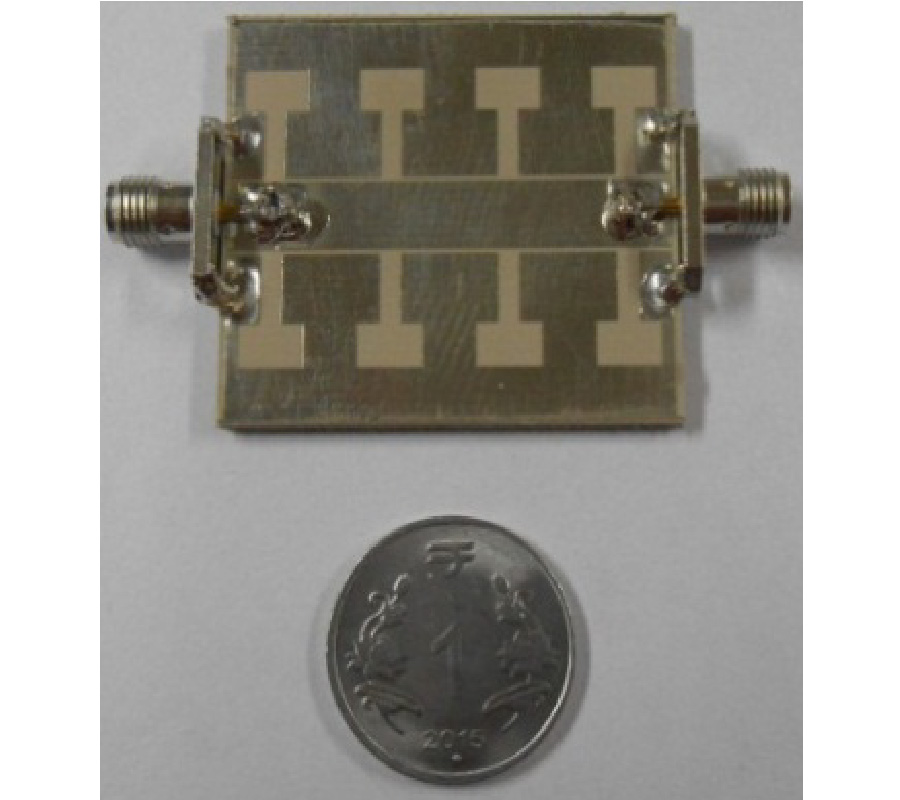
A new architecture for a low profile miniaturized frequency selective surface based on complementary structure capable of providing a high angular stable performance is proposed. The proposed FSS is composed of an array of convoluted cross dipoles and its complementary slots pattern that is separated by a thin dielectric substrate. An equivalent circuit model for this FSS is presented to provide a deep insight into the mechanism of reducing the unit size by shifting and lengthening the dipoles. With the use of this method, the FSS unit cell size has been significantly reduced to only 0.0085λ×0.0085λ, and the thickness is 0.000093λ, where λ represents the resonant wavelength in free space. Moreover, the proposed FSS achieves good stability in the scope of incidence angles of 86 degrees for both TE and TM polarizations. Besides, the length of the dipoles can tune the resonant frequency.
ANGULAR-STABILITY LOW-PROFILE MINIATURIZED FREQUENCY SELECTIVE SURFACE BASED ON COMPLEMENTARY STRUCTURE
2017-06-11
PIER
Vol. 159, 39-47
Layer-by-Layer Design of Bianisotropic Metamaterial and Its Homogenization
Liang Peng , Xiaoxiao Zheng , Kewen Wang , Shuaifei Sang , Yuntian Chen and Gaofeng Wang
In this paper, we study the design and homogenization of bianisotropic metamaterials originated from planar split-ring resonators, which would potentially meets the requirements of the emerging photonic topological insulators and some other types of extotic photonic materials with non-trivial states. We show that the off-diagonal elements in the magneto-electric tensor can be realized by combining the planar split-ring resonators with different orientations. To ease the fabrication process, a layer-bylayer design of metamaterials with desired bianisotropy is proposed. The design and homogenization procedure of such metamaterials are verified through effective parameter retrieval approach and computer based simulation. With the proposed structure, the complex magneto-electric coupling is realized in layered structures through planar techniques, which may be useful in the terahertz and optical range.
LAYER-BY-LAYER DESIGN OF BIANISOTROPIC METAMATERIAL AND ITS HOMOGENIZATION
2017-06-10
PIER B
Vol. 76, 23-36
Analytical Method Using Virtual PM Blocks to Represent Magnet Segmentations in Surface-Mounted PM Synchronous Machines
Tow Leong Tiang , Dahaman Ishak , Chee Peng Lim and Mohd Rezal Mohamed
This paper describes an analytical subdomain model to predict the magnetic field distributions in the semi-closed surface-mounted permanent magnet synchronous machines (PMSMs) due to magnet segmentations with radial magnetization (RM). The magnet segments per pole can be virtually represented by finite number of permanent magnet (PM) blocks and Fourier decompositions. The model can also determine the optimum magnet pole-arcs for each segment and the optimum airgap spacing between the segments. The analytical model is then applied to evaluate the performance of a three-phase, 12-slot/8-pole, surface-mounted PMSM having two segmented magnets per pole with RM. With design objective for minimum cogging torque and minimum total harmonic distortion in phase back-emf waveforms, we obtain that the optimum settings are 147.6° elect. for magnet segment pole-arc and 11.2° elect. for airgap spacing between the magnet segments. These analytical results are further compared and validated by 2-D finite element analysis (FEA). Additionally, we also compare the results with those from the optimum magnet pole-arc of one magnet segment per pole machine. It is observed that the cogging torque and total harmonic distortion THDv of the phase back-EMF are significantly reduced by 89% and 25%, respectively, with constraint and assumption that both machines utilize similar total magnet volume.
ANALYTICAL METHOD USING VIRTUAL PM BLOCKS TO REPRESENT MAGNET SEGMENTATIONS IN SURFACE-MOUNTED PM SYNCHRONOUS MACHINES
2017-06-10
PIER B
Vol. 76, 1-22
A Generalized Hybrid Method for Electromagnetic Scattering Analysis of Multiple Objects
Quang M. Nguyen and Ozlem Kilic
We propose a generalized hybrid method to achieve time efficient and accurate solutions for electromagnetic scattering and radiation problems involving complex scenes with multiple objects. The method utilizes frequency domain solutions, and is based on dividing the original computational domain into smaller sub-domains. Each sub-domain is first solved independently, then the interactions between the sub-domains are accounted for through an iterative procedure. The main difference of the proposed hybrid method in comparison with the current hybrid methods or the domain decomposition methods available in the literature is that the proposed method allows users to have the freedom to choose from a variety of techniques for each sub-domain; such as integral equation (IE), analytical and asymptotic methods that suit the problem at hand best. Current hybrid or domain decompositions methods rely on a predetermined combination of numerical techniques. This flexibility in the choice of the method employed for each sub-domain in the generalized hybrid method is achieved by creating an interface capable of interacting between the different sub-domains properly. Furthermore, the method renders to parallel implementation as each sub-domain is solved independently. The hybrid method in its current state can be applied to two different scenarios: (i) multiple non-touching homogeneous objects, and (ii) inhomogeneous objects. Numerical examples of various combinations of IE, analytical and asymptotic methods are presented to validate the accuracy and the robustness of the generalized hybrid method.
A GENERALIZED HYBRID METHOD FOR ELECTROMAGNETIC SCATTERING ANALYSIS OF MULTIPLE OBJECTS
2017-06-10
PIER
Vol. 159, 27-37
Multi-Band Antenna Array Based on Double Negative Metamaterial for Multi Automotive Applications
Abdulrahman Shueai Mohsen Alqadami , Mohd Faizal Bin Jamlos , Imtiaz Islam , Ping Jack Soh , Rizalman Mamat , Khairil Anuar Khairi and Adam Narbudowicz
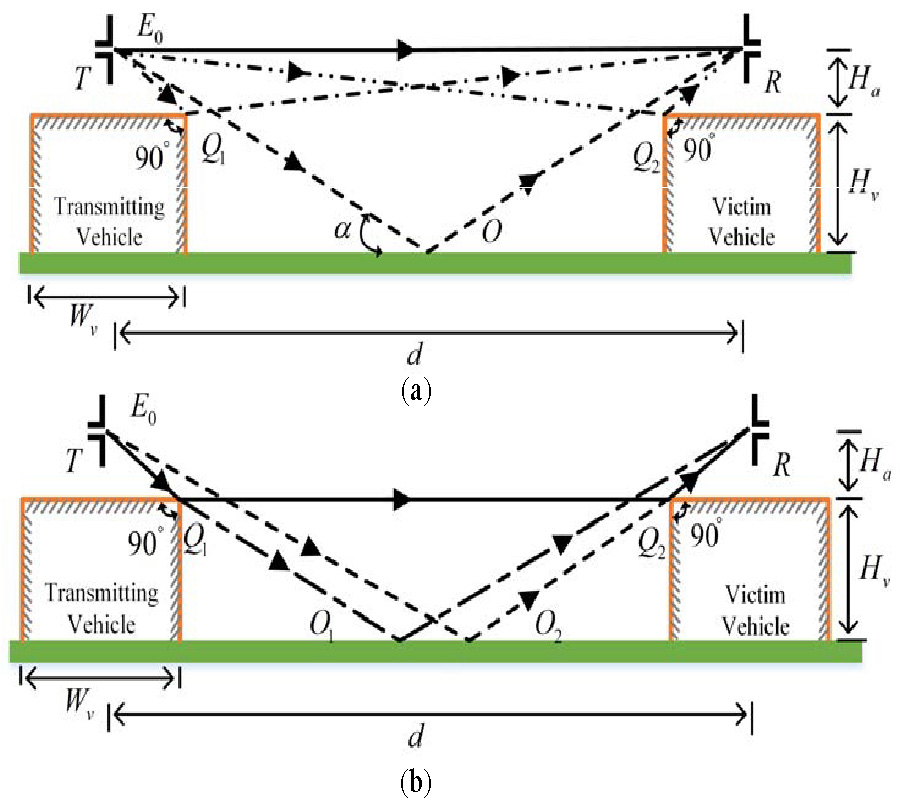
This paper presents a design of multi-band array antenna based on Double Negative Metamaterial (DNM) unit cells for multi-automotive applications. The antenna consists of 4×4 rectangular and circular radiating patches connected in series using microstrip lines and fed by a 50 Ω corporate microstrip line. An array of 4×6 wire loaded complementary spiral resonator (CSR) unit cells is placed on its reverse side to provide miniaturization and multiband features to the proposed design. The reflection coefficient (S11), mutual coupling, effective diversity gain (EDG), envelope correlation coefficient (ECC), and radiation patterns are evaluated for four elements of the proposed antenna placed in four different locations on the car body model. Simulations and measurements indicated that the proposed antenna features a low mutual coupling (<-34 dB), low ECC (<0.0001), high EDG (>9.99), high efficiency (72%-95%), and low on-car detuning over the operating frequency bands. The proposed antenna covers five bands; 1.99 GHz to 3.03 GHz, 5.15 GHz to 6.369 GHz, 7.67 GHz to 7.99 GHz, 9.91 GHz to 10.23 GHz, and 11.79 GHz to 12.2 GHz. The performance of ECC between four antennas on car body has been investigated in different cases of isotropic, indoor, and outdoor. The metallic effect on antennas performance also has been investigated by evaluating the mutual coupling and transmission coefficient between two antennas served as transmitter and receiver with presence of car body. The results show transmission coefficient of proposed DNM antenna with metallic presence almost identical to free space across desired frequency bands. With all capabilities mentioned the antenna has potential for WiFi/WiMAX, Vehicle-to-Vehicle (V2V), transportable earth exploration satellite, military requirement for land vehicles, and earth stations on vessels applications.
MULTI-BAND ANTENNA ARRAY BASED ON DOUBLE NEGATIVE METAMATERIAL FOR MULTI AUTOMOTIVE APPLICATIONS
2017-06-09
PIER C
Vol. 75, 23-30
Template Synthesis and Magnetic Characterization of FeNi Nanotubes
Alena Euhenauna Shumskaya , Egor Yur'evich Kaniukov , Artem Leonidovich Kozlovskiy , Dmitriy Igorevich Shlimas , Maxim Vladimirovich Zdorovets , Milana Abasovna Ibragimova , Viacheslav Rusakov and Kayrat Kamalovich Kadyrzhanov
Iron-nickel nanotubes consisting of 20% of Ni and 80% of Fe with an aspect ratio of about 100 were synthesized by electrochemical deposition in the pores of the polyethylene terephthalate ion-track membranes. The main morphological parameters such as composition, wall thickness and structural characteristics were defined. Macro- and micromagnetic parameters of FeNi nanotubes were determined.
TEMPLATE SYNTHESIS AND MAGNETIC CHARACTERIZATION OF FENI NANOTUBES
2017-06-09
PIER Letters
Vol. 68, 93-98
Design of Low-Index Metamaterial Lens Used for Wideband Circular Polarization Antenna
Yong Wang and Yanlin Zou
A novel low-index metamaterial lens (LIML) used for wideband circular polarization antenna is proposed. By introducing gradual spaces between metamaterial elements, one can achieve a much wider bandwidth than the equally spaced situation can do. Starting with a planar equiangular spiral antenna with reflector, we demonstrate the design idea of this LIML. By using the specially designed LIML, the ultimate antenna can achieve an obvious gain improvement of 2 dBi and a wide axial ratio bandwidth of 44% (from 6.9 GHz to 10.8 GHz). A prototype is fabricated, and the measured results agree well with the simulated ones.
DESIGN OF LOW-INDEX METAMATERIAL LENS USED FOR WIDEBAND CIRCULAR POLARIZATION ANTENNA
2017-06-09
PIER M
Vol. 57, 113-118
Calibration of Time-Domain Transfer Function for UWB Antennas Based on Antennas Factors in Frequency Domain
Xueqin Zhang , Rui Liang , Xin Li and Donglin Meng
A new method for calculating the time-domain (TD) transfer function of ultra-wide band (UWB) antennas, which is used for measuring the electromagnetic pulse (EMP) at VHF, is proposed. The phase of the complex antenna factor is constructed based on the Hilbert transform that describes the relationship between the phase and amplitude of a signal in frequency domain (FD). The detailed steps for calibrating the TD transfer function are discussed, and the calibration uncertainty, whose maximum value equals 2.79 dB, is estimated. The presented method is verified by TEM cell calibration, in which the TD transfer function of a wideband antenna is calculated and used to reconstruct time domain electromagnetic pulse. The results show that the difference between the calibrated result with TEM cell calibration and the reconstructed result is 0.58 dB.
CALIBRATION OF TIME-DOMAIN TRANSFER FUNCTION FOR UWB ANTENNAS BASED ON ANTENNAS FACTORS IN FREQUENCY DOMAIN
2017-06-08
PIER M
Vol. 57, 103-111
Novel Design Theory for High-Efficiency and High-Linearity Microwave Power Amplifier Based on 2nd Harmonic: Enhanced Class-j
Seyed Alireza Mohadeskasaei , Fuhong Lin , Xianwei Zhou and Sani U. Abdullah
In this paper, after a brief review of the previous nonlinear power amplifier (PA) classes including Class-B, Class-F, and Class-J, a novel design theory for high-efficiency and high-linearity microwave power amplifier based on 2nd harmonic component of the drain voltage and current signals is proposed. The new scheme introduces a new nonlinear class which like Class-J tunes only two primary harmonic components but unlike Class-J, the drain voltage is boosted to the maximum four times dc drain voltage. A quasi half sinusoidal waveform for the current and a quadratic sinusoidal waveform for the voltage are thus realized in this class, leading to a minimum waveform overlapping. The new class theoretically provides 93% power efficiency. It is, in fact, an enhanced Class-J with higher power efficiency and better linearity performance.
NOVEL DESIGN THEORY FOR HIGH-EFFICIENCY AND HIGH-LINEARITY MICROWAVE POWER AMPLIFIER BASED ON 2ND HARMONIC: ENHANCED CLASS-J
2017-06-07
PIER B
Vol. 75, 149-173
Eliminate Crosstalk Using Symmetry in MIMO Arrays of Inductive Antennas: an Introduction to Pie-Chart Antennas
Jean-Philippe Douarville-Blaise , David Pouhè and Junji Hirai
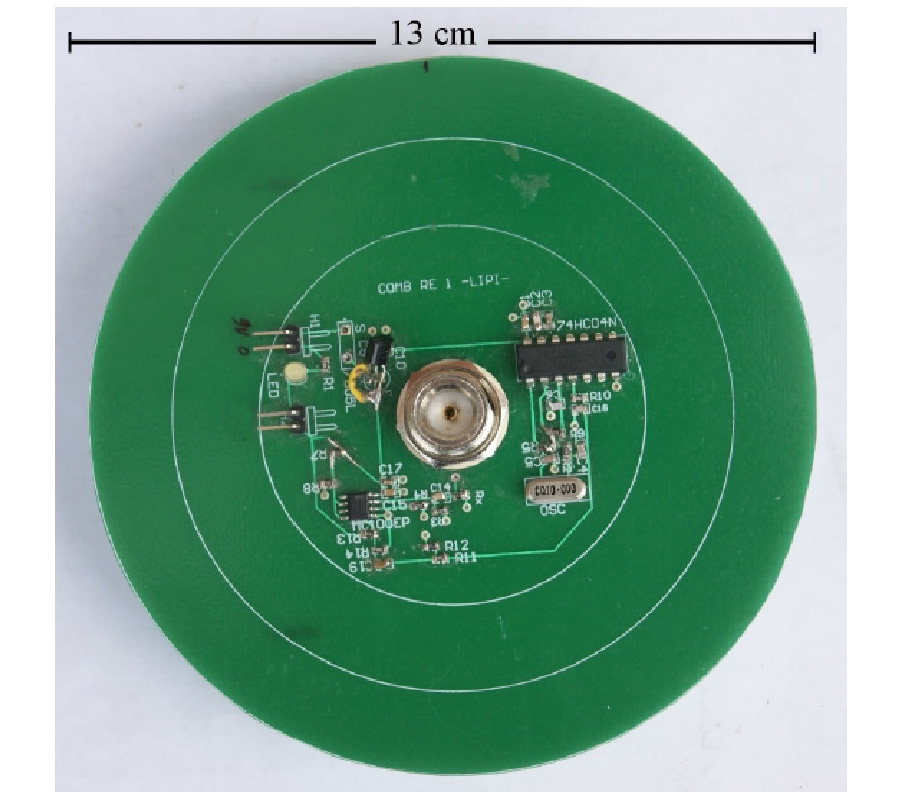
We present a topology of MIMO arrays of inductive antennas exhibiting inherent high crosstalk cancellation capabilities. A single layer PCB is etched into a 3-channels array of emitting/receiving antennas. Once coupled with another similar 3-channels emitter/receiver, we measured an Adjacent Channel Rejection Ratio (ACRR) as high as 70 dB from 150 Hz to 150 kHz. Another primitive device made out of copper wires wound around PVC tubes to form a 2-channels ``non-contact slip-ring'' exhibited 22 dB to 47 dB of ACRR up to 15 MHz. In this paper we introduce the underlying theoretical model behind the crosstalk suppression capabilities of those so-called ``Pie-Chart antennas'': an extension of the mutual inductance compensation method to higher number of channels using symmetries. We detail the simple iterative building process of those antennas, illustrate it with numerical analysis and evaluate there effectiveness via real experiments on the 3-channels PCB array and the 2-channels rotary array up to the limit of our test setup. The Pie-Chart design is primarily intended as an alternative solution to costly electronic filters or cumbersome EM shields in wireless AND wired applications, but not exclusively.
ELIMINATE CROSSTALK USING SYMMETRY IN MIMO ARRAYS OF INDUCTIVE ANTENNAS: AN INTRODUCTION TO PIE-CHART ANTENNAS
2017-06-07
PIER Letters
Vol. 68, 85-91
Synthetic Aperture Radar Ship Detection Using ModifiEd Gamma Fisher Metric
Meng Yang
This article proposes a novel ship detection method for high-resolution SAR images. Our goal is to look at this question from a information geometry point of view. The method consists of two steps: construction of revised metric and Riemann structure, and extraction of targets. For the first step of the process, a revised metric is introduced on Gamma 2-manifold. We construct a special Riemannian structure by using the proposed metric. For the second step, the regions of interest (ROIs) are extracted out based on the Riemann structure. Experimental results of the detection method on SAR images show that the algorithm presented is effective.
SYNTHETIC APERTURE RADAR SHIP DETECTION USING MODIFIED GAMMA FISHER METRIC
2017-06-06
PIER C
Vol. 75, 13-21
Metamaterial-Based Flat Lens: Wave Concept Iterative Process Approach
Mohamed Karim Azizi , Henri Baudrand , Lassad Latrach and Ali Gharsallah
Metamaterials left-hand negative refractive index has remarkable optical properties; this paper presents the results obtained from the study of a flat metamaterial lens. Particular interest is given to the interaction of electromagnetic waves with metamaterials in the structure of the lens Pendry. Using the new approach of the Wave Concept Iterative Process (WCIP) based on the auxiliary sources helps to visualize the behavior of the electric field in the metamaterial band and outside of its interfaces. The simulation results show an amplification of evanescent waves in the metamaterials with an index of n = -1, which corresponds to a resonance phenomenon to which the attenuation solution is canceled, leaving only the actual growth of these waves. This amplification permits the reconstruction of the image of the source with a higher resolution.
METAMATERIAL-BASED FLAT LENS:  WAVE CONCEPT ITERATIVE PROCESS APPROACH
2017-06-06
PIER Letters
Vol. 68, 79-84
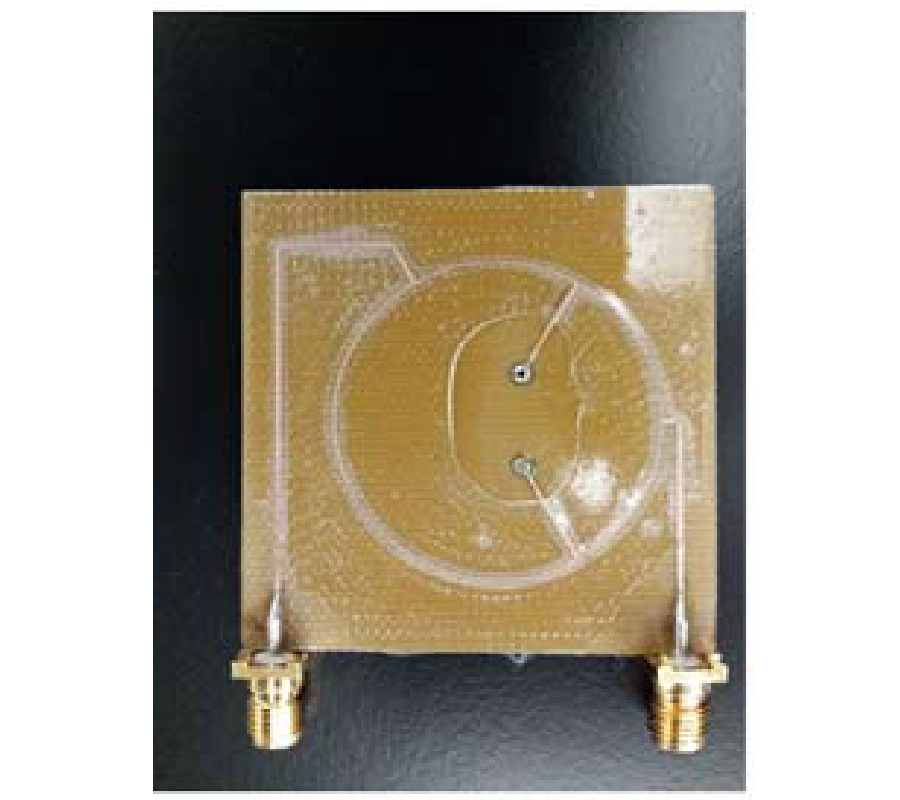
A Compact Frequency Reconfigurable Monopole Antenna for Wi-Fi/WLAN Applications
Amjad Iqbal and Omar A. Saraereh
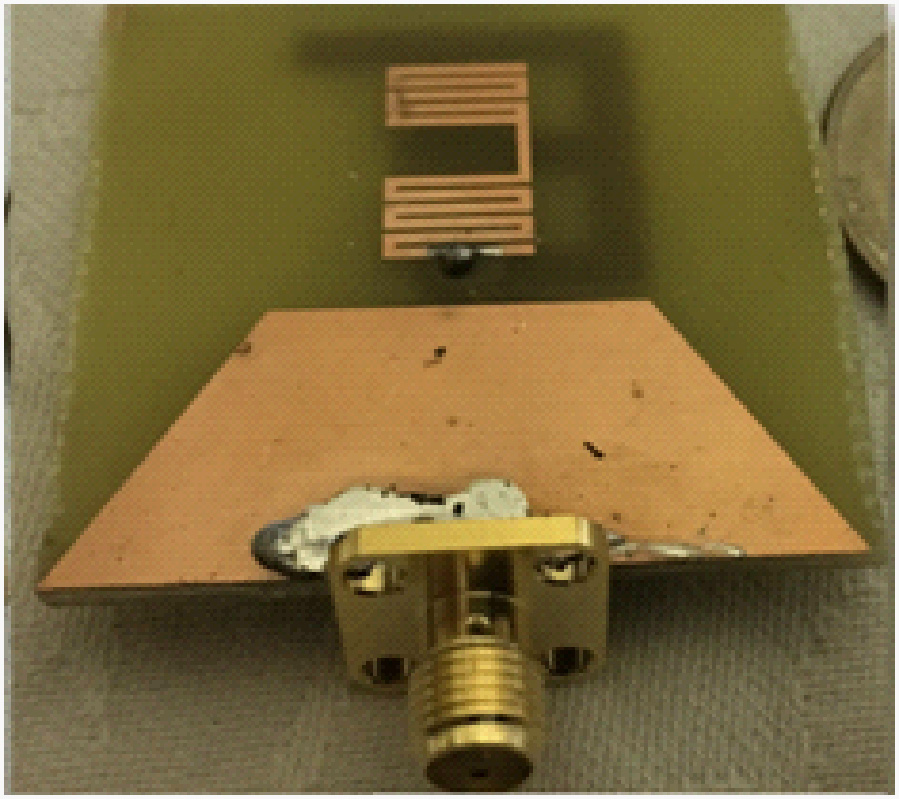
In this paper, a compact reconfigurable monopole antenna is proposed working at three different frequencies depending upon the condition of the optical switch. The proposed reconfigurable antenna in the state of ON switchhas resonant frequencies of 2.45 GHz and 5.4 GHz covering the band of 1.8-2.7 GHz (Wi-Fi) and 5.26-5.99 GHz (WLAN) respectively. The same antenna during OFF state of switch operates only at 3 GHz covering the band of 2.49-3.84 GHz. The proposed multiband reconfigurable antenna is designed and fabricated on an FR-4 substrate having relative permittivity of 4.4, loss tangent of 0.02 and thickness of 1.6 mm. The antenna is fabricated and tested in the laboratory to validate the simulated results. A good agreement between the simulated and measured results is obtained in term of radiation pattern and return loss. The performance of the reconfigurable antenna under both states of switch is examined on the basis of the antenna parameters such as return loss, radiation pattern and gain.
A COMPACT FREQUENCY RECONFIGURABLE MONOPOLE ANTENNA FOR WI-FI/WLAN APPLICATIONS
2017-06-04
PIER M
Vol. 57, 91-102
Bridge Detection in High-Resolution X-Band SAR Images by Combined Statistical and Topological Features
Meng Yang and Zhihua Jian
This article takes account of the radiation feature of rivers in synthetic aperture radar (SAR) images and proposes a novel automatic approach to detect highway bridges by combining statistical and topology features. The proposed method consists of two steps. In the river-extraction stage, the classification techniques are applied to water extraction according to the statistical and gray-leveled features. In the bridge-extraction stage, bridges are then detected in this binary image by using a topology-based approach. Experimental results show that the proposed method can be implemented with high-precision highway-bridge extraction, feature analysis, and bridge recognition.
BRIDGE DETECTION IN HIGH-RESOLUTION X-BAND SAR IMAGES BY COMBINED STATISTICAL AND TOPOLOGICAL FEATURES
2017-06-03
PIER B
Vol. 75, 131-147
L-Probe Transmitarrays for X-Band Mobile Communications
Wai-Hau Ng , Kim Yee Lee and Eng Hock Lim
Two novel wire transmitarrays, which are designed using a pair of co-joined L-shaped probes, have been developed for X-band mobile communications. By adjusting the orientation of the L probes, the polarization of the transmitting wave can be easily made either vertical or horizontal. Floquet method has been used for characterizing the transmission responses, and both transmitarray unit cells are found to have achieved a phase range of greater than 380° and a linear phase sensitivity of 44.5°/mm. Wide -1 dB gain bandwidth larger than 10% is achievable in both the vertically and horizontally polarized full-fledged transmitarrays, with radiation efficiency of ~90%. The proposed transmitarrays have low radar cross section, which can be used for military applications.
L-PROBE TRANSMITARRAYS FOR X-BAND MOBILE COMMUNICATIONS
2017-06-03
PIER C
Vol. 75, 1-11
Electromagnetic Analysis on Propagation Characteristics of CRLH Waveguide Loaded with Double Ridge Corrugations
Qingshan Yang , Xiaowen Zhao and Yunhua Zhang
The propagation characteristics of a composite right/left-handed (CRLH) waveguide loaded with air-filled double ridge corrugations (DRCs) is studied intensively in this paper. It is analyzed from the perspective of electromagnetic (EM) fields other than equivalent circuit method used by many other CRLH structures. First, the EM fields inside the CRLH waveguide are derived theoretically based on the EM fields in the rectangular waveguide and the DRC, as well as the boundary conditions on the interface, respectively. Then the propagation characteristics of the CRLH waveguide including the dispersion relation, surface current and transmitted power are determined according to the EM fields. The properties of the surface current are focused on for analyzing the application possibility of this CRLH waveguide to the leaky-wave antennas (LWAs). The transmitted power of the CRLH waveguide is calculated to demonstrate the high power capacitance of this CRLH waveguide. All the theoretical results are veri ed through full-wave simulations.
ELECTROMAGNETIC ANALYSIS ON PROPAGATION CHARACTERISTICS OF CRLH WAVEGUIDE LOADED WITH DOUBLE RIDGE CORRUGATIONS
2017-06-03
PIER Letters
Vol. 68, 73-77
A Portable Spectra Detection System for Ripeness Detection and Real-Finger Identification
Jun Xie and Fuhong Cai
A portable spectra detection system has been developed to enable reflection measurement. This system is mainly composed of spectrometer, LED source and five optical elements. The size of the optical system is about 126 mm × 72 mm × 30 mm. The system covers a range of 340 nm-820 nm, and the spectral resolution is 6.0 nm. Based on the detection system, two example applications for ripeness detection and real-finger identification are carried out to demonstrate the system performance. The detection time is less than 1 second, and a satisfactory agreement was observed between detection results and realistic situation.
A PORTABLE SPECTRA DETECTION SYSTEM FOR RIPENESS DETECTION AND REAL-FINGER IDENTIFICATION