Search Results(13794)

2017-07-13
PIER M
Vol. 58, 135-145
Study of Effect of Numerical Breast Phantom Heterogeneity on Dielectric Profile Reconstruction Using Microwave Imaging
Hardik N. Patel and Deepak Ghodgaonkar
Human breast is a heterogeneous medium for microwave signal. Breast cancer detection using microwave imaging is done based on signal scattered by breast tissues at different frequencies. Wave propagation direction is extremely important in heterogeneous medium like human breast. In this paper, the effect of wave propagation direction on the dielectric profile reconstruction is simulated in the presence of noise. X and Y directed transverse electric (TE) waves are considered for numerical breast phantom heterogeneity exploitation. Wave propagating in Y direction results into better dielectric profile reconstruction than X directed wave. Signal to noise ratio is very crucial for microwave imaging because information resides in low power scattered electric signal. Results show that SNR of at least 30 dB is required to detect cancer by solving extremely under-determined system of scattering equations.
STUDY OF EFFECT OF NUMERICAL BREAST PHANTOM HETEROGENEITY ON DIELECTRIC PROFILE RECONSTRUCTION USING MICROWAVE IMAGING
2017-07-13
PIER
Vol. 159, 79-91
An X/Ku-Band Focusing Anisotropic Metasurface for Low Cross-Polarization Lens Antenna Application
Hai-Peng Li , Guang-Ming Wang , Xiang-Jun Gao , Jian-Gang Liang and Hai-Sheng Hou
An X/Ku-band flat lens antenna based on dual-frequency anisotropic metasurface is proposed in this paper. The function of the anisotropic metasurface is to focus the incident plane waves around 10 GHz and 14 GHz on different spots. Then we place a Vivaldi antenna with its phase centers at 10 GHz and 14 GHz well matching the focal spot of the metasurface at each frequency to build a flat lens antenna. The lens antenna has a peak gain of 18.5 dB and cross-polarization levels of lower than -20 dB at 10 GHz with -1 dB gain bandwidth of 9.8-10.4 GHz, while it has a peak gain of 18.8 dB and cross-polarization levels of lower than -30 dB at 14 GHz with the bandwidth of 13.8-14.2 GHz. Besides single working band, the antenna can simultaneously operate at 10 GHz and 14 GHz with gains of 16.2 dB and 16.5 dB, respectively. Measured results have a good agreement with the simulated ones.
AN X/KU-BAND FOCUSING ANISOTROPIC METASURFACE FOR LOW CROSS-POLARIZATION LENS ANTENNA APPLICATION
2017-07-10
PIER C
Vol. 75, 169-180
Using Three-Component Hierarchical Structures to Improve the Light Extraction from White LEDs Based on Red-Green-Blue Color Mixing Method
Meng Liu , Kang Li , Fanmin Kong , Jia Zhao and Chong-Jie Xu
In this work, we present a three-component hierarchical structure to simultaneously improve the red, green, and blue (RGB) light-extraction efficiency (LEE) of white light-emitting diodes (LEDs) based on color mixing method. With the help of 3D finite-difference time-domain (FDTD) simulations, the effects of the embedded photonic crystals (PhCs), the normal surface PhCs, and the nano-rods on the enhancement of RGB light extraction were investigated. The results were compared with those of the conventional planar LEDs and the normal surface PhCs LEDs over the whole visible spectrum. Results from the simulations demonstrated that the maximum LEE for the hierarchical structures LEDs gave 112%, 327%, and 284% RGB LEE enhancement, respectively, compared to that of the conventional planar LEDs, and achieved 104%, 191%, and 187% RGB LEE enhancement compared to that of LEDs with normal surface PhCs. The emission characteristics of the hierarchical structures LEDs were also revealed in detail by FDTD simulations. The results shown in this paper would do a favor for the design and fabrication of high efficiency LEDs.
USING THREE-COMPONENT HIERARCHICAL STRUCTURES TO IMPROVE THE LIGHT EXTRACTION FROM WHITE LEDS BASED ON RED-GREEN-BLUE COLOR MIXING METHOD
2017-07-10
PIER Letters
Vol. 69, 65-70
Compact QMSIW Diplexer with High Isolation
Wei Yang , Guo Hui Li , Yudan Wu , Ya-Na Yang , Li Sun and Xuexia Yang
A novel substrate integrated waveguide (SIW) planar diplexer with very extremely high isolation is presented. It is formed by two quarter mode substrate integrated waveguide (QMSIW) cavity resonators which are designed individually and combined through a T-juction. The diplexer channels are 13% and 15% relative bandwidths at 2.35 GHz and 3.5 GHz, respectively. Inband return losses are better than 22 dB and 25 dB, and the insertion losses are 0.8 dB and 0.5 dB, in the lower and higher channels. The isolation between the two channels is lower than -42 dB, indicating enough isolation between the two channels. The measured results of the fabricated diplexer agree well with the simulated ones.
COMPACT QMSIW DIPLEXER WITH HIGH ISOLATION
2017-07-10
PIER M
Vol. 58, 125-134
3-D Imaging of High-Speed Moving Space Target via Joint Parametric Sparse Representation
Yuxue Sun , Meng Jiang , Ying Luo , Qun Zhang and Chunhui Chen
The high-speed moving of space targets introduces distortion and migration to range profile, which will have a negative effect on three-dimensional (3-D) imaging of targets. In this paper, based on joint parametric sparse representation, a 3-D imaging method for high-speed moving space target is proposed. First, the impact of high speed on range profile of target is analyzed. Then, based on an L-shaped three-antenna interferometric system, a dynamic joint parametric sparse representation model of echoes from three antennas is established. The dictionary matrix is refined by iterative estimation of velocity. Moreover, an improved orthogonal matching pursuit (OMP) algorithm is proposed to recover interferometric phase information. Finally, with the phase information, interferometric processing is conducted to obtain the 3-D image of target scatterers. The simulation results verify the effectiveness of the proposed method.
3-D IMAGING OF HIGH-SPEED MOVING SPACE TARGET VIA JOINT PARAMETRIC SPARSE REPRESENTATION
2017-07-09
PIER
Vol. 159, 59-78
Electromagnetic Theory with Discrete Exterior Calculus
Shu C. Chen and Weng Cho Chew
A self-contained electromagnetic theory is developed on a simplicial lattice. Instead of dealing with vectorial field, discrete exterior calculus (DEC) studies the discrete differential forms of electric and magnetic fields, and circumcenter dual is adopted to achieve diagonal Hodge star operators. In this paper, Gauss' theorem and Stokes' theorem are shown to be satisfied inherently within DEC. Many other electromagnetic theorems, such as Huygens' principle, reciprocity theorem, and Poynting's theorem, can also be derived on this simplicial lattice consistently with an appropriate definition of wedge product between cochains. The preservation of these theorems guarantees that this treatment of Maxwell's equations will not lead to spurious solutions.
ELECTROMAGNETIC THEORY WITH DISCRETE EXTERIOR CALCULUS
2017-07-08
PIER C
Vol. 75, 155-167
Magnetic Induction Antenna Arrays for MIMO and Multiple-Frequency Communication Systems
Nikolay Tal , Yahav Morag and Yoash Levron
In magnetic induction communication systems, channel capacity is often a major bottleneck that limits the system performance. This paper proposes a method to increase the channel capacity in such systems by means of an antenna array. A central challenge in the design of magnetic antenna arrays is to achieve low intra-array coupling along with high gain. These two properties are essential for increasing the channel capacity in comparison to single antenna communication systems of comparable volume. The method proposed in this paper utilizes circular loop antennas to reduce the intra-array coupling using magnetic flux cancellation. The mathematic approach employed in this paper considers each coil as a system of coupled inductors, where each inductor is a single turn loop, and the total coil self and mutual inductances are computed by summing the appropriate single turn loop inductances. Volume efficient coil topologies are identified, and an optimization method is proposed to minimize the intra-array coupling, subject to a required inductance. The proposed method allows to design volume efficient, up to 3×3, array, or pyramidal shaped 4×4 arrays. The results are verified experimentally using the multiple-frequency communication mode.
MAGNETIC INDUCTION ANTENNA ARRAYS FOR MIMO AND MULTIPLE-FREQUENCY COMMUNICATION SYSTEMS
2017-07-07
PIER C
Vol. 75, 147-153
Electrically Reconfigurable Radial Waveguides and Their Potential Applications in Communications and Radars Systems
Halim Boutayeb
In this work, different configurations of electrically reconfigurable radial waveguides are presented: a configuration with pass/stop regions, a configuration with tunable narrowband filters and a configuration with integrated phase shifters. Potential applications for the different configurations are also proposed. First, the design and experimental results for a reconfigurable radial waveguide using PIN diodes and operating in the band 5.2-5.8 GHz (11%) are presented and discussed. Then, the principle of radial waveguide with tunable narrowband filters using varactors is described and an application for Frequency Modulated Continuous Wave (FMCW) radars is proposed. Finally, a new radial-line slot array antenna with electrically beam-steering ability is proposed.
ELECTRICALLY RECONFIGURABLE RADIAL WAVEGUIDES AND THEIR POTENTIAL APPLICATIONS IN COMMUNICATIONS AND RADARS SYSTEMS
2017-07-07
PIER Letters
Vol. 69, 59-64
Genetic Algorithm Optimized X-Band Absorber Using Metamaterials
Rahul Pelluri and Bhargav Appasani
This paper presents a novel, Genetic Algorithm (GA) optimized X-band absorber using metamaterials. The unit cell of this structure consists of several square patches, each having a dimension of 2.5 mm x 2.5 mm. Their positions are optimized using the GA such that the X-band absorption is maximized. Simulation results and the subsequent experimental validation affirm that the structure offers absorption of 97% from 10.42 GHz to 11.98 GHz and absorption of 90% over the entire X-band from 8 GHz to 9 GHz and also from 9.35 GHz to 12 GHz, with peak absorption of 99.95% at 10.52 GHz. The results are compared with the existing ones, to demonstrate the superiority of the proposed design.
GENETIC ALGORITHM OPTIMIZED X-BAND ABSORBER USING METAMATERIALS
2017-07-07
PIER Letters
Vol. 69, 51-57
Compact Filtering Antenna Based on Dumbbell-Shaped Resonator
Xue-Liang Min and Hou Zhang
A filtering antenna based on a dumbbell-shaped resonator is proposed, fabricated and measured. A Γ-shaped antenna and the proposed dumbbell-shaped resonator are used and integrated to be a filtering antenna. The Γ-shaped antenna which acts as a radiator is excited by a coupled line. Measured results show that the filtering antenna achieves an impedance bandwidth of 6.7% at a reflection coefficient |S11| < -10dB and has a gain of 1.35 dBi. Moreover, a radiation zero occurs at 3.1GHz. Compared with the characteristics of fundamental Γ-shaped antenna, the design of the dumbbell resonator has little impact on antenna's radiation patterns. In addition, to explain the mechanism of filtering antenna, the analysis of surface current distribution on patch is given. The size of filtering antenna is 0.33λ0×0.17λ00 is the free-space wavelength at 2.45 GHz). Compared to other recent works, a simpler structure and more compact size are the key features. Owing to the operating bandwidth and the characteristic of filtering, the proposed antenna can be used in modern wireless communications systems.
COMPACT FILTERING ANTENNA BASED ON DUMBBELL-SHAPED RESONATOR
2017-07-07
PIER M
Vol. 58, 117-124
MOEA/d-GO+FDTD for Optimization Design of Fragment-Type Structure
Da-Wei Ding , Xiao-Dong Ding , Jing Xia and Lixia Yang
Fragment-type structure has been used to design antennas and microwave circuits. Special optimization technique, including optimization algorithm and EM software (electromagnetic) simulator, is necessary for the design of this kind of structure. In this paper, a novel optimization technique, MOEA/D-GO+FDTD, is proposed, where MOEA/D-GO (multiobjective evolutionary algorithm combined with enhanced genetic operators) serves as the optimization algorithm and Finite-Difference Time-Domain (FDTD) method serves as the electromagnetic simulator. As an example, a compact bandpass microstrip filter is designed by using MOEA/D-GO+FDTD. Firstly, numerical simulation of the fragment-type microstrip filter by using FDTD method is investigated. Secondly, a microstrip filter operating at 3.8GHz-6.5GHz is designed through optimizing return loss, insertion loss, and out-of-band rejection. Finally, comparison of the computational costs between different electromagnetic simulators verifies high efficiency of the proposed MOEA/D-GO+FDTD.
MOEA/D-GO+FDTD FOR OPTIMIZATION DESIGN OF FRAGMENT-TYPE STRUCTURE
2017-07-06
PIER M
Vol. 58, 107-115
Backscattering from Electrically Large Target Above Nonlinear Sea Surface
Wei Luo , Yuqi Yang and Honggang Hao
The composite scattering of an electrically large target above nonlinear sea surface is analyzed based on the reciprocity theorem. The two-dimensional nonlinear sea surface is simulated with the Fast Fourier transform (FFT), with which the phase modified two-scale method is utilized to calculate the scattering field of the wind-driven sea surface. The electromagnetic currents of the sea surface, which are excited with plane wave, are calculated with the iterated Kirchhoff approximation (KA).The coupling scattering between the target and the sea surface, which includes the complex scattering matrix of composite scattering, is ingeniously reduced to the integrals involving the target scattering and high order currents of sea surface. A sensitivity analysis is performed for the dependency of the coupling scattering on the target features. The relationship of the full composite scattering model with the sea state is examined, which provides theoretical basis for the target recognition.
BACKSCATTERING FROM ELECTRICALLY LARGE TARGET ABOVE NONLINEAR SEA SURFACE
2017-07-05
PIER C
Vol. 75, 139-145
Wideband Finite-Difference Time-Domain Modeling of Graphene via Recursive Fast Fourier Transform
Fatemeh Afshar , Ali Akbarzadeh-Sharbaf , Dennis D. Giannacopoulos and Steve McFee
An efficient method based on the recursive fast Fourier transform (FFT) to incorporate both the intra-band and inter-band conductivity terms of graphene into the finite-difference time-domain (FDTD) method is proposed. As it only requires numerical values of the conductivity, it not only does not enforce any restrictions on the conductivity models, but also can directly take into account material properties obtained from measurement. It reduces the total computational cost from O(N2) to O(Nlog2N) where N is the length of the unknown. The FDTD method is also modified and proven to retain the stability condition of the standard FDTD method.
WIDEBAND FINITE-DIFFERENCE TIME-DOMAIN MODELING OF GRAPHENE VIA RECURSIVE FAST FOURIER TRANSFORM
2017-07-05
PIER C
Vol. 75, 131-138
A Novel Miniaturized Frequency Selective Surface with Very Stable Performance
Huangyan Li , Qunsheng Cao and Yi Wang
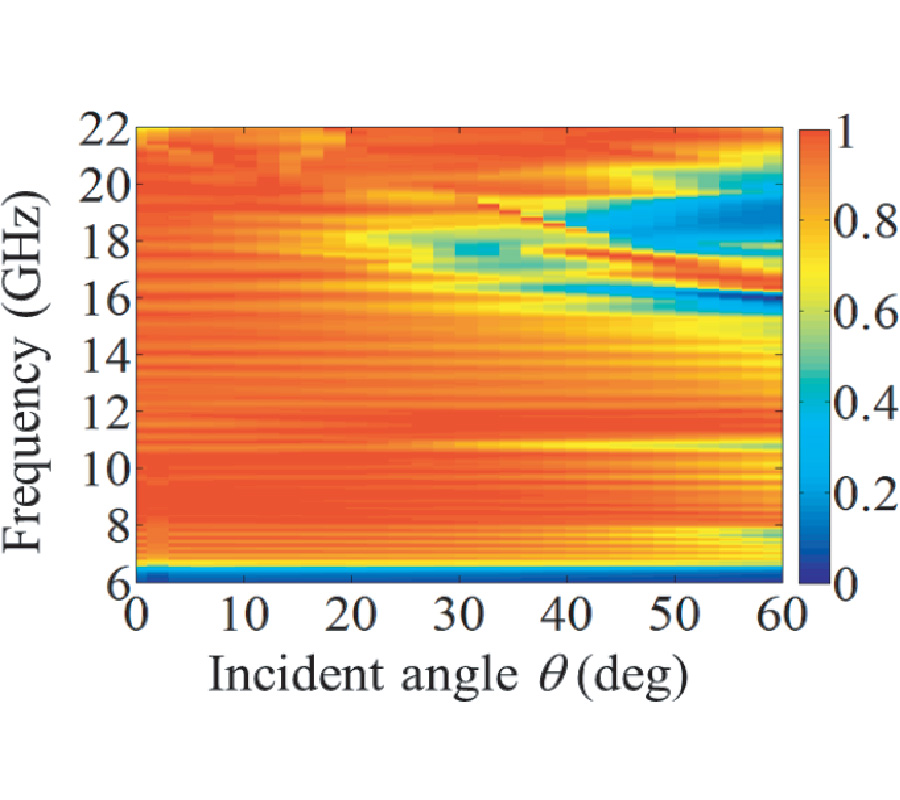
A miniaturized frequency selective surface (MFSS) that has very stable performance is designed based on the stepped-impedance element (SIE) structure. Significant couplings can be introduced by overlapping one metallic layer above the SIE structure. The large overlapping areas between the two metallic layers is beneficial to further miniaturizing the element size. Therefore, the physical size of the MFSS unit cell can be reduced to 0.054λX0.054λ. In addition, the MFSS is proved to excellent stability towards incident angles (up to 75o) and polarizations. A careful equivalent circuit model is presented to explain the physical principle of the proposed design. Finally, a prototype is fabricated and tested, and the simulation results are in agreement with the experimental observations.
A NOVEL MINIATURIZED FREQUENCY SELECTIVE SURFACE WITH VERY STABLE PERFORMANCE
2017-07-05
PIER Letters
Vol. 69, 45-50
Butter Fly Shape Compact Microstrip Antenna for Wideband Applications
Rakesh Nath Tiwari , Prabhakar Singh and Binod Kanaujia
In this article, a novel design of butterfly-shaped compact and small size microstrip antenna is proposed. The radiating structure consists of four circular discs in coalesced form and fed with coaxial probe. The initial antenna resonates at 9.64 GHz with impedance bandwidth of 11.41%. The resonance frequency is further reduced to 8.12 GHz with bandwidth 10.10%, when a rectangular slot is incorporated in the initial patch. Finally, two parallel slots are embedded in the initial patch which improves the antenna bandwidth up to 21.50% (6.02-7.47 GHz). The gain and efficiency of this antenna are above 8.80 dBi and 90% respectively across the entire operating band. Radiation pattern is calculated at lower end (6.02 GHz), upper end (7.47 GHz) and centre frequency (6.75 GHz) of operating band. The proposed antenna is fabricated, and measured results are validated with the simulated ones.
BUTTER FLY SHAPE COMPACT MICROSTRIP ANTENNA FOR WIDEBAND APPLICATIONS
2017-07-04
PIER M
Vol. 58, 97-106
A Fourier Phase Mode Approach for Chebyshev Pattern Synthesis in Circular Antenna Array
Mavulluri Ganesh and Konidala Ratna Subhashini
In this article, a novel phase mode analysis for a circular antenna array is discussed. This proposition experiments on the synthesis of Dolph- Chebyshev pattern for circular geometry employing directional element 1+cos(φ). Here, for pattern synthesis a modi ed uniform sampling method is proposed, and for investigation of continuous current excitation in a circular array, a Fourier phase-mode approach is proposed. The synthesis process permits generation of complex weights for each element to produce the Chebyshev pattern with a desired beamwidth or Side Lobe Level (SLL). The radius is a key factor for a circular geometry and also decides the pattern synthesis, which is determined by using the phase mode concept. Also, this article contributes to the formulation of a mathematical relationship between the number of phase modes (P) and number of antenna elements in the array (N) such as N = 2(P-1).
A FOURIER PHASE MODE APPROACH FOR CHEBYSHEV PATTERN SYNTHESIS IN CIRCULAR ANTENNA ARRAY
2017-07-04
PIER M
Vol. 58, 87-96
ROF for the Combined Field Integral Equation
Hua-Long Sun , Chuang Ming Tong , Qi Liu and Gao Xiang Zou
This article proposes a computational scheme for a combined field integral equation to compute electromagnetic scattering, which is Reduced order Fitting Green's function's Gradient and Fitting Green's function with Fast Fourier Transform (ROF). This new scheme can greatly reduce computation time compared to integral equation Fast Fourier Transform (IE), as well as Fitting Green's function's Gradient and Fitting Green's function with Fast Fourier Transform (FGG). Firstly, based on the property of Green's functions' integral under special condition, real-coefficient fitting method is utilized to replace the original complex values expression of combination coefficients with the real values. Secondly, a cross-shaped grid named as reduced order grid is presented to reduce computation time for modified near-field coupling impedance. Thirdly, by combining real-coefficient fitting method and reduced order grid, a new scheme of ROF is achieved. Finally, some examples verify ROF, which has advantages, such as higher efficiency than that of IE based on original grid and FGG based on cross-shaped grid, being not sensitive to grid spacing, and keeping the same precision as that of IE based on original grid.
ROF FOR THE COMBINED FIELD INTEGRAL EQUATION
2017-07-04
PIER M
Vol. 58, 73-86
Modelling Dispersive Behavior of Excitable Cells
Soheil Hashemi and Ali Abdolali
Most of the materials have nearly constant electromagnetic characteristics at low frequencies. Nonetheless, biological tissues are not the same; they are highly dispersive, even at low frequencies. Cable theory is the most famous method for analyzing nerves though a common mistake when studying the model is to consider a constant parameter versus frequency. This issue is discussed in the present article, and the analysis of how to model the dispersion in the cable model is proposed and explained. The proposed dispersive model can predict the behavior of excitable cells versus stimulations with single frequency or wide band signals. In this article, the nondestructive external stimulation by a coil is modeled and computed by finite difference method to survey the dispersion impact. Also, 5% to 80% difference is shown between the results of dispersive and nondispersive models in the 5 Hz to 4 kHz investigation. The disagreement expresses the dispersion notability. The proposed dispersive method assists in accurate device design and signal form optimization. Noise analysis is also achieved by this model, unlike the conventional models, which is essential in the analysis of single neurons or central nervous system, EEG and MEG records.
MODELLING DISPERSIVE BEHAVIOR OF EXCITABLE CELLS
2017-07-04
PIER M
Vol. 58, 65-72
Design of Nonuniform Metallic Anechoic Chamber for Radiation Pattern Measurement
Ali Farahbakhsh and Mohammad Khalaj-Amirhosseini
Antenna pattern measurement is an essential step in antenna qualification which should be done in anechoic chambers. The common method for anechoic chamber construction is to cover all inside walls by the electromagnetic absorbers. In this paper, a new method is presented to design a fully metallic chamber by controlling the electromagnetic inside the chamber and guiding them to a piece of absorber. Therefore, a desirable quiet zone is formed inside the chamber while a great reduction of absorber usage is achieved. The proposed chamber is analyzed using ray tracing method, and its performance is evaluated by simulation that shows the practicality of the proposed chamber.
DESIGN OF NONUNIFORM METALLIC ANECHOIC CHAMBER FOR RADIATION PATTERN MEASUREMENT
2017-07-03
PIER Letters
Vol. 69, 37-43
A Novel Circularly Polarised Antenna with Wide Power and Axial-Ratio Beamwidth by Using Tilted Dipoles
Li Wang , Xi Chen , Dan Wu , Long Yang , Guang Fu and Xiao-Wei Shi
A novel circularly polarised antenna with wide 3 dB axial-ratio beamwidth (ARBW) and half power beamwidth (HPBW) is proposed in this letter. By using two pairs of tilted dipoles, the ARBW of the antenna is significantly enhanced to about 160° and 162° in the XZ- and YZ-planes, respectively. Meanwhile, its HPBW is also broadened to above 116° in the dual planes. A prototype is manufactured and measured to validate the method. The measured results show that |S11|<-10 dB reaches about 38.8% (1.37 GHz-2.03 GHz), and the AR at broadside bandwidth is 14% (1.51 GHz-1.74 GHz). The gain of the antenna also keeps above 4.19 dBic. Meanwhile, acceptable agreements can be obtained between the simulated and measured results. As such, the proposed CP antenna with wide beamwidth can be used in various navigation systems.
A NOVEL CIRCULARLY POLARISED ANTENNA WITH WIDE POWER AND AXIAL-RATIO BEAMWIDTH BY USING TILTED DIPOLES