Search Results(13794)

2017-07-24
PIER C
Vol. 76, 43-54
Unbalanced-to-Balanced Power Divider with Arbitrary Power Division
Amar Nath Yadav and Ratnajit Bhattacharjee
In this paper, Gysel type Unbalanced-to-Balanced (UTB) Power Divider (PD) with arbitrary power division is proposed. UTB PD is a five-port device, and a standard scattering matrix for a five-port PD with arbitrary power division isderived. Design equations are obtained analytically. Using design equations, a UTB PD is designed at 2 GHz for power division ratio of 1:2, and simulation is carried out using HFSS. A prototype is fabricated, and measurement is performed to verify the simulation results of PD. Measured results are in good agreement with the simulated ones. The proposed PD shows in-phase characteristic within ±5◦. Measurement results show that isolation between two output ports is greater than 20 dB. Greater than 20 dB common-mode suppression from input port to output balanced ports is achieved. Differential-mode power is divided in power division ratio of 1:2 from unbalanced port to balanced ports. Measured fractional bandwidth of the proposed PD is 21%.
UNBALANCED-TO-BALANCED POWER DIVIDER WITH ARBITRARY POWER DIVISION
2017-07-24
PIER Letters
Vol. 69, 93-98
A Near-Field Target Localization Method for MIMO Radar
Jurong Hu , Qianru Yuan and Yu Zhang
The existing target localization algorithms almost cannot be used to near-field target localization in Multiple-Input Multiple-Output (MIMO) radar, and this paper presents a novel method. This algorithm uses Chan algorithm to obtain initial estimate of the targets. Then we define a new residual matrix and use the weighted least square (WLS) method to get a more accurate positioning result. The Fuzzy C-Means (FCM)algorithm is introduced to get more stable and accurate estimation. Furthermore, this algorithm achieves accurate positioning of the MIMO radar demonstrated by simulations.
A NEAR-FIELD TARGET LOCALIZATION METHOD FOR MIMO RADAR
2017-07-24
PIER M
Vol. 58, 193-204
Tuning of Microwave Absorption Properties and Electromagnetic Interference (EMI) Shielding Effectiveness of Nanosize Conducting Black-Silicone Rubber Composites Over 8-18 GHz
Raj Kumar Jani , Manoj Kumar Patra , Lokesh Saini , Anuj Shukla , Chandra Pal Singh and Sampat Raj Vadera
In this paper, studies on broadband microwave absorption and electromagnetic shielding effectiveness are reported in flexible rubber composites with low filler content of nanosize conducting carbon over 8-18 GHz frequency range of electromagnetic spectrum. Rubber based composites are prepared by loading of 1-15 wt% nanosize conducting Carbon Black (CB) in silicone rubber matrix. Effect of percentage loading of nanosize CB on DC conductivity, dielectric & microwave absorption properties and electromagnetic Shielding Effectiveness (SE) of silicone rubber composites is studied. The percolation threshold is achieved at low concentration (3 wt%) of CB in composites. The observed complex permittivity values revealed that composites with concentration of 5 wt% CB can provide more than 90% microwave absorption (Reflection Loss > -10 dB) over 8-18 GHz at composite thickness of 1.9-2.7 mm. Further, composites with concentration of 15 wt% of CB shows -40 dB SE over the broad frequency range 8-18 GHz at thickness 2.8 mm. The effect of composite thickness on microwave absorption properties and shielding effectiveness is also analyzed. Thus, the prepared rubber composites with suitable concentration of nanosize CB as filler may be used as microwave absorber in stealth applications as well as for EMI shielding of electronic equipments in various civilian and military areas.
TUNING OF MICROWAVE ABSORPTION PROPERTIES AND ELECTROMAGNETIC INTERFERENCE (EMI) SHIELDING EFFECTIVENESS OF NANOSIZE CONDUCTING BLACK-SILICONE RUBBER COMPOSITES OVER 8-18 GHZ
2017-07-24
PIER
Vol. 159, 93-124
Illumination Optics in Emerging Naked-Eye 3D Display (Invited Review)
Aiqin Zhang , Jiahui Wang , Yangui Zhou , Haowen Liang , Hang Fan , Kunyang Li , Peter Krebs and Jianying Zhou
Illumination optics in emerging naked-eye 3D display, especially in time-spatial multiplexing, or directional backlight naked-eye 3D display system, is systematically examined. Key issues in directional backlight system include: 1) Directional transmission of the left- and right-eye images to the corresponding viewing zone with small crosstalk; 2) The luminance on the screen should be homogeneous even for the viewers moving around. In this paper, we propose an adaptive optimization solution based on root mean square (RMS) for the design of illumination optics of the naked-eye 3D system. Based on the designed free-form backlight illumination, the overall design schemes for both single-user and multi-user naked-eye 3D display are proposed and demonstrated. By utilizing the novel dynamic synchronized backlight technique, the temporal crosstalk is effectively brought into control. The display defects such as the dark bands appearing at the joints of the lens array or at the middle of the Fresnel lens are simulated numerically and tested experimentally, hence providing effective design guidelines for the optical components as well as their fabrication error tolerance. Additionally, we propose a continuous backlight technique to improve the luminance homogeneity. Furthermore, a quantitative evaluation mechanism for the moiré pattern based on the Fourier analysis method, by introducing the contrast sensitivity function (CSF), is presented. A novel arrangement of a quasi-random RGB sub-pixel array is proposed to reduce the visibility of moiré pattern. As a result, full HD glassless 3D display suitable for glassless virtual and augmented realities is demonstrated with an unprecedented display quality.
ILLUMINATION OPTICS IN EMERGING NAKED-EYE 3D DISPLAY (INVITED REVIEW)
2017-07-22
PIER C
Vol. 76, 33-41
Efficient Sparse Imaging Reconstruction Algorithm for through-the-Wall Radar
Lele Qu , Xing Cheng and Tianhong Yang
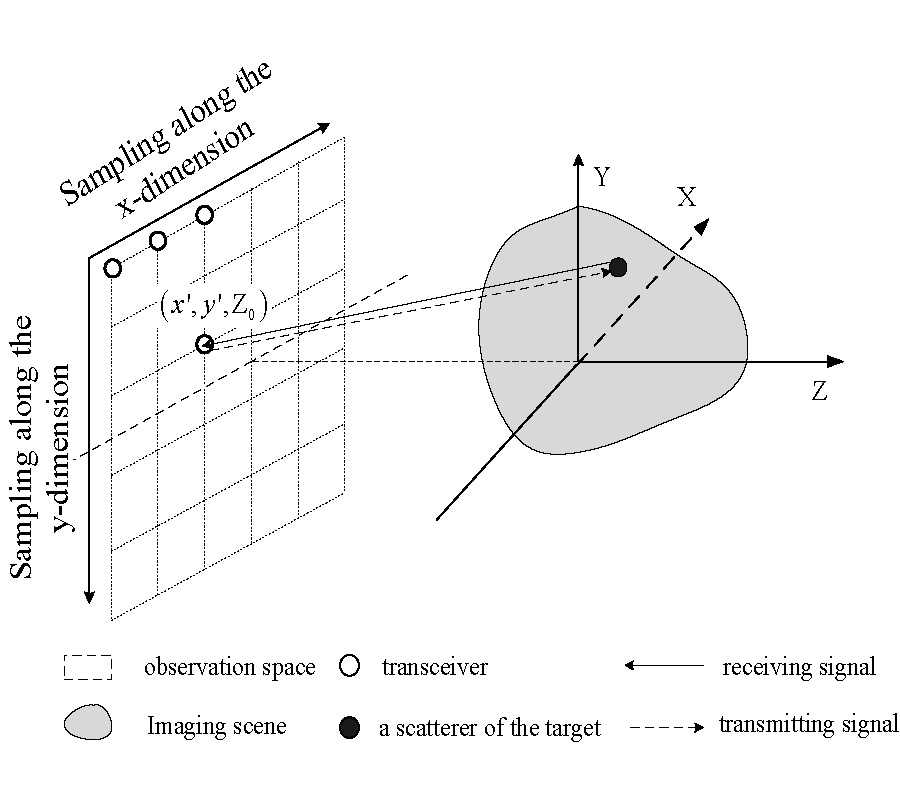
Sparse reconstruction technique can be used to provide high-resolution imaging result for through-the-wall radar (TWR) system. Since conventional sparse imaging reconstruction algorithms usually require a tremendous amount of computer memory and computational complexity, it is very difficult to apply in the practical large-scale TWR imaging applications. To solve the above problem, an efficient sparse imaging reconstruction algorithm is proposed in this paper. The proposed imaging method combines the spectral projection gradient L1-norm (SFGL1) algorithm with nonuniform fast Fourier transform (NUFFT) technique to achieve imaging reconstruction. Benefiting from the function handle operation of SPGL1 and computational efficiency of NUFFT, the proposed imaging algorithm can significantly reduce the memory requirement and computation complexity. The simulated and experimental results have shown that the proposed imaging method can significantly reduce the required computer memory and computational cost while providing the similar recovered image quality as the conventional sparse imaging method.
EFFICIENT SPARSE IMAGING RECONSTRUCTION ALGORITHM FOR THROUGH-THE-WALL RADAR
2017-07-22
PIER Letters
Vol. 69, 87-92
A Compact Polarization Diversity UWB MIMO Antenna with a Fork-Shaped Decoupling Structure
Hui-Fen Huang and Shu-Guang Xiao
A compact polarization diversity ultra-wideband (UWB) antenna with size 32×32 mm2 is presented in this paper. The proposed antenna consists of a linear tapered slot (LTS) ground, two orthogonal micro-strip feed lines and a floating fork-shaped decoupling structure located diagonally across the two orthogonal microstrip feed lines. The ground is in one side of the substrate, and the feed lines and the decoupling structure are in the other side. In addition, two rectangular slots are made in both the ground and feed lines to widen impedance bandwidth. Simulated and measured results indicate that the band covers from 3.1 to 12GHz with S11<-10dB and S12<-15dB.
A COMPACT POLARIZATION DIVERSITY UWB MIMO ANTENNA WITH A FORK-SHAPED DECOUPLING STRUCTURE
2017-07-19
PIER B
Vol. 77, 37-55
Development of an Adaptive Approach for Identification of Targets (Match Box, Pocket Diary and Cigarette Box) Under the Cloth with MMW Imaging System
Bambam Kumar , Rohit Upadhyay and Dharmendra Singh
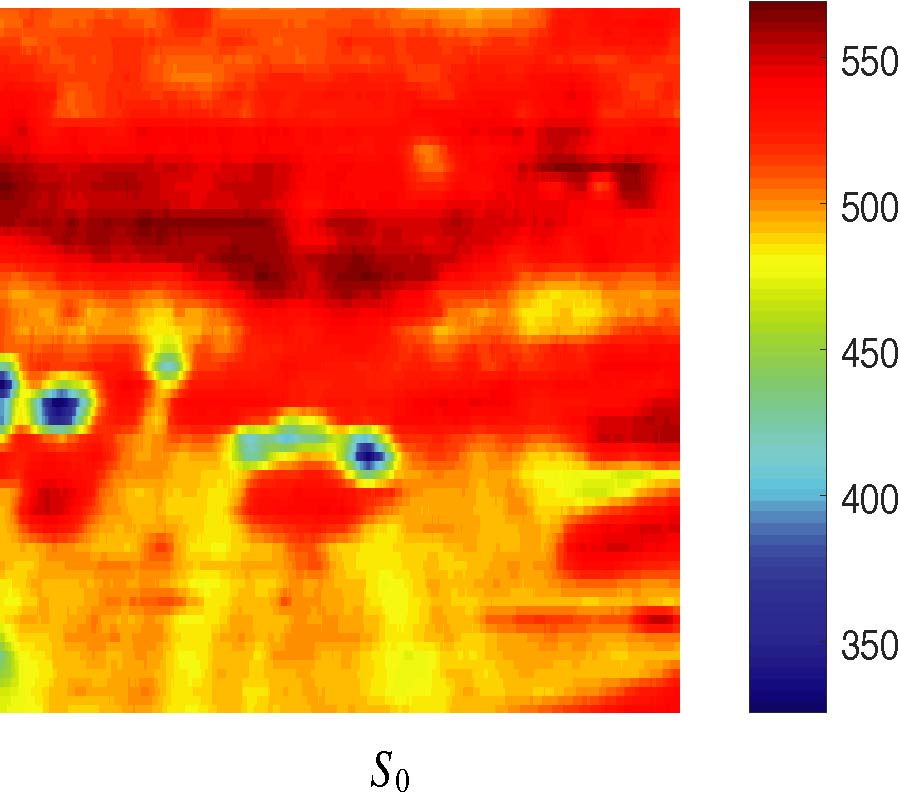
Non-metallic objects, such as match box and cigarette box, detection and identification are quite an essential task during personal screening from standoff distance to protect the public places like the airport. Although various imaging sensors such as microwave, THz, infrared and MMW with signal processing techniques have been demonstrated by the researchers for concealed weapon detection, it is still a challenging task to detect and identify different types of small size targets such as a matchbox, pocket diary and cigarette box simultaneously. Therefore, in this paper, an attempt has been made to develop such an algorithm/methodology by which different types of small targets, such as a matchbox and cigarette box, which is fully or half-filled or empty and pocket diary at different orientations beneath various cloths can be detected and identified with an MMW radar system. For this purpose, an optimal method has been proposed to form an image, and after that, in post processing a novel adaptive approach for detection and identification of considered targets has been proposed. The data were collected by MMW system at V-band (59 GHz-61 GHz). The proposed algorithm/methodology gives s quite satisfactory result.
DEVELOPMENT OF AN ADAPTIVE APPROACH FOR IDENTIFICATION OF TARGETS (MATCH BOX, POCKET DIARY AND CIGARETTE BOX) UNDER THE CLOTH WITH MMW IMAGING SYSTEM
2017-07-19
PIER C
Vol. 76, 23-31
A Novel High-Gain Cavity Slot Antenna Based on Polarization Twist Reflector for High Power Microwave Applications
Hong-Yin Zhang , Fu-Shun Zhang and Fan Zhang
A novel high-gain and high-power cavity slot antenna is presented in this paper. The antenna consists of a slotted cavity cover, a driven antenna and a polarization twist reflector. The driven antenna is a balanced-fed dipole. And a 2×4 slots array is etched on the top surface of the cavity cover. To excite the cavity slots with uniform amplitude and phase, the polarization twist reflector is used here. Compared with the antenna without the twister, the gain is improved by almost 4.0 dB across the operating band. In addition, the field distributions of the proposed antenna are analyzed through simulation, which proves a high power-handling capacity of 3.94 MW. To verify the design, a prototype operating at 5.8 GHz bands has been fabricated and measured. The measured maximum gain and radiation efficiency are 13.6 dBi and 95%, respectively.
A NOVEL HIGH-GAIN CAVITY SLOT ANTENNA BASED ON POLARIZATION TWIST REFLECTOR FOR HIGH POWER MICROWAVE APPLICATIONS
2017-07-19
PIER M
Vol. 58, 183-191
A Virtual Space-Time Adaptive Beamforming Method for Space-Time Antijamming
Fulai Liu , Ruiyan Du and Xiaoyu Bai
Space-time antijamming problem has received significant attention recently in the passive radar systems, such as Global Navigation Satelite Systems (GNSS). These space-time beamformers use two adaptive filters, i.e., spatial filter and temporal filter for canceling interference signals. However, most of the work on spacetime antijamming problem presented in the literature require multiple antennas and delay taps. In this paper, a virtual space-time adaptive beamforming method is proposed. The temporal smoothing technique is utilized to add a structure of the received data model for the implementation of the proposed method without delay tap. Compared with the previous work, the presented method offers a number of advantages over other recently proposed algorithms. For example, the space-time weight vector can be obtained by simple algebraic operations. It has lower computational complexity.It can reduce system overhead since the temporal smoothing technology is used instead of multiple delay taps. Simulation results are presented to verify that effectiveness of the proposed method.
A VIRTUAL SPACE-TIME ADAPTIVE BEAMFORMING METHOD FOR SPACE-TIME ANTIJAMMING
2017-07-19
PIER M
Vol. 58, 171-181
Effects of Reentry Plasma Fluctuation on Polarization Properties of Electromagnetic Waves
Xinglai Wang , Zhiwei Liu and Guojiang Xia
Fluctuations of the reentry plasma sheath can affect the propagation of Electromagnetic waves. The relations between fluctuations and the propagation of electromagnetic waves are analyzed. The effects on polarization propertiesin L-band, S-band and Ka-band during a typical reentry process are studied using methods derived by synthesizing the compressible turbulent flow theory, plasma theory, and electromagnetic wave theory together. Results show that in L-band and S-band, the effects increase with the altitude, while in Ka-band, the effects decrease with altitude. The effects at high altitude above 60 km are prominent in L-band and S-band, while the effects at middle and low altitude below 60 km in Ka-band are obvious. The effects in L-band and S-band are much bigger than that in Ka-band and can affect the signal properties of TT&C systems significantly, while the effects in Ka-band are much milder. The waves with large oblique incident angle can encounter much more severe conditions than that with small angle.
EFFECTS OF REENTRY PLASMA FLUCTUATION ON POLARIZATION PROPERTIES OF ELECTROMAGNETIC WAVES
2017-07-18
PIER C
Vol. 76, 11-22
A Two-Stage Approach for Frequency Response Modeling and Metamaterial Rapid Design
Xiao Guo , Chunlin Ji , Ruo Liu and Tao Tang
We introduce a novel two-stage approach for rapid design of massive metamaterials (MTMs), where performances of thousands of microstructures require evaluation. In Stage I, an equivalent circuit model is synthesized via rational function modeling to represent the frequency response of MTMs microstructures. In Stage II, Gaussian process (GP) regression models are unitized to build the relation between the physical setting of the microstructure, including geometric design variables and incident angles of electromagnetic (EM) waves and the representing parameters of the equivalent circuit model. As a consequence, the mapping from the microstructure physical parameters to the frequency response is easy to achieve and with high accuracy. We offer two metamaterial prototypes to illustrate that the proposed approach allows high efficiency in facilitating the design of massive MTMs. The experimental results demonstrate that our method is no longer limited by the complexity of microstructures and the spatial dispersion, induced by the variation of incident angle. We compare the accuracy of predicted responses against the reference data, and both examples yield average RMSE less than 0.05, which meets the requirements for many MTMS engineering applications.
A TWO-STAGE APPROACH FOR FREQUENCY RESPONSE MODELING AND METAMATERIAL RAPID DESIGN
2017-07-18
PIER C
Vol. 76, 1-10
Dual-Polarized Multi-Band Infrared Energy Harvesting Using h-Shaped Metasurface Absorber
Thamer Almoneef and Omar M. Ramahi
We present the design of an infrared metasurface harvester based on the full absorption concept. The metasurface unit cells consist of an H-shaped resonator with the load placed across the gap of the resonator. Different from infrared metamaterial absorber designs, the resonator is capable of not only full absorption but also maximum energy channeling across the load resistance. Numerical simulation demonstrates that 96% of the absorbed energy is dissipated across the load resistance. In addition, cross-polarized H-resonators design is presented, which is capable of harvesting infrared energy using dual polarizations within three frequency bands.
DUAL-POLARIZED MULTI-BAND INFRARED ENERGY HARVESTING USING H-SHAPED METASURFACE ABSORBER
2017-07-18
PIER M
Vol. 58, 159-169
A GPU Implementation of the Inverse Fast Multipole Method for Multi-Bistatic Imaging Applications
Luis E. Tirado , Galia Ghazi , Yuri Alvarez-Lopez , Fernando Las-Heras and Jose Angel Martinez-Lorenzo
This paper describes a parallel implementation of the Inverse Fast Multipole Method (IFMM) for multi-bistatic imaging configurations. NVIDIAs Compute Unified Device Architecture (CUDA) is used to parallelize and accelerate the imaging algorithm in a Graphics Processing Unit (GPU). The algorithm is validated with synthetic data generated by the Modified Equivalent Current Approximation (MECA) method and experimental data collected by a Frequency-Modulated Continuous Wave (FMCW) radar system operating in the 70-77 GHz frequency band. The presented results show that the IFMM implementation using the CUDA platform is effective at significantly reducing the algorithm computational time, providing a 300X speedup when compared to the single core OpenMP version of the algorithm.
A GPU IMPLEMENTATION OF THE INVERSE FAST MULTIPOLE METHOD FOR MULTI-BISTATIC IMAGING APPLICATIONS
2017-07-17
PIER B
Vol. 77, 21-35
A Robust Sub-Integer Range Alignment Algorithm Against MTRC for ISAR Imaging
Pengjiang Hu , Shiyou Xu and Zengping Chen
Range alignment plays an important role in the inverse synthetic aperture radar (ISAR) imaging. The performance of the traditional range alignment algorithms decreases when the migration through resolution cells (MTRC) is much severe. In this paper, a measure of MTRC is defined, and the effect of MTRC on range alignment is analyzed. Taking MTRC into account, a robust sub-integer range alignment algorithm is proposed. Firstly, each range profile is interpolated to remove the precision limitation of integer range resolution cell. Subsequently, the matrix formed by all the range profiles is partitioned into several matrix blocks on the slow-time domain. For each matrix block, the range profiles are aligned by minimizing the entropy of the average range profile (ARP). Finally, the matrix blocks are coarsely aligned using the maximum correlation method, followed by a fine alignment based on the minimization of the ISAR image entropy. The effectiveness of the proposed algorithm is validated by simulations and real-world data. Results demonstrate that the proposed method is robust against MTRC and can reduce the alignment error. The resultant ISAR image is much better focused.
A ROBUST SUB-INTEGER RANGE ALIGNMENT ALGORITHM AGAINST MTRC FOR ISAR IMAGING
2017-07-17
PIER C
Vol. 75, 203-217
A Scalable Compact Wideband Dual-Polarized Printed Dipole Antenna for Base Station Applications
Chengcheng Tang , Huy Cao and Jimmy Ho
A novel compact wideband dual-polarized printed dipole antenna for base station application is presented. The proposed antenna is composed of four assembled substrates. Two pairs of identical arrow-shaped conductive lines on the tophat substrate form two orthogonal polarized dipoles. Two baluns connected with 50 Ω coaxial cables are integrated on another two vertical substrates to excite the dipoles. The other horizontal board at bottom provides grounding. A rectangular box-shaped reflector is also used to enhance its stability in radiation patterns over the operating frequencies. It achieves 22% size reduction from the conventional printed half-wavelength cross-dipole, and 43.2% impedance bandwidth (VSWR<2), while maintaining a stable radiation pattern with measured Cross-Polarization Degradation (XPD) better than -22dB at boresight and an average peak gain of 8.4 dBi for a 65° Azimuth Beamwidth base station application at 700/800/900 MHz bands. With the scalable miniature structure, it may also find itself suitable for side-by-side multiband Multi-Input Multi-Output (MIMO) or Large-Scale Antenna (LSA) 5G base station applications. A 4x4 array prototype of the LSA is also designed and fabricated, and it achieves 27.8% impedance bandwidth (VSWR<1.5) with well decorrelated element performance and array XPD better than -20 dB across as large as 30° tilting range.
A SCALABLE COMPACT WIDEBAND DUAL-POLARIZED PRINTED DIPOLE ANTENNA FOR BASE STATION APPLICATIONS
2017-07-17
PIER Letters
Vol. 69, 79-86
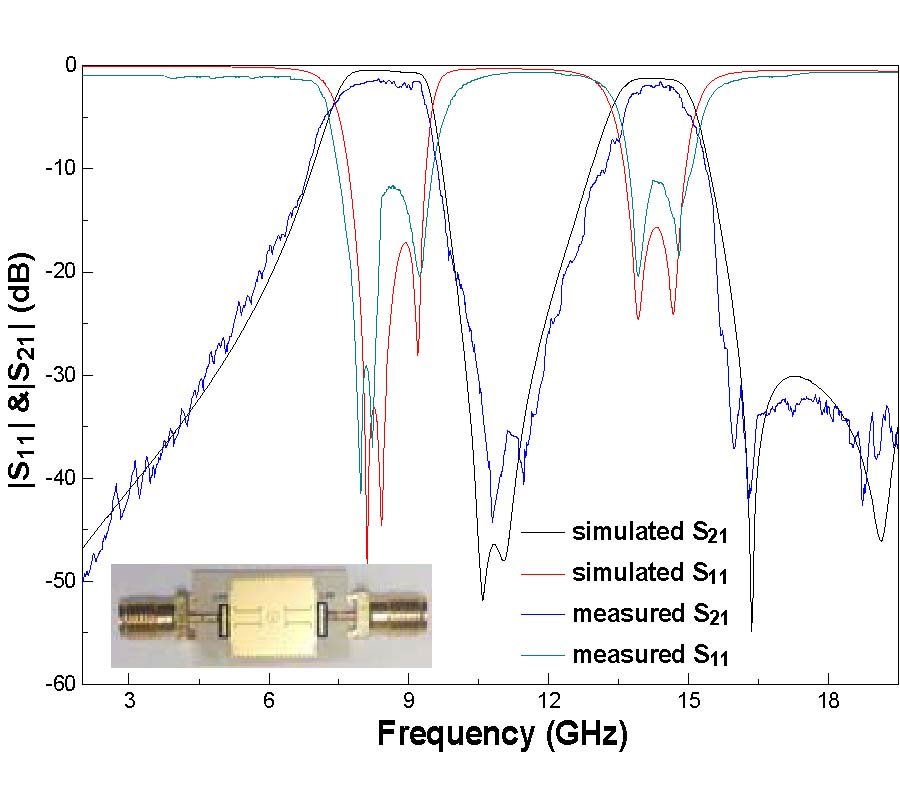
Wide Stopband Microstrip Triplexer Using Common Crossed Resonator and Uniform Impedance Resonator
Jian-Feng Qian and Fu-Chang Chen
A novel microstrip triplexer with a common crossed resonator and some uniform impedance resonators (UIR) is proposed in this paper. The crossed resonator is theoretically analyzed and proved to be able to resonate at three different frequencies. By using the crossed resonator as the common resonator, a compact structure can be gained as no extra matching network is needed, and the number of the resonator can be reduced effectively. Moreover, a wide stopband is obtained by setting the crossed resonator and UIRs working at the same fundamental frequencies but different higher order resonant frequencies. To demonstrate the design procedure, a triplexer with a third order Chebyshev response in each channel is fabricated and measured. The measured result is in good agreement with the simulated one, showing an attenuation of 20 dB up to 8 times the first channel frequency.
WIDE STOPBAND MICROSTRIP TRIPLEXER USING COMMON CROSSED RESONATOR AND UNIFORM IMPEDANCE RESONATOR
2017-07-17
PIER M
Vol. 58, 147-157
Design and Measurement of a Novel Seamless Scanning Leaky Wave Antenna in Ridge Gap Waveguide Technology
Xingchao Dong , Hongjian Wang , Fei Xue and Yang Liu
The design and measurement of a novel seamless scanning leaky wave antenna in ridge gap waveguide technology are presented. The impedance matching technique is employed to eliminate the open-stopband (OSB) effect which produces a discontinuity for a seamless scanning leaky wave antenna. Ridge gap waveguide proposed recently is used as the feed structure. The antenna radiates from longitudinal slots of which the leakage constant is designed small to ensure a high directivity. Subsequently, for simplicity, a transition from Ku-band standard waveguide port (WR62) to ridge gap waveguide is designed, which operates within Ku-band with S11 below -15dB. A prototype has been fabricated, and measurements support the simulations obtained by full-wave analysis. The proposed antenna bandwidth is from 12.5GHz to 17.4GHz while seamless scanning is achieved from backward to forward, particularly including broadside radiation. The scanning range is from -9° to 19° with an average gain of 18.3dB.
DESIGN AND MEASUREMENT OF A NOVEL SEAMLESS SCANNING LEAKY WAVE ANTENNA IN RIDGE GAP WAVEGUIDE TECHNOLOGY
2017-07-14
PIER C
Vol. 75, 193-201
Tri-Band BPF with Six Transmission Zeros Based on Quad-Mode DGS Resonator and MSIR
Biao Peng , Shufang Li and Li Deng
This paper presents the comprehensive design and analysis of a tri-band bandpass filter (BPF) based on a novel quad-mode defected ground structure resonator (QMDGSR) fed by two 50 Ω microstrip lines under the source-load coupling condition. Four transmission zeros (TZs) are produced in the proposed tri-band bandpass structure with two TZs beside each passband. All the four TZs are thoroughly analysed using equivalent circuit models based on the even-/odd-mode theory, and the corresponding equation for extracting the frequency of each TZ is developed and verified. The bandwidths (BWs) of the 1st and 3rd operating bands are broadened by incorporating the proposed triband bandpass structure with a traditional microstrip stepped impedance resonator (MSIR). Also, two additional TZs are generated due to the coupling between the feeding lines and the newly incorporated MSIR, which significantly result in the passband selectivity improvement. The lower and upper stopband rejections of the fabricated prototype are as high as 83.3 and 43.9 dB, respectively.
TRI-BAND BPF WITH SIX TRANSMISSION ZEROS BASED ON QUAD-MODE DGS RESONATOR AND MSIR
2017-07-14
PIER C
Vol. 75, 181-191
A Coding Metasurface with Properties of Absorption and Diffusion for RCS Reduction
Tong Han , Xiang-Yu Cao , Jun Gao , Yan-Long Zhao and Yi Zhao
A low-radar cross section (RCS) coding metasurface (MS) with properties of absorption and diffusion for both normal and oblique incidences is proposed in this paper. The coding MS is composed of a miniaturized perfect metamaterial absorber (PMA) and a wideband artificial magnetic conductor (AMC) in a shared aperture. In addition, to avoid strong scattering energy appearing at specific directions, genetic algorithm (GA) is adopted to search the optimal layout of the two MS elements. Simulated and experimental results confirm the properties of coding MS and indicate the 6-dB RCS reduction bands under TE- and TM-polarized normal incident that waves are 6.28GHz-9.16GHz and 6.33GHz-9.41GHz, respectively.
A CODING METASURFACE WITH PROPERTIES OF ABSORPTION AND DIFFUSION FOR RCS REDUCTION
2017-07-14
PIER Letters
Vol. 69, 71-78
A New Multi-Functional Half Mode Substrate Integrated Waveguide Six-Port Microwave Component
Saeid Karamzadeh , Vahid Rafiei and Hasan Saygin
By attention to price of microwave components and need to use of them in many applications, the creation of an integrated component which can incorporate the performances of several components in one structure is a necessity. Therefore, in this paper a novel symmetric six-ports multi-functional microwave component is designed and realized. The proposed component consists of two modified half mode substrates integrated waveguide couplers which are joined and a slot which is attained from joined two mentioned couplers. Despite the slot prevents the exciting of higher order modes in proposed component, it divides signal in two parts by exciting middle SIW ports. By exciting each of the ports as input, the component can act as an equal and an unequal 90-degree couplers or power dividers. The proposed component with mentioned conditions covers 23.5% frequency bandwidth with maximum magnitude and phase error of ±0.7 dB and ±0.63 degree, respectively.
A NEW MULTI-FUNCTIONAL HALF MODE SUBSTRATE INTEGRATED WAVEGUIDE SIX-PORT MICROWAVE COMPONENT