Search Results(13794)

2017-05-22
PIER M
Vol. 57, 45-53
An Echo Simulation Method for DBS Imaging That Considers Environmental Factors
Gaosheng Li , Gui Gao , Yang Bai , Dongming Zhou , Wei Liu and Jianghua Cheng
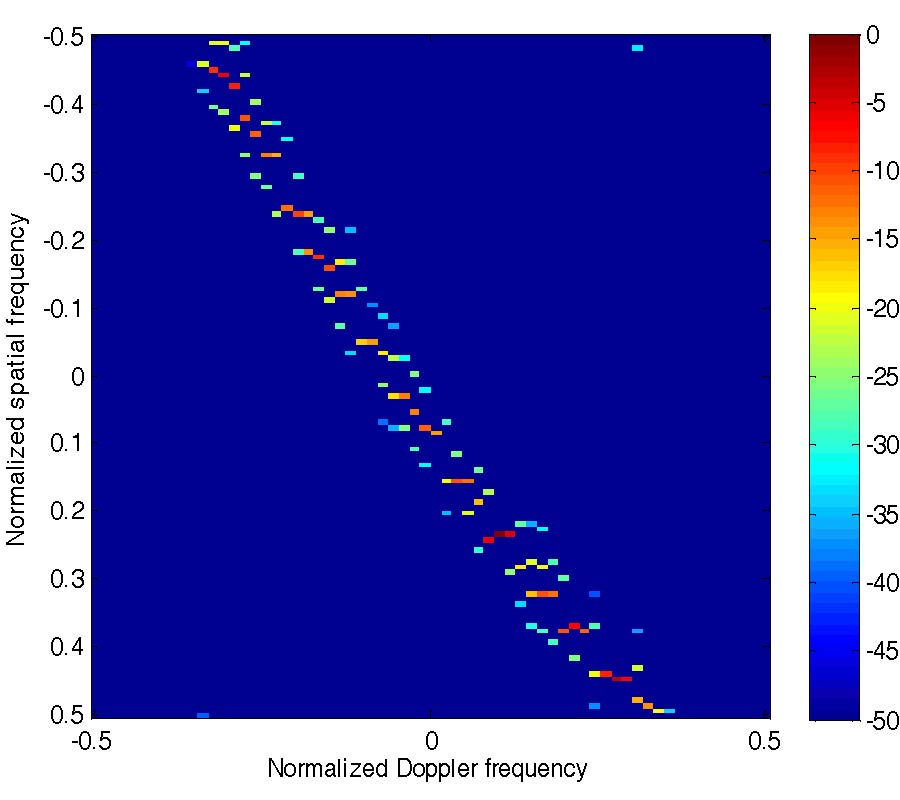
DBS (Doppler Beam Sharpening) imaging for scene matching terminal guidance is investigated. An echo simulation method for DBS of missile-borne radar that considers environmental factors is presented. The transmission signals of missile-borne radar are studied first. Next, the method for the modeling of the echo signals is discussed with consideration of environmental influences including the objects on the ground, radome and the seasonal variations, especially undulation of the ground. The status of the surface of the earth as well as internal elements of the radar will influence the precision of the height measurement, thereby indirectly influencing the image matching. Undulating terrain can also cause changes in the electromagnetic characteristics that lie in the translation of image points; in addition, there is a close relationship between the position offset and the altitude of the image area. The operation flow of DBS is provided together with the method of generating reference images. Finally, an optical image of an airport and the simulation results using echoes are presented for validation.
AN ECHO SIMULATION METHOD FOR DBS IMAGING THAT CONSIDERS ENVIRONMENTAL FACTORS
2017-05-21
PIER C
Vol. 74, 91-100
Broadband CPW-Fed Circularly Polarized Planar Monopole Antenna with Inverted-L Strip and Asymmetric Ground Plane for WLAN Application
Qiang Chen , Hou Zhang , Lu-Chun Yang , Bin Xue and Xue-Liang Min
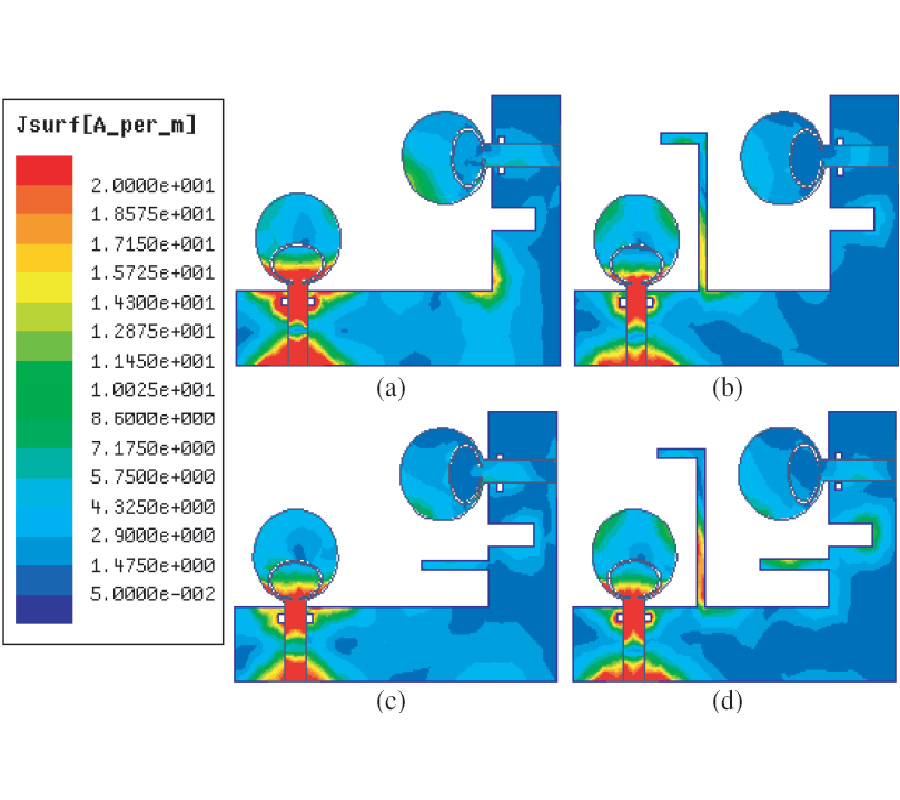
A novel broadband circularly polarized planar monopole antenna fed by coplanar waveguide (CPW) is proposed and fabricated. The proposed antenna consists of a rectangular monopole, an inverted-L strip and an asymmetric ground plane with cutting a horizontal slit on the right ground plane. Firstly, a narrow circularly polarized (CP) radiation at the upper band can be achieved by utilizing the asymmetric ground plane. Then, an inverted-L strip is introduced to obtain broadband CP characteristic matched with wide impedance bandwidth. The measured results demonstrate that a 10-dB bandwidth of 58.8% from 4.8 to 8.8 GHz and a 3-dB axial-ratio bandwidth (ARBW) of 47.8% from 5.375 to 8.75 GHz can be achieved which can completely cover the WLAN (5.725-5.85 GHz) band. Additionally, a 10-dB impedance bandwidth of 24% (3.3-4.2 GHz) with linear polarization is also obtained which can completely cover the WiMAX (3.3-3.7 GHz) bands. In additional, to explain the mechanism of dual-band CP operation, the analysis of magnetic fields distributions and a parametric study of the design are given. Compared to other recent works, a simpler structure, wider axial ratio and impedance bandwidths and a more compact size are the key features of the proposed antenna.
BROADBAND CPW-FED CIRCULARLY POLARIZED PLANAR MONOPOLE ANTENNA WITH INVERTED-L STRIP AND ASYMMETRIC GROUND PLANE FOR WLAN APPLICATION
2017-05-19
PIER Letters
Vol. 68, 39-46
Employing a Pair of T-Shaped Stepped-Impedance-Stubs Inside the Free Area of Miniaturized Wilkinson Power Dividers with Harmonic Suppression Capable of Operating at Optional Frequencies
Ashkan Abdipour and Arash Abdipour
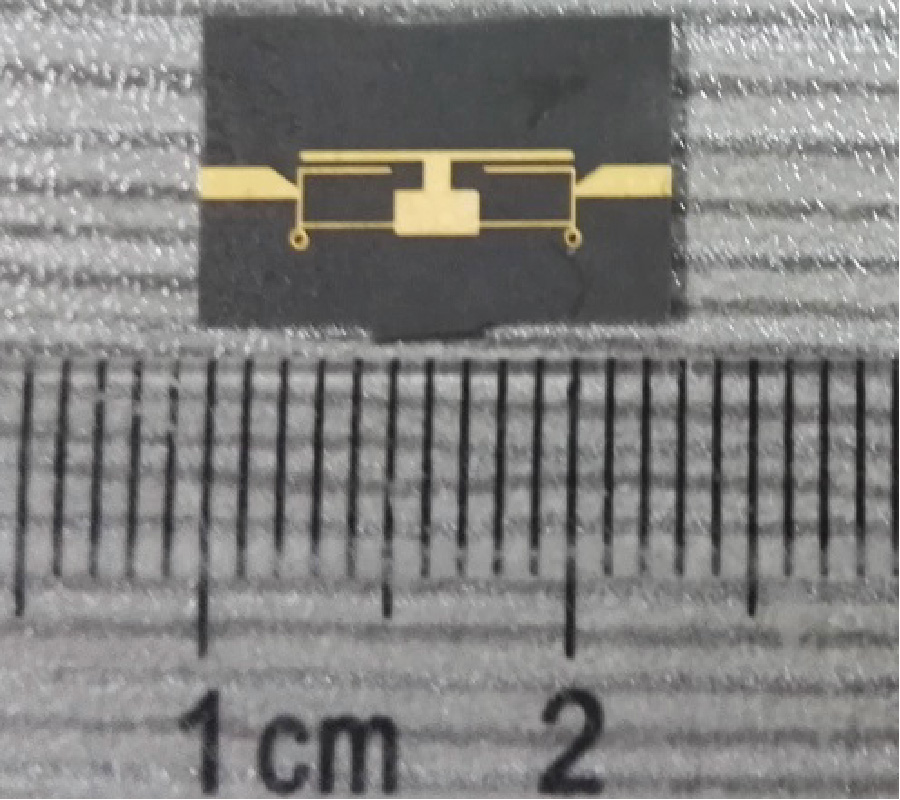
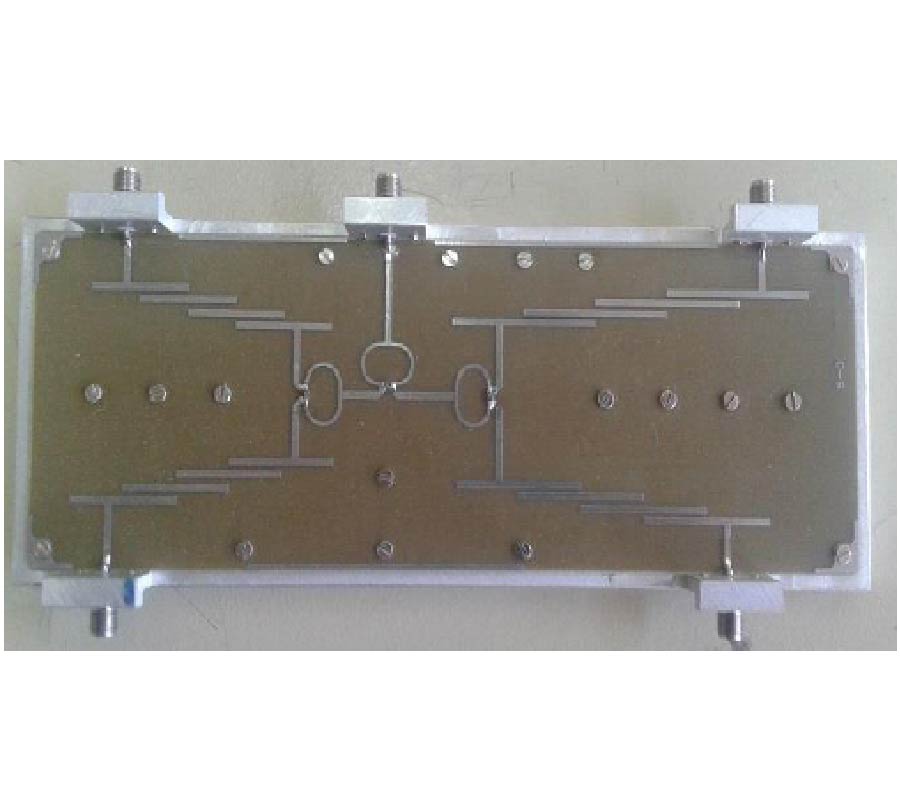
In this article, a pair of T-shaped stepped-impedance-stubs plays a key role in the structure of a Wilkinson power divider. In the first step, to find a general relation between electrical lengths and characteristic impedances of the mentioned stubs and consequently how the operating frequency can be chosen, an equation based on a mathematical analysis is obtained. Then, by using this equation several miniaturized Wilkinson power dividers with the same configurations at different operating frequencies and capable of suppressing spurious frequencies are designed. Moreover, in each of these circuits 2nd to 16th unwanted frequencies are suppressed. The simulation results of the designed dividers are in good agreement with the expected responses predicted by the obtained equation. To validate the proposed method, a Wilkinson power divider at 0.85 GHz as a sample is fabricated, and 77.83% size reduction is obtained. Furthermore, the fabricated divider suppresses 3rd to 21st harmonics better than -20 dB.
EMPLOYING A PAIR OF T-SHAPED STEPPED-IMPEDANCE-STUBS INSIDE THE FREE AREA OF MINIATURIZED WILKINSON POWER DIVIDERS WITH HARMONIC SUPPRESSION CAPABLE OF OPERATING AT OPTIONAL FREQUENCIES
2017-05-19
PIER M
Vol. 57, 35-43
Robust Concentric Circular Antenna Array with Variable Loading Technique in the Presence of Look Direction Disparity
Md. Farhamdur Reza and Md. Selim Hossain
The performance of a Concentric Circular Antenna Array (CCAA) with robust techniques is presented in this paper. A CCAA geometry is chosen because of its symmetrical configuration which enables the phased array antenna to scan azimuthally with minimal changes in its beam width and side-lobe levels. The performance of CCAA system is degraded, if there is any disparity occur between the original signal direction and the steering direction of the beamformer. This performance degradation problem due to look direction disparity can be improved by using robust techniques. This paper proposes a technique, named variable diagonal loading (VDL) technique for CCAA system and compare the performance of the proposed robust CCAA processor with existing CCAA processors. The proposed robust CCAA beamformer enhanced the output power 28.9 dB, 9.34 dB and 1.63 dB at 10 disparity angle compared to the CCAA standard capon beamformer (SCB), robust SCB and existing novel loading technique. Numerical examples are presented to analyze the performance of the proposed robust beamformer in different scenarios.
ROBUST CONCENTRIC CIRCULAR ANTENNA ARRAY WITH VARIABLE LOADING TECHNIQUE IN THE PRESENCE OF LOOK DIRECTION DISPARITY
2017-05-18
PIER C
Vol. 74, 83-90
Circularly Polarized Yagi-Uda-Like Transmitarray
Hoo-Beng Chew , Eng Hock Lim and Fook-Loong Lo
A novel Yagi-Uda-like transmitarray is proposed for circularly polarized (CP) operation. The element consists of multiple strips stacked in parallel for achieving broad transmission phase range. By employing the design concept for the Yagi-Uda director, the transmitarray elements are made to provide the functions of phase shifter and director simultaneously. By introducing rotational offset into the stacking strips, the element is found to be able to generate circular polarization. To demonstrate the working principle, an 8-layer unit element is simulated using the Floquet method to provide a transmission phase range of 412˚. The proposed 5×5 full-fledged CP transmitarray is able to produce an antenna gain of 16.2 dBi, a -1-dB bandwidth of 4%, an axial-ratio bandwidth of 7%, and an aperture efficiency of 40.4%. A simple curve-fitted design equation is also given.
CIRCULARLY POLARIZED YAGI-UDA-LIKE TRANSMITARRAY
2017-05-18
PIER C
Vol. 74, 73-82
Monolithic Integrated Design of S-Band Switched Filter Bank Based on LTCC Technology
Xiaodong Yang , Meng-Jiang Xing , Xuyue Guo , Wei Wang , Chuanxiang Dai , Yonghong Liu and Erfan Wang
A S-band monolithic integrated switched filter bank has been designed to realize tunable working center frequency, and a tuning range of 12.9% from 2.7 to 3.05 GHz was achieved with interval of 50 MHz. The switched filter bank is designed using 8 eighth-order step impedance resonators (SIR) band-pass filters arranged in parallel rows. Microelectromechanical Systems (MEMS) switched circuit is integrated above filters for monolithic design combined with low temperature co-fired ceramic (LTCC) technology. The SIR bandpass filters are designed to resist Electromagnetic Interference(EMI) between components and introduce cross coupling to bring two transmission zeros and better out-of-band rejection. The monolithic integrated switched filter bank is only 74 mm×24 mm×2.5 mm, which realizes the monolithic integration of the device and enhances the reliability. The measured results show that the insertion loss and out-of-band rejection are in good working condition.
MONOLITHIC INTEGRATED DESIGN OF S-BAND SWITCHED FILTER BANK BASED ON LTCC TECHNOLOGY
2017-05-17
PIER B
Vol. 75, 79-89
Investigating Electron Beam Deflections by a Long Straight Wire Carrying a Constant Current Using Direct Action, Emission-Based and Field Theory Approaches of Electrodynamics
Raymond Thomas Smith and Simon Maher
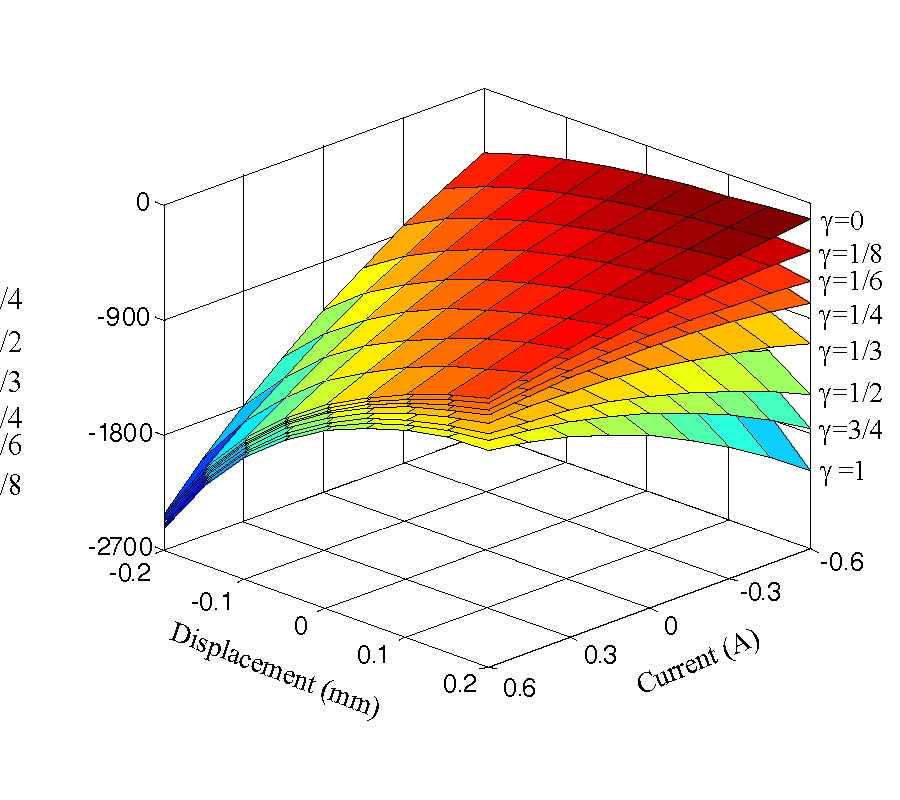
Results are presented for the transverse deflection of an electron beam by a long, straight wire carrying direct current. The experimental deflections are compared with three calculation methods based on the Lorentz force law (field theory) and both the Weber (direct action) and Ritz (emission) force formulae. The Lorentz force calculation is the conventional approach expressed in terms of electric and magnetic field components. By contrast the force formulae of Weber and Ritz do not contain any field vectors relating to E or B. The Weber force is based on direct action whereas the Ritz force expression is based on an emission/ballistic principle and is formulated in terms of a dimensionless constant, λ. The experimental beam deflections are for low speed (non-relativistic) electrons. Good agreement between experiment and theory is demonstrated for each approach. In fact, for the case of an infinitely long wire, all three calculation methods give identical results. Finally, the three approaches are contrasted when applied to the case of high speed electrons.
INVESTIGATING ELECTRON BEAM DEFLECTIONS BY A LONG STRAIGHT WIRE CARRYING A CONSTANT CURRENT USING DIRECT ACTION, EMISSION-BASED AND FIELD THEORY APPROACHES OF ELECTRODYNAMICS
2017-05-17
PIER B
Vol. 75, 59-77
A New Concept for High Power RF Coupling Between Waveguides and Resonant RF Cavities
Chen Xu , Ilan Ben-Zvi , Haipeng Wang , Tianmu Xin and Liling Xiao
Microwave engineering of high average-power (hundreds of kilowatts) devices often involves a transition from a waveguide to a device, typically a resonant cavity. This is a basic operation, which finds use in various application areas of significance to science and industry. At relatively low frequencies, L-band and below, it is convenient, sometimes essential, to couple the power between the waveguide and the cavity through a coaxial antenna, forming a power coupler. Power flow to the cavity in the fundamental mode leads to a Fundamental Power Coupler (FPC). High-order mode power generated in the cavity by a particle beam leads to a high-order mode power damper. Coupling a cryogenic device, such as a superconducting cavity to a room temperature power source (or damp) leads to additional constraints and challenges. We propose a new approach to this problem, wherein the coax line element is operated in a TE11 mode rather than the conventional TEM mode. We will show that this method leads to a significant increase in the power handling capability of the coupler as well as a few other advantages. We describe the mode converter from the waveguide to the TE11 coax line, outline the characteristics and performance limits of the coupler and provide a detailed worked out example in the challenging area of coupling to a superconducting accelerator cavity.
A NEW CONCEPT FOR HIGH POWER RF COUPLING BETWEEN WAVEGUIDES AND RESONANT RF CAVITIES
2017-05-17
PIER C
Vol. 74, 63-71
Bandwidth-Enhanced Double-Slot TSA with Y-Shaped Corrugated Edges
Yaqiao Liu , Jian-Gang Liang and Ya-Wei Wang
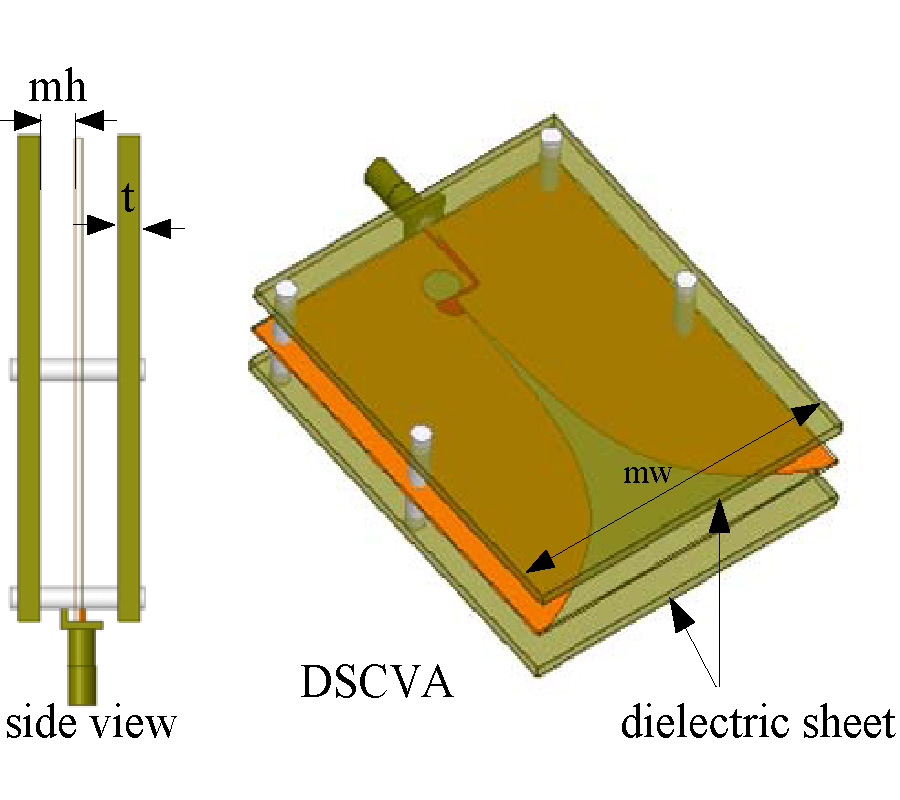
In this paper, a novel bandwidth-enhanced ultra-wideband (UWB) tapered slot antenna, with Y-shaped corrugated edges, is proposed. In the double-slot structure, the two slots are separated by a V-shaped metal surface with straight edges, which is beneficial for improving the directivity of the antenna. Meanwhile, an exponential Y-shaped corrugated edge is designed. This novel corrugated edge not only can improve the impedance bandwidth of the antenna by extending the path of the current, but also can enhance the directivity by concentrating the energy near the tapered slot. The proposed antenna provides 167% fractional bandwidth from 2.5 GHz to 28 GHz. The gain of the antenna is more than 10 dB from 3.5 GHz to 25 GHz and more than 8 dB in the whole operating band.
BANDWIDTH-ENHANCED DOUBLE-SLOT TSA WITH Y-SHAPED CORRUGATED EDGES
2017-05-17
PIER Letters
Vol. 68, 33-37
Semi-Virtual Antenna Array Beamforming Method
Wenxing Li , Yu Zhao and Qiubo Ye
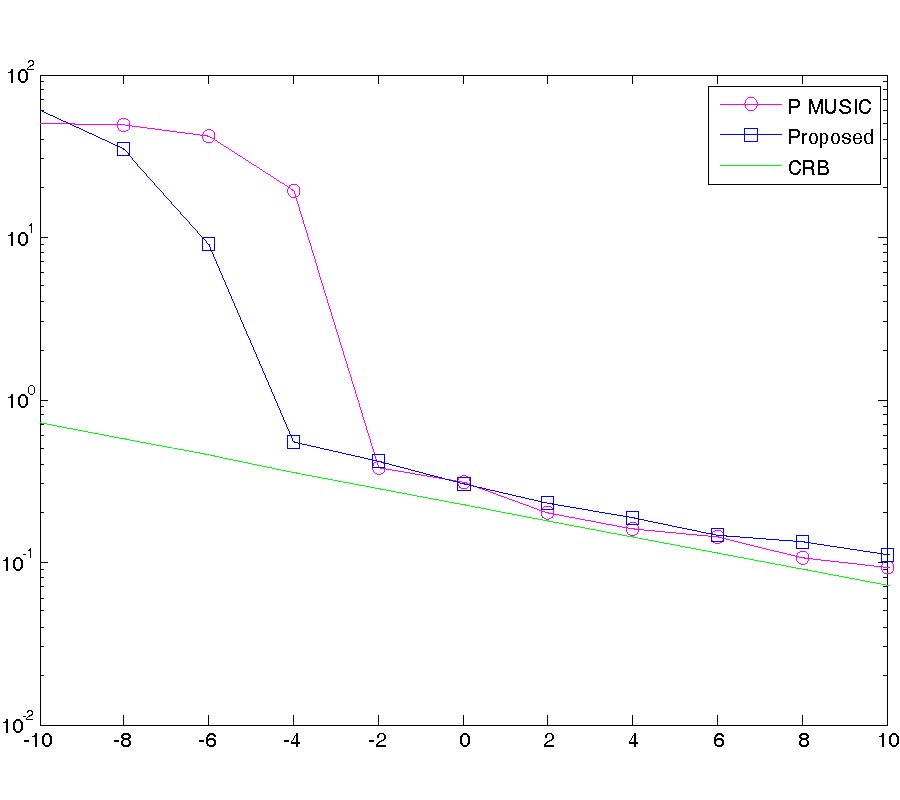
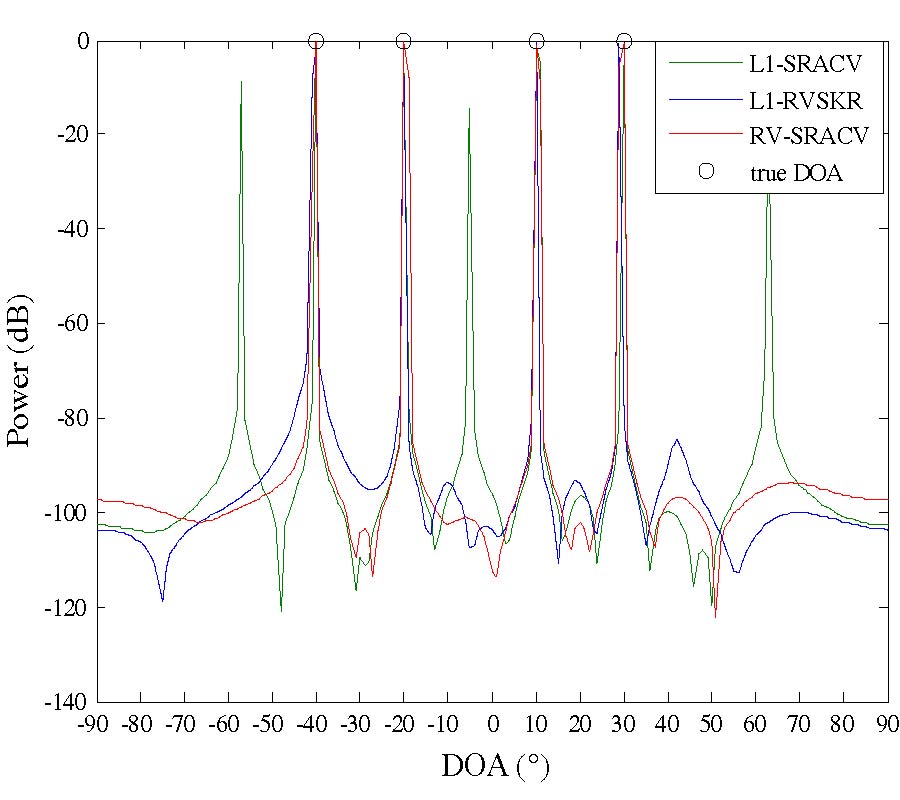
In order to improve the performance of antenna array beamforming, a semi-virtual antenna array beamforming method is proposed based on covariance matrix expansion. The sample covariance matrix is expanded, and virtual array elements are formed. The performance of the semi-virtual antenna array beamforming method is as good as the virtual antenna array beamforming methods, which are better than the conventional adaptive beamforming methods. In addition, the computational complexity of the semi-virtual antenna array beamforming method, which is greatly reduced compared with the virtual antenna array beamforming methods, is equal to that of the conventional adaptive beamforming methods. The fast calculation method of the optimal weight vector of the semi-virtual antenna array beamforming method is given in this paper. The validity and applicability of the proposed method is verified by simulation results.
SEMI-VIRTUAL ANTENNA ARRAY BEAMFORMING METHOD
2017-05-16
PIER B
Vol. 75, 41-57
Pattern Synthesis of Circular Antenna Array with Directional Element Employing Deterministic Space Tapering Technique
Mavulluri Ganesh and Konidala Ratna Subhashini
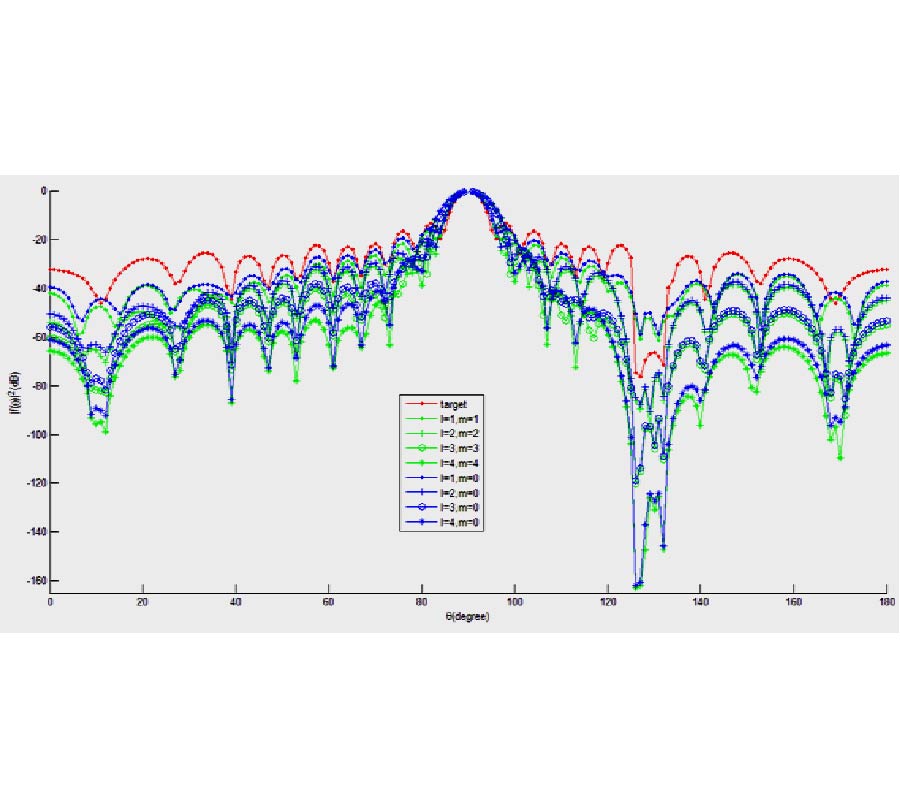
This paper proposes the concept of sparse appended with the space tapering technique for the synthesis of an antenna radiation pattern. The procedure experiments on a Circular Antenna Array (CAA) configuration comprising of directional element (1+cos(φ)). The sparse initiates the minimum number of active elements in the CAA, while the space tapering technique gives the complex excitations that yield a beam pattern with constraints such as Side Lobe Level (SLL) and Beam Width (BW) in relation to Dolph-Chebyshev radiation pattern. The phase mode analysis, which is an built-in procedure in the proposed technique explores the circular antenna array configuration characteristics. The simulation results justify the effectiveness of the proposed technique for obtaining the desired radiation pattern synthesis.
PATTERN SYNTHESIS OF CIRCULAR ANTENNA ARRAY WITH DIRECTIONAL ELEMENT EMPLOYING DETERMINISTIC SPACE TAPERING TECHNIQUE
2017-05-16
PIER M
Vol. 57, 25-34
Regional and Diurnal Variations of Rain Attenuation Obtained from Measurement of Raindrop Size Distribution Over Indonesia at Ku, Ka and W Bands
Fadli Nauval , Marzuki Marzuki and Hiroyuki Hashiguchi
The measured raindrop size distribution (DSD) and the ITU-R model have been used to elucidate the regional and diurnal variations of rain attenuation in Indonesia, for Ku-band (13.6 GHz), Ka-band (35.6 GHz), and W-band (96 GHz) frequencies. The DSDs were measured by the Parsivel disdrometer at Kototabang (KT; 100.32˚E, 0.20˚S), Padang (PD; 100:21˚E, 0:57˚S), Pontianak (PT; 109:37˚E, 0:00˚S), Manado (MN; 124:92˚E, 1:55˚N) and Biak (BK; 136:10˚E, 1:18˚S). In general, PD, KT and PT have lower rain attenuation than those at MN and BK, for the same rainfall rate, due to lower concentration of small-sized drops at these sites as reported by a previous study. Considerable differences between the attenuation obtained from the DSD and the ITU-R model are observed at all locations, in particular for very heavy rainfall (R > 50 mm/h). For R < 50 mm/h, the specific rain attenuation of measured DSD is in fairly good agreement with that obtained from the ITU-R model. The specific rain attenuation obtained from the DSD shows diurnal variation, in agreement with a previous study at KT. The diurnal variation of rain attenuation is dependent on the frequency and rainfall rate. At KT and PT, the lowest rain attenuation for Ku-band is observed during 06:00-12:00 LT, but during this period the largest attenuation is observed for Ka- and W-bands. These phenomena may be due to the increasing role of small and medium-sized drops by increasing frequency.
REGIONAL AND DIURNAL VARIATIONS OF RAIN ATTENUATION OBTAINED FROM MEASUREMENT OF RAINDROP SIZE DISTRIBUTION OVER INDONESIA AT KU, KA AND W BANDS
2017-05-16
PIER M
Vol. 56, 197-205
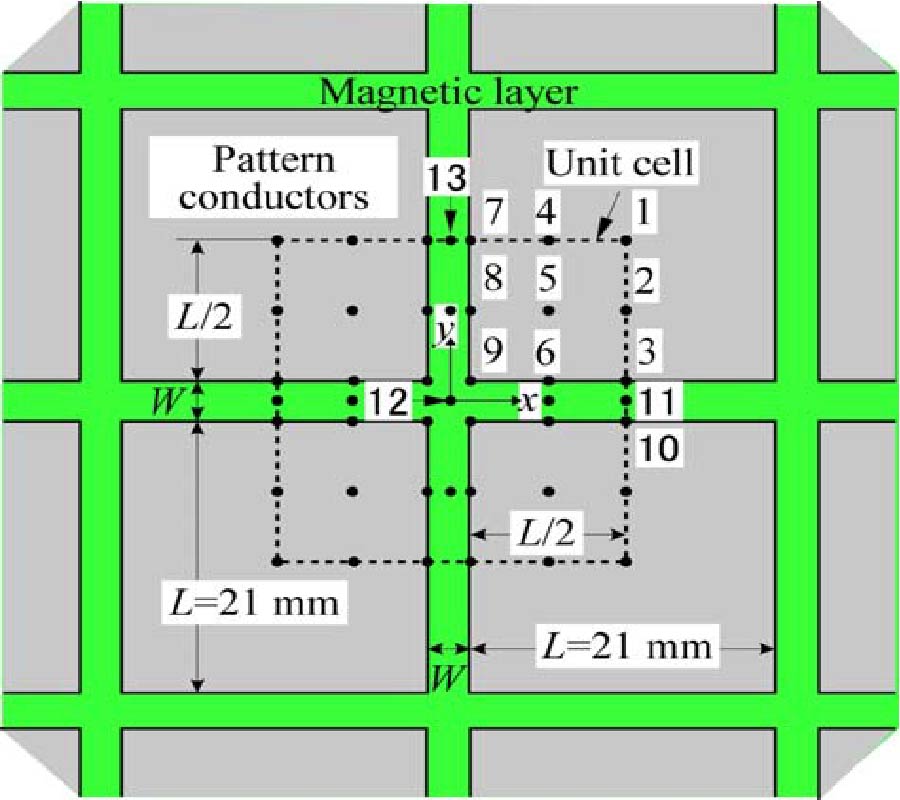
Design of Ultrathin Absorptive/Transmissive Radome with Dual Passbands
Bo Yi , Peiguo Liu and Gaosheng Li
An ultrathin absorptive/transmissive radome with dual passbands is presented in this paper. The total thickness of radome is only 5 mm. The dual passbands are located at around 1.05 GHz and 2.2 GHz, respectively. The absorbing band ranges from 6.28 GHz to 15.04 GHz for TE wave incidence and from 6.3 GHz to 15.16 GHz for TM wave incidence. Due to the miniaturized elements, the grating lobes are shifted out of absorbing band to higher frequency. Both numerical and experimental results are also given out.
DESIGN OF ULTRATHIN ABSORPTIVE/TRANSMISSIVE RADOME WITH DUAL PASSBANDS
2017-05-15
PIER C
Vol. 74, 51-61
Compact Microstrip Lowpass Filter with an Ultra-Wide Stopband and Sharp Transition Band Using T-Shaped and Polygon Resonators
Arash Abdipour and Ashkan Abdipour
In this paper, a lowpass filter with -3 dB cutoff frequency of 5.3 GHz using T-shaped and polygon resonators is presented. The applied resonators create a sharp transition band of 0.2 GHz from -3 dB to -40 dB. To obtain an ultra-wide stopband about 54 GHz (10.18fc) with a suppressing level of -21 dB, two different suppressing cells are employed. The overall circuit size is 59.16 mm2, which indicates a small occupied area. To clarify the performance of each resonator and describe the location of the transition zeros, exact equations based on the equivalent LC circuits have been calculated.
COMPACT MICROSTRIP LOWPASS FILTER WITH AN ULTRA-WIDE STOPBAND AND SHARP TRANSITION BAND USING T-SHAPED AND POLYGON RESONATORS
2017-05-15
PIER M
Vol. 57, 1-10
Formation of Radiation Fields of Linear Vibrator Arrays by Using Impedance Synthesis
Yuriy M. Penkin , Viktor A. Katrich and Mikhail Nesterenko
A new method of impedance synthesis of antenna array radiation fields based on a single methodological conception is presented. At first, an approximate solution for the current in the thin vibrator with variable impedance was obtained using the partial averaging operation of the integraldifferential equation. The variable impedance of the vibrator was taken into account in the form of an integral coefficient averaged along the vibrator length. The approach turns out to be common for radiators with impedance coatings of different configurations and (or) different distributions of lumped impedances. It is established that the shape of the vibrator radiation pattern (RP) does not depend on the form of the impedance distribution function, and it is determined only by the averaged value of the impedance distribution along the vibrator axis. The solution shows that the impedance coating of a symmetrical thin vibrator excited at the center by the voltage δ-generator affects the shape of the radiation pattern in the wave zone, and the effect is directly proportional to the small natural parameter of the problem. The synthesis problem of the radiator impedances for the spatial scanning of the RP was solved for the linear vibrator array. The analytical solution of the problem was obtained for the equidistant array of symmetric vibrators with equal excitation currents. The possibility of changing the RP shape over a wide range by varying the intrinsic complex impedances of the vibrators is demonstrated for an equidistant linear array consisting of 5 half-wave vibrators located at a distance of one eighth wavelength from each other in the free space.
FORMATION OF RADIATION FIELDS OF LINEAR VIBRATOR ARRAYS BY USING IMPEDANCE SYNTHESIS
2017-05-14
PIER Letters
Vol. 68, 25-32
Design of a Wide-Band Blade Monopole Antenna in 135-175 MHz Band
Bandhakavi Srikanth Deepak , Khumanthem Takeshore , Panakala Rajesh Kumar and Chandana Sairam
This paper presents the design of a wideband blade shaped monopole antenna with a horizontally mounted aluminium tube on top of the blade covering 135-175 MHz frequency band using Electromagnetic Simulation software (CST Microwave StudioTM) along with a matching network whose characteristics have been evaluated by the Optimal Matching Network Identifier (OMNI) algorithm. OMNI algorithm is a search technique used in computing, to find out the optimum solution. The conventional quarter wavelength monopole antenna is a narrow band antenna with bandwidth of the order of 5% to 10% at its centre frequency. In order to increase the bandwidth of the antenna, a proper matching network has been incorporated along with it. Toroidal inductor based matching networks have been designed, and their characteristics are evaluated using Optimal Matching Network Identifier (OMNI) program in MATLAB software. By consolidating MATLAB and CST simulated results, the antenna prototype along with the optimal matching network has been practically implemented, and corresponding results have been verified. The details of simulated and measured results are also included. The proposed antenna finds numerous applications in various wideband communication systems.
DESIGN OF A WIDE-BAND BLADE MONOPOLE ANTENNA IN 135-175 MHZ BAND
2017-05-14
PIER Letters
Vol. 68, 17-24
HMSIW Tri-Band Filtering Power Divider
Xu Wang , Lingqin Meng , Wei Wang and Dan-Dan Lv
A tri-band two-way filtering power divider structure is proposed based on HMSIW. Dual-band filtering power divider is realized by etching semicircular slots on HMSIW. The third passband is achieved by loading open-stub without affecting two other passbands. The return loss is less than -20 dB in each passband with 3 dB fractional bandwidths of 3.75%, 9.3% and 0.61%. The measured results are in agreement with the simulated ones in this paper. The filtering power divider has the advantages of simple structure, easy integration, etc. It has a good application prospect.
HMSIW TRI-BAND FILTERING POWER DIVIDER
2017-05-14
PIER M
Vol. 57, 11-24
Analysis of Multi-Resonance Characteristics in Suspended Ring Antenna Applicable for IoT/WSN
Sraddhanjali Mohapatra , Debaprasad Barad and Subhrakanta Behera
In this work, the multi-resonance behavior of a suspended ring antenna structure with a single port has been investigated. Introduction of symmetrical slots at each arm of the ring structure enables quad-band operation. The antenna yields good impedance matching at 3.4 GHz, 4.5 GHz, 5.8 GHz and 7.5 GHz with considerably high gain response up to 6 dBi. Maintaining suitable air height from the ground plane enhances the bandwidth up to 12%. This compact antenna shows bandwidths of 130 MHz, 360 MHz, 850 MHz, and 380 MHz, respectively. Each resonance claims an efficient use in next generation wireless communication within S-band and C-band radio links extensively and also applicable in WSNs/IoTs which requires a multi-functional antenna system. Theoretical analysis of the proposed antenna is investigated with the equivalent lumped circuit. The antenna element is excited using separate feed patch alongside of the ring. The antenna exhibits TM10, TM01, TM11 excitation modes at different resonances. The said antenna is implemented on an FR4 substrate with dielectric constant of 4.4, substrate thickness of h = 1.56 mm and loss tangent of tanδ=0.02. The antenna is designed with physical dimensions of 18×18×7.56 mm3 which claims its compactness.
ANALYSIS OF MULTI-RESONANCE CHARACTERISTICS IN SUSPENDED RING ANTENNA APPLICABLE FOR IOT/WSN
2017-05-13
PIER C
Vol. 74, 41-49
A Dual-Port Sum-Difference Beam Antenna with Simple Structure and Very High Isolation
Zhichao Deng , Fushun Zhang , Min Liang , Ya-Li Yao and Fan Zhang
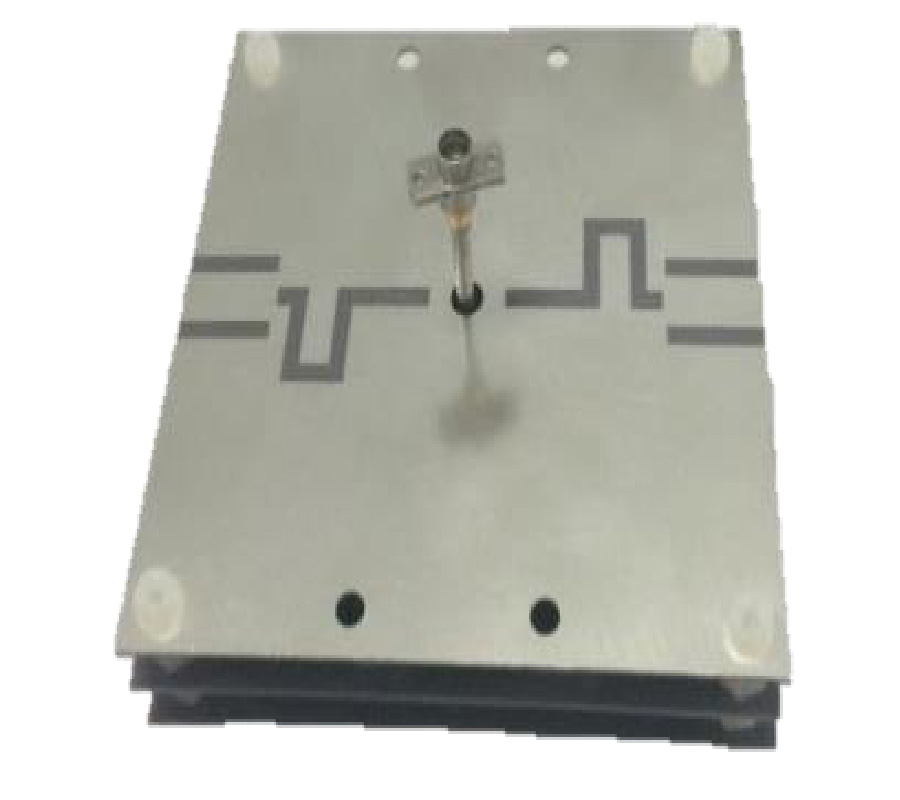
A simple dual-port sum-difference beam antenna with high isolation is proposed. A T-shaped slot is utilized to achieve both sum-difference beam pattern and high port-isolation. The slot coupling feeding structure simplifies the feeding network and avoids complicated fabrication. The proposed antenna is simulated, fabricated and measured. Experimental validations confirm that the antenna has 10-dB impedance bandwidths of 10.2% (4.82-5.33 GHz) for the sum port and 2.0% (4.95-5.05 GHz) for the difference port, respectively. In addition, high port-isolation better than 50dB is achieved covering a wide band from 4.0 GHz to 5.5 GHz. The proposed antenna exhibits a measured peak gain of 6.3 dBi for the sum beam and a null depth better than -26 dB for the difference beam. Measured results agree well with simulated ones.
A DUAL-PORT SUM-DIFFERENCE BEAM ANTENNA WITH SIMPLE STRUCTURE AND VERY HIGH ISOLATION
2017-05-11
PIER B
Vol. 75, 27-39
Influences of Damping Resistances on Transient Simulations in Transmission Lines
Afonso Jose do Prado , Ketholyn Jaqueline Bespalhulk , Bruno Franca Da Silva , Kassyele Oliveira Conceicao , Marinez Cargnin-Stieler , Elmer Mateus Gennaro and Jose Pissolato Filho
Simulations of electromagnetic transients in transmission lines can be carried out using simple circuit model. In the case of applications of simple circuit models based on π circuits, there are problems mainly caused by numeric oscillations. The lumped-parameter π equivalent model can be used with some advantages. The numeric integration method applied to the simulations of electromagnetic transients is the trapezoidal rule. If this numeric method is associated to the π equivalent model, results obtained from the simulations are distorted by Gibbs' oscillations or numeric ones. The introduction of damping resistance parallel to the series RL branch of the π equivalent model can mitigate Gibbs' oscillations in obtained results. Voltage peaks caused by these oscillations can also be decreased. So, in this paper, the combined influences of the introduction of damping resistance, the number of π circuits and the time step are investigated searching for minimizing Gibbs' oscillations and the voltage peaks in electromagnetic transient simulations. For this, transient simulations are exhaustively carried out for determining the highest voltage peaks, ranges of damping resistances and other parameters of the model, which minimize these voltage peaks caused by Gibbs' oscillations.
INFLUENCES OF DAMPING RESISTANCES ON TRANSIENT SIMULATIONS IN TRANSMISSION LINES