Search Results(13794)

2017-01-26
PIER M
Vol. 53, 153-165
2-d DOA Estimation of LFM Signals for UCA Based on Time-Frequency Multiple Invariance ESPRIT
Kaibo Cui , Weiwei Wu , Jingjian Huang , Xi Chen and Nai-Chang Yuan
In order to improve the angle measurement precision with a low computational complexity, a 2-D direction of arrival (DOA) estimation algorithm UCA-TF-MI-ESPRIT is proposed in this paper. This algorithm is based on the mode space algorithm and the time-frequency (TF) multiple invariance rotational invariance technique (MI-ESPRIT). Firstly, a uniform circular array (UCA) is equivalent to a virtual uniform linear array (ULA) by utilizing mode-space algorithm. Then, the smoothed pseudo Wigner-Ville distribution (SPWVD) of the ULA output is calculated. The spatial time-frequency matrix can be obtained through the average of multiple time-frequency points in the time-frequency plane, and the signal subspace can also be obtained through using eigen decomposition. Then a simple and effective subarray dividing approach is proposed, and the multiple rotational invariant equation of the array is obtained by using the Bessel function. Finally, the closed-form solution is obtained using multi-least-squares (MLS) criterion so that the 2-D DOA estimation of LFM signals in UCA is completed. The simulation results verify the effectiveness of the algorithm proposed by this paper.
2-D DOA ESTIMATION OF LFM SIGNALS FOR UCA BASED ON TIME-FREQUENCY MULTIPLE INVARIANCE ESPRIT
2017-01-25
PIER
Vol. 158, 21-36
Image Reconstruction from Highly Sparse and Limited Angular Diffraction Tomography Using Compressed Sensing Approach
Pavel Roy Paladhi , Amin Tayebi , Portia Banerjee , Lalita Udpa and Satish Udpa
Diffraction tomography (DT) from limited projection data has been an active research topic for over three decades. The interest has been steadily fueled due to its application in multiple disciplines including medical imaging, structural health monitoring and non-destructive evaluation to name a few. This paper explores the applicability of compressed sensing to recover complex-valued objective functions (e.g., complex permittivity in microwave tomography). Generally, compressed sensing based tomographic reconstruction has been studied under full angular access. In this paper, the effect of lowering the angular access in addition to highly limited number of projection data is explored. The effectiveness of the reconstruction methods is tested with severely limited dataset which would render reconstruction impossible by traditional iterative approximation methods. Furthermore, results show that complex-valued phantoms can be reconstructed from as few as 15 projections from 120˚ coverage, a significant finding. In this study, the Total Variation (TV) has been used as the l1 norm within the compressed sensing framework. The robustness of the algorithm in presence of noise is discussed. Use of multiple sparse domains has also been explored briefly. The results show the effectiveness of TV as a regularization parameter even for complex-valued images under the compressed sensing regime. This is a pertinent observation as TV is a simple norm to implement. For a large class of images, especially in medical imaging, this implies the availability of a steady l1 norm for easy implementation of compressed sensing reconstruction for complex-valued images.
IMAGE RECONSTRUCTION FROM HIGHLY SPARSE AND LIMITED ANGULAR DIFFRACTION TOMOGRAPHY USING COMPRESSED SENSING APPROACH
2017-01-24
PIER B
Vol. 72, 149-168
Retrieval of Major Greenhouse Gas Profiles with LEO-Ground Infrared Laser Occultation (LGIO) Technique
Mu-Min Chiou and Jean-Fu Kiang
A LEO-ground infrared laser occultation (LGIO) technique is proposed to retrieve the greenhouse gas (GHG) profiles around a specific location, including the analysis of key factors and practical issues that may affects its efficacy. A harmony search with ensemble consideration (HS-EC) algorithm is applied to retrieve the volume mixing ratio (VMR) profiles of H2O and three major GHGs, CO2, CH4 and N2O. The vertical resolution of retrieved GHG profiles is 1 km from ground level up to 20 km at height. The errors in VMR of H2O, CH4, N2O and CO2 are below 10, 5, 5 and 3%, respectively, up to 45 km above ground.
2017-01-24
PIER B
Vol. 72, 129-148
Reconstruction of the S-Matrix of n-Port Waveguide Reciprocal Devices from 2-Port VNA Measurements
Leonardo Zappelli
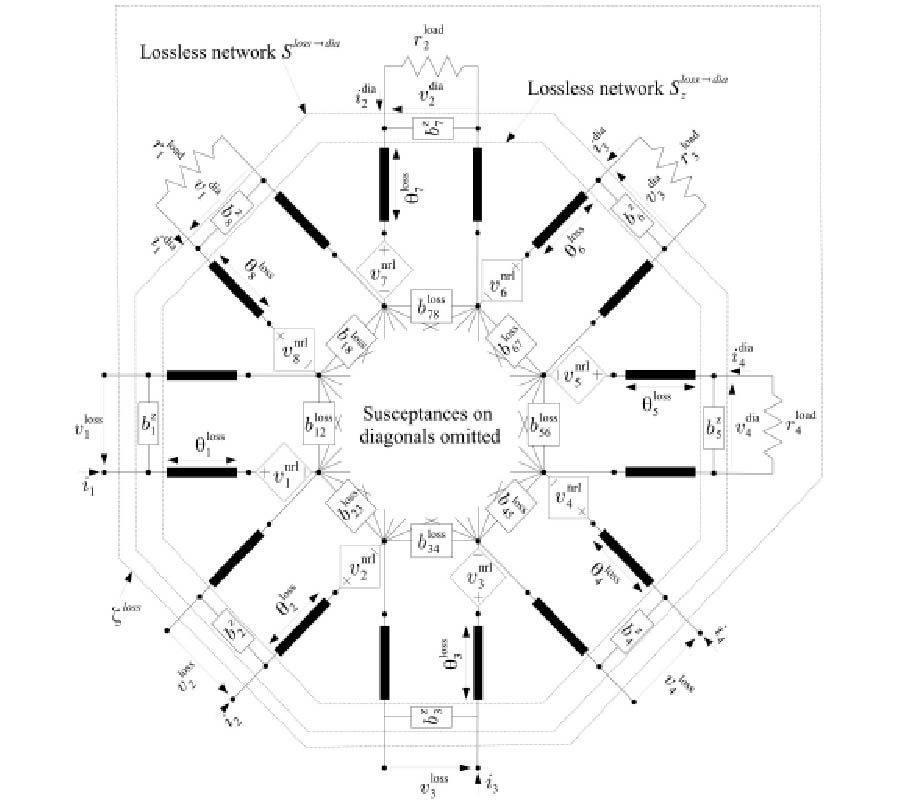
Two approaches to reconstruct the S-matrix of N-port waveguide reciprocal devices from 2-port S-matrix measurements are proposed and discussed. The main advantage of the proposed approaches is that measurements are done always at the same two ports, without moving the device. The remaining N-2 ports are loaded with different loads, either matched or short. The first approach, based on a manipulation of the 2-port S-matrices, requires N-2 matched and two other loads, while the second approach, based on the evaluation of an equivalent circuit, requires N-2 short and two other loads. The measurement technique is based on the standard loads (short, shift and matched) in the waveguide calibration kit of the 2-port VNA.
2017-01-23
PIER M
Vol. 53, 141-151
DOA Estimation in Solving Mixed Non-Circular and Circular Incident Signals Based on the Circular Array
Minjie Wu and Naichang Yuan
Non-circular properties of non-circular signals can be used to improve the performance of the direction-of-arrival (DOA) estimation. However, most ready-made algorithms are not applicable to the general case in which both non-circular and circular signals exist. In this paper, we present a novel DOA estimation algorithm for mixed signals, namely MS-MUSIC (Mixed Signals - Multiple Signals Classification), which can deal with the two kinds of signals simultaneously. And on this basis, we derive the Cramer-Rao Lower Bound (CRLB) of the azimuth and elevation estimation. The effectiveness of the algorithm is confirmed by the simulation results. Meanwhile, it acquires higher accuracy than the traditional algorithms.
DOA ESTIMATION IN SOLVING MIXED NON-CIRCULAR AND CIRCULAR INCIDENT SIGNALS BASED ON THE CIRCULAR ARRAY
2017-01-23
PIER M
Vol. 53, 131-140
Characterization of a Bifacial Silicon Solar Cell Under Multispectral Steady State Illumination Using Finite Element Method
Nzonzolo , Desire Lilonga-Boyenga , Camille Nziengui Mabika and Gregoire Sissoko
In this paper, we present results of characterization of a bifacial silicon solar cell, under multispectral steady state illumination, using finite elementmethod (FEM). The illumination level (n) and back surface recombination velocities (Sb) effects on solar cell electrical parameters have been highlighted. After solving the continuity equation that describes the solar cell operation, the excess minority carrier's density and current-voltage characteristics are determined for various values of illumination level and recombination velocities on the junction and the back surface of the solar cell. The results obtained are in agreement with those given by analytical methods and prove that the photovoltaic cells can be analyzed only by numerical methods, such asthe FEM, characterized by their robustness and flexibility in their applicationsin a context where those methods take more and more importancein the development of Computer Aided Design (CAD) tools.
CHARACTERIZATION OF A BIFACIAL SILICON SOLAR CELL UNDER MULTISPECTRAL STEADY STATE ILLUMINATION USING FINITE ELEMENT METHOD
2017-01-23
PIER M
Vol. 53, 121-129
A Four Bandwidth-Resolution UWB Antipodal Vivaldi Antenna
Mounira Bitchikh and Farid Ghanem
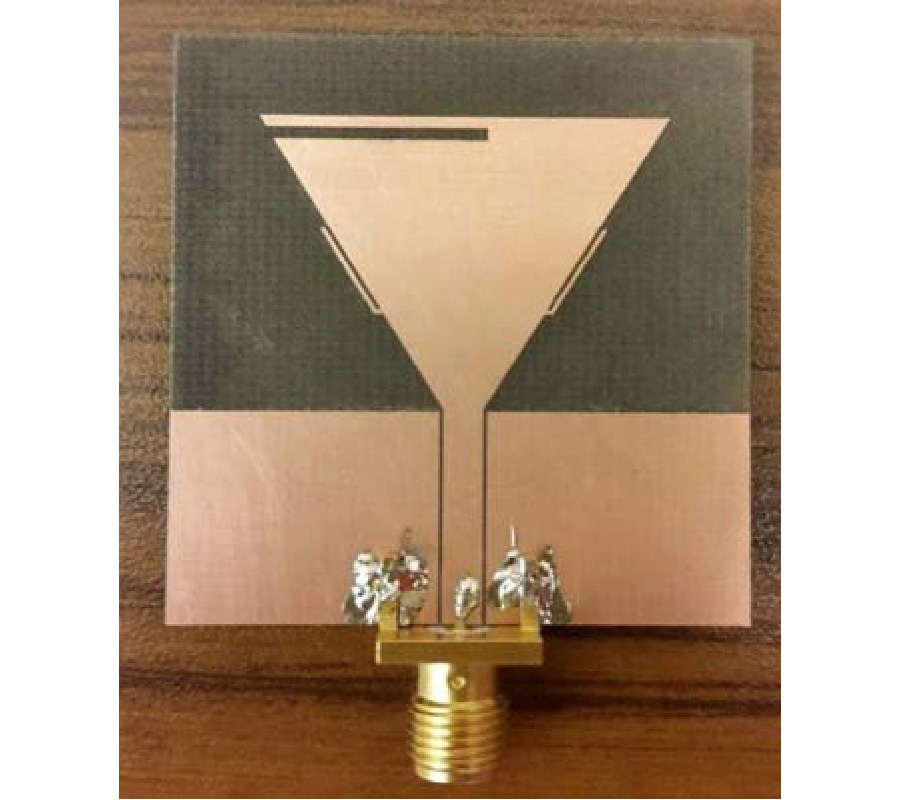
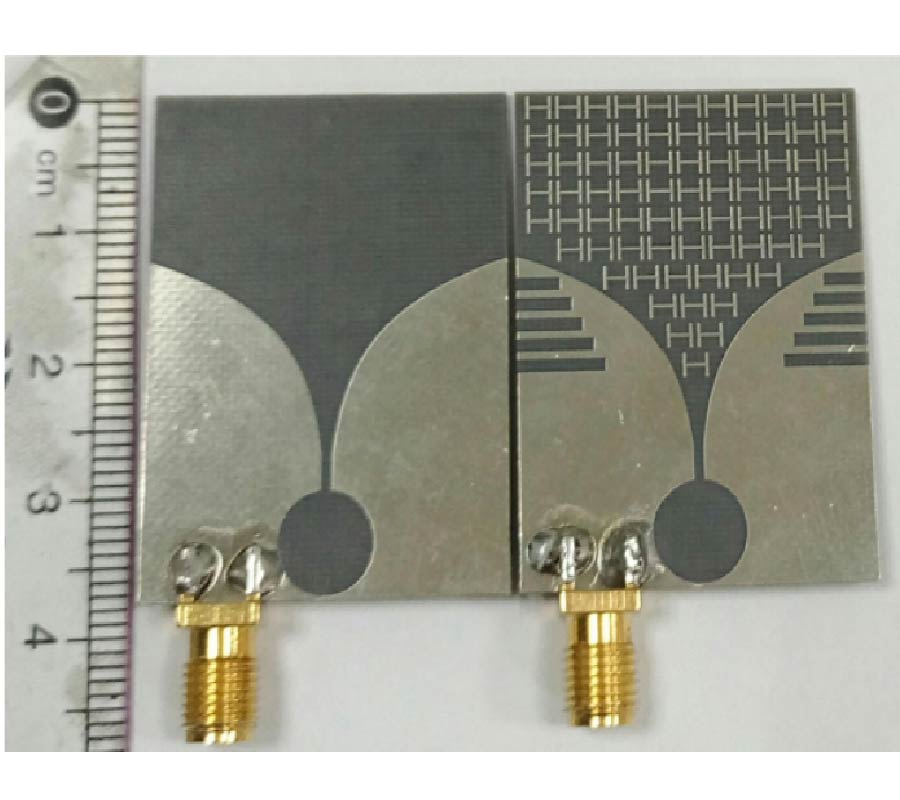
In this paper, a frequency reconfigurable Antipodal Vivaldi Antenna (AVA), capable of covering a Band of Interest (BoI) spanning from 3 to 10.6 GHz with four different bandwidth resolutions, is presented. By incorporating four rectilinear resonators and two Split-Ring-Resonators (SRRs) into the AVA, the whole BoI can be covered by one (UWB mode), three (3-sub mode), seven (7-sub mode), or sixteen (16-sub mode) sub-bands. In the UWB-mode, all the six resonators are deactivated by disrupting their structures, so the antenna operates as a classical AVA. In the 3-sub mode, only one rectilinear resonator is activated; the low Q of these resonators allow narrowing the antenna operating band so that the BoI is covered by three sub-bands. In the 7-sub mode, two rectilinear resonators are activated at a time, which narrows the operating bandwidth furthermore, allowing to cover the BoI by seven sub-bands. In the 16-sub mode, one of the two SRRs is activated at a time to be used as a coupling-bridge to very narrow frequency bands that allows covering the BoI by sixteen different bands. To present the work, simulated and measured results are given and discussed.
A FOUR BANDWIDTH-RESOLUTION UWB ANTIPODAL VIVALDI ANTENNA
2017-01-22
PIER M
Vol. 53, 111-120
Analogy Between Circular Core-Cladding and Impedance Waveguides and Their Membrane Functions
Vitalii I. Shcherbinin , Gennadiy Ivanovich Zaginaylov and Viktor I. Tkachenko
One-side boundary conditions on the field inside core region are obtained for core-cladding waveguide with anisotropic cladding. The boundary conditions involve two functions acting as components of anisotropic surface impedance for cladding material. These functions are determined in relation to desired values for step-index waveguide and dielectric-lined waveguide with either perfectly or finitely conducting walls. With resulting surface impedance, the perfect analogy between core-cladding and impedance waveguide is achieved. Using this analogy, independent eigenvalue problems are obtained for membrane functions of HE and EH waves of core-cladding waveguide. From this result some conclusions about electromagnetic properties of HE and EH waves are drawn.
ANALOGY BETWEEN CIRCULAR CORE-CLADDING AND IMPEDANCE WAVEGUIDES AND THEIR MEMBRANE FUNCTIONS
2017-01-21
PIER Letters
Vol. 65, 109-116
Miniaturization and Bandwidth Enhancement of a CPW-Fed Annular Slot Antenna Using RIS
Gopinath Samanta , Debasis Mitra and Sekhar Ranjan Bhadra Chaudhuri
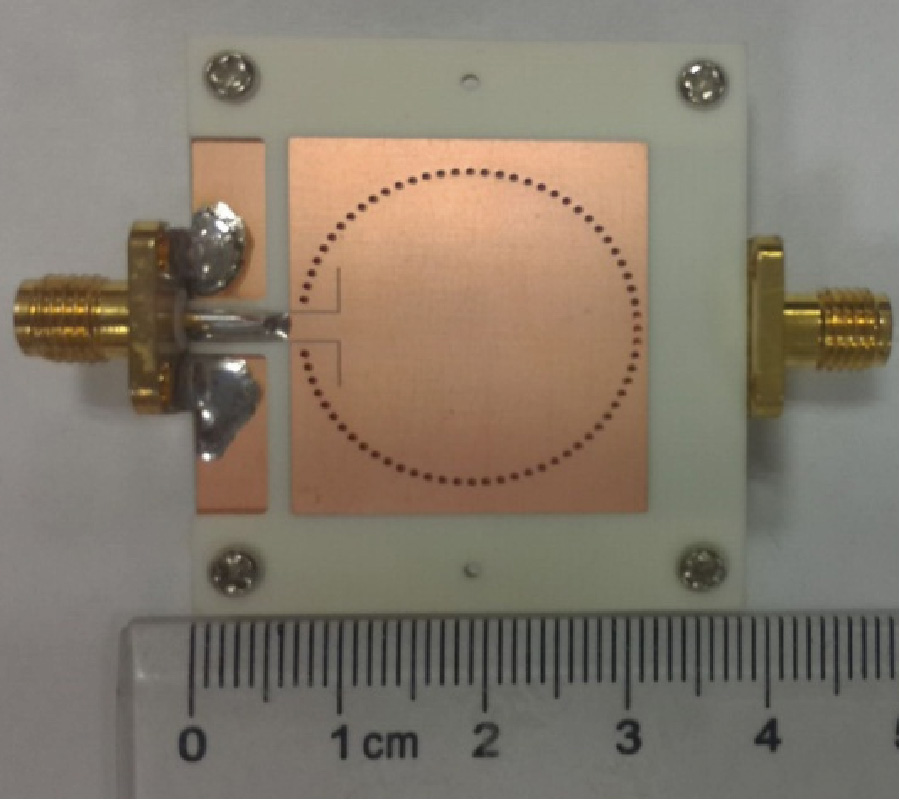
In this paper a CPW-fed annular slot antenna is miniaturized with enhanced impedance bandwidth using a reactive impedance surface (RIS) substrate. Such meta-surface (RIS) is realized by patterning 3×3 array of circular elements over an inexpensive FR-4 substrate which is backed by a circular metallic plane. Due to the compensation of electric and magnetic energy stored by antenna and RIS substrate respectively, the antenna resonance frequency is shifted by 53.6% compared with a simple slot antenna. By the inclusion of such reactive surface, input impedance of the antenna is reduced, and a remarkable improvement in impedance bandwidth from 11.66% to 64.26% is also noticed. Therefore, both miniaturization and bandwidth enhancement are achieved simultaneously with the present loading technique. The directivity of the RIS loaded antenna is increased further by loading a concentric metallic ring over the RIS loaded structure at a height above the RIS plane. The Ring & RIS loaded structure is fabricated for measurement purpose. A good agreement is obtained between the simulated and measured results for both RIS loaded and Ring & RIS loaded configurations. The ring loading over the RIS antenna provides improvement in directivity about 5 dB. The peak gain and bandwidth are measured as -1.03 dBi and 58.62%, respectively.
MINIATURIZATION AND BANDWIDTH ENHANCEMENT OF A CPW-FED ANNULAR SLOT ANTENNA USING RIS
2017-01-20
PIER Letters
Vol. 65, 103-108
Gain Enhancement and Wideband RCS Reduction of a Microstrip Antenna Using Triple-Band Planar Electromagnetic Band-Gap Structure
Yang Li , Kunzhe Zhang , Lin-an Yang and Lin Du
A triple-band planar electromagnetic band-gap (EBG) structure used for gain enhancement and wideband radar cross section reduction (RCSR) of antenna is presented in this paper. Three band-gaps of an EBG structure are realized by introducing two pla-nar spiral inductances on a planar EBG structure. An equivalent model of EBG is given to further understand the formation of three band-gaps. The proposed EBG is placed around antenna units and arrays to calculate the affection of the RCS and the gain. Due to the band-gaps of the EBG structure, RCS of antennas is reduced, and the gain of antennas is enhanced. Results show that the RCS is reduced as much as 20 dB from 9 GHz to 21 GHz, and both of bandwidth and gain of antennas can be slightly enhanced. Two antenna units operating at 8.6 GHz are fabricated and measured to verify the correctness of simulation. Measured and simulated results are in good agreement.
GAIN ENHANCEMENT AND WIDEBAND RCS REDUCTION OF A MICROSTRIP ANTENNA USING TRIPLE-BAND PLANAR ELECTROMAGNETIC BAND-GAP STRUCTURE
2017-01-19
PIER Letters
Vol. 65, 95-102
A Compact Wideband Circularly Polarized L-Slot Antenna Edge-Fed by a Microstrip Feedline for C-Band Applications
Sani Mubarak Ellis , Jerry John Kponyo and Abdul-Rahman Ahmed
A compact circularly polarized antenna using a wide L-shaped slot and a microstrip feedline is proposed. The measured results demonstrate that the antenna has an axial ratio (AR) < 3 dB bandwidth ranging from 5-8.5 GHz and an S11 < -10 dB bandwidth ranging from 4-8.6 GHz. The antenna is very simple, composed of an L-slot and a microstrip feedline placed beneath and to the edge of the L-slot. The size of the antenna is 20 x 20 mm2 which is attractive for compact wireless devices that operate in C-band. The antenna has very low cost and does not require: a large size, truncated corners, reflecting surfaces, complex feeding structure, and via connections, which increase fabrication cost and design complexity.
A COMPACT WIDEBAND CIRCULARLY POLARIZED L-SLOT ANTENNA EDGE-FED BY A MICROSTRIP FEEDLINE FOR C-BAND APPLICATIONS
2017-01-18
PIER C
Vol. 71, 33-40
Wideband Quasi-Yagi Antenna Design and Its Usage in MIMO/Diversity Applications
Li Gu , Yan-Wen Zhao , Qiang-Ming Cai and Zhi-Peng Zhang
In this paper, a novel wideband quasi-Yagi antenna is proposed and investigated for multiple-input multiple-output (MIMO)/diversity antennas applications. An aperture-coupled balun is adopted with a curved Yagi radiator for the antenna to realize wideband property. The proposed quasi-Yagi antenna has high radiation efficiency and stable end-fire radiation patterns, operating in a wide bandwidth from 7 to 13.8 GHz. Then a pattern diversity antenna is developed using two elements, which are overlapped partly and placed in opposite orientations. The measured 10-dB bandwidth of the MIMO antenna is from 6.3 to 13.6 GHz. Meanwhile, isolation between the two ports is better than -26 dB. The radiation patterns and envelope correlation coefficients are also presented. The proposed pattern diversity antenna is validated to perform stable behaviours over a wide bandwidth, and it will find applications in wireless communications and radars systems.
WIDEBAND QUASI-YAGI ANTENNA DESIGN AND ITS USAGE IN MIMO/DIVERSITY APPLICATIONS
2017-01-18
PIER C
Vol. 71, 23-31
Planar Phased Array Calibration Based on Near-Field Measurement System
Rui Long and Jun Ou Yang
Matrix method for phased array calibration is an excitation reconstruction method by solving the linear equations based on the linear relationship between the measured near-field data and element excitations. In this paper, we propose a modified matrix method, in which the phased array model is simplified, to measure the element excitations of planar phased array. Our method reduces measurement time greatly at the cost of introducing some calibration errors. The introduced calibration errors can be minimized with the array excitation strategy proposed in this paper. Experimental results validate the effectiveness of our methods in calibrating planar phased arrays.
PLANAR PHASED ARRAY CALIBRATION BASED ON NEAR-FIELD MEASUREMENT SYSTEM
2017-01-18
PIER C
Vol. 71, 17-23
Compact UWB MIMO Ground Linearly Tapered Slot Antenna Decoupled by a Stepped Slot
Hui-Fen Huang and Shu-Guang Xiao
A very compact ultra-wideband (UWB) multiple-input-multiple-output (MIMO) ground linearly tapered slot Antenna (LTSA) is presented in this paper. On a cost-effective FR4 substrate, it consists of a ground plane and two microstrip feedlines. Its overall dimension is only 22×26 mm2. To miniaturize the dimension of the antenna, two linearly tapered slots on the ground plane act as the main radiator. Then it does not need extra large radiation patch. In particular, a simple embedded three-level stepped slot on the central ground, brings high isolation in the whole UWB band. In addition, two rectangular slots cut in the feedlines widen the impedance bandwidth. Simulated and measured results verify S11<-10 dB and S12<-18 dB at 3.1 GHz-12 GHz and good diversity performance. Therefore, the proposed MIMO antenna has potential for portable devices applications.
COMPACT UWB MIMO GROUND LINEARLY TAPERED SLOT ANTENNA DECOUPLED BY A STEPPED SLOT
2017-01-18
PIER C
Vol. 70, 193-199
An Novel Absorber Screen Design Method Based on Receiving Antenna Principle
Qian Song , Wei Tang , Liang-Hao Yuan and Jiao-Jiao Xie
This paper presents a novel design method to the absorber screen based on the receiving antenna technique. When the electromagnetic waves is incident upon the surface of absorbing structure, part of the electromagnetic energy transforms into current absorbed at the port, and the remaining energy is reflected. The former mechanism is similar to the receiving antenna. Hence, a dual-polarized magneto-electric dipole antenna is selected and optimized to obtain a broadband absorber screen unit after comparing the similarities between the antenna and absorber. The measurement results show that the finite 6×6 array absorber has a 73% bandwidth for 10 dB RCS reduction, while its thickness of substrate is below 1/9 wavelength of the center frequency in free space. The novel absorber screen can also be used in dual polarization because of its symmetrical property. The simulation and measurement are performed at the normal incidence in this paper.
AN NOVEL ABSORBER SCREEN DESIGN METHOD BASED ON RECEIVING ANTENNA PRINCIPLE
2017-01-18
PIER Letters
Vol. 65, 89-94
Low-Profile Omnidirectional Antenna with Dual Polarizations for 2.4 GHz WLAN Applications
Li Sun , Bao-Hua Sun and Guanxi Zhang
A low-profile antenna is proposed in this letter for realizing dual polarizations with omnidirectional radiation patterns. Vertical polarization is obtained by a modified annular ring slot antenna, and horizontal polarization is obtained by a modified printed arc dipole array. By combining the ground plane of the ring slot antenna and the dipole array on the same layer, the profile of the antenna is reduced to minimum extent. The proposed prototype has a low profile of 0.024λ0 (λ0 is the free-space wavelength at 2.4 GHz). To verify the design, the proposed antenna is fabricated and measured. Measured reflection coefficients, isolation, and radiation patterns results agree well with the simulated data. The common band of vertical and horizontal polarizations makes the proposed antenna satisfy the WLAN diversity systems with omnidirectional characteristic.
LOW-PROFILE OMNIDIRECTIONAL ANTENNA WITH DUAL POLARIZATIONS FOR 2.4 GHZ WLAN APPLICATIONS
2017-01-17
PIER M
Vol. 53, 99-110
SAR Calculations of Novel Wearable Fractal Antenna on Metamaterial Cell for Search and Rescue Applications
Mohamed Ismail Ahmed , Mai F. Ahmed and Abdelhameed Abdelmoneim Shaalan
In this paper, a novel multiband wearable fractal antenna which suitable for GPS, WiMax and WiFi (Bluetooth) applications is presented. This antenna is designed to operate at four resonance frequencies are 1.57, 2.7, 3.4 and 5.3 GHz. The proposed wearable antenna may be attached to human body, so the specific absorption ratio (SAR) must be calculated. Therefore, another design to reduce SAR value with a spiral metamaterial meandered in the ground plane is introduced. In addition, a wearable fractal antenna system integrated on a life jacket is also presented.
SAR CALCULATIONS OF NOVEL WEARABLE FRACTAL ANTENNA ON METAMATERIAL CELL FOR SEARCH AND RESCUE APPLICATIONS
2017-01-16
PIER C
Vol. 71, 9-16
Modified Phasing Element for Broadband Reflectarray Antennas
Wael Elshennawy and Ahmed Mohamed Attiya
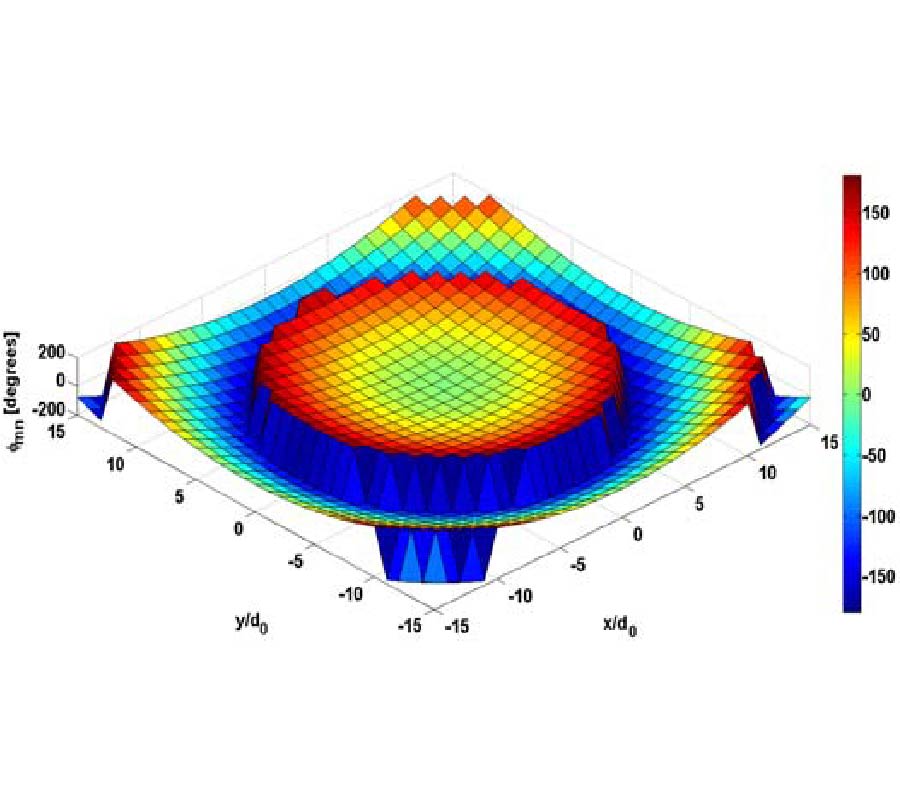
New phasing element for a wideband microstrip reflectarray is presented. It is formed by a phase-delay line attached to a circular ring loaded with a circular disc microstrip. The structure is enclosed by a circular ring element with a pair of gaps. It is shown that the new phasing element offers a wider bandwidth with an increased phasing range that is useful in reflectarrays phase compensation procedure. Full wave EM simulations is carried out. The results of the simulations show the possible wideband operation of the designed reflectarray. Good agreement exists between simulation results and measurements by waveguide simulator method. The mutual coupling effect for a realistic reflectarray configuration with non-identical cells is accounted for by using the perturbation technique.
MODIFIED PHASING ELEMENT FOR BROADBAND REFLECTARRAY ANTENNAS
2017-01-16
PIER Letters
Vol. 65, 81-87
Application of the Random Coupling Model to Electromagnetic Coupling Effect Analysis of Complex Double Cavity
Jie-Qing Fan , Ying Pan , Jian-Hong Hao and Heng-You Zhang
For the difficulty of calculating and measuring coupling electromagnetic quantity of complex multi-cavities, a microwave chaotic double cavity model is designed, and a new method is put forward to analyze the coupling effect of the double cavities. The new method combines Random Coupling Model (RCM) and network cascade theory and can successfully predict the Probability Density Function (PDF) of the induced voltage at target point of the double cavity compared with other methods. Experiment is added to verify the effectiveness of the new method in this paper. In addition, the new method provides a new approach to analyze and predict the coupling electromagnetic quantity of the complex double cavities in practical engineering.
APPLICATION OF THE RANDOM COUPLING MODEL TO ELECTROMAGNETIC COUPLING EFFECT ANALYSIS OF COMPLEX DOUBLE CAVITY
2017-01-15
PIER M
Vol. 53, 89-98
Efficient Analysis of Multilayered Dielectric Rods by Equivalent Microwave Network Method
Liangqi Gui , Cong Zhou , Xinxin Tian , Fan Yang and Yao Jiang Zhang
Multilayered dielectric rods are widely used, and the analysis of their electromagnetic scattering properties is very important in practical design. Based on our former work on the single layer dielectric rod forest, the equivalent microwave network method (EMN) is applied to analyse the concentric and eccentric multilayered dielectric rods in this article. The key step is to obtain the reflection matrix of the multilayered dielectric. Based on the EMN method, the electromagnetic scattering properties of a novel electromagnetic band gap (EBG) structure are calculated. The EBG structure is formed by periodically embedding multilayered dielectric rods into the original dielectric between power/ground planes. The accuracy and efficiency of the EMN method are verified by comparing with the simulation results by the FIT simulator CST. In addition, the EMN method takes about 1 minute to obtain the results, while the simulator takes nearly 20 hours with the same computer.
EFFICIENT ANALYSIS OF MULTILAYERED DIELECTRIC RODS BY EQUIVALENT MICROWAVE NETWORK METHOD