Search Results(13794)

2017-01-14
PIER M
Vol. 53, 77-87
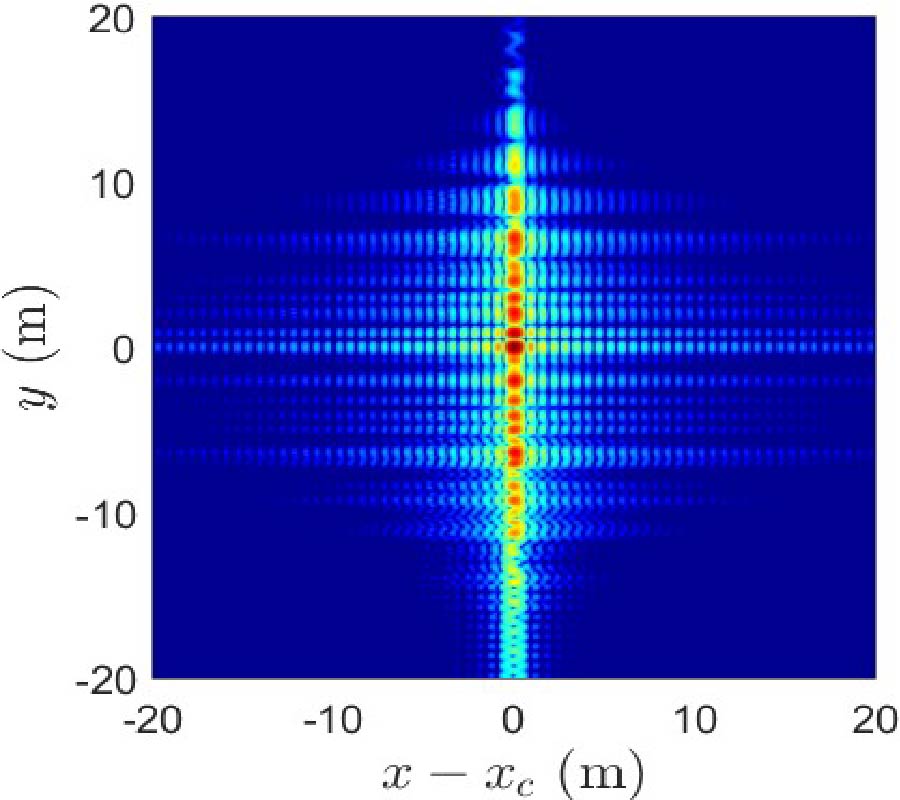
Enhanced Three-Dimensional Imaging for Multi-Circular Synthetic Aperture Radar
Lingjuan Yu , Yun Lin , Qian Bao , Wenjie Shen , Yue Zhao and Wen Hong
In multi-circular synthetic aperture radar (MCSAR) mode, resolution and sidelobes are two important parameters to consider when representing imaging quality, as in other SAR imaging modes. In this paper, three-dimensional (3-D) resolution and cone-shaped sidelobes of MCSAR are analyzed for a point target in the scene center under the Nyquist sampling criterion. The results of the analysis show that resolution can be improved, and cone-shaped sidelobes can be suppressed by increasing the system bandwidth and the length of synthetic aperture in the elevation direction. But this will make the system of acquiring data more difficult. It turns out that some digital signal processing techniques can enhance 3-D imaging quality of MCSAR. In this paper, a simple method based on spectrum extrapolation and interferometric phase masking is proposed to improve 3-D resolution and suppress cone-shaped sidelobes of MCSAR. Experimental results regarding a tank model in a microwave anechoic chamber demonstrate that this method is effective.
ENHANCED THREE-DIMENSIONAL IMAGING FOR MULTI-CIRCULAR SYNTHETIC APERTURE RADAR
2017-01-13
PIER C
Vol. 71, 1-7
Low Frequency Behavior of CVD Graphene from DC to 40 GHz
Rong Wang , Salahuddin Raju , Mansun Chan and Li Jun Jiang
Electromagnetic behaviour of chemical vapor deposition (CVD) graphene at low frequencies is still a mystery. No conclusion is made from the experimental point of views. Here, we systematically investigate the electromagnetic response of graphene at microwave frequencies, which are from direct current (DC) to 40 GHz. Both a coplanar transmission line embedded with different-sized graphene akes of 48 × 48 and 48 × 240 um2 and a microwave termination based on the graphene sheet of 6 × 6 mm2 are manufactured through the chemical vapor deposition (CVD) and standard microfabrication procedures. We conclude that graphene behaves as a frequency-independent surface resistance at the microwave frequencies, which is consistent with the theoretical model by rigorously solving the Maxwell's equations with the Kubo formula. The work offers a simple, accurate, and conclusive electromagnetic analysis to graphene and thus is of great help to design graphene incorporated microwave components and devices.
LOW FREQUENCY BEHAVIOR OF CVD GRAPHENE FROM DC TO 40 GHZ
2017-01-13
PIER Letters
Vol. 65, 75-79
Design of Compact Wideband QMSIW Band-Pass Filter with Improved Stopband
Yudan Wu , Guo Hui Li , Wei Yang and Xuexia Yang
A compact wideband quarter mode substrate integrated waveguide (QMSIW) band-pass filter with wide stopband performance is presented in this paper. Compared with conventional SIW cavity, the QMSIW cavity occupies only one fourth of the size. A meandered H-shaped slot is etched on the cavity to change the current direction for size reduction. In order to prove the validity, a compact fourth-order band-pass filter with wide stopband is fabricated on a single-layer Rogers RT/Duroid 5880 substrate. The measured in-band insertion loss is only 1.02 dB including the loss caused by two connectors, and the stopband attenuation in the frequency band from 4.02 GHz to 12.63 GHz is better than 25 dB. The whole size of the filter is only 20.6×26.8×0.254 mm3.
DESIGN OF COMPACT WIDEBAND QMSIW BAND-PASS FILTER WITH IMPROVED STOPBAND
2017-01-13
PIER M
Vol. 53, 67-75
Target Classification from JEM Signal Using Frequency Masking
Si-Ho Kim , Chan Hong Kim , Dae-Young Chae and Sang In Lee
This paper deals with a technique for classifying jet aircrafts from JEM (Jet Engine Modulation) signal. A novel method to recognize an engine model by analyzing JEM spectrum using frequency mask is proposed. The frequency mask extracts and analyses the spectral component at the frequencies that are predicted from the blade number of a jet engine and the estimated spool rate. The proposed method does not need a complicated logical algorithm for finding the chopping frequency or the pre-simulated engine spectra used in previous methods. In addition, we suggest a method to precisely estimate the spool rate in the spectrum domain of JEM signal, which plays an important role in generating the frequency mask. The classification experiments using the JEM signals measured from two fabricated engine models verify that the proposed algorithm has good performance in the recognition of jet aircrafts.
TARGET CLASSIFICATION FROM JEM SIGNAL USING FREQUENCY MASKING
2017-01-13
PIER M
Vol. 53, 53-65
Rectangular Wave Beam Based GO/PO Method for RCS Simulation of Complex Target
Wang-Qiang Jiang , Min Zhang , Ding Nie and Yong-Chang Jiao
The rectangular wave beams-based geometrical optics (GO) and physical optics (PO) hybrid method is applied to the radar cross section (RCS) simulation of complex target. In the implementation process, the incident wave beam is divided into plenty of regular rectangular wave beams. The RCS of target is subsequently harvested from the sum of the contributions from rectangular wave beams. And Open Graphics Library (OpenGL) is used to accelerate ray tracing for the GO/PO method. Here, each pixel corresponds to a rectangular wave beam, which improves the defect that the pixel number should be larger than the patch number on the model and the efficiency in the general OpenGL based GO/PO method. In addition, the patch size in the presented method can be arbitrary as long as the model is described accurately with these patches. The simulation results prove this point and show that the proposed rectangular wave beam-based GO/PO method is feasible and can keep a high calculation accuracy and efficiency with a low pixel number.
RECTANGULAR WAVE BEAM BASED GO/PO METHOD FOR RCS SIMULATION OF COMPLEX TARGET
2017-01-12
PIER B
Vol. 72, 111-128
Efficient SAR Raw Data Simulation Including Trajectory Deviations and Antenna Pointing Errors
Yuhua Guo , Qin-Huo Liu , Bo Zhong and Xiaoyuan Yang
Synthetic aperture radar (SAR) raw signal simulation is profoundly useful for validating SAR system design parameters, testing the effectiveness of different processing algorithms, studying the effects of motion errors, etc. Simulating signal data in frequency domain is more efficient than in time domain. However, the former is difficult account for the effects of both sensor trajectory deviations and antenna pointing error for the stripmap SAR mode. In this paper, we attempt to extend the possibility of extending the Fourier domain approach to account for trajectory deviations as well as antenna beam pointing errors, which is more concerned for airborne SAR systems. After demonstrating a full two-dimensional Fourier domain simulation, an efficient simulation approach is proposed under certain reasonable assumptions. The proposed approach has higher computational efficiency than simulation in time-domain and also allows for imaging an extended scene. The validity of the proposed approaches is analyzed and discussed. Finally, numerical examples are presented to verify the effectiveness and efficiency of the approach.
2017-01-12
PIER M
Vol. 53, 41-52
An Improved Range-Doppler Algorithm for SAR Imaging at High Squint Angles
Po-Chih Chen and Jean-Fu Kiang
An improved range-Doppler algorithm (RDA) is proposed to reconstruct images from synthetic aperture radar (SAR) data received at high squint angles. At a higher squint angle, a larger synthetic aperture is required to receive sufficient amount of data for image reconstruction, and the range migration also becomes more serious, which demands more computational load and larger memory size. The proposed method can generate better SAR images with less computational load and memory than the conventional RDA, which is verified by simulations.
AN IMPROVED RANGE-DOPPLER ALGORITHM FOR SAR IMAGING AT HIGH SQUINT ANGLES
2017-01-11
PIER B
Vol. 72, 95-110
Fixed and Selectable Multiband Isolation of Double Pole Double Throw Switch Using Transmission Line Stub Resonators for WiMAX and LTE
Abdullah Mohammed Zobilah , Noor Azwan Shairi and Zahriladha Zakaria
A novel selectable multiband isolation of Double Pole Double Throw (DPDT) switch with switchable transmission line stub resonators has been proposed for applications of WiMAX and LTE in 2.3 and 3.5 GHz bands. In this paper, two DPDT switch designs are proposed; the first design is a fixed DPDT switch, and the second is a selectable DPDT switch. The second design allows selecting only one band and unselecting the other or selecting both of them. However, the first design does not allow so. The transmission line stub resonator used in this design is an open stub resonator with quarter wave of the electrical length. By using a simple mathematical model, the theory of the transmission line stub resonator was discussed where it can be cascaded and resonated at center frequencies of 2.3 and 3.5 GHz. Moreover, the cascaded transmission line stub resonators can be reconfigured between allpass and bandstop responses using discrete PIN diodes. The key advantage of the proposed DPDT with switchable transmission line stub resonators is a multiband high isolation with minimum number of PIN diodes. Therefore, the simulated and measured results showed less than 3 dB of insertion loss, greater than 10 dB of return loss and higher than 30 dB of multiband isolation in 2.3 and 3.5 GHz bands.
2017-01-11
PIER Letters
Vol. 65, 69-73
Design, Finite Element Analysis and Implementing a Reconfigurable Antenna with Beam Switching Operating at ISM Band
Ali Bostani
A new radiation pattern reconfigurable antenna is designed and fabricated. The antenna is able to radiate in four orthogonal directions in the azimuth plane and sweep the whole azimuth. The radiation pattern reconfigurability is obtained using the passband and stopband characteristics of EBG surfaces which are used to form EBG panels to surround the feeding dipole centered in the structure. Switching between passband and stopband is implemented using active elements in the structure.
DESIGN, FINITE ELEMENT ANALYSIS AND IMPLEMENTING A RECONFIGURABLE ANTENNA WITH BEAM SWITCHING OPERATING AT ISM BAND
2017-01-10
PIER C
Vol. 70, 183-191
A Multiband and Omnidirectional, CPW-Fed Single-Layer Based Dual Tapered-Slot Antenna
Omar A. Saraereh
Travelling wave antennas such as Vivaldi antennas, have conventionally been used for obtaining wideband and directional radiation pattern. This paper presents a novel way to obtain first of its kind, omnidirectional travelling wave antenna inspired by Vivaldi. Traditional omnidirectional antennas such as monopole and dipole rely on resonance condition which is usually satisfied on narrow band while the proposed antenna is relatively broadband owing to its travelling wave phenomenon. Moreover, typical Vivaldi antennas are double layered while our design requires only one layer. Antenna has been simulated and optimized in HFSS to operate in dual bands of UWB spectrum. The antenna has been measured and characterized using Keysight handheld VNA and Satimo Anechoic chamber. Good agreement between simulations and measurements have been obtained despite the fabrication tolerance of LPKF PCB manufacturing machine.
A MULTIBAND AND OMNIDIRECTIONAL, CPW-FED SINGLE-LAYER BASED DUAL TAPERED-SLOT ANTENNA
2017-01-10
PIER C
Vol. 70, 175-182
SRR Loaded Compact UHF RFID Tag for Broadband Operation
Aju John Kunju Kunju , Manju Abraham and Thomaskutty Mathew
An SRR loaded compact RFID tag for broadband operation over the UHF RFID band is presented. The antenna structure is composed of a dipole whose arms are symmetrically loaded with square split ring resonators (SRRs) with a short circuited strip between the SRRs. The SRR sections made the antenna inductive and reduced the overall size. The measured read range characteristics of the proposed RFID tag are presented. The proposed tag operates in the entire UHF RFID bands with a maximum read range of 7 meters in the entire elevation angular ranges and over wide azimuthal angular ranges.
SRR LOADED COMPACT UHF RFID TAG FOR BROADBAND OPERATION
2017-01-10
PIER C
Vol. 70, 165-173
Modal Analysis of Rectangular Waveguides with 2D Metamaterials
Benedikt Byrne , Nathalie Raveu , Nicolas Capet , Gwenn Le Fur and Luc Duchesne
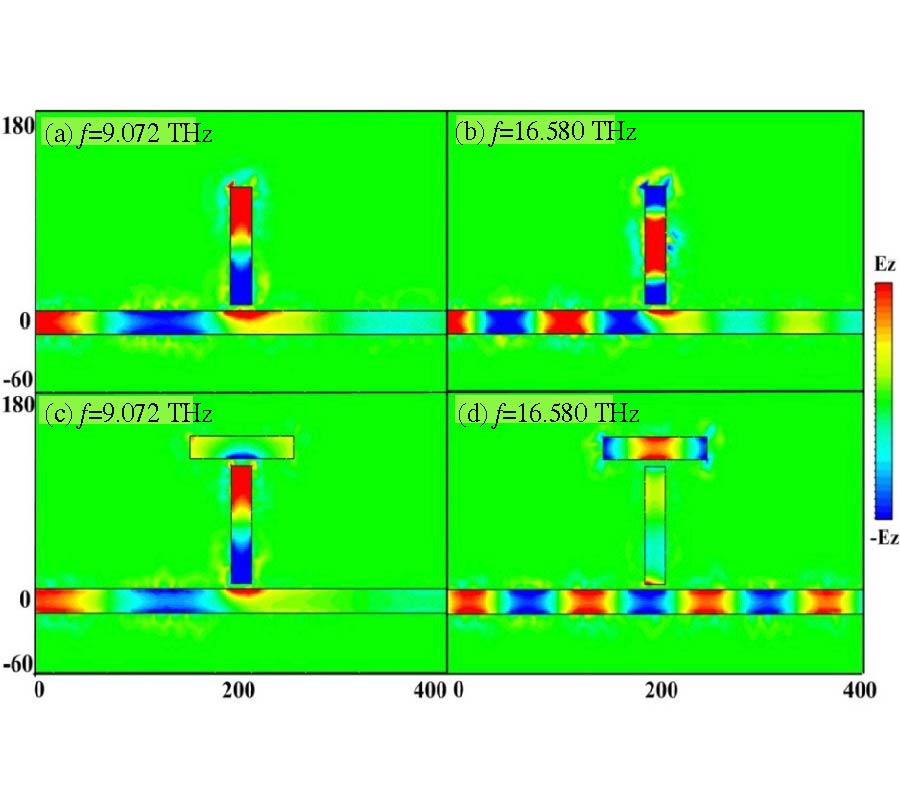
A new method to rapidly design 2D metamaterials for rectangular waveguides by rebuilding their dispersion properties is proposed. The Modal Expansion Theory (MET) is revisited for theoretical surfaces with fixed surface impedances ZS. Then, it is pursued for real dispersive anisotropic surfaces, which have surface impedances that are dependent on the frequency and the incidence angle. An algorithm which calculates the correct incidence angle of the guided electromagnetic mode at each frequency is presented. By including this algorithm in the MET and by combining it with a code based on the Finite Element Method (FEM) to calculate the surfaces impedances, dispersion diagrams of waveguides with real 2D anisotropic walls are correctly rebuilt. This is validated by comparing the results for two different metamaterials, corrugation- and T-structure, corrugations and metamaterials, with those obtained using a commercial software.
MODAL ANALYSIS OF RECTANGULAR WAVEGUIDES WITH 2D METAMATERIALS
2017-01-10
PIER Letters
Vol. 65, 63-68
Two-Element Compact Antennas Decoupled with a Simple Neutralization Line
Yangsong Ou , Xiaoyang Cai and Kewei Qian
A simple and novel WLAN antenna and a kind of neutralization line, which introduces a certain amount of signal to cancel out the unwanted mutual coupling between two antennas, are designed in this paper. The WLAN antenna working at 2.45 GHz and 5.8 GHz frequency bands is designed, fabricated and measured. The simulated and measured results show that the isolation between the two decoupled antennas can be improved to above 20 dB in both frequencies after decoupling. The lumped match network occupies less space for antennas and gains a good matching performance in the operating frequencies.
TWO-ELEMENT COMPACT ANTENNAS DECOUPLED WITH A SIMPLE NEUTRALIZATION LINE
2017-01-10
PIER Letters
Vol. 65, 57-61
A Design of Compact Microwave Six-Port Device for Ultra-Wideband Applications
Hongyan Li , Jun Zhu and En Li
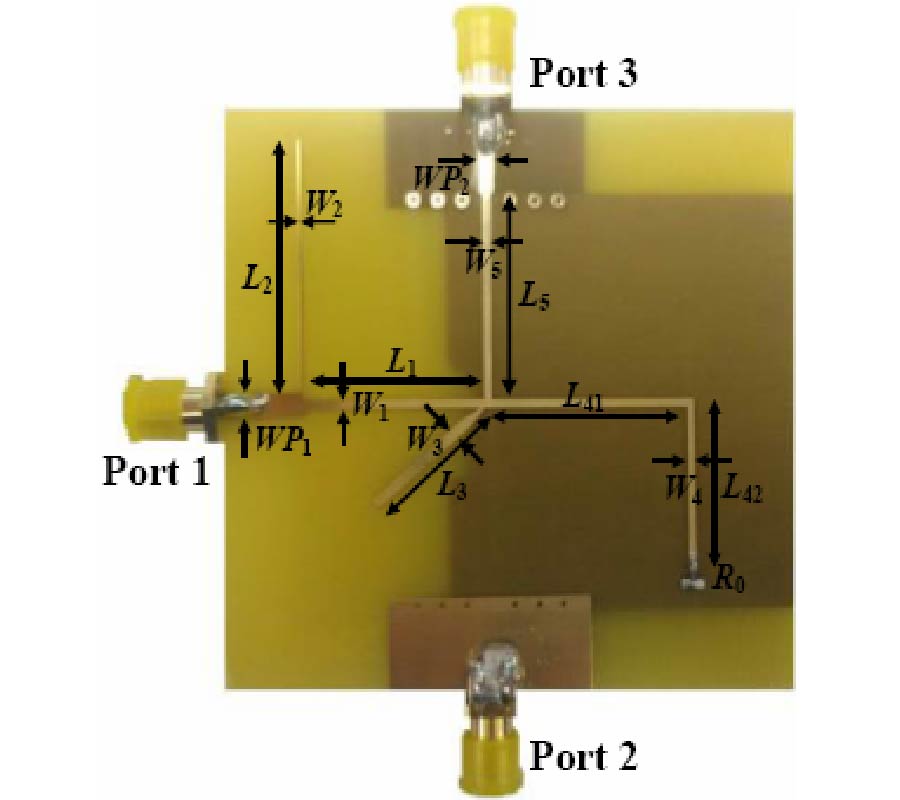
A compact fully integrated wideband six-port device composed of a suspended stripline Wilkinson power divider and three bias stripline of 3-dB quadrature directional couplers is presented. In order to integrate the six-port circuit, a multilayer circuit structure has been adopted by the via hole interconnection at the output port of the divider. The 3-dB quadrature directional coupler is composed of two 8.34-dB quadrature directional couplers by series connection. In this way, the six-port circuit structure is simplified and reduced. A multisection impedance match structure has been adopted in the suspended stripline Wilkinson power divider to achieve ultra-wide frequency band. In the experiment, The fully integrated six-port device has obtained good measurement result. It is superior to other present six-port networks in microwave performance with the same dimension.
A DESIGN OF COMPACT MICROWAVE SIX-PORT DEVICE FOR ULTRA-WIDEBAND APPLICATIONS
2017-01-09
PIER B
Vol. 72, 67-93
Sparsely Sampled Wideband Radar Holographic Imaging for Detection of Concealed Objects
Ram M. Narayanan , Scott A. Wilson and Muralidhar Rangaswamy
Radar holography has been established as an effective image reconstruction process by which the measured diffraction pattern across an aperture provides information about a threedimensional target scene of interest. In general, the sampling and reconstruction of radar holographic images are computationally expensive. Imaging can be made more efficient with the use of sparse sampling techniques and appropriate interpolation algorithms. Through extensive simulation and experimentation, we show that simple interpolation of sparsely-sampled target scenes provides a quick and reliable approach to reconstruct sparse datasets for accurate image reconstruction leading to reliable concealed target detection and recognition. For scanning radar applications, data collection time can be drastically reduced through application of sparse sampling. This reduced scan time will typically benefit a real-time system by allowing improvements in processing speed and timeliness of decision-making algorithms. An added advantage is the reduction of required data storage. Experimental holographic data are sparsely sampled over a two-dimensional aperture and reconstructed using numerical interpolation techniques. Extensive experimental evaluation of this new technique of interpolation-based sparse sampling strategies suggests that reduced sampling rates do not degrade the objective quality of holograms of concealed objects.
2017-01-09
PIER C
Vol. 70, 155-164
A Triangle Array of 1x4 Slots Antenna with Curved EBG Structures for Cellular Base Station
Rangsan Wongsan and Paowphattra Kamphikul
In this paper, a slot array with a new technique of metamaterial on Electromagnetic Band Gap (EBG) structure is used to demonstrate the possibility of building high gain top-mounted antenna for mobile base station. We describe the method for gain improvement by transferring the electromagnetic fields from a 1×4 slot array with a PEC reflector radiated through the cavity of curved woodpile EBG. The proposed technique not only has the advantages of reducing the total length of the slot array, but also provides higher gain and easier installation. In addition, to provide the azimuth patterns covering 360° around the base station, a triangular array configuration consisting of three panels of such an antenna array has also been presented, while the fabricated cavity of the curved woodpile EBG structure exhibits band gap characteristics at 2.1 GHz for realizing a resonant cavity of the slot array. This idea is verified by comparing between the results from Computer Simulation Technology (CST) software and the experimental results. Finally, it is found that the measured and simulated results are in a good qualitative agreement, and the antenna prototype yields directive gain of each panel around 17.1-17.2 dBi.
A TRIANGLE ARRAY OF 1X4 SLOTS ANTENNA WITH CURVED EBG STRUCTURES FOR CELLULAR BASE STATION
2017-01-09
PIER C
Vol. 70, 145-153
An Active Resonant Conductance Method for Design of Large Traveling-Wave-Fed SIW Linear Slot Arrays
Tongfei Yu , Zhengpeng Wang , Haibo Zhao and Jungang Miao
This paper presents an active resonant conductance method (ARCM) for the design of large traveling-wave-fed SIW linear slot arrays. Two key slot parameters, slot offsets and lengths, are derived from excitation coefficients with intermediary active resonant conductance. In this method, both dominant mode mutual coupling which includes external & internal and higher order modes mutual coupling are considered. An efficient way to derive active resonant conductance of slots in large slot arrays is proposed, which makes ARCM feasible for the design of large traveling-wave-fed linear slot arrays with high performance, e.g. low sidelobe level (SLL). Finally, a 16-slot and a 32-slot traveling-wave-fed SIW slot array antennas are designed. The processing of the 32-slot array design shows the efficiency of the proposed method for large arrays. The 16-slot array is fabricated and measured. Results from simulation and measurement verify the proposed method.
AN ACTIVE RESONANT CONDUCTANCE METHOD FOR DESIGN OF LARGE TRAVELING-WAVE-FED SIW LINEAR SLOT ARRAYS
2017-01-09
PIER Letters
Vol. 65, 49-55
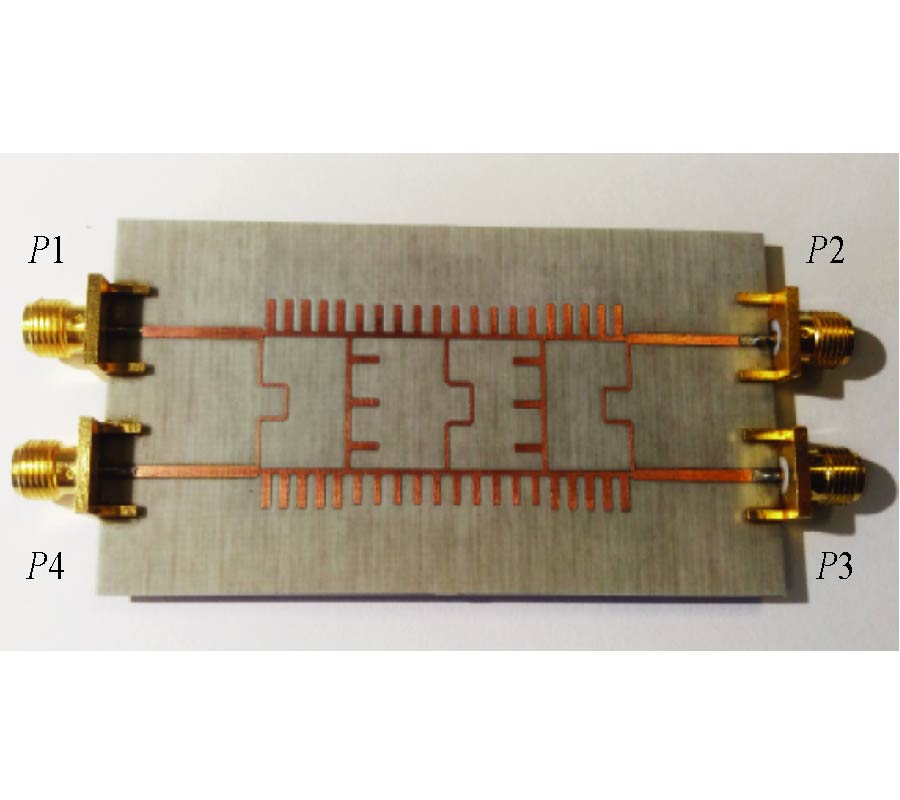
Wideband Balanced Filters with Wideband Common Mode Suppression Using Coupled Lines
Kuan Deng and Zhengyu Chen
A novel balanced filter circuit with wideband common mode suppression using coupled lines is proposed in this paper. A wideband filter with half open stubs is used to realize two transmission zeros for the differential mode passband. The common mode can be suppressed over 15 dB from 0 GHz to 3f0 (f0 is the center frequency of the passband) with insertion loss greater than 15 dB over the upper stopband. A balanced filter with 3-dB fractional bandwidths of 38% is designed and fabricated. Good agreement can be observed between measured results and theoretical expectations.
WIDEBAND BALANCED FILTERS WITH WIDEBAND COMMON MODE SUPPRESSION USING COUPLED LINES
2017-01-06
PIER M
Vol. 53, 29-39
A Clutter Suppression Method Based on Improved Principal Component Selection Rule for Ground Penetrating Radar
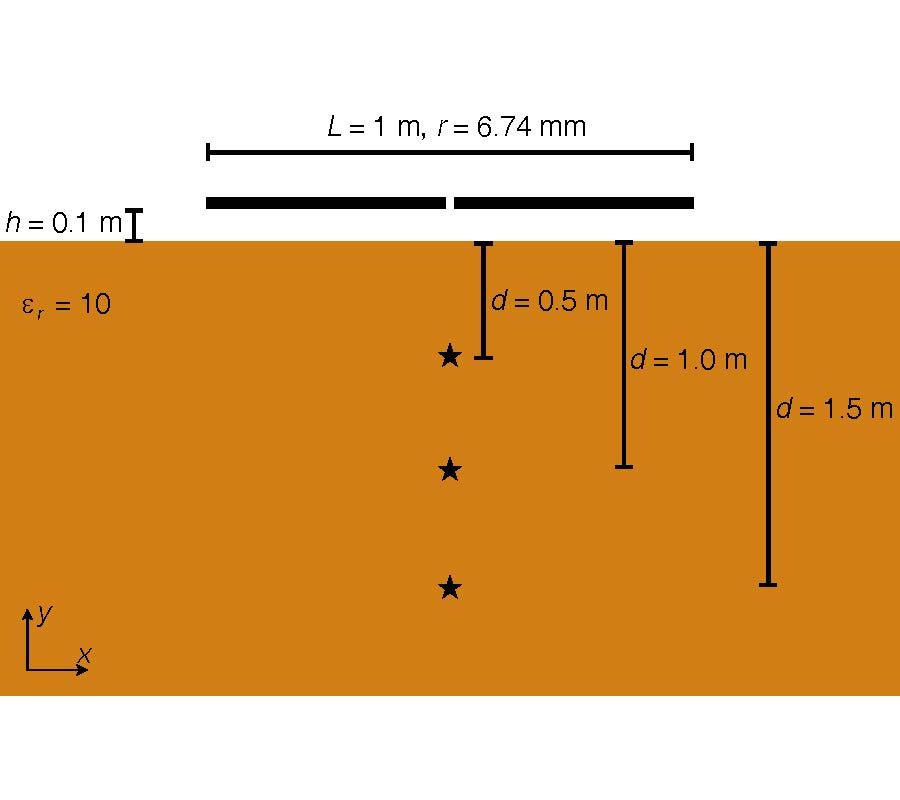
Jichao Zhu , Wei Xue , Xia Rong and Yunyun Yu
Principal component analysis is usually used for clutter suppression of ground penetrating radar, but its performance is influenced by the selection of main components of target signal. In the paper, an improved principal component selection rule is proposed for selecting the main components of target signal. In the method, firstly difference spectrum of singular value is used to extract direct wave and strong target signal, and then, Fuzzy-C means clustering algorithm is used to determine the weights of principal component of weak target signal. Finally, the principal components of strong target signal and weak target signal are reconstructed to obtain target signal. Experimental results show that the proposed method can effectively remove the clutter signals and reserve more target information.
A CLUTTER SUPPRESSION METHOD BASED ON IMPROVED PRINCIPAL COMPONENT SELECTION RULE FOR GROUND PENETRATING RADAR
2017-01-05
PIER C
Vol. 70, 135-143
CSRR Inspired Conductor Backed CPW-Fed Monopole Antenna for Multiband Operation
Rajasekar Boopathi Rani and Shashi Krishna Pandey
A conductor backed coplanar waveguide (CPW) fed multiband antenna is presented. The shorting of ground in CPW feed and conductor backed arrangement extend the area of ground plane. The proposed antenna consists of rectangular monopole with Complementary Split Ring Resonator (CSRR) engraved in the extended ground plane. The prototype antenna is designed, fabricated and measured. CSRR characteristics are also analyzed. Simulated and measured results of the antenna are in good agreement with each other and are discussed. The proposed antenna can be used for WiMAX, WLAN and RADAR applications at 3.4 GHz, 5.16 GHz and 9.5 GHz, respectively.
CSRR INSPIRED CONDUCTOR BACKED CPW-FED MONOPOLE ANTENNA FOR MULTIBAND OPERATION