Search Results(13794)

2017-02-03
PIER Letters
Vol. 66, 1-8
Compact Bandwidth-Enhanced Center-Fed CPW Zeroth-Order Resonant Antenna Loaded by Parasitic Element
Sobhan Saravani , Chandan Kumar Chakrabarty and Norashidah Md. Din
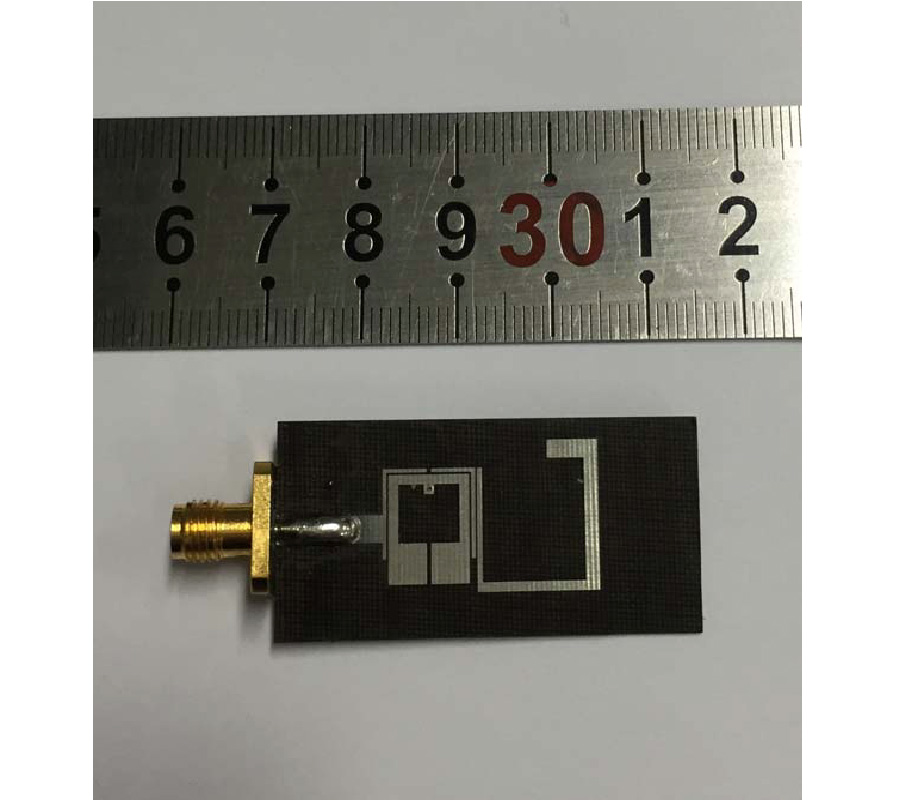
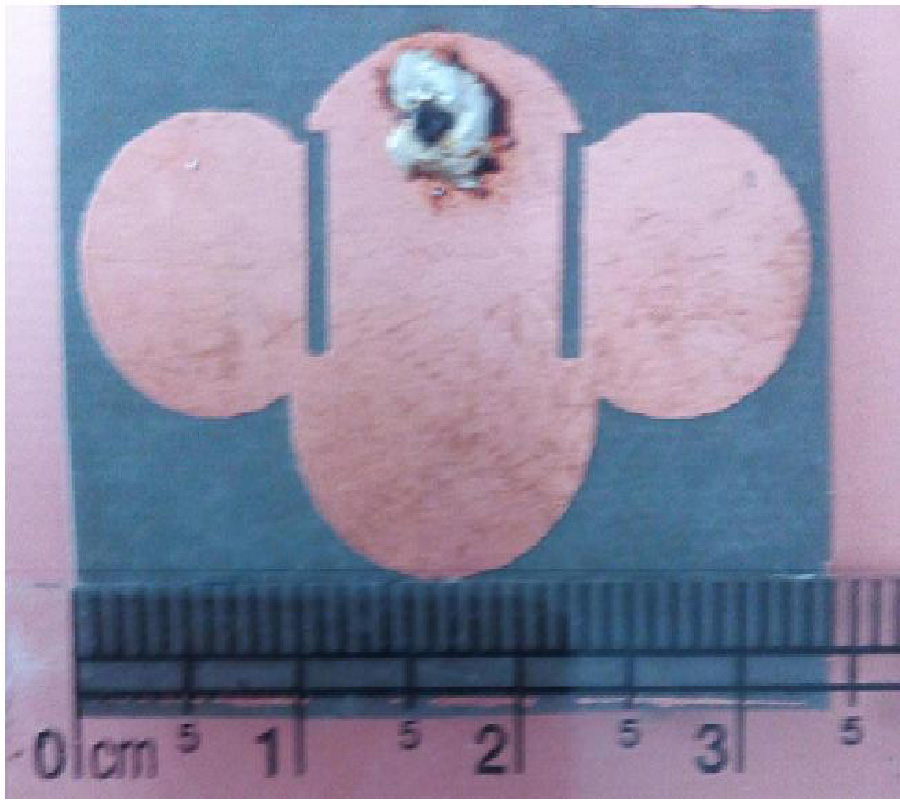
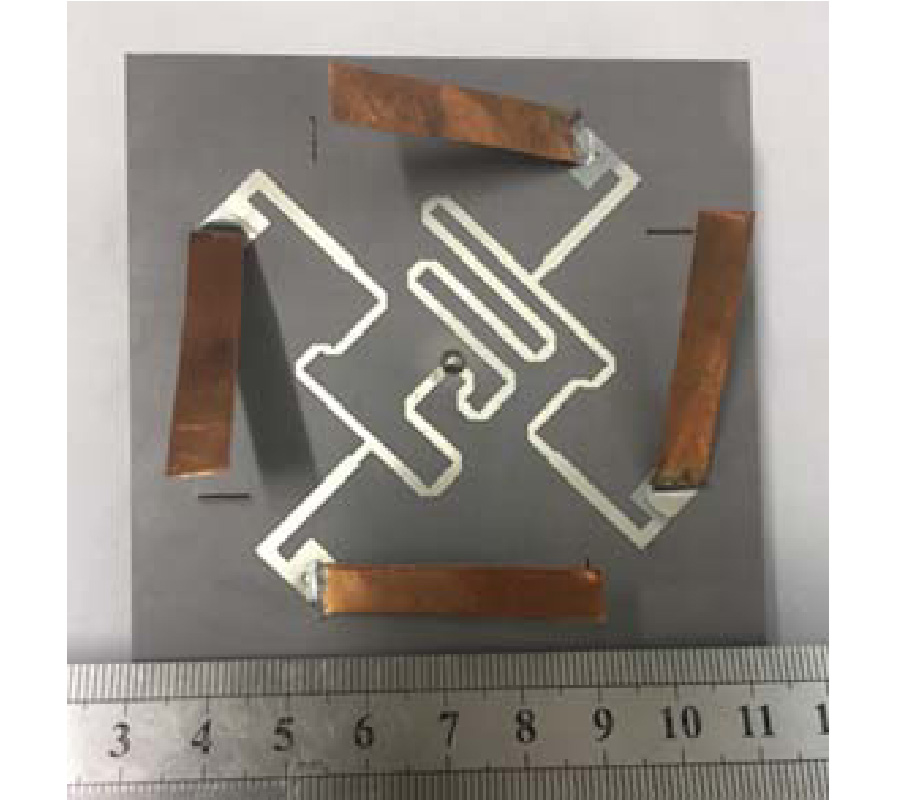
A low-profile bandwidth-enhanced zeroth-order resonant (ZOR) antenna based on composite right/left-handed transmission line (CRLH-TL) theory loaded by parasitic element is presented in this paper. The bandwidth and efficiency of the proposed ZOR antenna is improved simultaneously by introducing a parasitic element resonating within the CRLH-TL band-stop. The dispersive behavior of the ZOR antenna is analyzed by performing full-wave simulation using CST microwave studio and compared with the theoretical circuit model. The overall dimensions of the proposed antenna is 0.303λ0×0.248λ0×0.003λ0. The antenna has been fabricated and tested. The experimental results exhibit widem operational bandwidth of 87.1% and excellent radiation efficiency up to 95.7%. Owing to the symmetrical configuration of the proposed design the polarization purity better than -14 dB is obtained. The measured results are in very good agreement with the simulation. The compact, uni-planar and via-less configuration of the proposed antenna with reasonable polarization purity makes it desirable to be used for modern wireless communication systems such as GSM, UMTS, WiMAX, WLAN and LTE.
COMPACT BANDWIDTH-ENHANCED CENTER-FED CPW ZEROTH-ORDER RESONANT ANTENNA LOADED BY PARASITIC ELEMENT
2017-02-02
PIER B
Vol. 73, 1-16
Axially-Symmetric TM-Waves Diffraction by Sphere-Conical Cavity
Dozyslav B. Kuryliak , Zinoviy Theodorovych Nazarchuk and Oksana B. Trishchuk
The problem of axially-symmetric TM-wave diffraction from the perfectly conducting sphere-conical cavity is analysed. The cavity is formed by a semi-infinite truncated cone; one of the sectors of this cone is covered by the spherical diaphragm. The problem is formulated in terms of scalar potential for spherical coordinate system as a mixed boundary problem for Helmholtz equation. The unknown scalar potential of the diffracted field is sought as expansion in series of eigenfunctions for each region, formed by the sphere-conical cavity. Using the mode matching technique and orthogonality properties of the eigenfunctions, the solution to the problem is reduced to an infinite set of linear algebraic equations (ISLAE). The main part of asymptotic of ISLAE matrix elements determined for large indexes identifies the convolution type operator. The corresponding inverse operator is represented in an explicit form. The convolution type operator and corresponding inverse operator are applied to reduce the problem to the ISLAE of the second kind. This procedure determines the new analytical regularization method for the solution of wave diffraction problems for the sphere-conical cavity. The unknown expansion coefficients, which are determined from the ISLAE by the reduction, belong to the space of sequences that allow obtaining the solution which satisfies all the necessary conditions with the given accuracy. The particular cases, such as transition from sphereconical cavity to the open hemispherical resonator, as well as the low frequency approximation, are analysed. The numerically obtained results are applied to the analysis of TM-waves radiation through the circular hole in the cavity.
AXIALLY-SYMMETRIC TM-WAVES DIFFRACTION BY SPHERE-CONICAL CAVITY
2017-02-02
PIER B
Vol. 72, 169-195
Data Preconditioning with Gabor Nonstationary Deconvolution for Radar Imaging of Highly Dissipative and Dispersive Media
Kay Yuhong Liu , Elise C. Fear and Mike E. Potter
In medical microwave imaging applications, electromagnetic (EM) waves propagate through human tissues, which are inherently attenuative and dispersive. In the resulting image, these effects translate to a lack of resolution that increases with time/distance. To produce microwave images with high resolution, there is a strong need for a technique that is able to compensate for the energy loss and correct for the wavelet distortion. Gabor nonstationary deconvolution was developed in the field of Seismology to compensate for attenuation loss, correct phase dispersion, and produce images with high resolution. In this study, the Gabor algorithm is proposed to deal with the nonstationarity in EM wave propagation and attenuation. Gabor deconvolution is essentially based on the assumption that the anelastic attenuation of seismic waves can be described by a constant Q theory. We investigate the Q characterization of EM wave propagation, the frequency-dependency of EM Q, and the effectiveness of Gabor deconvolution to deal with high loss and dispersion. To accommodate for the EM application conditions, several adjustments are made to the proposed algorithm. Our test results indicate that Gabor nonstationary deconvolution is able to sufficiently compensate for attenuation loss and correct phase dispersion for EM waves that propagate through lossy and dispersive media.
2017-02-02
PIER C
Vol. 71, 79-89
Enhanced Low Profile, Dual-Band Antenna via Novel Electromagnetic Band Gap Structure
Mohammad El Ghabzouri , Abdenacer Es Salhi , Pedro Anacleto and Paulo Mendes
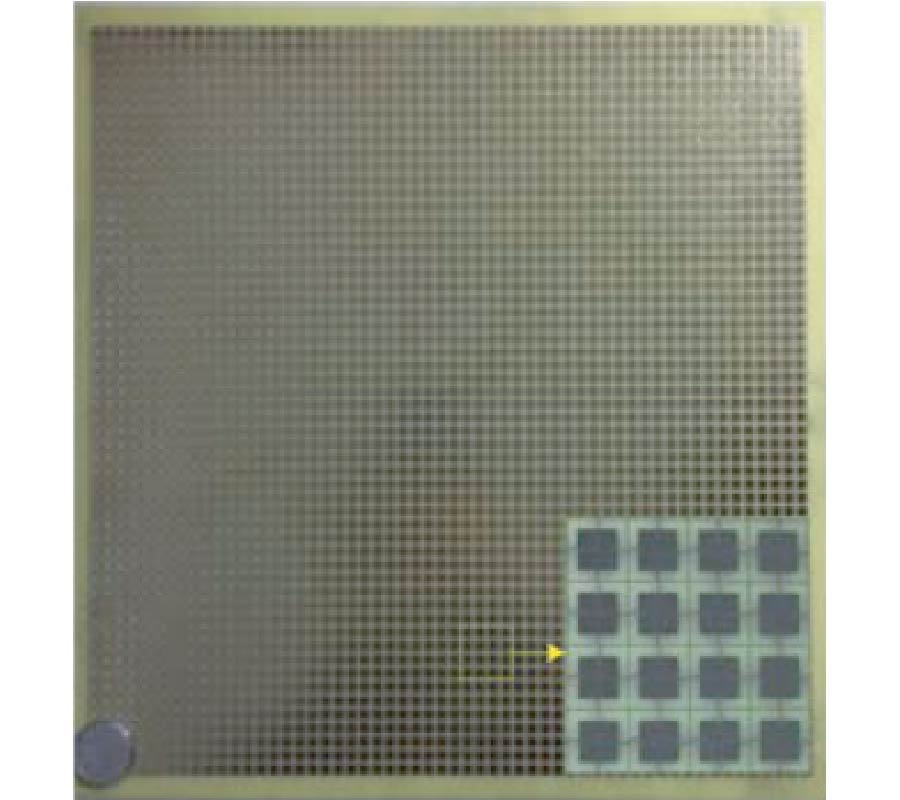
This paper presents a dual-band, low profile antenna with reduced specific absorption rate (SAR) for mobile handset applications. Here, dual-band operation is obtained by combining a printed dipole antenna (initially resonating at 4.3 GHz) with EBG mushroom-like structures loaded with circular slots (CS). The final structure operates at 3.44 GHz (additional band required for LTE Advanced LTE-A) and 4.5 GHz (for Smartphone WLAN applications) with improved bandwidth and reflection coefficient (350-MHz around 3.5 GHz with -26 dB, and 330 MHz around 4.5 GHz with -30 dB). Finally, a dosimetry study of the proposed printed dual-band dipole antenna is presented and verifies an SAR reduction from 9 W/Kg to 1.41W/Kg compared to the same antenna without any loading structure, and from 3.98 W/Kg to 1.41 W/Kg compared to a standard EBG mushroom-like structure.
ENHANCED LOW PROFILE, DUAL-BAND ANTENNA VIA NOVEL ELECTROMAGNETIC BAND GAP STRUCTURE
2017-02-02
PIER M
Vol. 54, 19-27
Real-Coefficient FGG-FG-FFT for the Combined Field Integral Equation
Hua-Long Sun , Chuang Ming Tong , Peng Peng , Gao Xiang Zou and Gui Long Tian
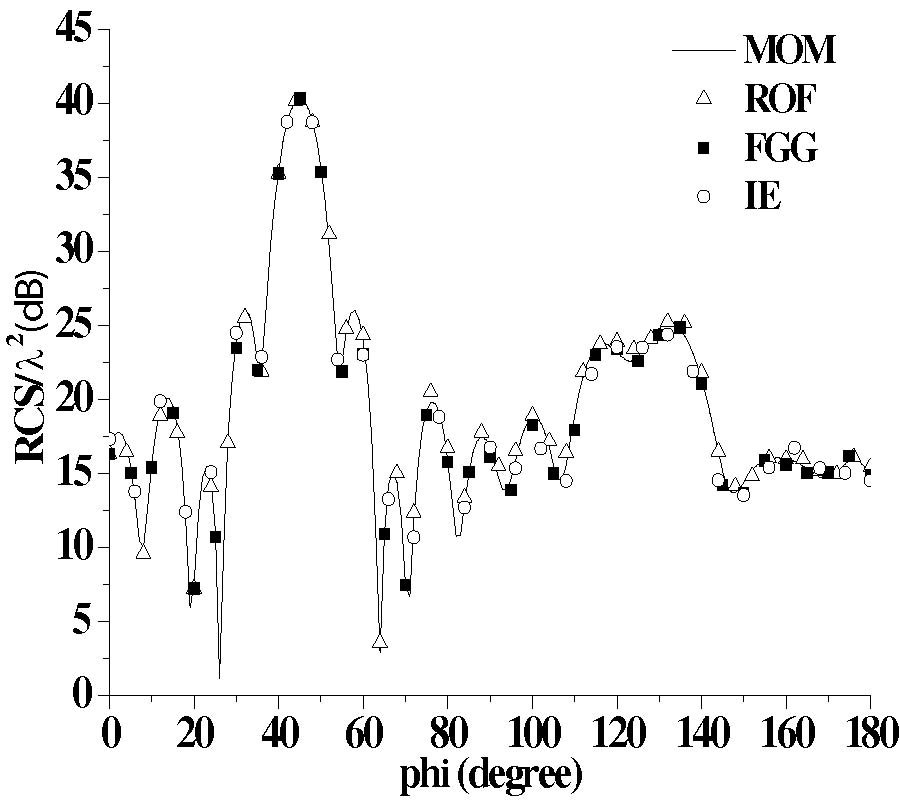
This article proposes a new scheme of real-coefficient fitting both Green's function and its gradient with Fast Fourier Transform (RFGG-FG-FFT) for combined field integral equation (CFIE) to compute the conducting object's electromagnetic scattering, which improves original fitting both Green's function and its gradient with Fast Fourier Transform (FGG-FG-FFT) on efficiency. Firstly, based on Moore-Penrose generalized inverse, an equivalent form of fitting matrix equation is obtained containing the property of Green's function's integral proved by addition theorem. Based on this property, with truncated Green's function new fitting technique is presented for computing fitting coefficients with real value expression, which is different from complex value expression by the original fitting technique in FGG-FG-FFT. Numerical analysis of error shows that new fitting technique has the same accuracy, but only one half of sparse matrices' storage compared to the original fitting technique in FGG-FG-FFT. Finally, the new scheme combining FGG-FG-FFT and new fitting technique is constructed. Some examples show that the new scheme is accurate and effective compared to FGG-FG-FFT and p-FFT.
REAL-COEFFICIENT FGG-FG-FFT FOR THE COMBINED FIELD INTEGRAL EQUATION
2017-02-02
PIER M
Vol. 54, 9-18
A Linear Mutually Coupled Parallel Dipole Antenna Array Failure Correction Using Bat Algorithm
Narwant Singh Grewal , Munish Rattan and Manjeet Patterh
In this work, the problem of mutually coupled dipole antenna array failure has been solved using bat algorithm by adjusting only the amplitude excitation of good array elements. The element failure causes the degradation of side-lobe power level to an improper level. A fitness function is formulated to obtain the difference between degraded side-lobe pattern and measured side-lobe pattern, and a flexible approach using bat algorithm is used to minimize this function. Numerical examples of single and multiple element failure correction under mutual coupling conditions are discussed to show the capability of this proposed approach.
A LINEAR MUTUALLY COUPLED PARALLEL DIPOLE ANTENNA ARRAY FAILURE CORRECTION USING BAT ALGORITHM
2017-02-02
PIER M
Vol. 53, 215-227
A Visibility-Domain Reconstruction Technique for Optical Interferometry Imaging
Mu-Min Chiou and Jean-Fu Kiang
A visibility-domain processing for optical interferometric imaging (VP-OII) method is proposed to model the visibility distribution of an image, and a phase retrieval technique is proposed to acquire additional visibility data from the powerspectrum and closure-phase data. This method requires only a few tunable parameters, and can be easily extended to include more data acquired from different instruments. By simulating the reconstruction of an LkHα 101 image, the proposed method proves a few hundreds times faster and is more resilient to noises than the conventional MIRA, and the image quality is comparable to noise that of conventional MIRA.
A VISIBILITY-DOMAIN RECONSTRUCTION TECHNIQUE FOR OPTICAL INTERFEROMETRY IMAGING
2017-02-01
PIER Letters
Vol. 66, 9-14
Frequency-Tunable Phase Inverter Based on Slot-Line Resonator
Zhenheng Liao and Xu-Chun Zhang
This paper describes a frequency-tunable phase inverter based on a slot-line resonator for the first time. The control circuit is designed and located on the defected ground. None of dc block capacitors are needed in the microstrip line. A wide tuning frequency range is accomplished by the use of the slot-line resonator with two varactors and a single control voltage. A 180-degree phase inverter is achieved by means of reversing electric field with two metallic via holes connecting the microstrip and ground plane. The graphic method is used to estimate the operation frequency. For verification, a frequency-tunable phase inverter is fabricated and measured. The measured results show a wide tuning frequency range from 1.1 GHz to 1.75 GHz with better than 20-dB return loss. The measured results are in good agreement with the simulated ones.
FREQUENCY-TUNABLE PHASE INVERTER BASED ON SLOT-LINE RESONATOR
2017-02-01
PIER M
Vol. 54, 1-7
Higher Radial Modes of Azimuthal Surface Waves in Cylindrical Waveguides Without External Magnetic Field
Igor O. Girka , Igor V. Omelchenko and Richard D. Sydora
The properties of higher order radial modes of electromagnetic azimuthal surfacetype waves (ASW) which propagate in partially plasma-filled cylindrical waveguides without external magnetic field are analyzed using analytical and numerical techniques. For a waveguide with plasma surrounded by dielectric material and encased in metal, the eigenfrequencies for higher order radial modes are obtained. It is found that the ASW higher radial modes propagate with shorter vacuum wavelength than the zero-th order radial modes and that the more favourable conditions for higher order radial mode propagation are for ASW's with larger azimuthal wavenumber in waveguides with wider dielectric layer and larger dielectric constant. A further salient feature of ASW higher radial modes is that a change in plasma waveguide parameters causes a drastic change in ASW eigenfrequency in contrast to the zero-th order modes which have a smoother frequency variation with effective wavenumber.
HIGHER RADIAL MODES OF AZIMUTHAL SURFACE WAVES IN CYLINDRICAL WAVEGUIDES WITHOUT EXTERNAL MAGNETIC FIELD
2017-02-01
PIER M
Vol. 53, 201-214
Performance Characteristics of Non-Arc Double Stator Permanent Magnet Generator
Rizuan Che Ahmad Suhairi , Raja Nor Firdaus , Nor Aishah Md Zuki , Fairul Azhar bin Abdul Shukor , Md Nazri Othman , Zulkiflie Ibrahim and Aravind Vaithilingam Chockalingam
The improvement in the power density in the double stator configurations is feasible with increase in the electrical loading of the electrical machines. This type of newer configuration is finding significant applications in improvising energy generation, more commonly for renewable energy generation. Various double stator configurations with non-arc permanent magnet machines for power density are modelled and analyzed in this paper. Finite Element Method (FEM) is used to simulate for the generation capability including the electromagnetics parameters such as flux linkage and open circuit voltage. A new slotted rotor structure is evolved based on the magnetic flux flow control inside the machine. The proposed structure is then fabricated in the laboratory and tested for operating characteristics with load circuit. The proposed machine produces a maximum power of 600 W at speed of 2000 rpm with 75% of maximum efficiency with the micro-hydro generation unit.
PERFORMANCE CHARACTERISTICS OF NON-ARC DOUBLE STATOR PERMANENT MAGNET GENERATOR
2017-01-30
PIER C
Vol. 71, 69-77
A Dual Band Slot Antenna for Wireless Applications with Circular Polarization
Azadeh Pirooj , Mohammad Naser-Moghadasi , Ferdows B. Zarrabi and Alireza Sharifi
In recently developed wireless communication systems, circular polarization (CP) antennas are used for communication links to reduce the natural loss effect in receivers. Therefore, in this paper, a dual-band microstrip slot antenna based on a parallel split ring resonator with circular and linear polarization which can be used for wireless and WiMAX applications is presented. The final antenna to design is based on inspired split ring resonators (SRR) to achieve circular polarization and compact size and with special parallel form of the SRR and straight feed line. We have achieved higher bandwidth in the requested frequency range with dual-band characteristics. The final antenna has a bidirectional pattern with circular polarization at the range of 2.9-3.65 GHz and bandwidths of 2-3.6 and 3.8-4.8 GHz with VSWR<2 for WLAN, Bluetooth and radar applications for IEEE WLAN protocol with gain of 5-6 dBi, respectively. The size of the prototype patch antenna is 40×40 mm2. It is designed and fabricated on an FR-4 low cost substrate with εr=4.4 and a thickness of 1.6 mm. It is simulated using HFSS full wave software. In addition, the experimental results are presented and compared with simulation for VSWR, radiation patterns and axial ratio. The periodic analysis has been used for extracting the metamaterial parameters.
A DUAL BAND SLOT ANTENNA FOR WIRELESS APPLICATIONS WITH CIRCULAR POLARIZATION
2017-01-30
PIER M
Vol. 53, 191-199
ISAR Imaging and Scaling Method of Precession Targets in Wideband T/R-R Bistatic Radar
Xiaofeng Ai , Yonghu Zeng , Liandong Wang , Manxi Wang and Yongzhen Li
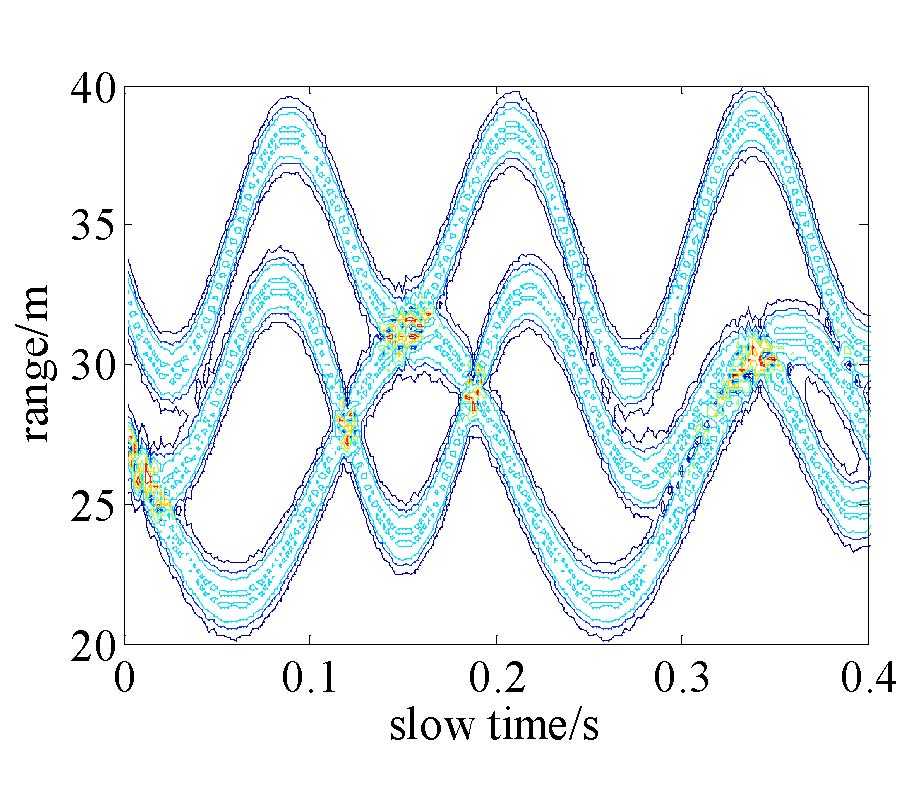
Imaging and scaling of precession targets are very important in spatial target surveillance. The bistatic wideband radar echo model of the spatial precession cone-shaped target is induced, and bistatic ISAR imaging method based on time-frequency analysis is described. Combined with the monostatic and bistatic scattering characteristics of cone-shaped targets, the cross scaling method is presented through range instantaneous Doppler (RID) image matching using T/R-R bistatic radar observations, and the correct scaled monostatic and bistatic two-dimensional images can be obtained at the same time, which can reflect the actual size of the target. The algorithm is validated by dynamic simulation with electromagnetic computation data and provides a feasible way for the stable recognition of spatial targets.
ISAR IMAGING AND SCALING METHOD OF PRECESSION TARGETS IN WIDEBAND T/R-R BISTATIC RADAR
2017-01-30
PIER M
Vol. 53, 177-190
A Fast Equivalent Method for Modeling Electromagnetic Pulse Response of Cable Bundle Terminated in Arbitrary Loads
Yafei Huo , Yu Zhao and Zhuohang Li
An effective fast equivalent cable bundle modeling method is proposed in this paper to study electromagnetic pulse response of complex cable bundle. Compared with traditional equivalent cable bundle method (ECBM), the complete cable bundle is equivalent to only one cable by modification of cable grouping method, which leads to reduction in number of cables and computation progress. The proposed method can perform well not only in pure resistance case, but also in frequency dependent load case by weighted average method (WAM). The computation time and memory acquirement for complete cable bundle model terminated in arbitrary loads have been further reduced by fast equivalent method compared to ECBM, and calculation precision is maintained to meet fast application need. Numerical simulation of coupled currents in observed cable located at a certain distance away from cable bundle by CST software is given to verify accuracy of the method under illumination of high altitude electromagnetic pulse (HEMP).
A FAST EQUIVALENT METHOD FOR MODELING ELECTROMAGNETIC PULSE RESPONSE OF CABLE BUNDLE TERMINATED IN ARBITRARY LOADS
2017-01-28
PIER M
Vol. 53, 167-175
A Portable Frequency Domain Electromagnetic System for Shallow Metal Targets Detection
Xiaodong Qu , Yade Li , Guangyou Fang and Hejun Yin
In this paper, a portable frequency domain electromagnetic system CEM-2 is presented for shallow metal targets detection. This paper discusses the detection principle of frequency domain electromagnetic system, introduces hardware implementation, presents test results of each module, and gives the system's imaging results in field tests. Sinusoidal pulse width modulation technique is employed in this system to produce single-frequency or multi-frequencies synthetic electromagnetic signals with signal to noise ratio of about 85 dB. After integration, the CEM-2 system's in-phase noise level is about 90 ppm while the quadrature response is about 100 ppm. The experiment results of CEM-2 agree well with the simulation ones both from signatures and amplitudes. The experiment for detecting targets of different sizes and materials conducted in field indicates that CEM-2 system can be used to distinguish metallic and ferrous objects.
A PORTABLE FREQUENCY DOMAIN ELECTROMAGNETIC SYSTEM FOR SHALLOW METAL TARGETS DETECTION
2017-01-27
PIER C
Vol. 71, 59-67
A Broadband Planar Quasi-Yagi Antenna with a Modified Bow-Tie Driverfor Multi-Band 3G/4G Applications
Tinghui Zhao , Yang Xiong , Xian Yu , Haihua Chen , Ming He , Lu Ji , Xu Zhang , Xinjie Zhao , Hongwei Yue and Fangjing Hu
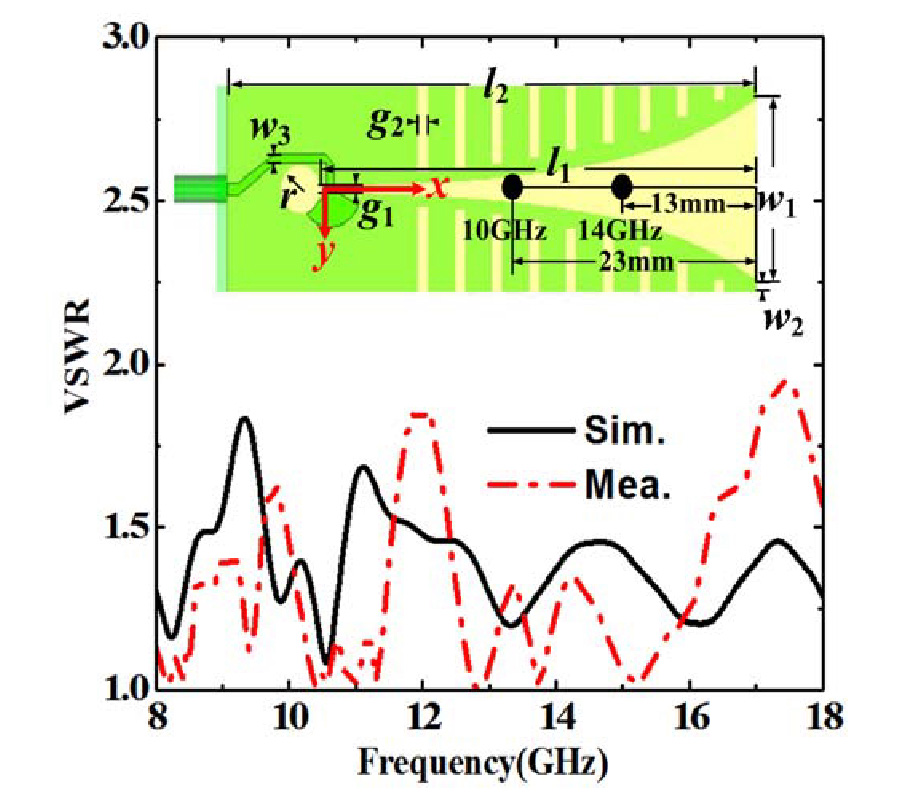
This paper presents a broadband and compact planar quasi-Yagi antenna for multi-band 3G/4G applications.The proposed quasi-Yagi antenna consists of a modified bow-tie driver to increase the bandwidth, a passive reflector and two passive directors to enhance the directivity at the lower and higher ends of the operating band, respectively. A microstrip-to-slotline transition feed is used to achieve a good impedance matching. It is confirmed by experiment that general approaches for increasing the bandwidth of bow-tie antennas are also feasible for quasi-Yagi antennas with bow-tie drivers. Furthermore, with the modified bow-tie structure, the directivity of the antenna at higher frequencies of the operating band is enhanced, because the bow-tie shape can form planar horn structures and has strong current distributions at high frequencies. The proposed antenna is fabricated using an FR4 substrate with a dielectric constant of 4.2, and the overall dimension of the antenna is 1.24λgc×0.94λgc. Measurements show that the 10 dB return loss bandwidth is 80.4%, operating from 1.45 to 3.4 GHz. Measured gains are greater than 4 dBi within the entire bandwidth, and the front-to-back ratios are greater than 10 dB. Having a multi-band coverage within the 3G/4G spectra,this antenna is expected to be used for 3G/4G mobile wireless communications.
A BROADBAND PLANAR QUASI-YAGI ANTENNA WITH A MODIFIED BOW-TIE DRIVERFOR MULTI-BAND 3G/4G APPLICATIONS
2017-01-27
PIER Letters
Vol. 65, 131-137
Direct Application of Excitation Matrix as Sparse Transform for Analysis of Wide Angle EM Scattering Problems by Compressive Sensing
Xin-Yuan Cao , Ming Sheng Chen , Meng Kong , Liang Zhang , Xian-Liang Wu , Xiangxiang Liu , Liangliang Cheng , Qi Qi and Bingbing Chen
When compressive sensing was employed to solve electromagnetic scattering problems over wide incident angles, the selection of sparse transform strongly affects the efficiency of the CS algorithm. Different sparse transforms will require different numbers of measurement. Thus, constructing a highly efficient sparse transform is the most important work for the CS-based electromagnetic scattering computing. Based on the linear relation between current and excitation vectors over wide incident angles, we adopt the excitation matrix as sparse transform directly to obtain a suitable sparse representation of the induced currents. The feasibility and basic principle of the algorithm are elaborated in detail, and the performance of the proposed sparse transform is validated in numerical results.
DIRECT APPLICATION OF EXCITATION MATRIX AS SPARSE TRANSFORM FOR ANALYSIS OF WIDE ANGLE EM SCATTERING PROBLEMS BY COMPRESSIVE SENSING
2017-01-26
PIER C
Vol. 71, 51-58
Highly Intergrated X-Band LTCC Receiver Module
Bo Zhou , Qiang Ma , Qipeng Wang , Liwei Yan , Na Zhou and Chong-Hu Cheng
A highly integrated X-band receiver module is designed based on a 10-layered low temperature co-fired ceramic (LTCC) substrate. A compact X-band bandpass filter (BPF), an intermediate frequency (IF) band hybrid and an IF band BPF are proposed for the receiver module. The measured gain parameter of the proposed receiver is higher than 51 dB, and noise figure (NF) and image rejection are better than 2.5 dB and 37 dB, respectively. The overall size of the receiver module is only 54 mm × 15 mm × 1 mm. Comparisons and discussions are also provided.
HIGHLY INTERGRATED X-BAND LTCC RECEIVER MODULE
2017-01-26
PIER C
Vol. 71, 41-49
Compact 1×2 and 2×2 MIMO Antennas with Enhanced Isolation for Ultrawideband Application
Hui Li , Jinhai Liu , Ziyang Wang and Ying-Zeng Yin
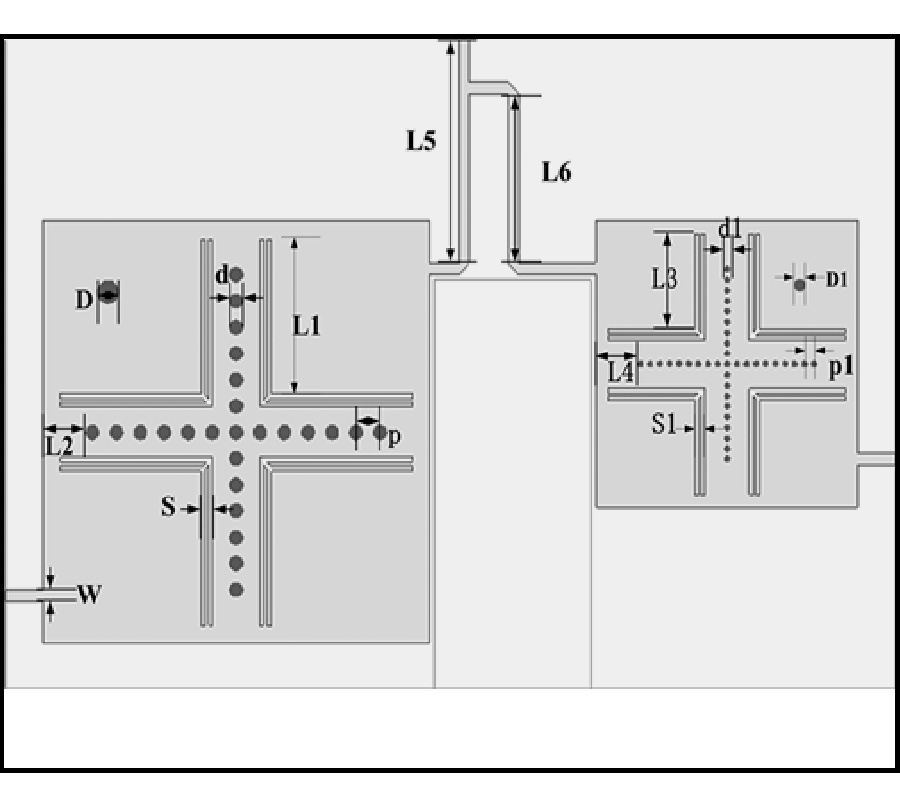
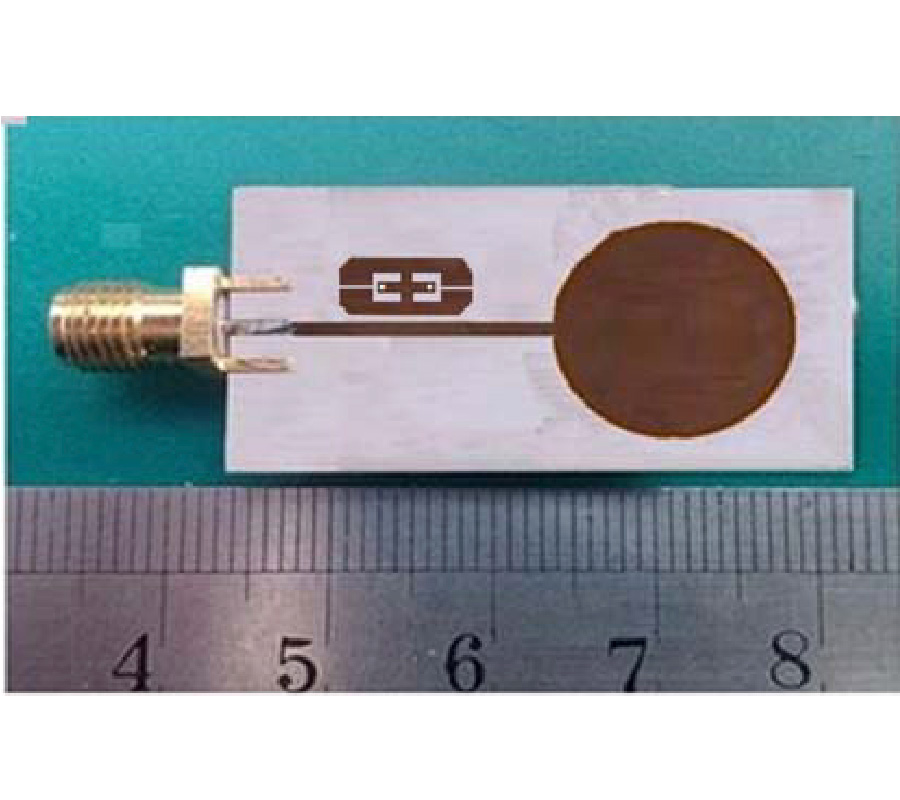
Two small size multiple-input-multiple-out (MIMO) antennas with high isolation for ultrawideband (UWB) applications are presented. A two-element MIMO antenna, which is mounted on an FR4 substrate with a compact size of 24 mm × 33 mm, consists of two symmetric circular monopole elements and a modified ground. The protruded ground provides a way to improve isolation and impedance matching. Such a wide band from 2.75 to 11 GHz is achieved by using modified ground technology, and high isolation more than 20 dB is also accomplished. Meanwhile, moderate gain and omnidirectional radiation patterns can be obtained. Based on the circular monopole with modified ground, a four-element antenna array is also constructed and studied. The size of the four-element antenna with orthogonal arrangement is 44 mm × 44 mm. Measured results show that the antenna also exhibits good impedance matching as well as low envelope correlation coefficient over the entire UWB spectrum.
COMPACT 1×2 AND 2×2 MIMO ANTENNAS WITH ENHANCED ISOLATION FOR ULTRAWIDEBAND APPLICATION
2017-01-26
PIER Letters
Vol. 65, 123-130
UWB Heart-Shaped Planar Monopole Antenna with a Reconfigurable Notched Band
Changzhou Hua , Yunlong Lu and Taijun Liu
This paper presents a heart-shaped planar monopole antenna for ultra-wideband (UWB) applications. To increase the impedance bandwidth of the antenna and achieve UWB coverage, we use a heart-shaped radiating patch fed by a microstrip line and an elliptical curved ground plane. Based on this structure, by etching an annular slot loaded with a capacitor in the heart-shaped radiating patch, a planar band-notched UWB antenna can also be obtained. Specifically, to demonstrate the potential application of the proposed structure, a UWB antenna design with a reconfigurable notched band is presented by using a varactor to replace the capacitor. Commercial software ANSYS HFSS is used to analyze and design this antenna. Measured results of the fabricated antenna show good agreement with simulated ones.
UWB HEART-SHAPED PLANAR MONOPOLE ANTENNA WITH A RECONFIGURABLE NOTCHED BAND
2017-01-26
PIER Letters
Vol. 65, 117-121
Compact Slow-Wave Branch-Line Coupler Using Crossing Bond Wires
Bo Zhou , Qiang Ma , Liwei Yan , Na Zhou and Chong-Hu Cheng
This paper proposes a compact and miniaturized branch-line coupler using a crossing bond wire structured slow-wave branch line (CBWSWB). The proposed coupler achieves a size reduction of 82% compared with a conventional implementation. Measured S11, S21, S31 and S41 of the proposed coupler are better than -24, -3.7, -3.7 and -28 dB at 3 GHz, respectively. Furthermore, the phase difference between through and coupling ports of the coupler is within 1°.
COMPACT SLOW-WAVE BRANCH-LINE COUPLER USING CROSSING BOND WIRES