Search Results(13794)

2017-02-25
PIER C
Vol. 71, 169-175
Maple Leaf Shaped UWB Monopole Antenna with Dual Band Notch Functionality
Amjad Iqbal , Omar A. Saraereh and Sushil K. Jaiswal
A sharply rejected dual notch band UWB monopole antenna is presented in this paper. The proposed antenna consists of maple leaf shaped radiating element, a 50 Ω microstrip feed line and truncated ground plane. The proposed antenna shows the UWB operation in the frequency range (1.7 GHz-11.1 GHz) with VSWR<2 except the notch bands and two band notches centered at 4.3 GHz and 7.7 GHz. The band notches are achieved by introducing a meandered slot in the radiating element and U-shaped slot in feed line. The substrate used for designing of UWB antenna is low loss Rogers 5880 having relative permittivity of 2.2. The novelty of the proposed antenna is its shape and ability to support UWB bandwidth requirements, and it also rejects two bands to avoid possible interference with existing communication system. Good agreement between the simulated and measured results is observed. The proposed antenna has good gain and efficiency at pass bands.
MAPLE LEAF SHAPED UWB MONOPOLE ANTENNA WITH DUAL BAND NOTCH FUNCTIONALITY
2017-02-24
PIER Letters
Vol. 66, 65-70
Design of a 212 GHz LO Source Used in the Terahertz Radiometer Front-End
Jin Meng , De Hai Zhang , Chang Hong Jiang , Xin Zhao and Xiao Peng Li
We introduce a 212 GHz LO source which could be used to drive sub-harmonic mixer in the radiometer front-end. It mainly includes a phase-locked dielectric resonator, a 71 GHz power source and a 212 GHz tripler. Actually, design of 212 GHz tripler is the key technology in the LO chain because the research on W band source is relatively mature. Based on our former research work, there is a great improvement in the design of 212 GHz tripler. At room temperature, the measured efficiency is more than 9% in 208~218 GHz, and the maximum efficiency is about 14.5% at 215.5 GHz when being driven with 21.8 dBm of input power. Besides demand on the main technical specifications, the stability of each module is also extremely important since the front-end is designed to keep working for three months.
DESIGN OF A 212 GHZ LO SOURCE USED IN THE TERAHERTZ RADIOMETER FRONT-END
2017-02-24
PIER M
Vol. 55, 25-36
Effect of Solar Illumination on ESD for Structure Used in Spacecraft
Rizwan Habibbhai Alad , Haely Shah , Soumyabrata B. Chakrabarty and Dhairya Shah
This paper presents the effect of solar illumination on the differential potential generated on the surfaces of spacecraft body in space. Two geometrical cases are considered: 1) Cylindrical symmetry and 2) Tilted metallic plates forming an angle with the adjacent side. The capacitance required for estimation of the body potential is computed by Method of Moment. Nonuniform triangular meshing is used for both the geometrical structures. The differential potential generated on surfaces of a geometrical body due to photoelectric effect results in electrostatic discharge. In the case of the tilted plates, the differential potential at various tilt-angles is computed along with the capacitance computation. In the case of the cylindrical object, the estimation of potential at the day-night interface is shown. The variation in the potential for different incident angles of the solar photons and the changing (h/r) ratio is analyzed. The validity of the analysis is established with that obtained in open literature.
EFFECT OF SOLAR ILLUMINATION ON ESD FOR STRUCTURE USED IN SPACECRAFT
2017-02-24
PIER
Vol. 158, 37-48
Shape Reconstruction via Equivalence Principles,Constrained Inverse Source Problems and Sparsity Promotion
Martina Bevacqua and Tommaso Isernia
A new approach for position and shape reconstruction of both penetrable and impenetrable objects from the measurements of the scattered fields is introduced and described. The approach takes advantage of the fact that for perfect electric conductors the induced currents are localized on the boundary, and equivalent sources also placed on the surface of the scatterers can be considered in the case of dielectric targets by virtue of the equivalence theorem. Starting from these considerations, a new inversion approach is formulated in order to retrieve the location and the boundary of unknown objects. Examples with both numerical and experimental data are given to demonstrate and assess the effectiveness of the method.
SHAPE RECONSTRUCTION VIA EQUIVALENCE PRINCIPLES,CONSTRAINED INVERSE SOURCE PROBLEMS AND SPARSITY PROMOTION
2017-02-23
PIER B
Vol. 73, 31-48
Design, Analysis and Implementation of Ultrahigh Data Rate UWB Six-Port Receiver Up to 7 Gbps for 5 g New Spectrum Radio Access and Car
Gholamreza Askari and Mohamad Khalil
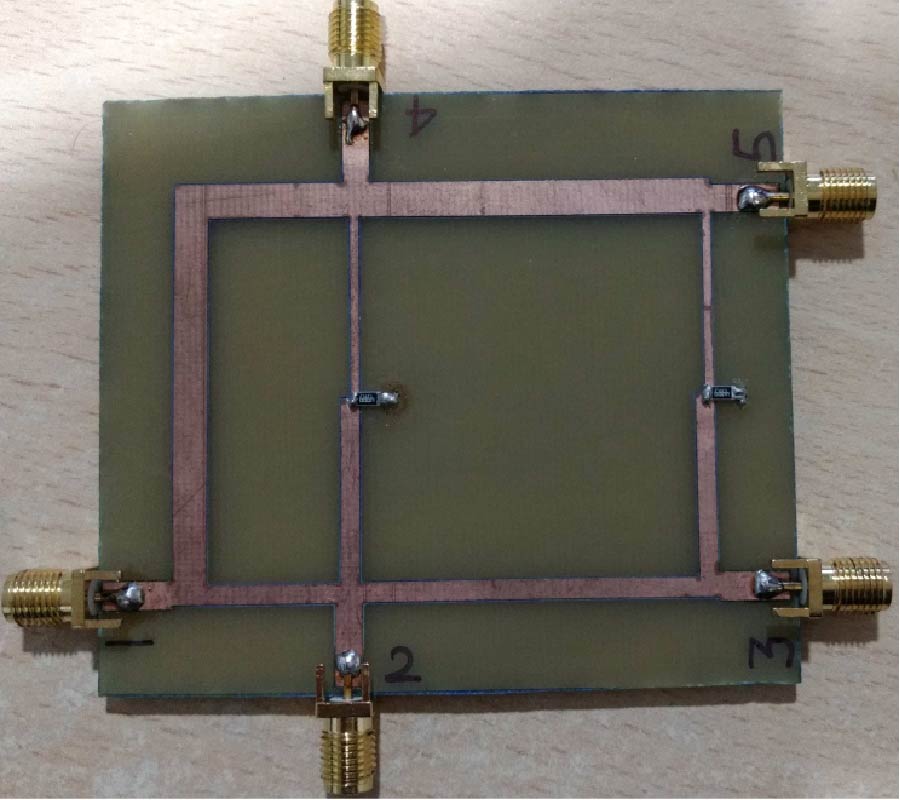
Every generation of mobile communication has been associated with higher data rates than the previous generation. So 5G new spectrum radio access should support data rates exceeding 10 Gbps in most of its applications. An Ultra Wide Band (UWB) ultrahigh data rate full six-port receiver architecture up to 6.7 Gbps for 5G new spectrum is presented in this paper. The proposed structure is constructed using one UWB ultrahigh data rate Wilkinson power divider/combiner and three UWB ultrahigh data rate two-stage branch line couplers which are the essential components of any full six-port structure. The design procedure, optimization and implementation of these two UWB essential components in 21-30 GHz are completely done to achieve the optimum performance of final six-port. The final fabrication results show the average of -14 dB of input matching, -20 dB of isolation of isolated Ports, -4.2 dB of coupling in output ports (considering 2 SMA connectors and transitions in each path), and linear phase variation of outputs in the whole bandwidth of 21-30 GHz. To analyze and qualify the UWB six-port structure in any specific application in 5G and other UWB high data rate applications, a new analytical formulation with a new six-port structure of non-ideal UWB six-port circuit is presented. With this new analytical model and new configuration, there is no need to calibrate the outputs of in-phase and quad phase of the six-port receiver outputs. Based on the final fabricated essential components and the new analytical model, the final full six-port structure is constructed and analysed using UWB-OFDM with QPSK and 16QAM demodulation schemes in its sub-bands. To complete and verify the new analysis and to validate the final constructed UWB six-port structure and its essential components in ultrahigh data rate application in 5G new spectrum, the UWB-IR impulse radio with modulated ultrahigh data rate signal up to 7 Gbps and in 21-30 GHz bandwidth is completely discussed. The results show that all clusters of demodulated constellations are very well positioned and individualized in whole bandwidth in all modulation schemes. Also this new design and configuration of six-port receiver improves the dynamic range of the RF input signals up to 60 dB which is valuable. During the design procedure, a very useful method to choose the suitable laminate based on the time, frequency and two dimensional Wigner-Vile Distribution methods is presented. Also, some practical issues in design and implementation of the UWB microstrip component such as transitions are considered to achieve the best results.
DESIGN, ANALYSIS AND IMPLEMENTATION OF ULTRAHIGH DATA RATE UWB SIX-PORT RECEIVER UP TO 7 GBPS FOR 5 G NEW SPECTRUM RADIO ACCESS AND CAR
2017-02-23
PIER C
Vol. 71, 161-168
Small Transmit-Receive Frequency Space Filtering Duplex Patch Antenna Array with High Isolation
Xian Jing Lin , Ze-Ming Xie and Pei Sheng Zhang
In this paper, a 2 x 1 duplex antenna array with small frequency space and high isolation between transmitting and receiving bands is presented. The duplex antenna array element consists of a pair of radiating patches for bidirectional radiation, a set of microstrip resonator and H-slot resonator coupled to the patches for transmitting, and the other set of microstrip and H-slot resonators coupled to the patches for receiving. The H slots are designed for the operations of coupling and the elements of the bandpass filters. The two antenna elements of the 2 x 1 array are connected by transmitting and receiving channels microstrip power-split resonators. The array achieves a compact size and high performances in terms of high isolation and small Tx-Rx frequency space. Higher than 30 dB and 40 dB ports isolation at 1.94-1.99 GHz and 2.43-2.52 GHz is realized. And the Tx-Rx frequency space Δf=(fr-ft) is smaller than 0.23 times of the central frequency (fr+ft)/2.
SMALL TRANSMIT-RECEIVE FREQUENCY SPACE FILTERING DUPLEX PATCH ANTENNA ARRAY WITH HIGH ISOLATION
2017-02-22
PIER Letters
Vol. 66, 59-64
Compact and Wide Stopband E-Plane Waveguide Diplexer Design
Mahdi Alibakhshi , Reza Bayderkhani and Majid Afsahi
This paper presents the design of a compact E-plane waveguide diplexer with wide stopband characteristics of high rejection level. This is achieved by utilizing a unique E-plane waveguide filter comprising rectangular apertures located along the waveguide's E-plane. The upper and lower sections of the aperture in the septum insert have periodic comb-like ridges. The effect of the septum is (i) to slow the propagating wave that helps to reduce the filter's size, and (ii) widens its stopband property. Dimensions of the periodic ridges of the aperture enable the center frequency of the filter to be controlled without compromising its bandwidth. In addition, the proposed E-plane waveguide filter provides a high isolation between the two diplexer channels, which is necessary to prevent significant cross-talk between the channels. The performance of the proposed design was verified through measurements. There is excellent agreement between the simulated and experimental results.
COMPACT AND WIDE STOPBAND E-PLANE WAVEGUIDE DIPLEXER DESIGN
2017-02-22
PIER M
Vol. 55, 13-24
Calculating Radar Cross Section of Lossy Targets Using the Surface Impedance Approach
El Mokhtar Hamham , Asmaa Zugari and Abdelilah Benali
In this paper, an effective numerical method based on a new surface impedance model is applied to the accurate calculation of the radar cross section of lossy conducting targets. The problem of determining the scattered electromagnetic fields from rectangular lossy conducting strips is presented and treated in detail. This problem is modeled by the method of moments to resolve integral equations of the first kind of surface current density with an accurate choice of basis and test functions. The illustrative computation results of complex surface impedance, surface current density and radar cross section are given for several cases. The accuracy of the method presented in this paper is verified by comparison with other methods, including the general-purpose full-wave simulators HFSS and CST.
CALCULATING RADAR CROSS SECTION OF LOSSY TARGETS USING THE SURFACE IMPEDANCE APPROACH
2017-02-22
PIER M
Vol. 55, 1-12
Transitional Behaviors of CQGLE Solitons Across Boundaries on a Phase Plane
Huai-Ming Chang and Jean-Fu Kiang
Soliton solutions of a cubic-quintic Ginzburg-Landau equation (CQGLE) are computed and analyzed on a parametric plane, specifically across the transitional zones that separate regions associated with different types of solitons. The transformations of behaviors in these transitional zones between stationary and pulsating regions are characterized by the total pulse energy and its maximum value. It is also found that the initial pulse waveform has little effect on bifurcation and the valid range of initial amplitude.
TRANSITIONAL BEHAVIORS OF CQGLE SOLITONS ACROSS BOUNDARIES ON A PHASE PLANE
2017-02-22
PIER M
Vol. 54, 183-193
Investigation of an Electrically Small Half-Loop Antenna Embedded with a Non-Foster Network Using the Characteristic Mode Theory
Li Sun , Bao-Hua Sun and Guanxi Zhang
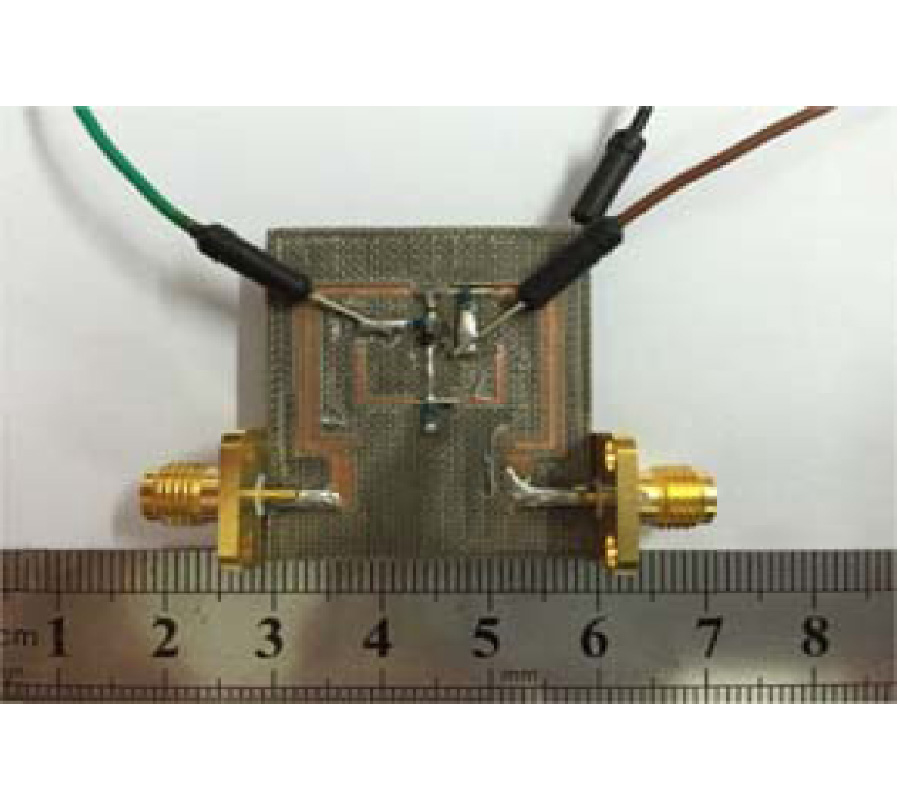
An electrically small half-loop antenna (ESHLA) embedded with Foster elements is analyzed using the characteristic mode (CM) theory. The resonant frequency and radiation characteristics of the ESHLA are mainly determined by the resonant mode (Mode 1). The characteristic currents of resonant mode (Mode 1) and non-resonant mode (higher order mode) prove the parallel resonance of the ESHLA. However, owing to the modal significance (MS) of the resonant mode varying fast with frequency, the proposed ESHLA has a narrow bandwidth. Analysis shows the MS of the resonant mode and the higher order mode are changed by tuning the Foster element, leading to a negative admittance variation slope in accordance with the non-Foster behavior. By replacing the Foster capacitor with the non-Foster network, both the characteristic currents and the MS are changed over a wide bandwidth. As a consequence, the introduced non-Foster network turns Mode 1 from the narrowband resonant mode into a continuous resonant mode with its radiation pattern kept invariant over a wide bandwidth. The proposed ESHLA with its non-Foster network is fabricated and measured. The measured 6-dB return loss bandwidth is about 12.7% (11.45-13 MHz), with its reflection coefficient curve being an envelope of those of Foster elements embedded ESHLA.
INVESTIGATION OF AN ELECTRICALLY SMALL HALF-LOOP ANTENNA EMBEDDED WITH A NON-FOSTER NETWORK USING THE CHARACTERISTIC MODE THEORY
2017-02-22
PIER M
Vol. 54, 175-182
Studies on the Effect of Angle of Attack on the Transmission of Terahertz Waves in Reentry Plasma Sheaths
Kai Yuan , Ming Yao , Linfang Shen , Xiaohua Deng and Lujun Hong
The communication `blackout' in the reentry stage of a space mission is a serious threat to the reentry vehicle. The terahertz (THz) technology is supposed to be a potential solution to the `blackout' problem in the recent decade. In the present paper, the relation between the THz waves' transmission in the reentry plasma sheath and the angle of attack (AOA) of the vehicle is investigated. A three dimensional numerical model is introduced in order to obtain the plasma parameters in the reentry plasma sheaths. The computation results show that both the electron density and the electron collision frequency vary with the AOA. As results, the transmission rates for the THz waves vary with the AOA as well. According to the analysis, microwave communication system is very likely to suffer from the `blackout' in the reentry stage. The THz scheme is an effective solution. The fluctuation of AOA may weaken the signal strength received by the onboard antenna. On the other hand, keeping the AOA in an appropriate range is helpful for strengthening the received THz signals. Also, the AOA for the best THz communication quality is obtained according to the analysis.
STUDIES ON THE EFFECT OF ANGLE OF ATTACK ON THE TRANSMISSION OF TERAHERTZ WAVES IN REENTRY PLASMA SHEATHS
2017-02-21
PIER B
Vol. 73, 17-29
Analysis of Circular Polarization Backscattering and Target Decomposition Using GB-SAR
Yuta Izumi , Sevket Demirci , Mohd Zafri Baharuddin , Josaphat Tetuko Sri Sumantyo and Heein Yang
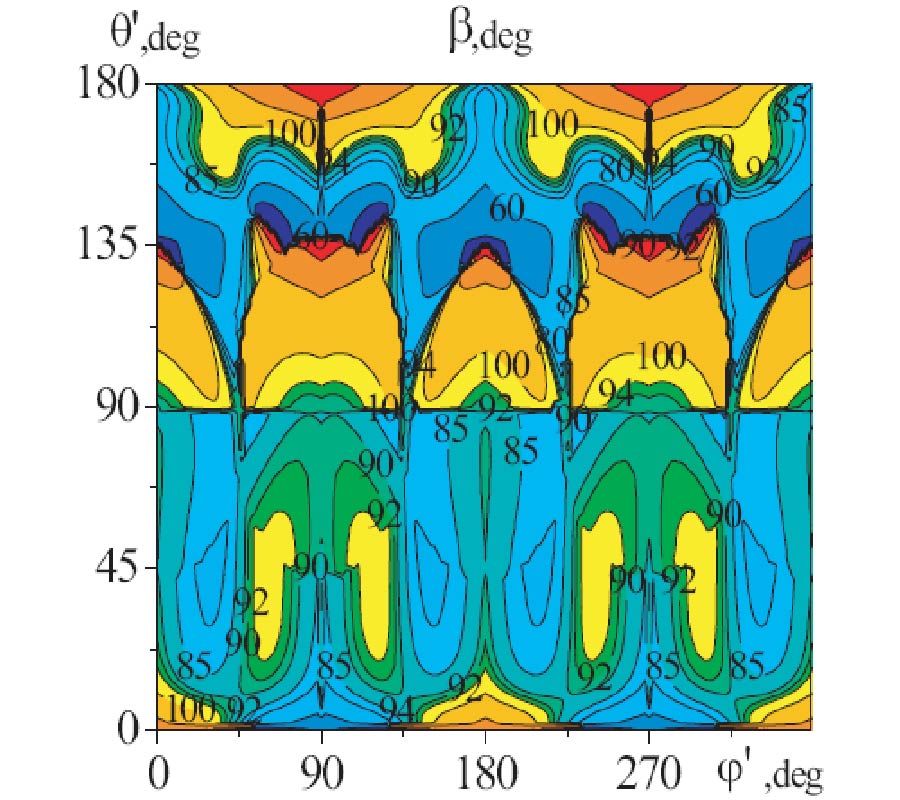
Currently, most full-polarimetric synthetic aperture radar (SAR) systems adopt linear polarization (LP). On the other hand, circular polarization (CP) is also becoming popular due to its various benefits over LP. However, since CP-SAR is an emerging technique, there are not many imaging and polarimetric analysis results in the literature. As a fundamental study on CP-SAR, this paper presents the results of an investigation on the CP properties of ground-based SAR (GB-SAR) echoes from various canonical targets and a rice paddy sample. The C-band data acquired in a laboratory environment are analyzed and interpreted by means of several factors such as calibration performance, experimental verification of theoretical scattering matrices, imaging quality and accuracy of scattering decomposition results. The eigenvector-based decomposition of the coherency matrix is adopted, and the performance of CP in retrieving the targets' dominant scattering mechanisms and physical parameters is evaluated from entropy-alpha (H-α) plane and orientation angle (β) value. Results demonstrate the effectiveness of CP in interpreting and discriminating the SAR image features mainly owing to its distinct advantage of highly reliable received signal strength.
ANALYSIS OF CIRCULAR POLARIZATION BACKSCATTERING AND TARGET DECOMPOSITION USING GB-SAR
2017-02-21
PIER Letters
Vol. 66, 53-58
A Frequency Reconfigurable Dual Pole Dual Band Bandpass Filter for X-Band Applications
Amit Bage and Sushrut Das
This paper presents a frequency reconfigurable dual-pole, dual-band waveguide bandpass filter. Varactor diode and chip capacitor loaded planar split ring resonators are used on the transverse plane of a waveguide to form the filter. Numerical simulations are carried out using CST microwave studio (version 14). Measured result shows tuning range of the bands are 8.12-8.58 GHz and 10.22-10.68 GHz, respectively. The measured result shows good agreement with the simulated one. The total length of the proposed filter is 10 mm.
A FREQUENCY RECONFIGURABLE DUAL POLE DUAL BAND BANDPASS FILTER FOR X-BAND APPLICATIONS
2017-02-20
PIER C
Vol. 71, 149-159
Printed Meander Line MIMO Antenna Integrated with Air Gap, DGS and RIS: A Low Mutual Coupling Design for LTE Applications
Shahanawaz Kamal and Anjali Ashish Chaudhari
Multiple-input and multiple-output (MIMO) is currently regarded as a key technology for long term evolution (LTE), but a critical effect is mutual coupling (S21) due to space constraint in miniaturized design. A compact-size antenna with low mutual coupling will be an ideal choice for better system performance. This paper describes the design of a small-size (48 × 48 mm2) MIMO antenna system with low mutual coupling for LTE 800 MHz applications. The antenna system comprises two FR-4 substrate layers; one printed with two meander line antennas (MLAs) and the other printed with reactive impedance surface (RIS) and defected ground structure (DGS). The properties of the antenna, such as S-Parameters, excited surface current distribution, far-field radiation pattern and diversity performance characteristics, were studied. The results indicated that MLAs rendered compactness to the system. Introduction of air gap (AG) between the two substrates, DGS and periodic square patches of RIS resulted in 452 MHz bandwidth and mutual coupling of -41.18 dB between antenna elements. The performance of the proposed design compared with other reported geometry has been demonstrated. Parameters including bandwidth, ratio of antenna area/improvement in S21, antenna efficiency and the envelope correlation coefficient were compared. Considering the results, the present system appears to be comparatively more efficient.
PRINTED MEANDER LINE MIMO ANTENNA INTEGRATED WITH AIR GAP, DGS AND RIS: A LOW MUTUAL COUPLING DESIGN FOR LTE APPLICATIONS
2017-02-19
PIER Letters
Vol. 66, 45-51
A 70 MHz~270 MHz Electrical Tunable LC Bandpass Filter Based on Mixed Coupling and Cross-Coupling
Linzhi Liu , Qian-Yin Xiang , Xiangrong Hu , Zongliang Zheng , Zhixiong Di and Quanyuan Feng
This paper presents an electrical tunable bandpass filter based on tunable LC resonators loaded with semiconductor varactors. Magnetic dominated mixed coupling between the tunable resonators is utilized to compensate the bandwidth of the tunable filter. Cross coupling is created by using magnetic dominated mixed coupling between the resonators and source to load electrical coupling, and two transmission zeros are generated beside the pass band. The tunable mechanism of the proposed filter is studied. The tunable filter is analyzed, designed, fabricated and measured. The measurement shows that the filter can be tuned from 70 MHz to 270 MHz with a fractional bandwidth from 27% to 21%.
A 70 MHZ~270 MHZ ELECTRICAL TUNABLE LC BANDPASS FILTER BASED ON MIXED COUPLING AND CROSS-COUPLING
2017-02-17
PIER C
Vol. 71, 141-148
Compact Wide-Beam Circularly Polarized Antenna with Stepped Arc-Shaped Arms for CNSS Application
Can Wang , Fushun Zhang , Fan Zhang , Ya-Li Yao and Tian Li
A single-feed circularly polarized wide-beam antenna is proposed for Compass Navigation Satellite System (CNSS) application. The antenna consists of four stepped arc-shaped arms, which are applied to generate circularly polarized radiation. To broaden the beamwidth, each arm is split up into two horizontal arc-shaped parts and one vertical part. The proposed antenna is simulated, fabricated and tested. The measured results show that the 10-dB return loss band of the proposed antenna is from 2.37 GHz to 2.65 GHz and the 3-dB axial ratio band from 2.42 GHz to 2.55 GHz, covering the receiving band (2.49175 GHz ± 4.08 MHz) of CNSS. Its 3-dB AR beamwidth is 181° at 2.491 GHz. For the horizontal radiation pattern of the proposed antenna at 5° elevation angle, the RHCP gain is greater than -1.1 dBic, and the out-of-roundness is 1 dB. Additionally, the proposed antenna has a size of 0.37λ0×0.37λ0×0.11λ0 with respect to 2.491 GHz.
COMPACT WIDE-BEAM CIRCULARLY POLARIZED ANTENNA WITH STEPPED ARC-SHAPED ARMS FOR CNSS APPLICATION
2017-02-17
PIER Letters
Vol. 66, 39-43
Investigation on Transient Response of Linear Dipole Antennas in the Presence of HEMP Based on Equivalent Circuit
Mahdi Boozari and Mohammad G. H. Alijani
Interfering electromagnetic energy could be a very powerful pulse which is generated and incident onto communication system such as linear wire antenna through direct radiation. In this paper, the transient responses of the linear wire antenna such as dipole antenna under the impact of the early-time (E1) high-altitude electromagnetic pulse (HEMP) are investigated using the equivalent circuit due to a primary element used in the modeling of systems for HEMP vulnerability is the linear wire antenna such as dipole antenna. Based on the equivalence concept of HEMP radiation source and linear wire antennas, the response at receiving antenna port is calculated efficiently with an uncomplicated circuit composed of pulse voltage source and lumped elements. Numerical results are presented to confirm the accuracy of the proposed method.
INVESTIGATION ON TRANSIENT RESPONSE OF LINEAR DIPOLE ANTENNAS IN THE PRESENCE OF HEMP BASED ON EQUIVALENT CIRCUIT
2017-02-17
PIER M
Vol. 54, 163-173
A Novel Field-Line-Circuit Hybrid Algorithm for Transient Responses Prediction of Transmission Lines Based on FDTD Method
Xiao Han , Jian Wang and Yin-Shui Xia
A novel field-line-circuit hybrid algorithm based on finite difference time domain (FDTD) method is devoted to predicting the electromagnetic responses of transmission line with multi-ports network in a shelter in this paper. The full wave FDTD method, transmission line FDTD method, and the modified nodal analysis (MNA) are combined to be compatible with the multi-level electromagnetic (EM) coupling progress of the electromagnetic interference (EMI) problem. The proposed method divides the EM couplings among the spatial EM fields, antennas, transmission line networks, and terminal circuits in some typical electronic systems into different levels with appreciate simulation techniques used. The accuracy of the hybrid method is verified by comparing the terminal transient voltage responses of transmission lines with the results obtained by PSPICE, and good agreements are achieved. Numerical calculations are further performed to show the terminal coupling voltages and currents, and the effects of incident directions and polarizations of the illuminated electromagnetic pulse (EMP) are both taken into account.
A NOVEL FIELD-LINE-CIRCUIT HYBRID ALGORITHM FOR TRANSIENT RESPONSES PREDICTION OF TRANSMISSION LINES BASED ON FDTD METHOD
2017-02-17
PIER M
Vol. 54, 153-162
A Printed Compact Band-Notched Antenna Using Octagonal Radiating Patch and Meander Slot Technique for UWB Applications
Ahmed A. Ibrahim , Mahmoud Abdelrahman Abdalla and Ahmed Boutejdar
An octagonal shape monopole antenna with dual band-notched features used for ultra-wide band applications is presented. The monopole antenna has good impedance matching from 3.4 GHz to 12 GHz. The dual notched bands are achieved by using a U-shaped parasitic strip and meandered slot etched in the radiating patch. The first band notched is achieved using meandered slot to reduce the interference with WIMAX from 3.3 GHz to 3.9 GHz. The second band notched is achieved using U-shaped parasitic strip which is placed above the ground plane to eliminate the interference with WLAN from 5.2 GHz to 5.9 GHz. The proposed antenna is designed, simulated and measured. The measured result show that the antenna structure achieves (VSWR < 2) from 3.2 to 10.8 GHz. Also, the simulated radiation pattern and current distribution at different frequencies are presented. The measured and simulated results confirm that the proposed antenna is suitable for UWB applications.
A PRINTED COMPACT BAND-NOTCHED ANTENNA USING OCTAGONAL RADIATING PATCH AND MEANDER SLOT TECHNIQUE FOR UWB APPLICATIONS
2017-02-17
PIER M
Vol. 54, 145-152
Intermodulation Distortion and Compression Point Measurement of Active Integrated Antennas Using a Radiative Method
Evgueni Kaverine , Sebastien Palud , Franck Colombel , Mohamed Himdi and Dominique Lemur
In this paper, a measurement procedure allowing the characterization of active integrated antennas in terms of intermodulation distortion and compression point inside of a parallel plate cell is presented. The validity of the radiative measurement is shown and compared to the traditional guided procedure. A good agreement between the two methods shows that this approach allows the evaluation of the overall linearity behavior of arbitrary complex integrated antennas and can serve as a complementary tool when the traditional guided method cannot be applied.
INTERMODULATION DISTORTION AND COMPRESSION POINT MEASUREMENT OF ACTIVE INTEGRATED ANTENNAS USING A RADIATIVE METHOD