Search Results(13794)

2017-04-04
PIER C
Vol. 73, 1-8
Compressive Sensing Reconstruction of Wideband Antenna Radiation Characteristics
Patrick Debroux and Berenice Verdin
Characterization measurements of wideband antennas can be a time intensive and an expensive process as many data points are required in both the angular and frequency dimensions. Parallel compressive sensing is proposed to reconstruct the radiation-frequency patterns (RFP) of antennas from a sparse and random set of measurements. The modeled RFP of the dual-ridge horn, bicone, and Vivaldi antennas are used to analyze the minimum number of measurements needed for reconstruction, the difference in uniform versus non-uniform reconstruction, and the sparsity transform function used in the compressive sensing algorithm. The effect of additive white Gaussian noise (AWGN) on the minimum number of data points required for reconstruction is also studied. In a noise-free environment, the RFP of the antennas were adequately reconstructed using as little as 33% of the original data points. It was found that the RFPs were adequately reconstructed with less data points when the discrete cosine transforms (DCT), rather than discrete Fourier transforms (DFT) was used in the compressive sensing algorithm. The presence of noise increases the number of data points required to reconstruct an RFP to a specified error tolerance, but the antenna RFPs can be reconstructed to within 1% root-mean-square-error of the original with a signal to noise ratio as high as -15 dB. The use of compressive sensing can thus lead to a new measurement methodology whereby a small subset of the total angular and frequency measurements is taken at random, and a full reconstruction of radiation and frequency behavior of the antenna is achieved during post-processing.
COMPRESSIVE SENSING RECONSTRUCTION OF WIDEBAND ANTENNA RADIATION CHARACTERISTICS
2017-04-03
PIER Letters
Vol. 67, 33-38
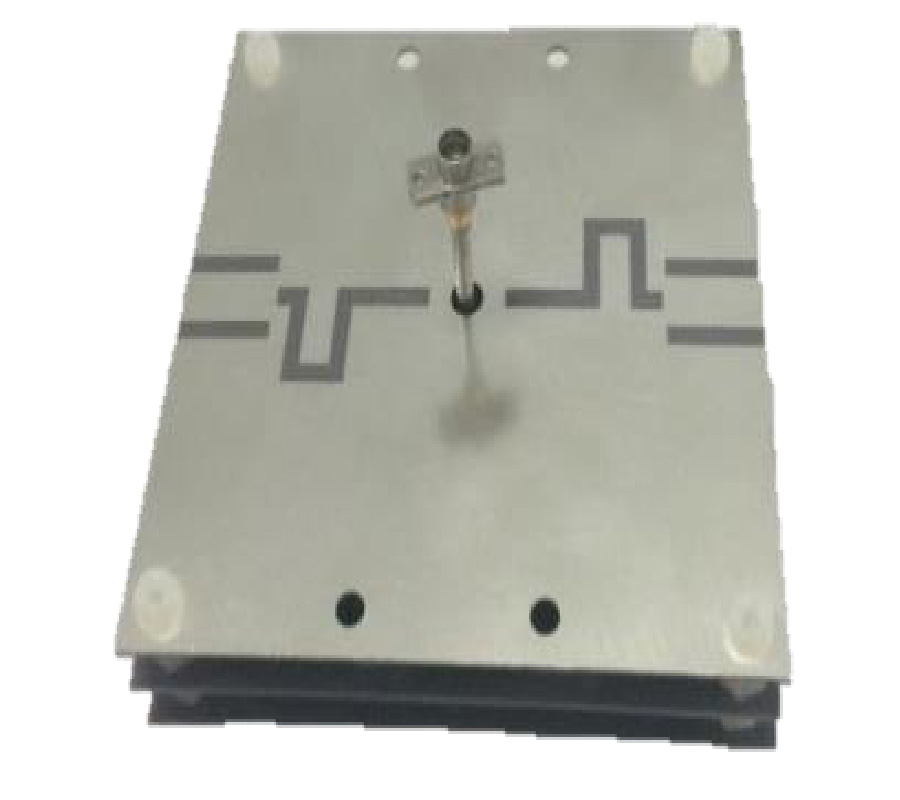
A Miniaturized 878 MHz Slotted Meander Line Monopole Antenna for Ultra High Frequency Applications
Nabilah Ripin , Ahmad Asari Sulaiman , Nur Emileen Abdul Rashid , Mohamad Fahmi Hussin and Nor Najwa Ismail
A slotted meander line printed monopole antenna for low frequency applications at 878 MHz is presented. The operating frequency of the conventional printed monopole antenna is greatly reduced by the presence of the slots and meander line which lead to the reduction of the antenna size. The size reduction up to 70% compared to the conventional reference antenna is achieved in this study. The antenna has a simple structure and small antenna size of 46.8 mm × 74 mm or 0.137λ0 x 0.217λ0. The antenna has been fabricated on a low-cost FR4 substrate and measured to validate the simulation performances. Measured results display that the proposed antenna produces omnidirectional radiation pattern of impedance bandwidth of 48.83 MHz and the maximum gain of -1.18 dBi.
A MINIATURIZED 878 MHZ SLOTTED MEANDER LINE MONOPOLE ANTENNA FOR ULTRA HIGH FREQUENCY APPLICATIONS
2017-04-03
PIER M
Vol. 55, 169-178
Structural Optimization of Silica-Based 2 X 2 Multimode Interference Coupler Using a Real-Coded Micro-Genetic Algorithm
Takashi Yasui , Jun-ichiro Sugisaka and Koichi Hirayama
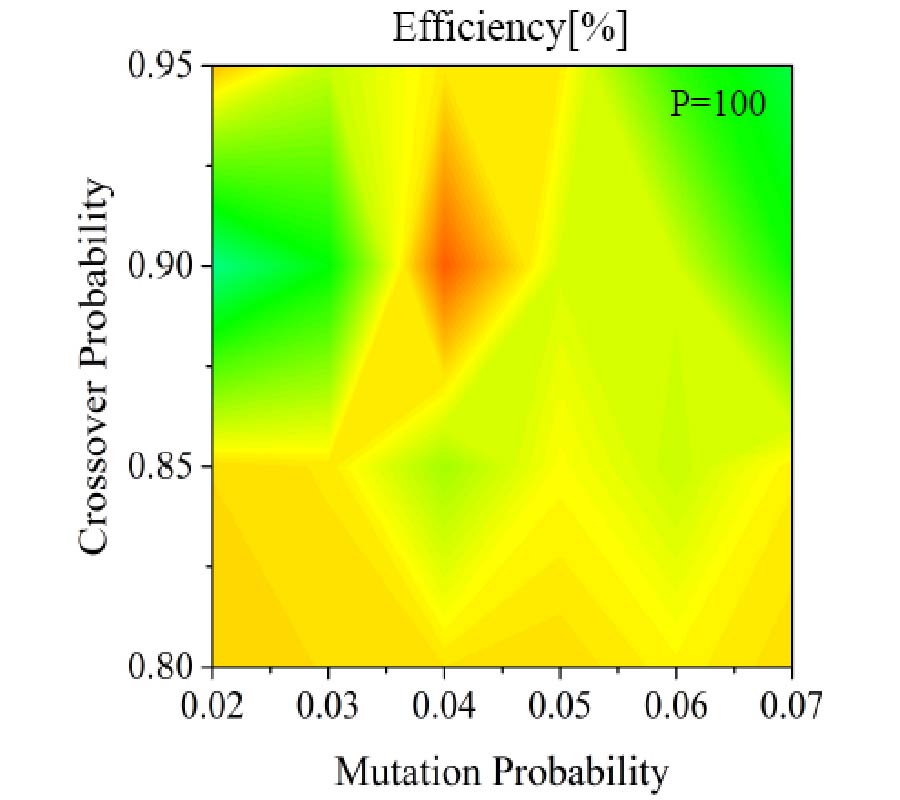
We propose a structural optimization method based on a real-coded micro-genetic algorithm to realize a weakly guided 2 × 2 multimode interference (MMI) coupler with low imbalance and excess loss over a wavelength range from 1520 to 1580 nm. The proposed method was applied to silica-based 2×2 MMI couplers with a relative refractive index difference of 5.5%. The optimized result showed an imbalance of less than 8.4×10⁻³ dB, an excess loss of less than 0.14 dB, and a normalized output power of more than 48% over the operation wavelength range. The proposed method achieved an optimized 2×2 MMI coupler after 250 times of propagation analysis per wavelength, which is less than 6.7% of those by the conventional methods for 4×4 and 1×4 MMI couplers, and was proven to be more effective than the conventional methods. To consider realistic optical devices, 2×2 MMI couplers whose values of structural parameters are close to the optimized values within the accuracy of typical fabrication tolerance are also analyzed. The results are comparable to those of the optimized 2×2 MMI coupler.
STRUCTURAL OPTIMIZATION OF SILICA-BASED 2 X 2 MULTIMODE INTERFERENCE COUPLER USING A REAL-CODED MICRO-GENETIC ALGORITHM
2017-04-03
PIER M
Vol. 55, 161-167
A Fast Explicit FETD Method Based on Compressed Sensing
Qi Qi , Ming Sheng Chen , Zhixiang Huang , Xinyuan Cao and Xian-Liang Wu
Linear equations must be solved at each time step as the explicit finite element time-domain (FETD) method is used to solve time dependent Maxwell curl equations, which leads to a huge amount of computational cost in a long period time simulation. A new scheme to accelerate the iteration solution for matrix equation is proposed based on compressed sensing (CS), in which a low rank measurement matrix is established by randomly extracting rows from mass matrix. Meanwhile, to reduce the number of measurements required, a sparse transform is constructed with the help of prior knowledge offered by the solution results of previous time steps. Numerical results of homogeneous cavity and inhomogeneous cavity are discussed to validate the effectiveness and accuracy of the proposed approach.
A FAST EXPLICIT FETD METHOD BASED ON COMPRESSED SENSING
2017-04-03
PIER
Vol. 158, 63-72
Realization of All-Optical Digital Amplification in Coupled Nonlinear Photonic Crystal Waveguides
Vakhtang Jandieri , Ramaz Khomeriki , Daniel Erni and Weng Cho Chew
In this conceptual study, all-optical amplification of the light pulses in two weakly coupled nonlinear photonic crystal waveguides (PCWs) is proposed. We consider two adjacent PCWs, which consist of line defects in a 2D square lattice of periodically distributed circular rods made from dielectric material with Kerr-type nonlinearity. Dispersion diagrams of the PCW's symmetric and antisymmetric modes are analyzed using a recently developed analytical formulation. The operating frequency is properly chosen to be located at the edge of the PCW's dispersion diagram (i.e. adjacent to the photonic crystals low-energy band edge), where in the linear case no propagation modes are excited. However, in case of a nonlinear medium when the amplitude of the injected signal is above some threshold value, solitons are formed propagating inside the coupled nonlinear PCWs. The near field distributions of the propagating light pulse inside the coupled nonlinear PCWs and the output power of the received signal are numerically studied in a detail. A very good agreement between the analytic soliton solution based on the nonlinear Schrödinger equation and numerical result is obtained. Amplification coefficients are calculated for the various amplitudes of the input signals. The results vividly demonstrate the effectiveness of the weakly coupled nonlinear PCWs as an all-optical digital amplifier.
REALIZATION OF ALL-OPTICAL DIGITAL AMPLIFICATION IN COUPLED NONLINEAR PHOTONIC CRYSTAL WAVEGUIDES
2017-04-02
PIER M
Vol. 55, 153-159
Contribution to the Analytical Evaluation of the Efficiency and the Optimal Control of Conductive Fluids by Electromagnetic Forces
Hocine Menana and Celine Gabillet
This work deals with the evaluation of the efficiency and optimal control of conductive fluids by using electromagnetic forces. An electromagnetic actuator based on a succession of electrodes and magnets annuli is implemented on the surface of the rotating cylinder of a Taylor-Couette device. Considering a laminar flow, the magnetohydrodynamic (MHD) problem is formulated and solved analytically. The different MHD powers, control efficiency and optimal values of the control parameters are evaluated.
CONTRIBUTION TO THE ANALYTICAL EVALUATION OF THE EFFICIENCY AND THE OPTIMAL CONTROL OF CONDUCTIVE FLUIDS BY ELECTROMAGNETIC FORCES
2017-03-31
PIER B
Vol. 74, 1-21
Electric Potential and Field Calculation of Charged BEM Triangles and Rectangles by Gaussian Cubature
Ferenc Gluck and Daniel Hilk
It is a widely held view that analytical integration is more accurate than the numerical one. In some special cases, however, numerical integration can be more advantageous than analytical integration. In our paper we show this benefit for the case of electric potential and field computation of charged triangles and rectangles applied in the boundary element method (BEM). Analytical potential and field formulas are rather complicated (even in the simplest case of constant charge densities), they have usually large computation times, and at field points far from the elements they suffer from large rounding errors. On the other hand, Gaussian cubature, which is an efficient numerical integration method, yields simple and fast potential and field formulas that are very accurate far from the elements. The simplicity of the method is demonstrated by the physical picture: the triangles and rectangles with their continuous charge distributions are replaced by discrete point charges, whose simple potential and field formulas explain the higher accuracy and speed of this method. We implemented the Gaussian cubature method for the purpose of BEM computations both with CPU and GPU, and we compare its performance with two different analytical integration methods. The ten different Gaussian cubature formulas presented in our paper can be used for arbitrary high-precision and fast integrations over triangles and rectangles.
ELECTRIC POTENTIAL AND FIELD CALCULATION OF CHARGED BEM TRIANGLES AND RECTANGLES BY GAUSSIAN CUBATURE
2017-03-31
PIER B
Vol. 73, 147-161
Analysis on the Floquet Scattering Lobes from Microwave Calibration Targets
Qingsong Gao , Yuan Tao , Chunyan Jing , Ming Jin , Dong Xia and Ming Bai
The calibration target is a vital instrument for calibrating space-borne microwave radiometers, and its emissivity performance must be accurately determined before usage. Based on the Kirchhoff's law of thermal equilibrium, the emissivity of a calibration target can be determined from its electromagnetic reflectivity, which is defined as space integration of scattering. However, due to the general shape of periodic coated sharp pyramids, the scattering from calibration targets shows Floquet mode properties with scattering lobes in upper space. That phenomenon must be considered in the reflectivity measurement of calibration target, especially in the mono-static backscattering configuration. To support such backscattering-based reflectivity measurement, the Floquet mode and scattering patterns from periodic unit and finite-sized array are investigated by numerical simulations, more specifically, by the finite-difference time domain (FDTD) algorithm. The investigations include the scattering power distributions among scattering lobes from coated and bare pyramid arrays, and the ratio of total reflection to backscattering in cases of typical parameters. It is found in the millimeter wave region that the scattering power from bare pyramids is still concentrated in the backscattering lobe in the mono-static configuration, while for the coated pyramids the scattering power is distributed around Floquet modes. For the considered geometry and coating parameters, the power ratio of total scattering to backscattering can be more than 10 dB at the cared frequencies. After all, the numerical results provide referencing correction factor for actual measurement studies. It is also validated by numerical results and suggested in practice, to use periodic simulations of low computational burden to evaluate the compensation factor for the mono-static reflectivity measurement.
ANALYSIS ON THE FLOQUET SCATTERING LOBES FROM MICROWAVE CALIBRATION TARGETS
2017-03-31
PIER C
Vol. 72, 187-196
A Novel Reconfigurable Antenna with Separate Sensing Mechanism for CR System
Sonia Sharma and Chandra Charu Tripathi
A novel hybrid antenna capable of both spectrum sensing and then accordingly reconfiguring its operating characteristics is proposed here. The proposed antenna is versatile in nature as it can reconfigure its resonant frequency, polarization state, bandwidth and radiation pattern. The physical structure of antenna is also versatile in nature as different printed parts are used several times in different operating modes using PIN diodes. The proposed versatile antenna senses spectrum over a wide frequency range from 3 GHz-12 GHz by using a separate UWB antenna. After sensing, the antenna can reconfigure its frequency in five different bands using three matching stubs. The proposed antenna can reconfigure its polarization state over two frequency bands by controlling the switchable slot. The antenna can also reconfigure its pattern by shorting the parasitic arc using PIN diodes. The prototype is fabricated, and the functioning is verified through measurement.
A NOVEL RECONFIGURABLE ANTENNA WITH SEPARATE SENSING MECHANISM FOR CR SYSTEM
2017-03-31
PIER Letters
Vol. 67, 25-32
A Printed Circularly Polarized Loop Antenna with Beam Parallel with Its Plane
Ya-Li Yao , Fu-Shun Zhang and Fan Zhang
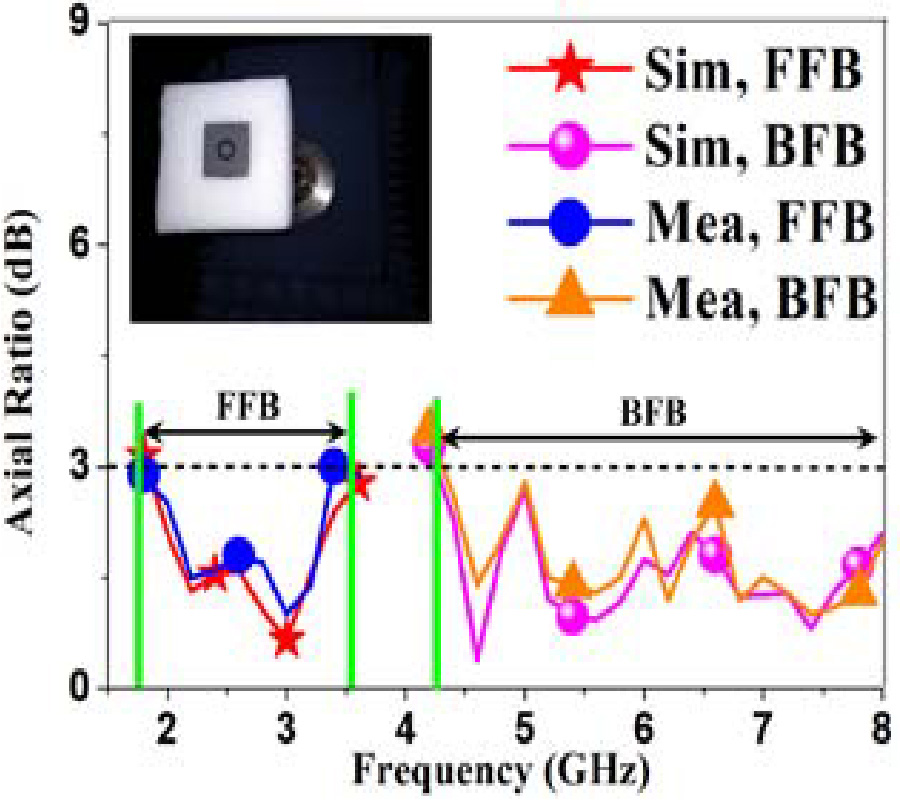
A printed loop antenna with a circularly polarized beam parallel with its plane is proposed. The proposed quadrangle loop antenna is fed with microstrip line at one of its corners. The microstrip line part and loop part provide vertical polarization and horizontal polarization, respectively. The proposed antenna is simple in structure and can be easily integrated with other microwave components on the same substrate. Simulated results show that the proposed antenna has a wide impedance bandwidth (|S11| < −10 dB) and wide 3-dB AR bandwidth ranging from 8.0 to 10.5 GHz (27%). A prototype of the proposed antenna is fabricated and tested. The measured and simulated results have good agreement.
A PRINTED CIRCULARLY POLARIZED LOOP ANTENNA WITH BEAM PARALLEL WITH ITS PLANE
2017-03-31
PIER Letters
Vol. 66, 135-141
RCS Reduction Using a Miniaturized Uni-Planar Electromagnetic Band Gap Structure for Circularly Polarized Microstrip Antenna Array
Lei Zhang and Tao Dong
In this paper, a new method for radar cross section (RCS) reduction of circularly polarized (CP) microstrip antenna array with small element spacing is proposed. By employing the element rotation technique and loading EBG structures, the in-band and out-of-band RCSs are reduced simultaneously despite the extreme small space between array elements. The simulated results show that the proposed antenna has an average RCS reduction over 10 dB in the X-band for x-polarized and y-polarized incident waves impinging from normal direction compared to the original CP microstrip antenna array, indicating a fractional bandwidth of 40%. The maximum RCS reduction is over 25 dB. Meanwhile, the radiation performance of the proposed antenna array is kept.
RCS REDUCTION USING A MINIATURIZED UNI-PLANAR ELECTROMAGNETIC BAND GAP STRUCTURE FOR CIRCULARLY POLARIZED MICROSTRIP ANTENNA ARRAY
2017-03-30
PIER C
Vol. 72, 177-186
Design of Broadband, High-Efficiency, and High-Linearity GaN HEMT Class-j RF Power Amplifier
Seyed Alireza Mohadeskasaei , Fuhong Lin , Xianwei Zhou , Sani U. Abdullah and Abdurahman Ahmat
In this paper, the design of a broadband, high-efficiency, and high-linearity Class-J GaN HEMT RF power amplifier (PA) over 1.6-2.6 GHz is explained. The source impedance is conjugate-matched to the input impedance of the device resulted from small signal simulation to make a high-gain power amplifier. The load impedance related to the maximum power added efficiency (PAE) and maximum output power is obtained by pulling the only fundamental and second harmonic components over frequency bandwidth. Thus, not only a high-efficiency PA but also a high-linearity PA is formed. The input and output matching networks are implemented by microstrip transmission lines. The theoretical PA designed is optimized using computer-aided simulations. The fabricated PA provides output power in the range of 38-39.9 dBm with 60%-73% PAE and 15-16.3 dB power gain across the band. The worst measured ACLR1 as the PA is fed by the CDMA signal with 1.2288 MHz bandwidth is at a level of -38.6 dBc. A close agreement between the measured and simulation results is observed due to the use of high-order harmonic balance simulator and high-accuracy implementation procedure.
DESIGN OF BROADBAND, HIGH-EFFICIENCY, AND HIGH-LINEARITY GAN HEMT CLASS-J RF POWER AMPLIFIER
2017-03-30
PIER Letters
Vol. 67, 19-24
A Second Order Decoupling Design Using a Resonator and an Interdigital Capacitor for a MIMO Antenna Pair
Ziyang Wang , Luyu Zhao , Aobo Chen and Ying-Zeng Yin
In this paper, a second-order decoupling design using a resonator and an interdigital capacitor is proposed for an MIMO antenna pair in mobile terminals. The proposed antenna pair consists of an interdigital capacitor and an open loop resonator. By properly combining the responses of the resonator and interdigital capacitor, a second-order decoupling performance can be achieved. Meanwhile, isolation between the two antennas is increased by at least 15 dB within the frequency band of interest, from -5 dB to -20 dB. Moreover, the decoupled antenna pair maintains good impedance matching performance from 2.4 GHz to 2.5 GHz. The proposed decoupled antenna pair and its coupled counterpart have been fabricated and measured. The measured results agree with the simulation ones. The proposed MIMO antenna pair is an eligible candidate for Wi-Fi MIMO applications in the 2.4 GHz band.
A SECOND ORDER DECOUPLING DESIGN USING A RESONATOR AND AN INTERDIGITAL CAPACITOR FOR A MIMO ANTENNA PAIR
2017-03-28
PIER B
Vol. 73, 131-145
Introducing Deeper Nulls and Reduction of Side-Lobe Level in Linear and Non-Uniform Planar Antenna Arrays Using Gravitational Search Algorithm
Maryam Hesari and Ataallah Ebrahimzadeh
Array antennas synthesis is one of the most important problems in the optimization of antenna and electromagnetics. In this paper, a recently developed metaheuristic algorithm, known as the Gravitational Search Algorithm (GSA), is employed for the pattern synthesis of linear and non-uniform planar antenna arrays with desired pattern nulls in the interfering directions and minimum side lobe level (SLL) by position-only optimization. Like other nature-inspired algorithms, GSA is also a population-based method and uses a population of solutions to proceed to a global solution. The results of GSA are validated by comparing them with the results obtained using particle swarm optimization (PSO) and some other algorithms reported in literature for linear and planar array. The side-lobe level and null depth obtained from gravitational search algorithm for planar array are improved up to -30 dB and -200 dB, respectively. The results reveal the superior performance of GSA to the other techniques for the design of linear and planar antenna arrays.
INTRODUCING DEEPER NULLS AND REDUCTION OF SIDE-LOBE LEVEL IN LINEAR AND NON-UNIFORM PLANAR ANTENNA ARRAYS USING GRAVITATIONAL SEARCH ALGORITHM
2017-03-28
PIER C
Vol. 72, 167-175
Design and Evaluation of a Dual-Load Waveguide Calorimeter
Wei He , Weiwei Zhang , Chunyue Cheng and Hongcheng Yin
A broadband rectangular waveguide calorimeter for power sensor calibration in the millimeter-wave region is presented in this study. The calorimeter has a dual-load structure, an operational frequency range of 26.5 GHz to 40 GHz, and high substitution efficiency and sensitivity. Its effective efficiency uncertainty is 0.74%~1.1%.
DESIGN AND EVALUATION OF A DUAL-LOAD WAVEGUIDE CALORIMETER
2017-03-27
PIER M
Vol. 55, 143-152
An Effective SAR Reduction Technique of a Compact Meander Line Antenna for Wearable Applications
Shankar Bhattacharjee , Monojit Mitra and Sekhar Ranjan Bhadra Chaudhuri
In this paper a symmetrically structured meander line antenna placed around a T-shaped junction with truncated ground planes is proposed for on-body applications. The designed antenna has a percentage bandwidth of 69.04% covering the GSM 1800 band internationally accepted industrial scientific and medical (ISM) 2.4-2.5 GHz band, 4G LTE band 7 (2.5-2.69 GHz). The antenna is compact in nature with a size of 30×40×1.6 mm3. SAR reduction is achieved without the attachment of any auxiliary unit. It is found that the application of designed truncated ground planes around positions of high electric field (E-field) region is an effective solution in reducing Specific Absorption Rate (SAR) significantly through field cancellation technique. In addition maximum temperature elevation due to electromagnetic wave absorption has also been computed. The antenna is simulated over a homogenous human dry skin model as well as head model. The proposed design is fabricated and measured, and it is found to be compatible for real world applications while considering its miniaturization, radiation patterns and SAR limitations.
AN EFFECTIVE SAR REDUCTION TECHNIQUE OF A COMPACT MEANDER LINE ANTENNA FOR WEARABLE APPLICATIONS
2017-03-27
PIER M
Vol. 55, 133-142
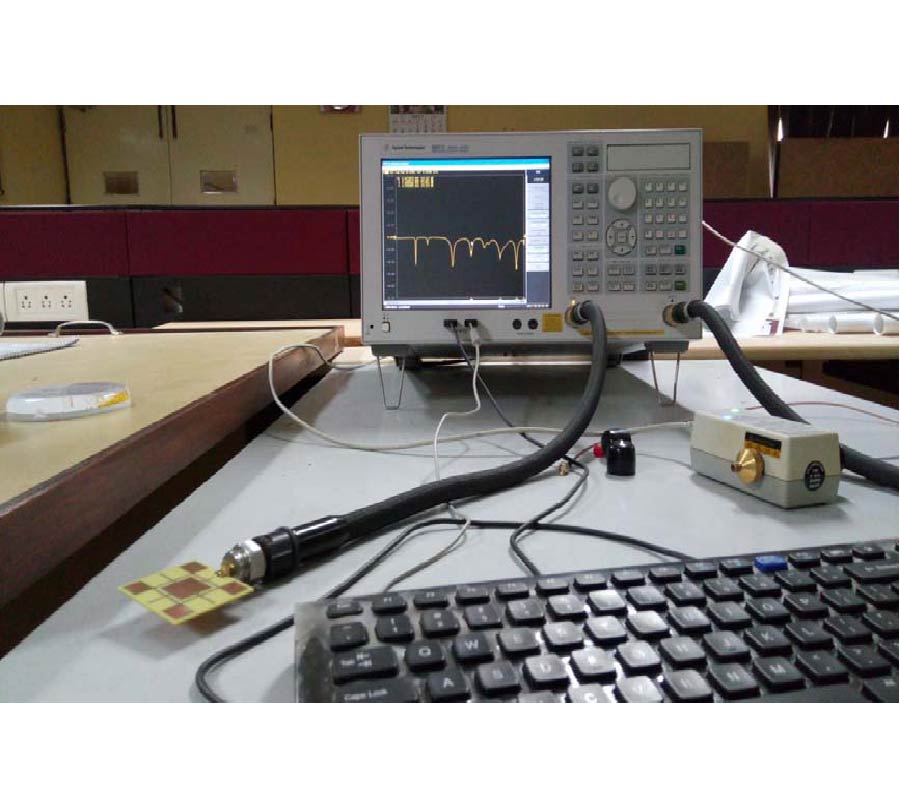
Numerical Simulation of Fragment-Type Antenna by Using Finite Difference Time Domain (FDTD)
Lixia Yang , Xiao-Dong Ding , Da-Wei Ding and Jing Xia
Finite Difference Time Domain (FDTD) method is widely used in the simulation of various kinds of antennas. In this paper, research on the numerical simulation of the fragment-type antenna by using FDTD is conducted. The fragment-type antenna structures with different cell sizes and different overlapping sizes are simulated and measured. The validity of the numerical simulation of the fragment-type antenna by using FDTD is verified through the comparison between the simulated and measured return losses. In addition, its efficiency in terms of computation time shows great potential in engineering applications, especially when the design matrix is large enough.
NUMERICAL SIMULATION OF FRAGMENT-TYPE ANTENNA BY USING FINITE DIFFERENCE TIME DOMAIN (FDTD)
2017-03-26
PIER C
Vol. 72, 159-165
Mechanically Reconfigurable Radiation Pattern Slot Antenna Array Feeded by Bended Sectoral Horn and Metalized Wood Splitter
Alexis Martin , Vincent Le Neillon , Antoine Jouade and Mohamed Himdi
In this paper, an antenna with reconfigurable radiation pattern in H-plane at 2.45 GHz for high power applications is presented. It is based on a 3-slot array in E-plane covered partially with two mobile metallic flaps in order to reduce their length, and in consequence, they ensure the mechanical reconfiguration pattern in H-plane. The power distribution of the array is ensured with a power splitter in E-plane, and the uniform and in phase field distribution on the slots is ensured with a sectorial horn placed before the splitter. To reduce cost and weight, the power splitter is realized with metalized wood.
MECHANICALLY RECONFIGURABLE RADIATION PATTERN SLOT ANTENNA ARRAY FEEDED BY BENDED SECTORAL HORN AND METALIZED WOOD SPLITTER
2017-03-24
PIER B
Vol. 73, 117-130
A Computational Study Using Time Reversal Focusing for Hyperthermia Treatment Planning
Pegah Takook , Hana Dobsicek Trefna , Xuezhi Zeng , Andreas Fhager and Mikael Persson
In hyperthermia treatment planning (HTP) the goal is to find the amplitudes and phases of antennas in the applicator to efficiently heat the tumor. To do this prior information regarding tumor characteristics such as the size, position and geometry, in addition to an exact model of the hyperthermia applicator is needed. Based on this information, the optimal frequency of operation can be determined. In this paper the optimum frequency for hyperthermia treatment based on the tumor and applicator characteristics, using time reversal as the focusing technique, is studied. As prior information, we consider tumor size and position, the number of the antennas in the applicator and the frequency characteristics. The obtained optimal frequency range is found using hyperthermia quality indicator values calculated from simulations. We also determine the optimum position of the virtual source in the initial step of the time reversal method to increase the quality of the treatment.
A COMPUTATIONAL STUDY USING TIME REVERSAL FOCUSING FOR HYPERTHERMIA TREATMENT PLANNING
2017-03-24
PIER Letters
Vol. 67, 13-18
A Compact Quarter-Mode SIW Bandpass Filter with an Extremely Wide Stopband
Wei Yang , Guo Hui Li , Yudan Wu , Ya-Na Yang , Li Sun and Xuexia Yang
This paper presents a C-band wide stopband bandpass filter (BPF) using quarter mode substrate integrated waveguide (QMSIW) cavities. The BPF is simply constructed by combining S-shaped slot and L-shaped slot loaded quarter-mode substrate integrated waveguide. A special negative coupling scheme with symmetrical S-shaped slots on the top and bottom metal planes connected by metallic vias is developed. The proposed structure provides more design flexibility in arranging the pitch of vias owing to the extended slot length. The filter has fractional bandwidth of 25% at center frequency of 5.5 GHz with return loss better than 24 dB and insertion loss less than 1.1 dB. Moreover, its first spurious response occurs at 22.5 GHz (about four times the central frequency), exhibiting an extremely wide stopband performance. An experimental SIW filter was fabricated, and good agreement was achieved between the simulated and measured results.
A COMPACT QUARTER-MODE SIW BANDPASS FILTER WITH AN EXTREMELY WIDE STOPBAND