Search Results(13794)

2017-04-11
PIER C
Vol. 73, 81-86
Precise Finite Difference Analysis of Lorentz Force Acting on Metal Nanoparticle Irradiated with Light
Takashi Yamaguchi , Mizue Ebisawa and Shinichiro Ohnuki
A finite difference method in the frequency domain is evaluated to clarify characteristics of the Lorentz force exerted on a metal nanoscale particle by light irradiation. Numerical results are compared with exact values obtained from Mie theory to show that applying a smoothing algorithm to the surface of a nanoparticle increases the accuracy of the simulation. Analysis of the Lorentz force exerted between two spheres aligned closely indicates that strong forces cause the spheres to attract each other at the plasmon resonant frequency. It was also noticed that application of the smoothing algorithm was indispensable in order to achieve the above result.
PRECISE FINITE DIFFERENCE ANALYSIS OF LORENTZ FORCE ACTING ON METAL NANOPARTICLE IRRADIATED WITH LIGHT
2017-04-11
PIER C
Vol. 73, 75-80
Electrically Reconfigurable Radiation Patterns of Slot Antenna Array Using Agile Plasma Wall
Oumar Alassane Barro , Mohamed Himdi and Alexis Martin
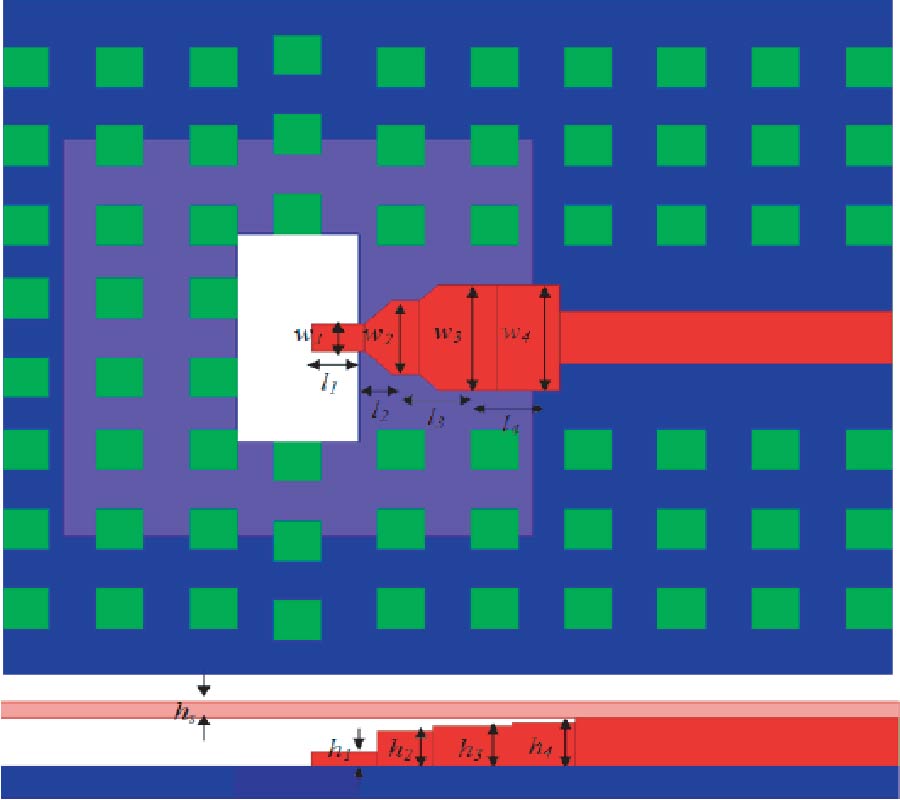
In this paper, an antenna with reconfigurable radiation pattern in the H-plane at 2.45 GHz for high power applications is presented. It is based on a 3 slots array in the E-plane covered partially with a wall of plasma in order to reduce the length of the slots and consequently ensure electrically a modification of the radiation pattern in the H-plane. The power distribution of the array is ensured with a power splitter.
ELECTRICALLY RECONFIGURABLE RADIATION PATTERNS OF SLOT ANTENNA ARRAY USING AGILE PLASMA WALL
2017-04-10
PIER B
Vol. 74, 77-91
Mathematical Model of Large Rectenna Arrays for Wireless Energy Transfer
Dmitriy V. Gretskih , Andrey V. Gomozov , Viktor A. Katrich , Anatoliy I. Luchaninov , Mikhail Nesterenko and Yuriy M. Penkin
A mathematical model of a large rectenna array (LRA) is presented. It is shown that matrices describing the LRA linear subsystem have a number of specific features that must be considered when the rectenna mathematical model is developed. The state equation for the LRA was obtained. It is shown that the model functioning in nonlinear mode of the infinite rectenna array can be reduced to finding the parameters of one equivalent receiver-rectifier element (RRE) at the fundamental frequency and its harmonic. The external parameters of the RRE and LRA characteristics were obtained.
MATHEMATICAL MODEL OF LARGE RECTENNA ARRAYS FOR WIRELESS ENERGY TRANSFER
2017-04-10
PIER B
Vol. 74, 61-75
On the Influence of Channel Tortuosity on Electric Fields Generated by Lightning Return Strokes at Close Distance
Carlo Petrarca , Simone Minucci and Amedeo Andreotti
In this paper the results of the estimated electric field associated with tortuous lightning paths at close distance (50 m to 500 m) are shown. Such results are compared with experimental data available in the literature and are illustrated along with a quantitative analysis of the field waveforms and their frequency spectra. The limits of the usual straight-vertical channel assumption and the influence of tortuosity at different azimuth and distances from the lightning channel base are also highlighted.
ON THE INFLUENCE OF CHANNEL TORTUOSITY ON ELECTRIC FIELDS GENERATED BY LIGHTNING RETURN STROKES AT CLOSE DISTANCE
2017-04-10
PIER C
Vol. 73, 65-73
Single-Layer Dual-Band Dual-Linear-Polarization Reflectarray Antenna with Different Beams for Each Band
Chunhui Han , Yunhua Zhang and Qingshan Yang
A novel single-layer unit cell structure is proposed to design a dual-band dual-linear-polarization reflectarray antenna with different beams for X and Ku bands. The unit cell structure is composed of a circular ring and two cross bow-tie structures combined by a circular patch. Five tunable geometric parameters can be optimized to achieve the required phase distributions of the reflectarray antenna with independent radiation patterns for each band which is a challenge for single-layer linearly polarized reflectarrays. Besides, the proposed unit cell structure has the ability to meet the demand of dual-polarization applications. A 301-element center-fed reflectarray with an octagon-shape aperture operating at X and Ku bands is designed, manufactured and measured to verify the dual-band performance of the proposed unit cell. The measured results show that the object of achieving different beams at different frequencies is realized with good radiation patterns at both designed frequencies. Besides, the similar radiation patterns for both linear polarizations are also achieved at both bands.
SINGLE-LAYER DUAL-BAND DUAL-LINEAR-POLARIZATION REFLECTARRAY ANTENNA WITH DIFFERENT BEAMS FOR EACH BAND
2017-04-10
PIER C
Vol. 73, 55-64
Efficient Dual-Band Asymmetric Transmission of Linearly Polarized Wave Using a Chiral Metamaterial
Yajun Liu , Song Xia , Hongyu Shi , Anxue Zhang and Zhuo Xu
In this paper, a three-layered chiral metamaterial composed of three twisted split-ring resonators is proposed and investigated. The simulated and measured results show that the proposed metamaterial can achieve efficient asymmetric transmission of linearly polarized wave and cross-polarization conversion for two distinct bands: X (6.95-10.05 GHz) and Ku (15.55-18.47 GHz). In the X-band, an incident y-polarized wave is almost converted to a x-polarized wave, while an incident x-polarized wave is completely blocked from passing through the structure. In the Ku-band, an incident x-polarized wave is almost converted to a y-polarized wave, while an incident y-polarized wave is blocked from passing through the structure. Moreover, the simulated and measured results confirm that the proposed metamaterial has a good robustness to misalignment, which provides convenience for fabricating in practical applications. Finally, the physical mechanism of this dual-band asymmetric transmission effect can be explained based on the different resonant modes of the proposed structure.
EFFICIENT DUAL-BAND ASYMMETRIC TRANSMISSION OF LINEARLY POLARIZED WAVE USING A CHIRAL METAMATERIAL
2017-04-10
PIER Letters
Vol. 67, 47-51
Design of Asymmetric Dual-Band Microwave Filters
Zhongxiang Zhang , Jun Ding , Shuo Wang and Hualiang Zhang
This paper presents the design and implementation of dual-band filters. The proposed method works well for dual-band filters with asymmetric dual-passband, high selectivity, and pre-assigned in-band return loss levels (e.g. equal or un-equal at two frequency bands). To verify the design concept, a prototype dual-band filter using combline coaxial cavity-type resonators was designed, fabricated and tested. Good agreement has been achieved among the theoretical synthesis results, simulation results and measurement results.
DESIGN OF ASYMMETRIC DUAL-BAND MICROWAVE FILTERS
2017-04-09
PIER M
Vol. 55, 189-201
SAR Imaging on HEO Satellites with an Improved Frequency-Domain Algorithm
Po-Chih Chen and Jean-Fu Kiang
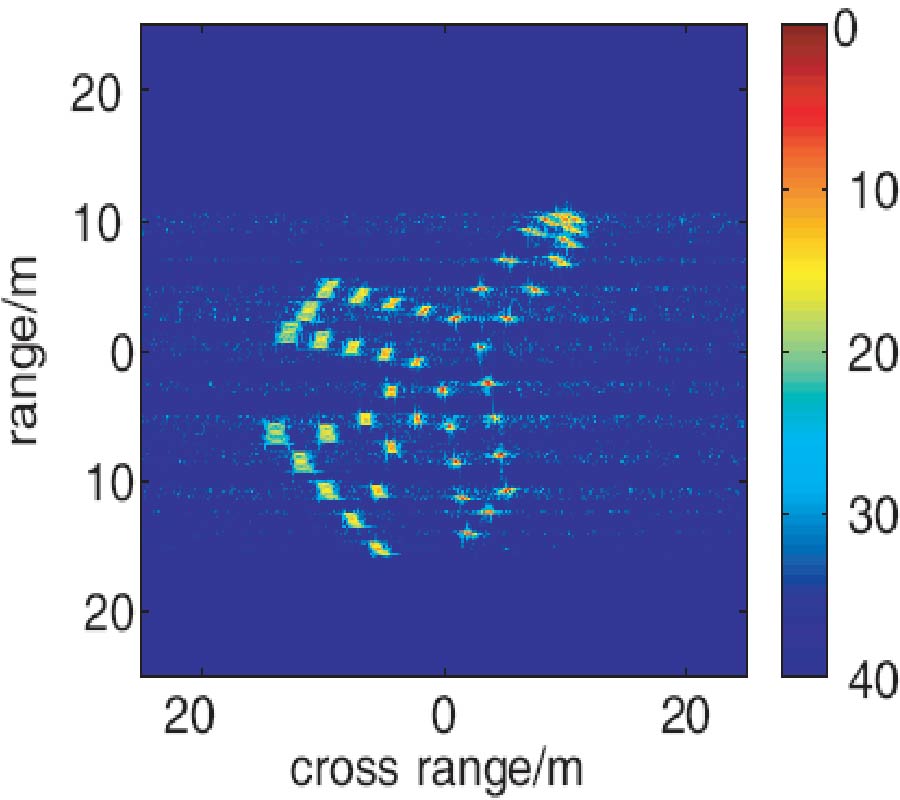
The possibility of employing highly-elliptical-orbit (HEO) satellites for SAR imaging is investigated. A constellation of two satellites in the Tundra orbits, which are capable of covering all the high-latitude areas, are chosen as the platforms for SAR imaging. The received signals are processed with an improved frequency-domain algorithm (FDA) to reconstruct the image. Simulation results verify that the proposed method can produce better SAR images with less computational load and memory than the conventional FDA.
SAR IMAGING ON HEO SATELLITES WITH AN IMPROVED FREQUENCY-DOMAIN ALGORITHM
2017-04-09
PIER M
Vol. 55, 179-188
Mode Splitting Based on the Coupling Between Modes of Two Nanodisks Cavities and a Plasmonic Waveguide
Mohamed Nady Abdul Aleem
A metal-insulator-metal (MIM) plasmonic waveguide coupled with two nanodisks as a resonator has been examined and numerically simulated with the finite-difference-time-domain (FDTD) and analytically by the Temporal Coupling Mode Theory (CMT). Based on the three-level system, the strong destructive interference between the two resonators leads to the distinct mode splitting response. The characteristics of mode splitting show that there is anomalous dispersion with the novel fast-light feature at the resonance. Meanwhile, the slow light characteristic can also be achieved in the system at wavelengths of the split modes. The relationship between the transmission characteristics and the geometric parameters is examined. The results show that the modulation depth of the mode splitting transmission spectrum of 80% with 0.175 ps fast-light effect of resonance can be achieved, while for the two modes these values are around 30% with -0.18 ps slow light-effect can be achieved. There is a good agreement between the FDTD simulated transmission features and CMT. The characteristics of the system indicate critical potential applications in integrated optical circuits such as slow-light and fast-light devices, optical monitoring, an optical filter, and optical storage.
MODE SPLITTING BASED ON THE COUPLING BETWEEN MODES OF TWO NANODISKS CAVITIES AND A PLASMONIC WAVEGUIDE
2017-04-09
PIER
Vol. 158, 89-98
Millimeter Wave Cavity Backed Microstrip Antenna Array for 79 GHz Radar Applications
Mohammad Mosalanejad , Steven Brebels , Charlotte Soens , Ilja Ocket and Guy Vandenbosch
In this paper, a 79 GHz microstrip antenna subarray, optimized for operation in a Phase Modulated Continuous Wave (PMCW) MIMO radar demonstrator is presented. The antenna combines all necessary features for this very specific type of applications. First of all, the spillover between transmit and receive channels in such a system is reduced by the combined effect of a microvia cage and the arraying of two elements. Second, it shows a wide band of 13.5%. Third, a wide beam in the E-plane (136 degrees), necessary for scanning, and a much smaller beamwidth in H-plane (36 degrees), advantageous to reduce mutual coupling, are realized. Finally, it has been fabricated with the advanced so-called ``Any-Layer'' technology. This technology is as accurate as other advanced technologies in the millimeter wave bands, but at a much lower cost, and thus very suited for mass production. The gain and radiation efficiency were simulated to be 7.27 dBi and 83%, respectively.
MILLIMETER WAVE CAVITY BACKED MICROSTRIP ANTENNA ARRAY FOR 79 GHZ RADAR APPLICATIONS
2017-04-09
PIER
Vol. 158, 73-87
Antenna Calibration Method for Dielectric Property Estimation of Biological Tissues at Microwave Frequencies
David C. Garrett , Jeremie Bourqui and Elise C. Fear
We aim to estimate the average dielectric properties of centimeter-scale volumes of biological tissues. A variety of approaches to measurement of dielectric properties of materials at microwave frequencies have been demonstrated in the literature and in practice. However, existing methods are not suitable for noninvasive measurement of in vivo biological tissues due to high property contrast with air, and the need to conform with the shape of the human body. To overcome this, a method of antenna calibration has been adapted and developed for use with an antenna system designed for biomedical applications, allowing for the estimation of permittivity and conductivity. This technique requires only two calibration procedures and does not require any special manufactured components. Simulated and measured results are presented between 3 to 8 GHz for materials with properties expected in biological tissues. Error bounds and an analysis of sources of error are provided.
ANTENNA CALIBRATION METHOD FOR DIELECTRIC PROPERTY ESTIMATION OF BIOLOGICAL TISSUES AT MICROWAVE FREQUENCIES
2017-04-07
PIER Letters
Vol. 67, 39-45
Low-Profile Dual-Polarized Omnidirectional Antenna for Broadband Indoor Distributed Antenna System
Li Yu , Junde Song , Yi Gao , Kai He and Feng Gao
A low profile dual-polarized omnidirectional antenna with an overall height of 80 mm is presented in this paper for broadband indoor distributed antenna system (IDAS). The proposed antenna consists of an improved discone antenna for vertical polarization (VP) and a printed dipole array with five pairs of dipoles for horizontal polarization (HP). The VP element is a combination of three radiation patches, a cone-shaped feeding structure, a circular shorted loading patch and a coupling ring. By loading the coupling patch and coupling ring over the top and at the bottom of the radiation patches, the bandwidth for VP is significantly enlarged while the antenna height is reduced. Simulated and measured results indicate that the operating bands of 0.86-5.62 GHz for VP and 1.62-2.71 for HP are realized. Omnidirectional radiation patterns in horizontal plane for HP and VP, good port isolation of greater than 26 dB, low cross polarization level, and stable gain (2.6-5.6 dBi for VP and 2.8-4.2 dBi for HP) are achieved during the operating bands, which demonstrate the proposed antenna can be widely used for broadband IDAS.
LOW-PROFILE DUAL-POLARIZED OMNIDIRECTIONAL ANTENNA FOR BROADBAND INDOOR DISTRIBUTED ANTENNA SYSTEM
2017-04-06
PIER B
Vol. 74, 37-59
Evaluation of Forces and Torques Generated by Toroidal Helicoidal Magnetic Fields
Roberto Muscia
In this paper, the computation of forces and torques mutually applied between a helical toroidal magnet and a magnet shaped like an angular plane sector is illustrated. The evaluation considers the magnetostatic field hypothesis. The main aim of this study is to furnish a tool for performing fast and accurate evaluation of forces and torques based on the method of the magnetic charges with reference to helical toroidal magnetic systems. The particular geometry of the case study concerns the development of unconventional configurations of electrical machines. These configurations should reduce the magnetic flux changing during the machine operation. A small change of the magnetic flux reduces all the losses associated to the flux variation. The illustrated model for the computation of forces and moments also represents a starting point for a reliable analytical numerical evaluation of the external/internal actions applied to parts of other kinds of helical toroidal systems as stellarator and similar ones.
EVALUATION OF FORCES AND TORQUES GENERATED BY TOROIDAL HELICOIDAL MAGNETIC FIELDS
2017-04-06
PIER C
Vol. 73, 47-53
Additive Manufactured Double-Ridged Horn Antenna for UWB Applications
Diego Betancourt , Klaus Wolf , Dirk Plettemeier and Frank Ellinger
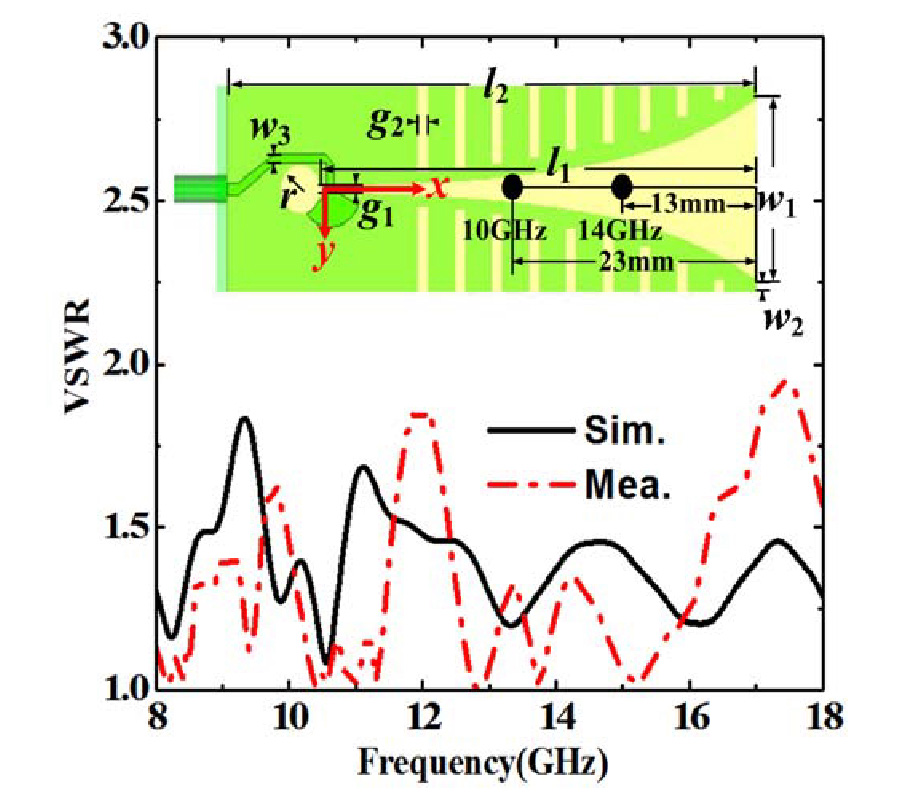
In this paper, the design, fabrication, and test of an additive manufactured double-ridged horn antenna optimized to work in ultra-wide-band frequencies is introduced. In particular, to build this antenna, the fused deposition modeling fabrication method is selected. The plastic-made device is then coated by using conductive ink. The double-ridged horn is conceived as a monolithic block. In this way, performance degradations caused by fabrication inaccuracies are minimized. A very good agreement between the simulations and the antenna measurements is demonstrated. The proof-of-concept prototype has an outstanding operational bandwidth performance of 11.5 GHz (fc 8.25 GHz) with a gain of 6 dBi; its total weight is less than 200 gr, and the total prototyping fabrication costs are less than 10 Euro per antenna with a lead time of less than a week.
ADDITIVE MANUFACTURED DOUBLE-RIDGED HORN ANTENNA FOR UWB APPLICATIONS
2017-04-06
PIER C
Vol. 73, 37-46
Frequency Reconfigurable Triple Band-Notched Ultra-Wideband Antenna with Compact Size
Wael Abd Ellatif Ali and Rana M. A. Moniem
A compact planar reconfigurable triple band-notched UWB Microstrip antenna is proposed in this paper for UWB applications. A band rejection at ITU 8-GHz is generated by inserting an inverted U-shaped metallic strip at the slotted ground plane. Moreover, by cutting two slots on radiating patch, the second rejection at 3.5 GHz for WiMAX and the third rejection at 5.5 GHz for WLAN application are generated. Then, by embedding two (PIN) diodes along the patch slots, switchable dual or single band-notched behavior is added to the antenna performance. The simulated and measured results show that the antenna can operate in a wider bandwidth from 3.1 GHz to 11 GHz, and it has a good omnidirectional radiation pattern with stable gain. Furthermore, the designed antenna has a simple structure and compact size of 20×20 mm2. The proposed antenna can use the full potential of UWB frequency range with reconfigurable band-notched behavior at 3.5, 5.5, 8.1 GHz to avoid interference with WiMAX, WLAN, ITU systems respectively.
FREQUENCY RECONFIGURABLE TRIPLE BAND-NOTCHED ULTRA-WIDEBAND ANTENNA WITH COMPACT SIZE
2017-04-05
PIER B
Vol. 74, 23-35
Parabolic Trail OBF in Magnetic Anomaly Detection
Yao Fan , Xiaojun Liu and Guangyou Fang
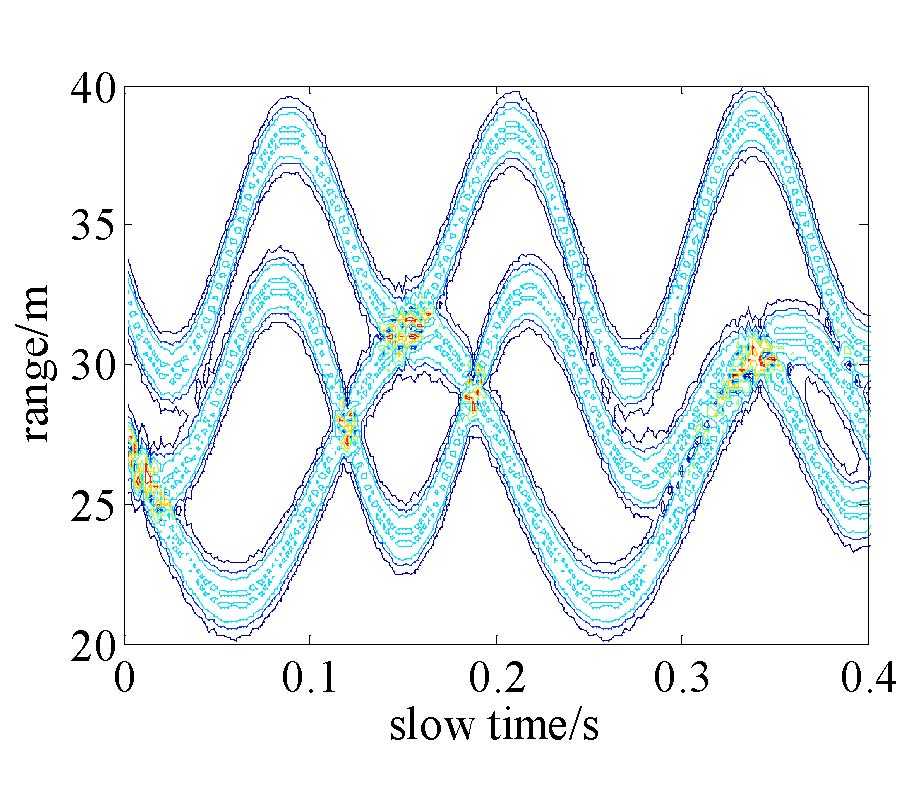
Magnetic anomaly detection (MAD) is to find hidden ferromagnetic objects, and a hidden object is often described as a magnetostatic dipole. Many detection methods are based on the orthonormal basis functions when the target moves along a straight line relatively to the magnetometer. A new kind of parabolic trail orthonormal basis functions (PTOBF) method is proposed to detect the magnetic target when the trajectory of the target is parabola. The simulation experiment confirms that the proposed method can detect the magnetic anomaly signals in white Gaussian noise when SNR is -15.56 dB. The proposed method is sensitive to the characteristic time and curvature. High detection probability and simple implementation of proposed method make it attractive for the real-time applications.
PARABOLIC TRAIL OBF IN MAGNETIC ANOMALY DETECTION
2017-04-05
PIER C
Vol. 73, 27-36
2 to 4 GHz Frequency Discriminator for RF Front-End Instantaneous Frequency Measurement Receivers
Hazem Deeb , Khaled Yazbek and Adnan Malki
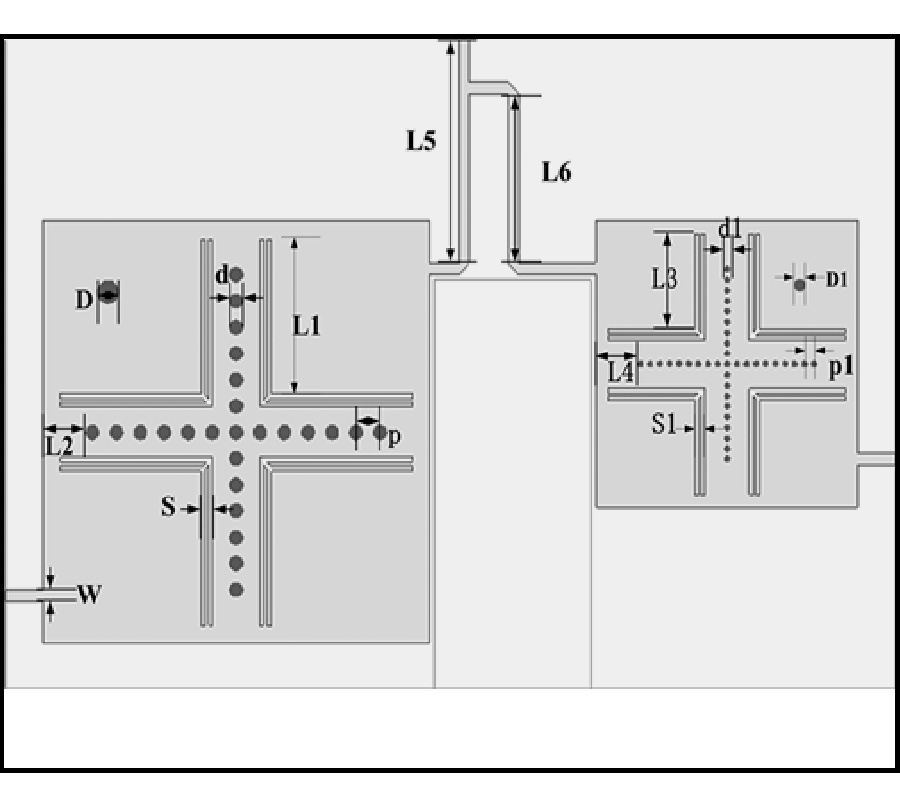
The instantaneous measurement of RF & microwave frequencies is widely used in electronic warfare (EW) for the determination of unknown signals over a broad frequency band. This paper presents an enhanced frequency measurement accuracy using three stages of novel RF frequency discriminator (FD) for RF front-end IFM Receivers. The appropriate structure of the designed frequency discriminator is implemented using a conventional PCB fabrication process. The frequency discriminator consists of two different hybrid layouts and one Wilkinson power divider, and all these components are implemented in microstrip technology, which is particularly important due to lower cost and easy integration into the PCB. To demonstrate the feasibility of the proposed structure, an RF-FE instantaneous frequency measurement (IFM) receiver has been realized based on 3-stage RF frequency discriminator. Simulation and measurement results have shown a frequency measurement accuracy less than 1 MHz (RMS) over the entire S-band.
2 TO 4 GHZ FREQUENCY DISCRIMINATOR FOR RF FRONT-END INSTANTANEOUS FREQUENCY MEASUREMENT RECEIVERS
2017-04-05
PIER C
Vol. 73, 17-25
Design of a Novel Ku/X-Band Reflectarray/Transmit-Array Antenna with Frequency Selective Surface
Fei Xue , Hongjian Wang , Xingchao Dong , Yang Liu and Xingwei Zhang
A planar reflectarray/transmitarray antenna which reflects/transmits the incident fields radiating from feed antenna is presented. The antenna works as a reflectarray at 13.85 GHz and a transmitarray at 8 GHz. The unit cell is composed of three layers. The first layer consists of a crossed-dipole element and a square ring frequency selective surface (FSS) on the top and bottom surfaces of a dielectric substrate. The second and third layers are identical and consist of a square ring slot element on both sides of a dielectric substrate. An air gap is inserted between layers. The aperture of the antenna is 225 mm which equals 10.4 wavelengths at 13.85 GHz and 6 wavelengths at 8 GHz. The reflectarray/transmitarray antenna is fabricated, and NSI planar near-field system is used to measure the performances of the prototype. Good agreement between the simulated and measured results has been achieved. The measured gain is 27.1 dB in reflection mode at 13.85 GHz resulting in a 38% aperture efficiency and 23.1 dB in transmission mode at 8 GHz resulting in a 45.7% aperture efficiency.
DESIGN OF A NOVEL KU/X-BAND REFLECTARRAY/TRANSMIT-ARRAY ANTENNA WITH FREQUENCY SELECTIVE SURFACE
2017-04-05
PIER C
Vol. 72, 197-205
Ultra-Small Single-Negative Metamaterial Insulator for Mutual Coupling Reduction of High-Profile Monopole Antenna Array
Yujie Qiu , Lin Peng , Xing Jiang , Zhuzhu Sun and Shaoyu Tang
A novel single-negative magnetic (SNG) metamaterial (MTM) insulator is designed to reduce mutual coupling between high-profile monopole antennas. As a kind of metamaterials, the proposed SNG MTM-resonator utilized concentric rings embedded complementary metal structures. Then, an insulator is achieved with a highly compact structure. The band-gap of the insulator is attributed to the negative permeability of the magnetic resonance. A well-engineered MTM-resonator is then embedded in between a high-profile monopole antenna array for coupling reduction. The antenna array is designed, fabricated, and measured. Both numerical and experimental results indicate a mutual coupling reduction of more than 17 dB. The 20 dB isolation bandwidth about 16% is obtained. The proposed prescription with electrically small dimensions and high decoupling efficiency opens an avenue to new types of high-profile antennas with super performances.
ULTRA-SMALL SINGLE-NEGATIVE METAMATERIAL INSULATOR FOR MUTUAL COUPLING REDUCTION OF HIGH-PROFILE MONOPOLE ANTENNA ARRAY
2017-04-04
PIER C
Vol. 73, 9-16
Broadband Perfect Metamaterial Absorber on Thin Substrate for X-Band and Ku-Band Applications
Gobinda Sen , Sk. Nurul Islam , Amartya Banerjee and Santanu Das
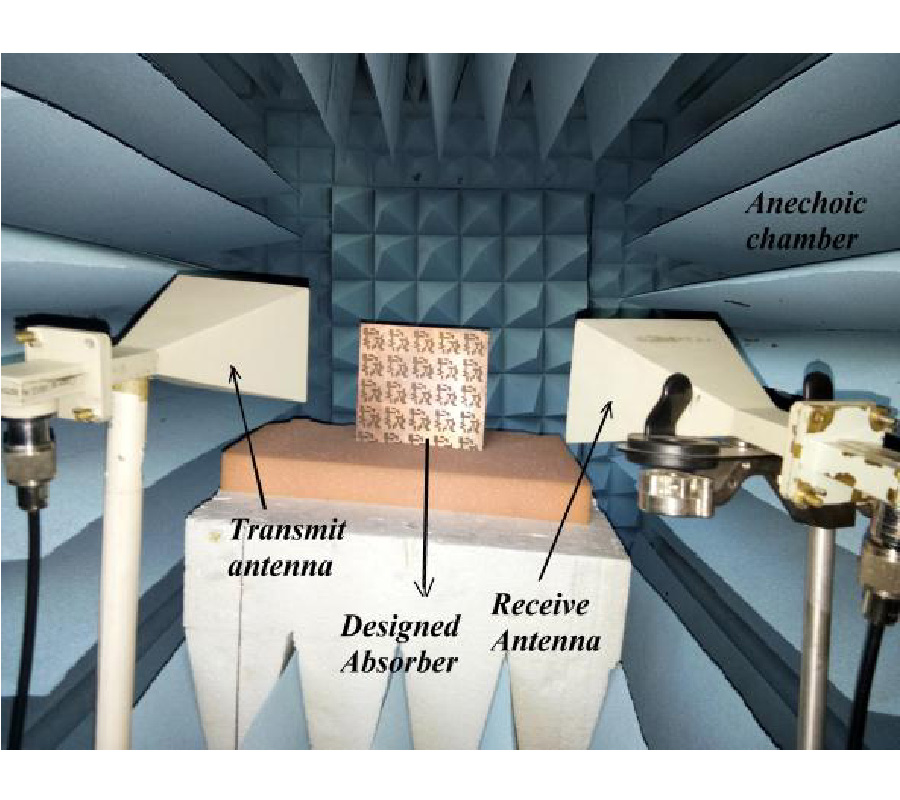
A broadband Perfect Metamaterial Absorber (PMA) on FR-4 Epoxy substrate for X-band and Ku-Band applications is proposed. The unit cell structure is composed of rectangular patches of appropriate shapes and orientation on top of the metal-backed dielectric substrate having a thickness of 2.7 mm (0.16λL). The relative absorption bandwidth is 79% (more than 85% absorption) covering the entire X-band and the Ku-Band of the microwave frequencies. The surface current distributions of the top and bottom planes have been analyzed to elaborate the absorption mechanism of the structure. The broadband characteristics of the design support its claim of being useful to a wide range of applications in both commercial and research sectors. Such applications include military and stealth devices, thermal sensors and electronic-cloaking devices.
BROADBAND PERFECT METAMATERIAL ABSORBER ON THIN SUBSTRATE FOR X-BAND AND KU-BAND APPLICATIONS