Search Results(13794)

2017-03-23
PIER M
Vol. 55, 121-132
Almost Periodic Lumped Elements Structure Modeling Using Iterative Method: Application to Photonic Jets and Planar Lenses
Mohamed Karim Azizi , Henri Baudrand , Taieb Elbellili and Ali Gharsallah
In this work, we show that it is possible to produce a planar electromagnetic jet using a flat structure consisting of elementary cells based on lumped elements and fed with a source line. A combination of elementary cells may represent a gradient index, locating the electromagnetic energy in a small area, consisting of a few cells and having a size of about 0.75λ. The theoretical framework of the study is based on the Wave Concept Iterative Process method (WCIP) formulated in both spectral and spatial domains. An analogy with an optical model based on optical paths equality enables predicting the location of formation of this spot. The use of such a system can provide solutions for the development of new kinds of applications such as engraving sub-wavelength, data storage, improved scalpel optics for ultra-precise laser surgery, and detection of cancer.
ALMOST PERIODIC LUMPED ELEMENTS STRUCTURE MODELING USING ITERATIVE METHOD: APPLICATION TO PHOTONIC JETS AND PLANAR LENSES
2017-03-23
PIER M
Vol. 55, 109-119
Simple Calibration Technique for Phased Array Radar Systems
Galina Babur , Gleb O. Manokhin , Evgeniy A. Monastyrev , Andrey A. Geltser and Alexander A. Shibelgut
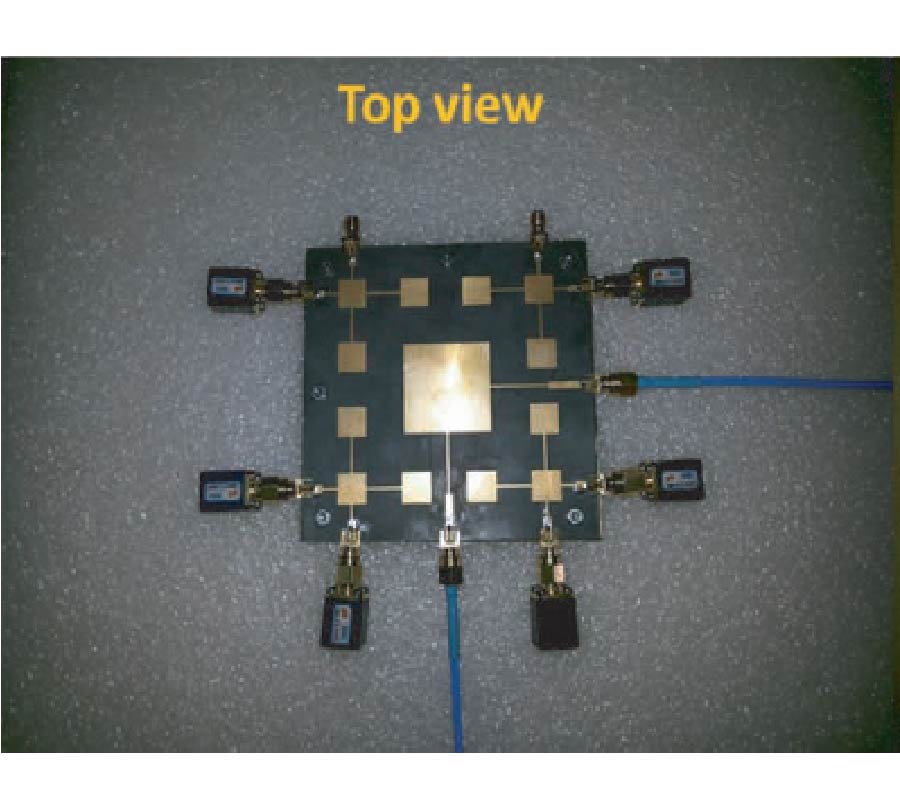
This paper presents a novel effective calibration technique applicable to phased array radars. The real embedded patterns of the array elements are measured independently in operating mode, taking antenna coupling and other parasitic effects into account. The proposed calibration technique requires minimal modification of the radar hardware. A set of angular-dependent error coefficients, which are compensated during the calibration process, are extracted for one received pulse for one/each angular direction of interest. The performance and effectiveness of the hereproposed calibration technique are assessed by means of modeling and experimental verification.
SIMPLE CALIBRATION TECHNIQUE FOR PHASED ARRAY RADAR SYSTEMS
2017-03-22
PIER C
Vol. 72, 151-158
Miniaturization of Microstrip Yagi Array Antenna Using Metamaterial
Rhitam Datta , Tarakeswar Shaw and Debasis Mitra
An approach of miniaturizing planar Yagi array using metamaterial is presented in this paper. In this methodology, metamaterial structures are incorporated in the antenna in place of directors. An investigation in reflection and radiation characteristics of the antennas is done, and the findings are presented. The metamaterial loaded antenna shows improved directivity and efficiency of 16.3% and 2.95% with respect to the microstrip Yagi antenna while achieving a noticeable size miniaturization of 33.3%. Also, a better matching, compared to Yagi antenna, is observed in this proposed design. The fabrication and measurement of ones.
MINIATURIZATION OF MICROSTRIP YAGI ARRAY ANTENNA USING METAMATERIAL
2017-03-21
PIER C
Vol. 72, 141-149
Design and Synthesis of Dual-Band Microwave Bandpass Filter Based on Hybrid Polynomials
Elden Zee Chien Pheng and Peng Wen Wong
This paper presents a method of designing a bandpass filter using hybrid polynomials. Two different approaches are discussed in this paper. The first method uses class hybridization of a lowpass Chebyshev and highpass maximally flat to achieve the hybrid filtering function (HFF). The second method employs both Chebyshev polynomials of the first and second kinds to form a modified Chebyshev polynomial. Both methods achieve a narrowband dual-band lowpass prototype (DBLPP) without much deviation from classical methods of synthesis. The designs can be adapted into a modified interdigital prototype which will be shown in this paper. The results and measurements reflect a good adherence to the theoretical calculations.
DESIGN AND SYNTHESIS OF DUAL-BAND MICROWAVE BANDPASS FILTER BASED ON HYBRID POLYNOMIALS
2017-03-21
PIER M
Vol. 55, 95-107
Design of Low-Pass Filter Using Meander Inductor and U-Form Hi-LO Topology with High Compactness Factor for L-Band Applications
Wael Abd Ellatif Ali and Ahmed Boutejdar
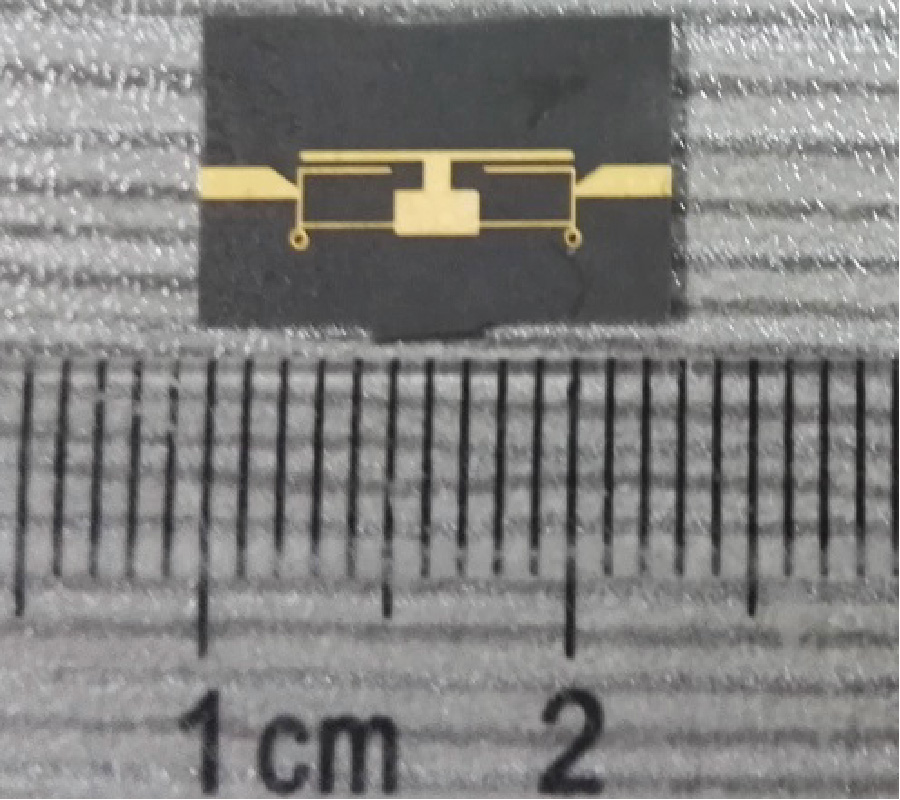
In this paper, novel compact low-pass filters using Hi-Lo technique and meander method are proposed. Series of the proposed filters are designed by adding modifications along the microstrip line (meander inductor) and by using U-form topology. The size of the proposed filter can be reduced by 15% compaired to the conventional filter while maintaining the optimal low-pass features. The compact meander LPF consists of two thin microstrip lines, which are connected with 50Ω microstrip feed lines and a microstrip patch placed in the middle of the structure. The thin lines and the microstrip patch correspond to inductance and capacitance, respectively. The proposed meander Hi-Lo topology has been mounted on an RO4003 substrate with a relative dielectric constant εr = 3.38, thickness h = 0.813 mm and loss tangent 0.0027. The compact L-band low-pass structure has a size of (0.263λg×0.175λg) where λg = 57 mm is the wavelength at the cutoff frequency 2.85 GHz. In addition to a good compactness, the structure exhibits a simple design, very low insertion loss in the passband (L-band) of less than 0.3 dB, and it achieves a wide rejection bandwidth with a 20 dB attenuation from 5.3 to 6.3 GHz. The excellent LPF characteristics are verified through simulations and measurements where a good consistency can be observed. Such compact filter structures are expected to be used in various microwave system applications.
DESIGN OF LOW-PASS FILTER USING MEANDER INDUCTOR AND U-FORM HI-LO TOPOLOGY WITH HIGH COMPACTNESS FACTOR FOR L-BAND APPLICATIONS
2017-03-20
PIER C
Vol. 72, 133-140
Compact Dual-Polarized Quad-Ridged UWB Horn Antenna Design for Breast Imaging
Dheyaa T. Al-Zuhairi , John M. Gahl and Naz E. Islam
A compact dual-polarization, ultra-wideband quad-ridged horn antenna has been proposed for breast imaging. CST Microwave Studio Simulation has been used to design the horn antenna. The antenna size was reduced, and impedance matching was achieved by a modest change in the dielectric constant of the matching liquid and by the introduction of four semi-elliptical structure at the flared ridges. To test the polarization isolation, many field probes were distributed at different positions in front of the antenna. The probes have been set to measure both vertical and horizontal electric field components at each location. Results show that adding elliptical parts can provide impedance matching over the whole frequency band of the antenna. Measurements show high isolation between the transmitted vertical and horizontal electric fields. Almost 40 dB polarization isolation exists at boresight of the antenna over the entire frequency band. This characteristic is central to polarimetric radar work. Effective gain and ports isolation were obtained.
COMPACT DUAL-POLARIZED QUAD-RIDGED UWB HORN ANTENNA DESIGN FOR BREAST IMAGING
2017-03-20
PIER C
Vol. 72, 123-132
Application of Microwave Integrators for Interference Suppression
Lin-Chuan Tsai
In this study, a trapezoidal-rule integrator and inverting a differentiator are employed to form the transfer function of an approaching integrator in the Z domain. The integrator was implemented to verify the feasibility of the technique, and the integrator exhibited an operating frequency of 1.45 to 6 GHz. Adding microwave integrators to a receiver's radio frequency (RF) circuits in a communication link improves the signal-to-noise ratio (SNR). As a result, an experimental environment was constructed in a wireless local area network (WLAN) band (2400 to 2483.5 MHz). In addition, the RF transmitter emitted the main signal at 2.45 GHz, which included the high-frequency interfering signals at 3.5, 4.5, and 5.5 GHz. The integrators and low-pass filters were implemented to perform signal analysis of the RF signals. To compare the interference suppression of the integrators with the interference suppression of the original and low-pass filters, the receiving power of the main signal and the interfering signals from the different frequencies in the end of the receiver were analyzed. The experimental results indicated that inserting integrators into RF circuits improved the SNR of the communication link by up to 10 dB.
APPLICATION OF MICROWAVE INTEGRATORS FOR INTERFERENCE SUPPRESSION
2017-03-20
PIER M
Vol. 55, 85-93
Computation Model of Shielding Effectiveness of Electromagnetic Shielding Fabrics with Seaming Stitch
Xiuchen Wang , Ying Su , Yaping Li and Zhe Liu
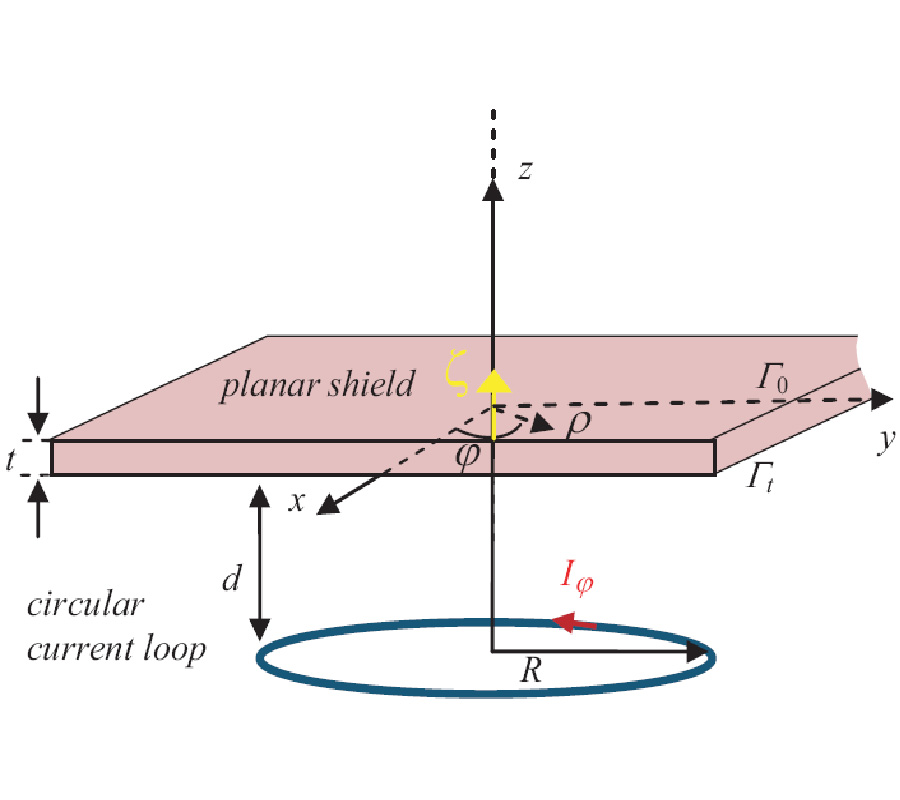
The influence of seaming stitches on the shielding effectiveness (SE) of electromagnetic shielding (EMS) fabric is huge, but there is not an ideal computation model for the SE of the EMS fabric with the seaming stitch at present. This paper proposes a computation model of the SE based on the equivalent seaming gap. Firstly, a structure model of the equivalent seaming gap is constructed according to the equivalent dielectric principle. The computation method of the structural size of the equivalent seaming gap model is determined by the parameters of the stitch length, number of the stitch type, needle number, and sewing thread. A computation model of the SE based on the equivalent seaming gap structure is built according to the EMS theory. The method of the correction coefficient of the model determination is given. Finally, the samples with seaming stitches are made to test the SE using the waveguide method. The computation results with the proposed model are compared with the experimental ones. The results show that the proposed model can well calculate the SE of the EMS fabric with the seaming stitch. The study in this paper can provide a foundation for further study of the influence of seaming stitches on the SE of the EMS fabric and possesses reference significance for the design, production, evaluation and related theoretical research of the EMS clothing.
COMPUTATION MODEL OF SHIELDING EFFECTIVENESS OF ELECTROMAGNETIC SHIELDING FABRICS WITH SEAMING STITCH
2017-03-17
PIER B
Vol. 73, 95-116
Underwater Electromagnetic Holography Imaging Techniques for Shallow Water Mediums
Nicolas P. Valdivia , Earl G. Williams and Hatim F. Alqadah
We propose an approach to characterize the AC underwater radiation produced by a ship over a shallow water medium using dipole sources distributed over an interior surface to the ship. The proposed approach relies in the accurate and efficient representation of dipole sources over the shallow water medium that characterize the behavior of the electric or magnetic field. The approach is reduced to the solution of the resultant matrix system from the dipole representation. These systems are ill-posed, i.e., if the matrix systems are not solved by special regularization methods, the resultant solution will amplify the measurement noise. The regularization method applied is the least squares QR iterations combined with a new stopping rule that uses a numerical estimate of the measurement noise. Numerically generated data is used to study the validity of the different dipole representations. Finally we validate our methodology using magnetic measurements that result from degaussing coils of a mid-size vessel.
UNDERWATER ELECTROMAGNETIC HOLOGRAPHY IMAGING TECHNIQUES FOR SHALLOW WATER MEDIUMS
2017-03-17
PIER C
Vol. 72, 115-122
Design of Wideband Quad-Ridged Waveguide Orthomode Transducer at L-Band
Jin Fan , Yihua Yan , Chengjin Jin , Dezhi Zhan and Jirun Luo
In this paper, an L-band wideband quad-ridged waveguide orthomode transducer (OMT) for the Five hundred meter Aperture Spherical radio Telescope (FAST) is presented with a simple design principle. By designing two critical parts of the OMT separately and introducing matching rings into two orthogonal probes, an improved wideband performance has been realized successfully. The OMT is designed to operate across the 0.95 GHz-1.9 GHz band, and the simulation shows a return loss better than -20 dB for both polarizations, cross-polarized isolation levels over 45 dB and insertion loss lower than 0.15 dB over the entire bandwidth. The measured results are in good agreement with the simulations.
DESIGN OF WIDEBAND QUAD-RIDGED WAVEGUIDE ORTHOMODE TRANSDUCER AT L-BAND
2017-03-16
PIER C
Vol. 72, 105-113
Wideband Orthogonally Polarized Resonant Cavity Antenna with Dual Layer Jerusalem Cross Partially Reflective Surface
Swati Vaid and Ashok Mittal
A wideband orthogonally polarized resonant cavity antenna (RCA) with double-layer Jerusalem Cross type partially reflective surface (PRS) as superstrate is presented in this paper. The PRS is analyzed using equivalent circuit modelling and full wave simulations. Two-port dual-polarized aperture coupled microstrip patch has been used as primary feed antenna. Measured results show that the antenna structure exhibits 10 dB return loss bandwidth of 14.7% at 10 GHz (9.4-10.9 GHz), and the isolation between the feeding ports is better than 18 dB over the bandwidth. The cross-polarization levels in both E and H planes are better than 15 dB. The peak directivity of the antenna is 13 dBi in the entire band. The antenna is suitable for marine and weather Radar applications.
WIDEBAND ORTHOGONALLY POLARIZED RESONANT CAVITY ANTENNA WITH DUAL LAYER JERUSALEM CROSS PARTIALLY REFLECTIVE SURFACE
2017-03-16
PIER Letters
Vol. 67, 7-12
Design of Triple-Bandpass Filters Using an Asymmetric Stepped-Impedance Ring Resonator
Wensong Wang , You Li , Qunsheng Cao , Shuhui Yang and Yinchao Chen
An asymmetric stepped-impedance ring resonator (ASIRR) is proposed for the design of a triple-bandpass filter. This resonator is applied to creat the former two passbands by utilizing a stepped-impedance circular ring and the third passband by introducing two asymmetric coupling structures. It is found that the S-parameter performance can be improved by adding a pair of shorted and open stubs, the second passband and the stopbands on both sides of the third passband can be tuned by adjusting the length of open stubs. A prototype filter operating at 1.04, 3.52 and 5.57 GHz is designed, fabricated, and measured with the corresponding fractional bandwidths of 23.1%, 7.4%, and 4.1%. Good agreements between the simulated and measured results are achieved for the ASIRR filter. Also, four transmission zeros are generated.
DESIGN OF TRIPLE-BANDPASS FILTERS USING AN ASYMMETRIC STEPPED-IMPEDANCE RING RESONATOR
2017-03-16
PIER Letters
Vol. 67, 1-6
Validation of a Convolution Integral for Conductivity Imaging
Joe R. Feldkamp and Stephen Quirk
Magnetic induction tomography has been under consideration for imaging electrical conductivity distributions within the human body. Multi-coil systems are most commonly employed for this task, requiring a numerical solution of Maxwell's equations at each position of the coil array. An alternative uses a single coil placed near the conductive target while measuring coil self-impedance changes (``coil loss'') at a number of unique locations. Recently, a closed-form solution of Maxwell's equations, in the form of a 3D convolution integral, was found for a single coil consisting of concentric circular loops that relates impedance change to an arbitrary conductivity. Its development required spatially uniform permittivity and permeability, yet showed quantitative agreement with experiment. Here, we provide a much more critical test of the convolution integral in experiments that allow large permittivity changes over coil dimensions. Loss is measured while the coil is placed at known positions relative to plastic columns of variable diameter which are filled with salt solutions of varying conductivity. In all cases, coil loss varies linearly with conductivity and with zero intercept. Quantitative agreement is observed only when column diameter is greater than or equal to coil diameter. Because of linearity, the convolution integral is useful for image reconstruction, though contrast could be either reduced or enhanced in those circumstances when relative permittivity change exceeds ~70.
VALIDATION OF A CONVOLUTION INTEGRAL FOR CONDUCTIVITY IMAGING
2017-03-15
PIER B
Vol. 73, 79-93
The Development and Comparison of Two Polarimetric Calibration Techniques for Ground-Based Circularly Polarized Radar System
Yuta Izumi , Sevket Demirci , Mohd Zafri Baharuddin , Mirza Muhammad Waqar and Josaphat Tetuko Sri Sumantyo
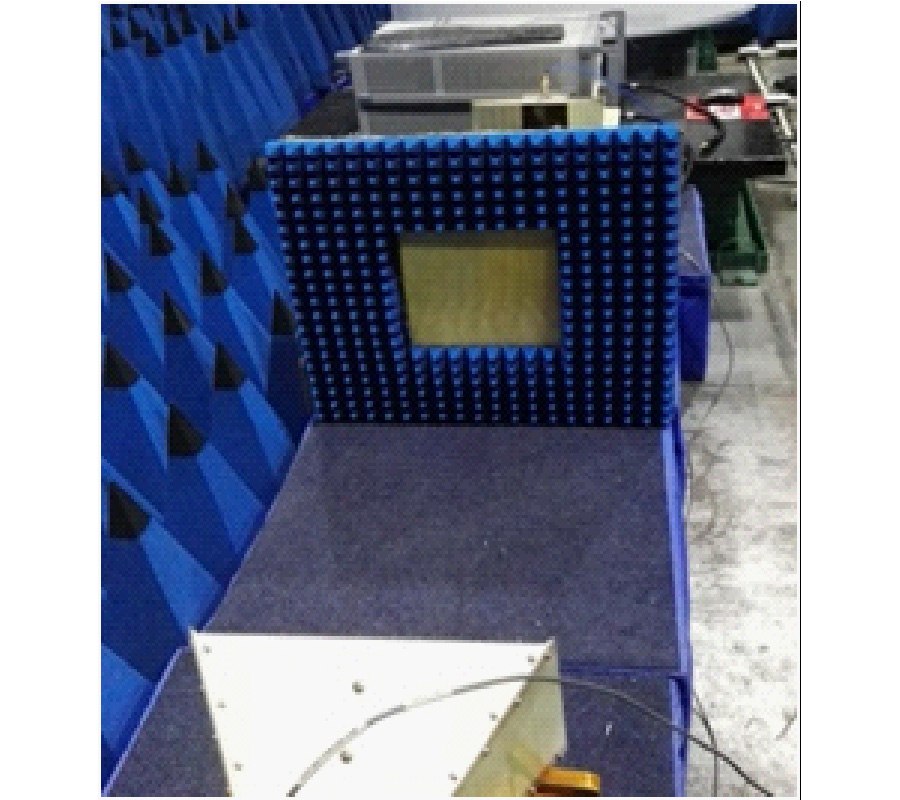
Two techniques are described for the calibration of ground-based (GB) circularly polarized (CP) full polarimetric radars. The techniques are based on the point target calibration approach that uses various types of canonical reflectors with different orientations. Specifically, the calibration methods for linearly polarized (LP) radar proposed by Wiesbeck et al. and Gau et al. are selected and adapted to CP with suitable reflectors. The applicability of the techniques is examined through C-band scatterometric and synthetic aperture radar (SAR) measurements in an anechoic chamber. For the scatterometric mode, comparisons of calibrated channel imbalances with theoretical values show agreement within ±0.3 dB in amplitude and ±5˚ in phase. The crosstalk between the channels is also reduced by ~5 to 30 dB after calibration. For the SAR mode, calibrated scattering matrix of a vertical wire target exhibits significant elimination of distortions between channel amplitudes and phases. The effect of calibration on target parameter retrieval is also investigated through the Cloud-Pottier eigenvector-based decomposition. Both calibration techniques are shown to yield improved accuracy of entropy-alpha (H-α) distributions and orientation angle (β) values.
THE DEVELOPMENT AND COMPARISON OF TWO POLARIMETRIC CALIBRATION TECHNIQUES FOR GROUND-BASED CIRCULARLY POLARIZED RADAR SYSTEM
2017-03-14
PIER B
Vol. 73, 61-78
Plane Wave Diffraction by a Finite Parallel-Plate Waveguide with Sinusoidal Wall Corrugation
Toru Eizawa and Kazuya Kobayashi
The diffraction by a finite parallel-plate waveguide with sinusoidal wall corrugation is analyzed for the E-polarized plane wave incidence using the Wiener-Hopf technique combined with the perturbation method. Assuming that the corrugation amplitude of the waveguide walls is small compared with the wavelength and expanding the boundary condition on the waveguide surface into the Taylor series, the problem is reduced to the diffraction by a flat, finite parallel-plate waveguide with a certain mixed boundary condition. Introducing the Fourier transform for the unknown scattered field and applying an approximate boundary condition together with a perturbation series expansion for the scattered field, the problem is formulated in terms of the zero-order and the first-order Wiener-Hopf equations. The Wiener-Hopf equations are solved via the factorization and decomposition procedure leading to the exact and asymptotic solutions. Taking the inverse Fourier transform and applying the saddle point method, a scattered far field expression is derived explicitly. Scattering characteristics of the waveguide are discussed in detail via numerical examples of the radar cross section (RCS).
PLANE WAVE DIFFRACTION BY A FINITE PARALLEL-PLATE WAVEGUIDE WITH SINUSOIDAL WALL CORRUGATION
2017-03-14
PIER M
Vol. 55, 73-84
Evaluation of Hybrid Polarimetric Decomposition Techniques for Winter Crop Discrimination
Sanid Chirakkal , Dipanwita Haldar and Arundhati Misra
In this paper we compare, using ISRO's RISAT-1 FRS-1 mode Compact Polarimetric (CL-Pol) data, two widely used hybrid polarimetric decomposition techniques, m-δ and m-χ decompositions, with regard to classification accuracy for various agricultural crops of north and west India. We show that the classification based on the m-χ decomposition results in better crop separability in general. But the crop stage and existence of orientating structures in the crops affects the efficacy of decomposition; a fact vividly brought out in this paper. Theoretical insights into the effectiveness of these decomposition techniques for different crop geometry are brought forth. We also compare the classification accuracy subsequent to polarimetric speckle filtering vis-a-vis spatial multilooking (downsampling). We show that usage of an appropriate polarimetric filter tends to produce comparable accuracy for most of the agricultural classes, as that of multilook case, without degrading spatial resolution. This work showcases a custom implementation of Stokes parameter based decomposition as well as POLSAR filter based on refined Lee algorithm, written in C and tailored to RISAT-1.
EVALUATION OF HYBRID POLARIMETRIC DECOMPOSITION TECHNIQUES FOR WINTER CROP DISCRIMINATION
2017-03-13
PIER Letters
Vol. 66, 127-134
The Testing Scheme for Steel Corrosion in the Reinforced Concrete via Near Field Effect of Meter-Band Wave
Ruiqiang Zhao , Hong Zhang , Jianting Zhou , Leng Liao and Runchuan Xia
This paper presents a testing scheme for the steel corrosion in reinforced concrete based on near-field effect of meter wave. The physical mechanism of the near-field method was introduced, and the structure of the measurement device was presented in detail. The electromagnetic field near the steel bar buried in the concrete structure was simulated by the finite difference time domain method. The simulated data show that the mean radiation power decreases monotonously with the increase of the corroded depth of the steel bar, and the corroded area is promising to be imaged directly due to the localization of near field. The results indicate that the near-field technique can act as a new nondestructive testing technique to detect and even image the corrosion area buried in concrete in engineering structure.
THE TESTING SCHEME FOR STEEL CORROSION IN THE REINFORCED CONCRETE VIA NEAR FIELD EFFECT OF METER-BAND WAVE
2017-03-13
PIER M
Vol. 55, 63-71
A Time-Frequency Feature Fusion Algorithm Based on Neural Network for HRRP
Lele Yuan
In this paper, a feature fusion algorithm is proposed for automatic target recognition based on High Resolution Range Profiles (HRRP). The proposed algorithm employs Convolution Neural Network (CNN) to extract fused feature from the time-frequency features of HRRP automatically. The time-frequency features used include linear transform and bilinear transform. The coding of the CNN's largest output node is the target category, and the output is compared with a threshold to decide whether the target is classified to a pre-known class or an unknown class. Simulations by four different aircraft models show that the proposed feature fusion algorithm has higher target recognition performance than single features.
A TIME-FREQUENCY FEATURE FUSION ALGORITHM BASED ON NEURAL NETWORK FOR HRRP
2017-03-10
PIER C
Vol. 72, 91-103
High-Quality Compact Interdigital Microstrip Resonator and Its Application to Bandpass Filter
Boris Belyaev , Alexey Mikhailovich Serzhantov , Aleksandr Leksikov , Yaroslav F. Bal'va and Andrey Leksikov
A compact microstrip resonator based on the interdigital structure is proposed. The resonator has several times higher unloaded quality factor compared to similar resonators presented previously and can even reach the Q-factor of a regular λ/4 resonator. The size of the resonator can be significantly reduced with a substantial increase in quality factor by incrementing the number of pins in the interdigital structure. In addition, for each gap between the pins exist an optimal number of pins that correspond to the maximum Q-factor. An extension of the upper stopband for a bandpass filter designed using the resonator can be achieved by the interconnection of the pins in each of the comb structures. The simulation results were proven by fabricated resonators and 4-pole bandpass filter. For the central frequency of 2000 MHz and 16.2% fractional bandwidth, the lateral size of the filter is only 11.5 mm×3.8 mm for alumina substrate (eps=9.8). The filter has an upper stopband up to 5.8f0 at the level -40 dB.
HIGH-QUALITY COMPACT INTERDIGITAL MICROSTRIP RESONATOR AND ITS APPLICATION TO BANDPASS FILTER
2017-03-10
PIER Letters
Vol. 66, 121-126
Metamaterial Tri-Band Bandpass Filter Using Meander-Line with Rectangular-Stub
Ashish Kumar , Dilip Kumar Choudhary and Raghvendra Kumar Chaudhary
In this paper, a new compact tri-band bandpass metamaterial (MTM) filter based on meander line with a rectangular stub is proposed and designed. The pseudo connections between meander line and ports generate interdigital capacitor (IDC) to provide series capacitance. Meander line a rectangular stub is plotted. The proposed filter offers measured first passbands from 1.88-4.0 GHz; second band starts from 5.4-5.9 GHz; third passband ranges from 7.1-7.4 GHz. It has insertion losses of 0.8 dB, 1.5 dB and 2.0 dB at 2.1GHz, 5.7 GHz and 7.3 GHz centre frequencies, respectively. The designed filter will cover S band (2-4 GHz), ISM band (5.725-5.875) and fixed satellite services (7.25-7.3 GHz). Further, the designed filter shows electrical size of 0.14λ0 × 0.13λ0 at zeroth order resonance (ZOR) frequency 2.1 GHz.
METAMATERIAL TRI-BAND BANDPASS FILTER USING MEANDER-LINE WITH RECTANGULAR-STUB