Search Results(13797)

2016-01-25
PIER B
Vol. 65, 157-168
Design of Compact Double-Layer Microwave Absorber for X-Ku Bands Using Genetic Algorithm
Hesham Abd El-Hakim , Korany Ragab Mahmoud and Abdelmonem Abdelaziz
In this paper, an efficient lightweight double-layer absorber with impedance-matching structure at X-Ku bands was designed, optimized and implemented. First, genetic algorithm (GA) was considered to optimize the thicknesses and material properties for better absorption of the incident electromagnetic wave and reduction of radar cross section (RCS). Next, with the aid of the obtained dielectric and magnetic properties, the microwave absorber was fabricated from magnetodielectric composite materials besides a natural rubber. Finally, the analytical and numerical results were compared with the measurements to check the validity of the design. Experiments showed that the reflection coefficient for each layer backed with a metallic sheet was insufficient; however, for the double layer absorber, the reflectivity measurement values reached up to -28 dB in the case of normal incidence and -17 dB for oblique incidence.
DESIGN OF COMPACT DOUBLE-LAYER MICROWAVE ABSORBER FOR X-KU BANDS USING GENETIC ALGORITHM
2016-01-24
PIER C
Vol. 61, 171-178
A Novel Proximity Fed Gap Coupled Microstrip Patch Array for Wireless Applications
Jacob Abraham , Thomaskutty Mathew and Chandroth K. Aanandan
Design and development of a novel dual-band microstrip patch array antenna suitable for WLAN and WiMAX applications are presented. The proposed array configuration is obtained by employing two parasitic patches gap coupled to the driven elements of a single layer proximity fed 2x1 microstrip patch array configuration. The proposed dual-band array has the advantages of enhanced bandwidth and gain. The feed patches are excited by proximity feeding method and the parasitic patches are excited by gap-coupling. This microstrip patch array provides resonances at two frequencies of 2.584 GHz (2.412-2.629 GHz) and 3.508 GHz (3.469-3.541 GHz). This novel configuration has a measured gain of 8.51 dBi and 5.8 dBi in lower and upper bands with an impedance bandwidth of 8.16% and 2.05% respectively. Additionally, to enhance the front to back ratio at the upper resonant frequency, a metal plate is placed at the back side of the array antenna. This modified proximity fed gap coupled array provides directional radiation patterns with improved gains. Re-configurability in the form of beam steering is obtained in the modified array configuration by varying the air gap between the ground plane and metal plate. The simulated results are in good agreement with the experimental ones.
A NOVEL PROXIMITY FED GAP COUPLED MICROSTRIP PATCH ARRAY FOR WIRELESS APPLICATIONS
2016-01-24
PIER Letters
Vol. 58, 97-103
High-Performance LPF Using Coupled C-Shape DGS and Radial Stub Resonators for Microwave Mixer
Abdelmounaim Belbachir Kchairi , Mohamed Boussouis and Naima Amar Touhami
A high-performance microstrip low-pass filter (LPF) with low cutoff frequency, negligible passband insertion loss, very sharp transition band, and deep ultra-wide stopband is designed, fabricated and measured. The presented filter is realized using three types of resonators which are coupled C-shape defected ground structure (C-CDGS), mirrored series-resonant branch loaded by radial stub, and high impedance line loaded by radial stub. A novel equivalent circuit model of the C-CDGS resonator is created, and its corresponding parameters are also extracted. The proposed filter is experimentally verified through the measured results which show good agreement with electromagnetic simulations.
HIGH-PERFORMANCE LPF USING COUPLED C-SHAPE DGS AND RADIAL STUB RESONATORS FOR MICROWAVE MIXER
2016-01-21
PIER B
Vol. 65, 143-155
Novel Broadband Equalizer Optimization Technique for High-Speed Digital System Designs
Shaowu Huang and Beomtaek Lee
In this paper, a novel broadband equalizer optimization technique is introduced for high-speed digital system designs. Through effectively compensating both conductor loss and dielectric loss, this technique provides a new solution to find optimal equalizer for high-speed signaling over printed circuit board (PCB) with continuous time linear equalizer (CTLE) as an application. The coefficients of CTLE are quickly identified through searching the minimum of the variation of total transfer functions over the low-mid frequency range. Channel simulations with different server interfaces of 12 Gbps and 25 Gbps are performed, respectively. Simulation results are presented to validate the technique.
NOVEL BROADBAND EQUALIZER OPTIMIZATION TECHNIQUE FOR HIGH-SPEED DIGITAL SYSTEM DESIGNS
2016-01-21
PIER C
Vol. 61, 161-170
Miniaturization of Dipole Antenna for Low Frequency Ground Penetrating Radar
Md Omar Faruq Howlader and Tariq Pervez Sattar
In this paper, a miniaturized dipole antenna operating at 100 MHz frequency for Ground Penetrating Radar (GPR) application is presented. A conventional dipole antenna length is half of its lowest operating frequency wavelength. As low frequency GPR system is vital for high depth penetration, the size of the antenna used reduces its handling and portability. Therefore, the technique of miniaturizing a dipole antenna by adding extra radiating arms is presented here. The antenna design and analysis is carried out using Advanced Digital System (ADS) software, and a network analyser is used to validate antenna performance. The antenna of 66.5 cm × 22 cm dimension, fabricated on an FR4 substrate exhibits a frequency resonance at 104 MHz with 8 MHz -10 dB bandwidth. The proposed antenna radiates in omnidirectional pattern and features 55 % reduction in length compared to a conventional dipole antenna of same frequency operation.
MINIATURIZATION OF DIPOLE ANTENNA FOR LOW FREQUENCY GROUND PENETRATING RADAR
2016-01-21
PIER Letters
Vol. 58, 89-95
Compact Tri-Band Dual-Polarized Planar Monopole Antenna with Asymmetrical Ground Plane and Loaded Stub
Ming-Tao Tan , Bing-Zhong Wang and Zhi-Min Zhang
This paper presents a compact tri-band dual-polarized planar monopole antenna, which is linearly polarized in the lower and middle bands and circularly polarized in the higher band. The antenna is printed on a substrate with an asymmetrical ground plane and a loaded vertical stub. The vertical stub and asymmetrical ground plane are mainly used to make the antenna obtain circular polarization performance in the higher band. The antenna has been built and tested. Its measured 10-dB impedance bandwidths are 2.39-2.54 GHz, 3.38-4.12 GHz, and 4.57-6.04 GHz, which can fully cover all the 2.4/5.2/5.8 GHz WLAN bands, all the 2.4/5.5 GHz Wi-Fi bands, and 3.5/5.5 GHz WiMAX bands. In the higher band, the measured 3-dB axial-ratio bandwidth is 5.4-5.83 GHz.
COMPACT TRI-BAND DUAL-POLARIZED PLANAR MONOPOLE ANTENNA WITH ASYMMETRICAL GROUND PLANE AND LOADED STUB
2016-01-21
PIER M
Vol. 46, 69-80
MIMO-OTHR Waveform Optimization Based on the Mutual Information Theory
Yang Luo , Zhiqin Zhao and Chunbo Luo
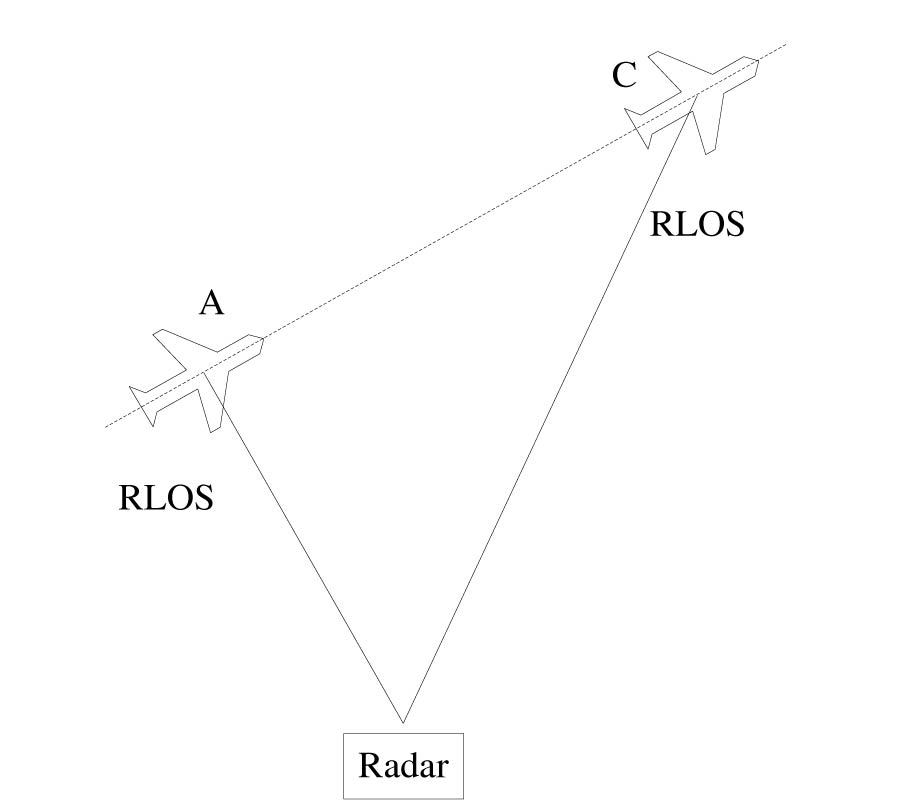
In traditional over-the-horizon radar (OTHR), multipath propagation due to the multi-layer ionospheric structure always deteriorates the detection performance. The properties of multiple-input multiple-output (MIMO) radar technique, which transmits wide beams with low gain at the transmitter and achieves receiver beam-forming to obtain narrow beams with high gain, make it an ideal choice for OTHR to detect target through multi-layer ionosphere and suppress strong clutter. This paper investigates the assumption of a two-layer ionospheric model and proposes a two-step Max-Min algorithm based on the mutual information theory to optimize MIMO-OTHR waveform so as to suppress clutter, interference and noise. The first step is to maximize the mutual information between the echo and target response from the same direction of arrival (DOA) in order to reduce the impact of noise. The second step is to minimize the mutual information between the echoes from different DOAs, in order to suppress the clutter and interference by reducing the correlation of the echoes from the different DOAs. Numerical experiments validate that this algorithm can improve range resolution and detection probability significantly. Experiment results also demonstrate that the previously harmful multipath propagation can be utilized to enhance the detection performance in MIMO-OTHR.
MIMO-OTHR WAVEFORM OPTIMIZATION BASED ON THE MUTUAL INFORMATION THEORY
2016-01-21
PIER M
Vol. 46, 57-68
Microwave Scattering from Metamaterial Based Spheres in the Presence of a Conducting Plane: Normal Incidence
Adnan Jamil and Tenneti C. K. Rao
The microwave scattering characteristics of a metamaterial (MTM) sphere and an MTM coated conducting sphere is compared to that of its DPS (Real (ε) > 0, Real (μ) > 0) counterpart in the presence of an infinite conducting plane using the multipole expansion method and is presented in this article. The DPS medium may be an artificial dielectric or natural dielectric. The differential scattering cross sections and the differential backscattering cross sections of the different types of spheres are presented for a circularly polarized (left or right) beam incident normally on the sphere. The results presented may be useful for maritime applications.
MICROWAVE SCATTERING FROM METAMATERIAL BASED SPHERES IN THE PRESENCE OF A CONDUCTING PLANE: NORMAL INCIDENCE
2016-01-20
PIER B
Vol. 65, 129-141
New DE-Embedding Method with Look-Up Table for Characterization of High Speed Interconnects
Shaowu Huang and Beomtaek Lee
In this paper, a new de-embedding technique with Look-Up Table (LUT) is proposed for accurate and efficient characterization of interconnects, particularly printed circuit board (PCB) transmission lines including microstrip and stripline. LUT is pre-created to cover various fixture effects including the reference structures inside and/or outside test printed circuit boards (PCBs). The pre-established LUT is introduced to eliminate the errors of ``probing and launching fixtures'' in characterization of transmission lines. It is applied to characterization of loss of microstrip and stripline. Simulations and measurements are performed to verify its accuracy and feasibility. Results show it is in good agreement with conventional Delta-L like methods but significantly reduces the cost of characterization. It provides an accurate but cost-effective solution for characterization of high speed interconnects, in particular for high volume manufacturing environments.
NEW DE-EMBEDDING METHOD WITH LOOK-UP TABLE FOR CHARACTERIZATION OF HIGH SPEED INTERCONNECTS
2016-01-19
PIER B
Vol. 65, 109-127
High Resolution Near-Field Electromagnetic Holography for Dynamic Source Identification in Underwater Mediums
Hatim F. Alqadah , Nicolas P. Valdivia and Earl G. Williams
This paper investigates the source reconstruction problem in underwater mediums using a compressive Near-Field Electromagnetic Holography (NEH) approach. More specifically we investigate the use of ℓ1 regularization for the purpose of decomposing near-field magnetic and/or electric surface measurements into electric and magnetic dipole sources. Our study indicates that not only do ℓ1 decompositions enable much higher resolution of sources than traditional ℓ2 approaches, but important features of the dipoles are preserved in the reconstruction. Our hypothesis are supported by numerical experiments as well as underwater physical measurements obtained in an earth field simulator facility.
HIGH RESOLUTION NEAR-FIELD ELECTROMAGNETIC HOLOGRAPHY FOR DYNAMIC SOURCE IDENTIFICATION IN UNDERWATER MEDIUMS
2016-01-18
PIER Letters
Vol. 58, 81-88
Hilbert Curve Fractal Antenna for Dual on- and off-Body Communication
Susilo Ady Saputro and Jae-Young Chung
We present a Hilbert curve fractal antenna operating at 2.45 GHz ISM and 5.5 GHz WLAN bands. The proposed antenna employs a third-order Hilbert curve and two shorting vias for antenna miniaturization and dual-band/mode operation. At 2.45 GHz, the antenna exhibits a monopole-like radiation pattern, while at 5.5 GHz, it provides a broadside radiation pattern, suitable for simultaneous on- and off-body communication using two distinct frequency bands. The antenna foot print is as small as 25.5 mm×25.5 mm. Simulation and measurement results demonstrate that the antenna gain is more than 1.9 dBi if the antenna is mounted on a ground larger than 40 mm×40 mm. The effect of human body presence on antenna performance was investigated by means of full-wave simulations locating the antenna on a human body phantom. It is shown that the proposed antenna is capable of maintaining its free-space performance over the human body phantom except for the gain reduction of 2.5 dBi at 5.5 GHz band.
HILBERT CURVE FRACTAL ANTENNA FOR DUAL ON- AND OFF-BODY COMMUNICATION
2016-01-18
PIER M
Vol. 46, 47-56
2D and 3D Far-Field Radiation Patterns Reconstruction Based on Compressive Sensing
Berenice Verdin and Patrick Debroux
The measurement of far-field radiation patterns is time consuming and expensive. Therefore, a novel technique that reduces the samples required to measure radiation patterns is proposed where random far-field samples are measured to reconstruct two-dimensional (2D) or three-dimensional (3D) far-field radiation patterns. The proposed technique uses a compressive sensing algorithm to reconstruct radiation patterns. The discrete Fourier transform (DFT) or the discrete cosine transform (DCT) are used as the sparsity transforms. The algorithm was evaluated by using 3 antennas modeled with the High-Frequency Structural Simulator (HFSS) --- a half-wave dipole, a Vivaldi, and a pyramidal horn. The root mean square error (RMSE) and the number of measurements required to reconstruct the antenna pattern were used to evaluate the performance of the algorithm. An empirical test case was performed that validates the use of compressive sensing in 2D and 3D radiation pattern reconstruction. Numerical simulations and empirical tests verify that the compressive sensing algorithm can be used to reconstruct radiation patterns, reducing the time and number of measurements required for good antenna pattern measurements.
2D AND 3D FAR-FIELD RADIATION PATTERNS RECONSTRUCTION BASED ON COMPRESSIVE SENSING
2016-01-16
PIER C
Vol. 61, 149-159
Compact WLAN Band-Notched Printed Ultrawideband MIMO Antenna with Polarization Diversity
Sainudeen Femina Beegum and Sanjeev Kumar Mishra
A novel uniplanar compact WLAN band-notched printed ultrawideband (UWB)-multiple-input-multiple-output (MIMO) antenna with dual polarization for high data-rate wireless communication is proposed. The antenna consists of two CPW-fed floral radiating elements along with a decoupling structure to ensure high isolation. The band notch at the WLAN frequency band is achieved by etching one single U-shaped slot on each antenna element. Results show that the proposed antenna gives impedance bandwidth from 2.7 GHz to 10.9 GHz with notched frequency band from 5.1 GHz to 5.9 GHz. The proposed antenna provides nearly omnidirectional radiation pattern, low envelope correction coefficient [ECC], moderate gain, efficiency, fidelity factor and pattern stability factor [PSF]. Furthermore, diversity characteristics such as mean effective gain [MEG] and diversity gain [DG] are also studied. Moreover, the time-domain analysis displays minimum dispersion to the radiated pulse. All these features make the proposed antenna a good candidate for future high data-rate wireless communication systems with polarization-diversity operation, where the challenge of multipath fading is a major concern.
COMPACT WLAN BAND-NOTCHED PRINTED ULTRAWIDEBAND MIMO ANTENNA WITH POLARIZATION DIVERSITY
2016-01-16
PIER M
Vol. 46, 39-46
Controlling the Optical Bistability and Multistability via Atom Localization
Marziye Moghannian , Azar Vafafard and Mohammad Mahmoudi
We investigate optical bistability (OB) and optical multistability (OM) behaviors in a triply driven five-level atomic system. It is shown that the system has bistable behavior and can be controlled by intensity of applied fields. We find that OB switches to OM via interference induced among the Rabi-split resonance. We consider a superposed one-dimension standing wave, generated by two optical fields, and it is demonstrated that the OB and OM behaviors depend on the position of localized atoms as well as the relative phase of applied fields.
CONTROLLING THE OPTICAL BISTABILITY AND MULTISTABILITY VIA ATOM LOCALIZATION
2016-01-15
PIER Letters
Vol. 58, 73-79
Array-Fed Beam-Scanning Partially Reflective Surface (PRS) Antenna
Luyang Ji , Guang Fu and Shu-Xi Gong
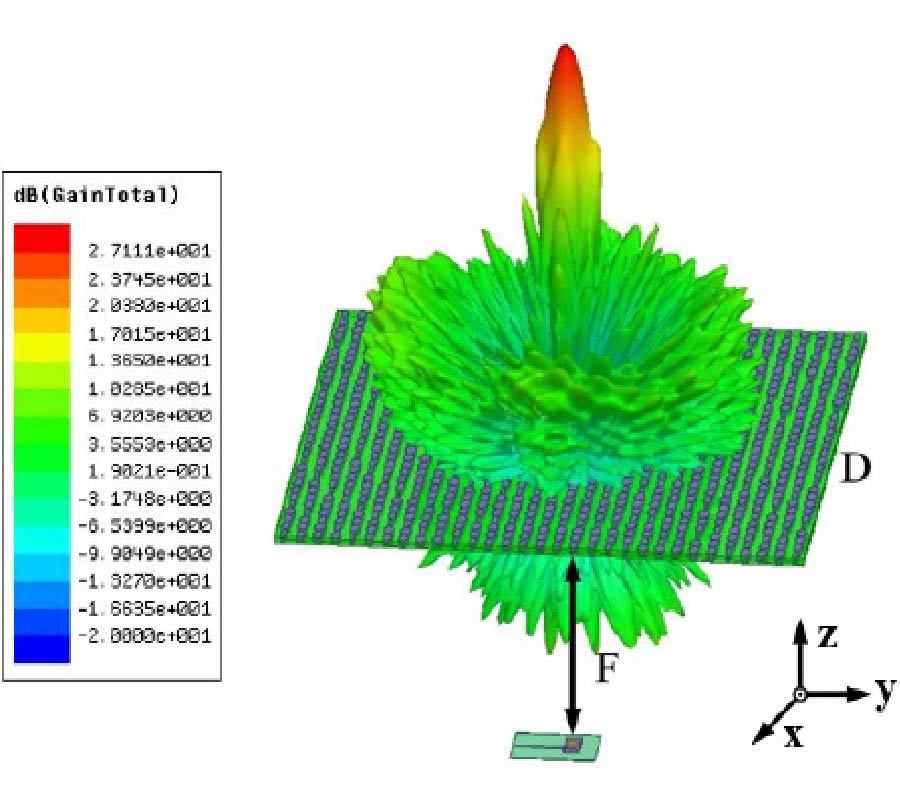
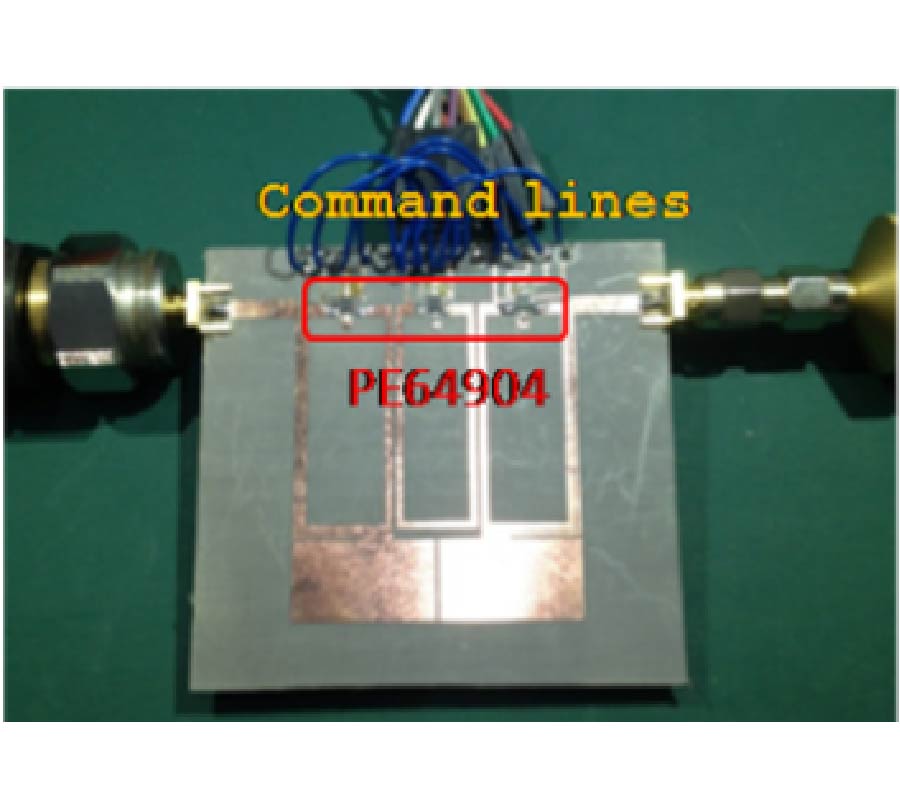
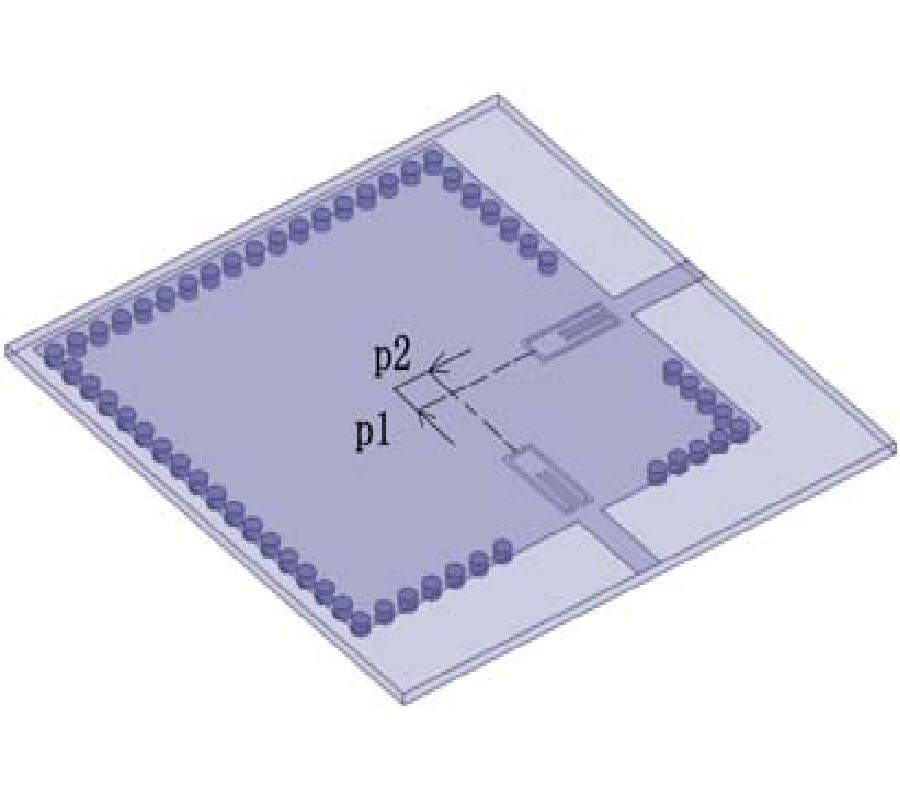
A beam-scanning partially reflective surface (PRS) antenna is presented in this paper. By employing a reconfigurable feed network to a two-element phased array source, the PRS antenna can realize beam steering between -10° and 10° with respect to the broadside direction across an overlapped frequency range from 5.35 GHz to 5.76 GHz. Good agreement between the simulated and measured results is achieved, which validates its capability to be a good candidate for the modern communication systems.
ARRAY-FED BEAM-SCANNING PARTIALLY REFLECTIVE SURFACE (PRS) ANTENNA
2016-01-15
PIER M
Vol. 46, 29-37
Study of Optical Responses in Hybrid Symmetrical Quasi-Periodic Photonic Crystals
Zina Baraket , Jihene Zaghdoudi and Mounir Kanzari
The light propagation through a one-dimensional symmetrical photonic structure, determined by the symmetric Silver mean Ag4 distribution embedded between two Bragg structures Bg27 (Bg27/Ag4/Bg27), is studied using the transfer matrix method (TMM). The focus lies on the investigation of the influence of symmetry of the structure as well as the dependence of transmission on the frequency, angle of incidence of the light striking the structure and symmetrical deformation of the structure. The deformation was introduced by applying a power law, so that the coordinates y of the deformed object were determined through the coordinates x of the non-deformed structure in accordance with the following rule: y = x1+k. Here, k is the degree of the law. A comparison will be made with a symmetrical periodic structure having the same number of layers. All results will be discussed in relation with the k values. Indeed, in the case of low k values close to zero a monochromatic filter was obtained, and in the case of relatively high values, an omnidirectional mirror is obtained.
STUDY OF OPTICAL RESPONSES IN HYBRID SYMMETRICAL QUASI-PERIODIC PHOTONIC CRYSTALS
2016-01-14
PIER C
Vol. 61, 139-147
A Compact Wideband Fractal-Based Planar Antenna with Meandered Transmission Line for L-Band Applications
Prasetiyono Hari Mukti , Septian Hadi Wibowo and Eko Setijadi
In this paper, a development of compact wideband antenna for L-Band Applications is presented. The proposed antenna is developed based on Modified Sierpinski Based Fractal geometry for the antenna patch with additional meandered structure in the antenna transmission line. The designed antenna is printed on a 10 x 10 cm of substrate with a relative permittivity of 4.3 and thickness of 1.6 mm. The antenna is fed by a 50 Ω microstrip line. The proposed antenna is characterized both in numerical and experimental analysis. The antenna characteristics are analyzed in terms of return loss, bandwidth, antenna gain, radiation pattern and radiation efficiency. From the experimental analysis, the fabricated antenna exhibits reasonable agreement to numerical design. The proposed antenna has an operating frequency from 0.94 GHz to 2.25 GHz with the lowest return loss of -36dB and maximum gain around 5.49 dBi, as well as radiation efficiency of 97%, approximately.
A COMPACT WIDEBAND FRACTAL-BASED PLANAR ANTENNA WITH MEANDERED TRANSMISSION LINE FOR L-BAND APPLICATIONS
2016-01-14
PIER M
Vol. 46, 19-28
Radar Cross Section Reduction Property of High Impedance Surface on a Lossy Dielectric
Vadakkekalathil Libi Mol , Sreekala P. Sasikumar , Dibin Mary George , Arimpoorpallan Lindo , Neeraj Kavalparambil Pushkaran and Chandroth K. Aanandan
A detailed study on the performance of square loop High impedance Surface (HIS) on lossy dielectric with its Artificial Magnetic Conductor (AMC) Property changing to narrow band absorber and then to Perfect Electric Conductor (PEC) depending on the loss in the dielectric is presented in this paper. An equivalent circuit modelling is used to theoretically explain how this transition is happening. This observed narrow band absorption (0.08 GHz) on the thin (0.016λ) lossy dielectric is scalable to different operating frequencies by varying the dimension of the geometry. The simulation studies on the effect of different geometrical, dielectric and incident wave parameters on the absorption property of this lossy HIS are also dealt with in this paper. Experimental investigation is in good agreement with simulated result and equivalent circuit modelling.
RADAR CROSS SECTION REDUCTION PROPERTY OF HIGH IMPEDANCE SURFACE ON A LOSSY DIELECTRIC
2016-01-13
PIER C
Vol. 61, 131-138
Compact High-Selectivity Dual/Tri-Band Bandpass Filters for WLAN Applications
Shance Lv , Yuehe Ge and Weiguo Zhang
This paper presents compact dual/tri-band bandpass filters (BPFs) with controllable frequency and high selectivity for WLAN applications. A stepped impedance resonator with a shorting stub and a uniform impedance resonator with an open stub are applied in the designs. Several techniques that can generate transmission zeros are combined, to improve the frequency selectivity. The resonators and the proposed filters are characterized by full-wave simulations. To validate the design strategies, a dual-band BPF centered at 2.4 GHz and 5.2 GHz was first designed. With a minor modification, a tri-band BPF centered at 2.4 GHz, 5.2 GHz and 5.8 GHz was then developed. Both simulations and measurements were carried out to demonstrate the effectiveness of the designs. Good agreements are achieved.
COMPACT HIGH-SELECTIVITY DUAL/TRI-BAND BANDPASS FILTERS FOR WLAN APPLICATIONS
2016-01-13
PIER Letters
Vol. 58, 67-72
A New Compact Printed Triple Band-Notched UWB Antenna
Shicheng Wang
A novel planar ultra-wideband (UWB) antenna with triple-notched bands using triple-mode stub loaded resonator (SLR) is presented in this paper. The basic UWB antenna consists of a circular-shaped radiating element, a 50 Ω microstrip feed line, and a partially truncated ground plane. Then, the resonance properties of the SLR are studied. Results reveal that the multiple-mode property of the SLR can be utilized in the UWB antenna design to achieve triple band-notched performance. To validate the design concept, a novel planar UWB monopole antenna with three notched bands respectively around the WiMAX band, WLAN band, and X-band satellite communication band is designed and fabricated. The results indicate that the proposed planar antenna not only retains an ultrawide bandwidth, but also owns triple band-rejections capability. The UWB antenna demonstrates omnidirectional radiation patterns across nearly whole operating bandwidth that is suitable for UWB communications.
A NEW COMPACT PRINTED TRIPLE BAND-NOTCHED UWB ANTENNA