Search Results(13891)

2016-04-20
PIER M
Vol. 48, 37-44
A Passive Suppressing Jamming Method for FMCW SAR Based on Micromotion Modulation
Jia-Bing Yan , Ying Liang , Yongan Chen , Qun Zhang and Li Sun
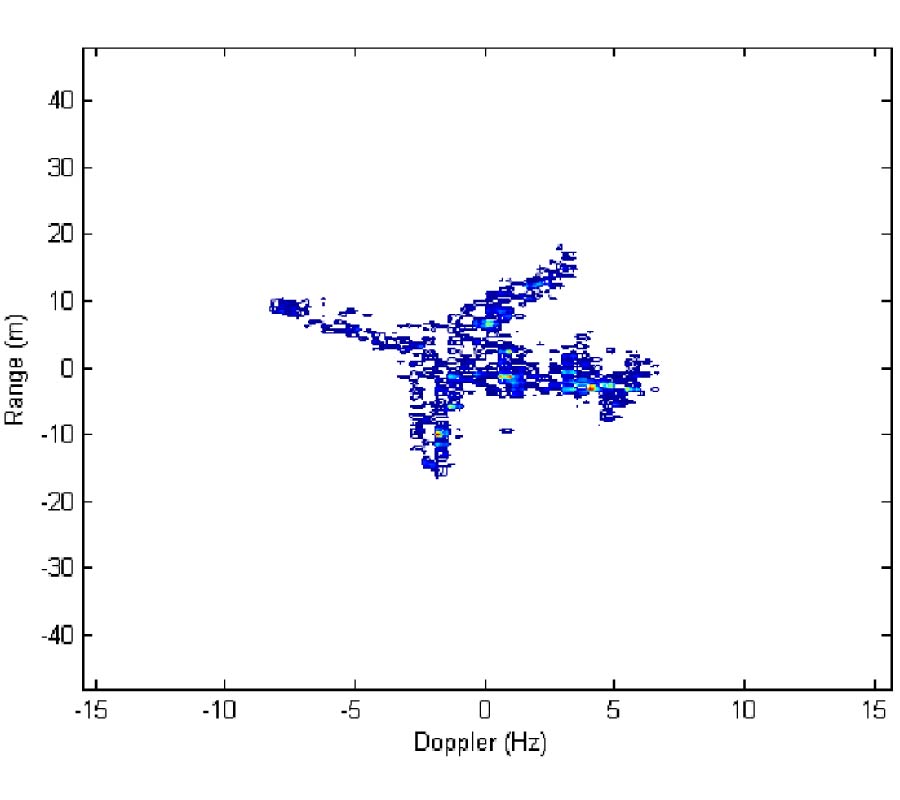
The frequency-modulated continuous wave (FMCW) synthetic aperture radar (SAR) has the properties of compact size, lightweight, low cost and low power dissipation, which provides great potential in the application of small platforms such as unmanned aerial vehicle (UAV). The imaging characteristics of rotary target for FMCW SAR are analysed based on the construction of echo signal model. Further, a passive suppressing jamming method for FMCW SAR based on micromotion modulation is proposed. This method makes use of rotary corner reflector to form jamming strips in range and azimuth, and then the target screened is protected effectively. The choice of parameters of rotary corner reflectors is discussed in detail. Finally, some simulations are given to validate the theoretical derivation and the effectiveness of method.
A PASSIVE SUPPRESSING JAMMING METHOD FOR FMCW SAR BASED ON MICROMOTION MODULATION
2016-04-19
PIER C
Vol. 63, 85-94
A Dual-Band Meandered Dipole Antenna for Medical Telemetry Applications
Johnny Ung and Tutku Karacolak
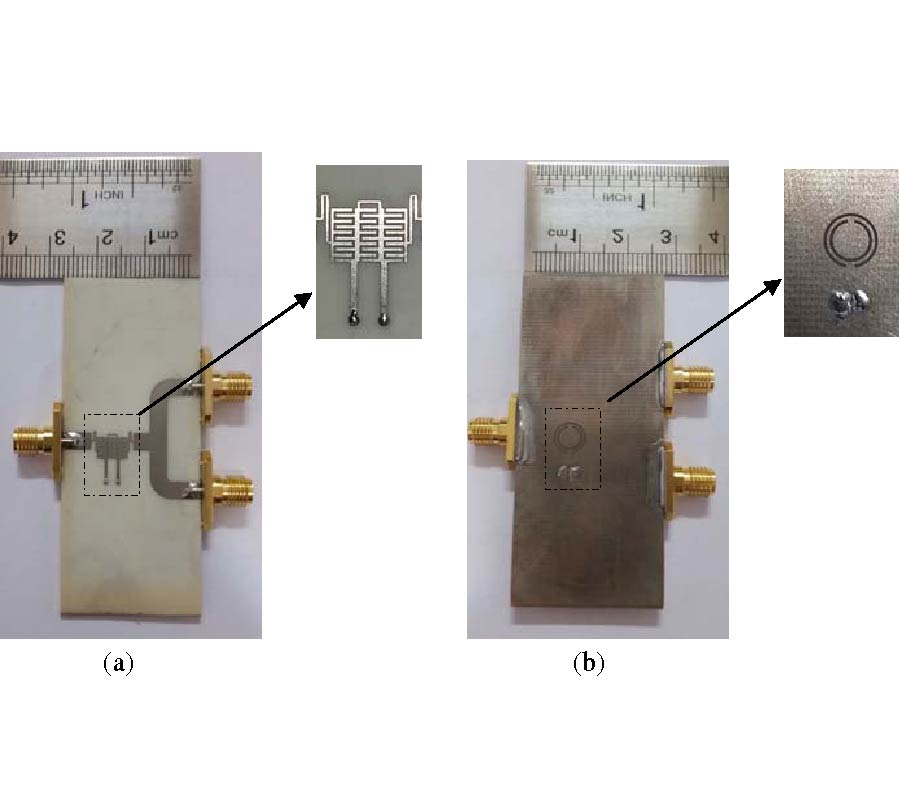
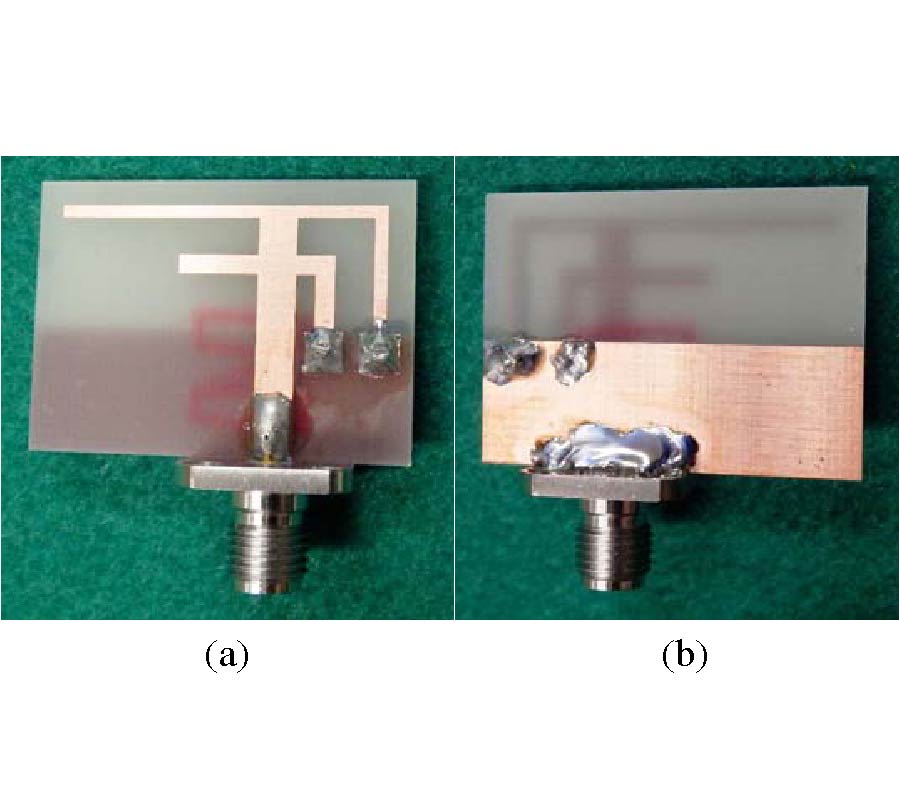
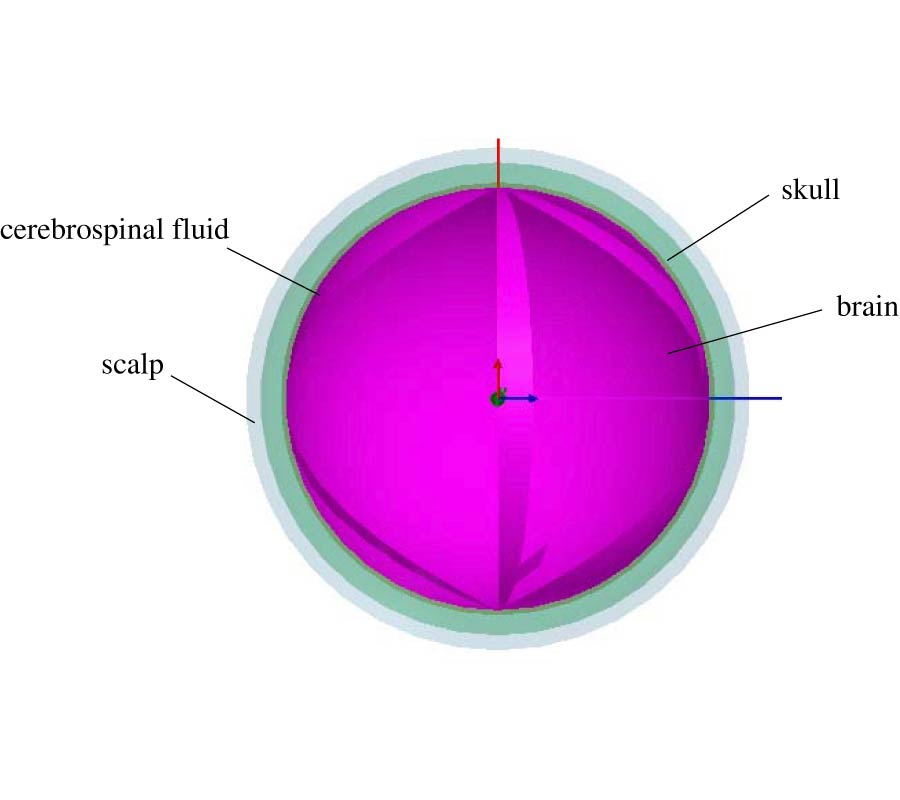
The aim of this study is to present a dual-band antenna for Wireless Medical Telemetry Service (WMTS) applications. The antenna covers all three frequency bands 608-614 MHz, 1395-1400 MHz, and 1427-1432 MHz, and is intended for continuous health monitoring of patient's vital parameters. The designed antenna consists of a meandered dipole antenna and a superstrate layer to preserve the biocompatibility of the structure. It has a compact size with dimensions 17.6 mm x 12 mm x 2.54 mm. The measured -10 dB bandwidths are found to be 16.3% for the lower frequency band and 10.6% in the upper frequency band. The antenna is in vitro tested in a tissue mimicking solution.
A DUAL-BAND MEANDERED DIPOLE ANTENNA FOR MEDICAL TELEMETRY APPLICATIONS
2016-04-19
PIER M
Vol. 48, 25-36
Backscattering Analysis for Snow Remote Sensing Model with Higher Order of Surface-Volume Scattering
Syabeela Syahali and Hong-Tat Ewe
The study of earth terrain in Antarctica is important as this region has a direct impact on global environment and weather condition. There have been many research works in developing remote sensing technologies, as it can be used as an earth observation technique to monitor the polar region (Giles et al., 2009; Park et al., 2012). In previous studies, remote sensing forward model has been developed to study and understand scattering mechanisms and sensitivity of physical parameters of snow and sea ice. This paper is an extended work from previous studies (Syahali et al., 2011; Syahali, 2012; Syahali and Ewe, 2012, 2013), where an improved theoretical model to study polar region was developed. Multiple-surface scattering, based on an existing integral equation model (IEM) that calculates surface scattering and additional second-order surface-volume scattering, were added in the model from prior research works (Ewe et al., 1998) for improvement in the backscattering calculation. We present herein the application of this model on a snow layer above ground which is modeled as a volume of ice particles that are closely packed and bounded by irregular boundaries above a homogenous half space. The effect of including multiple surface scattering and additional surface-volume scattering up to second order in the backscattering coefficient calculation of snow layer is studied for co-polarized and cross-polarized returns. Comparisons with satellite data are also done for validation. Results show improvement in the total backscattering coefficient for cross-polarized return in the studied range, suggesting that multiple-surface scattering and surface-volume scattering up to second order are important scattering mechanisms in the snow layer and should not be ignored in polar research.
BACKSCATTERING ANALYSIS FOR SNOW REMOTE SENSING MODEL WITH HIGHER ORDER OF SURFACE-VOLUME SCATTERING
2016-04-19
PIER M
Vol. 48, 9-24
An Improved MoM-GEC Method for Fast and Accurate Computation of Transmission Planar Structures in Waveguides: Application to Planar Microstrip Lines
Nejla Oueslati and Taoufik Aguili
This paper presents a new hybridization between MoM-GEC and a MultiResolution analysis (MR) based on the use of wavelets functions as trial functions. The proposed approach is developed to speed up convergence, alleviate calculation and then provide a considerable gain in requirements (processing time and memory storage) because it generates a sparse linear system. The approach consists in calculating the total current and input impedance on an invariant metallic pattern through two steps. The first one consists in expressing the boundary conditions of the unknown electromagnetic current with a single electrical circuit using the Generalized Equivalent Circuit method (GEC) and then deduce an electromagnetic equation based on the impedance operator. The impedance operator used here is described using the local modal basis of the waveguide enclosing the studied structure. The second step consists in approximating the total current using orthonormal periodic wavelets as testing functions and the local modal basis of the waveguide as basis functions. The proposed approach allows fast calculation of such inner products through the use of the wavelets multiresolution (MR) analysis advantages, thus significantly reducing the required CPU-time for microstrip-type structure analysis [13, 14]. A sparse matrix is generated from the application of a threshold. A sparsely filled matrix is easier to store and invert [15, 16]. Based on this approach, we study the planar structures. The obtained results show good accuracy with the method of moments. Moreover, we prove considerable improvements in CPU time and memory storage achieved by the MR-GEC approach when studying these structures.
AN IMPROVED MOM-GEC METHOD FOR FAST AND ACCURATE COMPUTATION OF TRANSMISSION PLANAR STRUCTURES IN WAVEGUIDES: APPLICATION TO PLANAR MICROSTRIP LINES
2016-04-16
PIER C
Vol. 63, 75-83
A Hybrid Algorithm for Synthesizing Linear Sparse Arrays
Xiaowen Zhao , Yunhua Zhang and Qingshan Yang
A hybrid algorithm based on the invasive weed optimization (IWO) and the convex optimization (CVX) is proposed for minimizing the peak sidelobe level (PSLL) of linear array with focused and/or shaped beam pattern. In this approach, IWO is adopted to produce the array (described by element positions), and CVX is used to determine the excitations for each produced array. Then the corresponding PSLL acts as the fitness function of IWO to find the optimal positions which lead to the minimum PSLL. Numerical experiments are conducted to validate the effectiveness and robustness of the proposed hybrid approach. Compared with other techniques, a lower PSLL can be achieved with a fixed main beam width or with a shaped main beam using this hybrid algorithm. Moreover, this method can easily cope with some constraints on the aperture, such as the minimum element spacing and the total number of elements.
A HYBRID ALGORITHM FOR SYNTHESIZING LINEAR SPARSE ARRAYS
2016-04-16
PIER M
Vol. 48, 1-8
A Method to Extract Dielectric Parameters from Transmission Lines with Conductor Surface Roughness at Microwave Frequencies
Bin-Ke Huang and Qi Jia
This paper details an effective method to extract dielectric parameters including dielectric constant Dk and loss tangent Df from transmission lines containing rough conductor surface. The concept of effective conductivity is firstly introduced to model conductor surface roughness in transmission lines. By using differential extrapolation method, propagation parameters of transmission lines can be extracted by removing the roughness effects. A curve-fitting method based on Genetic Algorithm (GA) is adopted to fit the propagation parameters in the smoothened case and to derive the dielectric parameters. The proposed method is especially accurate for parameter extraction at high frequency and is practical to all types of transmission lines.
A METHOD TO EXTRACT DIELECTRIC PARAMETERS FROM TRANSMISSION LINES WITH CONDUCTOR SURFACE ROUGHNESS AT MICROWAVE FREQUENCIES
2016-04-16
PIER M
Vol. 47, 201-213
Temperature Performance of GaInNAs-Based Photonic Crystal Waveguide Modulators
Giovanna Calo , Dimitris Alexandropoulos and Vincenzo Petruzzelli
The temperature performances of GaInNAs-based semiconductor devices, for next generation communication networks and photonic integrated circuits, are investigated. In particular, GaInNAs-GaInAs Multi Quantum Well active ridge waveguides, patterned with a periodic one-dimensional grating and an active defective region placed in the central layer, have been designed for efficient active optical switches and modulators. The switching mechanism was obtained around the Bragg wavelength λ≌1.2896 μm at room temperature T=298 K by properly designing the periodic grating and changing the injected current density from JOFF=0 mA/μm2 to JON=0.496 mA/μm2. The proposed device exhibits high performances in terms of crosstalk, contrast ratio, and modulation depth. The temperature performance of the proposed device is analyzed in the range T=298 K - 400 K, showing a good stability of the figures of merit: crosstalk CT, contrast ratio CR, and bandwidth Δλ. In particular, the CT varies at about 1.2 dB in the whole temperature range, whereas CR and Δλ experience, respectively, a maximum variation of 25% and 30% of their maximum values.
TEMPERATURE PERFORMANCE OF GAINNAS-BASED PHOTONIC CRYSTAL WAVEGUIDE MODULATORS
2016-04-15
PIER Letters
Vol. 59, 123-127
Microstrip Diplexer Design Using Open/Shorted Coupled Lines
Wenjie Feng , Meiling Hong and Wenquan Che
A novel microstrip diplexer with high selectivity and isolation performance is proposed through the combination of two compact bandpass filters composed of open/shorted lines and an open stub, which are designed for LTE application. Six transmission zeros in the upper stopband are used to suppress the harmonic of the microstrip diplexer. The transmission zeros near the passband can be adjusted conveniently by only changing the electrical length of the open/shorted stubs. A diplexer prototype with two passbands at 1.8 GHz and 2.1 GHz is fabricated. The isolation between the two channels is greater than 40 dB from 0.1 to 6.5 GHz.
MICROSTRIP DIPLEXER DESIGN USING OPEN/SHORTED COUPLED LINES
2016-04-15
PIER M
Vol. 47, 191-200
Tomography SAR Imaging Strategy Based on Block-Sparse Model
Xiao-Zhen Ren and Fuyan Sun
The compressed sensing (CS) based imaging methods for tomography SAR perform well in the case of large number of baselines. Unfortunately, for the current tomography SAR, the baselines are obtained from many multi-pass acquisitions on the same scene, which is expensive and can be severely affected by temporal decorrelation. In order to reduce the number of baselines, a novel strategy for tomography SAR imaging by introducing the block-sparsity theory into the imaging processing is proposed in this paper. Using neighboring pixels information in reconstruction, the proposed method can overcome the imaging quality limitation imposed by the low number of baselines. The results with simulation data under the additive gaussian noise case are presented to verify the effectiveness of the proposed method.
TOMOGRAPHY SAR IMAGING STRATEGY BASED ON BLOCK-SPARSE MODEL
2016-04-13
PIER C
Vol. 63, 63-74
Enhancing Power Efficiency of Doherty Power Amplifiers Using Windowing Based Crest Factor Reduction Technique
Deepak Nair Maroor Vikraman , Rocco Giofre and Paolo Colantonio
This paper investigates the performance of a Windowing Based Crest Factor Reduction (CFRWB) technique, to enhance the power efficiency of Radio Frequency (RF) power amplifiers. In particular, CFRWB is implemented on a Doherty Power Amplifier (DPA) in conjunction with Generalized Memory Polynomial (GMPDPD), and Volterra series based Digital Predistortion (VDPD) techniques. Key features like spectral regrowth, Peak to Average Power Ratio (PAPR) reduction, efficiency improvement and Error Vector Magnitude (EVM) have been used to measure the efficacy of the proposed method. Both simulation and experimental results show that the proposed combination of CFRWB technique with GMPDPD and VDPD is able to reduce the PAPR of the complex input signals by nearly 60%, with minimal degrading of the EVM and spectral regrowth. Moreover, such signal with reduced PAPR can be used to overdrive the DPA, allowing for a relevant average efficiency enhancement (i.e., up to 25%), while fulfilling the requirements of modern communication standards such as Wideband Code Division Multiple Access (WCDMA) and long-term evolution (LTE).
ENHANCING POWER EFFICIENCY OF DOHERTY POWER AMPLIFIERS USING WINDOWING BASED CREST FACTOR REDUCTION TECHNIQUE
2016-04-13
PIER C
Vol. 63, 53-61
Rectangular Dielectric Resonator Antenna Array for 28 GHz Applications
Nuramirah Mohd Nor , Mohd Haizal Jamaluddin , Muhammad Ramlee Kamarudin and Mohsen Khalily
In this paper, a Rectangular Dielectric Resonator Antenna (RDRA) with a modified feeding line is designed and investigated at 28 GHz. The modified feed line is designed to excite the DR with relative permittivity of 10 which contributes to a wide bandwidth operation. The proposed single RDRA has been fabricated and mounted on a RT/Duroid 5880 (εr=2.2 and tan δ=0.0009) substrate. The optimized single element has been applied to array structure to improve the gain and achieve the required gain performance. The radiation pattern, impedance bandwidth and gain are simulated and measured accordingly. The number of elements and element spacing are studied for an optimum performance. The proposed antenna obtains a reflection coefficient response from 27.0 GHz to 29.1 GHz which cover the desired frequency band. This makes the proposed antenna achieve 2.1 GHz impedance bandwidth and gain of 12.1 dB. Thus, it has potential for millimeter wave and 5G applications.
RECTANGULAR DIELECTRIC RESONATOR ANTENNA ARRAY FOR 28 GHZ APPLICATIONS
2016-04-13
PIER C
Vol. 63, 43-51
Ka-Band Low Profile Circularly Polarized Reflectarray
Abdelhady Mahmoud and Ahmed A. Kishk
Single-layer circularly polarized (CP) reflectarrays in the Ka-band are presented in this paper. Three reflectarray (RA) models are designed and measured, using geometrically dissimilar elements. Each element is analyzed individually and optimized to obtain good performance within the operating frequency band. To compensate the spatial delay from feed to the elements at RA surface, the angular rotation technique has been employed for obtaining reflected phase curve. The performances of the antennas are analyzed at 30 GHz, exhibiting 13.3% of 1.5 dB gain bandwidth, while the axial ratio bandwidth is less than 3 dB in the whole operating band.
KA-BAND LOW PROFILE CIRCULARLY POLARIZED REFLECTARRAY
2016-04-13
PIER Letters
Vol. 59, 115-122
Mutual Coupling Reduction Between Closely Placed Microstrip Patch Antenna Using Meander Line Resonator
Jeet Ghosh , Sandip Ghosal , Debasis Mitra and Sekhar Ranjan Bhadra Chaudhuri
An approach of reducing Mutual Coupling between two patch antennas is proposed in this paper. Here, a meander line resonator is placed in between the radiating elements. By inserting the meander line resonator between the patch antennas with the edge-to-edge distance less than λ/18, about 8 dB reduction of Mutual Coupling throughout the 10-dB bandwidth has been achieved without degrading the radiation pattern.The circuit model of the proposed configuration is carried out in this paper and envelope correlation coefficient is also computed. The proposed structure has been fabricated and measured.
MUTUAL COUPLING REDUCTION BETWEEN CLOSELY PLACED MICROSTRIP PATCH ANTENNA USING MEANDER LINE RESONATOR
2016-04-13
PIER M
Vol. 47, 181-189
Study of UPML Absorbing Boundary Condition for the Five-Step LOD-FDTD Method
Lixia Yang , Xuejian Feng and Lunjin Chen
In this paper, the uniaxial anisotropic perfectly matched layer (UPML) absorbing boundary condition in unconditionally stable five-step locally one-dimensional finite-difference time-domain (LOD5-FDTD) method is deduced. The UPML absorbing boundary condition (ABC) is validated based on comparison with a simulation in larger domain (and thus without reflection) in the first test. Then using a sinusoidal source, target field phase distribution surrounded by the UPML-ABC is analyzed. The results further illustrate the stability and efficiency of the UPML absorbing boundary condition.
STUDY OF UPML ABSORBING BOUNDARY CONDITION FOR THE FIVE-STEP LOD-FDTD METHOD
2016-04-13
PIER M
Vol. 47, 171-180
Properties and Applications of Error Coefficient Matrix in Linear Antenna Array Design
Bhargav Appasani
This paper presents the theoretical framework for a new technique in the field of linear antenna arrays with amplitude control called error coefficient matrix. First of all, the array factor is expressed as a summation of contribution from the elements of the array. It will be shown that for small errors in excitation amplitude, the error in the overall radiation pattern at a given angle is a summation of errors contributed by the individual elements of the array at that angle. An error coefficient matrix is proposed, and its properties are discussed in great detail. The accuracy of the proposed method is investigated for varying levels of errors in weights and for varying number of error elements, using Monte-Carlo simulation. Finally, the applications of this new technique in the field of antenna arrays are presented.
PROPERTIES AND APPLICATIONS OF ERROR COEFFICIENT MATRIX IN LINEAR ANTENNA ARRAY DESIGN
2016-04-13
PIER
Vol. 156, 1-12
Metamaterial Antenna Arrays for Improved Uniformity of Microwave Hyperthermia Treatments
David Vrba , Dario Rodrigues and Paul R. Stauffer
Current microwave hyperthermia applicators are not well suited for uniform heating of large tissue regions. The objective of this research is to identify an optimal microwave antenna array for clinical use in hyperthermia treatment of cancer. For this aim we present a novel 434 MHz applicator design based on a metamaterial zeroth order mode resonator, which is used to build larger array configurations. These applicators are designed to effectively heat large areas extending deep below the body surface and in this work they are characterized with numerical simulations in ahomogenous muscle tissue model. Their performance is evaluated using three metrics: radiation pattern-based Effective Field Size (EFS), temperature distribution-based Therapeutic Thermal Area (TTA), and Therapeutic Thermal Volume (TTV) reaching 41-45°C. For 2×2 and 2×3 array configurations, the EFS reaching > 25% of maximum SAR in the 3.5 cm deep plane is 100% and 91% of the array aperture area, respectively. The corresponding TTA for these arrays is 95% and 86%, respectively; and the TTV attaining > 41°C is over 85% of the aperture area toa depth of over 3 cm in muscle, using either array configuration. With theoretical heating performance exceeding that of existing applicators, these new metamaterial zero order resonator arrays show promise for future applications in large area superficial hyperthermia.
METAMATERIAL ANTENNA ARRAYS FOR IMPROVED UNIFORMITY OF MICROWAVE HYPERTHERMIA TREATMENTS
2016-04-11
PIER Letters
Vol. 59, 109-114
Additive Manufacturing of a Dual-Ridged Horn Antenna
Budhaditya Majumdar , David Baer , Sudipta Chakraborty , Karu P. Esselle and Michale Heimlich
A 3D printed dual-ridged horn antenna (DRHA) is presented. The antenna design is optimized for additive manufacturing and is 3D printed using acrylonitrile butadiene styrene (ABS) and then painted with nickel based aerosol spray. The coaxial transition is also included in the 3D printed prototype. The antenna was manufactured with the intention of improving learning and education of electromagnetism and antennas for undergraduate students using a low-cost personal desktop 3D printer. The painted DRHA has a 10 dB return-loss bandwidth of 6621 MHz (1905 MHz-8526 MHz) with a peak gain of 11 dBi. This prototype is the first known ABS based horn antenna with the coaxial transition embedded into it.
ADDITIVE MANUFACTURING OF A DUAL-RIDGED HORN ANTENNA
2016-04-09
PIER M
Vol. 47, 161-169
Planar Arrangement of Modified Concentric Rings with Defected Ground for Mobile and Wireless Communication Systems
Neelam Choudhary , Ajay Tiwari , Jaswant Singh Saini , Virender Kumar Saxena and Deepak Bhatnagar
This paper reports the design and performance of a compact planar arrangement of concentric rings designed with defected ground plane. The radiating circular patch and ground plane of antenna are modified in several steps to achieve a broadband circularly polarized antenna. In each stage of modification, antenna is simulated by applying CST Microwave Studio simulator, and finally, a prototype is developed and tested in free space. The developed prototype efficiently operates at frequencies 2.34 GHz and 4.41 GHz, and provides an overall impedance bandwidth close to 2.31 GHz or 67.45% with respect to central frequency 3.425 GHz. This antenna provides nearly flat gain in the desired frequency band with maximum measured gain close to 2.94 dBi at frequency 3.02 GHz. It also provides circularly polarized radiations in the frequency bands extended from 2.67 to 3.05 GHz and 3.44 to 3.57 GHz. The co-polar and cross-polar radiation patterns of the antenna in azimuth and elevation planes are obtained at frequencies 2.316 GHz and 4.41 GHz. The proposed antenna can be used for mobile and lower bands of Wi-Max and UWB communication systems.
PLANAR ARRANGEMENT OF MODIFIED CONCENTRIC RINGS WITH DEFECTED GROUND FOR MOBILE AND WIRELESS COMMUNICATION SYSTEMS
2016-04-09
PIER M
Vol. 47, 151-159
Design of a Compact Patch Antenna Loading Periodic Jerusalem Crosses
Siya Mi and Yee Hui Lee
A compact microstrip antenna loaded with periodic patterns etched in the ground plane is proposed. The etched patterns are Jerusalem crosses which look the same as one of the common electromagnetic band gap structures, uni-planar electromagnetic band gap. In this paper, the dielectric backed with etched ground plane is analysed in terms of metamaterial. The permittivity and permeability are derived from the simulated reflection and transmission coefficients. Then a patch is stacked on the metasubstrate, and the antenna is designed to operate at 2.4 GHz. The proposed antenna has a small dimension in comparison to two other published compact antennas. Compared to the conventional patch antenna, the proposed antenna achieves a 68.38% miniaturization of the patch, and a 2.84 times impedance bandwidth broadening. Furthermore, the operating frequency of the proposed antenna can be tuned over a large range of frequencies by physically adjusting the length of the surrounding slots or by voltage adjusting of the voltage controlled tunable inductive elements. The proposed antenna is fabricated and measured. The measurement results are found to agree well with the simulation ones.
DESIGN OF A COMPACT PATCH ANTENNA LOADING PERIODIC JERUSALEM CROSSES
2016-04-09
PIER M
Vol. 47, 141-149
Wander and Spreading of Gaussian-Schell Model Beams Propagating through Anisotropic Marine-Atmospheric Turbulence
Yuqian Wu , Yixin Zhang and Zhengda Hu
The effects of anisotropic turbulence on the wander and spreading of Gaussian-Schell model beams propagating in non-Kolmogorov marine-atmospheric channel are investigated. Expressions for beam wander and long-term beam spreading are derived in all conditions of marine-atmospheric turbulence. Our results indicate that the beam wander and spreading of Gaussian-Schell model beams are lower in the anisotropic turbulence than the beam in isotropic turbulence. This model can be evaluated ship-to-ship/shore optical laser communication system performance.
WANDER AND SPREADING OF GAUSSIAN-SCHELL MODEL BEAMS PROPAGATING THROUGH ANISOTROPIC MARINE-ATMOSPHERIC TURBULENCE