Search Results(13797)

2016-03-01
PIER C
Vol. 62, 119-129
Design of High-Isolation Compact MIMO Antenna for UWB Application
Narges Malekpour and Mohammad Amin Honarvar
In this paper, a compact multiple-input-multiple-output (MIMO) antenna is proposed for ultra wideband (UWB) communication. The UWB MIMO antenna consists of two identical monopole antenna elements with a comb-line structure on the ground plane to improve impedance matching and enhance isolation. Simulation and measurement have been analysed in terms of reflection coefficient, mutual coupling, dispersion diagram, radiation pattern, peak gain, efficiencyand envelope correlation coefficient. Results show that the antenna has an impedance bandwidth larger than 3.1-10.6 GHz, mutual coupling between the two ports lower than -25 dB and envelope correlation coefficient less than 0.001 across the UWB band. The proposed antenna has a compact size of 26×31 mm2. All the measured and calculated results show that the proposed UWB MIMO antenna is a good candidate for UWB MIMO systems.
DESIGN OF HIGH-ISOLATION COMPACT MIMO ANTENNA FOR UWB APPLICATION
2016-03-01
PIER M
Vol. 46, 165-172
Surface-Plasmon-Polaritons at the Interface of Nanostructured Metamaterials
Tatjana Gric
The rigorous modeling and analysis of surface waves at the boundary of two metamaterials are presented. The nature of the phenomenon of the surface-plasmon-polaritons and the influence of various parameters on it are investigated. We have analyzed the properties of structures incorporating nanostructured metamaterials. Surface-plasmon-polaritons at the interface of such metamaterials are studied. We demonstrate the ways to control the properties of the surface waves. Each metamaterial comprises alternating metal and dielectric layers. We analyze the dependence of the dispersion characteristics on the materials employed in metal-dielectric compound. The consistency of the dispersion diagrams and effective permittivity is studied. The Drude model is introduced in the metal dispersion in order to take into account the effects of the structure on dielectric properties.
SURFACE-PLASMON-POLARITONS AT THE INTERFACE OF NANOSTRUCTURED METAMATERIALS
2016-03-01
PIER M
Vol. 46, 153-163
Mesh Optimization for Maxwell's Equations with Respect to Anisotropic Materials Using Geometric Algebra
Mariusz Klimek , Sebastian Schops and Thomas Weiland
Clifford's Geometric Algebra provides an elegant formulation of Maxwell's equations in the spacetime setting. Its clear geometric interpretation is used to derive a goal function, whose minimization results in Hodge-optimized material matrices being diagonal or diagonal-dominant. Effectively it is an optimization of the primal/dual mesh pair of a finite difference based discretization scheme taking into account the material properties. As a research example a standing wave in 2D cavity filled with an anisotropic material is investigated. Convergence of the scheme for various choices of mesh pairs is discussed. The limitations of the method in the 3D case are presented.
MESH OPTIMIZATION FOR MAXWELL'S EQUATIONS WITH RESPECT TO ANISOTROPIC MATERIALS USING GEOMETRIC ALGEBRA
2016-02-29
PIER Letters
Vol. 59, 15-20
Seven-Band Comb-Shaped Microstrip Antenna for Wireless Systems
Kaushik Mandal
This paper presents a very simple comb shaped single layer microstrip patch antenna with seven operating bands for wireless systems. Eight symmetrical rectangular strips are connected by a single strip to achieve multiple operating bands. The proposed antenna provides maximum number of resonating bands compared to the antennas of its class. Effects of additional strips and the connecting strip on the antenna characteristics are studied. A prototype of the antenna is fabricated for experimental validation. The measured reflection coefficient (S11) and radiation patterns are in good agreement with their simulated counterpart. Measured result shows that the proposed antenna can operate at seven different frequency bands 1.56-1.64 GHz, 1.76-1.94 GHz, 3.62-3.74 GHz, 4.43-4.48 GHz, 5.02-5.13 GHz, 5.48-5.62 GHz and 5.92-6.02 GHz. These bands cover some of the most useful bands for wireless systems such as GPS (1570.42-1580.42 MHz), DCS-1800 (1710-1880 MHz), PCS-1900 (1850-1990 MHz), WiMAX and WLAN.
SEVEN-BAND COMB-SHAPED MICROSTRIP ANTENNA FOR WIRELESS SYSTEMS
2016-02-26
PIER C
Vol. 62, 109-117
Tunable Band-Notched CPW-Fed UWB Monopole Antenna Using Capacitively Loaded Microstrip Resonator for Cognitive Radio Applications
Hany Ahmed Atallah , Adel Bedair Abdel-Rahman , Kuniaki Yoshitomi and Ramesh K. Pokharel
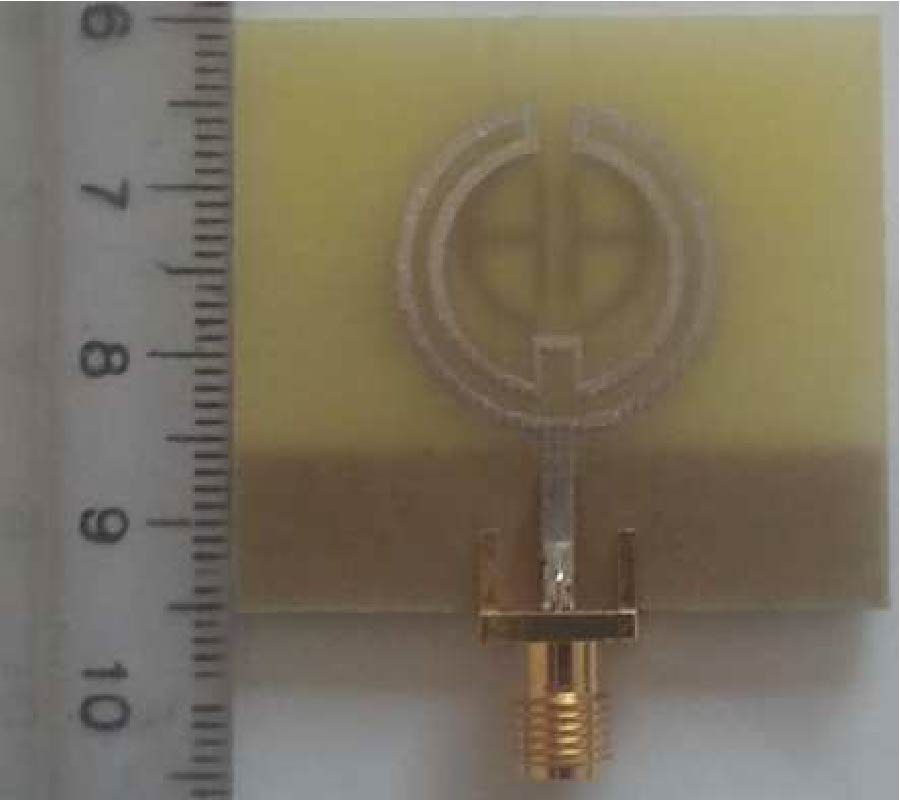
In this paper, a new compact coplanar waveguide (CPW) ultrawideband (UWB) antenna with an electronically tunable notched band is proposed for an overlay onto cognitive radio (CR) systems. The proposed antenna utilized a rectangular microstrip resonator in the bottom layer to create a single notched band and to realize tunability and miniaturization using varactors. The center frequency of the notched band can be electronically tuned by changing the effective electrical length of the microstrip resonator, which is achieved by employing two varactor diodes at the resonator edges. Moreover, the simple biasing of the varactor diodes has a small effect on the antenna performance. Experimental results show that the proposed antenna can selectively have a band notch over a continuous operating band about 1.44 GHz from 4.77 to 6.21 GHz to prevent the interference to the primary users that are operating in this band such as the WLAN (5.15-5.35 GHz; 5.725-5.825 GHz) and the WiMAX (5.25-5.825 GHz). Good agreement is found between the simulated and the measured data.
TUNABLE BAND-NOTCHED CPW-FED UWB MONOPOLE ANTENNA USING CAPACITIVELY LOADED MICROSTRIP RESONATOR FOR COGNITIVE RADIO APPLICATIONS
2016-02-25
PIER M
Vol. 46, 143-152
Polarimetric Target Detection Using Statistic of the Degree of Polarization
Bo Ren , Longfei Shi and Guoyu Wang
The degree of polarization (DoP) can be utilized as a detection statistic in the polarimetric radar to achieve target detection performance improvement. In this paper, a polarimetric radar model is established, which includes reflections from both target and clutter at first. Then, probability density functions (PDFs) of the estimated DoP are expressed in closed form, which is derived from joint eigenvalue distributions of complex noncentral Wishart matrices. The detector is developed and evaluated theoretically on the basis of the statistical properties of the DoP. Finally, a comparison between the new DoP detector and single-polarization detector is presented against real data. The performance improvement is demonstrated by the comparison results.
POLARIMETRIC TARGET DETECTION USING STATISTIC OF THE DEGREE OF POLARIZATION
2016-02-24
PIER C
Vol. 62, 99-107
CPW Dual-Band Antenna Based on Asymmetric Generalized Metamaterial Π NRI Transmission Line for Ultra Compact Applications
Mahmoud Abdelrahman Abdalla and Mohamed A. Hagag
In this paper, an ultra compact dual-band metamaterial antenna based on a new asymmetric generalized negative refractive index transmission line is introduced. The antenna is designed to support the 900 MHz GSM and 2400 RFID/WiFi bands. Moreover, the antenna size is only (15×20 mm2) which is only less than (0.08λg× 0.1λg) at the center frequency of the first resonance and (0.22λg× 0.29λg) at the center frequency of the second resonance. The theoretical design steps of the antenna are explained. The dual-band antenna design has been validated using equivalent circuit modelling, electromagnetic full wave simulations and practical measurement. The results illustrate that the antenna has the first resonance centred at 0.9 GHz and the second at 2.4 GHz with 15 dB return loss in the two bands. Good agreements among the circuit modelling, electromagnetic full wave simulation and practical measurements have been achieved.
CPW DUAL-BAND ANTENNA BASED ON ASYMMETRIC GENERALIZED METAMATERIAL Π NRI TRANSMISSION LINE FOR ULTRA COMPACT APPLICATIONS
2016-02-23
PIER B
Vol. 66, 63-89
First Principles Cable Braid Electromagnetic Penetration Model
Larry Kevin Warne , William L. Langston , Lorena I. Basilio and William A. Johnson
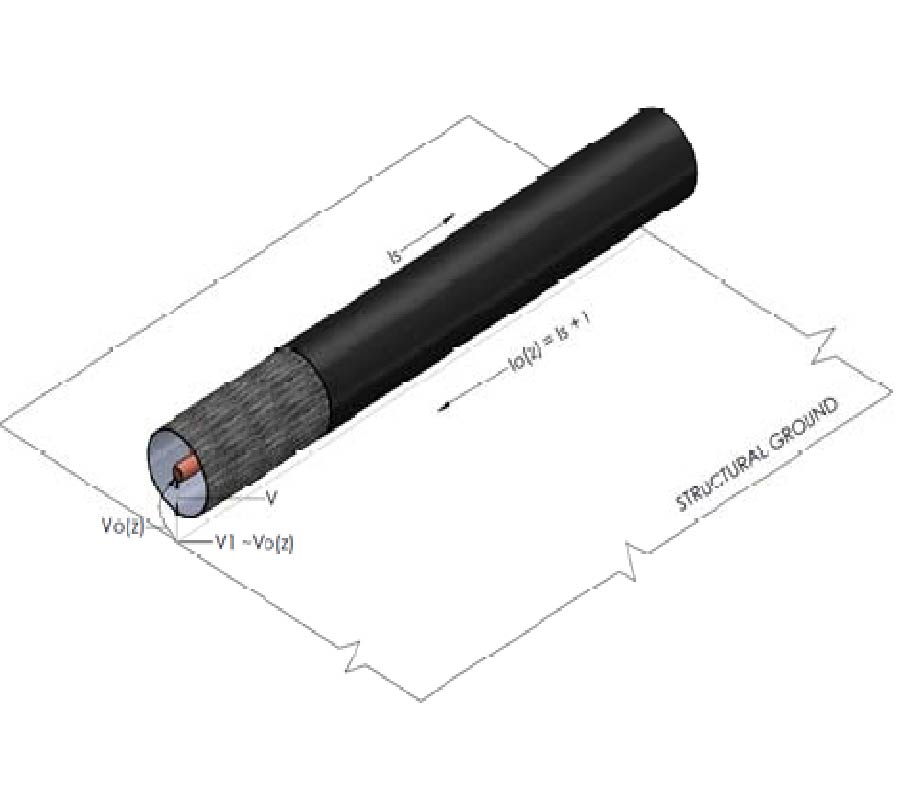
The model for penetration of a wire braid is rigorously formulated. Integral formulas are developed from energy principles for both self and transfer immittances in terms of potentials for the fields. The detailed boundary value problem for the wire braid is also set up in a very efficient manner; the braid wires act as sources for the potentials in the form of a sequence of line multipoles with unknown coefficients that are determined by means of conditions arising from the wire surface boundary conditions. Approximations are introduced to relate the local properties of the braid wires to a simplified infinite periodic planar geometry. This is used to treat nonuniform coaxial geometries including eccentric interior coaxial arrangements and an exterior ground plane.
FIRST PRINCIPLES CABLE BRAID ELECTROMAGNETIC PENETRATION MODEL
2016-02-23
PIER Letters
Vol. 59, 7-13
A Compact Dual-Polarized Antenna for Base Station Application
Guanfeng Cui , Shi-Gang Zhou , Shu-Xi Gong and Ying Liu
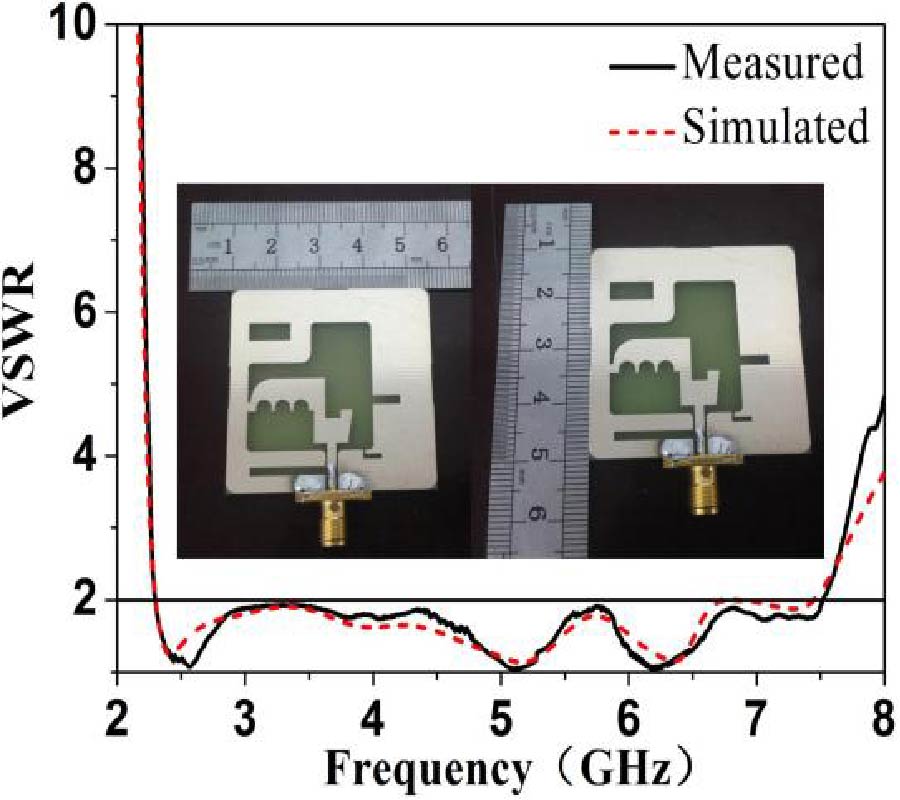
A compact dual-polarized antenna element integrated with balun is proposed. Two pairs of dipoles are employed for the dual-polarizations of the antenna, and strong mutual coupling between them is introduced to widen the bandwidth of the antenna. Bent dipoles are used to reduce the size of the antenna. The simulated and measured results show that the proposed antenna can cover the bandwidth ranging from 790 MHz to 960 MHz with VSWR < 1.5 and isolation > 26 dB. The antenna element is also fabricated and tested. The measured results show that the antenna can be a good candidate for the design of European Digital Dividend/CDMA800/GSM900 mobile communication base station antenna.
A COMPACT DUAL-POLARIZED ANTENNA FOR BASE STATION APPLICATION
2016-02-23
PIER
Vol. 155, 39-52
Fast Domain Decomposition Methods of FE-BI-MLFMA for 3D Scattering/Radiation Problems (Invited Paper)
Ming-Lin Yang , Hong-Wei Gao , Xu-Min Sun and Xin-Qing Sheng
It has been widely verified that the hybrid finite element - boundary integral - multilevel fast multipole algorithm (FE-BI-MLFMA) is a general, efficient and accurate method for the analysis of unbounded electromagnetic problems. A variety of fast methods of FE-BI-MLFMA have been developed since 1998. In particular, the domain decomposition methods have been applied to FE-BI-MLFMA and significantly improve the efficiency of FE-BI-MLFMA in recent years. A series of fast domain decomposition methods (DDMs) of FE-BI-MLFMA have been developed. These fast DDMs can be roughly classified into two types: Schwarz DDMs and dual-primal finite element tearing and interconnecting (FETI-DP) DDMs. This paper will first give an overview of the DDMs development of FE-BI-MLFMA. Then a uniform, consistent, and efficient formulation is presented and discussed for these fast DDMs of FE-BI-MLFMA. Their computational complexities are analyzed and studied numerically.
FAST DOMAIN DECOMPOSITION METHODS OF FE-BI-MLFMA FOR 3D SCATTERING/RADIATION PROBLEMS (Invited Paper)
2016-02-19
PIER M
Vol. 46, 135-142
Compressive Sampling Multispectral Imaging and Unmixing Method for Fluorescent Imaging
Yamin Song , Fuhong Cai , Julian Evans , Erik Forsberg and Sailing He
Multispectral imaging is an important tool for understanding composite materials in many disciplines. Spectral unmixing enables the determination of individual fluorophore distributions. Due to the dispersive nature of biomaterials the observed spectra of fluorescent dyes is unknown. Spectral unmixing can be accomplished for unknown endmember spectra using minimum volume simplex analysis (MVSA). Compressive sampling (CS) is a method to reduce the computational cost of operating on sparse data sets and can be performed efficiently using NESTA based on Nesterov's algorithm. Here we demonstrate that NESTA and MVSA can be combined with a denoising threshold to create a compressive sampling and multispectral unmixing (CSMIU) method that enables efficient bioimaging and unmixing with high levels of accuracy (spectral angle distances (SADs) < 0.05). This CSMIU method may potentially enable broadband and in vivo bioimaging modalities.
COMPRESSIVE SAMPLING MULTISPECTRAL IMAGING AND UNMIXING METHOD FOR FLUORESCENT IMAGING
2016-02-18
PIER C
Vol. 62, 89-98
Method for P-Static Source Location on Aircraft Using Time Domain Measurements
Ivan Garcia-Hallo , Dominique Lemaire , Nathalie Raveu and Gilles Peres
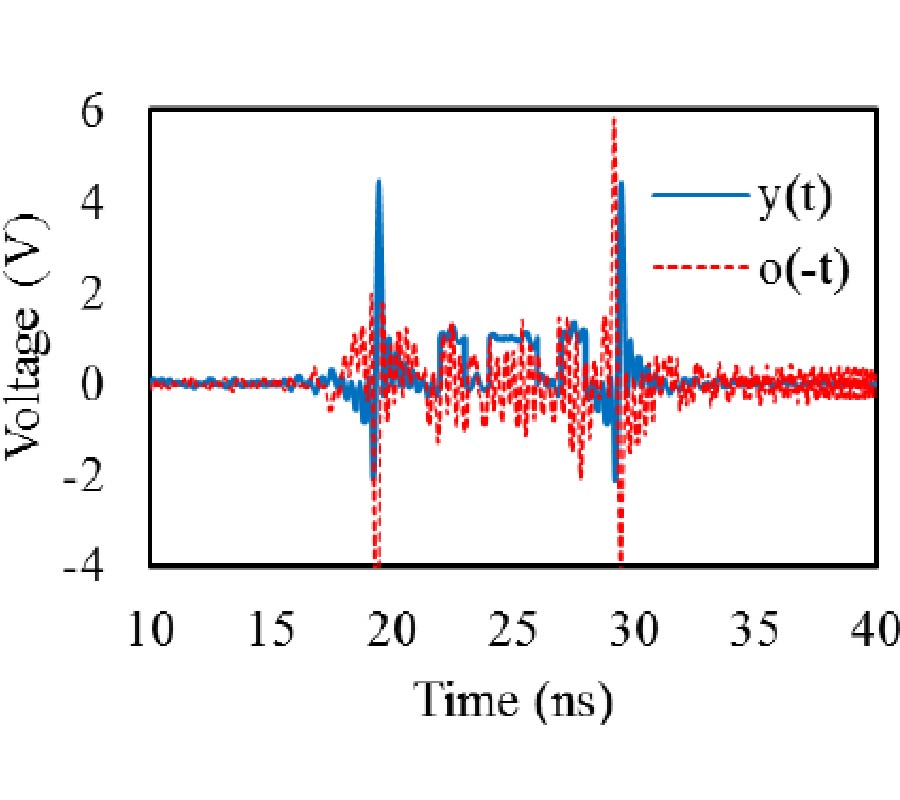
Static charging of an aircraft surface can lead to electromagnetic disturbances on aircraft radio and avionic systems. This phenomenon is called Precipitation Static. Arc discharges are the main causes, and they often occur when there is a bonding defect on the surface of the aircraft. In order to find these bonding defects, often the whole aircraft has to be scanned. This paper presents a method that aims at reducing the time needed for the search of outer bonding issues. The system is composed of an instrumentation to be used in-flight, that measures the electromagnetic emissions of P-Static sources using several sensors placed on the surface of the aircraft. Then, given several signals measured from sensors and using a time domain location method based on delay estimation, it is possible to compute the source position. The method is validated on a simplified fuselage mock-up with satisfying location performance.
METHOD FOR P-STATIC SOURCE LOCATION ON AIRCRAFT USING TIME DOMAIN MEASUREMENTS
2016-02-17
PIER
Vol. 155, 27-38
Synthesis of Sparse or Thinned Linear and Planar Arrays Generating Reconfigurable Multiple Real Patterns by Iterative Linear Programming
Yanhui Liu , Pengfei You , Chunhui Zhu , Xiaofeng Tan and Qing Huo Liu
It is shown in this paper that the problem of reducing the number of elements for multiple-pattern arrays can be solved by a sequence of reweighted ℓ1 optimizations under multiple linear constraints. To do so, conjugate symmetric excitations are assumed so that the upper and lower bounds for each pattern can be formulated as linear inequality constraints. In addition, we introduce an auxiliary variable for each element to define the common upper bound of both the real and imaginary parts of multiple excitations for different patterns, so that only linear inequality constraints are required. The objective function minimizes the reweighted ℓ1-norm of these auxiliary variables for all elements. Thus, the proposed method can be efficiently implemented by the iterative linear programming. For multiple desired patterns, the proposed method can select the common elements with multiple set of optimized amplitudes and phases, consequently reducing the number of elements. The radiation characteristics for each pattern, such as the mainlobe shape, response ripple, sidelobe level and nulling region, can be accurately controlled. Several synthesis examples for linear arrays, rectangular/triangular-grid and randomly spaced planar arrays are presented to validate the effectiveness of the proposed method in the reduction of the number of elements.
SYNTHESIS OF SPARSE OR THINNED LINEAR AND PLANAR ARRAYS GENERATING RECONFIGURABLE MULTIPLE REAL PATTERNS BY ITERATIVE LINEAR PROGRAMMING
2016-02-16
PIER B
Vol. 66, 49-61
Electromagnetic Field Theory for Invariant Beams Using Scalar Potentials
Irving Rondon-Ojeda and Francisco Soto-Eguibar
We present a description of the electromagnetic field for the propagation invariant beams using scalar potentials. Fundamental dynamical quantities are obtained: energy density, Poynting vector and Maxwell stress tensor. As an example, all these quantities are explicitly calculated for the Bessel beams, which are invariant beams with circular cylindrical symmetry.
ELECTROMAGNETIC FIELD THEORY FOR INVARIANT BEAMS USING SCALAR POTENTIALS
2016-02-16
PIER C
Vol. 62, 77-87
Design of a Microstrip-Fed Hexagonal Shape UWB Antenna with Triple Notched Bands
Xun Gong , Ling Tong , Yu Tian and Bo Gao
In this paper, a microstrip-fed hexagonal shape ultra-wideband (UWB) monopole antenna with triple band-notched characteristics is presented. The antenna consists of a microstrip feed line, a regular hexagonal shape radiation patch with a complementary split ring resonator (CSRR) and a pair of inverted T-shaped conductor-backed planes embedded in the antenna backside. Notched bands can be easily controlled by geometry parameters of the CSRR and conductor-backed planes. The simulated and measured results show that this monopole UWB antenna can offer an operation frequency from 2.93 GHz to 10.04 GHz with -10 dB return loss bandwidth, except three notched bands at 3.31-3.78 GHz, 5.33-5.77 GHz and 7.24-7.72 GHz for rejecting the WiMAX and downlink of X band satellite communication system signals. A good agreement between the measured and simulated results is observed. The proposed antenna provides broadband impedance matching, appropriate gain and stable radiation patterns over its operating bandwidth and can be used in wireless UWB applications.
DESIGN OF A MICROSTRIP-FED HEXAGONAL SHAPE UWB ANTENNA WITH TRIPLE NOTCHED BANDS
2016-02-16
PIER Letters
Vol. 59, 1-6
Microstrip Dual-Band Bandpass Filter Using U-Shaped Resonators
Eugene A. Ogbodo , Yi Wang and Kenneth Siok Kiam Yeo
Coupled resonators are widely used in the design of cross-coupled filters with dual-passband response and the quasi-elliptic function characteristics. In this paper, we will present a dual-band bandpass filter using only couplings between adjacent resonators, i.e. without cross-couplings. The dual-band bandpass filter with passband centre frequencies of 1747 MHz and 1880 MHz respectively is designed and fabricated using microstrip U-shaped resonators. Using coupled resonator pair as a dual-band cluster, a miniaturised structure is achieved as compared to the conventional topology. The measured responses agree closely with the simulations.
MICROSTRIP DUAL-BAND BANDPASS FILTER USING U-SHAPED RESONATORS
2016-02-15
PIER C
Vol. 62, 71-76
A New Printed Microstrip UWB Power Divider with Notched Band
Jin-Yi Wu , Minxian Du , Huaxia Peng , Xin Wang and Yun Ling
In this paper, a new printed ultra-wideband (UWB) power divider with notched band using square ring multiple-mode resonator (SRMMR) is presented. The characteristics of the proposed SRMMR are investigated by using even- and odd-mode analysis. Then, the initial UWB performance is achieved by introducing SRMMR to the basic Wilkinson power divider. Finally, a pair of parallel coupled lines is embedded into the SRMMR to achieve a desired notched band inside the UWB passband. The central frequency and the bandwidth of the notched band can be easily controlled by the electrical length and coupling coefficient of the coupled lines. To validate the design concept, a novel printed UWB power divider with notched band centered at frequencies of 5.8 GHz is designed and measured. The simulated and measured results indicate that it has a low insertion loss and good return loss performance at all the three ports, and a high isolation between the two output ports across the UWB bandwidth from 3.1 to 10.6 GHz with a small size of 0.46λg×0.69λg, where λg is the guided wavelength at 6.85 GHz.
A NEW PRINTED MICROSTRIP UWB POWER DIVIDER WITH NOTCHED BAND
2016-02-12
PIER B
Vol. 66, 31-47
Analytical Model on Real Geometries of Magnet Bars of Surface Permanent Magnet Slotless Machine
Youcef Boutora , Noureddine Takorabet and Rachid Ibtiouen
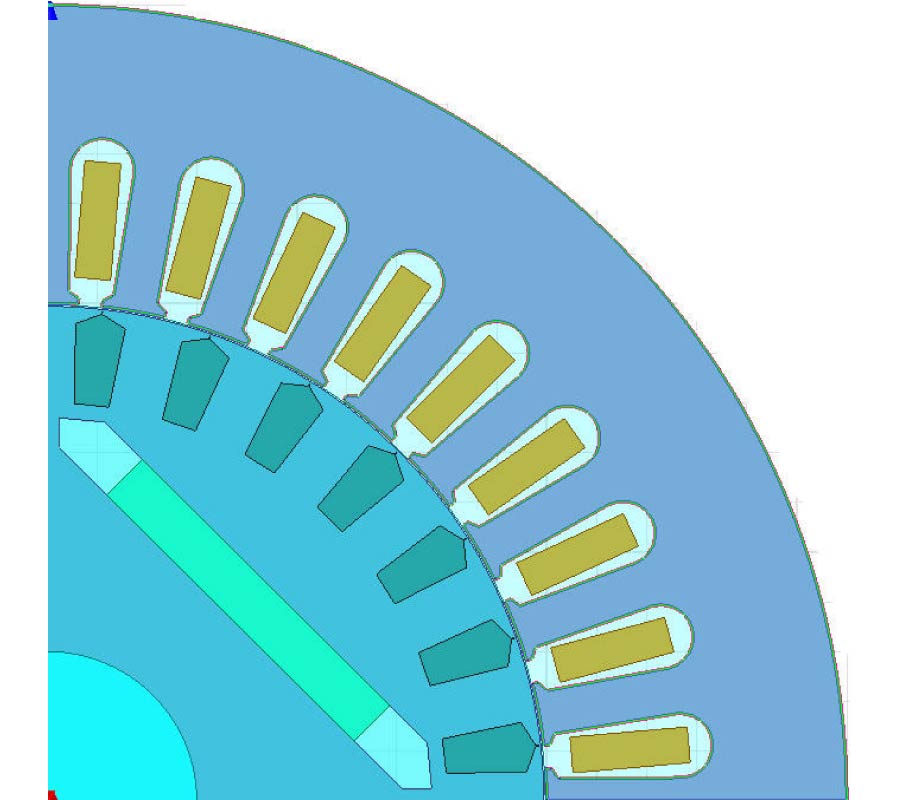
We present in this paper an analytical model for the calculation of the electromagnetic field in a slotless surface mounted permanent magnet machines. This model takes into account the two essential directions of magnetization of the magnets, namely tangential magnetization and radial magnetization. It especially accounts for the parallel form of the magnetization direction. The model uses equivalent currents on the surfaces of the magnets, and in an original way, it uses currents in all volume of the magnet. The model is validated by numerical results obtained with a free software of calculation of the electromagnetic fields (FEMM: Finite Element Method Magnetics) which uses the finite elements method and by an existing experimental structure. The model is extended to the magnets segmented in bars and separated. It is then extended to the shape of magnets close to parallepiped forms which are really used in large machines.
ANALYTICAL MODEL ON REAL GEOMETRIES OF MAGNET BARS OF SURFACE PERMANENT MAGNET SLOTLESS MACHINE
2016-02-12
PIER C
Vol. 62, 61-70
Compact Rectenna Design for Lossy Paper Substrate at 2.45 GHz
Ines Kharrat , Pascal Xavier , Tan-Phu Vuong and Guy Eymin Petot Tourtollet
This work presents a compact rectenna based on printed on paper electronics. The rectenna is printed using mass production technique on an environmental-friendly and flexible paper substrate. Only one ink layer is used. The characterized paper substrates present minimum tangent losses of 0.08. It shows at most 40 times higher tangent loss than commercial substrates (Rogers Ultralam2000). A reduction of 50% of dielectric losses can be achieved by a good selection of the paper type; the selected paper substrate is a corrugated cardboard with 0.04 loss tangent value. The designed rectenna is based on two series-mounted SMS7630 Schottky diodes. Co-design technique has been used in order to integrate different blocks for additional loss reduction. The goal of our work is the use of a recyclable cardboard substrate with low-losses compared to classical paper substrate and high losses compared to commercial substrates. The printed on cardboard rectenna presents similar performances to a rectenna etched on commercial substrates. This device aims to convert high voltage levels (1V) at low power levels (-15 dBm) for self-sustainable devices. For our application, an electrochromic display is supplied for anti-counterfeiting purposes. When a smartphone operating on Wi-Fi mode is close, the printed rectenna exhibits 970 mV DC which is sufficient to turn on the electrochromic display.
COMPACT RECTENNA DESIGN FOR LOSSY PAPER SUBSTRATE AT 2.45 GHZ
2016-02-12
PIER C
Vol. 62, 51-59
A Wide Bandwidth Folded V-Shaped Patch Antenna with Stable High Gain and Low Cross-Polarization Characteristics
Feibiao Dong , Wenbin Lin , Xiaohong Guo and Guoguang Wang
A wide bandwidth folded V-shaped patch antenna with high gain and low cross polarization is presented. The proposed antenna is composed of a folded V-shaped patch, an H-shaped coupling slot cut in the ground plane and a feed line with a stub printed on the bottom layer of the grounded substrate. By folding the V-shaped metallic patch, the proposed antenna can achieve a low profile structure and good performance in radiation patterns. The antenna element and the antenna array operating at 2 GHz were fabricated and tested. The prototypes with the single element can achieve a -10 dB return loss bandwidth of 28.5% (1.65 to 2.2 GHz) and a stable gain of 8.6 dBi, while 1×2 arrays exhibit a bandwidth of 34.1% (1.58 to 2.23 GHz) and a stable gain of 11.5 dBi.
A WIDE BANDWIDTH FOLDED V-SHAPED PATCH ANTENNA WITH STABLE HIGH GAIN AND LOW CROSS-POLARIZATION CHARACTERISTICS