Search Results(13797)

2016-03-15
PIER M
Vol. 47, 1-12
Visualization of Eddy Current Distributions for Arbitrarily Shaped Coils Parallel to a Moving Conductor Slab
Toshiya Itaya , Koichi Ishida , Yasuo Kubota , Akio Tanaka and Nobuo Takehira
To visualize eddy current distribution (ECD) of an arbitrarily shaped coil arranged parallel to a moving conductor slab, an exact theoretical solution is derived using an analytical method based on the double Fourier transform method. The arbitrarily shaped coil is regarded as a plane coil of a single turn, and both DC and AC excitation currents can be applied. Furthermore, ECD charts are obtained when the conductor slab is moving. We calculate some examples with respect to a circular coil, rectangular coil, and triangular coil and show the effect of coil excitation frequency and speed of the conductor on ECDs. Results show that the eddy current generated in the moving conductor slab is composed of current induced by the excitation frequency and conductor speed.
VISUALIZATION OF EDDY CURRENT DISTRIBUTIONS FOR ARBITRARILY SHAPED COILS PARALLEL TO A MOVING CONDUCTOR SLAB
2016-03-14
PIER
Vol. 155, 105-113
Ultra-Compact Multi-Band Chiral Metamaterial Circular Polarizer Based on Triple Twisted Split-Ring Resonator
Yongzhi Cheng , Chenjun Wu , Zheng Ze Cheng and Rong Zhou Gong
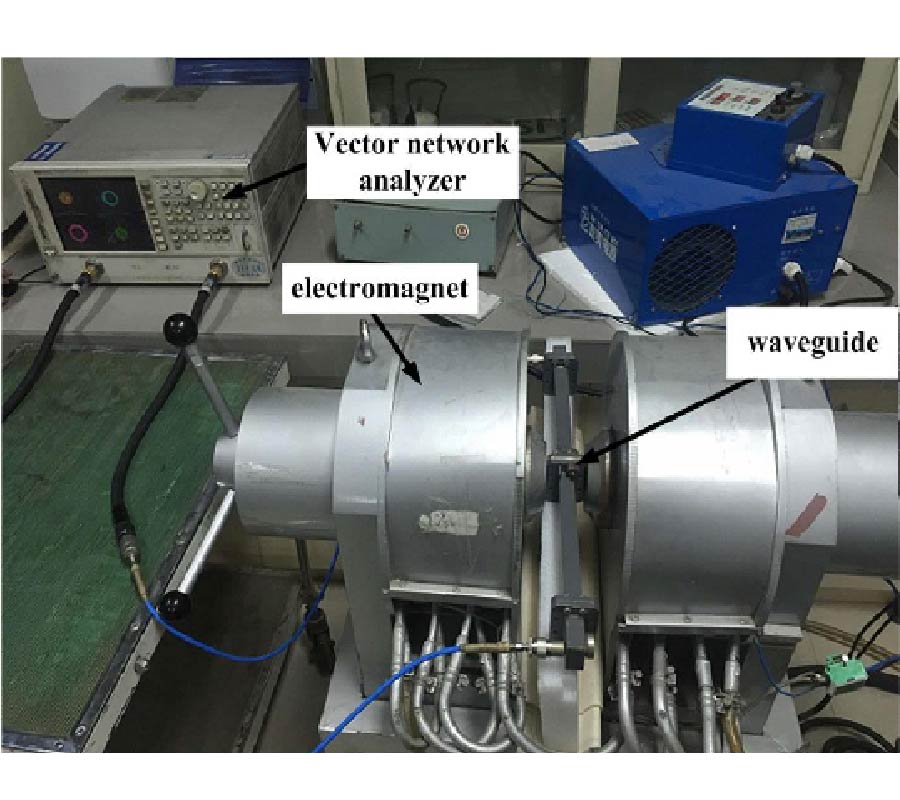
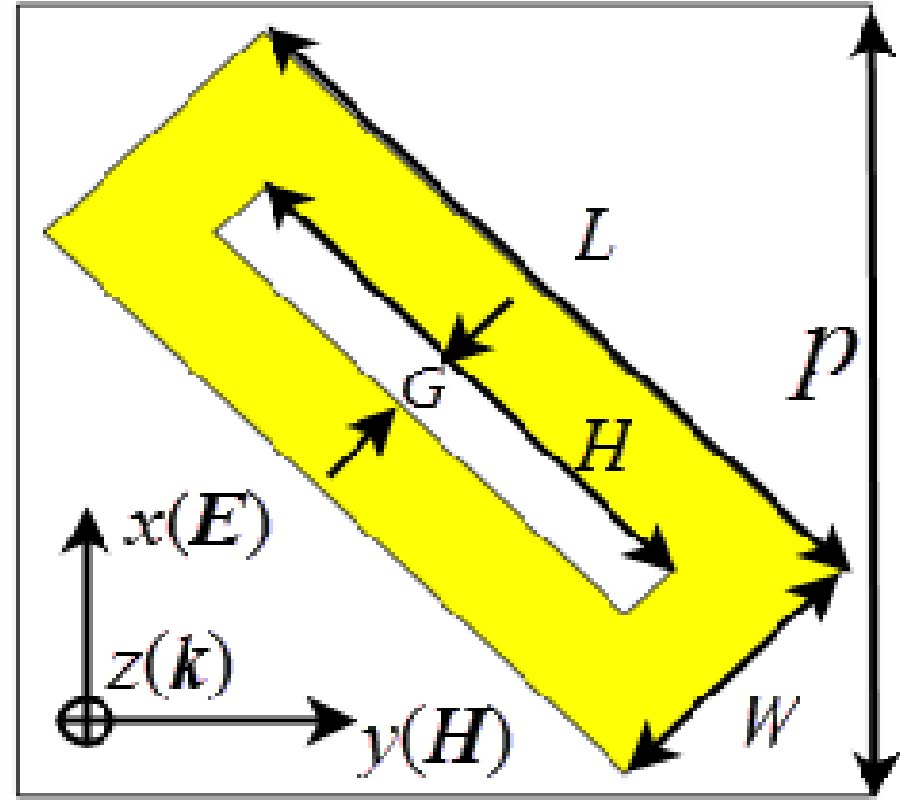
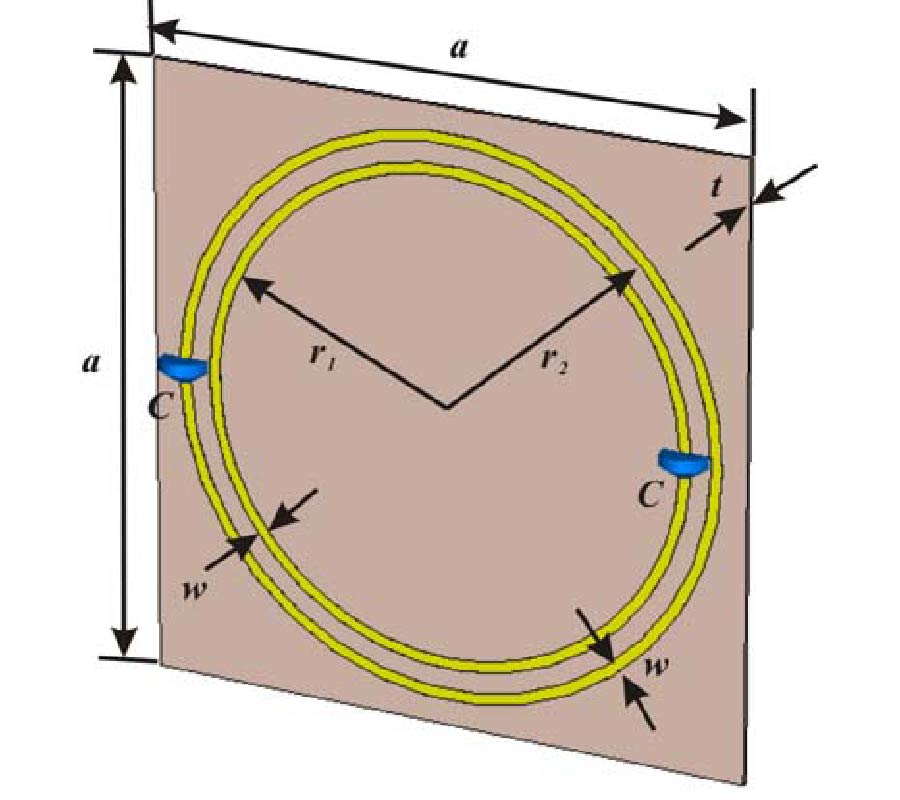
An ultra-compact chiral metamaterial (CMM) using triple-layer twisted split-ring resonators (TSRRs) structure was proposed, which can function as a multi-band circular polarizer. This ultra-compact structure can convert an incident linearly y-polarized (x-polarized) wave propagating along the -z (+z) direction to the transmitted left circularly polarized (LCP) waves at 7.28 GHz, 13.22 GHz and 15.49 GHz while the right circularly polarized (RCP) waves are at 9.48 GHz. In addition, the large polarization extinction ratio (PER) of more than 20 dB across four resonance frequencies can be achieved. The experiment results are in good agreement with the numerical simulation results. The surface current distributions of the structure are analyzed to illustrate this linear to circular polarization conversion. The unit cell structure is extremely small both in longitudinal and transverse directions. Good performances and compact design of this CMM suggest promising applications in circular polarizers that need to be integrated with other compact devices.
ULTRA-COMPACT MULTI-BAND CHIRAL METAMATERIAL CIRCULAR POLARIZER BASED ON TRIPLE TWISTED SPLIT-RING RESONATOR
2016-03-12
PIER M
Vol. 46, 193-201
DOA and Power Estimation by Controlling the Roots of the Antenna Array Polynomial
Mohammad Jamil Mismar and Taiseer Hasan Ismail
A new direction-of-arrival (DOA) and power estimation method of unknown number of source signals is proposed. The direction and power of coherent and/or non-coherent signals are estimated by controlling the roots of the array polynomial on the unit circle. The genetic algorithm is used to find the phases of the array polynomial roots that minimize the array output power. The pseudo-spectrum is obtained by phase rotation of the estimated roots, and the real power spectrum is derived from the pseudo-spectrum and the array factor. The results indicate that the direction of arrivals, power of the signals, and number of source signals are estimated from the real power spectrum.
DOA AND POWER ESTIMATION BY CONTROLLING THE ROOTS OF THE ANTENNA ARRAY POLYNOMIAL
2016-03-11
PIER Letters
Vol. 59, 43-49
Wideband Dual-Polarized Dipole Antenna with Differential Feeds
Jiao-Jiao Xie and Qian Song
A wideband dual-polarized dipole antenna is presented using the differential feed technique. The proposed antenna consists of two horizontal bow-tie dipoles and four vertically oriented meandering strips. Two pairs of differential-fed L-shaped microstrip feed lines are used to excite the antenna. Due to the differential-fed technique, the cross polarization level can be reduced to -35 dB. With the introduction of the meandering strips connecting the radiating patch to the ground plane, the height of the antenna is about 0.102λ0. A parametric study is performed to provide information for designing and optimizing such an antenna. The proposed dipole antenna has been fabricated and measured. The impedance bandwidth of 48.3% (S11 < -10 dB) from 2.57 GHz to 4.21 GHz is achieved. The measured isolation between the feeding ports is better than 30 dB over the operating band. Moreover, the antenna has a compact structure and good unidirectional radiation pattern, making it conveniently integrated with microwave differential circuits and applied in the base station systems.
WIDEBAND DUAL-POLARIZED DIPOLE ANTENNA WITH DIFFERENTIAL FEEDS
2016-03-09
PIER Letters
Vol. 59, 35-42
Research on Minimum Energy Excited to Plasma Coating for Reducing Radar Cross Section of Target
Dan Cheng , Hong-Cheng Yin and Hong-Xing Zheng
To reduce the radar cross section (RCS) of a target, plasma coating on perfectly electric conducting plate is studied in this paper. Nonuniform helium plasma produced by a minitype solid rocket engine is with collisional and unmagnetized. Energy excited for generating helium plasma is investigated. Based on the collisional, unmagnetized, and cold plasma model, backscattering RCS is computed by using finite-difference time-domain method. Principle of RCS reduction is explained. To find minimum input energy while RCS reduced, relationship between input power and RCS reduction is discussed, and numerical optimization is also implemented. We can identify optimal parameters and choose the best electron density profile under condition of given input power level.
RESEARCH ON MINIMUM ENERGY EXCITED TO PLASMA COATING FOR REDUCING RADAR CROSS SECTION OF TARGET
2016-03-09
PIER M
Vol. 46, 183-192
The Optimization of Switching Scheme in Multi-Layer Phase-Modulated Surface and Its Influence on Scattering Properties
Yi Fu and Tao Hong
To improve absorbing properties of phase-modulated surface (PMS), the multi-active-layer PMS composed of multiple active frequency-selective surface (AFSS) layers and one background plane is theoretically studied using time-modulation theory in this paper. The optimization of PMS's switching scheme using differential evolution (DE) algorithm is also proposed for minimizing scattering echo energy at the incident frequency. We provide analytical formulation for the scattering problem and obtain the angular scattering pattern of PMS after optimization. Simulation results indicate that the optimized switching scheme is beneficial for reducing the spatial coverage of scattering echo at incident frequency. This coverage can be further confined by the increasing number of active layers in PMS. Furthermore, it is shown that floor effect appears when the number of active layers reaches a certain value, which limits the PMS structure conversely.
THE OPTIMIZATION OF SWITCHING SCHEME IN MULTI-LAYER PHASE-MODULATED SURFACE AND ITS INFLUENCE ON SCATTERING PROPERTIES
2016-03-09
PIER
Vol. 155, 93-103
Five Ports Power Divider Designs with Controllable Power Division and Switching Capabilities
Ayman Sulaiman Al-Zayed , Maryam J. Al-Yousef and Samir Mahmoud
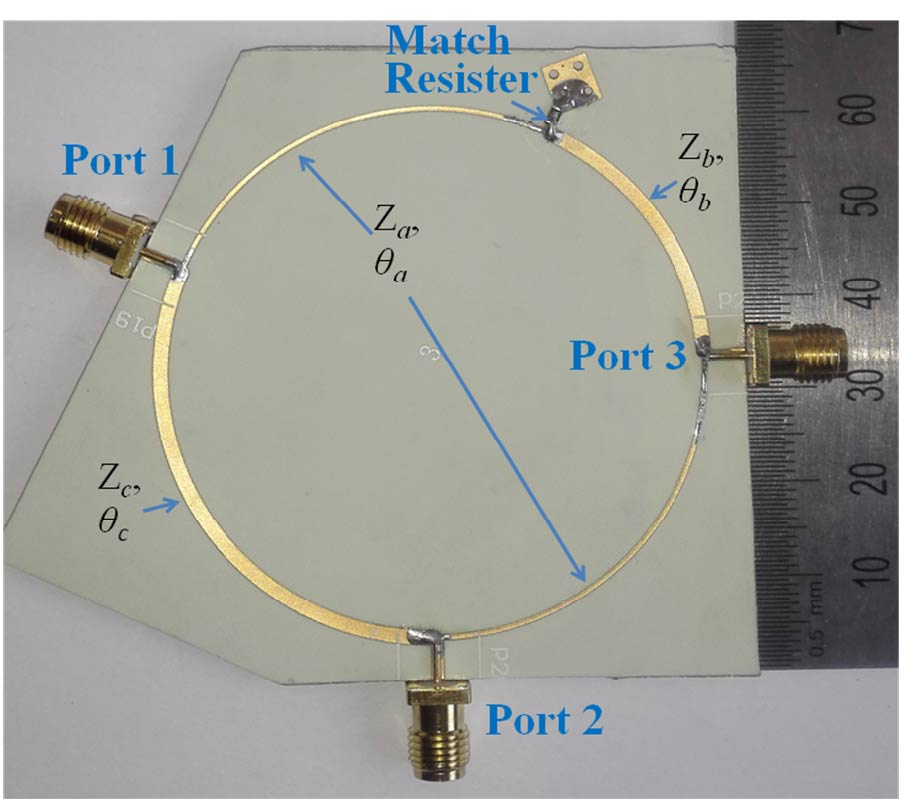
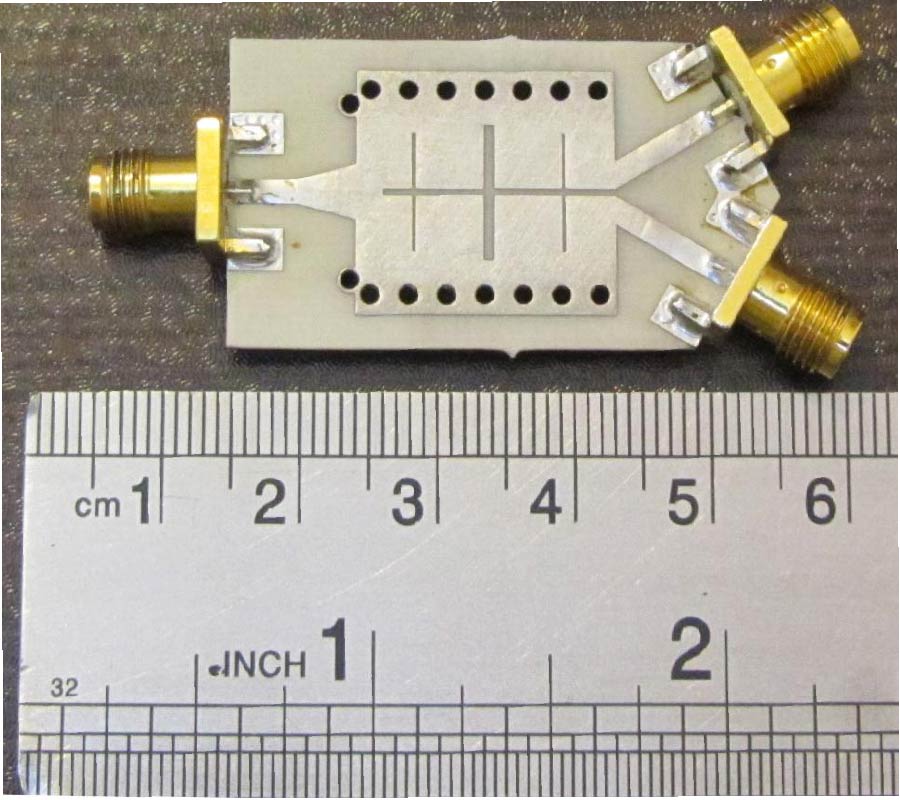
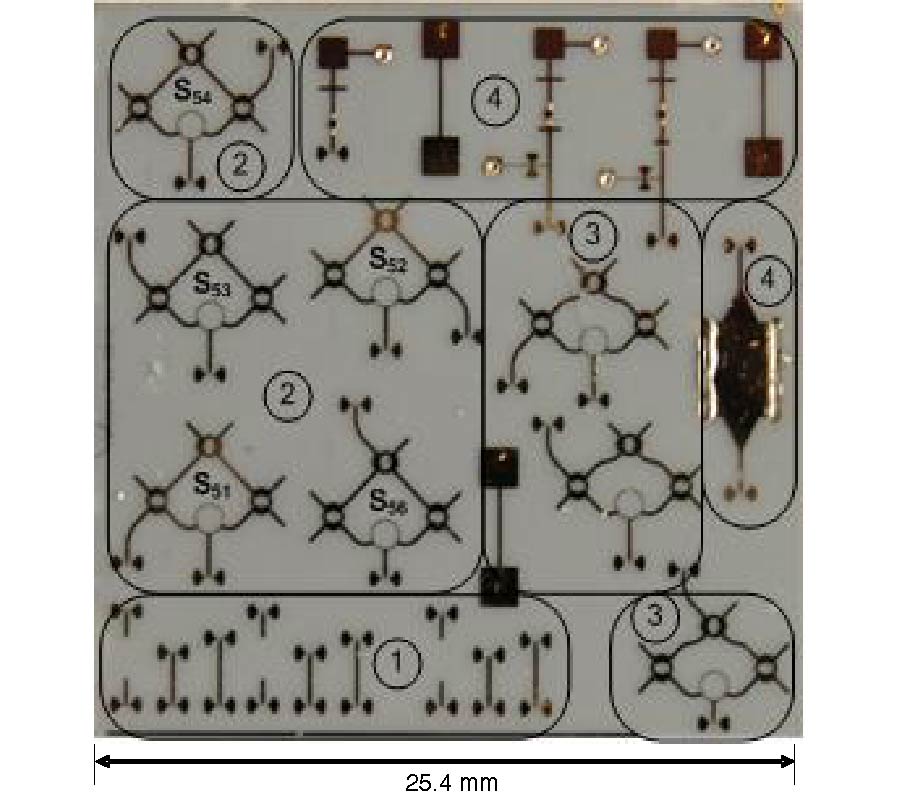
Two new 5-port power divider designs capable of controlling the power division ratios between the output ports are proposed. In the rst design, the input power is switchable between two pairs of the output ports. This is implemented by terminating the dividers' two open-ended stubs with varactor diodes. In the second design, the power division is controlled by a single varactor diode that terminates one of the dividers two open-ended stubs. With judicious choice of dc bias voltage, it is possible to realize equal as well as unequal power division ratios between the four output ports. High power division ratios was achieved without the necessity of involving transmission lines with high impedances. It is demonstrated that this design is capable of generating amplitude modulated signals. Simulation and measurement results are presented for the designs to show their power division and matching performance.
FIVE PORTS POWER DIVIDER DESIGNS WITH CONTROLLABLE POWER DIVISION AND SWITCHING CAPABILITIES
2016-03-08
PIER Letters
Vol. 59, 27-33
Optimal Design of a Ku/Ka-Band Wide-Flare-Angle Corrugated Horn Using the Differential Evolution Algorithm
Lei Xie , Yong-Chang Jiao , Biao Du , Ze-Yu Meng and Yan Shi
A novel wide-flare-angle corrugated horn covering the full Ku/Ka satellite communication frequency bands is designed and optimized. In order to satisfy the rigorous bandwidth requirements, a spline-profiled smooth section and a corrugated section with ring-loaded slots are introduced into the wide-flare-angle horn design. Instead of the ``trial-and-error'' method, the Differential Evolution (DE) algorithm is employed to obtain the optimum dimensions of the proposed horn. A prototype of the optimized horn is constructed and measured. Both simulated and measured results show that the proposed horn has good radiation and impedance performance. The performance of the horn is also demonstrated as a feed in a typical dual-reflector antenna. Simulation results show that the overall antenna system meets the usual performance requirements.
OPTIMAL DESIGN OF A KU/KA-BAND WIDE-FLARE-ANGLE CORRUGATED HORN USING THE DIFFERENTIAL EVOLUTION ALGORITHM
2016-03-08
PIER M
Vol. 46, 173-181
Optimized Design of W-Band Quasi-Optical Lens by Using Optical Simulator and Numerical Analysis
Qike Chen , Yong Fan and Kaijun Song
A large aperture quasi-optical dielectric lens antenna for passive imaging at W-band frequency is proposed. The lens is designed to obtain best resolution at a designate distance of 3.5 m from it. The lens has biconvex aspheric surface to achieve low aberration. The initial parameters of the optical path are obtained with Gaussian beam method, and then the optical simulator ZEMAX is applied to optimize the shape of the lens which improves design efficiency greatly. A hybrid numerical method is used to analyze near field distribution of the lens, and the final design of the lens is evaluated and determined by the results. The method is the combining of ANSOFT HFSS software, ray tracing method and integration algorithm based on Huygens' Principle. It is feasible and efficient for the analysis of various lens antennas, such as large aperture lens antennas which are difficult to be simulated by commercial electromagnetic simulation software. The lens is fabricated with HDPE. Experimental results show that its 3 dB beam size is 29 mm at distance of 3.5 m, which is in good agreement with theoretical calculation. The measured patterns on the image plane show that the lens has 0.3 dB decrease of field intensity in field view of 690 mm. Imaging result shows that the lens is a good candidate for focal plane imaging.
OPTIMIZED DESIGN OF W-BAND QUASI-OPTICAL LENS BY USING OPTICAL SIMULATOR AND NUMERICAL ANALYSIS
2016-03-04
PIER B
Vol. 66, 107-121
A Design of Switch Array Antenna with Performance Improvement for 77 GHz Automotive FMCW Radar
Doo-Soo Kim , Dong-Hee Hong , Ho-Sang Kwon and Jin-Mo Yang
In this paper, a switch array antenna (SAA) with performance improvement for 77 GHz automotive FMCW radar to detect moving targets and near-field region (NFR) targets is proposed. The SAA generally mitigates hardware complexity, weight and cost, while it has technical difficulties to overcome depending on radar requirements. Firstly, a time-divided transmit by switch array to detect the moving targets causes a phase distortion of echo signals and generates considerably high and periodic side lobes of the SAA beam. In order to suppress side lobes more than 10 dB, a sub-array, a part of the SAA with non-distorted phases, is used to synthesize a compensation beam. Secondly, the SAA to detect the NFR targets, one of the radar requirements, deteriorates a beam performance by a spherical wave. To overcome a partial compensation method is proposed considering beam coverage of the radar operation at each target range. Some of the NFR targets to verify minimum range detection are simulated and the SAA beam gets back main lobe and has side lobes 15~25 dB suppressed with compensation. With the SAA designed, a detection performance of the radar is simulated. Two targets and radar system parameter are used, and signal processing tasks are included in simulation. Also outdoor test is carried out to verify that the proposed compensation methods enhance the detection performance of the radar with real targets. It is confirmed that the moving targets and NFR targets are well detected because multiple false targets are eliminated with the proposed compensation methods.
A DESIGN OF SWITCH ARRAY ANTENNA WITH PERFORMANCE IMPROVEMENT FOR 77 GHZ AUTOMOTIVE FMCW RADAR
2016-03-04
PIER C
Vol. 62, 167-178
Design and Simulation of Fully Printable Conformal Antennas with BST/Polymer Composite Based Phase Shifters
Mahdi Haghzadeh , Hamzeh M. Jaradat , Craig Armiento and Alkim Akyurtlu
A fully printable and conformal antenna array on a flexible substrate with a new Left-Handed Transmission Line (LHTL) phase shifter based on a tunable Barium Strontium Titanate (BST)/polymer composite is proposed and computationally studied for radiation pattern correction and beam steering applications. First, the subject 1×4 rectangular patch antenna array is configured as a curved conformal antenna, with both convex and concave bending profiles, and the effects of bending on the performance are analyzed. The maximum gain of the simulated array is reduced from the flat case level by 34.4% and 34.5% for convex and concave bending, respectively. A phase compensation technique utilizing the LHTL phase shifters with a coplanar design is used to improve the degraded radiation patterns of the conformal antennas. Simulations indicate that the gain of the bent antenna array can be improved by 63.8% and 68% for convex and concave bending, respectively. For the beam steering application, the proposed phase shifters with a microstrip design are used to steer the radiation beam of the antenna array, in planar configuration, to both negative and positive scan angles, thus realizing a phased array antenna.
DESIGN AND SIMULATION OF FULLY PRINTABLE CONFORMAL ANTENNAS WITH BST/POLYMER COMPOSITE BASED PHASE SHIFTERS
2016-03-03
PIER C
Vol. 62, 157-165
Effects of Superstrate Layer on the Resonant Characteristics of Superconducting Rectangular Microstrip Patch Antenna
Sami Bedra and Tarek Fortaki
The resonant characteristics of superconducting rectangular microstrip patch antenna with a superstrate layer are investigated using a full-wave spectral analysis in conjunction with the complex resistive boundary condition. The complex surface impedance of superconducting patch is determined using London's equation and the two-fluid model of Gorter and Casimir. Numerical results using the full-wave analysis presented here are in excellent agreement with theoretical and experimental results available in the open literature. Numerical results show that the effect of the superstrate layer on the resonant frequency and half-power bandwidth of the superconducting rectangular patch is stronger than that of the structure without superstrate layer as both the thickness and permittivity of the superstrate increase. Finally, numerical results concerning the effects of the parameters of superstrate-substrate and superconducting patch on the antenna performance are also presented and discussed.
EFFECTS OF SUPERSTRATE LAYER ON THE RESONANT CHARACTERISTICS OF SUPERCONDUCTING RECTANGULAR MICROSTRIP PATCH ANTENNA
2016-03-03
PIER
Vol. 155, 75-91
3D Microwave Tomography with Huber Regularization Applied to Realistic Numerical Breast Phantoms
Funing Bai , Ann Franchois and Aleksandra Pizurica
Quantitative active microwave imaging for breast cancer screening and therapy monitoring applications requires adequate reconstruction algorithms, in particular with regard to the nonlinearity and ill-posedness of the inverse problem. We employ a fully vectorial three-dimensional nonlinear inversion algorithm for reconstructing complex permittivity profiles from multi-view single-frequency scattered field data, which is based on a Gauss-Newton optimization of a regularized cost function. We tested it before with various types of regularizing functions for piecewise-constant objects from Institut Fresnel and with a quadratic smoothing function for a realistic numerical breast phantom. In the present paper we adopt a cost function that includes a Huber function in its regularization term, relying on a Markov Random Field approach. The Huber function favors spatial smoothing within homogeneous regions while preserving discontinuities between contrasted tissues. We illustrate the technique with 3D reconstructions from synthetic data at 2 GHz for realistic numerical breast phantoms from the University of Wisconsin-Madison UWCEM online repository: we compare Huber regularization with a multiplicative smoothing regularization and show reconstructions for various positions of a tumor, for multiple tumors and for different tumor sizes, from a sparse and from a denser data configuration.
3D MICROWAVE TOMOGRAPHY WITH HUBER REGULARIZATION APPLIED TO REALISTIC NUMERICAL BREAST PHANTOMS
2016-03-03
PIER
Vol. 155, 63-74
Deriving Meaningful Equivalent Circuits for Electrically Small Multi-Conductor Structures
Lap-Kun Yeung
A new circuit reduction algorithm for generating physically meaningful equivalent circuits for electrically small structures is proposed in this work. It makes use of the generalized Y-to-Δ transformation as well as features unique to partial element equivalent circuits (PEECs) to perform the reduction process. For a given partial element equivalent circuit, insignificant nodes are removed one by one in a prioritized order according to both user-specified cut-off frequency and threshold value. By having the freedom of choosing these parameters, this algorithm provides users an option to make a tradeoff between accuracy and simplicity of the final reduced circuit. Since the generalized Y-to-Δ transformation can keep all mutual couplings intact, the order-reduced circuit should correctly capture all physical essences of the structure being modeled. Two examples are presented in this paper to validate the proposed algorithm. The equivalent circuits obtained can indeed reflect all essential physical features, demonstrating that the algorithm is a useful tool for designing and analyzing electrically small multi-conductor structures.
DERIVING MEANINGFUL EQUIVALENT CIRCUITS FOR ELECTRICALLY SMALL MULTI-CONDUCTOR STRUCTURES
2016-03-03
PIER
Vol. 155, 53-61
Wideband Magnetic-Electric Antenna with Linear Single or Dual Polarization
Hyuk-Jun Seo and Ahmed A. Kishk
A wideband antenna is designed based on the concept of equivalent magnetic dipole and electric dipole combinations with excellent radiation characteristics. Single linear polarization design with two different excitations achieves good radiation symmetry and low cross-polarization. The dual-polarization case has a 67% bandwidth and isolation better than 30 dB. The present design and construction of the antenna provides simple solutions compared with similar antennas in the literature. This design avoids loading the antenna with dielectric in the active region. The agreement between measured and simulated results is excellent. The suggested antenna construction is very simple and solves many of the problems related to the practical excitation of this antenna.
WIDEBAND MAGNETIC-ELECTRIC ANTENNA WITH LINEAR SINGLE OR DUAL POLARIZATION
2016-03-02
PIER C
Vol. 62, 149-156
A Compact Multiband Omnidirectional GNSS Antenna for Artillery Projectiles Applications
Weiwei Liu , Yufa Sun , Dong Zhou , Shaoqi Hu and Ming Yang
A compact multiband omnidirectional antenna for the reception of GNSS signals on artillery projectiles is designed in this paper. The proposed antenna consists of a metallic cone comprising a T-shaped monopole. It exhibits a broad bandwidth from 1.22 GHz to 1.28 GHz and from 1.44 GHz to 1.75 GHz, covering GPS L1, Galileo E2-L1-E1, GLONASS G1 and G2, CNSS B1 and B3. Measured results show that an omnidirectional radiation pattern is achieved, and the non-circularity in the azimuthal plane (xy-plane) is less than 2 dB for all the desired bands. Then the measured 6 dB beamwidth is about 110° in the presence of a finite 20 millimeters (mm) radius ground plane. Such an antenna has the potential to be easily used for small artillery projectiles.
A COMPACT MULTIBAND OMNIDIRECTIONAL GNSS ANTENNA FOR ARTILLERY PROJECTILES APPLICATIONS
2016-03-02
PIER C
Vol. 62, 139-147
A Novel Time Reversal Based Microwave Imaging System
Amin Tayebi , Pavel Roy Paladhi , Lalita Udpa and Satish Udpa
This paper presents an alternate microwave imaging system that greatly reduces design and operation complexities compared to traditional imaging systems. At the heart of this novel system lies an electronically reconfigurable beam-scanning reflectarray antenna. The high tuning capability of the reflectarray provides us a broad steering range of ±60˚. The beam is steered across this range and the scattered field is recorded. The collected data are used for image reconstruction by means of the time reversal signal processing technique. Experimental results of the detection of various dielectric targets are presented.
A NOVEL TIME REVERSAL BASED MICROWAVE IMAGING SYSTEM
2016-03-02
PIER C
Vol. 62, 131-137
A PIN-Loaded Microstrip Patch Antenna with the Ability to Suppress Surface Wave Excitation
Ayed R. AlAjmi and Mohammad Saed
A circular microstrip patch antenna design is proposed for applications that require suppression of surface waves and lateral waves. The proposed design is composed of a circular patch loaded with a single shorting pin on a grounded inhomogeneous dielectric substrate with a desired effective permittivity. The modal equation for the normalized resonance frequency of this design is solved numerically. Simulated and measured radiation patterns show that a good reduction of surface waves and lateral waves is achieved. A comparison between the present work and an alternative design in the literature is presented in this paper. The proposed design could find applications in large patch antenna arrays where mutual coupling needs to be eliminated and in high-precision global positioning system receivers where multipath interfering signals associated with low-angle reflection affect position accuracy.
A PIN-LOADED MICROSTRIP PATCH ANTENNA WITH THE ABILITY TO SUPPRESS SURFACE WAVE EXCITATION
2016-03-02
PIER Letters
Vol. 59, 21-25
A Novel Compact Microstrip UWB Bandpass Filter with Improved Out-of-Band Rejection
Yong-Qin Liu and Xi-Zheng Ke
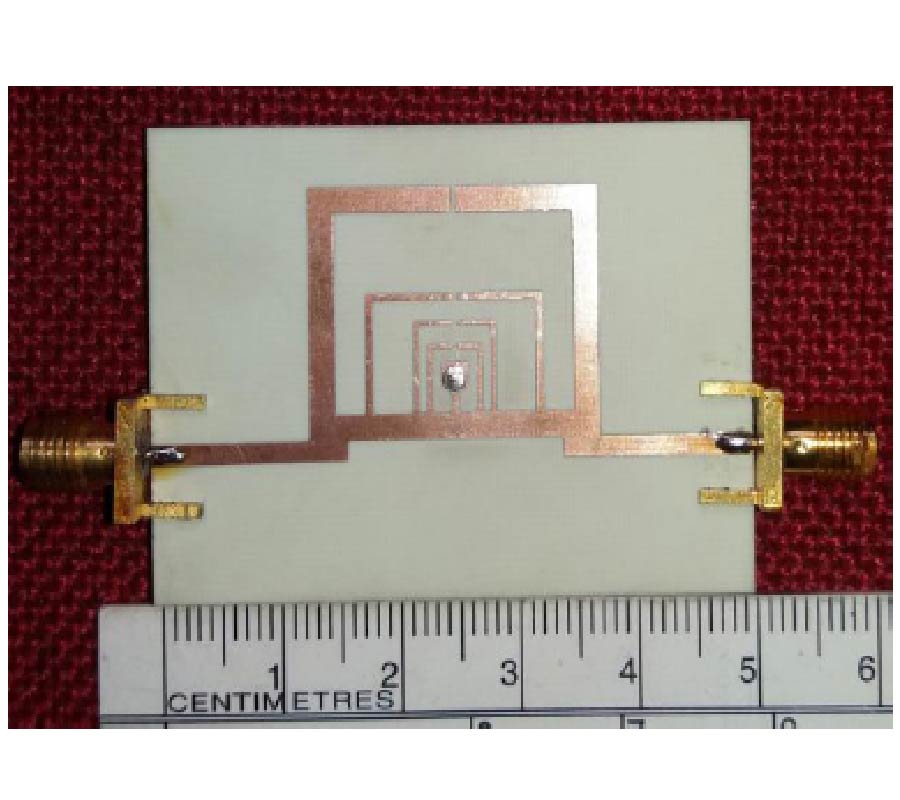
A new compact microstrip ultra-wideband (UWB) bandpass filter (BPF) with improved out-of-band rejection and good selectivity is proposed using a modified ring multiple-mode resonator (MMR). The initial UWB bandpass filter comprises interdigital coupled lines and a conventional ring MMR. Then, four high-low impedance resonant cells are periodically placed in the inner area of the conventional ring MMR, which have the properties of achieving harmonic suppression and size reduction. To validate the design theory, a new compact microstrip UWB BPF with improved out-of-band rejection is designed and fabricated. Both simulated and experimental results are provided with good agreement.
A NOVEL COMPACT MICROSTRIP UWB BANDPASS FILTER WITH IMPROVED OUT-OF-BAND REJECTION
2016-03-01
PIER B
Vol. 66, 91-105
Worst-Case Tolerance Synthesis for Low-Sidelobe Sparse Linear Arrays Using a Novel Self-Adaptive Hybrid Differential Evolution Algorithm
Tao Ni , Yong-Chang Jiao , Li Zhang and Zibin Weng
A worst-case tolerance synthesis problem for low-sidelobe sparse linear arrays is solved by using a novel self-adaptive hybrid differential evolution (SAHDE) algorithm. First, we establish a worst-case tolerance synthesis model for low-sidelobe sparse linear arrays, in which random position errors are considered and assumed to obey the Gaussian distributions. Through the random sampling, the random model is converted to a deterministic optimization problem. Then, a novel SAHDE algorithm is presented for solving the problem. As a modification to the existing hybrid differential evolution algorithm, a simplified quadratic interpolation (SQI) operator is used to tune the control parameters self-adaptively, establishing the connections between control parameters and the fitness values. In order to determine appropriate control parameter values quickly, a selection operation is also used. Detailed implementation procedure for the SAHDE algorithm is presented, and some numerical results show its effectiveness. Finally, for the deterministic optimization problem, we present a fast way for calculating its fitness values. The SAHDE algorithm is used to obtain optimal nominal element positions. Simulated results illustrate that the worst-case peak sidelobe levels for the sparse linear arrays are improved evidently. The SAHDE algorithm is efficient for solving the worst-case tolerance synthesis problem.
WORST-CASE TOLERANCE SYNTHESIS FOR LOW-SIDELOBE SPARSE LINEAR ARRAYS USING A NOVEL SELF-ADAPTIVE HYBRID DIFFERENTIAL EVOLUTION ALGORITHM