Search Results(13891)

2016-05-24
PIER Letters
Vol. 60, 89-94
A Tunable Multiband LTE Antenna for Metal-Rimmed Smartphone Applications
Xiao-Yan Zhang , Xinxing Zhong , Chuanyun Wang and Zhiwei Liu
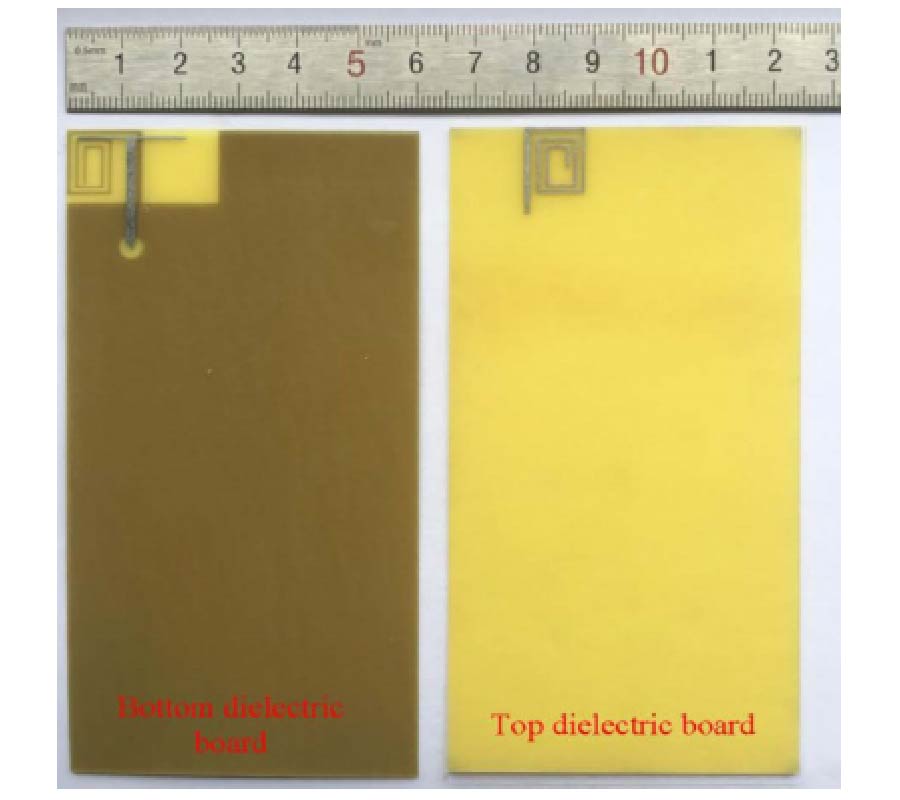
In this paper, a tunable multiband LTE antenna is designed for metal-rimmed smartphone applications. The antenna only uses a broken metal ring, which comprises an IFA (Inverted-F antenna) section and a parasitic section, and generates three resonant modes through this layout for the feeding point and shorting point. In addition, loading a matching circuit at the feeding point and a RF switch at shorting point of the IFA is used to switch low frequency to lower frequency. The bandwidth can completely cover 824-960 and 1710-2690 MHz. So the proposed antenna can work at GSM850, 900; DCS1800; PCS1900; WCDMA band 1, 2, 4, 5, 8; TD-SCDMA band 34, 39; CDMA BC0,BC1 and LTE band 1, 3, 7, 38, 39, 40, 41. Also, the total size of the cellphone is 150 mm×75 mm×3.5 mm, which is very suitable for 4G slim smart mobile phone applications.
A TUNABLE MULTIBAND LTE ANTENNA FOR METAL-RIMMED SMARTPHONE APPLICATIONS
2016-05-24
PIER M
Vol. 48, 133-143
Precise Radial Velocity Estimation for Inverse Synthetic Aperture Radar
Jianzhi Lin , Yue Zhang , Weixing Li and Zeng Ping Chen
This paper describes a convenient technique of precise radial velocity estimation for inverse synthetic aperture radar (ISAR). In order to keep both the range profile and phase history of the echoes coherent, direct sampling with high sampling rate using high performance analog-to-digital converter and matched-filter correlation processing in pulse compression are used for the ISAR system. Due to the coherence property of the echoes, the translational motion compensation parameters for ISAR imaging are just the radial motion parameters of the target. Thus, the coarse velocity estimation is obtained by range alignment and fine velocity estimation is achieved by phase adjustment. The fine velocity estimation is ambiguous and the coarse velocity estimation is used for ambiguity resolution. The advantage of this technique is the high precision with range error values at sub wavelength levels, and it achieves velocity information and translational motion compensation at the same time. Both simulated and experimental validations are presented to verify the effectiveness of the proposed method.
PRECISE RADIAL VELOCITY ESTIMATION FOR INVERSE SYNTHETIC APERTURE RADAR
2016-05-23
PIER C
Vol. 64, 97-104
A k-Band Flat Transmitarray Antenna with a Planar Microstrip Slot-Fed Patch Antenna Feeder
Lv-Wei Chen and Yuehe Ge
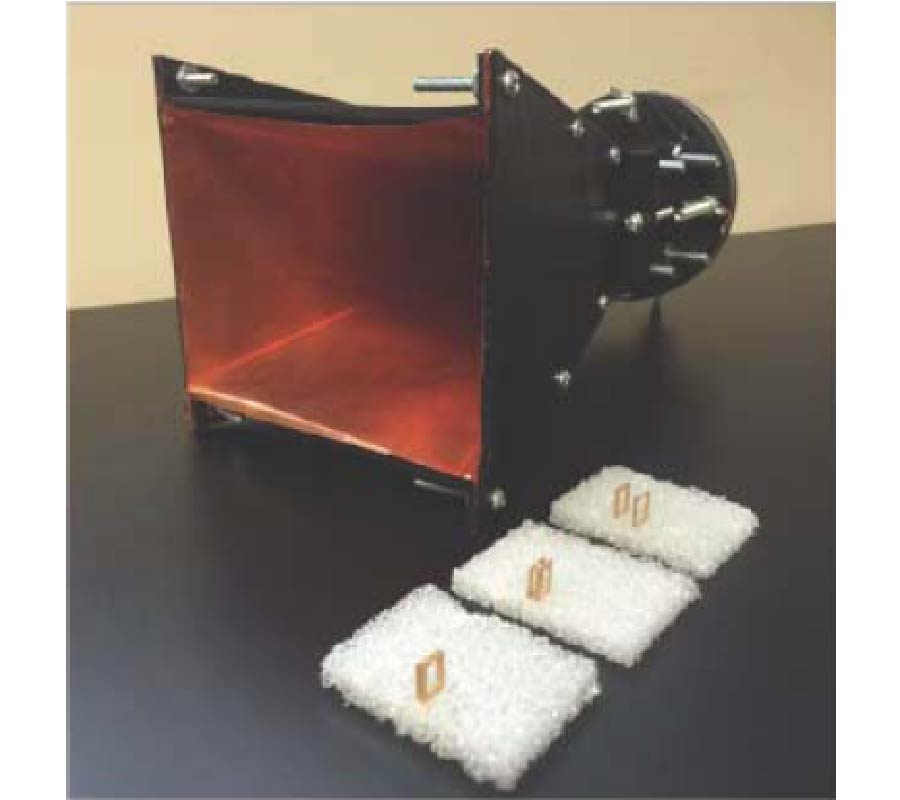
A thin phase-correcting element that consists of four identical metallic and three identical dielectric layers is presented for the design of microwave and millimeter-wave transmitarrays. The metallic layers consist of the octagon conducting strip, which are tuned to obtain the desired phase compensation on an incident wave, while maintaining a high amplitude of transmission coefficient. A transmitarray is designed at K band using the element. Fed by a standard horn and three planar slot-fed patch antennas with different beamwidths alternately, the wave-focusing performance of the transmitarray was demonstrated by simulations and experiments.
A K-BAND FLAT TRANSMITARRAY ANTENNA WITH A PLANAR MICROSTRIP SLOT-FED PATCH ANTENNA FEEDER
2016-05-22
PIER C
Vol. 64, 89-96
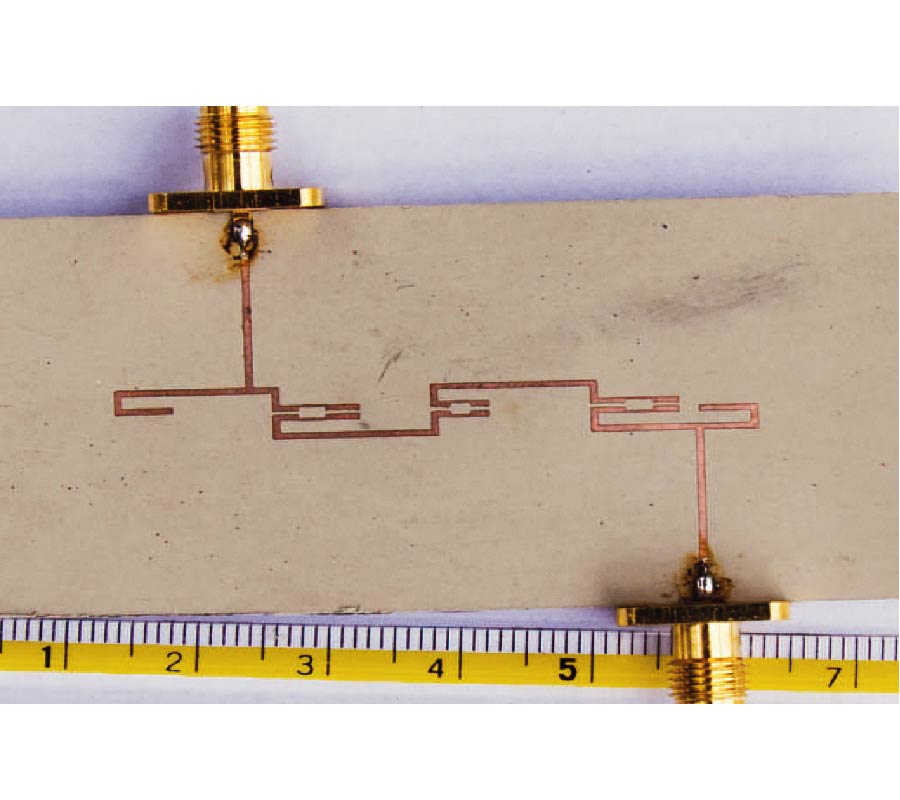
A UHF Third Order 5-Bit Digital Tunable Bandpass Filter Based on Mixed Coupled Open Ring Resonators
Mingye Fu , Qian-Yin Xiang , Dan Zhang , Dengyao Tian and Quanyuan Feng
This paper presents a third-order digital tunable bandpass filter based on digitally tunable capacitor loaded microstrip open ring resonator. Magnetic dominated mixed coupling is utilized to make the coupling coefficient meet the requirement of stable bandwidth response. Electric source-load coupling is designed to generate a transmission zero for improving the frequency selectivity. This filter is designed, fabricated and measured. The measurement shows that the filter can be digitally tuned by 5-bits pure digital command. The fractional bandwidth is 9±1%, and the tuning range is from 410 MHz to 820 MHz.
A UHF THIRD ORDER 5-BIT DIGITAL TUNABLE BANDPASS FILTER BASED ON MIXED COUPLED OPEN RING RESONATORS
2016-05-20
PIER Letters
Vol. 60, 81-88
A Novel Dual-Band SIW Filter with High Selectivity
Yudan Wu , Guo Hui Li , Wei Yang and Tong Mou
A novel dual-band substrate integrated waveguide (SIW) filter with multiple transmission zeros and good out-of-band rejection performance is presented in this paper. For this purpose, an orthogonal input/output (I/O) feeding structure directly connected to the substrate integrated waveguide (SIW) cavity is designed to split the resonant frequencies of the degenerate pair of mode. The filter can be modeled with a multi-path circuit formed by three modes (TE101, TE201 and TE102 modes) and weak cross coupling between I/O ports, thereby producing three transmission zeros which make the dual-band high selectivity. The offset of the input/output ports shifts the second transmission zero to a lower frequency from the upper passband. Several filter prototypes are designed and fabricated for demonstration, and the measured results validate the new structure for high selectivity applications.
A NOVEL DUAL-BAND SIW FILTER WITH HIGH SELECTIVITY
2016-05-20
PIER Letters
Vol. 60, 73-80
Microwave Characterization of Electrical Conductivity of Composite Conductors by Half-Wavelength Coplanar Resonator
Bilal Benarabi , Faouzi Kahlouche , Bernard Bayard , Anthony Chavanne and Jeremy Sautel
The aim of this work is to characterize the electrical conductivity of composite conductors deposited on an alumina substrate. Several half-wavelength coplanar resonators are realized using several pure conductors, silver (Ag), copper (Cu), gold (Au) and tin (Sn), to compare their quality factors (Q0), related to losses, with those from analytical methods. In the literature, losses in coplanar components have been estimated by different analytical methods. We have put in evidence the relationship between electrical conductivity of the conductor and the resonator quality factor. An overall good agreement among quality factor values obtained by the analytical formulas, by numerical simulations and by microwave measurements is observed. The surface roughness is taken into account to better estimate real conductor losses. Therefore, these analytical formulas are used to extract the electrical conductivity values of the composite conductors (Ag-aC, AgSnIn and AgSn), from measured quality factors.
MICROWAVE CHARACTERIZATION OF ELECTRICAL CONDUCTIVITY OF COMPOSITE CONDUCTORS BY HALF-WAVELENGTH COPLANAR RESONATOR
2016-05-19
PIER Letters
Vol. 60, 67-72
CPW-Fed Stub-Loaded Slot Dipole Antenna Design for Dual-Band Operation
Jianxing Li , Jianying Guo , Hongyu Shi , Bin He and Anxue Zhang
A novel uniplanar slot dipole antenna fed by a coplanar waveguide (CPW) is proposed for dual-band operation. The frequency ratio between the first spurious and fundamental modes of the slot dipole antenna can be conveniently adjusted with the use of four slot stubs introduced on its two arms. Furthermore, the radiation patterns at the first spurious mode are modified by adding four parasitic slots along its two arms to resemble those of the fundamental mode. Under the assistance of the slot stubs together with the parasitic slots, another resonant mode can be generated and merged with the first spurious mode, and therefore improve the bandwidth significantly. An antenna prototype was fabricated and measured to validate the design concept. The measured results show that dual-band operation with 10-dB impedance bandwidths of 2.99-3.83 GHz (24.6%) and 5.21-6.89 GHz (27.8%) has been obtained. The antenna has stable broadside and bidirectional radiation patterns with low cross-polarization components over the two operating bands.
CPW-FED STUB-LOADED SLOT DIPOLE ANTENNA DESIGN FOR DUAL-BAND OPERATION
2016-05-19
PIER M
Vol. 48, 125-132
Parameters Calculation of Asymmetrical CPW-DGS
Zhongliang Deng , Xubing Guo , Hao Wei and Jun Gan
In this paper, an analytical method of capacitance and characteristic impedance is proposed, which is for asymmetrical coplanar waveguide with defected ground structure (ACPW-DGS). The capacitance equivalent model of ACPW-DGS is established. Using conformal mapping method and first category of incomplete elliptic integrals F(φ, k), the closed-form expressions of capacitance and characteristic impedance are obtained for the first time. Computed results match the simulated ones well.
PARAMETERS CALCULATION OF ASYMMETRICAL CPW-DGS
2016-05-18
PIER C
Vol. 64, 79-87
Novel X-Band Waveguide Dual Circular Polarizer
Chen Xu , Sami Tantawi and Juwen Wang
Novel types of dual circular polarizer are developed to convert TE10 mode into two different polarizated TE11 modes in a circular waveguide. These designs have MHz bandwidth and high power transmission capability. They can be used for broadcasting and receiving circular polarized signals.
NOVEL X-BAND WAVEGUIDE DUAL CIRCULAR POLARIZER
2016-05-18
PIER Letters
Vol. 60, 59-65
Design of Compact Microstrip Antenna Array with Decoupling Network
You-Bao Wang , Shun Xiao , Bo Zhang and Ye Wei
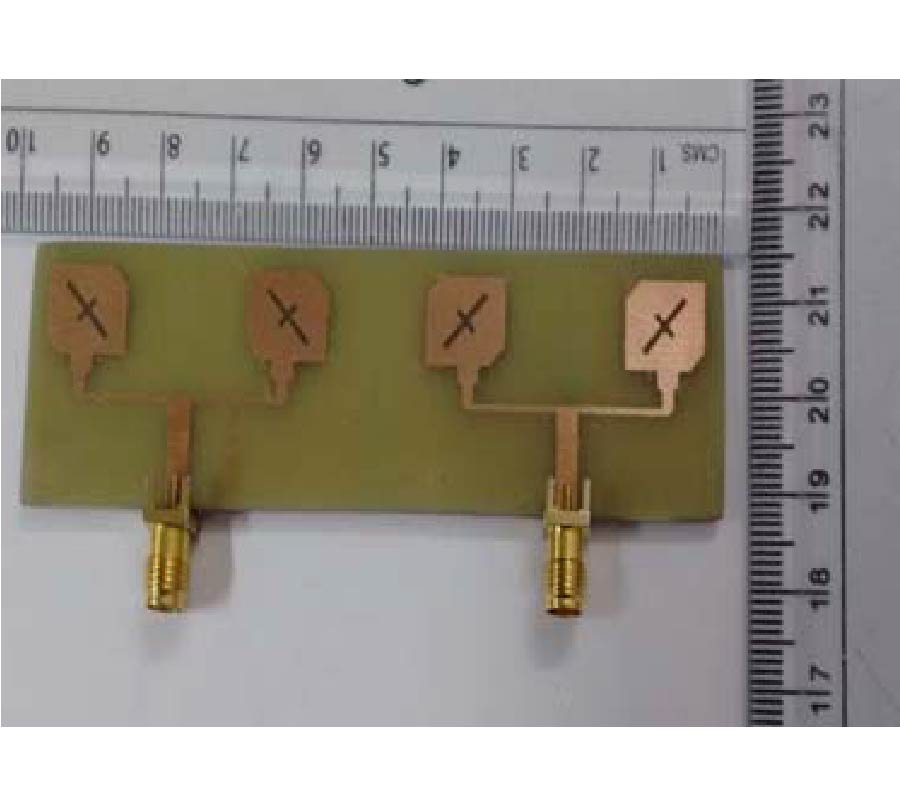
An innovative decoupling microstrip antenna array is designed. In the design approach, a decoupling and folding microstrip circuit is proposed instead of lumped element circuit, so that the circuit structure is simplified, and the antenna array is fabricated easily in print. Inverted L shape is used as its radiator in order that the size of the antenna array is miniaturized. Stepped impedance transformer is added for the sake of weakening ports reflection. The simulation and measurement results show that the proposed antenna array works at 2.45 GHz, and its reflection coefficient and isolation are both below -20 dB in the working band (2.4 GHz-2.48 GHz). The proposed antenna array has patterns close to omnidirectional.
DESIGN OF COMPACT MICROSTRIP ANTENNA ARRAY WITH DECOUPLING NETWORK
2016-05-18
PIER M
Vol. 48, 113-124
A Method for Ice-Thickness Detecting and Ice-Section Imaging by Using FMCW-SAR Algorithm
Rui Zhao , Yu Tian , Ling Tong and Bo Gao
Sea ice plays an important role in global climate. Many researches focus on the measurement of the sea ice thickness. In this paper, we present a method for the ice-detecting combining frequencymodulated continuous-wave (FMCW) technology and synthetic aperture radar (SAR) technology. It can provide a good resolution both in the range dimension and the azimuth one. Then a simulation is conducted to verify the accuracy and the feasibility of this algorithm. The physical properties of the sea ice, such as reflection and scatter properties of the ice surface and the transmission characteristic when the electromagnetic wave travels through the ice, are considered in the simulation. The results of the simulation demonstrate that this algorithm has a good performance in ice penetrating.
A METHOD FOR ICE-THICKNESS DETECTING AND ICE-SECTION IMAGING BY USING FMCW-SAR ALGORITHM
2016-05-17
PIER Letters
Vol. 60, 53-58
A Compact Dual-Metal-Plane Highpass Filter Using Hybrid Microstrip/DGS
Hui Chen , Ke-Song Chen , Di Jiang and Hong-Fei Zhao
A novel and compact highpass filter (HPF) is proposed in this article. This filter is based on a hybrid-coupled dual-metal-plane microstrip/DGS (defected ground structure) on a single-layer substrate. The resonator etched in the grounding plane shows a wide-band dual-mode resonant response within the desired high-pass frequency band, and is composed of a modified U-shaped slot resonator embedded with an L-shaped slot. The wideband highpass filtering performance is achieved by the dual-mode resonator at the bottom of single-layer substrate coupled broadside to the top microstrip stubs. Simulated results from the electromagnetic (EM) analysis software and measured results from a vector network analyzer (VNA) show a good agreement, and an excellent performance with nearly 40 dB attenuation at the lower stopband has also been obtained across an ultra-wide highpass range. A designed and fabricated prototype filter, having a 3-dB cutoff frequency (fc) of 5.9 GHz, shows an ultra-wide highpass range, i.e., from 5.9 to 15.52 GHz, and exhibits the highest pass-band frequency up to 2.6fc. The printed circuit board (PCB) area of the implemented filter is approximately 0.086λg×0.13λg, λg being the guided wavelength at fc.
A COMPACT DUAL-METAL-PLANE HIGHPASS FILTER USING HYBRID MICROSTRIP/DGS
2016-05-14
PIER B
Vol. 68, 35-54
Survey of Beam Steering Techniques Available for Millimeter Wave Applications
Iyemeh Uchendu and James R. Kelly
Pattern reconfigurable antennas (beam steerable antennas) are essential for various applications in electronic engineering such as telecommunication and radar. They mitigate interference by channelling the antenna's radiation to the direction of interest. This ability is vital for millimetre wave frequency applications such as small cell backhaul links where high path loss, attenuation from obstacles, and misalignment due to wind sway and accidents are prevalent. Several techniques have been used to implement beam steering over the years, most of which achieves steering at the expense of antenna performance. In this article, we surveyed the various techniques used in achieving beam steering and analyse each based on some figures of merit with the aim of identifying areas of improvements for each beam steering technique.
SURVEY OF BEAM STEERING TECHNIQUES AVAILABLE FOR MILLIMETER WAVE APPLICATIONS
2016-05-14
PIER C
Vol. 64, 71-78
Flat Lens Design Using Artificially Engineered Materials
Ravi Kumar Arya , Shaileshachandra Pandey and Raj Mittra
In this work, we present a new systematic technique for the design of a flat lens using modified commercial off-the-shelf (COTS) materials, as opposed to metamaterials (MTMs) that are often required in lens designs based on the Transformation Optics (TO) approach. While lens designs based on Ray Optics (RO) do not suffer from the drawback of having to use metamaterials, they still require dielectric materials that may not be commercially available off-the-shelf. This paper describes a systematic procedure for realizing the desired materials by modifying the COTS types, and illustrates its application with some practical examples.
FLAT LENS DESIGN USING ARTIFICIALLY ENGINEERED MATERIALS
2016-05-14
PIER M
Vol. 48, 103-112
Reduction of RCS Samples Using the Cubed Sphere Sampling Scheme
Bjorn Vilhelm Persson and Martin Norsell
An alternative to the traditional method of sampling radar cross section data from measurements or electromagnetic code is presented and evaluated. The Cubed Sphere sampling scheme solves the problem of oversampling at high and low elevation angles and at equal equatorial resolution the scheme can reduce the number of samples required by approximately 25%. The analysis is made of an aircraft model with a monostatic radar cross section at C-band and a bistatic radar cross section at VHF-band, using Physical Optics and the Multilevel Fast Multipole Method, respectively. It was found that for the monostatic radar cross section, the Cubed Sphere sampling scheme required approximately 12% fewer samples compared to that required for traditional sampling while maintaining the same interpolation accuracy over the entire domain. For the bistatic data, it was possible to reduce the number of samples by approximately 35% for high sampling resolutions. Using spline interpolation the number of samples required could be reduced even further.
REDUCTION OF RCS SAMPLES USING THE CUBED SPHERE SAMPLING SCHEME
2016-05-13
PIER C
Vol. 64, 61-70
A Compact Dual-Band Dual-Polarized Antenna for Base Station Application
Guanfeng Cui , Shi-Gang Zhou , Gang Zhao and Shu-Xi Gong
A compact dual-band dual-polarized antenna is proposed in this paper. The two pair dipoles with strong end coupling are used for the lower frequency band, and cross-placed patch dipoles are used for the upper frequency band. Breaches are introduced at the ends of the dipoles of the upper band, which can benefit the compactness and bandwidth of the antenna. The ends of the dipoles for upper frequency band are cut off a corner, which also benefit the compactness and matching of the antenna. An antenna prototype was fabricated and measured. The measured results show that the antenna can cover from 790 MHz to 960 MHz (19.4%) for lower band and from 1710 MHz to 2170 MHz (23.7%) for upper band with VSWR<1.5. It is expected to be a good candidate design for base station antennas.
A COMPACT DUAL-BAND DUAL-POLARIZED ANTENNA FOR BASE STATION APPLICATION
2016-05-13
PIER Letters
Vol. 60, 45-51
Analysis of Wide Band Scattering from Objects Using the Adaptive Improved Ultra-Wide Band Characteristic Basis Functions
Wenyan Nie and Zhonggen Wang
The improved ultra-wide band characteristic basis function method (IUCBFM) is an efficient approach to analyze the wide-band scattering problems because the improved ultra-wide characteristic basis functions (IUCBFs) can be reused for any frequency sample in the range of interest. However, the number of the IUCBFs constructed at the highest frequency point is excessive, and the computational complexity will be increased when applying the same number of IUCBFs at the lower frequency points. To mitigate this problem, an adaptive IUCBFs construction method is presented which can decrease the computational complexity at the lower frequency points. In the proposed method, the given frequency band is adaptively divided into multiple sub-bands in consideration of the number of the IUCBFs. The adaptive IUCBFs are obtained at the highest frequency point in each sub-band, which leads to smaller number of IUCBFs and significant reduction of solver time at lower frequency band. The numerical results have demonstrated the accuracy and efficiency of the proposed method.
ANALYSIS OF WIDE BAND SCATTERING FROM OBJECTS USING THE ADAPTIVE IMPROVED ULTRA-WIDE BAND CHARACTERISTIC BASIS FUNCTIONS
2016-05-13
PIER
Vol. 156, 47-53
Design and Measurement of Multi-Frequency Antennas for RF Energy Harvesting Tags
Celine Leclerc , Matthieu Egels and Emmanuel Bergeret
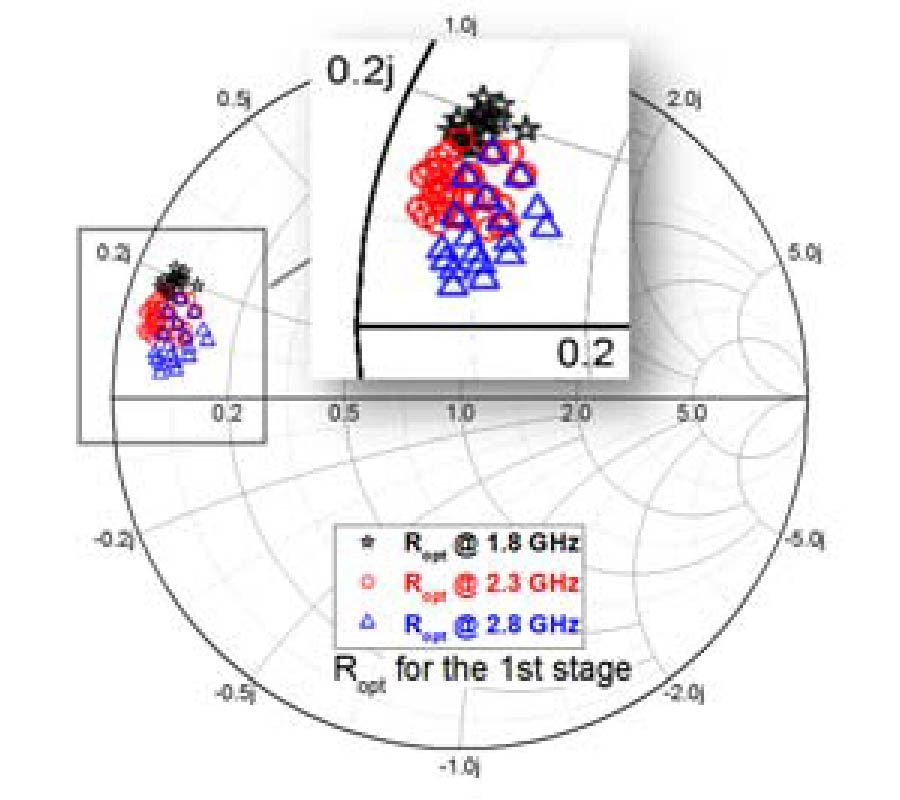
In this paper, a methodology to design non-50 Ω antennas for energy harvesting is presented. Two prototypes are simulated and realized on an epoxy substrate: one operating at 433 MHz and 900 MHz, the other at 900 MHz and 2.4 GHz. These antennas are designed to match the input impedances of an integrated radio-frequency harvester for an output voltage of 1 V, value chosen considering the voltage needed to power the new generation of micro-controllers and electronic circuits for the Internet of Things. The measurement results indicate a reflection coefficient below -10 dB at the frequencies of interest, validating the methodology.
DESIGN AND MEASUREMENT OF MULTI-FREQUENCY ANTENNAS FOR RF ENERGY HARVESTING TAGS
2016-05-12
PIER Letters
Vol. 60, 39-44
Estimating Termination Effect on Electric and Magnetic Field-to-Line Coupling for Radiated Immunity Tests Using a TEM Cell
Chunlei Shi , Changchun Chai , Yintang Yang and Wenxiao Fang
An analytic model of the field-to-line coupling in time domain for electrically small lines using a transverse electromagnetic (TEM) cell is proposed in this paper. This model uses mutual capacitance and mutual inductance to represent electric and magnetic field couplings which can be obtained based on voltage and current dividers. The measurement and calculation results validate the accuracy of the model. The termination effect on electromagnetic interference (EMI) responses and the separation of electric and magnetic field couplings are investigated by the model. The results indicate relevant suppressions for radiated immunity. This model is convenient for fast radiated immunity estimations.
ESTIMATING TERMINATION EFFECT ON ELECTRIC AND MAGNETIC FIELD-TO-LINE COUPLING FOR RADIATED IMMUNITY TESTS USING A TEM CELL
2016-05-12
PIER Letters
Vol. 60, 31-38
Low-Profile and Small Capacitively Fed VHF Antenna
Yaakoub Taachouche , Franck Colombel , Mohamed Himdi and Antoine Guenin
A low profile, compact antenna operating around 162 MHz with omnidirectional vertically polarized radiation is proposed. The antenna is a short monopole capacitively coupled to short-end quarter-wavelength printed line optimized at 162 MHz for Automatic Identification System (AIS) application. The antenna dimensions are less than λ/185 in height and λ/20 in lateral dimension, and the small size of antenna provides a narrow band of 0.34% and gain of -11.6 dBi. The simulated and measured results are in good agreement.
LOW-PROFILE AND SMALL CAPACITIVELY FED VHF ANTENNA