Search Results(13797)

2016-01-13
PIER M
Vol. 46, 11-18
Simple Approach to Miniaturized Antenna Gain Measurement Using a Parallel Plate Cell in the HF Band
Evgueni Kaverine , Sebastien Palud , Franck Colombel and Mohamed Himdi
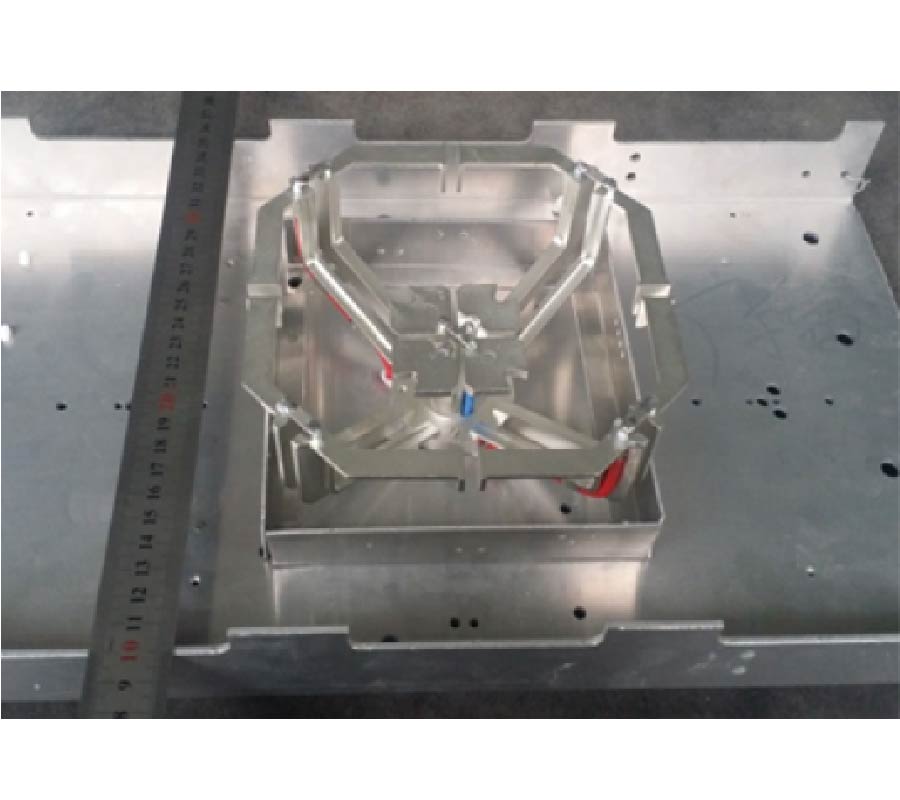
This paper describes a method of measurement of miniaturized antenna gain in HF band based on a parallel plate cell. Compared to a free space outdoor approach this method offers two advantages: the use of a well defined environment and time efficiency. For the same external dimensions, it also has an advantage compared to TEM/GTEM cells designs in terms of useful antenna under test (AUT) space. This space is of a major importance in HF band since even miniature antennas can have considerable proportions. The proposed structure is composed of a parallel plate cell, whose construction is simple and not expensive. It offers a precision measurement with an error not exceeding 2.3 dB with respect to calibrated antenna gain and simulation results.
SIMPLE APPROACH TO MINIATURIZED ANTENNA GAIN MEASUREMENT USING A PARALLEL PLATE CELL IN THE HF BAND
2016-01-13
PIER
Vol. 155, 19-26
Graphene-Based Infrared Lens with Tunable Focal Length
Yanxiu Li , Fanmin Kong and Kang Li
In modern information and communication technologies, manipulating focal length has been hot topic. Considering that the conductivity of graphene layer can effectively be tuned by purposely designing the thickness of the dielectric spacer underneath the graphene layer, a graphene-based lens with tunable focal length is proposed in this paper, and it can be used to collimate waves. The fabrication of the proposed graphene-based lens is purposed, and the performance of the lens is verified with finite-element method. The simulation results demonstrate that the graphene-based lens has excellent tunability and confinement. At the same time, the lens exhibits low loss in certain rang and large frequency bandwidth.
GRAPHENE-BASED INFRARED LENS WITH TUNABLE FOCAL LENGTH
2016-01-12
PIER C
Vol. 61, 127-130
Compact Inline Triplet SIW Filter with Embedded Short-Ended Microstrip Line
Ji Ding , Tao Zhang and Fan Liu
A compact triplet inline substrate integrated waveguide (SIW) bandpass filter is presented with sharp lower skirt and deep lower-stopband performance. The filter is composed of two SIW rectangular cavities and an embedded short-ended microstrip line on the top surface of two adjacent SIW cavities. A transmission zero can be generated by the cross coupling near the lower passband edge, which allows the filter implementation in inline with sharp lower skirt. Deep lower stopband performance is inherited from SIW. To validate the concept, a filter prototype with fractional bandwidth (FBW) of 4% at 5.75 GHz is designed, fabricated and measured. Good agreement can be obtained between the measured and simulated results.
COMPACT INLINE TRIPLET SIW FILTER WITH EMBEDDED SHORT-ENDED MICROSTRIP LINE
2016-01-12
PIER C
Vol. 61, 115-125
A Dual-Band Low-Profile Metasurface-Enabled Wearable Antenna for WLAN Devices
Helin Yang , Wang Yao , Yuanyuan Yi , Xiaojun Huang , Song Wu and Boxun Xiao
This paper presents a compact, low-profile, wearable dual-band antenna operating in the Wireless WLAN band of 5.15~5.25 GHz and 5.72~5.83 GHz. The proposed antenna is composed of a planar monopole and underneath three by three array arrangement of Jerusalem Cross (JC) structure metasurface. The simulated results show that the integrated antenna express 4.09% and 4.14% impendence bandwidths, increased gain up to 7.9 dB and 8.2 dB, front to back (FB) ratio achieved to 20 dB and 18 dB at the two frequencies, respectively. The measured results agree well with simulations. In addition, the metasurface not only is equivalent to a ground plane for isolation, but also acts as the main radiator, which enables a great reduction in the specific absorption rate (SAR). Furthermore, because of a compact solution, the proposed integrated antenna can be a promising device for various wearable systems.
A DUAL-BAND LOW-PROFILE METASURFACE-ENABLED WEARABLE ANTENNA FOR WLAN DEVICES
2016-01-12
PIER M
Vol. 46, 1-10
Superresolution Imaging for Forward-Looking Scanning Radar with Generalized Gaussian Constraint
Yin Zhang , Yulin Huang , Yuebo Zha and Jianyu Yang
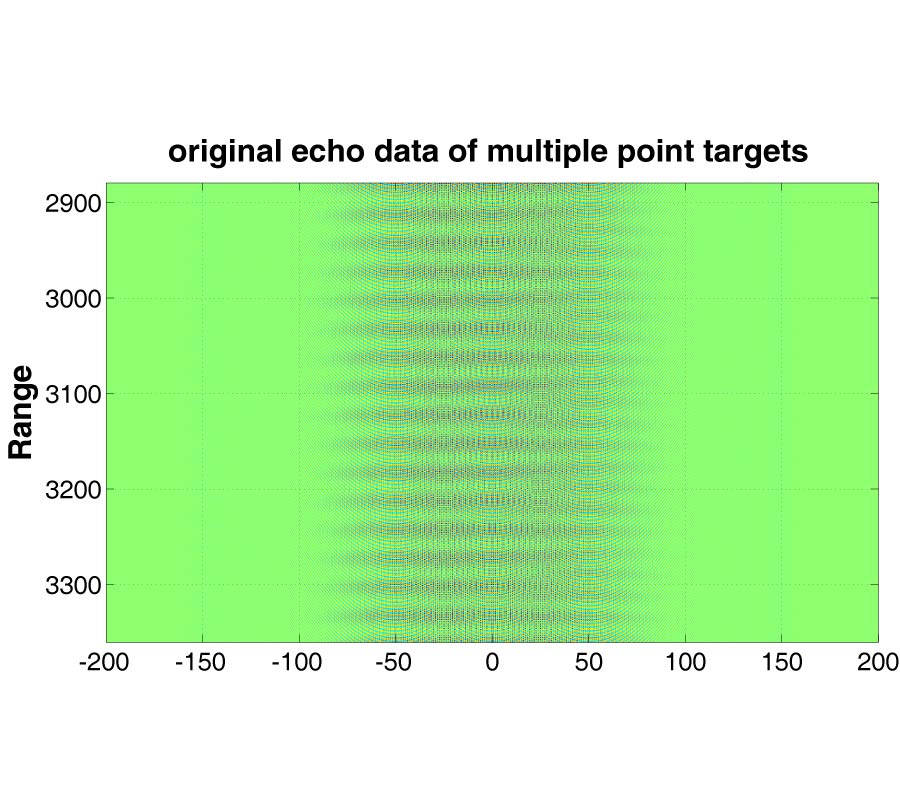
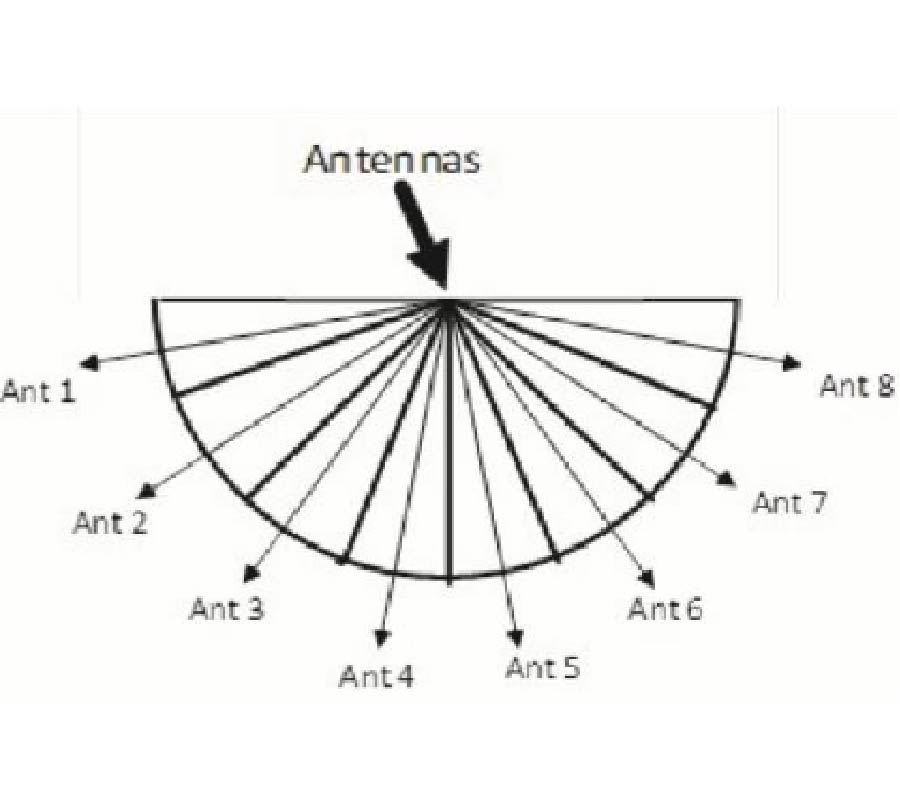
A maximum a posteriori (MAP) approach, based on the Bayesian criterion, is proposed to overcome the low cross-range resolution problem in forward-looking imaging. We adapt scanning radar system to record received data and exploit deconvolution method to enhance the real-aperture resolution because the received echo is the convolution of target scattering coefficient and antenna pattern. The Generalized Gaussian distribution is considered as the prior information of target scattering coefficient in MAP approach for the reason that it could express different target scattering coefficient properties with the control of statistic parameter. This constraint term makes the proposed algorithm useful in different applications. On the other hand, the reconstruction problem can also be viewed as the lp-norm (0 < p ≤ 2) regularization. Simulation results show the robustness of the proposed algorithm against additive noise compared with other superresolution methods.
SUPERRESOLUTION IMAGING FOR FORWARD-LOOKING SCANNING RADAR WITH GENERALIZED GAUSSIAN CONSTRAINT
2016-01-12
PIER M
Vol. 45, 195-207
Torque and Ripple Improving of a SR Motor Using Robust Particle Swarm Optimization of Drive Current and Dimension
Abbas Ketabi , Ata Yadghar and Mohammad Javad Navardi
In this paper, the robust optimization shape and drive of switched reluctance motors (SRM) are discussed using robust particle swarm optimization (RPSO). The shape optimum goal of the algorithm was found for maximum torque value and minimum torque ripple, following changing the geometric parameters. The drive optimum aim of the algorithm was found minimum torque ripple, following changing the current profiles. The optimization process was carried out using a combination of RPSO and Finite Element Method (FEM). Fitness value was calculated by FEM analysis using COMSOL4.2, and the RPSO was realized by MATLAB 2011. The proposed method has been applied to two case studies and also compared with seeker optimization algorithm. The results show that the optimized SRM using RPSO has higher torque value, lower torque ripple and higher robustness, indicating the validity of this methodology for SRM design and implementation.
TORQUE AND RIPPLE IMPROVING OF A SR MOTOR USING ROBUST PARTICLE SWARM OPTIMIZATION OF DRIVE CURRENT AND DIMENSION
2016-01-11
PIER
Vol. 155, 1-18
Absolute Imaging of Low Conductivity Material Distributions Using Nonlinear Reconstruction Methods in Magnetic Induction Tomography
Bachir Dekdouk , Christos Ktistis , David W. Armitage and Anthony J. Peyton
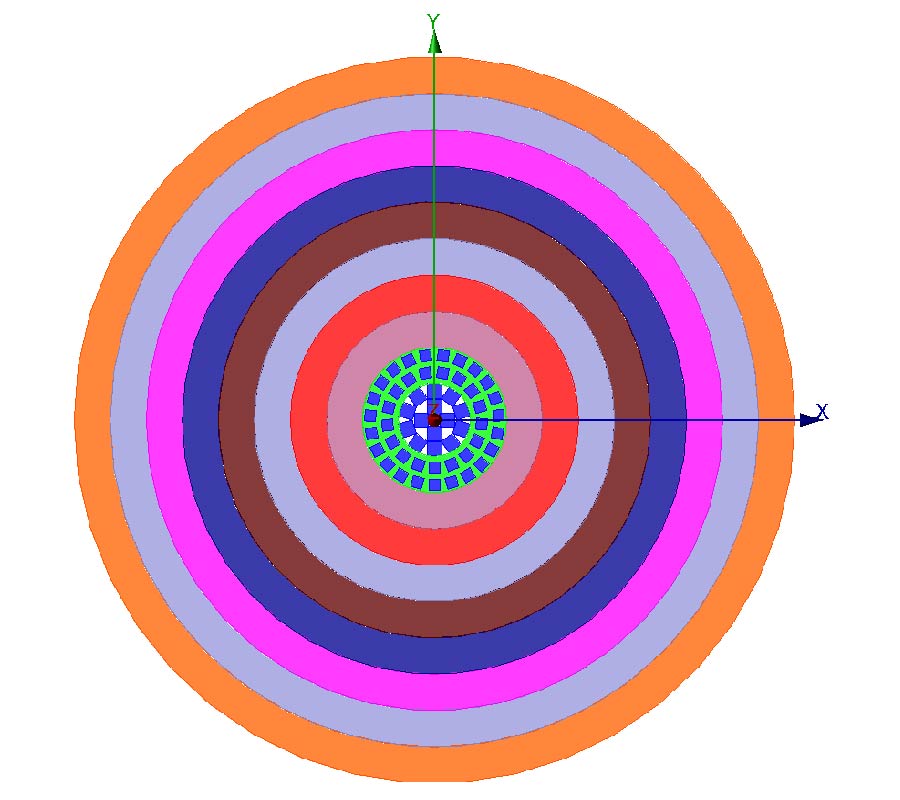
Magnetic Induction Tomography (MIT) is a newly developing technique of electrical tomography that in principle is able to map the electrical conductivity distribution in the volume of objects. The image reconstruction problem in MIT is similar to electrical impedance tomography (EIT) in the sense that both seek to recover the conductivity map, but differ remarkably in the fact that data being inverted in MIT is derived from induction theory and related sources of noise are different. Progress in MIT image reconstruction is still limited, and so far mainly linear algorithms have been implemented. In difference imaging, step inversion was demonstrated for recovering perturbations within conductive media, but at the cost of producing qualitative images, whilst in absolute imaging, linear iterative algorithms have mostly been employed but mainly offering encouraging results for imaging isolated high conductive targets. In this paper, we investigate the possibility of absolute imaging in 3D MIT within a target for low conductivity application (σ < 5 Sm-1). For this class of problems, the MIT image reconstruction exhibits non-linearity and ill-posedness that cannot be treated with linear algorithms. We propose to implement for the first time in MIT two effective inversion methods known in non-linear optimization as Levenberg Marquardt (LMM) and Powell's Dog Leg (PDLM) methods. These methods employ damping and trust region techniques for controlling convergence and improving minimization of the objective function. An adaptive version of Gauss Newton is also presented (AGNM), which implements a damping mechanism to the regularization parameter. Here, the level of penalty is varied during the iterative process. As a comparison between the methods, different criteria are examined from image reconstructions using the LMM, PDLM and AGNM. For test examples, volumetric image reconstruction of a perturbation within homogeneous cylindrical background is considered. For inversion, an independent finite element FEM software package Maxwell by Ansys is employed to generate simulated data using a model of a 16 channel MIT system. Numerical results are employed to show different performance characteristics between the methods based on convergence, stability and sensitivity to the choice of the regularization parameter. To demonstrate the effect of scalability of absolute imaging in MIT for more realistic problems, a human head model with an internal anomaly is used to produce reconstructions for different finer resolutions. AGNM is adopted here and employs the Krylov subspace method to replace the computationally demanding direct inversion of the regularized Hessian.
ABSOLUTE IMAGING OF LOW CONDUCTIVITY MATERIAL DISTRIBUTIONS USING NONLINEAR RECONSTRUCTION METHODS IN MAGNETIC INDUCTION TOMOGRAPHY
2016-01-09
PIER C
Vol. 61, 105-113
Wideband Dual-Polarized Omnidirectional Antenna with High Isolation for Indoor DAS Applications
Lei Zhou , Yong-Chang Jiao , Zibin Weng , Yihong Qi and Tao Ni
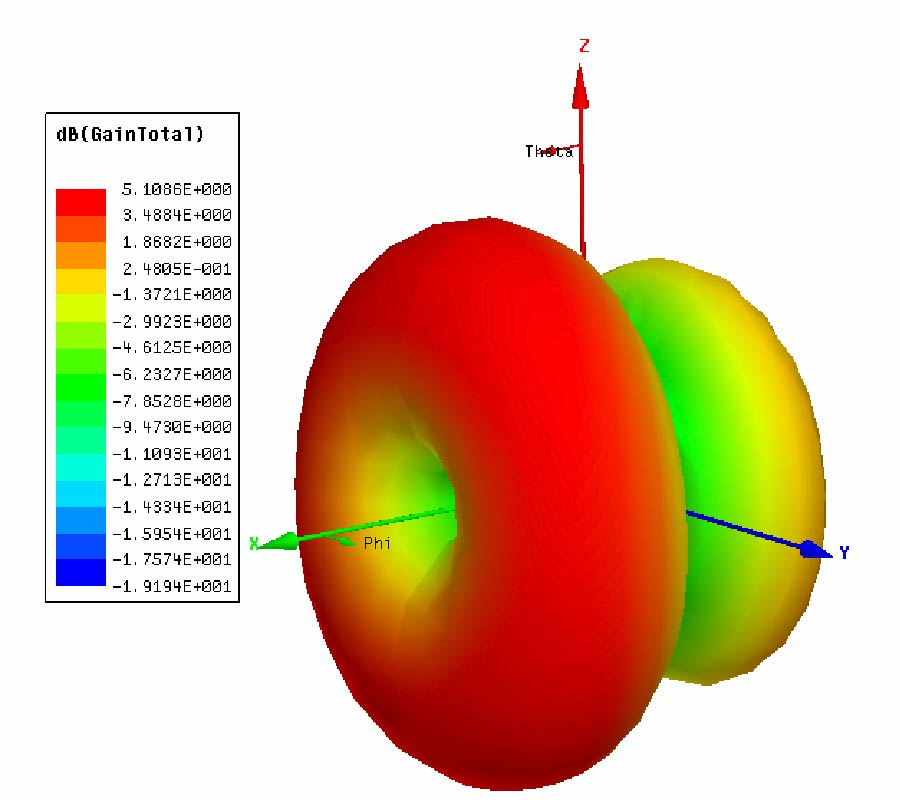
A low-profile dual-polarized omnidirectional antenna is presented. The antenna is a combination of a vertically-polarized (VP) antenna and a horizontally-polarized (HP) antenna. The VP antenna is composed of a circular ground plane, a cross-shaped metal patch with four shorted legs and a top-loading circular ring. The printed dipoles of the HP antenna are fed through a three-way power divider etched on an FR4 substrate. To maintain stable radiation and reflection characteristics, the HP feed coaxial cable is soldered on one patch of the VP antenna to reduce the parasitic current on the feed cable. The VP antenna covers the frequency bands for GSM/2G/3G/4G LTE, and the HP antenna works in an overlapping frequency bands for 3G and TD LTE communication systems with high isolation. The VP antenna achieves a wide bandwidth of 108% from 800 MHz to 2700 MHz, and its gains are larger than 2 dBi in 800~960 MHz band and greater than 4 dBi in 1710~2700 MHz band, respectively. The HP antenna works in the frequency band from 1700 MHz to 2700 MHz, and its gains are greater than 3 dBi. The proposed dual-polarized antenna is simulated, fabricated and measured. Measured results are in good agreement with the simulated ones.
WIDEBAND DUAL-POLARIZED OMNIDIRECTIONAL ANTENNA WITH HIGH ISOLATION FOR INDOOR DAS APPLICATIONS
2016-01-07
PIER B
Vol. 65, 81-108
Optimized Superconducting Nanowire Single Photon Detectors to Maximize Absorptance
Maria Csete , Gabor Szekeres , Andras Szenes , Balazs Banhelyi , Tibor Csendes and Gabor Szabo
Dispersion characteristics of four types of superconducting nanowire single photon detectors, nano-cavity-array- (NCA-), nano-cavity-deflector-array- (NCDA-), nano-cavity-double-deflector-array- (NCDDA-) and nano-cavity-trench-array- (NCTA-) integrated (I-A-SNSPDs) devices was optimized in three periodicity intervals commensurate with half-, three-quarter- and one SPP wavelength. The optimal con gurations capable of maximizing NbN absorptance correspond to periodicity-dependent tilting in S-orientation (90˚ azimuthal orientation). In NCAI-A-SNSPDs absorptance maxima are reached at the plasmonic Brewster angle (PBA) due to light tunneling. The absorptance maximum is attained in a wide plasmonic-pass-band in NCDAI1/2*λ-A, inside a flat-plasmonic-pass-band in NCDAI3/4*λ-A and inside a narrow plasmonic-band in NCDAIλ-A. In NCDDAI1/2*λ-A bands of strongly coupled cavity and plasmonic modes cross, in NCDDAI3/4*λ-A an inverted-plasmonic-band-gap develops, while in NCDDAIλ-A a narrow plasmonic-pass-band appears inside an inverted-minigap. The absorptance maximum is achieved in NCTAI1/2*λ-A inside a plasmonic-pass-band, in NCTAI3/4*λ-A at inverted-plasmonic-band-gap center, while in NCTAIλ-A inside an inverted-minigap. The highest 95.05% absorptance is attained at perpendicular incidence onto NCTAIλ-A. Quarter-wavelength type cavity modes contribute to the near-field enhancement around NbN segments except in NCDAIλ-A and NCDDAI3/4*λ-A. The polarization contrast is moderate in NCAIA-SNSPDs (~102). NCDAI- and NCDDAI-A-SNSPDs make possible to attain considerably large polarization contrast (~102-103 and ~103~104), while NCTAI-A-SNSPDs exhibit a weak polarization selectivity (~10-102).
OPTIMIZED SUPERCONDUCTING NANOWIRE SINGLE PHOTON DETECTORS TO MAXIMIZE ABSORPTANCE
2016-01-07
PIER C
Vol. 61, 91-103
A 2×2 Dual-Band MIMO Antenna with Polarization Diversity for Wireless Applications
Leeladhar Malviya , Rajib Kumar Panigrahi and Machavaram Kartikeyan
A compact 2×2 dual-band MIMO antenna is proposed with polarization diversity technique for present wireless applications. The proposed design combines the horizontally and vertically polarized radiating elements. The effect of mutual coupling between radiating elements is reduced by partially stepped ground (PSG) and by the orthogonal placement of antenna elements. The whole configuration is designed over a substrate of size 70×70 mm2. The measured frequency bands extend from 2.408-2.776 GHz, and 4.96-5.64 GHz frequencies with SWR < 2. The measured isolation is more than 21 dB between adjacent and diagonal ports. The measured peak gains at 2.54 GHz, and 5.26 GHz resonant frequencies are 3.98 dBi and 4.13 dBi, respectively. The designed MIMO covers LTE bands (7/38/41), WLAN bands (2.4/5.2/5.5 GHz), and WiMAX band (2.5 GHz). The diversity performances in terms of peak gain, MEG, ECC, and directivity have also been reported.
A 2×2 DUAL-BAND MIMO ANTENNA WITH POLARIZATION DIVERSITY FOR WIRELESS APPLICATIONS
2016-01-06
PIER C
Vol. 61, 75-90
Flexible Antennas Based on Natural Rubber
Zaiki Awang , Nur Adyani Mohd Affendi , Nur Aimi Liyana Alias and Nur Azlin Mohd Razali
Flexible substrates have been increasingly studied in recent years. This paper proposes natural rubber as a new substrate material for flexible antennas. In our work, prototype antennas were built using rubber formulated with different filler contents. Carbon black was used as the filler where its amount was varied to yield different dielectric properties. Prototype inset-feed microstrip patch antennas with outer dimensions 7.52 mm × 10.607 mm × 1.7 mm and copper as its conducting material were fabricated to operate at 2.45 GHz. The prototypes were measured and their performance analyzed in terms of the effects of filler content on Q, return loss and bending effects on their gain and radiation characteristics. The return loss and gain were found to be comparable to those built on existing synthetic substrates, but these new antennas offer an added feature of frequency-tunability by varying the filler content. Under bending conditions, these new antennas were also found to perform better than existing designs, showing less changes in their gain, frequency shift and beamwidth, in addition to less impedance mismatch when bent.
FLEXIBLE ANTENNAS BASED ON NATURAL RUBBER
2016-01-05
PIER B
Vol. 65, 65-80
Miniaturized Slotted Ground UWB Antenna Loaded with Metamaterial for WLAN and WiMAX Applications
Ritesh Kumar Saraswat and Mithilesh Kumar
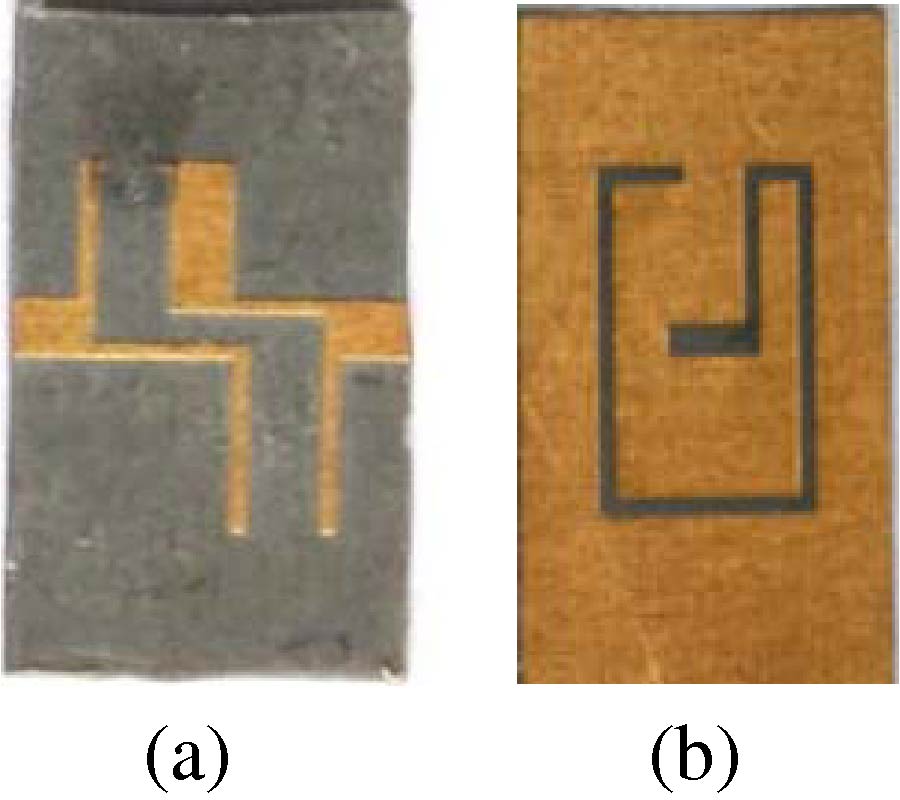
This paper presents a miniaturized ultra wideband (UWB) antenna with metamaterial for WLAN and WiMax applications. For miniaturization of UWB antenna resonating 3.1-10.6 is designed Ghz using fractalization of the radiating edge and slotted ground structure approach. A miniaturization of active patch area and antenna volume is achieved up to 63.48% and 42.24% respectively, with respect to the conventional monopole UWB antenna. This antenna achieves a 143% impedance bandwidth covering the frequency band from 2.54 GHz to 15.36 GHz under simulation and 132% (2.95-14.28 GHz) in measurement. The electrical dimension of this antenna is 0.32  × 0.32  (38mm × 38mm) at lower frequency of 2.54 GHz. As per IEEE 802.11a/b/g and IEEE 802.16e standards, WLAN (2.4 -2.5 GHz, 5.150 -5.250 GHz, 5.725 -5.825 GHz), WiMAX (3.3-3.8 GHz) bands are achieved by using slotted ground structure and metamaterial rectangular split ring resonator. The proposed antenna is fabricated on FR4 substrate of thickness 1.6 mm and a dielectric constant 4.3 and tested. The proposed antenna yields a −10 dB impedance bandwidth of about 11.1% (2.39-2.67 GHz), 59.1% (2.87-5.28 GHz) and 7.4% (5.58-6.01 GHz) under simulation and 4.5% (2.41-2.52 GHz), 51.1% (3.12-5.26 GHz) and 3.8% (5.69-5.91 GHz) in measurement for 2.4, 3.5 & 5 and 5.8 GHz bands respectively. Stable radiation patterns with low cross polarization, high average antenna gain of 3.02 dBi under simulation and 2.14 dBi in measurement and measured peak average radiation efficiency of 76.6% are observed for the operating bands. Experimental results seem in good agreement with the simulated ones of the proposed antenna.
MINIATURIZED SLOTTED GROUND UWB ANTENNA LOADED WITH METAMATERIAL FOR WLAN AND WIMAX APPLICATIONS
2016-01-05
PIER C
Vol. 61, 65-73
A Novel Rectangular Ring Planar Monopole Antennas for Ultra-Wideband Applications
Hemachandra Reddy Gorla and Frances Harackiewicz
This paper proposes two rectangular ring planar monopole antennas for wideband and ultra-wideband applications. Simple planar rectangular rings are used to design the planar antennas. These rectangular rings are designed in a way to achieve the wideband operations. The operating frequency band ranges from 1.85 GHz to 4.95 GHz and 3.12 GHz to 14.15 GHz. The gain varies from 1.83 dBi to 2.89 dBi for rectangular ring wideband antenna and 1.89 dBi to 5.2 dBi for rectangular ring ultra-wideband antenna. The design approach and the results are discussed.
A NOVEL RECTANGULAR RING PLANAR MONOPOLE ANTENNAS FOR ULTRA-WIDEBAND APPLICATIONS
2016-01-05
PIER M
Vol. 45, 185-193
Development of Fundamental Theory of Thin Impedance Vibrators
Yuriy M. Penkin , Victor A. Katrich and Mikhail Nesterenko
In the paper, we prove two theorems relating to the theory of thin impedance vibrator radiators excited by a lumped voltage generator under rather general conditions. The first theorem proves that influence of external electrodynamic media on the vibrator current distribution is limited and can be estimated using a small natural parameter. The second theorem ascertains that there exists principal possibility to compensate influence of spatial boundaries upon current distributions on a perfectly conductive vibrator by applying to its surface complex impedance with predetermined variation along the vibrator length. Several corollaries disclose a range of the theorems application and their fundamental importance.
DEVELOPMENT OF FUNDAMENTAL THEORY OF THIN IMPEDANCE VIBRATORS
2016-01-05
PIER M
Vol. 45, 173-183
On the Feasibility of Assessing Burn Wound Healing Without Removal of Dressings Using Radiometric Millimetre-Wave Sensing
Stuart William Harmer , Sergiy Shylo , Mamta Shah , Nicholas John Bowring and Amani Yousef Owda
The authors present transmission data, taken at Ka (36 GHz) and W (95 GHz) bands in the millimetre-wave region of the electromagnetic spectrum, for various dressing materials used in the treatment and management of burn wounds. The results show that such materials are highly transparent (typically > 90% transmission) and, in their dry state, will permit the sensing of the surface of the skin through the thick layers (> 2 cm) of different dressings typically applied in medical treatment of burn wounds. Furthermore, the authors present emissivity data, taken at the same frequency bands, for different regions of human skin on the arm and for samples of chicken flesh with and without skin and before and after localised heat treatment. In vivo human skin has a lower emissivity than chicken flesh samples, 0.3-0.5 compared to 0.6-0.7. However, changes in surface emissivity of chicken samples caused by the short-term application of heat are observable through dressing materials, indicating the feasibility of a millimetre-wave imaging to map changes in tissue emissivity for monitoring the state of burn wounds (and possibly other wounds) non-invasively and without necessitating the removal of the wound dressings.
ON THE FEASIBILITY OF ASSESSING BURN WOUND HEALING WITHOUT REMOVAL OF DRESSINGS USING RADIOMETRIC MILLIMETRE-WAVE SENSING
2016-01-05
PIER
Vol. 154, 209-225
Regulation of Cellular Molecular Signaling by Light (Invited Paper)
Pan Cheng , Yujie Zhu and Hao He
Laser technology has been promoting various microscopy methods and thus making great progresses in life science. Further than contribution to ``seeing is believing'', lasers have also demonstrated their capacity of manipulating cells and even molecular signaling. Specifically, with advances of lasers and combination with other techniques, recent reports show that cell calcium ion, a universal intra- and inter-cellular messenger, can be modulated by lasers at different levels of biological organization from organelle to tissue. It is very encouraging that laser irradiation can activate or control plenty of corresponding cell processes and functions by regulating cell calcium signaling pathways, with promising potential in both scientific research and clinical application. In this paper, optical techniques for regulation of cell calcium signaling are specifically reviewed. Most methods need exogenouschemicals or genetic materials to convert incident photon into stimulation that cells can response with specific molecular dynamics. The only all-optical approach is achieved by nonlinear excitation with femtosecond laser, despite lack of specificity and controllability, providing possibility of a totally noninvasive method without any biochemical materials and thus further potential clinical application in human beings. The developments and techniques of those methods are introduced and explained, with analysis on their properties and current challenges. Potential applications and prospective development are also discussed. Researchers on biophotonics and related biological fields can benefit from this review. It also provides a systematic reference to doctors and researchers who are working on practical application of those methods.
REGULATION OF CELLULAR MOLECULAR SIGNALING BY LIGHT (INVITED PAPER)
2016-01-05
PIER
Vol. 154, 195-208
Time-Dependent Lorentz-Mie-Debye Formulation for Electromagnetic Scattering from Dielectric Spheres (Invited Paper)
Jie Li and Balasubramaniam Shanker
Canonical solutions to frequency domain Maxwell's equations in the spherical coordinate system have found extensive use in the scientific literature. What is conspicuous by its absence is lack of such expressions for transient Maxwell systems. The existence of such expressions or approximations provide the means to glean interesting physics as well as validate existing numerical fullwave solvers. However, developing such expressions is beset with challenges; direct inverse Fourier transforms of frequency domain expressions are unstable. Successful approaches that ameliorate this instability are more recent endeavor. In this paper, we generalize our earlier contribution to this effort by exploiting a novel representation of the retarded potential to derive expressions for scattering from a dielectric sphere. Several results are provided that demonstrate the stability and accuracy of the method.
TIME-DEPENDENT LORENTZ-MIE-DEBYE FORMULATION FOR ELECTROMAGNETIC SCATTERING FROM DIELECTRIC SPHERES (INVITED PAPER)
2016-01-04
PIER C
Vol. 61, 55-63
Performance Evaluation of a MIMO-on-Body System in a Mine Environment
Moulay El Hassan El Azhari , Mourad Nedil , Ismail Ben Mabrouk , Larbi Talbi , Khalida Ghanem and Yassine Salih Alj
In this contribution, the On-body propagation measurements at 40 m underground mine gallery and their statistical analysis are presented. Monopole antennas were installed on the body in order to form three on-body channels, namely belt-chest, belt-wrist and belt-head. The channel parameters of a 2 × 2 Multiple-Input Multiple-Output (MIMO) On-body system are evaluated and compared to the single-input single-output (SISO) system parameters. It was shown that the RMS delay spread and capacity values of the MIMO channels are higher than those of the SISO channels. The average value of the Ricean K-factor shows little difference between the MIMO and SISO belt-chest measurements. The calculated capacity values for a constant signal to noise ratio (SNR) and those calculated at a constant transmitted power demonstrate that the propagation performance is significantly improved by using the MIMO compared to the conventional SISO scheme. Hence, MIMO technology is a suitable candidate for On-body underground communications.
PERFORMANCE EVALUATION OF A MIMO-ON-BODY SYSTEM IN A MINE ENVIRONMENT
2016-01-04
PIER M
Vol. 45, 163-171
Diagnosis of the ac Current Densities Effect on the Cathodic Protection Performance of the Steel X70 for a Buried Pipeline Due to Electromagnetic Interference Caused by HVPTL
M'hamed Ouadah , Omar Touhami and Rachid Ibtiouen
This paper diagnosis the effect of the AC current densities induced by the electromagnetic interference between high voltage power line and buried power line on the cathodic protection performance of the X70 steel in simulated soil. First, the induced AC voltage onto the pipeline was calculated for different power line configuration, separation distances between transmission line and pipeline and parallelism lengths. The induced AC current density was calculated function to the induced AC voltage, soil resistivity, and holiday diameter. Then, the electrochemical characters of the X70 steel at various AC current densities are measured using the potentiodynamic method. The electrochemical parameters obtained by the electrochemical tests are used as boundary conditions in the cathodic protection simulation model. The results indicate that, under influence of AC current densities, the X70 steel is more susceptible to corrosion, and the cathodic protection is unable to maintain the protection potential.
DIAGNOSIS OF THE AC CURRENT DENSITIES EFFECT ON THE CATHODIC PROTECTION PERFORMANCE OF THE STEEL X70 FOR A BURIED PIPELINE DUE TO ELECTROMAGNETIC INTERFERENCE CAUSED BY HVPTL
2016-01-04
PIER M
Vol. 45, 153-161
Transformation of Finite Olver-Gaussian Beams by an Uniaxial Crystal Orthogonal to the Optical Axis
Salima Hennani , Lahcen EZ-ZARIY and Abdelmajid Belafhal
The properties of the Finite Olver-Gaussian beams propagating through an uniaxial crystal orthogonal to the optical axis are studied. An analytical expression is developed, and some numerical simulations are performed to investigate the effects of some parameters on intensity distribution and profile of this beams family at the out-put plane of the uniaxial crystal. The results show that the beam exiting the optical system depends on the ratio of the extraordinary refractive index to the ordinary refractive index. Upon propagation in the uniaxial crystal, the Finite Olver-Gaussian beam in two transversal directions accelerates, while the acceleration in the transversal direction orthogonal to the optical axis is far slower than that in the transversal direction along the optical axis.
TRANSFORMATION OF FINITE OLVER-GAUSSIAN BEAMS BY AN UNIAXIAL CRYSTAL ORTHOGONAL TO THE OPTICAL AXIS