Search Results(13797)

2015-12-22
PIER C
Vol. 60, 169-177
Wide Band L-Probe Fed Circular Patch Antenna with Elliptical Parasitic Patch and Two Elements Array
Muhammad Nazrul Islam , Markus Berg , Timo Tarvainen and Erkki T. Salonen
To enable the quest for high data rates in telecommunications, wide-band radio designs as well as antennas are required. This paper demonstrates a unique bandwidth enhancement technique for L-probe fed patch antenna. This is a novel technique to enhance patch antenna bandwidth with desired radiation properties. One circular shape main patch and two elliptical shape parasitic patches on PCB give wide-band response by exciting multiple resonances. The designed antenna array gives almost 45%, -10 dB impedance matched relative bandwidth. This is a very simple and inexpensive patch antenna solution for the wide-band wireless application. A two-element array of this antenna has been formed, and wide-band radiation properties of the array are reported.
WIDE BAND L-PROBE FED CIRCULAR PATCH ANTENNA WITH ELLIPTICAL PARASITIC PATCH AND TWO ELEMENTS ARRAY
2015-12-22
PIER M
Vol. 45, 113-121
A Novel Wavenumber Domain Algorithm for Bistatic SAR Imaging Based on Equivalent Monostatic Model
Zongliang Wu , Xiaoling Zhang and Xiliang Wu
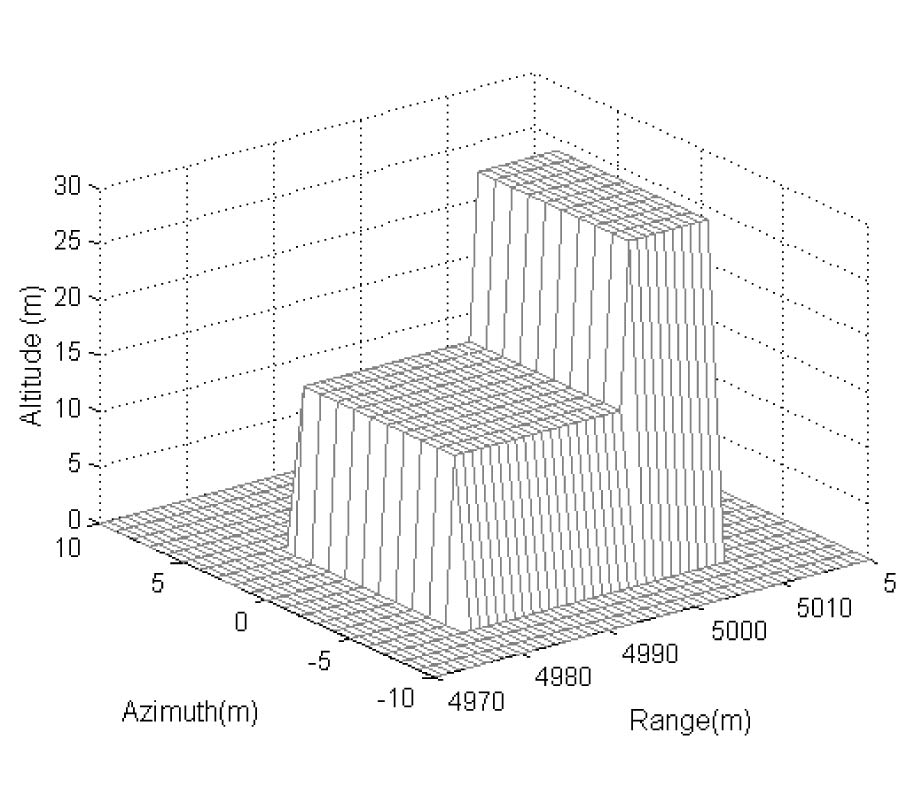
Compared with traditional monostatic synthetic aperture radar (SAR), bistatic SAR (BiSAR) has stronger advantages in terms of anti-interference and anti-strike abilities. However, the complex system structure of BiSAR brings new difficulties to imaging processing. In order to make the imaging algorithms of traditional monostatic SAR apply to BiSAR imaging as well, this paper proposes an equivalent monostatic model for BiSAR. This model mainly provides two benefits: (1) The equivalent monostatic range history has the form of hyperbolic function; (2) The equivalent monostatic velocity of any scattering point in the observed scene, with respect to the radar platform, is not only the same but also invariant with the equivalent monostatic range. Due to the above benefits, a novel wavenumber domain algorithm (WDA) is further proposed for BiSAR imaging. Finally, the experimental results demonstrate that the proposed algorithm is effective and feasible.
A NOVEL WAVENUMBER DOMAIN ALGORITHM FOR BISTATIC SAR IMAGING BASED ON EQUIVALENT MONOSTATIC MODEL
2015-12-21
PIER C
Vol. 60, 157-167
A Miniaturized Lotus Shaped Microstrip Antenna Loaded with EBG Structures for High Gain-Bandwidth Product Applications
Taha Ahmed Elwi , Ahmed Imad Imran and Yahiea Alnaiemy
In this paper, the design of a printed circuit antenna based on lotus flower patch of a miniaturized profile is proposed. The antenna consists of three layers including a patch and a ground plane of a thin copper layer separated by a Roger RT/duroid®5880 substrate for high gain-bandwidth product applications including the portable biomedical devices. The patch structure is patterned with triangular defects to provide a fractal structure. Nevertheless, the ground plane is defected with Electromagnetic Band Gap (EBG) structures. The antenna is found to show a first resonant mode around 3 GHz, while the other frequency modes are obtained around 4.2 GHz and 6 GHz which are below -10 dB. Moreover, the antenna operates over the frequency range from 7.8 GHz up to 15 GHz with a bore-sight gain varing from 4 dBi up to 6 dBi when operates in free-space environments. The antenna size is reduced to a 32 mm×28 mm×0.5 mm using shorting plates on the substrate edges. The antenna performance characteristics are examined using CST and HFSS commercial software packages, which are based on the Finite Integration Technique (FIT) and the Finite Element Method (FEM), respectively. Finally, the antenna performance is tested experimentally for both S11 spectrum and radiation patterns to show an excellent matching with the obtained numerical results.
A MINIATURIZED LOTUS SHAPED MICROSTRIP ANTENNA LOADED WITH EBG STRUCTURES FOR HIGH GAIN-BANDWIDTH PRODUCT APPLICATIONS
2015-12-21
PIER Letters
Vol. 58, 45-51
A Broadband Design of UHF Fractal RFID Tag Antenna
Yan Shi , Chao Fang , Kang Qi and Chang-Hong Liang
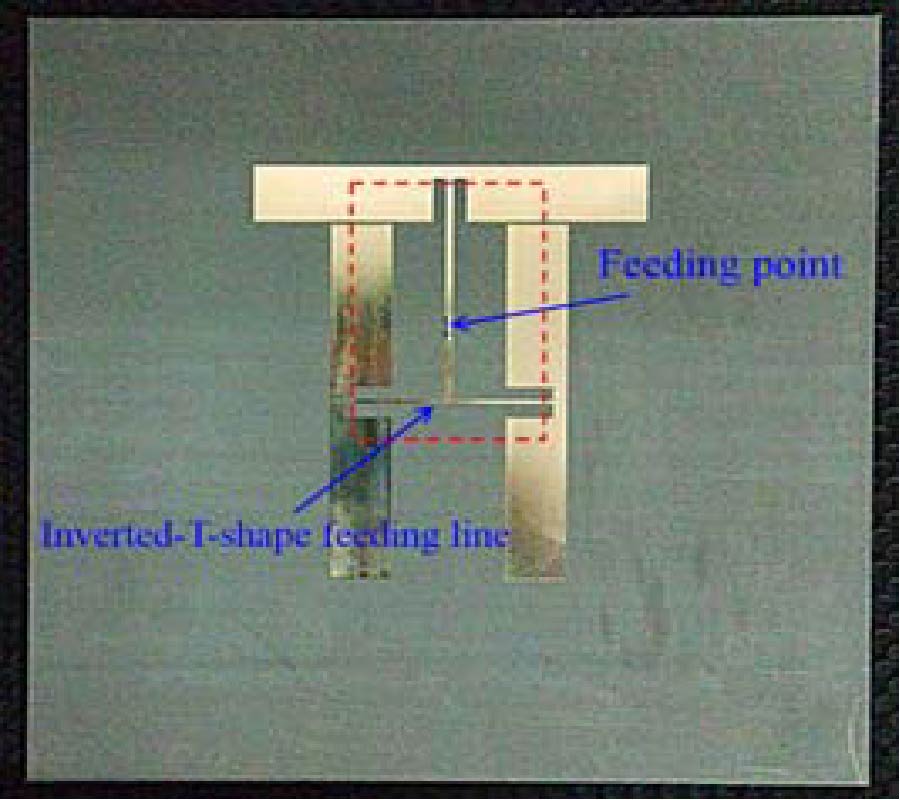
In this paper a broadband radio frequency identification (RFID) tag antenna for the ultrahigh-frequency (UHF) band is designed. The proposed antenna consists of a first-order Hilbert fractal structure and a spiral structure. In order to ensure the conjugate matching between the tag antenna and the electronic chip, a T-matching structure is employed. The interaction between two radiating elements makes the proposed antenna a fractional bandwidth of 20% over the frequency range of 820 MHz-1010 MHz and a small size of 0.2092λ0×0.099λ0. Simulated and measured results validate the good performance of the designed tag antenna.
A BROADBAND DESIGN OF UHF FRACTAL RFID TAG ANTENNA
2015-12-21
PIER M
Vol. 45, 101-111
Scattering of Light by the Metal-Coated Dielectric Nanocylinders with Angular Periodicity
Vakhtang Jandieri , Kiyotoshi Yasumoto , Yunfei Liu and Jaromir Pistora
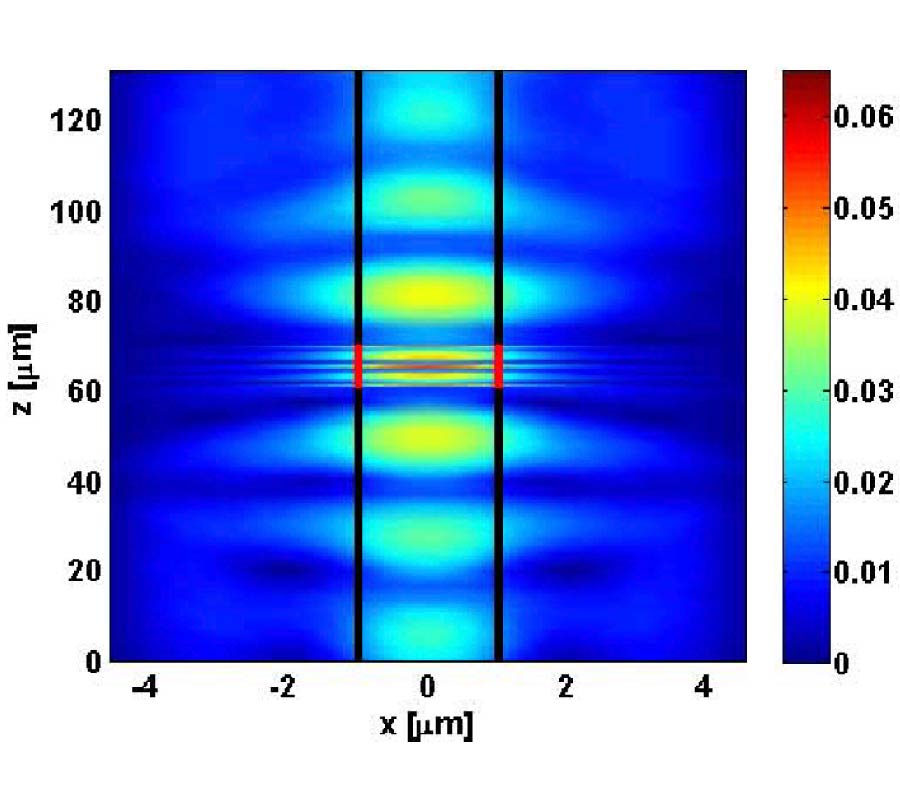
Scattering of light by metal-coated dielectric nanocylinders periodically distributed along a cylindrical surface is investigated both theoretically and numerically. The structure is under the authors' interest because of its practical application in design and fabrication of plasmonic devices such as plasmonic ring resonators, Plasmonic Crystals and THz waveguides. The method is based on the T-matrix approach and the field expansion into the cylindrical Floquet modes. The method is rigorous, straightforward and can be easily applied to various cylindrical configurations with different types and locations of the excitation sources. Scattering cross section and absorption cross section of three and four silver (Ag) coated-dielectric nanocylinders periodically situated along a cylindrical surface are studied. Near field distributions are investigated at particular wavelengths corresponding to the resonance wavelengths in the spectral responses. Special attention is paid to the unique and interesting phenomena characterizing the cylindrical structure composed of the metalcoated nanocylinders such as: a) localization of the field at the outer and inner interfaces of the metal-coated nanocylinders; b) excitement of the field in the gap region between the nanocylinders through the coupled plasmon resonance and c) strong confinement of the field inside the cylindrical structure. Detailed investigations have shown that unique phenomena characterizing the cylindrical configurations of the nanocylinders can be realized using a relatively simple structure composed of three nanocylinders and there is no need to further increase a number of the scatterers (nanocylinders).
SCATTERING OF LIGHT BY THE METAL-COATED DIELECTRIC NANOCYLINDERS WITH ANGULAR PERIODICITY
2015-12-19
PIER Letters
Vol. 58, 37-43
Solution for Wide Band Scattering Problems by Using the Improved Ultra-Wide Band Characteristic Basis Function Method
Wenyan Nie and Zhonggen Wang
The ultra-wide band characteristic basis function method (UCBFM) is an efficient approach for analyzing wide band scattering problems because ultra-wide characteristic basis functions (UCBFs) can be reused for any frequency sample in the range of interest. However, the errors of the radar cross section calculated by using the UCBFM are usually large at low frequency points. To mitigate this problem, an improved UCBFs is presented. Improved UCBFs (IUCBFs) are derived from primary characteristic basis functions and secondary level characteristic basis functions (SCBFs) by applying a singular value decomposition procedure at the highest frequency point. This method fully considers the mutual coupling effects among sub-blocks to obtain the SCBFs. Therefore, the accuracy is improved at lower frequency points because of the higher quantity of current information contained in the IUCBFs. Numerical results demonstrate that the proposed method is accurate and efficient.
SOLUTION FOR WIDE BAND SCATTERING PROBLEMS BY USING THE IMPROVED ULTRA-WIDE BAND CHARACTERISTIC BASIS FUNCTION METHOD
2015-12-19
PIER M
Vol. 45, 91-99
Target Detection in Compound-Gaussian Clutter with Adaptive OFDM Radar
Yang Xia , Zhiyong Song , Zaiqi Lu and Qiang Fu
This paper mainly deals with the problem of target detection in compound-Gaussian clutter with orthogonal frequency division multiplexing (OFDM) radar. First, the OFDM measurement model is developed to compound-Gaussian clutter by taking advantage of frequency diversity of OFDM radar waveform and we devise a generalized likelihood rate test (GLRT) detector where the target scattering coefficients and clutter covariance matrix are unknown. Then, we propose an adaptive waveform design scheme based on maximizing Mahalanobis distance of the distributions under two hypothesises to improve the detection performance. Finally, the effectiveness of the proposed detector as well as the adaptive waveform design method is demonstrated via numerical examples.
TARGET DETECTION IN COMPOUND-GAUSSIAN CLUTTER WITH ADAPTIVE OFDM RADAR
2015-12-18
PIER C
Vol. 60, 147-156
CPW-Fed Reconfigurable Clover-Shaped Antenna with Switchable Circular Polarization
Lingsheng Yang , Yongan Zhu and Kuniaki Yoshitomi
In this paper, a CPW-fed reconfigurable clover-shaped antenna with switchable circular polarization is proposed. This antenna consists of a clover-shaped patch, four p-i-n diodes, and two pairs of quarter-circular-rings. By electrically controlling the four p-i-n diodes to form two orthogonal bow-tie shaped current paths, the proposed antenna can be operated in two modes: the left-hand circular polarization (LHCP) and right-hand circular polarization (RHCP) modes. Two pairs of quarter rings are used to improve the bandwidth and AR performance of the antenna. The measured 10-dB reflection coefficient and 3-dB axial-ratio (AR) bandwidth of the prototype antenna is approximately 12.3% and 19%, respectively, which is enough for some wireless applications such as WLAN IEEE 802.11 b/g (4%). Gain and radiation pattern are also presented.
CPW-FED RECONFIGURABLE CLOVER-SHAPED ANTENNA WITH SWITCHABLE CIRCULAR POLARIZATION
2015-12-18
PIER Letters
Vol. 58, 29-35
Compact Circularly Polarized Crossed Dipole Antenna with Chip Inductors and Square Rings Loading for GPS Applications
Xiaojie Yang , Jiade Yuan and Guodong Han
A compact circularly polarized (CP) crossed dipole antenna with chip inductors and square rings loaded for Global Positioning System (GPS) is proposed in this letter. The CP radiation is produced by crossing two dipoles through a 90° phase delay line of a vacant-quarter printed ring. Four chip inductors inserted in the dipole arms and four square rings loaded at the back of the dipole arms are introduced to obtain a compact dipole size. The plane dimension of the proposed antenna is 28 mm×28 mm, which can be widely used for GPS handheld devices. Details of the proposed antenna design and results are presented and discussed.
COMPACT CIRCULARLY POLARIZED CROSSED DIPOLE ANTENNA WITH CHIP INDUCTORS AND SQUARE RINGS LOADING FOR GPS APPLICATIONS
2015-12-18
PIER M
Vol. 45, 83-90
Fast Algorithm of Wideband Electromagnetic Scattering of Homogeneous Dielectric Targets
Bo Zhao , Shu-Xi Gong , Xing Wang and Yu Zhang
The PMCHWT-IE-FFT-BURA is applied to the wideband analysis of electromagnetic scattering property of homogeneous targets. Over the broad frequency band, the fast computation is achieved by the Maehly expansion on the basis of the Chebyshev approximation of the electric and magnetic currents. On the Chebyshev sampling points, PMCHWT-IE-FFT greatly reduces the memory requirement by sparsely storing the impedance matrix and decreases the computational time to the greatest degree by block acceleration of the matrix-vector product. Finally, numerical results show that the proposed method can make efficient analysis of wideband property of homogeneous targets without sacrificing accuracy much.
FAST ALGORITHM OF WIDEBAND ELECTROMAGNETIC SCATTERING OF HOMOGENEOUS DIELECTRIC TARGETS
2015-12-18
PIER M
Vol. 45, 73-81
A Nonreciprocal Multi-Channel Bandstop Filter Using the Generalized Fibonacci Multiferroic Superlattices with the Silver-Mean Sequence
Zhenhua Tang , Xuhui Liu , Dajun Lei , Jian-Quan Huang , Feng Qiu , Haiming Deng , Chunzhi Jiang and Min Yao
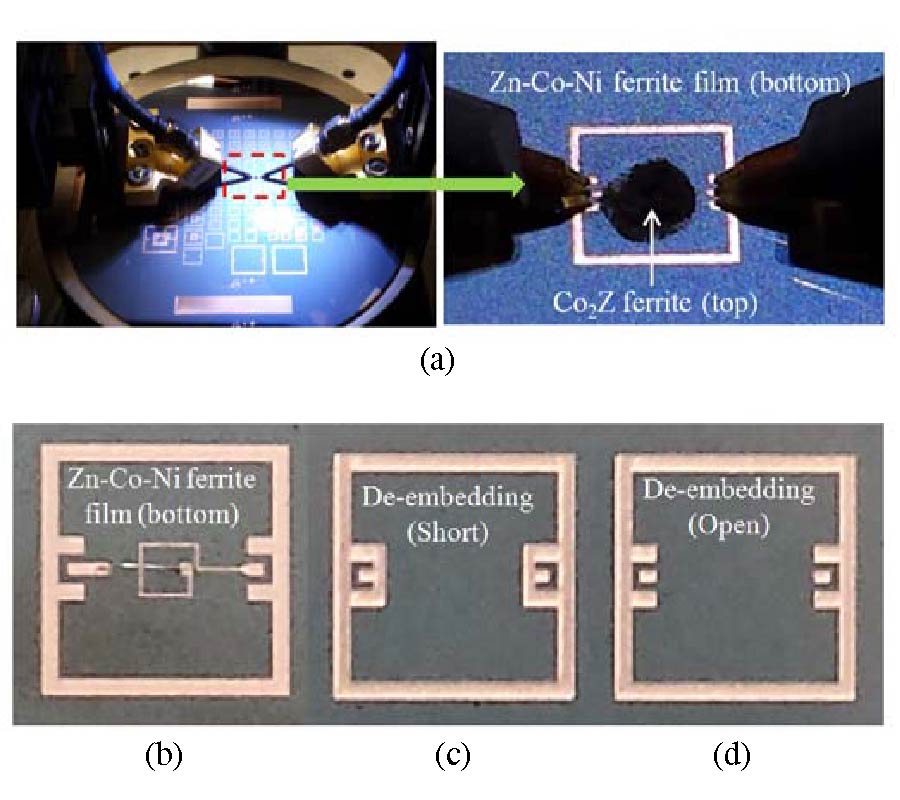
The generalized Fibonacci multiferroic superlattices (GFMS) are composed of single-phase multiferroic domains with simultaneous polarization and magnetization and are defined by the binary substitutional rule (BBmA, AB, m = 2, 3). We propose to construct a nonreciprocal multi-channel bandstop filter by the GFMS. The couplings between electromagnetic waves and lattice vibration of multiferroic material with ferroelectric and ferromagnetic (or antiferromagnetic) orders can be invoked either through piezoelectric or piezomagnetic effects and can lead to the creation of the polaritonic band structure. The plane wave expansion method with first-order approximation predicts the existence of multiple band gaps, and electromagnetic waves lying within the band gaps are prohibited, and the band gaps with respect to forward electromagnetic waves (FEWs) and backward electromagnetic waves (BEWs) are asymmetric. The forbidden band structures with FEWs and BEWs are calculated by the transfer matrix method and multiple frequency channels with unidirectional transmission of electromagnetic waves can be further confirmed. Nine and twenty transmission dips in transmission spectra for the BEWs in the frequency range of ω = 0.4 − 0.6 (17.06 GHz-25.59 GHz) are found in the GFMS with m = 2 and 3, respectively, in which the BEWs are prohibited while the FEWs can travel. Thus, the GFMS has all the conditions for the nonreciprocal multi-channel bandstop filter. Besides, the GFMS can also be applied to construct compact multi-channel one-way electromagnetic waveguides.
A NONRECIPROCAL MULTI-CHANNEL BANDSTOP FILTER USING THE GENERALIZED FIBONACCI MULTIFERROIC SUPERLATTICES WITH THE SILVER-MEAN SEQUENCE
2015-12-18
PIER M
Vol. 45, 59-71
Mathematical Analysis and Modeling of Single-Walled Carbon Nanotube Composite Material for Antenna Applications
Yaseen Naser Jurn , Mohd Fareq Bin Abd Malek and Hasliza A. Rahim
In this paper, the mathematical analysis of a single-walled carbon nanotube composite material (SWCNT-composite) is presented in order to estimate its effective conductivity model and other important parameters. This composite material consists of SWCNT coated by other different materials. The effects of the radius of SWCNT and average thickness of coating layer on this effective conductivity model are investigated. The effects of using different types of coating materials with different radii of SWCNTs on the behavior of this composite material are also presented. An investigation of electromagnetic properties of SWCNT-composite material was carried out based on designing and implementing the dipole antenna configuration using a common electromagnetic engineering tool solver CST (MWS). The results obtained from comparisons between SWCNT and SWCNT-composite materials are presented based on their electromagnetic properties are also described in this paper.
MATHEMATICAL ANALYSIS AND MODELING OF SINGLE-WALLED CARBON NANOTUBE COMPOSITE MATERIAL FOR ANTENNA APPLICATIONS
2015-12-18
PIER
Vol. 154, 115-126
Effective Magnetoelectric Properties of Magnetoelectroelastic (Multiferroic) Materials and Effects on Plane Wave Dynamics
Scott M. Keller , Abdon E. Sepulveda and Gregory P. Carman
In this paper we analyze the 3D modes of a linear homogeneous magnetoelectroelastic (MEE) material reduced to magnetoelectric (ME) constitutive form. This allows convenient examination of the predominately electromagnetic behavior in a mechanically coupled MEE material system. We find that the behavior of the electromagnetic modes are strongly in fluenced by the mechanical coupling present in the MEE material system. A number of papers refer to the cross-coupling of laminated piezoelectric and piezomagnetic materials as magnetoelectric materials. We discuss here that the composite materials are MEE systems and that the constitutive relations need to reflect the mechanical coupling also. Further, we find that the mechanical coupling has a significant impact on the electromagnetic propagation modes of the composite material. Through examples of homogenized MEE materials we show possibilities for remarkable electromagnetic material characteristics which are not conventionally obtainable in single phase materials.
EFFECTIVE MAGNETOELECTRIC PROPERTIES OF MAGNETOELECTROELASTIC (MULTIFERROIC) MATERIALS AND EFFECTS ON PLANE WAVE DYNAMICS
2015-12-17
PIER B
Vol. 65, 19-33
PSO Algorithm of Retrieving Surface Ducts by Doppler Weather Radar Echoes
Junwang Li , Hong-Guang Wang , Zhen-Sen Wu and Lei Li
Doppler weather radar is an effective tool for monitoring mesoscale and small scale weather systems, quantitatively estimating precipitation and guarding against severe convective weather. The quality of the data obtained by Doppler weather radar will be seriously affected by the anomalous propagation of electromagnetic wave in tropospheric ducts. A novel method is introduced in this paper to retrieve the surface ducts, and it is based on the Principal Component Analysis (PCA) method for modeling M profile and Parabolic Equation (PE) propagation model which is a well-established technique for efficiently solving the equations for beam propagation in an inhomogeneous atmosphere. The inversion echo powers and equivalent reflectivity factor are in accordance with the measured data, which indicates that the surface ducts can be effectively retrieved by this method.
PSO ALGORITHM OF RETRIEVING SURFACE DUCTS BY DOPPLER WEATHER RADAR ECHOES
2015-12-17
PIER B
Vol. 65, 1-18
Generalized Optical Theorem in the Time Domain
Edwin A. Marengo and Jing Tu
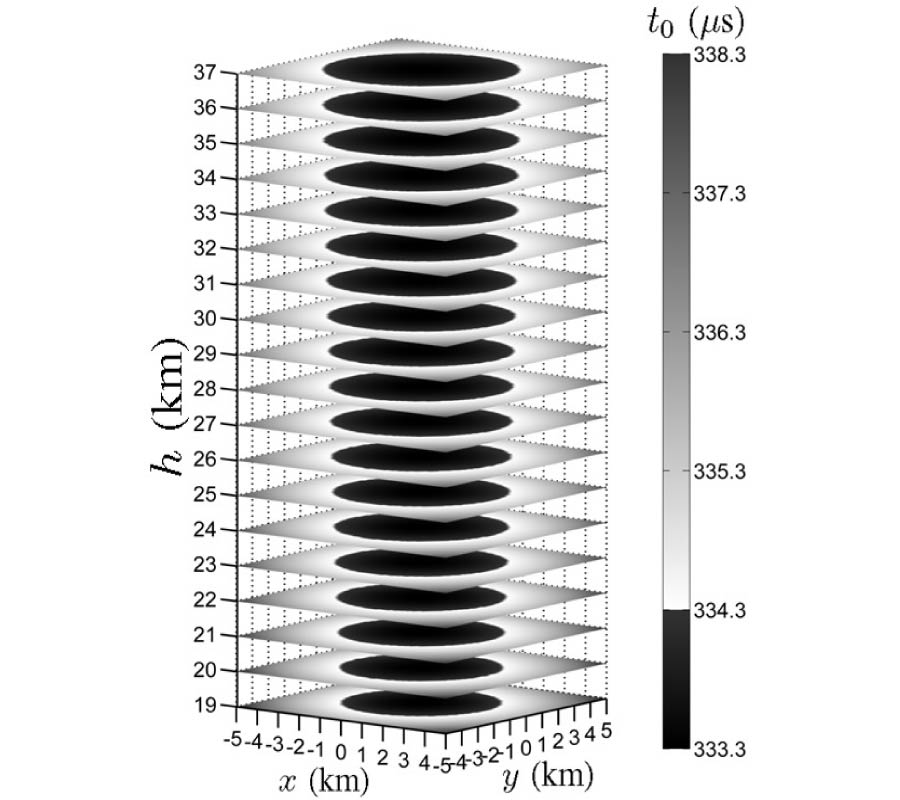
The optical theorem is a fundamental result that describes the energy budget of wave scattering phenomena. Most past formulations have been derived in the frequency domain and thus apply only to linear time-invariant (LTI) scatterers and background media. In this paper we develop a new theory of the electromagnetic form of the optical theorem directly in the time domain. The derived formulation covers not only the ordinary optical theorem but also the most general form of this result, known as the generalized optical theorem. The developed formulation provides a very general description of the optical theorem for arbitrary probing fields and general scatterers that can be electromagnetically nonlinear, time-varying, and lossy. In the derived formalism, both the scatterer and the background medium can be nonhomogeneous and anisotropic, but the background is assumed to be LTI and lossless. The derived results are illustrated with a computer simulation study of scattering in the presence of a corner reflector which acts as the background. Connections to prior work on the time-domain optical theorem under plane wave excitation in free space are also discussed.
GENERALIZED OPTICAL THEOREM IN THE TIME DOMAIN
2015-12-17
PIER Letters
Vol. 58, 23-28
GPS Patch Antenna Loaded with Fractal EBG Structure Using Organic Magnetic Substrate
Enchen Wang and Qiuping Liu
In this paper, a novel circularly-polarized (CP) patch antenna using organic magnetic substrate is proposed. This patch antenna works at 1.575 GHz frequency band which is for the global positioning system (GPS) application. The organic magnetic material is used to realize the miniaturization of antenna. To improve gain and axial ratio bandwidth of the antenna, fractal Hi-impedance surface electro-magnetic band gap (EBG) structures was used. The proposed antenna has been fabricated and measured. The simulation results for operating frequency band are shown to have good agreement with measurements.
GPS PATCH ANTENNA LOADED WITH FRACTAL EBG STRUCTURE USING ORGANIC MAGNETIC SUBSTRATE
2015-12-16
PIER C
Vol. 60, 137-146
Genetical Swarm Optimizer for Synthesis of Multibeam Linear Antenna Arrays
Hichem Chaker
The paper presents a hybrid evolutionary algorithm suitable for the optimization of large-domain electromagnetic problems. The hybrid technique, called Genetical Swarm Optimization (GSO), combines Genetic Algorithms (GA) and Particle Swarm Optimization (PSO). GSO algorithm is modelled on the concepts of Darwin's theory based on natural selection and evolution, and on cultural and social rules derived from the swarm intelligence. The problem is formulated and solved by means of the proposed algorithm. The examples are simulated to demonstrate the effectiveness and design flexibility of GSO in the framework of synthesis of multi-beam linear antennas arrays.
GENETICAL SWARM OPTIMIZER FOR SYNTHESIS OF MULTIBEAM LINEAR ANTENNA ARRAYS
2015-12-16
PIER C
Vol. 60, 125-136
Miniaturization of Compact Quadrifilar Helix Antennas for Telemetry, Tracking and Command Applications
Alexandru Takacs , Herve Aubert , Daniel Belot and Hubert Diez
This paper addresses the miniaturization of Quadrifilar Helix Antennas (QHAs) for space applications (VHF Telemetry, Tracking and Command). Several shape miniaturization techniques were presented, and the impact of height reduction is quantified in terms of radiation pattern, gain and phase center. Simulated and experimental results demonstrate that Compact Quadrifilar Helix Antennas (CQHAs) with a height reduced up to 70% reported to the reference QHA can be designed. By using an appropriate optimization method, the impact of the miniaturization on CQHA performances in terms of radiation pattern and polarization purity can be minimized. Moreover, the impact on the gain is quantified, and design rules are reported. Finally a closed-form expression for estimating the gain of CQHAs from the height reduction factor is found.
MINIATURIZATION OF COMPACT QUADRIFILAR HELIX ANTENNAS FOR TELEMETRY, TRACKING AND COMMAND APPLICATIONS
2015-12-16
PIER M
Vol. 45, 51-58
Microwave Focusing Within Arbitrary Refractive Index Media Using Left-Handed Metamaterial Lenses
Luca Leggio , Ehsan Dadrasnia and Omar de Varona
Left-handed metamaterial (LHM) lenses allow the focusing of microwave radiation at specific positions within a medium, depending on its refractive index. A suitable approach needs to consider the reflections between the LHM lens and the adjacent media. This work faces the challenge of focusing the microwave radiation within a medium with arbitrary positive refractive index and characteristic impedance using LHM lenses as imaging-forming systems. To find a right lens formula, a full wave method is presented in theory. The results we achieved show that the characteristic flat shape of conformal-four lens configuration has a spot size of 0.53 x 0.34λeff2 at -3 dB if the different media are perfectly matched. Otherwise, a noteworthy aberration affects the focusing, but it can be mitigated using a conformal circular LHM lens with a spot size of ~0.4 x 0.4λeff2 at -3 dB.
MICROWAVE FOCUSING WITHIN ARBITRARY REFRACTIVE INDEX MEDIA USING LEFT-HANDED METAMATERIAL LENSES
2015-12-16
PIER
Vol. 154, 101-114
The Unifed-FFT Grid Totalizing Algorithm for Fast O(n Log n) Method of Moments Electromagnetic Analysis with Accuracy to Machine Precision (Invited Paper)
Brian Rautio , Vladimir I. Okhmatovski and Jay Kyoon Lee
While considerable progress has been made in the realm of speed-enhanced electromagnetic (EM) solvers, these fast solvers generally achieve their results through methods that introduce additional error components by way of geometric type approximations, sparse-matrix type approximations, multilevel type decomposition of interactions, and assumptions regarding the stochastic nature of EM problems. This work introduces the O(N logN) Uni ed-FFT grid totalizing (UFFT-GT) method, a derivative of method of moments (MoM), which achieves fast analysis with minimal to zero reduction in accuracy relative to direct MoM solution. The method uniquely combines FFT-enhanced Matrix Fill Operations (MFO) that are calculated to machine precision with FFT-enhanced Matrix Solve Operations (MSO) that are also calculated to machine precision, for an expedient solution that does not compromise accuracy.
THE UNIFED-FFT GRID TOTALIZING ALGORITHM FOR FAST O(N LOG N) METHOD OF MOMENTS ELECTROMAGNETIC ANALYSIS WITH ACCURACY TO MACHINE PRECISION (Invited Paper)