Search Results(13797)

2015-11-13
PIER
Vol. 154, 23-33
Plane-Wave Propagation in Electromagnetic PQ Medium
Ismo Veikko Lindell
Two basic classes of electromagnetic medium, recently defined as P and Q medium, are generalized to define the class of PQ media. Plane wave propagation in the general PQ medium is studied and the quartic dispersion equation is derived in analytic form applying four-dimensional dyadic formalism. The result is verified by considering various special cases of PQ media for which the dispersion equation is either decomposed to two quadratic equations or is identically satisfied (media with no dispersion equation). As a numerical example, the dispersion surface of a PQ medium with non-decomposable dispersion equation is considered.
PLANE-WAVE PROPAGATION IN ELECTROMAGNETIC PQ MEDIUM
2015-11-12
PIER B
Vol. 64, 83-101
Definition for Polarization P and Magnetization m Fully Consistent with Maxwell's Equations
Carlo Andrea Gonano , Riccardo Enrico Zich and Marco Mussetta
Dealing with the project of metamaterials scientists often have to design circuit elements at a subwavelength (or ``microscopic'') scale. At that scale, they use the set of Maxwell's equations in free-space, and neither permittivity ε nor permeability μ are formally defined. However, the objective is to use the unit cells in order to build a bulk material with some desired ``macroscopic'' properties. At that scale the set of Maxwell's equations in matter is adopted. To pass from one approach to the other is not obvious. In this paper we analyse the classic definitions of polarization P and magnetization M, highlighting their limits. Then we propose a definition for P and M fully consistent with Maxwell's equations at any scale.
DEFINITION FOR POLARIZATION P AND MAGNETIZATION M FULLY CONSISTENT WITH MAXWELL'S EQUATIONS
2015-11-11
PIER Letters
Vol. 57, 117-123
Compact Four-Element Antenna Array Design for BeiDou Navigation Satellite System Applications
Jianxing Li , Hongyu Shi , Jianying Guo and Anxue Zhang
In this letter, a compact four-element microstrip patch antenna array for BeiDou navigation satellite system (BDS) operation at the B3 (1268 MHz) band is proposed. High permittivity dielectric substrate and slit-loaded microstrip patch are used to reduce the antenna element size down to 40 mm × 40 mm which implies an aperture size of only λ0/6 × λ0/6 at the B3 band. The right-handed circularly polarized (RHCP) radiation is achieved by connecting two coaxial probes to a 0°-90° stripline hybrid. Four identical antenna elements are distributed with the same polarity and an inter-element separation of 80 mm (λ0/3 at the B3 band). The overall size of the antenna array, including the stripline feeding network and supporting ground plane, is only 140 mm × 140 mm × 5.5 mm. A prototype was fabricated and measured to verify the design concept. Simulated and measured results will be presented and discussed, showing that the proposed BDS antenna array is suitable for BDS applications.
COMPACT FOUR-ELEMENT ANTENNA ARRAY DESIGN FOR BEIDOU NAVIGATION SATELLITE SYSTEM APPLICATIONS
2015-11-10
PIER B
Vol. 64, 63-81
Channel Based Design of Systems with Multiple Antennas
Tobias Mahler , Lars Reichardt , Christoph Heine , Mario Pauli and Thomas Zwick
In this article a method of optimizing wireless communication systems using multiple antennas is presented. This method focuses on the synthesis of antenna radiation patterns that are optimized in terms of mutual information, taking into account the specific limitations of the antenna design, such as the available space (for the antenna structure), polarization, number and arrangement of the antennas. The optimization focuses on volume based channel knowledge and on the theory of the intrinsic capacity. Based on this we developed algorithms that allow to determine optimized fixed radiation patterns also for time-variant channels.
CHANNEL BASED DESIGN OF SYSTEMS WITH MULTIPLE ANTENNAS
2015-11-10
PIER C
Vol. 59, 159-166
Broadband, Wide Beam Circularly Polarized Antenna with a Novel Matching Structure for Satellite Communications
Ling Sun , Bao-Hua Sun , He Wu , Jiangpeng Yuan and Wending Tang
A wide beam, circularly polarized (CP) antenna is presented for satellite communications. The antenna consists of two crossed bent dipoles, two baluns and two pairs of rectangular patches. The two dipoles are fed by the two baluns, respectively. The arms of the dipoles are bent to save the horizontal space and to broaden the beamwidth. The rectangular patches which are connected to the arms of the dipoles form the matching structure of the proposed antenna. The impedance bandwidth of the antenna is broadened by adjusting the length of the rectangular patches. A broadband 90° power divider is used to feed the proposed antenna and to realize circular polarization. The antenna has a -10-dB impedance bandwidths of 77% (1.73-3.89 GHz). The proposed antenna exhibits a measured 2-dB AR bandwidth of 76.3%, from 1.71 GHz to 3.8 GHz. The 3-dB beamwidth is greater than 88°over the whole working band. Results show that the proposed antenna is suitable for the application of satellite communications.
BROADBAND, WIDE BEAM CIRCULARLY POLARIZED ANTENNA WITH A NOVEL MATCHING STRUCTURE FOR SATELLITE COMMUNICATIONS
2015-11-09
PIER C
Vol. 59, 149-158
Dual-Band Planar Inverted-F Antenna with Enhanced Bandwidth by Adding a T-Shaped Slot and a Two Elements for Mobile Phone Applications
Mustapha El Halaoui , Abdelmoumen Kaabal , Hassan Asselman , Saida Ahyoud and Adel Asselman
In this article, a compact planar inverted-F antenna with a wide frequency band for WLAN, Bluetooth, HiperLAN, LTE2500, and WiMAX applications in mobile handsets is proposed. The designed PIFA provides two operating bands at 2.5 GHz with a bandwidth of 300 MHz (13%) and at 5.2 GHz with a bandwidth of 5700 MHz (76%). The dual-band performance and the improved bandwidths are realized by two techniques: the integration of a T-shaped slot in the radiating patch of the antenna and the addition of two elements in the side of the PIFA. The two operating bands of the antenna are controlled by adjusting the size of slot and the size of elements 1 and 2. The distribution of the specific absorption rate (SAR) of 1-g and 10-g in the head of human tissues for two positions of the antenna at 2.5 GHz and 5.2 GHz is also studied. The results of simulation and measurement of the proposed antenna are presented and discussed.
DUAL-BAND PLANAR INVERTED-F ANTENNA WITH ENHANCED BANDWIDTH BY ADDING A T-SHAPED SLOT AND A TWO ELEMENTS FOR MOBILE PHONE APPLICATIONS
2015-11-09
PIER M
Vol. 44, 127-138
FDTD Based Numerical Framework for Ground Penetrating Radar Simulation
Md Omar Faruq Howlader and Tariq Pervez Sattar
In this paper, a one-dimensional numerical framework based on Finite-Difference Time-Domain (FDTD) method is developed to model response behaviour of Ground penetrating radar (GPR). The effects of electrical properties such as dielectric constant, conductivity of the media have been evaluated. A Gaussian shaped pulse is used as source which propagates through the 1D array grid, and the pulse interactions at different media interfaces have been investigated. The objective of this paper is to assess the modelling criteria and success rate of detecting buried object using the framework. A real life application of GPR to detect a buried steel bar in one meter thick concrete block has been carried out, and the results present successful detection of the steel bar along with measured depth of the concrete cover. The developed framework could be implemented to model multi-layer dielectric blocks with detection capability of various buried objects.
FDTD BASED NUMERICAL FRAMEWORK FOR GROUND PENETRATING RADAR SIMULATION
2015-11-06
PIER B
Vol. 64, 47-62
Design of a Compact Orthogonal Broadband Printed MIMO Antennas for 5-GHz ISM Band Operation
Dhirgham Kamal Naji
This paper presents a new design approach for compact orthogonal broadband printed multiple-input multiple-output (MIMO) antennas based on a coplanar waveguide (CPW)-fed hexagonal-ring monopole antenna (HRMA) element. The design procedure of the basic radiating element is initiated from a stripline (SL)-fed circular monopole antenna (CMA). Then various antennas involved in the design evolution process are introduced to attain a compact CPW-fed HRMA. This basic antenna element has a compact size of 13×10 mm2, 50% smaller than SL-fed CMA, and a prototype of this antenna is built and tested. Based on HRMA element, compact two- and four-element MIMO antenna systems are designed, fabricated and experimentally demonstrated for 5-GHz ISM band operation. The MIMO antenna systems use orthogonally configured of identical closely spaced HRMA elements, with CPW-fed printed on one side of the substrate to achieve good isolation. Design simulation is carried out with the aid of Computer Simulation Technology Microwave Studio (CST MWS) and confirmed with High Frequency Structure Simulator (HFSS). The experimental results are in close agreement with the simulated ones, which validates the design principle. Based on experimental results, the two MIMO antenna systems have an impedance bandwidth of more than 2 GHz, good isolation of less than 15 dB, and a low envelope correlation coefficient of better than -26 dB across the frequency band of (4-6 GHz), which are suitable for 5-GHz MIMO applications.
DESIGN OF A COMPACT ORTHOGONAL BROADBAND PRINTED MIMO ANTENNAS FOR 5-GHZ ISM BAND OPERATION
2015-11-06
PIER B
Vol. 64, 29-45
A Frequency Band Reconfigurable UWB Antenna for High Gain Applications
Ritesh Kumar Saraswat and Mithilesh Kumar
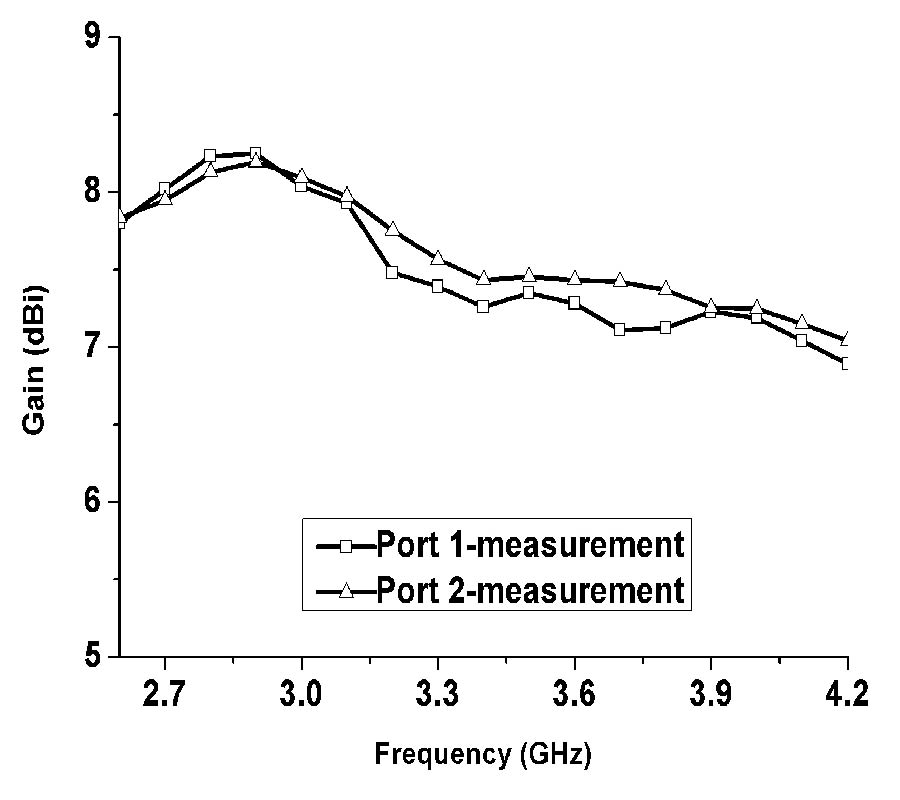
An octagonal shape patch antenna with switchable inverted L-shaped slotted ground is designed for frequency band reconfigurable and experimentally validated. The antenna is capable of frequency band switching at five different states including an ultra wideband (UWB) state, two narrowband states and a dual-band state by using RF switching element p-i-n diodes. In the case of ultrawide band (UWB) state, the proposed antenna operates over impedance bandwidth of 141% (2.87-16.56 GHz) under simulation and 139% (2.85-15.85 GHz) in measurement with return loss S11 < -10 dB. For two narrowband states, 10 dB impedance bandwidth achieved is 16% (5.05-5.91 GHz) and 11% (8.76-9.80 GHz) under simulation and 14% (5.01-5.79 GHz) and 10% (8.68-9.69 GHz) in measurement, respectively. For the dual band state, 10 dB impedance bandwidth of 2.21-2.52 GHz (13%) & 5.07-5.89 GHz (15%) and 2.18-2.52 GHz (14%) & 8.78-9.71 GHz (10%) under simulation and 2.20-2.50 GHz (12%) & 5.05-5.90 GHz (15%) and 2.19-2.50 GHz (13%) & 8.70-9.60 GHz (9%) in measurement with return loss S11 < -10 dB. The proposed antenna is capable to serve in different wireless communication applications such as WLAN [802.11b/g/n (2.4-2.48 GHz), 802.11a/h/j/n (5.2 GHz), ISM band (2.4-2.5 GHz)], Bluetooth (2400-2484 MHz), WiMAX (2.3-2.4 & 5.15-5.85 GHz), WiFi (2.40-2.48, 5.15-5.85 GHz) and UWB (3.1-10.6 GHz). It also works at 9.2 GHz where airborne radar applications are found. Next, the antenna gain is improved with the help of a circular loop frequency selective surface (FSS) and a PEC (perfect electric conductor) sheet. Measured peak gain represents average improvements about 4 dB-5 dB over the UWB band. Experimental results seem in good agreement with the simulated ones of the proposed antenna with and without the frequency selective surface.
A FREQUENCY BAND RECONFIGURABLE UWB ANTENNA FOR HIGH GAIN APPLICATIONS
2015-11-06
PIER M
Vol. 44, 119-126
Circularly Polarized Wave Scattering from Two-Dimensional Dielectric Rough Sea Surface
Peng-Ju Yang , Li-Xin Guo and Qiang Wang
Based on the polarimetric scattering model of second-order small-slope approximation (SSA-II) with tapered wave incidence under linear and circular polarization, monostatic and bistatic scattering from two-dimensional dielectric rough sea surface is investigated. The emphasis of the present study is put on the Brewster effect on polarization state of scattering wave under circularly polarized wave incidence. Numerical simulations show that for bistatic configuration under circularly polarized wave incidence, the polarization state of scattering wave strongly depends on incident angle, scattering angle, as well as the Brewster angle associated with medium permittivity.
CIRCULARLY POLARIZED WAVE SCATTERING FROM TWO-DIMENSIONAL DIELECTRIC ROUGH SEA SURFACE
2015-11-06
PIER
Vol. 154, 1-21
The Time-Harmonic Discontinuous Galerkin Method as a Robust Forward Solver for Microwave Imaging Applications
Ian Jeffrey , Nicholas Geddert , Kevin Brown and Joe LoVetri
Novel microwave imaging systems require flexible forward solvers capable of incorporating arbitrary boundary conditions and inhomogeneous background constitutive parameters. In this work we focus on the implementation of a time-harmonic Discontinuous Galerkin Method (DGM) forward solver with a number of features that aim to benefit tomographic microwave imaging algorithms: locally varying high-order polynomial field expansions, locally varying high-order representations of the complex constitutive parameters, and exact radiating boundary conditions. The DGM formulated directly from Maxwell's curl equations facilitates including both electric and magnetic contrast functions, the latter being important when considering quantitative imaging with magnetic contrast agents. To improve forward solver performance we formulate the DGM for time-harmonic electric and magnetic vector wave equations driven by both electric and magnetic sources. Sufficient implementation details are provided to permit existing DGM codes based on nodal expansions of Maxwell's curl equations to be converted to the wave equation formulations. Results are shown to validate the DGM forward solver framework for transverse magnetic problems that might typically be found in tomographic imaging systems, illustrating how high-order expansions of the constitutive parameters can be used to improve forward solver performance.
THE TIME-HARMONIC DISCONTINUOUS GALERKIN METHOD AS A ROBUST FORWARD SOLVER FOR MICROWAVE IMAGING APPLICATIONS
2015-11-06
PIER
Vol. 153, 123-131
Broadband Nanoantennas for Plasmon Enhanced Fluorescence and Raman Spectroscopies
Zhengdong Yong , Senlin Zhang , Yongjiang Dong and Sailing He
We propose a novel design of broadband plasmonic nanoantenna that is suitable for fluorescence and Raman enhancement. The structure consists of a gold nanoring and bowties at the center. We numerically investigate the near field and far field performance by employing the finite-difference time-domain method. High Purcell enhancement and large SERS are demonstrated in a record wide spectral bandwidth of 700 nm based on a single emitter-antenna configuration. Moreover, unlike a traditional antenna design, the proposed nanoantenna has low heat generation and high field enhancement at the gap simultaneously, when operating off resonance.
BROADBAND NANOANTENNAS FOR PLASMON ENHANCED FLUORESCENCE AND RAMAN SPECTROSCOPIES
2015-11-05
PIER C
Vol. 59, 143-147
Broadband Substrate to Substrate Interconnection
Bo Zhou , Chong-Hu Cheng , Xingzhi Wang , Zixuan Wang and Shanwen Hu
A broadband substrate to substrate microwave circuit interconnection is proposed using bond wires and defected ground structure (DGS). The proposed square-shaped DGS etched under compensated microstrip open stubs not only expands its operating bandwidth, but also increases the characteristic impedance of microstrip line without narrowing its width, which breaks the PCB fabrication limitation of narrow stubs. The proposed structure can make the impedance of the microstrip line much larger than that without DGS. A 250 Ω characteristic impedance is easily achieved using 0.6 mm microstrip line with the proposed DGS. Measured S21 and S11 of the proposed interconnection are better than -0.8 and -15 dB from DC to 38 GHz, respectively. And a bandwidth increment of more than 1200% is achieved compared with the conventional one.
BROADBAND SUBSTRATE TO SUBSTRATE INTERCONNECTION
2015-11-05
PIER
Vol. 153, 113-121
Ultrashort Microwave Pulse Generation by Passive Pulse Compression in a Compact Reverberant Cavity
Sun K. Hong , Emily Lathrop , Victor M. Mendez and Jerry Kim
In this paper, we demonstrate a device that is capable of generating an ultrashort (sub-nanosecond) high power microwave pulse by means of passive pulse compression in a compact reverberant cavity. The long duration input pulse into the cavity is created using time-reversal techniques, which allows the waveform to contain the inverse profile of the cavity phase distortion. When fed back into the cavity, the wave focusing at the output port results in a com-pressed ultrashort pulse with enhanced peak amplitude. We experimentally demonstrate a pulse compressor consisting of a 0.0074 m3 cavity capable of generating a 130 picosecond pulse from an input waveform of 300 nanosecond duration with the peak gain of up to 19 dB.
ULTRASHORT MICROWAVE PULSE GENERATION BY PASSIVE PULSE COMPRESSION IN A COMPACT REVERBERANT CAVITY
2015-11-02
PIER B
Vol. 64, 15-27
Two-Dimensional Compact FD-Like Stencils with High-Order Accuracy for Helmholtz Equation with a Planar Dielectric Interface
Hung-Wen Chang and Sin-Yuan Mu
We derive and compare several finite-difference frequency-domain (FD-FD) stencils for points on or near a planar dielectric interface. They are based on interface conditions or from modifying Helmholtz equation. We present a highly accurate formulation based on local plane wave expansion (LPWE). LPWE-based compact stencil is an extension of the analytically obtained LFE-9 stencil as used by the method of connected local fields [Chang and Mu, PIER 109, 399 (2010)]. We report that merely using five points per wavelength spatial sampling, LPWE coefficients achieve better than 0.01% local error near a planar interface. We numerically determine that we have fourth to eighth-order accuracy in the local errors for LPWE stencils.
TWO-DIMENSIONAL COMPACT FD-LIKE STENCILS WITH HIGH-ORDER ACCURACY FOR HELMHOLTZ EQUATION WITH A PLANAR DIELECTRIC INTERFACE
2015-11-02
PIER Letters
Vol. 57, 111-116
Analysis of RWPT Relays for Intermediate-Range Simultaneous Wireless Information and Power Transfer System
Keke Ding , Ying Yu and Hong Lin
The increasing sophisticated power and communication demands have motivated a variety of research on simultaneous wireless information and power transfer system, aiming to provide higher power transfer efficiency and improved communication rate. This letter demonstrates that resonant wireless power transfer system with relays can be a candidate to reach these aims. Based on coupled resonator filter theory, mathematical equations for transmission efficiency and bandwidth are derived for arbitrary number of relays. Improved efficiency and bandwidth are verified by equations, simulation and experiments. Experimental results show that under the distance of two times the diameter of the resonator, system efficiency increases from 5.43% (no relay) to 29.47% (one relay) and 38.02% (two relays), with the fractional bandwidth broadened from 1.33% (no relay) to 3.31% (one relay) and 4.47% (two relays) at operation frequency of 42.55 MHz, providing available channel for simultaneous power and data transfer. The procedure for the design of relays is also listed in detail.
ANALYSIS OF RWPT RELAYS FOR INTERMEDIATE-RANGE SIMULTANEOUS WIRELESS INFORMATION AND POWER TRANSFER SYSTEM
2015-11-02
PIER Letters
Vol. 57, 103-109
Localized Pseudo-Skeleton Approximation Method for Electromagnetic Analysis on Electrically Large Objects
Yong Zhang and Hai Lin
In this paper, the localized pseudo-skeleton approximation (LPSA) method for electromagnetic analysis on electrically large structures is presented. The proposed method seeks the low rank representations of far-field coupling matrices by using pseudo-skeleton approximations (PSA). By using PSA, only part of the original matrix is needed to be calculated and stored which is very similar to the adaptive cross approximation (ACA). Moreover, rank approximation and index finding schemes are given to improve the performance of the method in this paper. Several numerical results are given to demonstrate that the proposed method performs better than the randomized pseudo-skeleton approximation (RPSA) and ACA.
LOCALIZED PSEUDO-SKELETON APPROXIMATION METHOD FOR ELECTROMAGNETIC ANALYSIS ON ELECTRICALLY LARGE OBJECTS
2015-11-02
PIER Letters
Vol. 57, 97-101
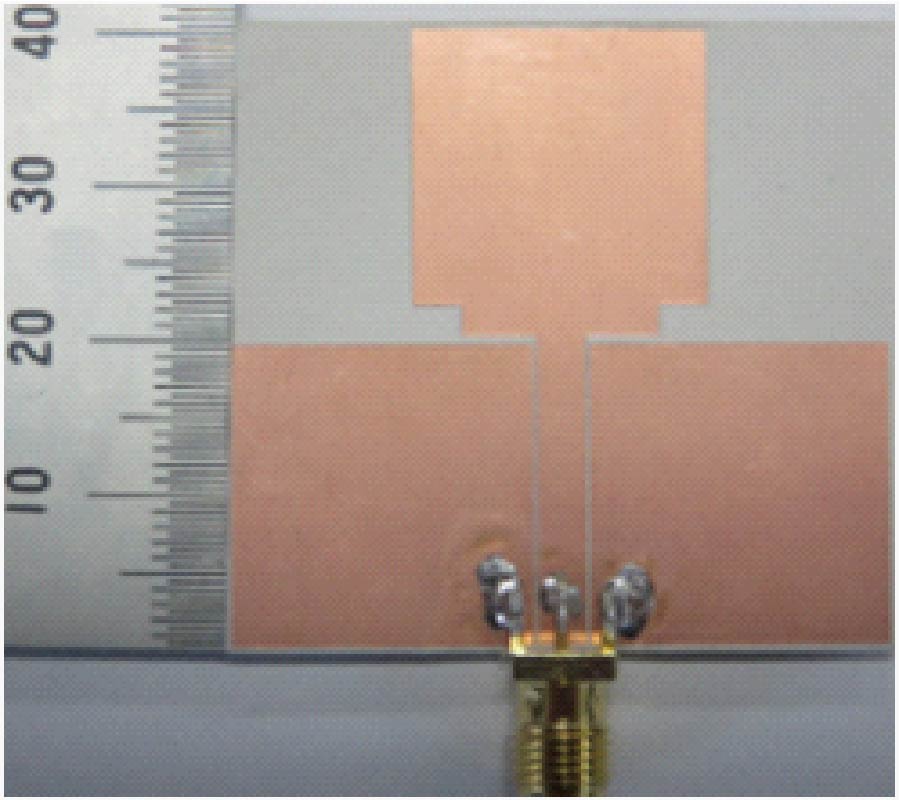
A Novel Compact Differential Microstrip Antenna
Shi-Jun Wang , Lin Li and Min Fang
A novel compact differential microstrip antenna is presented. Owing to the introduction of slots in the patch and ground plane, the size of the proposed differential antenna is about 0.45 times that of the traditional microstrip antennas. The measured results show that the proposed antenna can work at 2.45 GHz. The gain is about 5.54 dB and the impedance bandwidth about 150 MHz.
A NOVEL COMPACT DIFFERENTIAL MICROSTRIP ANTENNA
2015-10-31
PIER Letters
Vol. 57, 91-96
A Broadband Dual-Polarized Omnidirectional MIMO Antenna for 4G LTE Applications
Yiqiang Yu , Hongmei Zhang and Zhizhang Chen
A low-profile broadband omnidirectional MIMO antenna with dual-polarization is proposed for 4G LTE applications. It consists of two orthogonally polarized radiating elements with separate ports. The horizontally polarized element consists of four printed arc dipoles, a broadband balun feeding network, four arc parasitical strips and four double L-shaped parasitical strips. It exhibits a 48.9% fractional bandwidth (return loss > 10 dB) from 1.70 GHz to 2.80 GHz with a cross-sectional size less than 100×100 mm2. The vertically polarized element consists of a discone, a round sleeve, and a top-loading ring shorted to the ground-plane with three equally-spaced pins. It provides a 47.3% fractional bandwidth (return loss > 10 dB) from 1.68 to 2.72 GHz with an overall volume less than 84×84×22 mm3. In addition, an isolation of 25 dB is achieved in the overlapping band of two elements and the cross-polarization levels for both radiating elements are lower than 20 dB.
A BROADBAND DUAL-POLARIZED OMNIDIRECTIONAL MIMO ANTENNA FOR 4G LTE APPLICATIONS
2015-10-30
PIER Letters
Vol. 57, 85-90
A Compact Stable Frequency Selective Surface Using Novel Y-Type Element
Rui Wu , Hou Zhang , Zi-Mu Yang , Tao Zhong and Yongfan Lin
In this letter, a compact stable bandpass frequency selective surface (FSS) operating at 3.14 GHz is proposed by using a novel Y-type element. The measured and numerical results are in good agreement, except a little deviation of resonant frequency and a little change of bandwidth, which show that the proposed FSS has good angle and polarization stability. Numerical results show that the dimension of the element is only 0.042λ0×0.042λ0, where λ0 represents the wavelength at the resonant frequency 3.14 GHz. Thus, the FSS is suitable for practical application in limited space.
A COMPACT STABLE FREQUENCY SELECTIVE SURFACE USING NOVEL Y-TYPE ELEMENT