Search Results(13797)

2015-12-14
PIER M
Vol. 45, 35-49
Hybridization of Generalized PO and MoM-GEC Method for Electromagnetic Study of Complex Structures: Application to Reflectarrays
Mohamed Hajji , Mourad Aidi , Houssemeddine Krraoui and Taoufik Aguili
In this paper, we investigate the diffraction of complex structures applying a new hybridization between generalized PO (Physical Optic) and MoM-GEC method. The proposed approach is developed to speed up convergence, alleviate calculation and then provide a considerable gain in requirements (processing time and memory storage) because it is based on a single test function instead of numerous sinusoidal or polynomial ones. Based on this approach, each metallic pattern is modeled by a current trial function that consists of two parts. The first part is called modal current, and it is decomposed on Hankel functions for modeling metal edges. However, the second part concerns the middle of metallic patterns, and it is modeled by PO method and called generalized PO current. Based on this approach, we study the diffraction of unidimensional structures, then we generalize our approach to take bidimensional ones. For validation purpose, we investigate 1D and 2D reflectarrays to prove the new approach's benefits. The obtained results show good accuracy with the method of moments. Moreover, we prove the considerable improvements in CPU time and memory storage achieved by the hybrid approach when studying these structures.
HYBRIDIZATION OF GENERALIZED PO AND MOM-GEC METHOD FOR ELECTROMAGNETIC STUDY OF COMPLEX STRUCTURES: APPLICATION TO REFLECTARRAYS
2015-12-14
PIER M
Vol. 45, 27-34
Analysis of Step-Loaded Open Rectangular Grating Slow-Wave Structures for mm-Wave Traveling-Wave Tubes
Chengfang Fu , Yanyu Wei , Bo Zhao , Yudong Yang and Yongfeng Ju
The open rectangular grating with step-loaded slow-wave structure (SWS), a type of all-metal SWS for high power wide band mm-wave wave traveling wave tubes (TWT) is presented in this paper. By using the jumping conditions at the interface of two neighboring steps and single-mode approximation (SMA) field matching theory, the dispersion equation and coupling impedance of this SWS were obtained. Then the obtained complex dispersion equation was numerically calculated, and the slow-wave characteristics of the fundamental wave of this structure were discussed. Moreover, the calculation results by our theory were accordant with the simulation data obtained by the 3-D electromagnetic simulation software HFSS, The numerical calculation results show that the dispersion characteristics and coupling impedance are notably improved by loading the steps. And the working bandwidth may be the widest when the thickness of the step is about equal to the thickness of the groove depth. The proper design parameters can be optimized to meet the needs of high frequency characteristics with wide bandwidth and high output power. The present study will be useful for further research and design of this kind of high frequency system.
ANALYSIS OF STEP-LOADED OPEN RECTANGULAR GRATING SLOW-WAVE STRUCTURES FOR MM-WAVE TRAVELING-WAVE TUBES
2015-12-10
PIER C
Vol. 60, 115-123
Highly Nonlinear and Near-Zero Ultra-Flattened Dispersion Dodecagonal Photonic Crystal Fibers
Samiye Matloub , Reyhaneh Ejlali and Ali Rostami
This paper presents a novel and robust design for a new kind of photonic crystal fiber with dodecagonal and circular array of air holes, aiming at a highly nonlinear coefficient, ultra-flattened dispersion and ultra-low confinement loss. In this structure, circular lattices are added in two inner layers to obtain both ultra-low dispersion and ultra-flattened dispersion in a wide wavelength range. The proposed structure has a modest number of design parameters for easier fabrication. The finite difference method with perfectly matched boundary layer is used to analyze guiding properties. Analysis results prove that the proposed highly nonlinear dodecagonal photonic crystal fiber obtains a nonlinear coefficient greater than 43 (W.Km)-1 and low dispersion slope 0.003 ps/(nm.km) at 1.55 μm wavelength. Ultra-flattened dispersion of 0.8 ps/(km.nm) is also obtained ranging from wavelength 1.3 μm to 1.7 μm with confinement loss lower than 0.5×10⁻⁶ dB/m in the same wavelength range.
HIGHLY NONLINEAR AND NEAR-ZERO ULTRA-FLATTENED DISPERSION DODECAGONAL PHOTONIC CRYSTAL FIBERS
2015-12-10
PIER M
Vol. 45, 17-25
A Fast Finite Difference Delay Modeling Solution of Transient Scattering from Lossy Inhomogeneous Dielectric Objects
Ji Ding , Yanfang Wang and Jianfeng Li
A fast finite difference delay modeling (FDDM)-based scheme is presented for analyzing transient electromagnetic scattering from lossy inhomogeneous dielectric objects. The proposed scheme is formulated in the region of the scatterers by expressing the total field as the sum of the incident field and the radiated field due to both the polarization and conduction current density. The current density is discretized in space by Schaubert-Wilton-Glisson basis functions and in time by finite differences. Furthermore, the scheme is accelerated by the fast Fourier transform (FFT) algorithm, which can reduce the memory requirement and computational complexity significantly. Numerical results are presented to illustrate the accuracy and efficiency of the proposed method.
A FAST FINITE DIFFERENCE DELAY MODELING SOLUTION OF TRANSIENT SCATTERING FROM LOSSY INHOMOGENEOUS DIELECTRIC OBJECTS
2015-12-10
PIER
Vol. 154, 87-100
Performance of the Reflectivity Measurement in a Reverberation Chamber
Angelo Gifuni , Horiya Khenouchi and Gilda Schirinzi
The reflectivity measurement of materials is an innovative application of a reverberation chamber (RC). In this paper we show an analysis of the performance of the reflectivity measurement in an RC in terms of uncertainty of measurement and relevant noise level. The model for reflectivity measurement, which is already present in literature, is based on the absorption cross section (ACS) measurements. If the ACS measurements are averaged with respect to the configurations of the measurement system, then the relevant uncertainty depends only on the number of independent samples. Here, the performance of the reflectivity measurements is shown in cases where it depends only on the number of independent samples acquired in an RC. Simulations and measurements confirm the validity of the expected results.
PERFORMANCE OF THE REFLECTIVITY MEASUREMENT IN A REVERBERATION CHAMBER
2015-12-09
PIER B
Vol. 64, 171-193
Speeding Beyond FDTD, Perforated Finite Element Time Domain Method for 3D Electromagnetics
S M Raiyan Kabir , B. M. Azizur Rahman and Ken Thomas Victor Grattan
A three-dimensional (3D) time domain approach can be particularly valuable for the analysis of many different types of practical structures. In this regard, the finite difference time domain (FDTD) method is a popular technique, being used successfully to analyze the electromagnetic properties of many structures, including a range of optical or photonic devices. This FDTD method offers several major advantages: a minimum level of calculation is required for each of the cells into which the structure is divided, as well as data parallelism and explicit and easy implementation: however, the use of a cuboid grid makes the method very resource intensive for large simulations, especially those in 3D. Although the finite element (FE) approach is superior for the discretization of two-dimensional (2D) and 3D structures, most of the FE-based time domain approaches reported so far suffer from limitations due to the implicit or iterative form or the mass matrix formulation, for example. This paper presents an FE based time domain technique for 3D structures which uses a unique perforated mesh system. It calculated the numerical dispersion characteristics for the FDTD and the proposed method and compared. This paper finally discusses how to utilize the improved numerical dispersion characteristics of the proposed method to increase the simulation speed beyond the FDTD 3D method by using Intel micro-processors.
SPEEDING BEYOND FDTD, PERFORATED FINITE ELEMENT TIME DOMAIN METHOD FOR 3D ELECTROMAGNETICS
2015-12-09
PIER B
Vol. 64, 145-170
A New Class of Adaptive CFAR Methods for Nonhomogeneous Environments
Anatolii A. Kononov , Jin-Ha Kim , Jin-Ki Kim and Gyoungju Kim
The paper introduces a new class of adaptive CFAR methods to cope with the problem of outliers due to the presence of clutter edges and interfering targets. A fundamental distinction between the proposed approach and existing adaptive CFAR approaches is that in order to maintain robust performance the former uses information on positions at which estimated outlier-free cells appear in the full reference window and the statistics of the sample in the cell under test. The performance of one of the possible implementations of new adaptive CFAR methods is studied and compared with that of an existing adaptive CFAR approach. The results show significant advantages of the proposed class of adaptive CFAR methods in both the false alarm regulation property and detection performance.
A NEW CLASS OF ADAPTIVE CFAR METHODS FOR NONHOMOGENEOUS ENVIRONMENTS
2015-12-09
PIER C
Vol. 60, 105-114
Outage Probability and Bit-Error Rate for Communication Systems with Gaussian-Schell Electromagnetism Beams in Non-Kolmogorov Raining Turbulence
Ye Li , Yixin Zhang , Zhengda Hu and Qiu Wang
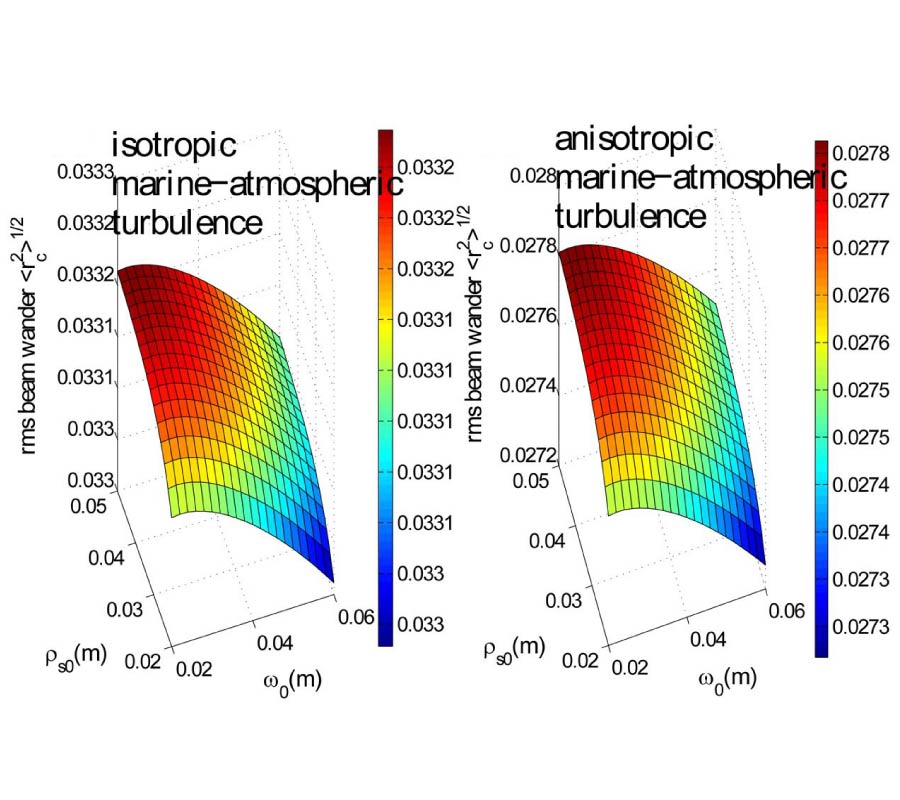
Two major performance degrading factors in free space optical communication systems are rainfall and atmospheric turbulence. We study the outage probability and bit-error rate for free-space communication links with spatial diversity and Gaussian-Schell electromagnetism beams over the raining turbulence fading channels by double inverse Gaussian distribution proposed in this paper. Assuming intensity-modulation/direct detection with on-off keying and perfect channel state information, we derive expressions of average bit-error rate and outage probability of multiple-input multiple output free space optical communication systems over double inverse Gaussian model. The effects of scintillation index of raining turbulence, spatially coherence of source, pointing errors and spectral index of non-Kolmogorov turbulence on the outage probability and bit-error rate of multiple-input multiple-output free space optical communication systems are examined.
OUTAGE PROBABILITY AND BIT-ERROR RATE FOR COMMUNICATION SYSTEMS WITH GAUSSIAN-SCHELL ELECTROMAGNETISM BEAMS IN NON-KOLMOGOROV RAINING TURBULENCE
2015-12-09
PIER C
Vol. 60, 95-103
Wideband Printed Planar Monopole Antenna for PCS, UWB and X-Band Applications
Goksenin Bozdag and Alp Kustepeli
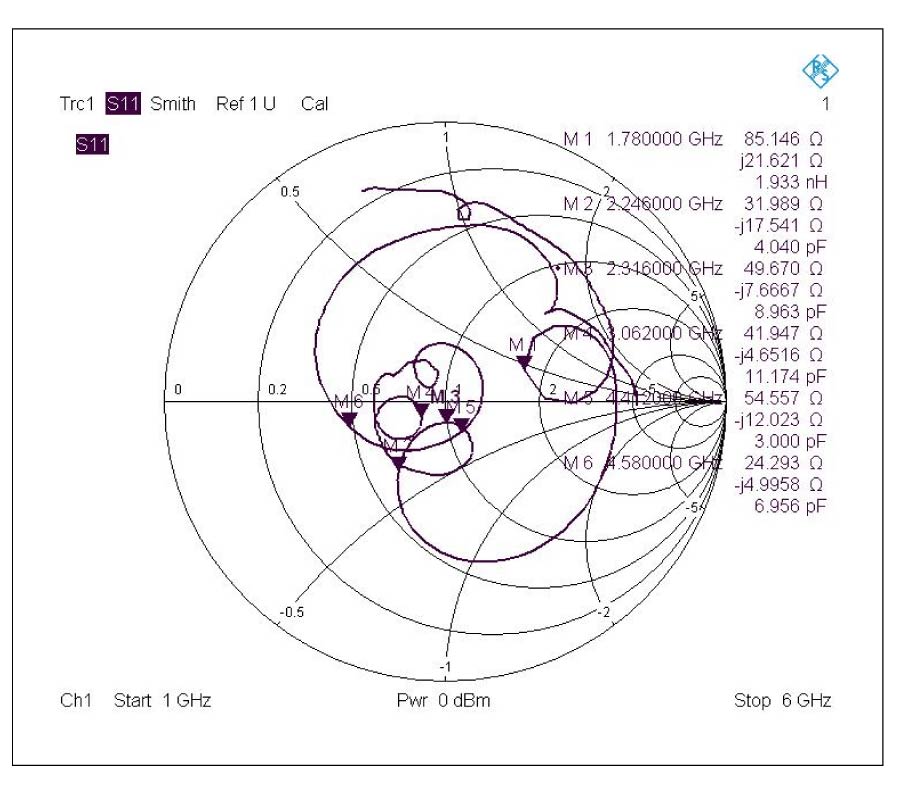
In this paper, a printed planar monopole antenna (PPMA) is presented for PCS, UWB and X-band. The antenna is designed in two stages. In the design of the preliminary PPMA used to obtain the proposed PPMA, the structure is divided into sections, and they are optimized in the sense of bottom to up strategy. The bandwidth is enhanced by employing tapered transitions and inset feed. The resulting antenna operates between 2.37 GHz and 12 GHz with VSWR<2 and an average peak realized gain (Gpr) of 4.95 dB. Therefore, the preliminary antenna can be considered to be suitable for Bluetooth, WLAN, WiMAX, UWB and X-band. The proposed PPMA is designed by implementing slots on the preliminary PPMA to include PCS, and to suppress Bluetooth and commonly used WLAN and WiMAX bands, the ones allocated out of UWB. The proposed antenna operates in the 1.67 GHz-1.91 GHz and 3 GHz-15 GHz bands with VSWR<2. The Gpr in PCS is 1.32 dB at 1.8 GHz, and the average Gpr is 5 dB for the 3 GHz-15 GHz band. The group delay performances are also examined, and the maximum group delay deviations of preliminary and proposed PPMAs are observed as 1 ns and 1.25 ns, respectively.
WIDEBAND PRINTED PLANAR MONOPOLE ANTENNA FOR PCS, UWB AND X-BAND APPLICATIONS
2015-12-08
PIER Letters
Vol. 58, 17-22
A Novel Compact UWB Antenna with Triple Notched Bands Using Square Ring Short Stub Loaded Resonator
Chengpei Tang
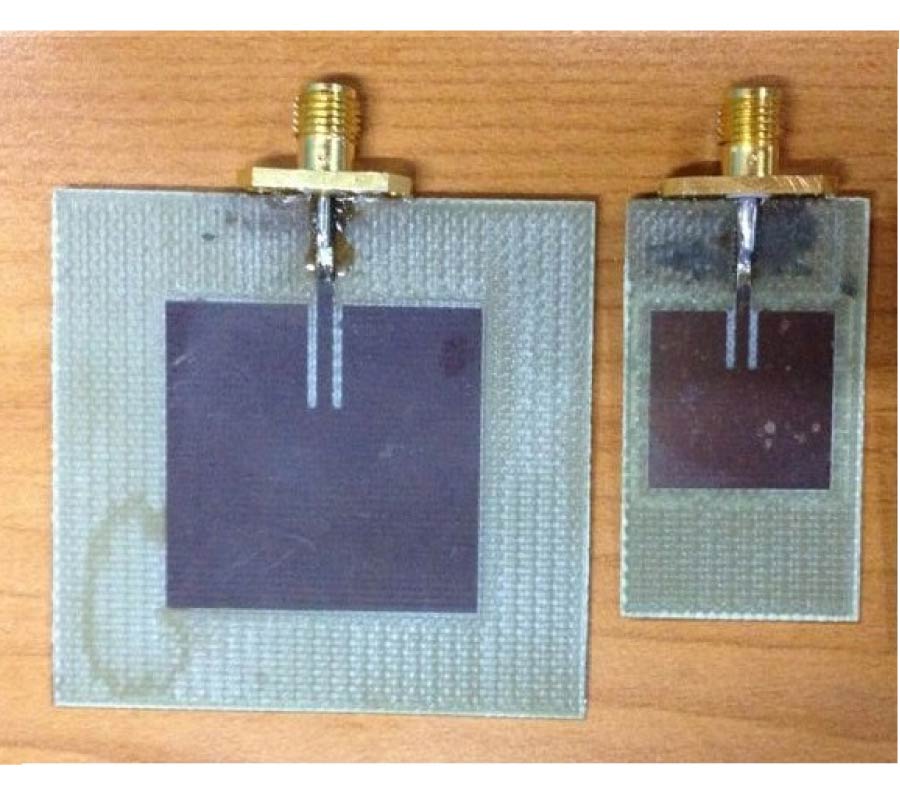
A novel planar ultra-wideband (UWB) antenna with triple-notched bands is investigated and presented in this paper. The initial UWB antenna consists of a circular-shaped radiating element, a 50 Ω microstrip feed line, and a partially truncated ground plane. Then, by embedding a square ring short stub loaded resonator (SRSSLR) beside the microstrip feedline of the basic UWB antenna, band-rejected filtering properties in the satellite communication/wireless local area network/radio frequency identification for microwave access bands are generated. The notched frequencies can be adjusted according to specification by changing the SRSSLR. The results indicate that the proposed compact antenna not only retains an ultra wide bandwidth, but also owns triple band-rejections capability. The UWB antenna demonstrates omnidirectional radiation patterns across nearly the whole operating bandwidth that is suitable for UWB communications.
A NOVEL COMPACT UWB ANTENNA WITH TRIPLE NOTCHED BANDS USING SQUARE RING SHORT STUB LOADED RESONATOR
2015-12-08
PIER M
Vol. 44, 191-201
Radiated Near-Field Emission Extraction on 3D Curvilinear Surfaces from 2D Data
Blaise Ravelo
This paper deals with a fast and simple computational method of 3D near-field (NF) radiation from 2D planar frequency- and time-dependent data. The established calculation method can be used to predict the electromagnetic (EM) emission from various types of electronic devices. The proposed method is originally applicable to the computation of the EM NF along the arbitrary shaped curvilinear 3D surface of multi-shape objects. The EM computation consists in the application of the planar NF-to-NF transform using plane wave spectrum. The relevance of the established method is verified with three different validation tests of analytical and practical demonstrations. The first validation is based on the analytical NF radiation from set of elementary dipoles excited by a harmonic signal. The second validation test is based on the experimented data from a hybrid active printed circuit boards (PCBs) in the frequency domain. The last validation test is performed with the measured NF data from a microstrip planar circuit in the time-domain. For all the different test cases, the plots of EM NF on arbitrary curvilinear surfaces are presented. Applications with 3D visualization or holographic surface with arbitrary geometry of EM radiation from planar data in both frequency- and time-domains confirm the effectiveness of the proposed method to predict the EM NF emission from complex PCBs. The developed 2D-to-3D computational method is particularly useful for radiated EM compatibility engineering.
RADIATED NEAR-FIELD EMISSION EXTRACTION ON 3D CURVILINEAR SURFACES FROM 2D DATA
2015-12-07
PIER C
Vol. 60, 83-93
Phase Enhancement for Multi-Resonance Compact Metamaterial Antennas
Mahmoud Abdelrahman Abdalla , Ahmed A. Ibrahim and Mohamed Hassan Abd El-Azeem
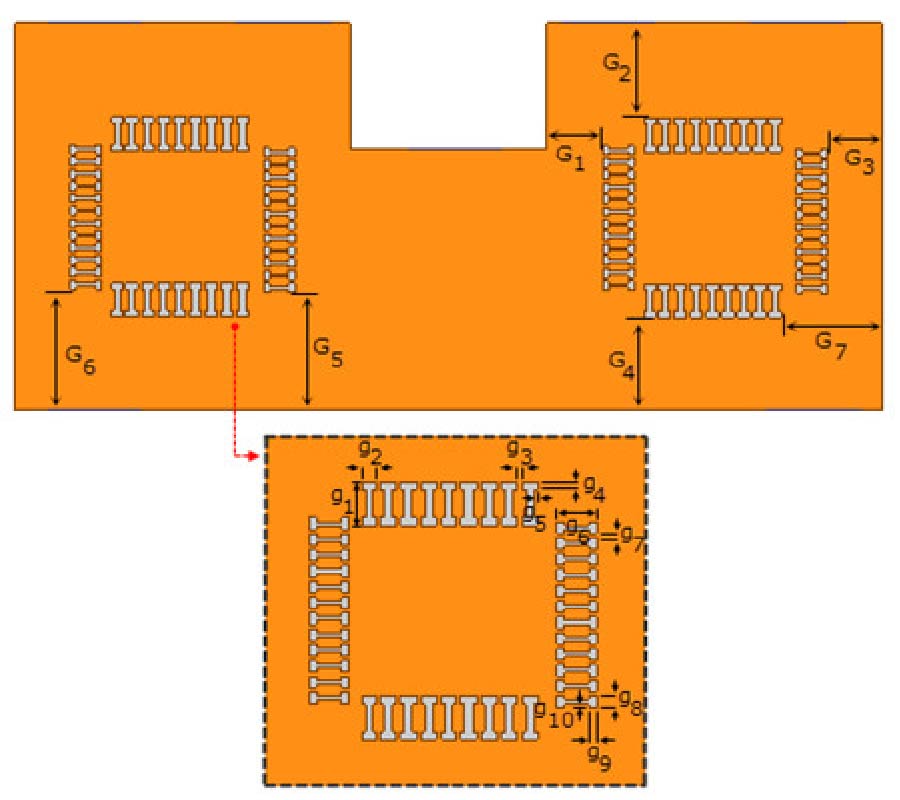
In this paper, a nonlinear phase enhancement of multi-resonance composite right/left-handed unit cell for multi-band antennas is presented. Different antennas with nonlinear enhanced phase which can operate up to five different frequency bands are introduced. Meanwhile, the proposed antennas have compact size so that they can demonstrate size reduction up to 60% compared to conventional patch antennas operating at the same frequencies. The achieved phase enhancement has been validated by comparing two different configurations of composite right/left-handed cells. The analysis, electromagnetic full wave simulations and experimental results are discussed. A reasonable agreement is achieved between the measured and simulated results.
PHASE ENHANCEMENT FOR MULTI-RESONANCE COMPACT METAMATERIAL ANTENNAS
2015-12-07
PIER Letters
Vol. 58, 9-16
Design of Compact Microstrip UWB Bandpass Filter with Triple-Notched Bands
Chengpei Tang and Nian Yang
A new microstrip ultra-wideband (UWB) bandpass filter (BPF) with triple-notched bands is presented in this paper. The circuit topology and its corresponding electrical parameters of the basic microstrip UWB BPF are designed by modified genetic algorithm (MGA). Then, triple-notched bands inside the UWB passband are implemented by coupling a novel triple-mode stepped impedance resonator (SIR) to the main transmission line of the basic microstrip UWB BPF. The triple-notched bands can be easily generated and set at any desired frequencies by varying the designed parameters of triple-mode SIR. For verification, a new microstrip UWB BPF with triple-notched bands respectively centered at frequencies of 4.4 GHz, 5.9 GHz and 8.0 GHz is designed and fabricated. Both simulated and experimental results are provided with good agreement.
DESIGN OF COMPACT MICROSTRIP UWB BANDPASS FILTER WITH TRIPLE-NOTCHED BANDS
2015-12-07
PIER Letters
Vol. 58, 1-7
A Simple 2×3 Beam-Forming Network with a 2-Bit Phase Shifter for Four-Beam Reconfiguration
Guanxi Zhang , Li Sun , Bao-Hua Sun , Jiangpeng Yuan and Jian-Ping Zhao
A simple 2×3 reconfigurable beam-forming network (R-BFN) for four-beam reconfiguration application is designed and implemented. The proposed R-BFN with two input ports and three output ports consists of a 2:1 power divider, a 90° hybrid, a 180° hybrid and a 2-bit phase shifter. The 2-bit phase shifter has two states: one is a 180° phase shifter (State 1); the other is a 0°/360° phase shifter (State 2). By introducing the 2-bit phase shifter, the constant phase differences of three output ports can be reconfigured. Specifically, as different input ports are excited, the R-BFN provides three output signals with equal power levels and the progressive phases of -120° and 120° when the 2-bit phase shifter at state 1, while -60° and 60° when the 2-bit phase shifter at state 2, respectively. When the proposed R-BFN is connected to an antenna array, a four-beam reconfiguration is obtained. Simulated and measured results show that good impedance matching, high port isolation, equal power division, and constant phase difference have been achieved simultaneously within the operation band of 2.4-2.6 GHz. The capability of the proposed R-BFN to reconfigure beams is also verified experimentally by using a 2.5 GHz dipole array.
A SIMPLE 2×3 BEAM-FORMING NETWORK WITH A 2-BIT PHASE SHIFTER FOR FOUR-BEAM RECONFIGURATION
2015-12-04
PIER M
Vol. 45, 9-16
Electromagnetic Waves Attenuation in the Sandstones with Grains of Different Size at Imbibition and Drying
Anastasiya Sergeevna Lapina and Pavel Petrovich Bobrov
The results of experimental measurements of the complex dielectric permittivity (CDP) of powders of quartz granules with different sizes saturated with water and salt solution of weak concentration are given in the frequency band from 20 kHz to 1 GHz. It is shown that at values of saturation level from 0.6 to 0.9 the relaxation phenomena caused by interfacial polarization on the water-air bound can be observed. The result shows considerable reduction of attenuation in gradually saturated rocks, which allows for deeper sensing during georadar mapping. It is determined that in the dielectric relaxation band and at frequencies below it the hysteresis of the real part of the CDP and equivalent specific conductivity can be observed. Its character significantly depends on the sizes of granules. It is shown that the behavior of CDP and attenuation of an electromagnetic wave at frequencies from 0.1 to 10 MHz complicatedly depends on the sizes of granules, saturation level, salinity of the saturating solution and saturation history.
ELECTROMAGNETIC WAVES ATTENUATION IN THE SANDSTONES WITH GRAINS OF DIFFERENT SIZE AT IMBIBITION AND DRYING
2015-12-04
PIER M
Vol. 45, 1-8
EM Fields Inside a Rotating Circular Hollow Dielectric Cylinder: Numerical Simulation in 2Ds
Mingtsu Ho , Li-An Tsai and Cheng-Jr Tsai
The electromagnetic (EM) fields inside a rotating circular hollow dielectric cylinder were numerically calculated in two dimensions, and the numerical results were presented in this paper. The simulation was carried out by using the method of characteristics (MOC) for the solutions of the time-domain Maxwell equations with the application of the passing center swing back grids (PCSBG) technique in the modified O-type grid system. To illustrate the effects of the rotating hollow dielectric cylinder on the EM fields inside the cylinder, the cylinder may be set to rotate at impractically, extremely high angular frequencies. The use of PCSBG is to overcome the difficulty of the deformed grid cells resulting from the rotating object while the modified O-type grid system satisfies the requirement of minimum number of grid within the shortest wavelength of interest in the larger radius regions where the regular O-type grid fails. A Gaussian EM pulse is utilized as excitation source and set to illuminate the hollow cylinder which is made of either non-magnetic or impedance matching materials. For clear examinations the numerical results of EM fields at and around the cylinder center are exhibited. Several electric field distributions are also shown.
EM FIELDS INSIDE A ROTATING CIRCULAR HOLLOW DIELECTRIC CYLINDER: NUMERICAL SIMULATION IN 2DS
2015-12-02
PIER Letters
Vol. 57, 131-137
Shape Feature Analysis of Concealed Objects with Passive Millimeter Wave Imaging
Seokwon Yeom , Dongsu Lee and Joungyoung Son
Millimeter wave (MMW) imaging has found rapid adoption in security applications such as concealed object detection under clothing. However, the imaging quality is often degraded due to resolution limit and low signal level. This study addresses shape feature analysis following concealed object detection. The object region is extracted by multi-level segmentation. Shape features are composed of several descriptors which are object area, perimeter, major and minor axes of the basic rectangle, rectangularity, compactness, and eccentricity. In the experiments, three objects (gun, hand ax, and plastic bottle containing liquid skin aid) concealed under clothing are captured by the passive MMW imaging system. The extracted shape features are compared with the true features from the object model showing good accuracy.
SHAPE FEATURE ANALYSIS OF CONCEALED OBJECTS WITH PASSIVE MILLIMETER WAVE IMAGING
2015-12-02
PIER
Vol. 154, 79-85
A Circularly-Polarized Metasurfaced Dipole Antenna with Wide Axial-Ratio Beamwidth and RCS Reduction Functions
Chen Chen , Zhuo Li , Liangliang Liu , Jia Xu , Pingping Ning , Bingzheng Xu , Xinlei Chen and Chang Qing Gu
A new circularly-polarized metasurfaced dipole antenna (MSDA) with wide axial-ratio(AR) beamwidth and radar cross section (RCS) reduction properties is proposed and studied in this paper. This antenna is a quite simple half-wavelength linear dipole right above a metasurface which consists of 9 double-head arrow-shaped unit cells arranged in a 3×3 layout. By cautiously choosing the geometrical parameters of the metasurface and tuning the distance between the dipole and the metasurface, the whole structure turns out to be a circularly-polarized antenna with RCS reduction feature. Simulation results show that the MSDA in circular polarization achieves an operating bandwidth of 410 MHz and a wide AR beamwidth of 123˚ and 90˚ in φ = 0˚ and φ = 90˚ planes respectively, together with a maximum RCS reduction of 10.4 dB in the whole operating band.
A CIRCULARLY-POLARIZED METASURFACED DIPOLE ANTENNA WITH WIDE AXIAL-RATIO BEAMWIDTH AND RCS REDUCTION FUNCTIONS
2015-12-02
PIER
Vol. 154, 65-78
Temperature-Dependent Electromagnetic Performance Predictions of a Hypersonic Streamlined Radome
Raveendranath Nair , Subhadramma Vandana , Sashidhara Sandhya and Rakesh Mohan Jha
Nosecone radomes of hypersonic flight vehicles show degradation of electromagnetic (EM) performance characteristics due to variations in the dielectric parameters (dielectric constant and electric loss tangent) of the radome wall resulting from heating due to extreme aerodynamic drag. It is indicated that the EM performance predictions based on conventional monolithic half-wave wall based on average dielectric parameters corresponding to temperature ranges in hypersonic conditions may not be accurate. This necessitates the radome wall under hypersonic conditions to be modeled as an inhomogeneous dielectric structure for accurate EM performance predictions. In the present work, the hypersonic radome is considered as an inhomogeneous dielectric radome such that the cross-section of the radome wall in each EM window region is considered as an inhomogeneous planar layer (IPL) model with stacked layers of varying dielectric parameters. The material considered is RBSN Ceralloy 147-010F (an alloy of silicon nitride), which has excellent thermal shock resistance, dielectric and mechanical properties required for hypersonic radome applications. The EM modeling of a section of the radome wall in hypersonic conditions (i.e. IPL structure) is based on Equivalent Transmission Line Method. A comparative study of basic EM performance parameters of the radome wall (power transmission, power reflection, and insertion phase delay) for both the IPL model and conventional monolithic half-wave model are carried out over a range of incidence angles corresponding to the antenna scan ranges in each EM window region of the radome. Further the study is extended to compute the EM performance parameters of an actual tangent ogive nosecone radome (made of RBSN Ceralloy 147-010F) enclosing an X-band slotted waveguide planar array antenna, in a hypersonic environment. The antenna-radome interaction studies are based on 3-D Ray tracing in conjunction with Aperture Integration Method. It is observed that the EM performance analysis based on conventional monolithic radome wall design cannot accurately predict the radome performance parameters in actual operating conditions during hypersonic flight operations. The current work establishes the efficacy of Inhomogeneous Dielectric Radome model for better EM performance predictions of streamlined airborne radomes in hypersonic environments.
TEMPERATURE-DEPENDENT ELECTROMAGNETIC PERFORMANCE PREDICTIONS OF A HYPERSONIC STREAMLINED RADOME
2015-12-01
PIER C
Vol. 60, 75-81
Conformal Corrugated Edges for Vivaldi Antenna to Obtain Improved Low-Frequency Characteristics
Ya-Wei Wang , Xiang-Jun Gao , Jian-Gang Liang and Li Zhu
A novel idea of conformal corrugated edges (CCE) is put forward in this paper for tapered slot antennas to obtain improved low-frequency characteristics. The CCE is realized using conformal slots whose two longitudinal boundary lines are modelled using curvilinear function of the curves that form the tapered slots. So the conformal slots can sufficiently corrugate edges of the tapered slot antennas with one set of structural parameters by comparing with the typical rectangular slot, which makes the corrugated edges design for tapered slot antennas much simpler. Moreover, when used to corrugating edges with the same width of a tapered slot antenna, the conformal slot is longer than the typical rectangular slot, as a result of which the CCE can better improve low-frequency characteristics of the tapered slot antennas. For verification, the CCE using exponential slot is proposed for typical Vivaldi antenna in this paper. Comparisons among antenna structures, port characteristics and radiation characteristics of Vivaldi antennas with the proposed CCE and the typical rectangular slot corrugated edge are carried out, and the Vivaldi antenna with its proposed CCE is fabricated and measured. The remarkable improvement for low-frequency characteristics demonstrates the correctness of the idea.
CONFORMAL CORRUGATED EDGES FOR VIVALDI ANTENNA TO OBTAIN IMPROVED LOW-FREQUENCY CHARACTERISTICS