Search Results(13797)

2015-10-29
PIER B
Vol. 63, 289-301
Electromagnetic Scattering Analysis for Two-Dimensional Gaussian Rough Surfaces with Texture Characteristics Using Small-Slope Approximation Method
Rong-Qing Sun , Jing Xie and Yang-Wei Zhang
This paper is aimed at analyzing the electromagnetic (EM) scattering from the two-dimensional (2-D) Gaussian rough surfaces characterized by textures. Visual appearances of the stripe texture can be generated through the angle rotating in Fourier transform when the ratio of the correlation lengths in two directions is large enough. The scattering field is derived in Cartesian coordinate system through the small-slope approximation (SSA) method with plane incident wave. The normalized co-polarized radar cross section (NRCS) from 2-D Gaussian rough surface characterized by textures are calculated. In particular, several numerical results show the influences of incident angle, texture angle, correlation length, and root-mean-square height on the scattering from the textured rough surface. Finally, the validity of the SSA method is verified by comparisons of theoretical value and measured data.
ELECTROMAGNETIC SCATTERING ANALYSIS FOR TWO-DIMENSIONAL GAUSSIAN ROUGH SURFACES WITH TEXTURE CHARACTERISTICS USING SMALL-SLOPE APPROXIMATION METHOD
2015-10-29
PIER Letters
Vol. 57, 79-84
A Novel Reconfigurable Spiral-Shaped Monopole Antenna for Biomedical Applications
Maryam Salim and Ali Pourziad
In this paper, a new reconfigurable antenna is introduced. This antenna is a printed spiral-shaped monopole antenna with a compact structure. By embedding microwave switches in the structure of the antenna, different resonance frequencies can be achieved in different states of the switches. The introduced antenna is capable to cover two standard frequency bands for biomedical applications, i.e. Medical Implant Communication Service (MICS) and Industrial, Scientific and Medicine (ISM) bands. MICS band covers 402 MHz to 406 MHz and ISM covers 2.4 GHz to 2.5 GHz frequency range. The proposed antenna has a compact size of 32 mm×50.3 mm×1.8 mm, and it is fabricated on an FR4 substrate. The measurement results are in a good agreement with the simulations.
A NOVEL RECONFIGURABLE SPIRAL-SHAPED MONOPOLE ANTENNA FOR BIOMEDICAL APPLICATIONS
2015-10-28
PIER B
Vol. 64, 1-14
Arc-Monopole Coupled DRA
Bratin Ghosh , Devabathini Kiranmayi and Raj Mohan Mandal
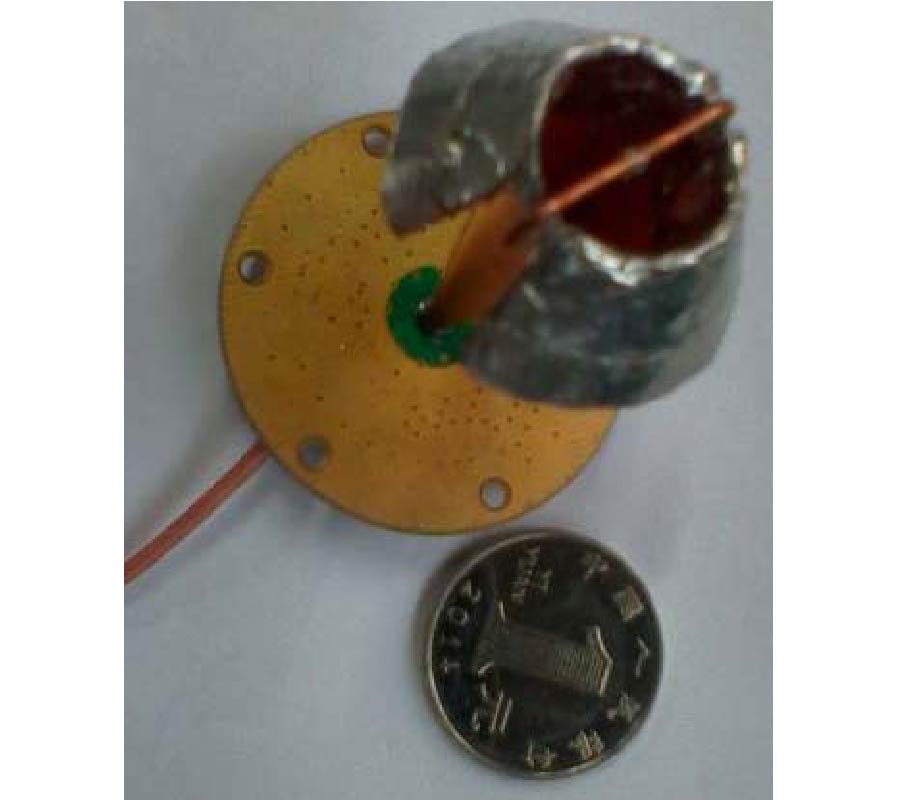
In this work, characteristics of an arc-monopole loaded with a DRA is analyzed. It is observed that the arc-monopole can be used to effectively couple to multiple DRA modes and generate dual/triple/wideband topologies. The structure is easy to fabricate with no additional substrate or matching slot/vias required to excite the multiple DRA modes. In addition, both broadside and monopole like patterns are obtained for the dual/triple band configurations which are suitable for communication with satellite or airborne targets and for surface-to-surface communication. The enhanced radiation in the source plane for the monopole like pattern can be effectively used to communicate with preferred targets or enhance the range in the direction of interest. In addition, the arc-monopole can be suitably located to couple the source mode to the DRA modes to generate broadband behavior.
ARC-MONOPOLE COUPLED DRA
2015-10-27
PIER C
Vol. 59, 135-141
Compact Microstrip Magnetic Yagi Antenna and Array with Vertical Polarization Based on Substrate Integrated Waveguide
Zhao Zhang , Xiang-Yu Cao , Jun Gao , Si-Jia Li and Xiao Liu
A compact magnetic Yagi antenna and a four-element array with vertically polarized radiation are presented using the substrate integrated waveguide (SIW) technology. The SIW functions as driven element to generate vertically polarized wave. Microstrip patches are connected to ground plane function as magnetic dipole directors. With this arrangement, a compact magnetic Yagi antenna with vertically polarized radiation is designed. The total area is only 1.58λ1×0.95λ11 represents the wavelength at 9.5 GHz) and reduced by 63.1% compared to previous magnetic Yagi antenna. The relative bandwidth is 16.15% and peak gain 7.31~8.82 dBi. Then the four-element linear array is analyzed, fabricated and measured. Simulated and experimental results demonstrate that the array antenna still preserves vertical polarization, and the peak gain is 14.06~14.78 dBi in the relative bandwidth of 14.43%.
COMPACT MICROSTRIP MAGNETIC YAGI ANTENNA AND ARRAY WITH VERTICAL POLARIZATION BASED ON SUBSTRATE INTEGRATED WAVEGUIDE
2015-10-26
PIER C
Vol. 59, 127-134
Design of Radial Microstrip Band Pass Filter with Wide Stop-Band Characteristics for GPS Application
Prashant Kumar Singh , Anjini Kumar Tiwary and Nisha Gupta
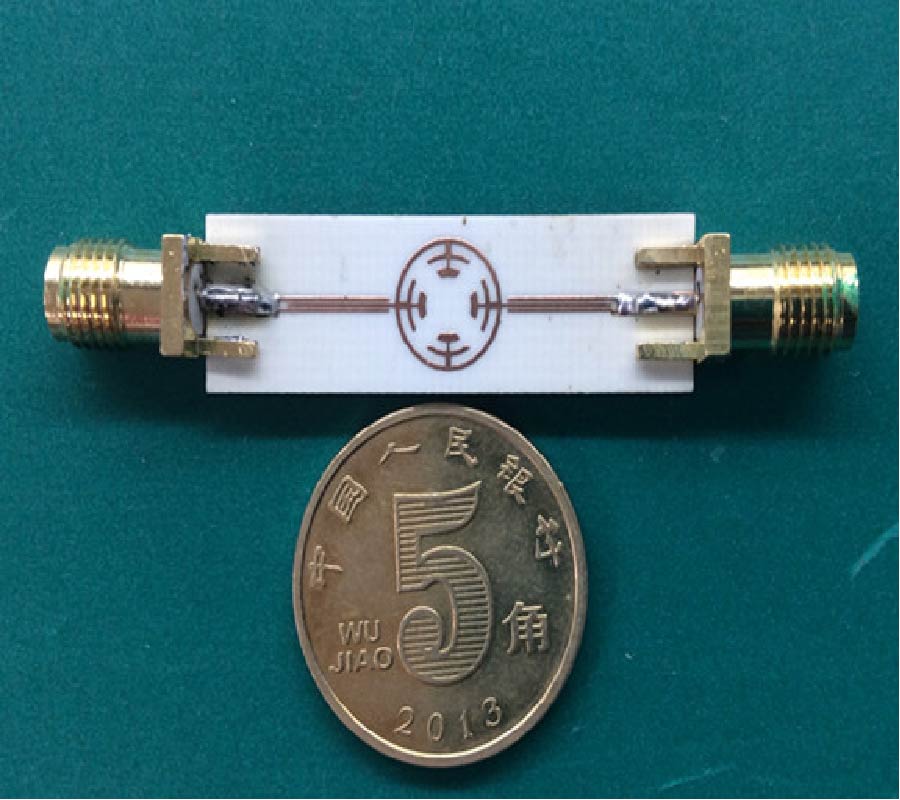
In this paper, a novel compact band pass filter (BPF) is proposed for Global Positioning System (GPS) receivers. The proposed BPF configuration is composed of a low pass filter (LPF) section formed by the coupled line transformer connected with a radial stub and two short circuited stubs embedded within the 50 Ω microstrip line connecting the input/output (I/O) port of LPF. The lumped equivalent model of proposed BPF is also presented and analyzed. Simulation as well as experimental results shows very good in-band (pass-band) and out-of-band (≈ 7fc (centre frequency)) characteristics. The 3 dB fractional bandwidth (FBW) is 3.2 % of fc, thus satisfying the GPS receiver requirement and the minimum insertion loss (IL) in pass-band is 1.28 dB.
DESIGN OF RADIAL MICROSTRIP BAND PASS FILTER WITH WIDE STOP-BAND CHARACTERISTICS FOR GPS APPLICATION
2015-10-26
PIER M
Vol. 44, 109-118
Design of a Pyramidal Horn Antenna with Low E-Plane Sidelobes Using Transformation Optics
Shaghayegh Shahcheraghi and Alireza Yahaghi
Transformation optics is a convenient way to control the pattern of electromagnetic fi elds. In this paper, using a novel transformation, we propose the design procedure of a horn antenna having low backlobe and sidelobe levels in its E-plane. By applying conformal transformation, the rectangular horn proposed in this paper can be realized with isotropic materials. This proposed antenna can be easily implemented by both ordinary dielectric materials and isotropic graded refractive index (GRIN) materials. In the rst proposed design, in addition to the isotropy, homogeneity is furthermore introduced into the horn, and only four kinds of isotropic materials are required throughout. In the second design, it is demonstrated that the designed structure can also be implemented by graded photonic crystals (GPCs) operating in metamaterial regime. They have low loss as well as broad frequency band and are easy to implement. Simulation results are presented to validate the design approach.
DESIGN OF A PYRAMIDAL HORN ANTENNA WITH LOW E-PLANE SIDELOBES USING TRANSFORMATION OPTICS
2015-10-26
PIER
Vol. 153, 103-111
Accurate and Efficient Analysis of Large Antenna Arrays with Radome on a Large Aircraft
Xu-Min Sun , Ming-Lin Yang and Xin-Qing Sheng
An accurate and efficient computational approach is presented for analyzing radiation characteristics of large antenna arrays with radome. This approach is based on the hybrid finite element-boundary integral-multilevel fast multipole algorithm (FE-BI-MLFMA). Unlike the conventional single-domain FE-BI-MLFMA, the whole domain of the antenna array with radome is separated into many disconnected domains. A large free space area unavoidable in the single-domain FE-BI-MLFMA is eliminated in this multi-domain FE-BI-MLFMA formulation, thus the number of unknowns is greatly reduced in the presented multi-domain FE-BI-MLFMA approach. Different from the single-domain FE-BI-MLFMA, many integral equations are required in this multi-domain FE-BI-MLFMA. The numerical experiment shows that the presented multi-domain FE-BI-MLFMA is more efficient than the single-domain one while maintaining the same accuracy. A whole complicated system of a slotted-waveguide array with radome mounted on an aircraft is analyzed to further demonstrate the generality and capability of the presented multi-domain FE-BI-MLFMA.
ACCURATE AND EFFICIENT ANALYSIS OF LARGE ANTENNA ARRAYS WITH RADOME ON A LARGE AIRCRAFT
2015-10-23
PIER M
Vol. 44, 101-108
Permanent Magnet System and Electron Gun Design for a 3rd Harmonic Peniotron
Xinhui Wu , Jianli Huo , Biao Hu , Jiayin Li , Jufen Li and Puchun Chen
This study discusses the operating characteristics of a large-orbit electron gun and a corresponding permanent magnet system of a 3rd harmonic peniotron. After optimization, a novel axis-encircling electron beam with axial velocity spread 4.48%, guiding centre deviation ratio 6.97% and high velocity ratio 2.03 is obtained. Driven by the electron gun, an output power of 35.4 kW is obtained, and the device efficiency is up to 56.0%, which is an attractive result in laboratories. The main advantages of such a peniotron are its compact size and low cost, which can meet the needs of vehicle, airborne and other mobile devices. The numerical analysis reveals that the relative axial position between the electrode system and magnet system has a great influence on the device performance, which needs careful control and precise adjustment.
PERMANENT MAGNET SYSTEM AND ELECTRON GUN DESIGN FOR A 3RD HARMONIC PENIOTRON
2015-10-22
PIER Letters
Vol. 57, 73-77
Numerical Dispersion Analysis for the 3-D High-Order WLP-FDTD Method
Wei-Jun Chen , Jun Quan and Shi-Yu Long
In this paper, a theoretical analysis of numerical dispersion of the three-dimensional (3-D) high-order finite-difference time-domain (FDTD) method with weighted Laguerre polynomials (WLPs) is presented. The phase velocity of numerical wave modes is relevant to the direction of wave propagation, grid discretization and time-scale factor. The formula to determine a suitable time-scale factor is derived. By a theoretical evaluation, the dispersion errors for the 3-D high-order WLP-FDTD scheme with different time-scale factors are obtained. Finally, one numerical example is included to validate the effectiveness of the theoretical solution of the time-scale factor.
NUMERICAL DISPERSION ANALYSIS FOR THE 3-D HIGH-ORDER WLP-FDTD METHOD
2015-10-22
PIER Letters
Vol. 57, 65-71
A Novel Method from Bandpass to Dual-Band for Microwave Filter and Diplexer Design
Feng Qiu , Zhenhua Tang , Jian-Quan Huang , Dajun Lei and Ming Yao
A novel method for a dual-band filter and quad-channel diplexer design is presented in this paper. This method, by altering the gap between resonators, realizes a transformation from bandpass to dual-band for the filter and diplexer. At first, a high selectivity bandpass filter (BPF) with four controllable transmission zeros (TZs) is designed. Then altering the gap between resonators, a band gap is generated and utilized to split the passband of the proposed BPF into two bands, which transforms the BPF to a dual-band filter with narrow passband separation. The center frequency and bandwidth of the new dual-band filter are controllable by adjusting the frequency and width of band gap. Based on the dual-band filter, a quad-channel diplexer with stepped impedance T-junction is designed, and it can be transformed to a wideband diplexer. For demonstration, the dual-band filter and quad-channel diplexer are fabricated and measured.
A NOVEL METHOD FROM BANDPASS TO DUAL-BAND FOR MICROWAVE FILTER AND DIPLEXER DESIGN
2015-10-22
PIER
Vol. 153, 93-102
Equivalent-Circuit Models for Efficient Transmission and Dispersion Analyses of Multi-State Periodic Structures
Ladislau Matekovits , Dushmantha Thalakotuna , Karu P. Esselle , Stuart G. Hay and Michale Heimlich
An equivalent-circuit model for a reconfigurable unit cell is proposed. This circuit model facilitates fast prediction of scattering parameters and dispersion analyses of a reconfigurable periodic structure. The cutoff frequencies obtained using equivalent-circuit models are in excellent agreement with those from measurements and full-wave numerical simulations. The proposed circuit model is then modified to include non-ideal, commercial RF FET switches. The effect of such a switch in each state, On or Off, is modeled by a frequency-dependant impedance, derived from the scattering parameters of the switch. The proposed technique can be used to analyze a reconfigurable periodic structure with any type of switches. For the structure with 24 unit cells considered here, the equivalent circuit model is about five orders of magnitude faster than full-wave simulations.
EQUIVALENT-CIRCUIT MODELS FOR EFFICIENT TRANSMISSION AND DISPERSION ANALYSES OF MULTI-STATE PERIODIC STRUCTURES
2015-10-21
PIER Letters
Vol. 57, 61-64
Switchable Square Loop Frequency Selective Surface
Suhair Mansoor Mahmood and Tayeb Denidni
A switchable square loop frequency selective surface (FSS) design is presented. The FSS is switched between reflective and transparent state by using one gap for each unit cell. Measured and simulated results are compared. PIN diodes are integrated to the FSS for electrical switching. The PIN diodes equivalent circuit capacitance element is varied to investigate its effect on the switchable FSS performance. The switchable FSS power percentages of the reflected and transmitted states are presented in tables and discussed.
SWITCHABLE SQUARE LOOP FREQUENCY SELECTIVE SURFACE
2015-10-21
PIER M
Vol. 44, 91-100
Space-Frequency Approach to Design of Displacement Tolerant Transcutaneous Energy Transfer System
Arseny Anatolievich Danilov , Eduard Adipovich Mindubaev and Sergey Vasilyevich Selishchev
One of the main concerns for transcutaneous energy transfer via inductive coupling is misalignments of coils, especially in the case of mechanical circulatory support systems, when coils placed on a chest wall or an abdomen. We proposed a space-frequency approach to this problem. It is possible to find values of so called splitting frequency by expression which incorporate the value of coupling coefficient. Given that coupling coefficient depends on the system geometry, it allows one to determine the optimal operating frequency for the specified relative position of the coils. Numerical calculations of transcutaneous energy transfer parameters show the capability of the proposed method. It was found that the operation at splitting frequency provided more stable output with respect to changes in a system geometry. The output power of the proposed system changes for not more than 5% for a distance in a range of 5...25 mm. At the same time, the output power of the system which operates at fixed resonant frequency changes for about 40%. Similar results were obtained for a lateral displacements in a range of 0...20 mm.
SPACE-FREQUENCY APPROACH TO DESIGN OF DISPLACEMENT TOLERANT TRANSCUTANEOUS ENERGY TRANSFER SYSTEM
2015-10-21
PIER
Vol. 153, 69-91
Numerical Study of a Time-Domain Finite Element Method for Nonlinear Magnetic Problems in Three Dimensions (Invited Paper)
Su Yan , Jian-Ming Jin , Chao-Fu Wang and Joseph D. Kotulski
In this work, numerical analysis of nonlinear ferromagnetic problems is presented using the three-dimensional time-domain finite element method (TDFEM). Formulated with the secondorder nonlinear partial differential equation (PDE) combined with the inverse Jiles-Atherton (J-A) vector hysteresis model, the nonlinear problems are solved in the time domain with the Newton-Raphson method. To solve the ordinary differential equation (ODE) representing the magnetic hysteresis accurately and efficiently, several ODE solvers are specifically designed and investigated. To improve the computational efficiency of the Newton-Raphson method, the multi-dimensional secant methods, aka Broyden's methods, are incorporated in the nonlinear TDFEM solver. A nonuniform time-stepping scheme is also developed using the weighted residual approach to remove the requirement of a uniform time-step size during the simulation. The capability and the performance of the proposed methods are demonstrated by various numerical examples.
NUMERICAL STUDY OF A TIME-DOMAIN FINITE ELEMENT METHOD FOR NONLINEAR MAGNETIC PROBLEMS IN THREE DIMENSIONS (Invited Paper)
2015-10-19
PIER B
Vol. 63, 275-288
Electrodynamic Characteristics of Horizontal Impedance Vibrator Located Over a Finite-Dimensional Perfectly Conducting Screen
Nadezhda P. Yeliseyeva , Sergey L. Berdnik , Victor A. Katrich and Mikhail Nesterenko
A problem of electromagnetic waves radiation by an impedance vibrator located over finite-dimensional perfectly conducting screen is solved. The vibrator may have surface impedance distributed over its length. The solution is derived using asymptotic expressions for the current in a horizontal impedance vibrator placed over an infinite plane, obtained by averaging method. The problem was solved provided that the diffracted fields from the edges of the screen have little effect on the vibrator current amplitude, i.e. if the screen dimensions are comparable to or larger than the wavelength. Full radiation fields in all observation space in the far zone were found by the uniform geometrical theory of diffraction. The vibrator dimensions, value and type of surface impedance, removing from the screen and screen sizes were used as parameters. The multivariable electrodynamic characteristics of the resonant impedance vibrators placed above an infinite plane and square screen were studied. Characteristics dependences upon the vibrator dimensions, value and type of the surface impedance, removing from the screen, and screen dimensions were obtained.
ELECTRODYNAMIC CHARACTERISTICS OF HORIZONTAL IMPEDANCE VIBRATOR LOCATED OVER A FINITE-DIMENSIONAL PERFECTLY CONDUCTING SCREEN
2015-10-19
PIER B
Vol. 63, 49-66
Computational Aspects of 2D-Quasi-Periodic-Green-Function Computations for Scattering by Dielectric Objects via Surface Integral Equations
Pieter Jorna , Vito Lancellotti and Martijn Constant van Beurden
We describe a surface integral-equation (SIE) method suitable for computation of electromagnetic fields scattered by 2D-periodic high-permittivity and plasmonic scatterers. The method makes use of fast evaluation of the 2D-quasi-periodic Green function (2D-QPGF) and its gradient using a tabulation technique in combination with tri-linear interpolation. In particular we present a very efficient technique to create the look-up tables for the 2D-QPGF and its gradient where we use to our advantage that it is very effective to simultaneously compute the QPGF and its gradient, and to simultaneously compute these values for the case in which the role of source and observation point are interchanged. We use the Ewald representation of the 2D-QPGF and its gradient to construct the tables with pre-computed values. Usually the expressions for the Ewald representation of the 2D-QPGF and its gradient are presented in terms of the complex complementary error function but here we give the expressions in terms of the Faddeeva function enabling efficient use of the dedicated algorithms to compute the Faddeeva function. Expressions are given for both lossy and lossless medium parameters and it is shown that the expression for the lossless case can be evaluated twice as fast as the expression for the lossy case. Two case studies are presented to validate the proposed method and to show that the time required for computing the method of moments (MoM) integrals that require evaluation of the 2D-QPGF becomes comparable to the time required for computing the MoM integrals that require evaluation of the aperiodic Green function.
COMPUTATIONAL ASPECTS OF 2D-QUASI-PERIODIC-GREEN-FUNCTION COMPUTATIONS FOR SCATTERING BY DIELECTRIC OBJECTS VIA SURFACE INTEGRAL EQUATIONS
2015-10-19
PIER Letters
Vol. 57, 55-59
Compact Microstrip Narrow Bandpass Filter with Good Selectivity and Wide Stopband Rejection for Ku-Band Applications
Haibo Jiang , Yujie Wang and Lin Wang
A new microstrip narrow bandpass filter with good selectivity and wide stopband rejection for Ku-band application is proposed in this letter. The characteristic of the triple-mode stub-loaded resonator has been investigated. The resonance frequencies of the degenerate modes can be adjusted easily to satisfy the bandwidth of the narrow bandpass filter. Two parallel-coupling feed structures with cross-coupling have been used to generate two transmission zeros at the lower and upper stopband, which can improve the filter selectivity. To validate the design theory, a new microstrip Ku-band narrow bandpass filter has been designed, fabricated, and measured. Simulation and experimental results are provided with good agreement.
COMPACT MICROSTRIP NARROW BANDPASS FILTER WITH GOOD SELECTIVITY AND WIDE STOPBAND REJECTION FOR KU-BAND APPLICATIONS
2015-10-19
PIER Letters
Vol. 57, 47-54
A Circularly Polarized Antenna Array with a Convenient Bandwidth/Size Ratio Based on Non-Identical Disc Elements
Stefano Maddio
This paper presents design and development of a Circularly Polarized microstrip antenna array for C-band application. The proposed antenna exhibits convenient trade-off between bandwidth and dimension. The array design is based on the Sequential Phase Arrangement (SPA) of 2×2 non-identical disc based patch elements, operating in modal degeneration. Exploiting the properties of the SPA, capable to force CP even operating on linear polarized elements, each disc is independently detuned to operate on non perfectly overlapped bandwidth. When properly fed by a Sequential Phase Network (SPN), the set of four discs seamlessly covers the wide cumulative bandwidth which is the combination of the four sub-channels. To verify the design, a single-layer via-less array is fabricated in a compact printed square board of side 40 mm, meaning a surface of 0.64λ20 at the center frequency of 6.0 GHz, assembling the elements with a compact space-filling SPN. The measurements show a wide 10 dB return loss bandwidth of 28.5%, a 3 dB Axial Ratio (AR) bandwidth exceeding 1 GHz, and a realized gain ranging from 4.1 dB to 7.25 dB inside the AR bandwidth. The global bandwidth of the proposed array, almost coincident with the AR bandwidth, is 17.0%.
A CIRCULARLY POLARIZED ANTENNA ARRAY WITH A CONVENIENT BANDWIDTH/SIZE RATIO BASED ON NON-IDENTICAL DISC ELEMENTS
2015-10-16
PIER Letters
Vol. 57, 39-45
Circular Polarized Transparent Antenna for 5.8 GHz WLAN Applications
Wizatul Izyan Wahid , Muhammad Ramlee Kamarudin , Mohsen Khalily and Thomas Peter
A novel design for a transparent circularly polarized circular slot antenna fed by a coplanar waveguide (CPW) is presented in this paper. The circular polarization is achieved by introducing a tapered split gap in the ring patch of the circular slot antenna in combination with unequal CPW ground arms. The antenna is designed using AgHT-4 laminated on a 2 mm thick glass with a relative permittivity of 7. The proposed antenna is designed to operate at 5.8 GHz for WLAN applications. The tapered split gap and inequality in the lengths of the CPW ground arms contribute to a 3 dB axial ratio bandwidth from 5.4 to 6.2 GHz. The proposed antenna has been studied theoretically and fabricated. The measured results show that the proposed antenna has a gain of 0.92 dB at 5.8 GHz. Reflection coefficient (S11), axial ratio (AR), and radiation patterns are presented and briefly discussed.
CIRCULAR POLARIZED TRANSPARENT ANTENNA FOR 5.8 GHZ WLAN APPLICATIONS
2015-10-16
PIER M
Vol. 44, 81-89
Transmission through Double Positive --- Dispersive Double Negative Chiral Metamaterial Structure in Fractional Dimensional Space
Aqeel Ahmad , Aqeel Abbas Syed and Qaisar Abbas Naqvi
This paper presents the frequency response of a stratified structure consisting of double-positive and dispersive double-negative chiral metamaterial layers. The structure is inserted between two half-spaces of fractional dimensions. Transfer matrix approach is used for the analysis. Dispersion within the double-negative chiral layers is realized by using Lorentz/Drude model. The effect of fractionality of the dimension is particularly investigated. Numerical results, for a five layer structure, are presented for various parametric values of the stratified structure and fractionality of the host media. It is shown that the fractionality of host media can be used as yet another parameter to control the frequency response of such a filtering structure. For integral values of dimensions, the results are shown to converge to the classical results thus validating the analysis.
TRANSMISSION THROUGH DOUBLE POSITIVE --- DISPERSIVE DOUBLE NEGATIVE CHIRAL METAMATERIAL STRUCTURE IN FRACTIONAL DIMENSIONAL SPACE