Search Results(13802)

2010-07-14
PIER C
Vol. 14, 213-225
Dual Band-Notched Design of Rectangular Monopole Antenna for UWB Applications
Chao Deng , Yong-Jun Xie and Junfei Yuan
An ultra wideband (UWB) coplanar waveguide (CPW) fed rectangular monopole antenna, which is of band notched characteristic for Wireless Local Area Network (WLAN), Worldwide inter-operability for Microwave Access (WiMAX) and the C-band satellite communications, is proposed, fabricated and measured. In order to obtain the desired dual band rejections, a piece of pentagonal slotline and a pair of inverted L-shaped stubs are loaded on the CPW fed rectangular monopole antenna of enhanced impedance bandwidth. The antenna is printed on the FR4 substrate of 40 mm (width) × 41 mm (length) × 0.5 mm (thickness), and is optimized by ANSOFT HFSS. A prototype is fabricated according to the optimized parameters values, and the antenna characteristics are measured. The results show that the antenna is of UWB characteristic and exhibits band rejection of 3.2-4.25 GHz and 5.1-6.15 GHz, which covers WLAN, WiMAX, and C-band satellite communications.
DUAL BAND-NOTCHED DESIGN OF RECTANGULAR MONOPOLE ANTENNA FOR UWB APPLICATIONS
2010-07-14
PIER C
Vol. 14, 197-212
Source Location Estimation Using Phaseless Measurements with the Modulated Scattering Technique for Indoor Wireless Environments
Jung-Hwan Choi , Byoung-Yong Park and Seong-Ook Park
This paper proposes a technique of the source location estimation with the modulated scattering technique (MST) for indoor wireless environments. The uniform circular scatterer array (UCSA) that consist of five optically modulated scatterers as array elements and a dipole antenna at the center of the UCSA is employed for estimating a source location from the impinging signal. In contrast with a conventional uniform circular array (UCA), the proposed method using the MST needs only one RF path. Also, the plane-wave assumption of the impinging signal is not necessary for an array signal processing because the proposed method is based on a phaseless measurement. Therefore, the proposed method can be applied in short-range LOS and NLOS environments that the plane-wave signal cannot be formed. A source location is estimated by using a simple estimation algorithm based on the power difference of the scattering signals modulated by two scatterers on the UCSA. The power difference is caused by different propagation losses between a source and each scatterer. The performance of the proposed method is demonstrated by measuring the angles of the incoming signals in the anechoic chamber and by comparing the estimated angles with the simulated results.
SOURCE LOCATION ESTIMATION USING PHASELESS MEASUREMENTS WITH THE MODULATED SCATTERING TECHNIQUE FOR INDOOR WIRELESS ENVIRONMENTS
2010-07-14
PIER M
Vol. 13, 133-143
Higher Order Hierarchical Legendre Basis Functions Application to the Analysis of Scattering by Uniaxial Anisotropic Objects
Chaojie Lv , Yan Shi and Chang-Hong Liang
An efficient technique for the analysis of scattering by uniaxial anisotropic objects is presented. The technique is based on the method of higher order MoM of the surface integral equations. This higher order MoM solution uses the higher order hierarchical basis functions which are based on the modified Legendre polynomials. Numerical results are given to demonstrate that the higher order hierarchical basis functions are more accurate and efficient in the calculations of uniaxial anisotropic objects scattering problem than the low-order basis function.
HIGHER ORDER HIERARCHICAL LEGENDRE BASIS FUNCTIONS APPLICATION TO THE ANALYSIS OF SCATTERING BY UNIAXIAL ANISOTROPIC OBJECTS
2010-07-13
PIER B
Vol. 23, 83-107
Design of Time-Modulated Linear Arrays with a Multi-Objective Optimization Approach
Siddharth Pal , Swagatam Das and Aniruddha Basak
Time-modulated antenna arrays attracted the attention of researchers for the synthesis of low/ultra-low side lobes in recent past. This article proposes a Multi-objective Optimization (MO) framework for the design of time-modulated linear antenna arrays with ultra low maximum Side Lobe Level (SLL), maximum Side Band Level (SBL) and main lobe Beam Width between the First Nulls (BWFN). In contrast to the conventional optimization-based methods that attempt to minimize a weighted sum of maximum SLL, SBL, and BWFN we treat these as three different objectives that are to be achieved simultaneously and use one of the best known Multi-Objective Evolutionary Algorithms (MOEAs) of current interest called MOEA/D-DE (Decomposition based MOEA with Differential Evolution operator) to determine the best compromise among these three objectives. Unlike the single-objective approaches, the MO approach provides greater flexibility in the design by yielding a set of equivalent final solutions from which the user can choose one that attains a suitable trade-off margin as per requirements. We compared time-modulated antenna structures with other linear array synthesis such as the excitation method and the phase-position synthesis method on the basis of the approximated Pareto Fronts (PFs) yielded by MOEA/D-DE and the best compromise solutions determined from the Pareto optimal set with a fuzzy membership-function based method. The final results obtained with MOEA/D-DE were also compared with the results achieved by three state-of-the-art single objective optimization algorithms. Our simulation studies on three significant instantiations of the design problem reflect the superiority of the MOEA-based design of time-modulated linear arrays.
DESIGN OF TIME-MODULATED LINEAR ARRAYS WITH A MULTI-OBJECTIVE OPTIMIZATION APPROACH
2010-07-13
PIER B
Vol. 23, 69-82
Exact Electromagnetic Field Excited by a Vertical Magnetic Dipole on the Surface of a Lossy Half-Space
Mauro Parise
A rigorous analytical procedure is developed that allows the exact evaluation of the complete integral representations for the time-harmonic electromagnetic (EM) field components generated by a vertical magnetic dipole (VMD) lying on the surface of a flat and homogeneous lossy half-space. Closed-form expressions for the radial distributions of the EM field components induced on the surface of the half-space are provided in terms of exponential functions and modified Bessel functions. Such expressions make it possible to overcome the limitations implied by the previously published quasi-static solutions, which are valid only in the low-frequency range. Numerical results are presented to show where the quasi-static approximations deviate from the exact solutions for a given homogeneous medium as frequency is changed. The computed amplitude and phase frequency spectra of the EM field components demonstrate that the quasi-static approach fails at frequencies higher than 1 MHz, and that, in particular, it leads to underestimating the EM field strength. Finally, it is also shown that at a frequency equal to or greater than 10 MHz excellent results in terms of accuracy may be obtained by using the high-frequency asymptotic forms of the exact solutions.
EXACT ELECTROMAGNETIC FIELD EXCITED BY A VERTICAL MAGNETIC DIPOLE ON THE SURFACE OF A LOSSY HALF-SPACE
2010-07-13
PIER Letters
Vol. 16, 45-52
A Novel CPW Dual Passband Filter Using the Split-Modes of Loaded Stub Square Loop Resonators
Hao-Jia Lin , Xiao-Wei Shi , Xin Huai Wang , Cun-Long Li and Qiao Li
This paper presents a novel coplanar waveguide (CPW) dual passband filter using the split-modes of the loaded stub square loop resonators. With the CPW feeding line, two microstrip stub resonators built on the rear sides are used to suppress the first even resonance. The modes splitting characteristics of the proposed structure are analyzed. A dual passband filter covering center frequencies of 4.8 GHz and 6 GHz is fabricated to verify the validity of the methodology. Good agreement between simulated and measured results is demonstrated.
A NOVEL CPW DUAL PASSBAND FILTER USING THE SPLIT-MODES OF LOADED STUB SQUARE LOOP RESONATORS
2010-07-13
PIER Letters
Vol. 16, 35-44
A Racket-Shaped Slot UWB Antenna Coupled with Parasitic Strips for Band-Notched Application
Min Zhang , Ying-Zeng Yin , Jie Ma , Yan Wang , Wen-Chao Xiao and Xue-Jie Liu
A racket-shaped slot ultra-wideband (UWB) antenna coupled with parasitic strips for band-notched application is proposed in this paper. By attaching a pair of parasitic rectangular strips on the bottom of the substrate, a band-notched characteristic is well realized. Adjusting the length, width of the two strips and the distance between them, a band-rejected filter characteristic at the WLAN operation in 5.15-5.825 GHz frequency band can be obtained. The fabricated antenna has a small size of 20×37.5 mm2. Good agreement is achieved between the simulated and measured results, both of which show an ultra-wide impedance bandwidth from 3.1 to 10.6 GHz for VSWR less than 2 except the bandwidths of 5.15-5.825 GHz for WLAN.
A RACKET-SHAPED SLOT UWB ANTENNA COUPLED WITH PARASITIC STRIPS FOR BAND-NOTCHED APPLICATION
2010-07-13
PIER M
Vol. 13, 121-131
Full-Wave Analysis of Dielectric Rectangular Waveguides
Jigyasa Sharma and Asok De
In this paper the characteristic equations of the Eymn and Exmn modes of the dielectric rectangular waveguide have been derived using the mode matching technique. No assumptions have been taken in the derivations which have been straight forwardly done. Two ratios have been introduced in the characteristic equations and the new set of characteristic equations thus obtained are then plotted and graphical solutions are obtained for the propagation parameters assuming certain numerical values for the introduced ratios. The results have then been compared to those obtained by Marcatilli and Goell for rectangular dielectric waveguides. The comparisons depict a good agreement in the three methods at frequencies well above cut-off.
FULL-WAVE ANALYSIS OF DIELECTRIC RECTANGULAR WAVEGUIDES
2010-07-13
PIER
Vol. 106, 107-119
Shaping the Radiation Pattern with MU and Epsilon-Near-Zero Metamaterials
Bo Wang and Kama Huang
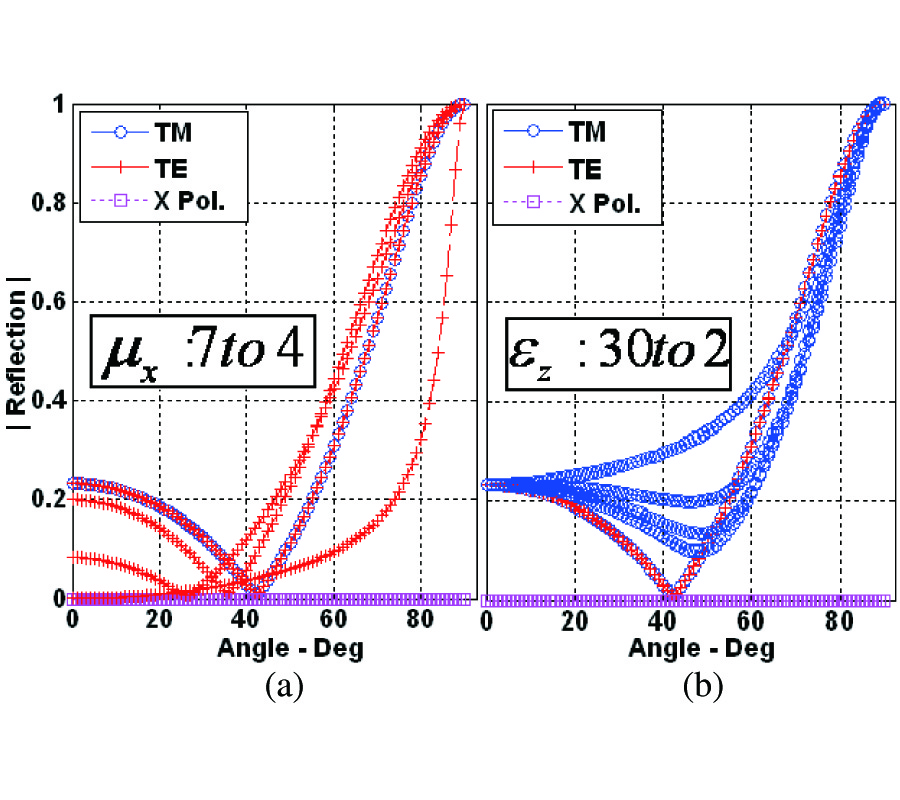
In this paper, mu and epsilon-near-zero (MENZ) metamaterials are used to convert the waves emitted from an embedded line source to various waveforms. The simulation results show that the converted waveforms are consistent with the exit face shape of the metamaterials. The power distributions in different beams are dependent on the length proportion of the exit faces due to its impedance matching with the surrounding media, which is different from the epsilon-near-zero (ENZ) metamaterials. A numerical verification with the finite element method (FEM) was presented, followed by physical insights into this phenomenon and theoretical analysis. We also propose some potential applications, including high directive emissions, multi-beams emissions.
SHAPING THE RADIATION PATTERN WITH MU AND EPSILON-NEAR-ZERO METAMATERIALS
2010-07-12
PIER M
Vol. 13, 109-119
Parameter Extraction for Microwave Coupled Resonator Filters Using Rational Model and Optimization
Jie Peng , Bian Wu , Chang-Hong Liang and Xue-Feng Li
A method is presented for the parameter extraction of microwave coupled resonator filters. The method is based on the estimation of a rational model of the filters. From these rational functions, a circuit network having the previously know topology is optimized. Two simple and efficient error functions are used to reduce the computational effort of the optimization while improving the speed and robustness of diagnosis process for lossless and lossy filters, respectively. Two numerical examples are presented to demonstrate the efficiency of the proposed technique. One deals with numerical simulation data from a full-wave electromagnetic simulation and the other one uses the measured data.
PARAMETER EXTRACTION FOR MICROWAVE COUPLED RESONATOR FILTERS USING RATIONAL MODEL AND OPTIMIZATION
2010-07-12
PIER
Vol. 106, 91-106
Design of CMOS Quadrature VCO Using on-Chip Trans-Directional Couplers
Ching-Ian Shie , Jui-Ching Cheng , Sheng-Chun Chou and Yi-Chyun Chiang
This work presents a quadrature voltage-controlled oscillator (QVCO) realized by on-chip trans-directional (TRD) couplers. The TRD coupler is implemented by sections of parallel-coupled lines connected by shunt capacitors periodically. The TRD couplers allow decoupling the DC path between input and output. Thus, it can make connections with active circuits easier, eliminating some off-chip biasing circuits. Since the quadrature signals are generated by 90°hybrid couplers, the oscillator core can be optimized for circuit performance without considering the generation of quadrature signals. A Ka band QVCO fabricated in CMOS 0.18 μm technology was designed to verify the effectiveness of the proposed QVCO structure. The measurement results reveal that the quadrature output signals of QVCO have about -1.52 dBm output powers with less than 1 dB amplitude imbalance and less than 6°phase difference in the frequency range of 31.9 to 32.7 GHz. The best measured phase noise of the QVCO is -110.6 dBc/Hz at 1 MHz offset from the center frequency. The figure-of-merit of the circuit is 187.5 dBc/Hz.
DESIGN OF CMOS QUADRATURE VCO USING ON-CHIP TRANS-DIRECTIONAL COUPLERS
2010-07-12
PIER
Vol. 106, 75-89
Through-the-Wall Target Localization with Time Reversal MUSIC Method
Wenji Zhang , Ahmad Hoorfar and Lim Li
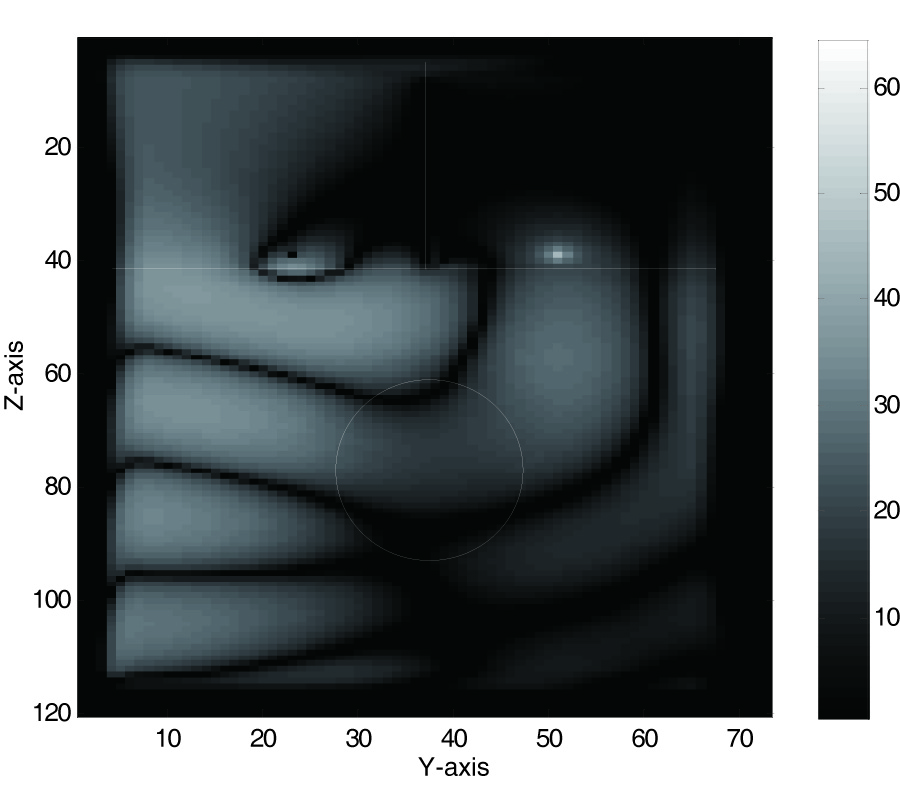
Time Reversal Multiple Signal Classification (TR-MUSIC) method is studied and adapted for the detection and localization of multiple targets behind the wall in this paper. TR-MUSIC does not involve the FDTD solver for the implementation of the backpropagation of the time reversed field and is very computational efficient. The Green's function vectors for the computation of the TR-MUSIC pseudo-spectrum is efficiently evaluated with the saddle point method for a homogeneous wall. By employing the null space of the multistatic response matrix, simultaneous localization of multiple targets behind the wall can be achieved by TR-MUSIC method. Numerical results are presented to show the effectiveness of through-the-wall imaging (TWI) with TR-MUSIC method.
THROUGH-THE-WALL TARGET LOCALIZATION WITH TIME REVERSAL MUSIC METHOD
2010-07-09
PIER B
Vol. 23, 55-68
A Hybrid Method for Computing the RCS of Wire Scatterers with an Arbitrary Orientation
Dong-Wook Seo , Ji-Hee Yoo , Kyoung Il Kwon and Noh-Hoon Myung
A hybrid method is proposed to compute the radar cross section (RCS) of multiple wire scatterers with an arbitrary orientation. Foldy-Lax equations in vector form are transformed into self-consistent equations for including the multiple scattering effects between scatterers. A thin-wire approximation of a method of moment (MoM) is used for calculating the scattering transition operator of a single wire scatterer. To verify the proposed method, two measurement models are fabricated and measured in a compact range chamber. The measured results agree well with the results of the proposed method.
A HYBRID METHOD FOR COMPUTING THE RCS OF WIRE SCATTERERS WITH AN ARBITRARY ORIENTATION
2010-07-09
PIER B
Vol. 23, 39-54
Wideband Validation of a Phase Retrieval Process Applied to Infrared Planar Near-Field Measurements
Nicolas Ribiere-Tharaud , Marc Lambert and Patrick Levesque
The framework of our work is the application of a fast method to estimate the radiation pattern of an antenna from the measurement of the electric-field magnitude in the near-field region using infrared (IR) camera. IR acquisition techniques allows quasi-realtime measurements of the magnitude of the electrical field on planar surfaces in near-field conditions. However the antennas radiation patterns can only be estimated from near-field electrical magnitude and phase measurements. Consequently a classical plane to plane iterative phase retrieval process has been developed and tested with respect to a large number of configuration parameters such as to find an optimal configuration on a wide frequency range [0.5-20GHz]. In order to achieve and validate such a study, some comparisons have been performed on data obtained either by numerical simulation or classical near-field technique based upon radio-frequency (RF) probe scanning on simple horn antennas. Among all the studied parameters we will focus onto the influence of the dynamic range of the measurements on the reconstructed radiation patterns and on validations from experimental results.
WIDEBAND VALIDATION OF A PHASE RETRIEVAL PROCESS APPLIED TO INFRARED PLANAR NEAR-FIELD MEASUREMENTS
2010-07-09
PIER B
Vol. 23, 15-38
Transmission Upper Bound of Planar Single-Layer Frequency Selective Surface
Min-Jie Huang , Ming-Yun Lv and Zhe Wu
In this study, the transmission of planar single-layer frequency selective surface (FSS) has been studied using modal analysis method, and the maximum transmission that a planar single-layer FSS structure with an infinitely thin array can reach is presented. The results show that this transmission upper limit is independent of the array and the element, which indicates that it is impossible to achieve a transmission higher than this upper limit under a given incident and dielectric-supporting condition by the design of the periodic array. As the modal analysis method is an accurate method to solve the scattering problem of planar FSS with an infinitely thin array, this upper limit is also independent of the solution method. Results of both numerical simulations and experiments show that the upper limit presented in this paper is strict, but may be hard to attain when FSS is supported by lossy dielectric mediums.
TRANSMISSION UPPER BOUND OF PLANAR SINGLE-LAYER FREQUENCY SELECTIVE SURFACE
2010-07-09
PIER B
Vol. 23, 1-13
Diffraction Theory of Waves by Resistive Surfaces
Yusuf Ziya Umul and Ugur Yalcin
Diffraction of scalar plane waves by resistive surfaces are investigated by defining a new boundary condition in terms of the Dirichlet and Neumann conditions. The scattering problems of waves by a resistive half-plane and the interface between resistive and perfectly magnetic conducting half-planes are examined with the developed method. The resulting fields are plotted numerically. The numerical results show that the evaluated field expressions are in harmony with the theory.
DIFFRACTION THEORY OF WAVES BY RESISTIVE SURFACES
2010-07-09
PIER B
Vol. 22, 379-399
Design of a 60 GHz, 100 kW CW Gyrotron for Plasma Diagnostics: Gds-V.01 Simulations
Ragini Jain and Machavaram Kartikeyan
In this work, the design studies of a 60 GHz, 100 kW CW gyrotron have been presented. Mode selection is carefully studied with the aim of minimizing mode competition and to yield a perfect solid beam output through an RF window with a suitable dimpled-wall quasi-optical launcher. Cavity design and interaction computations are then carried out. In addition, preliminary design of the magnetron injection gun, magnetic guidance system, launcher, and RF window are presented. Thus, we present a feasibility study, which indicates that the operation of such a gyrotron is possible and can give a power in excess of 100 kW at an efficiency > 35%. As a part of this work, a complete Graphical User Interface package "GDS V.01" (Gyrotron Design Suit Ver.01) has been developed for the design and conceptualization of specific gyrotrons.
DESIGN OF A 60 GHz, 100 kW CW GYROTRON FOR PLASMA DIAGNOSTICS: GDS-V.01 SIMULATIONS
2010-07-09
PIER Letters
Vol. 16, 21-34
Numerical Simulation of Magnetron Injection Gun for 1mw 120 GHz Gyrotron
Udaybir Singh , Nitin Kumar , Narendra Kumar , Sakshi Tandon , Hasina Khatun , L. P. Purohit and Ashok Kumar Sinha
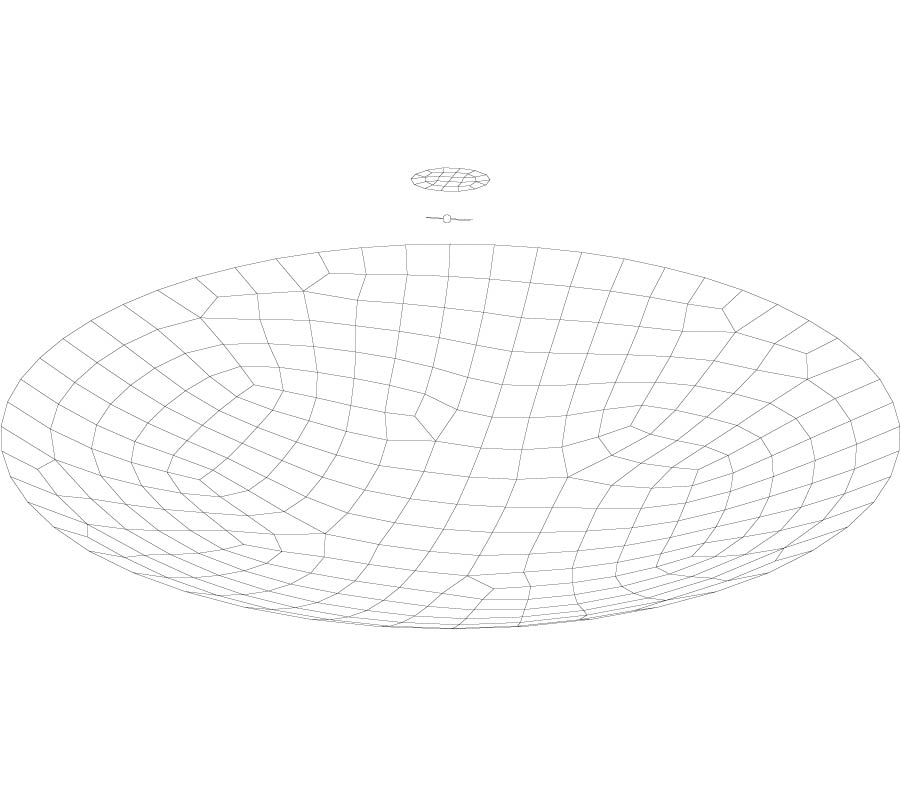
A 40 A triode type magnetron injection gun for a 1 MW, 120 GHz gyrotron has been designed. The preliminary design has been obtained by using some trade-off equations. Computer simulation has been performed by using the commercially available code EGUN and the in-house developed code MIGANS. The operating voltages of the modulating anode and the accelerating anode are 60 kV and 80 kV, respectively. The operating mode of the gyrotron is TE22,6 and it is operated in the fundamental harmonic. The electron beam with a low transverse velocity spread (δβ⊥max = 3.3%) and velocity ratio, α = 1.38 at beam current = 40 A is obtained. The simulated results of the MIG obtained with the EGUN code have been validated with another trajectory code TRAK. The results obtained from both the codes are in good agreement. The sensitivity study has been carried out by changing the different gun parameters to decide the fabrication tolerance.
NUMERICAL SIMULATION OF MAGNETRON INJECTION GUN FOR 1MW 120 GHZ GYROTRON
2010-07-09
PIER Letters
Vol. 16, 11-19
A Compact CPW-Fed Monopole Antenna with a U-Shaped Strip and a Pair of L-Slits Ground for WLAN and WiMAX Applications
Zhen-Yang Liu , Ying-Zeng Yin , Shu-Feng Zheng , Wei Hu , Le-Hu Wen and Qi Zou
A compact tri-band planar monopole antenna suitable for 2.4/5.2/5.8 GHz WLAN and 3.5 GHz WiMAX is presented. The antenna employs a U-shaped parasitic strip and a defect ground-plane structure. By inserting a U-shaped strip as a parasitic strip into a normal monopole which operates at lower band of the WLAN, one more resonance at the higher WLAN band comes out. A defect ground-plane composed of two symmetrical L-shaped slits leads to another resonance operating at WiMAX band. The proposed antenna has a compact size of 22×41×0.8 mm3 and offers good radiation and reflection characteristics in the above frequency bands. The measured VSWR exhibits a good agreement with the simulated one. Detailed design steps, parametric studies and experimental results for the antenna are investigated in this paper.
A COMPACT CPW-FED MONOPOLE ANTENNA WITH A U-SHAPED STRIP AND A PAIR OF L-SLITS GROUND FOR WLAN AND WIMAX APPLICATIONS
2010-07-09
PIER Letters
Vol. 16, 1-10
A Dual-Band Circular Slot Antenna with an Offset Microstrip-Fed Line for PCS, UMTS, IMT-2000, ISM, Bluetooth, RFID and WLAN Applications
Pei Cheng Ooi and Krishnasamy Selvan
In this paper, a circular slot antenna fed by an offset microstrip-fed line is proposed. The antenna exhibit dual-band characteristics. The two operating frequency bands are: 1.83--2.73 GHz and 5.36--7.63 GHz, which are of impedance bandwidth 39.5% and 34.9% respectively. The bands are suitable for PCS, UMTS, IMT-2000, ISM, Bluetooth, RFID and WLAN applications. A parametric study has been carried out by varying the location of the feedline to investigate its effect on the resonant frequency. Impedance, radiation and gain characteristics of the proposed antenna are also presented and discussed.
A DUAL-BAND CIRCULAR SLOT ANTENNA WITH AN OFFSET MICROSTRIP-FED LINE FOR PCS, UMTS, IMT-2000, ISM, BLUETOOTH, RFID AND WLAN APPLICATIONS