Search Results(13802)

2010-07-25
PIER
Vol. 106, 243-261
Modal Method Based on Spline Expansion for the Electromagnetic Analysis of the Lamellar Grating
Ana Maria Armeanu , M. Kofi Edee , Gerard Granet and Patrick Schiavone
This paper reports an exact and explicit representation of the differential operators from Maxwell's equations. In order to solve these equations, the spline basis functions with compact support are used. We describe the electromagnetic analysis of the lamellar grating as an eigenvalues problem. We choose the second degree spline as basis functions. The basis functions are projected onto a set of test functions. We use and compare several test functions namely: Dirac, Pulse and Spline. We show that the choice of the basis and test functions has a great influence on the convergence speed. The outcomes are compared with those obtained by implementing the Finite-Difference Modal Method which is used as a reference. In order to improve the numerical results an adaptive spatial resolution is used. Compared to the reference method, we show a significantly improved convergence when using the spline expansion projected onto spline test functions.
MODAL METHOD BASED ON SPLINE EXPANSION FOR THE ELECTROMAGNETIC ANALYSIS OF THE LAMELLAR GRATING
2010-07-25
PIER
Vol. 106, 225-241
Non-Iterative Imaging of Thin Electromagnetic Inclusions from Multi-Frequency Response Matrix
Won-Kwang Park
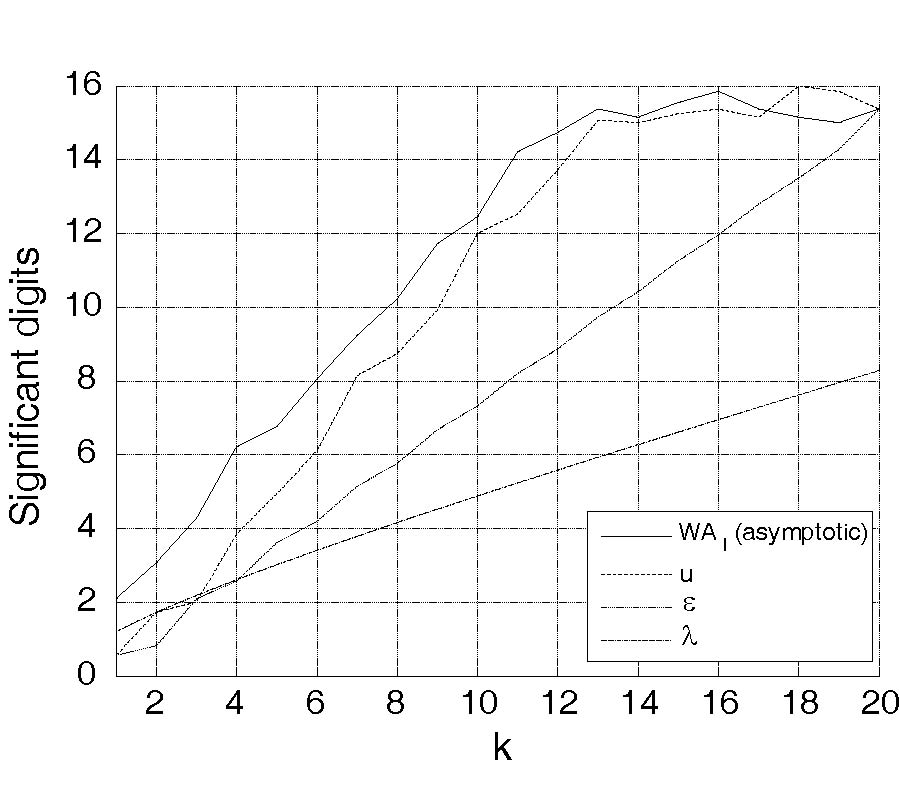
Although MUSIC (MUltiple SIgnal Classification)-type algorithm has shown feasibilities as a non-iterative imaging technique of thin penetrable electromagnetic inclusion from its far-field multi-static response (MSR) matrix, it induces a poor result whenever one tries to obtain such inclusion of both dielectric and magnetic contrast with respect to the embedding homogeneous space R2 case. In this paper, we develop an improved non-iterative imaging algorithm based on the modeling of multi-frequency MSR matrix according to a rigorous asymptotic expansion of the scattering amplitude. Numerical examples exhibit that presented algorithm performs satisfactorily for single and multiple thin inclusions, even with a fair amount of random noise.
NON-ITERATIVE IMAGING OF THIN ELECTROMAGNETIC INCLUSIONS FROM MULTI-FREQUENCY RESPONSE MATRIX
2010-07-23
PIER B
Vol. 23, 229-249
Photonic Band Structure of 1D Periodic Composite System with Left Handed and Right Handed Materials by Green Function Approach
Abdelmajid Essadqui , Jawad Ben-Ali , Driss Bria , Bahram Djafari-Rouhani and Abdelkrim Nougaoui
In the framework of the Green function method, we theoretically study the photonic band structure of one-dimensional superlattice composed of alternating layers of right-handed and left-handed materials (RHM and LHM). The dispersion curves are studied by assuming that the dielectric permittivity and magnetic permeability are frequency dependent in each layer. It is shown that such structures can exhibit new types of electromagnetic modes and dispersion curves that do not exist in usual superlattices composed only of RHM. With an appropriate choice of the parameters, we show that it is possible to realize an absolute (or omnidirectional) band gap for either transverse electric (TE) or transverse magnetic (TM) polarizations of the electromagnetic waves. A combination of two multilayer structures composed of RHM and LHM is proposed to realize, in a certain range of frequency, an omnidirectional reflector of light for both polarizations.
PHOTONIC BAND STRUCTURE OF 1D PERIODIC COMPOSITE SYSTEM WITH LEFT HANDED AND RIGHT HANDED MATERIALS BY GREEN FUNCTION APPROACH
2010-07-23
PIER B
Vol. 23, 215-228
Robust Adaptive Beamformer Using Interpolation Technique for Conformal Antenna Array
Peng Yang , Feng Yang , Zai-Ping Nie , Biao Li and Xianfa Tang
A novel robust adaptive beamforming method for conformal array is proposed. By using interpolation technique, the cylindrical conformal array with directional antenna elements is transformed to a virtual uniform linear array with omni-directional elements. This method can compensate the amplitude and mutual coupling errors as well as desired signal point errors of the conformal array efficiently. It is a universal method and can be applied to other curved conformal arrays. After the transformation, most of the xisting adaptive beamforming algorithms can be applied to conformal array directly. The efficiency of the proposed scheme is assessed through numerical simulations.
ROBUST ADAPTIVE BEAMFORMER USING INTERPOLATION TECHNIQUE FOR CONFORMAL ANTENNA ARRAY
2010-07-23
PIER Letters
Vol. 16, 69-78
Coupled Nonlinear Transmission Lines for Doubling Repetition Rate of Incident Pulse Streams
Koichi Narahara
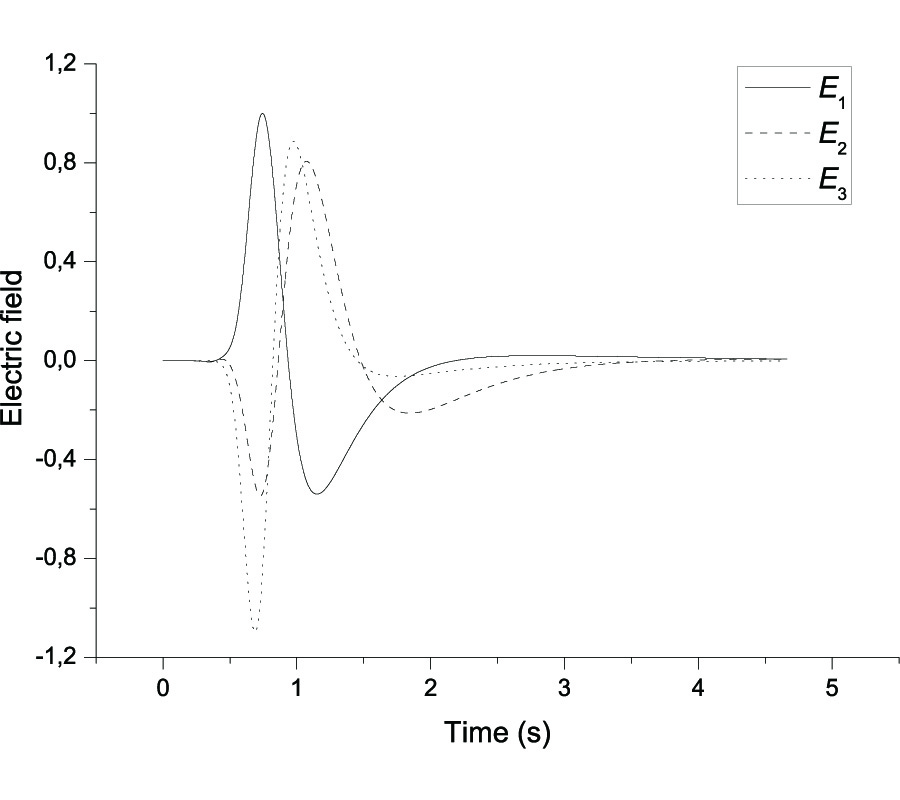
We investigated the properties of pulse propagation on coupled nonlinear transmission lines to develop a method for doubling repetition rate of incident pulse streams. Coupled nonlinear transmission lines are two transmission lines with regularly spaced Schottky varactors coupled with each other. It is found that both of the modes developed in a coupled line can support soliton-like pulses because of Schottky varactors. We discuss the fundamental properties of each soliton-like pulse, including the width and velocity, and propose a method of doubling repetition rate of incident pulse streams by managing these soliton-like pulses.
COUPLED NONLINEAR TRANSMISSION LINES FOR DOUBLING REPETITION RATE OF INCIDENT PULSE STREAMS
2010-07-22
PIER B
Vol. 23, 199-214
Strong Magnetic Field Induced Segregation and Self-Assembly of Micrometer Sized Non-Magnetic Particles
Zhi Sun , Muxing Guo , Jef Vleugels , Omer Van der Biest and Bart Blanpain
Micrometer and sub-micrometer sized non-magnetic particles were manipulated by an external strong magnetic field (e.g. 10 Tesla) with a high gradient. During the strong magnetic field effects, segregation of the non-magnetic particles was observed which could not be realised only with gravitational field. Numerical calculations were subsequently carried out to understand the effects on the insulating particles in a conductive liquid matrix. The migration of micrometer sized particles is obviously enhanced by the magnetic field gradient. Combining the experimental results and theoretical analysis, particle-particle magnetic interaction was found to influence the overall segregation of the particles as well. Magnetised by the strong magnetic field, magnetic interaction between non-magnetic particles becomes dominant and a self-assembly behavior can be demonstrated. Various factors such as the magnetic dipole-dipole interaction and chain-chain interaction, are governing the particles assembly. According to calculations, magnetic field should be strong enough, at least 7 T in order to obtain the assembly morphologies in the present case.
STRONG MAGNETIC FIELD INDUCED SEGREGATION AND SELF-ASSEMBLY OF MICROMETER SIZED NON-MAGNETIC PARTICLES
2010-07-22
PIER B
Vol. 23, 181-197
Cell-Vertex Based Multigrid Solution of the Time-Domain Maxwell's Equations
Narendra Deore and Avijit Chatterjee
The time domain Maxwell's equations are numerically solved using a multigrid method in a scattered field formulation and a cell-vertex based finite volume time domain framework. The multilevel method is an adaptation of Ni's [9] cell-vertex based multigrid technique, proposed for accelerating steady state convergence of nonlinear Euler equations of gas dynamics. Accelerated convergence to steady state of the time domain Maxwell's equations, for problems involving electromagnetic scattering, is obtained using multiple grids without the use of additional numerical damping usually required in nonlinear problems. The linear nature of the Maxwell's system also allows for a more accurate representation of the fine-grid problem on the coarse grid.
CELL-VERTEX BASED MULTIGRID SOLUTION OF THE TIME-DOMAIN MAXWELL'S EQUATIONS
2010-07-22
PIER Letters
Vol. 16, 61-68
A Novel Tri-Band Printed Monopole Antenna with an Etched ∩-Shaped Slot and a Parasitic Ring Resonator for WLAN and WiMAX Applications
Shou-Tao Fan , Ying-Zeng Yin , Hui Li , Shi-Ju Wei , Xue-Hua Li and Le Kang
A novel tri-band printed monopole antenna with an etched ∩-shaped slot and a parasitic ring resonator is proposed for satisfying wireless local area network (WLAN) and worldwide interoperability for microwave access (WiMAX) applications simultaneously. The proposed antenna comprises a rectangular radiation patch with an arc-shaped edge and an embedded ∩-shaped slot on the top side and a parasitic ring resonator on the opposite side. The measured results show that the impedance bandwidths of the proposed antenna, defined by voltage standing wave ratio (VSWR)≤1.5, are 350 MHz (2370--2720 MHz), 680 MHz (3390--4070 MHz) and 1080 MHz (4920--6000 MHz), which cover the required band- widths for both WLAN (2400--2480 MHz, 5150--5350 MHz, and 5725--5825 MHz) and WiMAX (2500--2690 MHz, 3400--3690 MHz, 5250--5850 MHz) applications. Furthermore, good monopole-like radiation characteristics with moderate peak gains are obtained over the operating bands.
A NOVEL TRI-BAND PRINTED MONOPOLE ANTENNA WITH AN ETCHED ∩-SHAPED SLOT AND A PARASITIC RING RESONATOR FOR WLAN AND WIMAX APPLICATIONS
2010-07-22
PIER C
Vol. 15, 13-22
A New Detection Algorithm Based on CFAR for Radar Image with Homogeneous Background
Na Na Liu , Jingwen Li and Yanfeng Cui
A new detection algorithm based on constant false alarm rate (CFAR) algorithm, which is applicable to radar image with homogeneous background, is proposed in this paper. This algorithm firstly estimates the parameters of the probability model of background accurately. Then a conventional global CFAR is done using the results of estimation. In estimating the parameters of background, a novel iterative algorithm, which is self-adaptive, is given. The simulation results demonstrate that the performance of the proposed detection algorithm is very close to the theoretical optimum value, and better than CA-CFAR, GO-CFAR and SO-CFAR.
A NEW DETECTION ALGORITHM BASED ON CFAR FOR RADAR IMAGE WITH HOMOGENEOUS BACKGROUND
2010-07-22
PIER C
Vol. 14, 227-237
Compact Wideband Bandpass Filter Using Single Corners-Cut Isosceles Triangular Patch Resonator
Adam Reda Hasan Alhawari and Alyani Ismail
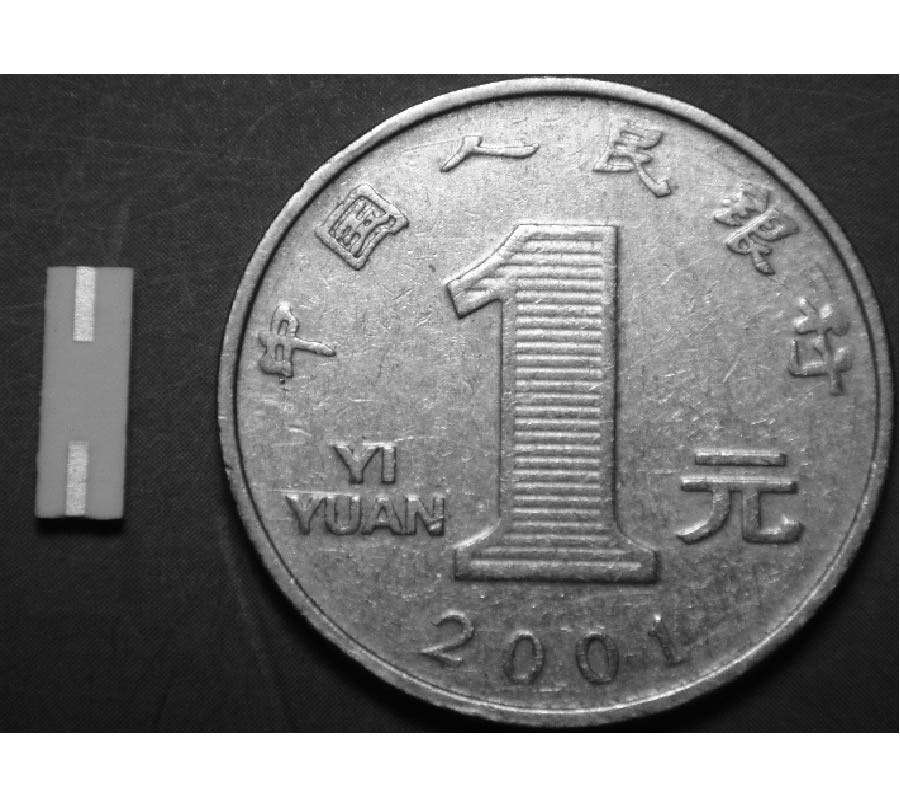
Compact and simple bandpass filter (BPF) structure using microstrip isosceles triangular patch resonator (ITPR) is proposed. The new filter design technique is based on two main ideas: Firstly, cutting the corners of the triangular structure, to make the filter size more compact. Secondly, etching slit in staircase form near the base of the triangle in order to improve the filter performances. The proposed filter was designed and fabricated on Taconic CER-10 substrate with a relative dielectric constant of 10 and a thickness of 0.64 mm using standard photolithography process. The final dimension of the proposed filter is measured at 5.7 mm×7.6 mm. Measured S-parameters showed that the filter achieves a 3-dB fractional bandwidth of 55% at center frequency of 10.36 GHz, with measured insertion loss of 2.08 dB and measured return loss better than 10 dB. The measured results are in good agreement with the simulated results.
COMPACT WIDEBAND BANDPASS FILTER USING SINGLE CORNERS-CUT ISOSCELES TRIANGULAR PATCH RESONATOR
2010-07-22
PIER
Vol. 106, 203-223
Solutions of Large-Scale Electromagnetics Problems Using an Iterative Inner-Outer Scheme with Ordinary and Approximate Multilevel Fast Multipole Algorithms
Ozgur Ergul , Tahir Malas and Levent Gurel
We present an iterative inner-outer scheme for the efficient solution of large-scale electromagnetics problems involving perfectly-conducting objects formulated with surface integral equations. Problems are solved by employing the multilevel fast multipole algorithm (MLFMA) on parallel computer systems. In order to construct a robust preconditioner, we develop an approximate MLFMA (AMLFMA) by systematically increasing the efficiency of the ordinary MLFMA. Using a flexible outer solver, iterative MLFMA solutions are accelerated via an inner iterative solver, employing AMLFMA and serving as a preconditioner to the outer solver. The resulting implementation is tested on various electromagnetics problems involving both open and closed conductors. We show that the processing time decreases significantly using the proposed method, compared to the solutions obtained with conventional preconditioners in the literature.
SOLUTIONS OF LARGE-SCALE ELECTROMAGNETICS PROBLEMS USING AN ITERATIVE INNER-OUTER SCHEME WITH ORDINARY AND APPROXIMATE MULTILEVEL FAST MULTIPOLE ALGORITHMS
2010-07-22
PIER
Vol. 106, 177-202
Analytical Model of Electromagnetic Waves Propagation and Location of Inclined Plasma Layers Using Occultation Data
A. G. Pavelyev , Yuei-An Liou , J. Wickert , Keifei Zhang , Chuan-Sheng Wang and Yuriy Kuleshov
An analytical model for the description of the electromagnetic waves propagation in a layered medium consisting of sectors having the locally spherical symmetric distributions of refractivity is introduced. Model presents analytical expressions for the phase path and refractive attenuation of electromagnetic waves. Influence of the inclined ionospheric layers is a cause of the ionospheric interference in the trans-ionospheric communication satellite-to-satellite or satellite-to-Earth links. It follows from the analytical model that the identification of the inclined ionospheric layers contributions and measurements of their location and parameters may be fulfilled by use of comparative analysis of the amplitude variations and the eikonal acceleration of the RO signals. Model is applied to analysis of the radio occultation (RO) signals propagating through the ionosphere and atmosphere. Model explains existence of the ionospheric contributions in the RO signals at the altitudes 30-90 km of the RO ray perigee as connected with influence of a tangent point in the ionosphere where the electron density gradient is perpendicular to the RO ray trajectory. By use of the CHAMP RO amplitude data a description of different types of the ionospheric contributions to the RO signals is introduced and compared with results of measurements obtained earlier in the communication link satellite-to-Earth at frequency 1.5415 GHz of MARSAT satellite.
ANALYTICAL MODEL OF ELECTROMAGNETIC WAVES PROPAGATION AND LOCATION OF INCLINED PLASMA LAYERS USING OCCULTATION DATA
2010-07-21
PIER B
Vol. 23, 165-180
Theoretical Analysis of a Passive Acoustic Brain Monitoring System
Nikolaos P. Asimakis , Irene Karanasiou , P. K. Gkonis and Nikolaos Uzunoglu
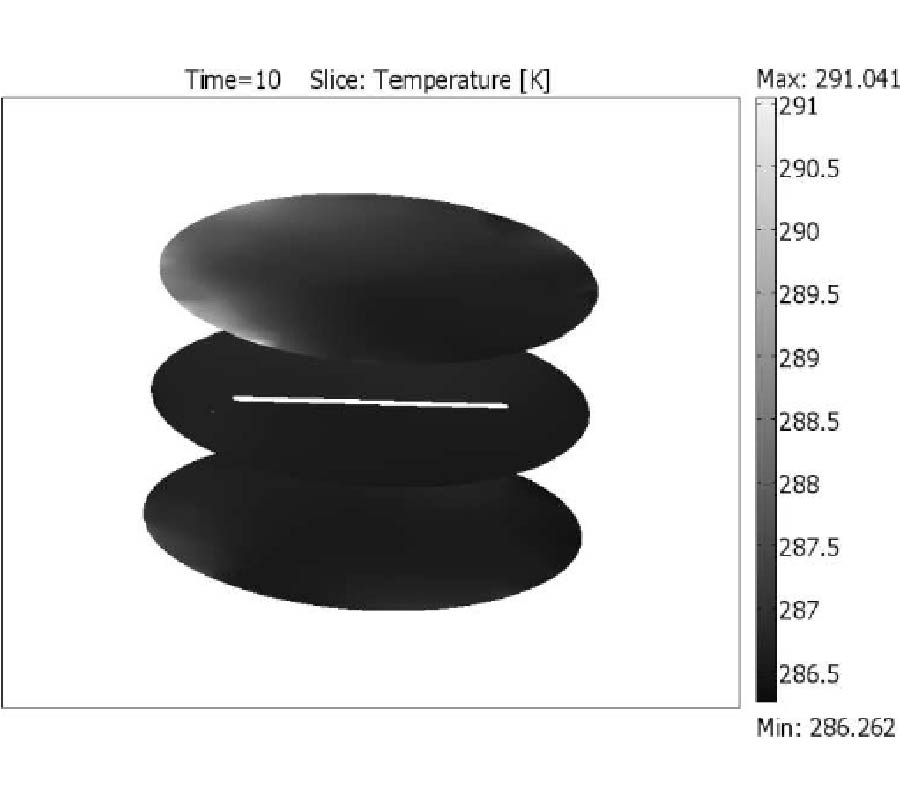
An approach based on acoustics and its theoretical analogies to electromagnetism is used in the present research to study the detection of the acoustic wave energy radiated by the thermal random motion of material particles of the brain during activation or caused by pathology. Pressure and particle velocity are calculated in analytical mathematical forms for the case of human brain monitoring, which can be implemented by a prototype passive acoustic brain monitoring system (PABMOS). Representing theoretically the configuration of this approach, a sphere is used to model the human head and an internal point source in order to simulate potential pressure alterations due to intracranial abnormalities or local functional activations. Finally, numerical results concerning the particle velocity (pressure field distribution) at the surface of the head model, which can implicitly be measured by the suitable piezoelectric sensors of the system, for arbitrary positions of the internal source, are presented.
THEORETICAL ANALYSIS OF A PASSIVE ACOUSTIC BRAIN MONITORING SYSTEM
2010-07-21
PIER B
Vol. 23, 147-164
Theoretical Comparative Studies of Cross-Section Evaluation in Erbium-Doped Optical Fibers
Maryam Karimi and Faramarz E. Seraji
In this paper, we introduce a different approach of previously reported method to determine absorption and emission cross-sections (δa and δe), and dopant concentration in Erbium doped optical fibers (EDOFs) with low background loss (α). We call this new method as variant input single cutback method (VISCM). There is technical similarity between VISCM and conventional cutback method (CCM) for determination of cross-sections, but in former pump and signal powers are not used together. We numerically verify the effect of different parameters such as input power, background loss, and EDOF amplifier cutback length on the cross-sections using VISCM and CCM. We also present the simulation results of maximum gain and optimum length using obtained cross-sections by two methods. We show that the VISCM presents more accuracy than that of CCM in any conditions. In the presence of α, both CCM and VISCM give not actual but pseudo values for the δa and δe. Using pseudo parameters values obtained by VISCM for α < 10 dB/km, the error of maximum gain and optimum length of designed EDOF is shown negligible.
THEORETICAL COMPARATIVE STUDIES OF CROSS-SECTION EVALUATION IN ERBIUM-DOPED OPTICAL FIBERS
2010-07-21
PIER
Vol. 106, 163-176
Multi-Wavelength Fiber Optical Parametric Oscillator Based on a Highly Nonlinear Fiber and a Sagnac Loop Filter
Daru Chen and Bing Sun
A novel multi-wavelength fiber optical parametric oscillator (MW-FOPO) with a ring cavity structure is proposed. In the ring cavity of the MW-FOPO, a Sagnac loop filter which is formed by a 3-dB optical coupler, a polarization controller and a segment of polarization maintained fiber is used as the comb filter, and a segment of highly nonlinear fiber is used as the gain medium. Multi-wavelength lasing of the MW-FOPO with a wavelength spacing of about 0.8nm is achieved and its power stability at room temperature is demonstrated by measuring peak power fluctuation within 42 minutes for 5 lasing wavelengths. The output spectrum of the MW-FOPO covers a large wavelength region from 1500nm to 1610 nm. A comparison of the output spectra between the MW-FOPO and the multi-wavelength Erbium-doped fiber laser is also presented.
MULTI-WAVELENGTH FIBER OPTICAL PARAMETRIC OSCILLATOR BASED ON A HIGHLY NONLINEAR FIBER AND A SAGNAC LOOP FILTER
2010-07-21
PIER
Vol. 106, 147-162
A New Calculation Method for the Characteristic Impedance of Transmission Lines with Modified Ground Structures or Perturbation
Jongsik Lim , Jun Lee , Jaehoon Lee , Sang-Min Han , Dal Ahn and Yongchae Jeong
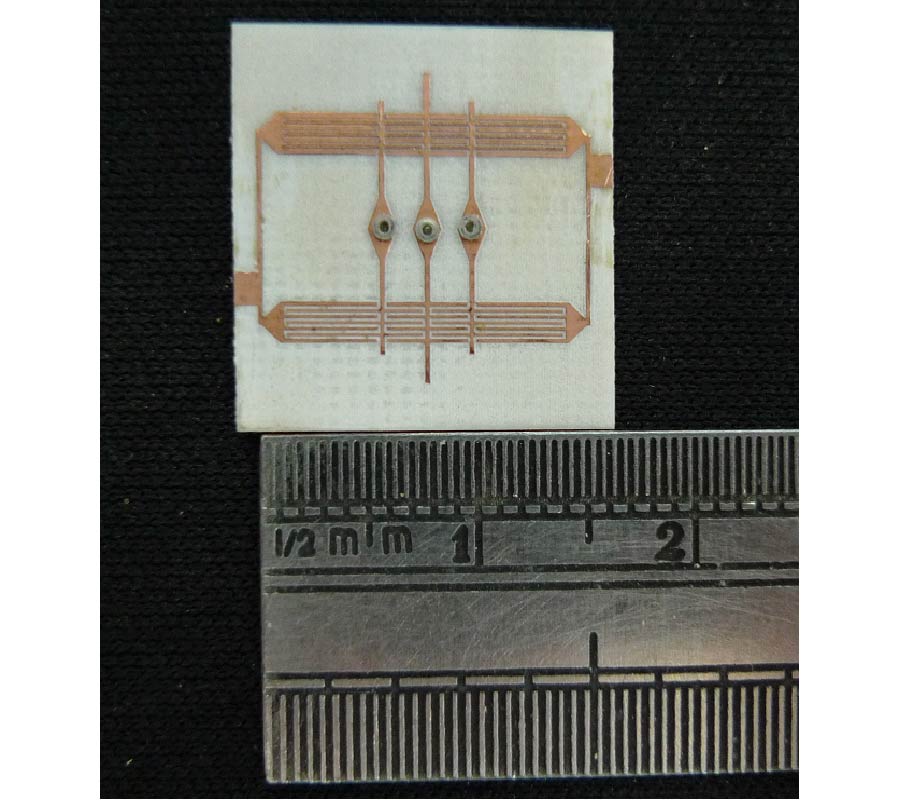
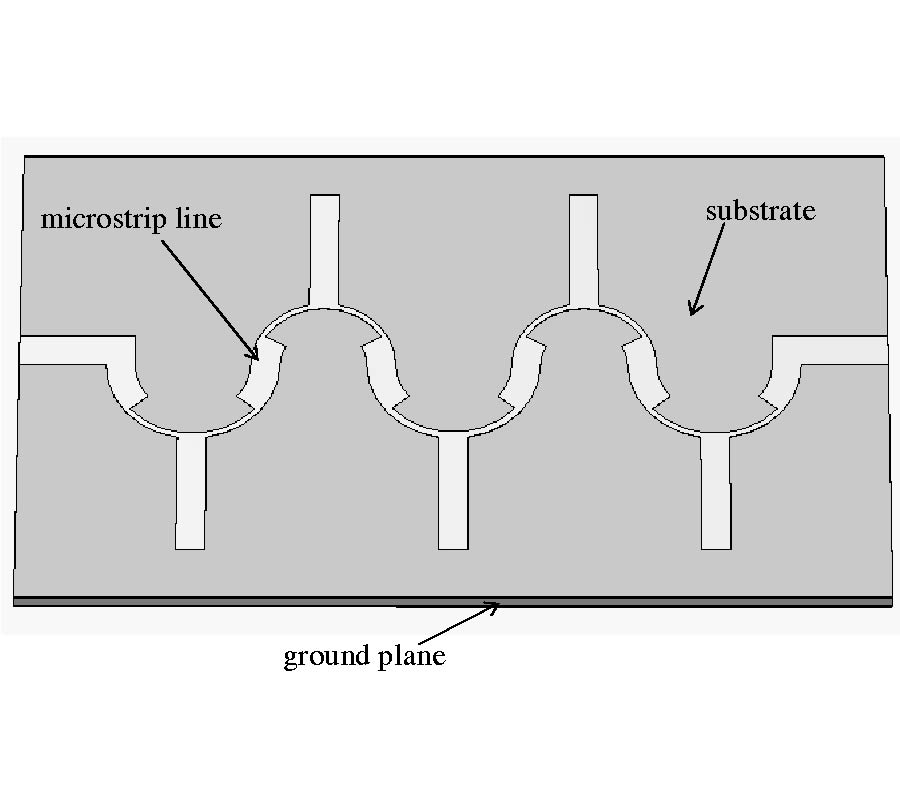
In this paper, a new calculating method for the characteristic impedance (Zc) of transmission lines with perturbation and periodic modified ground structure (MGS), such as defected ground structure (DGS), photonic bandgap (PBG), and substrate integrated artificial dielectric (SIAD), is discussed. The proposed method is based on simple transmission line theories and proper related equations. The previous method to find Zc of transmission lines with MGS or perturbation produces the fluctuating Zc value depending on frequency, while the proposed method results in a constant value without frequency-dependence. As examples, several microstrip lines with DGS, PBG, and SIAD structure are simulated and measured, and their Zc values are calculated from S-parameters by the previous and proposed methods. It is shown that the Zc obtained by the proposed method is much more reliable than that calculated by the previous method for all examples.
A NEW CALCULATION METHOD FOR THE CHARACTERISTIC IMPEDANCE OF TRANSMISSION LINES WITH MODIFIED GROUND STRUCTURES OR PERTURBATION
2010-07-20
PIER
Vol. 106, 121-145
Propagation Analysis and Deployment of a Wireless Sensor Network in a Forest
Jose Antonio Gay-Fernandez , Manuel Garcia Sanchez , Inigo Cuinas , Ana Vazquez Alejos , Javier Garcia Sanchez and Jose Luis Miranda-Sierra
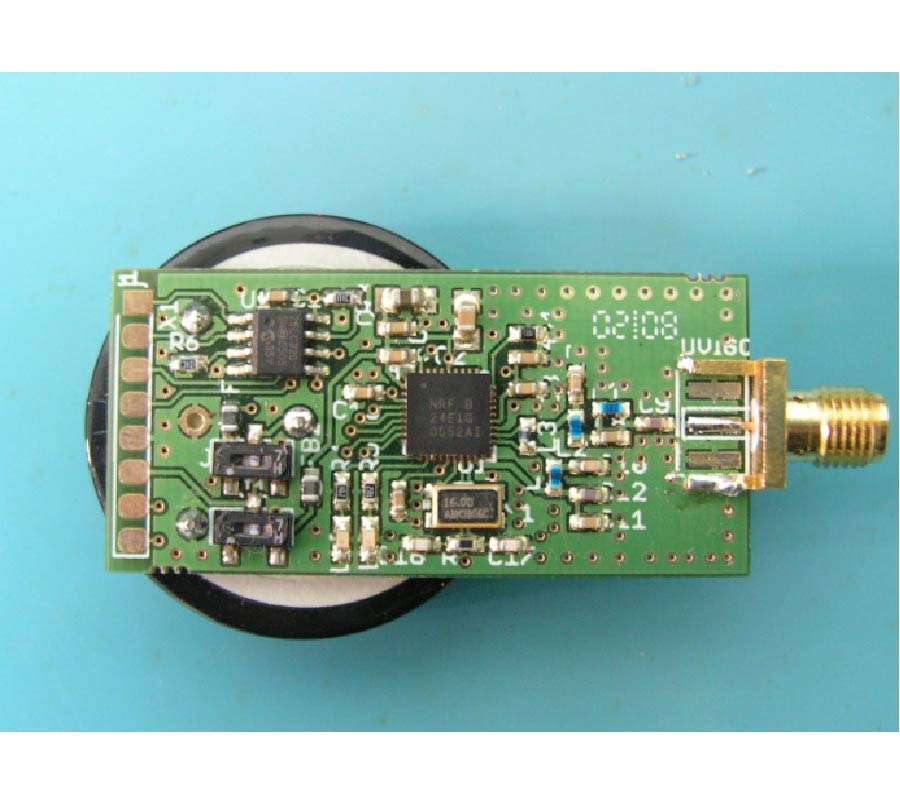
A complete study for the deployment of a wireless sensor network in a forest based on ZigBee is presented in this paper. First, due to the lack of propagation models for peer to peer networks in forests, propagation experiments were carried out to determine the propagation model. This model was then used for planning and deploying an actual wireless sensor network. The performance of the network was compared with the expected theoretical behavior to extract some conclusions that are presented in the paper. Finally, some general conclusions, as an estimation of the minimum number of routers necessary to cover a given area, are extracted from the experiments and presented in the paper.
PROPAGATION ANALYSIS AND DEPLOYMENT OF A WIRELESS SENSOR NETWORK IN A FOREST
2010-07-16
PIER B
Vol. 23, 131-146
Modeling and Characterization of Frequency and Temperature Variation of Complex Permeability of Ferrite LTCC Material
Nelu Blaz , Andrea Maric , Goran Radosavljevic , Ljiljana Zivanov , Goran Stojanovic , Ibrahim Atassi and Walter Smetana
This paper presents modeling of the complex permeability spectra, fabrication and a wide frequency range characterization of a toroidal LTCC ferrite sample. A commercial ferrite tape ESL 40012 is used, and standard LTCC (Low Temperature Co-fired Ceramic) processing has been applied to the sample fabrication. The characterization was performed using a short coaxial sample holder and a vector network analyzer in the frequency range from 300 kHz to 1 GHz, at different temperatures. Using the model of the complex permeability spectra dispersion parameters of ferrite LTCC material has been determined for various temperatures. Characteristics of test samples are compared with modeled results and commercially available toroid made of similar NiZn ferrite material.
MODELING AND CHARACTERIZATION OF FREQUENCY AND TEMPERATURE VARIATION OF COMPLEX PERMEABILITY OF FERRITE LTCC MATERIAL
2010-07-14
PIER B
Vol. 23, 109-129
Resonance Wave Scattering by a Strip Grating Attached to a Ferromagnetic Medium
А. V. Brovenko , Elena D. Vinogradova , P. N. Мelezhik , Anatoly Poyedinchuk and A. S. Troschylo
The diffraction of a uniform unit-amplitude E-polarized plane wave is considered in the case of its normal incidence on a strip periodic metal grating placed on the anisotropic hyrotropic ferromagnetic half-space boundary. The Dirichlet boundary conditions on the grating strips, the medium interface conjugation conditions, the Meixner condition that the energy is finite in any confined volume and the radiation condition are applied, and the boundary value diffraction problem in terms of Maxwell's (Helmholtz) equations is equivalently reduced to the dual system of functional equations with exponential kernel. The system is shown to be the Riemann-Hilbert problem in analytic function theory with the conjugation coefficient differing, in general, from ``-1" and dependent on the incident wave frequency. An analytical regularization procedure based on the Riemann-Hilbert boundary value problem solution with the following use of the Plemelle-Sokhotsky formulas is suggested, resulting in the system of linear algebraic equations of the second kind with a compact operator. For vthese systems, the truncation technique possibility has been shown. Calculation algorithms and simulation packages in terms of C++ language have been developed. As a result, the reflection coefficient performance has been studied over sufficiently wide ranges of frequency and constitutive and geometrical parameters of the electrodynamical systems of interest. The frequency bands of the reflection coefficient resonant behavior have been established and examined. A numerical analytical model of these resonances has been proposed.
RESONANCE WAVE SCATTERING BY A STRIP GRATING ATTACHED TO  A FERROMAGNETIC MEDIUM
2010-07-14
PIER Letters
Vol. 16, 53-60
A Robust Beamformer Based on Weighted Sparse Constraint
Yipeng Liu , Qun Wan and Xiaoli Chu
Applying a sparse constraint on the beam pattern has been suggested to suppress the sidelobe level of a minimum variance distortionless response (MVDR) beamformer. In this letter, we introduce a weighted sparse constraint in the beamformer design to provide a lower sidelobe level and deeper nulls for interference avoidance, as compared with a conventional MVDR beamformer. The proposed beamformer also shows improved robustness against the mismatch between the steering angle and the direction of arrival (DOA) of the desired signal, caused by imperfect estimation of DOA.
A ROBUST BEAMFORMER BASED ON WEIGHTED SPARSE CONSTRAINT