Search Results(13802)

2010-08-03
PIER Letters
Vol. 16, 109-117
A Novel Dual Band-Notched Monopole Antenna for Ultra-Wideband Application
Yang Zhu , Fu-Shun Zhang , Chen Lin , Qiang Zhang and Jing-Xiu Huang
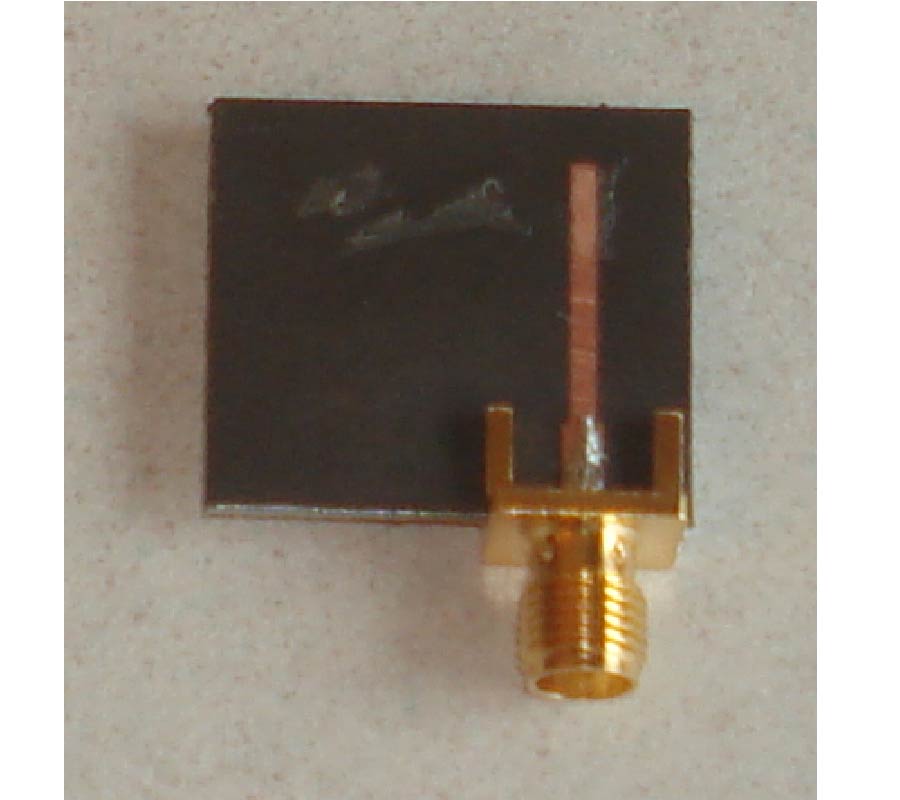
In this article,a printed ultra-wideband (UWB) monopole antenna with dual band-notched characteristics of size 26 mm×35 mm is presented. The prototype consists of pincers-shaped radiation element and corner rounded ground plane. By inserting a pair of flexuous slots on the radiation element and a C-shaped slot on the ground plane, the 3.5/5.5 GHz dual band-notched characteristics are achieved, respectively. Moreover, good radiation patterns and gains within the operating band have been obtained. The detailed design and experimental results are discussed in this article.
A NOVEL DUAL BAND-NOTCHED MONOPOLE ANTENNA FOR ULTRA-WIDEBAND APPLICATION
2010-08-03
PIER C
Vol. 15, 89-101
Broadband Coplanar Waveguide-Fed Wide-Slot Antenna
Aliakbar Dastranj and Mehrzad Biguesh
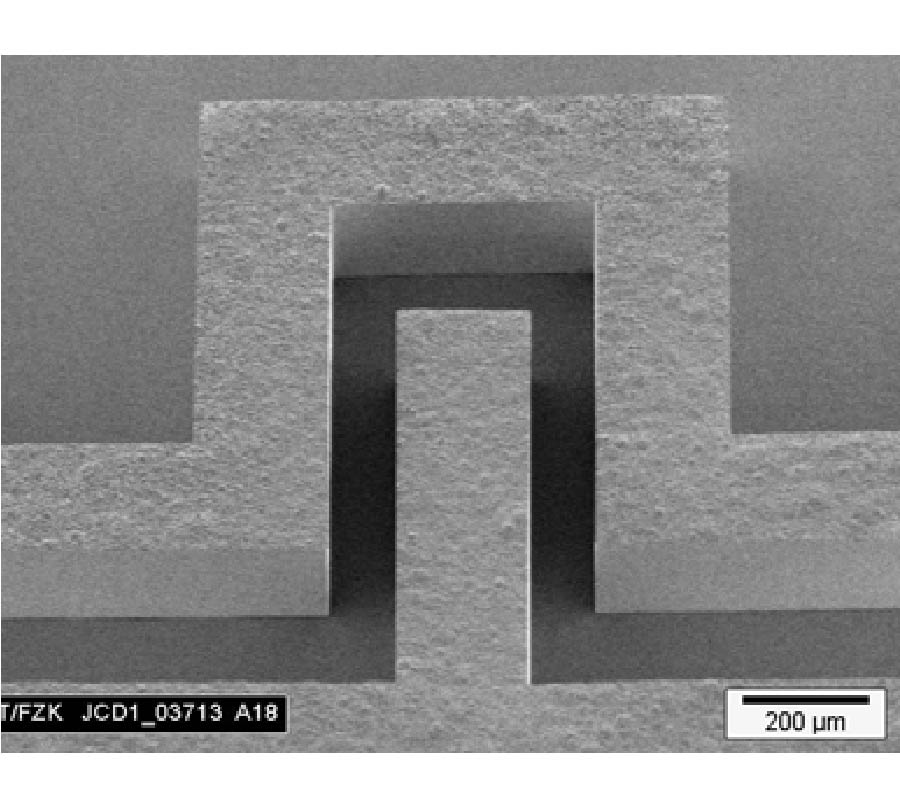
A large bandwidth wide-slot antenna, fed by coplanar waveguide (CPW), is proposed. Experimental investigations and detailed simulations are conducted to understand its behavior and to optimize for broadband operation. The impedance bandwidth, determined by 10-dB return loss of the proposed slot antenna using both measurement and simulation, is about 131% (2.8 to 14 GHz). In addition to be small in size, the antenna has low cross polarization, relatively high gain, and it exhibits stable far-field radiation characteristics in the entire operating bandwidth. The design with very wide operating bandwidth and improved radiation pattern is obtained by properly choosing the suitable slot shape, selecting similar feed patch shape, and tuning their dimensions. Numerical sensitivity analysis has been used to understand the effects of changes of various antenna dimensions and to optimize the performance of the designed antenna. Based on our computer simulations it is shown that the antenna dimensions parameters have uncorrelated effects on the upper edge of the bandwidth. Simulation results show that the impedance matching of this kind of antenna is sensitive to the feed-slot combination and feed gap width. The simulated and measured results for return loss, far-field E-plane and H-plane radiation patterns, and gain of the designed antenna are presented and discussed.
BROADBAND COPLANAR WAVEGUIDE-FED WIDE-SLOT ANTENNA
2010-08-03
PIER
Vol. 107, 115-128
A New Defected Ground Structure and Its Application for Miniaturized Switchable Antenna
Jingxian Liu , Wen-Yan Yin and Sailing He
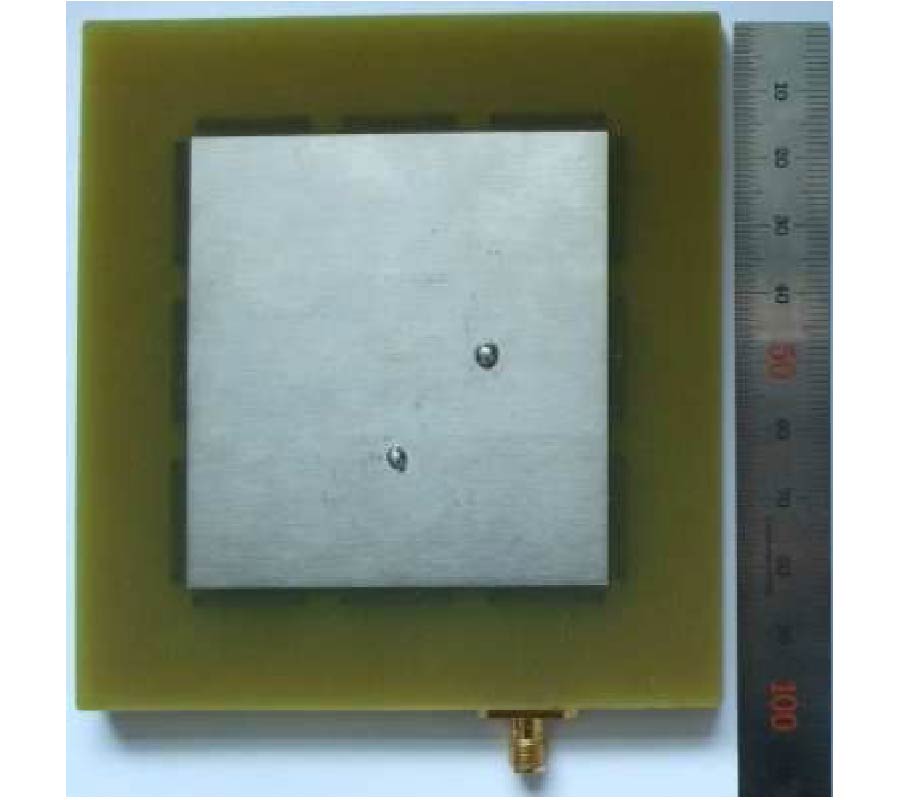
A new defected ground structure (DGS) is firstly proposed in this paper, which has better slow-wave effect than that of cross or dumbbell one. Using the model of transmission line, its equivalent parameters are extracted. With good omni-directional properties, the proposed DGS is then used in the design of a proximity coupled antenna for its miniaturization. The size of the developed antenna is about 68% smaller than that of the conventional one. Further, two artificial cells are added on the feed line to reduce the protrudent stub length from 26.9mm to 18.94 mm. With the utility of the DGS and artificial cells, the size of proximity coupled antenna is reduced significantly. By introducing a PIN diode at the end of feed line, the antenna is switchable in both x- and y-direction linear polarizations. Such miniaturization in antenna size has little negative effect on its cross polarization, with both simulated and experimental results presented for comparison.
A NEW DEFECTED GROUND STRUCTURE AND ITS APPLICATION FOR MINIATURIZED SWITCHABLE ANTENNA
2010-08-02
PIER C
Vol. 15, 75-87
A Stacked Ring-Patch Artificial Substrate to Improve the Antenna Performance
Menasinakaihosahalli Ningappa Sujatha and Kalarickaparambil Vinoy
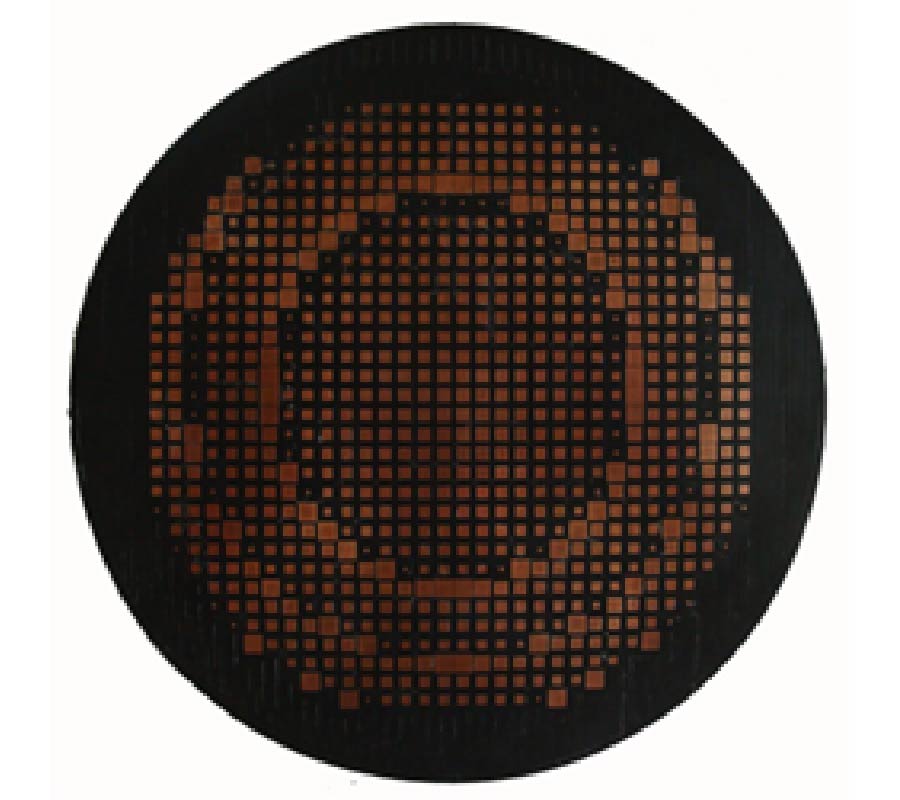
In this paper, a stacked ring-patch two layer planar artificial substrate is analyzed numerically and is shown to possess the properties of a high impedance surfaces (HIS). Its properties are evaluated by investigating the surface wave propagation and plane wave reflection characteristics. Its application to reduce the mutual coupling of microstrip antennas and to improve the radiation pattern are investigated by simulation tool CST microwave studio. Experimental measurements using a pair of monopoles are used to confirm the surface waves suppression band. One of the main advantages of the proposed geometry is that it is simple and planar in nature, without the need for any via connections across dielectric layers and thus can be realized by planar technologies. Another advantage is that it exhibits over lapped surface wave suppression and in-phase reflection bands. Also it can be scalable to operate in different frequency range.
A STACKED RING-PATCH ARTIFICIAL SUBSTRATE TO IMPROVE THE ANTENNA PERFORMANCE
2010-08-02
PIER M
Vol. 13, 173-188
Artificial Neural Networks Approach in Microwave Filter Tuning
Jerzy Julian Michalski
This paper presents a novel method of cavity filter tuning with the usage of an artificial neural network (ANN). The proposed method does not require information on the filter topology, and the filter is treated as a black box. In order to illustrate the concept, a feed-forward, multi-layer, non-linear artificial neural network with back propagation is applied. The method for preparing, learning and testing vectors consisting of sampled detuned scattering characteristics and corresponding tuning screw deviations is proposed. To collect the training vectors, the machine, an intelligent automatic filter tuning tool integrated with a vector network analyzer, has been built. The ANN was trained on the basis of samples obtained from a properly tuned filter. It has been proved that the usage of multidimensional approximation ability of an ANN makes it possible to map the characteristic of a detuned filter reflection in individual screw errors. Finally, after the ANN learning process, the tuning experiment on 6 and 11-cavity filters has been preformed, proving a very high efficiency of the presented method.
ARTIFICIAL NEURAL NETWORKS APPROACH IN MICROWAVE FILTER TUNING
2010-08-02
PIER
Vol. 107, 101-114
Design of a High Band Isolation Diplexer for GPS and WLAN System Using Modified Stepped-Impedance Resonators
Ru-Yuan Yang , Chin-Min Hsiung , Cheng-Yuan Hung and Chih-Chin Lin
In this paper, we presented the design of a high performance diplexer for applications of global positioning system (GPS) at 1.575 GHz and wireless local area network (WLAN) at 2.4 GHz, simultaneously. Two bandpass filters (BPFs) using the modified stepped-impedance resonators (SIRs) operated at 1.575 GHz and 2.4 GHz are main blocks for the proposed diplexer. By discussing and analyzing the admittance of the even and odd modes, the transmission zero of the modified SIR can be found, and the location of the transmission zero can be precisely predicted, thus having a wide and deep stopband for the BPFs, in turn the high performance diplexer. Furthermore, due to the appearance of the transmission zeros near the passband edges, the passband selectivity of the BPFs as well as the diplexer can be improved. By using the impedance matching between two BPFs, a high isolation of 50 dB between two channels is obtained. The proposed diplexer was designed, fabricated and measured. The simulated and measured results had a good agreement with the proposed design concept.
DESIGN OF A HIGH BAND ISOLATION DIPLEXER FOR GPS AND WLAN SYSTEM USING MODIFIED STEPPED-IMPEDANCE RESONATORS
2010-08-01
PIER Letters
Vol. 16, 99-108
The Miniature Frequency Doubler Using Compensated Capacitive Line in Balun
Yu-Ann Lai , Chun-Nien Chen , Chun-Chi Su , Chih-Ming Lin and Yeong-Her Wang
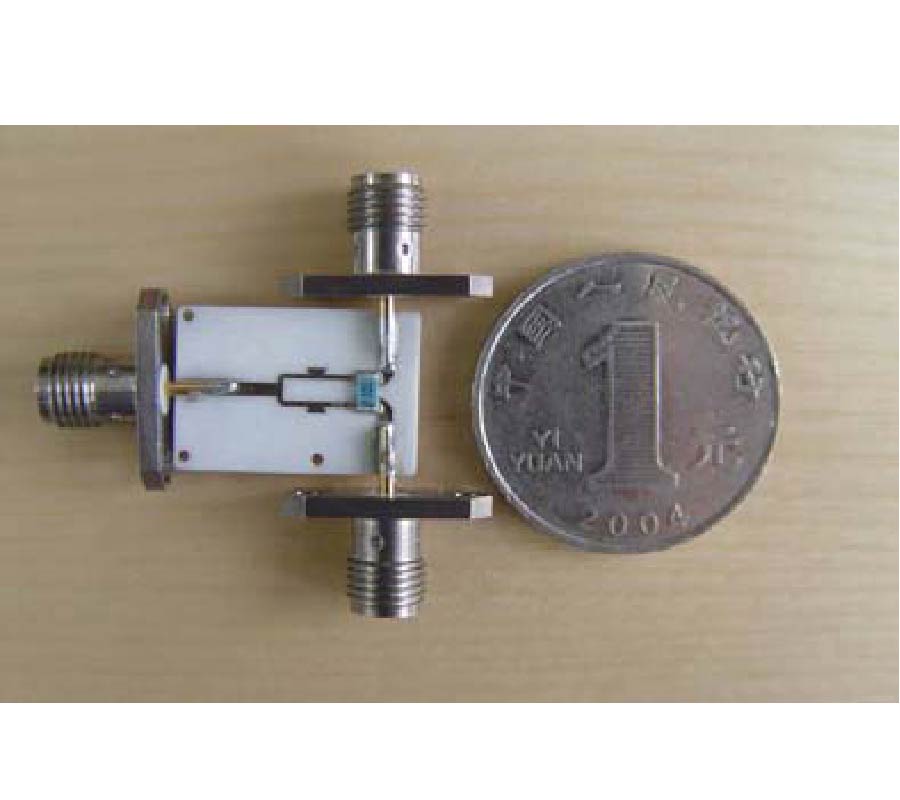
A compact balanced frequency MMIC doubler using compensated capacitive line in Marchand balun is proposed. With multi-coupled lines technology, the balun is applied to a balanced doubler successfully. Compared with the conventional Marchand balun, more than 55% reduction in the length of coupled line can be achieved. Implemented by a PHEMT process, the compact monolithic balanced frequency doubler with better performance can be obtained. An operation bandwidth from 20 to 44 GHz with the best conversion loss of 8.4 dB at 25GHz can be achieved. In addition, the fundamental frequency suppression is better than 28.9 dB, and the chip dimension is as small as 0.41 × 0.68 mm2.
THE MINIATURE FREQUENCY DOUBLER USING COMPENSATED CAPACITIVE LINE IN BALUN
2010-08-01
PIER C
Vol. 15, 65-74
A Novel Epsilon Near Zero (ENZ) Tunneling Circuit Using Microstrip Technology for High Integrability Applications
D. V. B. Murthy , Alonso Corona-Chavez and Jose Luis Olvera Cervantes
A novel compact Epsilon Near Zero (ENZ) tunneling circuit with microstrip coupling for high integrability applications is presented. Full design procedure, simulation and experimental results are shown, and a methodology to extract the effective permittivity and propagation constants in the tunnel is described. Detailed analysis of the dependence on external quality factor and tunnel to feed height ratio is investigated. Simulation and measurement results of the ENZ tunnel structure are in good agreement.
A NOVEL EPSILON NEAR ZERO (ENZ) TUNNELING CIRCUIT USING MICROSTRIP TECHNOLOGY FOR HIGH INTEGRABILITY APPLICATIONS
2010-08-01
PIER
Vol. 107, 63-99
Scattering of Electromagnetic Waves from a Rectangular Plate Using an Extended Stationary Phase Method Based on Fresnel Functions (SPM-F)
Charalampos G. Moschovitis , Hristos Anastassiu and Panayiotis V. Frangos
This paper presents an extension over a novel, three dimensional high frequency method for the calculation of the scattered electromagnetic (EM) field from a Perfect Electric Conductor (PEC) plate, which is based on the Physical Optics (PO) approximation and the Stationary Phase Method (SPM). This extension defines a new analytical method which is proved to be very efficient in computer execution time and enhances the accuracy of its predecessor around the area of the main scattering lobe. This new analytical method accomplishes high accuracy through the use of higher order approximation terms, which imply the use of Fresnel functions (SPM-F method). By using higher order Fresnel approximation terms, no impact on the time efficiency of the SPM method appears to occur, since the extended SPM-F method just removes the troublesome vanishing denominators when the stationary point coincides with the edges of the scatterer. The SPM-F results are compared to other straightforward numerical and exact solution methods for the same problem in the far field, Fresnel zone and the near field area of the scatterer.
SCATTERING OF ELECTROMAGNETIC WAVES FROM A RECTANGULAR PLATE USING AN EXTENDED STATIONARY PHASE METHOD BASED ON FRESNEL FUNCTIONS (SPM-F)
2010-07-31
PIER
Vol. 107, 47-61
Design and Analysis of a Magnetic-Geared Electronic-Continuously Variable Transmission System Using Finite Element Method
Linni Jian and Kwok-Tong Chau
This paper proposes a new electronic-continuously variable transmission (E-CVT) system for power-split hybrid electric vehicles (HEVs). The key is to integrate two permanent magnet motor/generators (M/Gs) together with a coaxial magnetic gear (CMG). By designing the modulating ring of the CMG to be rotatable, this integrated machine can achieve both power splitting and mixing, and therefore, can seamlessly match the vehicle road load to the engine optimal operating region. With the one-side-in and one-side-out structure and the non-contact transmission of the CMG, all the drawbacks aroused by the mechanical gears and chain existing in the traditional E-CVT system can be overcome. Moreover, the proposed E-CVT system possesses the merits of small size and light weight, which are vitally important for extending the full-electric drive range of HEVs. The working principle and the design details are elaborated. By using the finite element method (FEM), the electromagnetic characteristics are analyzed.
DESIGN AND ANALYSIS OF A MAGNETIC-GEARED ELECTRONIC-CONTINUOUSLY VARIABLE TRANSMISSION SYSTEM USING FINITE ELEMENT METHOD
2010-07-29
PIER B
Vol. 24, 49-62
Analysis and Design of an UHF RFID Metal Tag Using Magnetic Composite Material as Substrate
Shih-Kang Kuo , Jen-Yung Hsu and Yung-Hsiung Hung
Using magnetic composite material as the substrate for RFID metal tag has several advantages over conventional metal tags, such as flexibility and miniaturized size. In this paper, the radiation intensity contributed by a half-wave dipole is derived based on the result of an ideal Hertzian dipole, which leads to a simple relation for thin substrate. Later on, the material constants of two materials are measured and the one capable of generating greater radiation intensity is used in the course of antenna design. A primitive pattern design demonstrates the metal tag has a satisfactory 2.7 m reading range, and a dimension of 80×22×2 mm3.
ANALYSIS AND DESIGN OF AN UHF RFID METAL TAG USING MAGNETIC COMPOSITE MATERIAL AS SUBSTRATE
2010-07-29
PIER Letters
Vol. 16, 89-97
A Compact Microstrip-Line-Fed Slot Antenna with Dual Band-Notched Characteristics for WLAN/WiMAX Applications
Fan Li , Li-Shi Ren , Gang Zhao and Yong-Chang Jiao
A compact microstrip-line-fed antenna designed by inserting two pairs of strips into a rectangular slot for achieving triple-band operation is proposed. The antenna, which occupies a small size of only 40×32×1.6 mm3, utilizes inserted strips to generate dual band-notched characteristics so that three operating bands are able to be achieved, which range from 2.2 to 2.7, 3.07 to 3.86, and 5.13 to 6.23 GHz, sufficiently covering both the 2.4/5.2/5.8 GHz WLAN and 2.5/3.5/5.5 GHz WiMAX bands. In addition, the measured results show good monopole-like radiation patterns and stable antenna gains across the three operating bands.
A COMPACT MICROSTRIP-LINE-FED SLOT ANTENNA WITH DUAL BAND-NOTCHED CHARACTERISTICS FOR WLAN/WIMAX APPLICATIONS
2010-07-29
PIER C
Vol. 15, 49-63
Novel Circular Slot UWB Antenna with Dual Band-Notched Characteristic
Guo-Ping Gao , Zhonglei Mei and Bo-Nian Li
In this paper, a novel circular slot UWB antenna with dual notched frequency band is presented and investigated. A C-shaped slot is inserted into the fed element, and a parasitic strip is printed in the circular slot, so that the proposed antenna achieves dual band-notched characteristics, respectively. The measured and simulated results show that the proposed antenna meets the requirement of wide working bandwidth of 3.1-10.6 GHz with VSWR < 2, while avoiding the interference with the 3.5 GHz WiMAX and 5.5 GHz WLAN band. Study of transfer function (amplitude of S21/group delay) and time domain characteristic (radiated pulses/power spectrum density (PSD)) correspond well with the VSWR, which indicate the dual band notched characteristic of the antenna.
NOVEL CIRCULAR SLOT UWB ANTENNA WITH DUAL BAND-NOTCHED CHARACTERISTIC
2010-07-29
PIER M
Vol. 13, 157-171
Leaky-Wave Regimes on MEMS-Loaded Transmission Lines for mm-Wave Applications
Tomas Zvolensky , Dmitry Chicherin , Antti V. Räisänen and Constantin R. Simovski
This paper presents study of controllable leaky wave modes in various planar transmission lines operating at millimetre wavelengths. Leaky wave regime is achieved by exploitation of periodic inclusions. The main goal is to obtain the scanning of the radiation angle from forward to backward direction and rather broad range of scanning angles at a given operation frequency corresponding to the mm-wave range. For this purpose we suggest to use MEMS capacitors combined with shunt strap inductors, probably grounded. This design solution allows one to significantly reduce the losses in the loaded line compared to known scanning leaky-wave antennas based on varactors or on magnetized ferrites. The design of the unit cell is done using global optimization method, and the dispersion is investigated analytically. After analytical modeling and optimization, full wave analysis is done using Ansoft HFSS v.11 environment. After the leaky wave regimes are verified, an example of a leaky-wave antenna is introduced in order to confirm possibility of beam scanning.
LEAKY-WAVE REGIMES ON MEMS-LOADED TRANSMISSION LINES FOR MM-WAVE APPLICATIONS
2010-07-29
PIER
Vol. 107, 31-46
Unique Permittivity Determination of Low-Loss Dielectric Materials from Transmission Measurements at Microwave Frequencies
Ugur Cem Hasar
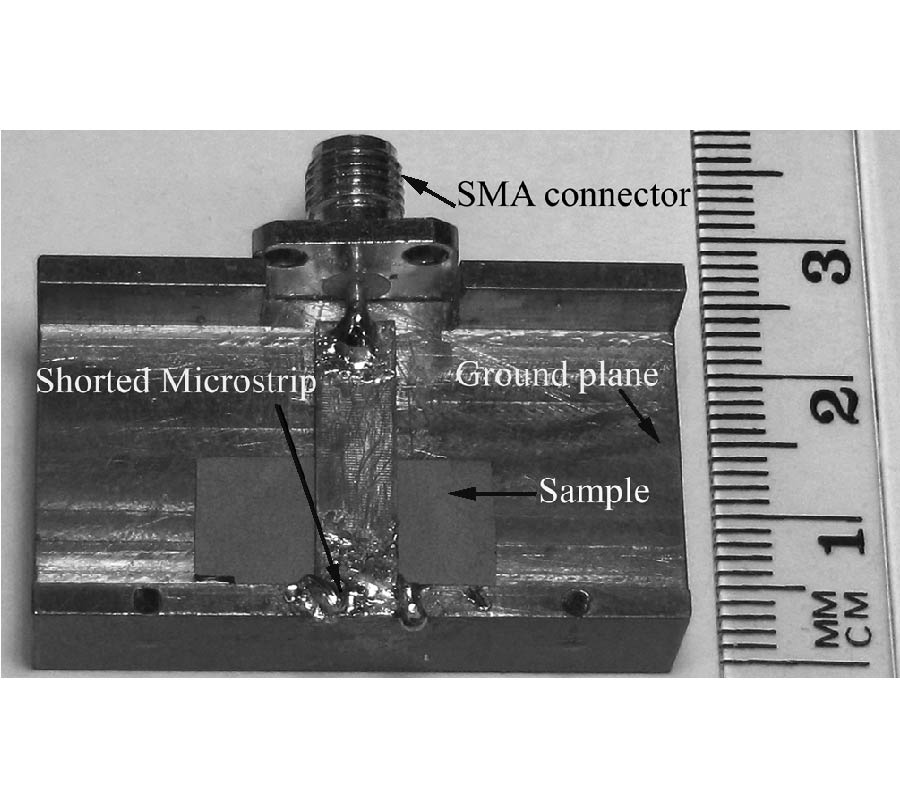
A non-resonant microwave method has been proposed for accurate complex permittivity determination of low-loss materials. The method uses two measurement data of the magnitude of transmission properties of the sample. While the first datum must correspond to a frequency point resulting in a maximum magnitude of transmission properties, the other can be any datum at a frequency different than the first datum and not far distant from the first datum. Two closed-from expressions are derived for a good initial guess using the above data. The limitations of each expression are discussed. The method has been validated by transmission measurements at X-band (8.2-12.4 GHz) of a low-loss sample located into a waveguide sample holder.
UNIQUE PERMITTIVITY DETERMINATION OF LOW-LOSS DIELECTRIC MATERIALS FROM TRANSMISSION MEASUREMENTS AT MICROWAVE FREQUENCIES
2010-07-29
PIER
Vol. 107, 21-30
Compact Microstrip Bandpass Filter with Multispurious Suppression
Hung-Wei Wu , Shih-Kun Liu , Min-Hang Weng and Chia-Ho Hung
A compact microstrip bandpass filter (BPF) with multispurious suppression is presented. The filter consists of two coupled half-wavelength stepped impedance resonators (SIRs) and tapped input/output (I/O) lines. With tuning the impedance ratio (K) and length ratio (α) of SIRs, a very wide stopband can be easily achieved. The filter is designed at 2.4 GHz (f0) with a wide stopband to 20 GHz (8.16f0) and an average rejection level better than 25 dB. This study provides a simple and effective method to achieve a filter with very wide stopband and compact circuit size simultaneously. Good agreement between the full-wave electromagnetic (EM) simulation and measurement is compared.
COMPACT MICROSTRIP BANDPASS FILTER WITH MULTISPURIOUS SUPPRESSION
2010-07-28
PIER B
Vol. 24, 33-47
Design of Polygonal Patch Antennas for Portable Devices
Filiberto Bilotti and Claudio Vegni
In this paper, extending the design technique presented by the authors in a previous work, we propose the study of a new family of polygonal patch antennas for portable devices of communication systems. Such antennas are suitable to be mounted in modern terminals, enabling wideband/multi-frequency operation and new multimedia features. The desired electromagnetic behaviour of the proposed radiators is obtained by adding either shorting posts, properly located between the polygonal patch and the ground plane, or circular slots, drilled at the appropriate position on the patch surface. Circular slots are also useful to easily accommodate a photo-camera in the terminal, in order to enable multimedia services and video calls. Some practical layouts of polygonal patch antennas to be used in: a) modern PDAs and Smart Phones integrating cellular phone operation and wireless functionalities; b) UMTS terminals integrating also GSM functionalities, are, finally, presented. The effectiveness of the proposed designs is confirmed through proper full-wave numerical simulations.
DESIGN OF POLYGONAL PATCH ANTENNAS FOR PORTABLE DEVICES
2010-07-28
PIER Letters
Vol. 16, 79-87
Design of Wideband Substrate Integrated Circular Cavity (SICC) Filter Using TM01 Mode Coupling
Boren Zheng , Zhiqin Zhao and Youxin Lv
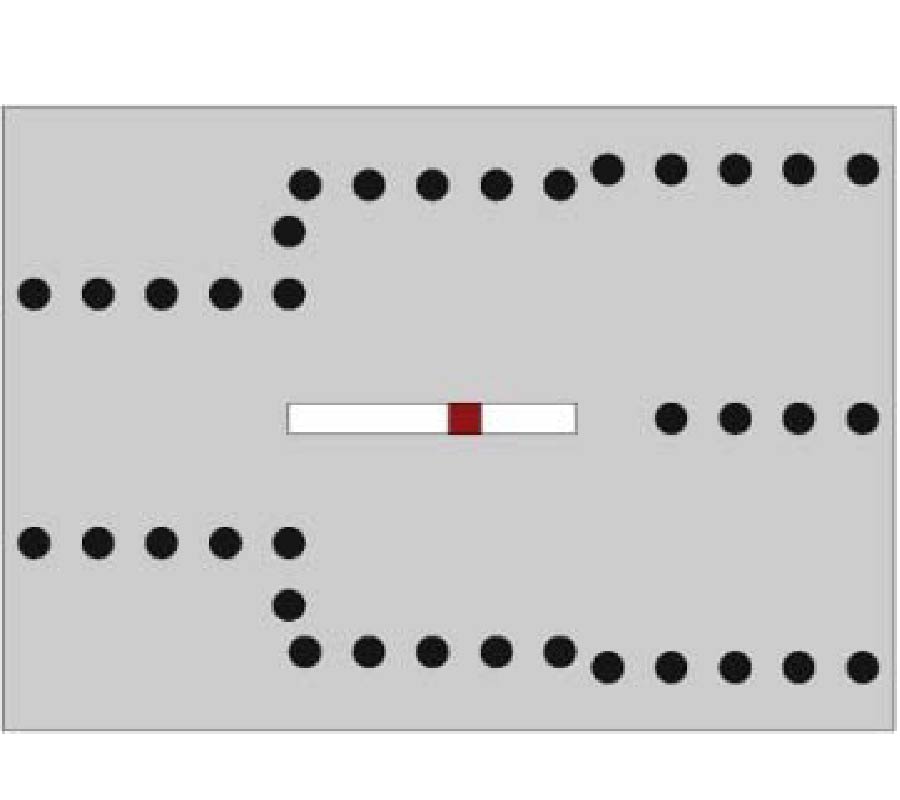
A novel type of wideband SICC filter using TM01 mode coupling by the circular hole between the SICCs is proposed. Of circular symmetry, the TM01 mode in SICC demonstrates the advantages of compact and high flexibility of the filter's input and output setting. In order to validate the new proposed topology, three filter prototypes with different included angle between input and output have been designed and manufactured. The filters exhibit a low insertion loss of -1 dB in the 12.8 to 20 GHz, a wide relative bandwidth of 54.5% at -3 dB, high flexibility and very good agreement with simulation data.
DESIGN OF WIDEBAND SUBSTRATE INTEGRATED CIRCULAR CAVITY (SICC) FILTER USING TM01 MODE COUPLING
2010-07-28
PIER C
Vol. 15, 37-48
Temperature Insensitive Broad and Flat Gain C-Band Edfa Based on Macro-Bending
Parsin Hajireza , Siamak Dawazdah Emami , Soroush Abbasizargaleh , Sulaiman Wadi Harun , Deepak Kumar and Hairul Azhar Abdul-Rashid
In this paper a new method is proposed to achieve a temperature insensitive, broad and flat gain C-band erbium-doped fiber amplifier (EDFA) with aid of macro-bending. This gain flattened C-band EDFA is demonstrated by utilizing 2.5 m macro-bent Erbium-doped fiber (EDF) at room temperature of 25℃. Further to this, it is shown that gain fluctuation at different temperatures is compensated in the proposed design. The EDFA performance at different temperatures is investigated for various macro-bending diameter and EDF length. The gain saturation and energy transfer from shorter wavelengths to longer wavelengths can be controlled by varying the bending radius and the length of the doped fiber, consequently, a flattened and broadened gain profile in the C-band region can be achieved. The amplifier uses a 2.5 m long EDF with 2000 ppm concentration and bending radius of 6.5 mm as a gain medium. The gain variation of the EDFA is obtained within ±0.5 dB over 35 nm bandwidth of C-band region.
TEMPERATURE INSENSITIVE BROAD AND FLAT GAIN C-BAND EDFA BASED ON MACRO-BENDING
2010-07-28
PIER
Vol. 107, 1-20
Green's Tensors for the Diffusive Electric Field in a Vti Half-Space
Evert C. Slob , Jurg. W. Hunziker and William Alexander Mulder
Explicit Green's tensors for the diffusive electric field in a configuration with two homogeneous half spaces are of interest for primary-secondary formulations of frequency domain and time domain modeling schemes. We derive the explicit expressions for the Green tensor of the electric field generated by an electric dipole in space frequency and space time. Both source and receiver can have arbitrary positions in the vertical transverse isotropic (VTI) half space below a non conductive half space. Apart from their use in modeling schemes, the expressions can be used to understand the effect of the interface between the VTI and the non conducting half space. We show that the TE-mode refracts against the interface, and its effect in the VTI half space decays exponentially as a function of depth and is inversely proportional to horizontal distance cubed for horizontal source receiver distances larger than three times the source depth. In exploration geophysics, this part of the field is known as the "airwave". The contribution from the "airwave" has a late time behavior that differs from the other contributions to the electric field. This makes time domain systems relevant for exploration geophysical applications.
GREEN'S TENSORS FOR THE DIFFUSIVE ELECTRIC FIELD IN A VTI HALF-SPACE