Search Results(13802)

2010-07-28
PIER
Vol. 106, 395-417
Estimation for Small-Scale Fading Characteristics of RF Wireless Link Under Railway Communication Environment Using Integrative Modeling Technique.
Shi Pu , Jun-Hong Wang and Zhan Zhang
The small-scale fading behavior in common wireless communication systems can be predicted by a series of propagation models. Although these types of models are feasible and effective for the situations of transmitting/receiving (Tx/Rx) antennas in relatively open surrounding environments, they are unable to address the coupling between the antenna and environment. In order to overcome this difficulty, a full-wave numerical method is applied in terms of the advantage in considering the interaction between complicated environments and the Tx/Rx antennas, and it can take into account the effect of the interaction on signals. In this paper, an integrative modeling technique involving FDTD method, two-path propagation model and multi-path statistical distribution model is presented, which combines the deterministic and statistical methods. For achieving reliable communication especially in high-speed railway environment, high sampling rate and adequate sampling points are needed for analyzing the propagation properties of the radio frequency (RF) link. This can be easily achieved by the integrative modeling technique, and the output voltage and current of train antenna under the illumination of base-station (BS) antenna along the railway can be given in detail. Results obtained from the integrative simulation for three different multi-path statistical distribution models are presented and analyzed.
ESTIMATION FOR SMALL-SCALE FADING CHARACTERISTICS OF RF WIRELESS LINK UNDER RAILWAY COMMUNICATION ENVIRONMENT USING INTEGRATIVE MODELING TECHNIQUE.
2010-07-28
PIER
Vol. 106, 377-394
Inverse Equivalent Surface Current Method with Hierarchical Higher Order Basis Functions, Full Probe Correction and Multilevel Fast Multipole Acceleration (Invited Paper)
Thomas F. Eibert , Ismatullah , E. Kaliyaperumal and Carsten H. Schmidt
An inverse equivalent surface current method working with equivalent electric and/or magnetic surface current densities on appropriately chosen Huygens surfaces is investigated. The considered model with triangular surface meshes is compatible with the models known from method of moments (MoM) solutions of surface integral equations. Divergence conforming current basis functions of order 0.5 and of order 1.5 are considered, where the order 0.5 functions are the well-known Rao-Wilton-Glisson basis functions. Known near-field samples typically obtained from measurements are mapped on the unknown equivalent surface current densities utilizing the radiation integrals of the currents as forward operator, where the measurement probe influence is formulated in a MoM like weighting integral. The evaluation of the forward operator is accelerated by adaptation of the multilevel fast multipole method (MLFMM) to the inverse formulation, where the MLFMM representation is the key to full probe correction by employing only the far-field patterns of the measurement probe antennas. The resulting fully probe corrected algorithm is very flexible and efficient, where it is found that the computation speed is mostly dependent on the MLFMM configuration of the problem and not that much on the particular equivalent current expansion as long as the expansion is able to represent the currents sufficiently well. Inverse current and far-field pattern results are shown for a variety of problems, where near-field samples obtained from simulations as well as from realistic measurements are considered.
INVERSE EQUIVALENT SURFACE CURRENT METHOD WITH HIERARCHICAL HIGHER ORDER BASIS FUNCTIONS, FULL PROBE CORRECTION AND MULTILEVEL FAST MULTIPOLE ACCELERATION (Invited Paper)
2010-07-28
PIER
Vol. 106, 363-376
A Dual-Band Omni-Directional Microstrip Antenna
Ooi Tze-Meng , Kim Geok Tan and Ahmed Wasif Reza
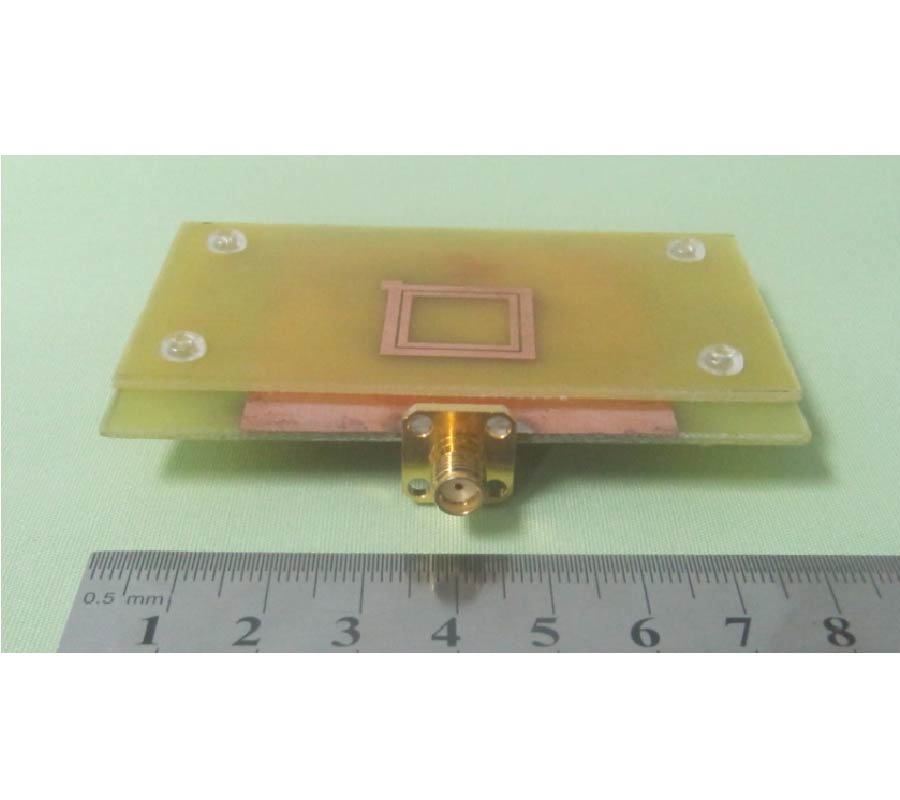
Omni-directional antennas are useful for variety of wireless communication devices as well as capable of handling the additional different frequency bands since the radiation pattern allows good transmission and reception from a mobile unit. However, to implement the two frequencies on a single antenna with wide bandwidth can be significant because of the presence of mutual coupling and interference effects between the two radiating elements. In this paper, a novel method of combining dual-band frequencies onto a single layer board with wide bandwidth is described. A dual-band printed dipole antenna is designed in this study by combining a rectangular and two "L" shaped radiating elements and are embedded on a single layer structure with relatively small size. The obtained results show that the proposed dual-band omni-directional microstrip antenna achieves high antenna efficiency and provides better bandwidth while maintaining the structural compact size.
A DUAL-BAND OMNI-DIRECTIONAL MICROSTRIP ANTENNA
2010-07-26
PIER B
Vol. 24, 17-32
Magnetic Field Created by a Uniformly Magnetized Tile Permanent Magnet
Romain Ravaud , Guy Lemarquand and Valerie Lemarquand
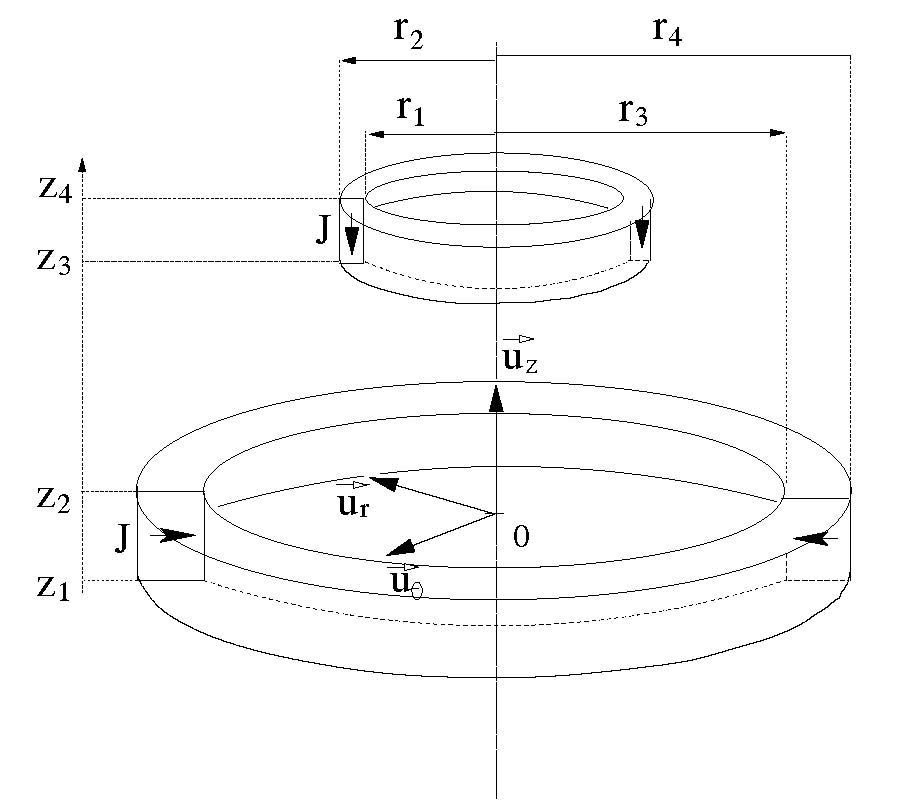
This paper presents a general analytical formulation for calculating the three-dimensional magnetic field distribution produced by Halbach structures with radial or axial polarization directions. Our model allows us to study tile permanent magnets of various magnetization directions and dimensions. The three magnetic field components are expressed in terms of analytical and semi-analytical parts using only one numerical integration. Consequently, the computational cost of our model is lower than 1 s for calculating the magnetic field in any point of space. All our expressions have been checked with previous analytical models published in the literature. Then, we present two optimized permanent magnet structures generating sinusoidal radial fields.
MAGNETIC FIELD CREATED BY A UNIFORMLY MAGNETIZED TILE PERMANENT MAGNET
2010-07-26
PIER B
Vol. 24, 1-15
Weighted Centroid Method for Breast Tumor Localization Using an UWB Radar
Antonio Lazaro , David Girbau and Ramon Villarino
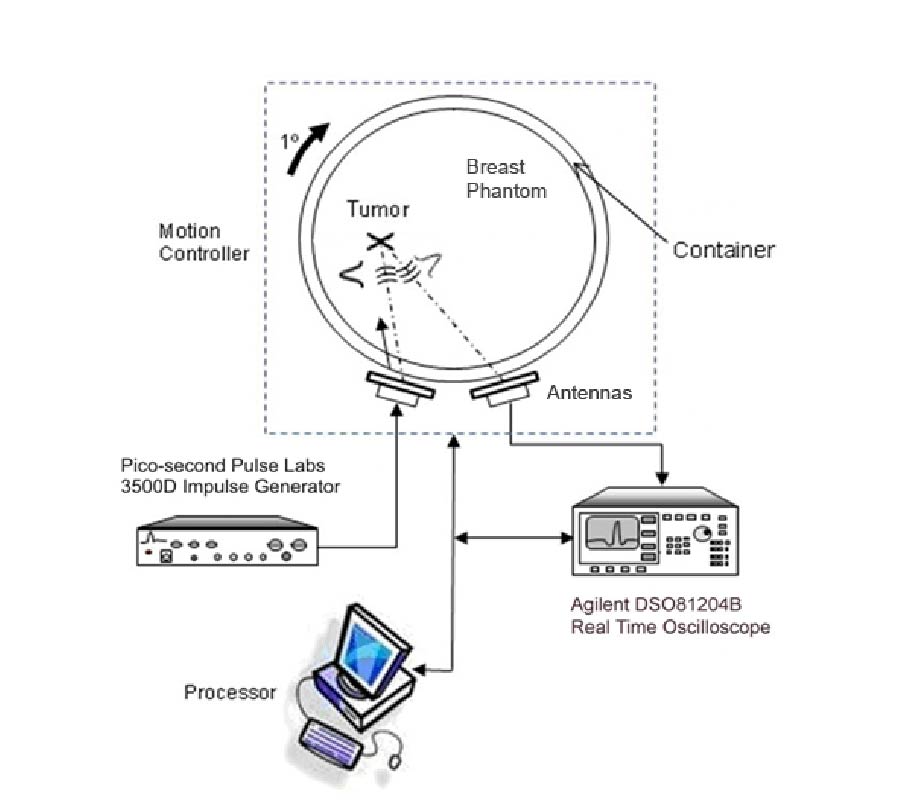
This paper studies the potential of ultra-wideband (UWB) microwave imaging for detection and localization of breast cancer in its early stages. A method is proposed for locating tumors which is based on the time-of-flight of the signal backscattered at the tumor. Time-of-flight is detected using a wavelet transform algorithm. The main contribution of this paper is that it proposes to determine the position of the tumor by using an adapted version of the centroid localization method used in wireless sensor nodes. Its main advantage is that it does not require knowing a priori neither the propagation velocity of the breast nor its dielectric permittivity. The feasibility of the method has been investigated by means of simulated and experimental results with an ultra-wideband radar and a phantom.
WEIGHTED CENTROID METHOD FOR BREAST TUMOR LOCALIZATION USING AN UWB RADAR
2010-07-26
PIER B
Vol. 23, 343-355
Coplanar Waveguides Incorporating Srrs or CSRRs: a Comprehensive Study
Ibraheem A. I. Al-Naib and Martin Koch
We numerically and experimentally evaluate different designs of coplanar waveguides (CPWs) loaded with split ring resonators (SRRs) and complementary split ring resonators (CSRRs), respectively. In particular, we are interested in their stop-band performance. Starting from structures which consist of two concentric rings, we study devices with only an outer ring, an inner ring or multiple concentric rings. Furthermore, our study shows that introducing slots in the proximity of the SRR or CSRR will modify the stop-band considerably. Single and multiple unit cells for both designs are fabricated and measured. Our results demonstrate the potential of the CSRR/CPW structure for filter applications.
COPLANAR WAVEGUIDES INCORPORATING SRRS OR CSRRS: A COMPREHENSIVE STUDY
2010-07-26
PIER
Vol. 106, 349-362
Flexible Uniplanar Artificial Magnetic Conductor
María Elena de Cos Gómez , Yuri Alvarez-Lopez , Ramona Cosmina Hadarig and Fernando Las Heras Andres
The design of a flexible uniplanar AMC is presented. A prototype is manufactured and characterized based on reflection coe±cient phase under flat and bent conditions. The designed prototype shows broad AMC operation bandwidth and polarization angle independency in both flat and bent situations. Its angular margin when operating under oblique incidence is also tested. FEM simulations and measurements in an anechoic chamber are presented.
FLEXIBLE UNIPLANAR ARTIFICIAL MAGNETIC CONDUCTOR
2010-07-26
PIER
Vol. 106, 335-347
Plasmonic Resonant Light Scattering by a Cylinder with Radial Anisotropy
Yuwen Jin , Dongliang Gao and Lei Gao
We apply the full-wave electromagnetic theory to study electromagnetic scattering by a small cylindrical particle with radial anisotropy for normally incident light with transverse magnetic (TM) polarization. The scattering coefficients are derived, when the radial anisotropies in both the permittivity and permeability tensors are taken into account. It is shown that the surface and volume plasmon resonances can be identified by the sign of t/dq, in which εt is the permittivity element in a direction tangential to the local r-axis, and q is the size parameter. The near field distributions for surface and volume modes are illustrated by finite element method. It is found that small changes of anisotropy can affect the scattering efficiencies significantly. Moreover, the quadrupole and octupole resonant peaks may be much higher and sharper than those of dipole resonance in the scattering efficiency spectra.
PLASMONIC RESONANT LIGHT SCATTERING BY A CYLINDER WITH RADIAL ANISOTROPY
2010-07-25
PIER B
Vol. 23, 329-342
Comparative Analysis Between Experimental Characterization Results and Numerical FDTD Modeling of Self-Assembled Photonic Crystals
Anderson Oliveira Silva , Roberto Bertholdo , Mateus Geraldo Schiavetto , Ben-Hur Viana Borges , Sidney José Lima Ribeiro , Younes Messaddeq and Murilo Araujo Romero
This paper presents a comparative analysis between the experimental characterization and the numerical simulation results for a three-dimensional FCC photonic crystal (PhC) based on a self-assembly synthesis of monodispersive latex spheres. Specifically, experimental optical characterization, by means of reflectance measurements under variable angles over the lattice plane family [1,1,1], are compared to theoretical calculations based on the Finite Difference Time Domain (FDTD) method, in order to investigate the correlation between theoretical predictions and experimental data. The goal is to highlight the influence of crystal defects on the achieved performance.
COMPARATIVE ANALYSIS BETWEEN EXPERIMENTAL CHARACTERIZATION RESULTS AND NUMERICAL FDTD MODELING OF SELF-ASSEMBLED PHOTONIC CRYSTALS
2010-07-25
PIER B
Vol. 23, 311-327
Support Vector Machines for the Classification of Early-Stage Breast Cancer Based on Radar Target Signatures
Raquel Cruz Conceicao , Martin O'Halloran , Martin Glavin and Edward Jones
Microwave Imaging (MI) has been widely investigated as a method to detect early stage breast cancer based on the dielectric contrast between normal and cancerous breast tissue at microwave frequencies. Furthermore, classification methods have been developed to differentiate between malignant and benign tumours. To successfully classify tumours using Ultra Wideband (UWB) radar, other features have to be examined other than simply the dielectric contrast between benign and malignant tumours, as contrast alone has been shown to be insuficient. In this context, previous studies have investigated the use of the Radar Target Signature (RTS) of tumours to give valuable information about the size, shape and surface texture. In this study, a novel classification method is examined, using Principal Component Analysis (PCA) to extract the most important tumour features from the RTS. Support Vector Machines (SVM) are then applied to the principal components as a method of classifying these tumours. Finally, several different classification architectures are compared. In this study the performance of classifiers is tested using a database of 352 tumour models, comprising four different sizes and shapes, using the cross validation method.
SUPPORT VECTOR MACHINES FOR THE CLASSIFICATION OF EARLY-STAGE BREAST CANCER BASED ON RADAR TARGET SIGNATURES
2010-07-25
PIER B
Vol. 23, 293-309
Comparison of Two Types of Dual Layer Generator in Field Assisted Mode Utilizing3D-FEM and Experimental Verification
Hossein Torkaman and Seyed Ebrahim Afjei
This paper presents the comparison results between two new generator configurations. These generator units are namely a field assisted switched reluctance generator (SRG) and a brushless dc (BLDC) generator. No permanent magnets are used in either unit. The field assisted SR generator consists of two magnetically dependent stator and rotor sets (layers), where each stator set includes twelve salient poles with windings wrapped around them, while the rotor comprises of eight salient poles without any winding or permanent magnet. There is a stationary reel, which has the field coil wrapped around it and is placed between the two-stator sets. The BLDC generator is also made up of two magnetically dependent stator and rotor sets, but each stator set includes nine salient poles with windings wrapped around them while, the rotor comprises of six salient poles without any windings or permanent magnets. There is also a stationary reel between the two layers to produce the magnetic field through the motor assembly. This magnetic field travels through a guide to the rotor then the stator and finally completes its path via the generator housing. The generator phase windings for each layer are connect such that all the stator poles in that set can have either north or south pole configuration while the stator poles in the other layer have the opposite pole arrangement. This type of connection can be used in motoring mode as well. To evaluate the performance of the generators, two types of analysis, namely, numerical technique and experimental study have been utilized. In the numerical analysis, three dimensional finite element analysis is employed, whereas in the experimental study, proto-types have been built and tested.
COMPARISON OF TWO TYPES OF DUAL LAYER GENERATOR IN FIELD ASSISTED MODE UTILIZING
3D-FEM AND EXPERIMENTAL VERIFICATION
2010-07-25
PIER B
Vol. 23, 273-291
Optical Performance Analysis Using a Point Spread Function and Modulation Transfer Function for W-Band Pmmw Imaging System Based on Quasi Optics Focused Array of Dielectric Rod Waveguide Antenna
Manoj Kumar Singh , Won-Gyum Kim , Uma Shanker Tiwary , Seok-Jae Lee , Dong-Rae Cho and Yong-Hoon Kim
The appropriateness of dielectric loaded antenna for the passive millimeter wave imaging application has recently been demonstrated. In this paper, we analyze the optical performance of the passive millimeter wave (PMMW) imaging system based on a 1D focal plane array (FPA) of dielectric rod waveguide (DRW) antennas. A first step in the design process is to analyze the image quality potential of 1D FPA-based imaging system in terms of the point spread function (PSF) and the modulation transfer function (MTF). We consider the effect of lens, DRW antenna, electromagnetic crosstalk between adjacent DRW antenna elements in the array, and sampling. From simulation and measurement, we found that the image quality in the passive millimeter wave imaging system with a DRW antenna array is less sensitive to electromagnetic crosstalk between antenna elements in the array. The measurements and simulations show that the system is diffraction limited and also closely agrees with the Rayleigh criterion of resolution for diffraction limited optical systems.
OPTICAL PERFORMANCE ANALYSIS USING A POINT SPREAD FUNCTION AND MODULATION TRANSFER FUNCTION FOR W-BAND PMMW IMAGING SYSTEM BASED ON QUASI OPTICS FOCUSED ARRAY OF DIELECTRIC ROD WAVEGUIDE ANTENNA
2010-07-25
PIER B
Vol. 23, 251-272
Circuits and Active Antennas for Ultra-Wide Band Pulse Generation and Transmission
Mithilesh Kumar , Ananjan Basu and Shiban Kishen Koul
In this paper, the design and development of a novel active antenna including circuits for Ultra-wide band (UWB) pulse generation and transmission have been described. In this design a pulse with pulse-width approximately 150 ps and amplitude 500 mV (peak-to-peak) was generated using a single high electron mobility transistor (HEMT) as the active device (and an optional Schottky diode for enhanced performance), this being the simplest circuit for generating UWB pulses as far as we know. This circuit was integrated with a newly designed UWB planar microstripfed slot antenna, which is an active antenna in the sense that in addition to radiating the signal, it also acts as a filter, which tailors the spectrum of the transmitted pulse to a shape close to that recommended for UWB communications. We have also given a quantitative analysis, which explains the operation of the circuit.
CIRCUITS AND ACTIVE ANTENNAS FOR ULTRA-WIDE BAND PULSE GENERATION AND TRANSMISSION
2010-07-25
PIER C
Vol. 15, 23-36
Optimal Impedance Matching for Capacity Maximization of MIMO Systems with Coupled Antennas and Noisy Amplilfiers
Wen-Fong Tsen and Hsueh-Jyh Li
The impedance matching problem in the presence of signal and noise coupling in compact MIMO arrays is addressed. By maximizing an upper bound of the ergodic capacity for an N×N MIMO system with signal and noise coupling at the receiver in high signal-to-noise ratio (SNR) scheme, a set of equations is formulated to find the optimal matching circuit. A closed-form result for the optimum matching circuit is given. For two-element arrays, we show numerically that significant performance improvement can be achieved by introducing the optimal matching.
OPTIMAL IMPEDANCE MATCHING FOR CAPACITY MAXIMIZATION OF MIMO SYSTEMS WITH COUPLED ANTENNAS AND NOISY AMPLILFIERS
2010-07-25
PIER M
Vol. 13, 145-156
Covariant Constitutive Relations, Landau Damping and Non-Stationary Inhomogeneous Plasmas
Jonathan Gratus and Robin W. Tucker
Models of covariant linear electromagnetic constitutive relations are formulated that have wide applicability to the computation of susceptibility tensors for dispersive and inhomogeneous media. A perturbative framework is used to derive a linear constitutive relation for a globally neutral plasma enabling one to describe in this context a generalized Landau damping mechanism for non-stationary inhomogeneous plasma states.
COVARIANT CONSTITUTIVE RELATIONS, LANDAU DAMPING AND NON-STATIONARY INHOMOGENEOUS PLASMAS
2010-07-25
PIER
Vol. 106, 321-333
Planar UWB Antenna with 5 GHz Band Rejection Switching Function at Ground Plane
Chow-Yen-Desmond Sim , Wen-Tsan Chung and Ching-Her Lee
The design of an octagonal-shaped microstrip-fed planar monopole antenna for ultrawideband (UWB) operation is studied. Two inverted T-shaped slits are embedded on the ground plane to allow band rejection characteristic from 5 to 6 GHz (for VSWR < 2). To enable switching capability for this band rejection function, a PIN diode is connected to each slit via a specified chip inductor that will be further investigated. Several prototypes were constructed and the measured results show that the proposed antenna can provide an operating bandwidth from 3.07 to 10.7 GHz, except for the rejected band. Simulation analyses are also carried out to validate the experimental results.
PLANAR UWB ANTENNA WITH 5 GHz BAND REJECTION SWITCHING FUNCTION AT GROUND PLANE
2010-07-25
PIER
Vol. 106, 311-319
Compact UWB Filter Based on Surface-Coupled Structure with Dual Notched Bands
Jian-Quan Huang , Qing-Xin Chu and Chuan-Yun Liu
A novel compact ultra-wideband (UWB) band-pass filter (BPF) based on surface-coupled structure is proposed. The surface-coupled structures and Y-shaped shorted stub resonator are adopted as quasi-lumped circuit elements to achieve UWB pass-band. To avoid the interference of the wireless local area network (WLAN) at 5.25 and 5.775 GHz, two different quarter-wavelength lines are arranged on the ground of UWB BPF to generate dual narrow stop bands. Being developed from the quasi-lumped elements, the proposed UWB BPFs have very compact size. The fabricated UWB BPFs have the advantages of low insertion loss, good selectivity and flat group delay. Good agreement between equivalent circuit modeled, simulated and measured responses of these filters is demonstrated.
COMPACT UWB FILTER BASED ON SURFACE-COUPLED STRUCTURE WITH DUAL NOTCHED BANDS
2010-07-25
PIER
Vol. 106, 295-309
Azimuth Beam Pattern Synthesis for Airborne SAR System Optimization
Sangho Lim , Jung-Hoon Han , Se-Young Kim and Noh-Hoon Myung
The limitation of the pulse repetition frequency (PRF) of an airborne synthetic aperture radar (SAR) system is not a serious problem to obtain high azimuth resolution and wide swath imaging compared with a spaceborne SAR system. Hence, continuous high azimuth resolution imagery over a wide area can be obtained using an antenna having a wide beamwidth. Since a small antenna with a large beamwidth has very low gain, which results in difficulty in detection; the azimuth beam pattern optimization of a large active phased array antenna is needed for airborne SAR system optimization. To improve the airborne SAR system performance, such as the noise-equivalent sigma zero (NEσ0), the azimuth resolution, the radiometric accuracy (RA), and the azimuth ambiguity ratio (AAR), we present an optimal azimuth beam pattern mask template and suggest an azimuth beam pattern satisfying the mask template using the particle swarm optimization (PSO). The mode having the proposed beam pattern guarantees continuous and high resolution images, simultaneously. Using a point target simulation, the advantages of the mode are shown compared to strip-map and spotlight modes.
AZIMUTH BEAM PATTERN SYNTHESIS FOR AIRBORNE SAR SYSTEM OPTIMIZATION
2010-07-25
PIER
Vol. 106, 279-293
Improved Current Decomposition in Helical Antennas Using the ESPRIT Algorithm
Yang Li and Hao Ling
We apply the ESPRIT algorithm to decompose the currents on a helical antenna into different traveling wave modes. The strengths, phase velocities and decay constants of the various modes are extracted across frequencies. Their contributions to the antenna performance including gain, polarization and time-domain radiated pulse shape are investigated. Our results show that the T0+ mode is a dominant contributor to the helix gain at the low end of the frequency band while the T1+ mode contributes significantly to the gain at higher frequencies. It is also found that the reflected current modes from the open end reduce the circular polarization purity of the helix. Lastly, it is observed that the T1+ and T0+ modes contribute constructively to a low-dispersion pulse from the antenna.
IMPROVED CURRENT DECOMPOSITION IN HELICAL ANTENNAS USING THE ESPRIT ALGORITHM
2010-07-25
PIER
Vol. 106, 263-278
A Novel Positioning System Utilizing Zigzag Mobility Pattern
Ahmed Wasif Reza , Sherene Meetha Pillai , Kaharudin Dimyati and Kim Geok Tan
This paper proposes a new positioning system utilizing mobile readers that are programmed to move in a zigzag pattern to locate the tags. The proposed zigzag mobility pattern is able to cover an area completely within a given period, determine optimal number of required mobile readers, and find out reader placement and movement pattern. The received signal strength (RSS) model is used to exchange the information over a short range by estimating the position of the tag by means of distance information between the reader and the tag. The results obtained from this study point out that the proposed method is able to provide near exact tag position. The proposed method can achieve average error as low as 0.6 m. With this proposed method, the scanning of large areas, such as warehouses, libraries, and storage areas can be done very quickly. Mobile reader is proposed because it is cost-effective, fast, and is able to provide relatively accurate results.
A NOVEL POSITIONING SYSTEM UTILIZING ZIGZAG MOBILITY PATTERN